Boston University
OpenBU http://open.bu.edu
Theses & Dissertations Boston University Theses & Dissertations
2015
The transition of interprofessional
education in a large metropolitan
academic setting
https://hdl.handle.net/2144/16034 Boston University
BOSTON UNIVERSITY SCHOOL OF MEDICINE
Thesis
THE TRANSITION OF INTERPROFESSIONAL EDUCATION IN A LARGE METROPOLITAN ACADEMIC SETTING
by
ANAISY PARGAS
B.S., University of South Florida, 2013
© 2015 by
ANAISY PARGAS All rights reserved
Approved by
First Reader _________________________________________________ Theresa A. Davies, Ph.D.
Assistant Professor of Medical Sciences & Education Director, M.S. in Oral Health Sciences Program
Second Reader
Vinita Kiluk, M.D.
Assistant Professor of General Academic Pediatrics Morsani College of Medicine
iv
ACKNOWLEDGMENTS
The completion of this project would not have been possible without the help and support of my committee, the students and faculty of USF Health, and my friends and family.
To begin with, I would especially like to thank my program advisor, Dr. Theresa Davies, for her patience and willingness to answer my many questions throughout my graduate school career at BU. I would also like to thank my research mentor, Dr. Vinita Kiluk, for her continued guidance and enthusiasm throughout the process of this project. I would also like to thank Dr. Robert Nelson for his willingness to help me during the initial steps of my thesis project. Lastly, I would like to thank Dr. Dawn Schocken for her assistance in obtaining data and for providing valuable insight and knowledge into the development of this project.
Additionally, I would like to thank the USF Health community for allowing me to gather data and providing me with a deeper understanding of
interprofessionalism in medicine.
I would like to furthermore thank my wonderful parents and sister for their patience and comfort throughout this process. Lastly, I would like to thank my dear boyfriend and friends for their words of encouragement and for lending an ear on multiple occasions.
TRANSITION OF INTERPROFESSIONAL EDUCATION IN A LARGE METROPOLITAN ACADEMIC SETTING
ANAISY PARGAS ABSTRACT
Introduction: Interprofessional education (IPE) is the organized integration of health care disciplines. IPE provides an environment for students and faculty from multiple disciplines to learn collaboration and communication skills for future clinical practice. In the 1970s, United States health institutions began focusing on team-based health care and IPE. IPE was viewed as a solution to the growing burden of health care costs and the increasing ratio of diseases to available resources. IPE was formed around four competencies–Ethics, Communication, Teamwork, and Roles and Responsibilities–to provide students with the
necessary tools to work efficiently in health care teams upon entering the workforce.
Focus and Goals: USF Health currently has five major pre-professional
disciplines on its campus—medicine, physical therapy, pharmacy, nursing, and public health. An IPE initiative began in 2010 in order to eventually integrate portions of all disciplines and their curricula. The central question of this thesis is, “Has there been a change within the student and faculty populations of USF
vi
faculty perspectives across several health disciplines at USF Health when
compared to previously recorded perspectives from 2010. This information will be recorded to provide a guide for improving the current IPE initiative at USF Health. Methods: Using data from a 2010 survey, the researchers created an updated survey and released it to the students and faculty of all five disciplines. The results provided a comparison for the original 2010 data. A general literature review was used to supplement the collected survey results and guide the analysis and discussion of data.
Results: The qualitative data from the original student (n=29) and faculty (n=58) surveys was quantified and compared against the data from the updated student (n=83) and faculty (n=16) surveys. Several consistent themes were found in responses from selected questions. The following themes were found within the literature: student and faculty perspectives of IPE, barriers and opportunities to IPE, and implementation methods.
Conclusion: The study found that changes in opinion occurred between both student and faculty participants. Both students and faculty showed an increase in IPE awareness and alluded to several barriers that were also found within the literature. This study will serve as a continued method of evaluating IPE at USF health in order to maintain a continued improvement of IPE implementation amongst all colleges.
Limitations: The initial student data set was significantly smaller than the new student data set and represented a different distribution of disciplines. This may
account for some of the changes observed between both groups and should be considered in any future analysis of this data. Because the data presented in this thesis project is a preliminary sample of the future, complete survey results, a follow-up analysis of the complete data will be required to draw any
viii
TABLE OF CONTENTS
TITLE………...i
COPYRIGHT PAGE………...………..………...ii
READER APPROVAL PAGE………...………..iii
ACKNOWLEDGMENTS ... iv!
ABSTRACT ... v!
TABLE OF CONTENTS ... viii!
LIST OF TABLES ... x!
LIST OF FIGURES ... xi!
LIST OF ABBREVIATIONS ... xiii!
INTRODUCTION ... 1!
Definitions ... 1!
History of Interprofessional Education ... 2!
Need for Interprofessional Education ... 4!
Goals of IPE: Competencies ... 6!
Models ... 11!
IPE at the University of South Florida ... 13!
Goals of Project ... 22!
METHODS ... 23!
Literature Review ... 23!
Survey 2 - Creation ... 25!
Survey 2 - Data Collection and Analysis ... 26!
RESULTS ... 28!
Literature Review ... 28!
Data - Survey 1 ... 45!
Preliminary Data - Survey 2 ... 54!
ANALYSIS AND DISCUSSION ... 63!
Knowledge of IPE ... 63! Barriers to IPE ... 64! IPE Topics ... 65! CONCLUSION ... 68! Limitations ... 68! Research Implications ... 69! APPENDICES ... 70! Appendix A: Survey 1 ... 70!
Appendix B: Survey 2 - Student ... 72!
Appendix C: Survey 2 - Faculty ... 75!
REFERENCES ... 77!
x LIST OF TABLES
Table Title Page
1 Behavioral Indicators for Interprofessional
Competency “Knowledge of Professional Role of Others”
10
LIST OF FIGURES
Figure Title Page
1 Student Demographics by College 46
2 Student Knowledge of IPE Activities (Question 1) 47 3 Student Responses to Barriers to IPE at USF Health
(Question 7)
48 4 Student Responses to Possible IPE Topics (Question 8) 49 5 Faculty Demographics by College 50 6 Faculty Knowledge of IPE Activities (Question 1) 51 7 Faculty Responses to Barriers to IPE at USF Health
(Question 7)
52 8 Faculty Responses to Possible IPE Topics (Question 8) 53 9 Student Demographics by College [2015 Survey] 55 10 Student Knowledge of IPE Activities (Question 1) [2015
Survey]
56 11 Student Responses to Barriers to IPE at USF Health
(Question 5) [2015 Survey]
57
12 Student Responses to Possible IPE Topics (Question 4) [2015 Survey]
58
13 Faculty Demographics by College [2015 Survey] 59 14 Faculty Knowledge of IPE Activities (Question 1)
[2015 Survey]
xii
16 Faculty Responses to Possible IPE Topics (Question 4) [2015 Survey]
62
LIST OF ABBREVIATIONS
AAMC ... American Association of Medical Colleges AACN ... American Association of Colleges of Nursing AACOM ... American Association of Colleges of Osteopathic Medicine AACP ... American Association of Colleges of Pharmacy ADEA ... American Dental Education Association AHCT ... Attitudes Toward Health Care Test AHRQ ... Agency for Healthcare Research and Quality ASPH ... Association of Schools of Public Health JSATPNC ... Jefferson Scale of Attitudes Toward Physician–Nurse Collaboration IAQ ... Interprofessional Attitudes Questionnaire IEPS ... Interdisciplinary Education Perception Scale IHI ... Institute for Healthcare Improvement IPC ... Interprofessional Collaboration IPE ... Interprofessional Education PBL ... Problem-based Learning RIPLS ... Readiness for Interprofessional Learning Scale SSRQ ... Student Stereotypes Rating Scale TBL ... Team-based Learning
INTRODUCTION Definitions
Interprofessional Education
As defined by the World Health Organization (WHO) (2010), interprofessional education (IPE) involves students of two or more health professions engaging in order to “learn about, from, and with each other to enable effective collaboration and improve health outcomes.” IPE becomes a combination of the values, ideas, and abilities of all participating professions (Barr, 2010).
Interprofessional education is frequently called “interdisciplinary
education,” most specifically when it involves students that have not yet entered into clinical practice or activities that are non-clinical.
The term, interprofessional education is often used interchangeably with “multiprofessional education;” however, this term is better suited for describing students from different disciplines learning alongside each other (Barnsteiner, Disch, Hall, Mayer, & Moore, 2007). Distinguishing these two terms is necessary for the continued successful implementation of IPE, as IPE refers to the
progression of interaction amongst students of different disciplines that
eventually leads to effective teamwork in the workplace. When these terms are discussed in the context of the workplace, as multidisciplinary teams and interdisciplinary teams, multidisciplinary teams involve team members
contributing their knowledge to the patients’ care independently and
interdisciplinary teams involve team members working together to improve the patients’ care (Lerner, Magrane, & Friedman, 2009).
Health Care Teams
When discussing IPE, health care teams refer to groups consisting of all of the professional individuals that are required to fulfill a patient’s health care
needs. Depending on the care required, the members of the team may vary. Most, but not all, teams require some varied combination of physicians, nurses, physical therapists, athletic trainers, nutritionists, social workers, translators, pharmacists, speech therapists, and several others.
Interprofessional Collaboration
Interprofessional collaboration (IPC) is a concept that is taught within the IPE curriculum. This form of collaboration is the goal of health care teams in clinical settings. It is also defined as the practice of forming and preserving successful team relationships amongst all members in order to produce the best health results (Thistlethwaite, 2012).
History of Interprofessional Education
shortly after, seeking to reevaluate the efficiency of health care for a growing population within the United States (Interprofessional Education Collaborative Expert Panel [IECEP], 2011). At the core of the reevaluation of health care were schools and training institutions. These settings were viewed as the perfect training location to ensure that students of pre-professional schools would enter the workplace with the necessary skills and competencies to work in an
interprofessional team (Barnsteiner et al., 2007). It was believed that this team-based approach to health care should be taught at some point during pre-professional education, preferably closer to the beginning of pre-professional education. WHO led a global effort in establishing health care teams and professionalism in health care systems around the world (Barr, Hammick, Koppel, & Reeves, 1999). Taking cues from other nations and their medical education programs, United States institutions began defining
interprofessionalism competencies within curricula in the 1990s (Barnsteiner et al., 2007). Barnsteiner et al. (2007) list the several organizations and initiatives that played a role in beginning the implementation of IPE within United States institutions, such as the Pew Health Professions Commission in 1991, the Institute for Healthcare Improvement in 1994 and their Interdisciplinary
Professional Education Collaborative, the John A. Hartford Foundation in 1997 and their models for Geriatric Interdisciplinary Team Training, the Robert Wood Johnson Foundation and their Collaborative Interdisciplinary Team Education (1999) and Achieving Competence Today (2003), the Josiah Macy Jr.
Foundation in 2000, and the Institute for Healthcare and their Improvement Health Professions Education Collaborative in 2003. Since this publishing, there have been several other initiatives to implement competencies into the
accreditation requirements of institutions, along with a more recent government initiative as described by Long et al., 2014). Long et al. allude to the president’s proposed 2015 budget that asked the government to allot ten million dollars to fund training programs focusing on health care teams. Not only does this reflect the view that health care teams are important to effective health care, but it also shows increasingly prominent move towards interprofessionalism occurring in our nation and around the world.
Need for Interprofessional Education
The discussion on the history of IPE implementation reveals the general needs and reasons for its continued progress after several decades. However, upon further investigation of the needs for IPE of past and present, more themes appear. Several of the cited papers allude to the burden of increasing health care costs in the United States (Ateah et al., 2011; Lam, Chan, & Yeung, 2013; Lerner et al., 2009). Others mention the increase in diseases within the population and the decrease in available resources (IECEP, 2011; Lam et al., 2013;
IPC in the workplace is a direct and positive result of these issues. Spreading the burden amongst all health professions and allowing for specificity in care may certainly alleviate the problems associated with these issues (Lerner et al., 2009).
Along with the problems occurring in health care, IPE is also referenced as a possible solution to improving patient care in several types of health care settings. In their published study, Ateah et al. (2011) found that IPE initiatives improved the views of professionals towards other professions. Barnsteiner et al. (2007) connected these improved attitudes to improved patient outcomes and mentioned that these findings have fueled the increase in the push towards IPE. Lerner et al. (2009) agreed that improved teamwork in the workplace results in a higher quality of patient care. Alternatively, Hays (2013) stated that without collaborative team members, patient outcomes might actually suffer. Lam et al. (2013) found that implementing IPC in clinical settings lowered negative incidents and unsafe behavior. All of these findings and statements relate to the increase in research that shows that collaboration in health care teams causes positive effects on the patient, their family, and their provider (Barnsteiner et al., 2007).
Not only does health care team collaboration allow for increased quality of care, but the shift to team-based care also allows for greater specialization and personalization of care based on patient needs (Lerner et al., 2009). The move towards collaborative care comes after several generations of power struggles amongst health professionals in making care decisions (Nugus, Greenfield,
Travaglia, Westbrook, & Braithwaite, 2010). Because of the increasing variety of health care needs within any given population, a single individual is not capable of solving every need that they encounter (Sharpe & Curran, 2011). Working efficiently as a team leads to a combination of specialized knowledge allowing members to tackle intricate problems together (Thistlethwaite, 2012). Permitting the patients needs to determine how the health care team interacts and,
ultimately, creates a care plan allows for the possibility of improved of care. Goals of IPE: Competencies
The primary goals of interprofessional education are to alter attitudes and opinions, breed respect amongst professions, and make collaboration possible (Barr et al., 1999). These general goals are at the center of the global initiative to improve healthcare. As outlined by the IECEP (2011), IPE is divided into four primary competencies within the general medical school curriculum. This report, a collaboration of the AACN, AACOM, ASPH, AACP, ADEA, and AAMC, outlines the necessary steps to continue integrating IPE within health professions
curricula. The four competencies: Teams and Teamwork, Interprofessional Communication, Values and Ethics for Interprofessional Practice, and Roles and Responsibilities, are outlined below.
This team-centered approach requires cooperation, coordination, and collaboration by all of its members (IECEP, 2011). By incorporating all three factors, team members will be able to share in problem solving and decision-making and overall accountability.
In order to use teamwork to improve patient care, several components should be targeted within all team interactions. These components include a dedication to details, communication and consideration between disciplines, and a partnership between the team and the patient and family (Firth-Cozens, 2001). Most models for IPE suggest making the patient and their caregivers an integral part of the health care team. Allowing all members to be heard and have input in the decisions being made leads to effective teamwork.
Interprofessional Communication
At the center of interprofessional education is the idea that a team requires all members to work together efficiently. The development of
communication skills is key to efficient teamwork. The learning of communication skills has commonly made up a part of the medical school curriculum, but IPE incorporates a new aspect to it. Students are taught effective interprofessional communication skills in order to prepare them for future team-based practice (IECEP, 2011).
This competency enhances the Teams and Teamwork competency by providing the means to team collaboration. Efficient collaborators must disregard
their professional differences and work together to solve problems and discover solutions (Baker & Durham; 2013). This ideal collaborative process requires a balance of respect, power, professional competency, and satisfaction in order to work effectively. Students of health professions must learn to communicate information in ways that can be understood by all team members, including the patient and family, in order to ensure safety and a high quality of care (IECEP, 2011). This IPE competency facilitates this by teaching the students how to respectfully and effectively work together while managing sensitive information. Values and Ethics for Interprofessional Communication
The subject of ethics is important for every aspect of health professions education. Learning the values and principles of a discipline while in school is key to forming a professional identity for future practicing abilities (Sharpe & Curran, 2011). Similar to the communication skills needed for interprofessional teams, the ethics of interprofessionalism must also be included in a medical school curriculum. Each health discipline maintains a set of ethical guidelines pertinent to their practice. While many of these values and principles overlap, several values are unique and depend on the way that a profession approaches medicine and patient care. Incorporating ethics as an IPE competency ensures that students are taught how to view medicine from all perspectives (Ewashen,
Because teamwork is at the center of IPE, learning how to work together and incorporate the patient and family into the health care team brings unique challenges to medicine. A large portion of this competency is focused on discussing the ethics of a patient-centered team approach (IECEP, 2011). This involves discussing the relationships within the team and with the patient along with the organization of a team and the ethical implications.
Roles and Responsibilities
An important aspect of interprofessional education and collaboration is the ability to learn, understand, and respect the value of other professions and their contributions within a team (Long et al., 2014). Giving students the opportunity to learn about their future team companions and the boundaries associated
between each professional role reflects interdependency and rejects the idea that one singular profession is sovereign (Sharpe & Curran, 2011). This knowledge is also useful to decreasing any bias for or against specific disciplines and
professions (Ateah et al. 2011). Removing bias and confusion from future health care teams ensures that they will function safely and effectively as a team
(IECEP, 2011).
Another integral part of this competency is educating the individual profession about its own roles and responsibilities within a health care team. Many students begin their education with stereotypes against their own chosen profession that may affect their performance within teams (Ateah et al, 2011). By
explaining all of the roles within an interprofessional team, students can understand their place within medicine and break through any negative stereotypes.
In their study to evaluate student knowledge of interprofessional roles and responsibilities, MacDonald et al. (2010) outline several indicators of mastering this competency (Table 1, below).
1. Describes where the scope of one’s own profession ends and another begins
2. Open to/seeks out the contributions of other team members 3. Addresses misconceptions/stereotypes among team members 4. Respects the roles, expertise, and unique contributions of other team
members
5. Identifies common/overlapping professional skills amongst team members
6. Values the enhanced benefits of the collaborative efforts of the team 7. Describes the different perspectives and knowledge of other
professions
Table 1. Behavioral Indicators for Interprofessional Competency “Knowledge of Professional Role of Others” (Excerption from MacDonald et al. 2010)
These markers identify the main components of teaching roles and responsibilities in IPE and allow instructors to measure how well students have mastered the information.
Models
TeamSTEPPS
Developed by the United States Department of Defense and the Agency for Healthcare Research and Quality (AHRQ), TeamSTEPPS, or Team
Strategies and Tools to Enhance Performance and Patient Safety, is a resource for improving the teamwork skills of healthcare professionals (Lerner et al., 2009). This program is based on over two decades of research and is part of a national initiative to improve patient safety and outcomes (AHRQ, n.d.). At the core of the training program is forming a common language amongst all health care professionals in order to improve team communication and efficiency
(IECEP, 2011). The program emphasizes three key phases of training that cover assessing a site, training the staff, and ensuring a continued implementation. The AHRQ intends to establish a network of training to ensure the widespread
implementation amongst health professions institutions and clinical settings in the United States (AHRQ, n.d.).
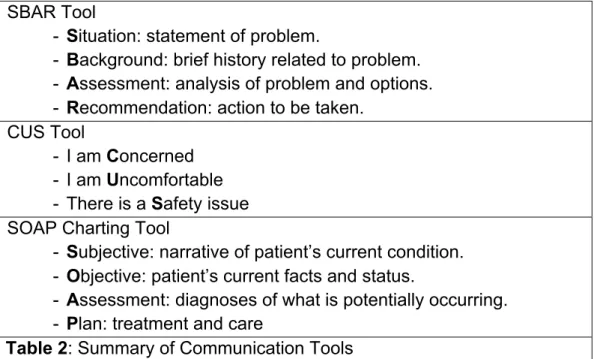
Communication Tools
TeamSTEPPS and several other systems endorse models of
communication amongst professionals within a team (IECEP, 2011). Amongst these models are the SBAR (Situation, Background, Assessment, and
Recommendation) and CUS (Concerned, Uncomfortable, and Safety Issue) tools, which were created to improve communication and efficiency in hospitals.
These two tools are used in common clinical scenarios involving patient handoffs and urgent updates (AHRQ, 2014). Another tool, SOAP is used for charting and effectively communicating necessary information to be understood by all team members. Table 2 includes descriptions of these tools.
SBAR Tool
- Situation: statement of problem.
- Background: brief history related to problem. - Assessment: analysis of problem and options. - Recommendation: action to be taken.
CUS Tool
- I am Concerned - I am Uncomfortable - There is a Safety issue SOAP Charting Tool
- Subjective: narrative of patient’s current condition. - Objective: patient’s current facts and status.
- Assessment: diagnoses of what is potentially occurring. - Plan: treatment and care
IPE at the University of South Florida Background
USF Health encompasses several professional graduate schools: - USF College of Medicine (1965)
- Morsani College of Medicine at USF Health (1971)
- USF School of Physical Therapy and Rehabilitation Sciences (1998) - USF College of Pharmacy (2011)
- USF College of Nursing (1973) - USF College of Public Health (1984)
While all of these schools function independently, they are within close proximity to each other and on several occasions share classrooms and teaching centers. The students from physical therapy and medicine complete the majority of their first year together (USF Health, 2010). There is also the possibility of students from multiple disciplines engaging in the same elective courses. Goals
As described in its Strategic Plans report in 2010, USF Health’s dedication towards developing excellence is ongoing. The report also outlines specific goals for the development of IPE:
I. Offer Integrated Competency-Based Courses Across USF Health II. Create Passion for Lifelong Learning
III. Prepare Students to Serve as Professionals on Collaborative Interdisciplinary Healthcare Teams
The report also states the short, intermediate, and long term plans to complete all of these goals (USF Health, 2010).
Implementation methods
Although interprofessional education is a relatively new portion of the medical school’s curriculum, it has developed into a modular system
incorporating several colleges at the University of South Florida. Because this thesis project focuses primarily on the medical school (MD) curriculum, courses and modules pertinent to individual colleges will not be discussed in detail. Module 1: Introduction
The medical school curriculum acknowledges that the majority of entering students do not have a background knowledge of or experience with
interprofessionalism within the medical field. Module one serves as an
introduction for the first year medical, nursing, pharmacy, physical therapy and athletic training students at USF Health.
This module presents the background and importance of IPE and its application in medical settings by using case studies. These case studies cover topics such as medical errors, quality of care and patient safety, and
collaboration among team members. By incorporating this module as required coursework in the first year curriculum, a baseline can be set for all students
Each student completes the Readiness for Interprofessional Learning Scale (RIPLS) survey, created to assess a learner’s readiness to participate in a team setting in their role (or future role) as a healthcare provider.
Module 2: Roles and Responsibilities
After students are informed on the background and importance of IPE within their respective fields, faculty and first year students from all colleges join together to discuss the different roles and responsibilities within interprofessional teams. As a major part of this module, each team role is presented to students from several disciplines to form an informational baseline across all student groups. In recent years, several groups have been added to the list of roles presented to the students, such as athletic training, nursing, pharmacy, physical therapy, medicine, and public health. Each college is responsible for their
discipline’s presentation. In order to maximize the roles represented, local
organizations for disciplines not established at the University of South Florida are also recruited to present. Each group presents their field’s background, scope, education, responsibilities, major specializations and branches, and applications to medical health teams.
The module begins by assessing the students’ knowledge level of the different roles, along with their perspective on communication and conflict resolution within different roles. After the presentation of roles and
responsibilities, a brief introduction to TeamSTEPPS is given. Module two then incorporates small group case discussions. Each small group contains students
from each participating college, allowing them to use their individual roles within a team environment during case discussions. To complete this module, students are assessed on their knowledge level of roles and responsibilities, allowing them to measure their own progress.
Module 3 – Communication and Teams
The last IPE module of the first year medical school curriculum focuses on communication within interdisciplinary teams. Students are presented with the importance of efficient communication and the goals and strategies of team communication methods. Students are then introduced to CUS and SBAR models of interdisciplinary communication. These models are then practiced during future interprofessional doctoring sessions.
This specific module also incorporates an Institute for Healthcare Improvement (IHI) Open School teaching session on team communications. Following an introduction of these concepts with the students in a large group setting, the students are given their team assignments and report to the Center for Advanced Clinical Learning (CACL) for their patient encounters. In teams made up of first year medical and physical therapy students and second semester nursing students, students and their faculty preceptors participate in active case discussions. The students are presented with two patient cases, which they will later have an opportunity to interview and teach as a team. The
needs information on preventing future injuries. Working as a team, the students must organize themselves and their teaching tools in order to set up teaching sessions for both patients. All students have an opportunity to teach a portion of the session for each patient in order to maximize their involvement in a team setting.
Students are provided with pre- and post-tests to measure their feedback and interest level towards the activity. Since introducing this activity, the overall student feedback has consistently shown positive levels of enthusiasm for working together in a healthcare setting.
Module 4 – Ethics and Compassionate Care
As medical students progress through their education, they are introduced to the ethics of interprofessionalism in medical teams. This unfolding module takes place twice during second year of the medical school curriculum; it incorporates two events in the life of a complex patient who requires a multi-system approach to their care to promote healthful living and prevent potential events from occurring. Students are first introduced to the patient on paper by way of a physician’s note. Medical students then discuss the case during their small group doctoring classes, during which they are presented with further information from reports by other health care disciplines, such as physical therapy and pharmacy. By learning how to read and apply information provided by other disciplines, students also learn how to use information that may be outside of their scope of practice as future physicians.
The students are led by faculty from Doctoring Two and IPE faculty to work as a team to set the stage of care that would be demonstrated in a healthcare team setting in a primary care facility. During the first session, the patient’s family member first visits the team to discuss the patient to provide further insight on the patient. The same small group team meets four months later to revisit this complex patient. During this second session, the patient visits the team to learn about their next steps of care. All students have an opportunity to discuss their concerns, allowing the team to create a patient care plan that is then delivered to the patient. Charting is also discussed during this module to provide charting methods that can be streamlined across the team setting. Module 5 – Teams and Teamwork
During module five, third year medical students, third year pharmacy students and fifth semester nursing students review and prepare for several case discussions in team-based small groups. These cases are presented on paper, by a standardized patient, or a combination of both methods. The students work in their small group teams four to five times a year and have a chance to review charts, see simulated patients, discuss root cause analysis, break bad news, and practice team charting on an electronic health record. This module includes complex patients such as polypharmacy patients, pain management patients, heart failure patients, patients with urinary tract infections, patients who
confused at discharge and come into the primary care setting seeking additional counseling on how to take their medications, and patients with difficult outcomes.
Most of these clinical cases require the students to work together to
develop differential diagnoses to aid in the management of these complex patient problems. Using critical thinking in a team setting prepares the students to
understand the roles they will have in the clinical setting. Faculty from Doctoring Three and IPE Faculty observe the teams work with the standardized patients in real and videotaped time. They provide feedback to the students to improve their patient care expertise and their communication skills across the team setting.
Students are expected to use the SBAR method when discussing patients and collaborate in order to come up with SBAR summaries for all patients. The desired outcome of these case discussions is that students from all disciplines learn about the roles of all individual team members in patient care. Students then work together to create a health plan for their patients, which will reflect each represented role’s actions and any necessary referrals to other members of a health care team.
Students are provided with pre- and post-surveys to record their feedback for the activities. The overall student feedback has been consistently positive. Many students are appreciative of the chance to practice their roles in a comfortable and encouraging environment prior to real-life clinical settings.
Module 6 – Communication and Teams: Part 2
As a part of module six, second year medical students, third year pharmacy students, second semester physical therapy students, and fifth semester nursing students join during three separate sessions in order to practice interprofessional communication within teams.
During the first meeting, students are presented with a paper case describing a patient living with a chronic disease. Students work together to determine the patient’s status and any potential challenges in order to determine future care plans. During the second meeting, students meet a standardized patient that is playing the role of the patient they previously discussed. Students work together to interview the standardized patient and determine their
understanding of the chronic disease. Students then develop a teaching plan to implement in real time with the standardized patient. This second session is videotaped in CACL, allowing students to review it afterwards and note the weaknesses and strengths of their performance. During both of these sessions, each discipline is encouraged to take on their respective role to assure that the care plan is comprehensive and effective for the patient’s specific need. If scheduling permits, the team meets with an actual patient living with the chronic disease during their final meeting. All of the students interview the patient, discuss their individual roles as educators, and teach the patient about a topic
to gauge their understanding of interprofessional teams as a result of this educational module.
Module 7 – TeamSTEPPS training
Throughout their respective professional educations, students are taught about several models and methods for developing interprofessional teams. Building upon students’ participation in previous interprofessional modules, this optional module provides students with extensive training in TeamSTEPPS to use within clinical practice.
Among the USF Health IPE Faculty, there are several TeamSTEPPS instructors that are considered master trainers. This module has been taught several times at USF Health since 2012, and has allowed many students to enter the clinical world armed with this valuable team tool.
Module 8 – Interprofessional Summary
At the end of the third year medical school curriculum, students are provided with a summary of all interprofessional topics previously covered. This summary highlights tips and tools that the students can se while making rounds, teaching patients, working in their healthcare teams, and studying for their board exams. Students review communication and teams, roles and responsibilities, and the ethics of interprofessional health teams. This final summary module assures that students feel comfortable with the models and methods as they prepare to make decisions about their residency and professional future.
analysis, health care communication, and healthcare’s merging roles and responsibilities.
Students complete this module independently in order to complete the IPE competencies adopted by this curriculum. Follow-up assessments include a review of their practice and applicability of IPE concepts to their practice environment. Future discussions will include a certificate of completion to the students who have successfully mastered the IPE curriculum.
Goals of Project
Although the shift towards IPE has been ongoing for several years, it officially became part the medical school curriculum at USF Morsani College of Medicine (MCOM) within the last decade. This study aims to evaluate the changes in both student and faculty perspectives across several health
disciplines at USF Health when compared to previously recorded perspectives from 2010. In order to accomplish this overall aim, this study encompasses three main goals:
1. Develop Updated Survey and Obtain Institutional Review Board Approval
2. Distribute Survey and Collect Data
METHODS Literature Review
A literature review was conducted to obtain information on the current state of interprofessional education. The scope of this review was limited to peer reviewed journal articles and did not include online information or opinion pieces. Databases, including Science Direct, JSTOR, PubMed, and Web of Science, were accessed through the Boston University online library system. Keywords and phrases used to conduct the search included “interprofessional education,” “interdisciplinary education,” “health care teams,” “health teams,” “teams based,” “competencies,” “ethics,” and “teamwork.” Several keywords and phrases were used in conjunction to obtain more specific results. After careful review to determine the relevancy of each article, general themes were identified to provide structure for this thesis. These themes related to the history of IPE, student perceptions, faculty perceptions, barriers and opportunities, and implementation of IPE. By reviewing the background information and recent studies on the effectiveness of IPE in the health care setting, the current study could be performed and analyzed by several different measures.
Survey 1 - Analysis of Previously Collected Data
In order to have a baseline of data representing student and faculty perspectives on which to compare for the current study, the data from a
was created in order to measure the state of IPE within the various health professions colleges at the University of South Florida in 2010 (Appendix A). Students and faculty were sent separate, but similar, surveys with minor
differences in the demographic questions. This allowed the data to be collected and compartmentalized based on target groups. The results from that survey served as a guideline to initiate a move towards improving IPE at USF in 2010.
The original survey was created and managed using the SurveyMonkey platform. The data was also collected and organized using this platform during the original data collection process.
To begin the process of analysis, the data from the original survey was extracted from the online platform to Excel software. Once on Excel, the data was organized. Because the data from several questions was primarily
qualitative, it was transformed into quantitative data by using thematic analysis allowing the researcher to group similar responses into categories. These
categories and their respective values will then be used for comparisons against future data. The data from the original student and faculty surveys remained separate throughout the process of analysis to allow for any possible differences between the two groups to be represented in this study. Data analysis did not focus on a particular individual’s response set. Instead, data was analyzed based
Several trends of interest within the original data were determined for the creation of the updated survey. After the updated survey results are obtained, these trends will be revisited for comparison.
Survey 2 - Creation
The questions from the original survey served as a template for the updated survey used in the current study (Appendix B & C). Several questions were removed to make the new survey more focused and relevant to the current study, while some questions were altered. New questions reflecting changes that have been made to IPE at USF since the original survey were added to the new survey. Both the original and the new faculty surveys contained eleven questions in total; the updated student survey contained twelve questions. Both surveys had the same demographic questions on the respective student and faculty versions in order to continue to identify groups.
To streamline the data collection and analysis process of the updated survey, the response options to certain questions were altered. In the original survey, most questions provided text boxes for free-response. The categories previously created to analyze the original survey’s data were made into selection options for their respective questions on the new survey. In order to assure that the new data collected would reflect all possible opinions, these questions were also given an “other” option, with a text box for free-response.
The updated survey was created and managed using the SurveyMonkey platform.
Survey 2 - Data Collection and Analysis
The new survey will be released to students and faculty members of the various health colleges at USF. [At the time of this paper, the student survey was released to the College of Medicine and School of Pharmacy; the faculty survey was released to select faculty of the College of Medicine, School of Pharmacy, College of Nursing, and School of Physical Therapy.] The survey will be released by the IPE liaison of each college to the respective students and faculty. A survey link will be sent to all participating students and faculty via their academic email; participants will be given no incentives to complete the survey. The data will be collected and organized using the SurveyMonkey platform.
After a brief collection period, preliminary data was extracted and analyzed for purposes of sampling the participant population. Student and Faculty data sets were kept separate in order to compare groups based on college association. Trends found within the preliminary data were used for the current study in order to compare the population data (Survey 2) to the previous data (Survey 1).
groups. Individual response data sets will not be analyzed; instead, the data will be analyzed based on college association as determined by the demographics questions on each survey. Any trends found within both data sets will allow for an analysis of patterns amongst the population groups. These trends will then be used for a complete comparison against the baseline results of the original survey.
RESULTS Literature Review
Using the search parameters established to find literature relevant to the current study resulted in identification of twenty-nine articles. Of the articles reviewed, nine articles discussed student perceptions, four articles discussed faculty perceptions, eight articles presented the barriers and opportunities of IPE, and eight articles discussed implementation of IPE. Although discussions on this topic began in the 1970s, a large portion of the literature currently available has been published within the last decade. These studies primarily focus on
determining the effectiveness of certain models of IPE within academic institutions that were created following the discovered need.
Student Perceptions
While the gradual changes within the workplace are the ultimate goal of most IPE initiatives and programs, the immediate and ongoing changes in student perceptions while participating in IPE are imperative for the success of these programs. Lapkin, Levett-Jones, and Gilligan (2013) performed a
systematic review of nine IPE studies and showed that interprofessional
programs improve the attitudes of student participants towards future health care team collaboration. The published studies reviewed in this section show the
competency skills, attitudes towards IPE, and the effects of practice IPE scenarios.
Several studies have been published that compare the effects of students participating in interdisciplinary IPE settings versus in uni-professional IPE
programs. During a study done in Canada to gauge attitudes of students enrolled in pre-professional programs towards other professions, students were exposed to either an interprofessional lecture or an interprofessional practice experience (Ateah et al., 2011). Ateah et al. cite various studies that have found that both negative and positive stereotypes exist in the public view of several health
professions, with nursing being the prominent example. The authors suggest that students begin their education with these same perceptions until some form of intervention alters them (Ateah et al., 2011). These negative perceptions can serve as barriers to communication and efficient teamwork within clinical settings. The participants in the study were students belonging to several groups, such as pharmacy, dentistry, medicine, physical therapy, dental hygiene, nursing, and occupational therapy (Ateah et al., 2011). Students were asked to rate their own and the six other professions before and after participating in an IPE program. The study found that both educational and interactive IPE programs served to improve student perspectives on other professions (Ateah et al., 2011). Cusack et al. (2012) describes a similar study performed to evaluate the changes in student attitudes towards other professions after participating in an IPE program. Like Ateah’s (2011) study, Cusack’s study compares two cohort groups either
participating in an interdisciplinary setting or a single discipline setting. Cusack et al. (2012) cite a study in which students working in interdisciplinary IPE settings demonstrated improved attitudes towards other professions. In this study, the student participants belonged to medicine, radiography, nursing, and physical therapy disciplines and were exposed to problem-based learning (PBL) scenarios (Cusack et al., 2012). Students are evaluated based on two systems: the RIPLS and the Interdisciplinary Education Perception Scale (IEPS). Similar to the results by Ateah et al. (2011), the results for this study showed that student perceptions of other professions improved after an IPE program. Cusack et al. (2012) goes one step further than Ateah et al. and identifies the interdisciplinary group as having a greater improvement than the single discipline group. Both Ateah et al. (2011) and Cusack et al. (2012) show that IPE has significant effects on the attitudes and perceptions of student participants.
Baker and Durham (2013) completed a similar study comparing the perspectives of students before and after exposure to an IPE program. The IPE activities revolved around TeamSTEPPS training with participants in this study representing students from nursing, pharmacy, and medicine. This survey-based study tested students on collaboration competencies, such as communication, conflict management, team functioning, collaboration, and several others (Baker
program improved the students collaborative competency skills. The study also suggests that future studies should focus on following this cohort as they move into their professional roles in order to measure the full extent of the changes caused by the IPE curriculum.
While measuring the direct changes in student competency levels that occur as a result of exposure to IPE is a significant area of study, several studies focused on the changes in student perceptions of IPE in general. In a 2008 study of student perspectives, Coster et al. use the demographics within their student group to find underlying trends in the effectiveness of IPE. The participants belonged to a large variety of pre-health disciplines, including pharmacy,
midwifery, nursing, dietetics, occupational therapy, medicine, physiotherapy, and dentistry (Coster et al., 2008). The study consisted of administering surveys to the participants at four different points in their education. The study used paired-sampling in order to accurately measure changes in individual students
throughout the course of the study. Unlike the studies previously discussed that measured changes in competency skills, Coster et al.’s (2008) study focused on the students’ direct attitudes towards IPE. These attitudes could then reflect their readiness and openness for IPE curricula and their own professional identities. The overall results showed a decrease in enthusiasm towards IPE amongst all health discipline students over the course of the study and may have implications for introducing IPE earlier in overall curricula (Coster et al., 2008). Ko, Bailey-Koch, and Kim (2014) performed a similar study in which student perspectives
towards IPE were measured and compared amongst cohorts based on several characteristics. In this study, students from various disciplines completed a survey based on the Attitudes Toward Health Care Teams (ATHCT) scale. Represented were the disciplines of pharmacy, medicine, public health, social work, nursing and, unique to this study, law. The survey measured the
participants’ previous exposure to IPE as an identifying characteristic on which to base the attitudes towards the effectiveness of IPE (Ko et al., 2014). This study is valuable because it controls for various characteristics of the population, such as age, discipline, IPE exposure, and gender. In doing so, it identifies the specific trends in student groups and their attitude towards IPE. Overall, the study shows that students that had greater IPE exposure displayed a more positive outlook on IPE and the ability of health care teams to improve care (Ko et al., 2014). The two studies performed by Coster et al. (2008) and Ko et al. (2014) differ in that Coster’s study reflects changes over a period of time, while Ko’s study is a cross-sectional survey. However, both studies reflect the state of student perceptions towards IPE.
Another aspect of evaluating the changes in student perceptions and attitudes involves subjecting students to IPE in a practice scenario. In a 2013 study published by Lam et al., students from nursing and medicine disciplines
students responded to several questions regarding their attitudes towards the other profession and several competency skills. The student reactions and changes in care provided within the pediatric clinic were quantified and evaluated. An overall positive reaction was observed from the student
participants reflecting an increase in effectiveness of care and planning after collaborating (Lam et al., 2013). A similar study published by Liaw, Siau, Zhou, and Lau (2014) reflects the effect of simulation-based IPE. Student participants from nursing and medicine disciplines were introduced to the collaboration techniques frequently used in health care teams (TeamSTEPPS and SBAR). Students were then encouraged to use these techniques in mixed group simulations. The students were given surveys before the introduction and after the simulation in order to gauge the extent of the resulting changes in attitudes. The Jefferson Scale of Attitudes Toward Physician–Nurse Collaboration
(JSATPNC) and the Student Stereotypes Rating Scale (SSRQ) were used to measure the students’ attitudes. The results of this study show that participating in this simulation-based IPE program improved both student group’s view of the other and improved the stereotypical attitudes that were reflected in the baseline survey prior to any training (Liaw et al., 2014). Both studies published by Lam et al. (2013) and Liaw et al. (2014) encourage using practice scenarios to increase the effectiveness of IPE programs.
While many studies focus primarily on student or faculty perspectives, Hoffman and Redman-Bentley (2012) published a study comparing the changes
of student and faculty towards IPE. Student and faculty participants represented health sciences, physician assistant, nursing, osteopathic medicine, veterinary medicine, pharmacy, and physical therapy; with additional faculty representing optometry, biomedical sciences, dental medicine, and podiatric medicine. The participants were invited to complete a questionnaire based on the
Interprofessional Attitudes Questionnaire (IAQ) that asked them to rate several questions regarding collaboration and teamwork (Hoffman & Redman-Bentley, 2012). It is interesting to note that the study was performed one academic year before a mandatory IPE program was implemented into the curriculum. The results compared the attitudes based on college and identification as either a student or faculty. Students responded with more positive attitudes towards IPE than the faculty in the majority of the disciplines, with the most positive responses coming from the nursing and veterinary students (Hoffman & Redman-Bentley, 2012). While this unique study focused on comparing student and faculty groups, several studies were also found that focus primarily on faculty perceptions of IPE. Faculty Perceptions
The success of any educational program and curricula is largely
dependent on the individuals overseeing and implementing it. This is increasingly important to the subject of interprofessionalism because a large majority of
students. As noted by Thistlethwaite (2012), students may find any
inconsistencies between what is taught and what is observed unnerving, making professors attitudes and actions the biggest asset to successful IPE. The faculty attitudes towards IPE have been observed and measured within several studies in order to gauge the current state of IPE from an alternative angle. These studies involved rating faculty views of the effectiveness of IPE via interview or survey format and inquiring about the actual participation level both at the institutional and personal level. There was also a difference in the participant population groups surveyed amongst these studies, with the reviewed studies focusing either on one institution or on several institutions. Although several studies were found relating to faculty perspectives of IPE, it is important to note that no study was found that linked the faculty perspectives to the success of health care students while partaking in IPE or participating in clinical health care teams.
In an Australian study published in 2011, faculty members from several health education colleges were interviewed to assess their attitudes towards the current state of IPE (Bennett et al., 2011). Participants represented faculty from nineteen schools in the health fields. The results showed that the entire faculty had positive attitudes towards the implementation of IPE within their respective curricula. Because the study results were derived from interviews, several themes were found that showed the barriers and opportunities of implementing IPE. These results will be discussed in more detail in further sections of this
literature review (see: Barriers and Opportunities, below). Bennett also goes on to identify two major reasons for why some health professionals and faculty are not further involved in IPE. He states that there is a lack of evidence linking IPE to successful patient outcomes and a lack of evidence linking IPE to a lowered cost of care (Bennett et al., 2011). These findings are essential to the field of IPE because it proposes that more research is needed in order to show the
effectiveness of IPE implementation. Bennett’s findings, therefore, suggest that linking IPE with positive outcomes such as increased patient care outcomes and lowered health care costs will increase the support from health studies faculty and professionals.
A similar study, focused on evaluating the state of IPE amongst various institutions with allied health programs, was recently published study by Long et al. (2014). The schools represented in this study were affiliated with the authors of the paper, allowing this study to act as a pilot study for future research. The study aimed to not only measure the faculty perspectives of IPE, but also show how they viewed it being established and implemented at their respective institutions. The results showed that one-fourth of the participants reported that their programs had clear IPE-related accreditation requirements, while three-fourths of the participants said their programs had no official IPE-related
asked to answer further questions to explain the extent of IPE. All participants were also asked to list limitations associated with implementing IPE, with the most common answer reflecting a lack of time (Long et al., 2014). The survey questions and the results give both a general and specific look at faculty perspective on the state of IPE amongst various institutions in order to portray the spectrum that currently exists within health education.
An additional study to gauge faculty attitudes towards IPE was published in 2007 by Curran, Sharpe, and Forristall. Faculty participants that belonged to pharmacy, nursing, social work, and medicine disciplines within the same
university were asked to complete a survey rating their views of IPE and teaching towards interprofessional health care teams (Curran et al., 2007). The participant attitudes are quantified and measured using a Likert scale. This study controls for several demographics and characteristics amongst the participants in order to find the underlying trends in attitudes towards IPE. The results show that the two main characteristics correlating with positive attitudes are female participants and prior experience with IPE (Curran et al., 2007). It is also interesting to note that the medicine faculty showed lower scores—thus, more negative attitudes—than nursing faculty in all three categories. Curran et al. (2007) state that finding both positive and negative trends may help in the future development of IPE curricula by giving the developers targeted areas to fix or to improve upon. They also state that it may be able to help in the development of faculty IPE programs to further IPE amongst all health disciplines at the institution. This and future studies like it
will allow institutions and educators to target the weaknesses of IPE in order to continue to develop and implement it.
Barriers and Opportunities
Individuals that are directly involved in IPE, such as students and faculty, will most likely agree that there are certain problems that come along with its implementation. Several papers allude to these problems in order to explain faculty and student views of IPE or why full implementation has not yet occurred amongst institutions. Most of the studies and papers that mentioned the barriers and opportunities of IPE and IPC focused primarily on the barriers that needed overcoming. While this finding makes this section of the literature review appear skewed, it also reflects the current state of IPE and IPC literature. The focus on fixing issues of IPE and IPC and overcoming obstacles demonstrates how
relatively new the field is in health education and the problems that still exist. Any future shifts away from this focus will show a general progression towards full implementation.
Although some form of IPE is required within the medical school curriculum of all LCME accredited schools, the wide variety of curriculum structure has led to an even wider variety in IPE models and their results. Barnsteiner et al. (2007) state that the combination of differing curricula among
environment, referenced by several papers, reflects both the large differences between IPE models amongst schools, and the challenges faced in combing programs to increase collaboration and clinical practice. Lapkin et al. (2013) also cite a theme found in their longitudinal study of student perceptions that points to the lack of coexisting programs within the same institution as one of the main reasons for the struggle with implementing IPE amongst several institutions. The authors go on to state that this lack of exposure to other disciplines may lead to negative student perceptions of IPE and health care teams. When discussing schools that have multiple disciplines, they then mention similar issues as those previously discussed by Barnsteiner et al. (2007), adding that timing limitations and large numbers of students also present barriers to IPE (Lapkin et al., 2013). They present a possible solution to these barriers that may be found through e-learning.
Several other literature sources highlight barriers to and opportunities with establishing IPE. In Bennett’s study of faculty attitudes towards IPE, several themes of barriers and opportunities were identified from the faculty interview responses (Bennett et al., 2011). The obstacles mentioned consisted mostly of problems associated with the logistics of combining several different schools, such as the inflexibility of timetables, curricula, clinical settings, policies,
accreditation requirements, and compartmentalized systems. Other main barriers mentioned were a lack of leadership or role models committed to IPE and the power struggles and inequalities amongst professions and their disciplines
(Bennett et al., 2011). Within the varying responses, faculty also brought up several opportunities for developing and implementing IPE within curricula that could help overcome several barriers and improve health education overall. Amongst those mentioned are the possibility of developing technologies to assist in IPE implementation and increase collaboration, the possibility of reshaping health care and education to become more patient-centric, and suggestions for several fields to introduce interprofessionalism into (Bennett et al., 2011).
Additionally, in a textbook profiling health care focused on
interprofessionalism, Sharpe and Curran (2011) focus on the benefits of IPE and the factors that impede it. Several reasons are listed out in their chapter
highlighting why IPE should continue to be developed and the benefits that can result from it. At the core of the benefits is an increase in patient outcomes and satisfaction. This increase in quality of care results from the opportunities
afforded by IPE, such as an increase in knowledge base, an increase in trust and respect amongst team members, an increase in effectiveness of care, and an increase in job fulfillment (Sharpe & Curran, 2011). Sharpe and Curran continue their chapter by explaining the current obstacles to overcome in order to achieve all of the previously mentioned benefits of IPE. They highlight a lack of
of a health care team must come to an understanding and gain respect for these unique features of each profession (Sharpe & Curran, 2011). Thistlethwaite (2012) adds several obstacles pertaining to continuing research in the field of IPE that lead to a wide variety of methods (See, IPE Implementation, below).
While the majority of the studies reviewed for this thesis project are focused solely on IPE in pre-professional academics, one study by Lewin and Reeves (2011) that focuses on IPC within clinical scenarios will also be included in this review. In their study aimed at evaluating the roles of interprofessional teams in a hospital setting, Lewin and Reeves (2011) discussed the obstacles of effective clinical teamwork. They found that health care teams are very often impeded by several factors relating to a deficiency of knowledge of roles and responsibilities and proper collaboration. They attribute the poor displays of teamwork to established hierarchies, frequent changes in staffing, poor communication skills, and large patient loads (Lewin & Reeves, 2011). The authors call for a change in hospital procedures and protocol to ease IPC, along with further studies to determine the most effective changes possible. Liaw et al. (2014) also allude to common obstacles found within the health care workplace. Stereotypes and outdated views are pinpointed as the main obstacle impeding the important relationship between nurses and physicians (Liaw et al. 2014). Although clinical settings are usually very different from those of academia, both settings reflect similar barriers in terms of interprofessionalism. It is important to note that, because IPE’s main goal is to improve future clinical health care
teams, the barriers of interprofessionalism in clinical sites may be responsible for several barriers to IPE and vice versa.
Based upon the literature reviewed for this thesis project, an additional barrier to IPE was discovered. Amongst all of the studies, there were no two institutions mentioned that were exactly alike. The differences among all of these institutions can, thus, serve as an obstacle in establishing effective IPE protocols and methods because it prohibits a “one size fits all” approach. In a brochure introducing IPE, Hays (2013) mentioned that the broad definition of IPE could also be a cause of these varying practices amongst institutions. Both the underlying differences and the differences in interpretation can lead to the continued increase in differences of approach within and amongst disciplines. The differences can also serve as a continuing obstacle to future studies evaluating IPE effectiveness, as it doesn’t allow for direct comparison between institutions. While this is a barrier to assuring that IPE methods are equal in quality, it can also be an opportunity to promote “tailored” approaches to IPE for specific population groups.
IPE Implementation Methods
The wide variety of barriers and future opportunities that come with implementing IPE across health professions schools reflects the differences
these guidelines. These institutional differences, along with the unique student populations that partake in their education, lead to various differences in IPE implementation methods. Thistlethwaite (2012) connects this phenomenon to the ongoing research within the IPE field. A significant amount of research has been performed to evaluate the effectiveness of IPE. Thistlethwaite (2012) mentions that a variety of combinations can occur in terms of implementing IPE due to the various factors occurring within institutions. These factors include timing,
location, structure, audience, instructors, and the purpose of IPE instruction (Thistlethwaite, 2012). The timing refers to the point at which IPE is introduced to the student populations. The location of instruction distinguishes between clinical or classroom settings, while structure refers to the activities and organization of students during activities. The diversity of the audience takes into account the differences within student groups and also makes room for combining disciplines. Lastly, the variety in instructors and purpose of instruction refer to the possibility of differences in degree of influence that the instruction will have on the student populations (Thistlethwaite, 2012). All of these possible options lead to a large variety in the current methods used to teach IPE across schools. Lapkin et al. (2013) add that IPE necessitates changes on all scales: from the institution down to the student and faculty partaking in it. If IPE is expected to cause changes as far down as each individual, it follows that the unique student populations will affect the methods needed. Nugus et al. (2010) state that several factors should also be taken into account in established collaboration procedures in clinical