ScholarWorks
Walden Dissertations and Doctoral Studies Walden Dissertations and Doctoral StudiesCollection
2017
Systems of Support for Elementary School
Principals: A Case Study
Jennifer Francone
Walden University
Follow this and additional works at:https://scholarworks.waldenu.edu/dissertations Part of theEducational Administration and Supervision Commons
This Dissertation is brought to you for free and open access by the Walden Dissertations and Doctoral Studies Collection at ScholarWorks. It has been accepted for inclusion in Walden Dissertations and Doctoral Studies by an authorized administrator of ScholarWorks. For more information, please [email protected].
Walden University
COLLEGE OF EDUCATION
This is to certify that the doctoral study by Jennifer Francone
has been found to be complete and satisfactory in all respects, and that any and all revisions required by
the review committee have been made. Review Committee
Dr. Ruby Burgess, Committee Chairperson, Education Faculty Dr. Alia Sheety, Committee Member, Education Faculty Dr. Marcia Griffiths-Prince, University Reviewer, Education Faculty
Chief Academic Officer Eric Riedel, Ph.D. Walden University
Abstract
Systems of Support for Elementary School Principals: A Case Study by
Jennifer Francone
MA, California State University, Fresno, 2000 BS, California State University, Fresno, 1995
Doctoral Study Submitted in Partial Fulfillment of the Requirements for the Degree of
Doctor of Education
Walden University March 2017
Abstract
Principals need support throughout their careers in order to lead effectively and promote continuous improvement. However, some elementary school principals of small, rural schools lack access to structured systems of support that could increase their knowledge and skills as instructional leaders. The purpose of this study was to examine a central California school district’s existing system of support for elementary school principals to learn the essential features that could be used to provide support for principals of small, rural schools. Informed by the Principal Support Framework provided by the University of Washington’s Center for Educational Leadership, the guiding questions for this case study examined the elements of the system of support for principals, focusing on
professional development, collaboration through networks and learning communities, and coaching/mentoring partnerships. Interviews with 4 principals and 1 district leader were conducted, and school district documents were collected. Data were coded to identify themes and to help understand the participants’ perspectives. The findings suggest that a system of support for principals is structured around the foundation of collaborative learning through networks in both large and small group settings. Based on these
findings, a plan for a professional learning network for principals of small, rural schools to collaborate is included as the project outcome. The study has implications for positive social change: through continuous learning and improvement, elementary principals can improve student learning and, through collaborative problem solving and inquiry, they can help prepare students academically and teachers professionally for continuous improvement.
Systems of Support for Elementary School Principals: A Case Study by
Jennifer Francone
MA, California State University, Fresno, 2000 BS, California State University, Fresno, 1995
Doctoral Study Submitted in Partial Fulfillment of the Requirements for the Degree of
Doctor of Education
Walden University March 2017
Dedication
This project study is dedicated to my family. Without their support, none of this would be possible. My amazing husband, Mike, took on extra household and parenting duties so I could pursue an advanced degree. My thoughtful boys, William and Grant, were always tending to my needs; encouraging me and leaving notes for me on my desk, in my books, or on my computer so that I would persevere. I hope that I was able to set a good example for them that you can achieve anything if you work hard and believe in yourself.
My parents have also been a constant inspiration and support through this journey. From the time I was a little girl, they taught me what it meant to work hard without complaint. They taught me to have goals and not to be afraid to strive for those goals. They have always believed in me and I hope that I have made them proud.
Acknowledgments
First, I want to thank God for so many wonderful blessings in my life. He has provided me with opportunities to grow as a person and a learner. He has provided love and support through the people He has put in my life. I am inspired everyday by His great love.
Thank you to my amazing Walden University committee for all their guidance through this learning journey. My committee chair, Dr. Ruby Burgess, provided much support and feedback for my learning and was available whenever needed by phone and through email. My committee members Dr. Alia Sheety, and Dr. Marcia Griffiths-Prince, also supported my growth with high standards of excellence. Because of their support and integrity, this degree is truly something I can be proud of.
Special acknowledgment goes to many local educators and colleagues for
supporting my learning. Thank you for encouraging me to share my learning as we effect positive social change. It is a blessing to work with people who make each other better. Thank you also to the participating school district for allowing me to inquire and learn from their work. Without all of their support, this project study would not be possible.
i
Table of Contents
List of Tables ...v
List of Figures ... vi
Section 1: The Problem ...1
Introduction ...1
Definition of the Problem ...2
Rationale ...5
Evidence of the Problem at the Local Level ... 5
Evidence of the Problem from the Professional Literature ... 9
Definitions...13
Significance...15
Implications for Positive Social Change ...16
Guiding Question ...17
Review of the Literature ...18
Conceptual Framework ...18
Review of the Broader Problem ... 22
Systems of Leadership Support ...24
Professional Development ... 25
Networks ... 27
Principal Learning Communities ... 29
Coaching and Mentoring Partnerships ... 31
ii
Summary ...36
Section 2: The Methodology ...38
Introduction ...38
Qualitative Research Design: Case Study ...38
Setting. ...41
Participants and Ethical Protection ...42
Researcher’s Role ...46
Data Collection ...47
Semistructured Interview for Principals ... 48
Unstructured Interview for the District Administrator ... 48
Documents from District Administrator ... 49
Data Analysis and Evidence of Quality ...50
Findings...53
Summary of Findings ...85
Strengths and Limitations ...87
Summary ...88
Section 3: The Project ...90
Introduction ...90
Rationale ...94
Review of the Literature ...96
Project Implementation ...106
iii
Roles and Responsibilities ... 114
Project Evaluation Plan ...116
Project Implications ...119
Summary ...121
Section 4: Reflections and Conclusions ...122
Introduction ...122
Strengths of the Project ...122
Limitations ...123
Recommendations for Alternative Approaches ...124
Scholarship ...125
Project Development ...127
Leadership and Change ...127
Analysis of Self as a Scholar, Practitioner, and Project Developer ...128
Reflection and Impact on Social Change ...130
Implications, Applications, and Directions for Future Research ...132
Conclusion ...133
References ...135
Appendix A: Small Schools Support Network ...149
Appendix B: Participant Communication Form ...231
Appendix C: Semistructured Interview Protocol ...233
Appendix D: Unstructured Interview Notes ...236
iv
Appendix F: Data Collection Log ...238 Appendix G: Transcript Samples of Principal Participants ...239
v List of Tables
Table 1. Research Question Alignment with Data Sources and Analysis Reporting ...50
Table 2. Filigree Summit Agenda and Protocol Summary ...62
Table 3. Learning and Leadership Forum Session Focus and Outcomes ...94
Table 4. Innovate County’s Small Schools Support Network ...108
vi List of Figures
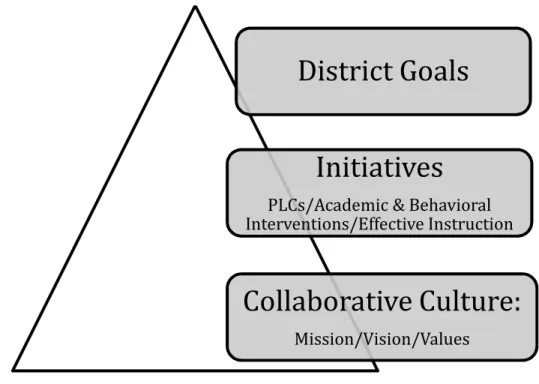
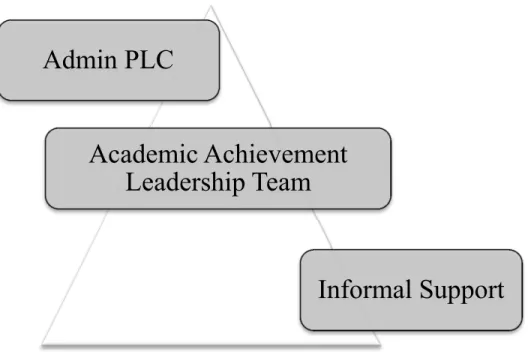
Figure 1. District Goals Alignment ...67 Figure 2. Structure of the System of Support ...75 Figure 3. Learning and Leadership Feedback………...117
Section 1: The Problem
Introduction
Education has seen many reform movements over the past few decades that have impacted the role of leaders and their ability to enhance student learning. These reforms have striven to improve the quality of education for students to compete globally, to provide equitable access to education so that all students are higher performers, and, more recently, to prepare all students for college and careers after high school graduation (Bowles & Gintis, 2014; Darling-Hammond, 2010; Fullan, 2012; Spring, 2013; Zhao, 2009).
As reforms change practice for educators, it is important to consider the support that is offered to all stakeholders. This study sought to explore how principals, in particular, can be supported in the ever-changing educational landscape so that they can provide the instructional leadership that is needed for student success.
Many researchers recommend ongoing professional development for principals (Goldring, Preston, & Huff, 2012; Grissom & Harrington, 2010; Mendels & Mitgang, 2013; Reardon, 2011). School districts across the United States provide support structures for principals that include networks, learning communities, and coaching/mentoring programs (Barnes, Camburn, Sanders, & Sebastian, 2010; David & Talbert, 2010; Duncan & Stock, 2010; Fahey, 2011; Gill, 2013; Hatch & Roegman, 2012; Hite, Reynolds, & Hite, 2010; Honig, 2012; James-Ward, 2011; Mendels & Mitgang, 2013; Patti, Holzer, Stern, & Brackett, 2012; Rieckhoff & Larsen, 2011; Robinson, Horan, & Nanavati, 2009; Scott & Rarieya, 2011; Simieou, Decman, Grigsby, & Schumacher,
2010; Wahlstrom, Louis, Leithwood, & Anderson, 2010). For this study, a system of support for principals was described as the framework for ongoing professional
development using specific elements. These elements include professional development, collaboration through networks and learning communities, and coaching/mentoring partnerships. This study sought to understand (a) how one school district used these elements as part of their system of support for principals, and (b) how principals
perceived the system’s value in helping them develop their skills as instructional leaders.
Definition of the Problem
In a central California county, Innovate County (pseudonym), systems of support for principals—which would build knowledge and strengthen the skills as instructional leaders—are lacking. Providing such support can have a significant impact on student achievement (Goldring et al., 2012; LaPointe, Davis, & Cohen, 2006; Mombourquette & Bedard, 2014; Ringler, O’Neal, Rawls, & Cumiskey, 2013; Spillane & Kim, 2012). According to researchers, the impact of the principal on student learning is second to that of the classroom teacher (Fullan, 2014; Rieckhoff & Larsen, 2011; Seashore Louis, Dretzke, & Wahlstrom, 2010). With this in mind, an examination of how ongoing collaboration between instructional leaders and professional development can be provided for principals can add to professional practice and the literature. An examination could also inform the practice of educational organizations that seek to provide support for developing principals’ instructional skills.
For a system of support to offer effective ongoing professional development for principals as instructional leaders, three elements are necessary:
1. Professional development: Principals must have access to professional development; they must set goals for their learning and create a plan for achieving them.
2. Coaching/mentoring partnerships: Principals must form partnerships with other leaders who serve as either a coach or mentor to support the goals of the professional development plan.
3. Collaboration through networking: Principals must participate in a
professional network of leaders to learn from each other collaboratively and to solve complex problems collectively. Learning communities are formed within these networks to provide the environment for collaborative problem-solving and honest assessment of current reality. (“Principal Support
Framework,” 2013)
While there are workshops and informational meetings in Innovate County, ongoing support through coaching and networking with other leaders is optional and it is not well attended by most principals (C. Stringham, 2014). Because there are no effective systems of support for instructional leaders, there is a gap in practice. This is due in large part to the lack of professional development plans for principals, which are used to guide purposeful, ongoing professional development.
According to the Innovate County Office of Education website, opportunities to gain knowledge of current reforms are provided bimonthly; however, attendance records provided by the county office show that only 38% of districts in the county have
reform that supports innovation to prepare students for college and careers in the 21st century requires ongoing professional development for instructional (Akomolafe & Adesua, 2013; Fullan, 2011; Grissom & Harrington, 2010; Hatch & Roegman, 2012; Lingam & Lingam, 2013; Madsen, Schroeder, & Irby, 2014). While Innovate County offers workshops and professional development for teachers and leaders alike, according to a discussion during a monthly meeting with consultants (personal communication, October 24, 2014) the Innovate County instructional consultants claimed that the structure of these opportunities alone has not provided ongoing learning for many principals. They noted that, according to evidence at many sites, new ideas, strategies, and skills had not been implemented.
Providing support for principals to develop their instructional leadership skills and knowledge has a significant impact on student achievement (Goldring et al., 2012;
LaPointe et al., 2006; Mombourquette & Bedard, 2014; Ringler et al., 2013; Spillane & Kim, 2012). However, it is a challenge to provide adequate support (Barnes et al., 2010; Lingam & Lingam, 2013; Madsen et al., 2014; Rieckhoff & Larsen, 2011; Scott & Rarieya, 2011). While principal preparation programs contribute to a leader’s skill and ability upon entering the profession, an organized and efficient system of support for ongoing professional development is key to the continued growth of principals in schools (Bottoms & Fry, 2009; Goldring et al., 2012; Grissom & Harrington, 2010; Kearney, 2010; Lingam & Lingam, 2013; Madsen et al., 2014).
Rationale Evidence of the Problem at the Local Level
Innovate County has a diverse population and a variety of challenges in terms of school organization and size. According to the county website, there are 44 school districts, the smallest of which has an average daily attendance of 17 students, and the largest has an average daily attendance of 27,500 students. There are 29 small school districts in Innovate County. Those districts range from two teachers with 17 students enrolled to 31 teachers with 771 students enrolled.
But systems of support are lacking for school-site leaders. The leaders of small schools have a dual role as both superintendent and principal. In some cases, the leader also serves as a teacher. In 2014, 19 of the small schools sought support from the county office for teacher development and classroom coaching. Four of the schools, or 2%, participated in leadership development during the 2013-2014 school year. The leaders at these four schools participated in a network for leaders with others in the area. Two of those leaders also met with a consultant regularly for coaching support of their leadership skills. According to feedback received from these four leaders in interviews conducted by the county office, the network was helpful. However many solutions and ideas shared within the network could not be applied in their small school settings. In September 2014, the Assistant Superintendent of Innovate County Office of Education expressed concern about the lack of participation from small schools. While opportunities for
communication and collaboration are provided to these schools, few of them actively participate consistently. With inconsistent participation and a lack of cohesiveness within
the group, collaboration with honest inquiry and problem-solving does not exist for the leaders of these schools. Ongoing professional development for leaders of small schools requires consistent participation in networks, which allows leaders to build learning communities for continuous support (Preston, Jakubiec, & Kooymans, 2013; Versland, 2013).
In addition, the Office of Education learned through participant feedback and through analysis of attendance data that much of the support provided is not practical for the unique needs of leaders of small-school-districts. These leaders indicated that
networking was helpful on a broad level. But certain ideas and solutions were not practical for their small school setting. The principal of a rural small school in Innovate County found it challenging to encourage more collaboration among the staff with one teacher at each grade level. Because each taught a different grade level, it was difficult to get teachers to share ideas and to see the value of collaborating. The concept of vertical alignment and collaboration across grade levels in some schools is a challenge to the status quo.
Innovate County is also challenged with supporting the leadership needs of larger districts. A large school district has over 1,000 students and more than one school
building. According to records of attendance and contractual work provided by the Innovate County Office of Education (2014), 13 large school districts sought support for on-site support from the county office, through either workshop attendance or a contract. Attendance data from Innovate County Office of Education showed that while leaders at these schools attend specific training for leadership, attendance is inconsistent. In
addition, according to Innovate County Office of Education monthly meeting minutes from October 2014, consultants observed that principals did not reflect on or implement new strategies or ideas from workshops unless a consultant provided follow-up support. Inconsistent attendance at workshops and trainings created the need for more follow-up support.
When working with county office employees, teachers and leaders asked what other districts were doing. This prompted the county office to provide a venue for leaders to talk about and collaborate on their work. According to the assistant superintendent of instruction, the format of this venue has changed over the past few years to meet the needs of schools in the county (C. Stringham, personal communication, September, 2014). Prior to 2011, administrators attended curriculum council meetings at the Innovate County Office for a couple of hours five times per school year. During these meetings, county office personnel disseminated information about policy, guidelines from the state, and support services for schools and districts. This venue gave leaders a chance to get answers to their questions about policy and learning opportunities (C. Stringham, personal Communication, September 2014).
In 2012, the format was changed in order to offer a chance for districts to share their work, ideas, successes, and learning opportunities with each other. Based on a topic for each session, a panel comprised of teachers and leaders was formed to provide advice and examples of their work on improving student achievement. County office employees invited these panel members from districts that had experienced success with
Educational Resource Services monthly meeting in May 2014, instructional consultants reported that while leaders responded positively to hearing ideas, none of the schools were implementing any of them. Communication with panel members also indicated that participating schools and districts had not contacted them for further information or support. One principal stated,
It is strange that so many leaders come together, ask for support, and then just drop the ball and do not follow through. My intention was to offer some support as a panel member and then build a partnership or collaboration with other leaders. But, no one ever contacted me for more information and I am not really sure whom to reach out to myself (B. Bilbo, personal communication, September, 2014).
Without a structured system of support for leaders, the individual elements of
professional development do not provide ongoing learning and support for leaders who wish to impact student achievement (Fullan & Senge, 2010; Kay & Greenhill, 2012; Kirtman, 2013).
The purpose of this study was to examine a central California school district’s system of support for principals, a system that was designed to build their knowledge about, and strengthen their skills in, instructional leadership. The system was examined within the framework of the three elements of support for developing instructional leaders provided by the University of Washington’s Center for Educational Leadership: professional development, collaboration through networks and learning communities, and coaching/mentoring partnerships.
Evidence of the Problem from the Professional Literature
Navigating through 21st century learning and reforms, such as Common Core Standards, has presented challenges for leaders looking for support. Because many of these reforms are new there are no local models from which to glean information and ideas. All schools must design their innovations with little support from local models. Ongoing professional development for leaders is necessary so that schools can navigate the changing face of education and educational reform (Bottoms & Fry, 2009; Grissom & Harrington, 2010; Kearney, 2010; Lingam & Lingam, 2013; Madsen et al., 2014;
Mombourquette & Bedard, 2014; Scott & Rarieya, 2011). Current information and ideas are required to support innovation and the sustainability of school reform (Akomolafe & Adesua, 2013; Fullan, 2011; Hatch & Roegman, 2012; Knapp, Copland, Honig, Plecki, & Portin, 2010). In Innovate County, support in the form of workshops, conferences, and networking are regularly offered but in isolation and outside of a system of support that provides ongoing professional development. This is evidenced in the professional development catalog available on the Innovate County website. Individually, these elements - professional development, networks, and coaching/mentoring - do not build the capacity of leadership by way of a whole systems approach to professional
development (Fullan & Senge, 2010; Hargreaves & Shirley, 2009).
Few studies analyzed the importance of ongoing professional development for school principals (Barnes et al., 2010; Bottoms & Fry, 2009; Grissom & Harrington, 2010; Rieckhoff & Larsen, 2011). Barnes, Camburn, Sanders, and Sebastian (2010) examined learning and change among principals who participated in a sustained, ongoing
professional development program through their district. They found that the principals perceived the ongoing support as helpful in refining their practice and applying
knowledge with structures, tools, and protocols learned through the professional
development provided. Grissom and Harrington (2010) examined the connection between professional development of principals and school performance. They found that
university course work as professional development yielded lower ratings than participation in formal mentoring programs. Riekhoff and Larsen (2011) studied the perceptions of principals who participated in a model of school reform called Professional Development Schools (PDS). They found that principals perceived the model as allowing them to focus on sustainable school improvement and professional development. All of these researchers recommended further studies to analyze the impact of support for principals in different formats.
Innovate County Office of Education uses leadership research from researchers and practitioners such as J. Hattie (2011), M. Fullan (2014), D. Reeves (2009), and R. Marzano (2005) to inform professional development practices for a variety of settings and purposes as evidenced in the professional development catalog available on the Innovate County website. A gap in practice exists between the opportunities available for knowledge building and a systemic approach to support leaders in applying this
knowledge for sustainable change. This research was necessary to identify missing elements for the ongoing professional development of principals and to discover how the elements could be established systemically. This information could explain how to
develop a system of support for leaders and both student learning and the successful implementation of new standards.
Part of the successful implementation of new standards and preparing students for college and careers requires principals to use both innovation and instructional leadership to build capacity within schools (Fullan, 2014; Kay & Greenhill, 2012; Kearney, 2010; Mendels & Mitgang, 2013; Scott & Rarieya, 2011). Much of the research indicates that schools need to be collaborative and reflective of their practice in order to meet the needs of students in the 21st century. At the same time, principals are working in competitive, isolated, and noncollaborative environments (Bottoms & Fry, 2009; Fahey, 2011; Fullan, 2014; Kearney, 2010; Reardon, 2011; Rieckhoff & Larsen, 2011). In order to build capacity in schools, principals need to participate in similar problem-solving
environments and collaborate with other leaders (Barnes et al., 2010; Wahlstrom et al., 2010). While Innovate County offers a forum for this collaboration, the group lacks the cohesion that would be needed for honest inquiry and for opportunities to solve problems in schools.
Many principals are expected to accomplish more than ever before and to be more accountable while receiving fewer resources and less support (Fullan, 2014; Hargreaves & Shirley, 2009; Muhammad & Hollie, 2011; Piggot-Irvine, Howse, & Richard, 2013). It is expected that, by providing a system of support for ongoing professional
development—development that seeks to guide leaders in applying relevant knowledge and solving complex problems—an innovative and collaborative culture of learning will be facilitated (Goldring et al., 2012; Grissom & Harrington, 2010; Knapp, Copland,
Honig, Plecki, & Portin, 2010; Mombourquette & Bedard, 2014). Implementation of new practices and collaborative support within a systemic structure are lacking in Innovate County.
One factor that requires differentiated support is the fact that challenges are site-specific due to size, demographics, and location (Preston et al., 2013; Versland, 2013). Innovate County serves 29 small school districts and 15 large school districts. In addition to differences in size, demographic data collected from the Innovate County website revealed that many of its schools have a large populations of English learners and
students of low socioeconomic status. Another challenge noted in the research for leaders of small schools is location, which isolates students from resources (Preston et al., 2013; Versland, 2013). Some of the small schools in Innovate County are in rural areas. Ongoing professional development should be made available for leaders of all schools (Preston et al., 2013; Scott & Rarieya, 2011; Versland, 2013).
The purpose of this study was to examine a central California school district’s (Filigree School District, a pseudonym) system of support for principals that was designed to build their knowledge about, and strengthen their skills in, instructional leadership. The Filigree School District system was compared to three elements of support for developing instructional leaders provided by the University of Washington’s Center for Educational Leadership. As described earlier on pages 2 and 3, these elements included professional development, collaboration through networks, and
coaching/mentoring partnerships. The Filigree School District in central California is near Innovate County. Its demographics are similar to those of Innovate County in terms
of ethnic diversity, percentage of English learners, socioeconomics, and migrant status. Its schools range from small with one administrator to large with more than one
administrator. Each school leader in the district participated in a system of support provided by the district. The results of this study could be used to support organizations, such as county or district offices, that strive to provide ongoing professional development for school principals.
Definitions
In order to ensure understanding, the following terms have been defined as they were used throughout this study.
Instructional leader: An instructional leader provides support to their school community through management, collaboration, and focused learning. The main goal of instructional leaders is to improve instruction through analysis of teaching and learning. Essentially, instructional leaders are “leaders of learning” (The Wallace Foundation, 2013). First and foremost, instructional leaders clarify a vision of successful learning and create a climate for collaborative learning for all (Marzano, Waters, & McNulty, 2005). Effective instructional leaders share leadership with others as the community learns together through inquiry and action (Fullan, 2011; Lambert, 1998).
Leadership: Leadership is creating a collaborative, synergistic professional community for learning (Knapp et al., 2010; Lambert, 1998; Shantal, Halttunen, & Pekka, 2014; SRI International, 2011). Lambert (1998) and Knapp, Copland, Honig, Plecki, and Portin (2010) separated the role of leader from the definition of leadership to distinguish between looking at strong or poor leadership as a single person. Instead, their
definitions further describe the importance of collaborative learning. A component of leadership is the shared work that influences the entire team toward a shared vision (Fullan, 2014; Maxwell, 2013; Sterrett & Haas, 2009).
Learning community: The learning community described in this study focuses on how principals learn together. Principal learning communities operate much like
professional learning communities (PLCs) employed by many teachers in schools (David, 2009). While the PLC within a school site will analyze student-learning data to determine interventions and next steps, a principal learning community takes on a broader view. Student learning data is analyzed to inform principals about areas of need for
instructional support or identify problems for schoolwide practice and professional learning opportunities (Barth et al., 2005; Dufour & Fullan, 2013). Principals should also serve as active participants in their school’s PLCs; the principal learning community becomes another venue for learning how best to organize and facilitate the school site PLCs (Darling-Hammond, Orphanos, LaPointe, & Weeks, 2007).
Mentoring/Coaching: Mentoring and coaching are similar in terms of purpose. Both provide principals with ongoing professional learning through collegial support and guidance (Goldring et al., 2012; Scott & Rarieya, 2011; Versland, 2013). Mentoring is provided for principals who are newer to the principal position. Coaching is provided for more experienced principals. Mentors are more experienced principals that provide support through guidance, advice, problem-solving, and observation (Grissom & Harrington, 2010; SRI International, 2011). Mentors and coaches could be colleagues, retired educators, or consultants associated with a university or other organizations
(Duncan & Stock, 2010; Elder & Padover, 2011; Grissom & Harrington, 2010; James-Ward, 2011; Robinson et al., 2009).
Network: In this study, the term network is used to describe the multiple resources available to principals from which to learn. These resources include colleagues in similar job positions, organizations that provide professional development for leaders, and people who can engage principals in learning and application of skills and knowledge such as a coach or mentor. Networks could be localized or they could be through virtual
environments using the Internet (Scott & Rarieya, 2011). The essential component of a network is that it is comprised of colleagues with similar responsibilities to offer support for each other in their respective working environments (Goldring et al., 2012; Grissom & Harrington, 2010; Scott & Rarieya, 2011).
Systems of support: For the purpose of this study, a system of support refers to the elements within a system that supports principals with ongoing professional
development. These elements are derived from the conceptual framework that is used and described in detail on page 18 of this paper (“Principal Support Framework,” 2013). The elements are interdependent and form a complete system of differentiated support for principals to build their knowledge and strengthen their skills as instructional leaders.
Significance
Findings from this study may inform other educational organizations that are seeking to develop a system of support to provide principals with ongoing professional development. Effective support for instructional leaders provides opportunities to develop
the knowledge and skills they need to create learning communities within which adult learners can work together to improve student learning.
Professional learning that provides opportunities for principals to enhance their skills of inquiry is essential within a system of support. These skills enhance their learning and can be used with reflective practices with their school staff. Fullan (2014) asserted that principals effect change by creating collaborative environments that promote inquiry that is focused on improvement. Part of the inquiry cycle involves reflection on practice. But principals often do not have time for this, nor is it a part of their school culture. A system of support for principals could provide opportunities for principals to reflective on their own practices and to learn how to develop more reflective practices within the school community. Many researchers support instructional leadership through inquiry and collaboration focused on data and useful information for shared decision-making and reflection (Bryk, 2010; Fullan, 2011; Kirtman, 2013).
Implications for Positive Social Change
The information gathered from this case study can inform the practice of providing a structure for ongoing professional development to principals. The district studied provides a support system for principals that encompass collaboration, coaching, mentoring, and professional development. County offices can benefit from looking at the structure examined to inform their plans for networks and forums that engage principals in meaningful dialogue and reflection of their impact on student learning. State offices can also benefit from a look at how they can provide resources for both large and small school districts to offer similar structures of support.
Using the findings from this case study and the information gleaned from the literature, this project will serve as a guide for developing systems of support for instructional leaders in Innovate County. The project was designed by considering the lessons learned from the Filigree School District and using the literature to inform best practices for differentiating support for principals.
Guiding Question
As educators embark into new territories in education, such as Common Core State Standards, it is important that, to implement shifts in instruction, leaders are given the same level of support as teachers. While instruction is shifting, so too are leadership and the way schools work and learn together. Leaders need support to shift their practices to support the instructional shifts that teachers are navigating. Leadership at a school site is often perceived as lonely because in many cases there is one leader at a the site
(Goldring et al., 2012). Creating a system of support that allows principals to network with each other, to problem solve, and to build their knowledge about instruction is one way to support leaders as they strive to support students and teachers through the learning process (Grissom & Harrington, 2010; Madsen et al., 2014; Mombourquette & Bedard, 2014; Shantal et al., 2014; Versland, 2013). The purpose of this study was to examine the Filigree School District system of support for principals, a system that is designed to build their knowledge about and strengthen their skills in instructional leadership. The district’s system was compared to three elements of support for developing instructional leaders recommended by the University of Washington’s Center for Educational
1. How does the Filigree School District structure its principals’ network to support principal learning and collaboration?
2. How does the Filigree School District provide professional development plans to support principals in building knowledge and strengthening their
instructional leadership skills?
3. How does the Filigree School District provide principals with coaching and mentoring to support principals in building knowledge and strengthening their instructional leadership skills?
4. How do principals in the Filigree School District perceive their district’s system of support?
Review of the Literature
Professional learning for principals can provide support in maximizing the impact of instruction on student learning (Grissom & Harrington, 2010; Kearney, 2010; Knapp et al., 2010; Madsen et al., 2014; Mombourquette & Bedard, 2014; Reardon, 2011;
Rieckhoff & Larsen, 2011). This literature review examines the existing research to discover elements of a system of support aimed at building instructional leadership capacity in principals within a principal support framework for ongoing professional development.
Conceptual Framework
This study was grounded in a conceptual framework for leadership development derived from the University of Washington’s Center for Educational. The purpose of this study was to examine the Filigree School District system of support for principals
designed to build their knowledge about and strengthen their skills in instructional leadership. Their system was juxtaposed to three elements of support for developing instructional leaders provided by the University of Washington’s Center for Educational Leadership. The three elements within this framework are (a) professional development, (b) coaching/mentoring partnerships, and (c) networks for collaboration.
An examination of the literature reveals that ongoing professional development of principals is needed to build leadership capacity (Goldring et al., 2012; Knapp et al., 2010; Madsen et al., 2014; Mendels & Mitgang, 2013). Not only do principals foster support of student and teacher learning, they too, must learn alongside students and colleagues. As such, a system of support can provide ongoing professional development to build instructional leadership capacity in principals, which can prepare leaders with the knowledge and skills necessary to effectively lead a community of learners.
Grounded in the goal of providing ongoing professional development, a structure for systems of support for principals is described from the literature and from the case study. These systems of support include elements that create a balanced approach to professional development for principals. The University of Washington’s Center for Educational Leadership (2013) has developed a principal support framework to provide guidance to school districts who seek to focus on developing principals as instructional leaders. The framework was designed to help leaders at both the district and school site levels to
• assess their school system’s current approach to supporting principals as instructional leaders,
• identify strengths to build on,
• identify technical assistance needs, and
• highlight areas for inquiry and next-stage policy development. (“Principal Support Framework,” pp. 1-2, 2013)
The framework has been used and tested in school districts across the country to obtain feedback for revisions. The framework was then synthesized into three action areas. These three areas include (a) a shared vision of principals as instructional leaders, (b) a system of support for developing principals as instructional leaders, and (c) making it possible for principals to be instructional leaders. For the purpose of this case study, the researcher explored Action Area 2, system of support for developing principals as
instructional leaders. The key ideas for Action Area 2 focus on the support from district office personnel and a structured system to help principals grow as instructional leaders. These key ideas include:
1. Instructional leadership directors (ILDs) are hired to focus on developing principals. A responsibility of the ILD is to provide principals with
professional development that is relevant to their needs as well as facilitating networks for collaboration with all principals.
2. Differentiated support is offered for principals through coaching or mentoring along with the development of a professional growth plan.
4. ILDs collaborate with other central office departments regarding principal professional development.
5. ILDs are provided support by central office and are held accountable for principals’ growth and performance through evaluations and collected data. (“Principal Support Framework,” 2013, pp. 5-6)
Within these key ideas exist the three elements of a structured system of support for developing instructional leaders that will be explored in this study: (a) professional development, (b) coaching/mentoring partnerships, and (c) networks for collaboration. These elements provide for a sustainable support system for principals to grow as instructional leaders. As part of this system of support, the principal is better prepared to create environments of learning throughout the school to include students, teachers, and the community. A 4-year program evaluation study in Sanger Unified School District demonstrated how a system of support for principals effected change in school culture, which in turn increased student achievement (David & Talbert, 2010). Sanger’s system included two of the elements discussed in this study, principal collaboration and focused professional development. In another mixed-method research study on principals within a network over a 3-year period, participating principals articulated that the support they received through collaboration with other leaders helped them improve their practice in a number of ways (Rieckhoff & Larsen, 2011). The principals were more purposeful in goal development, revision, articulation of goals, and resourcefulness to support those goals. They also shared that their professional development plans were more specific and aligned with school improvement plans. Finally, they reported that the collaboration in
partnership with other districts provided them with a forum for their own professional development. In both of these studies, two elements, principal collaboration and professional development, existed as part of the system of support. However, coaching and mentoring partnerships were not clearly articulated as an element within these studies.
To better understand how ongoing professional development exists within a system of support, the research questions focused on the elements included at the Filigree School District. Additionally, they examined how the elements of professional
development, coaching/mentoring partnerships, and networks for collaboration were embedded within the system implemented in the school district. Furthermore, the case study approach allowed the researcher to ascertain the support for building instructional leadership capacity through the analysis of data gathered from the perceptions of
principals involved in ongoing professional development.
Review of the Broader Problem
The following is a list of factors gleaned from the research and addressed in the literature review that could inform the development and analysis of a system of support for principals:
1. Collaborative communities foster inquiry practices that lead to problem-solving and implementation of new knowledge and skills (Barnes et al., 2010; Honig, 2012; Knapp et al., 2010). Within a principal learning community, which will be described in detail below, these principals receive support in
problem-solving through open and honest sharing of relevant evidence of student learning.
2. A network of support with other colleagues can provide further insight and new ideas for student achievement (Hatch & Roegman, 2012; Knapp et al., 2010). Similar to collaborative communities, networks provide opportunities for principals to learn through inquiry. Within a network, one might see a variety of formats for this inquiry. Professional development is one format for this network. Described below are the different formats that professional development might take to provide a network of support for principals. In the 21st century, opportunities for networking with other colleagues has
increased. Principals can network locally with their colleagues and
neighboring schools and districts, as before, within a workshop environment. However, principals can also network with other leaders around the world using a variety of communication systems such as Twitter, Skype, Google Hangouts, e-mail, and other online learning communities.
3. Partnerships in the form of coaching or mentoring can provide differentiated support to leaders to improve their practice (Mendels & Mitgang, 2013; Patti et al., 2012). While collaborative communities and networks foster learning within groups, partnerships afford the opportunity for principals to practice with a critical friend who can provide kind, specific, helpful feedback for improvement. The nature of these partnerships will be described below in detail.
To find peer-reviewed, scholarly sources for this study, I used the following databases: ProQuest Central, ERIC, Educational Research Complete, and Google Scholar. The Wallace Foundation was important because it provided statistical information and reports on structures for supporting principals. I used the following search terms: professional development, principal development, learning leader,
coaching, mentoring, leadership, principal preparation, school leadership, change agent, school change, learning culture, and leadership capacity. Through this process, I found 55 journal articles and 9 reports on the topics of leadership, systems, and principals. To identify the local problem, Innovate County Office of Education provided data from its public sources available on the Internet and through personal communication.
Systems of Leadership Support
A system of support for principals provides a structure for ongoing professional development. A system encompasses the many formats of professional development to allow leaders to collaborate, learn and share with others in similar roles, as well as reflect upon and apply new learning in their respective school environments. Within the
research, one can find many formats that constitute professional development including workshops, seminars, conferences, mentoring, shadowing, coaching, and the list could go on (Bottoms & Fry, 2009; Goldring et al., 2012; Grissom & Harrington, 2010; Knapp et al., 2010; Rieckhoff & Larsen, 2011; SRI International, 2011; Wahlstrom et al., 2010). This study examined a central California school district system that provides support to principals in building knowledge and strengthening their instructional leadership skills and determined how the school district provides a system of support for principals.
The term system of support is intended to describe the ongoing professional development plan and interactions for principals. Kearney (2010) suggested that principals should be provided with the opportunity to participate in “a coherent and comprehensive system for principal development and support” (p. iii). The system includes professional development that allows principals to participate in peer-to-peer learning (Bottoms & Fry, 2009). Systems of support provide principals with opportunities to focus on their own learning needs while also contributing to the collective growth of peers, which in turn expands their own learning (Goldring et al., 2012; Wahlstrom et al., 2010).
Learning is personal and occurs best in groups (Goldring et al., 2012; Madsen et al., 2014). A system of support offers the opportunity for principals to challenge their own beliefs, answer difficult questions, and problem solve collectively (Goldring et al., 2012; Madsen et al., 2014; Sterrett & Haas, 2009). The purpose of a system of support is to provide the necessary learning and environment for principals to be successful at their jobs (Mendels & Mitgang, 2013). The focus of the collaborative, professional learning is “on improving the quality and practice of leadership” (Knapp et al., 2010, p. 33).
Professional Development
The term professional development has a very broad meaning. Professional development could take the form of attending a workshop or training session or it could include the entire plan for professional growth. Within a system of support for principals, professional development is a process that is ongoing and sustained with multiple
professional development process for principals includes both formal and informal opportunities for learning (Scott & Rarieya, 2011). Piggot-Irvine (2010) described the development of principals as a career-long process that is highly reflective of the job itself. Unlike an event for training of new curriculum or implementation of mandates, professional development within a system of support should be designed to help
principals develop their leadership skills and capabilities to build capacity for sustained school improvement (Grissom & Harrington, 2010; Madsen et al., 2014). These
experiences are included in a professional development plan with an identified focus and are tied to measures of success in order to ascertain growth and garner feedback from the learning community. Zimmerman (2011) emphasized the need for leaders to develop a plan for professional learning that has clear and specific goals accompanied by practical steps to ensure the process for continuous improvement is attainable.
To develop the leadership capacity of principals, professional development must be multifaceted. The curriculum used must be flexible and allow for job-embedded application (Goldring et al., 2012; Piggot-Irvine, 2010). Differentiating the approach and the curriculum is important for meeting the unique needs of different settings and the different needs of the leaders (Knapp et al., 2010). Wahlstrom (2010) added the importance of recognizing that elementary, middle, and high schools have different settings. Principals within these different settings can learn from each other in terms of general leadership models and provide a frame for vertical articulation. However,
differentiating for the application within the context of the school is essential (Goldring et al., 2012).
The curriculum used for professional development must provide practical tools and processes to allow for the application of new learning within the context of the respective school setting (Goldring et al., 2012). This provides principals with the
opportunity to apply new learning and reflect for deeper learning and understanding. The focus needs to be on the real work of the principal while incorporating research-based strategies and theories of change (Goldring et al., 2012; Grissom & Harrington, 2010). By providing this balance and the opportunity for reflection, leaders can develop a deeper understanding of theory and current practices (Madsen et al., 2014).
Professional development for instructional leaders is complex and ongoing
(Goldring et al., 2012; Piggot-Irvine et al., 2013). It offers a plan for professional learning that encompasses many settings and formats. The goal is to improve student learning, which requires principals to participate in opportunities that will deepen their
understanding of effective instructional practices. Beyond the workshop or conference session, professional learning exists in other collaborative formats. The professional development described here can exist in these different formats that provide deeper understanding of problem-solving and application. The following sections will describe a few of these formats of professional development: networks, principal learning
communities, and coaching/mentoring partnerships.
Networks
One might consider a system of support as a network for gaining new knowledge and collaborating with colleagues. Shaked and Schechter (2013) referred to a school network as an example of systems thinking for lifelong learning. They describe these
networks as the collaborative meeting of principals and other school staff members from different school settings to “advance educational practices, share their professional expertise with each other and learn from their colleagues’ experience” (p. 785). Within a system of support, a network provides a structure for principals to learn together through the sharing of new knowledge and inquiry into current educational challenges, initiatives, programs, and policies (Enomoto, 2012).
Networks can be structured to provide learning opportunities for leaders and at the same time provide flexibility for relevant learning and application to meet the needs of principals (Carlson, 2012). Within a system of support, internal networks are structured to provide opportunities for leaders to learn together toward a common vision. In addition to these internal networks, instructional leaders may belong to external networks of their choosing to deepen their own understanding in areas that pertain to their professional goals. Examples of external networks include those created through attendance of academies sponsored by professional organizations such as the Association for Supervision and Curriculum Development (ASCD) or the Association of California School Administrators (ACSA). External networks can also include social media such as Twitter and online learning environments such as massive open online courses (MOOC).
Because these external networks are on a larger scale and available online, they can include educators and organizations from around the globe (Gao et al., 2012; Lieberman, 2000). Principals may be involved in multiple networks that inform their practice. Within a system of support, a network is internal and can provide opportunities for principals to share their learning from other networks with whom they are involved.
These external networks could be included in a professional development plan to target specific learning goals and shared with the internal network to support other learners.
Principal Learning Communities
There are many facets to the principal learning community. Leaders identify and solve problems based on student learning data (Barnes et al., 2010; Dufour & Fullan, 2013; Rick DuFour & Mattos, 2013; Mombourquette & Bedard, 2014, 2014; Wahlstrom et al., 2010). To build the knowledge of principals, these communities focus on
instructional practices to foster student achievement and to meet the needs of particular content areas and student populations (Bottoms & Fry, 2009; Dufour & Fullan, 2013; Honig, 2012). David (2009) pointed out that these “principal learning communities need sufficient time, strong facilitators, and carefully constructed agendas grounded in the real problems that school administrators face” (p. 89). It is important to provide the time and space needed for this to occur as well as a structure provided by a facilitator.
Learning communities can serve a valuable role in a system of support for leaders. Principal learning communities provide an opportunity for practitioners to share
knowledge, learn jointly, and engage in inquiry to solve problems and find solutions (Barnes et al., 2010; Dufour & Fullan, 2013; Rick DuFour & Mattos, 2013). Members of a principal learning community typically share a similar job description or work within the same organization. In this way, principals can offer support to their peers and serve as a resource for building leadership capacity (Honig, 2012). As Reardon (2011) pointed out, “engaging principals in dialogue with each other and school district administrators
offers a sustainable way of approaching the challenges” principals face as they work toward instructional leadership practices (p. 81).
Effective learning communities are grounded in a shared set of values, beliefs, and a vision (Cook, 2014; Fahey, 2011). Similarly, learning communities share an understanding of the measures of success as they examine evidence of learning and problem solve together. While the members of the community work in different locations and different settings, the learning community remains focused on the goals for improved student learning. Collaborative relationships formed within the community offer support for principals who seek to improve student learning at their school site (Fahey, 2011). Communication and collaboration across schools provides the opportunity for principals to share their experiences to develop and apply knowledge within their own context (Mombourquette & Bedard, 2014; Seashore Louis, Leithwood, Wahlstrom, & Anderson, 2010). As part of the process of professional development, members of the community engage in self-reflection and action research as they seek to learn and support each other (Cardno, 2006; Dufour & Fullan, 2013; Fahey, 2011). The learning community provides support and feedback for solving complex problems that is grounded in evidence from data and research (Bottoms & Fry, 2009). In this way, principals must be open about their practice to seek out solutions and ideas for learning and application within their school environment (Fahey, 2011).
For these learning communities to thrive, members need to have a commitment toward each other to create the necessary environment for open communication and problem-solving. While some flexibility must exist for professional development, strong
facilitation by a leader within the community and a relevant agenda for meetings is important (David, 2009; Fahey, 2011). Fahey (2011) suggested that the use of protocols ensures that the focus remains on student learning and problem-solving. Structure for learning and communication ensures that the learning community remains focused on the vision for improved student learning.
Coaching and Mentoring Partnerships
Coaching and mentoring opportunities within a system of support for principals provides an opportunity for one-on-one problem-solving and learning. Leaders form partnerships that become part of a coaching and mentoring structure for differentiated support. Principals can develop new skills as a result of the partnerships formed with colleagues (Carlson, 2012). These partnerships provide ongoing support for professional development that is job-embedded to fit the context of their work environment and reduces isolation experienced by leaders in rural and small school settings (Duncan & Stock, 2010; Goldring et al., 2012; Robinson et al., 2009). Coaching and mentoring provides the opportunity to apply learning and implement new strategies for school improvement gleaned from other forms of professional development (Elder & Padover, 2011). A key factor for the success of any coaching or mentoring culture is a focus on results and improved performance (Grissom & Harrington, 2010; Reeves, 2009).
The one-on-one nature of the coaching/mentoring partnership allows participants to use a cycle-of-inquiry for problem-solving (Honig, 2012; Knapp et al., 2010). The use of protocols for discussions grounded in data ensure that the partnership is focused on continuous improvement (Honig, 2012; Reeves, 2009). This continuous improvement is
evidenced within the measures of success identified by the community or the
coaching/mentoring partners. Coaching and mentoring structures makes differentiating professional development for leaders attainable. Individual professional development plans can be addressed in a partnership with a coach or mentor, allowing for focused learning in areas for improvement. Robinson, Horan, and Nanavati (2009) suggested that coaching and mentoring offer the opportunity to build a continuum of support that benefits all levels of experience and skill. Coaches and mentors provide feedback and modeling of leadership practices to deepen understanding and support implementation of new ideas and strategies (Honig, 2012; Knapp et al., 2010; Reeves, 2009). They often work alongside principals to observe and critique in order to support the principal’s professional learning (Grissom & Harrington, 2010). Based on the collaborative conversations and feedback, coaches and mentors can also connect principals with the resources necessary for their continued learning and improvement (Grissom &
Harrington, 2010).
Coaching and mentoring partnerships have been associated with greater performance and confidence of participating principals (Grissom & Harrington, 2010; Patti et al., 2012; Versland, 2013). Through the collegial support, principals engage in self-reflection about their goals and their current practice (Patti et al., 2012). This
reflection is essential for principals to navigate changes in the educational climate and for continued improvement.
The terms coaching and mentoring are often used interchangeably. While they share many of the same characteristics, there are some differences that should be noted.
Combining coaching and mentoring into a system of support for principals benefits both new and veteran leaders (Robinson et al., 2009).
Coaching. The term coaching is often used to describe partnerships focused on problem-solving and improved performance through collaboration with a colleague. Elder and Padover (2011) emphasized that “the purpose of coaching is to transform the person and the organization” (p. 139). This supports the notion that change is a part of coaching, using the experience of the coachee to learn and inquire further about changes in practice that will give them the results they seek (Elder & Padover, 2011; Robinson et al., 2009). Coaching, as part of a system of support for professional development, has been associated with school improvement when feedback, reflection, and a focus on results are emphasized (Goldring et al., 2012; Grissom & Harrington, 2010; Honig, 2012; Knapp et al., 2010; Patti et al., 2012; Reeves, 2009). Using identified measures of
success, this process is enhanced through focused collaboration with the coach.
Reeves (2009) offered three prerequisites for effective coaching: (a) the person receiving coaching must be committed to a change in performance, (b) a clear learning and performance agenda should be created, and (c) relevant, useful, and timely feedback should be provided for continuous improvement. Coaching as part of a professional development plan is intended for those seeking support in changing practice and improving upon their skills. Coaches help individuals apply their learning. As such, a coach needs to be a knowledgeable colleague. In some cases, the coach may be a far more experienced individual. In others, the coach may have the same number of years of experience, but can offer insight from having had different experiences and knowledge.
Mentoring. Mentoring is provided to those who are new to a leadership position (Scott & Rarieya, 2011). Mentors are usually more experienced individuals who offer guidance to those who are beginning their careers in leadership (Mendels, 2012; Mombourquette & Bedard, 2014; SRI International, 2011; Versland, 2013). Browne-Ferrigno and Muth (2006) described leadership mentoring as “the formal and informal social construction of professional performance expectations developed through purposeful interactions between aspiring and practicing principals in the context of authentic practice” (p. 276). Where coaching is focused on a change in performance to meet goals, mentoring is focused on the individual’s skill and knowledge development for high performance toward set goals (Duncan & Stock, 2010). In a system of support, new principals may engage in a partnership with a mentor, while more experienced principals work with a coach. Mentors serve as critical friends that can provide the encouragement and support to take risks that will improve student learning (Duncan & Stock, 2010). This process is enhanced through inquiry and problem-solving supported by feedback (Duncan & Stock, 2010; Elder & Padover, 2011).
Reeves’s (2009) prerequisites for coaching exist for mentorships with subtle differences. In coaching, the person receiving coaching must be committed to a change in performance. In mentoring, the support is offered to new principals to apply new learning and strategies (Mombourquette & Bedard, 2014). Like coaching, a clear learning and performance agenda should be created. The agenda for mentoring may be more
fundamental than for coaching an experienced principal and provides differentiation to meet the needs of the individual (Versland, 2013). Finally, both coaches and mentors
should be provided relevant, useful, and timely feedback for continuous improvement. Assessing the performance of new principals is essential for continued growth and offering the necessary resources and support for improvement (Mendels, 2012).
Structured Systems of Support for Principals
Described above are the elements of a system of support for principals including professional development, networks and principal learning communities, and
opportunities for partnerships in the form of coaching and mentoring. Within a system of support, all of these elements are present (Fullan & Senge, 2010; Kearney, 2010;
Kirtman, 2013; Knapp et al., 2010; Mendels & Mitgang, 2013). Each of these individual elements has merit for supporting the learning and skill development as leaders. What makes a system of support unique is that all of these elements are purposefully and intentionally provided to principals for the purpose of continuous improvement of both individuals as leaders and the school district collectively.
Carlson (2012) found that structures for support are important as they ensure the elements of a system are used effectively. However, he also cautions that there needs to be some flexibility within the structures so that partnerships and collaboration continue to be relevant for ongoing professional development. Threaded into these components are also the elements of professional development plans and measures of success. These elements of a professional growth plan and a procedure to measure how well the principal met the goals of the plan are essential for ensuring the relevance of the learning and feedback for improvement.
Summary
Amid the changing tides of education following the adoption of Common Core Standards in most states, which seeks to prepare students for college and careers through the mastery of 21st century skills, teachers are learning how to shift their instructional
practices. School leadership is also experiencing a shift in the way schools are led and managed. Instructional leaders lead the learning within a community of shared leadership fostered by collaboration and problem-solving with peers. To lead in this kind of
environment, principals need to reflect on their practice and how they structure support for teachers and students. Principals need ongoing professional development in order to make the shift and for continuous improvement for student learning and achievement (Hite et al., 2010; Kearney, 2010; Mombourquette & Bedard, 2014; Shantal et al., 2014).
The Filigree School District is a diverse district in central California that provides support to principals by facilitating the building of knowledge and strengthening of their instructional leadership skills. The purpose of this study was to examine their system of support for principals designed to build their knowledge about and strengthen their skills in instructional leadership. The Filigree school district system was compared to three elements of support for developing instructional leaders provided by the University of Washington’s Center for Educational Leadership. Insights from this study could aid similar educational institutions in learning about current practices and challenges as they seek to develop systems of support for principals. Positive social change can be achieved through focused collaboration and support of principals whose mission is to create a culture of continuous improvement of self and others.
In Section 2, I will provide support for the qualitative approach and design; describe the participants and how I recruited them; and explain the findings from the data analysis.