THE RELATIONSHIP BETWEEN COGNITIVE TESTS
AND THE ACADEMIC PERFORMANCE OF STUDENTS
ON AN MBA PROGRAMME
by
CIARA BUX
submitted in accordance with the requirements for the degree of
MASTER OF COMMERCE
in the subject
INDUSTRIAL AND ORGANISATIONAL PSYCHOLOGY
at the
UNIVERSITY OF SOUTH AFRICA
SUPERVISOR: FRANS MALOA
DECLARATION
I, Ciara Bux (student number 48447196) declare that this dissertation entitled, “The relationship between cognitive tests and the academic
performance of students on an MBA programme”
is my own work, and that all the sources I have used or quoted have been indicated and acknowledged by means of complete references.
________________________ Ciara Bux
2014
ACKNOWLEDGEMENTS
I wish to express my sincere thanks and appreciation to the following individuals, without whom, this dissertation would not have come to fruition:
• My academic supervisor, Frans Maloa, for his guidance, assistance,
support and encouragement in completing my dissertation.
• My mentor, Jon Taylor without whom this study would not have
been possible, and my passion for the field of psychological assessment would not have been realised.
• My aunt Mary, for her continued support and dedication to my
education.
• Deepak Singh, for his assistance with analysing the data and Linda
Robinson, for professionally and critically editing the manuscript.
For my parents,
your endless love, support and encouragement has enabled me to reach heights never thought possible.
Thank you for teaching me to believe in my dreams and myself. This dissertation is dedicated to you.
SUMMARY
THE RELATIONSHIP BETWEEN COGNITIVE TESTS AND THE ACADEMIC PERFORMANCE OF STUDENTS ON AN MBA PROGRAMME
by CIARA BUX
SUPERVISOR : Mr Frans Maloa
DEPARTMENT : Industrial and Organisational Psychology
DEGREE : MCom (Industrial and Organisational Psychology) The objective of this study was to determine if a statistically significant positive relationship exists between the cognitive tests (APIL and Critical Reasoning Test Battery - NCR2 and VCR2) and the academic performance of students on an MBA programme. A quantitative cross-sectional study was conducted on a non-probability purposive sample (N=329) of MBA students at an institution of higher learning in South Africa.
A theoretical relationship was established between the variables. The empirical relationship revealed statistically significant relationships between the cognitive tests and academic performance on an MBA programme.
The findings contribute valuable knowledge to the field of psychological assessment that can be applied in the selection of students for higher education.
KEY TERMS
Cognitive tests; MBA; academic performance; psychometrics; intelligence; students.
TABLE OF CONTENTS
CHAPTER 1
SCIENTIFIC ORIENTATION TO RESEARCH 1
1.1 BACKGROUND AND MOTIVATION 1
1.2 PROBLEM STATEMENT 4
1.2.1 Research questions with regard to the literature review 5 1.2.2 Research questions with regard to the empirical study 6
1.3 AIMS 6 1.3.1 General aim 6 1.3.2 Specific aims 7 1.3.3 Central hypothesis 7 1.3.4 Research hypotheses 8 1.4 PARADIGM PERSPECTIVE 9
1.4.1 The intellectual climate 9
1.4.1.1 Literature review 9 1.4.1.2 Empirical study 9 1.4.2 Meta-Theoretical statements 10 1.4.2.1 Industrial psychology 10 1.4.2.2 Psychometrics 10 1.4.2.3 Psychological assessment 11 1.4.3 Theoretical model 11
1.4.4 Applicable concepts and constructs 12
1.4.4.1 Cognitive tests 12
1.4.4.2 Academic performance 12
1.4.4.3 Masters in Business Administration 12
1.4.5 Methodological convictions 13
1.5.1 Research approach 14
1.5.2 Research variables 14
1.5.3 Reliability and validity 15
1.5.3.1 Reliability 15
1.5.3.2 Validity 15
1.5.4 Unit of analysis 16
1.5.5 Methods to ensure ethical research principles 16
1.6 RESEARCH METHOD 17
1.6.1 Phase 1: Conceptualisation of literature review 17
1.6.2 Phase 2: Empirical study 17
1.7 CHAPTER LAYOUT 19
1.8 CHAPTER SUMMARY 20
CHAPTER 2
LITERATURE REVIEW: COGNITIVE TESTS AND ACADEMIC
PERFORMANCE 21
2.1 INTRODUCTION 21
2.2. DEFINING PSYCHOMETRIC ASSESSMENT 21
2.2.1 Basic requirements for psychometrics assessments 23
2.2.1.1 Reliability 23
2.2.1.1.1. Test-retest reliability 24
2.2.1.1.2 Alternate-form reliability 24
2.2.1.1.3 Internal consistency reliability 24
2.2.2.1.4 Inter-scorer reliability 25
2.2.2.1 Validity 25
2.2.2.1.2 Construct validity 25
2.2.2.1.3 Content validity 26
2.2.2.1.4 Criterion-related validity 26
2.3 ASSESSING INTELLIGENCE 28
2.3.1 Defining intelligence 28
2.3.2 Defining psychometric intelligence 29
2.3.3. Evolution of theories of intelligence 30
2.3.3.1 Galton (1822-1911) 30
2.3.3.2. Alfred Binet (1857-1911) and Theodore Simon (1873-1961) 31
2.3.3.3 Charles Spearman (1863-1945) 31
2.3.3.4 Raymond B Cattell (1960s-1970s) 32
2.3.3.5 Anne Anastasi (1908-2001) 32
2.4 COGNITIVE TESTS 33
2.4.1 Conceptualisation 33
2.4.2 Theoretical Model: Approaches to assessing cognitive ability 34
2.4.2.1 The conventional or structural approach 34
2.4.2.2 The information processing approach 35
2.4.2.3 The learning or dynamic approach 36
2.5 ACADEMIC PERFORMANCE 37
2.5.1 Conceptualisation 37
2.5.2 Variables of academic performance 39
2.5.2.1 Personality 39
2.5.2.2 Age 40
2.5.2.3 Work experience 41
2.6 THEORETICAL RELATIONSHIP BETWEEN COGNITIVE
TESTS AND ACADEMIC PERFORMANCE 41
2.7 IMPLICATION OF COGNITIVE ABILITY FOR ACADEMIC
PERFORMANCE 43
CHAPTER 3
RESEARCH ARTICLE - THE RELATIONSHIP BETWEEN COGNITIVE TESTS AND THE ACADEMIC PERFORMANCE
OF STUDENTS ON AN MBA PROGRAMME 45
CHAPTER 4
CONCLUSIONS, LIMITATIONS AND RECOMMENDATIONS 81
4.1 CONCLUSIONS 81
4.1.1 Conclusions regarding the literature review 81 4.1.1.1 Aim 1: Conceptualisation of cognitive tests from a
theoretical perspective 81
4.1.1.2 Aim 2: Conceptualisation of academic performance from a
theoretical perspective 83
4.1.1.3 Aim 3: Explanation into the theoretical relationship between cognitive tests and the academic performance
of students on an MBA programmes. 84
4.1.2 Conclusions regarding the empirical study 85 4.1.2.1 Aim 1: To investigate the statistical relationship between
the APIL and the academic performance of students on an MBA
programme 86
4.1.2.2 Aim 2: To investigate the statistical relationship between the CTRB2 Verbal Reasoning Test (VCR2) and the academic
performance of students on an MBA programme 86
4.1.2.3 Aim 3: To investigate the statistical relationship between the CTRB2 Numerical Reasoning Test (NCR2) and the
academic performance of students on an MBA programme 87
4.1.2.4 Aim 4: To determine which are the most important predictors of
MBA academic performance in the battery of tests used for
admissions decision making for an MBA programme 87
4.1.4 Conclusions regarding the contribution to the field of
Industrial and Organisational Psychology 88
4.2 LIMITATIONS 89 4.2.1 Literature review 89 4.2.2 Empirical study 90 4.3 RECOMMENDATIONS 91 4.4 INTEGRATION OF RESEARCH 91 4.5 CHAPTER SUMMARY 92 REFERENCES 93
LIST OF FIGURES
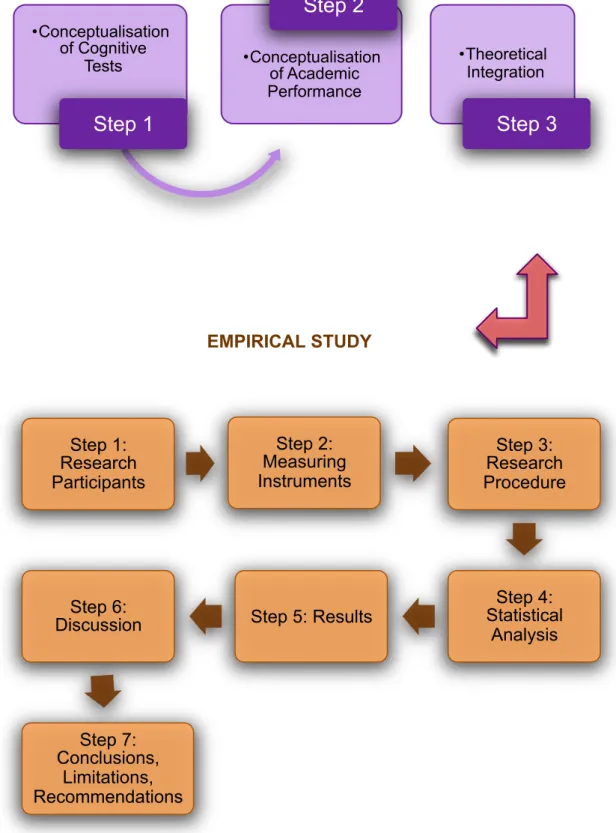
Figure 1.1 Overview of research model 17
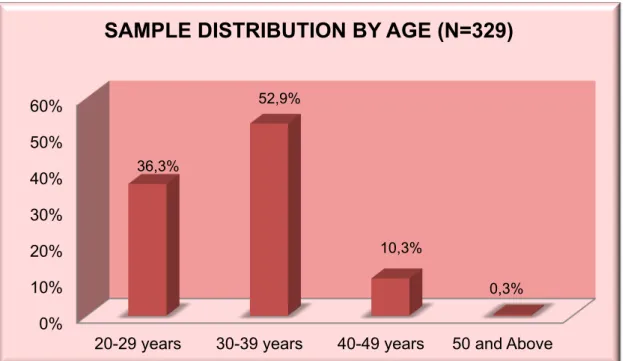
Figure 3.1 Sample distribution by age 58
Figure 3.2 Sample distribution by gender 58
Figure 3.3 Sample distribution by race 59
LIST OF TABLES
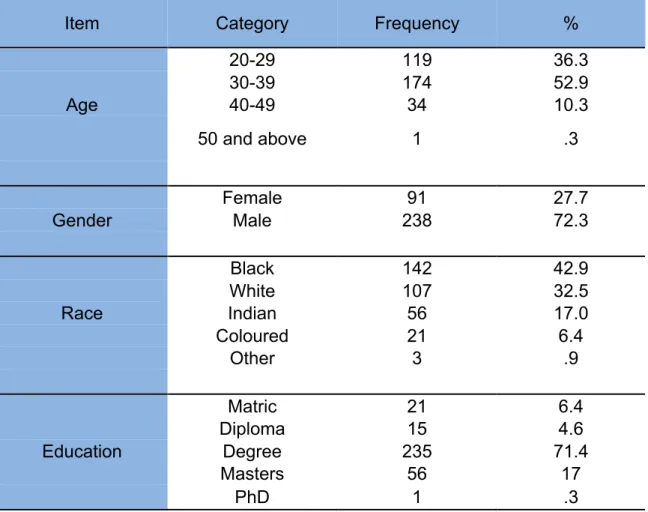
Table 3.1 Biographical distribution of sample 60 Table 3.2 Descriptive statistics of the variables 65 Table 3.3 Average score for academic performance 67
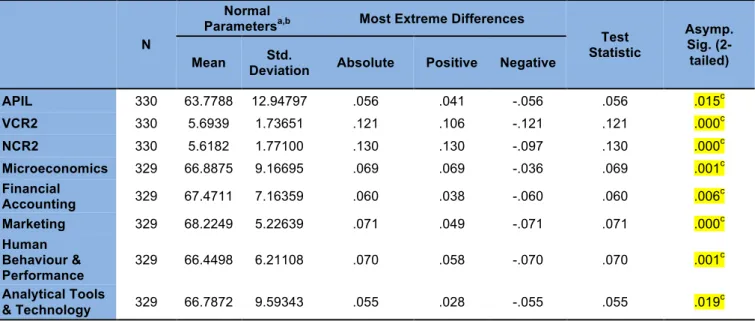
Table 3.4 Kolmogorov Smirnov Results 67
Table 3.5 Comparative Scores by Year 68
Table 3.6 Bivariate correlation between variables 69 Table 3.7 Bivariate correlation between variables by subject 70 Table 3.8 Regression model summary of APIL, VCR2 and NCR2
and academic performance (average mark) 71 Table 3.9 ANOVA summary between APIL, VCR2, NCR2 and
Academic performance (average mark) 72
Table 3.10 Estimated model coefficients 72
Table 3.11 Eta test for APIL 74
Table 3.12 Eta test for VCR2 74
Table 3.13 Eta test for NCR2 74
CHAPTER 1. SCIENTIFIC ORIENTATION TO RESEARCH
The focus in this dissertation is on the relationship between cognitive tests and the academic performance of students on an MBA programme.
1.1 BACKGROUND AND MOTIVATION
Master in Business Administration (MBA) programmes’ are the cornerstone of many business schools’ postgraduate delivery, with an exponential increase in both the number of programmes and students taking MBA’s globally (Williams, Parkes & Davies, 2013). Several factors have contributed to the growing demand for management education (Temtime & Mmereki, 2011). Rapid economic growth, global competition, downsizing, deregulation, privatisation, mergers and other changes have placed an increasing premium on management skills and management careers, leading to a surge in demand for management education in the form of MBA degrees (Temtime & Mmereki, 2011). It has become the most prestigious managerial qualification for current and potential managers as it prepares them to take on new challenges and multiple management tasks (Temtime & Mmereki, 2011). In South Africa, MBA programmes are positioned within the broader landscape of postgraduate education (Kotze & Griessel, 2008). According to the Council on Higher Education (CHE), there have been low graduation rates across all provider types of MBA qualifications in South Africa (Kotze & Griessel, 2008). This is despite the fact that Business Schools strive to admit students that are most likely to succeed. According to Taylor (n.d.), institutions offering MBA programmes are empowered by the Higher Education Act to set up their own admissions processes. The goal of the admissions processes and policies is stated in the preamble of the Higher Education Act 101 of 1997 (as amended). This Act reflects the need for institutions of higher education to strike a balance between:
1) taking appropriate measures to admit students in order to redress past inequalities, whilst also,
2) pursuing academic excellence in order to contribute to the advancement of knowledge and scholarship in keeping with international standards of academic quality.
In order to ensure that requirements set out by the CHE and Higher Education Act are upheld, the academic environment is faced with a challenging task (Taylor, n.d). This task entails determining a balancing point between the responsibility of affording students a chance to register for and obtain an academic qualification, and at the same time being responsible in their admission processes, so that students are not set up for failure by admitting them to a level of academic programme that is above their levels of capability (Bischoff, 2012). According to Petit (2013), the senior leadership of graduate schools of business administration within institutions of higher education are also under immense pressure to build resources, improve rankings and grow revenues within each respective school. Ramteke and Deshmukh (2012) stated that in order to gain admission into an MBA programme, a student should provide evidence for/to: 1) will he/she be willing and able to pursue an MBA programme?; 2) is he/she really eligible to register for the programme?; and 3) will he/she successfully complete the programme? According to Tamteke and Deshmukh (2012), such knowledge is needed to enable policy makers to make selection decisions that will inevitably benefit the institution as well as its students.
Bischoff (2012), stated that poor success rates on MBA programmes result in the loss of revenue for the academic institution, time spent by lecturers on students not completing or passing the course and the potential damage to the image of the institution. Additionally, the student suffers a loss of money and time, damaged self-esteem and lower self-confidence. These are but a few of the consequences for failing or dropping out of the academic programme (Bischoff, 2012). Against this background, the identification of reliable factors that help predict students’ performance becomes imperative for the selection process, as it will ensure a higher success rate and improves college reputation (Tabsh, 2015).
As a result of the above considerations, psychometric instruments still play a major role in most admission processes for MBA programmes (Taylor, n.d.). It is believed that psychometric instruments are able to provide insight into an applicant’s future academic success (Taylor, n.d.). The importance of such a prediction is beneficial not only because it ensures the most efficient use of both the institution and the applicant’s resources as stated by Bischoff (2012). It also has a bearing on the funding of the institution. According to Braxton, Hirschy and McClendon (2011), at a time when funding for higher education is diminishing, maintaining and retaining students is key to solving one of the key challenges and problems of higher education.
As previously discussed, South African institutions offering MBA programmes’ do not have high graduation rates (Kotze & Grissel, 2008). Therefore, institutions offering an MBA programme should employ stringent selection processes. The Graduate Management Admission Test (GMAT) is a standardised test used internationally by over 4,500 graduate management programmes at 1,900 schools to make admissions decisions (Kass, Grandzol & Bomer, 2012). Therefore, it is common practice for many of the institutions abroad and in South Africa, that offer an MBA programme to make use of GMAT as a selection tool (Kass et al., 2012). The GMAT measures general verbal (GMAT-verbal) and mathematical skills (GMAT-quantitative) (Kass et al., 2012). According to Kass et al. (2012), there has been considerable support for the validity of the GMAT in predicting the academic performance of students on MBA programmes’ (e.g., Kuncel, Crede & Thomas, 2007; Oh, Schmidt, Shaffer & Le, 2008).
The institution investigated in the study differs from others as it utilises the APIL (learning potential assessment), as well as the CRTB2 Numerical and Verbal Reasoning Tests. The APIL has been designed to identify candidates with the greatest potential to learn new skills and knowledge (Taylor, n.d). This test aims to assess the candidate’s capacity to learn new skills in the future (Taylor, n.d.). The competencies assessed by the CRTB2 Numerical and Verbal Reasoning Tests are likely to be fundamental skills for many of the subjects studied in an MBA programme (Taylor, n.d.). The above selection
battery is viewed as essential in identifying candidates who will be successful on an MBA programme and also provides candidates from all spheres a fair chance of being selected.
No institutional research has been conducted on the use of the above tests in the context of MBA selection and success in South Africa. As a result, the aim of this study is to make a valuable contribution to institutions in terms of highlighting the usefulness of the selection battery in predicting academic performance, thereby enabling its adaptation at other institutions. It further provides insight for further research in the area. It was anticipated that the findings from this research would serve as a systematic evaluation of the selection procedures at the investigated tertiary institution.
1.2 PROBLEM STATEMENT
Many studies (Kotze and Griessel, 2008; Siergert, 2008; Truitt, 2002) evaluated admissions criteria, to try and determine the best predictors of student’s academic success on MBA programmes. However, previous researchers who conducted these studies, focused on specific institutions, the majority of which use the GMAT. Their results have therefore been limited to that specific environment.
According to Cilan and Can (2014) studies aiming to define the success factors of MBA students date back to the 1970’s. Deckro and Woudenberg’s study was accepted as one of the basic studies on this topic (in Cilan & Can, 2014). In their study, GMAT and undergraduate Grade Point Average (GPA) were found to be accurate predictors of MBA success.
More recently, Taher, Chen and Yao (2011) investigated key predictors of MBA student’s performance. Results from the study revealed a significant correlation between personality traits and MBA students’ performance. Kass et al. (2012) investigated whether the GMAT is a predictor of academic success. Results revealed that the GMAT (both quantitative and verbal
sections) significantly predicted performance on an MBA programme. A study by Sulaiman and Mohezar (2006) found that demographic factors such as work experience, age, gender, and ethnicity were ineffective as predictors of academic success at the graduate level in business programmes. Research conducted by Hill et al. (2011) found that GMAT scores, particularly the composite of the GMAT verbal and quantitative, were reliable predictors of success on MBA programmes. There may be various factors that could impact on the success of students, and these factors need to be identified so that the findings of a study could be used to assist other students, policy makers and institutions in their selection decisions (Ramteke & Deshmukh, 2012).
Based on the above, the problem statement for this study reads:
There is limited evidence of empirical studies that have been conducted using the proposed battery of tests to predict academic performance of students on an MBA programme. It is vital to analyse the use of the selection processes used by the investigated tertiary institution. Therefore, the purpose of this study was to determine if there is a statistical significant positive relationship between cognitive tests and the academic performance of students’ on an MBA programme.
Flowing from the background, the above-identified issues and the problem statement, the research was designed to answer the following literature and empirical questions:
1.2.1 Research questions with regard to the literature review:
With regard to the literature study, the following research questions were the focus of this study:
• How are cognitive tests conceptualised in the literature?
• Is there a theoretical relationship between cognitive tests and academic
performance?
• What are the implications of the theoretical relationship between cognitive
ability and academic success?
1.2.2 Research questions with regard to the empirical study:
With regard to the empirical study, the following research questions were attended to:
• Does a statistically significant positive relationship exist between the APIL
and the academic performance of students on an MBA programme?
• Does a statistically significant positive relationship exist between the
CTRB2 Verbal Reasoning Test (VCR2) and the academic performance of students on an MBA programme?
• Does a statistically significant positive relationship exist between the
CTRB2 Numerical Reasoning Test (NCR2) and the academic performance of students on an MBA programme?
• Which one or more of the tests in the battery of tests used for admissions
decision-making are the most significant predictors of MBA academic performance?
• Based on the findings of this study, what recommendations can be
formulated for the practice of industrial and organisational psychology, and for further research?
1.3 AIMS
1.3.1 General Aim:
The general aim of the research was to explore the relationship between cognitive tests and the academic performance of students on an MBA programme.
1.3.2 Specific Aims:
The specific aims relating to the literature review were:
• To conceptualise cognitive tests from a theoretical perspective.
• To conceptualise academic performance from a theoretical perspective. • To explain the theoretical relationship between cognitive tests and
academic performance of students on an MBA programme.
• To highlight the implications of the theoretical relationship between
cognitive tests and academic performance.
The specific aims relating to the empirical study were:
• To investigate the statistical relationship between the APIL and the
academic performance of students on an MBA programme.
• To investigate the statistical relationship between the CRTB2 Verbal
Reasoning Test (VCR2) and the academic performance of students on an MBA programme.
• To investigate the statistical relationship between the CRTB2 Numerical
Reasoning Test (NCR2) and the academic performance of students on an MBA programme.
• To integrate the results and determine which one or more of the tests in
the battery of tests used for admissions decision-making are the most significant predictors of MBA academic performance.
• To formulate recommendations for the discipline of industrial and
organisational psychology, and for further research. 1.3.3 Central Hypothesis
The central hypothesis of the research is stated below:
To investigate the relationship between cognitive tests and the academic performance of students on an MBA programme.
1.3.4 Research Hypotheses
The following research hypotheses were empirically tested in this study: H01: There is no significant positive relationship between scores on the APIL
and the academic performance of students selected for an MBA programme.
H11: There is a statistically significant positive relationship between scores
on the APIL and the academic performance of students selected for the MBA programme.
H02: There is no significant positive relationship between scores on the
CRTB2 Numerical Reasoning Test (NCR2) and the academic performance of students selected for an MBA programme.
H12: There is a statistically significant positive relationship between scores
on the CRTB2 Numerical Reasoning Test (NCR2) and the academic performance of students selected for an MBA programme.
H03: There is no significant positive relationship between scores on the
CRTB2 Verbal Reasoning Test (VCR2) and the academic performance of students selected for an MBA programme.
H13: There is a statistically significant positive relationship between scores
on the CRTB2 Verbal Reasoning Test (VCR2) and the academic performance of student selected for an MBA programme.
1.4 PARADIGM PERSPECTIVE
1.4.1 The intellectual climate
The literature review on cognitive tests and academic performance is presented from the cognitivist paradigm, and the empirical review is presented from the positivist paradigm.
1.4.1.1 Literature review
The literature review on cognitive tests and academic performance is presented from the cognitivist paradigm. The cognitive psychology paradigm may be defined as the scientific study of the mind and how it processes information (Levitin, 2002). According to Good and Brophy (1990), Merriam and Caffarella (1999) and Simon (2001) (as cited in Yilmaz, 2011), the cognitive school views are; 1) learning as an active process which includes the attainment or reformation of cognitive structures through which humans process and store information, and 2) the learner as an active participant in the process of knowledge acquisition and integration. The theory portrays knowledge acquisition as a mental activity involving internal coding and structuring by the learner and suggests that learning happens optimally under conditions that are aligned with human cognitive architecture (Yilmaz, 2011, p.206). Cognitive psychologists place emphasis on what learners know and how they come to acquire it, rather than on what they do (Yilmaz, 2011). The cognitivist paradigm was relevant for this study as the assumption is that students’ academic performance is aligned with their human cognitive abilities.
1.4.1.2 Empirical study
The empirical review is presented from the positivist research paradigm. With the positivist paradigm, observation and reason are the best means of understanding human behaviour (Dash, 2005). The focus of this paradigm is on experimental and quantitative methods to verify hypotheses in the search of facts. Burrell and Morgan (as cited in Krauss, 2005) stated that positivism aims to explain and predict what happens in the social world by seeking out
consistencies and causal relationships that occur between its constituent elements. The value of the paradigm for this study lies in its assertion that real events can be observed empirically and explained with logical analysis.
1.4.2 Meta-Theoretical statements
Meta-theoretical statements are an important category of assumptions that underlie the theories, models and paradigms that form the context for research (Babbie & Mouton, 2001). In social sciences, meta-theoretical beliefs or values are seen to create the intellectual climate for a particular discipline (Babbie & Mouton, 2001). The meta-theoretical statements for this research are presented below.
1.4.2.1 Industrial psychology
According to Schreuder and Coetzee (2010), industrial and organisational psychology is a field of specialisation in psychology. It is the study of how individuals behave within work settings (Schreuder & Coetzee, 2010).
Industrial and organisational psychology, together with its research focus areas has evolved to address the changing needs of societies and organisations and to generate new knowledge and technology with a view to dealing with the demands of globally and nationally changing contexts (Schreuder & Coetzee, 2010). According to Barnard and Fourie (2007), industrial psychology currently comprises the six widely acknowledged subfields of psychometrics, personnel psychology, organisational psychology, career psychology, consumer psychology and ergonomics. The research presented in this study will fall within the speciality area of psychometrics, and as such places its emphasis in industrial psychology.
1.4.2.2 Psychometrics
Psychometrics refers to the science of psychological assessment, and whilst it is seen as a branch of psychology, its impact is much broader than this (Rust & Golombok, 2014). According to Foxcroft and Roodt (2009) psychometrics refers to both the systematic and scientific way in which psychological
measures are developed and the technical standards (e.g. validity and reliability) required of measures. Psychometric tools make it possible to assess (measure) human behaviour (Foxcroft and Roodt, 2009) .The scientific principles that underpin psychometrics apply equally well to assessment in academic contexts and in clinical or occupational contexts (Rust & Golombok, 2014).
1.4.2.3 Psychological assessment
The field of psychological assessment forms a core discipline in most fields of industrial psychology. Foxcroft and Roodt (2009) stated that psychological assessment is a process-orientated activity aimed at gathering a wide array of information by using psychological assessment measures (tests) and information from many other sources. The use of psychological tests in predicting the academic performance of students on an MBA programme is the focus of this research.
1.4.3 Theoretical model
The study was anchored on the three main traditions of cognitive assessment, namely; the conventional or structural approach, the information processing approach and the dynamic or learning potential approach that were reviewed by Taylor (1994). Each of the three dimensions, which can either be categorised, as static or dynamic dimensions, is important in everyday life (Taylor, 1994). According to Taylor (1994) each of the three approaches developed fairly independent of each other, therefore there is very little theory to link them to each other.
The researcher was guided by the theory of the three approaches in the quest for answers to the queries made.
1.4.4 Applicable concepts and constructs
The following concepts and constructs were applicable to the research. 1.4.4.1 Cognitive tests
Cognitive tests are commonly used for the purposes of selection (Foxcroft & Roodt, 2009). Foxcroft and Roodt (2009) defined cognitive ability as the range of intellectual (or cognitive) skills that are available to a person at a given point in time. Kuncel and Hezlett (2010) concluded that tests of cognitive ability are seen as samples of this range of skills. According to Kuncel and Hezlett (2010) standardised tests of cognitive abilities, such as college admissions tests, are some of the strongest and most consistent predictors of performance in educational settings. Most assess a combination of reasoning, verbal, and quantitative skills or discipline-specific knowledge, which are correlated and fit into a hierarchical structure with a single overarching general ability (Kuncel & Hezlett, 2010). Standardised tests of cognitive abilities are grounded in the psychometric approach to intelligence, which has focused on understanding individuals’ ability to reason, plan, solve problems, think abstractly, learn and adapt, and process and comprehend complex ideas and information (Ones, Visweswaran & Dilchert, 2005).
1.4.4.2 Academic performance
According to Rohde and Thompson (2007) academic performance is the outcome of education (i.e. the extent to which students’ achieved their goals). Individual differences in academic performance have been linked to differences in cognitive ability (Rhode & Thompson, 2007). It has been found that those with a higher cognitive functioning generally achieve higher results in academic settings. It is the aim of this study to explore this relationship (Rohde & Thompson, 2007).
1.4.4.3 Masters in Business Administration (MBA)
The MBA is a Masters in Business Administration (MBA) degree (Williams et al., 2013). The programme at the institution under study is completed over two years. During the programme, students complete core courses, electives and
a compulsory research project (dissertation). An MBA programme at the institution aims at creating well-rounded and effective managers.
1.4.5 Methodological convictions
The methodological convictions that were applicable to this study are presented below.
The positivist paradigm is a meta-theory, which is based on the key assumption that the social sciences should follow the lead of the natural sciences and model its own practices on that of successful natural sciences (Babbie & Mouton, 2001). The positivist paradigm asserts that real events can be observed empirically and explained with logical analysis (Terre Blanche Durrheim & Painter, 2006). The criterion for evaluating the validity of a scientific theory is whether knowledge claims are consistent with the information that is obtained. In this context, the ontology, epistemology and methodology of the positivist paradigm are presented below.
(a) Ontology
Ontology specifies the nature of reality that is to be studied, and what can be known about it (Terre Blanche et al., 2006). This study falls within the positivist paradigm, as such the nature of reality is
• Stable and external • Law-like
(b) Epistemology
Epistemology specifies the nature of the relationship between the researcher (knower) and what can be known (Terre Blanche et al., 2006). The epistemology of the research study is
• Objective
(c) Methodology
Methodology specifies how researchers go about practically studying whatever they believe can be known. The methodologies used in the study include
• Quantitative
• Hypothesis testing
1.5 RESEARCH DESIGN
A research design encompasses the methodology and procedures used to conduct scientific research (Terre Blanche et al., 2006). Designs are presented according to the research approach and method used (Terre Blanche et al., 2006).
1.5.1 Research approach
An ex post facto design was used for this study. The study followed a non-experimental strategy since there was no need to manipulate, control or interfere with any of the variables. According to Terre Blanche et al., (2006) in a quantitative study, specific and narrow questions are asked about a topic, and numerical data is then collected from participants in order to answer those questions. Once collected, data is analysed using statistical methods. A quantitative approach makes it possible to conduct research in an unbiased and objective manner (Terre Blance et al., 2006). For the study secondary data was utilised, as the data already existed and was used for purposes other than that for which it was originally collected (i.e. selection of MBA students). A correlational approach was followed for the purpose of data analysis.
1.5.2 Research variables
Babbie and Mouton (2001) defined a variable as any concept that can be measure or counted. An independent variable is presumed to cause an effect
or outcome on something else, whilst a dependent variable is the outcome of another variable (Terre Blanche et al., 2006). In this study, the independent variables were cognitive tests and the dependent variable was academic performance. The study therefore focused on determining whether there is a statistically significant relationship between these cognitive tests and the academic performance of students on an MBA programme.
1.5.3 Reliability and validity
The following methods were put into place to ensure a valid and reliable research process.
1.5.3.1 Reliability
According to Foxcroft and Roodt (2009) the reliability of a measure refers to the consistency with which it measures whatever it measures. Simply stated, if a psychological test is repeatedly administered to the same person, it would yield similar results. Consistency always implies a certain amount of error in measurement (random error and systematic error) (Bryman, 2012). Random error refers to the random fluctuations in performance, whilst systematic error refers to the non-random bias that impacts on the reliability of a measure. In this study, the reliability of the literature review was ensured through the use of existing literature sources, theories and models. For the empirical study, it was not possible to test the participants twice in order to confirm test-retest reliability. Reliability for the study was ensured through the correct and proper use of valid and reliable measuring instruments (the reliability of the specific measuring instruments will be discussed in Chapter 3). In this way, the overall reliability of the research was improved.
1.5.3.2 Validity
The validity of a measure concerns what the test measures and how well it does so (Babbie 2013; Foxcroft & Roodt, 2009). In other words, does the psychometric instrument measure what it is supposed to measure? Validity
does not refer to a specific property of a measure, but rather the specific purpose of an instrument.
The validity of the literature review was ensured through an attempt of achieving theoretical validity by means of the clarification of concepts. For the empirical study, the internal validity of the study was confirmed with the measuring instruments used, namely the APIL and CRTB2 Numerical and Verbal Reasoning Tests. The measuring instruments previously demonstrated good psychometric properties, thereby eliminating any doubt that reliable scores were obtained through their use. Additionally, in terms of the external validity of the study, findings were not generalised to other populations, but only to the sample in the study.
1.5.4 Unit of analysis
The unit of analysis refers to the objects or things that are researched in order to formulate generalisations of these objects and to further explain differences among them (Terre Blanche et al., 2006). Typically, in social science research the unit of analysis is the individual person. However, it may also be a group, social artefact, social action/event or intervention (Babbie & Mouton, 2001). The unit of measurement for this study is at an individual level (cognitive test results and academic performance), however, the unit of analysis is correlation, which is group based. The sample will consist of students on an MBA programme who will individually form the sample. Academic performance was obtained on an individual basis.
1.5.5 Methods to ensure ethical research principles
Ethical guidelines as stipulated by the Health Professions Council of South Africa (HPCSA) and the department of Industrial and Organisational Psychology, formed the basis of the study. Ethical clearance to conduct the study was applied for through the Research Committee of the Department of Industrial and Organisational Psychology. Informed consent was obtained from the Institution to conduct the study and all data and results were dealt
with the utmost confidentially. Consent forms were used to obtain permission from students at the time of the assessments. To ensure confidentially, students were tracked by their student numbers, which were subsequently changed to sequential numbers. The results obtained were communicated only to the organisation from which the data was obtained, and any recommendations made were to the benefit of the organisation.
1.6 RESEARCH METHOD
The research is presented in two parts: the literature review and the empirical study
1.6.1 Phase 1: Conceptualisation and literature review The following is proposed in this phase
Step 1: Conceptualisation of cognitive tests from a theoretical perspective
Step 2: Conceptualisation of academic performance from a theoretical perspective
Step 3: Integration of the variables and conceptualisation of the theoretical relationship between the variables
Step 4: Formulation of the study hypothesis to achieve the study objectives
1.6.2 Phase 2: Empirical study
The empirical study is presented in the form of a research article, which is to be found in Chapter 3. The contents of the research article includes the key focus of the study, background to the study, trends from the research literature, the research design (which covers the research approach and method), results from the empirical study, a discussion of the results, conclusions, limitations of the study, and lastly recommendations for future research.
LITERATURE REVIEW
EMPIRICAL STUDY
Figure 1.1: Overview of Research Model
• Conceptualisation of Cognitive Tests
Step 1
• Conceptualisation of Academic PerformanceStep 2
• Theoretical IntegrationStep 3
Step 1: Research Participants Step 2: Measuring Instruments Step 3: Research Procedure Step 4: Statistical Analysis Step 5: Results Step 6: Discussion Step 7: Conclusions, Limitations, Recommendations1.7 CHAPTER LAYOUT
In terms of the chapter layout, the structure of the study is as follows: Chapter 1: Scientific orientation to the study
The background to and motivation for the study were discussed. This chapter included a discussion on the nature of and need for the use of cognitive tests as a predictor of academic success. Additionally, the problem statement, research hypotheses, research aims, paradigm perspective used and the research design and methodology were mentioned.
Chapter 2: Literature review
Chapter 2 includes; discussions into psychometric assessments and assessing intelligence, conceptualisations into cognitive tests and academic performance, an explanation into the theoretical relationship between cognitive tests and academic performance, and lastly, the implications for academic performance are discussed.
Chapter 3: Research Article
Results are presented in article format. The empirical procedure is presented in terms of sample, measuring instruments, administration of the questionnaires, data collection and processing, statistical methods and formulation of the hypothesis. The results are discussed against the formulated hypothesis, and are presented in tables and figures. Conclusion, recommendations and limitations are presented on the research findings. Chapter 4: Conclusions, limitations and recommendations
Conclusions are drawn in terms of the specific aims of the research. The limitations of the research are discussed and revealed, and recommendations are made on the findings of the research.
1.8 CHAPTER SUMMARY
In this chapter the background to and motivation for the research, the research problem, the aims, the paradigm perspective, and the research design and method were discussed. The chapter ended with the chapter layout. The next chapter focuses on the literature review and conceptualising the cognitive tests and academic performance.
CHAPTER 2: LITERATURE REVIEW: COGNITIVE TESTS AND ACADEMIC PERFORMANCE
2.1 INTRODUCTION
Some individuals obviously and consistently understand new concepts quicker, solve unfamiliar problems faster, see relationships that others don’t, and are more knowledgeable about a wider range of topics than others (Coaley, 2014). For this reason, cognitive ability has received increasing attention, both in research and practice from philosophers, researchers and scholars (Coaley, 2014). Results from cognitive ability assessments are often used in the educational context to determine school readiness, to obtain a comprehensive picture of specific aptitudes or to assist with decision- making (De Beer, 2011). The prediction of determining eventual successful candidates is necessary as academic institutions are often oversubscribed by candidates and are concerned with whether their candidates have the necessary capabilities of passing their programmes of choice (Bischoff, 2012). For the purposes of this study, the literature review covered; discussions into psychometric assessments and assessing intelligence, conceptualisations into cognitive tests and academic performance, an explanation into the theoretical relationship between cognitive tests and academic performance, lastly, the implications for academic performance were discussed.
2.2. DEFINING PSYCHOMETRIC ASSESSMENT
According to Rust and Golombok (2014), psychometrics refers to the science of psychological assessment, and whilst it’s seen as a branch of psychology, its impact is much broader than this. Coaley (2014), stated that psychological assessment is a process-orientated activity aimed at gathering a wide array of information by using psychological assessment measures (tests) and information from many other sources, e.g. through interviews, an individual’s history which includes scholastic performance, qualifications, life and work history etc. The scientific principles that underpin psychometrics apply equally
well to assessment in academic contexts and in clinical or occupational contexts (Rust & Golombok, 2014).
Kaplan and Saccuzzo (2012) stated that the most basic concept underlying psychological assessment pertains to individual differences. The psychology of individual differences seeks to describe the ways in which people differ, and to understand how and why these arise (Coaley, 2014; Kaplan & Saccuzzo, 2012). In order to adequately determine individual differences amongst people, measurement becomes important. According to Coaley (2014), psychometrics is designed to do a measurement; the term is an abbreviation for ‘psychological measurement’. A psychological test is essentially an objective and standardised measure of sample behaviour Coaley (2014). They form the branch of the wider field referred to as psychological assessment, which seeks to understand the psychology of an individual (Coaley, 2014).
At it’s most basic, psychological assessment provides dynamic insights into the inner workings of an individual, yielding invaluable information (Wright, 2010). In other words, assessment is the organized collection of descriptive and judgemental information necessary to make effective decisions. Kaplan and Saccuzzo (2012) argued that psychological assessment involves the classification of behaviours into categories measured against a normative standard. Typically psychological tests have been used in three different areas: (1) in occupational settings tests are employed in personnel selection and vocational guidance; (2) in education they are useful for selection; and (3) in clinical work psychologist tests are used as adjuncts to clinical decision making (Kaplan & Saccuzzo, 2012).
In South Africa, a test is classified as a psychological test when the purpose of the test results in the performance of a psychological assessment (Foxcroft & Roodt, 2009). According to the Health Professions Act, 56, of 1974, Section 37 (2) (a), (b), (c), (d), and (e), a psychological act with respect to assessment is defined as being “the use of measures to assess mental, cognitive, or behavioural processes and functioning, intellectual or cognitive ability or
functioning, aptitude, interest, emotions, personality, psychophysiological functioning, or psychopathology (abnormal functioning)” (Foxcroft, Roodt & Abrahams, 2001).
Below is a discussion into the basic requirements for psychometric assessments.
2.2.1 Basic Requirements for psychometric assessments
The basic requirements for scientific psychometric assessments are that tools should be reliable, valid and standardised, in the context in which they are used (Employment Equity Act 55 of 1998). The extent that the cognitive admissions tests used in this study; namely the APIL instrument and the Critical Reasoning Test Battery (VCR2 and NCR2), meet these requirements will be discussed in Chapter Three.
2.2.1.1 Reliability
According to Foxcroft and Roodt (2009), the reliability of a measure refers to the consistency with which it measures whatever it measures. Simply stated, if a psychological test is repeatedly administered to the same person, it would yield the same results. Consistency always implies a certain amount of error in measurement (random error and systematic error) (Bryman, 2012). Random errors refer to the random fluctuations in performance, whilst systematic error refers to the non-random bias that impacts on the reliability of a measure.
In order to test the reliability of a measurement, there are various different techniques. Foxcroft and Roodt (2009), stated that the four primary methods of obtaining reliability coefficients are, test-retest reliability, alternate-form reliability, internal consistency reliability, and inter-scorer reliability.
2.2.1.1.1 Test-retest reliability
One of the easiest ways of showing that an assessment technique is consistent in what it does is to apply the same technique to the same group of people on two or more occasions (Bryman, 2012; Foxcroft & Roodt, 2009). The reliability coefficient in this case will be the correlation between the scores on the first test and the subsequent applications (Bryman, 2012; Foxcroft & Roodt, 2009). Such brief retest intervals are used when the construct being assessed is expected to vary across time (Weiner & Greene, 2011). This coefficient may also be referred to as the coefficient of stability (Foxcroft & Roodt, 2009).
2.2.1.1.2 Alternate-form reliability
In this method, two equivalent forms of the same measure are administered to the same group on two different occasions (Foxcroft & Roodt, 2009). The correlation obtained between the two sets of scores represents the reliability coefficient. This reliability coefficient may also be referred to as a coefficient of equivalence (Foxcroft & Roodt, 2009). It should be noted that the tests must be equivalent in all respects (number of items, item content, difficulty, administration etc.), and this method is both time consuming and expensive (Foxcroft & Roodt, 2009).
2.2.1.1.3 Internal consistency reliability
In this method, the most important question that needs to be answered is whether all parts of the assessment process measure the same thing (Weiner & Greene, 2011). Simply stated, does the assessment focus on a single phenomenon or is more than one property being assessed? In order to determine if an assessment method has a single focus, the different parts of the assessment are correlated (Weiner & Greene, 2011).
2.2.2.1.4 Inter-scorer reliability
This method focuses on the extent to which two or more raters, observers or judges agree about what has been observed (Foxcroft & Roodt, 2009). The basic strategy for determining inter-scorer reliability is to acquire a series of responses from a single client and to have the responses scored by two different individuals (Foxcroft & Roodt, 2009). Thereafter, the two scores can then be correlated to determine a reliability coefficient (Foxcroft & Roodt, 2009).
2.2.2.1 Validity
The validity of a measure concerns what the test measures and how well it does so (Babbie, 2013; Foxcroft & Roodt, 2009). In other words, does the psychometric instrument measure what it is suppose to measure. Validity does not refer to a specific property of a measure, but rather the specific purpose of an instrument. Validity can be determined in a number of different ways, each with a different meaning and use. However, Babbie (2013), states that there are three main forms of validity; construct validity, content validity and criterion-related validity.
2.2.2.1.2 Construct validity
The construct validity of a measure refers to the degree to which a measure relates to other variables as expected within a system of theoretical relationships (Babbie, 2013; Foxcroft & Roodt, 2009). The assessment of construct validity involves three general steps. Firstly by making a careful analysis of the trait, then by taking into consideration the way that the trait should relate to other variables, and finally, by testing the hypothesized relationships actually exist (Groth-Marnart, 2009). It should be noted that there is no single, best approach for determining construct validity.
2.2.2.1.3 Content validity
Content validity involves determining whether the content of the measure covers a representative sample of the behaviour domain/aspect to be measured (Babbie 2013; Foxcroft & Roodt, 2009). Content validity is a non-statistical type of validity and rather refers to a specific procedure in constructing a test measure. A frequently used procedure to ensure high content validity is the use of a panel of subject experts to evaluate the items during the test construction phase (Foxcroft & Roodt, 2009). Content validity has high relevance in evaluating achievement, educational and occupational measures.
2.2.2.1.4 Criterion-related validity
This method involves the calculation of a correlation coefficient between a predictor or more than one predictor, and a criterion (Babbie, 2013; Foxcroft & Roodt, 2009).
There are two main types of criterion-related validity, namely predictive validity and concurrent validity. Predictive validity refers to the accuracy with which a measure can predict the future behaviour or category status of an individual (Foxcroft & Roodt, 2009). Concurrent validity involves the accuracy with which a measure can identify or diagnose the current behaviour or status regarding specific skills or characteristics of an individual (Foxcroft & Roodt, 2009).
The subsequent discussion explores psychometric assessment in the South African context.
2.2.2 Psychometric Assessment in South Africa
Psychological assessment in South Africa provokes many strong opinions. It is highly controversial in South Africa due to past indiscriminate, unfair, and unbiased use of tests (Laher & Cockcroft, 2014). Since the first democratic elections in 1994, the country has a new constitution and stronger demands
for the cultural appropriateness of psychological tests (Laher & Cockcroft, 2014). The field has made an effort to shrug off the negative mantle and is grappling with attempts to form a new, positive identity that can contribute meaningfully to South African society (Laher & Cockcroft, 2014). Tests need to meet stringent psychometric standards and need to cater for all age groups in our multicultural society if psychological assessment practitioners are to succeed in employing fair, testing practices (Foxcroft, Paterson, le Roux & Herbst, 2004).
In order to ensure the cultural and fair use of assessments in South Africa, regardless of the context in which it is used, there are legal imperatives in place to regulate the profession.
The primary South African legislation governing psychometric assessment use is the Employment Equity Act (no. 55 of 1998), which has the dual objective of ensuring that only valid and reliable assessments are used and that assessments are used in a fair manner that is free from bias. The act specifically states:
“Psychological testing and other similar forms or assessments of an employee are prohibited unless the test or assessment being used:
a) has been scientifically shown to be valid and reliable; b) can be applied fairly to all employees
c) is not biased against any employee or group”
The Employment Equity Act has major implications for assessment practitioners in South Africa, because of the many measures currently in use (Foxcroft & Roodt, 2009; Laher & Cockcroft, 2014). Furthermore, the impact of this Act on the conceptualisation and professional practice of assessment in South Africa in in general is far reaching as assessment practitioners and test publishers are increasingly being called upon to demonstrate, or prove in court, that a particular assessment measure does not discriminate against a certain group of people (Foxcroft & Roodt, 2009; Laher & Cockcroft, 2014).
According to the Health Professions Act (no. 56 of 1974), Section 37 (2) (a), (b), (c), (d) and (e), all instruments that measure psychological constructs must be used, interpreted and controlled by psychologists: only individuals who are registered with the Professional Board of Psychology may use psychological tests and instruments that are classified with the Board.
The investigated institution makes use of the services of trained, registered psychologists for the assessment of MBA applicants. Furthermore, the assessment battery used by the institution adheres to requirements mandated by the Employment Equity Act. Evidence lies in the APIL instrument being specifically designed for the South African population and in the specific development of South African norms for the Critical Reasoning Test Battery. The specific reliability and validity measures of the instruments will be discussed in Chapter 3.
2.3 ASSESSING INTELLIGENCE
Below is a brief literary review on the construct of intelligence. It is aimed at exploring intelligence by providing a definition for both intelligence and psychometric intelligence, and discussing the evolution of the theories underlying intelligence.
2.3.1 Defining intelligence
The concept of intelligence and the tests developed to measure it have been considered one of psychology’s greatest contributions to society (Bray & Kehle, 2011). Intelligence is sometimes called intellectual ability or simply ability (Bray & Kehle, 2011). Theorists proposed, and researchers reported, that intelligence is a set of relatively stable abilities, which can change slowly over time (Fletcher & Hattie, 2011). Although intelligence can be seen as potential, it does appear to be inherently fixed or unalterable characteristic. Rather, it varies around a certain point (Fletcher & Hattie, 2011).
Intelligence is a very general mental capability that, among other things, involves the ability to reason, plan, solve problems, think abstractly, comprehend complex ideas, learn quickly, and learn from experience (Fletcher & Hattie, 2011). It reflects a broader and deeper capability for comprehending our surrounding (Fletcher & Hattie, 2011).
One of the central purposes of intelligence testing, dating back to Alfred Binet, is to predict educational achievement (Kaufman et al., 2012). In such instances, the aim is to gauge one’s psychometric intelligence.
In the following section, the concept of psychometric intelligence is defined. 2.3.2 Defining psychometric intelligence
Psychometric intelligence implies that we use primarily standardised psychological tests to measure levels of functioning on psychologically defined constructs (Foxcroft & Roodt, 2009). This approach to intelligence focuses on understanding individuals’ ability to reason, plan, solve problems, think abstractly, learn and adapt, and process and comprehend complex ideas and information (Kuncel & Hezlett, 2010). In the psychometric approach to intelligence, the emphasis is on the product rather than the process of learning (Fletcher & Hattie, 2011). Advocates of the psychometric approach consider intelligence to be: innate, objectively measurable, stable, and predictive of future behavior (Fletcher & Hattie, 2011).
Psychometric theories of intelligence are based upon the study of individual differences (Bray & Kehle, 2011); in particular, individual differences in performance on tests that involve some cognitive component. In a typical investigation using this approach, a large number of people are administered a number of different tests of cognitive ability (e.g. vocabulary, number series, perceptual speed, general knowledge, analogies, etc.). These test scores are then inter-correlated (Bray & Kehle, 2011). Thereafter, the resulting correlation matrix can be further analysed using mathematical techniques, such as factor analysis, to find underlying dimensions of cognitive ability.
These underlying dimensions usually form the basis of the resulting theory of psychometric intelligence (Bray & Kehle, 2011).
For the purposes of this literature review, it is necessary to explore the theories of intelligence that led to the development for the assessment of cognitive ability.
2.3.3 Evolution of theories on Intelligence
According to Nevid, Rathus and Greene (1997), psychological tests were originally developed for the purpose of assessing intelligence. The theories that attempt to explain intelligence are not all alike. They have emerged from different areas of psychology, and have emphasized different aspects of human performance (Gardner, 2011). The theories do not all agree with each other concerning the number of abilities that constitute intelligence, furthermore, the theories have evolved over time (Gardner, 2011).
2.3.3.1 Galton (1822-1911)
Galton, a cousin of Charles Darwin, is considered to be the first individual to attempt the scientific measurement of intelligence (Coaley, 2014). He was a prolific writer and zealous scientist (Coaley, 2014). As the cousin of Darwin, he attempted to apply the evolutionary theory to the study of human abilities. Galton tried to explain why superior intelligence or genius ran in certain families (Coaley, 2014). He was the first to emphasise the importance of individual differences, created the first tests of mental ability, and was the first to use questionnaires (Coaley, 2014). He also discovered a number of statistical procedures to analyse data, many of which are still in use today; for example, normal distribution or the bell curve (Coaley, 2014).
2.3.3.2. Alfred Binet (1857-1911) and Theodore Simon (1873-1961)
Binet developed the first workable intelligence test. He argued that intelligence was a high level ability, to which mental judgement was key (Coaley, 2014; Hunt, 2010). It could be assessed using relatively complex thought patterns, usually displayed in everyday life and in the ability to learn within an academic setting (Hunt, 2010).
Simon, a doctoral student had approached Binet and asked him to supervise his research (Hunt, 2010). In 1903, both Binet and Simon were commissioned by the French government to improve the teaching methods for developmentally disabled children (Coaley 2014; Hunt, 2010). They set out to identify the individual differences that separated abnormal children from the normal and to measure them (Coaley, 2014).
They constructed a series of tests, including short, varied problems about daily life as well as tests of cognitive processes such as memory (Coaley; Hunt, 2010).
2.3.3.3 Charles Spearman (1863-1945)
After being thoroughly impressed with the work of Galton, Spearman began his work with village school children (Hergenhahn, 2005). He found that not only did measures of sensory acuity correlate highly among themselves, but more important, they also correlated highly with cleverness in school (Hergenhahn, 2005).
In his two-factor approach to intelligence, Spearman proposed that every mental test measured a general factor g and a specific factor s that was unique to specific test items (Hergenhahn, 2005; Hunt, 2010). Upon collating the scores from numerous tests, the s factor could be cancelled out, leaving an indictor of general intelligence. (Hergenhahn, 2005). Spearman described “general intelligence” or “g” as that which refers to the common variance shared by a battery of mental tests (Hergenhahn, 2005; Hunt, 2010)
2.3.3.4 Raymond B Cattell (1960s-1970s)
Cattell offered a higher-order theory, which distinguishes two forms of intelligence, fluid and crystallized (Taylor, 1994). According to Cattell, fluid intelligence is a basic inherited capacity as developed by an interaction with environmental characteristics, which are found in any society (Hunt 2010; Taylor, 1994). Crystallized intelligence involves specialized skills and knowledge promoted by and required in a given culture (Hunt, 2010; Taylor, 1994). This type of intelligence is based upon facts and rooted in experiences. Cattell believed that as we age, and accumulate new knowledge and understanding, crystallized intelligence becomes stronger (Taylor, 1994). Cattell was one of the first to develop culture fair tests, which were designed to measure fluid intelligence (Taylor, 1994). A positive attribute of Cattell’s model is that it is amenable to dynamic, learning or developmental interpretations (Taylor, 1994).
2.3.3.5 Anne Anastasi (1908-2001)
Anastasi was the first person to emphasise that different cultures have alternative concepts of what an “intelligent person” is, and that traditional tests measure only skills valued in academia and work in industrialised societies (Coaley, 2014). Anastasi undertook major studies in test construction, test misuse, misinterpretation, and cultural bias (Coaley, 2014)
Over the years, intelligence or cognitive ability evolved, along with the developing theories. This saw the birth of various different approaches to assessing cognitive ability.
2.4 COGNITIVE TESTS
2.4.1 Conceptualisation
Foxcroft and Roodt (2009) defined cognitive ability as the range of intellectual (or cognitive) skills that are available to a person at a given point in time. Kuncel and Hezlett (2010) concluded that tests of cognitive ability are seen as samples of this range of skills. Individuals who have acquired a wide range of such skills are seen to be more likely to perform well on the tests and subsequently perform well in academic tasks, as they already possess the needed knowledge (Foxcroft & Roodt, 2009).
According to Foxcroft and Roodt (2009) psychological assessment provides information that can be used to guide individuals, groups and organisations in understanding and making informed and appropriate decisions. Standardised tests of cognitive abilities are grounded in the psychological approach to intelligence, which has focused on understanding individuals’ ability to reason, plan, solve problems, think abstractly, learn and adapt, and process and comprehend complex ideas and information (Kuncel & Hezlett, 2010).
Most tests of cognitive ability assess a combination of reasoning, verbal, and quantitative skills or discipline-specific knowledge, which are correlated and fit into a hierarchical structure with a single overarching general ability (Kuncel & Hezlett, 2010). As such, those who do well on one kind of content (e.g. mathematics) will tend to do well on tests with different content (e.g. verbal skills) (Kuncel & Hezlett, 2010). De Beer (2011) stated that results from cognitive ability assessments are often used in the educational context to determine school readiness, to obtain a comprehensive picture of specific aptitudes or to assist with decision- making (De Beer, 2011). Therefore, cognitive ability assessments are a way in which reliable and relevant information about an individual can be obtained.