LEGITIMATE VOICES: A MULTI-CASE STUDY OF TRANS AND NON-BINARY SINGERS IN THE APPLIED VOICE STUDIO
by
William R. Sauerland
Dissertation Committee:
Professor Jeanne Goffi-Fynn, Sponsor Professor Harold Abeles
Approved by the Committee on the Degree of Doctor of Education
Date May 16, 2018
Submitted in partial fulfillment of the
requirements for the Degree of Doctor of Education in Teachers College, Columbia University
ABSTRACT
LEGITIMATE VOICES: A MULTI-CASE STUDY OF TRANS AND NON-BINARY SINGERS IN THE APPLIED VOICE STUDIO
William R. Sauerland
This qualitative, multi-case study examined trans and non-binary singers in the applied voice studio. The purpose of this study was to explore (1) the impact of music participation on the identities of trans and non-binary singers, (2) the experiences of trans and non-binary singers taking private singing lessons, and (3) the strategies and practices of their voice teachers. Purposeful sampling of four singers included two trans men and two binary individuals. Four teachers with prior experience in teaching trans or non-binary singers included two teachers identifying as trans men, and two cisgender (one female, one male) teachers. Data were collected through interviews and lesson
observations, presented through portraiture analysis to provide an insider’s view of the experiences, perspectives, and practices of the participants. Findings and implications emerged through cross-case analyses.
The results indicate that gender impacts musical spaces. While participation in musical activities created an outlet for some singers to explore their trans or non-binary identity, the reification of the gender binary in musical spaces was oppressive for others.
Students modeled high self-efficacy by showing perceived competence to change discriminatory policies and practices in music and the performing arts.
Teachers demonstrated emotional support in the applied studio by being cognizant of student needs. While the training of each student looked distinct, teachers affirmed students through student-centered pedagogical approaches, allowing students to guide their vocal training and development. Teachers discussed the need for adept
understanding of vocal technique in training trans and non-binary singers. All four trans men (two students and two teachers) discussed their voice modification through
testosterone replacement therapy. The two non-binary singers, not engaged in medical voice modulation, discussed changes in their voices through singing lessons.
The research posits that curricular development in vocal pedagogy courses is needed to educate singing teachers on cultural competency and trans and non-binary vocality. This study revealed the need to examine applied teacher readiness in educating trans and non-binary singing. Research on the longitudinal effects of testosterone on the voice is warranted. Additional scholarship is needed in working with trans or non-binary voices not engaging in hormone replacement therapy.
ii
Ó Copyright William R. Sauerland 2018 All Rights Reserved
iii
ACKNOWLEDGEMENTS
I wish to express my gratitude to the participants in this study. Without your inspiring work and willingness to allow me to observe you and ask probing questions, this research would not have been possible. I want to thank my defense committee Dr. Goffi-Fynn, Dr. Abeles, Dr. Parkes, and Dr. Schmidt for your insight and support. I am grateful to all my professors at Teachers College, especially Dr. Goffi-Fynn, Dr. Volpe, and Dr. Custodero who provided important guidance for this study.
I would like to thank my friends and colleagues, Paul McCurdy, Dr. Joshua Palkki, George Nicholson, and Emily Good-Perkins, for listening to my struggles and providing support during this endeavor. I also want to extend my gratitude to two music teachers in my life who have offered years of guidance, affirmation, and emotional support. Thank you, Audrey Luna and Sheryl Mabry. I am grateful to my entire family for their love and support, with special gratitude to my mother, who provided important guidance in organizing the last two chapters of this dissertation. Finally, to my incredible husband, Tom, who spent endless hours listening to my ideas, reading this document, and holding my hand when I needed it. I love you.
A dear friend and mentor, Karen “Mama” Dawisha (1949-2018), insisted I apply to Columbia University, even though I lacked confidence in attending such a prestigious institution. I dedicate this dissertation to her.
iv TABLE OF CONTENTS Chapter I - INTRODUCTION ...1 The Researcher ...2 Background ...4 Problem Statement ...9 Purpose ...9 Research Questions ...10 Conceptual Framework ...10
Explanation of Conceptual Framework. ...11
Approach ...12
Assumptions ...13
Rationale for Study ...14
Significance of Study ...15
Plan for Remaining Chapters ...15
Definitions ...16
Chapter II - LITERATURE REVIEW ...19
Introduction ...19
Theoretical Frameworks: Gender, Transgender, and Applied Music Lessons ...19
Gender Theory. ...19
Transgender Theory. ...21
Applied Lesson Studies. ...22
Overview of Vocal System ...24
Voice Types. ...25
Standard “Female” Voices. ...27
Standard “Male” Voices. ...29
Contemporary Commercial Music Pedagogy ...31
The Changing Voice ...32
Voice Masculinization for Trans Men ...33
Voice Feminization for Trans Women ...39
Surgical Procedures. ...39
Vocal Therapy. ...42
Self-Perceptions of Voice. ...45
Research of Trans and Non-Binary Singing ...48
Theoretical Framework. ...48
Singing Voice Literature. ...49
Choral Education Literature. ...58
Conclusion ...60
Chapter III - METHODOLOGY ...62
Overview ...62
Rationale for Research Approach ...63
Participants and Setting ...64
Institutional Review Board (IRB) and Recruitment ...66
Pilot Studies ...67
Second Pilot Study. ...69
v
Teacher participant. ...72
Voice lessons ...73
Short discussion ...74
Overview of Information Needed ...75
Demographic. ...76
Perceptual. ...76
Theoretical ...77
Overview of Research Design ...77
Instrumentation for Data Collection ...77
Student Interviews ...78
Observations ...78
Teacher Interviews. ...79
Analysis and Synthesis of Data ...79
Ethical Considerations ...80
Issues of Trustworthiness ...81
Limitations and De-limitation of the Study ...82
Summary ...83
Chapter IV - PORTRAITS. ...84
Introduction ...84
Case Study 1: Forest and Darius. ...85
Student Portrait ...85
Teacher Portrait. ...92
Voice Lessons ...97
Case Study 2: Pete and Naomi. ...104
Student Portrait ...104
Teacher Portrait. ...110
Voice Lessons ...117
Case Study 3: Kelly and Patrick. ...122
Student Portrait ...122
Teacher Portrait. ...129
Voice Lessons ...136
Case Study 4: B and Jeremiah. ...144
Student Portrait ...144
Teacher Portrait. ...151
Voice Lessons ...157
Conclusion ...165
Chapter V - CROSS-CASE ANALYSIS AND DISCUSSION. ...166
Introduction ...166
Student Themes ...169
Gender in Music Spaces ...170
Positive experiences ...171
Negative experiences ...172
Discussion ...174
vi
Repertoire ...178
Self-Efficacy ...180
Discussion ...182
Vocal Growth ...185
Two trans male voices ...185
Two non-binary voices ...188
Discussion ...190
Teacher Themes ...194
Teaching Vocal Technique ...195
Patrick and Jeremiah ...196
Naomi and Darius ...199
Discussion ...201 Professional Responsibility ...207 Discussion ...209 Shared Theme ...210 Emotional Support ...211 Discussion ...213 Summary ...215
Chapter VI - SUMMARY, CONCLUSION, AND RECOMMENDATIONS. ...220
Introduction ...220
Summary of the Research Design ...222
Summary of the Findings ...223
Research Question One ...224
Research Question Two ...225
Research Question Three ...226
Conclusion ...227
Implications to the Field ...230
In the Applied Studio ...230
In Musical Ensembles ...232
In General Music Classrooms ...234
In Pre-Service Teacher Education ...235
Recommendations for Research ...235
Closing Remarks ...237
REFERENCES ...240
APPENDICES Appendix A – Singer’s Information Sheet ...249
Appendix B – Interview Protocol ...250
Appendix C – Observation Protocol ...254
Appendix D – Singer Recruitment E-mail ...257
Appendix E – Informed Consent Form—Singers ...258
Appendix F – Teacher Recruitment E-mail ...259
Appendix G – Informed Consent Form—Teachers ...260
Appendix H – Participant’s Rights Form ...261
vii
LIST OF TABLES Table
1 Eight Steps in Participant Recruitment ...67
2 Research Questions and Collection Instrumentation ...80
3 Participant Overview ...167
4 Research Question One Findings and Recommendations ...216
5 Research Question Two Findings and Recommendations ...217
viii
LIST OF FIGURES Figure
1 Conceptual framework for trans and non-binary singers in the applied voice
studio ...11
2 “Ideal” ranges of standard “female” voices ...27
3 “Ideal” ranges of standard “male” voices ...29
4 Vocal development continuum from disorder to efficiency ...48
5 Vocal slide 1 on a fifth for balanced onset and breath release ...99
6 Vocal slide 2 on a fourth and octave for balanced onset and breath release ...99
7 Exercise [ziŋa] for breath release and flexibility ...100
8 Exercise [nɛomi] for resonance and released jaw and tongue ...101
9 Excerpt 1 from “Tally-Ho!” (Leoni, 1918), sung one octave lower ...102
10 Excerpt 2 from “Tally-Ho!” (Leoni, 1918), sung one octave lower ...102
11 Stacked minor thirds, version 1, for rounded lips and forward resonance ...117
12 Stacked minor thirds, version 2, for rounded lips and forward resonance ...117
13 Stacked minor thirds, version 3, for forward resonance and lifted soft palate ....118
14 Pentatonic scale, version 1, for range development and smooth tongue movement ...119
15 Pentatonic scale, version 2, for range development and breath control ...119
16 Descending five-tone scale for middle range development ...138
17 Two-note pairs over a tenth for stretching upper range ...138
18 Perfect fifth slides on half notes for stretching upper range ...139
19 Triad arpeggio for upper extension and balanced onset ...139
ix
21 Ascending and descending fifth on half notes for stretching lower register
higher ...141
22 Descending five-tone scale to extend lower range lower ...141
23 Descending fifth slides to release subglottal pressure ...142
24 Excerpt of “My Petersburg” from Anastasia (Flaherty, 2016) ...143
25 Rolled [r] on five-tone scale in middle-low range ...158
26 Humming glide on an ascending perfect fifth for forward resonance ...159
27 Octave arpeggio on different vowels for registration management ...160
28 Five-tone scale on [u] for upper range development ...160
29 Octave glide on [ŋ] for aligning lower and upper range ...160
30 Five-tone scale for lower range development ...161
31 Octave glide on [i] from lower range to upper range ...162
32 Staccato octave arpeggios for balanced onset and registration alignment ...162
33 Nine-tone scale on [i] for registration alignment ...163
34 Descending perfect fifth glide and scale for registration alignment ...163
35 Factors of student song selection ...179
36 Pete’s vocal range ...185
37 Forest’s vocal range ...187
38 B’s vocal range and registration ...188
39 Kelly’s vocal range and registration ...188
Chapter I INTRODUCTION
To say, “No transgender people in the military,” is telling all transgender people they are not legitimate, and the movement to deny people their right to use the proper bathroom is telling people it’s not okay to be who they are, and there’s no place for them in public spaces. If you can’t use a public restroom, you can’t be in public for long stretches of time. It’s about keeping gender nonconforming people out of the public space. (Patrick, personal communication, November 10, 2017)
The quote above from Patrick (pseudonym), a trans man, voice teacher, and participant in this study, is a response to recent national discourse on the legal rights of trans and non-binary folks. His statement illustrates the overt transphobia trans and gender non-binary individuals face from oppressive policies and hegemonic cultural ideologies.
During President Obama’s administration, the United States Departments of Justice and Education offered the following guidelines to public schools to legitimize trans and non-binary students: (1) take steps to prevent discrimination; (2) permit trans students access to restrooms and overnight accommodations that align with their gender identity; (3) allow students to use their preferred name and pronouns in school; and (4) have their trans status, birth name, and assigned birth sex remain confidential (Lhamon & Gupta, 2016). In February 2017, these recommendations were rescinded, thus removing basic and minimal protections to a population of often vulnerable individuals (Beemyn & Rankin, 2011; Kosciw, Greytak, Giga, Villenas, & Danischewski, 2016).
This study is about the musical lives of trans and non-binary singers. The intent of the research is to share their experiences, perspectives, and practices. It is also the design of this investigation to understand the pedagogy and approaches of singing teachers who
train trans and non-binary vocalists. The trans and non-binary singers who have
participated in this study are artistic and inspiring, and though they face discrimination frequently, they model resiliency and resolve in making their authentic voices heard. Gender diverse voices have been described as “silenced” (Rastin, 2016, p. 28). This study seeks to listen deeply to those voices and to make them un-silenced with deserved
legitimacy.
The Researcher
Born on a small dairy farm in Southwest Ohio, I knew from an early age that I was perceived as being different. Intimidation and derogatory remarks regarding my mannerisms and voice were made daily by peers and adults throughout my public education experience. Thankfully, I found support from teachers and friends in my school’s choir and band. Music served as a source of inspiration and solace during this isolating time.
I sang my first professional opera role (Amahl in Menotti’s Amahl and the Night Visitors) at age 12. I was soon immersed in many opera and musical theatre productions, and my entire identity revolved around music and singing. When I auditioned for
undergraduate voice programs, I was still singing soprano repertoire even though my voice had changed. There was no checkbox for “countertenor” on college audition forms, nor was I even aware of the term countertenor. During a callback audition at The Juilliard School in New York City, I learned about the renowned countertenor David Daniels when a professor recommended I listen to one of his recordings. This experience
transformed my vocal identity—to learn I was not the only high singing male gave me a feeling of inclusion and kinship.
I matriculated as a vocal performance and music education major at a liberal arts university in Ohio. I received opposition from student colleagues and faculty for studying as a countertenor. For me, my high vocal range was simply a part of me, but for others, it rattled their definition of masculinity. My supportive voice teacher helped me persevere through these difficulties when my vocal identity, and thus my entire self-identity, was often seen as perverse and unnatural.
The challenges I faced in the conservative climate of this small college town incited a sense of activism in me. As an undergraduate student, I felt my gender was incongruent with the cultural norms associated with masculinity, and for years I have reconciled masculine stereotypes against my own identity. While I identify as male, I also identify as a singer, a teacher, an activist, a gay man, and an advocate for trans and non-binary folks. I also actively attempt to redefine the notions of masculinity, not only as a political gesture to reconstruct cultural expectations, but out of a personal conviction to my sense of self.
After singing in the internationally-renowned vocal ensemble Chanticleer, and earning a master’s degree in vocal performance from the Royal College of Music, I moved to San Francisco. I serve as the Artistic Director of the Oakland-East Bay Gay Men’s Chorus and Director of Choral and Vocal Activities at Chabot College. For six years, I was the Artistic Director of the Lesbian/Gay Chorus of San Francisco. I have had the pleasure of teaching trans and non-binary singers in my adult community choruses
and in my private voice studio. When I began teaching trans and non-binary singers, I quickly uncovered that the scholarship in this discipline is limited.
This study investigates the experiences of trans and non-binary singers and their teachers in the applied voice studio. In undertaking research for trans and non-binary singers, I recognize I do so from a place of privilege in academia. I also recognize I am less qualified to relate the lived experiences of these singers than a trans or non-binary singer-researcher, but I hope my experience in working with trans and non-binary students, alongside my personal journey with gender and vocal identity, provide me a sufficient lens for the current study.
Background
A report published in 2016 by the Gay, Lesbian and Straight Education Network (GLSEN) reveals that schools can be a hostile environment for the LGBTQ+ (lesbian, gay, bisexual, trans, queer) population. Over 10,000 LGBTQ+ students, ages 13 to 21, participated in this study. The results indicate that 43.3% of the respondents whose gender identity is other than cisgender have felt unsafe at school, which can cause
students to miss classes more frequently, achieve lower test scores, experience lower self-esteem, and have higher levels of depression. The report also found that “75.2% of LGBTQ students in schools with an inclusive curriculum said their peers were accepting of LGBTQ people, compared to 39.6% of those without an inclusive curriculum”
(Kosciw et al., 2016, p. 8). Ninety-seven percent of respondents reported feeling supported by at least one staff member in their school, and this support fostered an affirming educational environment for them. Thus, the report suggests that staff support
and an inclusive curriculum are positive attributions to boosting achievement rates in this student population.
Research indicates teachers feel unprepared to work with trans and non-binary students (Luecke, 2011; Nichols, 2013; Payne & Smith, 2014). Yet, despite the negative educational environment many LGBTQ+ students still experience, students in high school and college are “coming out” as trans or non-binary earlier in life (Beemyn & Rankin, 2011; Palkki, 2016b). It is important teachers understand the ever-expanding notion of gender and have the tools and knowledge to support these students.
Two umbrella terms will be used throughout this study. First, the term trans embraces the broader community of transgender, transsexual, and transitioning
individuals. Second, non-binary includes genderqueer, gender non-conforming, gender-fluid, and all folks for whom the gender binary of male and female is inapplicable. While the lexicon is a matter of personal identity to many who identify as gender diverse, the researcher of the current study feels trans and non-binary is most inclusive, and uncomplicated for syntax and readability. The related literature and participants of this study may employ the above terms interchangeably. Some non-binary individuals might identify as trans, while others might not. Similarly, a trans person might identify as non-binary, while others do not. The language in discussing the collective gender diverse population is developing. In the case studies presented later in this study, the specific identity of each participant is discussed, and thus the most appropriate term will be used to represent their identity. When trans and non-binary is used concurrently, the author is referring to the collective experience. Terms and definitions will be presented at the end of this chapter and more thoroughly in Chapter II, in a review of the related literature. It
might be important to note that pronouns used in this essay will reflect the gender of the individual as they see themselves. When a person identifies as neither male or female (or as both), the pronouns they/them/their will be used the singular form, as requested by the participants (Andrews, 2017).
Gender theorists argue gender is a socially-constructed concept imposing influence on roles, expectations, and behaviors of natal male and female bodies
(Halberstam, 1994; West & Zimmerman, 1987). Biological sex relates to the biology of a person’s body, where gender is an inner identity, often being expressed through
mannerisms, clothing, speech patterns, and vocal timbre (Hancock, Krissinger, & Owen, 2011). Gender is the inner compass of a person’s identity, whereas biological sex
connotes a person’s body parts, chromosomes, and hormones. Sexuality concerns an individual’s romantic interests. Oftentimes these three separate, yet related concepts are confused.
Biological sex categorization is widely seen as a binary (male/female) system, based on body parts and assigned to a baby while intrauterine or at birth. This sex categorization assignment leads to a determination of the newborn’s gender (Hausman, 2001). As a cultural construct, the gender assignment impacts how the child will be reared based on gender roles and expectations, such as blue is for boys, and pink is for girls (Nagoshi, Brzuzy, & Terrell, 2012). A cisgender individual is a person for whom the gender they were assigned at birth is congruent with their biological sex. A trans or non-binary person may feel they were assigned the wrong gender, or they may identify as both or neither genders (Roen, 2001a).
Broadly speaking, a trans woman is a woman who was assigned male at birth. A trans man is a man who was assigned female at birth. For many trans individuals, transitioning from the gender they were assigned to the gender that aligns with their identity is paramount (Airton, 2009). A trans person is not necessarily someone who is transitioning or has transitioned. Some people may align their gender identity with visible gender identity cues, while others might not. A more in-depth discussion of gender and transgender theory will take place in the first part of the current study’s literature review.
Voice identity is an element of gender and self-expression. Individuals use their voices to express themselves and engage in the world. Andrews (1986) advocates, “Voice is a very important part of the self-concept, and our identity is projected through our voices” (p. 3). For trans and non-binary folks, vocal identity, including timbre, range, resonance, articulation and inflection might play a role in authentic gender expression. A trans or non-binary individual might seek effective tools for range or timbre modulation for their voice to be congruent with their gender, based on cultural gender-normativity. Thus, some trans women may seek a higher vocal range, while some trans men might seek a lower range.
In speech-language therapy, voice feminization or masculinization involves assisting an individual in finding a voice congruent with their gender. Voice feminization helps trans women find a habitual higher vocal range associated with natal female bodies. Voice masculinization often begins with the onset of androgen therapy (i.e., testosterone), which helps lower the vocal range of a trans male by the thickening of the vocal folds. The administration of testosterone in a body often causes the voice to drop to a range of a
natal post-puberty male body. Not all trans folks undergo hormone replacement therapy or necessarily seek voice modification.
While there is an abundance of research in trans vocal functionality in speech-language pathology, which will be further examined in the literature review, research in music education has been slower to support trans and non-binary students. Scholarship regarding trans and non-binary singers in the choral setting has addressed the need for gender-neutral language and inclusive programming and pedagogy to affirm the experiences of trans and non-binary singers in choral music education (Agha, 2017; Miller, 2016; Palkki, 2016b; Palkki, 2017; Rastin, 2016). Some trans and non-binary singers might pursue vocal training for community choral singing or avocational fulfillment; other trans and non-binary musicians will seek refined vocal technique in higher education for professional pursuits. Manternach (2017b) explored the perspectives and experiences of three trans singers, and Bos (2017) brought attention to a growing list of trans and non-binary professional musicians.
The Transgender Singing Voice Conference, a first of its kind, held in 2017, demonstrated the need for further narrative and empirical research. The conference provided interest sessions with anecdotes on vocal technique, pedagogy, inclusive programming, and teaching practices. Though the conference was rich with information, further research is needed, and this body of knowledge needs to become widespread to ensure all teachers have the tools to effectively teach their trans and non-binary singers. Kozan (2012) believes, “The [voice] clinician must have sufficient knowledge not only to ‘do no harm’ but also to know how to ‘do good,’ to skillfully judge and shape vocal behaviors” (p. 415). Kozan argues that voice teachers and choral conductors need refined
pedagogical skills and specific technical knowledge to skillfully teach trans and non-binary singers. The author also calls on voice teachers to be a source of emotional support and to provide a safe place for a singer’s emotional well-being.
Problem Statement
The functionality of the speaking and singing voice plays a major role in gender identity (Hancock, Krissinger, & Owen, 2011). Speech-language pathology has explored voice therapy with the trans population. Speech-language pathology literature indicates adult trans men taking testosterone experience changes in the muscular structures of the voice, which causes a drop in the vocal range congruent to a post-puberty natal male body (Adler, Constansis, & Van Borsel, 2012). Although estrogen in adult trans women offers no major muscular changes in the voice or vocal tract, voice therapy can help strengthen a transgender women’s upper range to sound more conventionally feminine through changes in habitual voice use (Carew, Dacakis & Oates, 2007; Gelfer & Ramsey Van Dong, 2013). There are a growing number of trans and non-binary singers (Palkki, 2016b), however it is possible that most singing teachers do not have experience or training to effectively teach this population. Therefore, understanding the experiences of trans and non-binary singers in voice lessons, and the strategies and practices of their teachers, is needed to help address the vocal needs of trans and non-binary singers.
Purpose of the Study
The purpose of this study is to explore the experiences of two trans and two non-binary singers taking private singing lessons. The strategies and practices of their
teachers will be examined to provide an understanding of their vocal pedagogy. In addition, this study investigates the impact of music on shaping the identity of trans and non-binary singers.
Research Questions
This study will seek to answer the following questions:
1. How do musical spaces shape the identity of trans and non-binary singers? 2. How do trans and non-binary singers describe their vocal training in voice
lessons?
3. How do voice teachers characterize the training of trans and non-binary singers?
Conceptual Framework
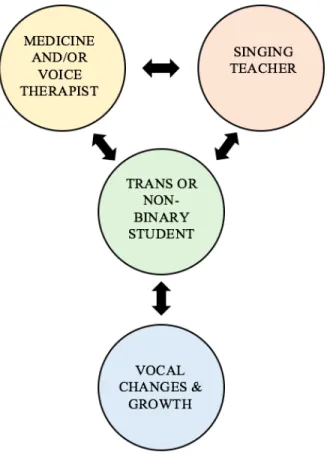
Figure 1 presents a conceptual framework for this study. The vocal development is seen to be influenced by the singer engaging in (1) hormone therapy and/or voice therapy, and (2) singing lessons.
Figure 1. Conceptual framework for trans and non-binary singers. This figure illustrates the factors that affect vocal changes and development of trans and non-binary singers.
Explanation of Conceptual Framework
Based on the current literature and research questions, the above conceptual framework represents the relationships between the major factors underlying the vocal growth of trans and non-binary singers. The student is arranged in the center of this model to bring attention to their lived experiences. The teacher is shown as a major influence in helping the student develop their singing voice. Though this study does not specifically seek to investigate vocal therapy (i.e., speech-language pathology) or the effects of hormone therapy on the voice, these factors play a meaningful role in the
gender or vocal identity of some trans individuals, and therefore, recognizing their potential impact is imperative in understanding the holistic depiction of a singer’s journey.
The arrow pointing towards the lowest circle (labeled: Vocal changes and
development) illustrate how vocal therapy, hormone therapy, and singing lessons impact the singer, and consequently affect vocal development. The horizontal arrow at the top indicates a potential collaboration between the singing teacher and the voice therapist. All arrows are double-headed to indicate that influence can travel in both directions. The complexities of these paradigms and the interactions between them affect progress towards vocal modulation and optimal vocal technique.
Approach
The research questions provided a framework to investigate trans and non-binary singers and their voice teachers to understand their experiences, perceptions, and
practices. The students in this study are adult-age singers, receiving singing lessons from independent private teachers. This study collected data through voice lesson observation, interviews of students, and secondary interviews of the teachers.
Case studies were developed through portraiture analysis to gain insight of human behavior and the context of the learning process (Hackman, 2002; Lawrence-Lightfoot & Davis, 1997). Each student-teacher pair was observed for two one-hour lessons. Each student was interviewed before the observation hours to enable the researcher to
understand the student’s desires, motivation, and perceptions of their voice. Observations of lessons provided access to the practices and methods of teaching, and enabled the
researcher to see the training in process. The teacher interviews were held after the observed lessons. These interviews allowed for the teachers to address any questions the researcher had from the observations, and to discuss the teacher’s pedagogy in further detail. The methodology will be discussed further in Chapter III.
Assumptions
The first assumption of this study regards the importance of the students,
acknowledging that trans and non-binary singers deserve quality vocal training. Research suggests more people are coming out as trans or non-binary, and thus narrative research in vocal training is needed to support individuals in this population with their musical pursuits.
The second assumption is that all singers respond differently to varied teaching practices, and accordingly, there is no way to determine “best practices” for trans and non-binary singers regarding technical concepts, vocal exercises, and repertoire.
However, an examination of various strategies can assist trans and non-binary singers and their teachers in pursuit of vocal growth.
A third assumption is that although commonalities between teaching practices and student abilities might be found, each teacher participant is unique and will address factors differently, as they see best. It shall be assumed that the teachers and students, no matter the singing style, aim for improved voice functionality, including range, timbre, breath control, and articulation, and that their practice is guiding the student to uncover a vocal identity congruent with their gender identity and singing aesthetics.
A fourth assumption is the de-limitations of this study. The design of this study explores the training of a small population of trans and non-binary singers to provide a thorough analysis of four case studies. Analysis of a large population of trans and non-binary singers is beyond the parameters of this study. While findings and implications might be transferable, the current study is not designed for generalization.
An assumed limitation is the variability of the singing voice and recognizing that the voice responds differently to physical health and environment. The observations of this study are to be understood within these natural conditions.
Rationale for Study
Research is needed to supplement the aperture in the literature on trans and non-binary vocal technique to provide students an affirming and beneficial experience in vocal music education. Research from speech-language pathology has examined voice modification with trans clients, and scholarship in vocal pedagogy and music education have some provided insight on the experiences of trans and non-binary students in the applied studio and choral classroom, which has led to tools and strategies for making the learning environment more inclusive. However, questions regarding the vocal technique and the nature of instructing trans and non-binary singers remains largely unexplored. Therefore, the rational for this study is to offer narrative data that contributes to the emerging research in trans and non-binary vocal pedagogy.
Significance of Study
The population of trans and non-binary singers is growing, yet singing teachers and choral conductors are teaching trans and non-binary singers with little research to affirm or inform their practices. Singing teachers and class music educators should have tools and strategies to effectively teach the increasing population of trans and non-binary singers from elementary school through college, and adult learners outside the traditional school system. Thus, this study is significant in providing educators across the field with data for teaching trans and non-binary singers. Furthermore, this study will help validate the experience of trans and non-binary singers and promote additional research.
Plan for Remaining Chapters
This dissertation is arranged into six chapters. Chapter II reviews the literature related to trans and non-binary singing by first framing trans and non-binary singers within gender and transgender theoretical models, as well as theories of applied lessons to understand the contexts that influence the educational experience. Next, the literature review provides a brief overview of the voice and the process of phonation. An examination of the research in speech-language pathology is presented to understand elements of voice masculinization and feminization in voice therapy. Lastly, a review of the research in vocal pedagogy, choral education, and music education regarding trans and non-binary musicians is reviewed. The literature review is followed by Chapter III, which provides a pilot study and methodology for this multi-case study.
The second half of the dissertation begins with Chapter IV, where detailed information of each teacher-student case study is presented, drawn from observations of
voice lessons, and separate interviews with the students and the singing teachers. The penultimate chapter will provide a cross-case analysis and discussion to answer the research questions and seek commonalities and differences amongst the participants. A summary of the study, alongside a conclusion of the analysis and recommendations for further research will be provided in Chapter VI. A final reflection from the author will bring the study to a close. A list of works cited and appendices, including IRB informed consent and participant’s rights forms, interview and observation protocols, and
recruitment e-mails are found at the end of the document.
Definitions
Chest register/voice: the muscular action in the lowest range of phonation; dominant action of the thyroarytenoid; “the vocalis muscle is tensed, which makes it thicker and brings more tissue into motion…the vocal folds are fully in contact and generate complex sound waves with a rich timbre” (Dimon, 2011, p. 61)
Cisgender: a person for whom the gender they were assigned intrauterine or at birth is congruent with their current gender identity (Palkki, 2016b)
Cricothyroids: four intrinsic muscles of the larynx, which originate at the cricoid cartilage and insert to the thyroid cartilage, enabling pitch variation in phonation, and is the dominant muscle is head voice register (Miller, 1996)
Falsetto: the term associated with a “thinner, more flutelike tone with less richness of timbre” of the male head voice register; during this process of phonation “only the inner margins [of the vocal folds] are vibrated by the flow of air; the vibrations then occur at a higher tension and frequency” (Dimon, 2011, p. 60)
Gender: a socially-constructed concept related to a person’s inner identity, often outwardly expressed through mannerisms, clothing, hair, and vocal timbre (Hancock, Krissinger, & Owen, 2011; West & Zimmerman, 1987)
Gender expression: the outward display of gender, often through name, pronoun, clothing, hair style, mannerisms, and voice (GLAAD Media Reference Guide, 2016)
Gender identity: a person’s inner sense of self, as defined by or in opposition to culturally constructed gender normativity (GLAAD Media Reference Guide, 2016)
Gender oppression: assumed power or unjust treatment of one gender over another, often the subjection of women by men, but also the subjugation on trans or non-binary individuals from cisgender persons; sometimes known as sexism (Rands, 2009)
Head register/voice: the muscular action in the higher range of phonation; dominant action of the cricothyroid; the vocal folds are thinner and vibrate quickly; the term used for female head voice or falsetto phonation
Non-binary/gender non-conforming: a person whose gender identity does not align with the confines of the binary gender system of female and male (Palkki, 2016b)
Passaggio: the pivotal point between two vocal registers (Miller, 1996) Sex categorization: a classification of human bodies based on genitalia,
chromosomes, and hormones, assigned intrauterine or at birth, and often defined within a male/female binary system (GLAAD Media Reference Guide, 2016)
Thyroarytenoid: an intrinsic muscle of the larynx, which originates at the thyroid cartilage and inserts at the arytenoid cartilage; situated above the vocal folds, and is the dominate muscle in chest voice register (Dimon, 2011)
Trans/transgender: a term for a person whose sex assigned intrauterine or at birth is incongruent with their gender identity, or for anyone whose gender identity does not align with the male/female social construction (GLAAD Media Reference Guide, 2016, p. 10)
Transphobia: violence or oppression towards trans and non-binary individuals (GLAAD Media Reference Guide, 2016)
Vocal resonance: the enhancement of sound as it passes through a resonating cavity, mainly the throat and mouth (McKinney, 1994); these flexible chambers enable various vocal qualities, serving as a filter for the produced vibrations (Doscher, 1994)
Chapter II
LITERATURE REVIEW
Introduction
This literature review synthesizes the related research on the vocality of trans and non-binary singers. Providing context for trans and non-binary singing technique and training, this chapter is divided into five sections: (1) a brief overview of theoretical models of gender, transgender, and applied music instruction; (2) a summary of the vocal system; (3) voice masculinization and (4) voice feminization as seen in speech-language pathology research, and finally, (5) scholarship on trans and non-binary singing in applied lessons and the choral setting. The umbrella terms trans and non-binary will be used throughout this essay, though the cited literature might use related terms, such as transgender, transsexual, and gender nonconforming when referring to this population under consideration.
Theoretical Frameworks: Gender, Transgender, and Applied Music Lessons
Gender Theory
Gender is understood as a socially-constructed concept imposing hegemonic influences on roles, expectations, and behaviors of natal male and female bodies
(Halberstam, 1994; West & Zimmerman, 1987). While intrauterine or at birth, a baby is often assigned a sex based on a binary female or male paradigm (Hausman, 2001). This medical assignment is based on physical appearance (genitalia), but cultural expectations based on the gender are imposed on the child. For example, male children are
traditionally gifted with blue clothes and toy trucks, while female children are given pink outfits and dolls. These expectations for what a child should like and how they should socially behave continues through adolescence and into adulthood, and permeate all aspects of culture and education (Bornstein, 1998). In music, songbooks for young women often focus on texts about flowers and lullabies, while songs for young men talk about ships and young ladies (Boytim, 2008a; Boytim, 2008b).
Sex categorization and gender are distinct paradigms. Sex is based on anatomy, chromosomes, and hormones. Gender is the inner identity of an individual (Wilchins, 2002). Gender expression is demonstrated through visible cues of one’s body or behavior, including mannerisms, clothing, hairstyle, voice, and speech patterns (Hancock,
Krissinger, & Owen, 2011). Gender theory contends that bodies are made of tangible matter, while the gender of the body is only a performance. Butler discusses gender as “only ever a performance in and of itself” (as cited in Airton, 2009, p. 234). Legal, religious, and cultural practices enforce the submission of individuals to identify with the binary male/female gender schema (Connell, 2002). It is not enough to claim a gender, but a community must see and accept a person for that gender. Communities not only guide gender practices, but also dissuade individuals through discrimination and
oppression from expressing a gender incongruent with their assigned sex categorization. When a person feels their sexual category is misaligned with their gender identity, they may experience gender dysphoria (Beemyn & Rankin, 2011). An individual might identify as trans, perhaps indicating they have transitioned or desire to transition from the gender expectations imposed upon them at birth to the gender identity that feels authentic to their sense of self. Other individuals might identify as non-binary, perhaps indicating
they reject the rigid binary construct and live as both male and female, or as neither. Gender identity refers to the sense of self as male, female, both, neither, or as fluid, meaning a person’s gender identity is flexible (Burdge, 2007; Roen, 2001a; Wilchins, 2002).
The distinction between gender and sexuality is important, as they are frequently misunderstood (Henry, 2017). Sexuality deals with a person’s romantic interests—the attraction they experience for another person. Gender expression is often coded as
sexuality, meaning that, for example, when a man behaves in an “effeminate” manner, he is assumed gay or queer by others. Though they are distinct, there is a relationship
between gender and sexuality. For instance, if a person who identifies as female and lesbian, transitions to a male identity, their sexuality is now straight if they remain romantically attracted to women (Henry, 2017).
Transgender Theory
If gender theory creates a framework for understanding gender as a socially-constructed paradigm, transgender theory re-positions gender theory to better perceive the fluidity of gender and the individual lived experiences within the trans and non-binary population. Scholarship by Green (2004), Stone (1991), and Stryker (1994) help outline the meaning of being trans or non-binary, and the deconstruction of the man/woman binary. Social work has also helped to establish a transgender theory (Burdge, 2007; Nagoshi & Brzuzy, 2010; Nagoshi, Brzuzy & Terrell, 2012). Burdge brings awareness to the discrimination and oppression that trans and non-binary people experience by living outside of the traditional social norms of gender binary. Roen (2001a) discusses gender fluidity through the experiences of indigenous persons of New Zealand, where
individuals live between genders, live as a third gender, and/or are undergoing a
transgender process. Roen (2001b) also asserts that being transgender is more than living as a woman or man—an individual might live as both or neither.
Transgender theory highlights the fluidity of gender and the multiple identities within the trans and non-binary population. Understanding identity through the lived experience is central in transgender theory. One aspect of a person’s identity is related to their voice. Andrews (1986) contends the “voice is a very important part of the self-concept, and our identity is projected through our voice” (p. 3). Zimman (2012) asserts that some trans individuals may want to alter their voices to align within the gender binary, seeking a higher voice for feminine identity, or a lower voice for masculine. A trans man might take testosterone to change the tone quality of his voice. Trans women experience no change in voice from hormone replacement therapy, and might seek a higher range through vocal coaching. Other persons, such as someone who identifies as non-binary, may prefer a non-normative voice to signify their trans or non-binary identity. The related research on trans and non-binary voices will be discussed later in this chapter. Next, models of applied music lessons will be outlined, illustrating student-centeredness and the individual experience in the applied music studio.
Applied Lessons Studies
Traditional applied lesson theories depict a master-apprentice relationship, where a novice student seeks training from a master teacher (Duke & Simmons, 2006; Parkes & Wexler, 2012). The scholarship of Duke and Simmons (2006) found 19 common
elements of master teachers in applied lessons, divided into three categories: goals and expectations, effecting change, and conveying information. The Duke and Simmons
study of a conservatory approach to applied lesson instruction narrates a teacher-centered pedagogy, where the teacher defines the structure and goals of the lesson. Duke and Simmons found that teachers understand and communicate “excellent fundamental technique” (p. 11) and the ability to convey technical issues to effect change. The study also found master teachers gives frequent negative feedback, drive the pacing of lessons, and determine repertoire assignment and lesson goals.
Parkes and Wexler (2012) replicated the Duke and Simmons (2006) study to investigate applied lessons pedagogy in a different population of teachers and students. The researchers found that the teachers in their study “teach along the teacher-centric guidelines that they are familiar with and that have been held as part of the accepted master-apprentice roles in the applied setting” (Parkes & Wexler, 2012, p. 56). Their scholarship also revealed that teachers seem to tailor their strategies to fit the specific needs of their students, providing guidance regarding technique and interpretation, but also offering emotional support. Parkes and Wexler (2012) report, “Teachers are meeting students at their current level of achievement and moving them forward, scaffolding skills from the familiar to the unfamiliar, at a pace that does not cause frustration, low motivation, or lower efficacy in students” (p. 59). Addressing students’ specific needs demonstrates a pedagogical example of centering the learner in the applied studio, which provides space for students to assert more leadership in their educational growth and musical development, and enables teachers to acknowledge each student as a unique learner who may need specific strategies and practices.
Student-centered theories not only emphasize a need for student-centered
as components to successful applied lessons. Mackworth-Young (1990) highlights the effectiveness of centered learning within the applied studio, finding student-centered learning places a greater emphasis on student goals, which increases student motivation. Student-centered teaching emphasizes the importance of self-problem solving, where students are equipped with the tools and ability to practice between lessons, and where lessons serve as joint-problem solving sessions (Kennell, 1992).
Overview of the Vocal System
The existence of sound requires four components: (1) a power source, (2) a vibrating object, (3) a resonating cavity, and (4) an object to receive the soundwaves (McKinney, 1994). In the case of the vocal system for speech or singing, the power source is the exhalation of breath, the vibrating object is the vocal folds, and the
resonating cavity is the vocal tract, including the throat and mouth. Source-filter theory of speech production views the “source” as the airflow through the glottis of the vocal folds, and the “filter” as the vocal tract through which sound vibrations are modified (Papp, 2011). When a spoken or sung sound is produced, it is called phonation. As the vocal folds adduct, subglottic air passes through the glottis causing the folds to vibrate. The sound is amplified as it passes through the throat and mouth.
Range and tone quality of a person’s voice is determined by anatomy and habitual use of their instrument. The length and mass of the vocal folds impact range, affecting the speed of vibration, which determines how high or low the pitch is perceived by the
listener. The acoustic properties of the voice are affected by the amplification of sound as it is emitted from the body. Changing the position of the tongue, lips, and muscles of the
throat enable different aspects of speech and singing, chiefly vowels, consonants, and vocal timbre. Due to human biological changes brought on during puberty, natal male voices tend to sound lower than natal female voices, due to a lengthening and thickening of the vocal folds during adolescents. Though natal female voices also change at puberty, the effect is usually less pronounced due to a lower presence of testosterone in natal female bodies.
Adult trans men who take testosterone experience a change in the thickness of the vocal folds, causing the speaking and singing range to drop (Constansis, 2008; Davies & Goldberg, 2006; Van Borsel, De Cuypere, Rubens, & Destaerke, 2000). For adult trans women, estrogen does not modify the length or thickness of the vocal folds, thus habitual muscular use must be modified, if the trans woman wishes to sing in a high range often associated with the natal female body (Carew, Dacakis & Oates, 2007; Gelfer & Ramsey Van Dong, 2013). The air flow for a trans or non-binary person is no different than in any person with a healthy respiratory process, but the voice is modified, either by medicine or by habitual use. This section of the literature review will explore models of traditional vocal range and registration associated with classical singing. Contemporary commercial music pedagogy will be introduced before literature related to the changing voice is examined.
Voice Types
Conventional voice types for singing include soprano, alto, tenor and bass, though in addition to this standard quartet, various vocal classifications exist to regard specific voice types, such as contralto or baritone. The range of a voice is the lowest to highest pitch (or slowest to fastest frequency) a person’s vocal folds will vibrate. During puberty,
natal male voices experience a lowering in vocal range due to increase in vocal fold mass and a lengthening of the vocal folds. The larynx tips forward slightly exposing the
thyroid notch (“Adam’s apple”). The vocal fold length for an adult natal male is typically between 17.5 to 25 millimeters (Titze, 1994). Natal female voices also change during puberty with an increase in laryngeal size consistent with the overall developing body. Vocal fold length for an adult female is 12.5 to 17 millimeters (Titze, 1994). This small difference in size equates to different vocal ranges. Natal female bodies tend to vibrate at a faster frequency, producing a pitch perceived as higher. Likewise, longer vocal and thicker folds of natal male bodies typically vibrate at a slower frequency, producing pitches perceived as lower. Lower versus higher ranges are relative to each body based on the source and filter of the sound.
The term “female” is used in quotes throughout the next section, as “male” will be in the following section, to denote that this language, which is widely used in vocal technique and pedagogy literature, regards biological sex, not gender. This study recognizes that this language is controversial, as it often ignores female-bodied tenors, baritones and basses, and male-bodied sopranos and altos. For the purposes of this portion of the literature review, “female” refers to natal female bodies, and “male” refers natal male bodies. It is important this distinction is addressed, as a trans women’s voice is female, no matter the range in which she most easily phonates. Similarly, a trans man’s voice is male, even if his speaking and singing range falls more comfortably into the alto or soprano range.
Standard “Female” Voices
Solo voice classifications in standard “female” voices are soprano, mezzo-soprano, and contralto. (The term alto is typically used only for choral divisions, usually sung by contraltos or mezzo-sopranos.) McKinney (1994) indicates that each voice type has a “practical” and “ideal” range (p. 111). A contralto ideally sings from G3 (below middle C) to G5, encompassing a two-octave range. A mezzo-soprano’s ideal range is a whole step above the contralto, thus covering A3 to A5. The ideal range for a soprano is C4 (middle C) to C6, and higher sopranos might extend to the F above or higher. Figure 2 shows the “ideal” ranges of these voice types.
Figure 2. “Ideal” ranges for standard “female” voices. (McKinney, 1994)
Voice registration refers to the shifting of the intrinsic vocal muscles, that naturally occurs when a singer ascends or descends over their full range (Dimon, 2011). For a non-singer, the act of shifting the gears in a vehicle might provide an adequate, yet crude metaphor for registration of the singing voice. The point of the shift, known as the passaggio, is the area of the range during which the intrinsic muscles of the larynx modify for continued phonation, which might result in a change of timbre. In bel canto vocal technique, the traditional training for classical music, singers aim to learn to make this muscular shift imperceptible to the listener. The discussion of vocal registers is
problematic as it is hotly debated, both in terms of the number of vocal registers, but also in the language used to denote them. A common language used to denote vocal registers is the chest and head voices, but other appellations include lower/higher, modal/falsetto, heavier/lighter, and thyroarytenoid dominant/cricothyroid dominant.
Richard Miller (1996) posits:
Speech habits of females tend to fall into three types: (1) head voice is almost exclusively used; and chest voice may be nearly non-existent; (2) both chest and head voices are used for speech inflection, with a preponderance of head; and (3) chest voice is chiefly used. (p. 133) For singing, a combination and balance of the head and chest registers is employed in bel canto singing. Contraltos may use more chest voice than their mezzo-soprano or soprano counterparts, but all standard “female” voice types typically use a combination of both registers. Miller describes “female” voices as having two passaggi points: lower and upper. Each voice is different, but in general, contraltos experience the lower passaggio around G4 and the upper passaggio at D5. The lower passaggio for mezzo-sopranos is E4 or F4, with the upper passaggio one octave above. Sopranos tend to experience the lower passaggio at E-flat 4 and the upper passaggio at F-sharp 5. Lastly, a part of the voice known as the flageolet register, or whistle tone, is a higher extension above the upper passaggio. This high range is produced by “a high rate of longitudinal tension of the vocal ligaments, considerable damping of the posterior portion of the vocal folds, limited vibrating mass of the vocal folds, and high subglottic pressure and airflow rate” (Miller, 1996, p. 148). Not all conventional “female” voices produce a whistle tone, and
Standard “Male” Voices
Solo voice classifications in standard “male” voices are tenor, baritone, and bass. The “ideal” ranges of each voice type are as follows: tenor is C3 to C5, baritone is A-flat 2 to A-flat 4, and bass is F2 to F4 (McKinney, 1994, p. 111). Figure 3 shows these ranges on the musical staff.
Figure 3. “Ideal” ranges for standard “male” voices. (McKinney, 1994)
Providing a brief overview of registration for standard “male” voices is challenging, as there is debate regarding the amount of head voice and chest voice employed with the different voice types. Vennard (1967) indicates, “Most authorities agree that basses sing largely in ‘chest,’ with some use of ‘head’ for very high
notes…tenors sing in ‘chest’ up to F4 or F-sharp 4, above which theorists dispute” (as cited in Miller, 1996, p. 117). Miller (1996) proposes a combination of the head and chest registers is used for all “male” voice types. He contends “male” voices have two passaggi (primo and secondo), like “female” voices. “Male” voices also have a falsetto register that is distinct from the head register, according to Miller.
In chest voice singing, “the vocalis muscle is tensed, which makes it thicker and brings more tissue into motion” (Dimon, 2011, p. 61). In opposition, in falsetto, often described as flute-like, “only the inner margins [of the vocal folds] are vibrated by the
flow of air; the vibrations then occur at a higher tension and frequency” (Dimon, 2011, p. 60). Miller (1996) makes a distinction of the “male” head voice and falsetto. Thus, in Miller’s perspective, the “male” head voice is neither the chest voice nor falsetto, but rather “increased cricothyroid action, vocal-fold elongation, diminution of vibrating vocal-fold mass, and constantly changing contours of vocal-fold edges” (p. 118). He goes on to explain “that vocal-fold occlusion is not the same in head and falsetto: vocal-fold approximation is less complete in the falsetto production” (Miller, 1996, p. 122). If traditional “male” voices use a combination of head and chest registers, the falsetto can be used as a pedagogical tool for finding greater relaxation in the head voice, in Miller’s viewpoint.
A modern countertenor (opposed to the Baroque countertenor) is a non-traditional “male” singer, who vocalizes almost exclusively in falsetto register, without causing strain or damage to the vocal folds. While Miller’s scholarship does not go into detail regarding falsetto singing, he does report, “special techniques of extending the falsetto range and in blending it…with the traditional low male register are required” (Miller, 1996, p. 124). Countertenor technique and training is explored by Giles (1994, 2005), and falsetto singing might provide an opening for a trans woman or a non-binary person assigned male at birth to sing in the soprano or alto range if desired.
A countertenor should not be confused with the now non-existent castrato. During the mid-16th century through the 18th century, mainly in Italy, boy sopranos who showed great vocal potential were sometimes castrated. Due to a reduction in testosterone from mutilation of the genitalia, the voice and body of a castrato did not develop in the same manner as bodies did with standard levels of testosterone. While a castrato grew in
height, sometimes abnormally tall and with broad chests, the vocal folds maintained a soprano, mezzo, or contralto range (Barbier, 1998). Although a castrato was frequently regarded as a star of the opera stage, castration was often against the wishes of the child, and eventually deemed illegal in the late 18th century. Though there is no connection in physiology between a castrato and a trans man (or a countertenor), the practice of modifying voices by changing testosterone levels is present in Western music history.
Contemporary Commercial Music Pedagogy
Classical singing styles, are often referred to as bel canto, are applied to most operatic and oratorio repertoire, which dominates most collegiate music studios in the United States and Europe (LoVetri & Weekly, 2003). In more recent decades, non-classical music has entered the applied domain, including jazz, folk, gospel, pop, rock-n-roll, country western, and musical theatre. The voice pedagogy for non-classical styles is called contemporary commercial music (CCM). Commonalities exist between bel canto and CCM pedagogy, such as vocal health, intonation, and melodic and rhythmic accuracy (McCoy, 2016, p. 46). McCoy candidly discusses the difficulty a classically-trained voice teacher might face when teaching non-classical repertoire, and suggests bel canto
specialists should collaborate with teachers and coaches knowledgeable in CCM music. The negotiation of vocal registration is a chief distinction between bel canto singing and CCM. The American Academy of Teachers of Singing in support of CCM pedagogy asserts, “classical training seeks to blend registers into a seamless whole…This is not the case in many areas of CCM, which often stylistically demand strongly
separated registers” (American Academy of Teachers of Singing, 2008, p. 10). The Academy describes CCM singing as being a chest voice dominant sound with a bright
timbre, minimal vibrato, and intentional breathiness, roughness or nasality in the tone. Additionally, CCM technique accounts for using a microphone, where bel canto singing is traditionally performed without added amplification. A survey by LoVetri and Weekly (2003) indicates applied studio teachers have a strong interest in gaining more knowledge in CCM techniques, including data regarding pedagogical approaches and voice science. There is a growing interest for CCM vocal pedagogy, and CCM singing has made an entryway for diverse musical styles in the applied music studio.
The Changing Voice
The human voice goes through changes at the onset of puberty. For some adolescents, changes happen gradually, while others experience abrupt vocal changes. Freer (2009) advises, “boys may experience sudden changes between stages of vocal development, while girls may find their voices breathy from time to time” (Freer, 2009, p. 58). The range and registration of a changing voice is undergoing modifications throughout puberty. When a trans man starts androgen therapy, he might experience a vocal change similar to the changes in voice during adolescent puberty. Voice
modulation incited by testosterone has been investigated in research from speech-language pathology.
The next section of the literature review will examine the research on trans voices from speech-language pathology. Because of the changes brought on by testosterone, a trans man might seek assistance with his voice from a speech-language pathologist. The work he does to stabilize a lower vocal range is called voice masculinization. Likewise, a trans women might see a vocal therapist to help relearn the habitual functions of her voice to sound more “feminine.” This is known as voice feminization. This gendered
language will only be employed in this literature review for syntax and consistency, recognizing that “feminine” and “masculine” represent gender-normative concepts based on the social constructs of gender. The author recognizes that a trans woman who sings in a bass range has a female voice, despite the gender-normative construct. Additionally, some speech-language pathology literature uses the following language: “MTF” (male-to-female) for transgender women, and “FTM” (female to male) for transgender men. This language is problematic as it emphasizes the assigned sex above the gender identity of the individual.
Voice Masculinization for Trans Men
As the voice is an important part of gender identity, a trans man may wish to align his voice with the quality and timbre of voices associated with post-puberty natal male bodies. This alignment might include the desire for a lower pitched speaking and singing voice. A trans man might take testosterone to change his body, which includes a change in voice, due to a thickening of vocal folds causing a drop in fundamental frequency. Van Borsel, De Cuypere, Rubens, and Destaerke (2000) found “the desired voice change (i.e. lowering of the voice) takes place automatically under the influence of androgen
administration” (p. 428). Testosterone has shown to be so effective in creating this vocal change that oftentimes voice therapy is not seen as a necessary element in the vocal transition (Davies & Goldberg, 2006; Van Borsel et al., 2000).
In their two-part study, Van Borsel and colleagues (2000) examined voice problems in trans men using a questionnaire administered to 16 trans men. They also presented longitudinal study of two trans men. All 16 trans men who participated in the
questionnaire had been taking testosterone for at least one year. Fourteen of the
participants positively responded to experiencing a lowering of the pitch of their voices since the start of androgen therapy. Two participants each indicated they had always had a low-pitched speaking voice, and therefore did not experience a voice change. The participants were asked about their willingness to have further voice therapy, and 11 of the respondents rejected any additional need for speech therapy citing satisfaction as the main reason. The study also revealed that fourteen of the participants indicated that voice modification was as important to their male identity as sex reassignment surgery. Two of the respondents commented that they could not sing as high or as well as before taking testosterone. Issues regarding the singing voice of trans men are also mentioned in a health publication by Gorton, Buth, and Spade (2005), where the authors warn that voice changes due to hormone therapy might be “significantly detrimental to vocal
performance” (Gorton et al., 2005, p. 59).
In the longitudinal part of the study, Van Borsel and colleagues (2000) examined two trans men undergoing androgen therapy. One individual was seen on eight occasions over 17 months, while the other client was examined seven times over 13 months. Each participant saw a substantial lowering and narrowing of their range. Van Borsel et al. (2000) posit, “This reduction appears to be the result of a loss in the high tones which is not fully compensated for by a gain in the lower frequencies” (p. 434). Despite a
reduction in range, the fundamental frequency was found to drop in both clients, which positioned their speaking voices into a range “passable” as post-puberty natal men.
In a frequently cited article on trans singing, Constansis (2008) discusses his voice extensively. Following his own personal journey through androgen therapy as a
professional singer, Constansis provides anecdotal data of his voice modification. He discusses the experience of having “entrapped vocality,” in which the vocal folds had thickened, but the larynx that houses the vocal folds did not enlarge to accommodate the increased muscle mass. He suggests the voice of a trans man may sound weak, hoarse, and lack the harmonics of a biological male voice. Constansis suggests that if androgen therapy begins at a lower dosage and increases slowly over time, for professional voice users the gradual masculinization of the voice is “not only more predictable but also very encouraging” (p. 5), and that physiological changes in the vocal tract are concomitant with changes of the vocal folds. Constansis’s essay includes substantial reporting on the training of transgender singers, which will be discussed in the last section of this
literature review.
Three more recent more examinations of the trans male voices have come from linguistics and communications disorders (Papp, 2011; Sanchez, 2013; Zimman, 2012). Sanchez (2013) investigated trans male voices and attempted to identify the unique qualities common in their voices by looking at speaking fundamental frequency, pitch range, and formant frequencies. Acoustical and perceptional data were gathered. Sanchez’s research compared voice samples of three groups of men: biological males, long-term androgen therapy users, and recent androgen therapy users. Acoustical results found long-term users had a marginally significant lower fundamental frequency than the recent testosterone users. Results of the vocal formants indicate biological males had significantly lower formant 2 (F2) frequencies than recent users, but no significant
difference to long-term users. Formant 3 (F3) frequencies in the biological men were


![Figure 7. Exercise [ziŋa] for breath release and flexibility](https://thumb-us.123doks.com/thumbv2/123dok_us/11026873.2989923/111.918.182.802.656.830/figure-exercise-ziŋa-breath-release-flexibility.webp)
![Figure 8. Exercise [nɛomi] for resonance and released jaw and tongue](https://thumb-us.123doks.com/thumbv2/123dok_us/11026873.2989923/112.918.172.807.148.313/figure-exercise-nɛomi-resonance-released-jaw-tongue.webp)