The Aquila Digital Community
The Aquila Digital Community
DissertationsSpring 5-2012
Educational Technology Integration and High-Stakes Testing
Educational Technology Integration and High-Stakes Testing
Tracy Demetrie DanielUniversity of Southern Mississippi
Follow this and additional works at: https://aquila.usm.edu/dissertations
Part of the Curriculum and Instruction Commons, Educational Methods Commons, and the Elementary and Middle and Secondary Education Administration Commons
Recommended Citation Recommended Citation
Daniel, Tracy Demetrie, "Educational Technology Integration and High-Stakes Testing" (2012). Dissertations. 750.
https://aquila.usm.edu/dissertations/750
This Dissertation is brought to you for free and open access by The Aquila Digital Community. It has been accepted for inclusion in Dissertations by an authorized administrator of The Aquila Digital Community. For more
The University of Southern Mississippi
EDUCATIONAL TECHNOLOGY INTEGRATION AND HIGH-STAKES TESTING
by
Tracy Demetrie Daniel Abstract of a Dissertation Submitted to the Graduate School of The University of Southern Mississippi in Partial Fulfillment of the Requirements for the Degree of Doctor of Philosophy
ii ABSTRACT
EDUCATIONAL TECHNOLOGY INTEGRATION AND HIGH-STAKES TESTING
by Tracy Demetrie Daniel May 2012
Determining if the investment in educational technology will improve student achievement is complicated and multifarious. The purpose of this study was to evaluate the influence of teacher technology integration on student achievement as measured by the Mississippi Subject Area Testing Program (SATP) and to explore the relationship between technology integration and other factors (a teacher’s age, gender, computer self-efficacy, and technology training).
This non-experimental, quantitative study included 106 secondary school teachers from six school districts in Mississippi. The respondents completed a questionnaire based on their SATP course (Algebra I, Biology, English II, and U. S. History) teaching
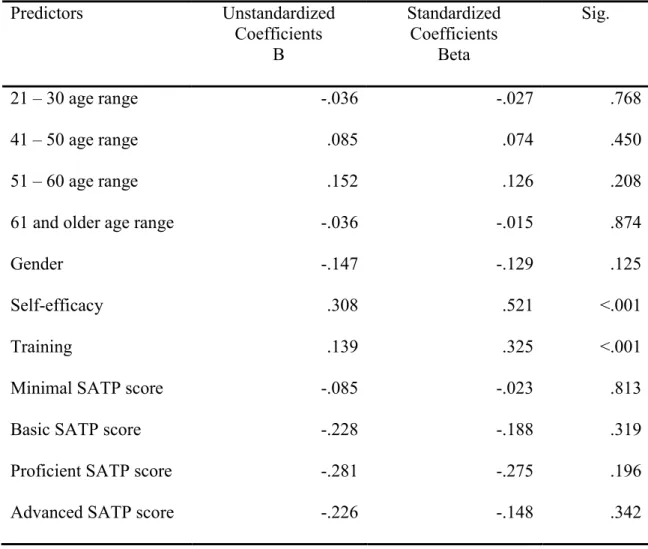
experiences. This study employed a multiple linear regression statistical test. The findings of this study indicated that there was a statistically significant relationship between technology integration and a teacher’s age, gender, computer self-efficacy, technology training, and student test scores (collectively). The study also showed that when controlling for all other variables, computer self-efficacy and technology
integration was statistically significant while age, gender, and student test scores were not statistically significant.
iii
COPYRIGHT BY TRACY DEMETRIE DANIEL
The University of Southern Mississippi
EDUCATIONAL TECHNOLOGY INTEGRATION AND HIGH-STAKES TESTING
by
Tracy Demetrie Daniel
A Dissertation
Submitted to the Graduate School of The University of Southern Mississippi in Partial Fulfillment of the Requirements for the Degree of Doctor of Philosophy
Approved: ___________________________________ Director ___________________________________ ___________________________________ ___________________________________ ___________________________________ Dean of the Graduate School
iii
ACKNOWLEDGMENTS
To my dissertation chair, Dr. Rose McNeese, thank you so much for your
guidance, support, advice, and diligence. To my statistician, Dr. J. T. Johnson, thank you for everything you have done and taught me over the past few years. To Dr. Thelma Roberson, thank you for your guidance and encouragement throughout this journey. And to my wonderful and supportive family and circle of friends, I thank you for always being there!
iv TABLE OF CONTENTS ABSTRACT ... ii ACKNOWLEDGEMENTS ... iii LIST OF TABLES ... vi CHAPTER I. INTRODUCTION ...1 Background Purpose of Study Justification Research Question Hypothesis Assumptions Delimitations Definition of Terms Summary
II. REVIEW OF LITERATURE ...11 Historical Perspective
Theoretical Framework The 21st Century Students
The Call for Change in Education High Stakes Testing
21st Century Skills Technology Integration Professional Development Computer Self-Efficacy Summary III. METHODOLOGY ...47 Introduction
Mississippi Subject Area Testing Program Levels of Technology Integration
Research Design Instrumentation Participants
v Research Question Hypothesis Summary IV. RESULTS ...54 Introduction Description of Respondents Results Data Analysis Data Findings Hypothesis Results Summary V. CONCLUSION ...71 Introduction Summary of Procedures Major Findings Discussion Limitations
Recommendations for Policy and Practice Recommendations for Future Research Summary
APPENDIXES ...80 REFERENCES ...92
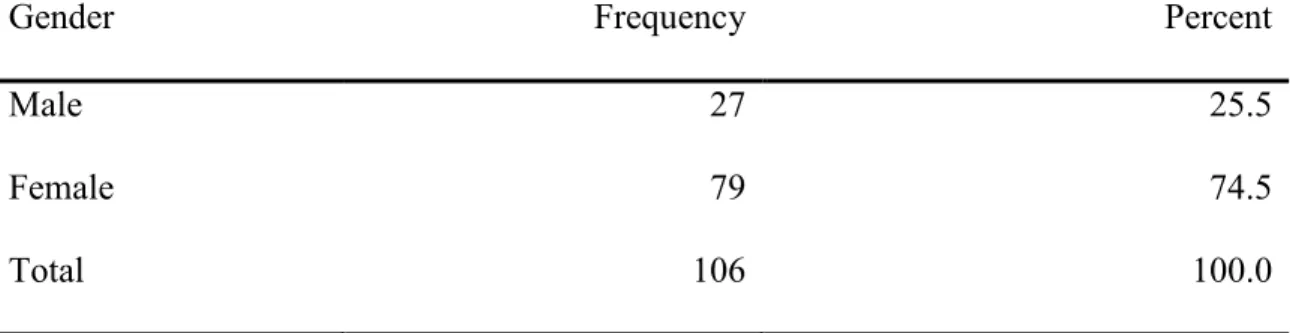
vi LIST OF TABLES Table 1. Frequencies of Gender ...55 2. Frequencies of Race ...56 3. Frequencies of Age ...56
4. Frequencies of Teachings Experience ...57
5. Frequencies of Courses Taught ...57
6. Frequencies of SATP Scores ...58
7. Frequencies of Degree Earned ...58
8. Means and Standard Deviations of Computer Self-Efficacy ...60
9. Means and Standard Deviations of Technology Integration...61
10. Frequencies of Computer Access ...63
11. Frequencies of Interactive White Board Training ...64
12. Frequencies of Software Training ...65
13. Frequencies of Integrating Technology in Classroom Training ...66
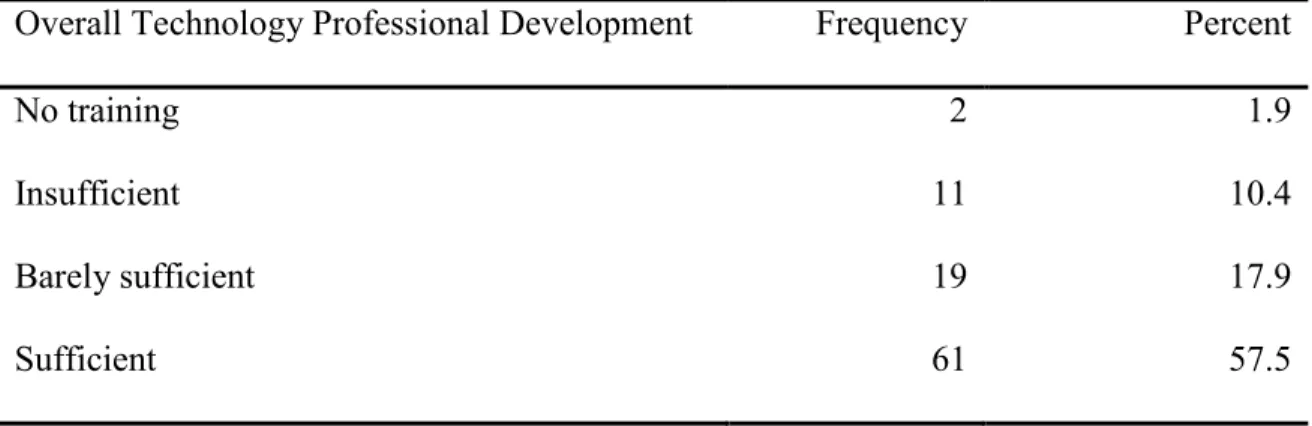
14. Frequencies of Overall Technology Professional Development/Training ...66
15. Frequencies District/School Technology Use Requirement ...67
16. Means and Standard Deviations of Sub Scores ...68
CHAPTER I INTRODUCTION
The deauthorization of the Enhancing Education Through Technology program (Title IID of the reauthorized Elementary and Secondary Education Act – No Child Left Behind Act of 2001) (Nagel, 2011; eSchool News, 2011) and the decrease in funding for Career and Technical Education program, Special Education programs, Improving Teacher Quality program, and Title I Grant program (Federal Funds Watch, 2011; Nagel, 2011) has caused educational leaders throughout the United States to face the challenge of doing more with much less. The 29.1 million dollar cut to education programs (Federal Funds Watch, 2011) has educational leaders looking closely at their own budgets to prioritize initiatives. Many school leaders are looking to educational technologies such as cloud computing (to reduce software and production costs), electronic book readers (to reduce textbook spending), and “Bring Your Own Device” (Devaney, 2011a, p. 12) initiatives (to reduce the cost of equipment replacement) to help fill in the gaps between funding and meeting new and growing accountability standards while continuing to prepare students who are equipped with 21st century skills for college, the workforce, and the military (Devaney, 2011a; 2011b; Zwang, 2010).
The challenge of doing more with less suggests to educational leaders that they should be more frugal in and more informed about spending. This study provides educational leaders with data, tools, and knowledge that will guide decision making and planning for educational technology purchases, usage, and professional development to increase student achievement.
Background
The inception of formal technology integration in the classroom can be traced back to the early 1900s with the introduction of film and radio to the classroom (Cuban, 1986). Thomas Edison was so enthused about the new technology and the possibilities the technology held for the classroom that he, in 1913, predicted that film would replace the classroom textbook due to an increase in the use of motion picture in the classroom (Cuban, 1986). Contrary to Edison’s prediction, film did not replace textbooks due to the infrequent use of the new technology by teachers. In addition, the same disappointment occurred with the introduction of radio and television as classroom tools. Reasons noted by Cuban for the lack of use of these early forms of educational technology include the lack of equipment, the lack of training on the equipment, cost, and uncertainty about the influence on teaching and learning. Some of the same reasons for lack of technology integration are still true today.
Although the influence of educational technology on teaching and learning is still uncertain, just as it was in the early 1900s, schools across our nation have invested and are continuing to spend millions of dollars on educational technology, technology integration, and technology training. These investments are being made while hoping to improve student achievement and increase the average yearly progress to meet the requirements of the No Child Left Behind Act (NCLB) of 2001 (U. S. Department of Education, 2002). Many schools have moved from simply ensuring that each classroom has Internet-access, to making sure that each classroom has three to four multimedia computers and an interactive whiteboard to enhance instruction. Part D, Enhancing
Education Through Technology (E2T2) of NCLB encourages technology purchases by setting technology goals for schools. The desired outcomes of E2T2 include having every school fully integrate technology into the curriculum and improve student
academic achievement through the use of educational technology. E2T2 also encourages schools to foster effective technology integration through teacher training and curriculum development (U. S. Department of Education, 2002).
While some research such as 1985 Apple Classrooms of Tomorrow Study (Apple Classrooms of Tomorrow-Today, 2008; Apple Classrooms of Tomorrow, 1985), the 1994 Kulik Study (Schacter, 1999); the 1990-1997 Sivin-Kachala Study (Schacter, 1999; Sivin-Kachala, Bialo, & Rosso, 2000); and the Wenglinsky Study (Wenglinsky, 2005) regarding the relationship between educational technology and student academic achievement has been conducted, the research findings indicated contradictory results. The results seem to differ primarily due to the definition of student achievement applied in each study. Student achievement is generally measured by standardized test scores; however, some define student achievement by increase in grades, motivation, 21st
Century skills, etc. (Apple Classrooms of Tomorrow-Today, 2008; Apple Classrooms of Tomorrow, 1985; Schacter, 1999; Sivin-Kachala, et al., 2000; Wenglinsky, 2005). Although the results of the research conflict, the researchers agree that technology-rich environments seem to increase student attitudes toward class and learning.
Many school leaders believe that simply putting computers in the classroom will automatically increase learning (Kleiman, 2004) while other educational leaders value teacher training on new technologies. This debate, as well as current studies examining
the relationship between educational technology and student achievement, has
encouraged this researcher to explore the factors that influence technology integration in the classroom and examine the effects, if any, on student achievement.
Purpose of Study
The purpose of this study was to evaluate the influence of teacher technology integration on student achievement as measured by high-stakes testing programs
(Mississippi Subject Area Testing Program-SATP) and to add to the body of research on the effectiveness of educational technology to help guide educational leadership in the planning, purchasing, and usage of educational technologies. Data was gathered from six school districts in Mississippi. The data included general demographic data about the school district, school, and teachers as well as data regarding teacher technology
integration (levels of teacher technology integration, frequency of technology integration, technology training, personal/home use of technology, etc.)
To determine whether or not using technology leads to higher levels of student learning has become more urgent because of the emphasis on “standards-based
accountability” and costs of purchasing and implementing technology (Protheroe, 2005, p. 46). Answering whether or not technology improves student learning is difficult and should include defining assessment, complexities of people, technology and educational organizations (Spurlin, 2006). This study also explored the 21st century student and compared him to students of the past. This exploration of the digital native provides implications for educators and their use of educational technology to make the teaching
and learning process relevant while attempting to meet the increasing number of state and national accountability standards.
Justification
The question of whether or not to include technology in the classroom is no longer a relevant question. The No Child Left Behind Act mandates the full integration technology in the classroom. The mandate shifts the question and exploration to how best to integrate technology to improve student achievements.
This study explored the relationship between a teacher’s integration of technology in the classroom and student achievement. As previously noted, some researchers agree that environments enriched by educational technology increase student motivation for learning (Apple Classrooms of Tomorrow-Today, 2008; Apple Classrooms of Tomorrow, 1985; Schacter, 1999; Sivin-Kachala, et al., 2000; Wenglinsky, 2005). If this, indeed, is the case as documented by the results of this study, schools could increase student interest and learning by increasing the investment in educational technologies for classroom use. The additional investment in educational technologies could possibly reduce the budget for areas such as textbooks, paper, and other supplemental materials. In addition to increased student motivation for learning, students could possibly leave high school better prepared to enter college, the military and the work force due to increased exposure to 21st Century technologies and skills. The need to know what impact, if any, teacher technology integration in the classroom has on student achievement is more urgent in the 21st century than before due to the emphasis on
accountability and the substantial cost of purchasing and implementing technology in the classroom (Protheroe, 2005).
Research Question
This study examined the following question: Does a relationship exist between teacher technology integration in the classroom and the teacher’s age, gender, computer self-efficacy, technology training, and state subject-area test scores of students?
Hypothesis
H1: There is a statistically significant relationship between teacher technology integration in the classroom and the teacher’s age, gender, computer self-efficacy, technology training received, and student test scores.
Assumptions
The researcher assumed that the survey participants were sincere and honest in their survey responses. It was also assumed that the SATP scores provided by the participants were all-inclusive and accurate. It was further assumed that survey participants had access to some educational technology and technology training.
Delimitations
This study was delimited to secondary public education teachers in Mississippi. This study was also delimited to Mississippi Subject Area Testing Program teachers.
Definition of Terms
21st Century Skills. The set of skills needed in order to be able to compete on a global level and be able to successfully work in the 21st century. The skills include
critical thinking and problem solving; communication; collaboration; creativity and innovation; information, media, and technology skills; life and career skills; initiative and self-directions; social and cross-cultural skills; productivity and accountability; and leadership and responsibility (Partnership for 21st Century Skills, 2009; Apple Classrooms of Tomorrow-Today, 2008).
Assessment. A method or methods used to determine what a student knows or can do (Learning Technologies at Virginia Tech, 2009).
AYP (average yearly progress). The key measure to determine if a school or school district has made the required annual progress according to the requirements set forth by the No Child Left Behind Act of 2001.
Computer self-efficacy. An individual’s belief of his/her ability to use a computer or computer applications (Smith, 2001).
Digital immigrant. A person born prior to the digital age that may or not speak the digital technology fluently; anyone who is uncomfortable using digital technology
(Prensky, 2001).
Digital media. Any digitized content (i.e. computer, iPod) that can be transmitted over a network or storage device that holds digital data (Jukes & McCain, 2008).
Digital native. A person born during the digital age that is very comfortable with digital technology (Prensky, 2001).
Educational technology. Technology applications designed and used for instructional purposes (Bailey & Mageau, 2004; Frazier & Bailey, 2004).
Gatekeeper. A person, specifically an educator, who chooses which technology is allowed to be used(Prensky, 2001).
High-stakes testing. The practice of attaching consequences to standardized scores.
Hypertext/hyperlink mind. Multitasking at a superficial level; being able to leap around in one’s thinking (Miller, 2008).
National Assessment of Educational Progress (NAEP). Largest nationally
representative and continuing assessment of what American students know and can do in various subject areas; the results of the NAEP assessments are reported in the Nation’s Report Card.
No Child Left Behind (NCLB) Act of 2001. The reauthorization of the Elementary and Secondary Education Act with the purpose of closing the achievement gap with accountability, flexibility, and choice so no child is left behind (U. S. Department of Education, 2002).
Neuroplasticity. The brain’s ability to reorganize itself by forming new neural connections throughout a person’s lifetime (Doidge, 2007).
Social networking. The practice of expanding one’s personal or business network of contacts through contact with other individuals (Computer Language Company, 2011).
Student achievement. A measure of a defined level of success for a student; for the purpose of this study, student achievement will be measured by the improvement of outcomes on a standardized test (Apple Classrooms of Tomorrow-Today, 2008; Apple
Classrooms of Tomorrow, 1985; Schacter, 1999; Sivin-Kachala, et al., 2000; Wenglinsky, 2005).
Technology integration. Incorporating technology into classroom instruction and lessons.
Summary
The integration of technology in the classroom today (21st century) is very similar to the integration of film, radio, and television in the early 1900s. Not only was the inception of film and radio met with both optimism and disappointment, the failure to fully integrate the new technology in the classroom was disappointing to Thomas Edison who was very hopeful that the new devices could possibly transform education as they knew it (Cuban, 1986). Some of the same reasons noted by Cuban (1986) for the failure to better integrate film, television, and radio are also indicated by 21st century teachers for their lack of technology integration. Those reasons include lack of time, lack of
equipment, lack of adequate funding, and lack of technology training.
Educational leaders of the 21st century, like Thomas Edison in the 1900s, are so hopeful that educational technology can cure the educational ills that they are continuing to budget and spend millions of dollars on educational technology. Some educators believe that simply placing a computer in the classroom is all that is needed to improve student achievement (Kleiman, 2004). Other educators are interested in finding out if the educational technology itself is the answer or if good teaching along with good
This research explored educational technology, technology integration in the classroom as well as educational technology’s impact, if any, on student achievement as measured by high-stakes testing. Mississippi Subject Area Testing Program teachers in public school districts will be surveyed. Questions regarding their gender, age, ethnicity, experience, computer self-efficacy, level of technology integration, technology training received, and test scores were included in the survey.
CHAPTER II
REVIEW OF LITERATURE Historical Perspective
During the early 1990s, the computer to student ratio was 1 to 20 (Wenglinsky, 2005). Also during this decade, very few classrooms were equipped with computers, and very few computers were integrated into the curriculum (Wenglinsky, 2005). By the late 1990s, according to Wenglinsky, the computer to student ratio was reduced to 1 to 5 with more computers in the classroom for student use for practicing/reinforcing skills and completing assignments. Wenglinsky further notes that by the end of this decade,
teachers were more comfortable integrating computers in the curriculum because more of them had received adequate technology training. Although by the late 1990s, the
computer to teacher ratio was decreasing, the number of computers in classrooms was increasing, the frequency of teacher technology integration in the classroom was on the rise and student computer usage in the classroom was increasing, so were the critics. Criticisms regarding computers in education and the effects computers had on the social, emotional, and physical development of children began to develop (Wenglinsky, 2005; Cuban, 2001). These criticisms sparked the debate of whether to integrate technology in the classrooms or not. This debate led to Wenglinsky’s bottom line – “Does using technology in schools raise student achievement?” (p. 1). That same question is being asked in the education arena today.
Theoretical Framework
Although conflicting results have been found regarding the influence of
technology, based on John Schacter’s (1999) review and analyzation of seven educational technology studies, many researchers agree that technology-rich environments increase student motivation for learning (Apple Classrooms of Tomorrow-Today, 2008; Apple Classrooms of Tomorrow, 1985; O’Dwyer, Russell, Bebell, & Tucker-Seeley, 2005; Schacter, 1999). This finding lends itself to the behaviorist theory although behaviorism is largely attributed to “observable” behavior rather than thinking behavior (Conway, 1997). Behaviorists believe that learning is a change in behavior, and that change in behavior is a result of a specific stimulus. The specific stimulus can be a positive or negative stimulus (McLeod, 2007).
The stimulus concept was expanded by B. F. Skinner, father of operant
conditioning and grandfather of behaviorism. B.F. Skinner extended Thorndike’s law of effect (McLeod, 2007) by coining the term “reinforcement” and adding to the early behaviorist theory. Skinner’s additions to the behaviorist theory included the belief that any non-reinforced behavior would be weakened or die out (McLeod, 2007).
Furthermore, any desired behavior could be ignited through positive stimuli or reinforcement.
The constructivist theory also provides a theoretical framework for this problem. The basis for constructivism is the belief that knowledge is gained through experiences. According to Matusevich (1995), constructivism is child-centered and requires learning environments to be experience-based and should take into consideration a variety of
perspectives. Matusevich further suggests that the constructivists theorize that each child’s education should focus on authentic tasks with real-world application and relevance which often leads to higher-order thinking.
The constructivist approach appears to be the basis for Marc Prensky’s work and Dr. Phillip Schlecty’s Working on the Work framework. Schlecty hypothesizes that in order for students to complete school work and retain what they have learned, they must be authentically engaged. The work must, not only be relevant to the student, the work must also be interesting. The Schlecty framework requires teachers to reform by changing the quality of learning experiences in the classroom if the desire is to improve student achievement. In order for this change to occur, the core and culture of schools must change from the top down (Schlecty, 2002).
Almost every facet of society in the 21st Century has been inundated with
computers or some form of technology. Therefore, it would be negligent of educators to educate children (digital natives) without including technology in the curriculum. The dawn of the 21st Century society not only ushered in a technologically-rich environment, it has given birth to “digital natives” and classified those born before technology and the digital age as “digital immigrants” (Prensky, 2001). Marc Prensky, in 2001, coined these descriptions of citizens to help educators understand the task before them. Digital
natives, according to Prensky, were not just born into a digital and information age. They speak the digital language fluently and their whole lives revolve around technology and the immediate access to information (Prensky, 2001). Natives cannot imagine their lives without technology because they have not experienced life without technology according
to Prensky. Prensky implies that because of this familiarity with and need for technology, these students should not be educated without the “tools of their trade” whether or not it can be agreed upon that these tools positively influence student
achievement or not. Although the influence cannot be agreed upon, Prensky believes that the integration of technology makes the education of the digital native more relevant to them.
Educators and educational leaders may not often see the relevance of technology integration. This is one reason Prensky (2001) classifies them as digital immigrants – those not born in the digital age. According to Prensky, the digital immigrants may speak the language of the digital natives, but often are not fluent in the language or as
comfortable with technology as are the digital natives. This lack of comfort, according to Prensky, can cause the digital immigrant to become the “gatekeeper” of technology. Thus, allowing in only technology for which they are comfortable and providing less relevant lessons for students, but more comfortable lessons for themselves.
In order to fully integrate technology in the curriculum as required by NCLB, digital immigrants will be required to change their way of thinking, their behavior, their understanding of the natives, and planning. However, the behavioral approach, which is deeply rooted in change, and the constructivist approach provides the theoretical
framework for this problem.
John Schacter (1999) analyzed five of the largest scale studies of educational technology that had been conducted at that time along with two smaller studies. Schacter analyzed Kulik’s Meta-Analysis Study of 1994, Sivin-Kachala’s Review of the Research
(1990-1997), The Apple Classrooms of Tomorrow (1985), West Virginia’s Basic
Skills/Computer Education Statewide Initiative, Harold Wenglinsky’s National Study of Technology’s Impact of Mathematics Achievement, Scardamalia and Bereiter’s
Computer Supported Intentional Learning Environment Studies, and The Learning and Epistemology Group at MIT. Schacter’s analysis of these studies guides the theoretical foundation for this research.
The Kulik Study conducted in 1994 by James Kulik used a meta-analysis to aggregate the findings obtained from 500 research studies on computer-based instruction (Schacter, 1999). According to Schacter, Kulik drew four basic conclusions from his study. The conclusions were:
1. On average, students who used computer-based instruction scored higher than students in controlled conditions without computers. 2. Students learn more in less time when they receive computer-based
instruction.
3. Students like their classes more and develop more positive attitudes when their classes include computer-based instruction.
4. Computers did not have positive effects in every area in which they were studied.
Like the Kulik Study, the Sivin-Kachala research found that educational technology, for the most part, had a positive influence on student achievement. The Sivin-Kachala research reviewed 219 research studies from 1990-1997 in order to assess the effect of technology on learning and achievement across all learning domains and
ages (Schacter, 1999). Schacter reports that the Sivin-Kachala research found that students in technology-rich environments experienced positive effects on achievement in all major subjects, showed increased achievement in pre-school through higher education for both regular and special needs children, and showed improved attitudes toward learning and their own self-concept. The Sivin-Kachala study, according to Schacter, also found that the level of effectiveness of educational technology was influenced by the specific student population, the software design, the role of the instructor, and the level of student access to technology.
The Apple Classrooms of Tomorrow (ACOT) project was initiated in 1985 as a research and development collaboration among public schools, universities, research agencies, and Apple Computer, Inc. (Baker, Gearhart, & Herman, 1990; Schacter, 1999). This project studied seven classrooms that were representative of America’s elementary and secondary schools. The goal of this project, according to Schacter, was to study how teaching and learning might be affected by teachers’ routine technology integration in the classroom. Schacter reports that the ACOT project had a positive impact on student attitudes and teacher practices, but showed no significant improvement in vocabulary, reading comprehension, mathematical concepts, and work-study on standardizes tests in those with computer-assisted instruction when compared to those with no computer access.
Policymakers and educational researchers have debated the role of computers in the classroom for the past 45 years (Wenglinsky, 2005). As was the case with the introduction of film and radio in the classroom in the mid-1900s (Cuban, 1986), the
introduction of computers and other new classroom technologies came with both “supporters” and “detractors” (Wenglinsky, 2005). Although these detractors existed, some policymaker supporters began seeking sources to increase the number of computers in the classroom and to increase student accessibility to computers. This led to increased support and funding from the federal, state, and local governments as well as the private sector mainly because they believed that students needed to be technology proficient in order to compete in the job market (Wenglinsky, 2005). Other proponents of increased technology in the classrooms sought to “enhance school productivity through reducing the role of and perhaps eliminating teachers in the classroom” (Wenglingsky, p. 2) while opponents feared that the technology would replace brick and mortar schools and could possibly reduce opportunities for students to “socialize and exchange ideas”
(Wenglinsky, p. 3). Other proponents believed that encouraging schools to increase the use of computers in the classroom would help the businesses selling the computers more than it would help the student using the computers.
According to Wenglinsky (2005), the debate of whether to include computers in the classroom or not shifted to how to use the technology wisely since the inclusion of the technology seemed inevitable. Wenglinsky expressed that the effectiveness of the
educational technology was based on how the technology was included into the practice of teaching. In Wenglinsky’s opinion, the constructivist teacher’s use of technology was more beneficial to students than the didactic approach because constructivists use the computer as one of many tools that students use to learn concepts through problem
solving. The didactic teacher, on the other hand, uses the computer as a replacement for materials and other classroom tools (Wenglinsky, 2005).
The statistics about teacher usage of computers is somewhat surprising. Les Foltos (2002) gives the following statistics from Larry Cuban: fewer than 20% of teachers use technology several times a week and nearly half of teachers didn’t use the technology at all although those resources were abundant. Cuban further states,
according to Foltos, that of the 50% of teachers than used technology (regardless of how often), only a small amount of those teachers actually used the technology in a
constructivist manner to improve the teaching and learning process. This classic use of technology may be disappearing as new evidence of educational technology’s positive influence on academic achievement emerges. According to Wenglinsky’s (2005) evaluation of the National Assessment of Educational Progress’ 1996 and 2000 results, educational technology had a positive effect when used in constructivist ways
(simulations and application) whereas “drill and practice” (p. 46) had a negative effect on math for the eighth graders surveyed. Fourth graders saw improvement in their math scores when educational technology was used to solve simulations (Wenglinsky, 2005).
There has been no “aspect of schooling” that has been untouched by reformers in the past 200 years (Cuban, 2001, p. 1). Each reform has come with new policies and procedures to cure the ills of the educational system. After the release of the Nation at Risk report in 1983, many proponents of reform believed that reforming schools through the implementation and use of new technology would help eliminate many societal issues and strengthen the nation’s global presence. These societal issues, according to the
Nation at Risk report (National Commission on Excellence in Education, 1983), were brought about by “a rising tide of mediocrity,” (p. 7) that threatened our very future. Reformers from the corporate world and political arena placed the blame for our societal decline on high schools (Cuban, 2001). These reformers, according to Cuban, felt that high schools were not adequately preparing students for the “fast-changing automated workplace” (p. 4) and producing low to mediocre performing high school graduates. This belief was supported by the three main findings of the report: Secondary school curricula no longer have a central purpose; the secondary school curriculum offers too many courses that allows students too many choices; and 25% of credits earned by the general high school student comes from the following: health and physical education, work study/cooperative extension-type courses, remedial English and math, and adulthood and marriage-type training courses (National Commission on Excellence in Education). This report also found that, in comparison to other nations, American students spend much less time on school work, classroom and homework time is often ineffective, and American schools fail to help the students develop good study skills (National Commission on Excellence in Education). Because of the disturbing findings of the 1983 Nation at Risk report, the recommendations concentrated on improving five areas: content, standards and expectations, time, teaching, and leadership and fiscal support (National Commission on Excellence in Education). The content area
recommendation included teaching computer science in high school to equip the students with the skills necessary to become technologically proficient in addition to the creation
of new basic skills in English, mathematics, science, and social studies (National Commission on Excellence in Education).
The mid-1990’s brought with it an “economic revival” (p. 32) that included a surplus of funds for education systems and more reform (Cuban, 2001). This reform, lead by Governors Pete Wilson and Gray Davis, included smaller classes, standards-based curriculum, state-mandated tests, consequences for low-performing schools, and new educational technology for schools.
The 21st Century Student
Schools across our nation are still investing millions of dollars on educational technology, technology integration, and technology training to improve student
achievement in order to meet accountability standards set by the No Child Left Behind Act of 2001. Many of these schools have moved from making sure that every classroom has Internet-access during the late 1990s to the deployment of one-to-one computing in the early 2000s (Wambach, 2006).
While teachers and administrators, alike, are struggling with the notion of doing more with less, administrators are trying to get more for their investment and have begun re-evaluating educational technology usage and purchases (Daniel, 2007). While
educational leaders are re-evaluating technology’s importance, educational technology leaders such as Marc Prensky, Ian Jukes, and Alan November are diligently trying to help educators understand the 21st Century students and inform educators that 21st Century students should not be taught without technology (Jukes & McCain, 2008; November, 2009; Prensky, 2001).
The 21st century student, also referred to as a digital native or a digital kid, has very little or no knowledge of a world without technology (Jukes & McCain, 2008). Twenty-first century students, who are often called “different,” process, interact, and use information in a way that is different from previous generations mainly because of their constant exposure to technology and digital media. According to Jukes & McCain, there is emerging clinical research about 21st century students. The research supports the belief that digital natives are neurologically wired differently in order to adapt to new
technologies and a variety of digital experiences that are common in the 21st century. The 21st century student, unlike the student of the past, is comfortable with and enjoys “visual digital bombardment of simultaneous images, texts, and sounds” (Jukes & McCain, 2008, p. 10). This visual bombardment is not only enjoyable for 21st century students, it is preferred because the experience conveys more information in a short period of time than reading a book can offer (Jukes & McCain, 2008).
The digital generation, 21st century students, have very little, if any, input in how they are educated (Prensky, 2006). According to Prensky, these 21st century children are bored in the United States and abroad. They, according to Linda Stone (2009), are in need of being “a live node on the network” (p. 1) meaning they are constantly using some piece of networked technology such as cell phones to send and receive text messages, check phone calls, check e-mail, and to check social networking sites. Stone refers to this phenomenon as continuous partial attention (CPA). In an effort to avoid missing
anything, the individual with continuous partial attention has a false sense of “constant crisis” (p. 1) and only pays partial attention to any given thing. These students with CPA
dislike being talked at, lectured to, and do not like being excluded in the lesson (Prensky, 2006).
Digital natives, unlike the digital immigrant, speak digital as their first language (Jukes, McCain, & Crockett, 2008). They have hypertext/hyperlink minds that
continuously change both physically and chemically (Jukes & McCain, 2008). They are indeed “fundamentally different” because they think differently; they access, absorb, interpret, process, and use information differently; they view the world differently; and they interact and communicate differently than digital immigrants (Doidge, 2007; Johnson, 2005; Jukes, McCain, & Crockett, 2008; Pink, 2005; Small & Voron, 2008). Because the digital immigrant is usually uncomfortable with technology, the digital immigrant educator often blocks or limits the use of digital tools in the classroom which often discourages the digital native from actively participating in the lesson(s) being taught (Prensky, 2001).
The Call for Change in Education
The 1983 Nation at Risk report to the nation discussed that our nation was at risk due to the “rising tide of mediocrity” (p. 7) that threatened the future of the nation and its citizens (National Commission on Excellence in Education, 1983). In addition, the commission stated in the report that if an unfriendly foreign country had imposed on the United States, the educational mediocrity that existed in the United States, the United States would have considered it an act of war. The findings of this report, according to Barksdale-Ladd & Thomas (2000) and according to the strategies laid out for fighting the
war, were the catalyst for change and accountability in the educational system of the United States.
The report called for higher standards for schools, colleges and universities, better teaching strategies, more time on task for students, tougher graduation requirements, and the addition of technology integration and technology courses to help American students compete on the global level. The commission began to fight the way on the American educational system by not only recommending tough changes, but also by requiring states to become accountable for adequately preparing American students beyond the mediocre system that was being used.
The findings and recommendations of the Nation at Risk report ushered in the accountability movement that was the stimulus for high-stakes testing (Barksdale-Ladd & Thomas, 2000). The heads of states began to re-evaluate programs of study by setting higher standards for students and teachers. They also had to decide how to measure student progress based on the new standards (Barksdale-Ladd & Thomas, 2000). Testing appeared to be the logical way to determine if expectations were being met (Barksdale-Ladd & Thomas, 2000). Testing also became the way to hold schools, teachers, and students accountable for reaching the standards (Barksdale-Ladd & Thomas, 2000; Lay & Stokes-Brown, 2008; Zimmerman & Dibenedetto, 2008).
High-Stakes Testing
High-stakes testing, the practice of attaching consequences to standardized scores (Nichols & Berliner, 2008) has historically been used to provide diagnostic information about students, teachers, schools, and districts (Lay & Stokes-Brown, 2008). The
high-stakes tests have traditionally provided information regarding academic strengths and weaknesses for students and curricula. Since the inception of the No Child Left Behind Act requirements, high-stakes testing has gained a new purpose. These tests are now used to make high-stakes decisions such as whether or not a student graduates or is promoted to the next grade level and also to designate teachers and schools for rewards or penalty based on performance (Koretz, Linn, Dunbar, & Shephard, 1991; Lay & Stokes-Brown, 2008; Nichols & Berliner, 2008). In addition, the Nation at Risk report called for higher standards with accountability and drastic change in the way schools conduct business. These standards and changes included accountability, technology literacy, and integration.
According to Shriberg and Shriberg (2006), the No Child Left Behind Act of 2001 was developed from President George W. Bush’s proposal for education reform as a top priority. President George W. Bush enlisted former superintendent of Houston Public School District, Rod Paige, to lead the initiative by employing the successful Texas model as a guide (Shriberg & Shriberg, 2006). This model was chosen because of Texas’ ability to narrow the achievement gap between the white students and all other students in their state on a Texas standardized test during the 1990s (Shriberg & Shriberg, 2006).
The goal of the NCLB Act of 2001 is for all students regardless of race, religion, ethnicity, or socio-economic status to achieve 100% proficiency in language arts and mathematics by 2014 (U. S. Department of Education, 2002). Each state, according to the NCLB Act of 2001, is responsible for setting their own requirements and defining their goals for proficiency scores for tested grades (third-eighth grades) (Shriberg &
Shriberg, 2006). In addition, each school receiving Title I funds is required to meet average yearly progress (AYP) on standardized tests for all subgroups of students (Shriberg & Shriberg, 2006; Wenning, Herdman, Smith, McMahon, & Washington, 2008).
The concept of high-stakes tests has both passionate proponents and opponents. High-stakes testing can drive fundamental change in schools (Abrams, Pedulla, Madaus, 2003). However, the argument is whether or not this change is good and whether there is enough accountability or not. Instead of motivating students and teachers to achieve at higher levels, high-stakes testing can increase stress levels for students and teachers, lower teacher and student morale, and increase anxiety and test fatigue for students (Abrams, et al., 2003). Although some teachers and students experience high anxiety and are less motivated by high-stakes testing (Abrams, et al., 2003), proponents believe that high-stakes testing yields improved performance and increases student academic achievement.
Placing high emphasis on test scores, according to McNeil (2000), can diminish professionalism by forcing the teacher to focus lessons on test preparation. This
diminishes the educational exposure to experiences and limits the teacher’s skill level (McNeil, 2000). Seventy-seven percent of North Carolina teachers indicated in a survey that since the implementation of their state’s high-stakes testing program, morale
decreased and work-related stress increased (Jones, et al., 1999). According to Kortez, Barron, Mitchell, and Stecher (1996), the majority of Maryland and Kentucky teachers also reported a decline in teacher morale since the inception of their respective state
high-stakes tests. Abrams et al. also report that Texas teachers agreed with North Carolina, Kentucky, and Maryland’s teachers regarding stress levels of teachers due to high-stakes testing practices. Kentucky and North Carolina teachers surveyed also reported similar effects on students (Jones, et al., 1999; Kortez, et al., 1996). Teachers from Kentucky and North Carolina reported a decrease in student morale and increased levels of general anxiety, fatigue and stress among high-stakes tested students.
Many teachers, such as those surveyed in Kentucky, Maryland, and North Carolina, believe that high-stakes testing has negative connotations attached, but
understand the need for higher standards and realize there is a need for some mechanism by which achievement of those higher standards are measured (Abrams, et al., 2003). Although most teachers understand the need for high-stakes testing, the do not see the need for the severe sanctions attached to the test results (Abrams, et al., 2003).
According to Abrams et al. (2003), the National Board on Educational Testing and Public Policy conducted a survey to gather teachers’ views on high-stakes testing programs mandated by respective states. These teachers were asked to respond to an eighty item Likert-like survey regarding their attitudes and opinions about high-stakes testing programs, classroom practice, and student learning. Results of this survey indicated that high-stakes testing level versus low-stakes testing level influenced what content was covered and assessed (Abrams, et al., 2003). Teachers in high-stakes testing states spent more time on tested-area instruction than those in low-stakes testing states (Abrams, et al., 2003). In addition, according to Abrams et al., high-stakes testing teachers spent less time than low-stakes testing teachers on fine arts, career preparation
education, enrichment activities and field trips. However, both groups of teachers indicated that testing programs, in general, discouraged them from providing a quality education to students and were uncomfortable with the changes needed to meet the testing program demands (Abrams, et al., 2003).
Both accountability standards and technology integration along with increased rigor of courses were included suggestions for change in the 1983 A Nation at Risk
report. The effects of technology integration and accountability standards (high-stakes testing) on student achievement should be explored as well as their influence, if any, on one another because accountability, technology literacy of students and teachers, and technology integration in all subjects is required by the No Child Left Behind Act of 2001 (U. S. Department of Education, 2002).
21st Century Skills
The passing of the No Child Left Behind Act of 2001 not only increased testing and made high-stakes testing routine, it also increased the focus on testing specific content knowledge (North Central Regional Educational Laboratory, 2005) and
encouraged schools to fully integrate technology into the curriculum (U. S. Department of Education, 2002). The new emphasis on accountability, by way of high-stakes testing, has “prompted greater scrutiny” on what is tested and how this relates to what 21st
Century students need to know to succeed in the work force and to compete on a global level (North Central Regional Educational Laboratory, 2005). In an attempt to bridge the gap between what is tested and what is needed by 21st Century students to compete globally, P21 (Partnership for 21st Century Skills, 2009) developed a set of skills that 21st
Century students should have. Those skills are Information and Communication Technology Literacy (ICT). ICT skills include English, math, social studies, science, basic computer literacy, the use of e-mail and the Internet, productivity software skills (i.e. word processing), and basic website design/development (Partnership for 21st Century Skills, 2009).
Partnership for 21st Century Skills uses NCLB’s eighth grade literacy requirement as the building block for its’ ICT Literacy. According to NCLB of 2001, every student must demonstrate technology literacy by the time the student completes the eighth grade, regardless of race, ethnicity, gender, socio-economic status, disability, or where the student lives. Twenty-first Century skills defined by P21 are critical thinking and problem solving skills; communication skills; collaboration skills; creativity and innovation skills; information, media, and technology skills; life and career skills; initiative and self-directions skills; social and cross-cultural skills; productivity and accountability skills; and leadership and responsibility.
Different terms such as digital natives and digital generation have been used to describe what 21st Century students enjoy and need. However, it is commonly agreed upon that these students need to be able to compete on a global level (U. S. Department of Education, 2002; Partnership for 21st Century Skills, 2009; North Central Regional Educational Laboratory, 2005). In order to compete globally, 21st Century students should be taught based on Information and Communication (ICT) Literacy (Partnership for 21st Century Skills, 2009). ICT Literacy skills will enable students to begin to think more critically, analyze information more carefully, communicate more effectively,
collaborate more often, and problem-solve more efficiently (North Central Regional Educational Laboratory, 2005).
In support of this belief, the Partnership for 21st Century Skills (Partnership for 21st Century Skills, 2009) developed a framework for educators to use in the development of curricula, benchmarks, lesson plans, and testing. The elements of P21’s 21st Century student outcomes and support systems are Life and Career skills; Learning and
Innovation skills; and Information, Media, and Technology skills. The P21 framework was formed under the belief that schools must, in addition to concentrating on mastery of core subjects (language arts, world languages, arts, mathematics, economics, science, geography, history, government, and civics), weave in 21st Century interdisciplinary themes in order to promote the understanding of academic content (Partnership for 21st Century Skills, 2009). These themes include Global Awareness, Financial, Economic, Business, and Entrepreneurial Literacy; Civic Literacy; Health Literacy; and
Environmental Literacy.
Technology Integration
Title II D of the No Child Left Behind Act, Enhancing Education Through Technology (E2T2), requires schools to fully integrate technology in the curriculum. E2T2 was written to help states and school districts develop a system to effectively integrate technology to improve student achievement; to encourage initiatives in both the private and public sectors to increase technology access in schools; to help states and schools to develop and enhance technology environment and infrastructure; to promote high quality professional development for teachers and administrators to effectively
integrate technology into the curricula and instruction; improve professional development of teachers and administrators; to support the development and utilization of electronic networks (i.e. distance learning); to support evaluation of programs and the impact of those programs on student achievement; and to encourage and support local technology initiatives that promote parent and family involvement in education (U. S. Department of Education, 2002).
The main goal of E2T2 is to improve student achievement through the use of technology in elementary and secondary schools (U. S. Department of Education, 2002). Other goals of E2T2 are to ensure every student is technologically literate by the end of the eighth grade regardless of race, ethnicity, gender, family income, geographic location or disability and to encourage effective technology integration by teacher training and curriculum development (U. S. Department of Education, 2002). Also included in E2T2 are provisions for funding to help achieve the technology and student achievement goals.
The acquisition, installation, and implementation of educational technology in schools and classrooms seem to have been the goal commonly achieved by schools and school districts evident by the great increase of computers in public schools (Zuniga, 2010). However, the difficult goal to achieve appears to be the effective integration of the technology in the classroom (Hew & Brush, 2007; Lowther, Strahl, Inan, & Ross, 2008; Morehead & LaBeau, 2005; Zhao & Bryant, 2006). Commonly agreed upon barriers to technology integration include time, training, support, and budget constraints (Hew & Brush, 2007; Lowther, et al., 2008; Morehead & LaBeau, 2005; Zhao & Bryant, 2006; Zuniga, 2010).
As with accountability standards (high-stakes testing), the No Child Left Behind Act of 2001 mandates that teachers fully integrate their curricula with technology as well as show technology proficiency (U. S. Department of Education, 2002). Some
educational leaders have simply placed computers and/or software in the classroom while some teachers allow students to play educational games once they have completed their classwork to check the mandated proverbial box (Kleiman, 2004). Neither of these two examples illustrates effective technology integration. The common element of effective technology integration seems to involve using technology to support and/or enhance the teaching and learning process (Hew & Brush, 2007) and extensive professional
development of teachers (eMints, 2012; International Society of Technology in Education, 2008).
“Learning 21st century skills requires the use of technology” (p. 6) according to Walden University’s study on the connection between K-12 technology use and 21st Century skills (2010). The results of this study dispel five myths regarding technology integration in the K-2 classroom. Those five myths are:
1. Teachers who are newer to the profession and teachers who have greater access to technology are more likely to use technology for instruction than other teachers.
2. Only high-achieving students benefit from using technology.
3. Given that students today are comfortable with technology, teachers’ use of technology is less important to student learning.
4. Teachers and administrators have shared understandings about classroom technology use and 21st Century skills.
5. Teachers feel well-prepared by their initial teacher preparation programs to effectively incorporate technology into classroom instruction and to foster 21st Century skills (Walden University, 2010).
The results of this study are based on a survey of 783 teachers and 274 principals and assistant principals in the United States (Walden University, 2010). According to the results of this study, the teacher’s years of teaching experience and their age had very little effect on the frequency of technology use to support learning in the classroom. Although newer teachers use technology more on a personal level, they did not use technology more frequently than veteran teachers did in the classroom (Walden
University, 2010). The main reason why teachers who were surveyed (49%) did not use technology in the classroom was because the teachers that felt technology was not necessary for the lesson. Twenty-two percent of teachers surveyed did not use technology in the classroom because there was limited access to the technology while 10% indicated that the technology was not appropriate for what they taught. The
remaining 19% of teachers had a variety of reasons for not incorporating the technology. Those reasons included lack of technology and the lack of knowledge needed to
effectively use the technology.
Teachers and principals, according to this study, believe in using technology in the teaching and learning process for high-achieving students. However, teachers and principals also believe that the use of technology in the classroom also helps to engage
others as well, specifically students with academic needs, such as English language learners, and students with emotional and behavioral issues. During 2007, in a small, unpublished study of the influence of technology on student achievement, ancillary findings supported this study’s findings and indicated that at-risk students came to school more frequently and were on-time more often when technology was infused in classroom lessons (Daniel, 2007).
The discussion of the expulsion of the second myth leads directly into the
dismissal of the third myth, “Given that students today are comfortable with technology, teachers’ use of technology is less important to student learning” (Walden University, 2010, p. 6) The report describes how teachers who frequently use technology show more student engagement, greater student learning and skills than the students of the teachers who spend less time using technology for the teaching and learning process. The teachers who use technology in the classroom frequently spent more time developing students’ accountability, collaboration, communication, creativity, critical thinking, ethics, global awareness, innovation, leadership, problem solving, productivity, and self-direction, skills (21st Century skills) and exhibited a more positive perception of
technology’s impact on student achievement and behavior (Walden University, 2010). Teachers who are less frequent users of technology also emphasize 21st Century skills, but with less emphasis and fewer perceived benefits according to the study. Frequent users on the secondary level saw more impact on some student behaviors (coming to class, staying on task, taking initiative, and managing time to meet goals) which contribute to increased student achievement according to the 2010 Walden University
study while behaviors (i.e. completing homework thoroughly, being open to diverse perspectives, analyzing information, communicating thought in written form effectively) had little or no impact.
Contrary to what many believe to be true and contrary to the fifth myth of this study, is the idea that teachers and administrators have differing perceptions of support for classroom technology use and the impact of 21st Century skills (Walden University, 2010). The administrators in this study believe that they are proponents and encouragers of teacher technology use while teachers perceive the administrators to be somewhat less supportive than the administrators believe themselves to be. The Walden University study also reports that administrators have different opinions than teachers do regarding why teachers do not use educational technology. In addition, administrators indicate that technology is more limited and unavailable for use than teachers’ report which indicates disparity between the two stakeholders’ opinions regarding frequency of technology use in lessons.
According to the Walden University study (2010), unlike myth five, teachers who completed their certification since 2000 do not believe that their teacher preparation courses prepared them to effectively integrate technology in the classroom or teach 21st Century skills (eSchool News, 2010). They did, however, feel that their advanced teacher training programs (advanced degree programs) adequately prepared them for the classroom. Administrators surveyed in this study, on the other hand, felt that teachers had adequate initial preparation and were equipped to effectively integrate technology in the classroom and incorporate 21st Century skills in their respective curricula.
In 2008 the International Society for Technology in Education (International Society for Technology in Education, 2008) published a policy brief that provided insightful information regarding the link between technology and student achievement. For over twenty years, members of ISTE analyzed various programs in schools and school districts in the United States on their influence of educational technology on student achievement (International Society for Technology in Education, 2008). The common finding of the program evaluations was that educational technology not only influenced student achievement, but when effectively implemented, it positively affected student achievement (International Society for Technology in Education, 2008)).
Included in the programs observed by ISTE were Missouri’s eMints (enhancing
Missouri’s instructional networked teaching strategies) program and Michigan’s Freedom to Learn (FTL) program. These programs showed statistically significant differences between students enrolled in the programs and those not enrolled. The eMints program showed academic gains in elementary and middle school reading, math, and science while Michigan’s FTL program showed increased levels of student engagement when compared to students who did not participate in the programs.
eMints is a non-profit organization within the University of Missouri that
provides research-based professional development to elementary and secondary schools and institutions of higher learning (eMints, 2012). The professional development sessions of eMints includes in-classroom coaching/mentoring that focuses on helping teachers integrate technology in the curriculum (eMints, 2012). The eMints program requires a commitment from teachers and offers a list of student responsibilities. Teachers in this
program are encouraged to commit to extensive professional development and work preparation, work in collaborative learning groups, create authentic learning experiences for students, plan engaging teaching strategies that are aligned to the curriculum, and prepare and support students while they learn in cooperative groups (eMints, 2012). Students are charged with directing their own learning; becoming more responsible for completing work; using computers and the Internet to create new learning environments; devoting more time to reading for information, scanning for answers, evaluating and comprehending from a variety of information sources; collaborating with peers; and using 21st Century skills (eMints, 2012).
In 2010, the findings from several multi-year evaluations of the eMints program were published. The evaluation results indicated that intermediate elementary students who participated in the program “significantly outperformed” (p. 3) students who were not enrolled in the eMints program. When compared to non-eMints students, participants in the eMints program had higher rates of proficient and advanced scores in
communication arts and math. These same students had higher mean scores that grew significantly each year (eMints, 2012). In addition, eMints students in the following subgroups also outperformed peers who were not in the program: Individualized Educational Plan students, minority students, students who qualified for free or reduced lunch, and limited English speaking students.
Michigan’s Freedom to Learn program (FTL) was designed to improve student learning and achievement through technology integration (Ross & Strahl, 2005). FTL provided laptops to participating middle school students and extensive professional
development for teachers that focused on effective technology integration (International Society for Technology in Education, 2008). Students in this program were significantly more engaged in their classwork when compared to the national average and showed an increase in 21st Century skills (International Society for Technology in Education, 2008). In one Freedom to Learn school, the achievement of eighth grade made students doubled while science achievement increased from 68 percent to 80 percent in one year’s time.
In the 2008 Policy Brief on Technology and Student Achievement, ISTE suggested seven conditions on which to focus in order to positively affect student achievement with educational technology. These seven factors are:
1. Effective professional development for teacher technology integration
2. The alignment of teacher technology integration with local and state curricula 3. Daily technology integration
4. The use of programs that can provide feedback and be individualized to student needs
5. The use of technology that is project-based and includes real world simulations
6. Technology integration in a collaborative environment
7. Leadership, support, and modeling of effective technology integration by teachers, administrators, parents, and community members
Current educational technologies such as interactive whiteboards, mobile technologies, and social networking are finding their way into the K12 classroom. Interactive whiteboards such as those developed by Promethean and Smart Technologies
have become a popular tool for educators. Interactive whiteboards allow teachers to actively engage students in a variety of ways that accommodate different learning styles which helps to yield increased student achievement (Marzano, 2009). The research of Robert Marzano indicates that three components of the interactive whiteboard system had a statistically significant relationship with student achievement. Those features include devices and tools that allow students to answer questions and receive immediate feedback in nontraditional, engaging ways (Marzano, 2009).
Mobile devices such as tablet computers, electronic book readers, netbooks, and smart phones as wells as “bring your own device” (BYOD) initiatives are also changing the way teaching and learning occurs in schools and classrooms (Devaney, 2012). Tablet computers like the iPad and the Samsung Galaxy Tab are smaller, more mobile devices than laptops, and use a touch screen for data entry instead of a keyboard. In one study of third, fourth, and fifth grader students who used mobile devices, most scored higher on state reading and math tests than their peers who did not use the devices in class (Devaney, 2012). These devices, according to Lucy Gray, project director of the
Consortium for School Networking’s Leadership for Mobile Learning Initiative, provide affordable and engaging personalized learning environments (Devaney, 2012).
Although our world is a very social world, many school districts like the ones in the study published by the National School Board Association (NSBA) ban the use of social media sites at school (Deubel, 2009) despite the growing research on the topic. Many schools like the fifty-two percent in the NSBA’s study who ban social networking at school, do so because of fear – fear of teachers engaging in inappropriate relationships
with students and fear of teachers sharing private information (HuffPost Education, 2001). Emerging research on this topic, such as the University of Minnesota study, indicates that the benefits of using social media sites in the classroom outweigh their many risks (University of Minnesota, 2008). A deeper understanding of these new technologies through professional development may be the key to unlocking the potential benefits to student achievement.
Professional Development
Teacher professional development, according to the Walden University study (2010), seems to lack the ability to improve the teachers’ capacity to use new educational technologies in the classroom. Teachers surveyed report that many schools use the “train the trainer” approach to technology professional development. This type of training involves training a small number of teachers who are then charged with training other teachers. Sixty-two percent of the teachers surveyed also reported that a district or school technology coordinator also provided training to teachers while 54% reported being sent away for training classes, 49% report having a trainer brought in to train, 26% have support teams for sharing and supporting, and 12% enroll in online classes (Walden University, 2010. The survey findings also indicate that several teacher organizations such as the National Council of Teachers of English and National Council for Social Studies favor the support teams because they foster more professional growth than the other options.
To promote high quality professional development for teachers and administrators to effectively integrate technology into the curricula is another goal of the No Child Left