INTERPERSONAL
EFFECTIVENESS
STUDY
INTERPERSONAL EFFECTIVENESS: THE MOST IMPORTANT FACTOR IN BUSINESS SUCCESS
Evaluating Corporate
Training Practices
Interpersonal Effectiveness Training (IET) has become a staple in today’s business environment as organizations look to improve productivity without increasing headcount. Interpersonal effectiveness is the ability to create productive interactions and maintain positive working relationships. Companies of all sizes and industries now offer stand-alone IET or build it into their overall development efforts. The TRACOM Group, an industry leader in interpersonal effectiveness training, sought to quantify organizational use of IET and attitudes toward this increasingly popular development tool. TRACOM commissioned independent research firm Leflein Associates Inc. to uncover best practices for interpersonal effectiveness training. This study looked at the value and impact of these programs and how they are implemented inside corporations.
In the fall of 2005, Leflein surveyed 100 executives responsible for developing, acquiring or implementing corporate training programs and who had familiarity with interpersonal effectiveness training. Each executive knew of one or more of the leading programs (Social Style, Myers-Briggs and DiSC). The companies were geographically dispersed throughout the United States and averaged 50,000 employees and $8.7 billion in sales. Forty-eight percent were Fortune 500 companies. The participating companies were randomly selected from a variety of sources. Only one person was interviewed from each company.
Perceptions of Effectiveness
and Importance of IET
Ninety-nine percent of the surveyed companies had experience with IET. Close to three-quarters of the participating training professionals (73%) thought IET training worked very
well or extremely well, and that increased to 82 percent for those who offered an IET stand-alone program. Almost nine in 10 professionals (86%) used one of the leading third-party IET models: Social Style, DiSC or Myers-Briggs. These professionals identified
Corporate Interpersonal Effectiveness Training Practices
Key Findings
• 73 percent of training professionals believe interpersonal effectiveness training works.
• 84 percent of organizations integrate IET into broader programs, while 39 percent offer IET as a stand-alone class.
• 95 percent would rather have multi-rater feedback fr om others and a self-rating of a participant rather than a self-rating profile alone.
• 86 percent use one of the top thr ee IET instruments (Social Style, DiSC or Myers-Briggs). • Not all branded instruments are the same. Users of the top-rated instrument per ceived it as 44
percent more effective than users of the bottom-rated instrument.
• IET is projected to grow in 2006 as companies continue to see its value and benefits.
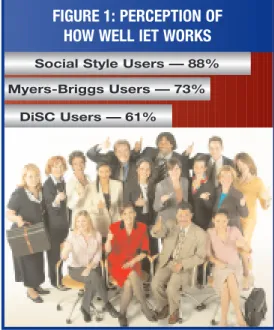
FIGURE 1: PERCEPTION OF HOW WELL IET WORKS
DiSC Users — 61% Myers-Briggs Users — 73%
Social Style as the most effective IET model.Companies currently using Social Style were more likely than users of the other leading instruments to believe that IET works. Eighty-eight percent of Social Style users believed it worked very or extremely well, compared to 61 percent of DiSC-based products and 73 percent of Myers-Briggs users. (Figure 1)
Eight in ten of those responsible for training programs agreed that salespeople and managers/ supervisors needed excellent interpersonal skills to be successful (80% and 78% respectively), but only one-third (33%) indicated a high need for the same skills for technical positions in IT, accounting or engineering.
Training professionals believed
interpersonal skills were very important for a multitude of tasks performed in the daily work environment:
• 98% believed it was very important for building and maintaining co-worker relationships
• 98% believed it was very important for communicating effectively. • 97% believed it was very important
for managing conflict.
• 94% believed it was very important for retaining valued employees. These findings were consistent with other research, including the recent Managerial Success Study by The TRACOM Group. This scientific study linked high levels of interpersonal skills with high performance on 43 factors of managerial performance. Managers with high-level interpersonal skills showed significantly higher performance than their low-level interpersonal skill counterparts; these included: • 27% established more effective
relationships with direct reports • 20% communicated more effectively • 22% had greater ability to effectively
manage conflict
• 22% had greater ability to positively impact the commitment of his/her direct reports to the organization. (Figure 2)
Methods of Delivery for IET
Virtually all companies surveyed (99%) offered IET in some form. IET was mor e commonly integrated into a broader program than offered as a stand-alone (84% vs. 39%). At least three-fifths of leadership, communication and supervisory programs included an IET component (67%, 65%, and 61% respectively).The larger the company, the more likely they were to offer stand-alone IET programs.(Figure 3) While
integrated programs offered advantages of connecting IET to specific business issues, there were some drawbacks to the integrated approach. Survey participants said that stand-alone IET programs were more likely than integrated programs to include all the important features of IET — pre-class assessment, after-class job aids and a follow-up assessment. (Figure 5) Organizations most often used off-the-shelf IET programs from independent developers (71%), but over half of surveyed companies also developed their own IET content (56%) or licensed content to include in existing programs (54%). Almost nine in 10 (86%) used o ne of the leading third-party IET models: Social Style, DiSC or Myers-Briggs. Many organizations used more than one. The more participants an organization had, the more likely they were to offer blended or e-learning options. Companies with 300 or more IET participants were more than twice as likely (78%) to use blended learning as those with less than 300 participants (36%).
FIGURE 2: IMPROVEMENT IN MANAGERIAL SKILLS POST-IET
Effective Communication – 20% Conflict Management – 22% Staff Commitment – 22% Effective relationships – 27%
23%
41%
55%
FIGURE 3: PROPORTION OFFERING IET BASED ON SIZE OF COMPANY
Sales < $2 billion Sales $2 - $5 billion
Corporate Interpersonal Effectiveness Training Practices
When asked about ideal length for IET, most training professionals chose a half-day (37%) or full-day (24%) class. The largest companies (over 23,000 employees) were most likely to provide full-day IET classes (36%).
IET Model Selection Criteria
Virtually all of the training professionals who rated assessment tools as very important found it more valuable to have both self-rating and feedback from others as opposed to self-rating alone (95% vs. 5%). (Figure 4)Professionals identified several steps as important to successful implementation: bringing examples to class, pre-class administration of the interpersonal effectiveness instrument, a foundational review of the material, after-class job aids, follow-up ROI assessment, and follow-up learning after the class. (Figure 5)
Emerging Trends
Blended learning delivery of IET was on the rise. Fifty-seven percent of surveyed professionals currently used blended learning, and an additional 23 percent planned to offer it in the future.
In the areas of program format and ROI, there seemed to be a disparity between what professionals recognized as important and what they actually implemented.
Universally, training professionals recognized the importance of IET. They had faith in its effectiveness, understood the need for follow-up, and
increasingly wanted to be able to measure ROI. Putting this into practice, however, has always been difficult. Even though three-quarters (73%) of training professionals believed IET works, just over a third (36%) used specific measures to prove it.
Ninety-two percent said follow-up assessment was important, yet only 46 percent currently offered it.
Since interpersonal skills programs have historically been hard to measure, professionals often relied on evidence like personal experience (71%) and general research (53%) to prove it worked. However, as they were called on increasingly to provide ROI for training, professionals were focusing more on providing proof that IET has paid off. Based on this study, it would appear that evidence and ROI
measurability were as important as ease of implementation when deciding on an IET program.
Other important elements have been identified to make an IET program
successful. (Figure 5)On average, eighty-six percent of surveyed professionals recognized certain components of an IET program were essential to its success, but just 56 percent actually implemented these components. This represented a 30 percent disparity. While stand-alone programs were on average 11 percent more likely to incorporate these important elements, just 39 percent of companies offered stand-alone IET.
95%
Multi-Rater
Self Rating Only
5%
FIGURE 4: VALUE OF MULTI-RATER FEEDBACK VS. SELF RATING ONLY
FIGURE 5: STEPS IDENTIFIED FOR TRAINING SUCCESS VS. ACTUAL IMPLEMENTATION OF THESE STEPS
Bring Examples to class . . . 85% . . . 59%
Pre-Class IE administration . . . 81% . . . 54%
Foundational review of materials . . . 76% . . . 54%
After-class job aids . . . 96% . . . 82%
Follow-up assessment measurements . . . 92% . . . 46%
Follow-up workshops/online . . . 84% . . . 38%
PUT INTERPERSONAL EFFECTIVENESS TRAINING TO WORK FOR YOU. CALL: 303-470-4928 TODAY.
Believed it was important
Currently implemented
Summary and
Recommendations
Interpersonal Effectiveness Training (IET) were common within large companies, especially when integrated into leadership, communication and management training programs. Stand-alone programs were more often found at larger companies, and were more likely to be integrated programs that offered a robust learning experience with long-term benefits.
Training professionals believed IET worked and was important for a multitude of tasks performed daily in a variety of job functions. More users of Social Style believed IET worked than users of Myers-Briggs or DiSC-based products. Nearly all training professionals preferred profiles with both multi-rater and self-rater feedback to only self-rating instruments. Professionals recognized the importance of collecting ROI information or providing follow-up learning; however, the average company did not engage in these activities.
This research validated TRACOM’s experience working with individual organizations and other data from the field. It identified key trends in interpersonal effectiveness training and will guide the future develop-ment of TRACOM products and services.
Peak organizational performance requires an effective workforce with strong interpersonal skills. In trying to improve your own organization, evaluate how it compares to the data gathered in this study and also consider the following:
• What is your company doing to ensure successful implementation of interpersonal effectiveness training?
• Are you covering all of the important steps (pre-class instrument administration, follow-up learning, etc.)?
• Do you use a multi-rater profile that is indisputably preferred by professionals?
• Have you embedded
interpersonal skills training in other curriculums?
• What steps are you taking to ensure post-class impact of the training?
• Have you measured your programs and instruments effectiveness over the long-term? • How many instruments should
you be using, and do they all work together?
• Consider the double standard that exists based on job functions (perception that IET is more important for jobs like managers and sales than technical jobs). Are you doing enough for all of your employees?
Participate in a TRACOM Research
Project and Discover How to Effectively
Improve Your Company s Performance
As organizations continually look for
operational efficiencies and competitive
advantages, it's important to consider the
performance potential that exists within
their own people. The TRACOM Gr oup
offers a variety of services to help
maximize performance.
TRACOM is committed to ongoing
research which documents the
connection between interpersonal skills
and job performance. These studies
provide valuable data about companies in
a variety of industries and their
employees. Contact us to lear n more.
To enhance your company’s performance, contact us to discuss your objectives. David Collins
VP, Training Products Group [email protected] 303-470-4900
303-470-4900 800-221-2321