Developing a framework for Total Apron Safety
Management
Milena STUDIC (Air Transport and Traffic Engineer, MSc)
October 2015
A thesis submitted as fulfilment of the requirements for the Diploma of the Imperial College (DIC), PhD degree of Imperial College London
Centre for Transport Studies
Department of Civil and Environmental Engineering Imperial College London, United Kingdom
COPYRIGHT DECLARATION
3
C
OPYRIGHT
D
ECLARATION
The copyright of this thesis rests with the author and is made available under a Creative Commons Attribution Non-Commercial No Derivatives licence. Researchers are free to copy, distribute or transmit the thesis on the condition that they attribute it, that they do not use it for commercial purposes and that they do not alter, transform or build upon it. For any reuse or redistribution, researchers must make clear to others the licence terms of this work.
A
BSTRACT
The Air Traffic Management (ATM) system is a complex socio-technical system that ensures safe, efficient and cost-effective air traffic movements on the ground and in the air. The current ATM system is saturated as a result of an everlasting growth in air travel demand, leading to delays and potential negative safety impacts. In order to meet future demand, current ATM modernisation initiatives in the European Union and the USA are developing a new concept of operations based on strategic holistic system optimisation. On the airport surface, this is achieved by optimising operations not only during the take-off, landing and taxiing phases, but also during the turnaround process on the apron. This requires the boundary of the ATM system to expand to include new elements, namely the apron. A key deficiency in current initiatives is that, while they focus on capacity, punctuality and cost-effectiveness of the apron, they do not address safety. This has potential negative impacts in terms of setting and prioritising safety targets.
Unlike the rest of the aviation domain, which is aircraft-centric, the concept of apron safety is much wider and in addition to aircraft safety, it also includes occupational health and safety. Recent aviation safety statistics show that aircraft accidents attributed to ground handling operations are six times more frequent than those attributed to the ATM. Additionally, the UK Health and Safety Executive (HSE) statistics show worse safety records on the apron when compared to the construction and agricultural industries. Considering the change in the ATM system boundary and the low aviation and occupational health and safety records, the airport apron has been identified in this thesis as a new safety-critical area of the future ATM system. Therefore, a key focus of this thesis is to address current deficiencies with respect to safety management on the apron, by developing a better understanding of the processes carried out on the apron and a new framework for safety assessment, as well as recommending enhancements to existing safety management practices.
In contrast to existing safety management practices that are based on a dated understanding of safety (referred to as Safety-I), which is predominantly reactive, the framework proposed in this thesis, for the first time, adopts a state-of-the-art proactive and predictive understanding of safety (referred to as Safety-II) for the apron. The thesis demonstrates for the first time that the existing linear component-based models traditionally used for modelling apron safety do not account for the system complexity. Therefore, the proposed framework develops a state-of-the-art systemic functional Total Apron Safety Management (TASM) model and a corresponding taxonomy of factors that characterise different sources of variability of ground handling services, capable of
ABSTRACT
5
accounting for dependencies and dynamic interactions between different layers of the apron system (i.e. technological, human and organisational).
The proposed functional model and taxonomy have been applied to three case studies in retrospective, prospective and system design analysis demonstrating the multi-purposive nature of the framework, particularly important under existing financial pressures. In retrospective analysis the proposed functional model and taxonomy have shown to identify systemic factors previously not found during the occurrence investigation. In prospective analysis, a new protocol for systemic and systematic hazard analysis in complex socio-technical systems (including the apron) was developed. Furthermore, a novel conceptual framework for a safety trend analysis based on the TASM framework was developed, offering a quick, simple, cost-effective analysis of large datasets. A key advantage of the TASM framework is that it is transferable to all ground handling services carried out by Ground Service Providers (GSP), airlines and/or airports.
A
CKNOWLEDGMENTS
First and foremost my most sincere gratitude and appreciation goes to my supervisors Dr. Arnab Majumdar, Professor Washington Yotto Ochieng and Dr. Wolfgang Schuster who have believed in me from the very first day and given me the opportunity to conduct my PhD research at Imperial College London.
I am also grateful to The Lloyd’s Register Foundation for funding this research.
This research would not have been possible without the support and collaboration with the Aircraft Service International Group (ASIG). Patrick Moylan, Katelyn Bobalik, Gino Matteoni, Eunique Diaz, Yohance Johnson, Howard Lewis and the other 50 ASIG employees have tirelessly supported me in my strong research drive to make a difference in apron safety. Special gratitude goes to Peter Stastny and Tony Licu for their support and fruitful advice along the PhD.
I would like to thank all my friends and colleagues from the Centre for Transport Studies at Imperial College London, who offered their help at various stages and aspects of my work. In particular I thank my dearest Sabine, Miltos, Felipe, Sophie, Stavros, Shane and KC for being with me along every path of the PhD.
In addition I would like to thank my colleagues Professor Tosic, Professor Kalic, Dr. Mirkovic and Dr. Pavlovic from the Air Transport and Traffic Department at University of Belgrade who encouraged me to procure this career step and succeed in it.
My dearest Nikola, Ivana, Jovana and Zora, who are like family to me, I am very blessed to have you. Thank you for always being there for me and not forgetting me, despite the distance that separates us. I am eternally grateful to you for being with me when I needed you most, I would not have made it without you. I love you all very deeply.
I would like to thank my father and grandmother for believing in me and supporting me throughout my PhD.
Above all, my eternal gratitude goes to my beloved mummy Biljkica for devoting her life to me and the unconditional love, patience, encouragement and endless support that she has given me to become the person I am today and overcome every obstacle in my way. I am dedicating this work to you. You are always in my heart and mind. I profoundly miss you.
London, 23/10/2015 Milena Studic
TABLE OF CONTENTS
7
T
ABLE OF
C
ONTENTS
DECLARATION OF ORIGINALITY ... 2
COPYRIGHT DECLARATION ... 3
ABSTRACT ... 4
ACKNOWLEDGMENTS ... 6
TABLE OF CONTENTS ... 7
LIST OF FIGURES ... 13
LIST OF TABLES ... 16
LIST OF ABBREVIATIONS ... 18
CHAPTER 1
INTRODUCTION ... 25
1.1 BACKGROUND ... 25
1.2 AIM AND OBJECTIVES ... 27
1.3 OUTLINE OF THESIS ... 27
CHAPTER 2
SPECIFICATION OF THE AIR TRAFFIC MANAGEMENT SYSTEM FUNCTIONAL INVARIANCE ... 29
2.1 AIR TRAFFIC MANAGEMENT (ATM) CONCEPT OF OPERATIONS (CONOPS) EVOLUTION ... 29
2.1.1
Period from 1903 to 1911 ... 31
2.1.2
During World War I (WWI) ... 32
2.1.3
Between World Wars I and II ... 33
2.1.4
During Word War II ... 35
2.1.5
Between the post-‐World War II period and the 1960s ... 36
2.1.6
Between 1960 and 1990 ... 37
2.1.7
Between 1990 and 2005 ... 40
2.1.8
Between 2005 and 2025 ... 42
2.2 TRANSFERABILITY OF THE DERIVED FUNCTIONAL ATM MODEL IN THE INTERMODAL TRANSPORT OF 2070 AND BEYOND ... 45
CHAPTER 3
AIRPORT APRON AS A NEW SAFETY-‐CRITICAL ELEMENT OF THE FUTURE
CONCEPT OF OPERATIONS ... 48
3.1 CHANGES IN THE ATM SYSTEM IMPLEMENTATION ... 48
3.2 THE IMPACT OF TRAJECTORY-‐BASED OPERATIONS ON ATM SYSTEM BOUNDARY ... 51
3.3 CONCEPTUAL IMPROVEMENT IN THE SESAR CONOPS FOR THE APRON ... 54
3.3.1
Airport Collaborative Decision Making (A-‐CDM) ... 54
3.3.2
Departure management (DMAN) ... 56
3.3.3
Arrival Management (AMAN) ... 56
3.3.4
Advanced Surface Movement Guidance and Control System (A-‐SMGCS) ... 57
3.3.5
Integrated Airport Apron Safety Fleet Management (AAS) ... 58
3.3.6
Turnaround Integration in Trajectory and Network (TITAN) ... 60
3.3.7
Total Airport Management (TAM) ... 60
3.3.8
Summary ... 61
3.4 APRON SAFETY IN SESAR CONOPS ... 62
3.5 APRON SAFETY IN THE CONTEXT OF AIRCRAFT SAFETY AND ATM SYSTEM SAFETY ... 62
3.5.1
Estimating aircraft accident risk attributed to ground handling operations on the apron 68
3.5.2
Airport apron – The complete safety risk picture ... 72
3.5.3
Apron occurrence definitions ... 74
3.6 SUMMARY ... 77
CHAPTER 4
THE APRON SYSTEM ... 79
4.1 PHYSICAL ARCHITECTURE ... 79
4.1.1
Airport airside and landside ... 79
4.1.2
Passenger terminal apron ... 82
4.1.3
Service roads ... 85
4.1.4
Apron taxiway and aircraft stand taxilane ... 85
4.1.5
Apron marking and signage ... 87
4.1.6
De/anti-‐icing facilities ... 88
4.2 GROUND HANDLING SERVICES ... 89
4.3 STAKEHOLDERS ... 92
4.3.1
Direct stakeholders ... 92
4.3.2
Indirect stakeholders ... 95
4.3.3
Relationships between stakeholders ... 98
4.4 TECHNOLOGY ... 100
TABLE OF CONTENTS
9
CHAPTER 5
ELICITATION OF THE APPROACH SUITED FOR TASM FRAMEWORK
DEVELOPMENT ... 106
5.1 PARADIGMS IN SAFETY THINKING ... 106
5.1.1
Safety-‐I ... 108
5.1.2
Safety-‐II ... 117
5.1.3
Summary of the safety paradigms ... 120
5.2 SAFETY MANAGEMENT ... 121
5.2.1
Safety-‐I vs. Safety-‐II Management ... 121
5.2.2
Safety Management System ... 123
5.2.3
Apron safety management ... 127
5.3 SUMMARY ... 134
CHAPTER 6
DEVELOPMENT OF THE TASM FRAMEWORK ... 135
6.1 METHODOLOGY ... 135
6.2 SAFETY RISK MANAGEMENT REQUIREMENTS FOR THE APRON SYSTEM ... 136
6.2.1
Review of the systemic safety models ... 140
6.3 PREPARATION FOR THE FIELD WORK ... 162
6.4 AIRPORT SELECTION AND ACCESS ... 162
6.5 APRON OBSERVATIONS AND INTERVIEWS ... 165
6.6 QUALITATIVE DATA ANALYSIS ... 170
6.6.1
Grounded Theory and its application in TASM framework development ... 171
6.6.2
Template Analysis and its application in TASM framework development ... 176
6.7 RELIABILITY, CONSISTENCY, COMPLETENESS AND VALIDITY CHECKS ... 186
6.7.1
Consistency check ... 187
6.7.2
Completeness check ... 187
6.7.3
Reliability checks ... 187
6.7.4
Validity checks ... 189
6.8 STORY DEVELOPMENT ... 190
6.9 DISCUSSION ABOUT THE TASM FRAMEWORK ... 197
6.10 SUMMARY ... 199
CHAPTER 7
APPLICATION OF THE TASM FRAMEWORK ON THREE CASE STUDIES . 200
7.1 TASM FRAMEWORK APPLICATION IN RETROSPECTIVE ANALYSIS ... 200
7.1.1
Occurrence description ... 201
7.1.3
Discussion on TASM variability and its management within the context of the
occurrence instantiation ... 205
7.2 NEW PROTOCOL FOR SYSTEMATIC HAZARD ANALYSIS IN PRACTICE ... 208
7.3 TASM FRAMEWORK APPLICATION IN SYSTEM ANALYSIS ... 215
7.4 SUMMARY ... 217
CHAPTER 8
TOWARDS QUANTIFICATION OF THE TASM FRAMEWORK ... 219
8.1 CONSIDERATION FOR TASM FRAMEWORK QUANTIFICATION IN RETROSPECTIVE ANALYSIS ... 220
8.1.1
Review of ground handling safety databases ... 220
8.1.2
Data collection ... 222
8.1.3
Database description and data pre-‐processing ... 222
8.1.4
Data analysis ... 224
8.2 TASM QUANTIFICATION IN PROSPECTIVE AND SYSTEM ANALYSIS ... 258
8.3 SUMMARY ... 259
CHAPTER 9
CONCLUSIONS ... 260
9.1 MAIN FINDINGS OF THE THESIS ... 260
9.1.1
Model the evolution in the ATM concept of operations ... 260
9.1.2
Specify the apron system architecture ... 261
9.1.3
Review the literature on the safety modelling paradigms ... 261
9.1.4
Develop a framework for a retrospective, prospective and system design analysis of apron operation ... 261
9.1.5
Demonstrate the application of the developed process retrospective, prospective and system design analysis of apron operation ... 262
9.2 RECOMMENDATIONS ... 263
9.3 FUTURE RESEARCH ... 265
REFERENCES ... 267
APPENDICES ... 289
APPENDIX I – AN APPLICATION OF THE FUNCTIONALLY INVARIANT MODEL OF THE ATM SYSTEM ON A CASE STUDY OF THE SESAR STEP 2 ... 289
Communication ... 289
Navigation ... 289
Surveillance ... 290
Information Management ... 291
Airspace Organisation and Management ... 292
TABLE OF CONTENTS 11 Trajectory Management ... 294
Safety Assurance ... 295
Security Management ... 296
Environmental Management ... 297
APPENDIX II – OPEN-‐ENDED QUESTIONS USED IN SEMI-‐STRUCTURED INTERVIEWS ... 298
APPENDIX III – DESCRIPTION OF FUNCTIONS AND THEIR OUTPUTS USED IN GROUNDED THEORY APPLICATION ... 300
APPENDIX IV – DESCRIPTION OF FACTORS THAT AFFECT FUNCTION VARIABILITY USED IN GROUNDED THEORY APPLICATION ... 312
APPENDIX V – MAPPING BETWEEN THE REVIEWED TAXONOMIES AND THE FINAL TAXONOMY ON THE TASM VARIABILITY ... 324
APPENDIX VI – THE DESCRIPTION FOR THE FIRST FOUR LEVELS OF THE FINAL TAXONOMY OF VARIABILITY ... 330
Variability of human functions ... 330
Variability of organisational functions ... 331
APPENDIX VII – THE COMPLETE LIST OF 440 FACTORS OF THE FINAL TAXONOMY OF VARIABILITY ... 334
APPENDIX VIII – THE FINAL TASM FUNCTIONAL MODEL ... 346
APPENDIX IX – INTER-‐RATER RELIABILITY FOR OPEN AND AXIAL CODES ... 363
APPENDIX X – TASM FRAMEWORK APPLICATION IN RETROSPECTIVE ANALYSIS ... 366
APPENDIX XI – TASM FRAMEWORK APPLICATION IN SYSTEM ANALYSIS ... 371
APPENDIX XII – COMPLETENESS ASSESSMENT OF VARIABLES IN THE SHEBBA DATABASE ... 373
APPENDIX XIII – INTERPRETABILITY ASSESSEMENT FOR THE IMPLICIT AND INFERRED VARIABLES EXTRACTED FROM THE SHEBBA DATABASE ... 374
APPENDIX XIV – MULTIPLE RESPONSE FREQUENCY ANALYSIS RESULTS FOR THE FUNCTIONS VARIABLE ... 375
APPENDIX XV – MULTIPLE RESPONSE FREQUENCY ANALYSIS RESULTS FOR THE FUNCTIONS VARIABLE PER BASE ... 376
APPENDIX XVI – MULTIPLE RESPONSE FREQUENCY ANALYSIS RESULTS FOR THE VARIABILITY VARIABLE ... 378
APPENDIX XVII – MULTIPLE RESPONSE FREQUENCY ANALYSIS RESULTS FOR THE FUNCTIONS INTERNAL AND EXTERNAL VARIABILITY PER BASE ... 379
APPENDIX XVIII – MULTIPLE RESPONSE FREQUENCY ANALYSIS RESULTS FOR THE EVENT TYPE VARIABLE ... 381
APPENDIX XIX – MULTIPLE RESPONSE FREQUENCY ANALYSIS RESULTS FOR THE EVENT TYPES DISTRIBUTION PER BASE ... 382
APPENDIX XX – MULTIPLE RESPONSE FREQUENCY ANALYSIS RESULTS FOR THE UNWANTED OUTCOMES DISTRIBUTION PER BASE ... 384
LIST OF FIGURES
13
L
IST OF
F
IGURES
Figure 2-1 Functional description of the ATM system in the period from 1903 to 1911 ... 31
Figure 2-2 Functional description of the ATM system during World War I ... 33
Figure 2-3 Functional description of the ATM system World Wars I and II ... 35
Figure 2-4 Functional description of the ATM system during World War II ... 36
Figure 2-5 Functional description of the ATM system between 1960 and 1990 ... 39
Figure 2-6 Number of commercial jet accidents, accident rates, and traffic growth worldwide (Wiegmann and Shappell, 2012) ... 39
Figure 2-7 Functional description of the ATM system between 1990 and 2005 ... 42
Figure 2-8 Functional model for the ATM system ConOps between 2005 and 2025 (based on ICAO (2005b)) ... 44
Figure 2-9 FLITE High level ATM functions ... 46
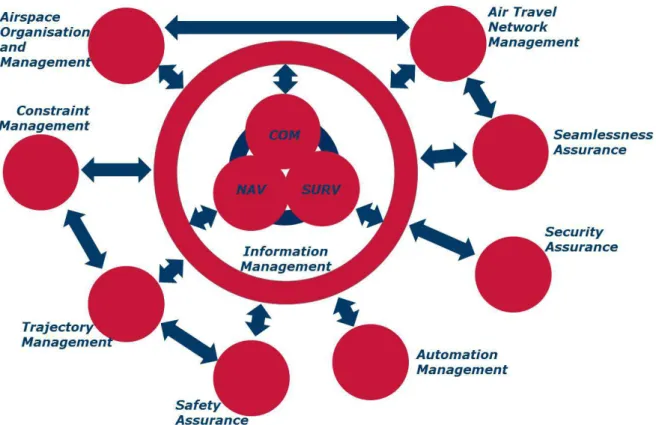
Figure 3-1 ATM system and its shifting boundary within the air transport system ... 49
Figure 3-2 Transition from a gate-to-gate to a en-route to en-route concept (adapted from (SJU, 2007b)) ... 51
Figure 3-3 The manoeuvring area and the apron at London Heathrow airport (adapted from Google Maps) ... 53
Figure 3-4 A-CDM stakeholders and main objectives (ACI et al., 2012, p.2-5) ... 55
Figure 3-5 The A-CDM milestones (ACI et al., 2012, p.3-17) ... 55
Figure 3-6 Dynamic geofencing (GlobeGround Berlin, 2011, p.12) ... 59
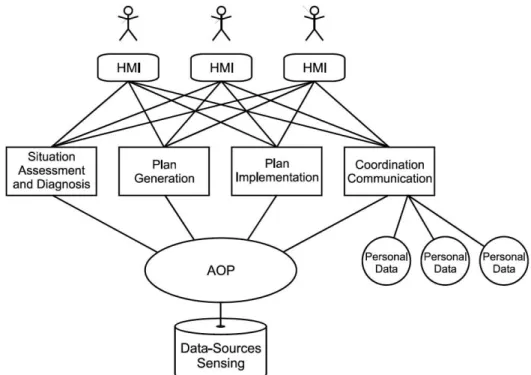
Figure 3-7 TAM functional architecture (Günther et al., 2006, p.32) ... 60
Figure 3-8 Typical turnaround process Gantt chart of a B737-800 (adapted from Boeing (2005, p. 363) ... 65
Figure 3-9 Overall ATM Risk Model Structure (EUROCONTROL, 2006c, p. 8) ... 69
Figure 3-10 Absolute number of accidents and flights in Europe per year ... 70
Figure 3-11 Accident rate per million flights in Europe per year ... 70
Figure 3-12 Aircraft damage during turnaround Rome 2014 (Source: Roma Repubblica (2014)) ... 71
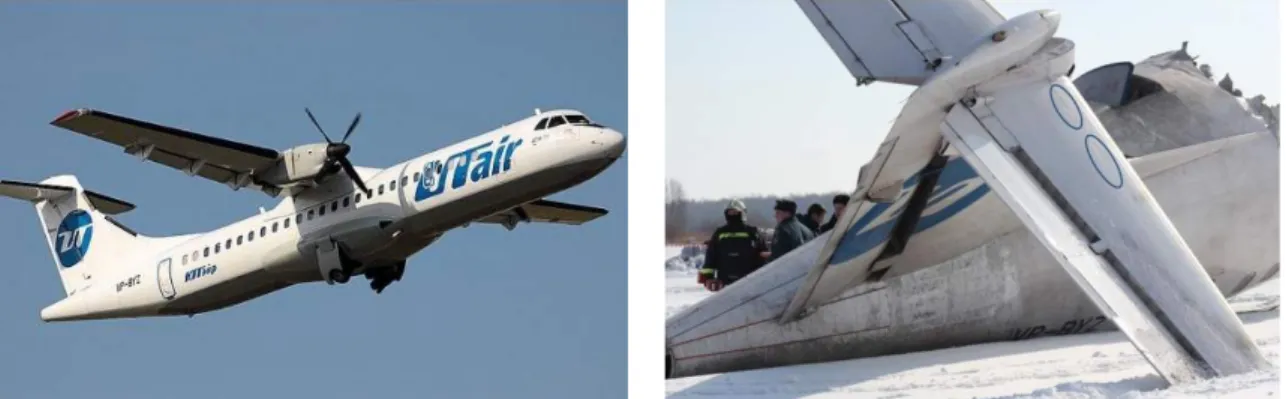
Figure 3-13 UTair Flight 120 Tyumen 2012 (Source: Interstate Aviation Committee (2013)) ... 71
Figure 3-14 Components of safety on the apron ... 72
Figure 4-1 Physical and functional architecture of airports (adapted from Wilke (2013)) . 80
Figure 4-2 Simple concept (Source: ICAO (2005a)) ... 83
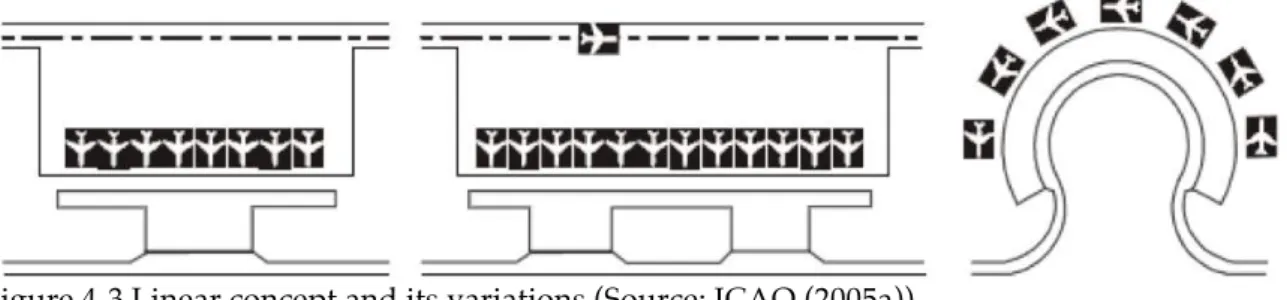
Figure 4-3 Linear concept and its variations (Source: ICAO (2005a)) ... 84
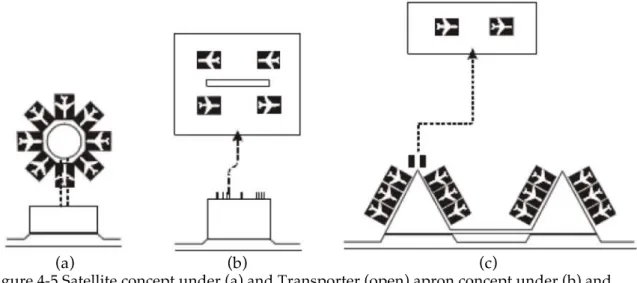
Figure 4-5 Satellite concept under (a) and Transporter (open) apron concept under (b) and
Hybrid concept under (c) (Source: ICAO (2005a)) ... 85
Figure 4-6 Apron taxiway, aircraft stand taxilane and lead-in lines (Source: ICAO (2005a)) ... 86
Figure 4-7 Examples of markings and signage on the apron (adapted from ACI (2007)) .. 88
Figure 4-8 Hierarchical control diagram of stakeholders on the apron ... 99
Figure 4-9 Flows and means of communication on the apron ... 101
Figure 4-10 Physical barriers on the example of a GSE (belt loader), adapted from Form Fonts (2014) ... 103
Figure 5-1 The wholes set of outcomes of a task (adapted from EUROCONTROL (2013c)) ... 108
Figure 5-2 Analogy between retrospective and prospective safety analysis (adapted from Hollnagel et al. (2007, p. 15) ... 111
Figure 5-3 The domino theory by Heinrich et al. (1980) cited in Hollnagel (2004, p. 49)) 113
Figure 5-4 Predecessor of the Swiss cheese model (source: Reason (1990a, p. 479)) ... 114
Figure 5-5 Summary of safety paradigms evolution ... 121
Figure 5-6 ICAO SMS framework (source: Wilke (2013, p. 124)) ... 124
Figure 5-7 Direct stakeholders in apron operations ... 128
Figure 5-8 Hierarchical control diagram of stakeholders on the apron following the extension of ICAO SMS provisions ... 133
Figure 6-1 Methodology for the development of the TASM framework ... 136
Figure 6-2 Apron system characterisation (adapted from Hollnagel (2012c) and Studic (2013, 2014)) ... 138
Figure 6-3 The four cornerstones of resilience (adapted from Hollnagel (2011, p. xxxvii)) ... 141
Figure 6-4 Visual representation of a FRAM function ... 142
Figure 6-5 A standard controlled loop (Leveson, 2012, p. 66) ... 144
Figure 6-6 STAMP control loop with underlying causes (Leveson, 2012, p. 223) ... 146
Figure 6-7 Protocol for augmenting FRAM for prospective analysis based on Slater (2014) ... 153
Figure 6-8: Organisation of internal and external factors ... 175
Figure 6-9 First two levels of the taxonomy of the TASM functional model variability .. 185
Figure 6-10 Methodology for development of the final taxonomy variability of the TASM framework ... 186
Figure 7-1 Damaged water pipe in the aircraft fuselage ... 202
Figure 7-2 Extract from a MEL for a B767-300 (source LAN Argentina (2012, p. 266)) .... 206
LIST OF FIGURES
15
Figure 7-4: Graphical illustration of the FRAM model for the process of crossing the road
... 209
Figure 7-5: Comparison of approaches to the analysis of variability: a) based on (Hollnagel, 2012b, Frost and Mo, 2014, Slater, 2014), b) proposed hybrid approach ... 211
Figure 7-6: An example of a simple scenario (instantiation) ... 212
Figure 7-7 Graphical illustration of the A-CDM case study ... 216
Figure 8-1 Occurrence distribution per year and month ... 232
Figure 8-2 GSP occurrence rates ... 233
Figure 8-3 GSP occurrences per day/night ... 234
Figure 8-4 GSP occurrences per location ... 234
Figure 8-5 GSP occurrences per aircraft model ... 235
Figure 8-6 GSP occurrences per airport stand ... 236
Figure 8-7 Top ten TASM functions in terms of performance variability ... 237
Figure 8-8 Top ten factors affecting internal and external variability of TASM functions238
Figure 8-9 Top ten events types associated with the variability of the outputs of the TASM functions ... 238
Figure 8-10 Distribution of unwanted outcomes ... 239
Figure 8-11 Distribution of turnover rates at base B ... 241
Figure 8-12 Transient nature of occurrences (source: EUROCONTROL (2013c, p. 19)) ... 244
Figure 8-13 Cluster number and quality ... 250
Figure 8-14 Cluster size ... 252
Figure 8-15 Variable predictor importance ... 253
Figure 8-16 Bow Tie diagram (source Skybrary (2013)) ... 254
Figure 8-17 Modified Bow Tie model ... 255
Figure 8-18 TASM patterns occurrence emergence tool concept ... 257
L
IST OF
T
ABLES
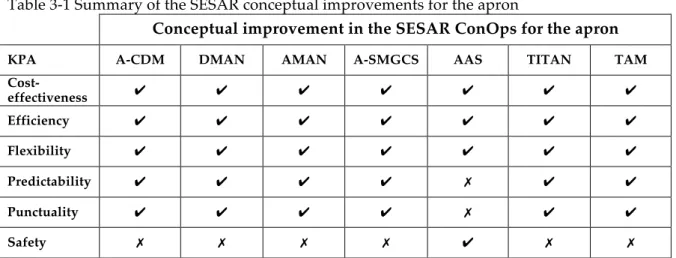
Table 3-1 Summary of the SESAR conceptual improvements for the apron ... 61
Table 3-2 CICTT occurrence definitions (CICTT, 2011, p. 4 and 11) ... 67
Table 3-3 Hazards during aircraft turnaround (adapted from UK HSE (2000a)) ... 73
Table 4-1 ACI (2007) recommendations for colour coding on the apron ... 87
Table 5-1 System tractability (adapted from Hollnagel (2014c, p. 119)) ... 112
Table 5-2 Comparison between Safety-I and –II Management practices (adapted from EUROCONTROL (2013c, p. 21) and Hollnagel (2014c, p. 147)) ... 123
Table 6-1 The six aspects of a FRAM function ... 142
Table 6-2 Comparative analysis of FRAM and STAMP methods ... 149
Table 6-3 An example of the protocol for augmenting STPA analysis based on Thomas (2013) ... 155
Table 6-4: A simplified table illustrating the proposed approach to hazard identification based on integration FRAM and STPA best practices ... 161
Table 6-5 GSP requirements ... 164
Table 6-6 Characteristics of selected airports ... 165
Table 6-7 Sample characteristics per airport ... 168
Table 6-8 Sample characteristics per role ... 168
Table 6-9: Cross-industry review of factors that affect human performance variability (adapted fromKyriakidis (2013)) ... 182
Table 7-1 Aspects of the ‘Cross the road’ function ... 210
Table 7-2 Aspects of the ‘Provide traffic light indication’ function ... 210
Table 7-3 Aspects of the ‘Maintain road surface’ function ... 211
Table 7-4: Illustration of the hybrid protocol for hazard identification ... 214
Table 8-1 Ground handling databases ... 221
Table 8-2 Composition of the sample across the five bases ... 223
Table 8-3 Data quality criteria description (Dupuy, 2012, ICAO, 2013e) ... 225
Table 8-4 Data coding example ... 231
Table 8-5 Summary of aircraft that negatively affect GSAs’ performances ... 235
Table 8-6 Distribution of insurance claim cost per event type ... 240
Table 8-7 Cluster solution stability ... 251
Table Appendix III - 1: Outputs from the function Develop procedural guidance ... 301
Table Appendix III - 2: Outputs from the function Manage GSA, GSE and replenishing supplies ... 302
LIST OF TABLES
17
Table Appendix III - 3: Outputs of the function Assure safety and quality of the turnaround ... 304
Table Appendix IX - 1: Cohen’s Kappa for axial codes ... 363
Table Appendix IX - 2: Cohen’s Kappa for open codes ... 363
Table Appendix XII - 1: Completeness of relevant variables in the SHEBBA database ... 373
Table Appendix XIII - 1: Data interpretability results ... 374
L
IST OF
A
BBREVIATIONS
$ United States Dollar
3D Three dimensional
4D Four dimensional
A-CDM Airport Collaborative Decision Making
A-SMGCS Advanced Surface Movement Guidance and Control System
A/A Air/Air
A/G Air/Ground
A&E Accident and Emergency
A380 Airbus 380
AAS Autonomous Aerial Systems
AAS Integrated Airport Apron Safety Fleet Management ACAS Airborne Collision Avoidance System
ACCD Advanced Continuous Climb Departure ACDA Advanced Continuous Descent Approach ACI Airports Council International
ADF Automatic Direction Finder
ADP Airside Driving Permit
ADS-B Automatic Dependent Surveillance – Broadcast ADS-C Automatic Dependent Surveillance-Contract
AHM Airport Handling Manual
AI Air Interception
AIC Akaike’s Information Criterion
ALoSP Acceptable Level of Safety Performance
AMAN Arrival Management
AMC Airspace Management Cell
ANSP Air Navigation Service Provider
AO Aircraft Operator
AOC Air Operating Certificate
AOP Airport Operations Plan
APM Approach Path Monitor
APOC Airport Operations Centre
APU Auxiliary Power Unit
APV Approach Procedure with Vertical Guidance
APW Area Proximity Warning
ARO Aerodrome Reporting Office
AS Assure safety and quality of the turnaround ASIAS Aviation Safety Information Analysis and Sharing ASIG Aircraft Service International Group
ASM Airspace Management
LIST OF ABBREVIATIONS
19
ASRS Aviation Safety Reporting System
ATC Air Traffic Control
ATCO Air Traffic Control Operator
ATFCM Air Traffic Flow and Capacity Management ATFM Air Traffic Flow Management
ATHEANA A Technique for Human Error Analysis
ATM Air Traffic Management
ATS Air Traffic Services
ATS Automatic Train Supervision ATSU Air Traffic Services Units
AUP Airspace User Plan
B 767 Boeing 767
B-RNAV Basic Area Navigation
BA British Airways
BASI Bureau of Air Safety Investigation BEG Belgrade International Airport BIC Bayesian Information Criterion BLS Bureau of Labour Statistics
BTV Brake to Vacate
C Control
CA Contact (Aircraft – GSE)
CAA Civil Aviation Authority CAP Collaborative Airport Planning
CARA Controller Action Reliability Assessment CAST Commercial Aviation Safety Team
CBA Cost Benefit Analysis
CC Contextual Conditions
CFIT Controlled Flight Into Terrain
CFMU Central Flow Management Unit
CFR Code of Federal Regulations
CGO Contact (GSE – other)
CICTT CAST/ICAO Common Taxonomy Team
CNS Communication, Navigation and Surveillance
CO Carbon monoxide
CO2 Carbon dioxide
CODA Central Office for Delay Analysis ConOps Concept of Operations
CPC Common Performance Condition
CPDLC Controller Pilot Data Link Communication CRAM Conditional Route Availability Message
CREAM Cognitive Reliability and Error Analysis Method
DG Drive GSE
DG MOVE Directorate General for Mobility and Transport
DH8 Bombardier Dash 8
DME Distance Measuring Equipment EASA European Aviation Safety Agency
EATCHIP European Air Traffic Control Harmonisation and Integration Programme
EC European Commission
ECAST European Commercial Aviation Safety Team
ECCAIRS European Coordination Centre for Aviation Incident Reporting Systems
Env. Environmental impact
EPC Error Producing Condition
ERP Emergency Response Plan
EST Eastern Standard Time
ET Event Type
ETA Event Tree Analysis
ETFMS Enhanced Tactical Flow Management System
EU European Union
EUROCONTROL European Organisation for the Safety of Air Navigation
F Function
FAA Federal Aviation Administration FANS Future Air Navigation System
FASTI First Air Traffic Control (ATC) Support Tools Implementation
FD Found Damage
FIS Flight Information Service
FLITE Future Long-term ATM concept, Infrastructure, Technologies and operational Environment
FLSA Fair Labour Standards Act
FMP Flow Management Position
FMV FRAM Model Building and Visualisation
FOD Foreign Object Debris
FP7 Seventh Framework Programme for Research and Technological Development
FRA Frankfurt International Airport
FRA Free Route Airspace
FRAM Functional Resonance Analysis Method FSF Flight Safety Foundation
ft Metric foot
FTA Fault Tree Analysis
FUA Flexible Use of Airspace
G/G Ground/Ground
GA General Aviation
GDDB Ground Damage Database
GH Ground Handling
GHOST Ground Handling Operations Safety Team
GHS Ground Handling Services
GMTA Goals-Means Task Analysis
LIST OF ABBREVIATIONS
21
GSA Ground Service Agent
GSE Ground Support Equipment
GSP Ground Service Provider
h Hour
HAZID Hazard Identification
HAZOP Hazard and Operability study
HC Hydrocarbons
HEART Human Error Assessment and Reduction Technique HEPI Human Error Probability Index
HERA Human Event Repository and Analysis HERA-JANUS Human Error in Air Traffic Management
HERMES Human Error Risk Management for Engineering Systems HFACS-RR Human factors Analysis Classification System Railways HLAPB National High Level Airspace Policy Body
HMI Human Machine Interface
HRA Human Reliability Analysis
HRAET Human Reliability Analysis Event Tree HRMS Human Reliability Management System HS&E Health, Safety, and Environment
HSE UK Health and Safety Executive
I Input
IAD Washington Dulles International Airport IATA International Air Transport Association ICAO International Civil Aviation Organisation ICBM Intercontinental Ballistic Missile System IEA International Ergonomics Association
IGOM IATA Ground Operations Manual
ILO International Labour Organisation
ILS Instrument Landing System
IMC Instrumental Meteorological Conditions INS Inertial Navigation System
IR Implementing Rule
IRP Integrated Risk Picture
ISAGO IATA Safety Audit for Ground Operations ISO International Organization for Standardisation JFK John F. Kennedy International Airport
KLM Royal Dutch Airlines
Km/h Kilometre per hour
KPA Key Performance Areas
LAX Los Angeles International Airport LHR London Heathrow International Airport
LORAN LOng RAnge Navigation
LOSA Line Operations Safety Audits
LU Load Unit
MCO Orlando International Airport MEDA Maintenance Error Decision Aid
MEL Minimum Equipment List
MET Meteo
MH Manual Handling
MIT Massachusetts Institute of Technology
MLAT Multilateration
MMEL Master Minimum Equipment List
MONA MONitoring Aids
MSAW Minimum Safe Altitude Warning MTCD Medium Term Conflict Detection NAA National Aviation Authorities
NASA National Aeronautics and Space Administration
NAT Normal Accident Theory
NDA Non Disclosure Agreement
NDB Non-Directional Beacon
NextGen Next Generation Air Transportation System NLR National Airspace Laboratory
NM Network management
NOP Network Operations Plan
NOTAM Notice to Airmen
NOx Nitrogen oxide
NPA Notice of Proposed Amendment
NPRM Notice of Proposed Rulemaking NTSB National Transportation Safety Board
O Output
OAC Offload/onload the aircraft
OFT Operational, Functional, Technological
OG Operate GSE
OHS Occupational Health and Safety
OI Operational Improvements
OLDI On-Line Data Exchange
OOOI Out Off On In
Ops. Dis. Operational disruption OPTICON OPTI-mise CON-figuration OSI Operating Safety Instructions
P Precondition
P-RNAV Precision-Area Navigation
PG Position GSE
PhD Doctor of Philosophy
PIF Performance Influencing Factor
PKI Public Key Cryptography
PPE Personal Protective Equipment
PSF Performance Shaping Factor
LIST OF ABBREVIATIONS
23
R Resource
R-LOSA Ramp Line Operations Safety Audit
RAMP Ground Handling
RARA Railway Action Reliability Assessment RDF Range and Direction Finding
REDA Ramp Error Decision Aid
RET Rapid Exit Taxiways
RNAV Area navigation
RNAV1 see P-RNAV
RNAV5 see B-RNAV
ROT Runway Occupancy Time
RVSM Required Vertical Separation Minima SARPs Standards And Recommended Practices SCDM Surface Collaborative Decision Making SESAR Single European Sky ATM Research
SFG L'Espérance Airport
SHEBBA Safety, Health, Environment, BAA
SJU SESAR Joint Undertaking
SLA Service Level Agreement
SLIM Success Likelihood Index Methodology
SMAN Surface Management
SME Subject Matter Expert
SMR Surface Movement Radar
SMS Safety Management System
SNPRM Supplemental Notice of Proposed Rulemaking SOAM Systemic Occurrence Analysis Methodology
SOP Standard Operating Procedure
SPAR-H Simplified Plant Analysis Risk Human Reliability Assessment SPI Surveillance Performance and Interoperability
SSM Safety Management Manual
SSP State Safety Programme
SSR Secondary Surveillance Radar
STA Scheduled Time of Arriva
STAMP System-Theoretic Accident Model and Processes STCA Short Term Conflict Alert
STD Scheduled Time of Departure STEP Sequentially Timed Events Plotting STPA System-Theoretic Process Analysis SWIM System Wide Information Management SYSCO System Supported Coordination
T Time
TAM Total Airport Management
TASM Total Apron Safety Management TC Technological characteristics
TEM Threat and Error Management
THERP Technique for Human Error Rate Prediction
TITAN Turnaround Integration in Trajectory and Network
TLS Target Level Safety
TMA Terminal Manoeuvring Area
TMI Three Mile Island
TPA Tampa International Airport
TRACEr Technique for the Retrospective Analysis of Cognitive Errors
TTG Time to Gain
TTL Time to Lose
UK United Kingdom
U.S. United States of America
USA United States of America
USD United States Dollar
UUP1 Updated User Plan 1
UUP2 Updated User Plan 2
V Variability
Var Variability
VDGS Visual Docking and Guidance System
VHF Very High Frequency
VMC Visual Meteorological Condition
VOR VHF Omnidirectional Range
WHO World Health Organisation
WWI World War I
CHAPTER 1
25
Chapter 1
I
NTRODUCTION
The aim of this chapter is to present the background to the significant role of apron operations in assuring safety and efficiency of the overall Air Traffic Management (ATM) system and set the context of the research presented in this thesis. The chapter establishes the rationale, objectives and methodology for a new systemic framework for a holistic safety risk management of operations on the apron. Five research objectives are established to realise the framework. This is followed by a brief description of the structure of the thesis.1.1
Background
The Air Traffic Management (ATM) system is a complex socio-technical system that ensures safe, efficient and cost-effective air traffic movements on the ground and in the air. To keep up with the continuous global air traffic growth of on average 1.8 percent annually (EUROCONTROL, 2013a), the ATM system needs to evolve. The leading regions, in terms of traffic volume, at present, Europe and the USA, are the main initiators of future ATM evolution, formulated in the global ATM Concept of Operations (ConOps). This ConOps is currently being implemented, and the required support technologies developed, coordinated by the SESAR (Single European Sky ATM Research) and NextGen (Next Generation Air Transportation System) research programmes in Europe and the USA respectively. In this new ConOps airports have been identified as a bottleneck in terms of capacity, environmental impact (SJU, 2006, 2007a, 2007b, 2008a, 2008c, 2008b) and safety (Boeing, 2013).
On the airport surface, this bottleneck is addressed by optimising operations not only during the take-off, landing and taxiing phases, but also during the turnaround process on the apron. To tackle inefficiencies, associated with turnarounds at airports, e.g. in 2006 four out of five late departures attributed to the turnaround processes (EUROCONTROL, 2007), the SESAR, NextGen and the European Commission proposed the following concepts and programmes: Airport Collaborative Decision Making (A-CDM), Departure Management (DMAN), Arrival Management (AMAN), Advanced Surface Movement Guidance and Control System (A-SMGCS), Integrated Airport Apron Safety Fleet Management (AAS), Turnaround Integration in Trajectory and Network (TITAN) and Total Airport Management (TAM). The implementation of these concepts and
programmes is expected to increase in efficiency, flexibility, predictability, punctuality and cost-effectiveness of the turnaround process on the apron whilst neglecting the safety aspect during turnaround.
Statistics show high personal injury, aircraft, equipment and other property occurrence rates during ground handling operations. For instance, research conducted by the Health and Safety Executive (HSE) in the United Kingdom and the Bureau of Labour Statistics (BLS) in the U.S., identified that the Ground Handling (GH) workforce has higher accident rates than the workforce employed in the construction and the agricultural sectors (UK HSE, 2000a, BLS, 2013). Furthermore, in 2005 the Flight Safety Foundation (FSF) estimated: one ground handling occurrence resulting in property damage and nine personal injuries per 1000 flights (Lacagnina, 2007). In total, these occurrences on the apron have been estimated to cost the aviation industry over $10 billion annually in direct and indirect costs such as loss of reputation, impacts to schedules and passengers, hiring and retraining new staff to replace injured individuals, insurance costs for staff and operations, repairs, parts, and staff time to complete and test repairs (Flight International, 2005).
These unsatisfactory safety records can be associated with current reactive and piece-meal safety management practices on the apron underlined by the absence of the international legislative framework (ICAO, 2015, Studic et al., 2015). Consequently, the Ground Service Providers (GSPs) define their safety policy and objectives in a way that meets aircraft operator (i.e. Ground Operations Manual) and airport expectations (i.e. Airside safety requirements) in terms of safety and quality performance standards. Compounding this issue is the lack of a standardised terminology associated with the occurrence types, severity, reporting requirements, which creates data quality issues (Wilke, 2013, Wilke et al., 2014). Finally, in managing safety on the apron, the aviation industry focuses on reducing damage to the aircraft in isolation from other types of unwanted outcomes such as personal injuries of employees, equipment damage, infrastructure damage, operational disruptions or the environmental damage.
On account of the above limitations, this thesis proposes a framework for a state-of-the-art systemic functional Total Apron Safety Management (TASM) model and a corresponding taxonomy of factors that characterise different sources of variability of ground handling services. This is the first framework capable of accounting for dependencies and dynamic interactions between different layers of the apron system (i.e. technological, human and organisational) developed through extensive literature review,
CHAPTER 1
27
observations, interviews, expert input and analysis of occurrence investigation reports across five airports worldwide.
1.2
Aim and objectives
Given the background above, the aim of this thesis is to develop a novel generic framework for a robust, systemic, systematic, retrospective, prospective and system design analysis to improve safety management and efficiency in apron operations. Five research objectives have been formulated to achieve this aim.
1. Model the evolution in the ATM concept of operations. Develop a functional descriptive model of the ATM system that allows specification of its functional invariance and implementation variance. The model is used later to help identify the gap in the existing literature.
2. Specify the apron system architecture by categorising and describing its components: physical architecture, operations, stakeholders and technology. This architecture is used later to inform the selection of an appropriate safety risk modelling approach for apron operations.
3. Review the literature on the safety modelling paradigms. The identified strengths and limitations have the goal to inform the selection of the best theoretical match between the apron system characteristics and the required approach for its safety risk management.
4. Develop a framework for a retrospective, prospective and system design analysis of apron operation.
5. Demonstrate the application of the developed framework in retrospective, prospective and system design analysis of apron operation.
1.3
Outline of thesis
This thesis is organised in nine chapters as follows.
Chapter 2 provides a systematic review of the ATM ConOps since its introduction in order to better understand its drivers, functions, and technologies. Each evolutionary transition in the ConOps is mapped with functional changes to derive a functionally invariant model of the ATM system.
Chapter 3 demonstrates that with the transition to the new ATM ConOps the apron becomes a part of ATM in SESAR. Furthermore, it identifies the apron as the new
safety-critical area of the future ATM system, currently not addressed within the SESAR. Furthermore, in absence of standardised terminology, it proposes a set of apron specific occurrence definitions based on the best safety practices from the aviation, Occupational Health and Safety (OHS), road traffic and punctuality literature.
Based on the combination of literature, observations, interviews, structured and unstructured communication with the SMEs, Chapter 4 provides a detailed description of four aspects of apron operations: i) physical architecture, ii) ground handling services (operations), iii) participating stakeholders, and iv) the technology used on the apron. Chapter 5 caries out a comprehensive review of the two paradigms of safety science, which are then mapped to the principles and components of the Safety Management System (SMS). Established theoretical foundations about safety and its management are then mapped to apron operations to identify gaps in managing safety on the apron. On the basis of the i) safety literature, ii) observations across five airports worldwide, iii) interviews with 43 respondents working for the GSP, airlines and airports, and iv) SME input, Chapter 6 develops the Total Apron Safety Management (TASM) framework that includes a functional model and taxonomy of factors capable of capturing the complexity of apron operations.
While Chapter 7 demonstrates the application of the TASM framework using three qualitative case studies, Chapter 8 discusses in turn the opportunities and requirements for the quantification of the TASM framework for all three applications and proposes a novel conceptual framework for a safety trend analysis, offering a quick, simple, cost-effective analysis of large datasets.
This thesis ends with Chapter 9 reviewing the contributions achieved throughout the research, proposing safety improvement recommendations and suggesting areas for further work.
CHAPTER 2
29
Chapter 2
S
PECIFICATION OF THE
A
IR
T
RAFFIC
M
ANAGEMENT SYSTEM FUNCTIONAL INVARIANCE
The objective of this chapter is to introduce the Air Traffic Management (ATM) concept of operations (ConOps) and its functional invariance. This is achieved in three ways. Firstly, by highlighting the most significant changes in its drivers, functions and supporting technology, a high-level evolution of the ATM system ConOps is presented. For each period in the ATM ConOps evolution, the key Operational, Functional, or Technological (OFT) elements that significantly affected safety in each period were discussed. Secondly, each evolutionary transition in the ConOps is mapped with functional changes to derive a functionally invariant model of the ATM system. Finally, the application of this functional model is demonstrated on a case study of the Part 2 of the SESAR ConOps.
2.1
Air Traffic Management (ATM) Concept of Operations (ConOps)
evolution
The Air Traffic Management (ATM) system is a component of the much larger Air Transportation System that includes aircraft, airline operations, airport operations together with the operational environment in which these components exist and interact (Subotic et al., 2005). The International Civil Aviation Organisation (ICAO) defines ATM as an (ICAO, 2001b, p.21):
“aggregation of the airborne functions and ground-based functions (air traffic services, airspace management and air traffic flow management) required to ensure the safe and efficient movement of aircraft during all phases of operations”.
The main objective of the ATM system is to enable aircraft operators to meet their planned times of departure and arrival and adhere to their preferred flight profiles with minimum constraints and without compromising the required levels of safety (ICAO, 2002b).
In contrast to other modes of transport air transport has a greater flexibility in utilising its main medium – the airspace. Unfortunately, the processes currently used in managing air traffic still suffer from considerable inefficiencies, typically resulting in an under-utilisation of the ATM system capacity.
Historically, the ATM system has periodically approached its capacity limits. In order to minimise delays and increase capacity, changes to ATM have progressively been introduced in the form of new operational procedures (e.g. Reduced Vertical Separation Minima – RVSM), enabled amongst others by new technologies (e.g. Global Navigation Satellite System – GNSS). Since 2005 the aviation community, mainly in Europe and the United States, has been faced yet again with a significant capacity shortage. In Europe for instance, there is a danger that current capacity shortages will be accentuated with the expected air traffic increase of 1.8% per year, resulting in an expected 1.5 factor increase of the number of flights by 2035. The potential consequence of this is that up to 1.9 million flights, equivalent to 12% of the demand, could not be handled by the ATM system by 2035 (EUROCONTROL, 2013a).
The leading regions, in terms of traffic volume, at present, Europe and the USA, are expected to be the first to face the capacity shortages in the world and are therefore the main initiators of future ATM evolution. In order to address this capacity shortage and increase the efficiency of ATM without compromising safety, numerous research and development initiatives in Europe and the United States have led to the formulation of a new Concept of Operations (ConOps)1, founded on a trajectory-based instead of airspace-based approach to air navigation. This ConOps is currently being implemented, and the required support technologies developed, coordinated by the SESAR (Single European Sky ATM Research) and NextGen (Next Generation Air Transportation System) research programmes in Europe and the USA respectively.
ICAO developed the first written ConOps only in 2005: the Global Air Traffic Management Operational Concept for the future ATM system (ICAO, 2005b). Both to fill the gap prior to the year 2005 and to better understand the basis of the current and future ConOps, this chapter firstly provides a historical review of the evolution of the ConOps since the beginnings of aviation till the present time, on the basis of extensive literature reviews. The improved understanding of the ATM system ConOps evolution in this Section enables the derivation of the functionally invariant model of the ATM system.
1
The term ‘Concept of Operation’ (ConOps) of a system is defined as a user-oriented document that describes system characteristics of the to-be-delivered system from the user’s perspective. The document is used to communicate overall quantitative and qualitative system characteristics to the relevant stakeholders. It describes the user organisations, missions, and organisational objectives from an integrated systems point of view (IEEE, 1998).
was the discovery of the commercial potential of flying. Flying machines were increasingly able to transport another passenger and/or goods in addition to the pilot. However, the importance of assuring safety of flight became apparent following the first fatal aircraft accident in 1908 (Whitehouse, 1965, Wiegmann and Shappell, 2012) caused by a failure of the propeller blade. As a response to this accident, the pilot and passenger were required to wear safety belts and crash helmets (Dille and Morris, 1966).
Fortunately, this tragic event did not jeopardise the future growth of aviation and the production of flying machines, now widely known as aircraft, which started in France and was followed by Germany, Great Britain, Italy and the U.S. The number of aircraft and the people trained to manage them (pilots) started to rise gradually. This brought about a need for an operational change in the ConOps, namely the requirement for separation from other traffic to assure safety. During this period the responsibility for separation was fully the pilot’s, via visual means for separation, i.e. based upon ‘see and avoid’ techniques.
2.1.2
During World War I (WWI)
The ATM ConOps was revolutionised during World War I when aircraft started being used mainly for military purposes in Europe. In this period, the aircraft carrying a pilot and/or observer was flown according to its mission assigned by the military. Nevertheless, complete management of aircraft was in the hands of only one person: the military pilot, who was in charge of aircraft separation from the surrounding traffic, obstacles, terrain and meteorological conditions via visual means i.e. ‘see and avoid’.
In addition to the flight management and basic communication function, military missions (reconnaissance, artillery observation, bombing, or air combat) required the development of more sophisticated Communication, Navigation and Surveillance (CNS) functions. Air-to-ground signalling techniques (including flags and flares, electric signal lamps, pyrotechnics, and rockets) were used for communication. Furthermore, visual markers on the ground supported navigation and the pilot performed the surveillance function.
The total set of functions and their interactions, required for traffic management during World War I, is presented in Figure 2-2. To make the functional evolution description more transparent to the reader a convention is adopted. For each analysed period in Sections 2.1.1 to 2.1.8, the newly derived functions are highlighted in light blue colour
separation assurance between aircraft and obstructions, as well as to expedite and maintain an orderly flow of air traffic. The FIS was responsible for providing advice and information relevant to the safe and efficient conduct of flights, whereas ARO was tasked with collecting ATS reports, including flight plans submitted prior to departure.
The change of the ConOps following the introduction of ATS enabled pilots to fly in both Visual Meteorological Condition (VMC) and Instrumental Meteorological Conditions (IMC) during periods of reduced visibility. The navigation function evolved to enable pilots to rely on their instruments on-board the aircraft, in addition to visual navigation. This was underpinned by the development of ground-based radio navigation aids: the Automatic Direction Finder (ADF) and Non-Directional Beacon (NDB).
Furthermore, the number of flights over Europe started to rise with the creation of the first commercial airlines, thereby increasing the risk of collision. To keep these risks under control, a Safety Assurance function of the newly created ATC was introduced to assure aircraft separation. However, it is interesting to note that the concept of safety within this period was considered to be fully in hands of the pilot. Accidents were explained as the absence of luck “if your number is up, that’s the way it goes” (Wiener and Nagel, 1988, p. 57). With the introduction of ATC, three parties managed commercial aircraft: pilots, Air Traffic Control Operators (ATCOs) and airline dispatchers. At the departure airport, the ATCO issued an aircraft with the permission to take off using a coloured flag or light guns. During the airborne phase of operation, a pilot communicated their position to the ATCO over predefined points, thereby transferring the role of surveillance under IMC from pilots to ATCOs. Based on these position reports, ATCOs gained situational awareness of all air traffic and estimated future aircraft positions along their routes. This enabled ATCOs to issue direction instructions to subsequent points on the route and simultaneously ensure the safe separation between the surrounding traffic during periods of IMC.
Instructions issued by the ATCO were sent to the airline dispatcher who then transmitted them to the aircraft. Consequently, to support the ATC function, the communication function had to evolve to enable point-to-point radio communication between the airline flight dispatcher, the pilot and the ATCO. The introduction of ATC also changed the flight management function since pilots started to fly aircraft according to the instructions issued by the ATCO and the instruments on-board the aircraft.
CHAPTER 2
37
carry more passengers, had higher speeds and increased levels of comfort when compared to the pre-World War II era.
Large numbers of fight crew and aircraft losses during the World War II highlighted the fact that aircraft had become too complex to be managed by flight crews. This prompted the development of dedicated military safety centres (Miller, 1965, Wiener and Nagel, 1988) aimed at improving the safety of aircraft and their systems in 1950s. This marked the beginnings of research on human factors and ergonomics (Salvendy, 2012).
In the post-World War II period, the ATM ConOps strongly resembled the ConOps from the ‘Golden age of aviation’. Although the ConOps did not change functionally (its functional representation equates to that shown in Figure 2-4), technological developments during the war led to changes in the implementation of four existing ATM functions: flight management, communication, navigation, surveillance and safety assurance. The function of flight management did not change and was still conducted by three parties: pilots, ATCOs and airline dispatchers. However, direct radio voice communication was established between the ATCO and the cockpit. Very High Frequency (VHF) Omnidirectional Range (VOR) improved the navigation function by overcoming some of the limitations of NDB. Implementation of the Primary Surveillance Radar (PSR) represented a major advance in the surveillance function of commercial aviation enabling a reduction in procedural separation standards, thereby increasing the capacity of the ATM system. In addition, improved accuracy of the radar enabled a reduction in the number of position reports. ATCOs monitored the movement of aircraft on their radar screens. These improvements in the CNS functions resulted in the augmented safety assurance of the ATM system when compared to the period between the Wars.
2.1.6
Between 1960 and 1990
In the 1960s the ConOps evolved again, triggered by the need to integrate air traffic services in Europe. This was initiated by the creation of the European Organisation for the Safety of Air Navigation (EUROCONTROL), founded by six Member States (Belgium, France, the Federal Republic of Germany, Luxembourg, the Netherlands and the United Kingdom (UK)). EUROCONTROL was aimed at improving the coordination of air traffic control by creating a collective air traffic control system (EUROCONTROL, 2011a).
Initially the main role of EUROCONTROL was to provide control to both civil and military traffic in the upper airspace, above 25,000ft over the UK and 20,000ft elsewhere.
The division of airspace was based on the most-frequented routes and traffic zones, rather than national frontiers (EUROCONTROL, 2010d).
During the 1970s, as the cost of flying continued to decrease, the demand for air travel by the general public increased. This resulted in congestion and significant delays in the 1980s. The long delays brought about the need to increase the efficiency of the ATM system, resulting in further changes to the ConOps. It was no longer sufficient to fly aircraft for commercial purposes between origin and destination in all meteorological conditions. An increase in the efficiency in handling these flights was required in order to reduce the growing delays associated with the ATM system. A solution was the development of the flow and airspace management function and improvements to the navigation function to enable landings in all weather conditions.
Flow and airspace management was introduced in an attempt to protect national airspace initially from a surplus influx of aircraft: five regional Flow Management Units in Europe (i.e. Frankfurt, London, Madrid, Paris and Rome) were established (EUROCONTROL, 2010d). Initially, due to the lack of information exchange between the regional units (associated with no direct data or voice links) traffic flows were only regulated at a local level, without consideration of the effect of this on the pan-European air traffic network. The navigation function evolved with the introduction of the Instrument Landing System (ILS), which enabled approaches and landings in all meteorological conditions. In addition to the ILS, in the en-route phase, legacy navigation technologies were complemented with the Distance Measuring Equipment (DME).
In regard to surveillance, although PSR provided information about aircraft position, a key deficiency was the lack of information it provided about the aircraft identity. This drawback was overcome with the implementation of the Secondary Surveillance Radar (SSR), which increasingly supplemented existing surveillance technologies.
With regards to the functional changes, this period recorded a significant change when compared to the previously described periods. Three new functions were created: Regional Airspace Management, Regional Flow Management and Regional Information Management (see Figure 2-5). However, the uncoordinated regulation of flows and airspace configurations between states led to capacity imbalances between neighbouring states, and it became increasingly apparent that a European-wide solution for Flow and Airspace Management was needed.