Classes of Applications for Social Robots:
A User Study
Frank Hegel, Manja Lohse, Agnes Swadzba, Sven Wachsmuth, Katharina Rohlfing, and Britta Wrede
Faculty of Technology, Applied Computer Science, Bielefeld University, 33594 Bielefeld, Germany (fhegel, mlohse, aswadzba, swachsmu, rohlfing, bwrede)@techfak.uni-bielefeld.de
Abstract – The paper introduces an online user study on applications for social robots with 127 participants. The po-tential users proposed 570 application scenarios based on the appearance and functionality of four robots presented (AIBO, BARTHOC, BIRON, iCat). The items were grouped into 13 categories which are interpreted and discussed by means of four dimensions: public vs. private use, intensity of interaction, complexity of interaction model, and functional vs. human-like appearance. The interpretation lead to three classes of appli-cations for social robots according to the degree of social in-teraction: (1) Specialized Applications where the robot has to
perform clearly defined tasks which are delegated by a user, (2)
Public Applications which are directed to the communication with many users, and (3) Individual Applications with the need of a highly elaborated social model to maintain a variety of situ-ations with few people.
I. INTRODUCTION
The general objective of social robots research is to de
-sign robots that engage in social scenarios which are compel -ling and familiar to humans. Thus, robots have to provide a
social communicative functionality that is natural and intui -tive. Today, simple social robots are sold as toys and more
complicated systems are used for research – but these are far from being commercial products even though researchers developed many different social robots performing various
aspects of social functionality.
Research on applications offers attractive scientific
chal-lenges: First, many functional as well as socially relevant as -pects are only observed when realistic applications are faced.
Secondly, a thorough evaluation of the robot performance
that includes social aspects of human-robot interaction gains significance from well defined application scenarios. Es-pecially for naive users robots need to be self-explaining. This can be supported if appearance and functionality fit the robot's tasks. Altogether, there is a lack of application scenarios and classifications. Researchers do not know what
potential users wish to have although knowing consumers’
opinions is important for designing useful applications. Us-ers are rarely included into the process of finding and devel-oping new scenarios.
In our work we address this lack of systematic research
for robot applications. This paper introduces an online study
with potential users which were asked to suggest relevant
applications. Our work focuses on applications for the four
robots AIBO (Sony), iCat (Philips), BIRON (Bielefeld
Uni-versity) and BARTHOC (Bielefeld University).
Section II gives an overview of research on applications
and appearance of robots. Section III describes technical de-tails of the four robots used in the survey. Section IV ex-plains the method of the user study and Section V presents results and discussion. Finally, Section VI gives a conclusion of the paper.
II. RELATED WORK
Social robots are physical entities embodied in a com -plex, dynamic, and social environment sufficiently
empow-ered to behave in a manner conducive to their own goals
and those of their community [1]. They form a subclass in the field of robotics and began to evolve due to a need for
systems which are able to communicate naturally also with
naive users. So far many social robots have been built mainly to demonstrate technical skills within very specific scenarios [e.g. 2,3]. Even though such robots enabled huge advances in research, they are far from being off-the-shelf consumer products. In contrast to current development social robots
should become everyday life applications in order to take advantage of their ability to communicate with almost ev -erybody.
In a first survey of social robotics Fong et al. [4] men-tioned several application fields: social robots as test
sub-jects for research on communication and human develop -ment theory, as short-term and long-term service assistants
in public and private life, as toys and entertainment devices, for therapy, for research on anthropomorphism, and last but
not least in the field of education. Ljungblad [5] reported on
a workshop held with the goal to create potential applica -tions. As a result three interesting scenarios were selected: self-organizing robot plants, robots as travel companions, and amusement park guide robots.
Kaplan chose a different approach [6]. By asking what
would actually make social robots valuable as everyday ob
-jects, he came to the conclusion that the value of the objects
has to meet the needs of the users. Thus, the robot has to find its place in human life by adding value to it in terms of short- or long-term usage.
The place that a social robot acquires in everyday sur
-roundings depends mainly on its application, functionality
and appearance. Appearance has a major influence on the
as-sumptions people have about applications and functions [7,
the correct estimation of the robot's real competencies by the
user. The better his estimation the less the user will be disap-pointed during interaction [6]. All the more, it is surprising that research has hardly focused on appearance so far [9].
Among very few approaches Fong et al. [4] define four
broad categories of social robots: antropomorphic, zoomor -phic, caricatured, and functional. Anthropomorphism is
described as tendency to attribute human characteristics to objects and animals in order to interpret their actions cor -rectly [10]. According to Duffy a robot has to have a certain
degree of anthropomorphic qualities for meaningful social
interaction. In this context, DiSalvo proposes three
catego-ries which should be taken into account when designing ro -bot heads [9]: a certain amount of ro-bot-ness to stress the robots machine capabilities and avoid false expectations of its emotional capabilities; an amount of human-ness to make the user feel comfortable; and a certain amount of product-ness that the robot is seen as an appliance. The design of the
head is very important in HRI because it has been shown that
most non-verbal cues are mediated through the face [11]. A robot‘s physiognomy changes the perception of its human-likeness, knowledge, and sociability. People avoid negative robots and prefer to interact with a positive robot [12]. Fur-thermore, an expressive face indicating attention [13] and imitating the face of a user [14] makes a robot more compel-ling to interact with.
Zoomorphic robots are inspired by animals (often house -hold animals) or have a creature-like appearance. Humanoid
and animal robots convey anthropomorphic cues that get the user to make several attributions concerning the robot‘s abil -ities. The more human attributes a robot has, the more it will be perceived as a human [9] and the more the appearance is expressing human traits and values[15]. If a robot looks like an animal it will express the traits this specific animal has.
Caricatured robots exaggerate distinctive features and
functional design is based on the tasks the robot has to per -form [4].
These categories are of interest for us, as we will include two zoomorphic, a humanoid and a functional robot in our
research. The platforms are introduced in the following sec-tion.
III. TECHNICALDESCRIPTIONS
This section gives a technical overview of the robot plat -forms presented to the users during the survey. Each of the four robots shown is used for research.
A. AIBO (Sony)
The AIBO Robot ERS-7 is presented in Figure 1 (A). The design of AIBO is quite dog-like. The robot has a set of
sensors on the head, the back, the chin, and the paws which
allow AIBO to examine itself and its environment. It can per-ceive sound using a pair of stereomicrophones. Therefore, it can react to voice. Because of the color camera and distance sensors AIBO can recognize colors, faces, and obstacles. It
is able to communicate its mood via sounds, a face display,
and speech.
AIBO is using its four feet to act in its environment.
With the acceleration sensors on-board it is able to balance its body. AIBO has – considering its feet, head, ears, and tail – altogether 20 joints (degrees of freedom) which give the robot the capability to perform dog-like moves. More infor-mation about the AIBO platform can be found in [16]. B. iCat (Philips)
The iCat research platform shown in Figure 1 (B) is a plug & play desktop user-interface robot developed by Phil-ips Research (Eindhoven, the Netherlands). The iCat is a user-interface robot without an on-board processor. It can be controlled by a PC via USB.
The iCat can create facial expressions by moving its eyebrows, eyelids, eyes, lips, and the head. It can commu-nicate its mode of operation (e.g. sleeping, awake, busy, or listening) via LEDs located in the feet and the ears. The USB
webcam in the nose of iCat can be used for different comput -er vision tasks, such as object and face recognition. St-ereo
microphones, a loudspeaker and a soundcard placed in the
feet of iCat are used for playing sounds and speech. Thus, it
is possible to record speech and to use it for speech recogni -tion and understanding tasks. More details can be looked up in [17].
C. BARTHOC (Bielefeld University)
Figure 1 (C) gives an impression of the humanoid ro-bot BARTHOC (Bielefeld Antropomorphic RoboT for Hu-man-Oriented Communication) [18]. This robot is designed by Bielefeld University in cooperation with Mabotic for re-search on human-like communication. It can mimic human behavior like speech, facial expressions, and gestures.
BARTHOC consists of a mechatronic head with human-like features and two arms including hands. These compo-nents are mounted on a steel-frame backbone. Each arm has three joints similar to the human ones. The given degrees of freedom (DOF‘s) allow BARTHOC to perform human-like gestures. Actuators next to the upper lip and above the
eyes simulate movements of lips and eyebrows which leads
to basic human facial expressions. A camera is integrated in
Fig.1 (A) AIBO, (B) iCat, (C) BARTHOC, and (D) BIRON
A B
each eyeball for stereo vision and microphones are currently
placed on the shoulders. D. BIRON (Bielefeld University)
The robot platform BIRON (BIelefeld RObot compan-ioN) (see Figure 1 (D)) developed at Bielefeld University is based on an ActiveMedia™ Pioneer PeopleBot.
The mobile robot is equipped with a pan-tilt color cam-era at a height of 141 cm for acquiring images of the upper body part of humans interacting with the robot. A pair of AKG far-field microphones is located right below the touch screen display at a height of approximately 106 cm. There-fore, BIRON has the capability to localize speakers and pro-cess speech. Finally, a SICK laser range finder mounted at a height of 30 cm facing front measures distances within a scene. Since BIRON has wheels, it is able to follow a person and to move in a room. Additionally, it is able to track people and pay attention selectively to humans looking at it. Fur-ther technical information about the architecture of BIRON is given in [19].
IV. METHOD
The research presented in this paper is based on an in -ternet survey. The method is described in depth in [8]. The questionnaire was published in German on the website of an online laboratory. Moreover subjects were invited via pri-vate and professional mailing lists. Participants needed an average of 11min 21sec (xmed=7min 40sec) to complete the questionnaire.
The first part of the study consisted of general questions about the participants. Altogether 127 people participated in the survey (61% male, 39% female). Their age ranged be-tween 9 and 65 years (average=27,4).The educational back-ground of the subjects was: 32,3% high school graduates; 55,9% university graduates; 9,5% doctoral degree; 2,3% other. However, the participants can be seen as 'naive' users in the sense that they are not working in the field of robotics.
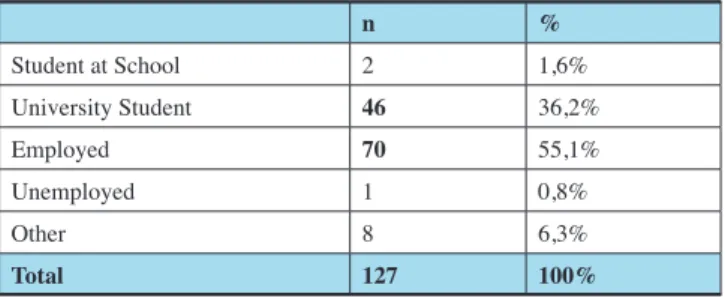
Table 1 gives an overview of the subjects‘ current profes -sional status.
The second part of the questionnaire focused on the
question which robots people know. The participants were
al-lowed to enter multiple robots, but they should not put down
more than five. In the third part of the questionnaire,
partici-pants were asked to suggest applications for the robots which
were introduced to them in random order. All the participants
in the survey got very basic information about the function
of the four robots. For example, AIBO was described as a
robot with the ability of speaking and understanding speech,
it can walk and recognize objects. Additionally, the
partici-pants watched a video which shows one movement of each
system just to give an impression of the robot‘s form. After-wards they had to name applications. Since the study was exploratory in its nature this question was an open question
and the subjects were free to write down as many items as
they could think of. Moreover, they had to rate for each robot whether they would use it. At the end of the questionare the
participants were asked to decide:
- Which of the robots shown would you like to own? - Which robot is most enjoyable to interact with?
- Which robot is most likeable?
For further analysis we developed a method to classify
the applications. First, a content analysis was conducted [8].
Three researchers rated the applications mentioned by the
participants of the study independently. Second, the applica-tions were grouped into categories. The method includes an
interpretation which is subjective, but it serves as a tool to
infer further insights. Third, for a distinction between the
ap-plications four dimensions are proposed:
(1) public vs. private use: This dimension describes to which
degree the application is suited for public or private use.
For instance, a business robot is valuable for public tasks
whereas a personal assistant is used at home. The place of use, private and public, correlates with long-term and short-term interactions, respectively.
(2) intensity of interaction: The term intensity represents the
frequency of the interaction in a certain time frame. It does not express how often the robot is used in general. For example, delegating a transport task to a robot is less intense than using it as a toy.
(3) complexity of interaction model: The complexity of the interaction model defines how elaborate the social mod-el of the situation is. For instance, a personal assistant has to acquire a complex user model of the owner which a security robot does not need.
(4) functional vs. human-like appearance: Form is elicit -ing expectations of how the robot behaves. Thus, the more human-like a robot looks the more it is expected to behave like a human. For example, a transport robot doesn‘t need a human-like design to manage its task
whereas it might be advantageous for a robot in health
care.
V. RESULTS AND DISCUSSION
This section presents the results of the study starting
with general insights. Afterwards the relations between place of use and frequency of interaction and between complexity of interaction model and form are discussed. Finally, three classes of applications for social robots are proposed. A. General Results
In the questionnaire the participants were asked to write
down robots that came to their mind. Altogether 284 entries
n % Student at School 2 1,6% University Student 46 36,2% Employed 70 55,1% Unemployed 1 0,8% Other 8 6,3% Total 127 100%
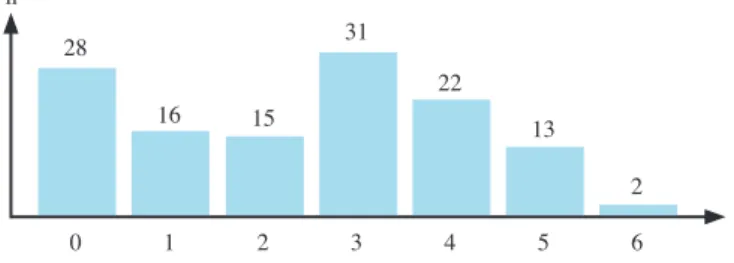
were made. Table 2 shows how many robots were named by the participants (average=2,39, SD=1,73). Table 3 lists the robots mentioned. The different robots known from mov-ies and TV are grouped, because for this paper it is not im-portant to distinguish them. It is obvious that most people think of industrial systems and robots from movies, TV and other media. Thus, it is even more surprising that 23 peo-ple mentioned AIBO and 18 wrote soccer robots, which in our opinion are closely associated with Sony‘s robotic dog. None of the other robots used for research in this study was listed. Therefore, it seems especially interesting to evaluate whether knowing a particular robot will influence peoples‘ attitude towards it. This question will be answered later in this section.
After writing down the robots they knew, the partici -pants were asked to propose applications for AIBO, BIRON, BARTHOC, and iCat. Altogether 570 items were mentioned (see Table 4). There is a strong correlation between appli-cations proposed for AIBO and iCat (r=.77; p<0,01 (two-tailed)). This might be due to their zoomorphic appearance. There was no correlation between the other robots. Gender and age do not have a statistically significant influence on subjects‘ answers.
Altogether, there seems to be a widespread rejection to
using robots (Table 5). As Kaplan [20] argues this is typical for Western in contrast to Japanese culture. Another reason
might be that we still lack applications which add some value
to peoples‘ lives [6]. Although the participants rejected using the robots in general they preferred AIBO when asked which
robot they would like to own, they found most enjoyable to
interact with, and they regard as most likeable (Table 6).
An-swers to all three questions are correlated as can be seen in
the table as well. Our results indicate that the preference for
AIBO is due to the fact that many people knew it before the study. We further found that many participants refused BAR-THOC. Some participants even wrote that they find it scary. B. Place of Use and Frequency of Interaction
Figure 2 (A) shows the evaluation of the 12 selected
application classes depending on the place of use and the
frequency of interaction. In this, as well as in the following figures, the size of the dots is determined by the number of entries for each application. For example, toys are usually tools for a home environment used in private life. Playing with a toy is characterized by a very intense interaction. In
contrast, a security robot in public and private should work
autonomously and not interact too often with its owners. The
ratings indicated that a public assistant is not as interactive
as a personal assistant. A personal assistant serves more as a
n Barthoc iCat AIBO BIRON (a) (b)
(a) 111 5,4% 17,1% 44,1% 33,3%
(b) 114 9,7% 16,7% 57,0% 16,7% .47** (c) 110 2,7% 39,1% 49,1% 9,1% .41** .33** Table 6. Rating of the questions: (a) Which robot would you like to own?
(b) Which robot is most enjoyable? (c) Which robot is most likeable?; Correlation between the answers: ** p<0.01.
Industrial Robots 49
TV and Media 71
AIBO (Sony) 23 Asimo (Honda) 14 Mindstorms (Lego) 9
Robots from Soccer 18
Service Robots 21 Mars Explorer 10 Toy Robots 6 Medical Robots 5 Other 58 Total 284
Table 3. Robots named by the participants
Table 5. Willingness to use the robot
BARTHOC iCat AIBO BIRON average
n 122 124 121 118
yes 9,0% 9,7% 15,7% 21,2% 13,9%
maybe 26,2% 25,8% 23,9% 27,1% 25,8%
no 64,8% 64,5% 60,3% 51,7% 60,3%
Table 4. Suggested application categories
Applications AIBO BAR
THOC
BIRON iCat Total
Security 23 5 32 17 77
Research 11 4 2 1 18
Health Care 16 7 7 16 46
Personal Assistant / Interface 7 3 30 14 54
Toy 55 5 1 44 105 Business 3 32 12 12 59 Pet 20 0 0 6 26 Entertainment 10 2 0 8 20 Teacher 4 5 3 16 28 Transport 14 2 5 0 21 Companienship 8 2 2 3 15 Caregiver 3 1 1 6 11 Public Assistant 6 27 44 13 90 Total 180 95 139 156 570
Table 2. Number of robots mentioned
0 1 2 3 4 5 6 n 28 2 13 22 31 15 16
companion in private life while a public assistant gives some
general information which usually is less frequent.
Altogether, we found a correlation between the frequen -cy of interaction and the place of use. The more an applica-tion is used in a private context, the higher is the intensity of interaction.
In Figure 2 (B) each robot is mapped according to the applications mentioned. The map is derived from Figure 2 (A). For BIRON and BARTHOC the participants suggested
mainly public applications which are characterized by less
intense interaction. In contrast, many private scenarios for iCat and especially AIBO are proposed. Their intensity is much higher.
C. Complexity of Interaction and Form of a Robot
In Figure 2 (C) the relation between the complexity of interaction and the robots‘ form is presented. A strong corre-lation can be assumed. The more a robot looks like a human the more it is expected to behave like a human [21]. Com-plexity of interaction is a question of intelligent behavior – a human attribute. Applications like security, cleaning, and transport do not need a complex interaction behavior while
personal assistants, teachers, and public assistants require
some kind of human communication.
With only basic information about form and function the
participants suggested applications within a social context which requires social robots. Only four industrial scenarios were mentioned.
From the raters point of view, most of the suggested ap -plications, e.g. health care robots, imply the need for a more or less complex social behavior. On the other hand, the rating
indicates that a robot that has to transport something does not
need such a complex interaction structure. In this case the robot is rather a tool than a communication agent.
The mappings of the four robots in Figure 2 (D) repre-sent this idea. BARTHOC and iCat have lots of human-like features. The applications subscribed to them are more com-plex which proves the hypothesis. AIBO covers the whole spectrum of tasks according to this categorization. It is
men-tioned as functional, because it should carry things which
we interpreted as transport. BIRON is clustered in the field of human-like robots. This is probably due to its human-like features like speaking and understanding speech. Because of
these features the participants suggested applications that are
evaluated as complex and social.
Altogether, it becomes obvious that systematic differenc
-es can be found between the four robots and the applications
mentioned for them. Due to these differences three classes of
applications for social robots are determined which will be
presented in the following section.
D. Three Classes of Applications for Social Robots
Based on Figure 2 (A-D) our results indicate three main
classes of applications according to how social a robot has to be: frequent interaction no interaction Transport Teacher Pet Toy Public Assistant Business Pers. Assistant/Interface Security private use public use
Care (Health Care, Caregiver,
Companionship) Cleaning frequent interaction BARTHOC BIRON AIBO iCat no interaction private use public use human-like functional Transport Teacher Pet Toy Public Assistant Business Pers. Assistant/Interface Security
more complex interaction model
less complex interaction model
Cleaning human-like BARTHOC BIRON AIBO iCat functional
more complex interaction model
less complex interaction model
Entertainment
Fig.2 private and public uses and intensity of interaction of (A) applications and (B) robots, complexity of interaction and appearance of a robot of (C) applications and (D) robots
Care (Health Care, Caregiver,
Companionship) A B D C Entertainment (1)
(1) Specialized Applications for Social Robots
Specialized applications consist of clearly defined tasks
which are characterized by less communication to a
user. The robots rarely depend on elaborate social inter-action. These applications take place as well in private as in public places.
(2) Public Applications for Social Robots
Public applications are directed to lots of users and need a general communication model which is equal for all
users. Adaptation is not required because interaction with public systems is usually short-term interaction.
These robots need advanced models of social interac -tion.
(3) Individual Applications for Social Robots
Individual applications are designed for complex every-day tasks in private life. These long-term applications
require high communication skills and the ability to in -teract with a selected group of users. Thus, robots
com-pleting such tasks depend on highly developed social
interaction skills. Especially, for the robots within this group a human-like appearance is profitable.
VI. CONCLUSION
This paper presents the analysis of an internet study.
Par-ticipants were invited to suggest applications for the social
robots AIBO, BIRON, BARTHOC, and iCat. 127 subjects proposed 570 items. These were grouped and analyzed with the help of the following criteria: public vs. private use, in-tensity of interaction, complexity of interaction model, and function vs. human-like appearance.
The results indicate that the majority of the participants could not envisage to use a robot even though they suggested
relevant applications. Nevertheless, the robots were preferred if they were known by the subjects.
On the basis of the study we inferred three classes of ap-plications for social robots: (1) Specialized Apap-plications, (2)
Public Applications, and (3) Individual Applications. These differ in the degree how social a robot has to be.
These classes are a first step towards an understanding
of the relation between form and function of a robot – includ -ing its applications. They can be used as a tool to design form and functions of robots that fit the expectations people have about the tasks the robots perform.
VII. ACKNOWLEDGEMENTS
This work has been supported by the German Resarch Foundation (DFG) within the SFB 673 “Alignment in Com-munication” – Projects C2 (Communication of Emotions) and A4 (Alignment of Situation Models).
VIII. REFERENCES
[1] B. Duffy, ‘The Social Robot’, Ph.D. Thesis, Department of Com-puter Science, University College, Dublin (2000).
[2] C. Breazeal, A. Brooks, J. Gray, G. Hoffman, C. Kidd, H. Lee, J. Lieberman, A. Lockerd, and D. Chilongo, ‘Tutelage and
collabora-tion for humaoid robots’, Internacollabora-tional Journal of Humanoid Robots,
1(2), 315– 348, (2004).
[3] D. Roy, ‘Grounding words in perception and action: computational insights’, Trends in Cognitive Science, 9(8), 389–396, (2005). [4] T. W. Fong, I. Nourbakhsh, and K. Dautenhahn, ‘A Survey of
Social-ly Interactive Robots: Concepts, Design, and Applications’, Robotics and Autonomous Systems, 42(3 – 4), 142 – 166, (2002).
[5] S. Ljungblad and L. E. Holmquist, ‘Designing robot applications for everyday environments’, in sOc-EUSAI ’05: Proceedings of the 2005 joint conference on Smart objects and ambient intelligence, pp. 65–68, New York, NY, USA, (2005). ACM Press.
[6] F. Kaplan, ‘Everyday robotics: robots as everyday objects’, in Pro-ceedings of Soc-Eusai 2005, pp. 59 – 64, Grenoble, France, (2005). [7] J. Goetz, S. Kiesler, and A. Powers, ‘Matching robot appearance and
behavior to tasks to improve human-robot cooperation’, in Proceed-ings of the 12th IEEE Workshop on Robot and Human Interactive Communication (ROMAN 2003), pp. 55–60, San Francisco, CA, (2003).
[8] M. Lohse, F. Hegel, A. Swadzba, K. Rohlfing, S. Wachsmuth, and B. Wrede,‘What can I do for you? Appearance and Applications of Ro-bots’ Proceedings of AISB'07. Artificial and Ambient Intelligence, Newcastle upon Tyne (2007). To appear.
[9] C. F. DiSalvo, F. Gemperle, J. Forlizzi, and S. Kiesler, ‘All robots
are not created equal: the design and perception of humanoid robot
heads’, in DIS ’02: Proceedings of the conference on Designing in-teractive systems, pp. 321–326, New York, NY, USA, (2002). ACM Press.
[10] B. Duffy, ‘Anthropomorphism and the social robot’, Special Issue on Socially Interactive Robots, Robotics and Autonomous Systems 42 (3-4), pp. 170-190, (2003).
[11] M. Blow, K. Dautenhahn, A. Appleby, C. L. Nehaniv, D. C. Lee, ‘Perception of Robot Smiles and Dimensions for Human-Robot In-teraction Design’ 15th IEEE International Symposium on Robot and Human Interactive Communication (RO-MAN 06), pages 469-474, Hatfield, UK, (2006).
[12] R. Gockley, J. Forlizzi, and R. Simmons, ‘Interactions with a moody robot’, in HRI ’06: Proceeding of the 1st ACM SIGCHI/SIGART conference on human-robot interaction, pp. 186–193, New York, NY, USA, (2006). ACM Press.
[13] A. Bruce, I. Nourbakhsh, and R. Simmons, ‘The role of expressive-ness and attention in humanrobot interaction’, in Proc. AAAI Fall Symp. Emotional and Intel. II: The Tangled Knot of Soc. Cognition, (2001).
[14] F. Hegel, T. Spexard, T. Vogt, G. Horstmann, and B. Wrede, ‘Play-ing a different imitation game: Interaction with an Empathic Android Robot’, in Proc. 2006 IEEE-RAS International Conference on Hu-manoid Robots (HuHu-manoids06), pp. 56–61. IEEE, (2006). [15] C. F. DiSalvo and F. Gemperle, ‘From seduction to fulfilment: the
use of anthropomorphic form in design’, in DPPI ’03: Proceedings of the 2003 international conference on Designing pleasurable prod-ucts and interfaces, pp. 67–72, New York, NY, USA, (2003). ACM Press.
[16] Sony Corporation, 2007. http://www.sony.net/Products/aibo/index. html.
[17] Philips Research. iCat research community, November 2006. http:// www.hitech-projects.com/icat/.
[18] M. Hackel, S. Schwope, J. Fritsch, B. Wrede, and G. Sagerer, ‘A
hu-manoid robot platform suitable for studying embodied interaction’,
in Proc. IEEE/RSJ Int. Conf. on Intelligent Robots and Systems, pp. 56– 61, Edmonton, Alberta, Canada, (2005). IEEE.
[19] A. Haasch, S. Hohenner, S. Hüwel, M. Kleinehagenbrock, S. Lang, I. Toptsis, G. A. Fink, J. Fritsch, B. Wrede, and G. Sagerer, ‘BIRON – The Bielefeld Robot Companion’, in Proc. Int. Workshop on Ad-vances in Service Robotics, eds., E. Prassler, G. Lawitzky, P. Fiorini, and M. Hägele, pp. 27–32, Stuttgart, Germany, (2004). Fraunhofer IRB Verlag.
[20] F. Kaplan, ‘Who is afraid of the humanoid? Investigating cultural
differences in the acceptance of robots’, International journal of hu
-manoid robotics, 1(3), pp. 465--480, (2004).
[21] B. Duffy, G. Joue, ‘I, robot being’, Intelligent Autonomous Systems Conference (IAS8), Amsterdam, The Netherlands (2004).
![Figure 1 (C) gives an impression of the humanoid ro- ro-bot BARTHOC (Bielefeld Antropomorphic RoboT for Hu-man-Oriented Communication) [18]](https://thumb-us.123doks.com/thumbv2/123dok_us/9536058.2829736/2.892.459.819.72.342/figure-impression-humanoid-barthoc-bielefeld-antropomorphic-oriented-communication.webp)