5
VIII
August 2017
Design & Implementation of Sign Language
Using Wearable Gloves
Mrunali Jaiswal1, Prof. Jagdish Pimple2
1,2Department of Computer Science and Engineering,Rashtrasant Tukdoji Maharaj University Nagpur, India
Abstract: A gesture is used to classify and recognize a signal that enables communication among the disabled person. It is a technique that has been in use to make people feel comfortable just like the normal people behave. Deaf and Dumb people always have difficulty in communicating with normal people.
This technology helps dumb people in communicating with others. This technology use hand gestures as a main source of communication. In this article, the communication toolkit consists of a gesture recognition kit that further consist of an audio device, and hand Gloves with sensors. The sensor captures the gesture passes it to the display panel where the audio device recognizes and speaks up the gesture making proper two way communication between persons. As it is very easy to communicate through the different set of images stored in database and then speak out using the device. In built mechanism is more inficent & it is depleted through action.
Index terms: Flex Sensors; Sign Language; Hand Gesture; HCI Human-Computer Interface ; Display Panel; American Sign Language (ASL)
I. INTRODUCTION
Gestures take back their usage to the ancient times back at the days when there were no effective means of communication known to the communities. Nodding the head or making some signs using hands were a liable means considered at that period which even Now a Days. Sign language has been a part of life for the individual’s disabled persons. For communication, Sign language has been used by the deaf and dumb community of individuals for years and for years to come for carrying out interactive communications. Sign language emphasizes on manual and non-manual signals where the manual signs involve fingers, hands, arms and non-manual signs involve face, head, eye and body.
Gesture recognition has wide range of applications:
A. Developing new standards for hearing impaired.
B. Make it possible for people to communicate with computers.
C. To understand the sign language.
D. To communicate through video calls.
E. To enable learning capabilities to be shared from various places through telephonic conversations.
F. Applying various methods for lie detection
Gestures appears in one to many mappings from the concepts to expressions and vice versa. Gestures are completely unpredictable and unclear, that is they are totally unpredictable [2]. The gestures can be either static or dynamic it depends what types of gesture movements comprising of hand and arm in which the expressions can be made through fingers and wrist including the arm movement .The another type is of body gestures that include full body motion for an instance walking style of a person and the way one person interacts with the other depicts body language. In Hand gesture detection is to use 2D projection of 3D hand gesture to collect clear image of the palm with full contrast to detect edges reliably [3,4].
meaning therefore, making the communication between the communities successful.
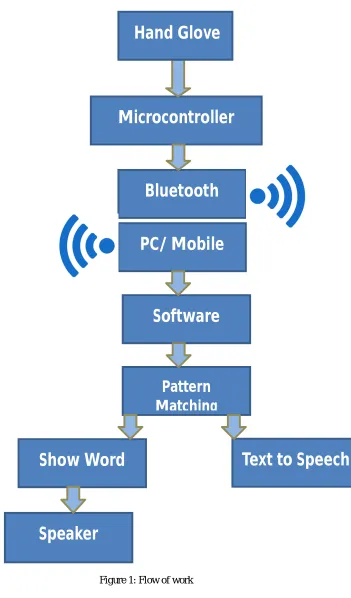
[image:3.612.160.511.90.688.2]1) Block Diagram
Figure 1: Flow of work
II. METHODOLOGY
A. Flex Sensors
Microcontroller
Bluetooth
PC/ Mobile
Software
Pattern
Matching
Show Word
Text to Speech
Speaker
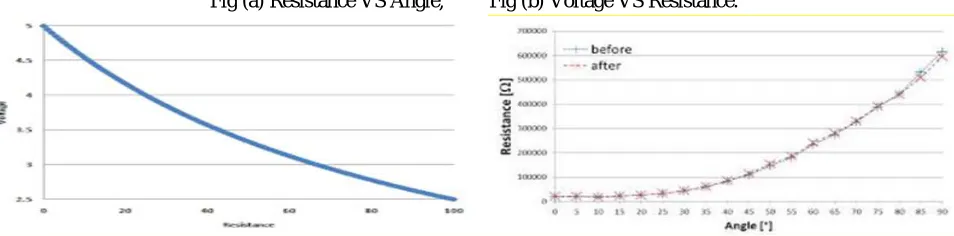
Flex sensors are normally attached to the glove using needle and thread. It requires a 5-volt input to operate and gives output in between 0 and 5 V. The bending angle of sensor increases resistance of flex sensor. As the sensor varies the output voltage changes accordingly. Input sensor that is flex sensor plays major role. As bending angle increases resistance of flex sensor also increases.
Fig 1.1: Basic Flex sensor Circuit
This change in resistance will be converted into voltage change by connecting flex sensor to potential divider circuit.
The flex sensor is simply a resistor in which resistance depending on bend radius. The construction of a potential divider network with two resistors. Out of which one is the flex sensor and the other is the 10k resistor. It get the potential drop across the variable resistor which is the flex sensor and analog value of voltage. This analog voltage is fed to the ADC input pins of the microcontroller. ADC converts the analog value into corresponding digital values and stores in microcontroller’s memory. If the voltage value crosses the threshold value, it is recognized as input.
Two or three sensors are connected serially and the output from the sensors is inputted to the analog to digital converter in the controller. In this the outputs from the flex sensors are inputted into LM258/LM358 op-amps and used as a non-inverted style setup to amplify their voltage. Greater the degree of bending, lower the output voltage.
Fig (a) Resistance VS Angle, Fig (b) Voltage VS Resistance.
In this project data glove will implement to capture the hand gestures of a user. The data glove is fitted with flex sensors along with the length of each finger and the thumb according to convenience. The flex sensors output a stream of data that varies with degree of bend.
The analog outputs from the sensors are then fed to the PIC (Peripheral Interface Controller) microcontroller. It processes the signals and perform analog to digital signal conversion. The resulting digital signal will displayed in the system. The gesture will recognize and the corresponding text information will be identified.
In this text to speech conversion takes place in the voice section and plays out through the speaker. The user need to know the signs of particular alphabets and he need to stay with the sign for two seconds. There are no limitations for signs it is hard to build a standard library of signs. The new sign introduced should be supported by the software used in the system. The system can also be designed such that it can translate words from one language to another. A pair of gloves along with sensors enables mute people to interact with the public in the required language. The performance accuracy of this device can be improved by increasing the number of sensors in the series. These sensors are attached along the fingers and thumb. The degree of bending of fingers and thumb produces the output voltage variation which in turn on converting to analog form produces required voice.
B. Microcontroller (PIC16F877A)
[image:4.612.69.546.386.504.2]technology and is compatible with its RISC instruction. By combining a versatile 8-bit CPU with Flash on a monolithic chip, the PIC 16F877A is a powerful microcomputer which provides a highly flexible and cost effective solution for many embedded control applications. The main feature of PIC 16F877A is it that it has in built ADC. This feature is mainly used in our project.
C. Accelerometer
An accelerometer is an electromechanical device that will measure acceleration forces. These forces may be static, like the constant force of gravity pulling at your feet, or they could be dynamic - caused by moving or vibrating the accelerometer. By measuring the amount of static acceleration due to gravity, you can find out the angle the device is tilted at with respect to the earth. By sensing the amount of dynamic acceleration, you can analyze the way the device is moving. At first, measuring tilt and acceleration doesn't seem all that exciting. However, engineers have come up with many ways to make really useful products with them
The values of the flex sensors and the motion of the palm detect by the accelerometer and pass it to the micro controller.
Micro controller will pass the values of senses to the application available on the server. Input will be matched with the pattern, saved on the database. Once the pattern is recognized by the interface, it will be displayed. Text to speech converter will convert the text into the the speech.
D. System Architecture
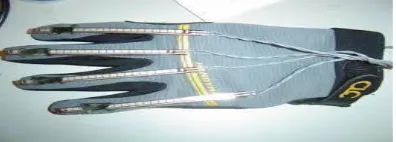
[image:5.612.208.406.332.403.2]Here use of hand gloves with flex sensor which varies resistance when bent the analog values are processed by the PIC 16F877A. The Gestures can be converted to voice by using a APR 9600 Voice storage and retrieval chip. Prerecorded voices are stored into APR Memory and when corresponding gestures are received, the appropriate voices are reproduced by the APR through the speaker.
Fig 1.2 : Hand gloves with flex sensors
III. RELATED WORK
A. Péter MÁTÉTELKI, Máté PATAKI, Sándor TURBUCZ, László KOVÁCS, “An Assistive Interpreter Tool Using Glove-Based Hand Gesture Recognition” IEEE Canada International Humanitarian Technology Conference - (IHTC) , May 2014.
An assistive tool (Interpreter Glove) for hearing- and speech impaired people is created, enabling them to easily communicate with the non-disabled using hand gestures and sign language. The main logic of our automatic sign language interpreter consists of two algorithms: sign descriptor stream segmentation and text auto-correction. The software architecture of this time-sensitive complex application and the semantics of the developed hand gesture descriptor are described. We also present how the beta testers feedback from the deaf community influenced our work and achievements.
B. Hamid A. Jalab, Faculty of Computer Science and Information Technology, University of Malaya, “Human Computer Interface Using Hand Gesture Recognition Based On Neural Network”, IEEE March 2015.
Gesture is one of the most vivid and dramatic way of communications between human and computer. Hence, there has been a growing interest to create easy-to-use interfaces by directly utilizing the natural communication and management skills of humans. This paper presents a hand gesture interface for controlling media player using neural network. The proposed algorithm develops an alternative input device to control the media player, and also offers different gesture commands and can be useful in real-time applications. Comparisons with other hand gesture recognition systems have revealed that our system shows better performance in terms accuracy.
C. Rama Chellappa, Xilin Chen, and Qiang , “Automatic Face and Gesture Recognition”, 2013 10th IEEE International Conference and Workshops.
D. M.M.Gharasuie, H.Seyedarabi, ‖Real-time Dynamic Hand Gesture Recognition using Hidden Markov Models‖ , 8th Iranian Conference on Machine Vision and Image Processing (MVIP), 2013 8th Iranian Conference on Machine Vision and Image Processing (MVIP)
Robust Part-Based Hand Gesture Recognition Using Kinect Sensor[2]: Inexpensive depth camera -A Kinect sensor is used to build a robust part based hand gesture recognition, in this paper. As kinect sensors are of low resolution it is hard to identify the hand, but they can capture large objects easily. To deal with the noisy hand gestures which are captured by kinect sensors, the authors are proposed a novel distance metric known as Finger Earth Movers distance. Only the fingers are matched with FEMD but not the whole hand
E. Zhou Ren, Junsong Yuan, JingjingMeng, Zhengyou Zhang. ―Robust Part-Based Hand Gesture Recognition Using Kinect Sensor‖. IEEE Transactions on Multimedia, Vol.15, No.5, August 2013.
Inexpensive depth camera -A Kinect sensor is used to build a robust part based hand gesture recognition, in this paper. As kinect sensors are of low resolution it is hard to identify the hand, but they can capture large objects easily. To deal with the noisy hand gestures which are captured by kinect sensors, the authors are proposed a novel distance metric known as Finger Earth Movers distance.
F. Blanca Miriam Lee-Cosioa, Carlos Delgado-Mataa, Jesus Ibanezb. ―ANN for Gesture Recognition using Accelerometer Data‖. Elsevier Publications, Procedia Technology 3 ( 2012 ).
The authors introduced an Artificial Neural network application used for the classification and gesture recognition. The gesture recognition is done through the wii remote, this remote will rotate in X,Y,Z directions. To reduce the computational cost and memory consumption the gesture recognition is processed in two levels. In first level User Authentication is done for gesture recognition. AccelerometerBased gesture recognition method is used .In second level without any kind of signal processing for gesture recognition Fuzzy automata algorithm has peen proposed. After recognizing the data of the gestures , the data was normalized and filtered by k-means and Fast Fourier transform algorithm. Using this Dynamic Bayesian Network The recognition accuracy has increased up to 95%.
1) Comparision Table:
IV. CONCLUSION AND FUTURE SCOPE
REFERENCES
[1] C. L. Lisetti and D. J. Schiano ,” Automatic classification of single facial images,” Pragmatics Cogn., vol. 8, pp. 185–235, 2000
[2] Sushmita Mitra and Tinku Acharya ,” Gesture Recognition: A Survey,IEEE transactions on systems, man, and cybernetics—part c: applications and reviews, vol. 37, no. 3, may 2007, 311.
[3] Stenger, B., Mendonca, P. & Cipolla, R.,”Model-Based 3D Tracking of an ArticulatedHand. In IEEE Conference on Computer Vision and Pattern Recognition”, (2001) 310–315.
[4] G. R. S. Murthy & R. S. Jadon ,” a review of vision based hand gestures recognition, International Journal of Information Technology and Knowledge Management” July-December 2009, Volume 2, No. 2, pp. 405-410
[5] L. R. Rabiner “ A tutorial on hidden Markov models and selected applications in speech recognition,” Proc. IEEE, vol. 77, no. 2, pp. 257–285, Feb. 1989. [6] S. Mitra and T. Acharya,” Data Mining: Multimedia, Soft Computing, and Bioinformatics. New York: Wiley, 2003.
[7] Peter Vamplew ,” Recognition of sign language gestures using neural networks”, ProcEuro.. Conf. Disability, Virtual Reality and Assoc. Tech., Maidenhead, UK, 1996.
[8] Byung-Woo Min, Ho-Sub Yoon, ungJ Soh, Yun-Mo Yang, ToshiakiEjima,” Hand Gesture ecognitionR using Hidden Markov Models”, 1997, on IEEE, 1997. [9] Meide Zhao, Francis K.H. Quek, Xindong Wu,”RIEVL: RecursivInduction Learning in Hand Gesture Recognition”, 1998, IEEE transactions on pattern
analysis and machine intelligence, Vol. 20, No. 11, IEEE, 1998.
[10] Sharon Peperkamp, Jacques Mehler,” Signed and Spoken Language: A unique underlying System” 1999.
[11] Hyeon-Kyu Lee, Jin H. Kim, “An HMM-Based Threshold Model Approach for Gesture Recognition”, IEEE transactions on pattern analysis and machine intelligence, Vol. 21, No. 10, IEEE, 1999.
[12] Masumi Ishikawa, Hiroko Matsumura ,“Recognition of hand-gesture based on self organization using a data glove”, 1999, on IEEE, 1999. [13] Claudia Nolker, Helge Ritter,” Visual recognition of continuous hand postures”, IEEE transactions on neural networks, Vol. 13, No. 4, IEEE, 2002. [14] Greg S. Schmidt, Donald H. House ,”Towards model-based gesture recognition”, Deptt. Of computer science, Texas A&M University.
[15] Md. RezwanulAhsan, Muhammad IbnIbrahimy, Othman O.alifaKh ,”Electromyograpghy (EMG) signal based hand gesture recognition using Artificial Neural Network (ANN)”, 2011, 4th International Conference on Mechatronis (ICOM), IEEE, 2011.
[16] Shekhar Singh, Akshat Jain, Deepak kumar ,”Recognizing and interpreting sign language gestures for human robot interaction”, 2012, International Journal of Computer Applications, 2012.
[17] Shoaib Ahmed V. et al. ,”Magic gloves (hand gesture recognition and voice conversion system for differentially able dumb people”, 2012, Tech Expo-The Global Summit, 2012.
[18] PingalePrernaRambhau et al.,” Recognition oftwo hand gestures of word in British Sign Language(BSL)”, International Journal of Scientific and Research Publications, Vol. 3, Issue 10, October 2013.
[19] ChetanDhule, TruptiNagrare ,” Computer vision based human-computer interaction using color detection techniques”, 4th International Conference on Communication Systems and Network Technologies, 2014.
[20] Neha S. Chourasia, Sampa Barman,” hand gesture spotting using sign language through computer interfacing”, International Journal of Engineering Research and Applications, January 2014.