http://www.scirp.org/journal/health ISSN Online: 1949-5005
ISSN Print: 1949-4998
Operationalizing Adolescent Health Services at
Primary Health Care Level in India: Processes,
Challenges and Outputs
Beena Nitin Joshi
1, Sanjay Laxman Chauhan
2, Ragini Nitin Kulkarni
1, Babita Kamlapurkar
3,
Rajesh Mehta
41Department of Operational Research, National Institute for Research in Reproductive Health (ICMR), Mumbai, India 2Department of Operational and Clinical Research, National Institute for Research in Reproductive Health (ICMR),
Mumbai, India
3Health and Family Welfare Bureau, Government of Maharashtra, Pune, India 4Child and Adolescent Health WHO SEARO Office, New Delhi, India
Abstract
Background: Ministry of Health, Government of India developed the Ado-lescent Reproductive and Sexual Health (ARSH) strategy and operationalized adolescent health services up to district and sub-district hospital level. Objec-tives: To operationalize adolescent health services at primary health care level in a block of Maharashtra; assess impact of need based interventions on qual-ity of services; and understand potential for scalabilqual-ity in the state. Methods: Adolescent and Youth friendly centers were established at primary health care settings and interventions such as health system strengthening, sensitizing ga-tekeepers, involving Accredited Social Health Activist (ASHAs), developing inter and intra-sectoral linkages, improving monitoring and evaluation were tested. Results: Over a period of 2009-2014, there was a steady increase in the number of clients attending the Adolescent and Youth Friendly Health Cen-ters (A&YFHCs). Attitude of providers to address adolescents’ needs improved significantly. Successful interventions were networking with schools, colleges and Non Government Organization (NGOs), linkages with HIV program and Integrated Child Development Services (ICDS), and involvement of ASHAs. Conclusions: The study demonstrates that although health system has the primary responsibility of addressing health issues among adolescents; it has limitations in terms of its reach to adolescents and generating demand for services. There is a need to network with education sector, ICDS, NGOs wor- king for adolescent health and development to work as a team and address the multifaceted needs of the adolescents. Such a strategy will be crucial while im-plementing the recently launched Rashtriya Kishor Swasthya Karyakram— How to cite this paper: Joshi, B.N.,
Chau-han, S.L., Kulkarni, R.N., Kamlapurkar, B. and Mehta, R. (2017) Operationalizing Ado- lescent Health Services at Primary Health Care Level in India: Processes, Challenges and Outputs. Health, 9, 1-13.
http://dx.doi.org/10.4236/health.2017.91001
Received: November 9, 2016 Accepted: December 27, 2016 Published: December 30, 2016
Copyright © 2017 by authors and Scientific Research Publishing Inc. This work is licensed under the Creative Commons Attribution International License (CC BY 4.0).
the new national adolescent health programme in India.
Keywords
Adolescent Sexual and Reproductive Health, Adolescent and Youth Friendly Health Services, Quality of Care Standards, Linkages
1. Introduction
Thirty percent of India’s total population comprises of adolescents and youth aged 10 to 24 years [1]. To provide friendly services to the adolescents, the Min-istry of Health, Government of India (GOI) launched the Adolescent Reproduc-tive and Sexual Health Strategy [2] in 2005 under the umbrella of National Rural Health Mission (NRHM) as part of Reproductive and Child Health (RCH-II) programme. This strategy intended delivering a comprehensive pack-age of services for adolescent boys and girls including preventive, promotive, curative, counseling and referral services; focusing on sexual and reproductive health by re-organizing the existing public health system and developing lin-kages between RCH-II and National AIDS Control Program (NACP-III). Im-plementation Guide [3] outlined the necessary interventions that could make the clinics functional recommending all core domains of adolescent friendly care [4]. A set of tools were developed by World Health Organization (WHO) which used multiple level assessments to validate the quality of each indicator [5]. World Health Organization (WHO) Job aids [6] on adolescent health also ensured uniform management of clinical issues by the trained healthcare pro-viders.
Maharashtra being one of the implementing states, established adolescent health services at District and sub-district hospital settings. However, the district hospital settings lacked community outreach services and manpower to generate demand for services, as their mandate was mainly curative services. Although one post of ARSH counselor was dedicated to this clinic, there were limitations of her/his single handed reach to the community. District hospitals have specia-lized expertise and their services are utispecia-lized for issues that cannot be tackled at the primary health care settings. Since these services were not established below the district level, an implementation research study was undertaken to capacitate the primary health care facilities and test the operational feasibility to provide services to adolescents.
de-liver adolescent friendly services were developed and shared with the state gov-ernment. Financial assistance was received from WHO in the preparatory phase. This work was utilized for planning and implementing the study in Karjat block of Raigad district of Maharashtra. The block had a mix of tribal and non-tribal population and comprised of eight government health facilities viz. one Sub- district hospital (SDH), one Rural hospital (RH) and six Primary Health Centers (PHCs) located equally in tribal and non-tribal areas each, covering a total pop-ulation of 2, 17, 363. A quarter of this poppop-ulation belonged to schedule tribes with 60% literacy. The main occupation was agriculture or petty business. There were no major industries in the block.
This paper pertains to process documentation related to products developed and challenges faced during establishing, strengthening and sustaining the Adolescent Friendly Health Services at sub-district health facilities in the block. The paper also outlines the interventions that worked and those that did not.
2. Methodology
This prospective intervention study was conducted from 2009 until 2014 (5 years) with an aim of documenting the process of implementing ARSH services below district level as per the Implementation Guide developed by Government of India. Entire Karjat block of Raigad district was chosen for the study due to operational feasibility and that it had a good representation of tribal and non-tri- bal populations. All health facilities i.e. six PHCs, one RH and one SDH were in-cluded for interventions. The situation analysis inin-cluded health facility assess-ment of quality health services provided to the adolescents. Using a check list which identified infrastructure needs along with drugs and consumables, a range of services and quality of care available to adolescents was assessed. Health care providers were interviewed to assess their knowledge on adolescent health is-sues, training needs and community outreach services provided to adolescents. Needs assessment of the adolescents and youth was done by eight Focus Group Discussions among adolescents and young people aged 10 - 24 years, two each among married and unmarried boys and girls respectively. Quality assessment tools developed by WHO [5] were used to monitor the adolescent friendly health clinics during the study in each phase. Scores were assigned in percentages to the variables specific to each standard. Strategies were implemented to address the shortfalls observed in each assessment.
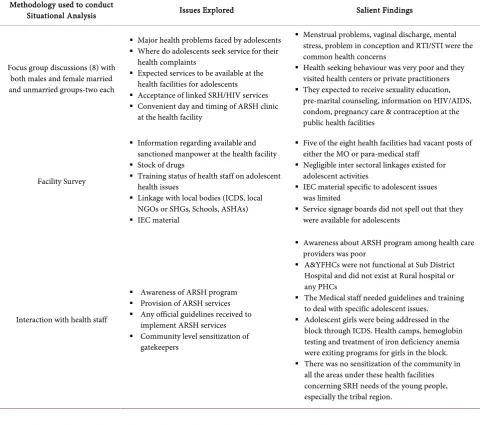
Based on the findings of the situation analysis (Table 1), interventions catego-rized into four broad areas were designed namely 1) establishing Adolescent Re-productive and Sexual Health (ARSH) clinics by strengthening health facilities 2) sensitizing community and reaching out to adolescents; 3) strengthening in-ter- and intra-sectoral linkages and 4) monitoring evaluation and accountability of the health providers.
1) Establishing Adolescent Friendly Health Clinics (A&YFHCs) by
streng-thening the existing public health facilities:
Table 1. Situation analysis of ARSH services in the block.
Methodology used to conduct
Situational Analysis Issues Explored Salient Findings
Focus group discussions (8) with both males and female married and unmarried groups-two each
Major health problems faced by adolescents
Where do adolescents seek service for their
health complaints
Expected services to be available at the
health facilities for adolescents
Acceptance of linked SRH/HIV services Convenient day and timing of ARSH clinic
at the health facility
Menstrual problems, vaginal discharge, mental
stress, problem in conception and RTI/STI were the common health concerns
Health seeking behaviour was very poor and they
visited health centers or private practitioners
They expected to receive sexuality education,
pre-marital counseling, information on HIV/AIDS, condom, pregnancy care & contraception at the public health facilities
Facility Survey
Information regarding available and sanctioned manpower at the health facility
Stock of drugs
Training status of health staff on adolescent
health issues
Linkage with local bodies (ICDS, local
NGOs or SHGs, Schools, ASHAs)
IEC material
Five of the eight health facilities had vacant posts of either the MO or para-medical staff
Negligible inter sectoral linkages existed for
adolescent activities
IEC material specific to adolescent issues was limited
Service signage boards did not spell out that they
were available for adolescents
Interaction with health staff
Awareness of ARSH program
Provision of ARSH services Any official guidelines received to
implement ARSH services
Community level sensitization of
gatekeepers
Awareness about ARSH program among health care
providers was poor
A&YFHCs were not functional at Sub District Hospital and did not exist at Rural hospital or any PHCs
The Medical staff needed guidelines and training
to deal with specific adolescent issues.
Adolescent girls were being addressed in the
block through ICDS. Health camps, hemoglobin testing and treatment of iron deficiency anemia were exiting programs for girls in the block.
There was no sensitization of the community in
all the areas under these health facilities concerning SRH needs of the young people, especially the tribal region.
(Friendship) were established at all eight health facilities in the block for all ado-lescents ensuring audio visual privacy. However for the purpose of the study the age group catered included youth as well. The logo and content of the Maitri clinic sign board (Image 1) was finalized in coordination with United Nations Population Fund (UNFPA) and Government of Maharashtra (GOM). Informa-tion and educaInforma-tion materials on common adolescent health issues along with a self-learning audio visual CD developed by the state government for advocacy with gatekeepers and two CDs on adolescent health education (separate for boys and girls) developed by Marathi Vidynan Parishad were provided to all eight health facilities along with essential medicines to treat common ailments. Schools, anganwadi centers and gram panchayats were also supplied with IEC material. Separate service registers in a particular format were designed to document in-formation on adolescents.
Image 1. Sign board of Adolescent Health Services in local language of the study site (Marathi).
training modules [6] and WHO Adolescent Job aid [7]. One hundred and eleven Paramedical staff, three hundred and nineteen Anganwadi Workers, one hun-dred and forty three ASHA workers were also trained in several batches. Pre- and post-training assessments were followed by refresher trainings and feedback regarding difficulties faced on job. The facilities were inaugurated during 2009- 2010 by prominent local politicians in presence of local adolescents, youth, tea- chers and parents. Rallies, street plays on various adolescent health topics along with mass health checkup camps marked these events.
2) Sensitizing gatekeepers and reaching out to adolescents:
A local committee was set up for the A&YFHCs with representatives from lo-cal self-government, health care providers, a paramedilo-cal staff adolescents (1 boy and 1 girl), school teacher and legal representative, if available to get community support for the ARSH activities. To create adolescent friendly environment in the community multiple group meetings were conducted with gatekeepers, mainly the Panchayat members (200 members of 50 panchayats including Sar-panches), 135 School teachers and parents of adolescents. Adolescent health education programs were undertaken for married and unmarried adolescents in the community either through schools and ICDS workers.
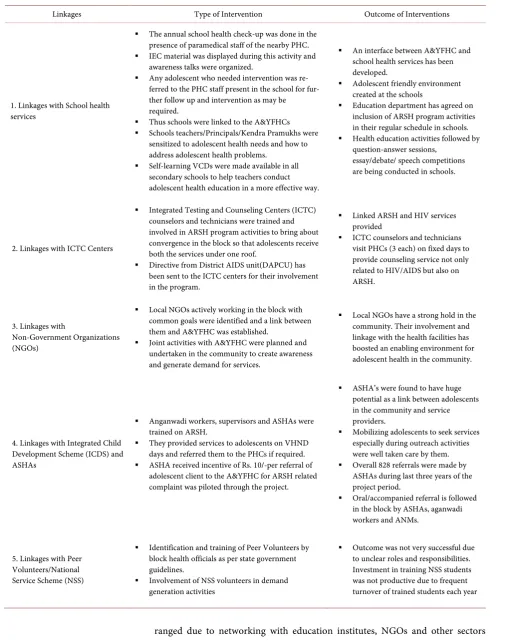
3) Developing inter- and intra-sectoral linkages (Table 2):
The study also attempted to link ARSH services with the existing HIV (Hu-man Immuno Deficiency Virus) services. Official permissions were obtained to permit counselor and lab technician of Sub-district and rural hospital to assist in providing ARSH services at PHC level.
Folic Acid Supplementation) program at school level was also linked with the ARSH services and teachers were encouraged to refer any students who were non-compliant or reported any health problems. Trained ASHAs were paid cash incentive of Rs. 10/- for every referred case to the clinic or during camps in the last phase of the project in consultation with the state government.
Peer volunteers were selected from the NSS cadets at different colleges as well as from the community. They were sensitized and were given an agenda to ad-vocate adolescent issues in their respective villages and refer clients to the A& YFHCs.
4) Monitoring and Evaluation:
Quarterly meetings with the state, district and block officials for health, Inte-grated Child Development Services (ICDS) and Education departments were held to review the progress. For each health facility progress towards achieving the targets were discussed and challenges faced and problems solved were pre-sented. This exercise helped to identify problems and plan corrective interven-tions. Assessment of quality of services against the seven standards as laid down in the ARSH Implementation Guide were carried out every year at each A&YFHC using Quality Assessment tools developed by WHO.
3. Results
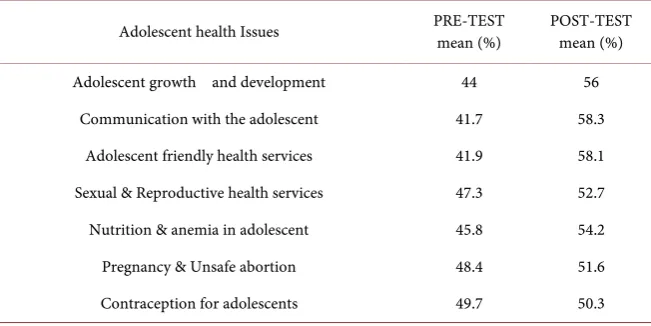
Training health care providers led to significant improvements in their know-ledge, attitude on adolescent problems and their approach of dealing them (Table 3). Issues like contraception to be provided to unmarried adolescents or coun-seling on masturbation were challenging issues to convince providers mainly the grass root functionaries as it questioned their own beliefs and social norms. The community based activities enabled creation of an adolescent friendly environ-ment leading to increased attendance of adolescents at the A&YFHCs. MIS helped to record age and sex disaggregated information on adolescent-specific problems.
Quarterly intersectoral meetings encouraged good practices and sensitive is-sues dealt in adolescent friendly manner were discussed. Problems that needed intervention by the district and state level officials were identified and actions were taken to pursue the same with respective departments. Based on the flow of clients to the clinic, the once a week clinic was modified to any day clinic ensur-ing adequate time was given to the adolescent clients. Providers were encour-aged to allow anonymous registration if adolescents so demanded to facilitate adolescents access services providing privacy. Providers had constraints to tackle unmarried pregnancies and provide contraceptives to unmarried girls. They were repeatedly asked to refer to the implementation guide which provided guidance regarding ARSH services to adolescents.
Table 2. Interventions to facilitate intra and inter-sectoral linkages and its outcome.
Linkages Type of Intervention Outcome of Interventions
1. Linkages with School health services
The annual school health check-up was done in the
presence of paramedical staff of the nearby PHC.
IEC material was displayed during this activity and
awareness talks were organized.
Any adolescent who needed intervention was
re-ferred to the PHC staff present in the school for fur-ther follow up and intervention as may be required.
Thus schools were linked to the A&YFHCs Schools teachers/Principals/Kendra Pramukhs were
sensitized to adolescent health needs and how to address adolescent health problems.
Self-learning VCDs were made available in all
secondary schools to help teachers conduct adolescent health education in a more effective way.
An interface between A&YFHC and
school health services has been developed.
Adolescent friendly environment
created at the schools
Education department has agreed on
inclusion of ARSH program activities in their regular schedule in schools.
Health education activities followed by
question-answer sessions, essay/debate/ speech competitions are being conducted in schools.
2. Linkages with ICTC Centers
Integrated Testing and Counseling Centers (ICTC)
counselors and technicians were trained and involved in ARSH program activities to bring about convergence in the block so that adolescents receive both the services under one roof.
Directive from District AIDS unit(DAPCU) has
been sent to the ICTC centers for their involvement in the program.
Linked ARSH and HIV services provided
ICTC counselors and technicians
visit PHCs (3 each) on fixed days to provide counseling service not only related to HIV/AIDS but also on ARSH.
3. Linkages with
Non-Government Organizations (NGOs)
Local NGOs actively working in the block with
common goals were identified and a link between them and A&YFHC was established.
Joint activities with A&YFHC were planned and undertaken in the community to create awareness and generate demand for services.
Local NGOs have a strong hold in the
community. Their involvement and linkage with the health facilities has boosted an enabling environment for adolescent health in the community.
4. Linkages with Integrated Child Development Scheme (ICDS) and ASHAs
Anganwadi workers, supervisors and ASHAs were trained on ARSH.
They provided services to adolescents on VHND days and referred them to the PHCs if required.
ASHA received incentive of Rs. 10/-per referral of adolescent client to the A&YFHC for ARSH related complaint was piloted through the project.
ASHA’s were found to have huge
potential as a link between adolescents in the community and service providers.
Mobilizing adolescents to seek services
especially during outreach activities were well taken care by them.
Overall 828 referrals were made by ASHAs during last three years of the project period.
Oral/accompanied referral is followed
in the block by ASHAs, aganwadi workers and ANMs.
5. Linkages with Peer Volunteers/National Service Scheme (NSS)
Identification and training of Peer Volunteers by block health officials as per state government guidelines.
Involvement of NSS volunteers in demand
generation activities
Outcome was not very successful due to unclear roles and responsibilities. Investment in training NSS students was not productive due to frequent turnover of trained students each year
Table 3. Improvement in knowledge about ARSH issues among paramedical staff post training ie after 3 days (correct response) n = 133.
Adolescent health Issues PRE-TEST mean (%) POST-TEST mean (%)
Adolescent growth and development 44 56
Communication with the adolescent 41.7 58.3
Adolescent friendly health services 41.9 58.1
Sexual & Reproductive health services 47.3 52.7
Nutrition & anemia in adolescent 45.8 54.2
Pregnancy & Unsafe abortion 48.4 51.6
Contraception for adolescents 49.7 50.3
Quality Assessment reflected an increased overall composite score for all sev-en standards from 28 at baseline to 81 at the sev-end of four years signifying that the standards for adolescent friendliness were achieved.
There was a steady increase in the attendance of girls and boys seeking pre-ventive and curative services for a number of reproductive health issues (Table 4). These belonged to mainly rural and tribal areas both school and non-school going. The MIS of the health system does not capture details of the socio-de- mographic characteristics. However they were all local residents availing services. Seeking answers on adolescent growing-up issues was the most common reason to approach Adolescent Friendly Health Centers (A&YFHC) along with men-strual problems among girls, nutrition related issues, reproductive tract infec-tions and skin disorders. They were also offered immunization (booster dose DT at 10 years) and screening for sickle cell anemia mainly at the tribal health cen-ters. Among the 10 - 19 year old clients, approximately 80% of adolescents were unmarried and this was exactly opposite among the 20 - 24 year olds where ma-jority of girls were married.
4. Contribution to State-Wide Scaling up of A&YFHCs
Table 4. Presenting complaints by 23,570 adolescents and young people during utiliza-tion of services.
(April 2010-March 2014)
Problems
10 - 19 yrs. 20 - 24 yrs.
2011-2014 2011-2014
Male Female Male Female
Menstrual problems 0 1896 0 823
ANC (Antenatal Care) 0 560 0 6283
PNC (Post natal Care) 0 5 0 14
Skin problems 535 677 108 101
RTI/STI (Reproductive Tract Infections and Sexually Transmitted
Infections)
110 248 38 198
Nutritional disorders* 534 2790 216 875
Growing up concerns** 676 1522 80 142
Immunization 529 374 41 20
Counseling 272 415 78 131
Family planning
acceptors 0 2 19 281
MTP 0 3 0 81
Screening for Sickle cell 212 337 35 102
HIV/AIDS 2 5 24 12
Others 317 233 21 30
*Nutritional concerns-Anemia, underweight, Vitamin deficiency etc. **Growing up Concerns such as height weight, body image, breast development, sexual attraction, acne, masturbation etc.
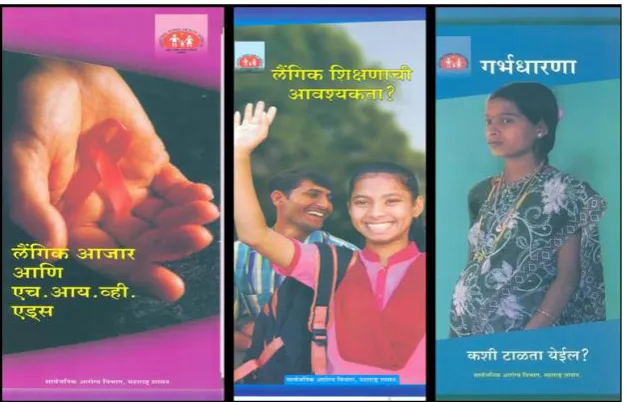
Image 2. Information Education material on adolescent reproductive health issues
in local language of the study site (Marathi).
programme in the State. At the end of the project, the eight A&YFHCs have been sustained through the budget provision made by the state health depart-ment in their annual program impledepart-mentation plan.
5. Discussion
This study in collaboration with Government of Maharashtra was piloted to test integration of adolescent friendly health services within the public health system at primary health care level in a block at a time when ARSH services in the state of Maharashtra were available only up to the district and sub district hospital level.
The study succeeded in identifying the strengths and weakness of health sys-tem as to what interventions can health syssys-tem undertake on its own and which interventions need collaboration and linkages with other programmes and insti-tutions. Successful interventions were: Community activities to create enabling environment for adolescent health; strengthening of existing health facilities to develop A&YFHCs based on the Implementation Guide for Adolescent Repro-ductive and Sexual Health; involvement of ASHAs for mobilizing adolescent clients in the community by providing incentives; establishing linkages of the A&YFHCs with school health services; integration with HIV services; and net-working with local NGOs. Attendance by adolescents in the A&YFHCs progres-sively improved over time presenting with a broad range of problems to very sensitive and private issues like sexual health. We observed that special efforts are needed to attract male clients to these A&YFHCs through targeted outreach activities. SOPs for establishing linkages between several existing services and different programs were found effective and shared with the State and district officials. Creating an enabling environment in the community facilitated im-proved utilization of services satisfying the key indicator of quality of care [8].
health checkups inclusive of reproductive health with good referral linkage to A&YFHC.
Most programs for adolescents evaluate the clinic service uptake. This seems to be a poor indicator especially when the services are rolled out at the commu-nity level with involvement of sub-centers and PHCs. Most adolescents are a healthy group and do not have many health problems. We cannot expect huge numbers crowding our Out Patient Departments. Through outreach programs preventive and promotive services are provided which in itself is an important service component. Equipping them with appropriate information to reduce risky behaviour and promoting healthy lifestyle remains the major element of the outreach program. The issues addressed in these activities and change in knowledge and attitudes of these young people after attending these activities are unaccounted for in the routine MIS.
The data from few intervention studies published earlier illustrate that ado-lescents typically seek multiple services at any one visit, with counselling being the most popular service, followed by medical examination [14]. Each client re- ceives separate services but is treated as a single client thus reflecting limited at-tendance at the health facility. Boys and girls reported similar problems as that from urban areas [15]. For a broad based programme, it is important to measure impact of these interventions on key indicators such as age at marriage, age at first birth, ANC and reduction in maternal and infant morbidities and mortali-ties along with reduction in incidence of sexually transmitted infections. How-ever, this was the limitation of the study due to its short period of observation which helped measure only output and not these important outcomes. Moni-toring the impact of ARSH program is difficult through routine HMIS, as age segregated data on indicators of maternal health; RTI/STI and contraception are not available.
With the increased urbanization and delay in age of marriage the young people beyond 19 years also form a vulnerable group. Hence expanding the age- group of adolescents from 10 - 19 to 10 - 24 years could help bring a larger pop-ulation under the program as seen in the study. Policy issues regarding impart-ing sexuality education in schools, anonymous registration, issues of privacy and confidentiality, tackling of unmarried pregnancy, providing contraceptives to unmarried girls etc. should be clarified further so that such services could be de-livered effectively to adolescents.
be-ing very holistic, the skills of the providers for improved coordination to roll out this program become extremely crucial.
Collaboration and networking are key strategies to improve adolescents’ access to services supported by a favorable adolescent friendly atmosphere both in the community as well as health facility by trained sensitive providers. Regular monitoring of activities and maintaining records in the form of MIS is crucial to identify gaps and introduce strategies to address them. Refresher training of health providers is very essential to address their concerns when they start pro-viding adolescent services. The research agency facilitated testing strategies to strengthen the health system to address the adolescent sexual and reproductive health issues and documenting the outcomes. There is a need to network with organized and unorganized sectors such as education, ICDS, NGOs working in the field of adolescent health and development to work as a team and address the multifaceted needs of the adolescents. Such a strategy will be crucial while im-plementing the recently launched Rashtriya Kishor Swasthya Karyakaram (RKSK) the new national adolescent health programme in India.
Acknowledgements
We wish to acknowledge the financial support received from World Health Or-ganization (WHO) for first year and Government of Maharashtra for three con-secutive years. We duly acknowledge the technical support provided by Dr. Neena Raina and Dr. Arvind Mathur at World Health Organization (WHO) South East Asia Regional Office (SEARO), New Delhi and the administrative support provided by all the Additional Directors’ I/C of adolescent health in the state government and their offices during the study period namely Dr. Ashok Chitale, Dr. Smita Ganu. We also wish to acknowledge the support leant by Dis-trict health authorities Raigad and the Taluka Health Officers’ and their staff for facilitating conduct of the research study. Integrated Child Development Servic-es(ICDS),District AIDS Prevention Control Unit (DAPCU) and School health officials in the block deserve a special mention. The entire cadre of health pro-viders from Medical Officers to Accredited Social Health Activists (ASHA) were part of the team who actually implemented the work at ground zero. The inde-pendent team of researchers who facilitated conduct of the quality assessment also deserve a special mention. Non-Government Organization (NGOs) and a number of other support persons and organizations who contributed in their respective capacities during the conduct of various activities are also acknowl-edged. We acknowledge the CDs (documentaries) on sexuality education devel-oped and shared by Marathi Vigyan Parishad, Mumbai and the school and col-lege teachers and students who participated in training sessions and organized students’ awareness programs. We also thank the Director and the research team from NIRRH and all the adolescents who supported in this activity.
References
[2] ARSH Strategy Government of India (2004).
[3] Implementation Guide National Rural Health Mission (2006) Implementation Guide on RCH II Adolescent Reproductive Sexual Health Strategy for State and District Programme Managers.
http://www.searo.who.int/entity/child_adolescent/topics/adolescent_health/rch_asr h_india.pdf
[4] Ambresin, A.E., Bennett, K., Patton, G.C., Sanci, L. and Sawyer, S.M. (2013) As-sessment of Youth-Friendly Health Care: A Systematic Review of Indicators Drawn from Young People’s Perspectives. Journal of Adolescent Health, 52, 670-681. [5] Quality Assessment Guidebook (2009) A Guide to Assessing Health Services for
Adolescent Clients. WHO.
[6] Adolescent Job Aid World Health Organization (2010) WHO Production Services, Geneva.
[7] ARSH Training Modules Orientation Programme for MOS, ANMs/LHVs to Pro-vide Adolescent Friendly Reproductive and Sexual Health Services Govt of India. [8] Mehra, S., Sogarwal, R., Nair, V., Mahasweta, S., Tiwari, R. and Dwivedi, K. (2013)
Determinants of Youth Friendly Services Influencing Client Satisfaction: A Study of Client’s Perspectives in India. Indian Journal of Public Health Research & Devel-opment, 4, 221-226.
[9] Yadav, R.J., Mehta, R., Pandey, A. and Adhikari, T. (2009) Evaluation of Adoles-cent-Friendly Health Services in India. Health and Population Perspectives,32, 66- 72.
[10] Sogarwal, R., Chandra, M. and Mehra, S. (2013) Youth Friendly Health Services and Role of Outreach Activities to Improve Access to Services. Open Journal of Preven-tive Medicine, 3, 191-198.
[11] Gupta, M., Ramani, K.V. and Werner, S. (2012) Adolescent Health in India: Still at Crossroads. Advances in Applied Sociology, 2, 320-324.
https://doi.org/10.4236/aasoci.2012.24042
[12] Kumar, R., Prinja, S. and Lakshmi, P.V.M. (2008) Health Care Seeking Behavior of Adolescents: Comparative Study of Two Service Delivery Models. The Indian Jour-nal of Pediatrics, 75, 895-899. https://doi.org/10.1007/s12098-008-0098-2
[13] Joshi, B., Chauhan, S., Bhadoria, V., Varsha, T. and Neelawanti, G. (2006) Repro-ductive Health Problems and Help Seeking Behaviour among Adolescents in Urban India. Indian Journal of Pediatrics, 73, 509-513.
[14] Mehra, S., Sogarwal, R. and Chandra, M. (2013) Integrating Adolescent-Friendly Health Services into the Public Health System: An Experience from Rural India.
WHO South-East Asia Journal of Public Health, 2, 165-173.
[15] Joshi, B., Chauhan, S., Ghule, M. and Kulkarni, R. (2009) Developing Service Deli-very Models for Providing Adolescent Reproductive and Sexual Health Services: NIRRH Experiences. In: Ashwini, B.-G. and Parag, B., Eds., Gynecological Manual on Adolescent Girls and Young Women, FOGSI Publication, Jaypee Publishers, New Delhi, 401-421.
[16] Chandra, M.V., Lane, C. and Wong, S. (2015) What Does Not Work in Adolescent Sexual and Reproductive Health: A Review of Evidence on Interventions Common-ly Accepted as Best Practices. Global Health: Science and Practice, 3, 333-340.
https://doi.org/10.9745/GHSP-D-15-00126
Submit or recommend next manuscript to SCIRP and we will provide best service for you:
Accepting pre-submission inquiries through Email, Facebook, LinkedIn, Twitter, etc. A wide selection of journals (inclusive of 9 subjects, more than 200 journals)
Providing 24-hour high-quality service User-friendly online submission system Fair and swift peer-review system
Efficient typesetting and proofreading procedure
Display of the result of downloads and visits, as well as the number of cited articles Maximum dissemination of your research work