International Journal of Emerging Technology and Advanced Engineering
Website: www.ijetae.com (ISSN 2250-2459,ISO 9001:2008 Certified Journal, Volume 4, Issue 3, March 2014)
117
Soft Computing Techniques for the Optimization of Machining
Parameter in CNC Turning Operation
S. K. Saini
1, S. K. Pradhan
21
M.E. Student, Mechanical Engineering Department, NITTTR Bhopal-462002, INDIA
2Associate Professor and Head of Department, Mechanical Engineering Department, NITTTR Bhopal-462002, INDIA
Abstract— Due to global competition in manufacturing
industries scenario the conventional machining processes have been replaced by advanced non conventional machining process. Several advanced non-conventional machine tools are available specifically computer numerical control (CNC) turning is the major used machine tool in metal based industries. Now days, due to the increasing demand of the higher precision components for its functional aspect, surface roughness of a machined part plays an important role in the modern manufacturing process. To get the minimum surface roughness various turning parameter like cutting speed, depth of cut, feed rate, metal removal rate (MRR) and tool geometry etc. are required among all these parameter optimal parameter are determined by using various optimization techniques. Productivity as well as quality both has a similar impact on final product. This paper describes various optimization studies and the literature review for the influence of CNC turning parameter on surface roughness as well as other response variables.
Keywords— Turning machining parameter, Optimization
techniques, CNC machine tool.
I. INTRODUCTION
The automation of machine tool industry witnessed a revolution in 1949, by the Development of CNC. Presently most conventional machine tool has been replaced by CNC machine tool where all movements of the machine tools are programmed and controlled electronically rather than by the conventional means. Among the metal cutting methods, turning is one of the widely used manufacturing processes in industry in which a single point cutting tool removes unwanted material from the surface of a rotating cylindrical work piece. The cutting tool is fed linearly in a direction parallel to the axis of rotation. In addition to tool and work piece material, cutting speed (v), feed rate (f), depth of cut (d) are most important cutting parameters which highly affect the performance characteristics.
It is necessary to select the most appropriate cutting parameters and cutting tools in order to improve cutting efficiency, process at low-cost and produce high quality products. To get optimum turning process parameter soft computing techniques are required. In present many optimization techniques are available but only few have been used for CNC turning process parameter. This paper brings to the forefront the work done in this area, the techniques used along with the results established.
II. OPTIMIZATION ISSUES IN RELATED TO TURNING
OPERATION
A Work Piece Materials- The materials used for the
optimization of CNC turning process parameters are Al/SiC-MMC, Aluminum rod, Glass fiber reinforced plastics (GFRP), cylindrical bar of AISI 1080 steel, Ti-6Al-4V alloy, AISI 1040 carbon steel, S45C, semi-crystalline thermoplastic polyethylene (PE), EN 24 medium alloy steel, Al 6063 with 10% silicon carbide metal matrix composites, AISI 52100 steel, Red mud-based aluminum metal matrix composites, 6061 aluminum, Inconel 718, Martensitic stainless steel (SS40) steel.
B Tool Materials- The tool materials that have been
used for the optimization of CNC turning process parameters are T-max-U positive rhombic insert (uncoated tungsten carbide WC), CERMET cutting tool, HSS single point cutting tool, CNMG 120408-883 inserts, cemented carbide (K20), CNMG 120408-883 inserts, Mitsubishi NX2525 insert, C type negative, Multilayer coated inserts CNMG 120404, inserts VCGX16 04 04-AL (H10), Ti-N coated tungsten carbide inserts, Mixed ceramic (AL2 O3 +
TiC) inserts, Coated carbide tool inserts M30, Ti-Al-N-coated tungsten carbide.
C Input Parameters- The input process parameters that
International Journal of Emerging Technology and Advanced Engineering
Website: www.ijetae.com (ISSN 2250-2459,ISO 9001:2008 Certified Journal, Volume 4, Issue 3, March 2014)
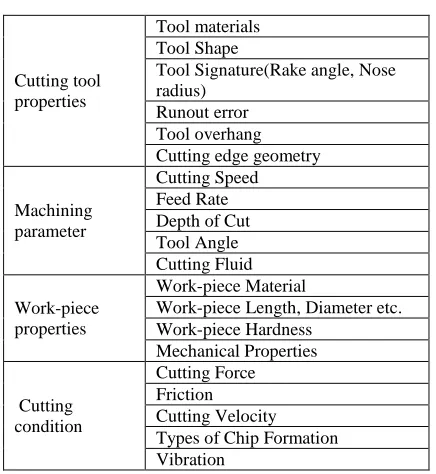
[image:2.612.60.278.151.388.2]118 TABLE I
INFLUENCING PARAMETERS
Cutting tool properties
Tool materials Tool Shape
Tool Signature(Rake angle, Nose radius)
Runout error Tool overhang Cutting edge geometry
Machining parameter
Cutting Speed Feed Rate Depth of Cut Tool Angle Cutting Fluid Work-piece
properties
Work-piece Material
Work-piece Length, Diameter etc. Work-piece Hardness
Mechanical Properties
Cutting condition
Cutting Force Friction Cutting Velocity Types of Chip Formation Vibration
D Performance Parameters (Response Variable)- The
following performance parameter (surface roughness, Tool wear rate, Flank wear, Crater wear, Tool life, cutting time, total cost, power consumption and vibration, Material removal rate) those are depend on independent process parameter.
III. BRIEF INTRODUCTION OF SOFT COMPUTING
TECHNIQUES
A Taguchi Method
Taguchi method is the best selection which was developed by Taguchi itself in the year 1980. First Taguchi implemented to improve the poor communication system in Japan after Second World War. Taguchi method is performed on the statistical principles which include- (a) A specific loss function, (b) Offline quality control, (c) Innovation in the design of experiments. It gives the
consistent, efficient and easy to understandable
optimization results with respect to performance, quality and cost. The taguchi method is an experimental design technique which provides a simple way to design an efficient, systematic approach for the optimization of experimental design and performance quality as well as cost effective experiment. Using this method efficiently reduces the number of conventional experimental tasks.
The performance measure signal-to-noise proposed by taguchi is used to obtain the optimal parameter combinations.
B Artificial Neural Network (ANN)
Simple neural network had been proposed in 1943 by Warren McCulloch and Walter Pitts. ANN is an intelligent technique, which mimics the functioning of a human brain and biological neural system i.e. living brain was a model for ANN to solve highly complex problems. It simulates human intuition in making decision and drawing conclusions when presented with complex, noisy, irrelevant and partial information. ANN result is more effective than conventional method and also extensively used in Mechanical Engineering applications. By using these techniques human efforts and time can be reduced.
C Genetic Algorithm (GA)
Pioneered by John Holland in the 1970’s and idea came from Darwinian evolution [David Hales]. Genetic algorithm can be used to solve a variety of problems that are not easy to solve by using other techniques. For understanding purpose there are some biological term which is used like gene, chromosome, mutation, and crossover. Each cell of a living thing contains
chromosomes - strings of DNA ,each chromosome contains
a set of genes - blocks of DNA, each gene determines some aspect of the organism (like eye colour),a collection of genes is called a genotype ,a collection of aspects (like eye colour) is called a phenotype, reproduction involves recombination of genes from parents and then small amounts of mutation (errors) in copying ,the fitness of an organism is how much it can reproduce before it dies, evolution based on “survival of the fittest”.
D Fuzzy Logic
International Journal of Emerging Technology and Advanced Engineering
Website: www.ijetae.com (ISSN 2250-2459,ISO 9001:2008 Certified Journal, Volume 4, Issue 3, March 2014)
119 E Simulated Annealing
This technique was motivated from the Annealing in Metals. In 1958, a Monte Carlo technique based simple algorithm was introduced by Metropolis et al. Later simulated annealing has been used for combinatorial problem in 1985-1986 by Kirkpatrick et al. and Cerny et al. Simulated annealing is an optimization tool dealing with the highly non linear models and it has been used for discrete optimization and continuous variable problem.
IV. APPLICATION OF SOFT COMPUTING TECHNIQUES IN
TURNING OPERATION
A Taguchi Method
A.Manna. B. Bhattacharyya (2004) [2] have worked on turning of Al/SiC-MMC using a fixed rhombic tooling system. The different set of experiments was performed using a Kirloskar centre Lathe with T-max-U positive rhombic insert (uncoated tungsten carbide WC). Analysis of variance (ANOVA), F-test was used for optimizing the machining parameters (cutting speed, feed rate and depth of cut) for dependent variables (surface roughness heights Ra
and Rt). The experimental results show two vital facts, the
first one is average surface roughness heights Ra and Rt are
low at high cutting speed and comparatively high at low cutting speed. The Second is the effect of feed on the average surface roughness heights Ra and Rt are low at low
feed and average surface roughness heights Ra and Rt are
low at higher depth of cut.
E. Daniel Kirby et al. (2006) [3] conducted experiment on aluminum rod using CNC lathe and determined the optimal turning operation parameters for surface finish under varying conditions using the Taguchi method. This method was applied using a specific set of control (spindle speed, feed rate, depth of cut and tool nose radius) and noise parameters (tool number and temperature range) and a response variable of surface roughness. And found that the control factor has varying effects on the responsible variable, with feed rate and tool nose radius having the highest effects; on the other hand the noise factor does not have any noticeable effect. Concluded the use of the Taguchi Parameter Design Techniques was considered successful as an efficient method to optimize surface roughness in turning operation.
Birhan Isik (2008) [7] has worked on the turning operation on glass fiber reinforced plastics (GFRP) on CNC turning machine with CERMET cutting tool. Cutting parameters (depth of cut, feed rate, tool geometry and cutting speed) and the resulting cutting forces have great effects on the machinability surface roughness of unidirectional glass-fiber reinforced plastic composite.
Result shows that the surface roughness decreases with the increase of cutting speed. The surface roughness decreases with the increase of tool radius and cutting speed. The surface roughness increases with the increase of rake angle and feed rate. An increase of the cutting depth does not have an important effect on the surface roughness.
Suresh Dhiman et al (2008) [8] have done experiments on a cylindrical bar of AISI 1080 steel on Lathe machine tool by HSS single point cutting tool without using any coolant. Samples were prepared on polishing machine using different grades of empery paper and final polishing was done on cloth with abrasive alumina powder. Study the machining and non-machining characteristics of AISI 1018 steel. AISI 1018 steels find many applications in manufacturing of axles, bolts, shafts, machinery parts, gears, pinions, worms, kingpins and ratchets. The study result shows among cutting parameters affecting machining variables (tool tip temperature, SR and cutting force) for AISI 1018 steel, speed has maximum effect and depth of cut has minimum effect. Tool tip temperature increases with increase in cutting speed. At high speed surface finish is least affected. The Surface finish deteriorates at high feed rates hence to obtain good surface finish feed rate may be kept low. At low speeds cutting forces are high and tendency of work material to form a built up edge is also stronger. Feed and depth of cut have large effect on surface roughness.
S. Arvindan et al (2008) [9] have done turning on advance composite material glass fiber reinforced plastic (GFRP) using CNC lathe with cemented carbide (K20) cutting tool. Machining characteristics are investigated based on response variable (flank wear, crater wear and surface roughness). The machining parameter (cutting velocity, feed rate and depth of cut) is optimized by employing statistical techniques of analysis of variance (ANOVA) obtained from regression analysis. Turning experiments were planned based on Taguchi design of experiments. The application of Taguchi design of experiments (DOE) methodology improves the flank wear, crater wear and surface roughness.
Ahmet Hascalik, Ulas Caydas (2008) [10] have
performed turning operation on commercial Ti-6Al-4V
International Journal of Emerging Technology and Advanced Engineering
Website: www.ijetae.com (ISSN 2250-2459,ISO 9001:2008 Certified Journal, Volume 4, Issue 3, March 2014)
120 Based on the ANOVA, the relative importance of the machining parameters with respect to dependent variable was investigated to determine more accurately the optimum combination of the machining parameters and the highly effective parameters on both the surface roughness and tool life were determined i.e. the feed rate is the main factor that has the highest importance on the surface roughness. The cutting speed does not have much influence on the surface roughness. The tool life is affected strongly by the cutting speed, whereas the feed rate and depth of cut have a significant statistical influence.
M. Munawar et al. (2009) [13] in an experiment carried out on AISI 1040 carbon steel bar using CNC lathe machine with C type negative, multilayer coated inserts CNMG 120404. Optimized the independent variables like machine tool condition (vibration amplitude) feed rate and insert nose radius for better surface roughness using Taguchi and ANOVA method. Optimized result shows that vibration amplitude and feed rate has moderate effect on the surface roughness and insert nose radius had the highest significant effect on the surface roughness. It was also found that a machine tool with low vibration amplitude produced better surface roughness and insert with larger nose radius produced better surface roughness at low feed rate.
Turning operation of S45C on an ECOCA-CNC lathe with Mitsubishi NX2525 insert was done by Tian-Syung Lan, Ming-Yang Wang[11]. They investigated the influence of turning process parameters (speed, cutting depth, and feed rate and tool nose runoff) on independent objectives (surface roughness and tool wear ratio) for developing two combinations of optimum single-objective cutting parameters using competitive Taguchi Method. It is observed that the surface roughness under optimum competitive parameters is decreasing. However, the Tool Wear Ratio and MRR are greatly increased.
Dr. E. Daniel Kirby (2010) [14] investigated into optimizing a quality characteristic, while considering productivity, through the use of taguchi parameter designs. Optimized the turning process parameters (feed rate, spindle speed and depth of cut) and noise factor (tool insert, tool manufacture) for the response factor (surface roughness) using the Taguchi method. It was found that the feed rate and spindle speed had significant effects on surface roughness, while depth of cut had an insignificant effect and noise factors were not found to be statistically significant. The feed rate and spindle speed become avenues for future studies. Taguchi parameter design can be used to determine the optimal levels of controlled parameters to meet a quality target without sacrificing productivity.
H. H. Shahabi. M. M. Ratnam (2010) [15] has done comparative study on (AISI 304 alloy steel bar using conventional lathe machine tool with cemented carbide tool) using two approach one is response surface methodology and another is machine vision approach. This study has done on simulated model and real work piece and compares these results. The effect of input parameter (machining time, feed rate, cutting speed and depth of cut) on output parameters (surface roughness and dimensional deviation) using above stated approach. 2-D image of cutting tools were used to generate simulated work pieces from which surface roughness and dimensional deviation data were determined. The result of this study shows the minor difference between real experiment and the simulated model. This error occur due to the lathe machine inaccuracy and instability
R. S. Pawade , Suhas S. Joshi (2011) [18] have conducted turning operation on Inconel 718 using CNC lathe with cubic boron nitride (CBN). A coupled approach taguchi grey relational analysis (TGRA) has been employed for optimum turning process parameters. Grey relational analysis used for convert the multi-performance characteristics into single performance characteristics. The effect of independent parameters (cutting speed, feed, depth of cut and edge geometry) on response factors (Cutting force, feed force, radial force and surface roughness) have been analyzed using TGRA and identified the significant process parameters using ANOVA method. In this study result shows that feed rate have most significant for Response factors.
D. Lazarevic et al. (2012) [23] conducted experiment on semi-crystalline thermoplastic polyethylene (PE) using universal lathe machine with inserts VCGX16 04 04-AL (H10) and done optimization of the turning process parameters (cutting speed, feed rate, depth of cut and tool nose radius) for the performance parameter (surface roughness) using Taguchi method and experimental result was analyzed with the help of analysis of means (ANOM) and analysis of variance (ANOVA).Study reveals that with ANOM derive alone is possible optimum combination of the turning process parameters with respect to average surface roughness. The purpose of the ANOVA is to investigate which cutting parameters significantly affect the surface quality characteristics. Optimized result shows that the feed rate is the most significant parameter, followed by tool nose radius and cutting speed, whereas the influence of depth of cut is negligible.
International Journal of Emerging Technology and Advanced Engineering
Website: www.ijetae.com (ISSN 2250-2459,ISO 9001:2008 Certified Journal, Volume 4, Issue 3, March 2014)
121 To optimize the effect of turning process parameters (speed, feed, depth of cut, nose radius and cutting environment) for minimum surface roughness and maximum material removal rate used the Taguchi method and experimental data is analyzed using Minitab 16 statistical software. Optimized results show that ANOVA suggests the nose radius is the most significant factor and cutting environment is most insignificant factor for both surface roughness and MRR.
M. Sureshkumar et al. (2013) [28] did an experimental study on AL 6063 with 10% silicon carbide metal matrix composites using CNC lathe and optimized the turning process parameters ( cutting speed, feed rate and depth of cut ) for the performance characteristics (surface roughness) using analysis of variance (ANOVA) and Taguchi method . ANOVA is used to study the effect of process parameters on the machining process. Experimental results were collected and analyzed with the help of the MINITAB 16 software and also using the same software the regression model has been developed for the experiment. Optimized result shows that cutting speed has a greater influence on the surface roughness followed by feed and depth of cut had least influence on the surface roughness.
P. Shanmughasundaram et al (2013) [33] did an experimental investigation on the surface roughness of pure
commercial Al-fly ash/ graphite composites using CNC
lathe with multilayered coated carbide tool insert. The effect of independent parameter (cutting speed, feed rate and depth of cut) on the response factor (surface roughness) has optimized using Taguchi and ANOVA approach. Concluded the feed rate has the highest influence on surface roughness in machining of same composite followed by cutting speed and depth of cut. Also in the presence of fly ash particles reduces the surface roughness of composites compared with pure Al.
K. Chandrasekaran (2013) [31] has conducted turning operation on AISI 410 stainless steel using CNC Lathe with three type of cutting inserts. Analysis of variance ANOVA has been employed for identifying the optimum machining parameters (speed, feed and depth and cut) on multi-response parameter (surface roughness). Based on ANOVA two result shows (a) the feed rate and cutting speed are the significant cutting parameter when using Ti(C, N, and B) and (Ti, Al0 N. (b) feed rate and depth of cut are the significant cutting parameter when using TiCN + Al2O3.
B. Satyanaryana et al (2013) [29] have conducted machining on nickel based super alloy Inconel 718 using CNC lathe in dry condition with uncoated cemented carbide tool insert.
A coupled approach (Taguchi method based grey relational) has been used for obtaining the optimum turning process parameters and for analysis the effect of control factor (cutting speed, feed and depth of cut) on multi response factor (Cutting force, Tool flank wear and surface roughness). This approach directly converts the multi-response into single multi-response characteristics called as grey relational grade. Based on this approach feed rate is more significant compared to depth of cut and cutting speed.
B Principal Component Analysis
A. P. Paiva et al (2009) [12] have performed turning operation on AISI 52100 steel using CNC lathe with mixed ceramic (AL2 O3 + TiC) inserts. Optimize the multiple
process characteristics (cutting speed, feed rate and depth of cut) for the multiobjective parameter (Tool life, cutting time, total cost, material removal rate and surface roughness) without considering the variance-covariance structure among the response. Use the combined principal component analysis (PCA) with response surface methodology (RSM). The optimization is based on the concept of multivariate mean square error (MMSE). He concluded that two set of PCA components are used, first principle component was responsible for most of the variance-covariance present in the original data associated with the tool life, cutting time, total machining cost, total turning cycle time and material removal rate. The second principle component was used as an alternative to improve the explanation of the surface roughness behavior of the machined part. The result indicates that RSM combined with PCA is a very useful technique to model and to create equations for forecasting and optimizing, using the fewest experiments possible.
S. Rajesh et al. (2013) [30] analyzed experimental investigation on red mud-based aluminum metal matrix composites using CNC turning machine under dry condition and optimizing the machining parameters (cutting speed, feed, depth of cut and nose radius) for three performance characteristics ( surface roughness, power consumption and vibration) using coupled techniques such as grey-based taguchi method and principle component analysis. The principle component analysis used to determine the corresponding weighting values of each performance characteristics while applying grey relational analysis to a problem with multiple performance characteristics, is proven to be capable of objectively reflecting the relative importance for each performance
characteristics. This coupled technique convert
International Journal of Emerging Technology and Advanced Engineering
Website: www.ijetae.com (ISSN 2250-2459,ISO 9001:2008 Certified Journal, Volume 4, Issue 3, March 2014)
122 C Neural Network
Julie Z. Zang et al (2007) [6] have evaluated the turning operation on 6061 aluminum using CNC lathe. A full factorial design is used in the experimental design. An In-Process Surface Roughness Adaptive Control (ISRAC) System has been developed for turning operations. An artificial neural network (ANN) was employed to establish two subsystem: the neural network-based, in-process surface roughness prediction (INNSRP) subsystem and the neural network-based, in-process adaptive parameter control (INNAPC) subsystem. The two sub-systems predicted surface roughness and adapted feed rate using cutting parameters (feed rate, spindle speed and depth of cut) and also vibration signal detected by an accelerometer sensor hence the result shows the vibration signal detected by the accelerometer employed in the proposed system was a good indicator of surface roughness. Feed rate is the most significant factor impacting the surface quality of turned products.
Ulas Caydas, Sami Ekici (2012) [20] have conducted turning operation in dry condition on AISI 304 using Fanuc CNC Lathe machine with cemented carbide inserts. Artificial neural network (ANN) and three type of support vector machines (SVM) (Least square SVM, Spider SVM and SVM-KM) has been used for the optimization of independent parameters (cutting speed, feed rate and depth of cut) for surface roughness. To investigate the performance of ANN a multi layered feed forward neural network with the back-propagation algorithm have employed. In this comparative study SVM computation time was less than the ANN because ANN takes more time for computation. Spider SVM model found most predictive while other two was found less accurate model.
J.S. Senthikumar et al (2012) [26] have performed machining experiment (Turning and Facing) on Inconel 718 using CNC lathe with K 10 type uncoated carbide inserts. The effect of control variables (cutting speed, feed and depth of cut) on multi-response variable (flank wear, surface roughness) has predicted using artificial neural network (ANN) and analysis of variance (ANOVA) techniques. The result of this experimental study shows that feed has the most significant factor on surface roughness in facing operation and low cutting speed, medium depth of cut and low feed are the optimum machining parameter for the turning operation.
I. Asilturk (2012) [25] has conducted turning operation on AISI 1040 steel as a work piece using CNC turning machine with single insert.
The effect of input machining parameters (cutting speed, feed rate, depth of cut and nose radius) on response factor (surface roughness mean and total) using neural network and multiple regression techniques. In Neural network multilayer preceptorn structure of feed forward has used for mathematical modeling. After comparisons of both method found that ANN give more accurate result than multiple regressions and in both feed rate has the most significant factor which affect the surface roughness.
D Genetic Algorithm
A.N. Sait (2010) [17] has conducted turning operation on glass fiber reinforced plastic (GFRP) materials (which made from resin composition of Isophthalic and Vinylester) using CNC lathe with coated carbide tool inserts. The effect of independent process parameter (cutting speed, feed rate and depth of cut) on multi-response variable (surface roughness, machining force and tool wear) has been optimized using conventional (Taguchi method) as well as nonconventional (Genetic algorithm and particle
swarm optimization) optimization techniques. The
investigation shows the performance of PSO was more accurate than others and two important result came (a) lower cutting velocity, moderate feed rate, and moderate depth of cut are the ideal machining conditions for machining hand layup GFRP pipes. (b) moderate cutting velocity, lower feed rate and higher depth of cut was the ideal machining conditioning for machining filament wound GFRP pipes.
K.Saravanakumar et al (2012) [19] have performed experiments of Inconel 718 (Nickel based alloy) on CNC turning lath with Coated Carbide tool inserts M30. Investigate the influence of machining process parameters (cutting speed, feed rate and depth of cut) on the output parameters (material removal rate and surface roughness). Genetic algorithm have used for optimization of CNC turning process parameter and found that parameter effect in decreasing order (speed, feed, depth of cut) on turning of INCONEL718.
International Journal of Emerging Technology and Advanced Engineering
Website: www.ijetae.com (ISSN 2250-2459,ISO 9001:2008 Certified Journal, Volume 4, Issue 3, March 2014)
123 Rasool Mokhtari Homami et al. (2013) [27] conducted experiment on commercial Inconel 718 nickel-based super alloy using CNC lathe with Ti-Al-N-coated tungsten carbide cutting tool prepared by PVD and done optimization of turning process parameter (Cutting velocity, Feed rate, Nose radius, Approach angle, Depth of cut) for two dependent variables such as tool wear and surface roughness using design of experiment (DOE) for full factorial design, statistical analysis for experimental result analysis, artificial neural network (ANN) for system modeling and finally genetic algorithm (GA) for optimization. The applied intelligent techniques results show that feed rate, nose radius and approach angle have a significant effect on the flank wear and the surface roughness, but the cutting velocity has a significant effect on the flank wear alone.
H. Ganesan. G. Mohankumar (2013) [32] has conducted turning operation on EN 8 work piece material using CNC machine tool with CNMG tool tip. Genetic algorithm (Non-dominated sorting genetic algorithm (NSGA-II) has been used for the optimization and find the influence of independent factor (cutting speed, Depth of cut and Feed rate) on response factor (Minimum operating time, minimum production cost and Minimum tool wear).
V. CONCLUSION
The revelations from the past data for over two decades prove that Computer Numerical Controlled (CNC) machine plays an important role in advanced manufacturing industries. Productivity as well as product quality also plays a vital role in competitive manufacturing. After literature review major three factors like cutting speed, depth of cut and feed rate are more responsible for surface roughness because finally that parameter gives the surface quality of CNC turning work-piece. In this situation the selection of optimization method and determination of optimum machining parameter condition is very crucial. Hence this paper provide a package round study about the effect of turning process parameter on surface roughness of CNC turning work-piece and their measurement methods as well as process parameters optimization techniques (Taguchi techniques has been used regularly to optimize the process parameter). The analysis has highlighted certain point:
The table 1 lists out all process parameters that have an influence on surface roughness and other response variables of a CNC turning component.
Genesis of analysis points out that the following techniques have been adopted for optimization of turning process parameter:
Taguchi method
Analysis of variance(ANOVA)
Response surface methodology (RSM)
Multiple regression analysis
Genetic algorithm(GA)
Fuzzy logic
Artificial neural network
REFERENCES
[1] R. Saravanan et al (2003) Machining parameters optimization for turning cylindrical stock into a continuous finished profile using Genetic algorithm and simulated annealing. International Journal Advance Manufacturing Technology 21:1-9.
[2] A.Manna. B. Bhattacharyya (2004) “Investigation for optimal combination for achieving better surface finish during turning of Al/ Sic-MMC”, International Journal Advance Manufacturing Technology, 23:658-665.
[3] E. Daniel Kirby et al. (2006) “Optimization surface finish in a turning operation using the taguchi parameter design method”, International Journal Advance Manufacturing Technology, 30:1021-1029.
[4] Eyup Bagci. Birhan Isik (2006) “Investigation of surface roughness in turning unidirectional GFRP composites by using RS methodology and ANN”, International Journal Advance Manufacturing Technology, 31:10-17.
[5] Yigipt. K. Tugrul. Ozel (2007) “Multiobjective optimization for turning processes using neural network modeling and dynamic-neighborhood particle swarm optimization”, International Journal Advance Manufacturing Technology, 35:234-247.
[6] Julie Z. Zang et al (2007) “The development of an in-process surface roughness adaptive control system in turning operations”, Journal Intelligent Manufacturing, 18:301-311.
[7] Birhan Isik (2008) “Experimental investigations of surface roughness in orthogonal turning of unidirectional glass-fiber reinforced plastic composites”, International Journal Advance Manufacturing Technology, 37:42-48.
[8] Suresh Dhiman et al (2008) “Machining behavior of AISI 1018 steel during turning”, Journal of Scientific & Industrial Research, 67:355-360.
[9] S. Arvindan et al (2008) “A machinability study of GFRP pipes using statistical techniques”, International Journal Advance Manufacturing Technology, 37:1069-1081.
[10] Ahmet Hascalik. Ulas Caydas (2008) “Optimization of turning parameters for surface roughness and tool life based on the Taguchi method”, International Journal Advance Manufacturing Technology, 38:896-903.
[11] Tian-Syung Lan. Ming-Yang Wang (2009) “Competitive parameter optimization of multi-quality CNC turning”, International Journal Advance Manufacturing Technology, 41:820-826.
[12] A. P. paiva et al (2009) “A multivariate mean square error optimization of AISI 52100 hardened steel turning”, International Journal Advance Manufacturing Technology, 43:631-643.
International Journal of Emerging Technology and Advanced Engineering
Website: www.ijetae.com (ISSN 2250-2459,ISO 9001:2008 Certified Journal, Volume 4, Issue 3, March 2014)
124 [14] Dr. E. Daniel Kirby (2010) “Optimizing the turning process toward
an ideal surface roughness target”, Journal of Industrial technology, 26:1-11.
[15] H .H. Shahabi. M. M. Ratnam (2010) “Prediction of surface roughness and dimensional deviation of workpiece in turning: A Machine vision approach”, International Journal Advance Manufacturing Technology, 48:213-226.
[16] Benedikt Sieben et al (2010) “Empirical modeling of hard turning of AISI 6150 steel using design and analysis of computer experiments”, Production Engineering Research Development, 4:115-125. [17] A. N. Sait (2010) “Optimization of machining parameters of GFRP
pipes using evolutionary techniques”, International Journal of precision Engineering and Manufacturing, 11:891-900.
[18] R. S. Pawade et al (2011) “Multi-objective optimization of surface roughness and cutting forces in high-speed turning of Inconel 718 using Taguchi grey relational analysis (TGRA)”, International Journal Advance Manufacturing Technology,56:47-62.
[19] K. Chandrasekaran et al (2012) “Machining performance of TiCN/Al2O3 multilayer and B-Tic nano multilayer coated inserts on martensitic stainless steel in CNC turning”, Springer India 2012. [20] U. Caydas (2012) “Support vector machines models for surface
roughness prediction in CNC turning of AISI 304 austenitic stainless steel”, Journal Intelligent Manufacturing, 23:639-650.
[21] K.saravanakumar et al. (2012) “Optimization of CNC turning process parameter on INCONEL 718 using genetic algorithm”, IRACST-Engineering science and technology: An international journal (ESTIJ), 2:532-537.
[22] Poornima, Sukumar (2012) “Optimization of machining parameter in CNC turning of martensitics stainless steel using RSM and GA”, International journal of modern engineering research (IJMER), 2: 539-542.
[23] D. Lazarevic et al. (2012) “Cutting parameters optimization for surface roughness in turning operation of polyethylene (PE) using Taguchi method”, Tribology in industry, 30:68-73.
[24] M. Korat , N.Agarwal (2012) “Optimization of different machining parameters of En24 alloy steel in CNC turning by use of Taguchi method”, International Journal of Engineering Research and Application, ISSN: 2248-9622.
[25] I. Asilturk (2012) “Predicting surface roughness of hardened AISI 1040 based on cutting parameters using neural networks and multiple regression”, International Journal Advance Manufacturing Technology.
[26] J.S. Senthilkumaar et al (2012) “Intelligent optimization and selection of machining parameters in finish turning and facing of Inconel 718”, International Journal Advance Manufacturing Technology, 58:885-894.
[27] Rasool Mokhtari Homami et al. (2013) “Optimization of turning process using artificial intelligence technology”, International Journal Advance Manufacturing Technology.
[28] M. Sureshkumar et al. (2013) “Surface roughness optimization of metal matrix composite using Taguchi technique”, International Journal of Engineering. Research & Technology, ISSN: 2278-0181. [29] B. Satyanarayana et al (2013) “Optimized high speed turning on
Inconel 718 using Taguchi method based grey relational analysis”, Indian Journal of Engineering & Material Sciences, 20:269-275. [30] S. Rajesh et al (2013) “Multi-response optimization of machining
parameters on red mud-based aluminum metal matrix composites in turning process”, International Journal Advance Manufacturing Technology, 67:811-821.
[31] K. Chandrasekaran (2013) “Machinability study on AISI 410 with different layered inserts in CNC turning during dry conditions”, Indian Journal of Engineering & Materials Sciences, 20:398-404. [32] H. Ganesan. G. Mohankumar (2013) “Optimization of machining
techniques in CNC turning centre using Genetic algorithm”, Arabian Journal Science Engineering, 38:1529-1538.