© 2016, IRJET | Impact Factor value: 4.45 | ISO 9001:2008 Certified Journal
| Page 2396
Comparative Study and Analysis of
GAIT Recognition Methods in the Biometric Systems
Dileep Singh
1, Anisha Soni
21
M.Tech. Scholar, Software Engineering Department,
Rungta College of Engineering & Technology,
Kohka Kurud Road, Bhilai, Chhattisgarh, India
2
Assistant Professor, Computer Science & Engineering Department,
Rungta College of Engineering & Technology,
Kohka Kurud Road, Bhilai, Chhattisgarh, India
---***---Abstract -
Human Gait Recognition (HGR) is one of the main challenging areas of Computer Vision and also main core of Human Behavior Analysis (HBA). Current methodologies that shown robust preliminary results on very simple scenarios. However, these results are still far from human capabilities. Human gait help to achieve the good result by the movement or motion of human. These are some of the factors that surround the individual being identified such as lighting conditions, viewing angle, weather conditions, walking surface ,clothes, shoe types, luggage being carried and soon. The images that have been trained and tested, and thus Feed forward back propagation algorithm is applied, and after that Neural network is used and for the classification here KNN (k - nearest neighbor) classifier will be used.Key Words:Human gait, Feed forward back propagation,
Neural network, K – nearest neighbour classifier, PCA.
1. INTRODUCTION
Human gait refers to stiring achieved by the movement of human limbs. Human gait is made public as bipedal, biphasic forward propulsion of center of gravity of the physical structure, in which there are alternate sinuous movements of different segments of the body with least expenditure of energy. Different gait patterns square measure characterized by variations in limb movement patterns, overall speed, forces, kinetic and P.E. cycles, and changes in the contact with the surface (ground, floor, etc.)[1]. Human gaits area unit the varied ways in which within which a personality's will move, either naturally or as a results of specialized coaching.
Examples of motion that unit of measurement gaits embrace walking, running, jogging, and ascent stairs. Sitting down, learning Associate in Nursing object, and throwing and object unit of measurement all coordinated motions, but they don't seem to be cyclic. Jumping jacks unit of measurement coordinated and cyclic, but do not cause locomotion [3].
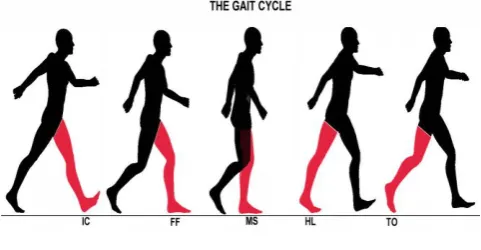
[image:1.595.308.549.409.534.2]Gait is also a activity biometric which could be perceived from a distance. It's usually non-inheritable whereas not personal contact and cooperation. Iris and face biometrics have similar blessings but they need high resolution photos and conjointly the frontal browse. However, it's possible to extract gait patterns from low resolution photos. Human gait can vary over long durations as a result of the change in weight, injuries and malady. But studies have indicated that it still possesses sufficient discriminatory power for personal recognition.
Figure 1 – The GAIT Cycle
Gait is a manner of walking or moving on foot. The human walking pattern consists of multiple continual gait cycles. Every gait cycle contains 2 steps. Figure 1 offers a
schematic the movements unit of
© 2016, IRJET | Impact Factor value: 4.45 | ISO 9001:2008 Certified Journal
| Page 2397
section is followed by a second double support section once the correct foot touches ground once more. After the left foot is raised from the floor (left swing phase). The gait cycle ends, once the left foot touches the bottom once more. Gait may be a complicated complex body part, muscular activity, weight, limb lengths and bone structures etc. This quality of gait renders it difficult to imitate and conceal if not possible.
The performance of gait biometric for verification and recognition lags behind another biometry like de oxy ribonucleic acid, iris and face. This can be because of the actual fact that individuals’ gait shows larger variations as a result of it's a activity characteristic. Thus it's a lot of appropriate for low security applications. Socially the gathering of gait knowledge is very acceptable [6]. The widespread usage of video police investigation cameras at public and personal premises indicates its acceptableness. Video recordings from the police investigation cameras area unit of such an occasional resolution that face recognition can't be performed. In these circumstances, gait will aid in personal recognition and might give valuable info in several things like crime scene investigations and customers’ visiting patterns.
2. RELATED WORK
Liang Wang et all (2013) worked on the Recent developments in human motion analysis and shown that Visual analysis of human motion is presently one amongst the foremost active analysis topics in laptop vision. This sturdy interest is driven by a large spectrum of promising applications in several areas like video game, sensible police investigation, sensory activity interface, etc. Human motion analysis considerations the detection, pursuit and recognition of individuals, and a lot of usually, the understanding of human behaviors, from image sequences involving humans. This paper provides a comprehensive survey of analysis on computer-vision-based human motion analysis. The stress is on 3 major problems concerned during a general human motion analysis system, specifically human detection, pursuit and activity understanding.
Lars Reng et all (2006) worked on Finding motion primitives in body gestures ANd shown that its success is that the identification and use of an underlying set of generic symbols (phonemes) constituting all speech. During this work we tend to follow a similar approach, except for the matter of human body gestures. That is, the subject of this paper is a way to outline a framework for mechanically finding primitives for body gestures [7]. This can be done by considering a gesture as a mechanical phenomenon then finding out points wherever the density of the coaching information is high. The trajectories ar re-sampled to change an on the spot comparison between the samples of every mechanical phenomenon, and change time invariant
comparisons [8]. This work demonstrates and tests the primitive’s ability to reconstruct sampled trajectories. Promising check results ar shown for samples from completely different check persons acting gestures from atiny low one armed
Gesture set.
Jorg Rett and Jorge Dias (2006) worked on Gesture Recognition employing a figure Model and Dynamic theorem Networks (DBNs) to include human qualities like anticipation and sympathy within the perception system of a social mechanism remains, up to now AN open issue. It's our goal to look for tactics of implementation and check the feasibleness. Towards this finish we tend to started the event of the guide mechanism ’Nicole’ equipped with a monocular camera and a mechanical phenomenon sensing element to look at its surroundings.
The context of interaction can be someone acting gestures and ’Nicole’ reacting by suggests that of audio output and motion. Throughout this paper we tend to tend to gift a solution to the gesture recognition task supported Dynamic theorem Network (DBN) [9]. They showed that using a DBN can be a human-like construct of recognizing gestures that cowl the quality of anticipation through the construct of prediction and update. a singular approach is used by incorporating a figure model inside the DBN as a trade-off between straightforward constant acceleration models and complex articulated models.
Lu Xia et all (2012) worked on read Invariant act Recognition mistreatment Histograms of 3D Joints. The HOJ3D computed from the action depth sequences area unit reprojected mistreatment LDA so clustered into k posture visual words, that represent the prototypic poses of actions. The temporal evolutions of these visual words area unit sculptural by separate hidden Markoff models (HMMs). Additionally, owing to the planning of our spherical arrangement and also the strong 3D skeleton estimation from Kinect, our technique demonstrates vital read unchangingness on our 3D action dataset. Our dataset consists of two hundred 3D sequences of ten indoor activities performed by ten people in varied views. Our technique is period and achieves superior results on the difficult 3D action dataset.
© 2016, IRJET | Impact Factor value: 4.45 | ISO 9001:2008 Certified Journal
| Page 2398
matrix. Moreover, a dynamic programming approach exploitation the similarity measure is projected to seek out the non-linear time-warping operates for videos containing human activities. During this manner, videos totally different of various people taken at different times and from distinct viewpoints may be synchronized.
3. PROBLEM IDENTIFICATION
A primary goal of gesture recognition analysis is to make a system which may establish specific human gestures and use them to convey data or for device management. to assist perceive what gestures are, associate in nursing examination of however alternative researchers read gestures is helpful. However do biologists and sociologists outline "gesture"? However is data encoded in gestures? We tend to conjointly explore however humans use gestures to speak with and command people. What is more, engineering researchers have designed a range of "gesture" recognition systems - however do they outline and use gestures? Gait recognition systems are prosperous and proved to be correct in characteristic individuals[11], this but doesn't mean that here haven't been challenges that ar encountered during this field. These challenges are often classified underneath 2 classes supported however they have an effect on a user’s body. They are classified as follows-
(A) External factors -This are factors that surround the individual being identified such as lighting conditions, viewing angle, weather conditions, walking surface, clothes, shoe types, luggage being carried and soon.
(B) Internal Factors -Internal factors are those that affect the user’s body internally such as aging, sickness, drunkenness, weight gain or loss, pregnancy, accidents and so on. All these factors as mentioned above affect the recognition of an individual in the gait recognition system.
It includes 5 factors which will influence gait recognition. These factors embrace modification in viewing angle, in shoe kind, in walking surface, carrying or not carrying case, and therefore the time period between samples being compared. for instance, once the distinction between the guide and therefore the take a look at samples was in shoe kind (A vs. B), read (right camera vs. left camera), case (carrying vs. not carrying) and surface (grass vs. concrete), the popularity rates were seventy eight, 73%, sixty one and thirty second, severally. A number of the external factors could have varied effects on completely different gait recognition approaches. Moreover, to our data, thus far internal factors of the gait haven't studied within the context of biometric gait recognition. One has to address such factors so as to develop strong gait recognition systems.
4. METHODOLOGY
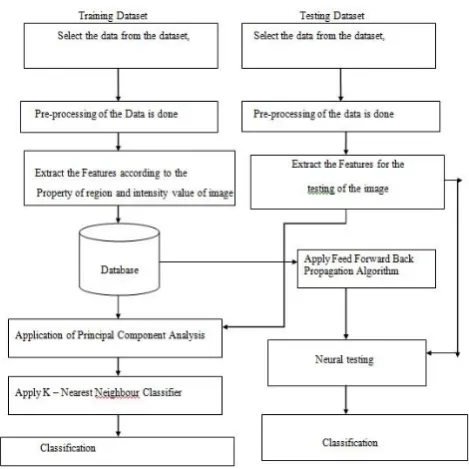
[image:3.595.311.546.303.538.2]The shape is AN articulated system of rigid segments connected by joints and act is taken into account as an eternal evolution of the spatial configuration of those segments (i.e. body postures). Here, we tend to use joint locations to create a compact illustration of postures. we tend to use these skeletal joint locations to make our illustration of postures. Among these joints, hand and radiocarpal joint and foot and mortise joint square measure terribly near one another and so redundant for the outline of part configuration. Additionally, spine, neck, and shoulder don't contribute discerning motion whereas an individual is acting indoor activities
.
Figure 2: Flowchart of the Methodology
Step By Step Explanation
Step 1:- Select the data from the dataset which has to be trained.
Select the data from the dataset, with any of the information defined i.e data belonging to GAIT. These data are already trained in the dataset. These data are already predefined and trained so
that it is simply used.
Step 2:- Pre-processing of the given dataset
© 2016, IRJET | Impact Factor value: 4.45 | ISO 9001:2008 Certified Journal
| Page 2399
If there is much irrelevant and redundant information present or noisy and unreliable data, then knowledge discovery during the training phase is more difficult. Data preparation and filtering steps can take considerable amount of processing time.
Data pre-processing also
includes cleaning, normalization, transformation, feature extraction and selection, etc. The product of data pre-processing is the final training set. The given data set is pre-processed and made in
such a format, which is just as per the requirement of the GAIT Recognition.
Step 3:- Extract the Features according to the property of
region and intensity value of image
There are a lot of useless features in the Training dataset, which is not used while GAIT recognition and thus, has to be removed according to the region property and intensity values of the image. It removes the unwanted features, which is not used
for the facial GAIT recognition.
The Evidence Gathering Technique is used, where the spatial motion templates are derived from the GAIT analysis data collected from the manual labelling.
These model templates should be represented in a parametric form, based on elliptic fourier descriptors.
Step 4:- Take out the datasets from the database
Database consists of large amount of datasets, which has to be extracted in order to recognize the pattern of GAIT.
GAIT Patterns are completely stored in the database
and are extracted from it, whenever required.
Step 5: - Apply the Principal Component analysis method.
Principal component analysis (PCA) is a statistical procedure that uses an orthogonal transformation to convert a set of observations of possibly correlated variables into a set of values of linearly uncorrelated variables called principal components.
The number of principal components is less than or equal to the number of original variables. This transformation is defined in such a way that the first principal component has the largest possible variance (that is, accounts for as much of the variability in the data as possible), and each succeeding component in turn has the highest
variance possible under the constraint that it is orthogonal to the preceding components.
Step 6 - Calculate the distance for each geometrical point
Determine the distance from the points of the features detected based on their relative and absolute distances on the face, and on the basis of their distance; the system will be trained further. Identify the expression made based on the feature
movements.
Step 7 – Merge all the features of both auto and manual detection.
Merge all the features of the results of detection which we have achieved in the auto and manual detection. When the particles meet re-initialization conditions, in accordance with the previous method to initialize the particles.
Step 8 – Prepare the training dataset
The Training dataset is prepared to match the given set of images with the testing images, which has been already saved in the database.
Step 9 – Carry out the Linear Programming using L1 Norm Minimization
Linear programming (LP; also called linear optimization) is a method to achieve the best outcome (such as maximum profit or lowest cost) in a mathematical model whose requirements are represented by linear relationships. Linear programming is a special case of mathematical programming (mathematical optimization).
Step 10 - Final desired result.
3. RESULTS
1. Data sets
© 2016, IRJET | Impact Factor value: 4.45 | ISO 9001:2008 Certified Journal
| Page 2400
2. Training and Testing
Here we have 15 frontal view image for each subject. In the recognition process through PCA, we are taking 11 images as training and remaining 4 is used as testing purpose. All experiment perform on matlab R2013a. Table 1 shows the recognition rate using PCA and KNN in frontal view of walking person.
TABLE 1: Result Comparison
Training For general comparison functions, we tend to took the results provided wherever the choice approach to multi- ocular recognition of gestures is analyzed. even supposing check databases aren't an equivalent, each contain similar actions. compared, the approach given during this paper succeed lower error ratios. Moreover, our system has the advantage that no assumptions on the position and also the orientation of the person ar needed as a result of the info fusion method. How- ever, our technique is conditioned by the initial BPNN step so being sensitive to the colours of the garments of the individuals within the scene.
3. CONCLUSIONS
In this paper, we have used a correspondence-free motion- based method to recognize the gait of a small population of people. While the results are promising, more evaluation of the method needs to be done. Future studies include larger test populations (20-100 people) and images taken from multiple view points (not just parallel to the image plane). In addition, image sequences of the same individual need to be acquired in different lighting conditions, and with various types of clothing. Finally, we are working to combine the results of this correspondence-free gait recognition method with more feature- oriented methods, such as stride and height estimation.
As in the future work we can work on the following
i. The same approach can be applied to indentify people by their including movement of the hands, face, eye or other parts of bodies.
ii. We can perform the same in big data technology, such as use in any schools and colleges, Office and university.
iii. Military air marshals use hand and body gestures to direct flight operations aboard aircraft carriers.
The work can be extended to develop new multimodal biometric system in which, gait can be combined with other biometrics system. So it can be use as one of the good reliable way of authentication.
REFERENCES
[1] Moghaddam B, Wahid W, Pentland A, Beyond eigenfaces: probabilistic matching for face recognition, Proceedings of the IEEE International Conference on Automatic Face and Gesture Recognition, 1998, pp. 30–35.
[2] Haritaoglu I, Harwood D, Davis L.S, W4: real-time surveillance of people and their activities, IEEE Trans. Pattern Anal. Mach. Intell. 22 (8) (2000) 809–830.
[3] Remagnino P, Tan T, Baker K, Multi-agent visual surveillance of dynamic scenes, Image Vision Comput. 16 (8) (1998) 529–532.
[4] Maggioni C, Kammerer B., Gesture computer: history, design, and applications, in: R. Cipolla, A. Purtland (Eds), Computer Vision for Human–Machine Interaction, Cambridge University Press, Cambridge, MA, 1998.
[5] Freeman W, Weissman C, Television control by hand gestures, Proceedings of the International Conference on Automatic Face and Gesture Recognition, 1995, pp. 179–183.
[6] Gavrila D.M., The visual analysis of human movement: a survey Comput. Vision Image Understanding 73 (1) (1999) 82–98.
[7] Collins R.T, Lipton A.J, Kanade T., Introduction to the special section on video surveillance, IEEE Trans. Pattern Anal. Mach. Intell. 22 (8) (2000) 745–746.
[8] Maybank S, Tan T., Introduction to special section on visual surveillance, Int. J. Comput. Vision 37 (2000) 173.
[9] Steoens J., Elagin E., Neven H., Person Spotter-fast and robust system for human detection, tracking and recognition, Proceedings of the IEEE International Conference on Automatic Face and Gesture Recognition, 1998, pp. 516–521.
view Recognition rate
Side view(move from left to right) 87.80