STUDY EFFECT OF TEMPERATURE AND REACTION KINETICS
MODEL SELECTION EPOXIDATION AGAINST RICE BRAN OIL
METHYL ESTER WITH CATALYST AMBERLITE IR-120
Ratri Ariatmi Nugrahani1, Athiek Sri Redjeki1, Yuti Mentari1, Miftahul Jannah1, Tri Yogo Wibowo2 and
Anwar Ilmar Ramadhan3
1Department of Chemical Engineering, Faculty of Engineering, Universitas Muhammadiyah Jakarta, Jakarta, Indonesia 2Agro Industrial Engineering and Biomedical Development Laboratory (LABTIAB)
Badan Pengkajian dan Penerapan Teknologi, Serpong, Indonesia
3Department of Mechanical Engineering, Faculty of Engineering, Universitas Muhammadiyah Jakarta, Jakarta, Indonesia E-Mail: [email protected]
ABSTRACT
Some vegetable oils contain unsaturated fatty acids, such as soybean oil, palm oil, rice bran oil. Singer hearts unsaturation vegetable oils can be converted Being Cluster epoxides. On Research Singer rice bran oil methyl ester epoxy diepoksidasi resulting methyl ester. Methyl ester epoxy Both can be used as a base oil and lubricant additive materials, fuel. Operating synthesis of epoxy compounds in situ carried out to obtain a review of epoxy compounds with oxirane the high content. The singer epoxidation process used catalyst resin Amberlite IR-120 is based on its ability to review at can be reuseable, easy product separation process, and the lack of Cluster epoxide Opened Back. Objective singer is studying the effect of different temperatures on reaction time rice bran oil epoxidation catalyst with Amberlite IR-120 Against oxirane numbers methyl ester epoxy products are rice bran oil and assess the reaction kinetics. Epoxidation reaction carried out in the hearts pumpkin neck three reflux condensor with at 400oC temperature, 60 °C, and 85 °C. The reaction is run for 5 hours process sampling each with 1 hour. Reaction Against rice bran oil methyl ester with done using acetic acid, hydrogen peroxide, and the catalyst resin Amberlite IR-120 (20% (w / w)). The epoxidation results show high Temperature 60 °C until with the increasing time and the high numbers oxirane, then experienced a decline. Best oxirane numerical value of 3.90% (oxirane oxygen). Prediction Model Equations epoxidation reaction kinetics do with using pseudo-two-phase approach Langmuir-Hinshelwood Hougen - Watson. Acetic acid (AA) and peroxyacetic acid (PA) which operates be absorbed chemical on the catalyst enabled. Steps that determines the overall reaction is a reaction on irreversible surface.
Keywords: oxirane, epoxidation, methyl esters, rice bran oil, resin IR-120.
1. INTRODUCTION
Epoxidation of the double bonds of unsaturated fatty acids from vegetable oils has been carried out and applied on an industrial scale. Epoxy oil can be used for various purposes, both as base oil and as lubricant additive products, polymers, plasticizers. Developments need for environmentally friendly products, encourage research and commercialization of epoxy products derived from vegetable oils. Various types of vegetable oils can be used as raw material in the synthesis of epoxy compound. Currently the oil epoxidation most developed is the epoxidation of the vegetable oils that contain high in unsaturated fatty acids such as castor oil [1-3], soybean oil [4]. Jatropha curcas oil [5-6]. Epoxy can also be made into epoxy methyl soyate as bio-plasticizer and epoxidized fatty acid methyl esters as solvent, lubricant, fuel [7]. Vegetable oil epoxide group containing oxirane which is highly reactive, so that it can be used as raw material for polyols, glycols, carbonyl, lubricants, plasticizers [8].
Synthesis of epoxy compound can be done in several ways, one of which is the in situ epoxidation. Some parameters can be used to select the proper process used in synthesizing epoxy compound, such as operating conditions, reagents, and catalysts. The type and phase of the catalyst will affect the conversion and separation of the reaction products. Therefore it is necessary for the selection of the appropriate reagents and catalysts.
According to [9], the double bond contained in the vegetable oil is a reactive part which can be used as a coating and can be used as raw material for the epoxidation. Epoxy groups resulting from the reaction between C double bonds with peracids, such as m-chlorobenzoic, performic, perbenzoic, peracetic. The reaction changes from C double bonds into epoxy groups by using m-chlorobenzoic contained in the following equation [10-11], see Figure-1.
Figure-1. The reaction changes from C double bonds.
epoxidation reaction to Mahua oil (Madhumica indica) in situ by using hydrogen and oxygen donor peoksida as glacial acetic acid, as an active oxygen carrier. In this reaction than 2 (two) acid catalyst is H2SO4 and HNO3, H2SO4 results show more effective in converting into oxirane groups. Epoxidation reactions using ion resin catalyst stability and selectivity of the process oxirane ring higher compared to using mineral acid catalyst [13]. The catalyst ion exchange resins can be used to synthesize peroxy acid and followed by epoxidation for vegetable oil. Acid catalyst ion exchange resin (Aier) can increase selectivity and reduce the occurrence of adverse reactions [14]. According to [15], the epoxidation reaction is made to modify the C double bond of a vegetable oil to form the epoxide groups which are an intermediate product in the synthesis of other products, such as lubricants or grease via nucleophilic addition due to the high reactivity oxirane group. Some disadvantages epoxidation process using a mineral acid catalyst is not able to achieve high selectivity, due to the opening of the oxirane ring, separating a byproduct of hard acid, the handling of hydrogen peroxide and strong acids can cause corrosion. Then developed a process that is more efficient and environmentally friendly by using a solid catalyst Ti-SO2.
The kinetics of the reaction is one measure that can express how fast chemical reactions can occur, which is expressed by several parameters. Variables that influence the reaction epoxidation is the mole ratio of reactants (C double bonds / acetic acid / hydrogen peroxide), the type and concentration of catalyst, temperature, inert, and the potential for re-utilization of ion exchange resin catalyst [15-16]. The effect of temperature on the epoxidation soybean oil showed the dangers of the higher temperature, then increasing the conversion of double bonds into epoxy groups (X). in the highest reaction temperature, then the reaction time is short, and the content of soybean oil epoxide maximum amounted to 5.99% [4]. And according [8], at the low temperature (303-343 K) peroxy formic acid is more efficiently used in the in situ epoxidation of the jatropha curcas oil. Several studies of epoxidation reaction kinetics in situ on vegetable oil by catalytic Ion exchange resins have been studied by several researchers [8, 9, 10].
According [4], in situ epoxidation reaction mechanism against Soybean oil through the formation of per acetic acid with heterogeneous catalysts ion exchange resins are as follows, equation (1):
(1)
Epoxide formation reaction is non-catalysis reaction, equation (2):
(2)
Oxirane ring opening is a side reaction, which occurs because of an acid catalyst is as follows, equation (3):
(3)
Epoxidation reaction kinetics model resin catalyst is divided into 3 (three), namely (1) pseudo-homogenous or single phase [11], assuming the resin catalyst dissolved in the reaction mixture [8]. The mechanism of the reaction in situ epoxidation pseudo-homogeneous is i) the formation of peroxyacetic acid in solution in the presence of a catalyst ii) transfer of peroxyacetic acid solution into the oil phase iii) the reaction peroxyacetic acid in the oil phase to produce acetic acid and release epoxide iv) degradation of the epoxide ring in the oil phase; (2) pseudo-two phase, consisting of the solution phase and solid phase resin catalyst. The reaction mechanism consists of the diffusion of the reactants into the pores of the catalyst, the reactants adsorption on the surface of the catalyst, the reaction on the surface of the catalyst, and the diffusion of the product from the catalyst. In general, the determination of the rate equation using a two-phase approaches Langmuir-Hinshelwood Hougen - Watson (LHHW). Study of reaction kinetics of epoxidation with catalyst resin Amberlite IR-120 to Soybean oil has been carried out by [4] and the Jatropha curcas oil has been carried out by [8].
2. RESEARCH METHOD
2.1 Epoxidation reaction
The method used is to optimize the formation of epoxy groups through the analysis of periodic oxirane. A total of 35 grams of methyl ester RBO and Glacial Acetic Acid charged to the reactor 500 mL three neck flask containing the catalyst cation resin IR-120, neck middle is filled with a stirrer, another neck filled with a thermometer, reflux condenser and a neck longer used for feeding reactants H2O2 or sampling, the reactor was heated with a heating jacket. Extra mole ratio mole H2O2 against C double bonds of 0.5-2.0, the ratio of glacial acetic acid to moles of 0.3-1.0 C double bond, and the weight percent of catalyst resin 5-20%. The reactor contains methyl ester RBO heated to the temperature reached 40oC for 15 minutes, acetic acid with a mole ratio of 0.5 to -1.0 C double bonds and 20% catalyst is added to the reactor, then heated for 30 minutes, A total of 33.8 grams of H2O2 30 % is fed by drop for 30 minutes, then the temperature was allowed to rise 60oC [11], with variations in temperature at 40 ° C, 60 ° C and 85 ° C. The first sample was taken after 60 minutes and then every 60 minutes a sample is taken up to 5 hours. 5 gram sample is washed with cold water then shaken and separated with a separating flask to remove residual acid, and then to remove the remaining water is added 2 g Sodium Sulfate Anhydrous per 10 gram samples [3]. Product Numbers analyzed iodine oxirane and numbers.
2.2 Analysis method
The epoxidation reaction of rice bran oil methyl ester was confirmed by the oxirane oxygen content and iodine value. The iodine value was determinate by Wij's method. The oxirane oxygen was analyzed by standard methods AOCS Cd 9-57. The relative percentage conversion to oxirane was calculated using the following equation [2, 14].
Relative percentage conversion = (OOexp)/ OOth x 100% (4)
Where OOexp is oxirane oxygen that obtained from experiment and OOth is oxirane oxygen that calculated theoretical in 100 g epoxidized rice bran oil methyl ester. OOth is determined using the following equation
(OOth)=[(IV0/(2 A1)/[100+[IV0/(2 A1)]A0] x A0 x 100 (5)
Where A1 (126.9) is the atomic weight of iodine, A0 (16.0) is the atomic weight of oxygen, and IV0 is the initial iodine value of the rice bran oil methyl ester.
2.3 Kinetics Model epoxidation with catalyst Amberlite IR-120
Assess the election mechanism and kinetics model equations epoxidation catalyst Amberlite IR- 120 using the air like scales [5]. The research followed the following Flow Chart:
Figure-2. Flowchart of Research Method.
2.4 Materials and equipments
Materials
The materials used for the oxidation process is the methyl ester RBO, hydrogen peroxide, %, glacial acetic acid, the catalyst resin Amberlite IR-120 (Merck), crystal violet HBr, KOH, ethanol p.a.
Equipments
The tools used in this research are a magnetic stirrer, hotplate, thermometer, and reflux condenser.
3. RESULTS AND DISCUSSIONS
3.1 Effect of temperature
Table-1. Effect of temperature at various times of the oxidation reaction with the catalyst Resin
IR -120 (20% w / w) of the total oxirane and Numbers Iod, Iod Oth = 44 g / 100 g.
Table-1 lists the results data epoxidation reaction Rice bran oil methyl ester using the catalyst resin Amberlite IR -120 (20% (w / w)), run at a temperature of 50 °C, 60 °C, 85 °C and the reaction time was varied from 1 hour up to 5 hours. These records show the higher the temperature the greater the OO obtained, with a high of 3.9% at a temperature of 60 °C and a reaction time of 5 hours. At temperatures higher than the required reaction time is shorter, at temperatures of 60 °C, OO of 3.83% was obtained at reaction time 4 hours, while the temperature reaction of 85 °C, OO amounted to 3.8% was obtained at reaction time is shorter, i.e. 2 hours. For comparison, the results of the Soybean Oil epoxidation catalyst Amberlite IR -120 (5%) at temperatures of 60 °C, the reaction time of 10 hours, obtained OO of 5.68% and at a higher temperature, i.e. 75 °C, reaction time A short six hours gained by 5.88% OO (Fiser, et al., 2001). But the reaction time is getting longer than 1 hour up to 5 hours and the temperature is higher, namely at 85 °C, then the OO has decreased, it is likely to occur because of the side reactions such as ring opening oxirane (the ring epoxy cleavage), as contained in Figure-4. Furthermore, the effect of temperature on the IV is opposite to the OO. Furthermore, the effect of temperature on the Relative conversion percentage (%) can be seen in Figure-3.
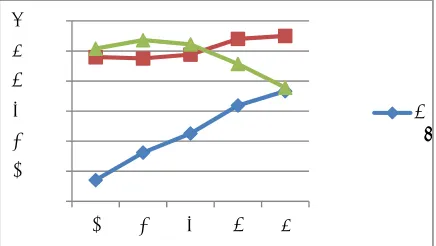
Figure-3. Effect of temperature at various times of the oxidation reaction with the catalyst resin IR -120
(20% w / w) of the conversion (%).
Figure 3 shows with the high temperature (40 °C and 60 °C), the conversion (%) getting up, but at temperatures of 85 °C the conversion has decreased, it is because the temperature of the higher possible side reaction, so lowering the conversion.
3.2 Study Selection epoxidation Reaction Kinetics Model
Consideration determination of kinetics model epoxidation against Rice bran methyl ester, include the selection of a homogeneous reaction (pseudohomogenous) or heterogeneous, the reaction order, the mechanism of chemisorption on the reaction heterogeneous, the reactants and / or products diadsorp, how the reactant and the product is absorbed (with or without disosiasi), reversible or irreversible, which steps you define this heterogeneous reaction. These various schemes would result in different kinetic equations were used. Each of these mathematical models is differential equations that describe the overall epoxidation process. Differential Equations Solutions resulted in several parameters: the concentration of active sites per unit mass of the catalyst, the reaction rate coefficient (ki), and the equilibrium constant (Ki) at the stage of adsorption, desorption, or a combination of both. In this study, limited to the preparation of the equation kinetics and not proceed with the settlement to obtain its parameters.
Development models are based on assumptions made by [4, 8]. The reaction is as follows: reaction (2) is a reaction to the formation of peroxyacetic acid; reaction (3) is the epoxidation reaction; and reaction (4) is the oxirane opening reaction. Equations (2), (3.a), and (3.b) are assumed homogeneous (pseudo-homogeneous) and the reaction (2) is a heterogeneous order of 1. In this model assumed only acetic acid (AA) and peroxyacetic acid (PA) be absorbed chemically (chemisorbed) on the catalyst active (the active catalytic site (s)) without dissociation reaction occurs. A decisive step in the overall reaction is a surface reaction irreversible.
0.00 10.00 20.00 30.00 40.00 50.00 60.00
1 2 3 4 5
[image:4.612.78.294.132.322.2](6)
(7)
(8)
(9)
(10)
If the decisive step was the surface reaction - the formation of peroxyacetic acid, the equation H2O2 reduction reaction is as follow equation (11): (11)
If the adsorption and desorption runs very fast compared to the surface reaction, then assumed to be at steady state RAA = 0, so that, (12)
Substitution of value [AAS] of the equation (12) into equation (11) produces kinetic model equation as follows: (13)
(14)
(15)
(16)
(17) (18)
(19)
Mathematical equations (13) to (19) are mathematical models derived from the model assumptions pseudo-two-phase approach LHHW. Kinetic parameters obtained after completing equations.
4. CONCLUSIONS
Reaction to Rice bran oil methyl ester in situ by using a catalyst resin Amberlite IR-120 shows that the higher the temperature and increasing time, the higher the number oxirane, then decreased. Oxirane number best value of 3.90% (Oxygen Oxiranes). Prediction model equations of reaction kinetics of epoxidation is done by using the approach of pseudo-two phase Langmuir-Hinshelwood Hougen - Watson assuming acetic acid (AA) and peroxyacetic acid (PA) be absorbed chemically (chemisorbed) on the active catalyst (the active catalytic site (s)) without dissociation reaction occurs. A decisive step in the overall reaction is a surface reaction irreversible.
ACKNOWLEDGEMENTS
The authors are very grateful to Department of Chemical Engineering, Universitas Muhammadiyah Jakarta, Indonesia to all facilities that provided during this research. The authors would like to thank to General Directorate of Higher Education, Ministry of Research and Technology, Higher Education of Republic of Indonesia for the research grant No 01/E3/KTP/2017, Dated January 6, 2017.
REFERENCES
[1] Campanella A., Baltanas M.A., Capel-Sanchez M.C., Campos-Martin J.M., and Fierro. 2004. Soybean oil epoxidation with hydrogen peoxide using an amorphous Ti/ SiO2 catalyst. Green Chem. 6. 330-334. DOI : 10/1039/B404975F
[2] Borugadda VB. 2014. Epoxidation of Castor Oil Fatty Acid Methyl Esters (COFAME) as a Lubricant base Stock Using Heterogeneous Ion-exchange Resin (IR-120) as a Catalyst Energy Procedia 01/2014; 54: 75-84. DOI: 10.1016/j.egypro.2014.07.249.
[3] Cooney T.I., Cardona F., Tran-Cong T. 2011. Kinetics of Insitu Epoxidation of Hem Oil under Heterogeneous Reaction Conditions: An Overview with Preliminary Result, eddBE2011, proceeding.
catalyzed by ion exchange resin. Jounal of the American Oil Chemists’ Society. 78(7).
[5] Gallia F., Nuccia S., Pirolaa C., Bianchia C.L. 2014. Epoxy Methyl Soyate as Bio-Plasticizer: Two Different Preparation Strategies. Chemical Engineering Transactions. Vol. 37. DOI: 10.3303/CET1437101
[6] Goud V.V., Patwardhan A.V., Pradhan N.C. 2006. Strongly Acidic Cation Exchange Resin of Sulphonated Polystyrene Type Used as Catalyst for Epoxidation of Castor Oil with Peracetic Acid and Performic Acid., Solid State Science and Technology. 14-1: 62-68.
[7] Goud V.V., Patwardhan A.V., Pradhan N.C. 2006. Studies on the epoxidation of mahua oil (Madhumica indica) by hydrogen peoxyde. Bioresour. Technology. 97.
[8] Goud V.V., Patwarhan A.V., Dinda S, Padhan N.C. 2007. Kinetics of Epoxidation of Jatropha Oil with Peroxyacetic and Peroxyformic acid Catalysed by Acidic Ion Exchange resin. Chemical Engineering Science 62. 4065-4076.
[9] Fiser S.S., Janković M., Petrovic Z.S. 2001. Kinetics of in situ Epoxidation of Soybean Oil in Bulk Catalyzed by Ion Exchange resin. JAOCS. 78(7).
[10]Jancovic M., Govedarica O., Sinadinović-Fišer S., Teofilović V., Pavličević J. and Budinski-Simendić J. 2016. A Pseudo-homogenous model describing Soybean Oil Epoxidation with Peracetic Acid Based on The Fatty Acid Composition. Physical Chemistry. J-14, pp. 677-680.
[11]Kim K. 2012. Epoxidation of Vegetable Oils Using the Heterogeneous Catalysis, Amorphous Ti-SiO2, Dissertation Institute of Chemical Technology and Heterogeneous Catalysis in the University RWTH-Aachen, Germany.
[12]Meshram P.D., Puri R.G., Patil H.V. 2011. Epoxidation of Wild Safflower (Carthamus oxyacantha) Oil with Peroxy acid in Presence of Strongly Acidic Cation Exchange Resin IR-122 as Catalyst. International Journal of ChemTech Research CODEN (USA). 3(3).
[13]Nihul P.G., Mhaske ST, Shertukde V.V. 2014. Epoxidized rice bran oil (ERBO) as a plasticizer for
poly (vinyl chloride) (PVC). Iranian Polymer Journal. 23(8): 599-608.
[14]Petrovic Z.S., Zlatanic A., Lava C.C. and Sinadinovic-Fiser S. 2002. Epoxidation of soybean oil in toluene with peroxy acetic and peroxy formic acids-kinetics and side reactions. European Journal of Lipid Science and Technology. 104(5): 293-299.
[15]Saurabh T., Patnaik M., Bhagt S.L., Renge V.C. 2011. Epoxidation of Vegetable Oils: A Review. International Journal of Advanced Engineering Technology. II(IV), E-ISSN 0976-3945.Y.
[16]Zabidi Suhardiwarno. 2013. Performance Measurement System Design Multi Criteria Creative Industries Kasongan Bantul, Angkasa. V(2): 167-178.