Georgia State University
ScholarWorks @ Georgia State University
Computer Information Systems Dissertations Department of Computer Information Systems
7-18-2016
Smart Interventions for Effective Medication
Adherence
Neetu Singh
Georgia State University
Follow this and additional works at:https://scholarworks.gsu.edu/cis_diss
This Dissertation is brought to you for free and open access by the Department of Computer Information Systems at ScholarWorks @ Georgia State University. It has been accepted for inclusion in Computer Information Systems Dissertations by an authorized administrator of ScholarWorks @ Georgia State University. For more information, please [email protected].
Recommended Citation
SMART INTERVENTIONS FOR
EFFECTIVE MEDICATION ADHERENCE
BY
NEETU SINGH
A Dissertation Submitted in Partial Fulfillment of the Requirements for the Degree Of
Doctor of Philosophy
In the Robinson College of Business
Of
Georgia State University
GEORGIA STATE UNIVERSITY ROBINSON COLLEGE OF BUSINESS
Copyright by Neetu Singh
ACCEPTANCE
This dissertation was prepared under the direction of the NEETU SINGH’s Dissertation Committee. It has been approved and accepted by all members of that committee, and it has been accepted in partial fulfillment of the requirements for the degree of Doctor of Philosophy in Business Administration in the J. Mack Robinson College of Business of Georgia State University.
Richard Phillips, Dean
DISSERTATION COMMITTEE
Dr. Upkar Varshney (Chair) Dr. Lars Mathiassen
Acknowledgement
More than an acknowledgment, this is a heartfelt expression towards all those who helped me accomplish this dissertation. Most of all, I would like to express my sincere thanks to my mentor, guide and advisor Dr. Upkar Varshney whose invaluable guidance and support carried me
forward with my dissertation. He encouraged and inspired me throughout my academic program, be it dissertation, teaching tips or job search process. He instilled in me the true spirits of a scholar and inspired me to become a better person.
I feel lucky to have had the opportunity to work with a wonderful committee that guided me in every stage of my dissertation. I sincerely thank all the members: Dr. Lars Mathiassen, Dr. Punit Ahluwalia, and Dr. Greg Gimpel. I have learned tremendously from them. Their advice and wisdom will continue to influence my future research.
I am also grateful to the department chair Dr. Bala Ramesh for the support and guidance he provided me. My time at Georgia State University was a true blessing, and for that, I thank the entire faculty, staff, and Ph.D. students for their support and friendship.
I owe a lot of gratitude to my husband without whom I could not have dreamt of this adventure. The patience and support of my son and daughter were exemplary to let me get through this journey. Last but not the least, my parents who gave me the will and courage to carry on in face of all adversities.
ABSTRACT
SMART INTERVENTIONS FOR EFFECTIVE MEDICATION ADHERENCE
BY
NEETU SINGH
30-JUN-2016
Committee Chair: Dr. Upkar Varshney
Major Academic Unit: Computer Information Systems
In this research we present a model for medication adherence from information systems and technologies (IS/IT) perspective. Information technology applications for healthcare have the potential to improve cost-effectiveness, quality and accessibility of healthcare. To date,
measurement of patient medication adherence and use of interventions to improve adherence are rare in routine clinical practice. IS/IT perspective helps in leveraging the technology
advancements to develop a health IT system for effectively measuring medication adherence and administering interventions.
doses prescribed. It does not matter in which order or pattern patients consume the dose. Patients with enormously diverse dosing behavior can achieve the same average levels of medication adherence. The same outcomes with different levels of adherence raise the possibility that patterns of adherence affect the effectiveness of medication adherence. We propose that
medication adherence research should utilize effective medication adherence (EMA), derived by including both the pattern and average medication adherence for a patient.
Using design science research (DSR) approach we have developed a model as an artifact for smart interventions. We have leveraged behavior change techniques (BCTs) based on the behavior change theories to design smart intervention. Because of the need for real time requirements for the system, we are also focusing on hierarchical control system theory and reference model architecture (RMA). The benefit of using this design is to enable an intervention to be administered dynamically on a need basis. A key distinction from existing systems is that the developed model leverages probabilistic measure instead of static schedule. We have evaluated and validated the model using formal proofs and by domain experts.
The research adds to the IS knowledge base by providing the theory based smart
interventions leveraging BCTs and RMA for improving the medication adherence. It introduces EMA as a measurement of medication adherence to healthcare systems. Smart interventions based on EMA will further lead to reducing the healthcare cost by improving prescription outcomes.
Keywords: Effective medication adherence, smart intervention, context-aware reminder,
Table of Contents
Chapter 1. Introduction ... 1
Section 1.1 Research Problem ... 5
Section 1.2 Research Questions ... 6
Section 1.3 Research Approach ... 7
Section 1.4 Research Contributions ... 11
Section 1.5 Research Limitations ... 13
Chapter 2. Awareness of Problem ... 15
Section 2.1 Role of Patient ... 15
Section 2.2 Role of Prescribers ... 17
Section 2.3 Role of Interventions ... 18
Chapter 3. Suggestion ... 22
Section 3.1 Evaluating adherence ... 22
3.1.1 Dose Persistence ... 25
3.1.2 Nonadherence ... 26
3.1.3 Patterns of Adherence ... 27
Section 3.2 Theoretical Background ... 30
3.2.1 Factors ... 30
3.2.2 Efficacy ... 31
3.2.3 Realization ... 34
3.3.1 Medication Event Monitoring System (MEMS) ... 43
3.3.2 Smart Medication Management System (SMMS) ... 44
Section 3.4 Effective Adherence ... 45
Section 3.5 Smart Intervention ... 45
Chapter 4. Development ... 48
Section 4.1 Constructs ... 48
Section 4.2 Requirements ... 49
Section 4.3 Model ... 51
Section 4.4 Design... 54
Section 4.5 Verification... 57
Chapter 5. Evaluation of Process ... 61
Section 5.1 Analytical Model ... 61
5.1.1 Assumptions ... 65
5.1.2 Design ... 65
5.1.3 Model Validation ... 80
5.1.4 Limitations ... 83
Section 5.2 Empirical ... 84
5.2.1 Participants and Task ... 84
5.2.2 Analysis of Simple vs. Smart Intervention ... 85
5.3.1 Patterns of Adherence ... 93
5.3.2 Effective Medication Adherence for Single Medication ... 97
5.3.3 Undesirable dose event (UDE) ... 105
5.3.4 Effective Medication Adherence for Multiple Medication ... 106
5.3.5 Healthcare cost ... 108
Section 5.4 Propositions ... 109
5.4.1 Proposition 1 ... 109
5.4.2 Proposition 2 ... 110
5.4.3 Proposition 3 ... 111
5.4.4 Proposition 4 ... 112
5.4.5 Proposition 5 ... 113
Chapter 6. Conclusion ... 114
Section 6.1 Research Questions and Discussion ... 116
Section 6.2 Research Contribution ... 118
6.2.1 Contribution to Information Systems ... 118
6.2.2 Contribution to Health IT ... 119
Section 6.3 Limitations and Future Research... 120
References ... 122
List of Figures
Figure 1. Gap between a written prescription and actual medication use………...2
Figure 2. Impact of medication adherence on hospitalization risk………..3
Figure 3. Design science research process model (DSR cycle) & cognitive processes…...8
Figure 4. Intentional and unintentional nonadherence………...14
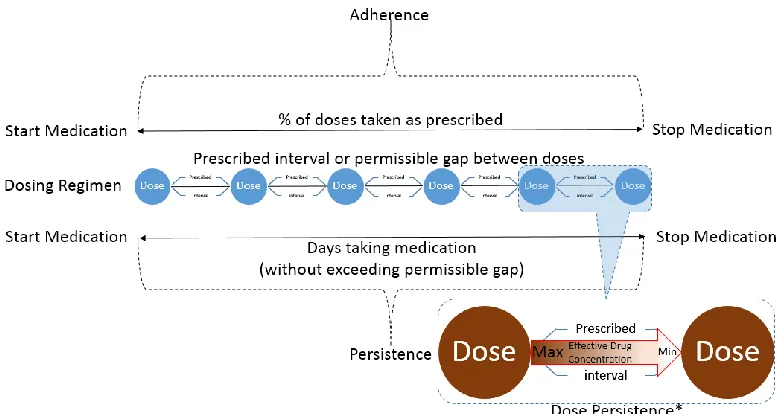
Figure 5. Adherence versus persistence……….22
Figure 6. Repetitive dosing with adherence versus persistence………...24
Figure 7. Plasma concentration plateaus overdosing intervals………..24
Figure 8. Dose persistence within the medication /therapy persistence………...25
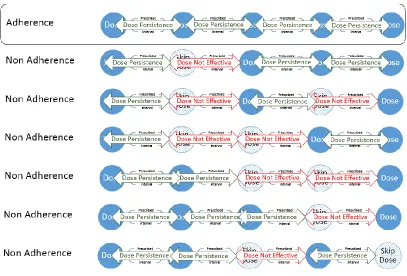
Figure 9. Nonadherence dose persistence within the medication /therapy persistence……….26
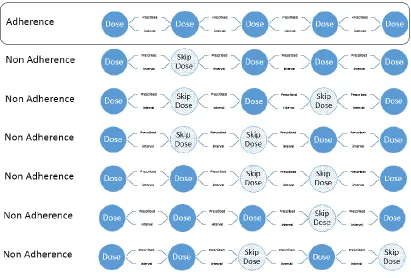
Figure 10. A simple pattern of adherence within the medication /therapy persistence……….28
Figure 11. Effect of patterns of adherence due to skip dose on dose persistence………..29
Figure 12. Various patterns of adherence due to skip dose………...29
Figure 13. The five interacting dimensions of medication behavior……….30
Figure 14. Generalized model based on the BCTs affecting medication behavior…………...33
Figure 15. Node of reference model architecture………..38
Figure 16. MEMA implementation of RMA node for smart intervention………...40
Figure 17. Smart medication management system model……….44
Figure 18. Simplified model of medication adherence………..49
Figure 19. Predefined type (priority) of intervention (reminder)………..52
Figure 20. Detailed design of model for effective medication adherence (MEMA)………….53
Figure 21. Model of medication adherence………...54
Figure 23. Variables in model for effective medication adherence (MEMA)………..57
Figure 24a. The operation of the MEMA……….58
Figure 24b. The algorithm to determine reminder generation………..59
Figure 25. The use of analytical model in artifact evaluation………...63
Figure 26. Different scenarios without intervention and with interventions……….69
Figure 27. Distributions for studying patterns of adherence……….95
Figure 28. The impact of maximum interdose-time on effective adherence………...96
Figure 29. The probability of multi-dosing………...96
Figure 30. Effective adherence for different average values……….97
Figure 31. Comparing EMA for NR, SR and CAR (AMA=100%)………..99
Figure 32. Comparing EMA for NR, SR and CAR (AMA=80%)………..101
Figure 33. EMA - (AMA=100% vs AMA80%); NP=2; PD-R= 80%, 60%, 20%……….103
Figure 34. Impact of NP on EMA for varying PD-R ……….………104
Figure 35. Impact of lambda on EMA with varying TMAX……….………….105
Figure 36. Comparison of UDE for NR, SR, and CAR……….………..105
Figure 37. Comparing EMA for SR and CAR (multiple medications) – Case1………..107
Figure 38. Comparing EMA for SR and CAR (multiple medications) – Case2………..107
Figure 39. Comparing EMA for SR and CAR (multiple medications) – Case3………..108
List of Tables
Table 1. Design science research process steps………....9
Table 2. Design science research output………...9
Table 3. Specific research output at dsr process steps………10
Table 4. Current mobile applications for medication adherence………43
Table 5. Intervention vs smart intervention………....46
Table 6. Nonadherence cases and the model’s role in the intervention………...60
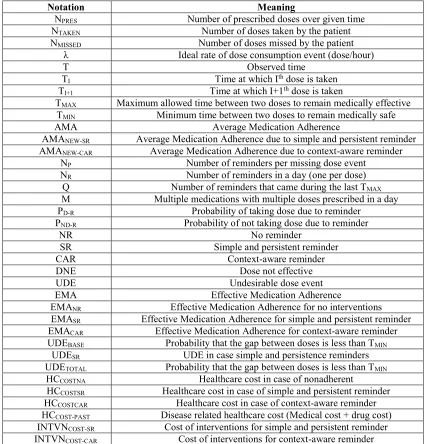
Table 7. Analytical model parameters/variables………...66
Table 8a. Participants feedback on comparison of artifact1 and artifact2…………...89
Table 8b. Categorizing clarification questions………...90
Table 8c. Categorizing artifact1 and artifact2……….91
Chapter 1.
Introduction
Information technology (IT) applications for healthcare have the potential to improve cost-effectiveness, quality and accessibility of healthcare (Chiasson and Davidson 2004). The potential benefits of IT in healthcare can be realized by addressing the social issues (Braa et al. 2007; Kaplan 2001; Miscione 2007) related to healthcare. According to the World Health
Organization (WHO 2003), medication nonadherence poses a serious social challenge and needs to be addressed to improve the healthcare quality and minimize the healthcare cost. In healthcare literature various interventions have been designed to improve medication adherence (Choi et al. 2008; Maulucci and Somerville 2011; McDonald et al. 2002; Schreier et al. 2013). The
measurement of patient medication adherence and use of interventions to improve adherence are rare in routine clinical practice (Ho et al. 2009). A theoretical approach to study medication adherence improvement is largely missing in literature (Ruppar 2010). The research in this field needs advances, including improved design of feasible long-term interventions, objective adherence measures, and sufficient study power to detect improvements in patient-important clinical outcomes (Nieuwlaat et al. 2014). In this research we present a model based on health behavior change theories to study medication adherence from information systems and
technologies (IS/IT) perspective. IS/IT perspective helps in leveraging the technology
advancements to develop a health IT system for effectively measuring medication adherence and administering interventions.
reports and ratings of healthcare. Nonadherence in patients leads to a substantial worsening of disease, death, and increased healthcare costs. In general, 80% medication adherence is
considered satisfactory for chronic conditions; however, a higher level (95%) may be needed for acute conditions (Haynes et al. 2008; Osterberg and Blaschke 2005; WHO 2003).
Approximately 3.2 billion annual prescriptions are dispensed in the United States alone, and about 50% of these prescriptions are not consumed as prescribed (Osterberg and Blaschke 2005; Sicre 2007). Figure 1 shows for every 100 prescriptions that physicians write, only 50% - 70% reach pharmacy, 48% - 66% get filled, 25% - 30% taken properly and 15% - 20% refilled as prescribed (NACDS 2010).
Figure 1. Gap between a written prescription and actual medication use (NACDS 2010)
A retrospective analysis of insurance claims confirms the earlier findings that poor
medication adherence is a common problem across most chronic conditions (Thier et al. 2008). Nonadherence is not only prevalent but also has dramatic effects on individual and population-level health. Approximately 125,000 deaths per year in the United States are associated with nonadherence to medication (McCarthy 1998). Although the consequences of suboptimal
between potential and actual healthcare quality. Extensive health benefits would result from improving medication adherence to existing treatments than developing any new medical treatments (Sabate 2007).
An economic burden of $100 to $300 billion per year came from medication nonadherence (NEHI 2009). Substantial evidence suggests that benefits attributable to improved
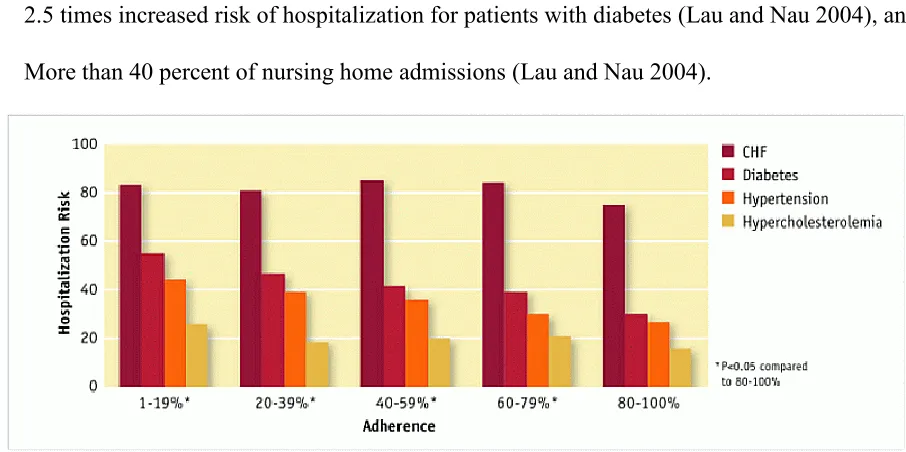
self-management of chronic diseases could result in a cost-to-savings ratio of approximately 1:10 (Sabate 2007). As represented in Figure 2, nonadherence accounts for 10% to 25% of hospital and nursing home admissions. Recent research has found that medication nonadherence results in:
5.4 times increased risk of hospitalization, re-hospitalization, or premature death for patients
with high blood pressure (Gwadry-Sridhar et al. 2009),
2.5 times increased risk of hospitalization for patients with diabetes (Lau and Nau 2004), and
[image:16.612.78.531.377.603.2] More than 40 percent of nursing home admissions (Lau and Nau 2004).
Figure 2. Impact of medication adherence on hospitalization risk (Sokol et al. 2005)
decades. The extent of nonadherence varies widely, and in different studies, it has been recorded as low as 10% and as high as 92% (Osterberg and Blaschke 2005; Sokol et al. 2005).
Approximately half of nonadherence is intentional, while the remaining are unintentional because patients are either unaware that they are not taking medications as prescribed, or the regimen is just too complex. Adherence rates are typically higher among patients with acute conditions, as compared against those with chronic conditions. Studies reveal that patients with chronic illnesses take only approximately 50% of medications prescribed for those conditions. Adults aged 18–64 were almost twice as likely as adults aged 65 and over to have skipped doses, forget to take medicine, to have taken less medicine, and to have delayed filling a prescription to save money (Cohen and Villarroel 2015).
Nonadherence is a multidimensional problem influenced by several factors including patient views and beliefs, illness characteristics, social contexts, access and healthcare service issues. The problem is likely to grow as the population ages and as patients take more medications to treat chronic conditions. The potential burden of medication nonadherence outcomes on
healthcare delivery makes it a significant public health concern as evident from the World Health Organization and the Institute of Medicine goals to improve medication adherence (Sokol et al. 2005; WHO 2003).
An intervention is the means of interfering with the outcome or course especially of a condition or process (as to prevent harm or improve functioning). In medicine, an intervention is usually undertaken to help treat or cure a condition. Medication nonadherence is a growing concern to clinicians, healthcare systems, and other stakeholders because of mounting evidence that it is prevalent and associated with adverse outcomes and higher costs of care (Ho et al. 2009).
Section 1.1
Research Problem
Medication adherence is critical to the quality of patient outcomes, but high adherence is difficult to achieve. Former United States Surgeon General C. Everett Koop once said, “Drugs do not work in patients who do not take them” (Osterberg and Blaschke 2005). This simplistic yet accurate statement summarizes the dilemma faced by healthcare providers and patients in the quest for optimum healthcare. Healthcare providers (as part of a healthcare team within the health system) are an integral component of the five interacting dimensions of medication adherence identified by the World Health Organization (2003), which include social and
economic dimension, healthcare system dimension, condition-related dimension, therapy-related dimension, and patient-related dimension. The multidimensional problem of nonadherence has a complex environment. Identifying strategies for improving medication adherence is a
collaborative effort of all stakeholders.
observe the actual dosing of medicines by the patient. The need, therefore, is to leverage information systems in designing a system that can help the providers in measuring the
adherence within the persistence period and provide the ability to administer intervention. The ability to measure and improve medication adherence could lead to overall improvement in the patient’s health outcome.
Average medication adherence (AMA) is the predominantly used measure of medication adherence. AMA considers an average dosing rate and is observable after medication
persistence. In the current system, the patient taking the medication self-reports to the provider towards the end of medication persistence at the time of prescription refill or if there is a concern from a patient with the prescribed treatment. The best the provider or patient can do is to
schedule reminders to take medications on time (simple intervention). This research recognizes medication persistence as a window that is monitored to (1) detect when intervention is needed and (2) identify what intervention to administer.
In the envisioned system, the rate of adherence is a probability estimate based on the medication behavior (pattern of medication adherence) of the patient and is termed Effective Medication Adherence (EMA). EMA identifies when and what intervention is administered. In envisioned system, intervention is not provided if the patient exhibits medication adherence. As interventions are not scheduled for administration at concordance but dynamically generated (when), and type is determined (what) based on the EMA, we deem such interventions as ‘context-aware’ or ‘smart’ interventions.
Section 1.2
Research Questions
model for intervention (smart intervention) to improve effectiveness of medication adherence and reduce healthcare costs, and (3) provide a theoretical base to articulate, formalize, and fully understand the model. The research questions we will address in this study are:
RQ1: How patterns of medication adherence impact effective medication adherence (EMA)? RQ2: How smart interventions improve effective medication adherence (EMA)?
RQ3: How smart interventions reduce healthcare cost?
Section 1.3
Research Approach
The significant prospect in this research is the development of health information technology system for smart intervention to address the problem of nonadherence among patients prescribed self-administered medications for chronic disease. The central exercise for this research is to develop a model as an artifact for smart intervention based on effective medication adherence so as to improve simple interventions. A model is developed as an artifact to enable the
representation, analysis, understanding, development and subsequent refinement of smart interventions. The implementation of artifact is done on wireless based smart medication management system (Varshney 2011) or smartphones.
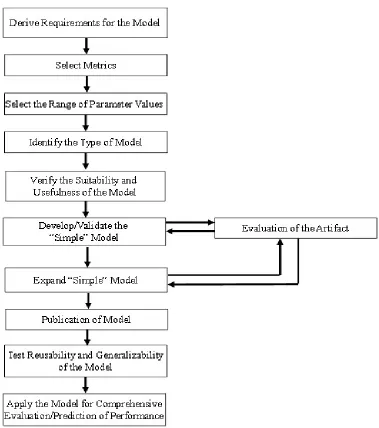
The Design Science Research (DSR) Process is a natural fit for developments that are improvements over an existing model (Vaishnavi et al. 2007). Awareness of common problem motivates the DSR process. Design science research initiates with a significant prospect, challenging problem, or creativity/conjecture for some innovativeness in the application
which may be created artificially instead of naturally occurring, thereby leading to artifact design and evaluation.
The DSR process model developed and revised by Vaishnavi and Kuechler (2015) is shown in Figure 3. It also shows cognitive processes used in the DSR process.
* Circumscription is the discovery of constraint knowledge about theories gained through detection and analysis of contradictions when things do not work according to theory (McCarthy 1980).
Figure 3. Design science research process model (DSR cycle) & cognitive processes
from the development and evaluation steps of the process to the initial awareness of the problem, so that the problem can be re-examined. The cognitive process of assimilation of knowledge is deductive at this stage. The conclusion indicates the reflective stage where the research is concluded with the formulation of propositions relating to the problem domain. The steps of DSR process steps and output are described in Table 1 and Table 2.
Steps Description
Awareness of
Problem Step An awareness of an interesting research problem may come from multiple sources including new developments in industry or a reference discipline. The output of this phase is a proposal, formal or informal, for a new research effort.
Suggestion Step New functionality is envisioned based on a novel configuration of either existing or new and existing elements.
Development Step The tentative design is further developed and implemented in this phase. The techniques for implementation will, of course, vary depending on the artifact to be created. The novelty is primarily in the design, not the construction of the artifact.
Evaluation Step Once constructed, the artifact is evaluated according to implicit expectations or explicit criteria (Awareness of Problem phase). Deviations from
expectations, both quantitative and qualitative, are explained, and Propositions are made. The deviations from the theoretical performance are iteratively refined by including new observations into the suggestion.
Conclusion Step Not only are the results of the effort consolidated at this phase, but the
knowledge gained in the effort is frequently categorized as either repeatable or anomalous. Future research areas are identified, and knowledge contribution (Gregor and Hevner 2013) is noted.
Table 1. Design science research process steps (Vaishnavi and Kuechler 2015)
Output Description
Constructs The conceptual vocabulary of a domain
Models Sets of Propositions or statements expressing relationships between constructs
Frameworks Real or conceptual guides to serve as support or guide Architectures High level structures of systems
Design Principles Core principles and concepts to guide design
Methods Sets of steps used to perform tasks; how-to knowledge
Instantiations Situated Implementations in certain environments that do or do not operationalize constructs, models, methods, and other abstract artifacts; in the latter case, such knowledge remains tacit.
Design Theories A prescriptive set of statements on how to do something to achieve a certain objective. A theory usually includes other abstract artifacts such as constructs, models, frameworks, architectures, design principles, and methods.
In this research, the model for smart intervention is developed using the guidelines of Vaishnavi and Kuechler (2015) and evaluated for effectiveness using the formal proofs and evaluation by domain experts (Healthcare providers and Health IT experts) (Cleven et al. 2009; Gregor and Hevner 2013; Parsons and Wand 2008). The DSR process steps and the
corresponding outputs of each step are listed in Table 3 to outline the specific outputs from this research.
DSR Process Steps DSR Outputs Specific Outputs
Awareness of Problem Proposal Medication Adherence (MA) Improvement
Suggestion Tentative Design Smart Intervention
Development Artifact Model
Evaluation Performance Measures Effective Medication Adherence (EMA)
Conclusion Results Propositions
Table 3. Specific research output at DSR process steps
A literature review is conducted to understand the current state of the research on the topic of medication adherence and the various interventions that presently exist. Specifically,
environment and the factors that affect the medication adherence are studied. Any theoretical basis for medication nonadherence is analyzed for gaining a better understanding of the problem conceptually and the limitations therein. The guiding question for the awareness of problem step is - If interventions to medication nonadherence can improve medication adherence, why such interventions are not effective?
The understanding gained from the awareness of problem leads to the formulation of suggestions that could address the effectiveness of the interventions in improving medication adherence. The guiding question for suggestion step of the DSR process is – How can the effectiveness of interventions be improved?
expressing relationships between constructs) is an appropriate artifact to improve the design as it provides the lowest possible level of operative environment for the constructs. The guiding question for development step of the DSR process is - How closely does the new model represent the original model/design of the available interventions?
The model from development step of DSR process is evaluated to examine the effectiveness of the improvements as envisioned in the suggestion step and according to the criteria for effective intervention identified in the awareness of problem step of DSR process. Propositions are developed about the behavior of the model. If the model does not behave as expected, revisions to the suggestion are made from the additional information gained in the development and evaluation steps and the directions suggested by deviations from expected performance. The development and evaluation steps are then repeated. The guiding question for evaluation step of the DSR process is – What are the limiting conditions for the effectiveness of interventions utilizing new model?
The final step in research following the DSR process is the conclusion. In addition to the practical implication of this research, the theory, and knowledge gained from model development and evaluation can become a part of design science knowledge base thereby bridging some of the literature gaps that currently exist from DSR perspective. The guiding question for conclusion step of the DSR process is – Do the smart interventions improve effectiveness of medication adherence?
Section 1.4
Research Contributions
The significance of proposed research is three fold. First, it is significant to the healthcare system as the intervention will help in understanding the patterns of adherence and improves the effective medication adherence. As better health outcome is achieved, the financial burden of nonadherence will decrease. Second, it will provide an artifact which can be further evaluated using the field study. It will add value to the design science research community by providing a health IT domain specific artifact and by improving domain-specific information systems and processes. Third, it addresses the need of theoretical interventions for improving medication adherence.
What is already known about the topic?
Medication nonadherence is a widely acknowledged and pervasive healthcare issue.
Medication adherence holds particular significance for individuals diagnosed with chronic
conditions.
Various interventions have been designed to improve medication adherence, but few theories
describe specifically the processes involved.
Despite five decades of research, current interventions do not consistently enhance
medication adherence.
Current interventions focus on improving average medication adherence. The interventions
are not generated dynamically.
Some of the existing medication adherence applications report the nonadherence to
healthcare providers, but they do not facilitate the advice/scheduling from healthcare providers.
Existing technologies monitor and report nonadherence toward the end of medication
What this research adds?
The scope of this dissertation research is to describe the IS/IT processes involved in
developing the health IT artifact as an intervention to improve effective medication adherence.
We address the area of medication adherence using health behavior change theory and
reference model architecture theory. We discuss the application of health behavior change theory as the basis for an intervention to improve effective medication adherence.
We evaluate that patterns of adherence and average medication adherence are important
predictors of medication adherence improvement.
Using design science research approach, we have developed model for effective medication
adherence (MEMA), a health IT artifact as a system to administer smart intervention to improve effective medication adherence. Model for effective medication adherence include interactive presence of following components:
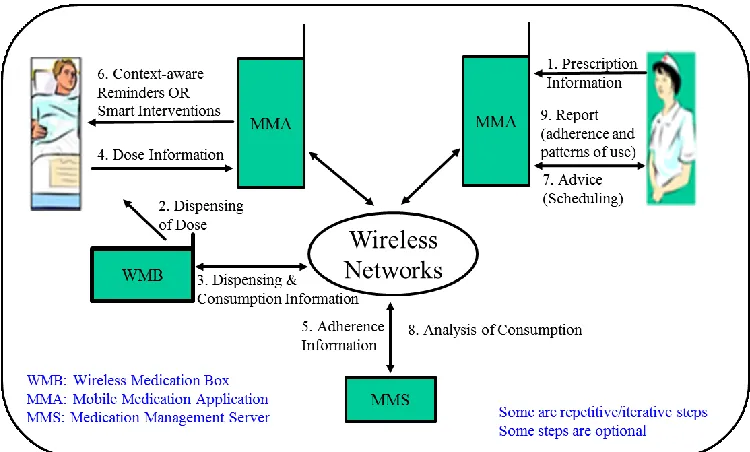
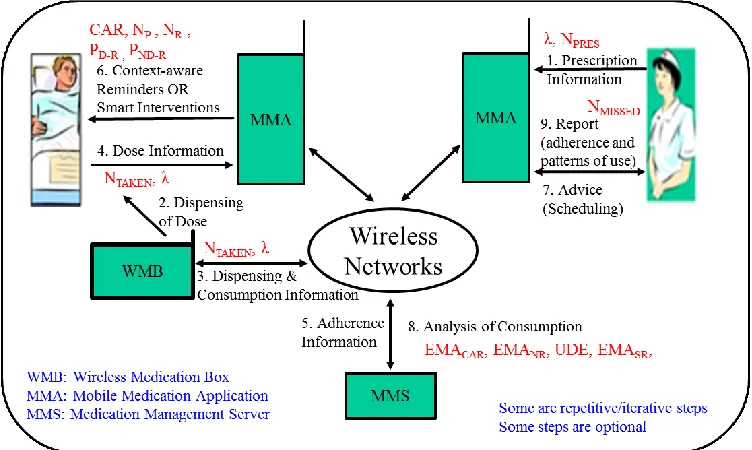
1. Wireless medication box (WMB) which provides the dispensing and consumption information.
2. Dynamically generated context-aware reminders using the three way interaction between wireless medication box (WMB), medication management application (MMA) and medication management server (MMS).
3. Analysis of medication behavior that will be helpful in understanding the impact of nonadherence on treatment outcome.
Section 1.5
Research Limitations
conditions and unintentional nonadherence. More specifically, a model for effective medication adherence applies to unintentional nonadherence, and the intervention improves the effective medication adherence, i.e., the transition from Quadrant IV to Quadrant I of Figure 4. In this research, we are not focusing on unwilling patients. Figure 4 shows the intentional and unintentional nonadherence criteria.
The current design has the limitation that patient should be willing to take medication as this intervention is for prescribed self-administered medications. Regarding artifact evaluation, it can be further extended by conducting a field study where the modeled artifact can be made
accessible to patients and healthcare provider to use. It will help in empirical validation of the artifact in future research.
Figure 4. Intentional and unintentional nonadherence
Chapter 2.
Awareness of Problem
The effectiveness of treatment depends on both the efficacy of a medication and patient adherence to the therapeutic regimen. Patients, healthcare providers, and healthcare systems, all have a role in improving medication adherence. A single method cannot improve medication adherence. Instead, a combination of various adherence techniques should be implemented to improve patient’s adherence to the prescribed treatment.
Section 2.1
Role of Patient
Medication adherence is the extent to which patients follows the prescribed medication regimens (Cramer et al. 2008). Adherenceis the preferred term because compliance suggests passivity on the part of the patient and a lack of a therapeutic alliance between patient and provider (Osterberg and Blaschke 2005; Steiner and Earnest 2000).
The manner in which a patient adheres to a prescribed medication regimen influences the health outcomes, healthcare utilization, and healthcare costs (Chewning and Sleath 1996; Delgado 2000). Multiple interrelated psychosocial factors affect medication adherence. These factors are: psychological factors (DiIorio et al. 2009), self-efficacy (DiIorio et al. 2009; Duong et al. 2001), social support (Duong et al. 2001; Fongwa et al. 2008), and socioeconomic issues (Fongwa et al. 2008; George et al. 2006).
Self-efficacy is a primary factor affecting whether or not a person will change a behavior and can affect the ability to adhere to complex medication regimens. A recent study reported that higher self-efficacy in taking medication was associated with higher medication adherence (Colbert et al. 2013).
of an individual to self-determine benefits and risks of action or behavior are crucial to change adherence to medication, and the willingness and ability to do it. For chronic patients, the cognitive and psychological burdens of treatment can often impede the medical outcome. The patient may not comprehend information about treatment if the amount of information becomes overwhelming. The patient may become unwilling to ask for help, and can undermine the importance of medication for the treatment.
Nonadherence to medications can be intentional or unintentional. Intentional nonadherence is an active process whereby the patient chooses to deviate from the treatment regimen. There may be a rational decision process in which the individual weighs the risk and benefits of treatment against any adverse effects. Unintentional nonadherence is a passive process in which the patient may be careless or forgetful about adhering to the treatment regimen (Ho et al. 2009; Lehane and McCarthy 2007). Unintentional adherence is also referred to by Vrijens et al. (2008) as the execution of the prescribed regimen, or how well patients adhere to the dosing regimen. There are six general patterns of execution:
(1) Close to perfect adherence;
(2) Take nearly all doses with some timing irregularity;
(3) Miss an occasional single day’s dose, and some timing inconsistencies; (4) Take drug holidays 3 to 4 times per year;
(5) Take drug holidays monthly or more often and have frequent omissions; and (6) Take few or no doses.
after an appointment with a healthcare provider called “white coat adherence” (Osterberg and Blaschke 2005).
Estimates of unintentional nonadherence vary considerably and range from 20% to over 50% (Ho et al. 2009; Lehane and McCarthy 2007). Forgetting to take medication (62%) was the most commonly reported behavior followed by running out of medications (37%) and being careless at times about taking the medication (23%) (Gadkari and McHorney 2012). Timely intervention can influence nonadherence of prescribed self-administered medications. The reasons for poor medication adherence are often multifactorial, and encompasses a wide range of behaviors. The consequence is an underuse or overuse of prescribed medications.
Section 2.2
Role of Prescribers
Healthcare providers play a unique and important role in assisting patients to carry out healthy behaviors (Atreja et al. 2005) and a patient’s beliefs about the benefits and risks of medicines influence whether or not they take prescribed medication (Wroth and Pathman 2006). The patient relationship with the healthcare provider influences the acquisition of knowledge and the belief of the importance of adherence (Phatak and Thomas 2006; Pratt et al. 2001). Collaborative care involving a working relationship between physicians and pharmacists has been shown to improve patient care and reduce medication errors (Kuo et al. 2004). Collaborative care is beneficial in addressing the psychosocial factors that can affect medication adherence.
system, find a way to treat within this belief system, interactively obtain agreement from the patient on when and how to take prescribed medication, and discuss cost issues to ensure that patient adheres to the prescription. Building trust and developing skills for successful provider and patient communications demand time, effort, knowledge, and practice.
In addition to prescribers, the office staff has a role in boosting patient adherence to
medication. Wroth and Pathman (2006) evaluated correlates of medication adherence in a rural setting and found that when patients felt welcomed and comfortable by the staff, they were more likely to fill their prescriptions.
Section 2.3
Role of Interventions
Intervention is a treatment, procedure or program of healthcare that has the potential to change the course of a healthcare condition. Interventions are classified as informational or behavioral. In general, interventions for improving medication adherence include reminders, family support, educational interventions and motivational support from healthcare providers among others (Friedman et al. 1996; McDonald et al. 2002). Health IT interventions implement some of these (Moore and Benbasat 1991).
There have been major advances in design, implementation, and evaluations of systems for medication adherence. With increasing deployment of mobile and wireless technologies,
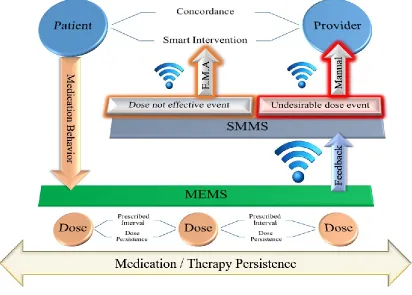
(Krishna et al. 2009). Also, a wireless-based smart medication system (SMMS) can support (Varshney 2011; Varshney 2013)
(a) Communication with patients,
(b) Monitoring of medication consumption, (c) Context-sensitive reminders to patients, and (d) Multiple interventions for medication adherence.
Some of the systems use wearable devices and sensors for medication adherence (Choi et al. 2008; Choi et al. 2013; DiCarlo et al. 2012; Holmes et al. 2014). Lundell et al. (2007) captured medication adherence by counting medication taking events that occurred within 90 minutes before and 90 minutes after the scheduled time. Electronic pill box has been developed and used for continuous monitoring of medication adherence (Hayes et al. 2006). In another study, an automated medication adherence tool is developed for imparting medication taking directions to patients (Maulucci and Somerville 2011).
However, existing technologies for monitoring and improving drug adherence are either costly or too complicated for general patients to use. The current methods of improving medication adherence for chronic health problems are labor-intensive, and not predictably
effective(Ingersoll and Cohen 2008; Lundell et al. 2007; Maulucci and Somerville 2011; McCall et al. 2010; Moore et al. 2011; Schreier et al. 2013; Tang et al. 2011). These methods of
intervention do not realize the full benefits of treatment.
medication systems (Choi et al. 2013; DiCarlo et al. 2012; Hayes et al. 2006; Holmes et al. 2014; McCall et al. 2010; Moore et al. 2011; Schreier et al. 2013; Tang et al. 2011; Varshney 2011). Most systems rely on simple alarms and do not address other determinants of health-related behavior (Hayes et al. 2006; Schreier et al. 2013). Although quite diverse, these systems support communications with the patient, medication monitoring, and interventions to improve the average medication adherence.
Haynes (1976) randomly allocated, through the minimization method, 38 patients who were both hypertensive and nonadherent (less than 80% of prescribed pills) at the end of a six-month trial to an intensive adherence intervention or control. The intervention included care provided at the work site, special pill containers, counseling, reminders, self-monitoring of adherence and blood pressure, support groups, feedback and reinforcement for adequate adherence and blood pressure-lowering, all administered with bi-weekly contacts by a lay program coordinator who was supported by study funds. At six months’ follow-up, there was a significantly higher adherence in the intervention group.
Most patients do not follow self-administered medical treatments as prescribed and
interventions to help them follow treatments are marginally effective at best, especially for long-term medical regimens. Strategies that appear to have some effect for long-long-term regimens involve combinations of counseling, reminders, self-monitoring, feedback, family therapy, psychological therapy, manual telephone follow-up, and supportive care. For short-term treatments, simpler means, including counseling, written information about the importance of taking all doses, and personal phone calls can achieve high adherence.
with HIV (PLWH). They have posited that SMS-based intervention which are more personalized as well as consider mutually reinforcing behaviors and factors offer a unique opportunity to enhance treatment and prevention for PLWH (Coomes et al. 2012). Rosen et al. (2015)
conducted a qualitative study to adapt and develop an mHealth app for HIV patients to improve medication adherence. The results of this study indicate that a balance of provided and requested information is important to maintain interest and support adherence (Rosen et al. 2015). These two studies provide an insight that while developing intervention, user interface and reaction to visual content of app is essential to adaptation and design of intervention.
Chapter 3.
Suggestion
Section 3.1
Evaluating adherence
Concordance is the agreement between the provider and the patient; patient/provider
concordance is the extent to which patients and their providers agree on whether, when, and how to take medication (Zulman et al. 2010). The providers uniformly underestimate the problem of nonadherence. If it is not suspected, it cannot be corrected. Measuring adherence can lead to better patient compliance. Adherence is the extent to which a patient’s behavior (regarding taking medication, following a diet, modifying habits, or attending clinics) coincides with medical or health advice (Cramer et al. 2008). Persistence is the duration of time from initiation to discontinuation of therapy. Continuing to take any amount of the medication is consistent with the definition of persistence (Cramer et al. 2008).
Adherence, as represented in Figure 5 is a measure of the percentage of doses taken as prescribed over the number of day medication is taken without exceeding the permissible gaps. For example, if a person is prescribed an antibiotic with a dosage of one tablet three times a day for a week, but only takes two tablets a day for four days, adherence is 38% (8/21).
We value adherence because studies have established that being compliant delivers the most effective therapeutic benefits of the prescribed medication. The stated method of measuring adherence gives us an average rate of taking medications and thus could model the therapeutic benefits arising from consuming average doses. The drawback here is it does not predict or tell us the effectiveness of such adherence on the derived therapeutic benefits. In an ideal world, everybody is assumed compliant, and the adherence is 100% and so would the effectiveness of adherence with 100% therapeutic benefits derived. In practical scenarios, the average dose may not be an effective dose.
In pharmacology, an effective dose (ED) is the dose or amount of drug that produces a therapeutic response or desired effect in some fraction of the subjects taking it. Drugs are seldom administered in a single dose to produce the desired effect. Drugs are frequently
administered in successive doses to bring about lasting and effectual results. Thus, to avoid the toxic concentrations of a drug as well as to maintain its therapeutically effective concentration within the plasma, one must properly contrive a multiple dosing regimen.
Multiple Dosing Regimen We consider multiple dosing regimen with the context of
Figure 6. Repetitive dosing with adherence versus persistence
In Figure 6, we represent a drug administered on a multiple dosing regimen; each successive dosage(s) administers before the preceding doses eliminate. Accumulation of the drug routinely occurs within the body yielding a higher plasma drug concentration. The accumulation
phenomenon, however, does not cause the plasma concentration to rise indefinitely. Figure 7 shows the plasma concentration plateaus where the same maximum (Cmax) and minimum (Cmin)
concentrations are repeatedly reproduced (Lins et al. 2003). In designing a dosing regimen then, one's objectives would be to keep the drug concentration above the minimum effective
3.1.1Dose Persistence
One cannot overstate the importance of determining the therapeutic range of a drug. The range between the minimum effective dose (MED) and the maximum tolerated dose (MTD) defines the therapeutic range. The MED is the lowest dose level of a pharmaceutical product that provides a clinically significant response in average efficacy, which is also statistically
significantly superior to the response provided by the placebo (Jen-pei 2010). Similarly, the MTD is the highest possible but still tolerable dose level on a pre-specified clinical limiting toxicity (Jen-pei 2010). In general, these limits refer to the average patient population. For instances in which there is a large discrepancy between the MED and MTD, it is stated that the drug has a large therapeutic window. Conversely, if the range is relatively small, or if the MTD is less than the MED, then the pharmaceutical product will have little to no practical value (Jen-pei 2010).
[image:38.612.110.498.487.694.2]Figure 8 shows the persistence of the medicine over a dosing interval in the dosing regimen. Over a period, the effects of the medicine wear off. Dosing regimen specifies the interval to be duration from intake when the concentration of the drug falls below the therapeutic range.
3.1.2Nonadherence
Medication adherence helps in maintaining the effective level of drug in the body. The effects of the medication wear off due to consumption of the drug in the body. After a period, the clinical effects of the medicine become ineffective and need replenishment, i.e., taking the next dose of the medicine. This implies that three types of dosing event (DE) is captured for
medication adherence:
Consuming the medicine before the recommended interval i.e. before the time,
Consuming the medicine after the recommended interval i.e. after the time, and
Consuming the medicine at the recommended interval i.e. on time.
Consuming the medicine before the recommended interval leads to exceeding the minimum tolerated dose (MTD). If the minimum time (TMIN) between two doses is not medically safe, then
it will lead to undesirable dose event (UDE). On the other hand, consuming the medicine after the recommended interval exposes patient to below the minimum effective dose (MED) interval.
If the maximum time (TMAX) between two doses is not medically effective, then it will lead
to dose not effective (DNE). Figure 9 shows that consuming the medicine at the recommended interval is the Prescribed Effective Dose (PED) event and is ideal. If any of the three events do not register for the prescribed interval, it will imply a skipped or a missed dose.
3.1.3Patterns of Adherence
A pattern can be generated from such consumption events indicating the deviation or conformation to the prescribed dosing regimen and becomes the pattern of medication
adherence. The pattern of medication adherence generates from the events associated with the intake of medication by the patient. Undesirable dose event (UDE) results in a higher
concentration of medicine than the prescribed and thus deemed unsafe level in the body temporarily (from the time of consumption until the next scheduled time) and may require immediate intervention by the healthcare provider/physician.
Figure 10. A simple pattern of adherence within the medication /therapy persistence
Figure 11. Effect of patterns of adherence due to skip dose on dose persistence
[image:42.612.92.522.396.685.2]Section 3.2
Theoretical Background
Medication adherence is a very complex multi-faceted challenge. As an enabler, Information Technology has a major role to play. There is a need to study medication adherence
interventions, and theoretical models will be needed to help such study. In this research, we present a model to study medication adherence from IS/IT perspective, more specifically health IT enabled interventions.
3.2.1Factors
There are several factors that can affect the medication behavior of the patient, some within the control and some outside the control of the patient. The effort to identify the reasons leads to five interacting dimensions of the medication behavior. Figure 13 shows the details of following five interacting dimensions of medication behavior – (1) Social and Economic Dimension, (2) Healthcare System Dimension, (3) Condition-Related Dimension, (4) Therapy-Related
Dimension, and (5) Patient-Related Dimension (WHO 2003). In Appendix A3.1, different factors affecting medication adherence in each interacting dimension are reported (Meducation 2006).
As behavior contributes to the cause of much current mortality and morbidity (Michie and Johnston 2012), interventions to change medication behavior are essential in prevention. Behavior change interventions are usually complex, comprising many interacting components (Craig et al. 2008).
3.2.2Efficacy
Theories summarize the state of cumulative knowledge. They specify key constructs and relationships and the underlying scientific explanations of the processes of change and link behavior change to constructs in a systematic way. They describe how, when and why change occurs. They allow investigators to understand why and how interventions succeed or fail. Rigorous testing of theoretical principles forms a basis for future interventions. Thus, theories are fundamental in designing behavior change interventions.
Investigation of theory to support the problem domain is a central exercise in design science research. Key frameworks for designing and evaluating behavior change interventions (Collins et al. 2011; Craig et al. 2008) emphasize the importance of using theory to inform intervention design as well as specifying interventions using component behavior change techniques(BCTs). Behavior may refer to simple, specific actions, for example, swallowing a pill; about health, it is used to refer to a more complex sequence of actions. Behavior change techniques (BCTs) are observable and replicable components of behavior change interventions. They are the smallest component compatible with retaining the proposed mechanisms of change, and can be used alone or in combination with other BCTs (Easthall et al. 2013; Michie and Johnston 2012). Precise specification of BCTs may also enhance the intervention.
interventions were explicitly based on theory predicted their effectiveness; a finding consistent with a similar analysis of collaborative interventions (Webb et al. 2010).
The existing electronic reminder systems have been available for decades, yet there is very small improvement in the medication adherence behavior. Most of these systems rely on simple alarms and do not consider another determinant of health-related behavior. Besides the
technology enablement, it is important to consider the personal traits of the patient entrusted with the prescribed self-administered medication regimen.
For both scientific and practical reasons, it is essential that behavior change interventions develop a sound scientific basis. In practice, the science will inform the technology (i.e. the techniques and methods) required to deliver effective, replicable interventions with guidance on their delivery to ensure use of effective interventions. A science of behavior change needs both good theory and reliable technology.
In this research, we develop a model to improve medication adherence from information systems and health IT perspective. Health IT enabled intervention is based on the notion of collaborative care as it leverages the patient-provider relationship and can help those who are willing to be helped. When a prescribed medication is self-administered, the choice rests with the patients and their motivation to take the medicine. An intervention is a mechanism to try and modify the behavior of the patient, in the best interests of the patient, when the concordance between patient and the provider breaks.
For the purpose of this research, we are interested in a theory that can support a health IT artifact for affecting a behavior change. The simplest of BCTs that finds prevalence in system design are reminders, a component of both Health Belief Model and Stages-of-Change Model. We also identify effective medication adherence ‘EMA’ as a ‘Goal’ for the patient. Stages-of-Change Model and Theory of Planned Behavior and Theory of Reasoned Action support setting goals and steering of the patient towards the goal. As the theories listed in Appendix A3.2 support BCTs, we utilize the BCTs to leverage in the theory based model for effective
medication adherence. We focus on when and what reminder (Cues to action/maintenance) to administer to the patient as smart intervention for improving medication adherence.
Figure 14. Generalized model based on the BCTs affecting medication behavior
Action Planning: Prompt, detailed planning of performance of the behavior (must include at least one of context, frequency, duration, and intensity); context may be environmental or
internal. An example is setting a reminder to take medication at a specific time every day
Prompt/cues: Introduce or define environmental or social stimulus for the purpose of
prompting or cueing the behavior; the prompt or cue would normally occur at the time or place of performance. A reminder alarm ringing to prompt the user to take medication is a prompt/cue BCT.
Self-monitoring: Establish a method for the person to monitor and record their behavior(s)
as part of a behavior change strategy. A dialog box that allows users to record whether they took or skipped their medication is a self-monitoring BCT.
Feedback on behavior: Monitor and provide informative or evaluative feedback on the
performance of the behavior. An example is a log or graph that displays the user’s adherence levels.
As shown in the generalized model based on the BCTs affecting Medication Behavior, we see that patient’s medication behavior is a dynamic state that keeps changing, from the
interventions provided by the system, and continuously feeds to the knowledge base of
interacting dimensions of medication behavior. These medication behaviors are examined using the health behavior change theories. Such examinations can lead to an expansion of the existing theories or to postulate new theories for explaining a new or changed behavior encountered, and subsequently to identify new BCTs.
3.2.3Realization
requires a feedback mechanism and ability to exert control as close to the source as possible. We examine the design from the theoretical perspective of control theories that provide a basis for real time control systems (Albus and Barbera 2005; Albus and Rippey 1994; Carver and Scheier 1982). Control theory is an interdisciplinary branch of engineering and mathematics that deals with the behavior of dynamic systems with inputs, and how feedback modified their behavior. The objective of control theory is to control a system, so its output follows the desired control signal, called the reference, which may be a fixed or changing value. A controller monitors the output and compares it with the reference. The difference between actual and desired output, called the error signal, is applied as feedback to the input of the system, to bring the actual output closer to the reference. Mapping this to the problem of medication adherence, we model the control system to have the ability to capture the dosing event. The controller compares the dose event to the reference prescribed dose event. If the dose is not effective or the dose is
undesirable, a feedback is generated. The feedback is the probable value of effective medication adherence at next prescribed dosing event. The probable value depends on the past pattern of medication behavior of the individual. Based on the value of feedback generated, it can be decided to administer intervention.
Controllability and observability are main issues in the analysis of a system before deciding the best control strategy to be applied. Controllability is related to the possibility of forcing the system into a particular state by using an appropriate control signal. Observability is measuring the state of a system. There are several control techniques as represented in Appendix A3.3b which are applicable to model and strategy chosen.
Hierarchical Control System is close to our problem domain based on the multidimensional nature of the problem that involves one or more than one feedback influencing the goal or behavior. In a hierarchical control system, intelligent control can be built as units of the control system without having to change the design explicitly.
We leverage the existing hierarchical control system Reference Model Architecture (RMA) theory for Real time Control Systems for its extensible nature (Albus 1993; Albus and Rippey 1994). At its core, the RMA can be mapped directly to the controlled process or real world, avoiding the need for a mathematical abstraction, and in which time-constrained reactive planning is implemented. RMA is cognitive theory based architecture designed to enable any level of intelligent behavior.
integrating concepts from artificial intelligence, machine vision, robotics, computer science, control theory, operations research, game theory, signal processing, filtering, and
communications theory.
For the purpose of developing a system for smart intervention, we are considering a single node that is assigned the task to decide if there is a need for intervention, and when and what type of reminder to administer. A single RMA node can be used to model this requirement. Figure 15 shows a node of RMA (Albus 1993; Albus and Rippey 1994). Each node has ability for:
Behavior generation (BG) - BG modules contain job assignment, planning, and control
algorithms.
Sensory perception (SP) - SP modules process data from sensors. It contains filtering,
masking, differencing, correlation, matching, and recursive estimation algorithms, as well as feature detection and pattern recognition algorithms.
Value judgment (VJ) - VJ modules contain algorithms for computing cost, risk, and benefit,
for evaluating states and situations, for estimating the reliability of state estimations, and for assigning cost-benefit values to objects and events. VJ modules may compute statistics on information about the world based on the correlation and variance between observations and predictions.
World Model (WM) - The WM modules models the state space of the problem domain. They
images, graphics engines that generate images from symbolic lists, and recognition and detection algorithms that perform pattern matching operations necessary to verify the identification of features, surfaces, objects, and groups. The WM module maintains a
knowledge database (KD), acts as a question answering system and uses information on from the KD to predict or simulate the future.
Figure 15. Node of reference model architecture (Albus 1993; Albus and Rippey 1994)
The operation of the Node of RMA is a set of steps defined by a planning period or an execution clock cycle:
While the planning period is open {
BG planner hypothesizes a tentative plan;
BG planner checks to see if the probable result value is greater than the previous probable result value of the plan already in the current best plan buffer,
{
if it is,
then the tentative plan replaces the current plan in the current best plan buffer; else continue;
} };
At the top, the highest level task is defined by the highest level (i.e., mission) goal. At each successive level in the hierarchy, commanded tasks from above are decomposed into subtasks and sent to subordinates below. Finally, at the bottom, subcommand outputs are sent to actuators to generate forces and movements. Also at the bottom, sensors transform energy into signals that provide sensory input.
Figure 16 shows the dosing event (DE) being evaluated by a node in RMA model to plan and decide upon intervention based on prescribed dosing regimen (PR), dose not effective (DNE) and undesirable dose event (UDE). The sensory perception (SP) module registers an actual dose event (DE) from the patient. The value judgment (VJ) module evaluates the time of the dosing event by comparing it with the prescribed dosing regimen (PR) and identifying the dose not effective (DNE) or undesirable dose event (UDE). It then evaluates the value of effective medication adherence (EMA) for the next prescribed dose event based on a plan from the world model (WM). The value judgement (VJ) module compares the predicted the value of EMA to the prescribed value of EMA and takes decision to administer intervention (INTVN) based on
DE* - Dose Event, DNE* - Dose Not Effective, UDE* - Undesirable Dose Event, EMA* - Effective Medication Adherence, INTVN* - Intervention, MB* - Medication Behavior, PR* - Prescribed Dosing Regimen, BCT* - Behavior Control Techniques
Figure 16. MEMA implementation of RMA node for smart intervention
The current set of envisioned functionality is to provide a reminder (BCT) to the patients. The world model is enriched by knowledge module and inputs from other sensors, and the capability exists for enhancements in future. The usefulness of the node based on RMA model would be more suited is an enriched use case scenario.
Section 3.3
Enabling Technologies
becoming more capable of delivering personalized clinical treatments that are self-managed by the patients. The shift towards self-management is to reduce costs. The mechanisms to monitor the drug usage in the patients has progressed. Smart medication dispenser that can dispense doses as necessary (Wireless Medication Box) are available for use.
Unfortunately, the same is not true with the application that supports medication adherence. We examine some of the applications that allow monitoring of the drug use and find at this time, only simple applications that measure average medication adherence are available and provide scheduled reminders. There is an opportunity for much more sophisticated and personalized mobile applications. Table 4 discusses current top six mobile applications used on Android/IOS platforms for medication adherence. Analysis of these applications shows that all these
medication adherence applications use reminder and does not focus on goal behavior change technique.
As we can see from Table 4, most of the existing medication adherence applications seem to be reminder applications that rely on the schedule generated in advance based on the prescribed dosing regimen. The dynamic scheduling (where a reminder is scheduled if there is a need) of intervention is missing in the existing applications. In the view of this limitation of existing apps, we proposed the model for effective medication adherence. The uniqueness of model for
Application Name
Compatibility & Cost
Features Limitations
Medisafe Meds
& Pill Reminder Android/IOS Free
• Synchronizes information to a “family pillbox”.
• Allows helping family members with their pills.
• Shares information with caretakers who can be notified if the patient has not checked into the app.
• Provides a list of medications that are "due today" and check them off as you go.
• Sync reminders with android wear a smart watch. Shake your wrist to mark that you took the medication.
• May fail to consider lifestyle factors.
• Users generally enter their own information. This can be barrier among those already unlikely to follow a schedule.
• No context-aware reminders.
• Med-Friend feature does not work some times correctly.
MyMedSchedule Android/IOS
Free • to-understand medication Allows creating and saving easy-schedules.
• Shows the times of consumption of medications or supplements, how much to take, and the purpose.
• Can set up text and email reminders.
• Provides information to specialists about the medications you are taking and you can access
• Provider data input capable
• Does not track missed and taken doses
• No persistent reminders
• No context-aware reminders
MyMeds Android/IOS Free
• Tracks the missed doses and export that data to health providers for review.
• When the patient properly uses the app, this feature can provide information to help healthcare providers assess medication adherence.
• No persistent reminders
• No context-aware reminders
• Not capable of provider data input
RxRemindMe IOS Free
• Tracks missed doses and export that data to health providers for review.
• When the patient properly uses the app, this feature can provide information to help healthcare providers assess medication adherence.
• No persistent reminders
• No context-aware reminders
• Cloud data storage is not available
• Not capable of provider data input
Med Helper Android Free
• Keeps track of prescriptions - Alarms reminds when medication needs to be taken when doctor’s appointments are scheduled and when medicines are running low or are about to expire.
• Also tracks vital signs and PRN / take-as-needed medication.
• Can log and export or print
• Does not track missed and taken doses
• No persistent reminders
Dosecast Android/IOS Free
• Reliable notifications: Nags you until you take the medicine
• Flexible scheduling: helps you take doses on a
daily/weekly/monthly schedule, every X day/weeks, only on certain days of the week, or even after a pre-set number of hours or days since the last dose.
• Customizable dose amounts and instructions
• Postpone-able reminders
• Smart silencing
• Private and secure: Medicine information is encrypted
• Does not keep track of daylight savings time changes.
• No context-aware reminders
• Not reliable tracking of actual dose consumption as not connected to a smart pill-box
Table 4. Current mobile applications for medication adherence
3.3.1Medication Event Monitoring System (MEMS)
Electronic Monitoring (EM) units vary in design from standard pill containers with a
microprocessor chip embedded in the cap to medication boxes with compartments for individual doses to metered-dose inhaler canisters that release puffs of medication. Most of the EM devices monitor medication dosing using special containers that store dosing information on a
microprocessor inside the unit until the data downloads into the specialized software. Patients are shown how to use the devices and instructed not to open the unit except when medication is needed for dosing.