Counseling and Psychological Services Dissertations
Department of Counseling and Psychological Services
8-8-2017
Experiences of racism and race-based traumatic
stress: The moderating effects of cyberracism,
racial/ethnic identity, and forgiveness
Terrence A. Jordan II
Georgia State University
Follow this and additional works at:https://scholarworks.gsu.edu/cps_diss
This Dissertation is brought to you for free and open access by the Department of Counseling and Psychological Services at ScholarWorks @ Georgia State University. It has been accepted for inclusion in Counseling and Psychological Services Dissertations by an authorized administrator of ScholarWorks @ Georgia State University. For more information, please [email protected].
Recommended Citation
Jordan, Terrence A. II, "Experiences of racism and race-based traumatic stress: The moderating effects of cyberracism, racial/ethnic identity, and forgiveness." Dissertation, Georgia State University, 2017.
This dissertation, EXPERIENCES OF RACISM AND RACE-BASED TRAUMATIC STRESS, by TERRENCE A. JORDAN II, was prepared under the direction of the candidate’s Dissertation Advisory Committee. It is accepted by the committee members in partial fulfillment of the requirements for the degree, Doctor of Philosophy, in the College of Education and Human Development, Georgia State University.
The Dissertation Advisory Committee and the student’s Department Chairperson, as representa-tives of the faculty, certify that this dissertation has met all standards of excellence and scholar-ship as determined by the faculty.
_________________________________ Don Davis, Ph.D.
Committee Chair
______________________________ _____________________________________ Cirleen DeBlaere, Ph.D. Jane Brack, Ph.D.
Committee Member Committee Member
______________________________ Melissa Zeligman, Ph.D. Committee Member
______________________________ Date
______________________________ Brian Dew, Ph.D.
Chairperson, Department of Counseling and Psychological Services
______________________________ Paul A. Alberto, Ph.D.
Dean
By presenting this dissertation as a partial fulfillment of the requirements for the advanced degree from Georgia State University, I agree that the library of Georgia State University shall make it available for inspection and circulation in accordance with its regulations governing materials of this type. I agree that permission to quote, to copy from, or to publish this dissertation may be granted by the professor under whose direction it was written, by the College of Education and Human Development’s Director of Graduate Studies, or by me. Such quoting, copying, or
publishing must be solely for scholarly purposes and will not involve potential financial gain. It is understood that any copying from or publication of this dissertation which involves potential financial gain will not be allowed without my written permission.
All dissertations deposited in the Georgia State University library must be used in accordance with the stipulations prescribed by the author in the preceding statement. The author of this dissertation is:
Terrence A. Jordan II
Department of Counseling and Psychological Services College of Education and Human Development
Georgia State University
The director of this dissertation is:
Don Davis, Ph.D.
Department of Counseling and Psychological Services College of Education and Human Development
TERRENCE A. JORDAN II, M.S., M.A. 2323 Piedmont Road NE #3316 Atlanta, GA 30324
(414) 975-6965 [email protected]
EDUCATION
Doctor of Philosophy in Counseling Psychology, Georgia State University Expected 08/2017 Department of Counseling and Psychological Services (APA Accredited)
Dissertation: Experiences of Racism and Race Based Traumatic Stress
Master of Arts in Counseling Psychology, University of Minnesota 05/2012 Department of Educational Psychology
Master’s Thesis-Plan B: White Racial Identity Attitudes and Multicultural Competency
Master of Science in Sport Psychology, Georgia Southern University 05/2010 Department of Health and Kinesiology
Master’s Thesis: The Impact of Racial Microaggressions on Black Athletes: Implications for Counseling and Sport Psychology
Bachelor of Science in Kinesiology, University of Minnesota 05/2008 School of Kinesiology
Minors: African-American Studies; Coaching RESEARCH EXPERIENCE
Georgia State University, Dept. of Counseling and Psychological Services 08/2012-Present Position: Graduate Research Assistant
University of Minnesota, School of Public Health 03/2011-05/2012 Position: Graduate Research Assistant
University of Minnesota, College of Education & Human Development 07/2011-08/2011 Position: Graduate Research Assistant
MANUSCRIPTS SUBMITTED, IN PRESS, OR PUBLISHED
Jordan, T.A., II., Davis, D., DeBlaere, C., McElroy, S., Westbrook, C., Yang, X., Choe, E., O’Bryant, B., Hook, J., & Placares, V. (2016). Racial or gender microaggressions in the classroom. Manuscript submitted for publication.
Davis, D., DeBlaere, C., Brubaker, K., Owen, J., Jordan, T.A., II., Hook, J., & Van Tongeren, D. (in press). Microaggressions and perceptions of cultural humility in counseling. Journal of Counseling & Development
DeBlaere, C., Jordan, T.A., II., & Zelaya, D.G. (2014). Racial Microaggressions. ACA Practice Briefs.
Owen, J., Jordan, T.A., II., Turner, D., Davis, D., Hook, J., & Leach, M. (2014). Therapists’
Jordan, T.A., II. & Thomas, M. A. (2014). Lived experiences of minoritized graduate students:
Supervisory and ethical issues. Roundtable discussion at Division 17 Counseling Psychology Conference, Atlanta, GA.
Jordan, T.A., II. (2012). Be at the top of your game: Principles of relaxation and stress management from sport psychology. Outreach presentation given at Georgia Tech University, Atlanta, GA. McElroy, S. E., Jordan, T. A., II., & Thomas, M. A., & Davis, D. E. (2013). Relational spirituality: Spiritual appraisals of intergroup forgiveness. Poster presented at the 2013 American Psychological Association Convention, Honolulu, HI.
Ojelade, I.I., Jordan, T. A., II., & Williams, M. (2014). African centered trauma assessment: A closer look at African centered approaches for assessing trauma. Presentation given at the 5th Annual National Conference on African/Black Psychology, Florida A&M University, Tallahassee, FL.
Thomas, M. A., Jordan, T. A., II., McElroy, S.E., Hook, J. N., Davis, D. E. (2014). Microaggressions at the intersection of race and religion. Paper presented at the 2014 American Psychological Association Convention, Washington, D.C.
Thomas, M. A., Jordan, T. A., II., McElroy, S. E., & Davis, D. E. (2013). Relational humility in the context of psychotherapy. Poster presented at the 2013 American Psychological Association Convention, Honolulu, HI.
CLINICAL EXPERIENCE
Atlanta VA Medical Center, APA Accredited, Atlanta, GA 08/2016-08/2017 Position: Psychology Intern
Atlanta VA Medical Center, Trauma Recovery Program, Atlanta, GA 06/2015-06/2016 Position: Advanced Doctoral Psychology Practicum Clinician
A Healing Paradigm, LLC., College Park, GA 06/2013-06/2016 Position: Doctoral Practicum Clinician
The Grady Trauma Project, Emory University/Grady Hospital, Atlanta, GA 09/2014-05/2015 Position: Advanced Doctoral Practicum Clinician
Kennesaw State University, Kennesaw, GA 08/2013-05/2014 Position: Doctoral Practicum Clinician
Georgia Institute of Technology, Atlanta, GA 08/2012-05/2013 Position: Doctoral Practicum Clinician
Neighborhood Involvement Program, Minneapolis, MN 09/2011-06/2012 Position: Practicum Therapist (Master’s Level)
PROFESSIONAL MEMBERSHIPS
FORGIVENESS
by
TERRENCE A. JORDAN II, M.S., M.A.
Under the Direction of Don E. Davis, Ph.D.
ABSTRACT
matic stress symptoms (r = .62, p < .01). As predicted, cyberracism strengthened this relation-ship. Forgivingness buffered this relationrelation-ship. Against my prediction, regardless of level of ra-cial/ethnic identity, there was a similar association between perceived racial discrimination and race-based traumatic stress. I discuss implications for future research. I also discuss practical im-plications for practitioners, especially regarding habits of engaging social media during periods of intensified racial conflict on social media.
MODERATING EFFECTS OF CYBER RACISM, RACIAL/ETHNIC IDENTITY, AND FORGIVENESS
by
TERRENCE A. JORDAN II, M.S., M.A.
A Dissertation
Presented in Partial Fulfillment of Requirements for the Degree of
Doctor of Philosophy in
Counseling Psychology in
Department of Counseling and Psychological Services in
the College of Education and Human Development Georgia State University
Copyright by Terrence A. Jordan II
ii
The process of earning a doctorate and writing a dissertation is arduous and it is certainly not done singlehandedly. I would like to give honor and praise to God for my family, friends, and colleagues. Thank you Terrence and Janice Jordan. I will continue to live in a way that reflect your life-long teachings. More especially, I am grateful to Aleah for putting up with an absentee partner during this process. Aleah has been unfailingly supportive as I spent time
pouring energy into pursing goals that has taken me away from our relationship. It is to her credit that I have been able to keep my sanity.
I would like to express the deepest appreciation to my committee chair Dr. Don Davis, who has the attitude and the substance of a genius. He unexpectedly took me on as his advisee and in the process conveyed a spirit of adventure in regard to research and mentorship. Without his guidance and persistent help, this dissertation would not have been possible. I would certainly be remiss not to mention and sincerely thank my committee members Dr. Cirleen DeBlaere, Dr. Jane Brack, and Dr. Melissa Zeligman. Without your help, insight, expertise, encouragement, and emotional support, this research would not have happened.
iii
LIST OF TABLES………...iv
LIST OF FIGURES………..v
1 A REVIEW OF EMPIRICAL STUDIES EXAMINING RACIAL DISCRIMINA-TION AS A SOURCE OF TRAUMA ………...1
Introduction……….…...1
Terms Defined & Conceptualized……….………...…………...2
Purpose of Present Review……….………. .5
Method………6
Results……….7
Discussion….………10
Conclusion………12
References……….22
2 EXPERIENCES OF RACISM AND RACE-BASED TRAUMATIC STRESS: THE MODERATING EFFECTS OF CYBER RACISM, RACIAL/ETHNIC IDENTITY, AND FORGIVENESS……….26
Introduction………..26
Methodology……….33
Results………...38
Discussion……….…42
Conclusion………...….49
References……….55
iv
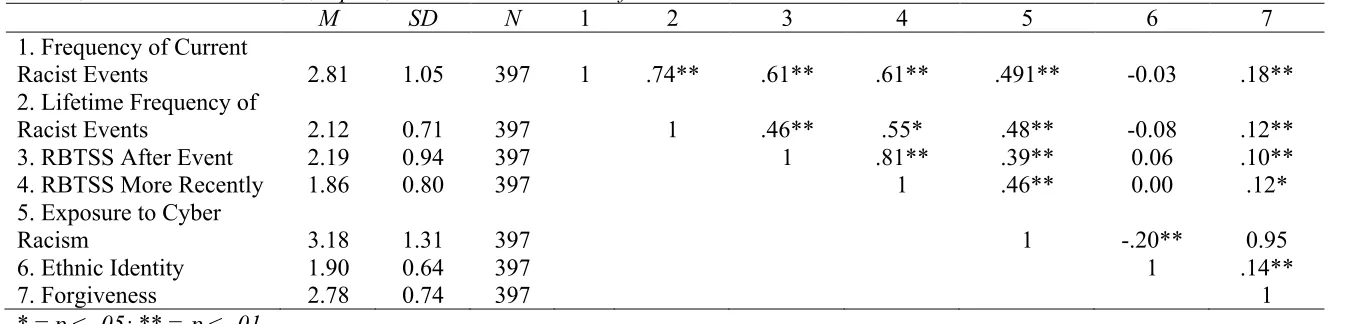
Table 1. Studies examining racial discrimination and trauma outcomes…………..………13 Table 2. Means, standard deviations, N, and intercorrelations of variables…………..…………50
v
LIST OF FIGURES
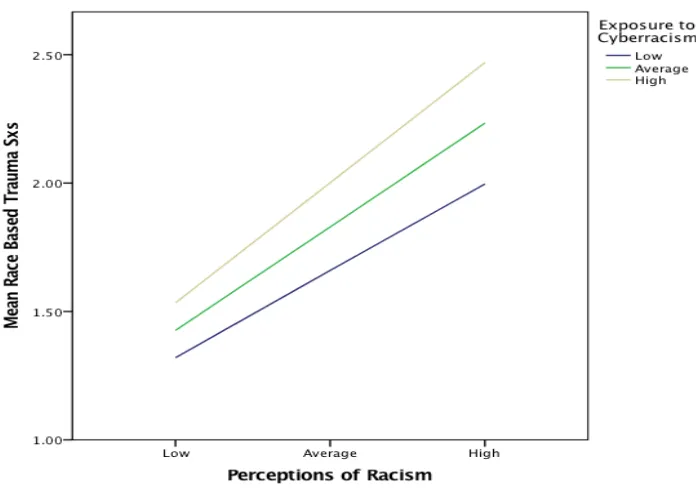
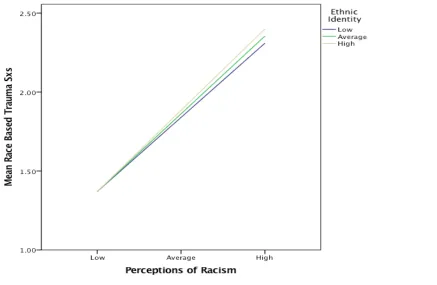
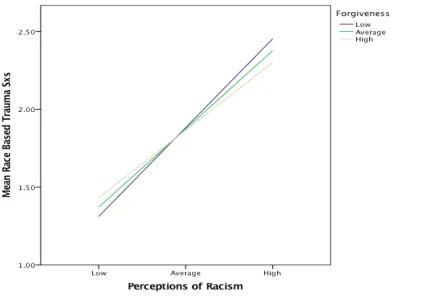
Figure 1. Graph of Interaction of Exposure to Cyber Racism with Perceptions of Racism on Race Based Traumatic Stress Symptom Scores……….….…….….……..……….……….……..52 Figure 2. Graph of Interaction of Ethnic Identity with Perceptions of Racism on Race Based Traumatic Stress Symptom Scores……….….…..….………….…..…..……...…..……….53 Figure 3. Graph of Interaction of Forgiveness with Perceptions of Racism on Race Based
1 A REVIEW OF EMPIRICAL STUDIES EXAMINING RACIAL DISCRIMINATION AS A SOURCE OF TRAUMA
“Struggle is the essence of life for us, yet the form of struggle makes a difference in the psychology of the individual. I have often wished that our struggle could somehow be less agonized, less emotionally complex.”
~James Forman, 1972 The words of Forman (1972) capture some of the ways that racism affects the quality of life, mental health, and physical health of African Americans. Exposure to racial stress leads to negative emotional states, psychological distress, negative coping mechanisms (e.g., substance use, sleep problems), and functional changes in physiological systems (Williams & Mohammed, 2009). Racism traumatizes, hurts, humiliates, enrages, and prevents optimal growth and
functioning of individuals and communities (Adams, 1990; Pierce, 1995). The multiple and persistent ways in which racism affects marginalized populations becomes traumatizing.
Although there are examples of resilience and strength, racism often leads to
hopelessness, isolation, dysfunction, devastation, and exhaustion. Prominent examples of racism abound, include racial incidents on college campuses (e.g., University of Missouri President resigning, University of Oklahoma Sigma Alpha Epsilon singing racist chant); police brutality (e.g., Michael Brown, Sandra Bland, Eric Garner); political activities suggestive of
Racism affects everyone—victims, offenders, and innocents (i.e., young children) who become future victims and offenders. Researchers have sought to understand the nature of racism, prejudice, and discrimination in society and its influence on mental health. The breadth and complexity of racism has not been adequately examined, particularly research examining racism as a source of trauma. The purpose of the current chapter is to understand the traumatic effects that racism has on marginalized people. First, I reviewed key definitions in the literature. Second, I conducted a systematic search of empirical studies on trauma symptoms arising from experiences of racism. Third, I identified the existing gaps in this literature in order clarify important directions for programmatic research on trauma symptoms occurring because of experiences of racism.
Terms Defined and Conceptualized
Race is a social construction that permits the exploitation of one group over another with the development of ideology that justifies it (Dovidio, 2000). It involves myths about populations of people and how they are viewed as naturally or biologically different from other populations (Cokley, 2007). Racism is defined as “the beliefs, attitudes, institutional arrangements, and acts that tend to denigrate individuals or groups because of phenotypic characteristics or ethnic group affiliation” (Clark et al., 1999, p. 805). Racism can be overt, intentional, or unintentional (Sue, 2007).
Racial discrimination can be classified using a tripartite typology, including (a) individual, (b) institutional, and (c) cultural racism (Jones, 1997). Individual racism involves racial prejudice, personal stereotypes, and discrimination that creates and supports disparities between members of different groups. Institutional racism refers to the intentional or
people. For example, Wacquant (2002) outlined four bodies that have successively operated to define, confine, and control African Americans in the history of the United States: slavery (1619-1865), Jim Crow (1865-1965), the ghetto (North, 1915-1968), and the hyperghetto and prison (1968-present). Lastly, cultural racism involves beliefs about the superiority of one’s cultural heritage over that of other races and the expression of this belief in individual actions or institutional policies.
Racial identity refers to “a sense of group or collective identity based on one’s perception that he or she shares a common heritage with a particular racial group” (Helms, 1993, p. 3). Research on racial identity provides insight regarding how experiences of racism may differ based on racial identity (Cokley, 2007). It also helps explain individual differences among perceptions of racism.
Ethnicity refers to a characterization of a group of people who see themselves and are seen by others as having a common ancestry, shared history, shared traditions, and shared
cultural traits such as language, believes values, music, dress, and food (Cokley, 2007). Ethnicity is being used interchangeably with race “when the definition of ethnicity includes biophysical traits” (p. 225). Ethnic identity refers to the subjective sense of ethnic group membership that involves self-labeling, sense of belonging, preference for the group, positive self-evaluation of the ethnic group, ethnic knowledge, and involvement in group activities (Cokley, 2007; Phinney, 1996).
Stress is defined as “a person–environment, biopsychosocial interaction, wherein
multitude of effects at the psychosocial, biological, spiritual, and political level. Events that evoke very high levels of stress traumatize almost everyone, but whether traumatization occurs for events at lower levels of stress depends on a variety of biopsychosocial factors (Lazarus, 1993). Although trauma is a form of stress, it is important to clarify the difference between the two constructs. Trauma is a subset of stressors that involve the following characteristics:
…exposure to actual or threatened death, serious injury, or sexual violence and can take place in one or more of the following ways: (1) directly experiencing the traumatic event(s), (2) witnessing, in person, the event(s) as it occurred to others, (3) learning that the traumatic event(s) occurred to a close family member or close friend and in cases of actual/threatened death of a friend or family member the event(s) must have been violent or accidental, and (4) experiencing repeated or extreme exposure to aversive details of the traumatic event(s). (American Psychiatric Association, 2013, p. 271)
In some cases, traumatic events lead to the development of Posttraumatic Stress Disorder
(PTSD). According to the most recent edition of the Diagnostic and Statistical Manual of Mental Disorders (DSM-5; American Psychiatric Association, 2013), PTSD involves the development of symptoms such as intrusions, avoidance, negative changes in mood and thinking, and
hyperarousal after exposure to a traumatic event. Furthermore, these symptoms are often
accompanied by other problems, such as depression, substance abuse, relationship problems, and physical symptoms (Sanders-Phillips et al., 2014).
1997)—especially those drawing on trauma theories to describe racism or other types of
relational betrayals (e.g., infidelity in romantic relationships)—might include a broader range of existential or relational ruptures.
Carter (2007) proposed a nonpathological model of traumatic stress referred to as race-based traumatic stress and injury. Prior to Carter’s (2013) measure of race-race-based traumatic stress, there were no other assessment tools available that documented the traumatic impact of
particular encounters with racism. Although, researchers have found that racism is related to a range of physical and mental health effects, other elements are essential for the reactions to be considered traumatic. Carter’s measure differs from other trauma measures in that the event is racial and the criteria does not draw directly from DSM criteria for PTSD.
He defines a racial trauma as an event that evokes emotional or physical pain (or the threat thereof) that results from racism in forms of racial harassment, racial discrimination, or discriminatory harassment. Racial encounters can be direct, subtle, or ambiguous. They can occur on an interpersonal level or be the effect of systematic acts. Carter has suggested that for a racial encounter to be traumatic, it must be experienced as sudden, out of one’s control, and highly negative. Symptom clusters typically include intrusions, arousal, avoidance, anxiety, anger, depression, low self-esteem, shame, and guilt. Carter’s measure is currently the only measure of race-based traumatic stress. Whereas there is utility in using instruments that measure the frequency and stress associated with racial discrimination, it is also important to connect encounters of racism with reactions.
Purpose of Present Review
one of the most commonly studied post-trauma psychiatric disorders. Although there is a preponderance of evidence linking racial discrimination to stress and mental health outcomes, there has been a recent theoretical advance introduced by Carter (2007) that conceptualized racism as trauma. The purpose of the review is to examine studies of racial discrimination and trauma related outcomes. Pieterse’s (2012) meta-analytic review of perceived racism and mental health did not solely reflect the relationship between racial discrimination and PTSD, but did conclude that this relationship may be important given that racism has many features associated with trauma. Therefore, this review aimed to assess the evidence about trauma reactions
following exposure to racism or racial discrimination. Method
To locate relevant empirical articles, I used three strategies. First, I searched PsycINFO and Google Scholar on October 9, 2015, using the terms [racial discrimination], [racism] [ethnic discrimination]AND [trauma]. These queries yielded over 1,000 items, which were manually reviewed based on inclusion criteria. Second, I reviewed the references of included papers.
Results Overview of Sampling
The studies in this review include both community adult (n = 4), college student (n = 4) and adolescent (n = 3) samples. Only one study used a longitudinal rather than a cross-sectional design (Cheng & Mallinckrodt, 2015). The samples typically focused on a range of racial/ethnic minorities. For example, three studies were exclusively Latinx participants and one study included a sample of only First Nation or Indian participants. There were other studies (n = 4) that included White participants in their study along with other racially diverse groups. Overview of Measures
Trauma symptoms. Five measures of trauma were used to assess participants’ reactions to racism. Trauma measures are typically used for the assessment of conditions such as PTSD and are generally based on those criteria. In general, these measures are symptom based and target trauma symptoms. Of the five measures, the most commonly used instrument was the Posttraumatic Stress Disorder-Civilian Version (PCL-C; Weathers, Litz, Herman, Huska, & Keane, 1993), followed by the PTSD Symptoms Scale-Self Report (PSS-SR; Foa, Riggs, Dancu, & Rothbaum, 1993), the Childhood Trauma Questionnaire (CTQ; Bernstein & Fink, 1998), the PTSD Checklist-Specific (PCL-S; Weathers, Huska, & Keane, 1991), and the Trauma Symptom Checklist–40 (TSC–40; Briere & Runtz, 1989; Elliot & Briere, 1992). One study identified symptoms of PTSD based on responses to 12 items from the Diagnostic and Statistical Manual for Mental Disorders’ (DSM-4; American Psychiatric Association, 2000).
strategy of assessing race-based traumatic stress (Carter et al., 2013; Carter & Sant-Barket, 2015). In terms of evidence of construct validity, the new measure correlated with depression, instruction, anger, hypervigilance, physical reactions, low self-esteem, and avoidance. The development of this measure contributes to understanding the emotional impact of racism and racial discrimination. Unlike other measures, the RBTSSS link’s a person’s specific memorable racial encounter to possible psychological and emotional reactions that may reflect harm. Carter and Sant-Barket (2015) utilized the sample in Carter et al. (2013) to further assess all parts of the RBTSSS. They were interested in the reaction questions (i.e., After, Recent) to one’s memorable encounter of racism. The authors found that both the After (within one month of the event) and Recent (reactions now when thinking about event) scales were positively and significantly correlated with the seven symptom scales.
Racial discrimination. Racial discrimination was assessed with a variety of measures. In fact, none of the 11 studies used the same measure. Measures of racial discrimination typically assess general or community experiences of racism; others are oriented toward educational or work-place settings. Pieterse (2012) points out that in many racial discrimination and race-related stress research studies, racism is measured with a single item, or as many events occurring over a lifetime, or during the last year or three years (Utsey, 1999; Williams & Mohammed, 2009). This provides us with an understanding of the general effects of racism. In this review, most studies assessed lifetime experiences of racism (n = 4), recent (within one year) experiences of racism (n = 4), and one focused on a specific context such as education.
The following are some of the instruments that were found to be used in the studies that were selected for review: The General Ethnic Discrimination (GED) scale (Landrine, Klonoff,
al. 2005); the Discrimination Stress Scale (Flores et al., 2008); the Spencer Discrimination Scale (SDS; Kang & Burton, 2014); Racial Climate Scale (RCS; Reid & Radhakrishnan, 2003); the Racial and Ethnic Microaggressions Scale (REMS; Nadal, 2011); the Perceived Discrimination (PD) subscale of the Acculturative Stress Scale for International Students (ASSIS; Sandhu & Asrabadi, 1994); the Race-Related Events Scale (RES; Waelde et al., 2005).
Primary Findings
Overall, most studies (n = 10) included found that experiences of discrimination were associated with trauma related symptoms. Effect sizes ranged from small to moderate. For example, in a sample of 383 Chinese international students, Wei et al. (2012) found a moderate relationship (r = .46) between racial discrimination and symptoms of post-traumatic stress. Currie et al. (2013) found the smallest relationship (r = .22) in a community sample of 381 Aboriginals or Indians.
Three studies examined post-traumatic stress as a mediator between perceived racial discrimination and another mental health outcome (Currie et al., 2013; Flores, Tschann, & Dimas, 2010; Torres & Taknint, 2015). Currie et al. (2013) found that PTSD was not a
significant mediator in the association between racial discrimination and problem gambling. In a sample of 113 Latinx adults, traumatic symptoms mediated the relationship between ethnic microaggressions and depression (Torres & Taknint, 2015).
racial discrimination and traumatic symptoms was stronger at higher levels of racial/ethnic iden-tity (Khaylis, Waelde, & Bruce, 2007).
Although not the focus of the review, racial discrimination and trauma symptoms were also correlated with other negative outcomes such as illegal behaviors, substance use, sexual ac-tivity, and involvement in physical fights (Kang & Burton, 2014; Flores, Tschann, & Dimas, 2010; Sanders-Phillips et al., 2014). These findings are also important because it provides evi-dence that racial discrimination is a serious problem that not only inflicts stress and trauma, but also has the potential to lead to other negative consequences.
Discussion
This review has documented a robust link between racial discrimination and trauma. Findings suggest that exposure to racism can result in trauma related symptoms and are consistent with growing empirical literature conceptualizing racism as trauma (Ford, 2008; Khaylis, Waelde, & Brice, 2007; Pieterse et al., 2010). The contribution of this review highlights the need for more research to be conducted. For example, only 11 studies were available for examination. Furthermore, research in this area should explore moderating effects as some studies have shown that certain factors can strengthen or weaken the relationship between perceived discrimination and trauma symptoms (see Carter et al., 2017, Mossakowski, 2003; Neblett, Rivas-Drake, & Umaña, 2012; Tynes et al., 2012).
In many racial discrimination and race-related stress research studies, racism was
pointed out that when researchers link racism to trauma, it has typically been accomplished by following the definition of trauma as it related to PTSD (e.g., Bryant-Davis & Ocampo, 2005; Roberts, Gilman, Breslau, Breslau, & Koenen, 2011). This calls for Carter’s measure to be utilized more in research.
Carter’s (2007) conceptualization of race-based traumatic stress injury was based on the literature on the effects of racism and race-related stress, and the indirect evidence from the PTSD literature. Carter (2007) used Carlson’s (1997) notion of traumatic stress and applied it to racial encounters. Furthermore, he argued that race-based traumatic stress was brought on by emotional pain from a memorable racial encounter and includes a cluster of emotional symp-toms. There has been some support for the notion of race-based traumatic stress and more is needed.
The current review had several notable limitations. First, the inconsistency in measures precluded my ability to evaluate results using meta-analyses. As discussed above, 11 different measures of racial discrimination were used, some of which used very different ways of
Conclusion
Given the gaps in work on racism and traumatic stress, I call for an aggressive research agenda. A critical issue involves clearly broadening our conceptualization of trauma to include relational and existential ruptures. First, currently there is only one measure of race-related traumatic stress. This measure has many strengths, but other measures are also needed in order to advance a vibrant field of study. Second, the relationship between perceived racial discrimination and post-traumatic symptoms appears fairly robust, but no research has employed designs that allow for stronger causal influence. For example, studies of college students in their first year might examine how serious incidents of racism may affect a variety of appraisal and stress-related variables over time during the adjustment to college. Or experimental studies might examine how ongoing experiences or memories of racism can amplify post-traumatic symptoms. Third, research should continue to explore theory-derived moderators of the relationship between perceived racial discrimination and post-traumatic stress (Williams & Mohammed, 2009).
Table
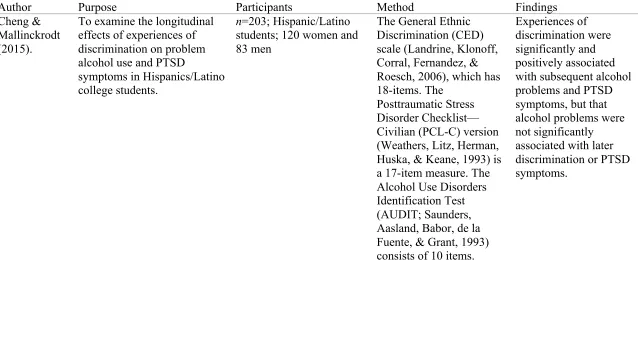
Table 1
Studies Examining Racial Discrimination and Trauma Outcomes
Author Purpose Participants Method Findings Cheng &
Mallinckrodt (2015).
To examine the longitudinal effects of experiences of discrimination on problem alcohol use and PTSD
symptoms in Hispanics/Latino college students.
n=203; Hispanic/Latino students; 120 women and 83 men
The General Ethnic Discrimination (CED) scale (Landrine, Klonoff, Corral, Fernandez, & Roesch, 2006), which has 18-items. The
Posttraumatic Stress Disorder Checklist— Civilian (PCL-C) version (Weathers, Litz, Herman, Huska, & Keane, 1993) is a 17-item measure. The Alcohol Use Disorders Identification Test (AUDIT; Saunders, Aasland, Babor, de la Fuente, & Grant, 1993) consists of 10 items.
Carter & Sant-Barket (2015).
The purpose of the article was to discuss how psychologists and mental health
professionals can use the RBTSSS in assessing the presence of stress and traumatic stress reactions to racial discrimination and racism experiences. In study 1, the authors wanted to determine whether the "after" the event and "recent"
reaction responses of the RBTSSS were positively and significantly related. In study 2, the authors wanting to determine if there were demographic group
differences on the RBTSSS.
n=381; adults, of whom 278 (73%) were female, 102 (27%) were male, and one nonresponse; self-reported racial group memberships were Black (32.8%), White (23.6%), Hispanic (22.6%), Asian/Pacific Islander (14.2%), Biracial (6.3%), and Other (0.5%). Sample from Carter et al., 2013 study.
Race-Based Traumatic Stress Symptom Scale was used to assess the prevalence and severity of psychological and
emotional distress to memorable encounters of racism and racial
discrimination.
Results of Study 1 indicated that the seven After and seven Recent reaction scales of the RBTSSS were positively and significantly related across all seven
functions. In study 2, no significant group
differences were found for any of the
demographic variables except age. In addition, the Change items of the RBTSSS provide important and valuable information pertaining to the individual’s functioning that might be observed by others. Carter et al.
(2013).
The study reports on the initial development of the Race-Based Traumatic Stress Symptom Scale (RBTSSS), developed to assess symptoms associated with experiences of racism and racial
discrimination.
n=381; adults, of whom 278 (73%) were female, 102 (27%) were male, and one nonresponse; self-reported racial group memberships were Black (32.8%), White (23.6%), Hispanic (22.6%), Asian/Pacific Islander (14.2%), Biracial (6.3%), and Other (0.5%).
Scale construction, item development, and exploratory factor analyses
combination of the individual scales that assess reactions to a memorable racial incident that has lasting emotional impact. Currie, Wild, Schopflocher, Laing, Veugelers, & Parlee (2013).
To examine associations between racial discrimination and problem gambling among urban Aboriginal adults, and the extent to which this link was mediated by post traumatic stress.
n=381; First Nations, Aboriginal, or Indian community sample; 212 female and 150 male
Problem gambling was assessed using the Problem Gambling Severity Index (PGSI); a nine-item subset of the full measure. The Experiences of
Discrimination (EOD) Scale measured self-reported discrimination due to Aboriginal race across nine situations (Krieger et al. 2005). The PTSD Checklist-Civilian Version (PCL) was used to assess current PTSD symptoms (Weathers et al. 1991).
Racial discrimination was significantly and positively associated with PTSD
Flores, Tschann, & Dimas (2010).
To examine posttraumatic stress symptoms as a potential mediator between perceived racial/ethnic discrimination and health risk behaviors.
n=110; Mexican American adolescents; 54% male and 46% female
Authors used the 14-item Discrimination Stress Scale (Flores et al., 2008). Posttraumatic stress symptoms was measured by using a modified version of the PTSD Symptoms Scale—Self-Report (PSS–SR; Foa, Riggs, Dancu, & Rothbaum, 1993). Alcohol use was measured by using a composite of four items from the Drinking Styles Questionnaire
(Christiansen, Smith, Roehling, & Goldman, 1989). Marijuana use was measured with a single item. A 20-item
involvement in fight scale was developed. A single item assessed for number of sexual partners.
Adolescents who perceived more racial/ethnic discrimination reported worse posttraumatic stress symptoms. Adolescents who experienced heightened posttraumatic stress symptoms reported more alcohol use, more other drug use, more involvement in fights, and more sexual partners. When
posttraumatic stress was included as a mediator, perceived racial/ethnic discrimination was related to fights; adolescents who perceived more racial/ethnic
discrimination were involved in more fights. Posttraumatic stress symptoms mediated the effects of perceived racial/ethnic
Kang & Burton (2014).
To understand racial
disproportionality in juvenile delinquency by examining the effects of racism and
psychological consequences of trauma.
n=189; 54% AA, 20% White, 12%
Hispanic/Latino, & 10% Other; youth and all males
The Spencer
Discrimination Scale (SDS), which we used to assess perceived
experiences of
discrimination. The Self Reported Delinquency Survey (SRD) was used to assess delinquency (Elliot, Huizinga, & Ageton, 1985). This is a 32-question measure. The Childhood Trauma Questionnaire (CTQ; Bernstein & Fink, 1998). In addition, the Trauma Symptom Checklist–40 (TSC–40; Briere & Runtz, 1989; Elliot & Briere, 1992) was used to assess trauma symptoms.
Childhood trauma, trauma symptoms, and racial discrimination experiences all
significantly contribute to juvenile delinquency, but participants who experienced greater racial discrimination had higher
Pieterse & Carter (2010).
To examine the associations among perceptions of racial and/or ethnic discrimination, racial climate, and trauma-related symptoms in a sample of racially diverse college students.
n=289; college students; 170 students (55%) identified as White and/or European American, 47 identified (15%) as Black and/or African American, and 71 identified (23%) as Asian and/or Asian
American. There were 114 male (39%) and 173 female (61%) students.
Stress was measured with the Perceived Stress Scale–10 (PSS; Cohen, Kamarck, & Mermelstein, 1983; Cohen &
Williamson, 1988). Trauma symptoms were measured with the Posttraumatic Stress Disorder Checklist— Civilian Version (PCL-C; Weathers, Litz, Herman, Juska, & Keane, 1993). Discrimination was measured using the 22-item PEDQ (Contrada et al., 2001). Racial climate was measured using the 8-item Racial Climate Scale (RCS; Reid &
Radhakrishnan, 2003).
Racial and/or ethnic discrimination was a significant and positive predictor of trauma-related symptoms for Black students. For Asian students, perceived
discrimination and racial climate both had a significant, positive, bivariate association with trauma-related symptoms. However, the final step of the multiple regression analysis suggested that after controlling for general distress, racial climate and not perceived
Sanders-Phillips, Kliewer, Tirmazi, Nebbitt, Carter, & Key (2014).
To examine the relationship between perceived racial discrimination, psychological distress, alcohol, and
marijuana use in African American high school students.
n=567; African American high school students (61% female) who were part of a larger study of drug use in African American youth.
Questions regarding alcohol and marijuana use were taken from the Centers for Disease Control (CDC) Youth Risk Behavior Survey. The CES-D 8-item version (Melchior, Huba, Brown, & Reback, 1993) was used to assess symptoms of depression during the past week. Symptoms of PTSD were identified based on responses to 12 items from the Diagnostic and Statistical Manual for Mental Disorders’ (DSM-4; American Psychiatric Association, 2000). Perceived racial discrimination was measured using a
composite score from two questions.
Racism was associated with higher levels of depressive and posttraumatic stress symptoms, but not with alcohol or marijuana use. Depressive symptoms were associated with more alcohol but not more marijuana use. Posttraumatic stress symptoms were associated with higher levels of both alcohol and marijuana use, albeit not strongly.
Torres & Taknint (2015).
The current study sought to examine the moderating and mediational pathways linking ethnic microaggressions to depressive symptoms among Latino adults.
n=113; Latino/a adults (42 male, 67 female, 4 who did not report gender)
Racism was measured using the Racial and Ethnic Microaggressions Scale (REMS; Nadal, 2011). Ethnic identity was measured using the
Multigroup Ethnic
Identity Measure- Revised
Moderated mediational analyses revealed statistically significant conditional indirect effects in which traumatic stress
(MEIM-R; Phinney & Ong, 2007). The General Self Efficacy Scale (GSE; Schwarzer & Jerusalem, 1995) was also used in this study. Trauma was assessed using the 17-item PTSD Symptoms Scale-Self Report (PSS-SR; Foa, Riggs, Dancu, & Rothbaum, 1993).
ethnic microaggressions and depression while ethnic identity and self-efficacy functioned as moderators. The major findings suggested that the indirect effects were the most robust within low ethnic identity and low self-efficacy. Wei, Wang,
Heppner, & Du (2012).
To examine the relationship between perceived racial discrimination, posttraumatic stress symptoms, and social connectedness as a moderator.
n=383; Chinese international students from two public
universities; 182 (48%) men, 192 (50%) women, and nine who did not report their sex; 61% were graduate students, 35% undergraduate students, and 4% others.
The Perceived Stress Scale-4-item (Cohen, Kamark, &Mermelstein, 1983); The Perceived Discrimination (PD) subscale of the
Acculturative Stress Scale for International Students (Sandhu & Asrabadi, 1994); The Social Connectedness in the Ethnic Community Scale and Social Connectedness in Mainstream Society Scale (Yoon, 2006); The Posttraumatic Stress Disorder Checklist (PCL; Weathers, Litz, Huska, & Keane 1994).
Perceived racial discrimination positively predicted PTSD symptoms after controlling for
perceived general stress. There was a significant moderation effect of Ethnic Social Connectedness, but there was no significant moderation effect of Mainstream Social Connectedness on the association between perceived racial discrimination and posttraumatic stress symptoms. Khaylis, Waelde, & Bruce (2007).
The purpose of this study was to clarify whether ethnic identity moderates the
n=91; undergraduate students (11% Caucasian, 6.6% African American,
The Multigroup Ethnic Identity Measure (MEIM; Phinney, 1992) was used
relationship between the race-related stress and PTSD symptoms.
18.7% Hispanic, 47.3% Asian, 5.5% Middle Eastern, and 8.8% Other) who reported experiences of race-related stress.
to measure the degree of identification with the subject’s self-identified ethnic group. The Race-Related Events Scale (RES; Waelde et al., 2005). measure assessed perceived exposure to race-related stress. The PTSD Checklist-Specific (PCL-S; Weathers, Huska, & Keane, 1991) was used to assess the past-month severity of 17 PTSD symptoms.
correlated with PTSD symptoms across multiple ethnic groups. Race-related stress, but not ethnic identity predicted PTSD symptoms when exposure to the other variables were
statistically taken into account. The significant interaction suggests that the relationship of race-related stress to PTSD symptoms is
References
Adams, P.L. (1990). Prejudice and exclusion as a social traumata. In J.D. Noshpitz & R.D. Coddington (Eds.), Stressors and the adjustment disorders (p. 362-391). New York: John Wiley.
Anderson, L. P. (1991). Acculturative stress: A theory of relevance to Black Americans. Clinical
Psychology Review, 11, 685–702.
American Psychiatric Association. (2013). Diagnostic and statistical manual of mental disorders (5th ed.). Washington, DC: Author.
Carlson, E.B., & Dalenberg, C.J. (2000). A conceptual framework for the impact of traumatic experiences. Trauma, Violence, & Abuse, 1, 4-28.
Carlson, E. B. (1997). Trauma assessments: Clinician’s guide. New York: Guilford.
Carter, R.T., & Sant-Barket, S.M. (2015). Assessment of the impact of racial discrimination and racism: How to use the race-based traumatic stress symptom scale in practice.
Traumatology, 21, 32-39.
Carter, R.T., Mazzula, S., Victoria, R., Vazquez, R., Hall, S., Smith, S., Sant-Barket, S., Forsyth, J., Bazelais, K, & Williams, B. (2013) The development of the race-based traumatic stress symptom scale, Psychological Trauma: Theory, Policy, Research, and Practice, 5, 1-9.
Carter R. T., & Forsyth J. M. (2009). A guide to the forensic assessment of race-based traumatic stress reactions. The Journal of the American Academy of Psychiatry and the Law, 37, 28-40.
Cheng, H. & Mallinckrodt, B. (2015). Racial/Ethnic discrimination, posttraumatic stress symptoms, and alcohol problems in a longitudinal study of Hispanic/Latino college students. Journal of Counseling Psychology, 62, 38-49.
Clark, R., Anderson, N. B., Clark, V. R., & Williams, D. R. (1999). Racism as a stressor for African Americans: A biopsychosocial model. The American Psychologist, 54, 805-816. Coakley, J.J. (2007). Sport in society: Issues and controversies. 9th ed. New York: McGraw-Hill Cokley, K. (2007). Critical issues in the measurement of ethnic and racial identity: A referendum
on the state of the field. Journal of Counseling Psychology, 54, 224-234.
Currie, C.L., Wild, T.C., Schopflocher, D.P., Laing, L., Veugelers, P., & Parlee, B. (2013). Racial discrimination, posttraumatic stress, and gambling problems among urban Aboriginal adults in Canada. Journal of Gambling Studies, 29, 393-415.
Dovidio, J. (2000) Racism. In Kazdin, A. (Ed.), The encyclopedia of psychology (Vol. 6, pp. 497-501). Washington, D.C.: Oxford University Press.
Erguner-Tekinalp, B. (2009). Daily experiences of racism and forgiving historical offenses: An African American experience. International Journal of Humanities and Social Science, 4, 1–9.
Flores, E., Tschann, J. M., Dimas, J. M., Pasch, L. A., & de Groat, C. L. (2010). Perceived racial/ethnic discrimination, posttraumatic stress symptoms, and health risk behaviors among Mexican American adolescents. Journal of Counseling Psychology, 57, 264–273. Gillborn, D. (2005). Education policy as an act of White supremacy: Whiteness, critical race
Helms, J. E. “Introduction: Review of Racial Identity Terminology.” In J. E. Helms (ed.), Black and White Racial Identity: Theory, Research and Practice. Westport, Conn.: Praeger, 1993.
Jones, J. (1997) Prejudice and racism (2nd ed.) Washington, D.C: McGraw-Hill.
Kang, H.K. & Burton, D.L. (2014) Effects of racial discrimination, childhood trauma, and trauma symptoms on juvenile delinquency in African American incarcerated youth, Journal of Aggression, Maltreatment & Trauma, 23, 1109-1125,
Khaylis, A., Waelde, L., & Brice, E. (2007). The role of ethnic identity in the relationship of race-related stress to PTSD symptoms among young adults. Journal of Trauma and Dissociation, 8, 91–105.
Pierce, C.M. (1995). Stress analogs of racism and sexism. Terrorism, torture, and disaster. In C.V. Willie, P.P. Reiker, B.M. Kramer, & B.S. Brown (Eds.), Mental health, racism, and sexism (p. 277-293). Pittsburg: University of Pittsburg Press.
Pieterse, A. L., Carter, R. T., Evans, S. A., & Walter, R. A. (2010). An exploratory examination of the associations among racial and ethnic discrimination, racial climate, and trauma-related symptoms in a college student population. Journal of Counseling Psychology, 57, 255–263.
Robinson, J.L., & Rubin, J.L. (2015): Homonegative microaggressions and posttraumatic stress symptoms. Journal of Gay & Lesbian Mental Health.
Sanders-Phillips, K., Kliewer, W., Tirmazi, T., Nebbitt, V., Carter, T., & Key, H. (2014).
Szymanski, D.M. & Balsam, K. (2011). Insidious trauma: Examining the relationship between heterosexism and lesbians’ PTSD symptoms. Traumatology, 17, 4-13.
Torres, L. & Taknint, J.T. (2015). Ethnic microaggressions, traumatic stress symptoms, and Latino depression: A moderated mediational model. Journal of Counseling Psychology, 62, 393-401.
Wacquant, L. (2002). From slavery to mass incarceration: Rethinking the ‘race question’ in the US. New Left Review 13, 41-60.
Wei, M., Wang, K. T., Heppner, P. P., & Du, Y. (2012). Ethnic and mainstream social connectedness, perceived racial discrimination and posttraumatic stress symptoms. Journal of Counseling Psychology, 59, 486-493.
2 EXPERIENCES OF RACISM AND RACE-BASED TRAUMATIC STRESS:
THE MODERATING EFFECTS OF CYBER RACISM, RACIAL/ETHNIC
IDENTITY, AND FORGIVENESS
Race is an elusive construct with profound real world impact. Attached to the
characteristics of darker or lighter skin, straight, curly, or coiled hair are values, assumptions, and historical meanings. While race is not a biological reality, being classified as Black, Asian, Latinx, or Native American has never carried the same advantages as being considered White in the United States. Race has been used to justify attitudes, actions, and policies based on the belief that persons in one racial category are inherently superior to people in other categories. For example, in 2013 the Federal Bureau of Investigation (FBI) found that 3,407 single-bias hate crime offenses were racially motivated and of those offenses, 66.4 percent were motivated by anti-Black or African American bias.
According to Jones (1997), racism has three fundamental components. First, it is rooted in beliefs (i.e., stereotypes) about group differences that are assumed to reflect biological differences. Second, racism involves differentiated negative evaluations and feelings about the group relative to one’s own (i.e., prejudice). Third, it reflects disparate treatment of groups by individuals and institutions in ways that are justified by and tend to perpetuate negative beliefs, attitudes, and outcomes (i.e., discrimination). People are not born with ideas about race, racism, or stereotypes. However, as people interact with each other and the environment, they learn to give meaning towards identities (Solorzano, Ceja, & Yosso, 2000).
refusal to seek health services (Lee, Ayers, & Kronenfeld, 2009). Due to the rise of social media, researchers have recently begun to investigate racist speech on the internet (Daniels, 2013; Hughey & Daniels, 2013). For example, the Southern Poverty Law Center (Potok, 2015) has found that while there has been a decline in active hate groups (e.g., Ku Klux Klan, Neo-Nazi) since 2013, it is likely attributed to a move toward cyberspace. Through online content, groups and individuals can broadcast their opinions across the world via the Internet and at the same time remain as anonymous as they choose. Use of the internet provides greater opportunity for anonymity, a deviation from societal norms, and disinhibition than is typical in face-to-face communication (Suler, 2004).
Experiences of racism are changing based on technological advances, and it is especially important to consider whether protective factors discovered in traditional research on racial discrimination also hold for people of color spending considerable time in online contexts (e.g., Internet, social media platforms, etc.). Tynes et al. (2012) describes online racial discrimination as denigrating or excluding an individual based on his or her race through use of symbols, voice, images, text, and graphic representations. Online racial discrimination occurs in social
networking sites, chat rooms, discussion boards, text messaging web pages, online videos, music, and online games. For example, two European American males who represented the fraternity Sigma Alpha Epsilon (SAE) at the University of Oklahoma posted a party bus video that went viral in which they performed a racist chant with the lyrics “You can hang him from a tree, but he'll never sign with me. There will never be a ni**er at SAE” (see
another, a pernicious aspect of online discrimination is that it often occurs anonymously or pseudoanonymously (i.e., a person is only known by their username; Glaser & Kahn, 2005).
Studying online racial discrimination has never been more critical. The first African American president has recently completed his second term in office, replaced by Donald Trump, who employed a political strategy that relied heavily on volatility of social media and evoking anger in conservative subgroups which are susceptible to xenophobic messaging. This stark political transition occurred after several years of increasing racial tension. Access to smartphones allowed almost anyone to document videos of racial discrimination. A variety of horrific videos went viral, including a series of deaths of African Americans at the hands of police officers. These events have given rise to a variety of activist initiatives, including perhaps most notably the Black Lives Matter movement. This racial and political turmoil has led to the potential for a high degree of political conflict on social media across multiple social networks. Indeed, there is little empirical research on how online exposure to racism affects African Americans. Accordingly, the purpose of the present study is to address this gap and the need for research explicitly focused on the influence of social media exposure to racism on the
development of race based traumatic stress symptoms for African Americans, as well as exploring other potential moderators (e.g., racial identity, forgiveness) based on extant theory and research (Leach, Baker, & Ziegler-Hill, 2011; Sellers et al., 2006).
Evidence that Perceived Discrimination is Related to Post-Traumatic Symptoms
Carlson, 1997), and ongoing experiences of discrimination (e.g., microaggressions) can compound stress and trigger ongoing stress responses (e.g., rumination). Although racial discrimination has been robustly linked with mental health (for a review, see Pieterse, Todd, Neville, & Carter, 2012) and physical health symptoms (Carter, Lau, Kirkinis, & Johnson, 2015), there is limited empirical work examining the link between perceived racial discrimination and post-traumatic stress.
Cyber Racism and Online Discrimination. Over the past few years, instances of racial
violence have proliferated in the United States (e.g., Philando Castile, Sandra Bland, Michael Brown, Alton Sterling, Trayvon Martin, Oscar Grant, Tamir Rice, Jordan Davis, Freddie Gray, and Eric Garner). Although the Internet and social media may provide some advantages, such as connectedness, opportunities to seek social support, and engage in social activism, it also may force people to encounter a steady onslaught of exposure to potential triggers that may make emotional healing from prior offenses difficult. Indeed, the cyber world has created an entirely new arena for African Americans to encounter racism. Racism No Way (n.d.), an anti-racism education initiative designed to combat racism through education, defines cyberracism as (1) “a form of racial hatred in online public spaces and or vilification” and (2) “a form of cyber
2008; Utsey et al., 2008; Williams & Mohammed, 2009). As it relates to social media, studies have shown that recurrent or frequent social media use can influence depression and other mental health symptoms (Augner & Hacker, 2012; Bicham, Hswen, & Rick, 2015). Additionally, time spent using social media also increases the risk of exposure to social isolation, cyberbullying, and online racist content (Best, Manktelow, & Taylor, 2014; Bonilla & Rosa, 2015). Lastly, there have been several studies that have provided evidence of common and explicit interpersonal exchanges of overt and covert racist messages between internet users on social media platforms (Bonilla & Rosa, 2015; Chaudhry, 2015; Harrison, Janson, & Connolly, 2010; Tynes, Giang, Williams, & Thompson, 2008; Tynes, Reynolds, & Greenfield, 2004). Tynes et al. (2010), adapted an online victimization scale to assess individual and vicarious domains of interpersonal online racism for adolescents.
may strengthen the relationship between perceived discrimination and race-related post-traumatic stress.
Racial Identity. One factor that may buffer the relationship between perceived-racial
discrimination and race-related post-traumatic stress is racial identity. Racial identity refers to “a sense of group or collective identity based on one’s perception that he or she shares a common heritage with a particular racial group” (Helms, 1993, p.3). Research on racial identity provides insight regarding how experiences of racism may differ based on racial identity (Cokley, 2007). Racial identity can also partially explain why individuals may interpret and react to instances of racism differently, depending on their level of development.
Past research provides inconsistent findings regarding whether racial identity protects individuals experiencing racism from developing psychological symptoms. Some studies have supported this hypothesis. For example, in a sample of 307 adolescents, the relationship between trauma symptoms and delinquency was weaker in participants with higher racial/ethnic identity status (Bruce & Waelde, 2008). These findings converge with other work on the relationship between racial discrimination and the development of psychological symptoms in African Americans (Davis, Aronson, & Salinas, 2006; Oney, Cole, & Sellers, 2011; Neblett et al., 2012). Alternatively, some studies have found the opposite. For example, in a sample of 91 racial minorities, higher ethnic identity actually intensified the relationship between perceived racial discrimination and post-traumatic stress symptoms (Burrow & Ong, 2009; also see Khaylis, Waelde, & Bruce, 2007).
Forgiveness. A second factor that may buffer the relationship between perceived
offender (Exline et al., 2003; Fehr et al. 2010; Karremans & Van Lange, 2008). Forgiveness has been robustly linked to positive mental health benefits (Fehr et al., 2010; Davis et al., 2015). In a racially divided society such as the United States, the concepts of reconciliation, public apology, and the offering and acceptance of forgiveness are important topics for scientific inquiry. For example, after the racially motivated shooting of nine African Americans at a church in
Charleston, South Carolina, some congregants quickly communicated a decision to forgive the perpetrator. This sparked considerable controversy regarding whether forgiveness might be potentially harmful to some people, especially when it occurs so quickly after a major tragedy. Research has illustrated that religion/spirituality serves as a buffer against experiences of
discrimination (Bierman, 2006; Odom & Vernon-Fargas, 2010). Despite over a thousand studies on forgiveness, only a few studies have examined forgiveness as a way of coping with racial discrimination (e.g., Davis et al., 2015). Public apology and accepting offers of forgiveness may serve as a balm for healing the wounds of both the oppressed and the oppressor, but it is
important to explore the contexts in which forgiveness as coping is more or less helpful for African Americans.
The Present Study
substance use, and anxiety (Williams & Mohammed, 2009). I also expected that perceived racism or racial discrimination would be positively related to trauma related symptoms.
I examined one construct expected to amplify, as well as two constructs expected to buffer, this relationship. Specifically, I hypothesize that higher exposure to cyberracism will amplify the relationship between perceived racial discrimination and race-based traumatic stress. I expect this to occur based on previous findings of perceived racial discrimination, trauma symptoms, and experiences with online discrimination (Pieterse & Carter, 2010; Tynes et al., 2012). Alternatively, I hypothesize that higher levels of racial identity, as well as forgiveness will serve as a protective factor, buffering African Americans from the relationship between perceived racial discrimination and race-based traumatic stress. These hypotheses are consistent with other research that has found racial/ethnic identity and spirituality to buffer the effects of chronic physical and mental health problems (Bierman, 2006; Wink et al., 2005).
Method
Participants
Participants were 397 Black/African American adults recruited through an online survey. Ages ranged from 18 to 66 years, with a mean of 32.73 (SD = 9.52). Participants were 55.9% of female (n = 222) and 44.1% of male (n = 175). In terms of religious/spiritual identity, most identified as Christian (71.3%, n = 283); others identified as Agnostic (10%, n = 40), Atheist (6%, n = 24), or Other (7.6%, n = 30). Participants reported completing some college (42.3%, n =168), a bachelor’s degree (39.3%, n = 156), or graduate work (9.6%, n = 38).
Procedure. The current study employed a cross-sectional, correlational design. The
Mechanical Turk functions as a crowdsourcing internet marketplace for the work and completion of Human Intelligence Tasks (HITs). In general, M-Turk participants are more demographically diverse than standard internet samples and significantly more diverse than American college samples (Buhrmester, Kwang, & Gosling, 2011). Recruitment via M-Turk relies on self-selection, and participants log onto M-Turk’s secured website with a user ID and password. Participants or M-Turk workers can browse a diverse list of HITs (e.g., research studies, data input tasks) uploaded by M-Turk requesters (e.g., researchers). The HIT for this study was described as, “A survey about experiences with racism.” The survey contained measures of variables that assessed perceptions of racism and the relationship between race based traumatic stress symptoms, cyber racism, racial/ethnic identity, and forgiveness.
Measures
Racial discrimination. Perceived racial discrimination was assessed with the 17item
Frequency subscale of the Schedule of Racist Events (SRE; Landrine & Klonoff, 1996; see Appendix E). The SRE has three subscales: (a) Frequency of Current (in the past year) racist events; (b) Frequency of Lifetime racist events; and (c) Appraisal of the degree of stressfulness
of the events. For this study, only the Frequency of Current (in the past year) racist events subscale was used. Each of these items are rated on a 6-point Likert-type scale with the following anchors: 1 = Never Happened; 2 = Once in a While (less than 10% of the time); 3 = Sometimes (10–25% of the time); 4 = A Lot (26–49% of the time); 5 = Most of the Time (50– 70% of the time); and 6 = Almost all of the Time (more than 70% of the time). The items are scored on a six-point summated rating scale. Scores can range from 18 to 108 for the frequency subscales; higher scores indicate higher frequency of racist events. An example item is, “How many times have you gotten into an argument or a fight about something racist that was done to you or done to somebody else?” Evidence of the SRE’s validity has been observed in relation to the African American Acculturation Scale (Landrine & Klonoff, 1994) and mental health among African Americans (Klonoff, Landrine, & Ullman, 1999). The SRE demonstrated evidence of reliability with Cronbach’s alpha coefficients ranging from .94 to .95 (Klonoff & Ladrine, 1999). For the present study, the Cronbach’s alpha coefficient for the Frequency subscale was .94.
Race-based traumatic stress. Race-based traumatic stress was assessed with the 52-item
questions. Regarding this event, respondents answer how they were feeling right after the event
(within one month) and more recently or now when thinking about the event.” For this study,
only the Recent Reactions scales were used. Participants rate items using a 5-point Likert scale, ranging from 0 = Does not describe my reaction to 4 = This reaction would not go away. Items are summed for the subscales and higher scores indicate greater presence of that reaction. An example item is “As a consequence of the memorable encounter I had with racism, I was in a state of nervous tension.” The RBTSSS showed evidence of reliability; the Cronbach alpha coefficient for Depression was .90; Intrusion, .89; Anger, .91; Hypervigilance, .91; Physical reactions, .87; Self-esteem, .85; and Avoidance, .66). This scale shows evidence of construct validity (Carter & Muchow, 2017), being related to classes of racism and psychological outcomes (i.e., anxiety, depression, loss of control). For the present this study, the Conbach’s alpha coefficient for the Recent Reaction subscale was .98.
Racial identity. Racial/ethnic identity was assessed with the 14-item version of the
Trait forgiveness. A tendency to forgive across offenses and relationships was assessed
with the 10-item Trait Forgivingness Scale (TFS; Berry, Worthington, O’Connor, Parrott, & Wade, 2005; see Appendix E). Participants are instructed to indicate their agreement with each item on a 5-point Likert scale from 1 = Strongly disagree to 5 = Strongly agree. An example item is, “I can usually forgive and forget an insult.” The TFS had Cronbach’s alphas ranging from .74 to .80 (Berry et al., 2005). The scale shows evidence of construct validity, correlating positively with agreeableness, empathic concern, and perspective taking, and correlating negatively with anger, rumination, and hostility (Berry et al., 2005). For the present study, the Cronbach’s alpha coefficient was .79.
Cyberracism. Perceptions of online racial discrimination were assessed with the 15-item
Results
Preliminary Analysis
The Statistical Package of Social Sciences (SPSS) 23.0 was used to generate an electronic data set and conduct all analyses. This study employed a quantitative cross-sectional research design where perceptions of racism served as the independent or predictor variable, race-based traumatic stress symptoms served as the dependent or outcome variable, and racial/ethnic identity, forgiveness, and cyberracism served as moderating variables. The original sample consisted of 652 participants. Upon examination of these cases, 255 were deleted due to the participants not passing two out of three validity items in the survey.
Assumption testing. There are several assumptions of regression analyses (e.g., little to
no multicollinearity, homoscedasticity, linear relationships; Tabachnick & Fidell, 2001). Of the 397 participants remaining in the data set, missing value analysis was conducted. Little’s MCAR test was significant (X2 [35475] = 37232.01, p < .001), indicating that the data were not missing completely at random (MCAR). Since the data is not MCAR, we can assume that the data is missing at random (MAR), meaning there is a systematic relationship between the propensity of missing values and the observed data, but not the missing data. Whether an observation is missing has nothing to do with the missing values, but it does have to do with the values of an individual’s observed variables. Data “missing completely at random” and “missing at random” are considered “ignorable”; no information should be included about the missing data itself. Based on recommendations by Schlomer, Bauman, and Card (2010), expectation maximization was utilized to impute values for missing data.
in the measurement or it may indicate an experimental error. Univariate outliers were explored by examining the standardized values of each variable against suggested cutoff scores (i.e., 3 or more standard deviations above the mean) discussed by Van Selst and Jolicoeur (1994). There were no outliers in the data.
The assumption of homoscedasticity, meaning same variance, describes an instance in which the error term (e.g., disturbance in the relationship between predictor and outcome variables) is the same across all values of the independent variable. In other words, data points will be almost equally dispersed around the regression line. To test homoscedasticity, a residual scatterplot for each predictor variable was created to verify if the data points were approximately equal in width at all values of the dependent variable (Tabachnick & Fidell, 2001). The
assumption of homoscedasticity was met.
I also examined univariate and multivariate normality of variables. Univariate normality refers to data points of variables that are normally distributed according to the standard normal distribution. This must be examined before examining multivariate normality—the assumption that the predictor variables have a linear relationship with the dependent variables must be met. In this study, univariate and multivariate normality was met in the sample. In addition, skewness and kurtosis were also examined. Skewness is the symmetry of the distribution and kurtosis is the peakedness of the distribution. This is examined to determine if the distribution is departing from normality. In this study, all variables met assumptions of normality (skewness index < 3, kurtosis index < 10; Weston & Gore, 2006).
Evaluation of Primary Hypotheses