http://dx.doi.org/10.4236/jsbs.2013.34035
Availability of Information about Sustainable Bioenergy
Technologies: The Agro-Energy Tree of Knowledge
José Gilberto Jardine1, Esdras Sundfeld2, Frederico Ozanan Machado Durães2 1
Embrapa Informática Agropecuária, Computational Biology, Campinas, Brasil 2
Embrapa Agroenergia, Brasília, Brasil Email: [email protected]
Received July 10, 2013; revised August 3, 2013; accepted September 2, 2013
Copyright © 2013 José Gilberto Jardine et al. This is an open access article distributed under the Creative Commons Attribution License, which permits unrestricted use, distribution, and reproduction in any medium, provided the original work is properly cited.
ABSTRACT
In addition to the efforts undertaken by research institutions to generate new knowledge and technologies, it is also necessary to promote the results of this research. Specifically, there is a need for an information system that aggregates, organizes and systematizes information about agro-energy technology and makes it available on the Internet. Despite the abundance of information circulating on the internet in Brazil, a specific method for sharing valid scientific and technological information of practical interest, such as technical guidance and recommendations for processing various materials and production technologies for various forms of agro-energy, has not yet been established. This article pre- sents the Agro-energy Tree of Knowledge, a tool developed by Embrapa to enable web access to comprehensive infor- mation about bioenergy production systems applied in different regions and conditions, in addition to texts, publications, statistical data about production and economic markets and information links related to agro-energy.
Keywords: Clean Energy; Ethanol; Biodiesel; Renewable Energy
1. Introduction
The global energy matrix is still strongly biased towards fossil carbon sources, with 80% of total energy use rely- ing on fossil fuels, including 36% oil, 23% coal and 21% gas. There are many studies demonstrating that fossil fuels will continue to be depleted over the next four to five decades, highlighting the need to seek alternative sources of energy [1]. The ongoing conflict in the Middle East, where approximately 80% of the world’s known oil reserves are located, causes instability in the supply of oil and fluctuations in fossil fuel prices, forcing many coun- tries to seek fuel alternatives that reduce their depend-
ence on oil imports [2,3]. The growing concern for the
environmental impacts of fossil fuel burning calls into question the sustainability of the current global pattern of energy consumption. The Kyoto Protocol calls for the re- duction of CO2 and other gases that cause global warm-ing to levels 5.2% lower than those recorded in 1990, and this goal is set to be achieved during the period from 2008-2012. From an environmental point of view, the production of biofuels is an alternative to fossil fuel con- sumption that reduces the emission of greenhouse gases, helping to mitigate the effects of possible global warm-
ing. It is included in the Kyoto Protocol and is the only currently existing mechanism for encouraging emission reductions in the international arena. All of these factors, which vary from country to country, are making new sources of biomass energy more economically feasible. Interest in the use of ethanol, biodiesel, charcoal, biogas and energy from agricultural waste is increasing in many countries, and there is no doubt that biofuels will occupy a prominent position in the global economy in the near future. Biofuels are only one segment of the bioenergy industry, which also includes charcoal, biogas, firewood and the cogeneration of electricity and heat from biomass [4-6].
[7].
For biodiesel, the major centers of production and consumption are in the European Union (mainly Ger- many, France and Italy). The EU provides subsidies to encourage the planting of agricultural raw materials in unexplored areas, which amount to a greater than 90% exemption from taxes. About half of the production ca- pacity for biodiesel in Europe is in Germany, which is the largest producer of biodiesel and mainly uses raw canola.
These countries have adopted laws that encourage the use of biodiesel as an oxygenator in petroleum oil at a proportion of 5%. In Brazil, after years of research on the production and use of biodiesel, this fuel has recently ceased to be purely experimental. First, federal law does not mandate the addition of biodiesel to diesel oil sold in the country, but it does authorize fuel distributors to add 2% biofuel to each liter of diesel oil sold domestically. However, prior to establishing an obligatory addition of biodiesel, Law No. 11.097 (January 13, 2005) required 2% inclusion of biodiesel starting in 2008, increasing to 5% in 2013 [6,14].
Waste from agricultural production and agro-industry can be converted into different forms of secondary en-ergy, such as briquettes, biogas and bio-fertilizers. The first cycle of biogas in Brazil lasted 80 years. Several dif- ficulties, especially with the materials used in the di- gesters at the time, led to the equipment to fall into dis-use until the early 2000s. Brazil is particularly well- suited for the production of energy from forest bio-mass because of its humid tropical climate, available land, abundant rural labor force, lack of job opportunities and sufficiently advanced industrial and technological levels. Sustainable management of reforestation projects can be used to increase the productivity of future forests for en-ergy. The overall objective of the tree of knowledge is to organize information, knowledge and technology about agro-energy generated by Embrapa and other public re- search or educational institutions to improve the process of technology transfer [8,9]. The purpose of the system is to increase access to agro-energy information in real time via the web for various segments of civil society and improve the competitiveness of Brazilian agribusiness.
2. Methods
The Agro-Energy Tree of Knowledge
The methodology for the development of the agro tree of knowledge was based on pre-existing methods recom- mended for the development of a tree of knowledge available at Embrapa Information Agency. This method-ology is being implemented by an editorial team made up of members from within the partner institutions and
in-cludes a technical editor, assistant editors (two to three researchers or technicians), agro-energy specialists, in-formation professionals and computer and communica- tions professionals [10,11].
The technical editor and assistant editors are responsi- ble for designing and creating the structure for the tree of knowledge, selecting the publications to include, defin-ing the scope of the informational content, and process- ing and publishing the content created by us. The editors are also responsible for ensuring the quality of the con- tent of the tree of knowledge, which is to be published on the official website of the Embrapa Information Agency. The information professional is responsible for both pre-cataloging and cataloging the information resources. The IT professional is responsible for activities related to the use and maintenance of software, as well as making small adjustments to customize the details of computer desktops if necessary. The communications professional is responsible for ensuring the appropriateness of the lan- guage of the web content and coordinating the work with the Embrapa Information Agency.
The main steps of the methodological procedure em-ployed in the project [10] are the following: 1) designing the agro-energy tree of knowledge in Agro; 2) structuring the tree of knowledge in Agro; 3) the selection, pre-list- ing and cataloging of information resources; 4) drafting and editing the informational content (allocated to the nodes of the tree of knowledge); and 5) publication of the tree of knowledge on the official website of the Embrapa
Information Agency. Please see Figure 1 (Workflow of
the construction of the Agro-energy Tree of Knowledge). The design of the tree of knowledge requires that the publishers have full control over Agro to ensure that the items and sub-items (nodes and sub-nodes) line up sys- tematically and hierarchically. For the handling and preparation of the structure of the tree of knowledge, the tools HiperEditor and Hypervisual [11-13] were used to visualize the information in hyperbolic tree format ac- cording to the needs and specifications of the Technical Editor.
3. Results and Discussion
et al. [11]. The text in the nodes of the agro-energy tree was compiled from information available at research institutions. For this step, it was necessary to map the areas and activities, as well as the products, technologies and services, generated by these institutions. The pre- cataloging and cataloging of information resources was completed in accordance with specific recommenda- tions for the descriptive analysis of the information con- tained in the Cataloging Handbook [13,15].
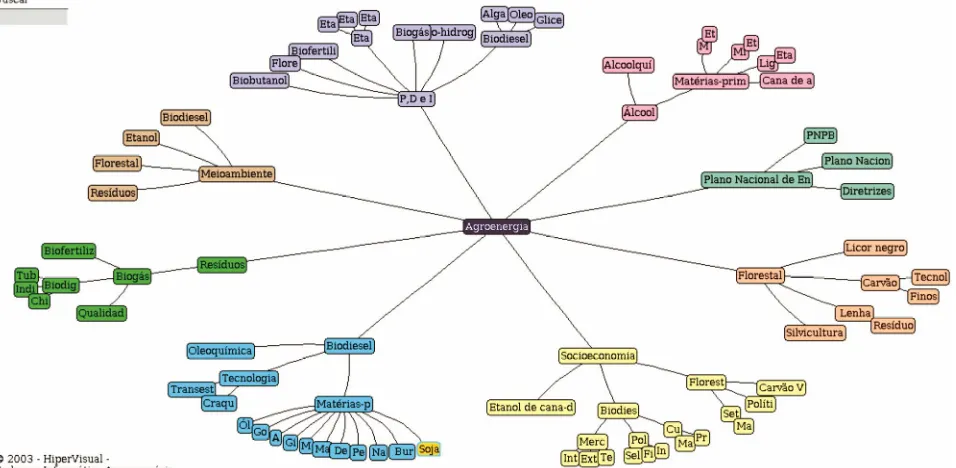
[image:3.595.112.483.206.449.2]The tree of knowledge with its nodes and subnodes can be seen in Figures 2-4, below. The main nodes (biodiesel, ethanol, waste, forestry, environment, socioeconomics, public policy, national level and PD & I events) are ar- ranged on the first level of the tree’s hierarchical struc- ture. They correspond to major issues related to agro- energy and contain information about the raw materials
Figure 1. Workflow of the construction of the Agro-energy Tree of Knowledge. Source: adapted from Santos et al. [16].
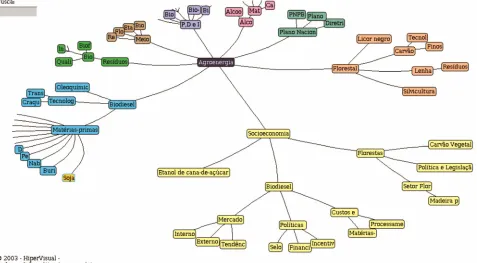
[image:3.595.62.540.479.713.2]Figure 3. The Agro-energy Tree of Knowledge with the visual emphasis shifted to the biodiesel node.
Figure 4. The Agro-energy Tree of Knowledge with the visual emphasis shifted to the socioeconomics node.
and processes used to produce the various forms of bio-energy, government policies, production costs, envi- ronmental impacts and future prospects. Stemming from these main nodes, the corresponding sub-nodes are align- ed systematically and hierarchically (Figure 1).
The construction of the agro-energy tree of knowledge presented a component of cross-sharp performance. There-
fore, interaction with the corporate project manager at the Embrapa Information Agency was important for recon- ciling and integrating the tree content with the work of other agencies and for avoiding the duplication of ef- forts.
[image:4.595.62.539.354.617.2]Agro-energy and Embrapa Information Technology. The text for the nodes of the tree was compiled from informa- tion that was available from research institutions. Ini- tially, the information was supplied by the research units of Embrapa for identifying new solutions, technologies and projects in progress. However, it was very important for Embrapa to form partnerships with other research institutions, universities and private businesses to define and formalize the appropriate legal instruments for the use of information on agro-energy that is generated by these external institutions.
4. Conclusion
It is predicted that the structure of the agro-energy tree of knowledge will make it possible to organize, store and make available the full range of information and tech- nology generated by research institutions in Brazil in the future. The agro-energy tree of knowledge will make the most significant efforts undertaken by these institu- tions known to the public. Another expected outcome is the provision of technological information services with value-added content that is updated and translated into language and formats appropriate for developers and other target audiences to run on the web. With the publi- cation of the tree of knowledge in Agro on the official website of the Embrapa Information Agency, the use of this online tool is expected to improve the transfer of agro-energy technology among farmers and development agents. Such systems are essential to democratization and the dissemination of knowledge. The Agro-energy Tree of Knowledge can be accessed at:
http://www.agencia.cnptia.embrapa.br/gestor/agroenergia /Abertura.html
REFERENCES
[1] P. Venturi and G. Venturi, “Analysis of Energy Com-parison for Crops in European Agricultural Systems,” Biomass and Bioenergy, Vol. 25, No. 3, 2003, pp. 235- 255. http://dx.doi.org/10.1016/S0961-9534(03)00015-1
[2] BNDES, “Bioetanol de Cana-de-Açúcar: Energia para o Desenvolvimento Sustentável,” BNDES, Rio de Janeiro, 2008.
[3] Ministério da Agricultura, Pecuária e Abastecimento, “Plano Nacional de Agroenergia: 2006-2011,” Brasília, 2005.
[4] F. J. Simioni, “Análise Diagnóstica e Prospectiva da Cadeia Produtiva de Energia de Biomassa de Origem Florestal no Planalto sul de Santa Catarina,” Tese de dou-
torado, 2007.
[5] C. E. Wyman, “Handbook on Bioethanol: Production and Utilization (Applied Energy Technology Series),” Taylor & Francis, Washington, 1996.
[6] F. O. T. Mello, L. F. Paulillo and C. E. F .Vian, “O Bio-diesel No Brasil: Panorama, Perspectivas e Desafios In-formações Econômicas, perspectivas e Desafios, SP,” Vol. 37, No. 1, 2007, pp. 28-40.
[7] A. P. Rodrigues, “Etanol Combustível—Balanço e Per-spectivas: Um Balanço de 30 Anos de Proálcool,” [S.l.]: Única, 2006.
http://www.nipeunicamp.org.br/proalcool/Palestras/16/An tonio%20de%20Padua%20Rodrigues.ppt
[8] Secretaria de Gestão e Estratégia, Embrapa, “V Plano Diretor da Embrapa: 2008-2023,” Brasília, 2008.
[9] Embrapa Informática Agropecuária, “IV Plano Diretor da Embrapa Informática Agropecuária 2008-2011-2023,” Embrapa Informação Tecnológica, Campinas, 2008.
[10] Embrapa Informática Agropecuária, “Agência de Infor-mação Embrapa: Ambiente Web para Transferência de Tecnologia,” Embrapa Informação Tecnológica, Campi-nas, 2005.
[11] C. Guimarães Filho, D. Werneck, M. R. Carneiro, M. A. Telles, R. C. Rosinha and R. V. Cobre, “Recomendações báSicas para a Elaboração do Conteúdo das Árvores do Conhecimento da Agência de Informação Embrapa. Bra-sília,” Embrapa Informação Tecnológica, 2005.
[12] A. D. Santos, L. M. S. Cunha da, M. I. F. Souza and M. F. Moura, “Gestor de Conteúdos da Agência de Informação Embrapa—Versão 1.3: Manual do Usuário,” Embrapa Informática Agropecuária (Embrapa Informática Ag-ropecuária. Documentos, 58), 2005.
http://www.cnptia.embrapa.br/modules/tinycontent3/cont ent/2005/doc58.pdf
[13] M. das D. R. Alves, M. I. F. Souza and A. D. Santos, “Manual de Catalogação: Descrição de Recursos Ele-trônicos, Versão 1.2,” Campinas: Embrapa Informática Agropecuária (Embrapa Informática Agropecuária. Docu- mentos, 53), 2008.
http://www.cnptia.embrapa.br/modules/tinycontent3/cont ent/2005/doc53.pdf
[14] Kleffmann Group, “Perfil Comportamental e Hábitos de Mídia do Produtor Rural Brasileiro,” [Campinas]: ABMR & A, 2005.
[15] Embrapa informática agropecuária, “HiperVisual e Hiper- Editor,” Campinas, 2004.