ORIGINAL RESEARCH ARTICLE
STUDY OF MICROCRYSTALLINE CELLULOSE AS A
SUBSTITUTE OF MAGNESIUM STEARATE TOWARDS
FUNCTIONALITY OF LUBRICANT IN ASPIRIN
FORMULATION
*
Jilika Shah, Monika Tomar, Ajay Kumar Singh and Amit Raj Sinha
Sigachi® Industries Private Limited, Dahej SEZ, Bharuch, Gujarat, India
ARTICLE INFO ABSTRACT
In pharmaceutical industries, magnesium stearate is used as a lubricating agent. It is frequently used in the solid dosage forms. In solid dosage forms generally it is used in the concentration of 0.2 % to 2.0%. However, it decreases hardness of tablet in some formulations. Microcrystalline cellulose is very good excipient, it has excellent binding property. In solid dosage forms, it works as a good lubricant, disintegrant, binder and filler. Concentration of lubricants in formulation should be balanced in terms of the adverse effects of used lubricant. In this study we have manufactured aspirin tablets by direct compression with different concentration (0.05% to 2.00%) of magnesium stearate and microcrystalline cellulose and then evaluated pre compression and post compression study. In pre compression study, we have evaluated bulk density, tapped density, angle of repose of aspirin tablet blend and in the post compression study, we have evaluated weight uniformity, hardness, percentage friability, disintegration time and dissolution profile of aspirin tablet.
*Corresponding author
Copyright ©2017, Jilika Shah et al.This is an open access article distributed under the Creative Commons Attribution License, which permits unrestricted use,
distribution, and reproduction in any medium, provided the original work is properly cited.
INTRODUCTION
Direct compression is the preferred process to manufacture solid dosage forms (Shangraw RF, 1993). All solid dosage forms mainly contain active pharmaceutical ingredient (API) and excipients (United State Pharmacopeia 39 NF34). The excipients are used as bulking agents in formulation; they may be diluents, binders, fillers, disintegrants, glidants or lubricants (Jianjiang L, 2014). Lubricants play a vital role in successful manufacturing of pharmaceutical solid dosage forms. Lubricants are added in very small quantity in formulations. It is added in the final stage of mixing of the formulation. It improves tableting characteristics and improves tableting process too (Late SG, 2009). Tablet formulation requires lubricant in order to reduce friction between tablet edge and the die wall during compression. It also prevents ingredients from clumping together and sticking to the tablet punches (Peck GE, 1989). Lists of lubricants are available in the market i.e. stearic acid, calcium phosphate, di calcium phosphate,
calcium stearate. Magnesium stearate is one of them. It is a solid and white fine powder which is obtained in two forms. One is naturally and second is synthetically. Naturally, it is derived from plant source and synthetically it is produced by the reaction of sodium stearate with magnesium salts or by treating magnesium oxide with stearic acid (Patel S, 2007). Magnesium stearate is used as lubricant in direct compression method. High speed tablet punching machine requires higher lubrication for proper die filling and less tablet weight variation. Increasing concentration of magnesium stearate can give adverse effect on quality parameters of tablets (Rao KP, 2005). Whereas microcrystalline cellulose can be used in desired concentration. It does not show any side effects on flow property and quality of powder blend(Tomar M, 2016). Microcrystalline cellulose is non-reactive, free-flowing and versatile pharmaceutical excipient(Iranloye TA, 1978). It has strong binding property to bind the active pharmaceutical ingredient, most extensively used filler and has inherent disintegrant properties.
ISSN: 2230-9926
International Journal of Development Research
Vol. 07, Issue, 10, pp.15879-15884, October,2017
Article History:
Received 29th July, 2017
Received in revised form
23rd August, 2017
Accepted 27th September, 2017
Published online 10th October, 2017
Citation: Jilika Shah, Monika Tomar, Ajay Kumar Singh and Amit Raj Sinha. 2017. “Study of microcrystalline cellulose as a substitute of magnesium stearate
towards functionality of lubricant in aspirin formulation”, International Journal of Development Research, 7, (10), 15879-15884.
ORIGINAL RESEARCH ARTICLE OPEN ACCESS
Keywords:
HiCelTMMicrocrystalline Cellulose,
Magnesium stearate, Lubrication, Direct compression,
Besides these qualities, microcrystalline cellulose is having required lubrication properties in itself(Tomar M, 2015). It is native of cellulose group. It is purified, partially depolymerized cellulose which is an organic compound; consisting of linear chain of several hundred to ten thousand β (1-4) linked D-Glucose units (Thoorens G, 2014). It is prepared by treating alpha cellulose, obtained as pulp from fibrous plant material, with mineral acids at required temperature and pressure (Barra J, 1996). Many literatures have reported that magnesium stearate decreases the tablet hardness with some APIs(Uzunovic A, 2007) (Shipar MAH, 2013-2014) (Nelson D). Therefore concentration of lubricant in formulation should be in limit. Present study was designed with an objective that “If magnesium stearate is used with microcrystalline cellulose in formulation, it should be used in minimum quantity”. In this study we have prepared different formulas using increased quantity of magnesium stearate 0.05%, 0.10%, 0.5%, 1.00%, 1.50% and 2.00%. Manufactured direct compressible tablets and evaluated tablet profile in terms of weight uniformity, hardness, friability, disintegration time and dissolution profile.
MATERIALS AND METHODS
MATERIALS
In this study, we have used HiCel™90M grade of microcrystalline cellulose manufactured at Sigachi Industries Pvt. Ltd, Dahej, Gujarat. Magnesium stearate was procured from Prachin Chemical, Ahmedabad, Gujarat; Aspirin from Andhra sugars limited, Andhra Pradesh and povidone from JH Nanhang Life Sciences Co., Ltd. Other all ingredients used were of analytical grade (AR grade).
METHODS
Preparation of aspirin blend
Accurately weighed specified quantity of binders (HiCel™90M microcrystalline cellulose and Povidone K30) and active pharmaceutical ingredient (Aspirin) were mixed properly. Added required quantity of disintegrant (sodium starch glycolate) and then added glidant (Purified talc), mixed the mixture well. Then lubricate this mixture with required quantity of magnesium stearate and mixed the blend well for 15 minutes by using tumbling method. The powder mix is ready for direct compression. All required quantity of ingredients mentioned in tablet no.1.
Pre compression test parameter of aspirin blend Untapped Bulk Density (Tomar M, 2017)
Weighed accurately 20g of blend sample by using electronic digital balance (Mettler Toledo, Model No-ML802/A01) and poured it slowly into 100 ml capacity “Class A” graduated measuring glass cylinder at a 45 degree angle. Care was taken not to shake the sample and slowly level the surface of sample in cylinder and observed the occupied volume. Calculated the untapped bulk density by using equation 1.
= ( )
( ) (1)
Tapped Density (Tomar M, 2017)
Tapped density was analyzed by using tapped density machine. (Electro lab instrument, Model No. ETD1020) The
20 g powder blend sample was poured into a 100ml capacity “Class A” graduated measuring glass cylinder at a 45 degree angle. The cylinder was placed in tapped density machine and inserted500 taps. After completion of 500 taps, measured the volume of measuring cylinder and calculated the tapped density by using equation 2.
= ( )
( ) (2)
Hausner’s Ratio(Tomar M, 2017)
Flow of aspirin blend was measured by “Hausner Ratio”. H.Ratio was calculated by using equation 3.
′ =
(3)
Carr’s Index(Thoorens G, 2014)
The compressibility of aspirin blend was determined by Carr’s Index. It measured the tendency of powder to be compressed and the flow ability of aspirin blend. Carr’s index was calculated by using equation 4.
′ = × 100
(4)
Angle of repose(Thoorens G, 2014)
Pour 30g of powder blend through powder flow tester (#10 mesh size), powder comes on the S.S cylinder surface until a pile build on the top of S.S cylinder. Measure the total height (S.S cylinder & pile) by scales. Using following equation5 and find the calculated value, check natural tangents chart for angle of repose.
= (5)
Where,
h = height of S.S cylinder d = diameter of S.S cylinder
Tablet Compression(Tomar M, 2016)
The aspirin blend was filled into the hopper of tablet punching machine and compressed ̴ 600 mg aspirin tablets by using 10 station Proton Mini Press (Model no. MINI PRESS 10 “D”) using “D tooling” dies and concave punches at constant compression force.
Evaluation of Aspirin Tablets
General Appearance
The general appearance of all aspirin tablets is essential for consumer acceptance. The manufactured aspirin tablets were evaluated for size, shape and organoleptic properties like color and odour.
Weight Variation of Tablet(Tomar M, 2016)
The average weight of all tablets was calculated by using equation 6.
ℎ =
. (6)
As per pharmacopoeia limits ±5 % variation is allowed for 600 mg tablets.
Hardness of Tablet (Tomar M, 2016)
Hardness is a force required to break a tablet across the diameter. It is an indication of its strength. Randomly 10 tablets were taken from each formula batch. Electronic digital hardness test machine (Labindia tablet hardness tester, Model No.-TH1050 M) was used to analyze hardness of tablets. Single tablet was placed between two anvils, force was applied to the anvils and the tensile strength that just required to break the tablet was recorded. The values of hardness were expressed in kp[kgf] unit.
Thickness of Tablet (Tomar M, 2016)
Random 10 tablets were taken from every formula batch. Vernier caliper (M&W Precision tools serial no-11071909) was used for thickness test. Individually, a tablet was placed between two external jaws and take reading in millimeter (mm).
Friability of Tablet (Tomar M, 2016)
Percentage friability was determined by using friability tester (LABINDIA, Model No. FT1020). 10 tablets were taken and weighed by using electronic digital balance which was considered as the initial weight. All the tablets were placed in the drum of friability tester and allowed to rotate 100 times at 25 rpm. After 100 revolutions, 10 tablets were removed and re-weighed which was considered as the final weight. The percentage friability was calculated by equation7. As per USP, the tablets should not loss more than 1% of their total weight.
= × 100 (7)
Disintegration of Tablet (Tomar M, 2016)
The tablet breaks down into smaller particles is called disintegration. This test was carried out at 37±2°C in 600 ml Demineralized water. A set of six tablets was taken and one-one tablet was introduced in each tube, disk was placed and basket was positioned in one liter beaker containing 37±2°C temperature of water. Noted down the time when tablet was disintegrated into smaller particles and passed through 10 mesh screen. The disintegration must occur to meet the pharmacopoeia standards.
Dissolution of tablet (Tomar M, 2017)
Dissolution test of aspirin tablet was measured as per USP method, apparatus type 1 (Basket type) used. Basket speed was fixed at 50rpm per minute in 500ml of 4.50±0.05 pH 0.05 M acetate buffer solution at37±2°C. Checked the absorbance of aspirin tablets by using UV VIS-Spectrophotometer (Shimadzu model no-1800). Each sample (n=7) was determined at 265 nm wavelength. Calculated the percentage of dissolution using following equation 8.
10ml sample from each vessel was taken at 5, 10, 15, 20, 25, 30, 40 min time intervals. All samples were filtered with whatman filter paper (No.42). 1ml sample from each was taken and determined the active ingredient concentration by UV VIS-Spectrophotometer at λ=265nm.
= ×
× (8)
RESULTS
Pre compression test parameter result of aspirin blend
Tablet Compression
Aspirin tablets were manufactured by direct compression method. Tablet punching machine was run smoothly.
Post compression test parameters of aspirin tablets
General Appearance
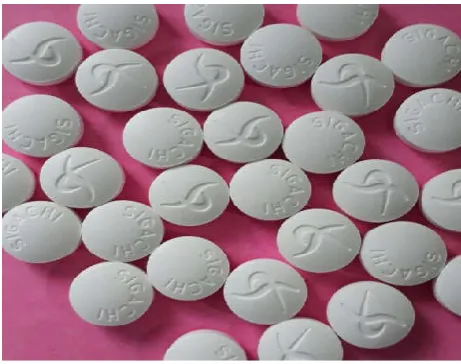
[image:3.595.319.550.389.571.2]All aspirin tablets were medium sized, white in color and round in shape; one side with SIGACHI embossing and other side with sigachi logo embossing. They were free from all physical defects like capping, sticking, picking, mottling and lamination. Aspirin tablets are shown in Fig 1.
Fig. 1. Aspirin direct compressible tablets Weight variation
Aspirin tablets of all formulas have passed weight variationtest as per USP standards ±5% of 600mg. No weight variation was observed. Individual weight of aspirin tablets is shown in fig2 and average aspirin tablet weight of each formula is mentioned in Table no.3.
Hardness
[image:4.595.65.534.77.168.2] [image:4.595.109.487.215.286.2]Individual hardness of aspirin tablets is shown in fig3 and average aspirin tablet hardness of each formula is mentioned in Table no.3.
Fig. 3. Hardness variation of aspirin tablets
Thickness
We have observed no variation in thickness of aspirin tablets. Average aspirin tablet thickness of each formula is mentioned in Table no.3.
Friability
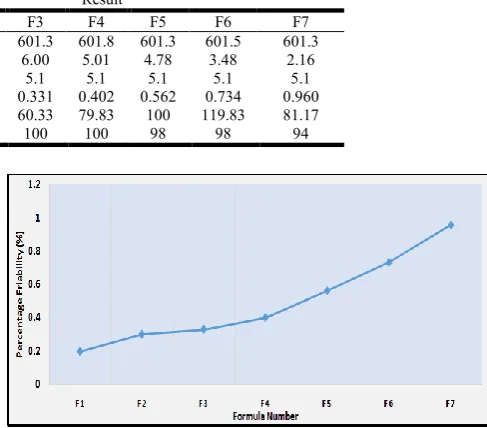
[image:4.595.309.553.325.539.2] [image:4.595.40.289.480.600.2]Aspirin tablets of seven different formulas have passed percentage friability test as per USP standards under 1%. Friability result of each formula is mentioned in Fig 4 and Table no.3.
Fig. 4. Percentage friability of aspirin tablets
Disintegration time
Individual disintegration time of aspirin tablets is shown in fig5 and average disintegration time of each formula is mentioned in Table no.3.
Fig. 5. Disintegration time of aspirin tablets Table 1. Aspirin tablet manufacturing formulas with quantity
Ingredient F1 F2 F3 F4 F5 F6 F7
W/W (%)
mg/ Tab
W/W (%)
mg/ Tab
W/W (%)
mg/ Tab
W/W (%)
mg/ Tab
W/W (%)
mg/ Tab
W/W (%)
mg/ Tab
W/W (%)
mg/ Tab
Aspirin 50 300 50 300 50 300 50 300 50 300 50 300 50 300
MCC 30 180 29.95 179.7 29.90 179.4 29.50 177 29.00 174 28.50 171 28.00 168
P K-30 9.833 59 9.833 59 9.833 59 9.833 59 9.833 59 9.833 59 9.833 59
SSG 9.833 59 9.833 59 9.833 59 9.833 59 9.833 59 9.833 59 9.833 59
MS --- --- 0.05 0.3 0.10 0.6 0.50 3 1.00 6 1.50 9 2.00 12
PT 0.333 2 0.333 2 0.333 2 0.333 2 0.333 2 0.333 2 0.333 2
MCC: HiCel™90M Microcrystalline cellulose, P K-30: Povidone K-30, SSG: Sodium starch glycolate, MS: Magnesium stearate, PT: Purified talc.
Table 2. Physical properties of aspirin blend
Pre formulation study parameter Aspirin Formula
F1 F2 F3 F4 F5 F6 F7
Untapped bulk density (g/cc) 0.597 0.599 0.606 0.606 0.616 0.635 0.645
Tapped bulk density (g/cc) 0.770 0.772 0.785 0.785 0.785 0.800 0.800
Angle of repose (°) 32°10’ 30°20’ 30°20’ 30°20’ 30°20’ 30°20’ 30°20’
H. Ratio 1.285 1.288 1.295 1.295 1.274 1.259 1.240
Carr’s Index 22.467 22.409 22.802 22.802 21.528 20.625 19.375
Table 3. Comparative evaluation of aspirin tablet
Characteristic Result
F1 F2 F3 F4 F5 F6 F7
Average Weight (mg) 602.1 600.7 601.3 601.8 601.3 601.5 601.3
Average Hardness [Kp(kgf)] 7.24 6.25 6.00 5.01 4.78 3.48 2.16
Average Thickness (mm) 5.1 5.1 5.1 5.1 5.1 5.1 5.1
Percentage Friability (%) 0.198 0.300 0.331 0.402 0.562 0.734 0.960
Average Disintegration Time (sec) 40.33 44.67 60.33 79.83 100 119.83 81.17
[image:4.595.310.561.641.765.2]Dissolution
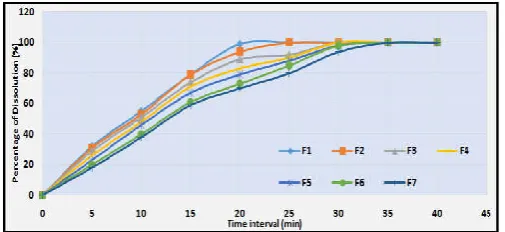
[image:5.595.37.290.112.228.2]Percentage dissolution of aspirin tablet is mentioned in table no.3 and Fig 6.
Fig. 6. Dissolution time of aspirin tablets
DISCUSSION
In this study, we have used magnesium stearate in different concentration in different formulas (F2 to F7) and one formulation was prepared without using magnesium stearate (F1). Untapped bulk density of aspirin blend was found increasing with increasing magnesium stearate concentration in formulas. However, angle of repose of aspirin blend has found decreasing with increasing magnesium stearate concentration. From formula F1 to F4, Hausner ratio of aspirin blend has increased but when we have increased the magnesium stearate percentage more than 0.50% (F5 to F7) Hauser ratio has found decreasing. Manufactured 600mg aspirin tablet with direct compression method. Aspirin tablets of all formulas have passed weight variation parameter under pharmacopoeia limit. Tablet hardness was found decreasing with increase in the concentration of magnesium stearate. We have not observed thickness variation in aspirin tablets. Percentage Friability and disintegration time was found increasing with increase in the concentration of magnesium stearate. However in F7 formula, aspirin tablets were disintegrated earlier in 81.17 seconds but the dissolution rate of aspirin tablet has decreased. In F1, we have found highest hardness 7.24 [Kp(kgf)], lowest percentage friability (0.198%), lowest disintegration time (40.33 sec) and 100% API dissolved in 25 minutes in comparison of all formulas. Whereas in F7, we have found lowest hardness 2.16 [Kp(kgf)], highest percentage friability (0.960%) and 94% API dissolved in 30 minutes. In first four batches, dissolution was completed 100% in 30minutes but dissolution rate found decreased in F5, F6 and F7.
Abbreviations
API : Active pharmaceutical ingredient, β : beta, ˚C : Degree Celsius, g : Gram, g/cc : Gram per cubic centimeter, H.Ratio : Hausner Ratio, mg : Milligram, ml : Milliliter, mm : millimeter, MCC : Microcrystalline cellulose, % : Percentage, USP : United states pharmacopoeia, V/V : Volume by volume, W/W : Weight by weight.
Conclusion
In this study, we have found that microcrystalline cellulose is having lubrication property. If it is used in aspirin formulation, there is no need of extra lubrication. F1 formula in which microcrystalline cellulose was used as lubricant as a substitute
of magnesium stearate was found with excellent result in terms of tablet hardness, percentage friability, disintegration time and dissolution profile. On the other hand; as we have increased the concentration of magnesium stearate in aspirin formulation, tablet hardness and tablet dissolution rate found decreasing with higher concentration of magnesium stearate. Percentage friability and tablet disintegration time found increasing with higher concentration of magnesium stearate.
Acknowledgement
The authors are very thankful to Faculty of pharmacy Dharmsinh Desai University (DDU) Nadiad to provide best facilities for analysis of dissolution profile.
Conflicts of interests
The authors state and confirm no conflict of interests. No direct funding was received for this study.
REFERENCE
Barra, J. and Somma, R. Influence of physicochemical variability of magnesium stearate on its lubricant properties: Possible solutions. Drug development and
industrial pharmacy. 22(11), 1996, 1105-1120.
Iranloye, T.A. and Parrott, E.L. 1978. Effects of compression force, particle size, and lubricants on dissolution rate. Journal of Pharmaceutical Sciences. 67, 535-539.
Jianjiang, L. and Yongmei, W. 2014. Lubricants in pharmaceutical solid dosage forms. Lubricants 2, 21-43. Late, S.G., Yu, Y.Y. and Banga, A.K. 2009. Effects of
disintegration promoting agent, lubricants and moisture treatment on optimized fast disintegrating tablets.
International Journal of Pharmaceutics, 365(1-2),4-11.
Nelson, D., Rebecca, W. and Wymbs, K. 2009. Effect of magnesium stearate on tablet properties. Available from https://pdfs.semanticscholar.org/e009/14cd80edbba78a1b9 d8643798efb715fa265.pdf.
Patel, S., Kaushal, A.M. and Bansal, A.K., 2007. Lubrication potential of magnesium Stearate studied on instrumented rotary tablet press. AAPS PharmSciTech. 8(4), 57-64. Peck, G.E., Baley, G.J., McCurdy, V.E. and Banker, G.S.
1989. Tablet formulation and design. In: Lieberman HA, Lachman L, Schwartz JB, editors. Pharmaceutical dosage forms - tablets. Marcel Dekker, Inc., 75-128, Edition 2, Vol. 1, New York.
Ramya, K., Upendar, V., Madhavi, C. and Ramakrishna R. 2010. Effect of various super disintegrants on hardness, disintegration and dissolution of drug from dosage form: Journal of advance science and research. 1, 15-19.
Rao, K.P., Chawla, G. Kaushal, A.M. and Bansal, A.K. 2005. Impact of solid-state properties on lubrication efficacy of magnesium Stearate. Pharmaceutical Development and
Technology, 10, 423-437.
Shangraw, R.F. and Demarest, D.A. Jr. 1993. A survey of current industrial practices in the formulation and manufacture of tablets and capsules. Pharm.Technol. 17 (1): 32–44.
Thoorens, G., Krier, F., Leclercq, B., Carlin, B. and Evrard, B. 2014. Microcrystalline cellulose, a direct compression binder in a quality by design environment-A review.
International journal of pharmaceutics. 473, 64-72.
Tomar, M., Shah, J, Singh, A.K. and Sinha, A.R. 2017. Effect of different temperature and relative humidity on packed and unpacked pharmaceutical excipient HiCelTMMicrocrystalline cellulose. International journal of
universal pharmacy and bio sciences, 6(3), 1-15.
Tomar, M., Singh, A.K. and Sinha, A.R. 2015. Physicochemical parameter of microcrystalline cellulose and the most acceptability in pharmaceutical Industries.
Journal of Innovations in Pharmaceutical and biological
Sciences, 2(4), 570-578.
Tomar, M., Singh, A.K. and Sinha, A.R. 2016. Powder and tablet profile of microcrystalline cellulose (MCC) of different with degree of polymerization. International
Journal of recent scientific research, 7(6), 2016,
12044-12047.
Tomar, M., Singh, A.K. Sinha, A.R. and Shah, J. 2016. Formulation and in vitro evaluation of Metformin hydrochloride direct compressible tablet HiCelTMMicrocrystalline cellulose excipient, World journal
of pharmaceutical research, 5, 1332-1344.
United State Pharmacopeia 39: NF34.
Uzunovic, A. and Vranic, E. 2007. Effect of magnesium stearate concentration on dissolution properties of ranitidine hydrochloride coated tablets. Bosnian journal of
basic medical sciences, 7(3), 279-283.