warwick.ac.uk/lib-publications
A Thesis Submitted for the Degree of PhD at the University of Warwick
Permanent WRAP URL:
http://wrap.warwick.ac.uk/91143
Copyright and reuse:
This thesis is made available online and is protected by original copyright. Please scroll down to view the document itself.
Please refer to the repository record for this item for information to help you to cite it. Our policy information is available from the repository home page.
i
Mathematical modelling and
simulation of the foot with specific
application to the Achilles tendon
A thesis submitted to the University of Warwick for the degree of
Doctor of Philosophy
by
Nefeli Chatzistefani
Department of Engineering
ii
List of Tables ... vi
List of Figures ... vii
Acknowledgements ... xiv
Declaration ... xv
Abstract ... xvii
Abbreviations ... xix
Chapter 1. Introduction ... 1
1.1 Context and Motivation ... 1
1.2 Aims and Objectives ... 3
1.3 Structure of the thesis ... 3
Chapter 2. Literature review ... 5
2.1 Anatomy and physiology of the Achilles tendon, the skeletal muscles and the human skeleton ... 5
2.2 Achilles tendon injuries and disorders ... 16
2.3 Dorsiflexion and Plantar flexion of the foot ... 19
2.4 Gait Analysis... 26
2.4.1 Applications of Gait Analysis ... 34
2.5 Classic Hill-type muscle models and modifications ... 36
2.6 Musculoskeletal modelling ... 46
iii
Chapter 3. Instrumentation ... 56
3.1 Introduction and comparison of kinematic measurement techniques .. 56
3.1.1 Accelerometers ... 57
3.1.2 Range of motion (ROM) and Goniometers ... 58
3.2 Gait Laboratory ... 62
3.3 Three dimension (3D) motion capture - Vicon Nexus ... 65
3.3.1 Force plate ... 67
3.3.2 Markers ... 69
3.3.3 Software and Data Processing ... 70
3.3.3.1 Kinematic data reconstruction ... 71
3.3.3.2 Marker Placement and Labelling ... 74
3.4 Electromyogram (EMG) ... 80
3.5 Plantar Pressure – Tekscan ... 83
3.6 Imaging ... 86
Chapter 4. Model Development ... 90
4.1 Description of model derivation ... 90
4.2 Achilles tendon model ... 96
4.2.1 System equations ... 98
4.2.2 Gastrocnemius muscle – Achilles tendon complex analysis and system equations ... 104
iv
Chapter 5. Model Validation and Simulation ... 114
5.1 Experimental design to support the modelling of the Achilles tendon115 5.1.1 Participants ... 115
5.1.2 Ultrasonography ... 115
5.1.3 Experimental methodology and analysis ... 120
5.1.3.1 Comparison of Achilles tendon lengths obtained from Ultrasound and Gait Laboratory sessions ... 124
5.1.3.2 Muscle Activation Analysis ... 126
5.1.3.3 Repeatability and reproducibility analysis... 131
5.2 Identifiability analysis... 134
5.3 Results ... 135
5.3.1 Parameter Estimation ... 135
5.3.2 Nonlinearity ... 152
5.4 Interpretation of results obtained and discussion ... 155
Chapter 6. Conclusions, discussion and future work ... 159
6.1 Achilles tendon model development... 160
6.2 Recommendations for future work ... 163
References ... 165
Appendix A ... 174
v
3. Consent form signed by all participants ... 193
vi
Table 2.1 Definition of muscles shown in Figure 2.10……….25
Table 4.1 Definition of distances ... 98
Table 4.2 Defiintion of variable for the static trial ... 100
Table 4.3 Definition of variables for a dynamic trial ... 102
Table 5.1 Natural resting lengh and total lenghts of the Achilles tendon of five volunteers measured duing ultrasound sessions ... 117
Table 5.2 Natural resting length and maximum total lengths of the achiles tendon of five volunteers measured during Vicon Nexus motion capture experients……….125
Table 5.3. Values for the parameters b, k1, and k2 and their confidence intervals for each volunteer for dorsiflexion (Right foot)………...137
Table 5.4. Values for the parameters b, k1, and k2 and their confidence intervals for each volunteer for dorsiflexion (Left foot)………..138
Table 5.5. Values for the parameters b, k1, and k2 and their confidence intervals for each volunteer for plantar flexion (Right foot)………139
vii
Figure 2.1. The Achilles tendon connects the heel to the calf and the soleus muscles of
the leg. Image taken from [12] and used with permission of WebMD manager. ... 6
Figure 2.2. A schematic of a multi-unit of hierarcical structure of the tendon. Image taken from [13] ... 7
Figure 2.3. Fibre distribution of the Achilles tendon. Image taken form [11]. ... 8
Figure 2.4. Schematic representation of the ankle joint. Image taken from [22]………...10
Figure 2.5.Figure 2.5 a) Plane joint b) Hinge joint c) Pivot joint d) Condyloid joint e) Saddle joint f) Ball-and-socket joint. Image taken from[20] ... 11
Figure 2.6. Anatomy of the skeletal muscle. Image taken from [21]...13
Figure 2.7. Micro anatomy of a muscle fibre. Image taken from [20]. ... 15
Figure 2.8. Achilles tendon disorders. Image taken from [27]………...………18
Figure 2.9. Dorsiflexion, plantar flexion, abduction, adduction, eversion and inversion of the foot about the ankle joint. Image taken from [33]. ... 20
Figure 2.10. Representation of the horizontal section of the lower end of the tibia and fibula along with the abbreviations of muscles in that area. Image taken from [35]….………25
Figure 2.11. Different phases and leg positions of a complete gait cycle of the right foot. Image taken from [2]...27
Figure 2.12. Representation of the step length, the stride length and the walking base during gait. Image taken from [2]………...33
viii
Figure 2.15. Representation of force–velocity characteristics of skeletal muscle for
different levels of muscle activation. Image taken from [1] ... 43
Figure 2.16. Representation of the force-length curve of a muscle as it changes length.
Image taken from [41] ... 45
Figure 2.17. Diagrammatic representation of the Gilchrist foot model. Image taken from
[66]………49
Figure 2.18. Diagrammatic representation of the Seo et al. 3D multi-segment foot
model. Image taken from [70]………50
Figure 3.1. Examples of the range of motion (ROM) at the ankle joint when dorsiflexing,
plantar flexing, everting and inverting the foot. Image taken from [82]………58
Figure 3.2. A double-armed goniometer...……… 59
Figure 3.3. A Biometrics Ltd goniometer. Image taken from [88]….………...….62
Figure 3.4 Gait Laboratory; front view of the actual lab where the motion capture area
is located. ... 63
Figure 3.5. Gait Laboratory; rear view of the actual lab where the motion capture area
is located……...64
Figure 3.6. The control room with the computer containing the Vicon Nexus 1.8.5
software. ... 64
Figure 3.7. Infra-red (MX) camera and Digital video (DV) Camera… ... 65
Figure 3.8. Vicon Giganet control boxes and computer installed with Vicon Nexus 1.8.5
ix
Figure 3.10. Markers of 14mm diameter and 9.5mm diameter………...70
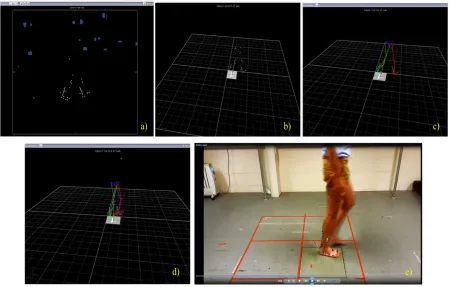
Figure 3.11. Images from one of the twelve MX cameras showing the different stages
of marker reconstruction and labelling. ... 72
Figure 3.12. Representation of an eight marker placement on the floor of the Gait
Laboratory ... 73
Figure 3.13. The human gait in digital form. Image taken from [42, 100]…………...74
Figure 3.14. Front and back view of the Lower Body Plug-in Gait marker placement.
Image taken from [101]. ... 76
Figure 3.15. Representation of the Oxford Food Model marker placement. Image taken
from [97]. ... 77
Figure 3.16. Novel Achilles tendon marker placement. ... 78
Figure 3.17. A schematic diagram of a motor unit, its axon and the motor endplates.
Image taken from [103]. ... 80
Figure 3.18. Two surface Ag/Cl hydrogel electrodes with adhesive pads are attached to
the surface of the skin. The EMG kit with the 16 channels is illustrated……….82
Figure 3.19. Versatek Wireless/Datalogger.Image taken from [104]. ... 84
Figure 3.20. VC-1 VersaTek cuffs. Image taken from [104] ... 84
Figure 3.21. F-Scan insole sensor with Versatek edge connector. Image taken from
[104]………..84
Figure 3.22. A subject set up with the whole F-scan system and ready for trials. Image
x
Figure 3.24. Ultrasound scan of an Achilles tendon. Image taken from [109]. ... 88
Figure 3.25. MRI scan of a normal and a torn Achilles tendon. Image taken from [12].
... 88
Figure 4.1. Schematic presentation of the anatomical forces of the free body diagram of
the foot when it contacts the ground just before toe off. Image taken from [41]. ... 91
Figure 4.2. Representation of the analysis and replacement of a muscle force at the ankle
axis of rotation by its equivalent force and moment of force. Image taken from [41]. ... 92
Figure 4.3. Representation of the free body diagram illustrating the net force and the net
moment of force at the ankle axis of rotation. Image taken from [41]………....92
Figure 4.4. Schematic representation of the method of sections where the human lower
extremity is divided into three different segments: the thigh, the leg and the foot. Image taken
from [41] ... 94
Figure 4.5. Representation of the link-segment analysis of the foot, leg and thigh
segments of the human lower extremities. Image taken from [41]………...95
Figure 4.6. Two segment model of the foot-leg illustrating the connection between the
Achilles tendon, the gastrocnemius muscle, the heel and the tibia [112]. ... 97
Figure 4.7. Free body diagram of the foot segment during weight bearing in a static
position [112]. ... 99
Figure 4.8. Dorsiflexion of the foot [112]... 101
xi
... 104
Figure 4.11. Representation of the calculated force/tension over time that builds up
when using the modified Hill-type muscle model. ... 109
Figure 4.12. Calculated displacement of Hill-type muscle model versus time. ... 112
Figure 5.1. Example of a patient lying on a medical bed in the prone position during an
ultrasound session. Image taken from [121]……….116
Figure 5.2. Ultrasound of the Achilles tendon in the neutral position………..…118
Figure 5.3. Ultrasound of the Achilles tendon while the volunteer is dorsiflexing the foot
... 119
Figure 5.4. Ultrasound of the Achilles tendon while the volunteer is plantar flexing the
foot. ... 119
Figure 5.5. Table 4.1 with anthropometric data taken from Winter [1]... 122
Figure 5.6. Side view of surface EMG electrode application on the gastrocnemius
lateralis, gastrocnemius medialis, soleus and tibialis anterior muscles of a volunteer during Gait
Laboratory experiments. ... 127
Figure 5.7. Low pass filtered EMG signals of the Tibialis Anterior (blue line), Soleus
(red line), Gastrocnemius medialis (purple line) and Gastrocnemius lateralis (green line) while
the volunteer dorsiflexes the foot.. ... 129
Figure 5.8. Low pass filtered EMG signals of the Tibialis Anterior (blue line), Soleus
(red line), Gastrocnemius medialis (purple line) and Gastrocnemius lateralis (green line) while
xii
the volunteer plantar flexes the foot……….130
Figure 5.10. Displacement of the Achilles tendon vs time while two volunteers dorsiflex
their foot (top two figures). Displacement of the Achilles tendon vs time while three volunteers
plantar flex their foot (bottom three figures)………..133
Figure 5.11. Simulated and experimental data of the force of the Achilles tendon for
volunteer 1 plotted over time………...142
Figure 5.12. Plotted residuals of the Achilles tendon force data for dorsiflexion (first
two figures) and for plantarflexion (last figure) for volunteer 1. ……….143
Figure 5.13. (a), (b), (c), (d), (e). Experimental and simulated data of the displacement
of the Achilles tendon over time fitting the measured trajectories of the displacement over time
of the Achilles tendon when dorsiflexion of the right foot occurs for different
volunteers………145
Figure 5.14. (a), (b), (c), (d), (e). Experimental and simulated data of the displacement
of the Achilles tendon over time fitting the measured trajectories of the displacement over time
of the Achilles tendon when dorsiflexion of the left foot occurs for different
volunteers………147
Figure 5.15. (a), (b), (c), (d), (e). Experimental and simulated data of the displacement
of the Achilles tendon over time fitting the measured trajectories of the displacement over time
of the Achilles tendon when plantar flexion of the right foot occurs for different
xiii
of the Achilles tendon when plantar flexion of the left foot occurs for different
volunteers………....150
Figure 5.17. Displacement over time when volunteer is plantar flexing foot fot the
quadratic non-linear solution.……..…153
Figure 5.18. Displacement over time when volunteer is plantar flexing foot for the cubic
xiv
Acknowledgements
A gratifying part of this thesis is the ability to recall the course of my studies and
acknowledge the support, guidance and experiences that have been bestowed upon me
throughout my academic aspirations. Therefore, I would like to express my sincere gratitude to
those who have influenced and supported me throughout my research the past four years.
First and foremost, I would like to thank my family for their patience, love and support
during my studies. My mother’s sacrifices and prayers was what sustained me thus far.
Special thanks to my supervisors Dr. Michael J. Chappell and Dr. Neil D. Evans for their
support and guidance over the course of the project. Their encouragement, advice and
constructive criticism helped me grow as a research scientist. Their reassurance, patience and
motivation fortified me to proceed with my research goals irrespective of the size of the
obstacles placed before me.
I would also like to thank all of my friends, life-long and new ones, who supported me during
the writing up period of my thesis. Their friendship, love and encouragement made my
experience at Warwick very memorable. A sincere thank you to my colleagues from the
Biomedical Engineering department for the stimulating discussions we had, for the sleepless
nights we were working together and for all the good times we have had in the last four years.
Finally, I would like to thank the School of Engineering at the University of Warwick for
the Victoria Fernandes scholarship awarded to me, without which I would not be able to carry
xv
I, the author of this thesis titled ‘Mathematical modelling and simulation of the foot with
specific application to the Achilles tendon’, declare that the work presented in this thesis is
original and my own. The work was performed in the Department of Biomedical Engineering
at the School of Engineering at the University of Warwick. This thesis was conducted under the
supervision of Dr Michael J. Chappell and Neil D. Evans.
I declare that the work presented in this thesis has only been submitted to the University of
Warwick for the degree of Doctor of Philosophy and has not been submitted for any other
degree at any other university.
Ethical approval complying with the research code of practice of the University of Warwick
has been granted by the University’s Biomedical and Scientific Research Ethics Committee
(BSREC) for:
i) all Gait Laboratory experiments and Ultrasound sessions at UHCW that will be
mentioned in this thesis and
ii) handling and publishing all measured data from human volunteers that participated
in the experiments
(BSREC full approval Simulation of the Achilles tendon, BSREC reference: REGO-2013-578AM01).
Parts of this thesis have been published by the author:
1. N. Chatzistefani, M.J. Chappell, C. Hutchinson, S. Kletzenbauer, N.D. Evans, A
mathematical model characterizing Achilles tendon dynamics in flexion, Original Research
tendon-xvi
2. N. Chatzistefani, M.J. Chappell, C. Hutchinson, N.D. Evans, A Mathematical Model of the
Achilles tendon in humans, Original Research Article, IFAC-PapersOnLine, Volume 48,
Issue 20, 2015, Pages 429-434. Journal research article introducing the full mathematical/musculoskeletal model of the muscle-tendon model. Initial results from
experiments presented.
3. N. Chatzistefani, M.J. Chappell, C. Hutchinson, N.D. Evans, Parameter Estimation and
Structural Identifiability model of the Achilles tendon, Proceedings of the 21st Congress of
the European Society of Biomechanics, Prague, 5-8 July 2016. Conference paper explaining
the structural identifiability and the parameter estimation of the mathematical model of the
Achilles tendon-gastrocnemius muscle.
4. N. Chatzistefani, M.J. Chappell, N.D. Evans, Mathematical modelling of the Achilles
tendon, Proceedings of PGBIOMED/ISC 2014, University of Warwick, School of
Engineering, Coventry, UK, 15th-17th July 2014. Peer reviewed conference paper where the
initial mathematical model of the Achilles tendon and the gastrocnemius muscle was
introduced. This model was also presented to orthopedic doctors, was validated and
xvii
In this thesis, the development of an anatomically meaningful musculoskeletal model of the
human foot with specific application to the Achilles tendon is presented. An in vivo
experimental method of obtaining parameter values for the mechanical characteristics of the
Achilles tendon and the gastrocnemius muscle is presented incorporating a Hill-type muscle
model. The incentive for this work has been to enable the prediction of movement with regard
to Achilles tendon motion of healthy volunteers, in order to then compare it with the movement
of a pathologic gait and help in preventing Achilles tendon injuries.
There are relatively few mathematical models that focus on the characterisation of the human
Achilles tendon as part of a muscle-tendon unit in the literature. The mechanical properties of
the Achilles tendon and the muscles connected to the tendon are usually calculated or predicted
from muscle-tendon models such as the Hill-type muscle models. A significant issue in model
based movement studies is that the parameter values in Hill-type muscle models are not
determined by data obtained from in vivo experiments, but from data obtained from cadaveric
specimens. This results in a complication when those predictive models are used to generate
realistic predictions of human movement dynamics.
In this study, a model of the Achilles tendon-gastrocnemius muscle is developed,
incorporating assumptions regarding the mechanical properties of the muscle fibres and the
tendinous tissue in series. Ultrasound images of volunteers, direct measurements and additional
mathematical calculations are used to determine the initial lengths of the muscle-tendon
complex as well as the final lengths during specific movements of the foot and the leg to
parameterise the model. Ground reaction forces, forces on specific joints and moments and
angles for the ankle are obtained from a 3D motion capture system. A novel experimental
marker placement for the Achilles tendon is developed and generated in the 3D motion capture
system.
Movement dynamics of the foot are described using Newton’s laws, the principle of
superposition and a technique known as the method of sections. Structural identifiability
analyses of the muscle model ensured that values for the model parameters could be uniquely
determined from perfect noise free data. Simulated model dynamics are fitted to measured
movements of the foot. Model values are obtained on an individual subject basis. Model
validation is performed from the experimental data captured for each volunteer and from
reconstruction of the movements of specific trajectories of the joints, muscles and tendons
xviii
component in the ultimate creation of a dynamic model of the human body. A new approach
that was introduced in this thesis was the coupling of the Achilles tendon force from the
musculoskeletal model to the muscle-tendon model and the non-linearity approach studied
through a motion capture system. This approach and the new Achilles tendon marker placement
xix
Abbreviation Meaning
2D Two-dimensional
3D Three-dimensional
AT Achilles tendon
ADC Analog to digital converter
BSREC Biomedical and scientific research ethics committee
CE Contractile Element
COP Centre of pressure
CSV Comma separated files
CT Computed tomography
DV Digital video
EDL Extensor digitorium longus
EHL Extersor hallucis longus
EMG Electromyogram
FBD Free body diagram
FDL Flexor digitorum longus
FE Finite element
FHL Flexor halluces longus
GCS Global coordinate system
GRF Ground reaction force
HAT Head arms trunk
IR Infra-red
MRI Magnetic resource images
xx PB Peroneus brevis
PEC Parallel elastic component
PL Peroneus longus
ROM Range of motion
RMSE Root Mean Square Error
SEC Series elastic component
TA Tibialis anterior
TP Tibialis posterior
UHCW University hospitals Coventry and Warwickshire
1
Chapter 1. Introduction
1.1 Context and Motivation
The first pioneer of scientific gait analysis was Aristotle with his work titled De Motu Animalium (On the Gait of Animals) to be followed in 1680 by Giovanni Alfonso Borelli with his script also called De Motu Animalium (I et II). From the earliest days, it has been the hope
of researchers in the field of biomechanics that gait measurements and analysis could assist in
managing patients with walking disorders. During the late 1970s and early 1980s, development
of computer based and video camera systems that could generate detailed studies of individuals
within realistic cost and time constraints began [1, 2]. The improvements in measurement and
analytical techniques have led to the production of high-quality data. The aspiration that drives
most researchers nowadays is how best to use these data for the benefit of patients.
The history and evolution of clinical gait analysis has been reviewed by Sutherland [3, 4].
He stated that early investigators understood that very little could be said about the dynamic
action of muscles without electromyography, so that was the initial field of investigation. Next
came kinematics to be followed by kinetics and energy. There is still not an accepted general
theory of why individuals walk so differently. Many explanations discuss that the cause of these
differences lies in the way that particular muscles achieve specific movements [5].
Methodologies are being developed in order to determine the functions of individual muscles.
A particular requirement is the development of subject specific models that combine
three-dimensional imaging data of the musculoskeletal anatomy with kinematic and kinetic data.
There has been observed an increase in Achilles tendon pathologies in recent years. When
overused, the Achilles tendon is one of the two most commonly injured tendons and is the most
2
of athletic training, or individuals engaging in irregular strenuous physical activities may cause
overuse injuries and ruptures. Rupture can occur at any age and any group of individuals.
However, it has been observed to occur mainly in recreational athletes aged 30-50 years and
non-athletes aged 40-65 [6].
In the earlier years, it was believed that Achilles tendon ruptures and pathologies were more
common in men than in women. It was suggested that oestrogen protects tendons and thus
women were not as prone to injuries as men. However, a study by Longo et al., that was
performed on athletes aged over 40, proved that there is no gender difference [3]. In addition,
Jonge et al. in a Dutch GP-based cohort study also found that there was no gender difference
present in Achilles tendon injuries [7]. They found that the incidence rate of Achilles
tendinopathy is 1.85 per 1000 Dutch GP registered patients. The adult population that they
investigated was between 21 to 60 years old. In 35% of the cases, a relationship with sports
activity was recorded [7]. Achilles tendon rupture is commonly observed in football, basketball,
tennis, running, diving, and other sports that involve a forceful push off of the foot. Achilles
tendon rupture is increasing in incidence and has become one of the most disastrous sports
injury since it can alter or end the career of the athlete if not treated properly [8]. Lantto et al.
investigated the epidemiology of Achilles tendon ruptures and the complications that appear
after operative and non-operative treatments over a 33-year period in Finland. They observed
that the overall incidence per 100,000 person/years increased from 2.1 in 1979 to 21.5 in 2011
[9]. Incidence increase was observed in all age groups. In contrast to the previous studies, Lantto
et al. found that the mean annual increase in incidence was 2.4% higher for non-sports related
ruptures than for sports-related ruptures. Sports-related ruptures escalated during the second
11-year period of the study while non-sports-related ruptures had a gradual increase over the entire
study period. Infection and re-rupture after operative treatment was found to be four times
3
in the general population and 12 per 100,000 in competitive athletes in the UK [6]. Therefore,
it is very important to investigate what cause Achilles tendon pathologies and try to find ways
to prevent them from happening.
1.2 Aims and Objectives
The basic aim of this PhD project is to develop a mathematical/musculoskeletal model of the
Achilles tendon using motion capture, plantar pressure analysis, parameter estimation and
identifiability analysis so that it could potentially become a useful clinical tool that could
evaluate gait pathologies, could help in preventing foot injuries and could assist in the
rehabilitation of Achilles tendon injuries. The purpose of this study is to acquire mechanistic
knowledge of the gastrocnemius muscle-Achilles tendon complex behaviour during specific
movements in humans through mathematical modelling. Accurate model outcomes can be used
to study how particular muscles contribute to movement coordination and propose or assess
interventions to prevent foot injuries. Therefore, a validated model of the Achilles tendon that
could provide specific parameters for a specific person studied, could be a first step towards
creating a dynamic model of the human body.
The main objective of this project is a better understanding of the Achilles tendon, ways to
prevent its injuries and how rehabilitation works through modelling of the tendon and its
locality. This will help many individuals with Achilles tendon disorders that undergo short or
long term therapies to i) understand the function of a healthy Achilles tendon ii) realise what
limitations they have due to their injuries or disorders and iii) assist their gradual and painless
rehabilitation.
1.3 Structure of the thesis
This thesis comprises of six chapters. At the beginning of each chapter a summary of the main
4
Chapter 1 is the introductory chapter, illustrating the motivation and the main focus of this
research, as well as the aims, objectives and the structure of this thesis.
Chapter 2 forms the literature review, presenting the anatomy and physiology of the
Achilles tendon and the connecting muscles, the cause of Achilles tendon injuries and an
explanation of the movements studied, i.e. dorsiflexion, plantar flexion and gait. It also
provides a description of the Hill muscle model and its modifications and gives a review of
the musculoskeletal modelling regarding the foot that is found in the literature.
Chapter 3 describes the instrumentation used to perform the experiments of the thesis. It
explains the basic concepts of accelerometry, electromyography, motion capture, plantar
pressure analysis and imaging. In this chapter, the creation of my own marker placement
model appropriate for the Achilles tendon and the gastrocnemius muscle is introduced.
Since this project required a novel modelling approach, this section follows the development
process and is in itself a result of this research.
Chapter 4 describes the method followed to derive the mathematical/mechanical model of
this thesis. The system equations are presented and the definitions of the parameters of the
equations are given.
Chapter 5 presents the model validation and the simulation of the model. The experimental
design, methodology and analysis is described. The structural identifiability, the parameter
estimation and the results of the simulations are given.
Chapter 6 presents the main conclusions of the research conducted. The results and the main
concluding points are summarised, while recommendations for future research are provided.
This thesis also includes an Appendix section containing the ethics approval granted for the
experiments by the University of Warwick Biomedical and Scientific Research Ethics
5
Chapter 2. Literature review
Biomechanics is the science that studies the internal and external forces that act on the human
body and the effects produced by these forces. Knowledge of the anatomy and physiology of
the human body is thus a key, a crucial aspect of biomechanical modelling, since it helps in
understanding the mechanisms responsible for human movement. In this chapter, the anatomy
and physiology of the Achilles tendon, the skeletal muscles and the human skeleton are
illustrated. Human gait as well as dorsiflexion and plantar flexion of the foot are described in
detail since these are the movements studied in this thesis. The classic Hill-type muscle model
and its modifications are introduced. Causes of Achilles tendon injuries and disorders are
presented, in order to understand how easily a tendon can be injured and how important it is to
develop an accurate mathematical and mechanical model of the Achilles tendon, the foot and
the human body and thus dynamics in general. Lastly, already existing models of the foot and
the Achilles tendon are presented along with their shortcomings in order for the reader to obtain
a full picture of the field of foot kinematics and kinetics.
2.1 Anatomy and physiology of the Achilles tendon, the skeletal muscles and
the human skeleton
The Achilles tendon (AT), also known as calcaneal tendon or heel cord, is a fibrous tissue
that connects the calcaneus bone (heel) to the plantaris, gastrocnemius (calf) and soleus muscles of the lower leg (Figure 2.1). Tendons connect muscle to bone and are located all over
the human body. The Achilles tendon begins at the middle of the gastrocnemius muscle at the
level of the lower margins of the heads of the calf muscle and is located superficially along
almost the entire length of the triceps surae muscle (the soleus and gastrocnemius muscles). At
its beginning, near the middle of the calf, it receives fleshy fibres on its inner surface, almost to
6
gradually thinner and it inserts into the middle part of the back of the calcaneus bone. The
Achilles tendon is inserted into the calcaneal tuberosity with usually two additional “slips”
extending medially and laterally past its apex. However, it is justified to say that it mainly inserts
into the proximal aspect of the calcaneal tuberosity. The tendon spreads out slightly at its lower
end, so that its narrowest part is about 4 centimetres above its insertion [10, 11].
Figure 2.1. The Achilles tendon connects the heel to the calf and the soleus muscles of the leg. Image taken from [12]and used with permission of WebMD manager.
Generally, tendons have a multi-unit hierarchical structure composed of collagen molecules,
fibrils, fibre bundles and tendon units [13]. The smallest structural unit of a tendon is the fibril
that consists of collagen molecules aligned end-to-end in a quartet-staggered array. The next
level of the structure is formed by fibres that are composed of collagen fibrils and are bound by
a thin layer of connective tissue which contains blood vessels, lymphatics and nerves, the
endotenon. Then fascicles are formed from the fibre bundles. All fascicle bundles are enclosed by the epitenon, which is a fine, loose connective tissue sheath containing the vascular, lymphatic and nerve supply to the tendon [13, 14]. The Achilles tendon also has a paratenon
[image:27.595.171.442.222.436.2]7
[10, 11, 13, 15, 16]. Tendons consist of small quantities of proteoglycans, collagen fibres,
elongated cells and minimal ground substance which is an amorphous gel-like substance
surrounding the cells. The collagen fibres are packed closely together and are parallel to the
direction of force (Figure 2.2) [14, 17]. The Achilles tendon has a mean length of 15 cm, an
[image:28.595.88.537.214.613.2]average width of 20 mm and an average thickness of 5 to 6 mm at ankle level [11, 17-19].
Figure 2.2. A schematic of a multi-unit hierarchical structure of the tendon. Image taken from [13].
The fascicles and the fibres of the Achilles tendon have a very specific arrangement, since
the Achilles tendon is not a homogenous structure, but is built up of fascicles originating from
8
distally. This means that as it descends its fibres spiral up to 90o so that the lateral fibres become
surface fibres and the medial ones turn to become deep fibres (Figure 2.3) [11, 17, 18]. The
Achilles tendon gains its vascular supply through: i) mainly the blood supply that reaches the
tendon from the blood vessel of the paratenon; ii) the blood vessels from the muscle belly that
continue into the endotenon; and iii) the bone insertion periosteal vessels that enter the
endotenon, approximately up to 2 cm [15-17].
Figure 2.3. Fibre distribution of the Achilles tendon. Image taken form [11].
The skeletal system of the human body consists of the bones and their cartilages, together
with tendons and ligaments. The skeleton supports the soft tissues, provides attachment points
for the tendons of most skeletal muscles and therefore serves as a structural framework to the
human body [20]. The skeleton is divided into the axial skeleton, that consists of the skull, the
9
pectoral (shoulder) girdle, the upper limb, the pelvic (hip) girdle and the lower limb. In this
study the interest lies in the lower limbs that carry the entire weight of the body and are subject
to forces when people carry out everyday movements such as standing, walking, running etc.
[21]. The bones of the lower limbs are thicker and stronger than those of the upper limbs and
are divided into three segments: the thigh, the leg and the foot. However, since bones are too
rigid to bend without being damaged, flexible connective tissues form joints that hold the bones
together while still allowing some degrees of movement [20].
Joints are categorized by structure and function. The structural classification depends on whether or not a joint cavity is present and on the material that binds the bones together.
Structurally, there are fibrous, cartilaginous and synovial joints. In this thesis the term joints will be used to refer to synovial joints unless stated differently. The functional classification focuses on the amount of movement allowed at the joint. Based on this classification, joints are
divided into synarthroses, which are immovable joints, amphiarthroses, which are slightly movable joints and diarthroses, which are freely movable joints [21]. Since the structural categories are more easily recognizable, structural classification will be used to describe the
joints and functional properties will be specified where appropriate.
The ankle joint is the one considered in this thesis. It is a synovial, hinge, diarthrotic and
uniaxial joint. A synovial joint has a unique characteristic that distinguishes it from other joints;
namely the synovial cavity that exists between the articulating bones that it connects. The synovial cavity is a space between the connecting bones that allows considerable movement at
the joint and that is why functionally it is considered as a freely movable joint. Figure 2.4 shows
a typical ankle joint.
10
example, they permit back-and-forth or side-to-side movements. Many plane joints are biaxial,
meaning that they permit movement in two axes, or triaxial, permitting movement in three axes.
Plane joints are the intertarsal joints between the tarsal bones at the ankle.
Figure 2.4. Schematic representation of the ankle joint. Image taken from [22].
In hinge joints the convex surface of one bone (the cylindrical projection of one bone) fits
into the concave surface (the through-shaped surface) of another bone. Hinge joints produce an
opening and closing motion like that of a hinged door where the motion is along a single plane
or a single axis and that is why they are named uniaxial joints. Hinge joints permit only flexion
and extension. Examples of hinge joints are the knee, the elbow, the ankle etc. However, the
knee isn’t strictly just a hinge joint. Whilst it provides predominantly flexion and extension, it
is capable of up to 20 degrees of axial rotation during flexion and extension, and indeed has to
axially rotate during the last few degrees of extension (this is called the screw home
mechanism). Therefore, the predominant angular rotation of the knee occurs in thee sagittal
11
In a pivot joint, the rounded end of one bone protrudes/fits into a “sleeve” or ring composed
of bone and possibly ligaments that are part of another bone. Pivot joints are uniaxial since they
allow rotation only around their own longitudinal axis. The atlanto-axial joint is a pivot joint,
in which the atlas rotates around the axis and allows the head to turn from side to side.
Figure 2.5. a) Plane joint b) Hinge joint c) Pivot joint d) Condyloid joint e) Saddle joint f) Ball-and-socket joint. Image taken from [20].
In condyloid joints or ellipsoidal joints, the oval surface of one bone fits into the complementary oval depression of another. Condyloid joints are biaxial since they permit movement around two axes, giving flexion-extension and abduction-adduction. The radiocarpal
12
Saddle joints resemble condyloid joints where the articular surface of one bone is saddle shaped and the surface of the other bone fits into the saddle as a sitting rider would. Saddle
joints are biaxial but allow greater freedom of movement than the condyloid; they permit
flexion-extension and abduction-adduction plus limited circumduction. The most well-known
saddle joints are the carpometacarpal joints of the thumbs.
In ball and socket joints, the spherical or hemispherical head of one bone articulates with the
cuplike socket of another. Such joints are triaxial (uniaxial) permitting movements around three
axes; allowing flexion-extension, abduction-adduction and rotation. The shoulder and the hip
joints are examples. Figure 2.5 shows examples of different types of joints and their freedom
of movement [20, 21]. In more detail: a) shows a plane joint between navicular and second and
third cuneiforms of the tarsus in foot, b) represents a hinge joint between trochlea of humerus
and trochlear notch of the ulna at the elbow, c) demonstrates a pivot joint between head of radius
and radial notch of the ulna, d) presents a condyloid joint between the radius and scaphoid and
lunate bones of carpus (wrist), e) shows a saddle joint between the trapezium of the carpus
(wrist) and metacarpal of the thumb and f) ball-and-socket joint between the head of the femur
and the acetabulum of the hip bone.
Even though bones form the framework of the body and provide stabilization, they cannot
move body parts by themselves. Motion and movement come from the alternation of
contraction and relaxation of muscles. Most skeletal muscles attach to the bones and they
produce movement when contracting by pulling the bones down. In more detail, every skeletal
muscle of the body is attached to bone or other connective tissue structures at, at least, two
points. The anatomy of a skeletal muscle is shown in Figure 2.6. On the left side of the figure
the muscle is connected to the bone via a tendon. On the right side, the muscle is illustrated.
Each muscle fibre is wrapped with a connective tissue sheath, the endomysium. Bundles of
13
strengthened and wrapped by a coarse epimysium sheath. The muscle’s origin is usually
attached to the immovable, or less movable bone and its insertion is attached to the movable
bone. Consequently, body movement happens when muscles contract across joints and their
insertion moves toward their origin.
Figure 2.6. Anatomy of the skeletal muscle. Image taken from [21].
Each skeletal muscle is a distinct organ made up of hundreds of thousands of cells, the muscle
fibres. Skeletal muscle also contains blood vessels, nerves and connective tissues surrounding muscle fibres and whole muscles. These connective tissues are the epimysium, the perimysium
and the endomysium that attach the skeletal muscle to other muscles or to the bone. In some
cases, the three connective tissue layers extend beyond the muscle fibres and create a tendon
14
gastrocnemius (calf) muscle to the calcaneus (heel bone). The connective tissue is called
aponeurosis when it extends as a flat and broad sheet [21].
Muscles perform four important functions for the body: they generate heat, stabilise joints,
maintain posture of the body and produce movements. Almost all movements of the human
body are a result of muscle contraction. Muscle fibres, transform chemical energy into
mechanical thus providing the contractile tension to maintain muscle length under load, or
shorten the muscle. The skeletal muscles have natural resting lengths. When they are extended
beyond this length, they produce a passive spring force. When they are released, this force
returns the muscle to its natural resting length.
The muscle components that are responsible for producing the contractile force are the actin
and myosin filaments of the myofibrils within the muscle fibre cells illustrated in Figure 2.7.
Myofibrils are made up of three different proteins. The contractile proteins that generate force
during contraction, the regulatory proteins that help switch on and off the contraction process
and the structural proteins that keep the thin and thick filaments of the myofibrils in alignment,
give the myofibril elasticity and extensibility and link the myofibril to the sarcolemma and
extracellular matrix. The two contractile proteins in a muscle are actin and myosin which are
thin and thick filaments respectively. Myosin is a motor protein that converts chemical energy
to mechanical energy and produces force. When the muscle is activated, the bonding and
releasing action of the actin and myosin filaments act as a mechanical ratchet system, attempting
to shorten the length of the sarcomere. Muscle contraction occurs because myosin heads attach
to and move along the thin filaments at both ends of a sarcomere and pull the thin filaments
progressively. As a result, the thin filaments slide inward and meet at the centre of a sarcomere.
Subsequently the sarcomere shortens as the Z disks, which are the ends of the thin filaments,
come closer. Shortening of the sarcomere causes shortening of the whole muscle fibre which
15
overlap between the actin and myosin filaments increases, providing more bonding sites
between the actin and myosin filaments, thus permitting a stronger contractile force. The
maximum possible force drops when the actin filaments are pushed against the Z disc. When
the muscle relaxes and returns to its natural resting length, the bonds between the actin and
myosin break and the filaments are allowed to slide away to their natural position [20, 21].
[image:36.595.130.475.243.584.2]Further analysis of the function of the muscles is given in Section 2.5.
Figure 2.7. Micro anatomy of a muscle fibre. Image taken from [20].
The most powerful muscle group in the body is the leg muscles where the Achilles tendon
forms the thickest and strongest tendon [16]. Its primary role is to plantar flex the ankle and
therefore the Achilles tendon is essential for normal propulsion and gait. Any contraction of the
calf muscles pulls the Achilles tendon, which results in pushing the foot downwards [18]. This
16
off the Achilles tendon may be subject to 3-12 times a person’s body weight, depending upon
stride, speed and any additional weight being carried or pushed. Experiments have shown that
in twisting, the tendon is wrung, causing contraction of the vascular networks [17]. This results
in less deformation of individual components when under tension and less fibre buckling when
the tendon is lax, thus decreasing both inter-fibre friction and fibre distortion and therefore
increasing strength. Studies have confirmed that torsion in the human Achilles tendon certainly
exists, ranging from 11o to 65o, but never reaching 90o [17, 18]. The direction of Achilles tendon
torsion primarily occurs in the distal two-thirds component of the tendon and is medial to lateral.
No sexual difference in the degree of torsion has been observed [18]. Trying to explain torsion
in the human Achilles tendon in a functional way has led researchers to consider in their
experiments movement about the oblique axes of the ankle and subtalar joints. The Achilles
tendon transmits tensile forces from the leg to the foot. These forces pass through the two joints
and produce inversion of the heel accompanied by plantar flexion. Consequently, movement in
both ankle and subtalar joints is produced [17, 18].
2.2 Achilles tendon injuries and disorders
Achilles tendon injuries can be caused by misalignment, overuse, medication side-effects,
accidents and sometimes by the use of improper footwear [23]. The Achilles tendon, when
overused, is one of the two most commonly injured tendons and is the most frequently ruptured
one. Tendons are dynamic structures that respond to stresses - tensile loads - by increasing their
collagen synthesis [15]. However, mechanical loading imposed on the Achilles tendon during
physical activity is related to its injuries and ruptures. Changes in activity such as sudden
increases in the duration or intensity of athletic training, or individuals engaging in irregular
strenuous physical activities may cause overuse injuries and ruptures. More often these injuries
are noticed after the subject’s third decade of life. Most of Achilles tendon ruptures are found
17
Depending on its course, an Achilles tendon rupture can be defined as acute or chronic and
according to its extent it can be complete or incomplete. 75% of acute, complete ruptures appear
during sporting activities especially during the 30th-50th year of age of the person involved.
Acute Achilles tendon rupture can be caused by direct impact or indirect injury of the Achilles
tendon while landing, taking off or falling on the foot abruptly. Chronic Achilles tendon rupture
may be a result of a missed or mistreated acute rupture, or as a result of an overuse syndrome
or a slow tendinosis syndrome [15]. There are two main theories concerning the factors leading
to rupture:
a) the degenerative theory where a combination of hypovascularity of a part of the Achilles
tendon and repeated trauma together prevent the regeneration of the tendon and lead to rupture,
and
b) the mechanical theory which states that malfunction of inhibitory mechanisms of the
musculo-tendinous unit decrease the tendon’s threshold and lead to rupture [15].
There are two types of treatment of Achilles tendon rupture: a non-operative (closed repair)
treatment and an operative (open repair) treatment. They are both effective when applied
sufficiently, however in both cases there are potential dangers. Any of these two treatments
should be chosen for each patient individually and only after careful consideration of the risks
and benefits involved [15, 25, 26]. Supporters of non-operative treatment underline the ability
of the Achilles tendon to repair itself. They stress the fact that this method is relatively risk-free
and a patient can avoid problems caused by anaesthesia, wound complications like necrosis of
the skin and tendons, scars and deep infections caused by open surgery. The advocates of an
open repair treatment have stressed the biomechanical benefits that the patients gain. They
emphasise the fact that after reconstructing the tendon and closing the gap, the normal length
18
return of strength, endurance and athletic performance of the patient if the operative method
has been used [15, 25]. It has been observed that there is a small rate of re-rupture in surgically
repaired tendons (0% to 5%) in comparison with the larger rate (20% to 30%) of re-ruptures
observed in non-operative treatments. This is cited as a major factor in the recommendation of
[image:39.595.128.484.222.476.2]an operative treatment in active individuals [25].
Figure 2.8. Achilles tendon disorders. Image taken from [27].
The evolution of the Achilles tendon includes: i) it is the strongest tendon in the body, ii) it
has an energy-saving mechanism for fast locomotion, iii) it allows humans to walk, jump and
run and iv) it is a spring and shock absorber during gait. A disadvantage is that the causes of its
pathology are complicated [28]. Since the Achilles tendon is poorly vascularised for its size, it
can endure long periods of relative ischaemia during physical activity. It also needs long pauses
to generate its energy and has little ability to adapt to training. This causes an imbalance
between the force that the muscle is able to exert and the force that the tendon is able to transmit
without suffering any damage [29]. So many inflammations, disorders and ruptures occur
19
gait [15]. Chronic Achilles tendon pathology is typified by paratendonitis, paratendonitis with
tendinitis, tendinitis with rupture, insertional tendinitis, tendinosis, haglung deformity
inflammation and chronic disruption (Figure 2.8) [13, 15, 16, 24, 26, 28, 29].
According to clinical and experimental studies, a normal tendon fails under extreme stress.
Nevertheless, many ruptures occur due to destructive changes of the texture of tendons.
Degeneration of the tendon results more commonly from mechanical overstress than from
metabolic or systemic inflammatory diseases [30]. In order to evaluate acute or chronic foot
and ankle disorders as well as acute or chronic ruptures and pathologies of the Achilles tendon,
an overview of non-invasive imaging is given [31]. Almost every patient with a foot and ankle
disorder will undergo conventional radiography in order to assess quickly and easily any acute
bone injury [32]. A detailed description of the imaging techniques used to evaluate the
physiology of the Achilles tendon is given in Chapter 3.
2.3 Dorsiflexion and Plantar flexion of the foot
As mentioned in Section 2.1, the ankle joint is a hinge joint located between the tibia, the
fibula and the talus. Even during a simple motion such as gait, the ankle joint is continuously
exposed to extreme mechanical conditions. When the foot contacts the ground, forces are
generated due to the dissipation of kinetic energy [33, 34]. The ankle joint is subject to those
forces and the weight of the entire body. It assists the foot in rotating about an axis of rotation
with respect to the centre of the joint. The predominant movement of the ankle joint, in normal
function and anatomical position, occurs in the sagittal plane. However, its movement can be
triplanar which means that it can move simultaneously in the sagittal, coronal and transverse
planes about the mediolateral, anteroposterior and vertical axes, respectively [2, 33]. Thus, the
20
movement of the leg relative to the foot. These movements are essential for walking on any
surface.
Dorsiflexion and plantar flexion are the sagittal plane motions of the foot about the ankle
joint that refer to flexion and extension of the foot at the ankle respectively. Abduction and
adduction are the transverse plane motions and eversion and inversion are the coronal plane
motions (Figure 2.9). The muscles that activate during those motions are divided into two
categories: i) intrinsic muscles, muscles that are located entirely within the foot and therefore
have their origins and insertions within the foot and ii) extrinsic muscles, muscles that have their origins in the lower leg and their insertions in the foot, i.e. across the ankle joint [33]. This
PhD focuses only on the sagittal plane motions, the muscles involved in flexion and extension
of the ankle and the part the Achilles tendon plays in those motions.
Figure 2.9. Dorsiflexion, plantar flexion, abduction, adduction, eversion and inversion of the foot about the ankle joint. Image taken from [33].
Dorsiflexion is the flexion between the foot and the body's dorsal (superior) surface where
the foot moves closer to the shin. Thus, the dorsum of the foot is lifted towards the anterior
21
i) the tibialis anterior, a muscle that originates from the upper two-thirds of the lateral
tibia and its insertion point is anterior to the ankle joint via the medial aspect of the
foot. It attaches onto the plantar aspects of the first cuneiform and the base of the
first metatarsal. The tibialis anterior is the most important muscle that creates
dorsiflexion of the foot but also plays a role in inverting the foot [33, 34].
ii) the extensor digitorum longus, a muscle that originates from the anterior lateral aspect of the condyle of the tibia and the upper two-thirds aspect of the fibula. Its
insertion point is anterior to the ankle joint and its tendon passes under the
musculature in the foot. The tendon splits into four individual tendons that attach
onto the superior aspects of the bases of the middle and distal phalanges of the
lateral 4 toes thus inserting on toes 2 through 5. The extensor digitorum longus
creates dorsiflexion of the foot and dorsiflexion of toes 2 through to 5 [33, 34].
iii) the extensor hallucis longus, a muscle that originates from the medial two-thirds of
the anterior-medial aspect of the fibula and the interosseous membrane, passes
under the musculature of the foot and inserts onto the superior aspect of the base of
the distal phalanx of the hallux (i.e. the great toe). It creates dorsiflexion of the ankle
and dorsiflexion of the hallux [33, 34].
iv) the peroneus tertius, is a muscle that forms part of the extensor digitorum longus.
This muscle does not reach the toes. It originates from the distal third of the anterior
fibula and the interosseous membrane and its insertion point is at the dorsal base of
the fifth metatarsal. The peroneus tertius acts mainly in everting the foot but also
plays a small part in dorsiflexing the ankle [34].
Plantar flexion, also denoted as extension of the ankle, is the flexion between the foot and
22
Therefore, when plantar flexing the ankle, the dorsum of the foot lengthens in line with the leg
and points downward [33, 34]. The muscles that contribute in plantar flexion are:
i) the gastrocnemius, a muscle that consists of the medial and lateral heads of the gastrocnemius. The medial and lateral heads both originate from the superior aspect
of the medial condyle of the femur, just superior to the femoral condyles. The two
heads attach onto the upper Achilles tendon, which in turn is inserted onto the upper
half of the posterior aspect of the calcaneus. Thus the gastrocnemius muscle inserts
on the posterior calcaneus via the Achilles tendon. The gastrocnemius muscle plays
a very large role in plantar flexing the foot. It also assists in flexing the ankle [33,
34].
ii) the soleus, a muscle that originates from the upper one-third of the fibula and the
adjoining soleal line of the upper one-third of the tibia. The soleus muscle merges
with the gastrocnemius to insert on the posterior calcaneus via the Achilles tendon
as mentioned in ii). The main function of the soleus muscle is to plantar flex the
foot during gait [33, 34].
iii) the plantaris, a muscle that has its origin at the lateral femoral condyle. It passes medially around the tibia between the soleus and the gastrocnemius and has a
common insertion with the gastrocnemius. Therefore, the plantaris also inserts into
the posterior calcaneus via the Achilles tendon. It assists very weakly in plantar
flexing the ankle and flexing the knee and that is why it is generally considered as
a redundant muscle [34].
iv) the flexor hallucis longus, a muscle that originates from the lower two-thirds of the
posterior-medial aspect of the fibula and interosseous membrane. It goes along a
channel on the posterior talus, posterior to the medial malleolus, behind the
23
medial plantar surface of the foot. Its insertion point is under the medial malleolus
where it attaches onto the inferior aspect of the base of distal phalanx of the hallux.
The flexor hallucis longus assists in plantar flexing the hallux, plantar flexing the
foot, supporting the medial arch of the foot and creating inversion of the foot. It
also plays an important role in the propulsion phase during walking where it
provides anterior support when balancing on tiptoe [33, 34].
v) the flexor digitorum longus, a muscle that originates from the lower two-thirds of
the posterior aspect of the tibia. It runs posterior to the medial malleolus and
sustentaculum tali and along the plantar surface of the foot and its insertion point is
under the medial malleolus on the second through the fifth distal phalanges. The
muscle’s tendon splits into four branches, one for each of the lateral 4 toes. The
tendons attach onto the bases of distal phalanges of the lateral 4 toes. The flexor
digitorum longus plays the most important role in plantar flexing the lateral 4 toes,
i.e. toes 2 to 5. It also supports the arches, inverts the foot and plantar flexes the
ankle [33, 34].
vi) the tibialis posterior, the origin of this muscle commences at the posterior aspect of
the upper half of the interosseous membrane and adjoining borders of the tibia and
fibula. It runs posterior to the medial malleolus and anterior to the sustentaculum
tali. Its insertion point is under the medial malleolus. Its tendon slits into six
branches that attach onto the plantar aspects of the navicular, first cuneiform and
the bases of the 2nd–5th metatarsals. The tibialis posterior not only plantar flexes
and inverts the foot, but also raises the longitudinal and transverse arches of the
foot. It lies medially to the long axis of the ankle joint and along with the flexor
digitorum longus and the flexor hallucis longus produce adduction and supination
24
vii) the peroneus longus, a muscle that originates from the head and upper two-thirds
of the lateral aspect of the fibula. Its insertion point is under the lateral malleolus.
Its tendon splits into two branches that travel behind the lateral malleolus and under
the peroneal retinaculum (foot muscle) and attach onto the plantar aspects of the
first cuneiform and the base of the 1st metatarsal. Its role is to plantar flex and evert
the foot as well as raise the longitudinal and transverse arches of the foot [33, 34].
viii) the peroneus brevis, is a muscle that lies just beneath the peroneus longus. It originates from the lower two-thirds of the lateral aspect of the fibula. Its tendon
passes behind the lateral malleolus, beneath the peroneal retinaculum and superior
to the peroneal tubercle and its insertion point is under the lateral malleolus where
it attaches onto the tuberosity of the 5th metatarsal. Like the peroneus longus, the
peroneus brevis lies on the lateral side of the fibula and laterally to the long axis of
the ankle joint, is an extrinsic muscle and produces plantar flexion and eversion of
the foot as well as raises the lateral aspect of the longitudinal arch [33, 34].
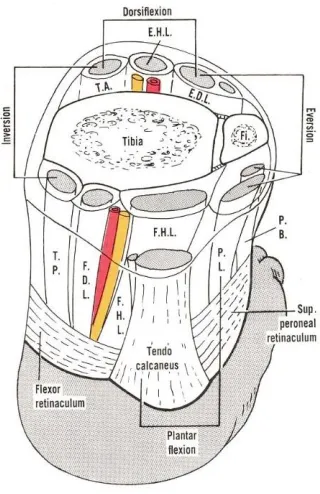
Figure 2.10 shows the muscles described above and their role in the movement of the foot.
The tendons of the muscles of the three compartments of the leg are shown, as well as the
neurovascular bundles related to the hallucis and digitorum tendons. The plantaris muscle is
seen joining the medial side of the calcaneal tendon. An indication of the muscles contributing
in some important muscular functions, such as dorsiflexion, plantar flexion, eversion and
inversion, is provided. Table 2.1 shows the names of the muscles from Figure 2.10 along with
25
[image:46.595.232.392.83.330.2]Figure 2.10. Representation of the horizontal section of the lower end of the tibia and fibula along with the abbreviations of muscles in that area. Image taken from [35].
Table 2.1. Definition of muscles shown in Figure 2.10
(T.A.) Tibialis anterior
(E.H.L.) Extensor hallucis longus
(E.D.L.) Extensor digitorum longus
(P.B.) Peroneus brevis
(P.L.) Peroneus longus
(F.H.L.) Flexor hallucis longus
(F.D.L.) Flexor digitorum longus
(T.P.) Tibialis posterior
26
2.4 Gait Analysis
Gait can be defined as walking, a method of movement that uses the two legs alternately and
provides both propulsion and support [2]. Gait analysis in general helps us study different kinds
of movement patterns as well as the forces involved in producing those movements and permits
measurement and interpretation of kinematics and kinetics [36]. In order to study “normal” gait
it is necessary to define what “normal” means. The term “normal” indicates the guideline, the
standard against which the gait of a subject can be compared and against which pathologies,
injuries and abnormalities can be observed. When defining “normal” gait a wide range of ages,
a wide range of body geometries and both sexes are covered so that a suitable standard is chosen
that is appropriate and adequate for all the individuals studied [2]. For example, if normal data
from the gait of an elderly male subject or a child are compared with normal data obtained from
fit young subjects, there will undoubtedly be large differences. However, when comparing data
from healthy elderly men with those from healthy elderly women, the results may show
similarities and the subject’s gait may be well within normal limits that are appropriate to sex
and age differences. Another aspect to be considered when describing “normal” gait is that even
though a subject’s gait may differ in some way from what one thinks is normal, it does not mean
that it is wrong, undesirable or that it should be altered into a ‘normal’ gait. Many gait
abnormalities compensate for some problem experienced by the subject and even though they
may look abnormal, they are nevertheless not an issue.
A “normal” gait cycle begins with the initial contact of one foot with the walking surface
and ends with the re-contact of that foot with the surface [36]. Sometimes the cycle is called a
stride which comprises of two steps where each step is made by each foot respectively. The
starting point of the gait cycle could happen at any event of the cycle. However, the most often
27
contact, since the instant at which one foot contacts the ground is an event that can be defined
very clearly and distinctively [36]. Each gait cycle is divided into two periods: i) the stance
period or phase (60% of a typical gait cycle) and ii) the swing period or phase (40% of a typical
gait cycle). During the stance phase most of the time the foot is in contact with the ground
surface and around 25% of the typical gait cycle includes double limb support where both feet
touch the ground. During the swing phase the foot is usually not in contact with the ground
since the subject is moving forwards [37, 38]. As seen in Figure 2.11 a complete gait cycle
comprises of: the heel strike or initial contact, the opposite toe off, the heel rise, the opposite
initial contact, the toe off, the feet adjacent and the tibia vertical after which the cycle repeats
itself starting again from the initial contact.

![Figure 2.2. A schematic of a multi-unit hierarchical structure of the tendon. Image taken from [13]](https://thumb-us.123doks.com/thumbv2/123dok_us/9454236.452530/28.595.88.537.214.613/figure-schematic-multi-hierarchical-structure-tendon-image-taken.webp)
![Figure 2.7. Micro anatomy of a muscle fibre. Image taken from [20].](https://thumb-us.123doks.com/thumbv2/123dok_us/9454236.452530/36.595.130.475.243.584/figure-micro-anatomy-muscle-fibre-image-taken.webp)
![Figure 2.8. Achilles tendon disorders. Image taken from [27].](https://thumb-us.123doks.com/thumbv2/123dok_us/9454236.452530/39.595.128.484.222.476/figure-achilles-tendon-disorders-image-taken.webp)


![Figure 3.9. AMTI force plate illustrating the measured force and moment components. Image taken from [91]](https://thumb-us.123doks.com/thumbv2/123dok_us/9454236.452530/89.595.192.425.315.527/figure-amti-force-illustrating-measured-moment-components-image.webp)