MASTER THESIS
Current
Established
Risk
Assessment Methodologies
and Tools
Dan Ionita
Faculty of Electrical Engineering, Mathematics and Computer Science (EEMCS) Department of Computer Science - Information Systems group
EXAMINATION COMMITTEE Roel Wieringa
Wolter Pieters Pieter Hartel
A
BSTRACT
P
REFACE
This thesis marks the successful completion of my Master in Computer Science - Information Systems Engineering at the University of Twente, Netherlands (2011-2013). It has been a truly life-changing experience, in which I have had much to learn and understand.
ACKNOWLEDGMENTS
The author would like to thank Prof. Dr. Roel Wieringa for his unbounded support for the creations of this thesis and for providing me with opportunities far beyond my expectations. Furthermore, I would also like to extend my gratitude to my secondary supervisors, Pieter Hartel and Wolter Pieters, for useful comments and remarks. I would like to extend a special mention to Suse Engbers who makes everything that happens in the IS department at the UT possible thanks to her dedication and skills. However, I am and always will be most grateful to my family for the unadulterated physical, financial and emotional support which helped me get where I am now. Without you, I would be nothing! A special thanks goes to my best friend: my brother. Last but not least, I am especially grateful to my lovely girlfriend, Vincy, who stood by me whenever I felt lost and did her best to make me happy! I will be forever grateful.
C
ONTENTS
1 Introduction 15
1.1 Background . . . 15
1.2 Goals . . . 15
1.2.1 Research Questions . . . 15
1.3 Approach . . . 16
1.4 Structure of the report . . . 16
2 Information Security Risk Management 17 2.1 The Risk Management process . . . 17
2.2 Information Security Risk Management . . . 17
2.3 Risk Assessment . . . 17
2.3.1 Classification of Risk Assessments. . . 19
3 Survey of Information Security Risk Management/Assessment Methods 23 3.1 Scope and assumptions of the survey . . . 23
3.2 Inclusion and exclusion criteria . . . 24
3.3 Initial list . . . 24
3.4 In-depth Analysis . . . 26
3.4.1 AS/NZS 4360. . . 26
3.4.2 CORAS . . . 28
3.4.3 CRAMM . . . 30
3.4.4 EBIOS 2010 . . . 31
3.4.5 FAIR. . . 32
3.4.6 FRAP . . . 34
3.4.7 ISO/IEC standards . . . 35
3.4.8 IT Grundschutz . . . 39
3.4.9 MAGERIT v2(2005) . . . 40
3.4.10 MEHARI. . . 42
3.4.11 OCTAVE . . . 44
3.4.12 RiskIT . . . 47
3.4.13 Structured Risk Analysis. . . 49
3.4.14 TARA . . . 50
3.5 Comparison of methods . . . 52
4 Overview of Conceptual Models of Risk 55 4.1 Conceptualizing Risk. . . 55
4.2 Frameworks. . . 55
4.2.1 AS/NZS ISO 31000:2009 . . . 55
4.2.2 FAIR. . . 56
4.2.3 ISO/IEC 13335-1:2004 Concepts and models for information and communications technology security management. . . 58
4.2.4 Microsoft Threat Model . . . 61
4.2.5 OWASP Risk Rating Methodology . . . 62
4.2.6 The Open Group Risk Taxonomy . . . 64
4.2.7 Structured Risk Analysis. . . 64
4.3 Commonalities and differences . . . 65
4.3.1 Integrated Conceptual Model . . . 65
4.3.2 Variations . . . 68
5 Index of Tools 71
5.1 Selection criteria . . . 71
5.2 Initial list . . . 71
5.3 Description of tools . . . 73
5.3.1 Acuity Stream. . . 73
5.3.2 Callio secura 17799 . . . 74
5.3.3 CCS Risk Manager. . . 75
5.3.4 CORAS Tool . . . 76
5.3.5 Countermeasures . . . 77
5.3.6 Cramm . . . 78
5.3.7 EAR / PILAR . . . 79
5.3.8 Ebios . . . 80
5.3.9 FAIRLite. . . 81
5.3.10 FAIRiq . . . 82
5.3.11 GSTool . . . 84
5.3.12 GxSGSI . . . 85
5.3.13 HiScout GRC Suite. . . 86
5.3.14 Mehari 2010 basic tool. . . 87
5.3.15 Modulo Risk Manager . . . 88
5.3.16 MSAT . . . 89
5.3.17 Proteus Enterprise . . . 91
5.3.18 Resolver Ballot . . . 92
5.3.19 Risicare . . . 93
5.3.20 Riskwatch. . . 94
5.3.21 RM Studio. . . 95
5.3.22 SAVe . . . 96
5.3.23 TRICK light . . . 97
5.3.24 verinice . . . 99
5.3.25 vsRisk . . . 100
5.4 Comparison of tools . . . 101
6 Cross Comparison 103 6.1 Methods and Tools . . . 103
6.2 Tools and Conceptual Models . . . 103
6.3 Methods and Conceptual Models . . . 104
7 Guidelines 105 7.1 Decision Table . . . 105
7.1.1 Discussion . . . 106
8 Conclusions and recommendations 109 8.1 Risk Assessment . . . 109
8.2 Conceptual models of Risk . . . 110
8.3 Risk Assessment tools . . . 110
8.4 Relationship between Risk Assessments and Security Requirements. . . 110
A Table of RA Methods and their characteristics 117
B Intermediary table used for construction of the Decision Table 121
L
IST OF
F
IGURES
2.1 Overview of a typical Risk Management process . . . 18
3.1 The AS/NZS 4360 Risk Management process. . . 27
3.2 The 8 steps of the CORAS method . . . 28
3.3 A time-line of the ISO/IEC standards relevant for Information Security RA/RM . . . 36
3.4 The ISO 27005 Risk Management workflow . . . 38
3.5 Risk Analysis according to the MAGERIT method . . . 42
3.6 The MEHARI Risk Management Process . . . 44
3.7 The three main phases of the main OCTAVE RA method. . . 46
3.8 The basic steps undertaken during a Structured Risk Analysis . . . 49
3.9 The basic steps undertaken during a TARA . . . 52
4.1 Decomposition of Risk according to the FAIR framework[35] and The Open Group taxonomy[23] . . . 59
4.2 Relationships between the entities involved in RM/RA according to ISO/IEC 13335-1 . . . 60
4.3 Decomposition of Risk level (Exposure) according to the OWASP [19] methodology . . . 63
4.4 Decomposition of Risk level (Exposure) according to the SRA[38] methodology . . . 65
L
IST OF
TABLES
3.1 Initial list of methods and applicable exclusion criteria . . . 25
4.1 Naming variations between Information Security Conceptual Models . . . 69
5.1 Initial list of tools and applicable exclusion criteria. . . 72
5.2 RA/RM tools and characteristics . . . 102
7.1 Decision table for selecting the most suitable RA method(s) . . . 107
A.1 RA/RM methods and their complete set of characteristics . . . 119
C
HAPTER
1
I
NTRODUCTION
1.1
Background
In December 2012, based on EU funding, the TREsPASS project was officially launched. Consisting of 17 partners from both industry and research, the project aims to improve the way we secure information by integrating the digital, technical and social domains with the current state-of-the-art in the field of security. This is because of the impact that human behavior (be it an attacker, employee or bystander) has on the (in)security of an infrastructure. Furthermore, strict technical mechanisms can still be by-passed by using social engineering. As such, a better understanding of how these domains intertwine in the field of information security is crucial in identifying potential weak points within an organization or infrastructure.
This is where Risk Assessments come in. A Risk Assessment (RA) is a structured or semi-structured approach of analyzing the security of an infrastructure, identifying weak spots, and selecting counter-measures. Such assessments are done according to various methodologies. Currently, the sheer number of different such methodologies might be overwhelming for someone trying to get an overview of Risk Assessment methods and tools. Furthermore, each such method follows a slightly different pro-cedure, uses different data, requires certain skills, provides different output, or is based on a different understanding of Risk all-together.
One of the first deliverables within the TREsPASS project includes a survey of the state-of-the-art in Risk Assessments. This includes both methods and tools. This master thesis is, amongst others, meant to provide input for this document. It can also serve as an introduction to Risk Assessment and Risk Management, or a glossary of relevant methods and tools.
1.2
Goals
The overall goal is obtain a better understanding of the key differences and commonalities between the various state-of-the-art Information Risk Assessment methodologies and tools. Interesting aspects are the scope, target users of the methods or tools and intended audience of the results.
We are also interested in the conceptualization and decomposition of Risk according to various methodologies and how this relates to their other characteristics.
1.2.1
Research Questions
These goals can be distilled into the following research questions:
RQ1 What are the most commonly used Risk Assessment methods?
SRQ1.1 What are their goals?
SRQ1.2 What steps do they contain?
SRQ1.3 What decisions do they support?
SRQ1.4 What is the scope of each method?
RQ2 What are the underlying conceptual models used in Risk Assessment frameworks?
SRQ2.2 What are the sub-components of Risk and how are they combined?
SRQ2.3 What are the target organizations of each model?
SRQ2.4 What significant differences can be found between these models?
RQ3 What are the most commonly used Risk Assessment tools?
SRQ3.1 What functionality does each offer?
RQ4 What are the relationships between each tool, method and model?
1.3
Approach
The core of the thesis consists of surveys of established methodologies, related tools and underly-ing conceptual models. Each relevant methodology, tool and conceptual model will be described and analyzed in order to create an overview of the current state-of-the-art. The analysis of individual meth-ods/tools is followed by a comparison of key features as well as identification of commonalities and differences. Several discussion regarding the cross-compatibility between methodologies, tools and conceptual models are also included, with conclusions being drawn with regard to the observations. Finally, a guideline to choosing the most suitable method given the organization’s business context and security requirements is designed. The findings are validated via expert judgment.
1.4
Structure of the report
The report is structured in 8 Chapters. This first chapter contains an introduction to the chosen topic. Chapter2.3contains an introduction to the field of Information Security Risk Management, of which Risk Assessments are a part of, as well as criteria for the sub-selection discussed in this thesis. Chapter3
C
HAPTER
2
I
NFORMATION
SECURITY
R
ISK
M
ANAGEMENT
2.1
The Risk Management process
According to the European Network and Information Security Agency (ENISA), Risk Management (RM) is "a process aiming at an efficient balance between realizing opportunities for gains while minimizing vulnerabilities and losses” [43]. Furthermore, it is an integral part of the management practice and cru-cial for achieving good corporate governance. Risk Management is usually a continuously re-iterating process, that typically consists of several activities. Such activities typically include identifying, ana-lyzing and prioritizing risks and finding, evaluating and applying relevant countermeasures as well as monitoring the results. This process is either continuous or cyclical and focuses on achieving a coordi-nated and economical application of resources to minimize, monitor, and control the probability and/or impact of unfortunate events [26].
2.2
Information Security Risk Management
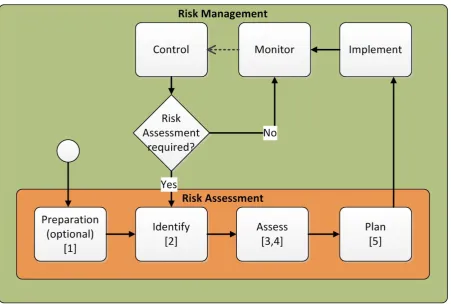
Risk Management and Risk Assessment are techniques that can be used to identify, monitor and control the risk level of an Information System (IS). Information Security Risk Management, in particular, can either be part of the overall organizational Risk Management process, or can be implemented separately [40]. Information Security Risk Management activities usually include implementing appropriate policies and related controls, promoting awareness, as well as monitoring and evaluating policy and control effectiveness [21]. The process is a usually cyclical. An overview of a typical Information Security Risk Management process is depicted in Figure2.1. The dashed arrow means that the Monitor process does not stop when the Control process is started. Rather, the Monitor process is continuous and running in parallel with all other processes.
2.3
Risk Assessment
A critical step in the Information Security Risk Management process is the Risk Assessment. This involves the evaluation each IT risk as well as the total IT risk and giving them priorities.
While Risk Assessment is an activity that also takes place as part of the Risk Management process, it is not continuous. It is, however, a discrete activity, only being initiated when required or at regular in-tervals. Risk Assessments usually serve to identify and analyze possible vulnerabilities of and threats to a given system, as well as the relative value of assets and possible damage resulting from their compro-mise. This is done in order to estimate the risks that the owner, operator or user of the system may face. As such, its output is base for all the other Risk Management activities by eliciting new security require-ments, aiding in the choice and specification of countermeasures, evaluating current Security Policies, supporting relevant management decisions, assessing existing protection mechanisms, controls, etc.
Figure 2.1: Overview of a typical Risk Management process
what is perceived as an acceptable level of security at an acceptable cost (also called "good enough" security). Frameworks differ in their interpretation of this, and in the way of achieving and maintaining it. In the most general sense, a Risk Assessment is a multidisciplinary task that might contain one or more of the following steps (Figure2.1maps the steps to the RM phases):
1. Establishment of context: Identifying and defining the digital, technical social and business context in which the system operates as well as building some kind of model of the information system it-self. Although the context of the IS is always relevant, this step is sometimes skipped if a satisfying specification of the IS already exists. This is usually part of the "preparation" stage in Figure2.1. Other activities relevant for this phase are defining the scope of the assessment, security require-ments, stakeholder goals, risk criteria etc.
2. Risk Identification: this is the core of any risk assessment and has to do with using available data to identify possible attack vectors and vulnerabilities of the system. This step corresponds to the "identify" stage in Figure2.1.
3. Risk Analysis: this step has to do with understanding the probabilities, impacts, and other param-eters associated with the identified risks in order to allow a better understanding of the system’s vulnerabilities. This step corresponds to the "assess" stage in Figure2.1.
4. Risk Evaluation: in this final step, risks are ranked and prioritized in order to allow decision makers to select countermeasures. This step corresponds to the "assess" stage in Figure2.1.
2.3.1
Classification of Risk Assessments
Due to the large number of methodologies and frameworks available for evaluating Risk, a classifica-tion criteria would be useful in understanding the various opclassifica-tions available. Risk Assessment or Risk Management methodologies can be grouped together based on various factors.
According to Houmb [25], Risk Assessments can be classified into three main types:rule based, risk based (probabilistic) and judgment based. Rule based assessments are usually based on a set of stan-dards or checklists which are used as rules that the system should comply by. Risk based and judgment based assessments also take into consideration unknown threats and focus on assessing probabilities and impacts for each undesired event. The difference lies in the interpretation of probability: for risk based evaluations, only empirical data from similar contexts is used to estimate the probability while for judgment based assessments the subjective interpretation of the expert is used as the probability.
Zambon et al [60] introduces a framework for comparing Risk Assessment methods based on the following three parameters:
1. The scale used to evaluate risk (qualitative vs. quantitative)
2. Which factors are used to evaluate impact
3. The factors and operations used to compute risk
In this thesis, I will focus on parameters 1 and 3, as they provide a clear separation between the various types of Risk Assessments available:
Quantitative vs. Qualitative
Whether a method is considered quantitative or qualitative stems from its output (i.e. the way risk levels are measured). If risk is expressed in numbers on a ratio or interval scale, where the difference between any two values is known, then the method can be considered quantitative. If however, risk is evaluated on an ordinal scale (e.g. high, medium, low), where only the ordering amongst values is known, then it is considered to be a qualitative method.
Qualitative risk assessments are descriptive rather than measurable. Purely quantitative methods usually rely on mathematical computations based on various metrics and thus usually require consid-erable amounts of data. Qualitative methods, on the other hand, can usually be performed within a shorter time, with less resources, less relevant data and require less mathematical, financial and secu-rity expertise. [55]
Risk computation
Based on the paper by Zambon et al [60], we introduce the following classification of Risk Assessment / Risk Management methodologies, based on which properties and factors are taken into account when evaluating risk, as well as how these factors are combined. In the following classification, anAsset is anything that is valuable for the organization, aThreat is regarding as any entity that can cause harm to the organization, aVulnerability is any weakness that a threat might exploit to achieve its goals. While sometimes the concept of Likelihood is interpreted as a probability (between 0 and 1) or even as a binary indicator, in the rest of this document, I will use it with the meaning of a frequency (expected number of occurrences per period of time). This is because some events can occur multiple times in a given time frame, and as such this interpretation is more flexible. The operator⊗implies a computation between the two factors, usually a multiplication. However, specific formulas and operators are defined within individual methodology.
For an in-depth description of these concepts and factors, please refer to Section 4.3.1, although it must be kept in mind that the terms are used more loosely here. We identify 5 classes of Risk computations:
Class 1: Risk(T hreat, Asset) =Likelihood(T hreat)⊗V ulnerability(T hreat, Asset)⊗Impact(T hreat, Asset)
the potential impact that the attack might have on the asset. This is commonly used in most general-purpose Risk Assessments.
Class 1 approaches evaluate Risk based on the relationship between each Asset (or group of assets) and each known threat (attacker or natural). Risk is computed by combining estimations of the likelihood that the threat will act upon the asset(s), as well as the impact that a successful such action might have on the asset(s). Furthermore, the Vulnerability of the asset with respect to the threat is taken into account.
Class 2: Risk(T hreat, Asset, Requirements) =V ulnerability(T hreat, Asset)⊗Impact(T hreat, Requirements)
This type of Risk Assessment evaluates risk based on the impact a threat might have on the Se-curity Requirements that have been previously defined for the asset. This kind of approach is particularly useful when the assessment is done with the purpose of certification. For example, such an approach might be useful when comparing an Information System’s security control to a standard benchmark (like ISO/IEC 27002) in order to establish if and by how much it deviates from the best practice recommendations.
In such approaches, "security needs" or requirements that the system must comply to have to be defined before-hand. Afterwards, the impact that each Threat might have on these Security needs is evaluated and combined with the overall vulnerability of the Asset with relation to the given threat in order to estimate Risk Level.
Class 3: Risk(T hreat, Asset) =AnnualLossExpectancy(T hreat, Asset) =Likelihood(T hreat, Asset)⊗
AverageLoss(T hreat, Asset)This is the financial interpretation of risk. It is also calculated for a certain period (in this case, a year), which makes it even more applicable to cost/benefit and bud-get analysis. It usually requires quantitative data. An application scenario for such assessments would be the audits done by insurance companies in order to design commission and compensa-tion schemes.
Again, Risk is evaluated for each Threat-Asset tuple. However, the term likelihood here gains the meaning of "successful attempts per year" and is combined with the average financial damage caused by each such attempt to obtain an estimation of the annual loss expectancy in monetary terms.
Class 4: Risk(T hreat, CriticalAsset) =V ulnerability(CriticalAsset)⊗Impact(T hreat, CriticalAsset)
This is the approach usually undertaken for Security-Critical systems where probability of the threat is irrelevant as the asset needs to be fully secured against all threats at all times. Here, Risk is interpreted simply as the risk of being attacked at all. This kind of Risk Assessment might be applied to, for example, medical systems or in aerospace engineering.
For this approach, critical assets need to be identified, and for each such asset, its overall vulner-ability is estimated and combined with the impact that each threat might have on the asset when successfully acting on this vulnerability.
Class 5: Risk(Incident, Asset) = Likelihood(Incident)⊗Impact(Incident, Asset) This approach is based on the traditional interpretation of Risk in safety analysis. Here, no specific threat (e.g. attacker) is taken into account. Instead, only the average frequency of negative events and their consequences are used to estimate Risk levels. Such approaches are common in, for example, risk assessment of a automotive on-board computer or other such system where the effect of environmental factors are relevant.
In Class 5 approaches risk is evaluated with relation to an incident and an asset. An incident is defined as the successful exploitation of a vulnerability. In this interpretation, each Risk can only be defined with regard to a vulnerability. This differentiates it from Class 1 approaches, where Threats can act upon assets even without the existence of a specific vulnerability. This aspect limits the scope of applicability of Class 5 Risk Analyses to weaknesses of the System.
Goal
• Certification
• Security audit
• Showing compliance to given rules, regulations, standards, guidelines or best practices
• Identifying corrective action(s) needed in order to achieve compliance (also called "Gap Analysis")
• Supporting security-budget (investment) decisions
• Providing up-to-date information relevant for the organization’s Risk Management process
C
HAPTER
3
S
URVEY OF
I
NFORMATION
S
ECURITY
R
ISK
M
ANAGEMENT
/A
SSESSMENT
M
ETHODS
This chapter contains a survey of the relevant Information Security Risk Management of Risk Assess-ment methods used in practice. Some assumptions regarding the boundaries and scope of the survey are introduced in order to support a set of strict Inclusion and Exclusion Criteria. These are then used to filter an initial list of methods in order to restrict the analysis to only those methods that are relevant to the topic, that can be properly analyzed and that allow consistent comparison criteria to be applied.
3.1
Scope and assumptions of the survey
Due to the very large and diverse population of methodologies related to Risk Management and/or Risk Assessment, it is important to clearly state the purpose of the survey in order to apply a fair and consistent selection process and analysis.
Considering the context that this thesis was developed in (i.e. the TREsPASS project), the sur-vey will focus on methodologies that describe step-by-step processes that can be used to conduct an enterprise-wide or system-wide socio-technical Risk Assessment as described in Section2.2. Second, this process must deliver results which enable chief security officers and/or other management to ratio-nalize about the need and effectiveness of security investments, as well as supporting such decisions. However, different organizations in different countries and sectors operate based on greatly varying business models and architectures. As such, it is essential that a clear definition of the assumptions made when selecting and discussing the RA/RM methods in-depth is made from the start. Based on The Open Groups document describing a framework for comparing RA processes and eliciting require-ments for such methodologies [22], we state the following assumptions regarding the intended target organizations:
• The organization has a clearly defined management team which has the power and responsibility to see that high-level (business) objectives are met.
• The above described management team has a limited amount of resources available for achieving it’s task
• There exists a broad spectrum of actors, threats and vulnerabilities that give rise to socio-technical information security risks which can interfere in achieving the objectives
• The management team requires reliable information that can be used to assess the risk landscape it is facing, as well as to identify various mitigation options.
• This information can be generated or derived from the application of a RA method as described in this document and used to make cost-effective decisions regarding the application of the limited resources available towards an acceptable reduction of the overall risk-level.
Of course, selected methods need to have sufficient documentation (publicly) available in English and must not be restricted to technical issues and users, nor should it be exclusively aimed at high-level management users. These, and other exclusion criteria are discussed in the next section.
3.2
Inclusion and exclusion criteria
Based on the assumptions described above (Section3.1, a selection filter was applied to the initial list of methods. The criteria were chosen in order to make the selection as relevant to the topic as possible. Also, the criteria allow a fair and consistent comparison across all included methods. The inclusion criteria I-1 is to make sure the methods are relevant to the topic. I-2 and I-3 limit our set of methods to the ones applicable to enterprise-wide Information Systems, in order to conform with the Scope and assumptions. I-4 requires that analyzed standards or methods must include a specific step-by-step Risk Assessment method, as some only discuss general Risk Management guidelines or principles. I-5 is required in order to allow enough information about the method to be gathered. Finally, I-6 is essential in order to avoid methods designed for, and applicable to, specific national legislation, procedures or standards and encourage selection of internationally known and applicable methodologies.
Methods that are intended for the sole purpose of certification are of no interest w.r.t the topic as they were not written with the intended purpose of identifying, analyzing and evaluating IS risk, but simply to show compliance to a pre-defined standard (E-1). Lack of relevant documentation might cause difficul-ties in properly describing and analyzing specific aspects of a method (E-2). If such documentation is indeed available, but in languages other than English, it would make it hard, or impossible for the author to gain a good understanding of the approach and might pose threats to the validity of the conclusions or comparisons (E-3). Finally, we want to avoid methods written for a purely technical audience, such as the one intended for software development or ones focusing on the mechanics of the Information Sys-tems while not taking into consideration aspects related to the context, the organization or its policies (E-4). Also not of interest are methods situated at the opposite end, which evaluate risk solely based on high-level issues, while ignoring technical aspects (E-5).
The methods that conform to all inclusion criteria and none of the exclusion criteria will be analyzed in-depth in Section3.4.
• Inclusion criteria:
(I-1) Describes a RA/RM method as defined in Section2.2
(I-2) Method takes as input an existing system or a design of a new system
(I-3) Intended users are chief security officers or other management able to make decisions re-garding (security) budget
(I-4) Must contain a dedicated IS RA method (I-5) Complete documentation available
(I-6) Method is in use in more than one country
• Exclusion criteria:
(E-1) Method is intended for the purpose of certification (E-2) Lack of relevant documentation
(E-3) Documentation not available in English (E-4) Product or system oriented method
(E-5) General management or governance oriented method
3.3
Initial list
professionals also part of the TREsPASS project helped with the selection. Finally, industry literature and surveys (e.g. [9], [34], [58] and [57] [25]) were used to identify other methods that are in use.
One thing to be noted is that most the the above literature contain surveys of risk assessment and risk management methods. However, they only compare a handful of methods each. In this thesis a union of all the methods analyzed in the industry surveys will be used to provide a complete overview of the current Risk Assessment landscape.
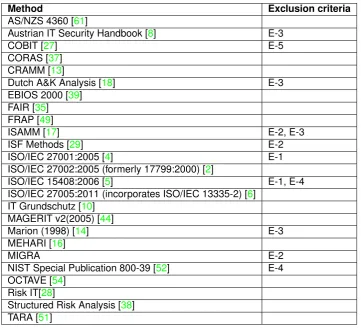
This initial list consists of a total 24 methods. From this initial list, we eliminate those that conform to at least one of the exclusion criteria. Table3.1shows the initial, exhaustive list of methods and the applicable exclusion criteria for those that are not selected for further analysis. An explanation of the exclusions follows.
The Austrian IT Security Handbook and Marion(1998) are only available in German. Furthermore, Marion was first introduced in 1983 and does not seem to be maintained or used since 1998, being replaced by MEHARI. The Dutch A&K method is only available in Dutch and only used in the Nether-lands. The documentation of the ISF (i.e. Information Security Forum) methods (FIRM, IRAM, SARA and SPRINT) [29] are only available to members. MIGRA and ISAMM do not have complete documen-tation available, and mostly in other languages [60]. The ISO/IEC 15408:2006 (Common Criteria for Information Technology Security Evaluation) was also excluded because it is focused on evaluation the security of individual products or systems with regard to certification. ISO/IEC 27001:2005 is part of the 2700x family, but it’s purpose is mostly audit and certification so it also falls outside our scope. COBIT works on a higher level of IT governance and is not explicitly designed for Risk Management. Finally, the NIST Special Publications are intended for technical users so it falls slightly outside our scope of tools that enable management to make budget decisions (according to I-3).
After the selection process we are left with 14 methods. Next, these will be described and analyzed in Section3.4.
Method Exclusion criteria
AS/NZS 4360 [61]
Austrian IT Security Handbook [8] E-3
COBIT [27] E-5
CORAS [37] CRAMM [13]
Dutch A&K Analysis [18] E-3
EBIOS 2000 [39] FAIR [35] FRAP [49]
ISAMM [17] E-2, E-3
ISF Methods [29] E-2
ISO/IEC 27001:2005 [4] E-1
ISO/IEC 27002:2005 (formerly 17799:2000) [2]
ISO/IEC 15408:2006 [5] E-1, E-4
ISO/IEC 27005:2011 (incorporates ISO/IEC 13335-2) [6] IT Grundschutz [10]
MAGERIT v2(2005) [44]
Marion (1998) [14] E-3
MEHARI [16]
MIGRA E-2
NIST Special Publication 800-39 [52] E-4 OCTAVE [54]
Risk IT[28]
[image:25.595.118.480.391.719.2]Structured Risk Analysis [38] TARA [51]
3.4
In-depth Analysis
In this section we will be looking at the main characteristics of the previously selected RA/RM methods. Each analysis will follow a common structure. Considering the scope of this document, relevant features are the development context of the methods and their stated main objective(s). Also of interest is the Risk Assessment process itself, more specifically, the steps that need to be undertaken, as described by the method. Each description is followed by a discussion, where some unique characteristics, strong points or disadvantages specific to each method will be identified. The classification criteria described in Section2.3.1will also be taken into account, where relevant. Finally, for each of the analyzed methods, a summary of it’s PROs and CONs will be distilled.
A complete overview of all the methods and all known characteristics is available in AnnexA. Here all relevant features of the methodologies are described: Class, quantitative or qualitative, sponsor, Risk Assessment phases supported, release date, price, geographical spread, intended users, supporting tool(s), matching conceptual model, specific sector and target organization.
3.4.1
AS/NZS 4360
Name
The Australian/New Zeeland Standard for Risk Management AS/NZS 4360
Origin
The standard was introduced by Standards Australia International and Standards New Zealand in 1995, and revised in 1994. It has since been incorporated into the international standard AS/NZS ISO 3100:2009 - Principles and Guidelines.
Goal
The standard provides a generic guide to the Risk Management process at a very high-level. This allows it to be applicable to a wide rage of systems, organizations and activities. It is especially useful when used not only for Information Security Risk Management but as a uniform enterprise-wide approach to risk management.
Steps
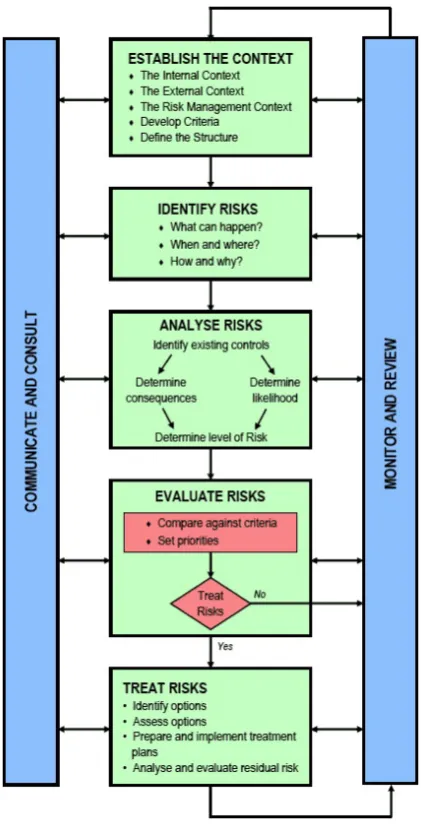
The Australian/New Zealand Standard for Risk Management AS/NZS 4360:2004 [61] provides a generic framework for the process of managing risks which divides the elements of the risk assessment process into several sub-processes: "Establish the context", "Identify Risks", "Analyze Risks", "Evaluate Risks" and "Treat Risks" [25].The standard also describes two processes that should run in parallel with the risk assessment sessions as part of the Risk Management: "Monitoring and Review" and "Communicate and Consult". A flowchart describing this process can be found in Figure3.1.
Discussion
Figure 3.1: The AS/NZS 4360 Risk Management process
Source: [61]
Evaluation
PROs:
• Is supported by an extensive, standardized risk taxonomy and conceptual model (AS/NZS ISO 31000)
• Strong emphasis on “context”
• Flexible
CONs:
• Diminished focus on risk treatment
3.4.2
CORAS
Name
CORAS: A platform for risk analysis of security-critical systems
Origin
The CORAS method was a result of an EU-funded project, completed in 2003. Since then, the method itself has not undergone any major updates. However, the CORAS tool is still being maintained by the OpenSource community.
Goal
The stated goal of the CORAS project was to develop a practical model–based framework and com-puterized support for "precise, unambiguous and efficient risk assessment of security-critical systems" [7].
[image:28.595.150.439.402.616.2]Steps
Figure 3.2: The 8 steps of the CORAS method
Source: [37]
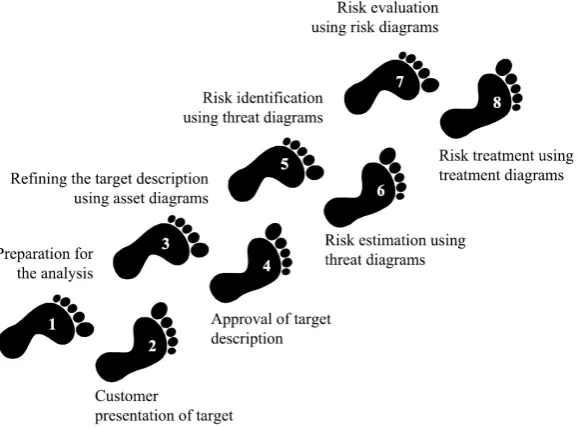
The method describes 8 consecutive steps, visible in Figure3.2:
1. The first step is mostly preparatory: identify the target of assessment and the depth of the analysis.
2. The second step consist of a meeting with the customer: reach a common understanding of the overall goals and planning as well as of target, focus and scope of assessment.
4. The fourth step is the last step before the actual risk analysis and focuses on eliciting the risk evaluation criteria to be used further on. This step also verifies that the customer approves the detailed description of the target and it’s context, including assumptions and preconditions.
5. The fifth step uses the CORAS language as a basis for a multi-disciplinary brainstorming work-shop. The purpose of this workshop is to identify as many risks as possible (i.e. risk identification).
6. The sixth step is aimed at estimating the risk levels (i.e risk analysis). This is also done during a cross-disciplinary brainstorming session where likelihoods and consequences of each previously identified risk are determined..
7. In the seventh step the previously defined risk evaluation criteria are used to deem each risk as either acceptable or requiring treatment (i.e. risk evaluation)
8. In the eighth step, possible treatments and mitigations are identified, evaluated and compared.
Discussion
CORAS is a model-based approach to conducting Risk Assessments. It relies on it’s own modeling language which is an extension of UML that can be used in conjunction with the risk assessment to serve three purposes [50]:
• Describing the target of assessment
• As a communication medium that facilitates interaction between different groups of stakeholders
• Documenting the results and underlying assumptions
Furthermore, the method comes with a dedicated tool that facilitates documenting, maintaining and reporting analysis results through risk modeling [37]. The method was created as a result of a EU-funded project (IST-2000-25031) that was aimed primarily at risk analysis of security-critical systems. The methodology defines four kinds of diagrams (asset, threat, risk and treatment diagrams) as part of it’s “model-based” approach to support various visualizations in various steps of the process. All diagrams make use of the same, relatively small, set of symbols.
The method differentiates between direct and indirect assets. Assets are the entities that need to be protected and essentially the motivation for the Risk Assessment. Furthermore, it classifies threats to these assets as:
• Human threat (accidental)
• Human threat (deliberate)
• Non-human threat
The CORAS method is based on the ISO 17799 standard (now 27002, described in Section 3.4.7) and as such is also compatible with ISO/IEC 13335 (now 27005, described in Section 3.4.7) and the AS/NZS 4360 standard (described in Section3.4.1) [50].
It should be noted that the first 4 steps of the CORAS method are mostly concerned with defining and reaching consensus among all stakeholders regarding the target, context and goals of the assess-ment. It is only the second half of the analysis where the actual risk assessment is performed: Step 5 corresponds toRisk identification, Step 6 isRisk analysis, Step 7 is Risk evaluation, while Step 8 is where theRisk treatment takes place.
Evaluation
PROs:
• Free tool support
• Very thorough, suitable for security-critical systems and large organizations
CONs:
• Requires expert knowledge from various backgrounds
• Might be lengthy
• No longer developed
3.4.3
CRAMM
Name
CCTA Risk Analysis and Management Method (CRAMM).
Origin
The CRAMM method was originally developed by the Central Communication and Telecommunication Agency, a British government organization, 1985. Since then it has undergone several revisions, and is currently owned, sold and developed by a British company: Insight Consulting, a division of Siemens Enterprise Communications Ltd. [41].
Goal
CRAMM can be used to justify security investments by demonstrating need for action at management level. Secondary applications can be benchmarking the security of an organization or showing compli-ance to other standards (like the BS7799 - British standard for information security management) [59]. CRAMM is intended for large organizations, like government bodies and industry [41].
Steps
The CRAMM process consists of three main phases[13]:
1. Asset identification and valuation - After establishing the overall objectives of the assessment as well as the boundaries, physical and software assets are identified and valuated. This is commonly done via interviews
2. Threat and vulnerability assessment - This step covers the actual assessment of risks by identi-fying and analyzing possible threats to the system, assessing the vulnerability of the system to those threats and finally using the knowledge about assets, threats and vulnerabilities to compute risk.
3. Countermeasure selection and recommendation - This third stage makes use of CRAMM’s coun-termeasure repository to identify and rank by cost and effectiveness the available mitigation strate-gies.
Discussion
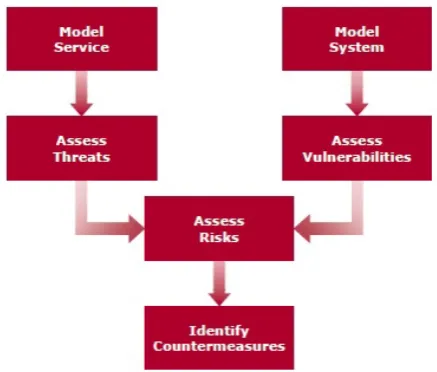
CRAMM is a very versatile method, allowing users to achieve various tasks at various levels of complex-ity. The methodology come with extensive tool support, both free (CRAMM express) and professional (CRAMM expert), as well as a database of over 3000 ranked security controls (i.e countermeasures), and even certification tools [13].
countermeasures. However, this means that the methodology itself is of little use without the software toolkit.
CRAMM is compatible with ISO 270001 certification, and its asset-centric approach as well as its asset valuation technique have even been integrated into other methodologies (like CORAS) [25].
Evaluation
PROs:
• The complexity of the assessment can be tuned to needs
• Especially useful for large enterprise organizations
• Process is mostly automated (in software tool)
CONs:
• Expert knowledge required
• Full assessments can be lengthy or overly-complex
• Can only be used in conjunction with dedicated tool
3.4.4
EBIOS 2010
Name
Expression des Besoins et Identification des Objectifs de Sécurité (EBIOS)
Origin
The method was originally developed by the French Central Information Systems Security Division and is now maintained by a private club of experts from various fields and origins (ie. Club EBIOS). [39]
Goal
The goal of the EBIOS method is the assessment and treatment of risks associated with an IS (whether enterprise-wide or specific) in order to support management-level decision-making and to create a common ground for security discussions between various stakeholders [41].
Steps
1. The first phase deals with context establishment: the relationship between the business context and the IS (contribution to business goals, boundary, decomposition)
2. In the second phase, security requirements are determined based on the feared security events
3. In the third phase, a risk study conducted in order to identify and analyze threat scenarios
4. In the fourth phase, information from the previous steps is used to identify risks and describe the necessary and sufficient security goals relating to these risks
Discussion
One of the main strengths of the EBIOS approach is is it’s modularity: it’s knowledge bases can be tuned to comply to local standards and best practices, and to include external repositories of attack methods, entities or vulnerabilities [41].
EBIOS can be used both in the design stage or against existing systems [34]. Instead of a scenario-based risk analysis, EBIOS goes for a more structured approach, allowing a more exhaustive analysis through the identification of various sub-components or causes of risk (e.g. entities, vulnerabilities, attack methods, threat agents, etc). It’s 5 phases can also be applied somewhat independently, allowing for only certain parts of the analysis to be (re)done (e.g. vulnerability analysis) [34].
The method is also supported by a dedicated tool: the EBIOS tool, described in Section 5.3.8. Furthermore, the method is compatible with all relevant ISO standards (13335, 15408, 17799, 31000, 27005, 27001) [39].
Evaluation
PROs:
• Generic method that allows for tuning to local standards, habits, context
• Can be applied to targets of assessment of various sizes and complexities (from entire IS to single web-site)
CONs:
• Most detailed documentation and support only available in French
3.4.5
FAIR
Name
Factor Analysis of Information Risks (FAIR).
Origin
The FAIR methodology is part of the FAIR framework described in Section, introduced by Risk Man-agement Insight LLC. in 2005 under a Creative Commons Attribution-Noncommercial-Share Alike 2.5 License1.
Goal
The FAIR methodology hopes to address the issue of information security being practiced "as an art rather than a science"[35]. As such, it’s goal is to rely less on the practitioner’s experience, intuition or best practices and instead derive output from repeatable, consistent, financially sound computations.
1CC A-N-SA 2.5: Anyone is free to Share (copy, distribute and transmit the work) and Remix (adapt the work) under the
conditions:
• Attribution: You must attribute the work in the manner specified by the author or licensor (but not in any way that suggests that they endorse you or your use of the work).
• Noncommercial: You may not use this work for commercial purposes.
Steps
The FAIR Basic Risk Assessment Guide [35] describes a process comprised of ten steps, spread across four stages:
Stage 1 Identify scenario components
1. Identify the asset at risk
2. Identify the threat community under consideration
Stage 2 Evaluate Loss Event Frequency (LEF)
3. Estimate the probable Threat Event Frequency (TEF) 4. Estimate the Threat Capability (TCap)
5. Estimate Control Strength (CS) 6. Derive Vulnerability (Vuln)
7. Derive Loss Event Frequency (LEF)
Stage 3 Evaluate Probable Loss Magnitude (PLM)
8. Estimate worst-case loss 9. Estimate probable loss
Stage 4 Derive and articulate Risk
10. Derive and articulate risk
Discussion
FAIR is, in fact, an entire framework that includes a taxonomy of the factors that make up information risk, methods for measuring such factors, computations that derive risk mathematically from the mea-sured factors and even a simulation model that takes as input all of the above to create and analyze complete risk scenarios. In this section, we focus on the Risk Assessment methodology, as described within FAIR. The taxonomy and conceptual model it introduces will be further described in Section4.2.2. FAIR’s Basic Risk Assessment process, as described in [35], relies extensively on tables which need to be filled in with ordinal values of the type: "low-medium-high". The ordinal values are however, defined based on intervals, described in the guide [35]. Operators are then defined on these factors by means of matrices. After step by step estimation and computation of the various factors driving risk, an evaluation of total Risk is obtained, also on a 4 level ordinal scale. This is similar to the approach undertaken in a Structured Risk Assessment (see Section3.4.13). The key difference here is that a FAIR analysis focuses on a single assets, while an SRA first decomposes the target of assessment into components and then evaluates risk individually for each one. Furthermore, the FAIR analysis evaluates the risk for one Threat Community at a time. However, the FAIR analysis takes many more factors into account and offers a more precise evaluation of each Asset - Threat Community pair.
The Risk Assessment described above is intended for use in simple, single level risk analysis, not describing the additional steps required for a multilevel analysis [35]. A slightly more complex analysis (looking at a number of assets, or various threat communities) can of course be achieved by simply running the Basic risk assessment multiple times, once for each Asset - Threat Community pair. Doc-umentation of performing more complex Risk Assessments is not publicly available on-line, and knowl-edge and qualification to perform such assessments based on FAIR can only be obtained by following training courses.
The methodology is also supported by a dedicated tool: FAIRLite (further described in Section5.3.9
and5.3.10).
Evaluation
PROs:
• Takes into account micro factors to obtain macro results by breaking down risk into elements
• Supported by extensive taxonomy, conceptual model and Risk Management Framework
• Basic RA process is fast and does not require dedicated tools or specialized training
CONs:
• Available documentation supports only Basic RA on single assets; specific training required for conducting system-wide analyses.
3.4.6
FRAP
Name
Facilitated Risk Assessment Process (FRAP)
Origin
FRAP was first introduced by Thomas R. Peltier in 2000 [48]. Application of the FRAP method is described by Peltier in his book Information Security Risk Analysis [49], published in 2001, and further detailed in the second edition published in New York in 2005.
Goal
The goal of FRAP is to sketch how a "facilitator-led" qualitative risk analysis and assessment can be applied in order to produce findings understandable by non-experts [34].
Steps
The RA process described by FRAP if divided into three phases:[12]:
1. A pre-FRAP session where the scope and definitions of the assessment as well as how threats are to prioritized are agreed upon. In this method, the team is put together and a decision is made regarding the assets that are to be included in the analysis.
2. A FRAP session, the actual risk assessment takes place: risks are identified and risk levels are determined by taking into account the likelihood of the threat occurring
3. A post-FRAP report generation: this report contains a summary of the risks as well as suggestions on how these can be diminished.
Discussion
One of the unique aspects of FRAP is that is is a "facilitator-led" approach in the sense that the stake-holders play a big role in the assessment. Stakestake-holders own and drive the process, are involved in all assessment activities and it is the stakeholders’ own assessment that creates the output. However, FRAP does not provide many technical details on how to conduct the assessment, and relies on the role of the Facilitator to guide the stakeholder through the process by making use of his own knowledge, experience and also other, more technical, methodologies.
method claims that a risk analysis using FRAP takes around 4 hours and only requires 7 to 15 people, most of which can be internal to the organization and managers [47].
The FRAP methodology is based on the assumption that security controls are not yet implemented and, as such, does not take into account the vulnerability caused by a lack of such controls. This method closely resembles Class 3 methods according to the criteria described in Section 2.3.1, although the impact is evaluated based on how it affects business operations not only based on the financial loss caused. There is also an extension of FRAP that allows for the estimation of residual risk (i.e. the risk level once a control has been selected and implemented) [12].
Evaluation
PROs:
• Highly business-driven approach, producing output relevant for stakeholders
• Requires little external assistance, most of the steps can be achieved with the organization’s own employees (even if they are not security experts)
• Very fast (FRAP session can be finished in 4 hours)
CONs:
• Success highly dependent on the "facilitator", which must be a good negotiator, and posses knowl-edge of both business and information security.
• Works best in conjunction with a technically appropriate methodology.
3.4.7
ISO/IEC standards
There are many ISO/IEC standards related to security. However, we have restricted our list to the ones that conform to the inclusion and exclusion criteria described in Section3.2. As such, we have narrowed down the list to only two standards: the ISO/IEC 27002 and 27005.
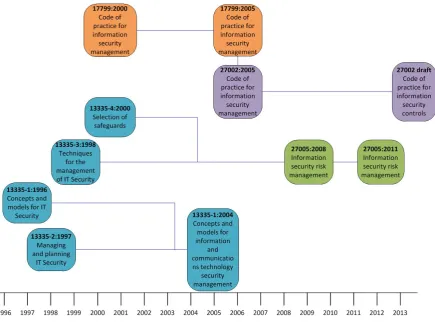
It is worth mentioning that other relevant standards would conform to the criteria, such as ISO/IEC 13335-3[1] and 17799[3]. However, both of these have been made obsolete and are mostly replaced or integrated with either ISO/IEC 27002[2] or 27005[6]. A time-line describing this process can be seen in Figure3.3. From the figure we can conclude that the current up-to-date ISO/IEC standards that are relevant to either RA and/or RM are:
• ISO/IEC 27002:2005: Code of practice for Information Security Management
• ISO/IEC 27005:2011: Information security risk management
• ISO/IEC 13335-1:2004: Concepts and models for information and communication technology se-curity management
However, the latter (13335-1:2004) is aimed at describing concepts and models that can be used to better understand and specify ICT security as well as presenting some general management issues. As such, it does not conform to the selection criteria described in Section3.2, and will be instead treated in the section dedicated to conceptual models (i.e. Section4).
ISO/IEC 27002:2005 (formerly 17799:2000) (incorporates BS 7799-1)
Name
ISO/IEC 27002:2005: Code of practice for Information Security Management.
Origin
Figure 3.3: A time-line of the ISO/IEC standards relevant for Information Security RA/RM
Goal
The standard ia aimed at "establishing guidelines and general principles for initiating, implementing, maintaining, and improving information security management within an organization". The standard describes a set of 12 security clauses, each with a number of sub-categories for which control objectives are defined and guidelines on how such control can be applied are given. On top top of this, the standard gives a few best practice suggestions for conducting a formal Risk Assessment and Treatment.
Steps
The standard does not define individual steps that have to be undertaken, but does define a broad outline to which the Risk Assessment process must conform. The actions that must be part of the Risk Assessment according to ISO/IEC 27002 are:
1. Risk identification, quantification and prioritization based on objectives relevant to the organization
2. Risk analysis: estimating the magnitude of Risks
3. Risk evaluation: determine importance of risks by comparing estimated risk levels against previ-ously defined risk criteria
Discussion
The ISO/IEC standard, while giving guidelines towards conducting Risk Assessments, does not offer sufficient practical tips towards completing such a task. Instead, it’s focus is on suggesting controls for various known vulnerabilities. As such, it’s focus is on Risk treatment, and it should be augmented by using a third-party Risk Assessment method before-hand, in order to get a better idea of which controls are relevant and required for your organization. Once a Risk Assessment consistent with the suggested guidelines is implemented, ISO 27002 can be used for selection and implementation of controls.
However, in practice, ISO/IEC 27002 alone can be used as a basis for Risk Assessment. This in known as ISO 27002 Gap Assessment/Analysis and the main idea is that the existing controls are compared to the ones described in the standard. Any deviation, or gap, is noted and evaluated. As a result, Risk can be estimated based on these identified gaps, and mitigation strategies can also be derived. In some sense, the standard is used as a benchmark for assessing the effectiveness of existing controls and identifying possible weak spots.
Evaluation
PROs:
• Supported by extensive taxonomy, conceptual model and Risk Management Framework (ISO 13335)
CONs:
• Only describes the Risk Assessment process at a very high level.
• Needs to be used in conjunction with a lower-level Risk Assessment methodology in order to be relevant to management users.
• Focuses mostly on Controls and Risk Treatment instead of Risk Identification and Analysis
ISO/IEC 27005:2011 (includes ISO 13335-3/4)
Name
ISO/IEC 27005:2011: Information technology — Security techniques — Information security risk man-agement.
Origin
The ISO/IEC 27005 standard was drafted and published by the International Organization for Standard-ization(ISO) and the International Electrotechnical Comission (IEC). The first version was launched in 2008 as a replacement for the Management of Information and Communications Technology Security (MICTS) standards ISO/IEC TR 13335-3:1998 plus ISO/IEC TR 13335-4:2000.
Goal
Steps
The ISO 27005 Risk Assessment process is sub-divided as follows:
1. Risk Analysis
(a) Risk Identification - find possible sources of potential loss (primary and supporting assets, threats, existing and planned security controls, vulnerabilities, consequences and business processes) are identified.
i. assess the consequences (i.e. impact) by valuating the assets
ii. assess the likelihood of each incident by valuating threats and vulnerabilities iii. assess risk by valuating consequences and likelihoods
2. Risk Evaluation - each risk level is compared to risk acceptance criteria and risk evaluation criteria; prioritized list of risks and recommended treatment options is created.
3. Risk Mitigation - measures for reducing, retaining, avoiding or transferring risk are selected and used to produce a risk treatment plan.
Discussion
[image:38.595.168.426.344.697.2]While ISO 27005 gives a broad outline of a structured, systematic and rigorous Risk Assessment pro-cess that takes into account all organizational aspects (people, propro-cesses and technology), it does not provide or recommend a specific low-level method with technical detail for conducting this activity. It does not even lean towards qualitative vs. quantitative approaches, simply giving suggestions on the applicability and scope of each approach. It is geared towards high-level, management practices. [55]
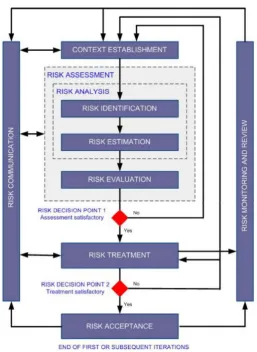
Figure 3.4: The ISO 27005 Risk Management workflow
Source: [6]
Evaluation
PROs:
• Supported by extensive and standardized Taxonomy, Conceptual Model and Risk Management Framework (ISO 13335, 2700x and 31000)
• Flexibility in the choice of complementary low-level (technical) Risk Assessment method
CONs:
• RA process is described at a very abstract level
• Third-party RA method required in order co carry out a comprehensive RA
• Does not describe specific risk analysis method, but offers general advice on choosing and using such methods.
3.4.8
IT Grundschutz
Name
IT-Grundschutz (Former English name: IT Baseline Protection Manual)
Origin
IT-Grundschutz is part of a series of standards published by the German Federal Office for Informa-tion Security (BSI) describing "methods, processes, procedures, approaches and measures relating to information security" [10]. Apart from a more general Information Security Management methodol-ogy, BSI-Standard 100 also describes how to perform a step-by-step Risk Assessment in a manner consistent with the rest of the standard.
Goal
The goal of the IT-Grundschutz Risk Assessment is to provide a qualitative method for identification, analysis and evaluation of security incidents that might be damaging to the business, that is also con-sistent and usable with the rest of the standard, and that can be applied efficiently. The standards describes a two-tier risk assessment: one is designed for reaching a "standard" level of security, while a second "supplementary risk analysis" can be undertaken by companies that desire an approach cus-tomized to their specific needs or sector or that have special security requirements.
Steps
For companies implementing a "standard" Information Security Management System based on IT-Grundschutz, the Risk Assessment is done by using the IT-Grundschutz Catalogs. These contain repositories of common threat scenarios and standard security countermeasures applicable to most IT environments, and grouped by modules corresponding to various business environments and Infor-mation System components. In order to achieve a higher level of inforInfor-mation security, a "supplementary risk analysis based on IT-Grundschutz" can also be performed by taking the following steps[31]:
1. Prepare an overview of threats: a list of relevant threats is created for each asset that is to be analyzed by using the IT-Grundschutz catalog
2. Determine additional threats: Any threats specific to the application scenario are identified via a brainstorming session.
4. Select safeguards for handling risks: Decisions are made at management level on the way risks not adequately mitigated are to be handled. Options include: reducing risk via safeguards, avoid-ing risk, transferravoid-ing risk and acceptavoid-ing risk.
5. Consolidate results: The new security policy and mechanisms as a whole is verified, checked for consistency, user friendliness and adequacy to the target environment.
Discussion
The main body of the standard does not describe a specific Risk Assessment procedure, but instead gives suggestions for safeguards appropriate for typical business processes, applications and IT sys-tems that have normal security requirements. As such, typical IT assets and components are described, including organizational, infrastructural and personnel aspects, potential threats are enumerated and necessary countermeasures suggested. In order to identify basic deficiencies in the IT security of the target system and achieve basic compliance with the IT-Grundschutz standard, the relevant modules are selected and applied to each aspect of the Information System. This allows for a fast and cost-effective way of achieving a reasonable level of security.
However, the standard also describes in detail a process it calls "Supplementary Risk Analysis" that is to be used in contexts that differ significantly from standard IT security application scenarios and requirements. It is the responsibility of the (IT) management to decide whether or not such a supplementary analysis is warranted and for which assets or components.
IT-Grundschutz is designed to be compatible with established Information Security standard ISO/IEC 27001. Although it is not the indented purpose, the IT-Grundschutz methodology can even be used to show compliance to this standard.
The two-tiered approach means that the standard can be useful for SME’s trying to achieve "good enough" security with limited resources, while also allowing scaling up to a full-fledged, customized Information Security Risk Management system, suitable for large companies with extraordinary security requirements.
Evaluation
PROs:
• Two-tiered approach allows the method to be progressively applied to systems of various com-plexities and security requirements
• Supported by extensive Risk Management standards, guidelines and documentation
• Compatible with established Information Security Standards ISO/IEC 2700*
• large number of third-party tools compatible with the methodology are available
CONs:
• Security and technical expertise required to take advantage of some of the in-depth descriptions.
3.4.9
MAGERIT v2(2005)
Name
MAGERIT: Risk Analysis and Management Methodology for Information Systems.
Origin
Goal
MAGERIT’s stated goal is three-fold: (1) make IS stakeholders aware of the existence of risks and need for treatment, (2) offer a systematic method for analyzing these risks and (3) help in describing and planning the appropriate measures for keeping the risks under control. Furthermore, it aims to prepare the organization for the process of evaluating, auditing, certifying or accrediting as well as promoting uniformity in the reports containing findings and conclusions from risk analysis and risk management activities. [44]
Steps
MAGERIT describes the following "Risk Analysis" process:
1. Determine the relevant assets for the organization, their inter-relationships and their value (i.e. what prejudice/cost would be caused by their degradation). Assets are the resources in the in-formation system or related to it that are necessary for the organization to operate correctly and achieve the objectives proposed by its management.
2. Determine the threats to which those assets are exposed. Threats are “things that happen.” Of all the things that could happen, those that are of interest are those that could happen to our assets and cause damage.
3. Determine what safeguards are available and how effective they are against the risk. Safeguards or counter-measures are procedures or technological mechanisms that reduce the risk.
4. Estimate the impact, defined as the damage to the asset arising from the appearance of the threat. Impact is the measurement of the damage to an asset arising from the appearance of a threat. By knowing the value of the assets (in various dimensions) and the degradation caused by the threats, their impact on the system can be derived directly.
5. Estimate the risk, defined as the weighted impact on the rate of occurrence (or the expectation of appearance) of the threat. Risk is the measurement of the probable damage to the system. Know-ing the impact of the threats to the assets, the risk can be derived directly simply by takKnow-ing into account the frequency of occurrence. The risk increases with the impact and with the frequency.
At the end of the analysis, it is recommended that step 4 and 5 be revisited in order to identify potential residual impact or residual risk.
Discussion
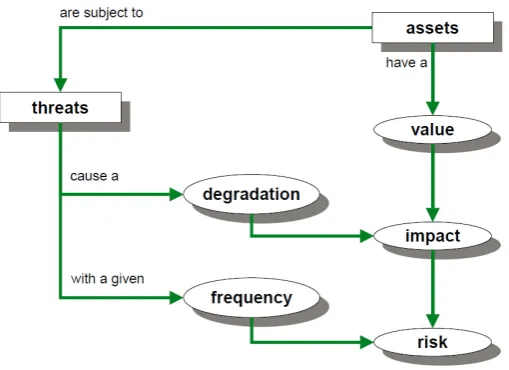
An conceptual overview of how each risk is estimated according to the MAGERIT methodology is de-picted in Figure 3.5. This approach is consistent with both the ISO 13335 conceptual model (Sec-tion4.2.3) and the FAIR/Open Group conceptual models (Sections 4.2.2and4.2.6)
The MAGERIT method is divided across three books. The first one ([44]) describes the risk analysis methods in detail. The second one, entitles "Elements Catalog"[45] serves as a sort of repository of common asset types, dimensions and criteria for evaluating them, typical threats and best practice safe-guards as well as templates. Finally, the third book, "Techniques"[46] gives additional information and guides on some (formal) techniques often employed when carrying out risk analysis and management projects.
The documentation also describes how to carry out a planning phase in preparation for the as-sessment as well as tips on how to use and integrate the results into a continuous Risk Management strategy.
Figure 3.5: Risk Analysis according to the MAGERIT method
Source: [44]
practical aspects arising from experience while the second and third books are focused almost exclu-sively on technical details, repositories and techniques that can be used by the analysis team in when actually carrying out the assessment. All this is complemented by Chapters describing how to apply such a Risk Assessment to systems under development (Book 1 chapter 4). [53]
There are also a number of both free and commercial tools capable of producing a variety of deliv-erables in standardized and customizable formats, both textual and graphic, that can be used to assist in the application of MAGERIT (e.g. PILAR, EAR).
Evaluation
PROs:
• Presents the Risk Assessment process at different levels of granularity and can be applied both quantitatively and qualitatively.
• Supported by technical documents describing common assets, threats, safeguards, criteria, for-mal techniques and templates.
• Can be applied as a stand-alone RA method, but can also be used as to implement a full-fledged Information Security Management System.
CONs:
• Version 2 has been revised by MAGERIT v3, which was only available in Spanish at the time of writing
3.4.10
MEHARI
Name
Methode Harmonisee d’Analyse de Risques (MEHARI). (Harmonised Risk Analysis Method)
Origin