MASTER THESIS
INCORPORATING DRIVER
PREFERENCE IN ROUTING
A REAL LIFE IMPLEMENTATION AND
EVALUATION OF THE ‘PERSONALIZED
ADAPTIVE ROUTING ALGORITHM’.
STATUS: FINAL REPORT
Author: Ernst Jan van Ark Student number: S1022970
July 10, 2013
University of Twente
Faculty of Engineering Technology
Master Traffic Engineering & Management Centre for Transport Studies
Graduation committee Dr. M.H. Martens
Faculty of Engineering Technology, Centre for Transport Studies. Dr. Ir. L.J.J. Wismans
Faculty of Engineering Technology, Centre for Transport Studies. Ir. W.P. van den Haak
3 | P a g e
3
P
REFACE
This thesis represents a culmination of work and learning that has taken place over a period of over one year (May 2012 until July 2013). It marks the conclusion of my study Civil Engineering and Management at the University of Twente.
During the master Traffic Engineering & Management, I received the opportunity to participate in a variety of courses in which several state of the art facets of traffic and transport were introduced and elaborated. The topics ranged from the policy perspective, the development of traffic models towards the application of intelligent transportation systems. During one of the final courses I was challenged in a project in which an indicator framework was to be developed that could be used to observe, assess and reward the traffic safety performance within the driving behavior of users by means of a flexible insurance premium. During the course of the project it became apparent that user acceptance and the attitude from the driver towards a measure is a pivotal factor determining the success and failure of a proposed measure. Especially when developing and implementing a system in which the insurance premium is based on the safety performance, that seeks the boundaries in terms of individual privacy, the discussion concerning user acceptance becomes even more delicate and complex.
In my opinion the conjunction between the user and the traffic system is intriguing, in a world in which most traffic engineers tend to think in technical-physical solutions it is worthwhile to utilize a different viewpoint in which the user receives priority.
During one of the last theoretical courses of the curriculum I came in contact with the Smart Mobility department of the Netherlands Organization for Applied Scientific Research (TNO). During the initial conversations it became apparent that TNO is developing a smartphone application which aims too “relieve” the driver by minimizing the discomfort and surprises while travelling. Within the near future the application aims to supply tailor-made travel information which is relevant for the individual user and his current trip. Currently TNO is investigating the behavioral implications, the user acceptance and the personal attitudes towards the application and invited me, as part of my final thesis, to participate in this interesting and challenging field of research.
I would like to take this opportunity to thank all those who have contributed to this thesis. First and foremost I would like to thank my supervisors from the University of Twente: Dr. Marieke Martens, Dr. Ir. Jing Bie and Dr. Ir. Luc Wismans. Jing Bie has not been able to accompany me to the end of my thesis, but his support helped me to develop and crystallize my research. Luc has taken over the supervision of Jing, and despite the fact that Luc joined halfway through my research his comments and ideas have been of great importance. I also would like to thank my supervisor at TNO; Ir. Paul van den Haak. His support, enthusiasm and expertise offered additional insights, directions, tools and the positive energy to carry on. Last but not least I would like to thank my colleagues, friends, family and everyone else who was willing to think along, to read documents and help me in any other possible way! Every end is a new beginning. The conclusion of my study marks the first step towards a new stage of life with new opportunities and challenges, both professionally but much more important privately, to which I am really looking forward.
4 | P a g e
M
ANAGEMENT SUMMARY
Transportation is a vital part of our economy; when designed, realized and utilized efficiently transportation systems provide economic and social opportunities. Based on this statement the ‘management of the traffic operation’ became a permanent discipline within the traffic and transport policies. The effectiveness of measures aimed at mobility management depends on the extent to which end-users are willing and able to assess and change their behavior. From a theoretical perspective the decision making process is often defined as a systematic assessment of the merits and value of objects. This assumption is often translated in random utility models which are based on the principles of micro-economics. However, in reality, humans often evaluate objects and decisions in an unsystematic manner that does not reflect the merits and value of the objects in an objective truthful and maximum utility manner. Choices will mainly be made based on ease, motive, comfort and cost but especially on emotion.
As an alternative, various methods in the field of knowledge discovery and data mining have been developed. These methods result in more flexible frameworks that are able to represent the effects of an attribute in comparison with random utility models. In the past thirty to forty years methods concerning Decision Tree Learning (DTL) algorithms have been developed. DTL algorithms are decision support tools that uses a tree-like graph to model decisions and their possible outcomes.
Especially in route choice algorithms it has been difficult to include the personal attributes within the traditional modeling approaches. In 2007 Park, Bell, Kaparias and Bogenberger stated that, due to more widespread usage of personal navigation devices, incorporating user preference within the route guidance is one of the most desired features to improve the user satisfaction towards navigation systems. By suggesting and simulating a learning model that employs the C4.5 DTL learning algorithm, the driver route choice behavior with respect to driver preferences is represented. Currently no real-life implementation of the decision tree learning algorithm has been implemented and evaluated to model the route choice in the field of traffic and transport. This master thesis aims to go beyond the scope and results from prior work by including non-simulated and real life user data to examine the regularities in user preferences within routing behavior.
The objective of this study is to contribute to the understanding of route choice modeling by implementing and evaluating a real-life framework, inspired by the research of Park et al. (2007), that includes the C4.5 decision tree learning methodology to integrate user preference in a so called ‘Personalized Adaptive Routing algorithm’. Main aim of the adaptive routing algorithm itself is to aggregate criteria values to determine the relative weight of route attributes such as directness, familiarity, travel time, travel time reliability, aversion, complexity and travel distance. The algorithm will deduct these attributes from the historically observed route choice behavior and will apply the relations to improve the output of future route requests.
The objective above is translated towards the following main research question: How can the C4.5 decision tree learning algorithm be applied and utilized to identify and integrate individual preference mechanisms within route choice algorithms and how does this algorithm perform in relation to traditional routing algorithms?
Literature research Data gathering Data processing Implementation
5 | P a g e
5
The research strategy comprised of five key stages, within the first phase a literature reviewhas been conducted to gain insight in the theoretical background of traveler information systems, travel behavior and especially route choice. The second stage aimed to generate a large scale database which described the revealed travel behavior with respect to the trips that a user made. This database is generated based on the results of a field operational test in which a ‘global positioning system’ based data acquisition platform is employed to gather disaggregated travel data. In the third stage the data gathered from the second stage was processed, main aim was to process the raw data from the data gathering phase towards a structure that supports the implementation of the personalized adaptive routing algorithm. The aim of the fourth stage was to actually implement the decision tree algorithm based on the data structure that is derived from the third phase. This stage particularly focused on the comparison of the performance of the DTL based ‘Personalized Adaptive Routing Algorithm’ with the traditional shortest path and multi-attribute routing algorithm. The fifth and last phase focusses on the results in a broader perspective to make an inventory of the added value of data mining algorithms in the field of traffic and transport.
The data to facilitate the implementation of ‘Personalized Adaptive Routing Algorithm’ is supplied by the KATE mobile data acquisition platform, which is developed by TNO. The main element for this thesis is the location tracing algorithm which automatically records the time stamped local coordinates of the device. This algorithm dynamically utilizes various sensors (GPS, WiFi or network triangulation) and update intervals to preserve battery power while stationary and to improve the data quality while travelling. Between the 25th of September 2012 and the 31st of March 2013 95 users were equipped with a smartphone application that is based on the KATE platform.
Based on the locational traces, the timestamps and the subsequent distance travelled between these traces the individual trips were deducted from the data. The collected locational traces were snapped to the infrastructural network by means of a MapMatching algorithm which linked the locational traces with the infrastructural network. The total number of trips that was detected was 11.490 of which 1172 trips were made by train. The total distance travelled was 277.021 kilometers. The data is obtained without direct user input, so the trip data for each users represents his or her naturalistic travel behavior. Especially this last characteristic distinguishes the data from the KATE platform from the traditional methodologies based on travel diaries.
Within this thesis it was found that, based on the current technologies, we are able to cost-effectively gain insight in the travel behavior of participants. Although the group in this thesis was not representative for a large population, the results demonstrate the potential when the technology is scaled up and supplied to a broader user group.
6 | P a g e
To generate the initial model the first set of 10 routes were selected as input to build an initial decision tree. Subsequently the remaining trips was used to test and update the model. By classifying each of the possible paths for each trip the model deducts the routes that resemble the personal attributes of each specific user. If the predicted route corresponds with the route that is actually taken by the user the model is accepted, if the predicted route does not correspond with the revealed route the model is updated. This process continues until all the route choice data for a specific user has been used. The process of applying individual trips can be regarded as a time series data of a driver that travelled, subsequently the model performance (the percentage of predictions that corresponds with the revealed route) represents the predictive accuracy of the ‘Personalized Adaptive Routing Algorithm’. The results of the ‘Personalized Adaptive Routing Algorithm’ in terms of predictive performance were compared with two traditional routing algorithms of which one is based on a single attribute shortest path (travel time based) assessment criteria and the other is based on a multi-attribute utility function.
The results of this study point out that, in its current implementation, the ‘Personalized Adaptive Routing algorithm’ is not able to achieve a higher predictive performance than the traditional shortest path algorithms. Based on the 3407 test trips the traditional shortest path algorithm achieves a 19% predictive performance while the ‘Personalized Adaptive Routing Algorithm’ achieves a predictive performance of 4%. The multi-attribute utility function scored a predictive performance of 0%.
One of the main factors that impeded the results of this study was the coherence between the revealed route and the set of possible paths. In almost 60% of the tests the routing algorithm failed because none of the proposed routes was similar to the revealed route. Moreover it was found that the route scores of each possible path varied only very slightly, the differences in the most important sections of the route on the underlying road network were averaged out as noise due to the disproportional distance on the high level network. Subsequently a number of analyses have been applied to gain further insight in the learning behavior of the C4.5 adaptive routing algorithm. An apparent contradiction was identified; on the one hand it seems that the chosen methodology and architecture effectively describes the past (historic) behavior of the users but on the other hand the model fails to predict the future behavior of the users. One of the main factors that impeded the results was the imbalance in classes. While the algorithm had to classify 15 alternative routes the final test result of the implementation relied on the correct classification of one of these routes as the ‘predicted’ route (true positive) while the results of the routes that were correctly classified as ‘un-attractive’ were disregarded (true negatives). This assumption however represents reality in which the final user is only interested in the correctness of the predicted route which directly influences the satisfaction with the proposed system. The correct prediction of route that will not be chosen are not of any interest for the user.
7 | P a g e
7
In conclusion we can state that, although the results of this study did not substantiate a clearadded value of the ‘ Personalized Adaptive Routing Algorithm’, there is a clear ground for further research. Especially because the performance of all the models that were applied were limited we can conclude that the factors behind human decision making are clearly complex and are insufficiently integrated in the current routing algorithms.
8 | P a g e
T
ABLE OF CONTENTS
1. Introduction ... 11
1.1 Prologue ... 11
1.2 Problem definition ... 12
1.3 Research relevance ... 13
1.4 Objective and research question ... 15
1.5 Outline thesis ... 16
2. Background ... 18
2.1 The expanding role of technology in traffic ... 18
2.2 Route choice behavior ... 20
2.3 Earlier attempts that studied the relation between user preference and route choice . 24 2.4 Identifying decision structures underlying revealed route behavior patterns ... 26
3. Methodological approach ... 35
3.1 The research strategy ... 35
3.2 Research typology ... 36
3.3 Data collection ... 36
3.4 Tools for the data analysis ... 40
3.5 Main assumptions and theoretical principles ... 42
3.6 Overview of proposed system architecture ... 43
3.7 Detailed description of the system architecture ... 45
4. Processing the GPS-based data ... 55
4.1 Data gathering process ... 56
4.2 Data merging process ... 57
4.3 Data processing ... 58
5. General analysis of the trip database ... 62
6. Incorporating personalization into routing ... 67
6.1 Refining the input trip database ... 67
6.2 Implementing the personalized routing algorithm ... 68
6.3 Evaluation framework ... 69
6.4 Results ... 69
6.5 Analysis of the results ... 78
7. Opportunities and threats ... 81
7.1 Opportunities ... 81
7.2 Threats ... 82
8. Conclusions and recommendations ... 85
8.1 Conclusions in regard to the sub-research questions ... 85
8.2 Conclusions with regard to the main research question ... 89
8.3 Recommendations for future research ... 90
9 | P a g e
9
L
IST OF FIGURES
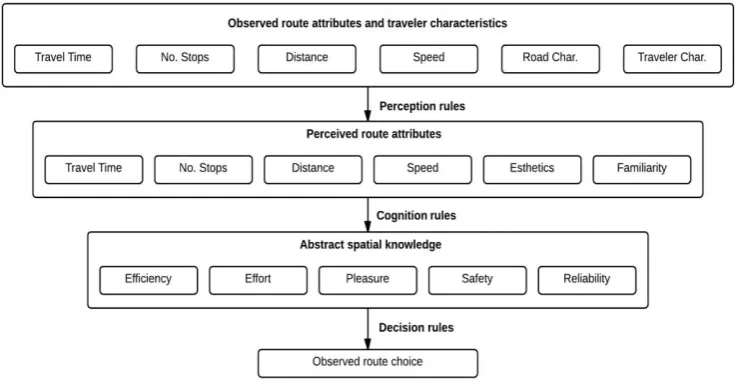
Figure 1: Route perception and cognition ... 26
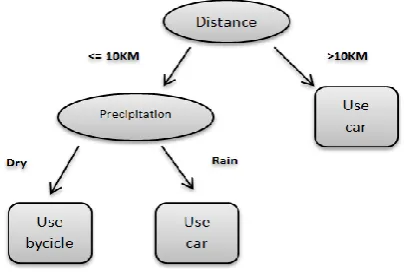
Figure 2: Example of decision tree for the choice of modality for travelling to work ... 28
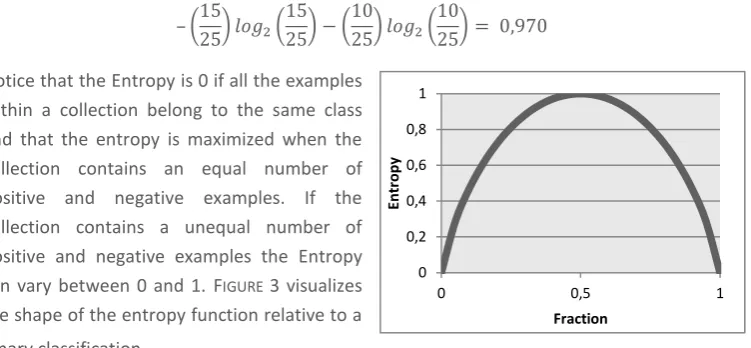
Figure 3: Entropy relative to the proportion of binary positive examples ... 30
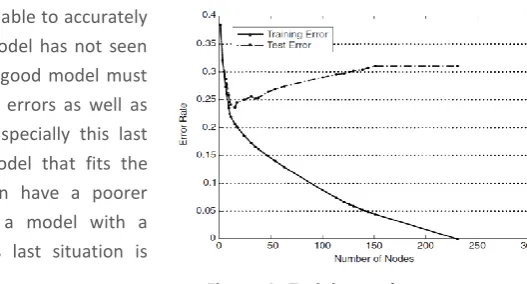
Figure 4: Training and test error rates ... 32
Figure 5: Subtree replacement pruning ... 33
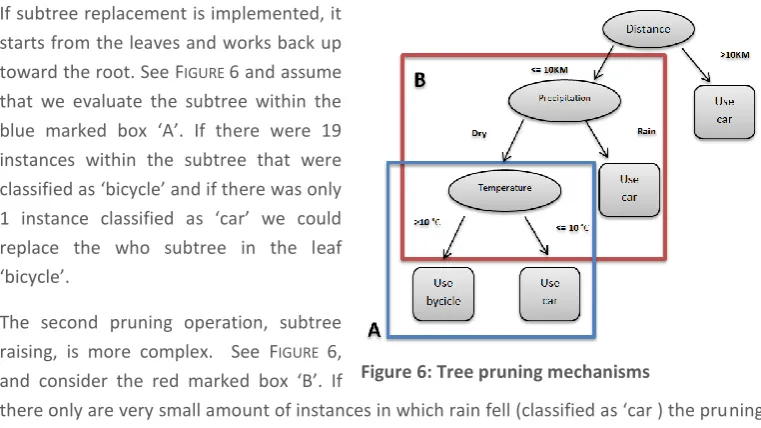
Figure 6: Tree pruning mechanisms ... 33
Figure 7: Research strategy ... 35
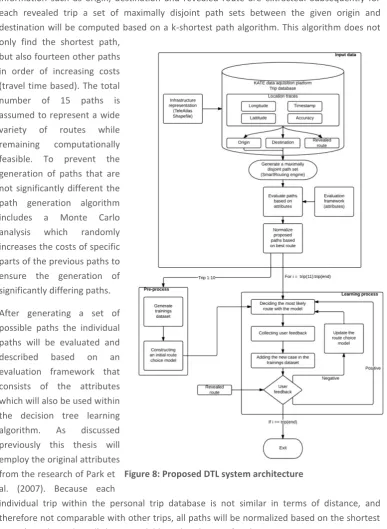
Figure 8: Proposed DTL system architecture ... 44
Figure 9: Representation of route complexity ... 49
Figure 10: Visualization of type of turn ... 49
Figure 11: Data processing structure ... 55
Figure 12: Data enrichment structure... 60
Figure 13: Daily distance travelled ... 63
Figure 14: Number of trips per distance interval ... 63
Figure 15: Average number of trips for each day ... 64
Figure 16: Average trip distance for each day ... 64
Figure 17: Distribution of trips during day ... 64
Figure 18: Location heat map ... 66
Figure 19: Mean prediction results ... 70
Figure 20: Distribution of correct predictions among users ... 71
Figure 21: Distribution of the number of updates ... 72
Figure 22: Average and distribution of learning error during the system usage ... 72
Figure 23: Structure of the initial decision tree ... 74
Figure 24: Structure of the intermediate decision tree ... 74
Figure 25: Structure of the final decision tree ... 74
Figure 26: training error attribute sensitivity analysis ... 76
Figure 27: Training error pruning sensitivity analysis ... 77
Figure 28: Interpretability of decision tree ... 80
Figure 29: Adaptive routing system architecture ... 100
L
IST OF TABLES
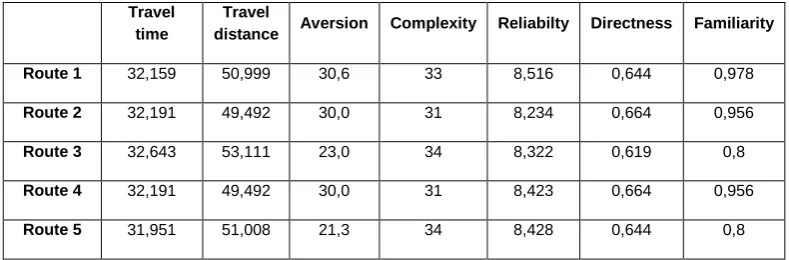
Table 1: Route choice attributes ... 48Table 2: Observed attribute values for a route set ... 51
Table 3: Relative attribute values for each path set ... 51
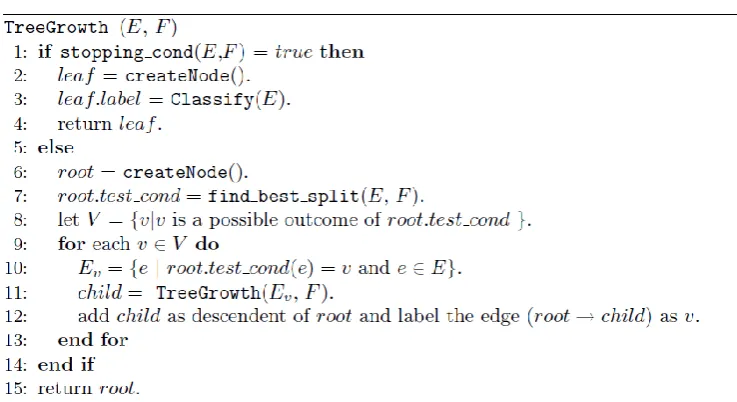
Table 4: Pseudo code for implementing the decision tree ... 53
Table 5: Key mobility indicators from the 'Mobiliteit in Nederland' survey ... 65
Table 6: Key mobility indicators from the KATE platform ... 65
Table 7: Mobility characteristics of user group ... 66
Table 8: Tree size for the various tree building stages ... 73
Table 9: Results predictive performance attribute sensitivity analysis ... 75
10 | P a g e
L
IST OF ABBREVIATIONS
AHP – Analytical hierarchical process ANP – Analytical network process
ATIS – Advanced traveler information systems AVE – Aversion
COMP – Complexity DIR – Directness
DTL – Decision tree learning ECU – Electronic control unit ETP – Enabling Technology Program FAM – Familiarity
FM – Frequency modulation
GIS – Geographic information system GPS – Global positioning system ITS – Intelligent transport systems
ITIS – Intelligent traffic information systems IMEI – International mobile equipment identity KATE – Keen Android Travel Extension
KM – Kilometer MIN – Minutes
MNL – Mixed multinomial logit OD – Origin-destination
PND – Personal navigation device REL – Reliability
SCM – Sensor City Mobility SP – Shortest path TD – Travel distance
TIS – Traveler information systems TMC – Traffic message channel
TNO – Nederlandse Organisatie voor Toegepast Natuurwetenschappelijk Onderzoek (Netherlands Organisation for Applied Scientific Research)
11 | P a g e
1
1
1.
I
NTRODUCTION
This chapter introduces the subject of this thesis project, starting with a prologue in section 1.1. The problem definition is provided in section 1.2 which leads to the elaboration of the research relevance in section 1.3. In section 1.4 the project is defined and delineated by means of the research objective and the corresponding research questions. Lastly section 1.5 will provide an outline of this document.
1.1
P
RO LOGUETransportation is a vital part of our economy and impacts the development and welfare of populations. When transport systems are designed, realized and utilized efficiently, they provide economic and social opportunities which results in reinforcing effects such as an improved accessibility to markets, employment and additional investments (Rodrigue, Comtois, & Slack, 2009). Based on the statement above the “management of the traffic operation” became a permanent discipline within the traffic and transport policies which are applied integrally in coherence with other policy measures such as physical interventions. The effectiveness of measures aimed at mobility management depends on the extent to which the end-users are willing and able to change their behavior. In practice it is difficult to take this behavioral aspect into account. Traditionally challenges and possible measures are approached technologically while assuming ‘technology will do the job’. On other occasions policy makers assume that if the right conditions are shaped the expected behavior will manifest itself automatically.
In practice travelers make their own choices; this choice will mainly be based on ease, motive, comfort and cost (rationale considerations) but especially on emotion (irrational considerations). The perceived ‘world of mobility’ in which travelers make choices does not appear to be coherent and opportunities are not fully utilized. Mobility management strives to organize the decision framework in which users make their choices.
Due to the recent technological developments, more advanced and better tools became available at the disposal of the driver. Navigation systems (also known as personal navigation devices) have become an integral part of the modern equipment of vehicles and aim to assist the driver. Most navigation systems provide a single route based on a single attribute and mainly interpreted the attribute travel time or travel distance to determine the route advice. The question however is, especially in light of the statements above, whether a proposed route, based on travel distance or travel time represents the expectation of a user?
Knowledge related to route choice behavior is limited, it is however save to assume that every individual person is different and that every person approximates his route choice from a different perspective. Often these varieties are related to the attributes he (or she) takes into account. The development of large scale data-sources offers possibilities to better understand route choice behavior, the outcomes can subsequently be used to improve the quality of the route proposals that are generated by route planners.
12 | P a g e
1.2
P
ROBLEM DEFINI TI ONTraveler information systems are rapidly developing in all modes of transportation and were already recognized in 2002 as the social trend that will have the greatest influence on future transportation systems (Wachs, Social trends and research needs in transport and environmental planning, 2002). By providing pre-trip and en-route travel time information a significant impact on travel behavior could be achieved by enabling drivers to make efficient choices with regard to route choice, transportation mode and departure time. If people are actively triggered to evaluate the available travel options, the utilization of the transportation system can be improved by further incorporating traveler information systems.
Traffic information can be provided by variable message signs, navigation devices, radio broadcasting and dynamic real time travel information. The main disadvantage of these communication instruments is that it is difficult to specify or to segregate specific user groups. Due to the rapid development of (connected) smartphones and the increasing popularity of mobile applications new possibilities arise to more specifically target users and to adjust the information on these users.
A better understanding of the impact of information on travel behavior is a key issue in evaluating traveler information systems. Route choice behavior is a complex decision making process, which incorporates multiple objectives, factors and emotions. From a theoretical perspective the decision making process is often defined as a systematic assessment of the merits and value of object (Scriven, 1991). However this definition says more about what evaluations should be from a theoretical perspective than about how people actually evaluate objects or choices. It might be, that humans often evaluate objects and decisions in an unsystematic manner that does not reflect the merits and value of the objects in an objective truthful and maximum utility based manner.
Random utility models, which are based on the principles of micro-economic theory, have been widely applied in studies that describe travel behavior. The assumption that travelers are utility optimizers, which is adopted in random utility models, is often critically appraised by various behavioral scientists (Garling, Kwan, & Golledge, 1994). The research of Yamamoto, Kitamura and Fujii (2001) for example states that linear-in-parameters utility functions assume that the effect of attributes of an alternative are compensatory. This implies that an increase of one attribute can be compensated by a proportional decrease or increase of another attribute to yield the same utility.
As an alternative, various methods in the field of knowledge discovery and data mining have been developed. These methods have resulted in more flexible frameworks that are able to represent the effects of an attribute in comparison with random utility models. For example neural network models are able to detect non, compensatory relationships or synergy effects in the data, however main difficulty is that the results from these models are difficult to interpret and to apply in practice.
13 | P a g e
1
3
applied the algorithm to develop a model to represent mode choice. Furthermore Yamamotoet al. (2002) attempted to induce the mechanism of drivers’ route choice from empirical data. The amount of data that is available in our society is exploding. The so-called ‘big data’ is regarded as a powerful resource that is able to accelerate the development of improved services, customer awareness and productivity. Large companies such as Google already rely on large scale data mining applications for 15 years. Due to emergence of ‘connected’ devices together with the increasing computing power, the use of large-scale real time data becomes accessible in the field of traffic and transport.
The application of large scale data sources in traffic was recognized in 2007 by Park, Bell, Kaparias and Bogenberger. These authors stated that, due to more widespread usage of personal navigation devices, incorporating user preference within the route guidance is one of the most desired features to improve the user satisfaction towards navigation systems. By suggesting a learning model that employs the C4.5 DTL learning algorithm, the driver route choice behavior with respect to driver preferences is represented. C4.5 is an algorithm used to generate a decision tree and is developed by Quinlan (1933). The algorithm itself will be discussed in a future part of this report. However, since no real world data was available during the time of the research the authors relied on experiments based on simulation data that was derived from the simulation software suite ICNavs.
During the development and implementation of this this, no actual implementation of the decision tree learning algorithm has been implemented and evaluated to model the route choice in the field of traffic and transport. This master thesis aims to go beyond the scope and results from prior work by including non-simulated user data to examine the regularities in user preferences within routing behavior. The required revealed preference data will be extracted from the KATE mobile data acquisition platform. The regularities in user preferences will be incorporated within a user model based on the C4.5 decision tree learning algorithm. This results in an individual user model that can implicitly and automatically adapt its model output to the personal attributes of a specific user. By comparing the predictive performance of the adaptive model with two traditional (un-adaptable) routing algorithms this study aims to induce the mechanisms of the driver’s route choice from empirical data without presupposing a strict and inflexible theoretical construct. By not defining an initial construct a broad perspective can be utilized which may lead to new insights that perhaps can be utilized to improve the theory based models.
1.3
R
ESEARCH RELEVANCEAs stated previously the main aim of this thesis is to implement an automated method that implicitly incorporates the regularities in user preference within a ‘Personalized Adaptive Routing Algorithm’. Main element of the master thesis is the incorporation of a decision tree learning algorithm that induces the mechanism of drivers’ route choice from revealed behavior. The relevance of this thesis can be approximated from two perspectives.
Scientific relevance
14 | P a g e
used to describe, explain and predict choices between two or more discrete alternatives, have been developed to examine the behavior of individual decision makers that can be described as ‘facing a choice set which is finite, mutually exclusive and exhaustive’. Based on the theory of micro-economics the decision maker would obtain some relative utility from each alternative and ultimately would choose the alternative with the highest utility. Discrete choice models are powerful but complex. The art of finding an appropriate model for a particular application requires close familiarity with the phenomenon that is being studied and a strong understanding of the methodological and theoretical background of the model. On the other hand, a decision tree represents the choice behavior as sequential examinations of attributes. Main advantage is that the analyst can gain a clear insight in the structure of the choice behavior being examined. The decision tree can for instance easily be converted to a set of production rules that represent the choice behavior by a set of if-then rules which determine the choice according to the conditions indicated by the sub-sets of attributes. The structure of results derived from knowledge discovery and data mining methods is more flexible to represent the relationship between the attributes of the alternatives and the choice than (traditional) random utility based models. Due to this fundamental difference results derived from decision tree algorithms can potentially offer insights in route choice behavior which random utility models may be unable to reveal. These insights can subsequently be utilized to improve the knowledge concerning route choice and individual personal attributes which can be applied to improve the traffic management policies.
Societal relevance
From the societal perspective the added value of the incorporation of user preferences can be approximated by means of the concept of ‘user satisfaction’.
Since the introduction of route planners, an increasing amount of people have relied upon these applications for finding their way to local businesses and friends and to plan large distance trips. Although the available planners are becoming very reliable in terms of their input data in terms of infrastructural characteristics and information concerning the current traffic situation, they all mostly rely on fixed assumptions in terms of user characteristics and preferences.
15 | P a g e
1
5
1.4
O
BJECTIVE AND RESEARCH Q UESTIO NThe objective of this study is to contribute to the understanding of route choice modeling by implementing and evaluating a real-life framework that includes the C4.5 decision tree learning algorithm to integrate user preference in a so called ‘Personalized Adaptive Routing Algorithm’. Due to the inclusion of the user preference it is envisioned that route suggestions more closely match the routes that are actually taken by the user. In this context ‘more closely match’ is defined as the performance of the adaptive routing algorithm in comparison with the traditional shortest path routing algorithms.
The personalized adaptive routing algorithm will be implemented based on revealed behavioral data (GPS logging data). The performance, expressed as the predictive accuracy of both the original shortest path routing algorithm and personalized routing algorithm, will be assessed and compared. This predictive accuracy is quantified by the proportion of trips in which the proposed route matches the revealed route.
Main aim of the adaptive routing algorithm itself is to aggregate criteria values to determine relative weight of route attributes such as directness, familiarity and travel distance. The algorithm will deduct these attributes from the historic observed route choice behavior. A set of possible routes between an origin and destination will be evaluated based on the relative weight of the criteria values and ultimately the route that best suits the user characteristics is selected.
The objective above can be translated into the following main research question:
How can the C4.5 decision tree learning algorithm be applied and utilized to identify and integrate individual preference mechanisms within route choice algorithms and how does this algorithm perform in relation to traditional routing algorithms?
This main research question is further differentiated in the following components:
1. How can route choice be described and what knowledge is currently available that describes the influence of personal factors and preferences within route choice?
To fully comprehend the impact of user preferences in route choice and to understand how learning algorithm can be applied to support routing algorithms it is important to explore the possibilities, relevance and performance of the already available (traditional) routing models and algorithms.
2. Which previous initiatives have been undertaken to implement data mining algorithms in the field of transportation that aim to describe route choice?
16 | P a g e
3. What input information, data sources and techniques are necessary to translate GPS derived floating car data towards a real life test implementation and evaluation of the personalized routing algorithm based on the C4.5 DTL algorithm?
In the past a small number of researches, which will be further discussed in chapter two, have explored the application of learning algorithms in transportation, most of these researches approached the subject from a literature point of view or employ simulations to test the performance. Within this study a real life implementation is envisioned. To facilitate this implementation the theoretically oriented principles from previous studies should be translated towards a practically feasible implementation during this thesis.
4. How can the predictive performance of the DTL based adaptive routing algorithm be measured and how does the adaptive routing algorithm perform in comparison to two traditional routing algorithms (shortest path and multi-attribute utility maximization)?
This thesis envisions to describe and demonstrate the added value of a personal (individual) approach within the generation of route proposals. However to prove the added value an evaluation framework is necessary to assess the performance. This evaluation framework should be able to quantify the difference between the adaptive and two traditional algorithms. One of the traditional routing algorithms will be based on the shortest path algorithm (travel time based) and the other will employ a multi-attribute utility maximization function. Based on this evaluation framework each routing algorithm will be evaluated and the differences in performance will be examined.
5. What are the future opportunities and challenges when applying large scale (big) data sources to investigate and explain personal route choice behavior?
Although investigating and evaluating the performance of the Decision Tree Learning algorithm is useful, the true importance of this thesis lies in its possible added value in terms of scientific knowledge within route choice behavior. This thesis is one of the first that attempts to utilize high quality, large scale, GPS derived data to describe the behavior of people in traffic. It is expected that large scale data sources are becoming increasingly important, experiences and lessons learned from this thesis can be of added value for future initiatives.
1.5
O
UTLI NE THESIS17 | P a g e
1
7
trips, trip distribution and trip length distribution. Furthermore the demographic18 | P a g e
2.
B
ACKGROUND
Based on the previous introduction it is possible to define three major topics that have been discussed briefly in the introduction but require some additional explanation; the expanding role of technology in traffic, route choice behavior and identifying decisions structures underlying route choice behavior patterns. This second chapter will provide a ‘state of art’ based on these three topics.
One major trend that is currently dominating developments in the automotive sector is ‘connected mobility’. Due to the rapid development and increasing penetration of handheld or in-car connected devices the technology within cars has created a growing market. The first section of this chapter will further investigate the role of technology in traffic by describing Intelligent Transport Systems and Traveler Information Systems.
The second topic that was briefly mentioned in the first chapter, and which is more complex to interpret, is the route choice behavior. Many aspects of travel behavior are of interest for behavioral analysis. General questions such as ‘why do people travel’ and ‘where do people go’ are critical for understanding the factors that affect the demand and which locations are affected by the demand. Other questions such as ‘at what time do people depart’, ‘which route do people take’ and ‘which modality do people use’ are related to trip specific information and allow us to analyze the specific infrastructural sections which are affected and moreover describe the effect of transport over a certain time. Route choice models play an important role in many transport applications, for example, intelligent transport systems, GPS navigation and transportation planning (Frejinger, Route Choice Analysis: Data, Models, Algorithms and Applications, 2008). What makes the analysis of travel behavior highly complex is that all questions above are interrelated. The second section of this chapter will focus on route choice behavior and aims to identify the aspects and modeling approaches that describe which route a given traveler would take to move from location A to location B in a given infrastructural network.
Route choice models are often based on the foundation of micro-economic theory; linear-in-parameters utility functions are applied within discrete-choice models. The assumptions underlying the random utility models are however often critically appraised by behavioral scientist (Garling, Kwan, & Golledge, 1994). In comparison to route choice models knowledge discovery and data mining methods have more flexible structures to represent the relationship between the attributes of a set of alternative routes and the revealed choice. Due to this characteristic learning models can potentially provide better behavioral insights that traditional models are unable to reveal. Based on this statement it is worthwhile to investigate the algorithms that are able to derive, validate and test the rules that describe choice mechanisms that generate observed activity patterns.
2.1
T
HE EXPANDI NG ROLE OF TECHNO LO GY IN TRAFFI CIN T E L L IGE N T TRA N SPO RT SY ST E M S
19 | P a g e
1
9
efficient use of the available infrastructural capacity during the full day. It is assumed that arelative small reduction of the peak traffic load at specific traffic corridors can cause a significant improvement of the traffic flow and the perceived comfort.
The objective to jointly develop solutions and policy measures which aim to achieve a balance between the infrastructural supply and demand is one of the leading principles of the Intelligent Transport Systems (ITS). Main aim of ITS application is to apply computer, communication, information and vehicle-sensing technologies to coordinate transportation systems efficient and safely. ITS applications target transit systems as well as private transportation and the intended benefits of ITS systems are improved safety, improved traffic efficiency, reduced congestion, improved environmental quality, energy efficiency and improved economic productivity (Kumar & Singh, 2005).
TRA VE L E R IN F O RM A T IO N SY ST E M S
Traveler Information Systems (TIS) are an integral component of the concept of ITS, these information systems are developed to enhance the personal mobility, safety and productivity of transportation (Mouskos, Greenfeld, & Pignataro, 1996). It is envisioned that travelers should be able to compare available transportation modes for a particular trip based on factors such as travel time, trip distance and costs. Moreover the service should be able to function as a clearinghouse for information about existing travel conditions such as road maintenance, congestion and the impact of incidents. Main aim is to provide a reliable source of both static and dynamic traveler information and to assist the individual traveler in being able to undertake and complete the journey while preserving the user satisfaction.
Although the definition above seems to indicate a desire for an integral information service, in practice it seems more difficult to develop a single data source or application that combines information services for route and modality choice. This separation can also be recognized within the available scientific literature. Many scientific papers which describe TIS implementations only provide an isolated view on a single means of transportation and especially the management of road traffic was pre-dominant in previous works. The research of Lyons (2006) shares this opinion and state that especially in the United States of America the word ‘traveler’ is synonymous with the term ‘driver’. The separation of mode choice and route choice is also reflected in the differences between the various definitions for the term ATIS and ITIS; several papers discuss Advanced Traveler Information Systems and some papers discuss Intelligent Traffic Information Systems. Different opinions exist concerning Integrated Traveler Information Systems and Intelligent Traveler Information Systems; the various terms such as traffic, traveler, advanced and integrated all illustrate the lack of a uniform detailed definition and implementation.
When traveler information systems were first developed the business model mostly relied on public sector agencies which took responsibility of all the aspects concerning the data collection. Within this period the information was mainly disseminated through public-sector owned devices such as information panels above and alongside the infrastructure. Moreover other mass media (both public and commercial) such as television and radio played an important role in relaying the information towards users.
20 | P a g e
optimization function (shortest path or shortest distance) or use a rather limited decision rule involving user-defined criteria (avoid highways, toll roads and ferryboats). Moreover most of these route planners only incorporate static information in terms of travel time.
Within the last decade technology has become an integral component of our everyday life, this development also affected the transportation sector. Although one major manufacturer, TomTom NV, only introduced the first portable device aimed at the consumer market in the early months of 2004, today the navigation devices are a central part of our vehicles. The advantages towards users are evident. Users are able to reach their destination by means of the shortest en fastest route which results in less stress and exposure in traffic.
The functionalities of personal navigation devices (PND’s) are continuing to develop; between 2005 and 2008 the next generation ‘adaptive’ navigation devices were developed. Based on the Traffic Message Channel (TMC) on the FM radio broadcasting bandwidth the devices were able to receive and process traffic information to determine the optimal route with more realistic travel time estimates. Main disadvantage of this technology is that information could only be supplied to the user group as a whole. Secondly the data stream only allowed one-way communication from the provider towards the user, this implies that is was not possible to examine the response of the user. Lastly also the available bandwidth was limited; in practice this meant that only periodic snapshots of the high level motorways were supplied. Today consumers are uninterruptedly connected to the internet and currently manufacturers of personal navigation devices are working on integrating the connectivity within PND’s to provide users with real-time information. The content of this information is often highly dynamic and its validity may change rapidly. In the past the data reliability, available bandwidth and technical aspects (e.g. processing power) were often limiting factors. Recent developments offer new possibilities to improve the usefulness and effectiveness of real time information within routing navigation devices. For example TomTom N.V. introduced the premium service ‘HD-traffic’ in 2008. Also Google has recently applied ‘traffic’ overlays in their map applications to visualize the dynamic traffic information. Although the penetration rates of these technologies is increasing the majority of users still relies on the traditional ‘static’ navigation devices.
2.2
R
OUTE CHOI CE BEHAVIOROne of the main issues that engaged traffic engineers and scientists for a long time was the question how to get and provide insight in the route choice behavior and the closely connected effects on the traffic flow patterns and costs on the network-level.
21 | P a g e
2
1
Gardner (2002) it is however not difficult to conclude that this is usually only anapproximation of a more complex decision-making process.
Some researchers have put effort in obtaining a more detailed understanding of the method in which travelers consider an alternative set of routes and afterwards select one to travel from their origin towards the destination. For example Huchingons, McNees et al. (1977) and Ratcliffe (1972) assume that the choice is based on a set of coherent interrelated criteria. These authors deduct the route choice behavior by means of a statistical data analysis in which observed data is used to deduct the relevant choice criteria and their relative importance. Wachs (1967) employed a principal component factor analysis to determine the different reasons in which individuals explain their route choices. Additionally Heathington, Worall and Hoff (1971) estimated the probability of drivers that would divert to an alternative route when these drivers were supplied with information of the current traffic condition. This research was based on a questionnaire which was presented to 732 drivers. The responses were related to perceived attitudes toward diversion and were in part based on past behavior. The authors concluded that drivers are more likely to avoid delays on an outward journey from home to work instead of an inward journey from work to home. The respondents moreover stated that the motive for the route diversion was to avoid delays rather than to save travel time. Based on these results, quantified as the probability of diversion for drivers receiving information on traffic conditions, the paper concluded that a unique and worthwhile service could be provided by an information system operation on motorways. Pedersen (1998) employed a principal component analysis to deduct the influencing factors within the route choice which resulted in four orthogonal factors in the route choice of car users: safety, interest, purpose and hindrance. Moreover user profile analysis showed that the results for men and woman were not significantly different.
22 | P a g e
irrelevant alternatives is a property which implies that the relative odds between two alternatives are the same no matter what other alternatives are available
A number of modifications to the basis multinomial logit specification have been proposed in alternative models which aim to address this problem, for example the nested logit model is developed for route choice modeling which avoids the independence for irrelevant alternatives while maintaining the relative simplicity.
One of the main complicating factors to apply discrete choice modeling methods is the very large number of practically feasible routes between most origins and destinations and moreover the complex overlapping characteristics of these routes. This characteristic is recognized by Ben-Akiva, Bergman et al. (1984) who proposed a two stage model structure. The first stage includes a labeling approach which aims to reduce the number of potential routes in which each of the routes reflects a criterion that might be relevant to route choice. These criteria are called “labels” and include: minimize time, minimize distance, maximize scenery along routes, etc. A generalized independence function is defined for each label which allows a network minimum path algorithm to build trees that are minimal with respect to the criterion. Within the second stage, a choice model from the set of labels is applied to predict the chosen route by means of a nested logit model.
From a cognitive point of view, anomalies have been discovered that appear to violate the crucial microeconomic underpinnings of discrete choice models (Walker, 2001). For example, and more towards the subject of this final thesis, the research of Volpe, Lappin, Bottom and Gardner (2002) discussed that, within the study of individual route choice behavior, it is important to capture the heterogeneity in drivers’ preferences. This study emphasizes the significance of amorphous influences on behavior such as choice, knowledge and attitude. According to Volpe, Lappin et al. (2002) individual preferences across individuals result in differences regarding their response to alternative attributes. Furthermore the behavior of an individual can also manifest temporal variations. A logit model with fixed coefficients is not suitable to account for these variations. The authors state that, to accurately model the individual route choice behavior it is necessary to capture differences in intrinsic preferences and subjective evaluation of alternative attributes.
To include both individual and temporal variations the mixed multinomial logit (MNL) model is developed which captures heterogeneity among individuals and allows correlation over alternatives and time. According to the research of Volpe, Lappin et al. (2002) this generality comes at a cost; the choice probabilities cannot be computed analytically which translates in a requirement for large amounts of resources in terms of processing power. One MNL model was tested by Han, Algers et al. (2001) which proofed that a significant improvement in the statistical performance of the models was found by allowing the coefficients of observed variables to vary randomly across individuals.
TY PO L O GY O F USE R S PRE F E RE N CE S
From a formal point of view and from common sense, in the context of unimodal point-to-point route planning queries, three families of user preferences may be distinguished:
Spatial preferences,
Spatio-temporal preferences,
23 | P a g e
2
3
Spatial preferences represent the largest class of preferences in terms of diversity. Everyentity of the road network and moreover the environment can be concerned with such a preference, a preference is denoted as spatial when it concerns a geographic entity which has spatial coordinates. According to the research of Hadjali, Mokhtari and Pivert (2012) two approaches exists which designate road network elements concerned by a spatial preference. The first, the so called explicit approach, designates the different entities concerned by the preference by means of their inherent individual properties. An example of an explicit spatial preference is to avoid secondary or toll roads. The second implicit approach uses references to other spatial entities; by means of spatial relations the favored network elements are identified. For example the preference for a road which has multiple adjacent petrol stations is implicit. This implicit approach however needs further specification in terms of the zone in which a spatial entity is included or excluded, for example the distance between the road and petrol stations should be defined in which both are being considered ‘adjacent’.
Time is an important factor in route planning because the duration of a trip is often a major factor to the satisfaction of the users. Therefore it is essential to the user to express the preferences regarding the temporal aspect. The spatio-temporal aspects both involve spatial and temporal entities, therefore this factor is rather complex. The research of Hadjali, Mokhtari and Pivert (2012) stated that the spatio-temporal preference Pst is formed based on a spatial preference Ps and a temporal preference Pt . In the context of a spatio-temporal preference this temporal preference component expresses the validity period of a spatial preference. This implies that the term expresses the duration or the timing of their event. There are two types of temporal preferences involved in a route planning challenge: quantitative and qualitative. Quantitative preferences express absolute boundaries or restrict the temporal distance between two instances. For example the route between the original and destination should be less than 2 hours. A qualitative preference will provide a means to specify the relative position of an interval of two temporal entities. An example of a qualitative spatio-temporal preference is to arrive at the destination before nightfall. To process such a preference it is necessary to specify the term “night”.
Contrary to spatial and temporal preferences which are specific and quantitative the global preferences characterize the route as a whole. This involves qualitative criteria such as cheapest, fastest, and safest. There are also other properties which can be of interest in specific contexts, for example emergency services can include robustness and freight services could require routes with a minimum dimension in terms of road-width and clearance-heights.
IN CO RPO RA T IN G U SE R P R E F E RE N CE WIT HIN RO UT E CHO I CE
If all available literature concerning route choice is examined it becomes apparent that gaining insight in the influencing personal factors within route choice is difficult by user modeling due to the sheer amount of variables and influencing factors. This statement was also supported by the paper written by Park, Bell, Kaparias and Bogenberger (2007) which introduced a methodology to incorporate user preferences and attributes within the routing algorithms of navigation systems by means of a learning algorithm.
24 | P a g e
2.3
E
ARLI ER ATTEMPTS THAT STUDI ED THE RELATI ON BETWEEN USER PREFERENCE AND RO UTE CHOI CEDrivers generally rely on car navigation systems when they are not fully aware of the road information for their destinations. Based on an origin and destination, there are many possible and feasible routes which all have different characteristics. Depending on the trip motive and the user preference, the desired route can vary. Most of the currently available personal navigation devices present a single route based on static evaluation criteria, calculated in a predefined manner on the basis of mainly travel distance, travel cost, traffic information etc. Since 2008 TomTom N.V. distributes real time traffic information based on aggregated mobile phone data and data that flows back from their devices, however the market penetration of this technology is increasing but still limited compared to the full population of PND’s. In 2010 the predictions for the American market were that 20% of the in-vehicle navigation systems sold in 2010 would include connectivity and that 6% of the handheld navigation systems would by connected to the internet by either an embedded modem or a tethered mobile device (Isupply Market Research, 2010). The suggested routes derived from static devices might not represent the user expectations and therefore be less attractive. Perhaps instead of presenting a single route, the presentation or processing of a set of possible routes with different tune-able characteristics, could be a desirable feature of a modern car navigation system.
There is one important research that will be providing the theoretical foundation for this thesis. This research, written by Park, Bell, Kaparias and Bogenberger (2007) introduced a methodology to incorporate user preferences and attributes within the routing algorithms of navigation systems by means of a learning algorithm. Main aim was to give the algorithm a scientific underpinning and moreover to test the methodology in a simulator study. Upon closer examination it became apparent that the assumptions of this research fitted well inside the original aim of this thesis due to the fact that it offered a specific and focused research subject.
The paper of Park et al. (2007) will play an important role in this thesis, many of the assumptions and principles that are made and discussed in this report are derived, translated and applied based on the methodology, results and recommendations of Park et al. (2007). To keep this report readable, compact and to prevent repetitions it was decided not to include a full summary of the paper of Park et al. (2007) within the main text of this report but to include it as appendix 1. In addition, below a brief overall framework will be sketched of other studies that have contributed to the scientific knowledge concerning personal characteristics in relation to the route choice behavior of drivers.
Both prior to and subsequent to the research of Park et al. (2007) other authors and agencies attempted to study the impact of user preferences in route guidance systems. The text below is derived from the research of Nadi and Delavar (2011) which conducted a large scale literature study.
25 | P a g e
2
5
Sadeghi Niaraki (2008), Sadeghi Niaraki and Kim (2009) and lastly Stephanov and Smith (2009)used the Analytical Network Process (ANP) or the Analytical Hierarchical Process (AHP). The research Sedeghi Niaraki (2008) used an ANP model to calculate the relative influence among groups of road segment criteria. Within the paper of Sadeghi Niaraki and Kim (2009) a user-centric impedance model of each road segment was developed. The paper discussed the various efficient criteria that affected the personalized impedance modeling and then combined the criteria into a single impedance function that covered situational and personal user preferences in the route finding process.
Similar to the research of Park et al. (2007) also other researches utilized machine learning techniques to develop a personalized route planning model, for instance Rogers and Langley (1998) Rogers, Fiechter and Langley (1999) and Choi, Kim, Kang and Jeon (2008). Furthermore some studies found that asking the users about their preferences concerning route choice is the most direct methodology (Akasaka and Onisawa (2008), Volkel and Weber (2008) and Sadeghi Niaraki and Kim (2009)).
Golledge (1995) analyzed the important route selection criteria of humans during various experiments. Jozefowiez et al. (2000) studied the routing problems and paid special attention to the definitions, objectives and multi-objective algorithms proposed for solving these problems. Eksioglu, Vural and Reisman (2009) studied the taxonomic classification of vehicle routing literatures based on the type of study, scenario, physical, information and data characteristics.
Richter (2009) regionalized the environment by considering the strategies for each of the emerging regions to cognitively minimize the complexity of traveled routes and moreover presented a process to define context specific route direction that are memorable and include the spatial situations that the user can encounter during a route (Richter, Context-specific route directions: generation of cognitively motivated wayfinding instructions. Ph.D. Dissertation, 2007)
An ontology for modeling user and context using a vector of criteria and a methodology to calculate an overall preference of users in a tour planning application was described by Zipf and Jost (2006).
If all available studies, as described above, are combined and compared it becomes apparent that all studies can be differentiated in two categories. The first mainstream modeling approach aims to describe the route choice behavior from a theoretical perspective, by making assumptions a model is erected which is subsequently tested. The other mainstream of researches aims to gain insight in the influencing factors by means of revealed behavioral data or data derived from questionnaires (data driven-approach).
26 | P a g e
account but on the other hand fail to correctly predict or model an attribute that is not in included in the dataset or out of range.
Main advantage of the first type of researches, theory driven approaches, is that the hypotheses are grounded in theory and that the certainty of the influence of each affecting variable is often higher. However data-driven techniques, which utilize real-life data related to the traffic systems, are appropriate when the understanding of the first principles of system operations is not comprehensive or when the system is too complex that developing an accurate model is prohibitively expensive. In these cases data-driven approaches are often quicker and cheaper.
The study of Zhang and Levinson (2008) described that, to operationalize the proposed theory of route choice, the perception and cognition processes for learning routes in a network, and route attributes must be explicitly modeled. The authors have derived a flow diagram that shows how a traveler makes a route choice decision given actual attributes of one or more routes. This flow diagram, as depicted in FIGURE 1, offers a good summary to combine all theoretical information that was proposes in this section.
Based on the theory described above, we can position both the data driven and theoretical driven approaches within the flow diagram. The revealed preference data models are located on top and describes the observed route attributes and traveler statistics, however these methods tend to relate the observed attributes directly to the final choice and ignore the perception and cognition processes. The stated preference data models are located in the middle of the figure, these models focus on the perceived influence of factors.
On the other hand the theory driven approach are located in the lower part of the flow diagram and aim to describe and quantify the ‘efficiency’ and ‘utility’ of a route. However these methods tend to focus on economic assumptions while disregarding the trip differentiating factors and personal characteristics
2.4
I
DENTI FYING DECI SION STRUCTURES UNDERLYIN G REVEALED RO UTE BEHAVIO R PATTERNS [image:26.595.89.457.326.522.2]Over the past 15 years, activity based transportation models have been an important instrument for modeling travel behavior. Most models are based on the assumption that
27 | P a g e
2
7
travel demand is derived from the activities that individuals and households need or wish toperform, this implies that travel is not approached from an isolated point of view but that travel is a way to participate in activities and to realize goals in life.
Great progress has been made in developing frameworks that aim to explore, understand, analyze and predict the individual choice behavior; this resulted in the operationalization of several models within the field of traffic and transport. The multitude of these modeling attempts can be divided into two approaches. Firstly we can identify the discrete choice utility-maximizing models that were discussed in the previous section. Based on the statement that utility-maximization do not necessarily reflect the behavioral mechanisms underlying travel decisions, an alternative approach has been developed which is based on the desire for rule-based computational process models.
Secondly; data mining involves the use of sophisticated data analysis tools to discover previously unknown, valid patterns and relationships in large data sets. These tools can for instance include statistical models, mathematical algorithms and machine learning methods. Although the term suggest otherwise data mining goes beyond the collection and managing of data, it also includes the analysis and prediction.
When relating to travel, and more specifically routing behavior, the focus on patterns and relationships derived from revealed behavioral databases may provide new insights and relations. The choice to determine whether a route is to be advised to a user can be regarded as a binary classification; a route can be labeled either positive (attractive) or negative (not attractive).
A classification model is useful in two purposes, firstly a classification model can serve as an explanatory tool to distinguish between objects of different classes (descriptive model). Secondly a classification model can be used to predict the class label of unknown records, which is particularly interesting within this master thesis. A classification model is particularly suited for predicting or describing data that is based on a binary or nominal trainings set. The techniques are less effective for ordinal categories (large, medium or low) and furthermore relationships among categories are ignored.
Chen and Mizoguchi (1999) emphasize that a learning system is to be considered ‘intelligent’ if the learning system can adapt its task to the learning content based on a learner model, so this learning model can be regarded as a very important part in intelligent learning algorithms. The learning model can be regarded as a function from the input features to the target features. Many of the learning methods differ in what representations are considered for representing the function. This section will consider the decision tree learning algorithm. This algorithm is one of the most widely used models which is still fundamentally important for the discipline of machine learning.
DE C I SIO N TRE E LE A RN IN G
Decision tree learning is one of the most widely used and practical methods for indicative inference (Mitchell, 1997). The method can be used for approximation of discrete-valued functions that is robust towards noisy data and that is moreover capable of learning disjunctive expressions.