doi:10.4236/jgis.2010.21007 Published Online January 2010 (http://www.scirp.org/journal/jgis)
The Research and Design of the Application
Do-main Building Based on GridGIS
Zhong XIE1, Lina MA1,2, Liang WU1, Zhanlong CHEN1,2
1
Faculty of Information Engineering, China University of Geosciences, Wuhan,, China
2
Information Technology Institute, Beijing Union University, Beijing, China Email: [email protected]
Abstract: According to the characteristic of Grid geographical information system (GridGIS), data distribu-tion, heterogeneity and diversity in the grid environment, combining the high demand for shared resources and the purpose to realize unified and efficient management and sharing of distributed and mass resources, this paper proposed a grid GIS application building program on a number of peer-to-peer global Managers designs. This paper discussed the building process of the application domain, the selection criteria of applica-tion domain manager, the database design of applicaapplica-tion domain, and every service funcapplica-tion module design of application domain. The integration of the application domain builds the three-tier management system of the node, the application domain, and the global management. The spatial query tests of distributed environ-ment have shown that, the application domain is established to manage and share the distributed resources ef-ficiently, and enhance the business processing functions in the grid environment.
Keywords: GridGIS, Grid, global manager, application domain, application domain manager
1. Introduction
GridGIS, combining with GIS, is the trend of grid de-velopment and grid computing technology, GridGIS in-tegrates the geographically distributed and heterogeneous systems of various spatial data server computers, large- scale retrieval storage systems, geographic information systems, virtual reality systems and so on. By high-speed internet connection, it forms the virtual super-processing environment of spatial resources information which is transparent to the user [1]. With the continuous devel-opment and improvement of GridGIS, we must deal with a wider range of resources, and resources will become increasingly distributed and heterogeneous. How to con-gregate the mass distribution of the resources, carry out efficient and unified management and share application are what we needs to consider.
There is not an ideal model for the grid distributed re-source management. The centralized rere-sources manage-ment in which system directory is only stored in a central node [2], inevitably can’t work well and the node is low
self-governing. A number of global managers used in this article solved performance bottleneck of the centralized management and improved the system stability.
The author of this paper discussed the application do-main from the following aspects: the program to build the application domain, the application domain database 1
design, and every service function module design of ap- plication domain. We build the application domain which discovers resource and meets the high demand of distrib-uted business applications, and achieves efficient man-agement and shares the resources in GridGIS system.
2. The Building Program of the Application
Domain and the Selection of Application
Domain Manager
2.1. The Grid-Related Definition Set
According to the standard definition of the grid in con-junction with study design of this paper, we give some definitions of terms for this grid resource management and sharing application:
Node: the computer which deploys middleware of Gri- dGIS and provides the local grid services.
Grid System: the collection of all available nodes. Global Manager: a group of grid nodes provides glob- al grid directory service and the application domain man- agement with the function of simultaneous update fea-tures. It is also the virtual organization.
1
order to realize the specific functions of application do-main.
2.2. Resource Managing Program Introduction in the Gridgis Environment
The GridGIS system of this paper uses several peer to peer Global Managers and several Application domain managers. The system contains multiple peer to peer such global managers, and every global manager associ-ates with multiple application domains. As global man-agers are equal, the resource information update and ex-change among the global managers, global manager and application domain manager ensures integrity of all in-formation of the application domain. It realized the effi-cient management of large and distributed resources.
2.3. Build the Application Domain of Gridgis and Select the Application Domain Manager
The application domain is the finer granularity of self- Virtual Organization (VO) which is dynamically com-posed of grid nodes, depending on the application re-quirements in the grid environment. Through the grid environment, different people and organizations access a variety of data and have different application require-ments. To better manage resources and provide services, GridGIS administrator must analyze the requirements, and propose common attribute, according to a specific application to construct the application domain from the information in Global Manager.
GridGIS administrator inputs conditions of application
plication domain manager, and then the construction of an application domain is completed.
At the time of the application domain construction, the information related the application domain is stored in the global manager, and the global manager maps the information to corresponding application domain man-ager. So, from the global manager, this application do-main gets information table of the nodes, the application domain services table, the application domain resources directory table, the application domain roles table and the application domain permission table.
In fact, application domain manager should be se-lected in accordance with optimal principles. And this paper adopts such principles: the best machine perform-ance of all nodes in this application domain, shortest path, and the highest score for the quality of service. Based on all the above principles, application domain manager will automatically select a node as the application domain manager.
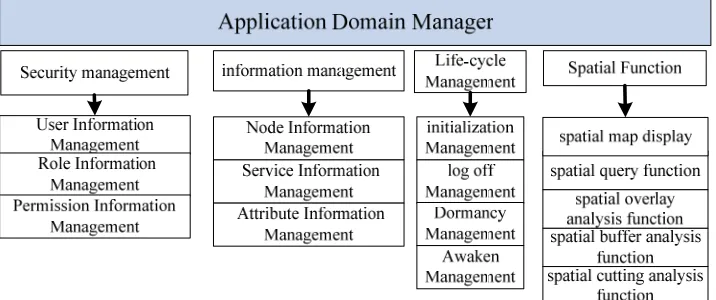
As shown in Figure 1,The functions of the application domain manager can be mainly divided into: nodes in-formation management of the application domain, secu-rity management of the application domain, and spatial processing operations and life-cycle management.
[image:2.595.120.478.550.700.2]Node information management mainly contains: add, delete, search and change the node information. Applica-tion domain security management mainly contains con-trol and manages the roles and permissions. The maps processing function of application domain manager is mainly to provide a number of map operation services, such as space for display, query and analysis.
Figure 2. the tables design of application domain database
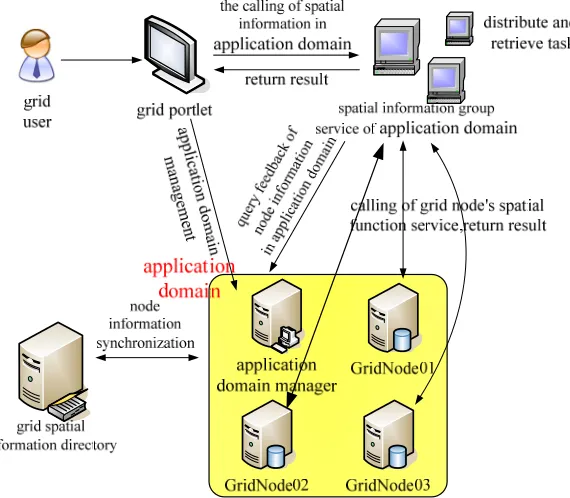
Figure 3. the entire call flow figure of the application domain services
3. The Application Domain Database Design
[image:3.595.153.438.217.466.2]Application Domain Manager uses Oracle 9i database to store all the information of the application domain. The nodes where each application domain manager located all deploy a database. Tables in a database are mainly-consists of three categories: security management data tables, application domain information management data tables and spatial functional data tables. As shown in Figure 2.
Security management data tables are used to store the information of users, roles, permissions, and mapping relations between the roles and the permissions. The corresponding data tables are D_UserInfo(user informa-tion tables), D_RoleInfo(role informainforma-tion tables), D_ PermissionInfo (permission information tables), and D_RPMap(mapping relation tables between the roles and the permissions).
Information management data tables of application domain are used to store their own attribute information related to the application domain, the provided service information, and the node information managed by the application domain. The corresponding data tables are D_Domain(attribute information of application domain tables), D_ServiceInfo(service information of application domain tables),and D_Node(node information of appli-cation domain tables).
Spatial functional data tables are used to store the spa-tial data information of the nodes managed by the appli-cation domain. The corresponding data table is Domain-SpatialMetadata (spatial data information tables).
4. The Application Domain Service Function
Design
4.1.1. User Information Management Service
User information management has two parts, one is that the user manages their own information, such as registra-tion and personal informaregistra-tion changes. The other is the administrator manages user information, such as delete and modify user information.
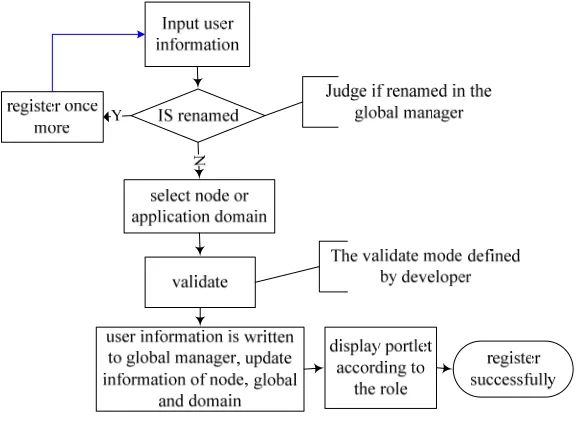
[image:4.595.147.438.299.708.2]User needs to register first, and after the successful registration, some of the information can be modified. Figure 4 shows the scheme of user registration and man-agement. During the registration, through the portal
[image:4.595.154.444.316.527.2]cli-Administrator manages user information service which mainly provides modify and delete user information When a new user register, the administrator assign roles to user. Administrator also has the right to delete users. The process of user information management is shown in Figure 5.
When a new user registration is successful, the appli-cation domain administrator calls the user information management service to set the user’s role information and other information, and assign user specific roles.
[image:4.595.176.423.554.702.2]Figure 4. User Registration and Management
Figure 6. Role Information Management
administrator manages permissions
operation type
modify permissions information
delete permissions
modify delete
change global database operate
successfully
add user permissions
query permissions information
add query
update application domain database maintain data
synchronization
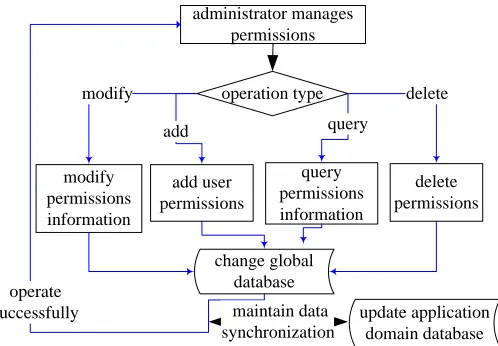
Figure 7. permissions management service
When you modify the data table of user information successfully, it will send the successful operation mes-sage to the client. Otherwise, send the failed operation message. During the running of application domain, the application domain administrator can modify specific user information according to the requirement.
After modify the user's information in application do-main, it also needs to maintain data synchronization with the global manager. The application domain manager will send update request to global manager to maintain data synchronization.
4.1.2. Role Information Management Service
The application domain administrator designs the types of roles according to the requirement. Each role corre-sponds to a certain degree of Permission. The application domain administrator develops new roles, modifies and deletes the roles through the portlet managed by portal- side role. Figure 6 shows the scheme of user information
management.
The application domain administrator manage roles in application domain by calling roles management service, it mainly includes add, delete, query and modify role inf- ormation. It will return the successful operation message after the roles database is modified successfully, other-wise return failed operation message.
It is required to maintain data synchronization with the global manager while application domain administrator modifies the role information in application domain. The application domain manager will call the synchronous updating service to the global manager to ensure the in-formation consensus at both ends.
[image:5.595.173.422.290.463.2]Management Service
The application domain node management service pro-vides information management service of application domain, node list information and service description list services.
4.2.1. Node Information Management Service
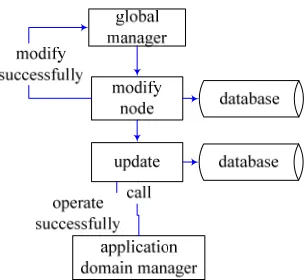
The application domain manager needs to preserve the address of the node information, the spatial data infor-mation in node, and the service inforinfor-mation in node. Ap-plication domain obtains node information from the global manager which updates the node information in application domain by calling the update service of ap-plication domain to modify the node information in the application domain manager. Application domain man-ages nodes information, as shown in Figure 8.
The application domain manager can delete its nodes, and when it delete a node, the information of this node will be deleted from application domain database, At the same time, the synchronous update service of global manager is called to send update request to global man-ager in order to ensure the consensus of node data infor-mation at both ends. Figure 9 shows the process of ap-plication domain to delete node.
4.3. Application Domain Life-cycle Management Service
[image:6.595.353.498.78.210.2]The application domain life-cycle management functions provide functions needed by the implementation of ap-plication domain, such as create, suspend and log off application domain.
[image:6.595.99.252.562.702.2]Figure 8. Application domain manages nodes informa- tion
Figure 9. Application domain deletes node
The initialization functions of the application domain are used to initialize the required information when ap-plication domain is created. It mainly includes the crea-tion of data table of applicacrea-tion domain, getting node information and user information from global manager.
After an application domain is created, it needs to temporarily close the service on account of management demand. You can use the hibernation function, through the wake-up function to restart service.
It is required to log off service to release resources which the application domain owned when an applica-tion domain is removed or exceed the valid time, includ-ing removinclud-ing all the information in data table of the ap-plication domain and stop apap-plication domain function.
4.4. Application Domain Spatial Function Service
The application domain spatial functions inquiry and determine the request information which is sent to the portal client. Get the node information which meets the requirements through querying the node information in database. And then sends the request to corresponding node for the actual function operation. When the node processing completed, the results will be returned to the application domain, and application domain analyses and integrates all the results. Finally returns to the portal-side to display(see Figure 10).
The application domain spatial map display function needs to calculate the scope of the map corresponded to user role in application domain firstly, that is, the scope the user can see according to corresponding permission; then the application domain will send request to nodes which can change the map to ask for a map of the desig-nated area. After each node processing is completed, the picture will send to the application domain manager by binary stream, and the application domain manager over- lay all of the pictures. Finally, the results will be returned to the portal-side to call.
Figure 10. Application domain spatial analysis service
Figure 11. The management interface for application domain administrator
where the query scope will be parsed and judged in order to determine which nodes need to send request; after the request distributed is completed, the queries will be sent to the corresponding node; then the node processes the request and returns the results to application domain which will integrate the results of all nodes and return it to portal to display.
The application domain spatial overlay analysis func-tion needs to select the overlay layer required to overlay analysis firstly; then sends the request to the application domain manager which will sent request to correspond-ing node accordcorrespond-ing to the location of layer node; the node processes the request and returns results to applica-tion domain; the applicaapplica-tion domain manager then re-turns the results to portal to display.
The application domain spatial buffer analysis
func-tion needs to select the layer required to be analyzed. You should set the layer to be edited firstly, and then select the region of buffer analysis, and send a request to the application domain manager. The application domain manager will parse and process the request in order to get the nodes to meet the requirement. Then send the buffer analysis request to nodes. Each node processes the request will send the ultimately results to the application domain manager which integrates the results and returns the results to portal to display.
5. The experiment
In our lab, we deployed eight machines to form a distrib-uted computing environment.
[image:7.595.97.499.292.494.2]Figure 12. map query interface of application domain
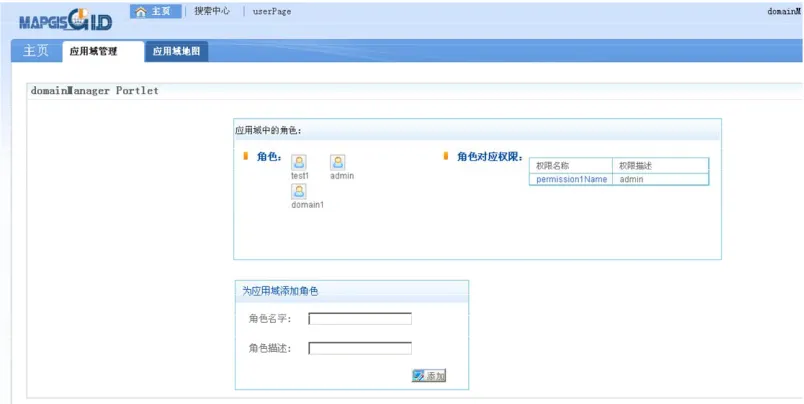
form system--MapGIS Grid. Each node is installed on distributed query vector analysis software, and database is installed on the application domain manager. We carry out spatial query test for the distributed system, and get accurate and fast query results. This is the login interface for application domain administrator in figure 11. And figure 12 is query and test result figure of the application domain.
6. Conclusion
This article is supported by the National High Technol-ogy Research and Development Program (863 program) major project “Grid GIS software and its major applica-tion” and the project of the Special Fund for Basic Scien-tific Research of Central Colleges, China University of Geosciences (Wuhan).
In order to effectively manage and expediently use these large distributed data in the grid environment, we proposed a complete application domain building pro-gram based on the grid resource system management of multi-global managers. The integration of the applica-tion domain builds the three-tier management system. It makes the system nodes and global manager to play their respective advantages: the node has the greatest competence and higher self-governing, the application domain realizes the function classification and quick operation, and the global manager achieves integration and sharing of resources. The application domain
man-ager shares part task of the global manman-ager, the applica-tion domain realizes fast and easy call the distributed business, and distributed processing capabilities of GridGIS is enhanced.
REFERENCES
[1] Wang Xi, Wang Dazhong, Wang Meng. New Develop-ment of Geographical Information Technology— Pre-liminary Discussion of GridGIS[J]. GEOMATICS&SPA- TIAL INFORMATION TECHNOLOGY, Vo.l 29, No. 4, P43-50.
[2] Tao Shiqun. A Model to Evaluate Catalog Management and Allocation Performance in Distributed Database Sys-tems[J]. Journal of Shanxi University (Natural Science Edition), 2002,25(2):112~114.
[3] Chen Bo. The research of a peer to peer computing model and its application in grid environment [D], Institute of Software Chinese Academy of Sciences, 2004, 05
[4] Zou Rui. Research on Grid Resource Management Mod-el[D]. master thesis, Huazhong University of Sci-ence&Technology, 2004,05.
[5] Zhang Luwei. Design and Implementation of Distributed Directory Service in Grid Monitoring System, master thesis, Harbin Institute of Technology, 2006, 06.