Discriminative features in reversible stochastic attribute-value grammars
Dani¨el de Kok University of Groningen [email protected]
Abstract
Reversible stochastic attribute-value gram-mars (de Kok et al., 2011) use one model for parse disambiguation and fluency rank-ing. Such a model encodes preferences with respect to syntax, fluency, and appropriate-ness of logical forms, as weighted features. Reversible models are built on the premise that syntactic preferences are shared between parse disambiguation and fluency ranking.
Given that reversible models also use fea-tures that are specific to parsing or genera-tion, there is the possibility that the model is trained to rely on these directional features. If this is true, the premise that preferences are shared between parse disambiguation and flu-ency ranking does not hold.
In this work, we compare and apply feature se-lection techniques to extract the most discrim-inative features from directional and reversible models. We then analyse the contributions of different classes of features, and show that re-versible models do rely on task-independent features.
1 Introduction
Reversible stochastic attribute-value grammars (de Kok et al., 2011) provide an elegant framework that fully integrates parsing and generation. The most important contribution of this framework is that it uses one conditional maximum entropy model for fluency ranking and parse disambiguation. In such a model, the probability of a derivation d is con-ditioned on a set of input constraintsc that restrict
the set of derivations allowed by a grammar to those corresponding to a particular sentence (parsing) or logical form (generation):
p(d|c) = 1 Z(c)exp
X
i
wifi(c, d) (1)
Z(c) = X
d0∈Ω(c)
expX
i
wifi(c, d0) (2)
Here, Ω(c) is the set of derivations for input c,
fi(c, d) the value of featurefi in derivationdofc, andwi is the weight offi. Reversibility is opera-tionalized during training by imposing a constraint on a given featurefi with respect to the sentences T in the parse disambiguation treebank and logical formsLin the fluency ranking treebank. This con-straint is:
X
c∈C
X
d∈Ω(c)
˜
p(c)p(d|c)fi(c, d)− (3)
˜
p(c, d)fi(c, d) = 0
WhereC = T ∪L, p˜(c)is the empirical proba-bility of a set of constraintsc, and p˜(c, d) the joint probability of a set of constraintscand a derivation
d.
Reversible stochastic-attribute grammars rest on the premise that preferences are shared between lan-guage comprehension and production. For instance, in Dutch, subject fronting is preferred over direct object fronting. If models for parse disambiguation and fluency ranking do not share preferences with respect to fronting, it would be difficult for a parser
to recover the logical form that was the input to a generator.
Reversible models incorporate features that are specific to parse disambiguation and fluency rank-ing, as well as features that are used for both tasks. Previous work (Cahill et al., 2007; de Kok, 2010) has shown through feature analysis that task-independent features are indeed useful in directional models. However, since reversible models assign just one weight to each feature regardless the task, one particular concern is that much of their discrim-inatory power is provided by task-specific features. If this is true, the premise that similar preferences are used in parsing and generation does not hold.
In this work, we will isolate the most discrimina-tive features of reversible models through feature se-lection, and make a quantitative and qualitative anal-ysis of these features. Our aim is to to verify that reversible models do rely on features used both in parsing and generation.
To find the most effective features of a model, we need an effective feature selection method. Section 2 describes three such methods: grafting, grafting-light, andgain-informed selection. These methods are compared empirically in Section 4 using the ex-perimental setup described in Section 3. We then use the best feature selection method to perform quanti-tative and qualiquanti-tative analyses of reversible models in Sections 5 and 6.
2 Feature selection
Feature selection is a procedure that attempts to ex-tract a subset of discriminative features S ⊂ F
from a set of features F, such that a model using
S performs comparable to a model using F and
|S| |F|.
As discussed in De Kok (2010), a good feature se-lection method should handle three kinds of redun-dancies in feature sets: features that rarely change value; features that overlap; and noisy features. Also, for a qualitative evaluation of fluency ranking, it is necessary to have a ranking of features by dis-criminative power.
De Kok (2010) compares frequency-based selec-tion, correlation selecselec-tion, and a gain-informed se-lection method. In that work, it was found that the gain-informed selection method outperforms
frequency-based and correlation selection. For this reason we exclude the latter two methods from our experiments. Other commonly used selection meth-ods for maximum entropy models include`1 regu-larization (Tibshirani, 1996), grafting (Perkins et al., 2003; Riezler and Vasserman, 2004), and grafting-light (Zhu et al., 2010). In the following sections, we will give a description of these selection meth-ods.
2.1 `1regularization
During the training of maximum entropy mod-els, regularization is often applied to avoid uncon-strained feature weights and overfitting. IfL(w)is the objective function that is minimized during train-ing, a regularizer Ωq(w) is added as a penalty for extreme weights (Tibshirani, 1996):
C(w) =L(w) + Ωq(w) (4)
Given that the maximum entropy training pro-cedure attempts to minimize the negative log-likelihood of the model, the penalized objective function is:
C(w) =−X c,d
˜
p(c, d)log(p(d|c)) + Ωq(w) (5)
The regularizer has the following form:
Ωq(w) =λ n
X
i=1
|wi|q
Setting q = 1in the regularizer function gives a so-called `1 regularizer and amounts to applying a double-exponential prior distribution with µ = 0. Since the double-exponential puts much of its prob-ability mass near its mean, the`1 regularizer has a tendency to force weights towards zero, providing integral feature selection and avoiding unbounded weights. Increasing λ strengthens the regularizer, and forces more feature weights to be zero.
the weight mass can be distributed among overlap-ping features.`1regularization also does not fulfill a necessary characteristic for the present task, in that it does not provide a ranking based on the discrimi-native power of features.
2.2 Grafting
Grafting (Perkins et al., 2003) adds incremental fea-ture selection during the training of a maximum en-tropy model. The selection process is a repetition of two steps: 1. a gradient-based heuristic selects the most promising feature from the set of unselected featuresZ, adding it to the set of selected features
S, and 2. a full optimization of weights is performed over all features inS. These steps are repeated until a stopping condition is triggered.
During the first step, the gradient of each unse-lected feature fi ∈ Z is calculated with respect to the model pS, that was trained with the set of se-lected features,S:
∂L(wS) ∂wi
=pS(fi)−p˜(fi) (6)
The feature with the largest gradient is removed fromZand added toS.
The stopping condition for grafting integrates the
`1 regularizer in the grafting method. Note that when `1 regularization is applied, a feature is only included (has a non-zero weight) if its penalty is out-weighted by its contribution to the reduction of the objective function. Consequently, only features for which
∂L(wS)
∂wi
> λholds are eligible for selection.
This is enforced by stopping selection if for allfiin Z
∂L(wS) ∂wi
≤λ (7)
Although grafting uses `1 regularization, its iter-ative nature avoids selecting overlapping features. For instance, if f1 and f2 are identical, and f1 is added to the modelpS,
∂L(wS)
∂w2
will amount to zero.
Performing a full optimization after each selected feature is computationally expensive. Riezler and Vasserman (2004) observe that during the feature step selection a larger number of features can be added to the model (n-best selection) without a loss of accuracy in the resulting model. However, this
so-calledn-best graftingmay introduce overlapping features.
2.3 Grafting-light
The grafting-light method (Zhu et al., 2010) oper-ates using the same selection step as grafting, but improves performance over grafting by applying one iteration of gradient-descent during the optimization step rather than performing a full gradient-descent. As such, grafting-light gradually works towards the optimal weights, while grafting always finds the op-timal weights for the features inSduring each iter-ation.
Since grafting-light does not perform a full gradient-descent, an additional stopping condition is required, since the model may still not be optimal even though no more features can be selected. This additional condition requires that change in value of the objective function incurred by the last gradient-descent is smaller than a predefined threshold.
2.4 Gain-informed selection
Gain-informed feature selection methods calculate the gain ∆L(S, fi) of adding a feature fi ∈ Z to the model. If L(wS) is the negative log-likelihood ofpS,∆L(S, fi)is defined as:
∆L(S, fi)≡L(wS)−L(wS∪fi) (8)
During each selection step, the feature that gives the highest gain is selected. The calculation of L(pS∪fi) requires a full optimization over the
weights of the features inS ∪fi. Since it is com-putationally intractable to do this for everyfi inZ, Berger et al. (1996) propose to estimate the weight
wi of the candidate featurefi, while assuming that the weights of features in S stay constant. Under this assumption,wi can be estimated using a simple line search method.
To account for features that become ineffective, the gain of the highest ranked feature is recalculated. The highest ranked feature is selected if it remains the best feature after this recalculation. Otherwise, the same procedure is repeated for the next best fea-ture.
De Kok (2010) modifies the method of Zhou et al. (2003) for ranking tasks. In the present work, we also apply this method, but perform a full optimiza-tion of feature weights inpSeveryncycles.
Since this selection method uses the gain of a fea-ture in its selection criterion, it excludes noisy and redundant features. Overlapping features are also excluded since their gain diminishes after selecting one of the overlapping features.
3 Experimental setup and evaluation
3.1 Treebanks
We carry out our experiments using the Alpino de-pendency parser and generator for Dutch (van No-ord, 2006; de Kok and van NoNo-ord, 2010). Two newspaper corpora are used in the experiments. The training data consists of the cdbl part of the Eindhoven corpus1 (7,154 sentences). Syntactic annotations are available from the Alpino Tree-bank2(van der Beek et al., 2002). Part of the Trouw newspaper of 2001 is used for evaluation3. Syntac-tic annotations are part of LASSY4 (van Noord et
al., 2010), part WR-P-P-H (2,267 sentences).
3.2 Features
In our experiments, we use the features described in De Kok et al. (2011). In this section, we provide a short summarization of the types of features that are used.
Word adjacency. Word and Alpino part-of-speech tag trigram models are used as auxiliary dis-tributions (Johnson and Riezler, 2000). In both models, linear interpolation smoothing is applied to handle unknown trigrams, and Laplacian smoothing for unknown unigrams. The trigram models have
1http://www.inl.nl/corpora/
eindhoven-corpus
2
http://www.let.rug.nl/vannoord/trees/
3http://hmi.ewi.utwente.nl/TwNC
4http://www.inl.nl/corpora/lassy-corpus
been trained on the Twente Nieuws Corpus (approx-imately 100 million words), excluding the Trouw 2001 corpus. In parsing, the value of the word tri-gram model is constant across derivations of a given input sentence.
Lexical frames. The parser applies lexical analy-sis to find all possible subcategorization frames for tokens in the input sentence. Since some frames oc-cur more frequently in good parses than others, two feature templates record the use of frames in deriva-tions. An additional feature implements an auxil-iary distribution of frames, trained on a large cor-pus of automatically annotated sentences (436 mil-lion words). The values of lexical frame features are constant for all derivations in sentence realiza-tion, unless the frame is underspecified in the logical form.
Dependency relations. Several templates de-scribe aspects of the dependency structure. For each dependency relation multiple dependency features are extracted. These features list the dependency relation, and characteristics of the head and depen-dent, such as their roots or part of speech tags. Ad-ditionally, features are used to implement auxiliary distributions for selectional preferences (van Noord, 2007). In generation, the values of these features are constant across derivations corresponding to a given logical form.
Syntactic features. Syntactic features include fea-tures that record the application of grammar rules, as well as the application of a rule in the context of another rule. Additionally, there are features de-scribing more complex syntactic patterns, such as fronting of subjects and other noun phrases, order-ings in the middle field, long-distance dependencies, and parallelism of conjuncts in coordinations.
3.3 Parse disambiguation
To create training and evaluation data for parse dis-ambiguation, the treebanks described in section 3.1 are parsed, extracting the first 3000 derivations. On average, there are about 649 derivations for the sen-tences in the training data, and 402 derivations for the sentences in the test data.
2006) of each derivation is calculated to estimate its quality. The highest scoring derivations for each in-put are marked as correct, all other derivations are marked as incorrect. Features are then extracted from each derivation.
The concept accuracy is calculated based on the named dependency relations of the candidate and correct parses. If Dp(t) is the bag of dependen-cies produced by the parser for sentencetandDg(t) is the bag of dependencies of the correct (gold-standard) parse, concept accuracy is defined as:
CA=
P
t∈T |Dp(t)∩Dg(t)|
P
t∈Tmax(|Dp(t)|,|Dg(t)|)
(9)
The procedure outlined above gives examples of correct and incorrect derivations to train the model, and derivations to test the resulting model.
3.4 Fluency ranking
For training and evaluation of the fluency ranker, we use the same treebanks as in parse disambiguation. We assume that the sentence that corresponds to a dependency structure in the treebank is the correct realization of that dependency structure. We parse each sentence in the treebank, extracting the depen-dency structure that is the most similar to that in the treebank. We perform this step to assure that it is possible to generate from the given dependency structure. We then use the Alpino chart genera-tor to make all possible derivations and realizations conforming to that dependency structure. Due to a limit on generation time, some longer sentences and corresponding dependency structures are excluded from the data. The average sentence length was 15.7 tokens, with a maximum of 26 tokens.
Since the sentence in the treebank cannot always be produced exactly, we estimate the quality of each realization using the General Text Matcher (GTM) method (Melamed et al., 2003). The best-scoring derivations are marked as correct, the other deriva-tions are marked as incorrect. Finally, features are extracted from these derivations.
The General Text Matcher method marks all cor-responding tokens of a candidate realization and the correct realization in a grid, and finds the maximum matching (the largest subset of marks, such that no marks are in the same row or column). The size of the matchingMis then determined using the lengths
of runs r in the matching (a run is a diagonal of marks), rewarding longer runs:
size(M) =
s X
r∈M
length(r)2 (10)
This method has been shown to have the highest correlation with human judgments in a related lan-guage (German), using a comparable system (Cahill, 2009).
3.5 Training
Models are trained by extracting an informative sample ofΩ(c)for each cin the training data (Os-borne, 2000). This informative sample consists of at most 100 randomly selected derivations.
We then apply feature selection on the training data. We let each method select 1711 features. This number is derived from the number of non-zero fea-tures that training a model with a`1norm coefficient of0.0002gives. Grafting and grafting-light selec-tion are applied using TinyEst5. For gain-informed selection, we use FeatureSqueeze6. For all three methods, we add 10 features to the model during each selection step.
3.6 Evaluation
We evaluate each selection method stepwise. We train and evaluate a model on the best-nfeatures ac-cording to each selection method, forn= [0..1711]. In each case, the feature weights are estimated with TinyEst using a`1norm coefficient of0.0002. This stepwise evaluation allows us to capture the effec-tiveness of each method.
Parse disambiguation and fluency ranking models are evaluated on the WR-P-P-H corpus that was de-scribed in Section 3.1, using CA and GTM scores respectively.
4 Evaluation of feature selection methods
4.1 Incremental feature selection
Figure 1 shows the performance of the feature selec-tion methods for parse disambiguaselec-tion. This graph shows that that both grafting methods are far more
5
http://github.com/danieldk/tinyest
6
effective than gain-informed selection. We can also see that only a small number of features is required to construct a competitive model. Selecting more features improves the model only gradually.
[image:6.612.310.531.51.241.2]Figure 2 shows the performance of the feature selection methods in fluency ranking. Again, we see the same trend as in parse disambiguation. The grafting and grafting-light methods outperform gain-informed selection, with the grafting method coming out on top. In feature selection, even a smaller number of features is required to train an effective model. After selecting more than approx-imately 50 features, adding features only improves the model very gradually.
Figure 1: Application of feature selection methods to parse disambiguation
4.2 Selection using an`1prior
During our experiments, we also evaluated the effect of using an`1prior in Alpino to see if it is worthwile to replace feature selection using a frequency cut-off (Malouf and van Noord, 2004). Using Alpino’s default configuration with a frequency cut-off of 2 and an `2 prior with σ2 = 1000the system had a CA-score of 90.94% using 25237 features. We then trained a model, applying an `1 prior with a norm coefficient of0.0002. With this model, the system had a CA-score of 90.90% using 2346 features.
In generation, Alpino uses a model with the same frequency cut-off and `2 prior. This model has 1734 features features and achieves a GTM score of 0.7187. Applying the `1 prior reduces the number
Figure 2: Effectiveness of feature selection methods in fluency ranking. Both grafting methods outperform gain-based ranking
of features to 607, while mildly increasing the GTM score to 0.7188.
These experiments show that the use of`1 priors can compress models enormously, even compared to frequency-based feature selection, while retaining the same levels of accuracy.
5 Quantitative analysis of reversible models
For a quantitative analysis of highly discriminative features, we extract the 300 most effective features of the fluency ranking, parse disambiguation, and re-versible models using grafting. We then divide fea-tures into five classes: dependency(enumeration of dependency triples), lexical(readings of words), n-gram(word and tag trigram auxiliary distributions), rule (identifiers of grammar rules), and syntactic (abstract syntactic features). Of these classes, rule andsyntactic features are active during both parse disambiguation and fluency ranking.
In the quantitative analyses, we train a model for each selection step. The models contain the 1 to 300 best features. Using these models, we can calculate the contribution of featurefito the improvement ac-cording to some evaluation functione
c(fi) =
e(p0..i)−e(p0..i−1)
e(p0..n)−e(p0)
(11)
[image:6.612.72.289.255.444.2]dis-criminative features, p0 is the uniform model, and
n= 300.
[image:7.612.318.500.54.136.2]5.1 Parse disambiguation
Table 1 provides class-based counts of the 300 most discriminative features for the parse disambiguation and reversible models. Since the n-gram features are not active during parse disambiguation, they are not selected for the parse disambiguation model. All other classes of features are used in the parse dis-ambiguation model. The reversible model uses all classes of features.
Class Directional Reversible
Dependency 93 84
Lexical 24 24
N-gram 0 2
Rule 156 154
Syntactic 27 36
Table 1: Per-class counts of the best 300 features accord-ing to the graftaccord-ing method.
Contributions per feature class in parse disam-biguation are shown in table 2. In the directional parse disambiguation model, parsing-specific fea-tures (dependency andlexical) account for 55% of the improvement over the uniform model.
In the reversible model, there is a shift of con-tribution towards task-independent features. When applying this model, the contribution of parsing-specific features to the improvement over the uni-form model is reduced to 45.79%.
We can conclude from the per-class feature con-tributions in the directional parse disambiguation model and the reversible model, that the reversible model does not put more emphasis on parsing-specific features. Instead, the opposite is true: task-independent features are more important in the re-versible model than the directional model.
5.2 Fluency ranking
Table 3 provides class-based counts of the 300 most discriminative features of the fluency ranking and reversible models. During fluency ranking, depen-dency features and lexical features are not active.
Table 4 shows the per-class contribution to the improvement in accuracy for the directional and re-versible models. Since the dependency and lexical
Class Directional Reversible
Dependency 21.53 13.35
Lexical 33.68 32.62
N-gram 0.00 0.00
Rule 37.61 47.35
Syntactic 7.04 6.26
Table 2: Per-class contribution to the improvement of the model over the base baseline in parse disambiguation.
Class Directional Reversible
Dependency 0 84
Lexical 0 24
N-gram 2 2
Rule 181 154
[image:7.612.318.500.179.261.2]Syntactic 117 36
Table 3: Per-class counts of the best 300 features accord-ing to the graftaccord-ing method.
features are not active during fluency ranking, it may come as a surprise that their contribution is nega-tive in the reversible model. Since they are used for parse disambiguation, they have an effect on weights of task-independent features. This phenomenon did not occur when using the reversible model for parse disambiguation, because the features specific to flu-ency ranking (n-gram features) were selected as the most discriminative features in the reversible model. Consequently, the reversible models with one and two features were uniform models from the perspec-tive of parse disambiguation.
Class Directional Reversible
Dependency 0.00 -4.21
Lexical 0.00 -1.49
N-gram 81.39 83.41
Rule 14.15 16.45
[image:7.612.78.260.225.308.2]Syntactic 3.66 4.59
Table 4: Per-class contribution to the improvement of the model over the baseline in fluency ranking.
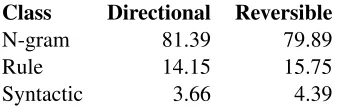
[image:7.612.318.499.485.568.2]mild effect in the opposite direction here as well.
Class Directional Reversible
N-gram 81.39 79.89
Rule 14.15 15.75
[image:8.612.321.537.58.341.2]Syntactic 3.66 4.39
Table 5: Classes giving a net positive distribution, with normalized contributions.
6 Qualitative analysis of reversible models
While the quantitative evaluation shows that task-independent features remain important in reversible models, we also want to get an insight into the ac-tual features that were used. Since it is unfeasible to study the 300best features in detail, we extract the
20best features.
Grafting-10 is too course-grained for this task, since it selects the first 10 features solely by their gradients, while there may be overlap in those fea-tures. To get the most accurate list possible, we per-form grafting-1 selection to extract the20 most ef-fective features. We show these features in table 6 with their polarities. The polarity indicates whether a feature is an indicator for a good (+) or bad (-) derivation.
We now provide a description of these features by category.
Word/tag trigrams. The most effective features in fluency ranking are the n-gram auxiliary distribu-tions (1, 3). The word n-gram model settles prefer-ences with respect to fixed expressions and common word orders. It also functions as a (probabilistic) filter of archaic inflections and incorrect inflections that are not known to the Alpino lexicon. The tag n-gram model help picking a sequence of part-of-speech tags that is plausible.
Frame selection. Various features assist in the selection of proper subcategorization frames for words. This currently affects parse disambiguation mostly. There is virtually no ambiguity of frames during generation, and a stem/frame combination normally only selects one inflection. The most ef-fective feature for frame selection is (2), which is an auxiliary distribution of words and correspond-ing frames based on a large automatically annotated
Rank Polarity Feature
1 + ngram lm
2 + z f2
3 + ngram tag
4 - r1(np n)
5 + r2(np det n,2,n n pps)
6 - p1(pardepth)
7 + r2(vp mod v,3,vproj vc) 8 - r2(vp arg v(np),2,vproj vc)
9 - f1(adj)
10 + r2(vp mod v,2,optpunct(e)) 11 - s1(non subj np topic)
12 + r1(n adj n)
13 + dep23(prep,hd/pc,verb)
14 + r1(optpunct(e))
15 + dep34(van,prep,hd/mod,noun) 16 + dep23(noun,hd/su,verb)
17 + p1(par)
18 - r1(vp v mod)
19 + dep23(prep,hd/mod,verb) 20 - f1(verb(intransitive))
Table 6: The twenty most discriminative features of the reversible model, and their polarities.
corpus. Other effective features indicate that read-ings as an adjective (9) and as an intransitive verb (20) are not preferred.
Modifiers. Feature 5 indicates the preference to attach prepositional phrases to noun phrases. How-ever, if a modifier is attached to a verb, we prefer readings and realizations where the modifier is left-adjoining rather than right-left-adjoining (7, 18, 19). For instance,zij heeft met de hond gelopen(she has with the dog walked) is more fluent thanzij heeft gelopen met de hond(she has walked with the dog). Finally, feature 15 gives preference to analyses where the prepositionvanis a modifier of a noun.
[image:8.612.77.246.81.135.2]Punctuation. The Alpino grammar is very gen-erous in allowing optional punctuation. An empty punctuation sign is used to fill grammar rule slots when no punctuation is used or realized. Two fea-tures indicate preferences with respect to optional punctuation. The first (10) gives preference to filling the second daughter slot of the vp mod v with the empty punctuation sign. This implies that deriva-tions are preferred where a modifier and a verb are not separated by punctuation. The second feature (14) indicates a general preference for the occur-rence of empty optional punctuation in the deriva-tion tree.
Subjects/objects. In Dutch, subject fronting is preferred over object fronting. For instance,Spanje won de wereldbeker (Spain won the World Cup) is preferred over de wereldbeker won Spanje (the World Cup won spain). Feature 8 will in many cases contribute to the preference of having topicalized noun phrase subjects. It disprefers having a noun phrase left of the verb. For example,zij heeft met de hond gelopen(she has with the dog walked) is pre-ferred overmet de hond heeft zij gelopen (with the dog she has walked). Feature 11 encodes the prefer-ence for subject fronting, by penalizing derivations where the topic is a non-subject noun phrase.
Other syntactic preferences. The remaining features are syntactic preferences that do not belong to any of the previous categories. Feature 4 indicates a dispreference for derivations where bare nouns occur. Feature 12 indicates a preference for derivations where a noun occurs along with an adjective. Finally, feature 13 gives preference to the prepositional complement (pc) relation if a preposition is a dependent of a verb and lexical analysis shows that the verb can combine with that prepositional complement.
We can conclude from this description of fea-tures that many of the feafea-tures that are paramount to parse disambiguation and fluency ranking are task-independent, modeling phenomena such as subject/object fronting, modifier adjoining, paral-lelism and depth in conjunctions, and the use of punctuation.
7 Conclusion
In this work we have used feature selection tech-niques for maximum entropy modeling to analyze the hypothesis that the models in reversible stochas-tic attribute-value grammars use task-independent features. To this end, we have first compared three feature selection techniques, namely gain-informed selection, grafting, and grafting-light. In this comparison we see that grafting outperforms both grafting-light and gain-informed selection in parse disambiguation and fluency ranking tasks.
We then used grafting to select the most effective features for parse disambiguation, fluency ranking, and reversible models. In the quantitative analysis we have shown that the reversible model does not put more emphasis on task-specific features. In fact, the opposite is true: in the reversible model task-independent features become more defining than in the directional models.
We have also provided a qualitative analysis of the twenty most effective features, showing that many of these features are relevant to both parsing and gener-ation. Effective task-independent features for Dutch model phenomena such as subject/object fronting, modifier adjoining, parallelism and depth in con-junctions, and the use of punctuation.
8 Future work
An approach for testing the reversibility of mod-els that we have not touched upon in this work, is to evaluate such models using tasks that combine parsing and generation. For instance, a good word graph parser should choose a fluent sentence with a syntactically plausible reading. If reversible models integrate parsing-specific, generation-specific, and task-independent features properly, they should be competitive to models specifically trained for that task. In the future, we hope to evaluate reversible stochastic attribute-value grammars in the light of such tasks.
9 Acknowledgments
References
Adam L. Berger, Stephen A. Della Pietra, and Vincent J. Della Pietra. 1996. A maximum entropy approach to natural language processing. Computational linguis-tics, 22(1):71.
Aoife Cahill, Martin Forst, and Christian Rohrer. 2007. Designing features for parse disambiguation and real-isation ranking. In The Proceedings of the LFG ’07
Conference, pages 128–147. CSLI Publications.
Aoife Cahill. 2009. Correlating human and automatic evaluation of a german surface realiser. In Proceed-ings of the ACL-IJCNLP 2009 Conference - Short Pa-pers, pages 97–100.
Dani¨el de Kok and Gertjan van Noord. 2010. A sentence generator for Dutch. InProceedings of the 20th Com-putational Linguistics in the Netherlands conference
(CLIN), pages 75–90.
Dani¨el de Kok, Barbara Plank, and Gertjan van Noord. 2011. Reversible stochastic attribute-value grammars.
In Proceedings of the ACL HLT 2011 Conference
-Short Papers.
Dani¨el de Kok. 2010. Feature selection for fluency rank-ing. In Proceedings of the 6th International Natural
Language Generation Conference (INLG), pages 155–
163.
Mark Johnson and Stefan Riezler. 2000. Exploiting auxiliary distributions in stochastic unification-based grammars. In Proceedings of the 1st Meeting of the North American Chapter of the Association for
Com-putational Linguistics, pages 154–161, Seattle,
Wash-ington.
Robert Malouf and Gertjan van Noord. 2004. Wide coverage parsing with stochastic attribute value gram-mars. InIJCNLP-04 Workshop: Beyond shallow anal-yses - Formalisms and statistical modeling for deep
analyses.JST CREST, March.
I. Dan Melamed, Ryan Green, and Joseph Turian. 2003. Precision and recall of machine translation. In
HLT-NAACL.
Miles Osborne. 2000. Estimation of stochastic attribute-value grammars using an informative sample. In Pro-ceedings of the 18th conference on Computational
lin-guistics (COLING), pages 586–592.
Simon Perkins, Kevin Lacker, and James Theiler. 2003. Grafting: Fast, incremental feature selection by gradi-ent descgradi-ent in function space.The Journal of Machine
Learning Research, 3:1333–1356.
Stefan Riezler and Alexander Vasserman. 2004. Incmental feature selection and l1 regularization for re-laxed maximum-entropy modeling. InProceedings of the 2004 Conference on Empirical Methods in Natural
Language Processing (EMNLP04), Barcelona, Spain.
Robert Tibshirani. 1996. Regression shrinkage and se-lection via the Lasso. Journal of the Royal Statistical
Society. Series B (Methodological), pages 267–288.
Leonoor van der Beek, Gosse Bouma, Robert Malouf, and Gertjan van Noord. 2002. The Alpino depen-dency treebank. InComputational Linguistics in the
Netherlands (CLIN).
Gertjan van Noord, Ineke Schuurman, and Gosse Bouma. 2010. Lassy syntactische annotatie, revision 19053. http://www.let.rug.nl/
vannoord/Lassy/sa-man_lassy.pdf.
Gertjan van Noord. 2006. At Last Parsing Is Now Operational. In TALN 2006 Verbum Ex Machina, Actes De La 13e Conference sur Le Traitement
Au-tomatique des Langues naturelles, pages 20–42,
Leu-ven.
Gertjan van Noord. 2007. Using self-trained bilexical preferences to improve disambiguation accuracy. In
Proceedings of the International Workshop on
Pars-ing Technology (IWPT), ACL 2007 Workshop, pages
1–10, Prague. Association for Computational Linguis-tics, ACL.
Yaqian Zhou, Lide Wu, Fuliang Weng, and Hauke Schmidt. 2003. A fast algorithm for feature se-lection in conditional maximum entropy modeling.
In Proceedings of the 2003 conference on Empirical
methods in natural language processing, EMNLP ’03,
pages 153–159, Stroudsburg, PA, USA. Association for Computational Linguistics.
Jun Zhu, Ni Lao, and Eric P. Xing. 2010. Grafting-light: fast, incremental feature selection and structure learning of Markov random fields. InProceedings of the 16th ACM SIGKDD international conference on
Knowledge discovery and data mining, pages 303–