Identifying improvements in
primary care to support the
care of those in their last year
of life
PRIMARY PALLIATIVE CARE IN IRELAND
Primary Palliative Care
in Ireland
Identifying improvements in primary care to support the care of those in their last year of life. Joint report from:
The Irish Hospice Foundation,
The Irish College of General Practitioners and The Health Service Executive
Primary Palliative Care in Ireland is the report of the initial phase of the Primary Palliative Care programme. This is a joint programme between the Irish Hospice Foundation, the Health Service Executive and the Irish College of General Practitioners. The second phase will commence in 2012, and will be based on the implementation of the recommendations of this report.
Published November 2011
More information on the Primary Palliative Care programme can be found on the Development page of the IHF website: www.hospice-foundation.ie
Contents
Foreword 3
Endorsements 4
Acknowledgments 5
Abbreviations 5
Glossary 6
Executive summary 7
Chapter 1 Introduction 11
Chapter 2 International developments 15
Chapter 3 Irish context 21
Chapter 4 Views of Irish community-based professionals 29
Chapter 5 Conclusion 39
Chapter 6 Recommendations 41
Chapter 7 Implementation 45
References 49
Appendices
Appendix 1 Phase 1 terms of reference 56
Appendix 2 Primary Palliative Care Steering Committee 57
Appendix 3 Copy of questionnaire 58
3
Chairman’s foreword
Welcome to the report of the Primary Palliative Care Steering Committee. On behalf of the members of the committee, I am delighted to present this report.
The Irish people have long had a history of
intertwining birth and death into the colourful fabric of life. We are laboured into, and out of, this world, and these two milestones embroider life’s intricate quilt. It is against a backdrop of innate empathy and communal respect for the dignity of another in trouble, that the origins of Palliative Care developed in Ireland at St Patrick’s hospital in Cork and Our Lady’s hospice in Harold’s Cross, Dublin in the 1870’s. The subsequent international development of the modern palliative care movement, pioneered by Dame Cicely Saunders at St Christopher’s in London, established Palliative Care as a core specialty of the worldwide medical spectrum.
There has been a carefully nurtured growth in Palliative Care in Ireland since its designation as a specialty here in 1995. This specialist care helped initially to compliment that of general practice, and the oncology and neurology services, and subsequently extended to the care of people suffering from a wider spectrum of non-malignant conditions. It is a holistic and multidisciplinary approach to care that has quietly seeped through various hospital specialties and influenced the manner in which people with advanced and progressive diseases are minded through the last furlong of their lives. In addition, the specialist home care teams have provided invaluable help and advice to staff in primary carer with regard to the care of people dying at home (since the establishment of the first specialist home care team in 1985).
Now, in recognition of the fact that 90% of the last year of life is spent at home, and that the expressed wish of most people (80%) with end stage disease in this country is to die at home, it is apparent that there is a great need to improve mechanisms for the provision of generalist Palliative Care at community level. This enhanced delivery of Palliative Care by Primary Care can result in an holistic and structured care that helps to keep patients in the community throughout their last journey.
The phased establishment and embedding of the Primary Care Team structure by the HSE now allows for a lattice work onto which these enhancements can be pinned. The educational input by the ICGP over 16 years has further helped to create a critical mass of enthusiasm and energy among Irish GPs. This will help to meet the increasing needs for community Palliative Care that will be required by an elderly population that will double in number over the next 20 years.
This report now aims to identify initiatives that will help all community-based health care professionals deliver enhanced Palliative Care to their patients at home. These initiatives should help to weave the various strands of palliative care delivered by Primary Care into a stronger thread and should result in enhanced cohesion in the care delivered to each individual patient, making for better care. The implementation of these initiatives is consistent with the aim in the programme for government 2011 ‘to deliver the right care in the right place’. It is entirely possible within the current fiscal restrictions and will help community-based health care professionals manage the care of patients with advanced progressive disease at home by doing the important things well.
Finally on a personal note, I would like to thank all the members of the steering committee for their input into this programme and their help in bringing this report to fruition.
Dr. Paul Gregan Chairperson Primary Palliative Care.
Endorsements
In Ireland, hospital services tend to dominate when the health services are being discussed. This is not surprising as, historically, the emphasis has been on hospital-based services, despite the ongoing achievements and developments in the primary care sector. However, health services around the world are changing. Many more services, traditionally only accessible in acute hospitals are now becoming more easily available within local communities. Central to the modernisation of the Irish health service, therefore, is the development of a greater range and volume of primary care services. The Primary Care Strategy 2001 ‘A New Direction’, set out a new direction for primary care as the central focus of the delivery of health and personal social services. The aim is to support and promote the health and wellbeing of the population by making people’s first point of contact with the health services easily accessible, integrated and locally basis. At the heart of this community-based approach are Primary Care Teams whose main priorities are delivering cost-effective primary care based services. In addition the guidance emanating from the National Clinical Programmes is supporting the necessary service development in this area.
The HSE welcomes the focus and recommendations of this report as it seeks to outline and identify how Primary Care Teams can support and respond to the palliative care needs of those with advancing life-limiting disease in primary care based settings. This will help ensure that patients with life-limiting disease together with their families can easily access a level of palliative care that is appropriate to their needs in an integrated and co-ordinated way in primary care based settings and maintain care at end of life in the community as long as is practicable.
Mr. Brian Murphy HSE National Primary Care & Social Inclusion Services Manager.
Palliative care is an approach that improves the quality of life of patients and their families facing the problems associated with life-threatening illness, through the prevention and relief of suffering by means of early identification and impeccable assessment and treatment of pain and other problems, physical, psychosocial and spiritual (WHO, 2004).
The Palliative Care Clinical Programme within the HSE aims to ensure that patients with life-limiting conditions and families can easily access a level of palliative care service that is appropriate to their needs regardless of care setting or diagnosis. The Programme recognises that
the provision of palliative care is the responsibility of the whole healthcare system and not just specialist palliative care services.
In particular, it acknowledges the fundamental importance of the role of the General Practitioner and primary healthcare team. When diagnosed with a life limiting illness most patients have an existing relationship with a general practitioner and for many families, the relationship with a general practitioner continues until the death of the patient and beyond. The Programme therefore welcomes the development of initiatives that support primary care providers to communicate and co-ordinate care on an ongoing basis in order to ensure streamlined and high-quality care for all patients. We look forward to collaborating with stakeholders to achieve these goals.
Dr. Karen Ryan Consultant in Palliative Medicine; Clinical Lead for the Palliative Care programme, Clinical Strategy and Programmes Directorate, HSE.
The Irish Hospice Foundation centres its work on building support for the hospice philosophy in all care settings.
For most of us, the vast majority of our health care is provided by primary health care professionals. For those nearing end of life, it is vital that these same staff have the confidence, competence and resources to ensure that the persons palliative care needs are anticipated, assessed and responded to. The person who has an advanced life-limiting disease, and their family must at all times remain central, be fully informed and have opportunities to engage with and plan the health care they receive. This report has identified a number of initiatives that will support staff working in primary care settings deliver a more responsive, co-ordinated and person centred service. Over time, we believe this will lead to better integration of services , more cost efficient services and most importantly will enable these patients to have more choice regarding their place of care and preferred place of death. The report also signals more long term objectives which will support national developments in Primary Palliative Care, in collaboration with the HSE, ICGP, Department of Health and other key stakeholders. Over the coming years, we look forward to working with our partners to achieve a hospice approach in all primary care settings.
5
Acknowledgments
The Primary Palliative Care committee would like to particularly thank
· All the health care professionals who responded to the questionnaire and participated in the consultation meetings
· The note-takers for each of the five consultation meetings
· The HSE Transformational Development Officers who assisted in organising the consultation meetings and distributed the questionnaire
· Dr Caroline Kelleher for carrying out the data analysis on the questionnaire returns.
Abbreviations
CIT Community Intervention Team
COPD Chronic Obstructive Pulmonary Disease
DoHC Department of Health and Children
ePCS Electronic Palliative Care Summary
GSF Gold Standards Framework
GP General Practitioner
HIQA Health Information and Quality Authority
HSCN Health and Social Community Network
HSE Health Service Executive
ICGP Irish College of General Practitioners
LHO Local Health Office
NACPC National Advisory Committee
Palliative Care
NHS National Health Service
OOH Out of Hours
PPC Primary Palliative Care
PHN Public Health Nurse
SPC Specialist Palliative Care
TDO Transformational Development Officer
Glossary of terms
Primary care
Primary care is an approach to care that includes a
range of services designed to keep people well, from promotion of health and screening for disease to assessment, diagnosis, treatment and rehabilitation as well as personal social services. These services provide first-level contact that is fully accessible by self-referral and have a strong emphasis on working with communities and individuals to improve their health and social well-being. Primary care is the part of the health system that ensures that services are co-ordinated and integrated across the boundaries of health and personal social care to the benefit of the consumer in terms of better quality, better outcomes, better cost-effectiveness and better health status [1].
Primary care teams
A primary care team is a team of health professionals who work closely together to meet the needs of the people living in the community. They provide a single point of contact to the health system for the person. These professionals include:
· General Practitioner and Practice Nurse.
· Community Nursing Service – Public Health Nurse, Community Registered Nurse.
· Occupational Therapist.
· Physiotherapist.
· Home Help, and other support staff.
As required, the primary care team members’ link with other community-based disciplines to ensure all health and social needs are provided for.
Palliative care approach
The palliative care approach aims to promote both
physical and psychosocial well-being. It is a vital and integral part of all clinical practice, whatever the illness or its stage, informed by a knowledge and practice of palliative care principles. The key principles of the palliative care approach include a focus on quality of life, which includes good symptom control; a holistic approach that takes into account the person’s life experience and current situation; care that encompasses both the dying person and those who matter to that person; and an emphasis on open and sensitive communication, which extends to patients, carers and professional colleagues [2].
Specialist palliative care services
Specialist palliative care services are those services whose core activity is limited to the provision of palliative care. These services are involved in the care of patients with more complex and demanding care needs. Specialist palliative care services should be seen as complementing the care provided by other health care professionals in hospitals and community settings [2].
Primary palliative care
Executive summary
Introduction
Of the 27,000 people who die every year, the majority of their care in the last year of their life is provided for by the General Practitioner (GP) and members of the primary care team. However in Ireland, unlike other countries, there is no formal framework to support community-based health care staff to assist them identify and respond to the palliative care needs of those people who are facing death in the community. In 2010 the Irish Hospice Foundation, in partnership with the Irish College of General Practitioners and the HSE established the Primary Palliative Care (PPC) programme, in order to identify palliative care initiatives that will support primary care team’s responses to adults living with advancing life-limiting diseases in the community. The national steering committee, which was established to support the work of the programme, was representative of professional groups and relevant HSE structures covering both primary care and specialist palliative care.
International developments
In other jurisdictions, for the past decade, there has been significant policy and strategic developments to support primary care teams in their response to the palliative care needs of those with life-limiting disease. The UK End of Life Care strategy, which was published in 2008, has provided the NHS with guidance and frameworks to support and monitor developments in the area of care at end of life in all settings, and these are co-ordinated from the National End of Life Care Programme. Examples of the various initiatives and projects supported by this strategy and programme are described within this report, and demonstrate the scale and extent of development required to support the delivery of quality end of life care in all care settings. The recent review of funding that has been linked to the implementation of the UK End of Life Care strategy has recommended that the models of funding and service delivery needs to ensure equity of provision in this area of care. 2011 has seen the emergence of international guidance and research structures to support the development of primary palliative care, including the establishment by the European Association of Palliative care of the
Taskforce on Primary and Community Palliative care, and the publication of a report by WHO Collaborating Centre for Public Health Palliative Care. Research in delivery of primary palliative care has highlighted the need for greater role clarity amongst professional groups as to their responsibilities in ‘generalist palliative care delivery’ as well as further provision of education and training in communication and symptom control to enhance their service provision.
Irish context
The projected demographic shifts relating to life expectancy signal that people in Ireland will live longer, albeit with associated chronic illnesses. This coupled with an ageing population will result in greater demands on community-based health care, to ensure that they can remain living in the community despite their increasing frailty. Up to very recently, the domain of palliative care has traditionally being linked with cancer, and associated with specialist palliative care (SPC) services. However these services respond to those who are dying with complex and demanding care needs, and support approximately 23% of those who die in community settings every year. In 2001, the report of the National Advisory Committee on Palliative Care observed that GPs and community nursing services are the main provides of ‘general palliative care’ to those dying with life-limiting disease that do not require the services of SPC. This DoHC report recommended that SPC nurses should act as a resource to community-based health professionals, and that a 24-hour telephone advisory service should be available to support the provision of palliative care in all care settings.
9
Institute of Hospice and Palliative Care. The PPC programme identified a small number of local primary care initiatives that are responding specifically to the palliative care needs of patients - these emerging models need to be evaluated and can inform relevant strategic developments.
Views of Irish community-based health
care professionals
In seeking to ascertain the views of community-based health care professionals with regard to primary palliative care delivery, the PPC programme undertook a series of consultation meetings and conducted a survey across ten HSE Local Health Offices. The themes addressed referred to communication with patients and families; co-ordination of services and transfer of information; education and training needs; and access to medication and equipment. The need for enhanced communication systems, to assist the delivery of timely and consistent information to patients and their families with regard to their palliative care needs, was strongly supported by all respondents. There was recognition of a need to up-skill in aspects of clinical management of patients with palliative care needs, as well as providing a mechanism to identify people who are entering the palliative phase of their illness. Enhancing confidence and clinical skills amongst primary care staff will assist in addressing the uncertainty with regard to professional roles that emerged as a theme from respondents in the survey. Service enhancements were also identified as vital to the development of comprehensive primary palliative care – particularly with regard to community-based nursing services and advice and information from SPC outside of traditional working hours.
Recommendations
The majority of health care professionals who engaged with the PPC programme acknowledged their role within the delivery of primary palliative care; however they had difficulty in relating on how this ethos and practice of care existed within their care delivery. The recommendations of the first phase of the PPC programme are prioritised based on developments
that would be helpful to clarify and support service delivery, without significant resource implications. They include
· Clarifying access to advice and information from SPC outside of traditional hours.
· The development of a resource system that will assist in identifying and supporting patients with palliative care needs in the community.
· The introduction of a formal mechanism for GPs to communicate to their local out of hours service providers with regard to the palliative care needs of their patient.
Proposals for responding to the education needs identified are also outlined, as well suggestions for developing greater awareness amongst professional groups as to their role in the area of primary palliative care.
Conclusion
CHAPTER 1
‘Primary care professionals
have the potential and ability
to provide end of life care for
most patients, given adequate
training, resources, and, when
needed, specialist advice.
They share common values
with palliative care specialists
- holistic, patient centred care,
delivered in the context of
families and friends’
Scott Murray 2004 [4]
Chapter 1
Introduction
Context
The predominant responsibility for the care of people with life-limiting disease lies with General Practitioners (GP) and their community nursing colleagues, along with appropriate support from the specialist palliative care (SPC) service and allied health professionals. In recognition of this fact, in late 2009. The Irish Hospice Foundation (IHF), along with the Health Service Executive (HSE) and Irish College of General Practitioners (ICGP) established the Primary Care Palliative Care – hereafter named Primary Palliative Care (PPC) steering committee. The establishment of this committee and its subsequent work programme arose from informal contact between the IHF and a number GPs and SPC professionals. These individuals were aware of the need to provide more guidance to GPs and community nursing
colleagues in their response to patients with advancing life-limiting disease that were living in community settings. The impetus for the establishment of the PPC was heightened by the awareness of international developments in primary palliative care as well as the impact of the forecasted demographic trends in Ireland. Both the ICGP and the HSE appointed representatives to the steering committee, and appropriate links were made with policy and service groups from these organisations, particularly the work of the HSE clinical programmes in Primary Care and Palliative Care.
Aim
13
The terms of reference for the work of the committee can be found in Appendix 1, and the programme had a developmental focus. The membership of the committee included primary care professionals representing community nurses, GPs, pharmacists and SPC professionals. The committee was chaired by Dr Paul Gregan who works half-time as a GP and half-time as a consultant in palliative medicine. The full list of committee members can be found in Appendix 2. The committee met nine times between November 2009 and June 2011. In that time, the committee supported and contributed to the work of this programme, including hosting five consultation meetings that were held with community health care professionals - countrywide, assisting in the drafting and subsequent analysis of a questionnaire and the compilation of this report. In order to stay abreast of Irish and international service developments in this area, the committee members received presentations from relevant Irish initiatives, and a small delegation attended conferences in UK and Europe on this topic. In addition, the committee also assisted with the dissemination and awareness of its work by means of progress reports to their respective professional groups and poster presentations at Irish palliative care conferences.
Report content
To assist in providing a wider context to the potential scope and rationale for the development of palliative care within primary care settings, chapter two will describe a range of international initiatives in primary palliative care. Chapter three seeks to outline the Irish health structures and policy in primary care that can support the delivery of palliative approach to care, as well as some emerging initiatives. This chapter will also set out the implications of the changing demographics of people living with advancing life-limiting disease. Chapter four relates how the PPC programme gathered information and views from a selection of community-based health care professionals in Ireland. This chapter also summarises the findings from this process. The final part of this report details the prioritised recommendations. These are informed by international practice and emerging Irish research, the findings of the questionnaire and consultation meetings, as well as the indicative support and synergies with HSE structures and ICGP
CHAPTER 2
Chapter 2
International developments
Introduction
When considering the rationale and significance of ensuring that people in Ireland with advancing life-limiting diseases have their palliative care needs identified and responded to in community-based settings, it is helpful to look at emerging developments in primary palliative care in other countries. Throughout the course of its work, the PPC programme sought information on such developments from UK and further afield. A range of policy, practice and research initiatives from UK, Australia, Canada and the WHO public health palliative care programme are described in this chapter, for the purpose of providing a wider context to the PPC programme. This account does not attempt to provide an in-depth appraisal of these developments, which is beyond the scope of the PPC programme.
2.1 United Kingdom
2.1.1 End of Life Care Strategy
In July 2008 the UK Department of Health launched the End of Life Care strategy which included a focus on primary care [5]. Arising from this strategy, the NHS developed a National End of Life Care programme, to work with health and social care services across all sectors to improve end of life care for adults. In this regard they have developed a comprehensive website for professionals and public: http://www. endoflifecareforadults.nhs.uk/.
The UK End of Life Care strategy outlines the following key areas where primary care teams can enhance end of life care:
· Identification of people approaching the end
of life and their inclusion on a ‘palliative care register’ held in a GP practice.
· Having conversations with patients and
their families to find out their wishes and preferences in relation to their end of life care – it is acknowledged that these conversations can be difficult at times.
· Planning together as a team to provide
co-ordinated care.
· Delivery of high quality services in all locations
· Managing the final days sensitively and
appropriately.
· Supporting people at the end of life, and their families and carers.
To support the measurement of quality outcomes, the End of Life Care Programme produced a document stating the key performance indicators for delivery of end of life care. This includes a section on primary care [6]. Many of the programmes that are included in the End of Life Care strategy refer to supporting people at the end of life in the community – and references to four of these programmes are described in more detail below:
2.1.1.1 Gold Standards Framework
The Gold Standards Framework (GSF) is a systematic evidence-based approach to optimise the care delivered by generalist providers to patients nearing end of life. It is concerned with helping people to live well until the end of their lives and includes a focus on care in the final years of life for people with any life-limiting illness in any setting. The GSF was developed and pioneered in 2003 by a GP - Professor Keri Thomas - and was piloted for 3 years [7]. It now has specific education programmes and ‘tool kits’ tailored for residential settings and acute hospitals, and is a key component to the UK End of Life Care strategy [8]. Recent reviews and evaluations of the GSF have noted that this framework assists co-ordination within primary care teams. These reviews have also noted that the delivery of palliative care within community settings is dependent on good team relationships, leadership and robust processes, and all quality measures must monitor change in patient care as well as system change [8-10].
17
death. The British Medical Association has recognised that there are considerable benefits in attempting to identify the point at which an illness becomes advanced or ‘end stage’ in order to mobilise best care for patients, and address their likely health and social care needs and those of their families [11]. In 2009 an audit of their use indicated that 27% of all deaths were included on palliative care registers. Based on these findings, the audit report recommended that teams need more help to identify and predict which people may be nearing the end of life – particularly those who do not have cancer [8].
2.1.1.2 Marie Curie Delivering Choice Programme
Working with the NHS and social services, the Marie Curie Delivering Choice Programme aims to develop patient-centred, 24-hour service models that offer quality, equitable care for palliative care patients and offer choice regarding place of care and of death. Independent evaluations of their programmes have demonstrated that these interventions are associated with an increase in home deaths, as well as a corresponding decrease in hospital deaths, when compared with previous years. This shows that a more strategic use of local services can transform care at the end of life [12].
2.1.1.3 Macmillan GP Facilitators
In recognition of the need to support the care of patients with life-limiting diseases at home Macmillan Cancer Support and the Royal College of General Practitioners piloted the concept of GP Facilitators in palliative care in the 1990’s. Macmillan GPs, who work two sessions a week in this role, have traditionally acted as change agents within their locality in the area of primary palliative care and are encouraged to develop their roles in leadership, strategy, service redesign and communication [13]. In 2009 there were 120 Macmillan GPs employed throughout the UK - nine of these in Northern Ireland. Although this service was initially developed to provide education and support to staff caring for patients with cancer, it has since extended to all patients with palliative care needs. Macmillan has developed a range of resources for patients and professionals, including a ‘GP and out
of hours resource pack’. Macmillan have also funded community-based palliative care initiatives for older people, to enable them be cared for and die in their own home [14].
2.1.1.4 Electronic palliative care summary, NHS Scotland
The electronic Palliative Care Summary (ePCS) builds on the Emergency Care Summary GSF Scotland projects. The Emergency Care Summary is an electronic patient record, enabling NHS health care staff to access important information about medicines and allergies when treating patients, and can be accessed by emergency and out of hours (OOH) services.
The ePCS will, with patient/carer consent, allow automatic twice-daily updates of information pertaining to palliative care, to be sent from GP records to a central store, from where they will be available to OOH services, Accident and Emergency Departments and, in the future, to the Scottish Ambulance Service. This will allow vital, structured information to support these patients and their families to be available 24/7 basis. In 2010 the ePCS was in use in over 32% of practices across 11 Health Boards in Scotland [15].
· Medical diagnoses as agreed between GP and patient.
· Patient and carer understanding of diagnosis and prognosis.
· Patient wishes on preferred place of care and also resuscitation.
· Information on medication and equipment left in the patient’s home [17].
2.1.2 Other developments in the United
Kingdom
2.1.2.1 Dying Matters Coalition
The Dying Matters Coalition was established in 2009 and set up by the UK National Council for Palliative Care to promote public awareness of dying, death and bereavement in the UK. As part of their work programme, they introduced a pilot project to support GPs in their initial discussion about patient wishes when the subjects of death, dying and bereavement arise. They held workshops and communication training for GPs, and also involved them in the development of communication materials to support conversations. The evaluation of this pilot project reported that these initiatives enhanced GP’s confidence and their ability to have difficult conversations regarding end of life matters. There was also an increase in the number of patients who were able to communicate openly about their needs and preferences at end of life [18]. Based on the findings of this pilot project in 2011, the Dying Matters Coalition launched a national campaign ‘Find Your 1%’ to encourage GPs to deliver quality end of life care. As part of the campaign they have developed a website with tool kits and resources under the following headings: providing a good death; how to identify patients at the end of life; having the conversation; how to help your patients plan; supporting carers to cope [19].
2.1.2.2 The Kings Fund
As part of an enquiry into the quality of general practice in England, the Kings Fund focused on the
role of general practice in end of life care. In their report (published in 2010) they outlined the following ‘markers’ to ensure that GPs can provide end of life care through the total patient care pathway
· A strategic plan for end of life care.
· Mechanisms for identifying patients approaching the end of life.
· Mechanisms for assessing and recording individuals needs and preferences in relation to end of life care.
· Training for staff involved in discussing end of life issues.
· Access to appropriate medication.
· Needs assessments for carers and relatives.
· Effective discharge process to enable timely discharge [20].
2.1.2.3 Palliative care funding review
An independent review of the funding of dedicated palliative care for adults and children in England on behalf of the Secretary of State for Health was published in 2011. The recommendations of the report propose a new model of funding for patients with palliative care needs to assist in the equity of provision in this area of care [21].
2.2 Australia
A framework for palliative care service planning was developed by Palliative Care Australia (2003). It outlined the role of primary palliative care, and is explicit about the need for primary care staff to have further education to deliver a palliative care approach [22]. As a result of the project ‘Supporting Primary
Care Providers in Palliative Care’ , which took place
19
The 2010 Australian National Palliative Care Strategy states that the scope of palliative care extends to the care offered through primary care providers in a variety of settings [25].
The Australian Government Department of Health and Ageing has funded a palliative care knowledge network called ‘CareSearch’ (www.caresearch.com. au). This web based resource has sections for GPs and community nurses, as well as a section for patients and families [26]. This resource is one mechanism to address some of the systemic barriers to the routine provision of palliative care in primary care settings that still exist in Australia [27].
2.3 Canada
The Canadian Pallium Project was established in 2000. The purpose of this project was, through collaborative and co-operative methods, to extend palliative expertise and resources in the context of an expansive and resource-constrained country. Over the past decade this project has been recognized as a strategic mechanism for facilitating improved primary care supports in service delivery to those who are seriously ill and dying.
The Pallium Project has successfully enabled collaboration between key stakeholders throughout Canada to build ‘Hospice Palliative Care’ capacity. This has been achieved through the development of practice resources and action research projects to build capacity in the area of palliative care in community-based settings [28].
2.4 WHO Collaborating Centre for
Public Health Palliative Care
In April 2011, the WHO Collaborating Centre for Public Health Palliative Care Programmes – Catalan Institute of Oncology, produced a report on the design, implementation and evaluation of palliative care programmes and services with a public health perspective. This report provides direction for the development of such programmes, and gives specific guidance as to how general palliative care measures can be introduced as a component of primary care services. The report suggests how to define the model
of care based on the multidimensional palliative care needs of the patients and families. It recommends the introduction of a number of measures, and suggests using an adapted version of the GSF to assist in defining the patients requiring a palliative approach to care [29].
2.5. Primary palliative care research
2.5.1
An international Primary Palliative Care Research Group was established in 2005. This group comprises of GPs, primary care practitioners and researchers from a range of disciplines representing Australia, Canada, South Africa and Europe. The objectives of this group include; advocating for improved recognition of the role of primary care in the delivery of palliative care; encouraging researchers to present their work; fostering greater international collaboration; and supporting the development of palliative care in developing countries [30]. Arising from the work of this group, in 2011 the European Association of Palliative Care agreed to form a Taskforce on Primary and Community Palliative Care. Also in 2011 WONCA (the world general practice and primary care body) announced the establishment of a Cancer and Palliative care special interest group [31].
2.5.2
In 2011, a review article in Palliative Medicine focused on GP – patient communication. This article noted that the perceived barrier for good communication related to the availability of GPs, as well as the ambivalence from both patient and GP towards discussing bad prognoses [32]. In considering how to improve generalist end of life care, Shipman et al noted that more evidence is needed to define models of good practice, along with greater commitment in the provision of education and training [33].
2.5.3
This research concluded that OOH services need to be more informed about the palliative care patients they may be called to see. This study acknowledged deficits and difficulties for GPs working out of hours with regard to access to palliative medication, and the need for specific information on prescription protocols for palliative medication [34].
2.5.4
A further qualitative study, from a nursing perspective (2010), explored how different groups of community nurses understand their own and each other’s role with regard to the delivery of community palliative care from the perspective of best practices described in the GSF. This study noted the dearth of research establishing how community nurses perceive their responsibilities in palliative care. This study recommended better integration of the different types of community nursing, so as to draw as effectively on all their skills and knowledge [35].
2.5.5
In 2011 Gott et al, reported on the perspectives of health care staff (including primary care staff) in England and New Zealand on the meaning and remit of palliative care. They concluded that these countries health care policies on universal palliative care provision, do not easily translate into service delivery and individual clinical practice. The authors have recommended more work to explore and determine the value of different models of organisation and service provision that empower ‘generalists’ to provide palliative care. In relation to consistency in language and terminology, they observed that the lead should come from policy makers for clarity of definitions used in this sector [36].
2. 6. Summary
· Many developments in primary palliative care have emerged from local practice, with support of voluntary organisations. These have subsequently been supported by national policy and health service funding streams.
· In response to identified need, supportive frameworks for professionals and health delivery have been developed and continue to emerge, to assist in the delivery of primary palliative care.
· Access to comprehensive 24/7 community-based services is seen as pivotal in terms of delivering consistent and equitable palliative care in primary care settings.
· Challenges with regard to role recognition, communication and symptom control are common, and reflect the need for on-going education and training, as well as ease of access to resources, to support patient care.
CHAPTER 3
Chapter 3
Irish context
This chapter sets out the changing demographics in relation to people that are living with advancing life-limiting diseases in Ireland, and the consequent implications for the need for primary care services to have structured supports for responding to palliative care needs of their patients. It also describes the existing and emerging health service delivery and policy developments in Ireland that have relevance for delivery of primary palliative care.
3.1. Implications of changing
demographics
3.1.1 Irish mortality rates
When considering the role of and requirement of palliative care in primary care settings, it is helpful to get a picture of how and where people die in Ireland as well as anticipating the shifts in current trends.
Every year approximately 27,000 people die in Ireland, 77% of these deaths are in the over 65 age group, and about 22,500 follow a period of chronic illness [37].
In Ireland each GP could expect between 10 and 201
deaths per year in their practice. As the majority of care (90%) of patients in their last year of life is provided for in the community, predominantly by GPs and members of primary care teams [38], health care staff in the community are pivotal in supporting people that are living with progressing life-limiting disease.
The projected demographic changes, relating to life expectancy and ageing profiles, are important considerations in health care delivery. The changes in life expectancy of the Irish population, which are partly due to the success of health care interventions, have resulted in many people now living longer with co-morbidities and chronic diseases. By 2036, it is anticipated that 25% of the population will be over 65, whereas in 2006 the proportion of over people over 65 was just 11% [39, 40]. The National Cancer Registry has predicted that the number of cancers diagnosed in Ireland will almost double between 1998 and 2020 [41].
In relation to cause of death, it is worth noting that in 2010; nearly 56% of deaths in Ireland are caused by respiratory and cardiovascular disease, with 29% of deaths relating to cancer (Figure 1) [37] .
1 This figure is based on the number of GPs in Ireland and average number of deaths per annum. The number will vary depending on size and demographics of each general practice.
35%
29%
12%
6%
18%
Causes of Death in Ireland 2010
CSO
Circulatory Disease (34%)
Cancer (29%)
Respiratory Disease (12%)
23
While the majority of deaths take place in acute hospitals (48%), there are still a high proportion of deaths taking place in the community, as 25% of people die in the home, and 20% of deaths take place in long stay facilities [42]. As such GPs and community health professionals would be involved in delivering a substantial amount of the care of these people at end of life.
The latest figures available for 2010 indicated that 27,144 people died in Ireland [37]. Information from the HSE, arising from the Minimum Dataset: Specialist Palliative Care in the Community, reported that 23% (6,188) of the total deaths were in receipt of SPC. A total of 2,611 (38%) of these deaths occurred at home 633; (10%) died in a community residential facility; and 645 (10.4%) died in a nursing home [43].
Allowing for the accidents and sudden deaths, it is reasonable to suggest that two-thirds of people who died in community settings with life-limiting disease last year, did not avail of SPC services, and it is expected that this figure is significantly higher for those who died in long stay residential facilities. It is certain that all of these deaths would benefit from palliative approach to their care, and that primary care teams can enhance this aspect of their service delivery by close working relationships with SPC services.
3.1.2 Disease trajectory focus on care in the community
The nature of advancing chronic illness, including chronic obstructive pulmonary disease (COPD), heart failure, dementia and chronic kidney disease, is that the disease trajectory can be unpredictable, with patients experiencing acute exacerbations that can be life-threatening. It is increasingly being recognised that people at the advanced stage of these diseases, as with those with advanced cancer, benefit from a palliative care approach [44].
In 2008 the HSE reported that 80% of GP
consultations relate to chronic illness [39]. In line with current health care policy, it is anticipated that there will be even greater emphasis on the delivery of care to patients with life-limiting disease in community settings. This care will be supported with the final roll-out and consolidation of the HSE Primary Care Teams and the community-based Health
and Social Care Networks (HSCN) [39, 45], the latter group supporting delivery of specialist care, including SPC.
3.2 Policy and strategy
3.2.1 Primary care
Primary care is usually the first point of contact that people have with the health and personal social services. The DoHC Health Strategy [46] published in 2001 set out a new direction for primary care as the central focus of the delivery of health and personal social services in Ireland. It sought to promote a team-based approach to community-based service provision, and also aimed to build capacity in primary care and contribute to sustainable health and social development.
As part of the DoHC’s primary care strategy [1] which was also published in 2001, multi-disciplinary primary care teams were designed to provide access to a wide range of health and personal social services by a local community of up to 10,000 people. It was envisaged that primary care teams would be linked together by HSCN. Each network will support four to five primary care teams and will include a shared pool of specialised resources [47].
By the end of 2010 the HSE reported that there were 350 primary care teams in operation, providing services for almost 2.8 million people [48]. The total target of 527 functioning teams has been set for completion in the HSE 2011 service plan [45]. Related targets set for 2011 include enhanced service integration through the development of 134 HSCNs; the alignment of specialist and care group services; and implementing general principles of referral and shared care arrangements between the above groups [49]. SPC home care teams are one of the several specialist care groups that are located in HSCNs [1]. It should be noted that the existing primary care teams are functioning at varying levels, and some are at early stages of activity.
There are approximately 2,500 GPs working in Ireland and there is increasing engagement between GP practices and community-based health care professionals as the primary care teams become more established. The public health nursing service assesses
the palliative care nursing needs of patients. They also co-ordinate the nursing service delivered to the patient in the community linking hospital, community and specialist services as appropriate.
3.2.2 Palliative care
In 2001, the publication of the report of the National Advisory Committee of Palliative Care (NACPC) heralded significant direction and vision for the development of palliative care services in Ireland. This report placed particular emphasis on SPC teams in the community, in hospitals and the need for specialist inpatient units in each region of the country. Although many of its recommendations have been delivered, there are still deficits and regional variations in SPC service provision.
Whilst the NACPC report focused on the development of palliative care as a specialist service, the report made a number of salient remarks signalling the management of the care of patients with advanced disease in the community. It stressed that clinical responsibility for the patient at all times remains with the GP, and that the GP and community nursing services are the main providers of ‘general palliative care’. It clarified that referral to SPC services in the community would be appropriate for complex symptom management or psychosocial issues and that the SPC nurse should act as a resource and provide support and education to primary care health professionals. It also outlined the need for a telephone advisory service to be established by SPC to provide 24-hour access to specialist advice [2].
Although there has been a significant investment in SPC services in recent years, only a few SPC teams meet the staffing recommendations in the 2001 DoHC report [50]. The regional disparity in the provision of hospice and palliative care services is still evident, particularly in the Midlands, North East and South East of the country, where there are no dedicated hospices/specialist inpatient units. There are also staffing deficits in several of the community-based SPC services from a medical, nursing and allied health professionals.
The requisite for primary care to incorporate a palliative approach to the care of people with all life-limiting disease has been documented and outlined in the DoHC primary care strategy [1] and the NACPC
report [2]. The need to reduce inequalities in health care provision between population groups including palliative and end of life care has also been recognised in the 2009 HSE Service plan [51].
3.3 Service governance and support
3.3.1 HSE National Clinical Programmes
In 2010 the HSE introduced the Integrated Services Programme, which included a focus on effective working relationships across services, and the development of National Clinical Programmes. The latter were established to support clinical governance and integrated services, and to standardise service delivery by establishing national clinical guidelines in over 20 clinical care areas, including both Primary Care and Palliative Care [45, 52]. The relevance of their aims to the PPC programme is illustrated below:
Aim - Palliative Care National Clinical Programme
· To ensure that patients with life-limiting conditions and families can easily access a level of palliative care service that is appropriate to their needs, regardless of care setting or diagnosis [53].
Aim - Primary Care National Clinical Programme
· All patients with major chronic diseases to be managed in an integrated seamless fashion, allowing patients dignity and ability to stay in their communities.
· Maintain patients in the community and avoid costly hospital admissions by effective chronic disease management in primary care [52].
3.3.2 National Cancer Control Programme
25
out with nurses, which identified their education needs in this area. It is anticipated that this will lead to better communication and enhance the joint approach required to support the sharing of patient care between the cancer centre and the community/ primary care setting [54].
3.3.3 All Ireland Institute of Hospice and Palliative care
The All Ireland Institute of Hospice and Palliative Care is an all island organisation. It comprises of a consortium of twelve hospices and universities, all working to improve the experience of supportive, palliative and end of life care on the island of Ireland, by enhancing the capacity to develop knowledge, promote learning, influence policy and shape practice. It was formally established in Oct 2010, and aims to secure best care for those approaching end of life by making meaningful, evidence-based contributions to the policy environment. This organisation will have a key role in supporting necessary frameworks and developments to underpin the PPC programme [55].
3.3.4 Health Information and Quality Authority (HIQA)
From a standards and governance perspective, the National Quality Standards for Residential Care for Settings for Older People in Ireland, published by HIQA, has a specific standard on End of Life Care [56]. Furthermore, in 2010 HIQA undertook a public consultation on the development of National Standards for Safer Better Healthcare and these are due for publication shortly. It is anticipated that these standards will further underpin the delivery of safe care at end of life in all care settings [57].
3.3.5 Record management
The HSE has acknowledged the need to co-ordinate and standardise information flow and healthcare records management in primary care settings with a commitment in its 2011 service plan [45] to review the code of practice for health care record management [58], and adapt this document for non-acute services.
3.4 Service provision and developing
models
SPC teams throughout the country work with their colleagues in primary care settings to deliver care to patients with advancing progressive diseases. They are also available to provide advice, information and education to their colleagues to support the delivery of palliative care to those patients who may not require their clinical input [2]. Community-based SPC teams throughout the country are engaging at various levels with their local primary care teams to support them in their work. The level of interface can range from local education responses, telephone queries, joint case conferences and shared assessments.
From a primary care perspective, there are some evolving models and service initiatives that are responding to the needs of people who are living with an advancing life-limiting disease at home. Ensuring that these initiatives are linked with community-based SPC services will assist in the level of expertise available to these patients and create opportunities for more co-ordinated care.
There appears to be some regional variation in the degree of formal and informal contact between the primary care teams and the community-based SPC personnel, as well as differences in the scope of tasks that are undertaken. It is anticipated that the work of the HSE clinical programmes will seek to address these inconsistencies.
A number of the developing models are described below, which will further illustrate the foundations and potential to build and establish formal primary palliative care responses. It is important to note that these examples are indicative of the potential for practice, rather than an exhaustive list of service responses in this area.
3.4.1 Milford Care Centre (Limerick)
· The development of a ‘Nursing Communication Guideline for the Management of Palliative Patients in the Community’.
· The development of an evidence-based communications skills training programme for health care professionals in respect of palliative care and end of life issues.
· Piloting a Health Promoting Palliative Care Project in Limerick City, aimed at working with communities to enhance capacity to deal with issues of death, dying, loss and grief [59].
3.4.2 Palliative Medicine Information Service, Our Lady’s Hospice (Dublin)
The Palliative Medicines Information service is a national telephone and email advice service providing information for health professionals on all aspects of drug therapy used in palliative care. This is a 2 year, pilot service based in the Pharmacy Department at Our Lady’s Hospice which commenced in Sept 2010. Enquiries to the service must be medicines related; linked to the treatment and symptom control of patients with life-limiting illnesses; and are accepted from healthcare professionals working with patients with palliative care needs [60].
3.4.3 Community Pharmacy Initiatives
Several SPC services in Ireland have worked collaboratively with pharmacists in their locality to facilitate access to palliative medicines for patients with life-limiting disease. One such initiative in the North East is described below
The North East Palliative Care Community Pharmacy Network is an initiative developed by SPC services and primary care HSE in consultation with community pharmacists in the North East. The purpose of this network is to provide multidisciplinary palliative education and training supports for pharmacists working in the community as well as timely access to essential palliative drugs for patients cared for at home.
The network consists of thirteen pharmacies spread across counties Cavan, Louth, Meath and Monaghan. Each pharmacy network holds an approved stock of essential palliative medicines and has a nominated pharmacist with training in palliative care. This project is modelled on a similar scheme in Scotland and an evaluation of this initiative is pending [61].
3.4.4 Community Intervention Teams
A community intervention team (CIT) is a team of health professionals (general nurses, public health nurses, home help services) which can be accessed by participating GPs and emergency departments. This staffing complement is spread over a seven-day service, usually between the core hours of 8am and 10pm. CITs have successfully managed a range of illnesses, including those who require palliative interventions. The purpose of the CIT service is to provide a rapid response to patients in order to
· Avoid unnecessary referrals to emergency departments and/or hospitals;
· Facilitate delivery of care in the community setting.
· Enable early discharge from hospital.
In 2005, four Community Intervention Teams were established in Dublin North, Dublin South, Limerick and Cork. In early 2010 two additional CITs were set up in Clare and North Tipperary, along with expansion of the original four teams. New teams are planned for Carlow/Kilkenny, Galway, Mayo and Donegal. It is expected that, over time, all HSE areas will have access to a CIT [62].
27
3.4.5 Out of Hours Services
Out of hours (OOH) care is defined by the HSE as the provision of urgent GP services to patients of participating practices outside normal surgery hours, i.e. between 6pm and 8 am Monday - Friday and for the 24 hour period on Saturdays, Sundays and Bank Holidays [64]. In 2010 the HSE published a national review of the GP OOH services in Ireland, which made thirteen recommendations to strengthen and standardise the GP OOH service across the country. This report also referenced the need for greater out of hours availability of palliative care services and for access to the history of those patients with palliative care needs [64].
One OOH service provider (Care Doc) has reported that between 5% and 10% of calls received by their OOH service relate to patients with palliative care needs, and indicated that the service would benefit from a standardised electronic hand-over form. This would facilitate up-to-date information on patients requiring palliative care and any anticipatory needs [65].
A number of OOH service providers are developing links with the SPC teams, to provide a more structured approach to their communication channels, i.e., provision of telephone advisory support service from 5pm to 9am.
3.4.6 Advanced nurse practitioners
Advanced nursing is carried out by autonomous, experienced practitioners who are competent, accountable and responsible for their own practice. They are required to be highly experienced in clinical practice and are educated to master’s degree level. An advanced nurse practitioner will demonstrate the core competencies of autonomy and expertise in clinical practice, clinical leadership and initiate research in his/her specialist area [66]. There are a number of advanced nurse practitioner posts in primary care and palliative care. The SPC advanced nurse practitioner in Our Lady’s Hospice Harold’s Cross, Dublin, provides a resource to community health care professionals who have palliative care queries. This role extends to close and collaborative work with relevant GP’s, Public Health Nurses (PHN), community-based occupational therapists,
physiotherapists and pharmacists with the aim to positively influencing patient care. This emerging role has significant potential to support the care of people with progressive life-limiting diseases in community settings.
3.4.7 Nurse prescribing
Since 2007 many nurses in Ireland have had the opportunity to receive training and qualifications to prescribe within their own chosen speciality. In both primary care and palliative care a number of nurses have successfully graduated as nurse prescribers. This developing service yields potential to enhance the access to medications for people with advancing progressive illness in the community [67]. A number of SPC clinical nurse specialists are completing their training in nurse prescribing, and this service will support developments in primary palliative care.
3.4.8 Healthlink
The national Healthlink project provides a web-based messaging service which allows the secure transmission of clinical patient information between hospitals, health care agencies and GPs. This project has been in operation since 1995 and has developed considerably since that time to its current status as national messaging broker [68]. The HSE, via Healthlink, is involved in a number of initiatives that encourage and facilitate electronic communications between primary, secondary and tertiary health providers. These include:
· The development, by the National Cancer Control Programme, of national electronic cancer referral forms with interface to GP software systems [69].
3.4.9 The Irish Hospice Foundation
The IHF is a national charity, which focuses its work on building hospice philosophy in all care settings. It has a number of projects and programmes that will benefit the delivery of palliative care within primary care settings, including:
· The Palliative Care for All Programme, which is currently supporting the development of palliative care for people with advanced respiratory disease, dementia and heart failure via three action research projects, all of which have a primary care dimension [44].
· The Hospice Friendly Hospital Programme, which extends to community hospital and nursing home settings [72].
· The Forum on End of Life, which encourages public debate and awareness of the wider issues surrounding death, dying and bereavement and supports mechanisms for citizens to discuss and plan their future health needs [73].
· The on-going enhancement of bereavement supports and services, including training in bereavement and loss; education courses up to postgraduate level; and a bereavement information and networking service.
3.5 Recent Irish research
3.5.1
In 2010 a SPC registrar surveyed 414 GPs in HSE South on their practices and their views of mechanisms used to transfer information to their local OOHs co-operative regarding patient’s end-of-life care needs. A 52% response rate was achieved. This study found that 82% of the GP respondents do not routinely transfer information on their palliative patients to the OOHs co-operative in their area. The primary reason given for lack of routine transfer was that GPs make themselves available when a patient is critically ill. Significantly, 96% reported that they would value a standardised means of transferring information to OOH providers. This research, which is awaiting publication, outlined other barriers to provision of end-of-life care in an out of hours context,
including no anticipatory plan, difficulty caring for the unknown, time pressure and the lack of clarity as to who to contact in an emergency [74].
3.5.2
In 2008, in the Mid-West of Ireland, PHNs were invited as part of a postgraduate study to participate in a validated questionnaire to determine their level of generalist palliative care knowledge. The results indicate that they are reasonably well informed, but as found in similar research worldwide, the analysis revealed deficits in knowledge with regard to pain and symptom control. The recommendations from this research include more specific assessment and planning of education for PHNs in the area of palliative care [75].
3.6 Summary
· The projected demographic changes, advances in chronic disease management and increasing emphasis on provision of care in primary care settings will result in more people with advancing life-limiting disease being cared for in the community.
· Irish policy supports the provision of palliative care by health care professionals working in primary care settings.
· There have been some local efforts to support a palliative approach to care in primary care settings, despite the absence of a national service framework. These developments, along with new governance and
organisational support structures, provide a basis for formalising future developments.
CHAPTER 4
Chapter 4
Views of Irish health care
professionals
4.1 Gathering views
One of the key objectives of the PPC programme was to gather the views of health care professionals working in primary care with regard to how a palliative approach to care could be enhanced in community settings. It was therefore important to establish the level of awareness, professional competencies and existing practices which would inform and assist in prioritising future developments in primary palliative care. Consultation meetings and surveying primary care staff were the principal methods used to gather and gauge the views of Irish health care professionals. This chapter discusses the significant themes that emerged from this process.
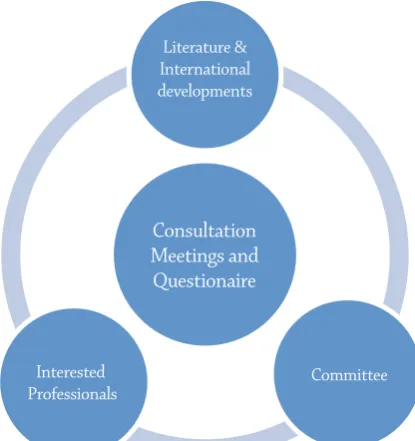
The five consultation meetings were planned with the input of the members of the steering committee, as well as the emerging international developments and literature in this area. The themes that arose from the consultation meetings were instructive in the compilation of the questionnaire, the design of which also drew on the skills and experience of the steering committee, as well as input from individuals and professional groups with a particular interest in this area (Figure 2).
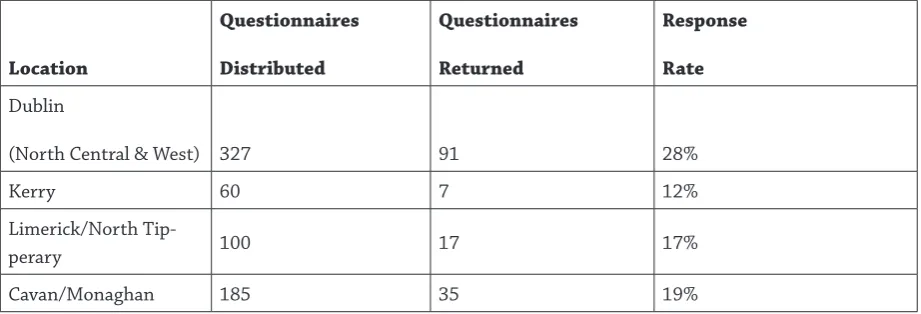
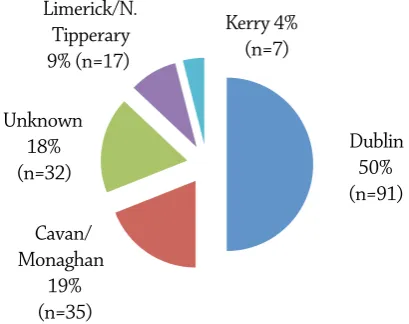
Full details of methodology used for the consultation meetings and the questionnaire are outlined in Appendix 4, and this appendix also gives the complete results of the questionnaire. In total 123 community-based health care professionals participated in the consultation meetings, and 182 questionnaires were returned (27% response rate).
4.2 Themes
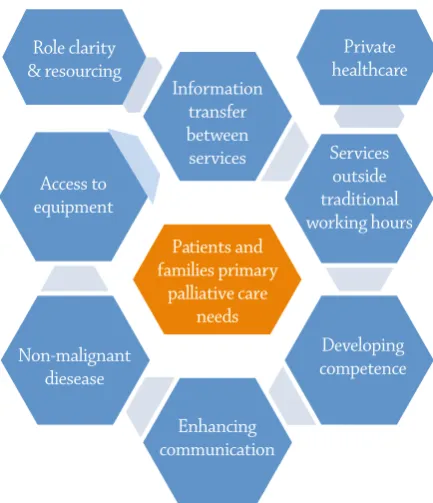
In order to respond to the primary palliative care needs of those people with life-limiting disease and their families, eight aspects of service development were identified from the analysis of the data from the consultation meetings and the questionnaire as follows:
· Enhancing communication skills of health care professionals.
· Strenghtening information transfer systems between health care professionals.
· Improving services outside of traditional working hours.
· Role clarity and resourcing.
· Developing professional competencies.
· Clarifying the role of palliative care for people with diseases other than cancer.
· Improving access to specialist equipment.
· Examining the response of the private sector.
[image:31.595.74.282.534.755.2]These are visually demonstrated in Figure 3 and will each be discussed in detail.