
BlocKit: A Physical Kit for Materializing and Designing for
Blockchain Infrastructure
Irni Eliana Khairuddin
Faculty of Information Management
Universiti Teknologi MARA
Shah Alam, Selangor, Malaysia
[email protected]
Corina Sas
School of Computing and
Communications
Lancaster University
Lancaster, United Kingdom
[email protected]
Chris Speed
Design Informatics
University of Edinburgh
Edinburgh, United Kingdom
[email protected]
ABSTRACT
Blockchain is a disruptive technology which has significantly challenged assumptions that underpin financial institutions, and has provoked innovation strategies that have the potential to change many aspects of the digital economy. However, because of its novelty and complexity, mental models of blockchain technology are difficult to acquire. Building on embodied cognition theories and material centered-design, we report an innovative approach for the design of BlocKit, a physical three-dimensional kit for materializing blockchain infrastructure and its key entities. Through an engagement with different materials such as clay, paper, or transparent containers we identified important properties of these entities and materialized them through physical artifacts. BlocKit was evaluated by 15 blockchain experts with findings indicating its value for experts’ high level of engagement in communicating about, and designing for blockchain infrastructure. Our study advances an innovative approach for the design of such kits, an initial vocabulary to talk about them, and design implications intended to inspire HCI researchers to engage in designing for infrastructures.
Author Keywords
Blockchain; infrastructure; mental models; design kit
ACM Classification Keywords CSS Concepts
Human-centered Computing ~ Human Computer Interaction ~ Interactive Systems and Tools ~ User Interface Toolkits
INTRODUCTION
[image:1.612.59.471.199.341.2]Blockchain technology is a decentralized peer to peer system that permanently records transactions in a distributed public ledger [69]. From its beginning a decade ago, this disruptive technology has significantly challenged the traditional understanding of financial institutions and arguably holds potential for innovation in other domains. Alternative business models supported by blockchain are currently being explored in the corporate world [30] from the Internet of Things applications [79] to supply-chain provenance [64] or healthcare sector [53]. Despite the growing interest in blockchain technology, its inner working is not trivial to understand. In other words, a structural mental model of blockchain technology is complex and arguably difficult to acquire, as it challenges our traditional understanding of similar financial or payment systems which are centralized and regulated. Due to its complexity, different modalities have been explored to communicate the principles of the blockchain, and support their understanding and learning primarily through visual representations in the form of infographics [41] or videos [74]. In contrast, the value of physical objects for communicating about blockchain has been limitedly
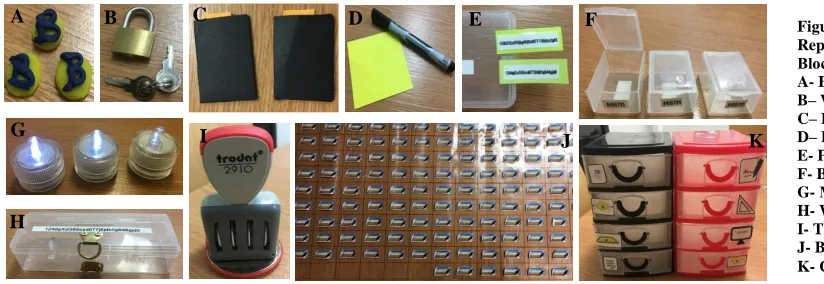
Figure 1: BlocKit- Representation a of Blockchain’s Entities: A- Bitcoins
B– Wallet’s password C– Private key D– Proof-of-work E- Public key F- Block
G- Miners’ hash power H- Wallet
I- Timestamp J- Blockchain ledger K- Consensus rules
A B C D E
G
H
I J K
F
Paste the appropriate copyright/license statement here. ACM now supports three different publication options:
1. ACM copyright: ACM holds the copyright on the work. This is the historical approach.
2. License: The author(s) retain copyright, but ACM receives an exclusive publication license.
3. Open Access: The author(s) wish to pay for the work to be open access. The additional fee must be paid to ACM.
This text field is large enough to hold the appropriate release statement assuming it is single-spaced in Times New Roman 7-point font. Please do not change or modify the size of this text box.
explored, with some preliminary work suggesting the value of Lego blocks for blockchain experts and novices to communicate and describe its entities [52]. We argue that there is an untapped potential of physical three-dimensional artifacts to not only communicate about blockchain, but also to support the understanding of the key properties of its core entities and the provision of a richer vocabulary to talk about them. This paper aims to fill this gap, through the design of a physical three-dimensional kit and its evaluation with 15 bitcoin blockchain experts. To achieve this aim, we focused on the following research questions:
1. How complex infrastructures such as blockchain technologies can be thought about and communicated through a physical kit?
2. How does the development and engagement with a physical kit support understanding of blockchain entities and their key qualities?
3. How does trust among bitcoin users can be materialized and designed for through BlocKit?
RELATED WORK
Our study builds on HCI work on mental models and their physical representations, the emerging body of work on physical kits, as well as work on blockchain technology.
Mental Models in HCI
From Norman’s seminal work [58] distinguishing between designer’s and user’s mental model, capturing how the system is designed, or understood to work, much HCI research [5] has shown their value in supporting system learning [40], problem-solving [42], increased system’s efficiency [72] or accuracy [48]. Previous findings indicate that mental models support users’ learning of complex devices which in turn allows for increased task performance [14], an effect which is stronger for novice users [72]. The distinction between novices’ and experts’ mental model is an important one, with consistent findings indicating that the latter is more accurate, complex, and abstract [10][11][20] enabling a deeper understanding of the inner working of a system rather than merely how it can be used. In addition, a wealth of findings has shown that people have limited mental models of technological systems, such as personal or home technologies, including appliances [7][57][62] or energy monitors [70]. Such systems tend to be operated from superficial functional models rather than structural ones. Other studies suggest that abstract concepts are particularly challenging to grasp as they lack materiality or visibility [16][60][61].
While much of previous work focused on mental models of interactive systems [5], learning environment [27][40], or complex home technologies [70], much less work explored the mental models of large-scale distributed systems or technological infrastructures such as blockchain. We argue for a new approach to explore the mental models of such infrastructures by materializing them through physical representations.
Physical Representations of Mental Models
Mental models have been externalized in a variety of ways, from text and diagrams [26] to animations [50] or physical three-dimensional models [37]. Within HCI, a range of methods have been used to capture and communicate mental models, including sketches [71], storyboards [76], conceptual designs [3] and more recently through physical prototyping kits such as Arduino integrating computational power in physical devices that people can physically interact with and move into space [19][24][43]. Tangible user interfaces (TUIs) can also be used to communicate mental models through analogies or metaphors. One landmark example is the marble answering machine where the marbles placed into a dish are mapped to recorded messages or missed calls which are either played back or activate the call back [4].
Similar work leveraging metaphors for the design of TUIs have also emphasized the importance of image schemata [29]. Borrowed from embodied cognition theory, such schemata are representations of repeated dynamic patterns of physical interactions that structure our understanding of the world from early infancy [28]. Findings indicate over 30 image schemata [22][36] including for example, container defined through concepts such as in and out, content, full, empty and surface. The metaphors associated with image schemata, which create links between the target and source domain, i.e., “more is up” linking quantity with verticality [47] can be explored through linguistic analysis, previously applied to the design of tangible interfaces [29][67]. We turn our attention to the body of HCI work exploring the materialization of technology.
Physical Kits in HCI and their Design
While the choice of materials for the objects included in the kit should reflect the properties of the entities, these objects aim to represent, their aesthetic and experiential qualities allowed for engagement and meaning-making [77]. This framework has been applied to explore user's mental model of privacy on a mobile phone [54], with findings indicating that the materialization of mental models through the kit, contributed to the non-experts’ understanding of the complex topic of personal data privacy.
To conclude, much HCI work on mental models, and their physical representations (including kits) has been at artifact level. Moreover, these two research areas have been mostly independent, so that the material-centered design approaches have been benefited little from embodied cognition theories. We argue for the need to move beyond traditional artifact-centric mental models towards much less explored, and increasingly important infrastructure-centric mental models. By building on embodied cognition theories and material centered-design, in this paper, we report an innovative approach to explore the mental models of such infrastructures by materializing them through physical representations.
Blockchain Infrastructure and Trust Challenges
Blockchain technology is a decentralized peer to peer system underpinned by a public ledger of all bitcoins transactions [69]. The complexity of blockchain technology, reflected in its diverse agents and stakeholders [68] and their grassroots-based, distributed yet collaborative work towards developing and maintaining an information-rich digital space, has already led to the conceptualization of blockchain as infrastructure [33]. Some of the key entities in this infrastructure include miners [69] who work to validate transactions [39] by solving the complex mathematical problem on machines with increasing computational power [55].
Current attempts to communicate mental models of how blockchain works include mostly non-interactive visual static representations, be it static such as infographics [41] or dynamic such as videos [74]. Many of these representations have been developed in private sectors with limited reflection on the analogies they aim to support. Relevant HCI work has just started to emerge [12][56]. A
noticeable example of materializing the blockchain and communicating its mental models through objects involved Lego blocks that both experts and novices used to describe their understanding [52]. Unlike commercial visual representation, such physical materialization of blockchain is interactive, allowing people to touch and move the Lego blocks in order to simulate interactions on the blockchain. However, given the complexity of blockchain infrastructure, we argue for more objects that might better demonstrate the characteristics of transacting on a blockchain rather than the simple analog of a Lego block. A purposeful design of the kit and its objects which would more explicitly reflect the main properties of blockchain’s key entities, both in terms of their appearance and affordances for interaction, could allow stronger and more embodied engagement. With respect to trust, previous work suggested trust issues pertaining to its decentralized, unregulated, and pseudo-anonymous social infrastructure of users [39][69] and miners [38]. Given these challenges of dishonest traders, and data centres’ administrators, novel ways of embedding trust in the blockchain infrastructure are much needed, hence our focus on the value of BlocKit to materialize and design for trust within the blockchain infrastructure in.
METHODS
We report on a workshop with 15 bitcoin experts, 12 males, 3 females, (mean age 29, range 21-39). All participants had at least 2 years of engaging in bitcoin transactions: 9 had between 2 and 3 years, 4 had between 4 and 5 years, 2 had more than 6 years. All participants have at least graduate education, i.e., 6 BSc, 7 MScs, and 2 Ph.D. Participants were recruited through the mailing lists of two universities, and through a local Bitcoins meetup group.
[image:3.612.59.367.61.200.2]The workshop involving the use of the BlocKit and consisted of two parts to explore the mental models of the blockchain experts, also how they materialize trust. We started by asking them how bitcoins transactions take place on the blockchain, after we showed them the BlocKit’s 11 objects to simulate transactions while thinking aloud.
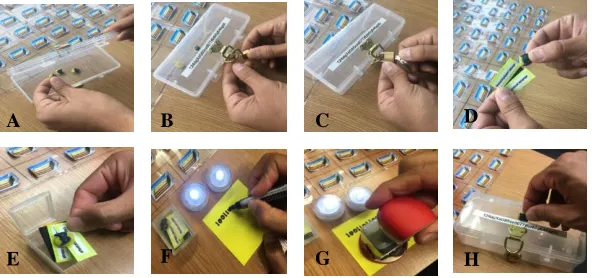
Figure 2: Interacting with BlocKit Objects
A- Placing bitcoins in the wallet B- Securing the wallet with password C- Logging in to the wallet
D- Creating a bitcoin transaction E- Placing the transaction in a block F- Solving the block puzzle through miners’
computational power
G- Recording the time for the proof-of-work H- Sending the bitcoins to receiver’s wallet
A B C D
We also asked questions about challenges of identifying objects’ and their role in blockchain: “what are you looking for”, “why do you think this object does not work for you” or “how should this blockchain entity be better represented”. In the second part we provided two round shaped pieces of clay, one green and one red representing trust and distrust token, respectively, and asked participants to include them in bitcoin transactions while thinking aloud. The whole workshops lasted between 60 and 90 minutes, were video recorded, and fully transcribed. Each participant was rewarded £10.
Data analysis involved a hybrid approach with concepts from the deductive coding and new ones emerging from the empirical data, contributing to the inductive coding [15]. The deductive codes included concepts such as functional and structural mental models [26][37][50], as well as the concepts related to image schemata [20][36], and elements required for the development of physical design kits [77]. The coding list was iteratively revised in the light of the interview data, as new codes emerged under the themes of properties of blockchain’s entities, and their materialization.
DESIGNING BLOCKIT
We employed the physical design framework [77] to design the BlocKit and its objects. Based on literature [2][25][55] and empirical findings [39][69][68], we identified 11 key entities of blockchain infrastructure: bitcoins [6], wallet [2][6][69], wallet password [6], private and public key as elements involved in transactions [6], miners’ computational power [2][6][69], consensus rule [6], block [2][6], proof-of-work [6] and its timestamp [2][6] as elements reflecting miners’ work on blockchain ledger, and blockchain technology itself. We now outline the key properties of these blockchain entities and the linguistic analysis of their relevant image schemata [29].
Identifying the Properties of Blockchain’s Key Entities
The key properties of the identified blockchain’s entities are outlined in Table 1. A reflection on these concepts, grounded again on prior work, allowed the identification of their properties, briefly defined, alongside their rationale. For example, as a currency, the key properties of bitcoins
reflect traditional properties of money [75] such as fungible as bitcoins are interchangeable [25], divisible as each bitcoin can be divided into 100 million smaller parts [2], and scarce as the total number of bitcoins is capped to 21 Million [75]. Bitcoins are also portable as bitcoins’ ownership can be transferred and they can be hosted on multiple devices [6][2], and durable as bitcoins are meant to last indefinitely [75], verifiable as each bitcoin transaction is recorded on the public ledger [2], safe as they are protected by their owner [2][69], and private as the ownership is private [32]. The wallet, its password as well as the public and private keys are also portable [2][6], verifiable, and safe because of cryptographic protection [2][6]. While all these elements are visible to their owners, the wallet and public key are also visible within the blockchain, or transparent [2][6].
With respect to miners’ work, their consensus rule, block, proof-of-work and its timestamp are all transparent, verifiable, durable and safe, being protected through a secure cryptographic hash function (SHA-256) [2][6]. Underpinning the commonly agreed consensus rules for block verification [6][25], the specific block of transactions to be verified, miners’ proof-of-work and its timestamp are all publicly visible to be scrutinized (verifiable) by other miners before they are accepted [6][68].
The blockchain technology itself is also transparent and verifiable, as with the exception of wallet password and private keys, all its other entities are visible and open for public scrutiny, or verification [2][6][68][69]. Blockchain technology has been also designed to be safe given its mathematical and cryptographic foundation [2][6] and portable as the public ledger can be accessed on multiple devices in the network. Although theoretically it is possible for a large amount of computing power to change the existing records in the blockchain, the ledger has been proven as durable and protected by the consensus rules [6][13].
Image Schemata for Blockchain’s Key Entities
According to image schemata theory [22][36] and linguistic analysis, most entities can be best described as containers,
Entities Properties
Fungible Divisible Scarce Accepted Durable Transparent Portability Verifiable Safe Private
Bitcoins X
Wallet X X
Wallet’s password X X
Public key X X X
Private key X X X
Miners’ computational
power
X X X
Consensus rule X
Block X X
Proof- of- work X
Timestamp X X
Blockchain ledger X
[image:4.612.54.560.62.210.2]Trust
while bitcoins and blocks are described as part-whole schemata. For example, bitcoins can be represented as whole, i.e., 1 bitcoin, or part, i.e., fractional bitcoin amount in 8 decimal points; while wallet can be represented as container in and out of which one can move bitcoins, private key, and public key.
BlocKit’s Objects
For identify the physical objects to represent blockchain's key entities (Table 1) and their image schemata, we employed Wiberg’s [77] framework to inform the choice of their materials. For example, for bitcoins we first explored materials such as paper and magnetic sand which supports divisibility, i.e., splitting a unit into smaller parts. However, such material fail to provide support for other key properties such as durability, i.e., paper is too fragile, and magnetic sand lacks firm structure. Hence, we chose clay which is both divisible and durable, and shaped into small discs resembling coins with the symbol ‘B’ added on top.
For the wallet, we started exploring materials such as wood or metal-safe boxes, which can be locked. However, such materials fail to account for wallet’s transparency thus; we chose to represent the wallet through a clear plastic box with a coin slot to allow for the visibility of depositing coins, as well as a toggle latch ensuring security. In addition, as each wallet is protected by a password which cannot be retrieved if the owner loses the wallet’s key, we choose a metal padlock and its physical key which can also be displaced and no longer found, but at the same time both the padlock and its key are made of durable, metal material symbolizing the sturdy character of the password. To represent the public keys and their transient character, we explored sticky notes which being made of paper are less durable or safe. Through their inherent ability to attach themselves to other objects, sticky notes are good candidates for communicating public keys’ ability to be attached to and travel with the wallet (portable). We also provided an additional black envelope for the private key to communicate its privacy.
To represent the consensus rules, we started using a container for each rule. However, rules are interlinked, and so should be these containers, hence, we chose a transparent drawer on whose compartments we placed symbols representing the rules, such as verifying the digital signature, double spending and the block file format. For the block whose role is to hold a collection of unconfirmed transactions, we chose a transparent plastic box that can be opened and closed (but not necessarily locked). Miners’ computational power is linked to their machines. At first, we thought to represent it with a miniature model of a personal computer but realized that this fails to capture variation in miners’ computational power. Thus, we decided to use a battery powered-object such as a candlelight whose variation in brightness level can be controlled and can metaphorically represent different levels
of computational power, i.e., more bright is more power. As proof-of-work involves solving a numerical problem, we used post-it paper and pen as metaphorical tools for solving the problem. Given the importance of assigning time stamp to the proof-of-work, we used a physical stamp. The representation of blockchain ledger consisted of a clear plastic sheet overlaid with an additional clear plastic sheet of equal size on which we drew confirmed blocks organized in a grid or two-dimensional array. This was intended as a metaphor for the interrelationships among blocks. Figure 1 shows the representations of the blockchain entities.
FINDINGS
We now describe the outcomes from the study interviews focusing on the subjective experience of interacting with the kit, and its value as a model materializing blockchain. For the latter, we looked at BlocKit objects’ effectiveness in conveying the appearance and meaning of the represented entities. In the light of this evaluation, we also discussed the revised objects, as well as the BlocKit’s impact on conforming, strengthening, or even challenging experts’ mental models of blockchain’s infrastructure and how the BlocKit supported the revision of some of its assumptions.
User Experience of Interacting with BlocKit
A striking finding was the overwhelmingly positive experience supported by BlocKit. Findings show that 10 participants deeply enjoyed physically touching its objects and enacting their movement in space while talking about blockchain processes: “there is going to be other transactions from other people essentially, so let’s put a few bitcoins in that box. I love this stuff, this is amazing” [P12]. Participants suggested that BlocKit could be a valuable tool for learning about blockchain: “I think this all makes sense and would be fine to explain to the novices. It is cool, this is really an interesting kit” [P7]. Other participants suggested leveraging gamification principles for learning about blockchain: “It's almost like you could turn this into some kind of cool game like a monopoly” [P5].
Immediate Recognition of Kit’s Objects
We now report participants’ ability to recognize BlocKit’s entities and how they interacted with them. In other words, we explored kit’s ability to communicate affordances for gesture-based interaction with the artifacts.
Recognition Based on Objects’ Properties and Appearance.
Findings indicate the importance of transparency as a key blockchain property. Twelve participants recognized the objects because of the translucent materials that we used, especially for wallet and block: “yeah, it is transparent [plastic box] and you can see the bitcoins […] I would rather go for this one for the wallet [compared to a wooden box]” [P8]; and “[the block] is transparent because you can see all transactions held in one block” [P7]. This provides support for the choice of transparent materials representing entities with transparent properties.
Portability was clearly recognized as participants engaged with the objects and moved them around. This worked particularly well for miners' computational power, as mentioned by more than half of participants: “[computational power] can be arranged in a group to show that miners work in a pool, or it can be moved out from the group to work as a single miner” [P11]. This suggests the value of artifacts for externalizing and interacting with the mental models, which non-interactive models represented by either static or animated visual material cannot support. More importantly, with respect to computational power, portability allows for ad-hoc reconfiguration of miners’ work, which in turn highlights different types of miners. Portability becomes even more relevant for entities which are shaped by spatial relationships, i.e., miners are geographically distributed. We argue that portable objects are particularly important for representing infrastructures such as blockchain, as their spatial organization help reveal the distributed work of different stakeholders.
Divisibility becomes apparent while handling the coins and simulating their movement during transactions. The clay material was particularly evocative for divisibility: “obviously this yellow plasticine is bitcoins and I can pinch in whatever size, to show the amount spent” [P6]. This quote is illustrative of most participants’ appreciation for the choice of clay, and its adequate support for the part-whole image schemata. The only security property recognized by most participants was the wallet: “I presume this padlock would represent some form of security mechanism, so perhaps for the bitcoin wallets, say the password” [P2].
Findings also indicate the value of container as image schemata, whose affordances for interaction further supported such recognition: “there is this hole on top [of the wallet box] for you to put in the bitcoins, and you can open the lock to take out the bitcoins” [P10]. This quote
illustrates similar views shared by other five participants, and container schemata also provided support for the recognition of the block.
Object recognition was also facilitated by their physical appearance [77] designed to mirror the characteristics of their counterpart entities. For instance, the rubber stamp was easily associated with to the proof-of-work’s [P1]. More than half of participants appreciated the sticky notes paper that was used to represent the public key: “this is the public key, it [alphanumeric on the sticky notes] matches the address on the wallet address here” [P15].
Role of Gestures in Understanding Links among Objects.
A striking finding is the BlocKit’s ability to enchant participants to pick objects and interact with them often with great delight. The main gestures are depicted in Fig. 2. All participants initiated spontaneous interaction with BlocKit’s objects by attaching the bitcoins to the wallet, through the physical gesture of opening the container and placing the yellow clay inside (Fig. 2: A). Such gestures also facilitated think-aloud for about half of participants: “I need some bitcoins to be in my wallet (Fig. 2: A)” [P13]. This is an important outcome as findings on the externalization of mental models consistently show experts’ challenge to think aloud since their expertise renders critical steps as obvious and tacit [78]. We argue that enacting through gestures such as critical steps, allows not only for another approach to the materialization of the mental models but also supports think aloud. After placing the bitcoin in the wallet, all participants attached the padlock to the container to enact the provision of security for the wallet (Fig. 2: B and C): “I have created a password for my wallet” [P14].
In order to enact a transaction, most participants combined all the relevant objects (Fig. 2: D): “let say I want to send one bitcoin; I have the public key and private key and I need [receiver’s] wallet address” [P15]. The collection of these objects was temporarily placed in the small transparent cube representing the block (Fig. 2: E), mirroring the blockchain’s protocol, “now the miner selects this transaction[holding a set of public and private key] to be put in the block” [P2]. Such actions were performed by nine participants, seven of whom continued to move the whole block near the miners in order to reflect the stage of work for processing the block: “the miner needs to process the block by solving the complicated mathematical problem in the block” [P15]. Subsequently, two of them took on the miners’ role by writing on the provided paper the binary code mimicking miners’ work to solve the block’s puzzle, confirmed by stamping the time (Fig. 2: G).
coins are saved in the receiver’s wallet” [P1] (Fig. 2: H). As shown by the quotes above, another important finding is that through its ability to support a bird’s eye view of the blockchain, BlocKit allowed participants to spontaneously take on different roles, enacting for example the actions of the blockchain and its protocols (Fig. 2: D, E, H), the miners’ proof-of-work (Fig. 2: F, G), or users’ interaction with their wallets (Fig. 2: A, B, C). Such changes between roles were surprisingly swift, indicating the value of BlocKit to facilitate them.
Revising BlocKit
While most objects were immediately recognized as blockchain’s entities, a few were less so such difficulties relate to objects themselves or relationships among them. The former includes inappropriate or incomplete representations, while the latter relates to perceived distance among connected objects.
Almost all participants faced difficulties identifying the consensusrule, mostly because the symbols, inspired from Google Images for communicating the rules, i.e., the symbol for double spending, was not easily recognized. An interesting finding regards the representation of the ledger, arguably the most abstract entity of blockchain infrastructure. Even though most participants successfully recognized this object based on its properties, some disagreed with its representation: “I understand that you want to show that the blockchain is transparent. But I don’t think that it is appropriate to arrange it in this grid” [P10].
The reason for choosing the grid was to metaphorically represent blockchain’s nodes at the intersection of two grid’s lines, and to allow the placement of the completed blocks on such nodes. However, some participants argued that a more adequate representation would be through links in a chain: “if you want to use the grid then you just put one row, blockchain should be represented like a chain not grid” [P3]. This view was shared by 7 participants and was particularly important, as it highlighted different image schemata, not Container but Link which belongs to the family of Force schemata, i.e., the force that links two objects together. Such finding argues for a shift in the underlying metaphor of blockchain infrastructure as a force creating links [17].
Findings regarding incomplete representations concerned the private key as noted by almost half of participants. Although they agreed with the metaphor of black envelope and post-it note, they also noted that these were not sufficient, and that additional representation was needed to illustrate how the private key is used when the transaction is created: “That’s perfect but how about the permission to use the private key?” [P9]. The hidden private key needs a representation for showing that the owner of the bitcoins grants the transfer of the bitcoins’ ownership.
The second type of challenge relates to understanding relationships among objects, due to. The lack of cues for bringing or merging objects together. For example, seven participants failed to connect the black envelope of the private key with the set of numbers written on a sticky note representing the private key. In this respect, we used two different objects; one capturing the key entity, while another one as an added-on sleeve to capture its privacy quality. Although the link between them was less obvious for 9 participants, once provided with a cue, the connection was easily made: “how about this tiny black envelope [maybe] we need something to cover up the number” [interviewer]. A similar challenge concerned the proof-of-work, where more than half of participants failed to link the permanent pen for writing the proof of work with its allocated piece of paper. Once again, upon the provision of a clue, the connection was easily recognized. These findings suggest the importance of reducing the physical distance between objects which are logically connected, either by bundling them together, or by providing visual cues for their connection.
In the light of these findings, we identified several directions for revising BlocKit to better represent the expert’s mental models of how blockchain works. An important suggestion was to replace less common graphical symbols for consensus rule with the name “rules”: “the best way is to label the drawer with “rules” [P2]. A related outcome is the suggestion for BlocKit’s description, which was advanced by six participants. Findings indicated that the blockchain should be represented in a single chain and five participants suggested keyring as a representation for linking the blocks: “the ledger should be in a chain; like it is connected from one block to another. You can use something like a keyring to connect them” [P6].
In terms of representing relationships, a few suggestions have been made concerning objects such as the private key and the proof-of-work which involved more than one object. Five participants suggested placing such objects closer in space. Grouping connected objects together is a valuable insight for improving the presentation of the kit, which is also supported by an important gestalt principle [8]. The only concern is that once people interact with these objects they may not place them back in each other’s proximity. An alternative way to address this is by digitally embodying spatial awareness in such connected objects.
Design for Trust on Blockchain
transaction partners with trust token, penalizing dishonest ones with distrust tokens, and accounting for the mining fee associated with the flow of trust. Participants iteratively identified six ways of materializing trust flow on blockchain by (i) placing the token of trust within the bitcoin transaction (P1, P3, P7), (ii) ensuring 2 way transparent transactions (P1, P2, P4, P5, P7), (iii) centralized mediator (P2, P4, P6, P8, P10, P15), (iv) 2-of-2 multisignature address (P3, P4, P5, P6, P8, P9, P11, P12, P13), (v) 2-of-3 multisignature address (P8, P9, P10, P11, P12, P13, P14, P15), and (vi) crowd sourced, decentralized mediator (P8, P9, P10, P11, P12, P13, P14, P15).
Each of the first five solutions were discarded as they challenged blockchains’ assumptions of decentralization, unregulation, or anonymity. The first solution was enacted by placing the green clay trust token together with the other objects representing a transaction, i.e., bitcoin clay, sticky notes with wallet address and signature, but failed to recognize that bitcoin transactions are often accompanied by transactions of fiat currency or goods in physical world, whose trust is problematic to capture on blockchain[69].
The second solution resembles the existing omni layer approach [59] allowing two or more parties to trade transparently over the bitcoin blockchain, but fails to acknowledge the asynchronous nature of 2 way transaction, and that in case of fraud, transparency is not sufficient to reverse a fraudulent transaction nor to sanction the fraudulent user.
The third solution suggests centralized mediator: “both parties have to commit […] and when both money and bitcoins arrives in here, both will get it at the same time” [P4], and participants represented it through the object of a transparent container holding all the objects involved in a transaction. This solution resembles the current escrow or exchange services, addressing the asynchronous problem of two way transaction, but failing to account for the decentralization, unregulation, or anonymity principles of blockchain. Indeed, escrows prevent fraud by requiring both parties to register their identity [49].
One way to address the risk of de-anonymization is through 2-of-2 multisignature address which requires both parties to co-sign for a newly created third address to temporarily hold the bitcoins before released to the destination wallet [21][51]. This solution fails in case of dispute or fraud, and therefore 8 partisans suggested the 2-of-3 multisignature where a third party assists the dispute by signing the transaction [8]. This solution was representing by placing 2 sticky notes with a different wallet address in the novel transparent container representing the third address: “you can have it signed as two of two to receive the bitcoins and trust token). […] However if you have a disagreement then it’s obviously stuck in here [and you need a 2-of-3 signatures]” [P12].
To address this limitation, more than half of participants proposed placing the transaction in a smart contract and the novel approach to use a crowd sourced mediator or witness for the contract. To represent it, participants extended the previous transparent container with 2 sticky notes, by placing an additional sticky note on the transparent container: “you can add another user that is randomly assigned in a contract to validate the transaction […] and signed by 2-of 3 […] At the end of a successful transaction, this trust token can be sent by the buyer and seller (mimic the movements of green clay from buyer to seller, vice versa) […] and appreciation token to the other user who helps to witness the transaction”[P9]. This is a novel design solution, extending smart contracts and multisignature accounts [21][51][66] which have started to be used on Ethereum blockchain [21] for instance for decentralized exchange such as WeiDex [73]. However, the development for a fully decentralized exchange for Bitcoin blockchain is limited [9], as it also the idea of trust token and witness token. In the case of dishonest transaction partner, the witness “needs to take charge to verify the transaction by requesting the agreed quality of the offline transaction’s proofs as stated in the contract from both seller and buyer. […] the witness will decide whether to move the bitcoins (from multi signature wallet) to the buyer’s or reverse it to the seller’s wallet […].It also reflects to the increments of trust and distrust token for both wallets as specified in the contract” [P10].
All participants agreed on the associated cost related to trust, suggesting that both parties should have an agreement regarding the fee, before enacting any transaction. In addition, 8 participants also suggested a small fee for incentivizing the witness.
THE KIT’S IMPACT ON EXPERT’S MENTAL MODELS
A significant finding is the value of the kit in supporting experts to materialize and reflect on their understanding of blockchain infrastructure and its inner working. We argue that through its materiality, the kit allows bringing the mental models into question, which in turn helps experts confirm their understandings, develop more nuanced understandings, or even revise some previously held, less accurate assumptions.
that the work is correct; only then the block can be recorded in the blockchain” [P2]. Other 3 participants described a more nuanced understanding of these processes, extending the above explanation beyond the three miners’ confirmation of a block, to multiple blocks’ confirmation: “let's say this is the blockchain (arranging a few blocks cubes in a single line), and this new block has just received the consensus from other miners to be recorded in the blockchain. […] In order to be fully secured and confirmed, the new block needs awaits the confirmation of six more blocks following it” [P3]. These quotes are important as they illustrate the kit’s ability to support experts to communicate and reflect on their mental models.
Findings further reveal the importance of waiting for 6 confirmations and its link to transaction’s security: “if the user doesn’t wait for 6 confirmations […] then there is a possibility for somebody else to double spend it. Let’s say this block has only 1 confirmation block ahead (arranges 2 cubes in a row). Then one mining entity with enough [computational] hash power (gathers 7 lights in one place) would be able to record another few blocks here (creates a new branch from the previous row by adding 3 additional cubes). So what happened to this [initial] block? It will be removed from the blockchain (took out the first cube)” [P3]. This quote alludes to a known security concern related to the blockchain, namely the double spending attack [5][13], whose understanding, however, is not trivial.
In order to further test this understanding, in subsequent interviews with 4 participants who shared the first model of block confirmation, we enacted through the kit this alternative second model and elicited feedback. Surprisingly, all 4 participants have changed their understanding of the confirmation process: “I thought that the confirmation processes were done at the miner’s part […] But I agree with the double spending attack and I can clearly see the reasons why as you said the confirmation [ultimately] stands for the number of confirmed blocks ahead and not by the [three] miners [confirming it initially]” [P15]. This finding indicates that the physical kit is not only able to communicate about blockchain infrastructure, but also supports learning about it [5][40], and even changes in experts’ mental models.
DISCUSSION
We now reflect on the significance of our findings, and the main contributions while addressing the initial research questions. Findings indicate that BlocKit has leveraged participants’ expertise and structural mental models [10][11][20] of blockchain’s inner working by materializing its abstract and intangible key concepts [16][60][61].
Our outcomes mark a shift towards understanding and communicating about mental models, as well as for technology design away from the traditional focus on artifact-based systems, towards infrastructure-centric
technologies. In particular, study findings shed light into the affordances of physical design kits such as BlocKit for exploring and supporting these models.
Our work also contributes to the emerging HCI interest in understanding sociotechnical infrastructures [80] such as blockchain [33][34][63], with the aim to support deeper understanding of, and designing for them. This in turn has the potential to support the development of blockchain-centric business models that have started to be explored in the corporate world [30][79][64][53].
In designing the BlocKit, we integrated findings from two research areas which have been limitedly integrated such as material-centered design approaches [77] and TUIs and embodied cognition theories [22][31][36][29][67]. From here, we proposed an innovative approach to understand and design for blockchain infrastructure, leading to BlocKit’s physical design. BlocKit also advances the state-of-the-art of HCI work on physical kits, away from existing artifact-centric approaches [44][45][46][70].
Our study provides an initial vocabulary to talk about the designing of such kits including, for example, the image schemata of container, part-whole, and link, and entities’ properties such as transparency, durability, verifiability, safety, and privacy. We argue that this approach and its initial vocabulary could guide the design of other physical kits for materializing the understanding of other sociotechnical infrastructures, i.e., IoT, healthcare, governance.
Findings also indicate BlocKit’s value for user engagement. Our blockchain experts’ confirmed BlocKit’s ability to engender surprisingly high levels of engagement and delight, which in turn supported communicating, understanding, reflecting on basic assumptions of blockchain infrastructure, as well as designing for it. This is an important finding suggesting that people’s enjoyment of working with their hands in the making of artifacts from DIY research in HCI [44][70], extends to the interaction with such crafted objects provided by BlockKit. This is also a significant outcome given the that the exploration of user mental models of technological artifacts is notoriously challenging [7][16][57][60][61][62][70][78].
Besides communicating and learning [5][40] about complex system [35] such as blockchain infrastructure, BlocKit also supports reflection on, and even changes in experts’ mental models [18] which is a particularly important outcome.
decentralization, unregulation, or anonymity. An important outcome is the novel final solution consisting of crowd sourced, decentralized mediator or witness.
Findings indicate that in addition to materializing the understanding of blockchain, BlocKit also supports designing for it. We choose to focus on trust since it has been identified as an important challenge of bitcoin users and miners [38][69]. For this, we applied the developed approach to design two additional objects such as the trust tokens, illustrating thus the generative power of BlocKit. Arguably, other aspects of the social infrastructure such as resilience, diversity, or value creation can be considered and represented in BlocKit through physical objects, to support design solutions on blockchain.
Future work could explore the potential of BlocKit in specific domains such as health. For example, the challenges of manually filling medical records may be addressed on blockchain [31]. In designing such solutions, designers may start by looking into the properties of the entities involved in the design. For instance, in order to create new medical records on blockchain, one may start with the qualities that these records should have, some of whom are already reflected in our set of key properties, i.e., private, safe, durable, verificable, acceptable.
Design Implications
We now reflect on three design implications intended to inspire HCI researchers to engage in designing for infrastructures.
Novel Approaches to Design Infrastructure-based Kits
Findings suggest the value of our innovative approach to the design of BlocKit, which draws from both embodied cognition theories [22][36] and material centered-design [77]. The three iterative design activities underpinning this approach consists of (i) identifying the key concepts or entities of the sociotechnical infrastructure and their properties, (ii) identifying their image schemata through linguistic analysis [29], and (iii) engaging in the material exploration for materializing these entities and relationships among them. We prove the combination of these three theories as BlocKit helps experts to facilitate their cognitive work in designing the protocol of trust in blockchain.
Novel Tools for Infrastructure Design
BlocKit’s holds value for designing for blockchain infrastructure, a much-recognized need in the corporate sector. BlocKit is an illustration of novel design tools which could contribute to the call to move beyond the traditional artifact-centric design and towards infrastructure-centric design [34][54][68]. We argue that such a shift of emphasis will be valuable in both developed and developing contexts, and that novel design approaches such as BlocKit will be much needed to support it. To better support the representation of logical, spatial and temporal
relationships among the key entities, one may consider augmenting such kits with smart objects [1]. One way to represent the connection between related objects could be through small sensors embedded in these objects, i.e., when one is picked up, a small light on both objects switches on. Smart tangible object such Sifteo cubes [79] which are small, spatially-aware tangible device which could be programmed to represent the connection between objects.
Sensitizing Cards to Augment BlocKit
Findings indicate the importance of consistently checking that the explored solutions align with the blockchain’s design principles such as decentralization, unregulation, or anonymity. Our study revealed that these principles can be easily overlooked, and that external prompts may be beneficial to interogate and revise the proposed solutions. Fot this, we can think of augmenting BlocKit with extenal aids such as flash cards containing sensitizing questions regarding blockchain’s design principles. Similar to InspiredDesign cards [65], these cards can be used alongside BlocKit, to prompt its users to the importance of reflectiong on the fit between their proposed design solutions and blockchain’s principles.
CONCLUSION
We report the design of BlocKit, a physical three-dimensional kit for materializing and designing for blockchain infrastructure and its key concepts, which has been evaluated by 15 blockchain experts. In developing the BlocKit, we employed an innovative approach drawing from embodied cognition theories, and material centered-design. Findings indicate BlocKit’s ability to engender surprisingly high levels of user engagement which in turn supporting communicating, understanding, reflecting on basic assumptions of blockchain infrastructure, as well as designing for it. Our findings advance an innovative approach for the design of such kits, an initial vocabulary to talk about them, and design implications intended to inspire HCI researchers to engage in designing for infrastructures.
REFERENCES
[1] Jason Alexander, Lucero Andres and Sriram Subramanian. S. 2012. Tilt Displays: Designing Display Surfaces with Multiaxis Tilting and Actuation. In MobileHCI '12. ACM.
[2] Andreas M. Antonopoulos. 2015. Mastering bitcoin. O’Reilly Media. California.
[3] David Benyon. 2010. Designing Interactive Systems: A Comprehensive Guide to HCI and Interaction Design. Pearson, United Kingdom.
[5] Christine L. Borgman. 1999. The User’s Mental Model of an Information Retrieval System: An Experiment on a Prototype Online Catalog. International Journal of Man-Machine Studies, 24: 47-64.
[6] Richard Caetano. 2015. Learning Bitcoin: Embrace the New World of Finance by Leveraging the Power of Crypto-Currencies Using Bitcoin and the Blockchain. PACKT Publishing, United Kingdom
[7] Michel Caillot and Anh Nguyen-Xuan. 1995. Adults’ Understanding of Electricity. In Public Understanding, 4, 2: 131-151.
[8] Lou Carlozo. 2017. What is Blockchain. In Journal of Accountancy, New York, 224, 1: 29.
[9] Leigh Cuen. 2018. A Decentralized Exchange That’s Almost Decentralized. Retrieved January 17, 2019 from https://www.coindesk.com/bitcoin-decentralized-exchange-dex-crypto-bisq-dao-monero
[10] Andrea A. Disessa. 1981. Phenomenology and the Evolution of Intuition. Division for Study and Research in Education Massachusetts Institute of Technology. USA.
[11] Stephanie M. Doane. 1982. A longitudinal study of Unix User’s Expertise, Unix Mental Models, and Task Performance. Doctoral Dissertation, University of California, Santa Barbara, CA, USA.
[12] Chris Elsden, Bettina Nissen, Karim Jabbar, Reem Talhouk, Caitlin Lustig, Paul Dunphy, Chris Speed, and John Vines. 2018. HCI for Blockchain: Studying, Designing, Critiquing and Envisioning Distributed Ledger Technologies. In Extended Abstracts of the 2018 CHI Conference on Human Factors in Computing Systems (CHI EA '18). ACM, New York, NY, USA. [13] Ittay Eyal and Emin Gün Sirer. 2018. Majority is Not
Enough: Bitcoin Mining is Vulnerable. Communication. ACM 61,7.
[14] Robert M. Fein, Gary M. Olson and Judith S. Olson. 1993. A Mental Model Can Help with Learning to Operate a Complex Device. In Conference Companion on Human Factors in Computing Systems, (CHI 93) 157-158.
[15] Jennifer Fereday and Eimear Muir-Cochrane. 2006. Demonstrating Rigor using Thematic Analysis: A Hybrid Approach of Inductive and Deductive Coding and Theme Development. International Journal of Qualitative Methods, 5, 1: 80-92.
[16] Corinna Fischer. 2008. Feedback on Household Electricity Consumption: A Tool for Saving Energy? In Energy Efficiency. 1,1: 79-104.
[17] Richard A. Geiger. 1993. Conceptualizations and Mental Processing in Language. Walter de Gruyter & Co, Berlin.
[18] Graham Gibbs. 1998. Learning by Doing: A Guide to Teaching and Learning Methods. Further Education Unit.
[19] Saul Greenberg and Chester Fitchett. 2001. Phidgets: Easy Development of Physical Interfaces through Physical Widgets. In Proceedings of the 14th Annual
ACM Symposium on User Interface Software and Technology (UIST’01). ACM, 209–218.
[20] James G. Greeno. 1983. Conceptual Entities, Mental models.ERIC.
[21] Tania H. 2018. A Guide to Smart Contracts and Their Implementation. Retrieved January 17, 2019 from https://rubygarage.org/blog/guide-to-smart-contracts [22] Beate Hampe (Ed). 2005. From perception to meaning.
Image schemas in cognitive linguistics. Mouton de Gruyter, Berlin, New York.
[23] John Hardy and Jason Alexander. 2012. Toolkit Support for Interactive Projected Displays. In Proceedings of the 11th International Conference on Mobile and Ubiquitous Multimedia (MUM '12). ACM, New York, 42, 10.
[24] Bjorn Hartmann, Scott R. Klemmer, Michael Bernstein, Leith Abdulla, Brandon Burr, Avi Robinson-Mosher and Jennifer Gee. 2006. Reflective Physical Prototyping Through Integrated Design, Test, and Analysis. In Proceeding of the Annual ACM Symposium on User Interface Software and Technology (UIST’06). ACM.
[25] Adam Hayes. 2015. Cryptocurrency Value Formation: An Empirical Analysis Leading to a Cost of Production Model for Valuing Bitcoin. In Mediterranean Conference on Information Systems (MCIS 2015). [26] Mary Hegarty and Marcel Adam Just. 1993.
Constructing Mental Models of Machines from Text and Diagrams. In Journal of Memory and Lancguage. New York 32, 6: 717-742.
[27] Trevor Hogan, Uta Hinrichs, Yvonne Jansen, Samuel Huron, Pauline Gourlet, Eva Hornecker, and Bettina Nissen. 2017. Pedagogy & Physicalization: Designing Learning Activities around Physical Data Representations. In Proceedings of the 2017 ACM Conference Companion Publication on Designing Interactive Systems (DIS '17 Companion). ACM, New York, NY, USA, 345-347.
[28] Jorn Hurtienne. 2011. Image Schemas and Design for Intuitive Use. Exploring New Guidance for User Interface Design. Doctoral dissertation, Technische Universität Berlin.
[29] Jorn Hurtienne and Johann Habakuk Israel. 2007. Image Schemas and Their Metaphorical Extensions Intuitive Patterns for Tangible Interaction. In Proceedings of the 1st international conference on Tangible and embedded interaction (TEI '07). ACM, New York, USA, 127-134.
[30] Marco Iansiti and Karim R. Lakhani. 2017. The Truth About Blockchain. In Harvard Business Review. 1, 96: 118-127.
[31] IEEE Innovation at Work. 2019. A Real-World Challenges that Blockchain Technology is Poised to Solve. Retrieved January 17, 2019 from
[32] IG Analyst. 2017. Who Owns Bitcoins? Retrieved January 17, 2019 from https://www.ig.com/uk/trading-opportunities/who-owns-bitcoin--39703-170906
[33] Karim Jabbar and Pernille Bjørn. 2017. Growing the Blockchain Information Infrastructure. In Proceedings of the 2017 CHI Conference on Human Factors in Computing Systems (CHI '17). ACM, New York, NY, USA, 6487-6498.
[34] Margaret Jack, Jay Chen, and Steven J. Jackson. 2017. Infrastructure as Creative Action: Online Buying, Selling, and Delivery in Phnom Penh. In Proceedings of the 2017 CHI Conference on Human Factors in Computing Systems (CHI '17). ACM, New York, USA. [35] Yvonne Jansen, Pierre Dragicevic, Petra Isenberg,
Jason Alexander, Abhijit Karnik, Johan Kildal, Sriram Subramanian, and Kasper Hornbæk. 2015. Opportunities and Challenges for Data Physicalization. In Proceedings of the 33rd Annual ACM Conference on Human Factors in Computing Systems (CHI '15). ACM, New York, 3227-3236.
[36] Mark Johnson. 1987. The body in the mind. The bodily basis of meaning, Imagination, and reason. The University of Chicago Press, Chicago & London. [37] Philip B. Johnson-Laird. 2004. The history of mental
models, Psychology of reasoning. Psychology Press. New York.
[38] Irni Eliana Khairuddin and Corina Sas. 2019. An Exploration of Bitcoin Mining Practices: Miners’ Trust Challenges and Motivations. In Proceedings of the 2019 CHI Conference on Human Factors in Computing Systems. (CHI’ 19).
[39] Irni Eliana Khairuddin and Corina Sas. 2016. Exploring Motivations for Bitcoin Technology Usage. In Proceedings of the 2016 CHI Conference Extended Abstracts on Human Factors in Computing Systems, (CHI’16) 2872-2878.
[40] David E. Kieras and Susan Bovair. 1984. The Role of a Mental Model in Learning to Operate a Device. In Cognitive Science, 8,3: 255-273.
[41] Cartwright King. 2018. A Hisotry of Bitcoin: Get to Know the Basics. Retrieved January 17, 2019 from http://cartwrightking.co.uk/news/a-history-of-bitcoin [42] Johan de Kleer and John Seely. 1982. Assumptions and
Ambiguities in Mechanistic Mental Models. In Cognitive and Instructional Sciences Series. California. [43] Scott R. Klemmer, Jack Li, James Lin and James A.
Landay. 2004. Papier-Mache: Toolkit Support for Tangible Input. In Proceedings of the SIGCHI Conference on Human Factors in Computing Systems (CHI’04). ACM, New York, 399–406.
[44] Stacey Kuznetsov and Eric Paulos. 2010. Rise of the Expert Amateur: DIY Projects, Communiites and Cultures. In Proceedings of NordiCHI, 295-304. [45] Stacey Kuznetsov, George Noel Davis, Eric Paulos,
Mark D. Gross, and Jian Chiu Cheung. 2011. Red Balloon, Green Balloon, Sensors in the Sky. In Proceedings of the 13th International Conference on
Ubiquitous Computing (UbiComp '11). ACM, New York, USA, 237-246.
[46] Stacey Kuznetsov, Scott E. Hudson, and Eric Paulos 2014. A Low-tech Sensing System for Particulate Pollution. In Proceedings of the 8th International Conference on Tangible, Embedded and Embodied Interaction (TEI '14). ACM, New York, USA.
[47] George Lakoff. 1987. Women, Fire, and Dangerous Things: What Categories Reveal About the Mind. The University of Chicago Press, Chicago.
[48] Jill H Larkin. 1983. The Role of Problem Representation in Physics, Mental Models. Lawrence Erlbaum Associates, Hillsdale, NJ.
[49] LocalBitcoins. 2018. Why Trade on LocalBitcoins? Retrieved January 17, 2019 from https://localbitcoins.com/guides/how-to-sell-bitcoins-online
[50] Richard Lowe and Jean –Michel Boucheix. 2014. Learning from Animated Diagrams: How Are Mental Models Built? In Proceedings of the 5th International Conference. Germany, 19-21.
[51] Roman Matzutt et al. 2018. A Quantitative Analysis of The Impact of Arbitrary Blockchain Content on Bitcoin. In Proceeding of 22nd International Conference Finance Cryptography Data Security (FC 2018).
[52] Deborah Maxwell, Chris Speed, and Dug Campbell. 2015. 'Effing' the Ineffable: Opening Up Understandings of the Blockchain. In Proceedings of the 2015 British HCI Conference (British HCI '15). ACM, New York , 208-209.
[53] Matthias Mettler. 2016. Blockchain Technology in Healthcare: The Revolution Starts Here. In IEEE 18th International Conference on e-Health Networking, Applications and Services. Munich, 1-3.
[54] Maria Muszynska, Denise Michels, and Emanuel von Zezschwitz. 2018. Not On My Phone: Exploring Users' Conception of Related Permissions. In Extended Abstracts of the 2018 CHI Conference on Human Factors in Computing Systems (CHI EA '18). ACM, New York.
[55] Satoshi Nakamoto. 2008. Bitcoin: peer to peer electronic cash system. Retrieved January 17, 2019 from https://bitcoin.org/bitcoin.pdf
[56] Bettina Nissen, Larissa Pschetz, Dave Murray-Rust, Hadi Mehrpouya, Shaune Oosthuizen, and Chris Speed. 2018. GeoCoin: Supporting Ideation and Collaborative Design with Smart Contracts. In Proceedings of the 2018 CHI Conference on Human Factors in Computing Systems (CHI '18). ACM, New York, NY, USA, 163. [57] Donald A. Norman. 1983. Some Observations on
Mental Models, Human-Computer Interaction. San Francisco, CA, USA.
[58] Donald A. Norman. 1988. The Psychology of Everyday Things. Basic Books, New York.
[60] James Pierce and Eric Paulos. 2012. Designing Everyday Technologies with Human-power and Interactive Microgeneration. In Proceedings of the Designing Interactive Systems Conference (DIS '12). ACM, New York, USA.
[61] James Pierce and Eric Paulos. 2012. The Local Energy Indicator: Designing for Wind and Solar Energy Systems in the Home. In Proceedings of the Designing Interactive Systems Conference (DIS’12), ACM. New York, USA.
[62] James Pierce, Diane J. Schiano, and Eric Paulos. 2010. Home, Habits, and Energy: Examining Domestic Interactions and Energy Consumption. In Proceedings of the SIGCHI Conference on Human Factors in Computing Systems (CHI '10). ACM, New York, NY, USA.
[63] Volkmar Pipek and Volker Wulf. 2009. Infrastructuring: Toward an Integrated Perspective on the Design and Use of Information Technology. In Journal of the Association for Information System (JAIS), 10: 447-473.
[64] Project Provenance Ltd. 2015. Blockchain: The Solution for Transparent in Product Supply Chains. Retrieved January 17, 2019 from https://www.provenance.org/whitepaper
[65] Christian Remy. 2017. Incorporating Sustainable HCI Research Into Design Practice. Ph.D. Dissertation, University of Zurich.
[66] RootStock. 2015. RSK White Paper Overview. Retrieved January 17, 2019 from https://docs.rsk.co/RSK_White_Paper-Overview.pdf [67] Francisco Santibanez. 2002. The Object Image-Schema
and Other Dependent Schemas. In Atlantis 24, 2: 183-201.
[68] Corina Sas and Irni Eliana Khairuddin. 2015. Exploring Trust in Bitcoin Technology: A Framework for HCI Research. In Proceedings of the Annual Meeting of the Australian Special Interest Group for Computer Human Interaction (OzCHI '15), 338- 342. [69] Corina Sas and Irni Eliana Khairuddin. 2017. Design
for Trust: An Exploration of the Challenges and Opportunities of Bitcoin Users. In Proceedings of the
2017 CHI Conference on Human Factors in Computing Systems. (CHI’ 17), 6499-6510.
[70] Corina Sas and Carman Neustaedter. 2017. Exploring DIY Practices of Complex Home Technologies. In ACM Trans. Comput.-Hum. Interact., 24, 2.
[71] Orit Shaer and Robert J.K Jacob. 2009. A Specification Paradigm for the Design and Implementation of Tangible User Interface, ACM Trans. Comput.-Hum. Interact., 16, 4.
[72] Nancy Staggers and A.F Norcio. 1993. Mental Models: Concepts for Human-computer Interaction Research. International Journal of Man-Machine Studies, 38: 587-605.
[73] State of Dapps. 2019. WeiDex. Retrieved January 17,
2019 from
https://www.stateofthedapps.com/dapps/weidex
[74] The Guardian. 2014. Bitcoin Explained and Made Simple. Retrieved January 17, 2019 from https://www.youtube.com/watch?v=s4g1XFU8Gto [75] Manoj Trivedi. 2018. Bitcoin in India: A Deep Down
Scenario. In Journal of Management Science. 2, 1: 21-26.
[76] Khai N. Truong, Gillian R. Hayes, and Gregory D. Abowd. 2006. Storyboarding: An Empirical Determination of Best Practices and Effective Guidelines. In Proceedings of the 6th Conference on Designing Interactive Systems (DIS’06). ACM, New York, 12–21.
[77] Mikael Wiberg. 2014. Methodology for Materiality: Interaction Design Research Through a Material Lens. Personal Ubiquitous Comput. 18: 3, 625-636. [78] Carl Wieman. 2014. Editorial for Special Issue on
Concept Inventories in Computing. In Computer Science Education. 24: 4, 250-252.
[79] Wikipedia. 2018. Sifteo Cubes. Retrieved January 17, 2019 from https://en.wikipedia.org/wiki/Sifteo_Cubes [80] Min Zhang, Corina Sas, Zoe Lambert and Masitah
![Table 1: Properties of Blockchain’s Key Entities reflect traditional properties of money [75] such as fungible](https://thumb-us.123doks.com/thumbv2/123dok_us/9303668.431151/4.612.54.560.62.210/table-properties-blockchain-entities-reflect-traditional-properties-fungible.webp)
