RAPPED METHOD FOR DETERMINATION OF LEAD IN BRINE WATER SAMPLES BY CLOUD POINT
EXTRACTION PRIOR TO FAAS BY USING MODIFYING AGENT
Nadhum A.N. Awadand
Department of Chemistry,
ARTICLE INFO ABSTRACT
A cloud point extraction (CPE) method was developed for the separation and preconcentration of trace amounts of lead using flame atomic absorption spectrometry (FAAS) to determine trace amounts of lead in brinewater. The method was depend on the formation
Pb(II) and sodium diethyldithiocarbamate
114surfactant. The parameters such as effect of modifying agent, pH of sample, concentrations of DDTC and Triton X
complexation and extraction, are optimized. Under the selected optimum conditions, and use of hydrazonium sulphate as matrix modifying agents enable us to develop the direct method for determination Pb
detection limit was found to be (0.0781µg/ml) for preconcentration of 1 ml sample for the determination of Pb(II) is obtained.
Copyright©2017, Nadhum A.N. Awadand and Bassam
License, which permits unrestricted use, distribution, and reproduction in any medium, provided the original work is properly cited.
INTRODUCTION
In recent times, heavy metals, have been known to be very risky to environmental due to their adverse health effect
(Rajab et al., 2015). The short-term exposure to high levels of
lead can cause many effects such as diarrhea,
convulsions and death. However, partial contact to even very small amounts of lead can be hazardous. As a result, it is very significant to determine the trace levels of lead
and Their Analysis, 1990). Currently, different analytical methods for the determination of trace amount of lead are applied such the flame atomic absorption spectrometry (FAAS), the electro thermal atomic absorption spectrometry (ETAAS) (Barin and Dressler, 2008; Ajtony
and the inductively coupled plasma (ICP)emission
spectrometry (Koksal and Janos, 2012). The Flame atomic absorption spectrometry is considerably the generally engaged
technique for analyze determination (Barin
2008; Chen, 2001). CPE and its principles have been discussed
in some interesting reviews (Paleologos et al.,
aqueous solutions the CPE can form as a result to the affinity between non-ionic surfactants and the micelles to form “Cloudpoint temperature.” and become turbid at a certain temperature, when the increasing temperature, the micellar solution separates into two phases: a surfactant
small volume and a dilute aqueous phase (Rosen
*Corresponding author: Alabdul Aziz,
Department of Chemistry, University of Basrah, Collage of Science, Iraq, Basrah.
ISSN: 0975-833X
Vol.
Article History:
Received 09th November, 2016 Received in revised form 25th December, 2016 Accepted 18th January, 2017 Published online 28th February,2017
Key words:
Cloud point extraction,
Lead, Sodium diethyldithiocarbamate, Modifying agent.
Citation: Nadhum A.N. Awadand and Bassam A. R. Alabdul Aziz
extraction prior to FAAS by using modifying agent”,
RESEARCH ARTICLE
RAPPED METHOD FOR DETERMINATION OF LEAD IN BRINE WATER SAMPLES BY CLOUD POINT
EXTRACTION PRIOR TO FAAS BY USING MODIFYING AGENT
Nadhum A.N. Awadand and *Bassam A. R. Alabdul Aziz
of Chemistry, University of Basrah, Collage of Science, Iraq, Basrah
ABSTRACT
A cloud point extraction (CPE) method was developed for the separation and preconcentration of trace amounts of lead using flame atomic absorption spectrometry (FAAS) to determine trace amounts of lead in brinewater. The method was depend on the formation of the hydrophobic complex between Pb(II) and sodium diethyldithiocarbamate (DDTC) followed by its extraction into a Triton X 114surfactant. The parameters such as effect of modifying agent, pH of sample, concentrations of DDTC and Triton X-114, equilibrium temperature, and equilibrium time, which a
complexation and extraction, are optimized. Under the selected optimum conditions, and use of hydrazonium sulphate as matrix modifying agents enable us to develop the direct method for determination Pb in brine water. The accuracy of the method was batter than 95.3 % while the detection limit was found to be (0.0781µg/ml) for preconcentration of 1 ml sample for the determination of Pb(II) is obtained.
Nadhum A.N. Awadand and Bassam A. R. Alabdul Aziz. This is an open access article distributed under the Creative Commons Att use, distribution, and reproduction in any medium, provided the original work is properly cited.
In recent times, heavy metals, have been known to be very risky to environmental due to their adverse health effects term exposure to high levels of effects such as diarrhea, coma, vomiting, contact to even very As a result, it is very significant to determine the trace levels of lead (Toxic Metals Currently, different analytical trace amount of lead are such the flame atomic absorption spectrometry absorption spectrometry Ajtony and Susko, 2008)
and the inductively coupled plasma (ICP)emission
The Flame atomic absorption spectrometry is considerably the generally engaged Barin and Dressler, and its principles have been discussed
et al., 2005). In the
aqueous solutions the CPE can form as a result to the an ionic surfactants and the micelles to form become turbid at a certain increasing temperature, the micellar solution separates into two phases: a surfactant-rich phase of a
Rosen, 1987).
of Chemistry, University of Basrah, Collage of Science,
While metal ions react with a suitable ligand
aqueous low solubility complex, they can be extracted from the aqueous solution into the small
This method is an uncomplicated experimental process with, environmental safety, not expensive, high ability for preconcentration of broad variety of analytes, and high improvement factor with good recoveries
al., 2005). In present of these advantages, CPE method has
become an important branch for the separation and preconcentration of trace metal ions
and Santos, 2006). CPE and name atomic absorption have been united together to determine a variety of metal ions in an environmental samples. Both of
spectrometry methods have been effectively employed f number of elements in different matrices and it is an interesting choice when a complex matrix has to be analysed
et al., 2008; Ghaedi et al., 2008;
et al., 2009; Wua et al., 2006
with modifying agent enables to a simple sensitive, and accurate method for separation and preconcentration for the
determination of Pb+2 ions in brine water and waste water.
behaviour of diethyldithiocarbamate (DDTC) complexes of Cu(II), Co(III), Cr(III), Ni(II), Hg(II), Pb(II), Se(IV), Zn(II), Fe(III), As(III) and Cd(II) have been studied by
1990. This study was used normal
performance liquid chromatography. Dithiocarbamate
derivatives have used successfully
of some metal ions from aqueous solutions in many studies
(Bai et al., 2011; Kanchi and Bis
International Journal of Current Research Vol. 9, Issue, 02, pp.46107-46111, February, 2017
INTERNATIONAL
OF CURRENT RESEARCH
A.N. Awadand and Bassam A. R. Alabdul Aziz, 2017. “Rapped method for determination of lead in brine water samples by cloud point
”, International Journal of Current Research, 9, (02), 46107-46111.
RAPPED METHOD FOR DETERMINATION OF LEAD IN BRINE WATER SAMPLES BY CLOUD POINT
EXTRACTION PRIOR TO FAAS BY USING MODIFYING AGENT
Bassam A. R. Alabdul Aziz
Iraq, Basrah
A cloud point extraction (CPE) method was developed for the separation and preconcentration of trace amounts of lead using flame atomic absorption spectrometry (FAAS) to determine trace amounts of of the hydrophobic complex between (DDTC) followed by its extraction into a Triton X-114surfactant. The parameters such as effect of modifying agent, pH of sample, concentrations of
m temperature, and equilibrium time, which affect both complexation and extraction, are optimized. Under the selected optimum conditions, and use of hydrazonium sulphate as matrix modifying agents enable us to develop the direct method for in brine water. The accuracy of the method was batter than 95.3 % while the detection limit was found to be (0.0781µg/ml) for preconcentration of 1 ml sample for the
is an open access article distributed under the Creative Commons Attribution use, distribution, and reproduction in any medium, provided the original work is properly cited.
While metal ions react with a suitable ligand and form an aqueous low solubility complex, they can be extracted from the aqueous solution into the small-volume surfactant-rich phase. method is an uncomplicated experimental process with, environmental safety, not expensive, high ability for ncentration of broad variety of analytes, and high
improvement factor with good recoveries (Almeida Bezerra et
In present of these advantages, CPE method has branch for the separation and
trace metal ions (Giné et al., 2008; Lemos
CPE and name atomic absorption have been united together to determine a variety of metal ions in an Both of CPE and atomic absorption spectrometry methods have been effectively employed for a number of elements in different matrices and it is an interesting choice when a complex matrix has to be analysed (Shokrollahi
2008; Award et al., 2016; Ali Niazia
2006). In this work CPE combine with modifying agent enables to a simple sensitive, and accurate method for separation and preconcentration for the ions in brine water and waste water. The behaviour of diethyldithiocarbamate (DDTC) complexes of III), Ni(II), Hg(II), Pb(II), Se(IV), Zn(II),
Fe(III), As(III) and Cd(II) have been studied by Dilli et al.,
This study was used normal- and reversed-phase
high-performance liquid chromatography. Dithiocarbamate
derivatives have used successfully as ligands for the removal of some metal ions from aqueous solutions in many studies
Bisetty, 2014; Say et al., 2006).
INTERNATIONAL JOURNAL OF CURRENT RESEARCH
The aim of this work was to prepare the complex of DTC ligands with pb(II) chelators to remove Pb, from polluted water. DDTC was selected because it has good binding ability and can precipitate metalion as complexes.
MATERIALS AND METHODS
Reagents and solutions
All solutions were prepared with distilled water, analytical grade used in this study were obtained from international companies and used as received without more purification. The
calibration curve for Pb+2 ions was established using standard
solutions prepared at optimum conditions for each ion.
Pb(NO3)2 in purity 99.99% from (B.D.H), Triton-X-114 purity
Analar from (B.D.H).
Apparatus
Shimadzu AA-630-12 Atomic Absorption/Flame Emission spectrophotometer (Japan), pH-meter Adwa AD 1030, Heraeus SEPATECH Labofuge 200 Centrifuge, Thermostatic water
Bath. Model YCW-01, Shaker model KS
500ika-WERKGermany, Electronic balance model AE ADAM. Ultrasonic model QH-KERRY from Kerry ultrasonic limited.
Procedure
For the cloud point extraction, an aliquots 1 ml of a solution containing lead, are mixed with1 ml of 800 ppm DDTC,0.6 ml of orthophosphate buffer solution pH 10 , followed by 1 ml 2% (W/V) Triton X-114 were add then the mixture were placed in a volumetric flask, and 2 ml of matrix modifier agent hydrazinium sulphate ware add and the volume completed by distal water the total amount was heated in a thermostat water bath at 45˚C for 20 min then transfer to centrifuge tube. Therefore the resultant solution was subjected to centrifugation at 3500 rpm for 10 min for phase separation, and then cooled in an ice-water for 10 min in order to increase the viscosity of the surfactant–rich phase. The supernatant aqueous phase was easily decanted by simple decantation. To decrease the viscosity of the surfactant phase and aspiration in flame, 0.5 ml
of ethanol and 0.5 ml of 1N HNO3 was added and mixed well
after that placed in an ultrasonic cleaning bath for 1.0 min to ensure the complete dissolution of the final extracts. The samples were introduced into flame by conventional aspiration.
Applications
A natural water sample from a river, sea water and discharge reverse osmosis plant has been used as samples in this work.
Water samples
Water samples were collected from certain sampling area which is southern of Shat al -Arab (Seba, Faw and discharge reverse osmosis (RO) plant). They were filtered through
Watman filter paper No. 42 and stored in a glass bottles at 4°C.
Then the samples were ready for analysis.
RESULTS AND DISCUSSION
In order to removal of matrix effect and to attain the best performance for the cloud point extraction procedure, the
parameters such as pH of sample, concentrations of DDTC and Triton X-114. Effects of using matrix modifying dilution agent for the surfactant-rich phase equilibrium temperature, and
equilibrium time, which affect both complexation and
extraction, are optimized. Under the selected optimum conditions, the preconcentration of 1 mL, for the determination
of Pb+2 ions is obtained.
Effects of modifying agent
[image:2.595.306.564.321.411.2]Brine water with (Salinity 2.7-40%) is a complex matrix. Therefore, there is high matrix effect on the resonance line of Pb element at 217 nm. Therefore, the secondary line 283.1 nm had been used for Pb analysis. Additionally, volumes of 2ml with concentration1% from different modifying agents such as lanthanum chloride, hydrozonium sulphate and ammonium nitrate were used to overcome the interference. The modifying .absorbance of 5 ppm of lead was studied in the presence of modifying agent compare with the absorbance without using modifying agents. The result shows the enhancement of lead absorption signal by using hydrozonium sulphate as seen in Figure 1. Therefore it was chosen for the next study.
Figure 1. Effect of modifying agents on Pb atomic absorption signal using1%modifyer agent
Effect of pH
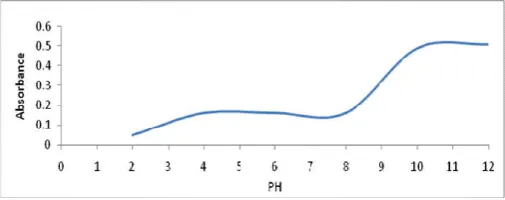
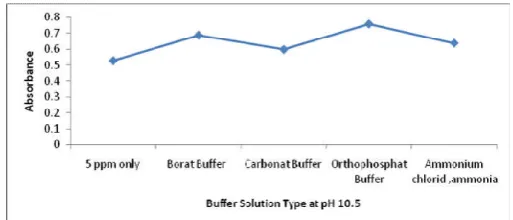
[image:2.595.308.561.593.693.2]Optimization of pH plays an exclusive role on metal-chelate formation and subsequent extraction, and is proved to be a major parameter for CPE. The influences of pH of the aqueous solutions on yield the extraction of Pb (II) as DDTC chelate was investigated in the pH range 2–12 using nitric acid and sodium hydroxide Figure 2. The pH in the range 10-11 was chosen and different buffer solution was used but orthophosphate buffer was chosen because it gives the highest absorption peak Figure 3.
Figure 2Effect of pH variation on signal of 5 ppm Pb.
Effect of Volume of DDTC
The effect of concentration of DDTC on the analytical
concentration of amounts of DDTC was carried out (0-3.5)ml of (800) ppm. It was observed that the absorbance increased by increasing the ligand volume. The sensitivity increases up to 2 ml of the amount of DDTC which reaches a plateau. At this amount, the extraction volume of 2 ml is selected as a suitable amount of DDTC for the complex extraction in order to make better signal of cloud point extraction Figure 4.
[image:3.595.303.562.283.387.2]Figure 3. The effect of buffer solution on signal of 5 ppm Pb
Figure 4. Effect of volume of DDTC on the atomic absorption signal of 5 ppm Pb
Effect of surfactant concentrations
A good cloud point extraction should maximize the extraction efficiency by minimizing the phase volume ratio (Vs/Vaq), as a result improving the concentration factor. Triton X-114 was select for the formation of the surfactant rich phase due to its low cloud point temperature and industrial availability in a high purified uniform form, low toxicity and low cost and high density of the surfactant rich phase, which simplifies phase separation by centrifugation. Figure5 illustrations the effect of TritonX-114concentrations on the DDTC preconcentration of lead. The signals of lead increased as the Triton X-114concentration increased from (0-3.5) ml 1% (V/V) the signals was increased by using 0.5 ml and the maximum absorbance in the range (1-2)ml. Hence a low signal was decreased over 2 ml from the surfactant. Therefore, 2ml of 1% (V/V) Triton X-114 was employed for the procedure as shown in Figure5.
Figure 5. Effects of volumes of surfactant on the atomic absorption signal of 5ppm Pb
Effect of Electrolyte type
The effect of the selected electrolytes on the CPE of solutions
containing analyte at concentration of 5.0 μg mL-1 was studied
keeping other parameters constant. It is observed that the addition of electrolytes 0.1 M, including NaCl, KCl, and
CaCl2, to micellar solutions decreases the cloud-point
temperature Figure 6. It is worth mentioning that the effect of the electrolytic solutions like group (I) and (II) metals as chlorides were selected on the bases that these anions do not compete if the analyte was anionic under study in the CPE process. However, the presence of such electrolytic salts in aqueous solution somewhat contribute in increasing the ionic activity in solution. The results indicated that an increase in the ionic strength have not an appreciable influence on the final recovery of the extracted surfactant-rich phase. Nevertheless, the addition of these salts makes the separation of the two phases easier, because it increases the density of the bulk aqueous phase.
Figure 6. Effect of type of electrolyte by using 5 ppm pb
Effect of Temperature
Cloud point formation obeys to thermodynamic law with optimum temperature extraction performed with temperature ranging from 25Cº to 55Cº. Figure 7 shows 45Cº was suitable for Cloud point formation with higher viscosity and easily
separated for Pb+2-complex ion at lower temperature the
[image:3.595.36.289.299.405.2]separation of two phases is not complete, at higher temperature the decomposition of ion complex and reduction of extraction and micelles formation is happened.
Figure 7. Study the effect of temperature
[image:3.595.308.562.536.637.2]Calibration Curve
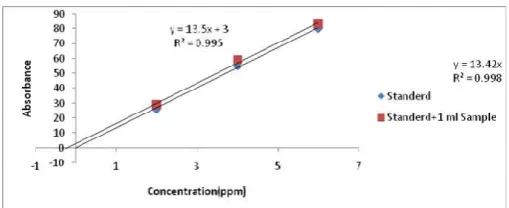
[image:3.595.42.562.664.774.2]Figure 9 Standard addition method for determination of lead in Seba water sample
[image:4.595.49.425.75.299.2]Figure 10. Standard addition method for determination of lead in FAW water sample
Figure 11. Standard addition method recovery calculation for RO rejection water sample
Determination of lead in different water samples
In order to test the reliability of the proposed method suitable for the assaying of lead in different water samples,1ml of samples were taken then 2 ml of DDTC was added with concentration of 800 ppm, following by adding 0.6 ml phosphate buffer 2 ml of 1% (w/v) Triton X– 114 and 2 ml matrix modifying agents, following the proposed procedure. The results are shown in Table 1.
Analytical method performance
Under the optimum conditions, performance characteristics were obtained by processing standard solutions of Pb(II) and the data is illustrated in Table1.
Calibration functions were linear at 0.2-14 μgml−1, Figure
7shows this results. Furthermore, for preconcentration of 2ml of the working standard solutions based on the slope ratio of calibration curves with and without preconcentration, an enrichment factor of 11.6585 was obtained for Pb(II). To test the reproducibility of the proposed extraction method, the suggested procedure was repeated ten times under optimum conditions. The relative standard deviation (R.S.D.) for three different concentrations was measured to be batter than 4.18%,
for Pb . Cloud point extraction is a sensitive, inexpensive,
simple, and rapid system in preconcentration and separation of trace metal. TritonX-114 is used as cloud point extracting because it has the low cloud point temperature and high density, and, more importantly, it is very economical. In the pH 9-11, Pb(II) and DDTC can form stable complexation. After extraction and preconcentration by neutral surface active agents, Triton X114 the Pb element can be measured to the
level of 0.2 µgmL−1which is very satisfactory.
REFERENCES
Ajtony, Z., S.N., Susko, E. K. 2008. Direct sample introduction of wines in graphite furnace atomicabsorption spectrometry for the simultaneous determination of arsenic, cadmium,
copper and lead content,. Talanta, 76:3: p. 627-634.
Ali Niazia, B., Tahereh Momeni-Isfahania, and Z. Ahmaria, Spectrophotometric determination of mercury in water samples after cloud point extraction using nonionic
surfactant Triton X-114. Journal of Hazardous Materials,
June 2009. Volume 165, (Issues 1-3, 15): p. Pages 1200-1203.
Award, N.A.N. and Bassam, A. Aziz, 2016. Sensitive determination of Lead in Brine water by Cloud Point Extraction-Flame Atomic Absorption Spectrometry Method
using Mixed Matrix modifying agents. Int. J. Adv. Res.,
4(10): p. 2224-2233.
Bai, L., H.H., W. Fu, J. Wan, X. Cheng, L. Zhuge, L. Xiong, and Q. Chen, 2011. Synthesis of a novel silica-supported dithiocarbamateadsorbent and its properties for the removal
of heavy metal ions, J. Hazard. Mater, 195 (15): p.
261-275.
Barin, J. S., B.F.R., Dressler V L, 2008. Microwave induced combustion coupled to flame furnace atomic absorption spectrometry for determination of cadmium and lead in
botanical samples,. Analytical Chemistry, 80:23: p.,
9369-9374.
Chen, J., T.K.C., 2001. Determination of cobalt and nickel in water samples by flame atomicabsorption spectrometry
after cloud pointextraction, Anal.Chim. Acta, 434: p.
325-330.
[image:4.595.37.289.337.441.2]De Almeida Bezerra, M., M.A.Z.A., and S. L. C. and Ferreira, 2005. “Cloud point extraction as a procedure of separation and pre-concentration for metal determination using
Table 1. Recovery percentage of the matrix modified procedure of real environment samples
Sample Pb Content µg/ml Pb add µg/ml Pb Found µg/mL Recovery % Error% Mean recovery% Southern
Shat al- Arab
0.232 2 2.09696 93.64 6.4 95.30±4.69
0.232 4 4.096 96.78 3.4
0.232 6 5.9515 95.49 4.7
Faw 0.146 2 2.0577 95.88 4.29 101.15±3.14
0.146 4 4.2625 102.8 -2.74
0.146 6 6.0263 98.05 1.9
RO 0.223 2 2.1295 95 .79 4.21 99.71 ±0.29
0.223 4 4.39347 104.03 -4.03
[image:4.595.37.292.481.585.2]spectroanalytical techniques: a review,” Applied
Spectroscopy Reviews, vol. 40,(no. 4): p. pp. 269-299, .
Dilli, S., P.R.H., A.K. Htoon, 1990. Further studies of diethyldithiocarbamate complexes by high-performance
liquid chromatography. Journal of Chromatography A 2
February, 500: p. 313-328.
Dongsheng Zhao, et al., 2009. Determination of lead and
cadmium in water samples by cloud point extraction prior
to flame atomic absorption spectrometry determination J.
Iran. Chem. Res., 2: p. 87-94.
Berman E.1990.Toxic Metals and Their Analysis.Heyden. Ghaedi, M., A.S., R. Mehrnoosh, O. Hossaini, and M. Soylak,
2008. “Combination of cloud point extraction and nameatomic absorption spectrometry for preconcentration anddetermination of trace iron in environmental and
biologicalsamples,” Central European Journal of
Chemistry, vol. 6, no. 3,: p. 488-496.
Giné, M. F., A.F.P., E. L. Silva, J. E. S. Sarkis, and M. H. and Kakazu, 2008. “Sequential cloud point extraction of trace elementsfrom biological samples and determination by
inductivelycoupled plasma mass spectrometry,”. Journal of
the Brazilian Chemical Society, vol. 19,( no. 3): p. pp.
471-477.
Kanchi, S., P.S., K. Bisetty, 2014. Dithiocarbamates as hazardousremediation agent: a critical review on progress in environmentalchemistry for inorganic species studies of
20th century, Arab. J.Chem., 7 p. 11-25.
Koksal, J., S.V., Janos, P. 2002. Extraction-spectrometric determination of lead in high-purity aluminium salts,
Talanta, 58(2), p.325.
Lemos, V. A., P.X.B., and J. S. Santos, 2006. “Me-BTABr reagentin cloud point extraction for spectrometric
determination ofcopper in water samples,” Journal of the
Brazilian Chemical Society, vol. 17 (no. 1): p. 30-35.
Paleologos, E. K., D.L.G., and M. I. Karayannis, 2005. “Micellemediated separation and cloud-point extraction,”.
Trends in Analytical Chemistry, vol. 24, (no. 5,): p.
426-436.
Rajab Abu-El-Halawa, S.A.Z. 2015. Removal efficiency of Pb, Cd, Cu and Zn from polluted water using dithiocarbamate ligands Journal of Taibah University for Science xxx, p. xxx-xxx.
Rosen M. J., 1987. Surfactants and Interfacial Phenomena. Wiley Interscience, New York, NY,USA.
Say, R., E.B., A. Denizli, A. Ersöz, 2006. Removal of heavy
metalions by dithiocarbamate-anchored polymer/
organosmectite composite. Appl. Clay Sci., 31 p. 298-305.
Shokrollahi, A., M.G., O. Hossaini, N. Khanjari, and M. and Soylak, 2008. “Cloud point extraction and flamatomic absorptionspectrometry combination for copper (II) ion in
environmentaland biological samples,.” Journal of
Hazardous Materials, vol.160,(no. 2-3): p. 435-440.
Wua, P., et al., 2006. Cloud point extraction–thermospray
flame quartz furnace atomic absorption spectrometry for determination of ultratrace cadmium in water and urine. Spectrochimica Acta Part B: Atomic Spectroscopy, December, Volume 61, (Issue 12): p. Pages 1310-1314.