ISSN Online: 1949-5005 ISSN Print: 1949-4998
DOI: 10.4236/health.2018.1011119 Nov. 27, 2018 1576 Health
Formal Education Related Pattern of
Awareness and Basic Knowledge on Zika
Virus Disease, among Women Visiting
Children Immunization Unit in a Tertiary
Hospital, Southeast Nigeria
Edmund O. Ndibuagu
Department of Community Medicine and Primary Health Care, Enugu State University College of Medicine, Parklane, Enugu, Nigeria
Abstract
Zika virus is transmitted through the bite of infected Aedesa egypti, or Aedes albopictus mosquito, and re-emerged as a disease of global public health im-portance in March/April 2015 in Brazil. The objective of this study is to assess the formal education related pattern of awareness, and basic knowledge on Zika virus disease, among women visiting children immunization unit in a tertiary hospital, in Nigeria. Study was conducted in 2016/2017 with 256 randomly selected respondents. Semi-structured questionnaire was used in the cross-sectional study. Findings including 77.8% of respondents with postgraduate educational qualification were aware that there is a disease known as Zika Virus Disease (ZVD), 62.0% for tertiary education qualifica-tion, 53.8% for secondary education level, 20.0% for primary education level, while none of the three respondents that had no formal education were aware of ZVD. The level of awareness increased with increasing educational qualifi-cation. These findings were analyzed using the Likelihood Ratio which was calculated to be 28.329, with P-value of <0.001. Television was the common-est source of first ZVD information. Overall mean percentage knowledge lev-el of the different educational groups revealed as followed; no formal educa-tion 22.2%, primary level 12.0%, secondary level 46.1%, tertiary level 54.4%, and postgraduate level was 51.5%. The mean for the stated scores was 37.2%. Students’ T-Test at 95.0% confidence interval was 0.012, showing that the difference in the mean percentage scores between the groups was significant. Respondents with tertiary and postgraduate education qualifications recorded overall mean score above 50.0% each, while secondary, primary, and no for-How to cite this paper: Ndibuagu, E.O.
(2018) Formal Education Related Pattern of Awareness and Basic Knowledge on Zika Virus Disease, among Women Visiting Child- ren Immunization Unit in a Tertiary Hospital, Southeast Nigeria. Health, 10, 1576-1596. https://doi.org/10.4236/health.2018.1011119
Received: October 20, 2018 Accepted: November 24, 2018 Published: November 27, 2018
Copyright © 2018 by author and Scientific Research Publishing Inc. This work is licensed under the Creative Commons Attribution International License (CC BY 4.0).
http://creativecommons.org/licenses/by/4.0/
DOI: 10.4236/health.2018.1011119 1577 Health mal education groups recorded overall mean percentage scores below 50.0%. Stepping up ZVD health education and awareness activities, especially among women with educational qualification below tertiary level will greatly im-prove the awareness and knowledge on ZVD among this study population.
Keywords
Education, Awareness, Knowledge, Zika Virus
1. Introduction
Zika Virus Disease (ZVD) is arthropod-borne infection that is caused by a flavi-virus known as Zika flavi-virus, and transmitted mainly through the bite of infected
Aedesa egypti, or Aedes albopictus mosquito [1]. These species of mosquito
vector also transmit Yellow fever, Dengue fever, and Chikungunya virus diseases [2]. This virus was first isolated in rhesus monkey in the Zika forest of Uganda in 1947. The transmission to the monkey was through the bite of infected Aedes Africanus mosquito [3]. Though infection in man was detected in Nigeria in 1952, and reported in 1954 [4]; and also in Uganda and the United Republic of Tanzania in the same 1952 [5]. Up, until 2007 when the first major outbreak of ZVD occurred in Yap Island (Micronesia), only about 14 cases of the infection in man had been documented [6]. This outbreak in Yap Island had about 73% of the residents older than 3 years getting infected [7]. The next recorded cases of ZVD outbreak were recorded in French Polynesia in 2013 where about 30,000 cases were reported [8].
Over the years, some cases of ZVD were reported in some endemic parts of Africa, and also in Southeast Asia, Americas and Caribbean [9] [10]. The infec-tion re-emerged as a disease of global public health importance in March/April 2015 in Brazil [11] [12]. In the distant past, ZVD was known to present with non-specific symptoms such as fever, joint pains, conjunctivitis, and malaise, with about 80% of the cases being asymptomatic [5]. However, since the out-break of the infection in French Polynesia in 2013, significant neurological problems such as birth defects associated with microcephaly and Guillain-Barre syndrome were beginning to be recorded [13]. The magnitude of these neuro-logical problems associated with ZVD outbreak of 2015 was so worrisome that the World Health Organization (WHO) in February 1, 2016 declared the outbreak a “PUBLIC HEALTH EMERGENCY OF INTERNATIONAL CONCERN”, and ac-tivated an Emergency Incident Management System to handle international re-sponse to the outbreak [14]. The spread of this infection to countries where it was previously unknown was so alarming that in January 2017, mosquito-borne transmission of the infection had been reported in 75 countries across the globe, with 46 of these countries being in the Latin American and Caribbean zones [15] [16].
DOI: 10.4236/health.2018.1011119 1578 Health mosquito, the infection could also be transmitted from an infected person to another through contaminated blood, infected mother to unborn child, sexual intercourse, and breast feeding [17] [18] [19] [20]. Zika virus disease is the only disease transmitted through the bite of mosquito, which can also be transmitted through sexual intercourse and can cause birth defects [21]. Though the disease has not been recorded in Nigeria as causing any public health concern, it is possible that some cases of microcephaly and other neurological congenital malformation could have arisen from Zika virus infection [22]. Detection of an-tibodies to Zika virus in Nigerian populations and the presence of the mosquito vector that transmit this disease further suggest that the infection may be going on in Nigeria undiagnosed [23] [24]. It is therefore very crucial that the empha-sis of WHO on the need to provide education to communities on Zika virus generally [25], be complied with.
Women that usually bring children for immunization are mostly mothers who recently were delivered of their babies. As a consequence of microcephaly and other congenital abnormalities associated with Zika virus infection on pregnant women, they may be seen as a group that ought to be targeted for Zika virus in-fection prevention interventions [26]. Some studies documented the positive ef-fect of formal education on the awareness and knowledge on Zika virus among the populace [26] [27] [28] [29]. It is important to assess the effect of formal education on the awareness and knowledge on ZVD among women who recent-ly were delivered of their babies, with a view to identifying gaps that could be addressed through structured interventions aimed at ensuring improved ZVD awareness and knowledge. The objective of this study is to assess the formal education related pattern of awareness, and basic knowledge on Zika virus dis-ease, among women visiting children immunization unit in a tertiary hospital, in Nigeria.
2. Materials and Methods
DOI: 10.4236/health.2018.1011119 1579 Health children for immunizationin the teaching hospital were the study population. This implied that most of these women were delivered of a baby in the recent past. All women that brought a child for immunization in the study tertiary hos-pital were included in the study, while all visitors and health workers of any ca-dre in the hospital were excluded from the study.
The hospital provides immunization services to the populace three days of the week namely Mondays, Wednesdays and Fridays. The average weekly immuni-zation coverage is two hundred and sixty three (263) children. The study was conducted for nine weeks between November 2016, and February 2017; with 10 randomly selected women interviewed on each immunization day by a trained junior resident doctor in the department of Community Medicine, giving a total of 30 respondents in a week, while only 16 respondents were interviewed on the last week for data collection. This summed up to 256 respondents that partici-pated in the study. Semi-structured questionnaire was pre-tested at the Federal government owned Teaching hospital in the state, and used for collecting infor-mation from respondents. The inforinfor-mation elicited were analyzed using Statis-tical Package for Social Sciences (SPSS) version 20, and the outcome variables were determined in terms of the percentage of respondents in different levels of formal education who are aware of ZVD, and those with correct basic knowledge of ZVD. Students T-Test was done to ascertain if the difference in the mean ba-sic knowledge of ZVD among the no formal education, primary education, sec-ondary education, tertiary education, and postgraduate education levels was sig-nificant.
Ethical clearance for this study was obtained from the Ethical Research Com-mittee of the Enugu State University Teaching Hospital. The main objective of the study was explained to the respondents who freely gave their consent before the questionnaire was administered. The difference in number of respondents between the educational level groups was very wide. Only three persons with no formal education at all (1.2% of total respondents) participated, while one hun-dred and twenty nine of persons with tertiary education (50.4% of total respon-dents) participated in the study. This clearly makes comparing data recorded for the different groups probably not completely reliable. The margin of error for the group with few respondents could be high. This obviously is a limitation for this study.
3. Results
3.1. Socio-Demographic Characteristics
DOI: 10.4236/health.2018.1011119 1580 Health Teachers (8.2%). Very few numbers of the respondents were unemployed (2%).
3.2. Awareness of Zika Virus Disease
Over 70% of respondents with postgraduate educational qualification (77.8%) are aware that there is a disease known as Zika Virus Disease. Respondents with tertiary education qualification recorded 62%, secondary education level 53.8%, primary level 20%, while none of the three respondents that had no formal edu-cation were aware that there was a disease called Zika virus disease. Generally the level of awareness increased with increasing educational qualification, with the postgraduate level group recording the highest awareness on ZVD, while respondents with no formal education scored the least on ZVD awareness. These findings were analyzed using the Likelihood Ratio which was calculated to be 28.329, with P-value of <0.001.
3.3. Source of Information on Zika Virus Disease
The source of ZVD information for 37.3% of all respondents that heard about ZVD was through television (TV). This was followed by radio (25.3%), newspa-pers (13.3%), friends (8.2%), hospital (5.7%), internet (3.2%), relations (3.1%), school (1.9%), church (1.3%), and lastly market (0.6%).
3.4. Basic Knowledge on Zika Virus Infection
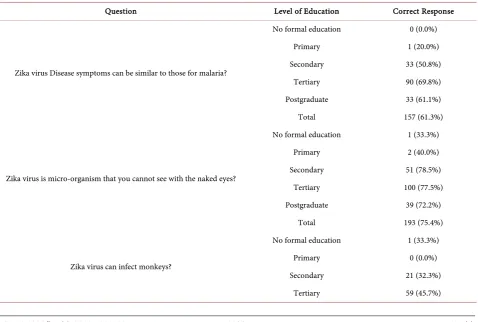
Overall, 61.3% of all respondents knew that ZVD symptoms could be similar to malaria infection. Persons with tertiary level educational qualification recorded the highest percentage score (69.8%) on ZVD and malaria symptoms being sim-ilar. They were followed by the postgraduate qualification group with 61.1% score, while the secondary level group had 50.8% of them knowing that SVD and malaria symptoms could be similar. None of the respondents with no formal education had this knowledge, while only one person (20%) out of the five that had only primary level education had the knowledge. More than 70% of respon-dents in each group that had above secondary level of education knew that Zika virus is a micro-organism that cannot be seen with the naked eye (secondary level = 78.5%, tertiary level = 77.5%, postgraduate level = 72.2%). Respondents without formal education recorded 33.3%, while those with only primary level qualification recorded 40.0%. Overall, 75.4% respondents had the correct know-ledge. None of the respondents with primary level educational qualification knew that Zika virus can infect monkeys, while only one out of the three (33.3%) with no formal education had the correct knowledge on this. Less than half (45.7%) of those with tertiary education knew about possible monkey infection with Zika virus, 35.2% of those with postgraduate qualification, and 32.3% of those with secondary education also share the same knowledge. Overall, 39.1% of respondents knew that Zika virus could infect monkeys.
qualifica-DOI: 10.4236/health.2018.1011119 1581 Health tion (77.8%), followed by those with tertiary qualification (66.7%), and those with secondary education (56.9%). Only one respondent (20%) from the prima-ry group, out of five persons in that group; and two (66.7%) out of three, among those without any formal education had the correct knowledge that mosquito bite could cause Zika virus infection. The overall knowledge of respondents on the transmission of Zika virus through mosquito bite was 65.5%. None of the five persons with primary level education knew that Zika virus infection can be transmitted through sexual intercourse, while only one (33.3%), out of the three that had no formal education knew that the infection can be transmitted through sexual intercourse. Knowledge on sexual transmission of Zika virus was highest among respondents with tertiary level of education qualification (48.8%), and was followed by secondary education (40.0%), and then postgraduate education level (37.0%). The recorded overall knowledge level on sexual transmission of Zika virus was 43.0%. The highest knowledge score on the possibility of Zika vi-rus transmission through blood transfusion was recorded by tertiary education level participants (53.5%), followed by postgraduate level (48.1%), and secondary level (40.0%) in that order. None of the 5 primary education level participants had this knowledge, while 1 person (33.3%) among those that had no formal education, knew that Zika virus could be transmitted through blood transfusion. None of the 3 respondents that had no formal education knew that Zika virus cannot be transmitted through rat bite. Only 1 (20%) respondent among the 5 with primary level education had the correct knowledge about inability to transmit Zika virus through rat bite, while 44.6%, 48.8%, and 48.1% of those with secondary, tertiary, and postgraduate educational qualifications respective-ly; knew that Zika virus cannot be transmitted through rat bite. Overall, 46.5% of respondents had the correct knowledge that Zika virus infection cannot be transmitted through rat bite.
DOI: 10.4236/health.2018.1011119 1582 Health pregnant woman, could lead to malformation of the brain in the child, while only one (33.3%) out of three of those with no formal education had the correct knowledge. More than half of the respondents with tertiary educational qualifi-cation (54.3%) knew that Zika virus infection in pregnant women does not lead to the delivery of very big babies by the women. Those with postgraduate educa-tion recorded 48.1%, and those with secondary educaeduca-tion had 46.2%. Those with no formal education had one person (33.3%) with this knowledge, while no per-son, out the five with primary education had the knowledge.
Respondents with tertiary educational level qualification recorded the highest score (51.2%) on knowledge of Zika virus infection leading to delivery of baby with small head (microcephaly). They were followed by those with postgraduate education qualification (46.3%), and secondary education level (36.9%). No res-pondent in the primary level, and no formal education groups had the correct knowledge on Zika virus infection causing microcephaly in the babies. Total knowledge scored on this was 44.9%. None of the groups of respondents scored above 40% on the knowledge that Zika virus infection can cause paralysis in grown-up persons. Respondents with tertiary education qualification scored 39.5%, secondary education qualification 35.4%, postgraduate education 35.2%. None of the respondents with primary education had the correct knowledge on this, while only one person (33.3%) out of three with no formal education had the correct knowledge. Overall knowledge score on this was 36.7%. Again, res-pondents with tertiary education level had the highest knowledge score (40.3%) on Zika virus infection not leading to shrinking of the head in grown-up per-sons. Respondents with postgraduate qualification recorded 37%, secondary education 36.9%, and primary education 20%. None of the respondents with no formal education had the correct knowledge on this. Overall knowledge score was 37.9%. The highest score of 43.4% on Zika virus infection not having a vac-cine was recorded by respondents with tertiary education level qualification, while the next highest score of 33.8% was recorded by those with secondary level education, and 33.3% was scored by respondents with postgraduate education. Those with primary level education and no formal education scored zero. The overall knowledge score on this was 37.5%.
3.5. Overall Mean Percentage Knowledge Level of the
Educational Groups
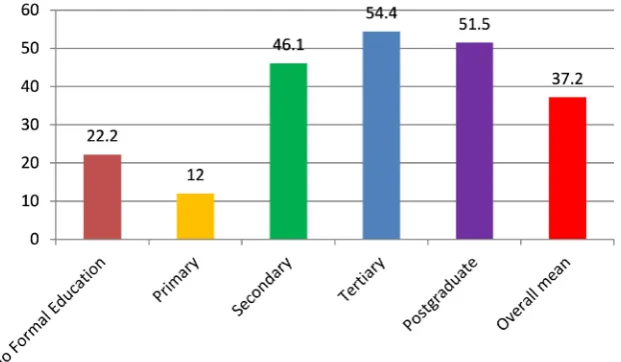
Overall mean percentage knowledge level of the different educational groups re-vealed as follows; No formal education was 22.2%, primary level 12.0%, second-ary level 46.1%, tertisecond-ary level 54.4%, and postgraduate level was 51.5%. The mean for the stated scores was 37.2%. Students T-Test at 95.0% confidence in-terval was 0.012, showing that the difference in the mean percentage score be-tween the groups was significant.
4. Discussion
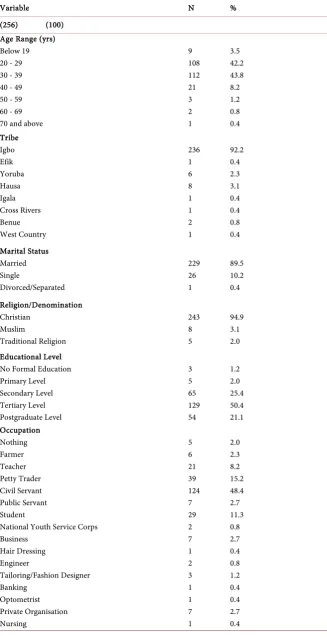
DOI: 10.4236/health.2018.1011119 1583 Health Emergency of International Concern (PHEIC) by WHO was a significant occur-rence that highlighted the need to put in more efforts towards controlling this disease. A study conducted in Brazil, Puerto Rico, and El Salvador revealed that Zika virus infection occurs more among women than men, with the highest rate being recorded among women aged 20 to 49 years [7] [31] [32]. Majority of the respondents in this study are women within this ages range (94.2%) (Table 1). This further justified this study, since the findings could reliably guide the de-velopment of strategies that could improve the awareness and knowledge of ZVD among this most susceptible group.
The percentage of respondents who had ever heard about Zika virus revealed that the pattern of awareness was related to the level of education, with those with postgraduate education scoring highest (77.8%) out of the 158 (61.7% of the total respondents) persons who had ever heard about Zika virus, while those with no formal education scored zero (Table 2). The overall level of awareness on Zika virus among women who brought their children for immunization at the Enugu State Teaching hospital immunization unit was reasonably less than what was found among pregnant women attending Gynaecology clinic in July 2016, in Greece (77.4%) [28]; but a bit comparable to the 68.97% awareness level found among reproductive-age women attending a general outpatient clinic in Northern Nigeria [33]. The 77.8% awareness level among women in this study who possessed postgraduate qualifications is comparable to that finding in the cited Greece study. This could be as a result of Greece being a developed coun-try, and having higher literacy level than Nigeria. Majority of the respondents in this study got their first information on Zika Virus from the television or radio (66.2%), with those with postgraduate education qualification recording the highest (75.5%). The finding on the cited Greece study of 2016 also showed that television or radio were the highest source of awareness on Zika virus (75.3%). This could be a pointer to the likelihood of women of child being age usually watching television or listening to radio, for information, education and enter-tainment; as against reading newspapers or using the internet. The market (0.6%), church (1.3%), and school (1.9%) were reported as the lowest sources of Zika virus information (Table 3). These social institutions actually could serve as very efficient and effective platforms for disseminating Zika virus information if proper strategies are developed for this purpose. In some other studies among students who belong to the younger age group, the finding was that Internet and the social media were the highest reported sources of Zika virus awareness [27] [34].
Obviously the younger age group makes more use of the internet and social media generally. It is essential that these diverse sources of Zika virus informa-tion for women of child bearing age and those in different levels of educainforma-tion be taken into consideration when planning any intervention that would create awareness on Zika virus among this group.
DOI: 10.4236/health.2018.1011119 1584 Health instances where symptoms occur, it might be non-specific, thus making it diffi-cult to arrive at a diagnosis without laboratory investigations [5]. This implies that ZVD could be presumptively diagnosed as malaria in this study environ-ment where malaria is endemic. Respondents with tertiary level education quali-fication (graduates) recorded the highest percentage knowledge on this aspect of non-specific symptoms of ZVD (69.8%). They were followed by the postgra-duate level (61.1%), secondary level (50.8%), and primary level (20%). No res-pondent without formal education had this knowledge. One would have ex-pected respondents with postgraduate qualification to have demonstrated the highest level knowledge in all the aspects investigated, but this is not the case. The educational system in Nigeria is such that undergraduate students are usually given didactic lectures in addition to other forms of training in their chosen fields, while didactic lectures are usually not employed in training post-graduate students. Hence respondents who recently post-graduated from tertiary academic institutions could have been exposed more to information on Zika vi-rus through formal lectures or informally during discussions while gathered for a didactic lecture; since ZVD was topical globally around the time of this study. This thinking however requires scientific research, to make it authentic.
Respondents with secondary education recording the highest score (78.5%) on the knowledge about Zika virus being a micro-organism that cannot be seen with the naked eyes is a bit curious, since ordinarily one would have expected tertiary and postgraduate respondents to have exhibited higher level of know-ledge on this (Table 4). Could it be that they still possess a reasonable level of secondary school knowledge of Biology, while tertiary and postgraduate level respondents would have lost a great deal of that knowledge over the years? Zika virus being detected first in monkeys [3] is a vital information that should be disseminated as much as is possible, since infection could be acquired through contact with infected monkeys. The overall knowledge on this was 39.1%, with tertiary level education respondents (45%), being the only group that recorded score above 40%. Though the overall level of knowledge on ZVD being trans-mitted through mosquito bite can be said to be good (65.5%) (Table 4) since it was above 50%, it was still a far cry from findings on similar studies elsewhere. In the year 2016, 90.5% of pregnant women attending a Gynaecologist clinic in Greece knew that ZVD is transmitted through mosquito bite; while 94% of women that participated in a survey in the United States of America in 2016 had the knowledge [28] [35]. In Malaysia, in 2016, a survey among Selangor resi-dents revealed that 85.8% of those that participated in the survey knew that ZVD is transmitted through mosquito bite [36]. The higher level of knowledge dem-onstrated in these three countries could be because they are more developed than Nigeria, and probably had more established systems of disseminating health information.
DOI: 10.4236/health.2018.1011119 1585 Health
Table 1. Socio-Demographic characteristics.
Variable N %
(256) (100) Age Range (yrs)
Below 19 9 3.5
20 - 29 108 42.2
30 - 39 112 43.8
40 - 49 21 8.2
50 - 59 3 1.2
60 - 69 2 0.8
70 and above 1 0.4
Tribe
Igbo 236 92.2
Efik 1 0.4
Yoruba 6 2.3
Hausa 8 3.1
Igala 1 0.4
Cross Rivers 1 0.4
Benue 2 0.8
West Country 1 0.4
Marital Status
Married 229 89.5
Single 26 10.2
Divorced/Separated 1 0.4
Religion/Denomination
Christian 243 94.9
Muslim 8 3.1
Traditional Religion 5 2.0
Educational Level
No Formal Education 3 1.2
Primary Level 5 2.0
Secondary Level 65 25.4
Tertiary Level 129 50.4
Postgraduate Level 54 21.1
Occupation
Nothing 5 2.0
Farmer 6 2.3
Teacher 21 8.2
Petty Trader 39 15.2
Civil Servant 124 48.4
Public Servant 7 2.7
Student 29 11.3
National Youth Service Corps 2 0.8
Business 7 2.7
Hair Dressing 1 0.4
Engineer 2 0.8
Tailoring/Fashion Designer 3 1.2
Banking 1 0.4
Optometrist 1 0.4
Private Organisation 7 2.7
DOI: 10.4236/health.2018.1011119 1586 Health
Table 2. Respondents that ever heard about Zika Virus.
Educational Status Yes No Not Sure Total Likelihood Ratio P-value
No formal education 0 (0.0%) 1 (33.3%) 2 (66.7%) 3 (100%) 28.329 <0.001 Primary level 1 (20.0%) 1 (20.0%) 3 (60.0%) 5 (100%)
Secondary level 35 (53.8%) 25 (38.5%) 5 (7.7%) 65 (100%) Tertiary level 80 (62.0%) 43 (18.5%) 6 (4.7%) 129 (100%) Postgraduate level 42 (77.8%) 10 (18.5%) 2 (3.7%) 54 (100%)
[image:11.595.59.549.242.394.2]Total 158 (61.7%) 80 (31.3%) 18 (7.0%) 256 (100%)
Table 3. Source of information on Zika Virus disease.
Educational
Status Radio TV Newspaper Relations Friends Church School Market Internet Hospital Total No formal
education 1 (33.3%) 1 (33.3%) 1 (33.3%) 0 (0.0%) 0 (0.0%) 0 (0.0%) 0 (0.0%) 0 (0.0%) 0 (0.0%) 0 (0.0%) 3 (100%) Primary level 1 (50.0%) 0 (0.0%) 0 (0.0%) 1 (50.0%) 0 (0.0%) 0 (0.0%) 0 (0.0%) 0 (0.0%) 0 (0.0%) 0 (0.0%) 2 (100%) Secondary level 11 (28.9%) 16 (42.1%) 5 (13.2%) 2 (5.3%) 0 (0.0%) 1 (2.6%) 0 (0.0%) 1 (2.6%) 0 (0.0%) 2 (5.3%) 38 (100%)
Tertiary level 16 (21.1%) 26 (34.2%) 13 (17.1%) 1 (1.3%) 9 (11.8%) 1 (1.3%) 3 (3.9%) 0 (0.0%) 3 (3.9%) 4 (5.3%) 76 (100%) Postgraduate
level 11 (28.2%) 16 (41.0%) 2 (5.1%) 1 (2.6%) 4 (10.3%) 0 (0.0%) 0 (0.0%) 0 (0.0%) 2 (5.1%) 3 (7.6%) 39 (100%) Total 40 (25.3%) 59 (37.3%) 21 (13.3%) 5 (3.1%) 13 (8.2%) 2 (1.3%) 3 (1.9%) 1 (0.6%) 5 (3.2%) 9 (5.7%) 158 (100.0%)
Table 4. Basic knowledge on Zika virus infection.
Question Level of Education Correct Response
Zika virus Disease symptoms can be similar to those for malaria?
No formal education 0 (0.0%)
Primary 1 (20.0%)
Secondary 33 (50.8%)
Tertiary 90 (69.8%)
Postgraduate 33 (61.1%)
Total 157 (61.3%)
Zika virus is micro-organism that you cannot see with the naked eyes?
No formal education 1 (33.3%)
Primary 2 (40.0%)
Secondary 51 (78.5%)
Tertiary 100 (77.5%)
Postgraduate 39 (72.2%)
Total 193 (75.4%)
Zika virus can infect monkeys?
No formal education 1 (33.3%)
Primary 0 (0.0%)
Secondary 21 (32.3%)
[image:11.595.61.540.422.744.2]DOI: 10.4236/health.2018.1011119 1587 Health
Continued
Postgraduate 19 (35.2%)
Total 100 (39.1%)
Zika virus can be transmitted through mosquito bite?
No formal education 2 (66.7%)
Primary 1 (20.0%)
Secondary 37 (56.9%)
Tertiary 86 (66.7%)
Postgraduate 42 (77.8%)
Total 168 (65.5%)
Zika virus can be transmitted through sexual intercourse?
No formal education 1 (33.3%)
Primary 0 (0.0%)
Secondary 26 (40.0%)
Tertiary 63 (48.8%)
Postgraduate 20 (37.0%)
Total 110 (43.0%)
Zika virus can be transmitted through blood transfusion?
No formal education 1 (33.3%)
Primary 0 (0.0%)
Secondary 26 (40.0%)
Tertiary 69 (53.5%)
Postgraduate 26 (48.1%)
Total 122 (47.7%)
Zika virus can be transmitted through rat bite?
No formal education 0 (0.0%)
Primary 1 (20.0%)
Secondary 29 (44.6%)
Tertiary 63 (48.8%)
Postgraduate 26 (48.1%)
Total 119 (46.5%)
Zika virus can be transmitted through shaking hands with infected persons?
No formal education 0 (0.0%)
Primary 2 (40.0%)
Secondary 33 (50.8%)
Tertiary 71 (55.0%)
Postgraduate 35 (64.8%)
Total 141 (55.1%)
Zika virus can be transmitted through sharing meal with an infected person?
No formal education 1 (33.3%)
Primary 1 (20.0%)
Secondary 32 (49.2%)
Tertiary 75 (58.1%)
DOI: 10.4236/health.2018.1011119 1588 Health
Continued
Total 145 (56.6%)
Zika virus can infect a pregnant woman leading to the delivery of a baby with
malformed brain?
No formal education 1 (33.3%)
Primary 0 (0.0%)
Secondary 38 (58.5%)
Tertiary 81 (62.8%)
Postgraduate 33 (61.1%)
Total 153 (59.8%)
Zika virus can infect a pregnant woman leading to the delivery of a very big baby?
No formal education 1 (33.3%)
Primary 0 (0.0%)
Secondary 30 (46.2%)
Tertiary 70 (54.3%)
Postgraduate 26 (48.1%)
Total 127 (49.6%)
Zika virus can infect a pregnant woman leading to the delivery of a baby with
small head (Microcephaly)?
No formal education 0 (0.0%)
Primary 0 (0.0%)
Secondary 24 (36.9%)
Tertiary 66 (51.2%)
Postgraduate 25 (46.3%)
Total 115 (44.9%)
Zika virus can infect a grown-up person, leading to paralysis?
No formal education 1 (33.3%)
Primary 0 (0.0%)
Secondary 23 (35.4%)
Tertiary 51 (39.5%)
Postgraduate 19 (35.2%)
Total 94 (36.7%)
Zika virus can infect a grown-up person, leading to shrinking of the head?
No formal education 0 (0.0%)
Primary 1 (20.0%)
Secondary 24 (36.9%)
Tertiary 52 (40.3%)
Postgraduate 20 (37.0%)
Total 97 (37.9%)
Zika virus has a vaccine for the prevention of infection
No formal education 0 (0.0%)
Primary 0 (0.0%)
Secondary 22 (33.8%)
Tertiary 56 (43.4%)
Postgraduate 18 (33.3%)
DOI: 10.4236/health.2018.1011119 1589 Health through sexual intercourse was first suggested in a study conducted in the Unit-ed States of America and publishUnit-ed in 2011 [38]. The virus was eventually iden-tified in the semen of a Tahitian man during ZVD outbreak in French Polynesia in 2013 [39]. This information on the possibility of Zika virus transmission through sexual intercourse is vital in planning for prevention, yet only 43% of respondents in this study knew about this. Respondents with tertiary education qualification recorded the highest knowledge level (48.8%), followed by those with secondary education level (40%) and then those with postgraduate qualifi-cation (37%) (Table 4). Surprisingly, a study that was conducted in the United States of America and published this year 2018, recorded a similar finding where only 42% of women respondents had the knowledge [35]. Respondents in this study also exhibited better knowledge on this, than what was found in Greece in 2016 (36.7%) [28]. A more worrisome finding on this (17.1%) was recorded in Saudi Arabia among medical students in 2017 [34]. One would have expected medical students to be more knowledgeable on Zika virus than the general pub-lic. This curious finding in Saudi Arabia could be because the study was con-ducted among first year medical students, who could even be said to be equiva-lent to secondary education level respondents. A study is however required to authenticate this thinking. Some factors could have been at play in those areas that recorded lower findings on the knowledge of sexual transmission of ZVD. Ordinarily one would have expected developed countries to record higher knowledge scores.
A more encouraging finding of 56.8% was made in Malaysia in 2016 [36]. It has been documented that Zika virus Ribonucleic Acid (RNA) can be detected in semen 188 days after the onset of symptoms [40].
DOI: 10.4236/health.2018.1011119 1590 Health the overall score of 46.5% of those with the correct knowledge is compared with 4.6% of reproductive-age women attending general outpatient clinic in Northern Nigeria, in 2017; believing that ZVD can be transmitted through rat bite. Only 46.5% of respondents in this study having the correct knowledge on this implies that about 53.5% might not have the correct knowledge; thus we are comparing 53.5% of those with incorrect knowledge with 4.6% of those with incorrect knowledge in a similar study in Northern Nigeria. Investigating the factors that contributed to the impressive knowledge recorded in Northern Nigeria, with the aim of using the findings to address the huge gap recorded in this Southeastern part of Nigeria will be beneficial.
The overall correct knowledge of 55.1%, on Zika virus not being transmitted through handshake is good; but more health education activities among women of childbearing age could improve this knowledge level. Having the correct knowledge on this, would contribute to ZVD patients not being stigmatized. The pattern of percentage of those with correct knowledge on this, among the dif-ferent educational level respondents revealed that it increased with increasing educational qualification. Postgraduate respondents scored 64.8%, tertiary edu-cation level 55%, secondary eduedu-cation level 50.8%, primary eduedu-cation level 40%, and none of those with no formal education had the correct knowledge (Table 4). Again the overall knowledge level of 56.6% that ZVD is not transmitted through meal is good, and increased with increasing level of education up to the secondary level. The total number that believed that ZVD is transmitted throw meals or are indifferent to the question was 43.4% (Table 4). This is reasonably higher than the 26.5% recorded in a similar study conducted in Greece two years ago, where the pregnant women strongly agreed, agreed, or said yes to Zika virus being transmitted through the consumption of contaminated food [28]. The knowledge gap on ZVD not being transmitted through meals however is more glaring when compared to the finding of only 5.7% of female respondents in a study conducted in Qatar two years ago, who believed that ZVD can be trans-mitted through contaminated food [27]. The impressive finding in the Qatar study could be as a result of the study being conducted in an Education city with many students and academic staff. This group is usually expected to be better informed in issues such this one.
DOI: 10.4236/health.2018.1011119 1591 Health found in a similar study conducted in the northern part of the same country, in the same year [33]. However, a much smaller percentage of the total respondents (44.9%) knew that Zika virus infection can cause microcephaly in the unborn child in the womb. Again respondents with tertiary education level recorded the highest knowledge of 51.2%, followed by those with postgraduate education (46.3%), and secondary education (36.9%). None of those with no formal educa-tion or primary educaeduca-tion had the knowledge (Table 4). As high as 80.77% of respondents in that same similar study in Northern Nigeria had the knowledge that ZVD in the pregnant women could cause microcephaly in the unborn baby [33]. Further research work on the interventions/factors that enhanced ZVD knowledge among the group in the northern part of Nigeria, and also factors that contributed to the knowledge level on some key aspects of ZVD in our study population, could be useful in developing programmes that will enhance the knowledge level among our study population.
DOI: 10.4236/health.2018.1011119 1592 Health vaccine [27]. The Qatar study was conducted among people residing in an edu-cation city that had a lot of tertiary institutions. Presumably, the average educa-tion level for respondents in that study could have been significantly higher than the average level for respondents in this study. The finding in the Qatar study however is similar to 64.0% of respondents that knew that Zika virus did not have a vaccine, in another ZVD study conducted in Selangor, Malaysia in 2016 [36].
[image:17.595.218.529.509.690.2]Overall mean percentage basic knowledge level of 37.2%, on Zika virus dis-ease, among women visiting children immunization unit in a tertiary hospital, southeast Nigeria is poor. The pattern of this knowledge among the different educational level of respondents revealed that those with tertiary education qua-lification demonstrated the highest mean percentage score of 54.4%; while the more educationally qualified group of postgraduate respondents recorded a lower score of 51.5%. This was followed by respondents with secondary educa-tional qualification with 46.1%, and curiously respondents with no formal edu-cation had higher mean percentage score (22.2%) than those with primary level educational qualification with 12.0% score (Figure 1). Very few respondents from both the primary level (5 respondents) and no formal education (3 res-pondents) groups participating in this study, could render findings in both groups unreliable. One would have expected the postgraduate respondents to have higher mean percentage knowledge level than those with Bachelor’s degree (tertiary level), but this was not the case. Could the group with tertiary education qualification scoring higher than those with postgraduate education qualification imply that the positive effect of formal education on ZVD knowledge is opti-mum at tertiary education level? Finding from another ZVD study among dental practitioners in Tricityarea of India in 2016 however did not support this think-ing. In that study, it was found that postgraduate qualification was significantly associated with higher knowledge on Zika virus [29]. Could environment and
Figure 1. Overall mean Percentage knowledge level of the different educational groups. P
DOI: 10.4236/health.2018.1011119 1593 Health some other factors such as pattern and accessibility to Health awareness activi-ties influence ZVD knowledge among women? It is also curious that respon-dents with secondary education qualification scored slightly higher than those with postgraduate education qualification on Zika virus being transmitted through sexual intercourse, potential of Zika virus to cause paralysis in the adults, and ZVD not having any vaccine. More research work to further eluci-date the factors that enhance or inhibit the positive effects of formal education on ZVD knowledge will help in throwing more light on the findings in this study. P-value of Students T-Test done to check the level of significance of the mean knowledge scores of the five different groups was 0.012 at 95.0% confi-dence interval. This implies that the level of formal education among women, probably could affect the level of knowledge on ZVD that they have.
5. Conclusion
The awareness of the respondents on Zika virus was found to increase with in-creasing educational qualification. Their knowledge however did not strictly fol-low this pattern. Respondents with tertiary educational qualification demon-strated the highest level of overall knowledge on ZVD, followed by those with postgraduate education qualification, secondary education qualification, primary education qualification, and lastly those without any formal education in that order. It is surprising that respondents with secondary education qualification exhibited higher knowledge on three of the fifteen knowledge items studied. The overall awareness on ZVD of 61.7% was good, but respondents with primary level education qualification recorded very poor awareness score of 20.0%, while no one among those without any formal education was aware of ZVD. The over-all mean percentage knowledge level of 37.2% is poor. Respondents with tertiary and postgraduate education qualifications however recorded overall mean score above 50.0% each, while secondary, primary, and no formal education groups recorded overall mean percentage scores below 50.0%. Stepping up ZVD health education and awareness activities, especially among women with educational qualification below tertiary level will greatly improve the awareness and know-ledge on ZVD among this study population.
Conflicts of Interest
The author declares no conflicts of interest regarding the publication of this paper.
References
[1] Malone, R.W., Homan, J., Callahan, M.V., Glasspool-Malone, J., Damodaran, L., Schneider, A., Zimler, R., Talton, J., Cobb, R.R., Ruzic, I., Smith-Gagen, J., Janies, D. and Wilson, J. (2016) Zika Virus: Medical Countermeasure Development Chal-lenges. PLoS Neglected Tropical Diseases, 10, e0004530,
https://doi.org/10.1371/journal.pntd.0004530
DOI: 10.4236/health.2018.1011119 1594 Health Infectious Diseases of Poverty, 5, 37. https://doi.org/10.1186/s40249-016-0132-y
[3] Dick, G. (1952) Zika (II) Pathogenicity and Physical Properties. Transactions of the Royal Society of Tropical Medicine and Hygiene, 46, 521-534.
https://doi.org/10.1016/0035-9203(52)90043-6
[4] Macnamara, F.N. (1954) Zika Virus: A Report on Three Cases of Human Infection during an Epidemic of Jaundice in Nigeria. Transactions of the Royal Society of Tropical Medicine and Hygiene, 48, 139-145.
https://doi.org/10.1016/0035-9203(54)90006-1
[5] World Health Organization (2016) Zika Virus Fact Sheets.
http://www.who.int/mediacentre/factsheets/zika/en
[6] Faye, O., Freire, C.C.M., Iamarino, A., Faye, O., de Oliveira, J.V.C., Diallo, M., Za-notto, P.M.A. and Sall, A.A. (2014) Molecular Evolution of Zika Virus during Its Emergence in the 20th Century. PLoS Neglected Tropical Diseases, 8, e2636.
https://doi.org/10.1371/journal.pntd.0002636
[7] Duffy, M.R., Chen, T.H., Hancock, W.T., Powers, A.M., Kool, J.L., Lanciotti, R.S., Pretrick, M., Marfel, M., Holzbauer, S., Dubray, C., Guillaumot, L, Griggs, A., Bell, M., Lambert, A.J., Lawen, J., Kosoy, O., Panella, A., Biggerstaff, B.J., Fischer, M. and Hayes, E.B. (2009) Zika Virus Outbreak on Yap Island, Federated States of Micro-nesia. New England Journal of Medicine, 360, 2536-2543.
https://doi.org/10.1056/NEJMoa0805715
[8] Muso, D., Nilles, E.J. and Cao-Lormeau, V.M. (2014) Rapid Spread of Emerging Zika Virus in the Pacific Area. Clinical Microbiology and Infection, 20, 0595-0596.
https://doi.org/10.1111/1469-0691.12707
[9] Cao-Lormeau, V., Roche, C., Teissier, A., Robin, E., Berry, A.L., Mallet, H.P., Sall, A.A. and Muso, D. (2014) Zika Virus, French Polynesia, South Pacific 2013.
Emerging Infectious Diseases, 20, 1085-1086.
https://doi.org/10.3201/eid2011.141380
[10] Dupont-Rouzeyrol, M., O’Conor, O., Calvez, E., Daures, M., John, M., Grangeon, J.P. and Gourinat, A.C. (2015) Co-Infection with Zika and Dengue Viruses in 2 Pa-tients, New Caledonia, 2014. Emerging Infectious Diseases, 21, 381-382.
https://doi.org/10.3201/eid2102.141553
[11] Campos, G.S., Bandeira, A.C. and Sardi, S.I. (2015) Zika Virus Outbreak, Bahia, Brazil. Emerging Infectious Diseases, 21, 1885-1886.
https://doi.org/10.3201/eid2110.150847
[12] Zanluca, C., de Melo, V.C.A., Mosimann, A.L.P., dos Santos, G.I.V., dos Santos, C.N.D. and Luz, K. (2015) First Report of Autochthonous Transmission of Zika Virus in Brazil. Memórias do Instituto Oswaldo Cruz, 110, 569-572.
https://doi.org/10.1590/0074-02760150192
[13] Oehler, E., Watrin, L., Larre, P., Leparc-Goffort, I., Lastere, S., Valour, F., Baudouin, L., Mallet, H., Muso, D. and Ghawche, F. (2014) Zika Virus Infection Complicated by Guillain-Barre Syndrome: Case Report, French Polynesia, December 2013. Eu-rosurveilance, 19, pii: 20720. https://doi.org/10.2807/1560-7917.ES2014.19.9.20720
[14] World Health Organization (2016) Zika Strategic Response Plan. WHO, Geneva, Switzerland.
[15] World Health Organization (2017) Zika Situation Report, 2017. WHO, Geneva Switzerland.
http://www.who.int/emergencies/zika-virus/situation-report/05-january/en
DOI: 10.4236/health.2018.1011119 1595 Health
Nava, M.R., Vela, G., Stark, P.M., Debboun, M., Rossi, R., Vasilakis, N., Thanamani, S. and Weaver, S.C. (2017) Zika Virus Vector Competency of Mosquitoes, Gulf Coast, United States. Emerging Infectious Diseases, 23, 559-560.
https://doi.org/10.3201/eid2303.161636
[17] Petersen, E., Wilson, M.E., Touch, S., McCloskey, B., Mwaba, P., Bates, M., Dar, O., Mattes, F., Kidd, M., Ippolito, G., Azhar, E.I. and Zumla, A. (2016) Rapid Spread of Zika Virus in the Americas-Implications for Public Health Preparedness for Mass Gathering at the 2016 Brazil Olympic Games. International Journal of Infectious Diseases, 44, 11-15. https://www.ncbi.nlm.nih.gov/pubmed/26854199
https://doi.org/10.1016/j.ijid.2016.02.001
[18] Rasmussen, S.A., Jamieson, D.J., Honein, M.A. and Petersen, L.R. (2016) Zika Virus and Birth Defects-Reviewing the Evidence for Causality. The New England Journal of Medicine, 374, 1981-1987.https://doi.org/10.1056/NEJMsr1604338
[19] Oster, A.M., Brooks, J.T., Stryker, J.E., Kachur, R.E., Mead, P., Pesik, N.T. and Pe-tersen, L.R. (2016) Interim Guidelines for Prevention of Sexual Transmission of Zi-ka Virus—United States. MMWR, 65, 120-121.
[20] Colt, S., Garcia-Casal, M.N., Pena-Rosas, J.P., Finkelstein, J.L., Rayco-Salon, P., Prinzo, Z.W. and Mehta, S. (2017) Transmission of Zika Virus through Breast Milk and Other Breastfeeding-Related Bodily-Fluids: A Systematic Review. PLOS Neg-lected Tropical Diseases, 11, e0005528.
https://doi.org/10.1371/journal.pntd.0005528
[21] National Environmental Agency, Singapore Government (2016) Zika Cases and Clusters.
http://www.nea.gov.sg/public-health/vector-control/overview/zika-cases-clusters
[22] Olusanya, B.O. (2012) Full-Term Newborns with Congenital Microcephaly in Southwest Nigeria. International Health, 4, 128-134.
https://doi.org/10.1016/j.inhe.2011.12.006
[23] Savage, H.M., Ezike, V.I., Nwankwo, A.C., Spiegel, R. and Miller, B.R. (1992) First Record of Breeding Populations of Aedes albopictus in Continental Africa: Implica-tions for Arboviral Transmission. Journal of the American Mosquito Control Asso-ciation, 8, 101-103.
[24] Fagbami, A., Tomori, O. and Fabiyi, A. (1997) Virological and Clinical Observa-tions during an Outbreak of Dengue and Dengue-Like Illness at Abeokuta. Nigerian Medical Journal, 7, 380-383.
[25] World Health Organization (2016) Zika Virus Microcephaly and Guillain-Barre Syndrome: Situation Report 31, 2016. WHO, Geneva.
http://www.who.int/emergencies/zika-virus/situation-report/31-march-2016/en/
[26] European Centre for Disease Prevention and Control (ECDC) (2016) ECDC Policy Briefing. Preparing for Zika in the EU, ECDC, Stockholm.
https://ecdc.europa.eu/en/publications-data/ecdc-policy-briefing-preparing-zika-eu
[27] Cheema, S., Maisonneuve, P., Weber, I., Fernandez-Luque, L., Abraham, A., Al-rouh, H., Sheikh, J., Lowenfels, A.B. and Mamtani, R. (2017) Knowledge and Per-ceptions about Zika Virus in a Middle East Country. BMC Infectious Diseases, 17,
524.https://doi.org/10.1186/s12879-017-2603-6
[28] Mouchtouri, V.A., Papagiannis, D., Katsioulis, A., Rachiotis, G., Dafopoulos, K. and Hadjichristodoulou, C. (2017) Knowledge, Attitudes, and Practices about the Pre-vention of Mosquito Bites and Zika Virus Disease in Pregnant Women in Greece.
International Journal of Environmental Research and Public Health, 14, 367.
DOI: 10.4236/health.2018.1011119 1596 Health
[29] Gupta, N., Randhawa, R.K., Thakar, S., Bansal, M., Gupta, P. and Arora, V. (2016) Knowledge Regarding Zika Virus Infection among Dental Practitioners of Tricity Area (Chandigarh, Panchkula and Mohali), India. Nigerian Postgraduate Medical Journal, 23, 33-37.https://doi.org/10.4103/1117-1936.180179
[30] Wikipedia. https://en.wikipedia.org/wiki/Enugu
[31] Dos Santos, T., Rodriquez, A., Almiron, M., Sanhueza, A., Ramon, P., de Oliveira, W.K., Coelho, G.E., Badaro, R., Cortez, J., Ospina, M., Pimentel, R., Masis, R., Her-nandez, F., Lara, B., Montoya, R., Jubithana, B., Melchor, A., Alvarez, A., Aldighieri, S., Dye, C. and Espinal, M.A. (2016) Zika Virus and Guillain-Barre Syndrome-Case Series from Seven Countries. The New England Journal of Medicine, 375, 1598-1601.https://doi.org/10.1056/NEJMc1609015
[32] Lozier, M., Adams, L., Febo, M.F., Torres-Aponte, J., Bello-Pagan, M., Ryff, K.R., Munoz-Jordan, J., Garcia, M., Rivera, A., Read, J.S., Waterman, S.H., Sharp, T.M. and Rivera-Garcia, B. (2016) Incidence of Zika Virus Disease by Age and Sex-Puerto Rico, 1 November 2015-20. MMWR, 65, 1219-1223.
[33] Michael, G.C., Aliyu, I., Grema, B.A. and Ashimi, A.O. (2017) Knowledge of Zika Virus Disease among Reproductive-Age Women Attending a General Outpatient Clinic in Northern Nigeria. South African Family Practice, 59, 148-153.
https://doi.org/10.1080/20786190.2017.1313484
[34] Ibrahim, N.K., Moshref, R.H., Morshref, L.H., Walid, J.B. and Alsati, H.S. (2017) Knowledge and Attitudes towards Zika Virus among Medical Students in King Ab-dulaziz University, Jeddah, Saudi Arabia. Journal of Infection and Public Health, 11, 18-23.
[35] Guerra-Reyes, L., Fu, T.J., Williams, D.H., Dodge, B., Reece, M. and Fortenberry, J.D. (2018) Knowledge of Zika and Perception of Risk among Sexually-Active Adults in the United States of America: Results from a Nationally Representative Sample. Revista Panamericana de Salud Pública, 42, e43.
https://doi.org/10.26633/RPSP.2018.43
[36] Arief, M., Hassali, M.A.A., Saleem, F., Khan, M.U., Ahmad, A., Bhagavathulha, A.S. and Jamshed, S.Q. (2017) Across-Sectional Survey on the Knowledge and Attitudes towards Zika Virus and Its Prevention among Residents of Selangor, Malaysia.
Journal of Pharmacy Practice and Community Medicine, 3, 81-89. [37] Center for Disease Control (2017) CDC Virus Home-Transmission.
https://www,cdc.gov/zika/transmission/index.html
[38] Foy, B.D., Kobylinski, K.C., Chilson-Foy, J.L., Blitvich, B.J., da Rosa, A.T., Haddow, A.D., Lanciotti, R.S. and Tesh, R.B. (2011) Probable Non-Vector-Borne Transmis-sion of Zika Virus, Colorado, USA. Emerging Infectious Diseases, 17, 880-882.
https://doi.org/10.3201/eid1705.101939
[39] Muso, D., Roche, C., Robin, E., Nhan, T., Teissier, A. and Cao-Lormeau, V.M. (2015) Potential Sexual Trasmission of Zika Virus. Emerging Infectious Diseases, 21, 359-361.https://doi.org/10.3201/eid2102.141363
[40] Nicastri, E., Castilletti, C., Liuzzi, G., Iannetta, M., Capobianchi, M.R. and Ippolito, G. (2016) Persistent Detection of Zika Virus RNA in Semen for Six Months Symp-toms Onset in a Traveler Returning from Haiti to Italy. Eurosurveillance, 21, Article No. 30314.https://doi.org/10.2807/1560-7917.ES.2016.21.32.30314