A REVIEW ON DIGITAL SCULPTING IN PROSTHODONTICS
Dr. Subashani, Dr. Sunil Dhaded
A.M.E’s Dental College & Hospital,
ARTICLE INFO ABSTRACT
The catalyst for change, Computer Aided Designing technology has been the digital platform for various innovations in the recent years. The speed
directly from the CAD and 3D Printing technology are us
prostheses. 3D printing is performed by computer assisted methods with optimum safety, simplicity and reliability.
different fact
manufacturing technique.
printing technology has improved innovatively and eliminates multiple time c steps to create well fitted esthetic and functional restorations. 3D printing is a
objects directly, by adding material layer by layer in a variety of ways, depending on the technology used. This review outlines a
prosthesis and how it varies from the prosthesis made from conventional procedures.
Copyright©2016, Subashani et al. This is an open access article distributed under the Creative distribution, and reproduction in any medium, provided the original work is properly cited.
INTRODUCTION
The catalyst for change is inevitable. In recent decades, significant scientific and technological advances have led to a reduction in human time for construction of laborious procedures and continuous technical advances have created new possibilities for the manufacturing of prostheses in the field of Prosthodontics. (Lima et al., 2014)
Society for Testing and materials (ASTM) defines Additive manufacturing as “The process of joining materials layer to make objects from 3D model data usually layer upon layer as opposed to subtractive methodology”. (Van Noort
key idea of this innovative method is the creation of ‘one piece geometry’ in which the CAD 3D model is sliced into as many thin layers and the manufacturing equipment uses this geometrical data to build each layer sequentially until the part is complete. Rapid prototyping is broadly classified on the basis of the mechanism of the prostheses produced. The mechanisms are addition of the material, subtractive or removal of the material and the combination of the above mentioned methods. An overview of the detailed classification further includes addition of the material either by fusion, deposition and the material bonded by means of adhesive
*Corresponding author: Dr. S. Sai Swethaa, A.M.E’s Dental College & Hospital, Raichur-584103
ISSN: 0975-833X
Article History:
Received 23rd September, 2016
Received in revised form 26th October, 2016
Accepted 19th November, 2016
Published online 30th December,2016
Key words:
3d Printing, Additive manufacturing, Layered technique, Layered manufacturing, Direct digital
manufacturing, Solidfreedom fabrication.
Citation: Subashani, Sunil Dhaded, S. Sai Swethaa, K. Lokesh Kumar and Sangamma K Tippashetty, 2016
prosthodontics- Adding depth to every concept”, International Journal of Current Research
RESEARCH ARTICLE
A REVIEW ON DIGITAL SCULPTING IN PROSTHODONTICS-
ADDING DEPTH TO EVERY CONCEPT
Sunil Dhaded, *Dr. S. Sai Swethaa, Dr. K. Lokesh Kumar
Dr. Sangamma K Tippashetty
A.M.E’s Dental College & Hospital, Raichur-584103
ABSTRACT
The catalyst for change, Computer Aided Designing technology has been the digital platform for various innovations in the recent years. The speed, accuracy and ability to make complex geometries directly from the CAD and 3D Printing technology are used for the fabrication of various dental prostheses. 3D printing is performed by computer assisted methods with optimum safety, simplicity and reliability. (Alharbi et al., 2016)To date scientific evidence is lacking regarding the effect of different factors on the mechanical properties of the printed restorations with the additive manufacturing technique. (Zandparsa, 2014)The time and efficiency of fabricating prostheses with 3D printing technology has improved innovatively and eliminates multiple time c
steps to create well fitted esthetic and functional restorations. 3D printing is a
objects directly, by adding material layer by layer in a variety of ways, depending on the technology used. This review outlines about the materials, mechanical properties and the procedure of 3D printed prosthesis and how it varies from the prosthesis made from conventional procedures.
is an open access article distributed under the Creative Commons Attribution License, which distribution, and reproduction in any medium, provided the original work is properly cited.
In recent decades, significant scientific and technological advances have led to a reduction in human time for construction of laborious procedures and continuous technical advances have created new possibilities for the manufacturing of prostheses in the ., 2014) The American Society for Testing and materials (ASTM) defines Additive manufacturing as “The process of joining materials layer to make objects from 3D model data usually layer upon layer as Van Noort, 2012)The key idea of this innovative method is the creation of ‘one piece geometry’ in which the CAD 3D model is sliced into as many thin layers and the manufacturing equipment uses this quentially until the part Rapid prototyping is broadly classified on the basis of the mechanism of the prostheses produced. The mechanisms are addition of the material, subtractive or removal of the material and the combination of the above ntioned methods. An overview of the detailed classification further includes addition of the material either by fusion, deposition and the material bonded by means of adhesive
584103
which is again relies on the type of the material form used. The materials which are supplied in discrete particles and solid forms have further different mechanism with which the 3D printer functions. A liquid based material is printed solidification of the liquid polymer and the pattern of prototyping can be either by point, layer or a holographic surface. (Nayar et al., 2015)
The various Rapid Prototyping technologies that are used to fabricate dental prostheses are:
1. Stereolithography
2. Laminated object manufacturing 3. Solid ground Curing
4. Fusion Deposition Modelling 5. Selective Electron beam melting 6. 3D inkjet Printing
7. Laser powder forming techniques a. SLS - Selective Laser
b.SLM – Selective Laser Melting
1. Stereolithography (SLA):
SLA [Stereolithography] is regarded as the first Rapid prototyping process and was developed in the late 1980s. (Torabi et al., 2014) The various applications of SLA in dentistry includes, fabrication of surgical drilling guide
International Journal of Current Research Vol. 8, Issue, 12, pp.43813-43820, December, 2016
INTERNATIONAL
Citation: Subashani, Sunil Dhaded, S. Sai Swethaa, K. Lokesh Kumar and Sangamma K Tippashetty, 2016
International Journal of Current Research, 8, (12), 43813-43820.
ADDING DEPTH TO EVERY CONCEPT
Lokesh Kumar and
The catalyst for change, Computer Aided Designing technology has been the digital platform for accuracy and ability to make complex geometries ed for the fabrication of various dental prostheses. 3D printing is performed by computer assisted methods with optimum safety, simplicity To date scientific evidence is lacking regarding the effect of ors on the mechanical properties of the printed restorations with the additive The time and efficiency of fabricating prostheses with 3D printing technology has improved innovatively and eliminates multiple time consuming conventional steps to create well fitted esthetic and functional restorations. 3D printing is a process for creating objects directly, by adding material layer by layer in a variety of ways, depending on the technology bout the materials, mechanical properties and the procedure of 3D printed prosthesis and how it varies from the prosthesis made from conventional procedures.
ribution License, which permits unrestricted use,
which is again relies on the type of the material form used. The materials which are supplied in discrete particles and solid forms have further different mechanism with which the 3D printer functions. A liquid based material is printed by the solidification of the liquid polymer and the pattern of prototyping can be either by point, layer or a holographic
The various Rapid Prototyping technologies that are used to (Zandparsa, 2014)
Laminated object manufacturing
Modelling Selective Electron beam melting
Laser powder forming techniques Selective Laser Sintering er Melting
SLA [Stereolithography] is regarded as the first Rapid prototyping process and was developed in the late 1980s. The various applications of SLA in dentistry includes, fabrication of surgical drilling guide
INTERNATIONAL JOURNAL OF CURRENT RESEARCH
templates, constructing customised implants for cranioplasty, construction of the orbital floor, surgical guide for implant placements, for temporary crowns and bridges and creating wax patterns. (Chia and Wu, 2015) The layer thickness for SLA printed models is 50-150 micro meters. (Abduo et al., 2014) Layer build thickness of the material is about 0.05 to 0.2mm (plane resolution) and minimum vertical platform movement is about 0.0017mm.
2. Fused Deposition Modelling (FDM):
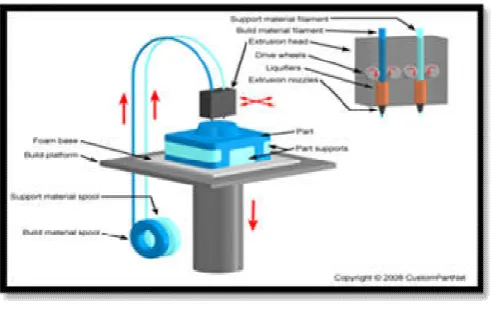
[image:2.595.359.507.226.461.2]Fused Deposition Modelling or Fused filament Fabrication was developed by S. Scott Crump in the late 1980s. The main mechanism in which the wax patterns and fixed bridges are printed is based on the principle of use of a ceramic paste which is coiled as a filament or wire (Figure 2) that can be used to build material models in layer by layer fashion. This technique is applied in the fabrication of Thermoplastic resins (Figure 1) for the fabrication of wax pattern frameworks. The layer thickness of the Fusion deposited material is about 0.178 and 0.356mm for the extruded thermoplastic material. (Zandparsa, 2014)
Figure 1. Thermoplastic pattern
Figure 2. FDM filament
3. Selective Electron Beam Melting:
As then name suggests, Selective Electron Beam melting (SEBM) manufactures parts by melting metal powder in layers by means of high vacuum electron beam. Electrons are used rather than lights so the materials printed are fully dense, void free and extremely strong when compared to other techniques. SEBM is employed in creation of highly porous Titanium Implants for Maxillofacial customized reconstructions. (Van Noort, 2012)
4. Laser Powder forming techniques:
[image:2.595.42.285.322.462.2]This technology is again classified into two types based on the material used. The two types are Selective Laser Melting and Selective Laser Sintering. The terms SLS is used to describe fabrication of pattern from ceramics or polymers whereas SLM is used to describe the fabrication of pattern from metals. (Abduo et al., 2014) This technique uses laser on a fine layer of powder to create a melted metal pool so that the powder particles fuse together. (Figure 3) The various materials used to create prostheses include Titanium and its alloys, Cobalt chromium alloys implants, crowns and bridges and fabrication of Removable partial denture frameworks. (Van Noort, 2012; Abduo et al., 2014)
Figure 3. Laser melting
Prosthodontics Applications
The applied aspects of additive manufacturing in Prosthodontics are in the divisions of
1. Removable Dental Prostheses 2. Fixed Dental Prostheses
3. Craniofacial Prostheses and Implants.
Removable Dental Prostheses:
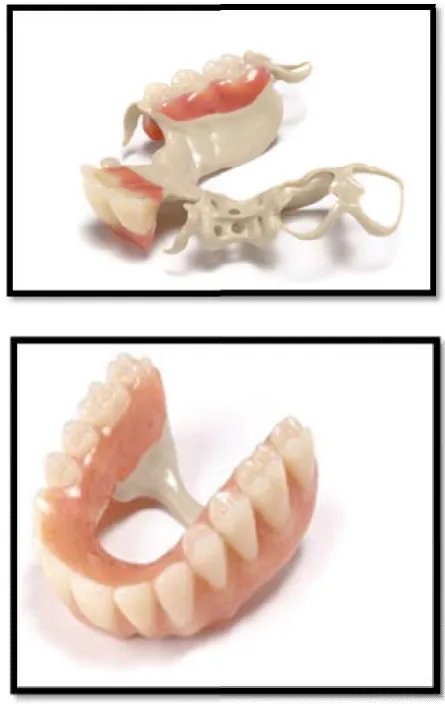
Removable partial and complete partial are the removable prosthesis which can be fabricated by digital printing. The digitization of Dental process, which summarises the 3d Printing, is beginning to deliver great accuracy in Removable prosthodontics. (Zandparsa, 2014) The various manufacturing materials used in Layered Manufacturing includes Cobalt Chromium, Titanium and its alloys, Polymethyl Methacrylate, PEEK, Photopolymerising resins, Polycarbonate and Nylon (polyamides). The first documentation of a CAD designed fit framework was in 2009, (Bohnenkamp, 2014) from which various techniques have been described for fabricating removable partial denture frameworks. RPD frame works uses SLM technology for creating patterns, in which material is built layer by layer and the size of this thin layer is of 20micro meters. (Van Noort, 2012) And moreover the shape of the
[image:2.595.41.287.500.659.2]powder particles need to be spherical or equiangular in order to create smooth, dense, homogenous surface properties with good hardness and corrosion resistance. (Peek Devin Utela et al., 2008) SLM fabricated Cobalt Chromium frameworks (Figure 4) showed better accuracy
surface properties. The nickel free and beryllium free cobalt chromium alloys are the material of choice for allergic patients. (Williams et al., 2006; Han et al., 2010; Williams
[image:3.595.320.543.134.497.2]Budtz-Jorgensen and Bochet, 1998; Eggbeer and Knott, 2014; Xin et al., 2013)
[image:3.595.37.285.182.327.2]Figure 4. Co-Cr Frameworks
Figure 5. Accuracy and fit of SLM fabricated frameworks
PEEK
The advantage of using PEEK material as partial Denture framework are light weight, strong, comfortable, the accurate digital design matches the patient’s individual anatomy and stable taste proprioception because it is metal free, no thermal or electrical conductivity, shock absorber during chewing and also the white colour of the framework gives and enhances better esthetics. A modified PEEK material containing 20% ceramic fillers presents high biocompatibility, good mechanical and chemical properties (Figure 6 and 7). modulus of elasticity is 4Gpa which reduces the stress transferred to the abutment and also simulates bone. The mechanical property includes melting point of 343 degree C, thermal conductivity of about 0.25 wt/ tensile strength
Mpa and water sorption for 24 hrs is 0.1%.
Photopolymerising resin
UV rays initiate the reaction and changes the properties of photopolymers. The physical property of the material can be powder particles need to be spherical or equiangular in order to create smooth, dense, homogenous surface properties with Peek Devin, 2014; SLM fabricated Cobalt Chromium 4) showed better accuracy (Figure 5) and surface properties. The nickel free and beryllium free cobalt chromium alloys are the material of choice for allergic patients.
Williams et al., 2004;
et al., 2005; Hems
Cr Frameworks
Accuracy and fit of SLM fabricated frameworks
The advantage of using PEEK material as partial Denture framework are light weight, strong, comfortable, the accurate digital design matches the patient’s individual anatomy and stable taste proprioception because it is metal free, no thermal conductivity, shock absorber during chewing and also the white colour of the framework gives and enhances better esthetics. A modified PEEK material containing 20% ceramic fillers presents high biocompatibility, good gure 6 and 7). The modulus of elasticity is 4Gpa which reduces the stress transferred to the abutment and also simulates bone. The mechanical property includes melting point of 343 degree C, / tensile strength, 90-100
UV rays initiate the reaction and changes the properties of photopolymers. The physical property of the material can be
changed from liquid to solid when the photopolymers are exposed to UV light, the light source initiates chemical reaction, changes the structure,
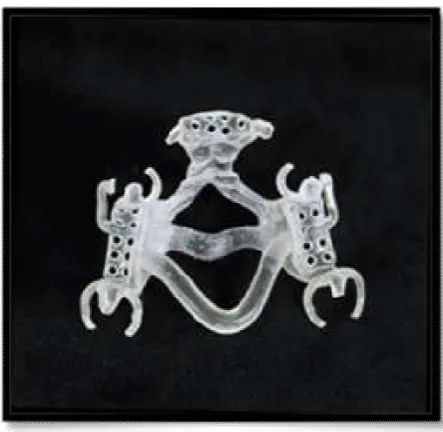
mechanical properties. In additive manufacturing Jetted 3d printers uses this polymer liquid to fabricate prosthesis ( 8).
Figure 6 and 7. PEEK Framework
The photopolymers contain 50
binders of the methacrylate family are acrylic and oligomers; methyl methacrylate oligomer and methyl methacrylate tetramer. This photopolymer consists of monomer based on acrylates or methacrylates ranging from 10 (Photopolymers, 2013) The free radical photoinitiators are Isopropylthioxanthone, Benzophene and 2,2 azobisisobutyronitrile. Photopolymers are classified into 3 groups such as classical photopolymers, new Photopolymers and the combinations of the above mentioned systems. (Polymer Source, 2013; Sigma
Co, 2009; Pandey, 2014)
compounds like acrylic and epoxy resin which are used in adhesive and coating show better handling properties obtained by photopolymerisaion of such ma
photopolymerisation and photo initiative systems are quite sensitive to visible light of 500nm
wavelength respectively and their bleaching capability allows photo imaging of polymers of layer greater than 100 micro meters thickness. (Buhler
photopolymers structures consist of benzophene portion of polyamide backbone and alkyl substitutes. The structures works as light absorbing chromophore, provides better thermal stability adjust the solubility and glass transition temperature. changed from liquid to solid when the photopolymers are UV light, the light source initiates chemical reaction, changes the structure, modifies the chemical and In additive manufacturing Jetted 3d printers uses this polymer liquid to fabricate prosthesis (Figure
PEEK Framework
[image:3.595.38.285.245.510.2]The liquid monomer consists of light sensitive photo initiator such as acrylate or methacrylate which reacts with photon particles of light to produce highly reactive free radical. These free radicals attract the double base monomer and convert it into polymer and the polymerisation process begins. The free radical photopolymers enhance the properties in handling, reliability and safety. The cinnamate polymer group does photocross linking reaction thereby improving the chemical and mechanical properties of the polymer.
Figure 8. Photopolymer resin framework
Overview of Fabricationof Removable prostheses
The main objective for designing a RPD framework includes simplicity, esthetics, biomechanics and patient comfort. The design fabrication of 3D Printing of Removable partial Denture framework includes basically four steps
1. The design process (Figure 10) 2. Deciding the contour
3. Build-up of the tissue surface
4. Creating the polished surface (Figure 11 and 12). (Van Noort, 2012; Utela et al., 2008)
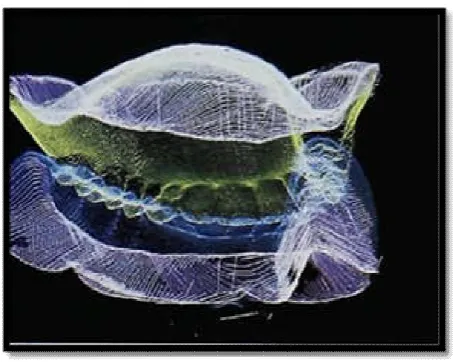
[image:4.595.336.528.57.407.2]The first step is the scanning the data of which various methods of scanning are used throughout dentistry including laser and light. After optical scanning (Figure 9) of the master cast or impression or the patient’s oral cavity directly, various point clouds are created which gives surface and volume to the 3D model design that is stored as stl format (stereolithographic format) also called triangular faceted model which is universal to translate each computer aided designed model to various RP machines. In the designed model electronic surveying (Williams et al., 2004) is carried out which paves way for design of path of insertion and desirable undercuts. After surveying the design, fabrication of the shape of the components of removable partial denture framework is carried out using 3dimensional software. The next process is the final process where SLM fabricates the metal framework from the .stl model data that was fed to the machine. The metal RPD framework were built successfully and various studies proved to show that the 3D printed frameworks had better design and accuracy when compared to the traditional casting methods. (Williams et al., 2006; Williams et al., 2004)
[image:4.595.50.272.170.386.2]Figure 9. Optical scanning
Figure 10. The Design process
Figure 11 and 12. Polishing of frameworks
[image:4.595.335.532.424.781.2]The CAD knowledge database for Removable complete denture includes the procedure in three major steps
1. Impression procedure 2. Denture design
3. Denture Fabrication (Figure 14)
[image:5.595.316.552.263.434.2]The impressions are recorded using special trays provided by a specific systems after which maxilla mandibular relationships are recorded using an anatomical measuring device, thus the occlusal vertical dimension is determined using conventional methods. Moreover the jaw relation methods vary according to the software systems used (Avadent and Dentca systems). The centric relation is recorded and also artificial teeth selection is made after which the double impression (Figure 13) is sent to the system software (Avadent and Dentca systems). The denture borders are first defined and marked accordingly to the system’s software, the virtual teeth setting is done followed by fabrication of the prosthesis base from the denture base material. The occlusal adjustments are made during the conventional clinic appointment. The advantages of digital fabrication of removable partial and complete dentures include, minimal appointments, prevention of risk and decrease in number of microbial colonisation thus having an infection control, superior quality control by the clinicians. Digital fabrication improves the properties of material by increasing the strength and fit of dentures and moreover there is repeatability and reproducibility of the prostheses. The main limitation of the 3D printing technology is that the material being used is expensive and there is increased laboratory cost. One such limitation in fabrication of complete denture is that there is inability to define the mandibular occlusal plane. (Bilgin et al., 2016)
Figure 13. Double impression
Fixed Dental Prosthesis:
3D fabrication of fixed prosthesis uses direct inkjet printing technology of Rapid prototyping. (Williams et al., 2006) The ceramic structures were printed with an aqueous 10 vol % 3Y TZP suspension using a thermal printer. Zirconia gains a unique place among ceramics due to its excellent mechanical properties. The zirconia frameworks are printed by means of 3D inkjet systems. (Figure 15) The strengths of the 3d printed zirconia prosthesis was found to be 764 Mpa and Fracture toughness was 6.7 Mpa. (Ebert et al., 2009) The dimensional accuracy obtained with Selective Laser sintering for the metal
[image:5.595.49.276.445.626.2]workpieces was in the range of 3-82 micro meters. The accuracy can be adjusted by controlling particle diameter of 30 micro meter. (Abduo et al., 2014)50-200 Micro meters is the layer thickness when constructing metal workpiece with the SLS technology. The SLM produced the metal workpieces (Figure 16) of 84 micro meters which is almost half the fit discrepancies when compared with milling which is of 166 micro meters. (Örtorp et al., 2011) The metal pattern produced by SLM exhibits micro porosity in the range of 30-45%. The advantages of 3d printing of fixed restorations include prevention of cracking, shrinkage and less material wastage. (Khaing et al., 2001; Traini et al., 2008; Silva et al., 2011) PEEK materials are biocompatible materials which are used for crown and bridge frameworks. It improves patient comfort with excellent preservation of anatagonist natural tooth. PEEK can be the material of choice for veneer repair without the need for crown removal and the natural teeth.
Figure 14. Denture Fabrication
Craniomaxillofacial Prosthesis and Implants:
sterilised by gas or radiation sterilization or by autoclaving. (Silva et al., 2011)
[image:6.595.51.273.89.254.2]Figure 15. 3D Inkjet Zirconia crowns
Figure 16. SLM metal crowns
PEEK cranial implants
Even at high temperature, highly strong engineering thermoplastic materials retain its chemical and mechanical properties. PEEK has the modulus of elasticity similar to bone. The custom implants are made of PEEK or silicone materials. The material is very light and it can be designed to replace exact anatomy even in difficult to construct regions. PEEK is a better choice over metallic implants that have a high modulus of elasticity and also prevents stress shielding. These material can be sterilised by autoclave, gamma or ethylene oxide. (Parthasarathy, 2014; Manning, 2012)
Method of Fabrication
A methodology of using computer aided design and Rapid prototyping was developed for fabrication of maxillofacial prosthesis construction. (Chacón-Moya et al., 2009)
The main steps include (Figure 18)
1. Data acquisition 2. 3d model reconstruction 3. Designing and positioning 4. Fabrication
5. Wax pattern trial
[image:6.595.307.551.279.457.2]6. Final prosthesis fabrication
Figure 17. 3D printed maxillofacial prostheses
Figure 18. Method of fabrication
The first three steps are virtual process whereas the last three steps are physical process for the fabrication of the prosthesis. To design the prosthesis three dimensional models of the deficit area as well as the mirror image of the contralateral healthy area should be obtained and exported as STL files. In Rapid prototyping technology, Fusion deposition modelling technology is used for the printing of the maxillofacial prosthesis. Also literature supports a combination of RP with conventional mould fabricating for the production of the final silicone prosthesis, Rapid prototyping technology enables accuracy in detail reproduction without requiring much of conventional procedures. The key advantages of rapid prototyping in construction of maxillofacial prosthesis includes, time saving procedure and appointments, the deformation of the soft tissue is prevented by 3d printing and impression technique thereby reduced discomfort to the patient and finally the mirrored image is exactly reproduced and the accuracy is found to be satisfactory when compared to conventional methods. (Chacón-Moya et al., 2009; Foletti et al., 2012; Subburaj et al., 2007)
Conclusion
Additive manufacturing takes baby steps in Prosthodontics and saves many conventional complicated and time consuming procedures. This makes the design of the prosthesis simpler and faster. 3d printing is currently an exponentially growing
[image:6.595.49.274.290.464.2]fabrication method and the days are within the reach where Rapid prototyping can become one of the main streams for digital fabrication of dental prosthesis.
Acknowledgement
I would like to give my deepest gratitude to my HOD and Guide Dr.Sunil Dhaded for enlightening me to take up this work. My sincere thanks to my Senior and mentor Dr.Subashani for showing me the path of growth in the initial and final stages of this write up of article. I would also like to thank my best friend and co-pg Dr.Lokesh Kumar, and Dr.Sangamma for helping me to add up to this work. I would also like to send my warmest gratitude to my roommate and sister Dr. Snehal Kadge for being with me during the process and progress of this work.
REFERENCES
Abduo J, Lyons K, Bennamoun M. Trends in computer-aided manufacturing in prosthodontics: a review of the available streams. International journal of dentistry. 2014 Apr 8;2014.
Alharbi N, Osman R, Wismeijer D. Effects of build direction on the mechanical properties of 3D-printed complete coverage interim dental restorations. The Journal of
prosthetic dentistry. 2016 Jun 30;115(6):760-7.
Bilgin MS, Bayataroglu EN, Erdem A, Dilber E. A review of Computer-aided manufacture techniques for removable denture fabrication. Eur J Dent 2016;10:286-91.
Bohnenkamp DM. Removable partial dentures: clinical concepts. Dental clinics of North America. 2014 Jan 31;58(1):69-89.
Budtz-Jorgensen E, Bochet G. Alternate framework designs for removable partial dentures. The Journal of prosthetic
dentistry. 1998 Jul 31;80(1):58-66.
Buhler N, Bellus D. Photopolymers as a powerful tool in modern technology. Pure and applied chemistry. 1995 Jan 1;67(1):25-31.
Castle Island Co, 2009. How photopolymers work. [Online] Available athttp://www.additive3d.com/photo.htm. [Accessed: 05.10.2013].
Chacón-Moya E, Gallegos-Hernández JF, Piña-Cabrales S, Cohn-Zurita F, Goné-Fernández A. Cranial vault reconstruction using computer-designed polyetheretherke tone (PEEK) implant: case report. Cir Cir. 2009 Nov 1;77:437-40.
Chia HN, Wu BM. Recent advances in 3D printing of biomaterials. Journal of biological engineering. 2015 Mar 1;9(1):1.
Coward Trevor, Watson M Roger, Wilkinson C Ian. Int J
Prosthodont 1999;12:20-27.
Ebert J, Özkol E, Zeichner A, Uibel K, Weiss Ö, Koops U, Telle R, Fischer H. Direct inkjet printing of dental prostheses made of zirconia. Journal of dental research. 2009 Jul 1; 88(7):673-6.
Eggbeer D, Bibb R, Williams R. The computer-aided design and rapid prototyping fabrication of removable partial denture frameworks. Proceedings of the Institution of Mechanical Engineers, Part H: Journal of Engineering in
Medicine. 2005 Mar 1;219(3):195-202.
Engelbrecht J, Groeger G, Ziegler W, inventors; S & C Polymer Silicon-Und Composite-Spezialitaten Gmbh, assignee. Photoinitiator system with titanocene initiators. United States patent US 6,880,296. 2005 Apr 19.
Foletti JM, Lari N, Dumas P, Compes P, Guyot L. [PEEK customized implant for skull esthetic reconstruction]. Revue de stomatologie et de chirurgie maxillo-faciale. 2012 Dec;113(6):468-71.
Han J, Wang Y, Lü P. A preliminary report of designing removable partial denture frameworks using a specifically developed software package. International Journal of
Prosthodontics. 2010 Jul 1;23(4).
Hems E, Knott NJ. 3D printing in prosthodontics. Faculty
Dental Journal. 2014 Oct;5(4):152-7.
http://www.photopolymer.com/index.htm. [Accessed: 12.09. 2013].
Khaing MW, Fuh JY, Lu L. Direct metal laser sintering for rapid tooling: processing and characterisation of EOS parts.
Journal of Materials Processing Technology. 2001 Jun
15;113(1):269-72.
Lima JM, Anami LC, Araujo RM, Pavanelli CA. Removable partial dentures: use of rapid prototyping. Journal of
Prosthodontics. 2014 Oct 1;23(7):588-91.
Manning L. Additive manufacturing used to create first laser-sintered cranial implant geometry. Adv Mater Processes. 2012; 170(9):33-5.
Nayar S, Bhuminathan S, Bhat WM. Rapid prototyping and stereolithography in dentistry. Journal of pharmacy &
bioallied sciences. 2015 Apr;7(Suppl 1):S216.
Örtorp A, Jönsson D, Mouhsen A, von Steyern PV. The fit of cobalt–chromium three-unit fixed dental prostheses fabricated with four different techniques: A comparative in vitro study. Dental Materials. 2011 Apr 30;27(4):356-63. Pandey R. Photopolymers in 3D printing applications.2014. Parthasarathy J. 3D modeling, custom implants and its future
perspectives in craniofacial surgery. Annals of
maxillofacial surgery. 2014 Jan; 4(1):9.
Peek Devin, Stark Elizebeth PEEK – A New Material for CADCAM Dentistry June 2014 (Email: [email protected])
Photopolymers (2013), Photopolymers. [Online] Available at: Polymer SourceTM 2013. Oligomers (Dimer & Trimer Etc.).
[Online] Available at:http://polymersource.com/browse1. php?ID=36 [Accessed: 01.10.2013].
SIGMA-ALDRICH, 2013. Applications: Free radical initiators. [Online Available at: http://www.sigmaaldrich. com/content/dam/sigmaaldrich/docs/Aldrich/General_Infor mation/photoinitiators.pdf [Accessed: 05.10.2013].
Silva NR, Witek L, Coelho PG, Thompson VP, Rekow ED, Smay J. Additive CAD/CAM process for dental prostheses. Journal of Prosthodontics. 2011 Feb 1;20(2):93-6.
Subburaj K, Nair C, Rajesh S, Meshram SM, Ravi B. Rapid development of auricular prosthesis using CAD and rapid prototyping technologies. International journal of oral and
maxillofacial surgery. 2007 Oct 31;36(10):938-43.
Torabi K, Farjood E, Hamedani S. Rapid prototyping technologies and their applications in prosthodontics, a review of literature. Journal of Dentistry, Shiraz University
of Medical Sciences. 2014 May 1;1(1):1-9.
Traini T, Mangano C, Sammons RL, Mangano F, Macchi A, Piattelli A. Direct laser metal sintering as a new approach to fabrication of an isoelastic functionally graded material for manufacture of porous titanium dental implants. Dental
materials. 2008 Nov 30;24(11):1525-33.
Utela B, Storti D, Anderson R, Ganter M. A review of process development steps for new material systems in three dimensional printing (3DP). Journal of Manufacturing
Van Noort R. The future of dental devices is digital. Dental
materials. 2012 Jan 31;28(1):3-12.
Williams RJ, Bibb R, Eggbeer D, Collis J. Use of CAD/CAM technology to fabricate a removable partial denture framework. The Journal of prosthetic dentistry. 2006 Aug 31;96(2):96-9.
Williams RJ, Bibb R, Rafik T. A technique for fabricating patterns for removable partial denture frameworks using
digitized casts and electronic surveying. The Journal of
prosthetic dentistry. 2004 Jan 31;91(1):85-8.
Xin XZ, Chen J, Xiang N, Wei B. Surface properties and corrosion behavior of Co–Cr alloy fabricated with selective laser melting technique. Cell biochemistry and biophysics. 2013 Dec 1;67(3):983-90.
Zandparsa R. Digital imaging and fabrication. Dental Clinics
of North America. 2014 Jan 31;58(1):135-58.
43820 Subashani et al. A review on digital sculpting in prosthodontics- Adding depth to every concept