Original Research Article
A study to assess the newborn care practices among mothers at a
tertiary care hospital in Hyderabad, Telangana
Anupama Pulla, Asma*, Vimala Thomas
INTRODUCTION
Sustainable development goal 3.2 aims to reduce neonatal mortality to 12 per 1000 live births by 2030 globally. National health Policy 2017 which was framed in order to achieve the health related targets of Sustainable development goals aims to reduce neonatal mortality rate to 16 per 1000 live births by 2025.1 The neonatal mortality rate of India was 24 and of Telangana was 21 in the year 2016 as per sample registration system 2016. The early neonatal mortality of India was 18 and of Telangana were 16 in the year 2016.2
Although infant mortality has fallen in India over the past two decades, the rate of fall is slowing. One reason is the contribution of neonatal mortality, which has remained
fairly steady over this period. Neonatal mortality contributes to over 61.3% of all infant deaths.1
Early neonatal period (<1 week) is the crucial period in the life of an infant as the risk of death is greatest during the first 24-48 hours after birth. More than half of neonatal deaths (<28 days) occur during early neonatal period. Majority of these deaths can be attributed to prematurity, infections, diarrhea, birth asphyxia etc. Some of these deaths have been attributed to harmful newborn care practices in relation to bathing, feeding and cord care.3
Initiation of respiration, oxygenation of arterial blood, temperature adaptation and initiation of breast feeding are vital for survival of neonate. Cord care, care of skin and
ABSTRACT
Background: Early neonatal period (<1 week) is the crucial period in the life of an infant as the risk of death is greatest during the first 24- 48 hours after birth. In India, around 61.3% of all infant deaths occur during neonatal period (<28 days) and more than half of these deaths occur during early neonatal period. Most of these deaths can be attributed to harmful newborn care practices in relation to bathing, feeding, cord care etc. The aims and objectives of the study were to assess the newborn care practices among women who delivered in Gandhi Hospital; to assess the relationship between maternal education and newborn care practices among study population.
Methods: A cross sectional study was carried out among 200 women who delivered in Gandhi Hospital, Hyderabad,
Telangana from March to June 2017 and a predesigned, pre tested questionnaire was used to obtain information.
Results: The mean age of study population was 21.5±2.3 years. Around 61.9% of mother’s breastfed within first hour
of life and 93.5% fed colostrum. Around 17% were given pre lacteal feeds like cow milk, honey, water etc. No harmful cord care practices like application of cow dung etc. were not followed.
Conclusions: Majority of the study population had correct knowledge regarding newborn care practices. Although some of the traditional practices were still observed like giving pre lacteal feeds, discarding colostrum and avoidance of certain foods like pulses, meat, curd etc. by mother.
Keywords: Newborn care practices, Neonatal period, Breast feeding
Department of Community Medicine, Gandhi Medical College, Hyderabad, Telangana, India
Received: 10 January 2019
Accepted: 08 February 2019
*Correspondence:
Dr. Asma,
E-mail: [email protected]
Copyright: © the author(s), publisher and licensee Medip Academy. This is an open-access article distributed under
the terms of the Creative Commons Attribution Non-Commercial License, which permits unrestricted non-commercial use, distribution, and reproduction in any medium, provided the original work is properly cited.
care of eyes and delayed bathing play a crucial role in helping the neonate adapt to alien environment. Immunization of neonate with birth dose of oral polio vaccine, Hepatitis–B and BCG also aid in lowering the infections. Only when all these measures are taken correctly, a neonate improves its chances of survival and neo natal mortality rate can be lowered.
In institutional deliveries, spontaneous efforts are put to initiate breathing and circulation and to reduce birth asphyxia. Clean and safe delivery practices are also followed to ensure asepsis and reduce the risk of infections to newborn. Hypothermia, cord care, care of eyes and immunization are also addressed so as to safeguard the health of newborn. But still, different customs and beliefs which prevail in our community, leads to adoption of harmful newborn care practices among caregivers. Delaying breast feeding, discarding colostrum, application of harmful and infectious material to umbilical stump, denying mother nutritious food, pre lacteal feeds etc., are some of the common harmful newborn practices, employed in our country. This increases the risk of infections, malnutrition and thereby increases the risk of mortality and morbidity.
The objective of the present study was to assess the knowledge and practices of mother in relation to newborn care viz. prevention of hypothermia, prevention of birth asphyxia, colostrum feeding, early initiation of breast feeding and maternal diet post-delivery.
Aims and objectives
To assess the newborn care practices among women who delivered in Gandhi Hospital.
To assess the relationship between maternal education and newborn care practices among study population.
METHODS
Study design: Cross sectional study.
Study period: March-June 2017
Study area
Gandhi Hospital– Tertiary care centre, Hyderabad, Telangana
Study sample and study population
A convenient sample of 200 women who delivered in the hospital was taken.
Inclusion criteria
All the women who delivered in the hospital and whose child was in neonatal period (<28 days).
Exclusion criteria
Those who were not willing to be a part of the study.
Study tool
A pre-designed, pre-tested, semi-structured questionnaire was used.
Data collection
The data was collected by interview method by asking the questions from the questionnaire and verifying records wherever necessary.
Data analysis
The data obtained was analyzed using Microsoft Excel. Descriptive statistics were calculated. Statistical tests of significance were applied wherever necessary.
Ethical considerations
Ethical clearance was obtained from Institutional Ethics Committee prior to start of study. Informed consent was taken before administering the questionnaire to study population.
RESULTS
A total of 200 post-natal mothers took part in this study. The mean age of study population was found to be 21.5 ± 2.3 years. Majority (60.3%) of the neonates were females and 39.5% were males. Majority (56%) of the study subjects had primary education; 24% were illiterate; 10% had secondary education; 10% were graduates. Around 76% of study population had 13 ante natal checkups; 12% had 7 -8 antenatal visits and 12% had 4 -5 antenatal visits.
Around 62% of the families were nuclear families; 20% were 3-generation families and 18% were Joint families. Almost 46% of them belonged to upper lower class (class IV) and 30% to lower class (Class V) and 14% belonged to upper middle class (class III) according to the modified Kuppuswamy’s Socio economic classification.
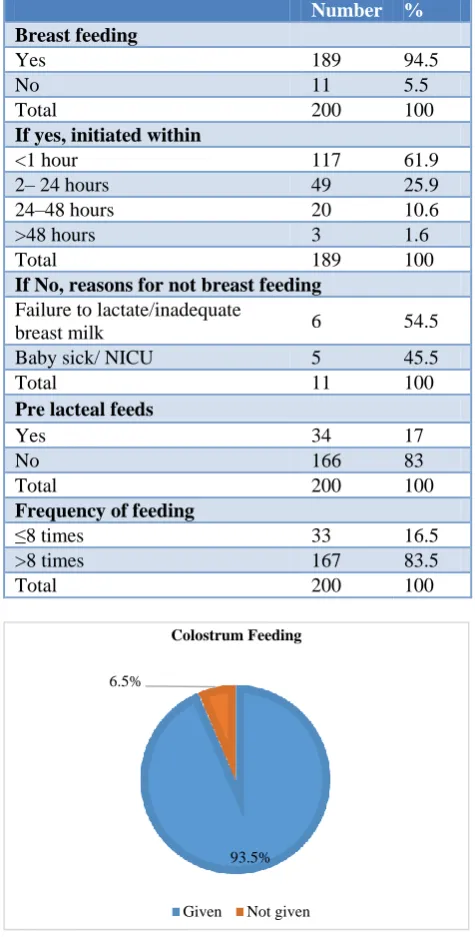
Table 1: Distribution of study population according to breast feeding practices.
Number % Breast feeding
Yes 189 94.5
No 11 5.5
Total 200 100
If yes, initiated within
<1 hour 117 61.9 2– 24 hours 49 25.9 24–48 hours 20 10.6 >48 hours 3 1.6
Total 189 100
If No, reasons for not breast feeding
Failure to lactate/inadequate
breast milk 6 54.5 Baby sick/ NICU 5 45.5
Total 11 100
Pre lacteal feeds
Yes 34 17
No 166 83
Total 200 100
Frequency of feeding
≤8 times 33 16.5 >8 times 167 83.5
Total 200 100
Figure 1: Distribution of study population as per feeding of colostrum.
Table 2: Distribution of study population as per mother’s knowledge on exclusive breast feeding.
Knowledge on exclusive breast
feeding Number %
<6 months 31 15.5
6 months 130 65
>6 months and <1 year 17 8.5
>1 year 18 9
No knowledge 4 2
Total 200 100
Around 93.5% of study subjects fed colostrum to their babies and were aware of the benefits of colostrum for the newborn. Almost 6.5% of them did not give colostrum to their babies. Among the reasons for not giving colostrum, the most common were– harmful to baby (42%); prohibited by elderly (52%); ignorant of advantages (6%) (Figure 1).
Around 65% of study subjects had correct knowledge about exclusive breast feeding i.e. 6 months. Almost 15.5% mentioned it as less than 6 months and 9% mentioned it as more than 1 year. Around 68.5% of mothers had correct knowledge about correct positioning of mother, baby and about proper attachment of baby’s mouth to nipple. The knowledge about correct breast feeding technique was imparted by ANM/Staff nurse (60%); doctor (35%) and by ASHA or Anganwadi worker (5%) during their ante natal visits. Around 92.5% of women mentioned that they clean their nipple before every feed while 7.5% mentioned they clean once a day (Table 2).
Table 3: Distribution of study population as per cord care practices.
Number % Cord care practices
Apply oil 8 4
Apply povidone powder 142 71
Nothing 50 25
Total 200 100
Mother’s knowledge on fall of cord stump
<7 days 73 36.5 7 -15 days 79 39.5
>15 days 2 1
Don’t know 46 23
Total 200 100
Figure 2: Distribution of study population as per knowledge of bathing.
93.5% 6.5%
Colostrum Feeding
Given Not given
0.00% 10.00% 20.00% 30.00% 40.00% 50.00% 60.00%
Delay bathing for 7 days
Give immediately after birth
After 2 days
Knowledge about bathing newborn
Delay bathing for 7 days Give immediately after birth
In this study it was found that no harmful materials like mud, cow dung etc. were applied to cord stump. Around 25% of mothers did not apply anything to cord stump and 71% applied povidone powder and around 4% said they applied oil during massaging the whole body of baby. Around 76% of study population had adequate knowledge about the time of cord stump fall (Table 3).
Around 50.5% of mothers had correct knowledge about bathing of the baby that it should be delayed for first 7 days to prevent hypothermia, while 38% believed it should be given soon after birth to clean the baby of the meconium and blood and another 11.5% opined that delaying for 2 days was adequate to prevent hypothermia (Figure 2).
In this study, only 18% of mothers consumed their usual diet without any restrictions. Around 57% stopped intake of “cold” foods like cucumber, curd, orange, fruits, lemon
etc. and the reason mentioned was consumption of cold foods by mother will lead to development of upper respiratory tract infection in newborn and 6% stopped intake of egg/meat as they believed it will decrease breast milk production. Almost 13% of study population did not consume pulses as they believed it will delay wound healing (Table 4).
Table 4: Distribution of study population according to maternal dietary patterns.
Maternal diet Number %
Stop taking “cold” foods 114 57
Stop taking spicy foods 12 6
No meat/egg intake 12 6
No pulses intake 26 13
Usual diet and no restrictions 36 18
Total 200 100
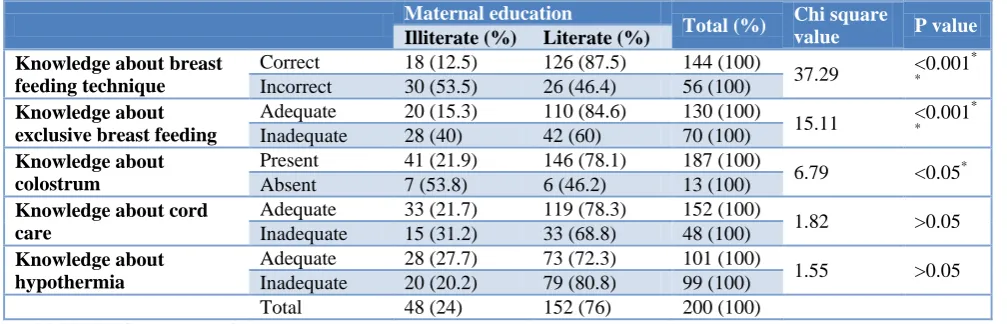
Table 5: Relationship between maternal education and newborn care practices.
Maternal education
Total (%) Chi square
value P value
Illiterate (%) Literate (%)
Knowledge about breast feeding technique
Correct 18 (12.5) 126 (87.5) 144 (100)
37.29 <0.001
*
*
Incorrect 30 (53.5) 26 (46.4) 56 (100)
Knowledge about exclusive breast feeding
Adequate 20 (15.3) 110 (84.6) 130 (100)
15.11 <0.001
*
*
Inadequate 28 (40) 42 (60) 70 (100)
Knowledge about colostrum
Present 41 (21.9) 146 (78.1) 187 (100)
6.79 <0.05* Absent 7 (53.8) 6 (46.2) 13 (100)
Knowledge about cord care
Adequate 33 (21.7) 119 (78.3) 152 (100)
1.82 >0.05 Inadequate 15 (31.2) 33 (68.8) 48 (100)
Knowledge about hypothermia
Adequate 28 (27.7) 73 (72.3) 101 (100)
1.55 >0.05 Inadequate 20 (20.2) 79 (80.8) 99 (100)
Total 48 (24) 152 (76) 200 (100)
** - highly significant; *- significant.
In this study, it was observed that literate mothers had correct knowledge about breast feeding technique, about duration of exclusive breast feeding and about benefits of colostrum. The difference in the knowledge about above parameters between literate and illiterate mothers was found to be statistically significant. No statistical significance was observed between education and knowledge about cord care and hypothermia.
DISCUSSION
In the present study, the mean age of study population was found to be 21.5±2.3 years. This finding was similar to a study conducted in North India where the mean age of the mothers interviewed was 24.03 years.4 In the present study, 56% of the study subjects had primary education and 24% were illiterate. These findings were different to a study conducted in Meerut where 53.58% of the mothers were illiterate and 30.35% of the mothers had educated up to primary level.5
In our study almost 46% of them belonged to upper lower class (class IV) and 30% of them related to lower socio
economic class (Class V). This was similar to a study by Ahmad et al in which 39.28% belonged to IV social Class and 33.92% women belonged to V social Class.5
In the present study around 76% of study population had 13 ante natal checkups. This finding was different when compared to a study conducted by Baqui et al where only 17% of women had antenatal checkup.6
In the present study, 61.9% initiated within first hour of life and 25.9% within 2–24 hours of life. This finding differed with a study by Noor et al where only 18.7% actually have initiated feeding within the first hour.7 The present findings were similar to a study by Mittal et al where 37.6% of the mothers initiated breast feeding within 2 hours.8
In the present study, around 93.5% of study subjects fed colostrum to their babies and were aware of the benefits of colostrum for the newborn. This finding was similar to a study conducted in Rajasthan, where 75% of women were aware of benefits of colostrum and fed colostrum to their babies.8
In this study, only 18% of mothers consumed their usual diet without any restrictions. This finding was similar to a study by Leena et al where majority of subjects (83.3%) had a restricted diet for the postnatal mothers.10
In this study it was found that no harmful materials like mud, cow dung etc. were applied to cord stump. Around 71% applied povidone powder and around 4% said they applied oil during massaging the whole body of baby. This finding was similar to a study by Leena et al where mothers used ointment, antiseptic powder and oil for easy shriveling of cord stump.10
In present study, around 50.5% of mothers had correct knowledge about bathing of the baby that it should be delayed for first 7 days to prevent hypothermia, while 38% believed it should be given soon after birth and another 11.5% opined that delaying for 2 days was adequate to prevent hypothermia. This finding was similar to a study by Leena et al where more than half of the subjects recommend bathing newborn on second day of birth, 24.8% on fifth day, 9.5% after cord falls (7-12 days) and 6.2% on the day of birth.10
CONCLUSION
Majority of the study population had correct knowledge regarding newborn care practices.
Majority of study subjects had adequate knowledge about breast feeding, exclusive breast feeding and colostrum.
Some of the traditional practices were still observed like giving pre lacteal feeds, discarding colostrum and avoidance of certain foods like pulses, meat, curd etc by mother.
Maternal education was found to be significantly associated with knowledge about breast feeding.
Recommendations
Although there is significant improvement in the knowledge levels about breast feeding among mothers, there is need to increase awareness among the mothers during antenatal visits about care of cord, prevention of hypothermia and about maternal diet intake post-delivery.
Doctors and nursing staff employed in hospitals can also impart education to postnatal mothers periodically or once daily post-delivery.
Limitations of study
The findings of this study cannot be generalized to whole community as this is a hospital based study.
ACKNOWLEDGEMENTS
The authors are grateful to the Principal of Gandhi Medical College and Superintendent of Gandhi Hospital for providing an opportunity to carry out the study. The authors are thankful to the study subjects for their cooperation and support in carrying out this study.
Funding: No funding sources Conflict of interest: None declared
Ethical approval: The study was approved by the Institutional Ethics Committee
REFERENCES
1. Park K. Park’s textbook of Preventive and Social Medicine. 24th edition. Jabalpur: Banarsi Das Bhanot; 2017: 509.
2. Govt. of India (2016). Sample Registration System Statistical Report 2016, Office of Registrar, General of India. 2016.
3. Bhalwar R. Textbook of Community Medicine. 2nd edition. Wolters Kluwer. 2018: 342-343.
4. Upadhyay RP, Singh B, Rai SK, Anand K. Role of Cultural Beliefs in Influencing Selected Newborn Care Practices in Rural Haryana. J Tropical Pediatrics. 2012;58(5):407-8.
5. Ahmad S, Goel K, Agarwal G, Goel P, Kumar V, Prakash A. Assessment of the Newborn Care Practices in Home Deliveries among Urban Slums of Meerut, UP India. J Community Med Health Educ. 2012;2:171.
6. Baqui AH, Williams EK, Darmstadt GL, Kumar V. Newborn care in rural Uttar Pradesh. Indian J Pediatrics. 2007;74:241-7.
7. Noor S, Rajesh AH, Babu GK. A Study on Breast Feeding Practices among Mothers of Urban Slums of Rourkela. IOSR J Dental Med Sci. 2015;14(5):77-80.
8. Mittal P. Knowledge, attitude and practice of breast feeding at a tertiary care center in Rajasthan. Scholars Acad J Biosci. 2014;2(10):714-8.
9. Ekambaram M, Bhatt VB, Asif, Padiyath Ahamed. Knowledge attitude and practice of breastfeeding among postnatal mothers. Curr Pediatr Res. 2010;14(2):1-8.
10. Leena Sankar JL, Amudha M. Maternal and New-Born Care Practices by Traditional Delivery Care Givers: A Cross Sectional Survey. Int J Sci Res. 2015;4(11):2028-32.
Cite this article as: Pulla A, Asma, Thomas V.A