Research Networking Programme
Researching Complex Interventions
for Nursing (REFLECTION)
The REFLECTION Research
Networking Programme, funded
by research councils and
academies from eight European countries, is leading
the drive to re-focus nursing research activity and
develop knowledge for nursing that is both useful
and that can be readily translated into practice.
REFLECTION is bringing together leading European
researchers in nursing and other multidisciplinary
experts to work within an overarching complex
interventions research framework.
REFLECTION is developing:
• An interdisciplinary European Faculty network of
researchers in nursing, equipped to design, plan
and implement programmatic, mixed methods and
complex interventions research in nursing.
• Programmes of translational research in nursing
which are multi-state, multi-disciplinary, and directed
at improving the evidence base of nursing to meet
European health and social care concerns.
• Shared knowledge and expertise by running summer
schools for early stage researchers in Europe using a
complex interventions research methods curriculum.
Through summer schools, masterclasses and seminar
programmes, REFLECTION is disseminating
cutting-edge research methods of critical importance for
developing the scientific evidence base for nursing
practice. The network includes current nursing
researchers and the new generation of early stage
European researchers.
REFLECTION • 3
The Evidence Base for Nursing
Nursing has a critical role in meeting health and social care challenges such as an ageing population, chronic diseases and new endemics, at the fore of European health concerns. Increasingly, nurses engage in a wide range of activities, many of which are highly complex and take place in multiple care environments. These include acute medicine, chronic care facilities, mental health, primary care, and residential care homes.
Changes in health care organisation internationally (including short hospital periods, growing responsibility for patients to self-care) are placing more health care in the hands of nurses, increasing the scope, the overall need for nursing care and for that care to rest on solid evidence. However, the evidence base for nursing is undeveloped with a very significant ‘translational gap’. Only a minority of examples of research in nursing can be readily transferred to practice.
Reviews show that between 2000 and 2006, studies from the top ten scientific nursing journals were mainly descriptive and did not report the impact of nursing interventions on patients. Of 210 papers published in two international nursing science journals in one year, only 15% were addressing ‘research that may carry strong evidence for practice’ (Hallberg, 2006)1.
Institutional reviews of nursing research also show a lack of coherence and coordination. This limits the international impact of nursing research activity. Despite some examples of experimental nursing research which have demonstrated the feasibility of complex intervention research, most nursing research is descriptive, cross-sectional, context specific and
1. Hallberg, I.R., 2006. Challenges for future nursing research: providing evidence for health care practice.
Int. J. Nurs. Stud., 43 (8), 923-927.
introspective rather than experimental, longitudinal, generalisable and
implementation / translation focused. This situation must change if nursing is to realise its potential for making a secure evidence-based contribution to European health and health care.
Activity 1
• Develop a European Faculty network of researchers in nursing, equipped to design, plan and implement programmatic, mixed methods and complex interventions research in nursing. Target
• Experienced researchers in nursing from European states attend workshops and seminars in complex interventions research methods.
Milestones
• 2011–2015: annual REFLECTION expert seminars and workshops.
• Summer 2012: at least one publication in a peer review nursing research journal illustrating the application of complex interventions methods.
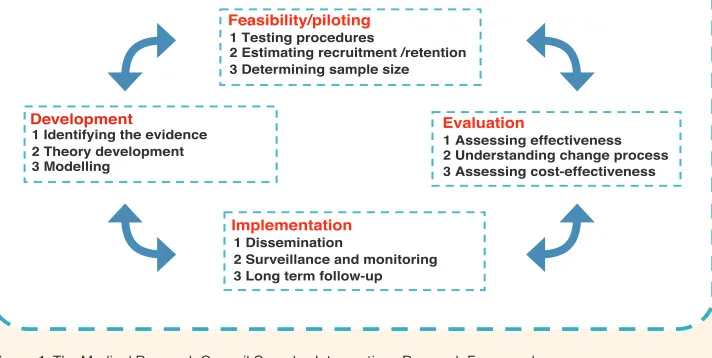
• 2013-2015: further papers published. Nursing is a classic example of a ‘complex intervention’ – an activity that contains a number of component parts with the potential for interactions between them. When applied to the intended target population these produce a range of variable outcomes. Modern guidance on research methods recommends that the knowledge base for complex interventions in health care should be investigated through a process of development, feasibility/piloting, evaluation and
implementation, where there is a dynamic interchange between stages (MRC, 2008). The REFLECTION network will deliver a
step change in the quality and focus of research in nursing throughout Europe to the benefit of European citizens in meeting their health and social care needs. The REFLECTION network is providing the leadership for the next phase of research in nursing. The network aims to move European research in nursing to an experimental, longitudinal, generalisable and implementation/translation focused position.
REFLECTION will:
• increase translational research reports in scientific (nursing) journals;
• ensure that mixed- and multi-methods in nursing research become the norm, linking quantitative and qualitative research traditions;
• lead to the development of step-wise research programmes in nursing involving linked series of studies which are descriptive, test, develop and refine theory, explore possible explanatory models, and translate nursing activities and practices in clinical trials;
• increase the number of doctoral studies within programmatic and multi-national studies addressing complex health issues; • lead to more multi-national applications
for European research funding from nurse researchers and their colleagues investigating relevant nursing
interventions;
• refocus nursing research to develop knowledge which improves the evidence-base for routine nursing care internationally.
Aims and Objectives
The Scientific Context
REFLECTION • 5
Activity 2
• Share knowledge and expertise by running summer schools for early stage researchers in Europe using a complex interventions research methods curriculum.
Target
• 120 early stage researchers attend annual summer school programme.
Milestones
• 2011–2015: summer schools run by established faculty trained in complex interventions research methods.
Activity 3
• Develop programmes of translational research in nursing which are multi-state, multi-disciplinary, and directed at improving the evidence base of nursing to meet European health and social care concerns.
Target
• Experienced researchers in nursing who wish to collaborate across Europe meet as part of REFLECTION activities and develop programmes of European collaborative research activity.
Figure 1. The Medical Research Council Complex Interventions Research Framework
Feasibility/piloting
1 Testing procedures
2 Estimating recruitment /retention 3 Determining sample size
Development
1 Identifying the evidence 2 Theory development 3 Modelling
Evaluation
1 Assessing effectiveness 2 Understanding change process 3 Assessing cost-effectiveness
Implementation
1 Dissemination
2 Surveillance and monitoring 3 Long term follow-up
Milestones
• 2011-2015: at least one European multi-national research programme funding bid submitted annually by REFLECTION network members.
Core Literature
• Campbell N. et al. Designing and evaluating complex interventions to improve health care. BMJ, 2007. • Chalmers I. & Glasziou P. Avoidable
waste in the production and reporting of research evidence.Lancet, 2009. • Grol R. et al. Improving Patient Care.
Elsevier, London, 2005.
• Hallberg I. R. Moving nursing research forward towards a stronger impact on health care practice? Int. J. Nurs. Stud., 2009.
• MRC. Developing and evaluating complex interventions: new guidance. 2008. • Richards D, Borglin G. Complex
The REFLECTION Network
Summary
Nurses, health scientists and other health and social care professionals including medical professionals are welcome to join the REFLECTION network. Network members will be those who want to develop effective nursing interventions by using integrated and programmatic mixed methods. Network members are committed to developing, testing and translating research evidence into nursing practice. We also welcome members who are consumers of nursing care, or their carers.
Current REFLECTION network members are all leading researchers in nursing, many of whom are members of the European Academy of Nursing Science (EANS). REFLECTION Research Network members collaborate within their respective countries and with other European states on
research of relevance to the nursing care of European citizens. Collaborations are multi-state, multi-disciplinary and extensive.
Join the REFLECTION Network now!
Networking opportunities with other interested researchers can be accessed on: www.reflection-network.eu
Official information on REFLECTION activities can be found on the European Science Foundation website:
www.esf.org/reflection
For further information on European nursing research:
www.european-academy-of-nursing-science.com
REFLECTION • 7
ESF Research Networking Programmes are principally funded by the Foundation’s Member Organisations on an à la carte basis. REFLECTION is supported by: • Fonds voor Wetenschappelijk
Onderzoek-Vlaanderen (FWO)
Research Foundation Flanders, Belgium • Suomen Akatemia/Finlands Akademi
Research Council of Health, Academy of Finland, Finland
• Deutsche Forschungsgemeinschaft (DFG)
German Research Foundation, Germany • Norges Forskningsråd
Research Council of Norway, Norway • Agentúra na podporu výskumu
a vývoja (APVV)
Slovak Research and Development Agency, Slovak Republic
• Vetenskapsrådet (VR)
Swedish Research Council, Sweden • Schweizerischer Nationalfonds (SNF)
Swiss National Science Foundation, Switzerland
• Medical Research Council (MRC) United Kingdom
The European Science Foundation (ESF) was established in 1974 to provide a common platform for its Member Organisations to advance European research collaboration and explore new directions for research. It is an independent organisation, owned by 78 Member Organisations, which are research funding organisations and research performing organisations, academies and learned societies from 30 countries. ESF promotes collaboration in research itself, in funding of research and in science policy activities at the European level.
European Science Foundation
www.esf.org
December 2011 – Print run: 1 000
REFLECTION Steering Committee
• Professor David Richards (Chair) College of Life and Environmental Sciences, University of Exeter, Exeter • United Kingdom Email: [email protected] • Professor Sabina M. De Geest
Institute of Nursing Science,
University of Basel, Basel • Switzerland Email: [email protected] • Professor Helena Leino-Kilpi
Faculty of Medicine, University of Turku, Turku • Finland
Email: [email protected] • Professor Ingalill Rahm Hallberg
Offi ce of the Assistant Vice Chancellor, Lund University, Lund • Sweden
Email: [email protected] • Professor Gabriele Meyer
Faculty of Health, School of Nursing Science, University of Witten/Herdecke, Witten • Germany
Email: [email protected] • Professor Walter Sermeus
Centre for Health Services & Nursing Research, Catholic University Leuven, Leuven • Belgium
Email: [email protected] • Dr Tomáš Sollár
Institute of Applied Psychology, Faculty of Social Sciences and Health Care, Constantine the Philosopher University in Nitra, Nitra • Slovak Republic Email: [email protected]
• Professor Astrid K. Wahl
Department of Health Sciences, Institute of Health and Society, University of Oslo, Oslo • Norway
Email: [email protected]
External Advisory Expert
• Dr Gunilla Borglin
Department of Health Science, Blekinge Institute of Technology, Karlskrona • Sweden
Email: [email protected]
ESF Liaison
Dr Kirsten Steinhausen
Science
Ms Blanche Facchini
Administration
Biomedical Sciences Unit European Science Foundation 1 quai Lezay-Marnésia BP 90015
67080 Strasbourg cedex France
Tel: +33 (0)3 88 76 71 18 Fax: +33 (0)3 88 37 05 32 Email: [email protected]
For the latest information
on this Research Networking Programme consult the REFLECTION website: www.esf.org/refl ection
Cover pictures: