Interdisciplinary model for infusing food security into STEM curriculum
Maleka P. Hashmi a* and Kitrina M. Carlsona University of Wisconsin–Stout
Submitted 13 December 2011 / Revised 20 March, 20 April, and 31 July 2012 / Accepted 2 August 2012 / Published online 30 October 2012
Citation: Hashmi, M. P., & Carlson, K. M. (2012). Interdisciplinary model for infusing food security into STEM curriculum. Journal of Agriculture, Food Systems, and Community Development. 3(1), 129–141.http://dx.doi.org/10.5304/jafscd.2012.031.007
Copyright © 2012 by New Leaf Associates, Inc.
Abstract
Integrating applied learning and research experi-ences into the curriculum at any academic level represents hands-on, student-centered learning at its best. It provides expanded opportunities for instructional innovations and faculty-student mentorships that can both translate to the class-room and extend beyond the classclass-room. Here we propose an interdisciplinary, comprehensive, and immersive approach to integrating service-learning and research into the science, technology, engineer-ing and math (STEM) classroom by devisengineer-ing the infrastructure necessary for students to have the opportunity to actively participate in a local food security network. Presented here are two examples of experiential-learning activities integrated into STEM curricula that align learning objectives with food security stakeholder needs. We hypothesize that the sense of personal responsibility to serve and empower food security network stakeholders will be a very important motivating factor for students to master the accompanying STEM learning objectives that have been integrated into
the framework of the service-learning project.
Keywords
community stakeholders, experiential learning, food security, health clinic, hoophouse, service-learning, STEM
Introduction
The multifaceted and complex issues associated with food security allow for a wide array of inter-connected, globally and locally pertinent research and service-learning activities that immediately connect students to their communities. A food security network helps to establish safe, nutritious, and affordable food for all citizens that is culturally acceptable, can be obtained in a dignified manner, and is produced in ways that are environmentally sound and socially responsible. Here we present an interdisciplinary, comprehensive, and immersive model for integrating service-learning and research into the science, technology, engineering, and mathematics (STEM) classroom by developing a network of community and campus food security stakeholders (local food pantry, community garden, faculty, and community members utilizing the services offered) and identifying areas for research and service that align and overlap. When the term “STEM” was first coined in the early 2000s, the a Department of Biology, University of Wisconsin–
Stout, Menomonie, Wisconsin 54751 USA.
National Science Foundation (NSF) envisioned that high-quality STEM educational experience should be highly integrative and cross-disciplinary (Duggar, 2010). We hypothesize that aligning service-learning and research experiences with the needs of food security stakeholders in the local community results in transformational curricular experiences. We also hypothesize that these tangibly impactful experiences are an important motivating factor for students to master the accompanying STEM learning objectives that have been integrated into the framework of the
associated curricular activity.
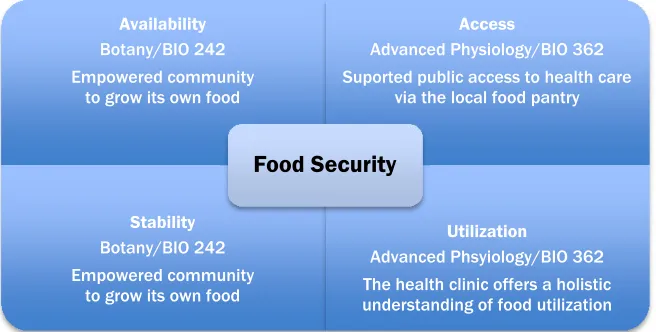
The broad, complex, and diverse components of “food security” as described by the Food and Agriculture Organization of the United Nations (FAO) (figure 1) provide an ideal framework for creating interdisciplinary service-learning and research opportunities that are tightly woven into the larger food security stakeholder network. In 2007–2008, requests for emergency food assistance increased by about 18 percent in the 25 cities surveyed by the U.S. Conference of Mayors, on Hunger and Homelessness; however, there was only a five percent average increase in the quantity of food distributed (U.S. Conference of Mayors, 2008). When asked to anticipate their biggest challenges for 2009, “nearly every city cited an expected increase in demand resulting from the weak economy coupled with high prices for food and fuel” (U.S. Conference of Mayors, 2009, p. 1). In Dunn County, Wisconsin, 14 percent of the population lives at or below the poverty level (U.S. Census, 2007), and over 10 percent of the
population receives food stamps (University of Wisconsin–Extension [UWE] and the Wisconsin Department of Health and Family Services
[WDHFS], 2005) While three food pantries operate within the county, there are no community gardens specifically targeting low-income families, nor are there community supported agriculture (CSA) programs with special access for low-income families (UWE and WDHFS, 2012)
Having access to nutritious food is vital to good health (Bernstein, de Konig, Flint, Rexrode, & Willett, 2012; Halton, Willett, Liu, Manson, Stampfer, & Hu, 2006; Malik, Popkin, Bray, Despres, & Hu, 2010; Marckmann & Gronbaek,
1999; Oh, Hu, Manson, Stampfer, & Willett, 2005; Srinath Reddy & Katan, 2004).
Maintenance of good health is also significantly impacted by the provision of health care. In 2009, 11 percent of the population was uninsured or was insured for only part of the year (Wisconsin Department of Health Services, 2010). This sug-gests that over one-tenth of the population per-sistently lacks insurance coverage and access to preventative and potentially life-saving care. The poor are at the highest risk, as they generally lack preventative health care and consume the least nutritious food (Andrulis, 1998; Baker, Schootman, Barnidge, & Kelly, 2006; Flores, Abreu, Olivar, & Kastner, 1998). Perhaps the worst culprit in the diet of the poor is fast food (Baker et al., 2006). Fast food is highly processed and often deep-fried in partially hydrogenated oil — a precursor to high cholesterol levels and subsequent heart attacks (Hu & Willett, 2002). Combined with starchy vegetables and sugary drinks, these foods have a high glycemic load, a factor that contributes to obesity, which has been linked to the onset of diabetes, although the mechanism is still under investigation
(Shimabukuro, Zhou, Levi, & Rounger, 1998). The rapid growth of the fast food industry has
dramatically changed the population’s health and well-being (Bowman, Gortmaker, Ebbeling, Pereira, & Ludwig, 2004).
student; the gifted, the talented, the average, and the exceptional can all contribute to and benefit from the experience. It is an all-encompassing activity that allows all to serve, usually in a team environment. Service learning projects that benefit both students and community are built from authentic partnerships defined by the Community Partner Summit Group (2010) as (1) embracing quality processes, (2) achieving meaningful out-comes, and (3) being transformative at multiple levels. An important aspect of the learning in service-learning is reflection (Bringle & Hatcher, 1999; Eyler, 2002; Payne, 2000). Reflection is an internal process that allows students to think about how the external experience (service) has affected them on both personal and cognitive (learning) levels (Daudelin, 1996). The reflection activity, therefore, becomes the lynchpin for connecting service-learning with course content (Eyler, 2002; Hatcher & Bringle, 1997). There are a variety of reflection activities that one may assign to students (Eyler, Giles, & Schmiede, 1996). We have used survey questions that allow for open-ended answers so that students may freely express themselves.
The integration of applied learning and research experiences into the curriculum at any academic level represents hands-on, student-centered learning at its best. It provides expanded opportunities for instructional innovations and
faculty-student mentorships that can both translate to and extend beyond the classroom. These applied types of learning opportunities engage and retain groups at risk of dropping out of STEM programs (Lee, 2002). The NSF identifies these applied types of practices among the core principles of a high-quality and effective educational experience in biological sciences in its 2011 Vision and Change document (see figure 1).
This study presents two examples of curricular experiences that embed food security principles and practices into the classroom and connect students to the community in impactful ways.
Method
Activities related to food security were integrated into two courses at University of Wisconsin–Stout, a polytechnic university that blends theory with practice to produce innovative solutions to real-world problems. The courses were BIO 242 (Botany), a course for Applied Science majors, composed of a lecture and lab with 24 to 48 students per semester, and BIO 362 (Advanced Physiology), a course for Applied Science pre-professional majors and Food and Nutrition majors. This course is also composed of a lecture and lab with 18 to 36 students per semester. Both courses integrated a six-week-long service-learning project into their curricula. Botany students were directed in the establishment of four-season
grow-ing (FSG) facilities at the newly established commu-nity garden. Advanced Physiology students were directed in the establish-ment and running of a preventative health clinic (PHC) at a local food pantry. To ensure that cur-ricular experiences were the most likely to result in effec-tive and transformational pedagogy and significant outcomes for the commu-nity, four key principles were applied to the design and implementation of the work:
Availability Botany/BIO 242 Empowered community
to grow its own food
Access
Advanced Physiology/BIO 362 Suported public access to health care
via the local food pantry
Stability Botany/BIO 242 Empowered community
to grow its own food
Utilization
Advanced Phsyiology/BIO 362 The health clinic offers a holistic understanding of food utilization
Food Security
1. Service-learning projects were carefully aligned with course learning objectives and goals.
2. Service-learning projects were interdisci-plinary in nature.
3. Service-learning projects made a tangible and overt connection to a food security stakeholder.
4. Service-learning project outcomes were aligned with the needs of community food security stakeholder.
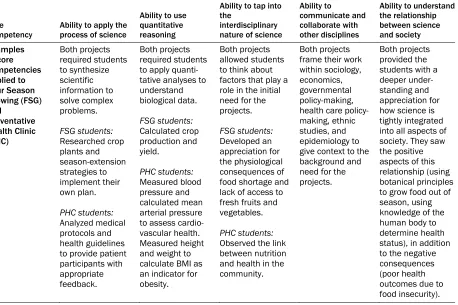
Both curricular experiences used the NSF’s core competencies of a biological education as a guide for framing the service-learning project, as shown in table 1.
Project Alignment with Course Learning
Goals and Objectives
Both projects were designed to integrate and apply course content into their respective service learning activities. The FSG project was devised as a way to tie in many of the fundamental learning objectives
of a traditional botany major’s course, including fundamentals of plant cell structure and function, basic plant anatomy and physiology, and plant breeding and genetics. Through the semester-long activity, students were introduced to concepts of sustainable agriculture and horticultural techniques. This activity enabled the students to learn about the challenges involved in growing plants for food.
In the PHC experience, one major learning goal for students was to learn about the integrated nature of the organ systems and how organs systems rely on each other to maintain health. Specifically, the students learned about the importance of maintaining parameters such as blood pressure, glucose levels, and body weight in the healthy range. Those parameters are usually adversely affected by food insecurity due to poor or inadequate nutrition. Students also solved problems using real-life clinical case studies. Armed with this knowledge together with limited clinical experience via case studies, the students then ran a health clinic where they routinely measured
Table 1. NSF Core Competencies and Disciplinary Practices
Core
Competency Ability to apply the process of science
Ability to use quantitative reasoning
Ability to tap into the
interdisciplinary nature of science
Ability to
communicate and collaborate with other disciplines
Ability to understand the relationship between science and society Examples of core competencies applied to Four Season Growing (FSG) and Preventative Health Clinic (PHC) Both projects required students to synthesize scientific information to solve complex problems. FSG students: Researched crop plants and season-extension strategies to implement their own plan. PHC students: Analyzed medical protocols and health guidelines to provide patient participants with appropriate feedback. Both projects required students to apply quanti-tative analyses to understand biological data. FSG students: Calculated crop production and yield. PHC students: Measured blood pressure and calculated mean arterial pressure to assess cardio-vascular health. Measured height and weight to calculate BMI as an indicator for obesity.
Both projects allowed students to think about factors that play a role in the initial need for the projects. FSG students: Developed an appreciation for the physiological consequences of food shortage and lack of access to fresh fruits and vegetables.
PHC students:
Observed the link between nutrition and health in the community.
Both projects frame their work within sociology, economics, governmental policy-making, health care policy-making, ethnic studies, and epidemiology to give context to the background and need for the projects.
patients’ blood pressure, urinary glucose levels, and body weight. They provided customized health and nutritional advice based on each patient’s clinical results. Another major goal of the course was to provide free preventative health screenings for the prevention of chronic illness through the PHC.
Interdisciplinary Nature of the Work
Together, both class projects addressed the four key components of food security that immediately provided an interdisciplinary foundation for the activities. While the FSG project directly addressed food availability and stability, the PHC focused on access and utilization (refer to figure 1). Impor-tantly, the consequences of food insecurity and further preventing the deleterious effects of food insecurity were themes of both courses that connected students to the significance of their work in the larger community. The two projects represented a synergistic approach to addressing a common issue.
In addition to the broader interdisciplinary concepts that applied to both courses, through the FSG project students were introduced to the highly interdisciplinary nature of plant science. Students investigated chemical properties of the soil, con-sidered nutrient deficiencies in plants, and dis-cussed the health benefits of fresh, locally grown, and organically produced food.
While working at the PHC, students researched the factors that necessitated the need for such clinics and therefore explored the relationship between socioeconomic status and health insurance coverage, or the lack thereof. Students also researched the relationship between pathophysiology, food, and nutrition, as well as the effect of exercise from a physiological standpoint with the onset of diseases such as hypertension, diabetes, and obesity.
Aligning Course Objectives with Stakeholder Needs
Both projects were developed with the long-term goal of establishing authentic and impactful part-nerships with the community. It was important to carefully align goals of projects with the needs of stakeholders to ensure that all parties benefited from the experience. Both projects also built on previous successful community-based efforts, such
as a local community garden that had been estab-lished in the community in the previous year. University students were critical to the successful establishment of the garden and maintain a strong presence on the board of the local community garden. In previous years, students had interned and volunteered at the Stepping Stones Food Pantry and participated in food drives and fundraisers for the facility.
For the FSG project, a direct community con-nection to the project was established by enlisting the support of the community garden board. The board director met the students on-site to assist them in the selection of hoophouse sites and inform them of other responsibilities associated with their community garden work. In addition to maintaining their hoophouses, students were required to participate in a pre- and postseason garden cleanup. The community garden board was the primary point of contact for requesting space in the newly existing garden facility. At the end of each semester, students prepared reports of their FSG results to the garden director so that out-comes could be shared with the larger community.
The Menomonie Community Garden has the mission of providing gardening space, horticultural training, and community-building activities to the larger Dunn County community. The FSG project was designed around the mission of the commu-nity garden and emphasized opportunities to empower community members to establish their own hoophouses and other simple yet innovative strategies for growing healthy food.
The PHC was developed specifically to pro-vide preventative health screenings for hyper-tension, obesity, and diabetes — three conditions associated with food insecurity that are studied in depth within the Advanced Physiology course. Populations living under the threat of food insecu-rity typically have inadequate or nonexistent health insurance and cannot pay for preventative health screening, which has been shown to result in better long-term health outcomes (Maciosek, Coffield, Flottemesch, Edwards, & Solberg, 2010).
The Stepping Stones food pantry is a custom-built facility that serves Dunn County by providing healthy and nutrient-dense foods to anyone in need. In the design of the building, it was always envisioned that a health clinic would be part of the establishment so that people using the food pantry service would also have easy and convenient access to basic preventative health-screening services. The timing for the student-run health clinic could not have been better. The proposed health clinic was perfectly aligned with the mission of the food pantry in that the health clinic would cater to people who are uninsured or underinsured with regard to health insurance and it would provide essential preventative health screening to the most vulnerable in the community.
Project Implementation
FSG. In this activity, teams of three or four botany students were assigned to a community garden plot with the materials to build a small (6 ft. x 6 ft. or 1.8 m x 1.8 m) hoophouse and given a goal of developing and implementing strategies to grow a winter crop. Students were responsible for select-ing a crop (fiber, flower, or edible), growselect-ing their crop, and having a logical use based on community need for their crop. Students were given the choice to grow any number of different plants in any method they chose, but were required to clearly indicate how and why they chose a particular crop. Students were given the choice of starting with seeds, pregerminated seeds, or stem cuttings, the only stipulation being that the crops had to be planted in the hoophouse for a minimum of six weeks. Students were also required to assemble and maintain their own hoophouses and associated growing structures, maintain a log of activities,
determine the role of each group member, make appropriate community contacts, inform the contact that the crop may not yield, and identify ways of handling and distributing the crop post-harvest for actual use by the community stake-holder. Two important aspects of this work con-nected the students to the community: (1) Students were required to research and select food crops to grow in their hoophouse structures that could be used for some purpose in the community, such as donation to local food pantry or for a cooking demonstration at the food pantry. A number of students cited the Stepping Stones food pantry as the final destination for their crops. This aspect of the project required students to research areas of need in the community and participate in outreach activities that aligned their potential food crop with an end user who had a food need. (2) Students were required to complete an end-of-semester report on the successes and failures of their four-season growing activities. The purpose of this report was to inform future users about successful strategies. The final report requirement integrated a student reflection component into their service-learning activity. This component gave the students an opportunity to reflect on their perceived
learning outcomes, impact on the community, and ways they could improve project outcomes for future classes and the community.
and lung station to measure blood pressure and pulse rate and to listen to lungs. A BMI station was set up for height and weight measurements, and a urinalysis station was set up for measuring urine glucose and ketones. Once the variousstations were organized, they then invited patients to the screening. The screening room was adjacent to the waiting area for the food pantry. Students would enter the waiting area and distribute a list of services provided by the screening clinic. Patients would check one or more services of which they wished to avail themselves. When patients were called, they were escorted into the clinic and screened. During the screening students were required to interpret blood pressure measurements and determine whether the patient was normoten-sive (normal blood pressure), prehypertennormoten-sive (normal but elevated blood pressure), or had stage 1 hypertension (moderately elevated blood pressure), or stage 2 hypertension (significantly elevated blood pressure) (Chobanian et al., 2003). Based on the patients’ clinical results, students were required to make lifestyle recommendations for patients who were not normotensive. After the urinalysis, students interpreted the glucose and ketone readings and determined whether the patient was normal, prediabetic, or diabetic.
Coding for Qualitative Data
Having completed the six weeks of service learning, students were given the opportunity to reflect upon their experience. This activity enabled FSG students to reflect upon whether they could communicate successes and failure in growing crops; suggest strategies for improving crop grow-ing; whether their harvest had been successful; and whether they could create detailed reports of the crop-growing activities for the
community garden board. For the PHC students, the reflection activity was an opportunity for determining whether they understood the connection between course content and the services they performed at the clinic; how they felt about themselves having worked in the clinic; whether they understood
the underlying need for the clinic; and how they felt about the impact of the clinic on the
community. Students’ open-ended responses were assessed as either positive or negative with respect to the questions in the reflection activity and then tabulated as a percentage of total responses for each question (see table 2). In addition to the specific reflection questions, students were asked for general comments or recommendations for their respective projects. These responses were grouped into major themes for each project.
Results
Botany — FSG Outcomes
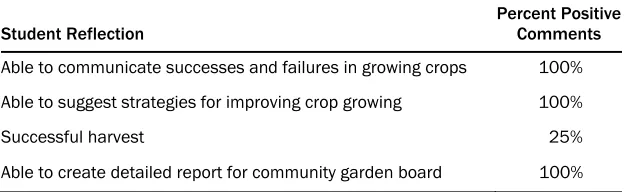
Eighty students in 18 groups over three semesters (fall 2010, spring 2011, and fall 2011) participated in the FSG project. All participants were able to communicate their successes and failures in grow-ing crops and provide suggested strategies for suc-cessful season extension. Approximately 25 percent of groups were able to successfully harvest edible or otherwise useable plants from their season-extension efforts (see table 2a). All students created reports to present to the community garden board detailing their four-season growing project and describing how they would improve their efforts.
Students’ self-reported learning outcomes showed three major themes:
1. Students reported that it was more difficult to grow and care for crop plants than they had initially anticipated. They also reported a better understanding of the influence of soil, temperature, and light on plant growth.
2. Students reported that selecting the appropriate crop plant is a critical factor in
Table 2a. Results of Botany Student Reflections (n = 80)
Student Reflection Percent Positive Comments
Able to communicate successes and failures in growing crops 100%
Able to suggest strategies for improving crop growing 100%
Successful harvest 25%
attempts to extend the growing season. While researching plants in the beginning of the project, students underestimated the importance of making careful crop
selections and by the end of the project students were much more aware of the need to select crops appropriate to the growing conditions.
3. Students reported difficulty in making connections to local food security stake-holders. Nearly all groups reported contacting the local food bank as a place to donate their food. It wasn’t until after their project ended that students reported learning that to adequately serve their community stakeholder, their crop
required specific post-harvest handling and a distribution plan. Specific post-harvest handling requirements as outlined by safety and regulatory bodies include food safety standards in schools, hospitals, and daycare sites, to name a few (Wisconsin Department of Agriculture, Trade and Consumer Protection, 2011). In addition, daycare sites and schools also have guidelines that require specific nutritive standards for meals (Nutrition Standards in the National School Lunch and School Breakfast Programs, Final Rule, 2012). Adhering to these safety requirements would require strict coordination of the end users’ needs with the students’ post-harvest handling.
Advanced Physiology — PHC Outcomes
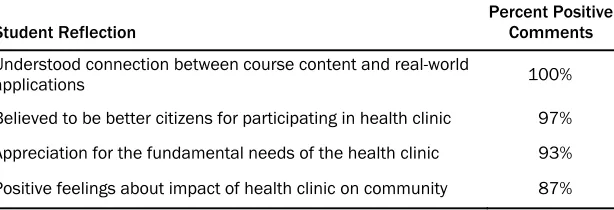
Results obtained from the reflection activity following the health clinic demonstrated that students understood how course
concepts directly related to the service learning activity; that they felt they were better citizens for having participated in the service learning activity; that they felt positively about the impact of the service-learning activity on the community; and that the overwhelming majority of them understood the underlying
factors that necessitated the need for the health clinic within the community (see table 2b).
A breakdown of student recommendations following the service-learning activity showed four major themes:
1. The health clinic should continue and also expand to multiple locations within the community.
2. Better marketing should be done to attract more patients to the health clinic.
3. All students on campus should participate in similar service-learning activities. 4. The range of health services offered in the
clinic should be expanded.
Discussion
The FSG and PHC projects represent two projects from seemingly unrelated disciplines that directly address the four components of food security: availability, stability, access, and utilization. Importantly, these two projects lay the foundation for a series of food security–related curricula that will be embedded across the Applied Science program in the future. Embedding food security themes into multiple curricula will provide a connective scaffolding and knowledge base of food security presented from different perspectives throughout each student’s academic career. These projects also helped us identify and make plans to address significant gaps in understanding between campus stakeholders and community stakeholders.
The FSG project was initiated in fall 2010 and for three semesters has resulted in engaging botany students in an applied, community-focused
research activity. During their self-reflection activity, most students reported that this was their first experience attempting to grow food. The
Table 2b. Results of Advanced Physiology Student Reflections (n = 30)
Student Reflection Percent Positive Comments
Understood connection between course content and real-world
applications 100%
Believed to be better citizens for participating in health clinic 97%
Appreciation for the fundamental needs of the health clinic 93%
experience offered students a real-life opportunity to understand the challenges involved both in growing food and with season extension in a cold climate. Beyond simply researching the theory of growing food and season extension, students applied their knowledge to design and build FSG structures, make crop plant selections, and devise plans to keep their plants alive in extreme environmental conditions. All students reported having a much greater appreciation for the skills and knowledge required to grow food, and all groups documented how they would modify their strategies for successfully growing food in a season-extension system in the future. This is a significant outcome for this work, mainly because the students participating in the FSG project now possess the skills and strategies for growing their own crops or passing on that knowledge to others within the community.
Our research suggests that providing members of the community with the autonomy to grow their own food may be a small but important step toward achieving a more sustainable food system. In addition to the goal of providing students with an applied, research-focused educational experi-ence, a second goal of the work was increasing students’ awareness of the role that plant scientists play in supporting a secure food system by increas-ing food availability and food stability in the local community. As an important aspect of the FSG activity, students were required to select crop plants with the needs of the local food security stakeholders in mind. The instructor provided direction on crop selection through one-on-one meetings with groups early in the semester, provid-ing students with a text on the subject of season extension, and several laboratory and lecture sessions dedicated to the topic. However, students did not report leaving the experience with an understanding of how their crop selection could be connected to a community need.
The project aligned students with the com-munity through stakeholders responsible for the community garden, and students were actively involved in the community by maintaining the community garden facilities and their own hoop-houses. However, the students’ lack of under-standing how their crop selection was tied to
community need identifies an important gap in the project. In this project iteration the instructor failed to align the project also with other possible com-munity stakeholders who would have been valuable resources for students when tasked with identifying “community need.”
The pilot PHCwas successful in terms of its goals and objectives, that is, student appreciation of the integrated nature of the organ systems for maintenance of health; understanding the signifi-cance of abnormal readings for health parameters, such as blood pressure, BMI, and glucose levels; and fully realizing their potential deleterious health consequences. Students reported perceiving their learning outcomes to be of greater depth due to their work experience at the PHC. The fact that every student participating in the clinic fully under-stood how the clinical work directly applied the knowledge they had acquired in the classroom (based on the reflection activity) demonstrates that service-learning is an effective tool for student engagement.
The second principle goal of the health clinic was to provide free preventative health screenings for the prevention of chronic illness. Access to health care is necessary not only for the prevention and/or management of diseases (such as hyper-tension, obesity, and diabetes), but also because poor health and certain diseases negatively affect food utilization (Stratton, Green, & Elia, 2003). Students were encouraged to focus on this important aspect of food security. Many of the students were Food and Nutrition majors and therefore possessed a vast wealth of knowledge regarding maximum utilization of food as well as diseases that affect nutrition. Informal chats with the patients revealed conditions (for example, acid reflux disease, Crohn’s disease anddiarrhea) that did not necessarily show up through the tests offered at the clinic and allowed the students to counsel patients towards proper food utilization.
based on community need. This suggests that to fully realize project goals, the FSG activity requires a more thoughtful alignment with food security stakeholders in the community. However, while additional stakeholders may benefit students, meet-ing the needs of all community stakeholders can become a delicate balancing act for the instructor. The FSG activity was intentionally designed to minimize the number of community stakeholders involved in order to reduce the likelihood of failing to meet expectations of stakeholders, which can lead to increased and long-term friction between the campus and the community.
Conclusion
Meeting both course learning objectives and community needs is not always easily achieved through a service-learning activity. When designing and implementing service-learning projects, instructors must carefully consider limitations they will have in establishing authentic partnerships in the community. These limitations may include scheduling issues, the necessity to meet course-learning objectives at the appropriate academic level, and limitations on the time, resources, and abilities of students, faculty and stakeholders. Projects do not always lend themselves well to establishing authentic partnerships that are based on shared decision-making, have meaningful outcomes, and are impactful on multiple levels in the community.
The PHC activity provides a good example of a project that aligns students with community stakeholders, meets stakeholder need, and does not overburden the course instructor. The FSG activity provides an example of an activity that may have overambitious goals, and likely requires multiple iterations in order to establish partnerships be-tween campus and community that are transforma-tive at many levels. Great care was taken in both projects to not promise stakeholders more than the course could provide. Stoeker, Beckman, and Hee Min (2010) suggest that the true impact of service-learning on the community is likely overstated and underassessed, and in most instances the primary beneficiary of service-learning projects are students and not the community. We believe that promising more than we can provide to our stakeholders is
destructive to long-term community-campus partnerships and must be carefully balanced with providing students quality instruction. Specifically, our lessons learned include:
1. Projects should be carefully planned with the learning objectives as the primary goal and the needs of the community food-security stakeholder as a close second. Without careful planning and alignment with the needs of the food security stakeholder, the students’ efforts in the community could in fact be detrimental to the mission of the food security stake-holder and could result in a very negative experience for both the student and the community partner. Scaling back and staging larger projects into longer time frames to allow for better communication and project management may lead to more effective educational outcomes and more impactful interactions with the
community.
2. Successful projects should allow students to have direct contact with the food security stakeholder. A critical aspect of students recognizing their role as scientists or professionals in society appears to be interaction with the community members most affected by their service-learning or research activities. Opportunities for students and community members to work together would be mutually beneficial to both the student and the community and may help students understand their role as it relates to food security.
within a local food system (Eyler, 2002; Hatcher & Bringle, 1997).
4. Both projects successfully resulted in offering students an applied learning experience that intentionally connected them to the community through food security stakeholders. This was achieved by carefully aligning the projects to desired learning outcomes and developing collabo-rations with food security stakeholders but also using great care and thought when determining how and when to involve stakeholders. Anecdotally, students reported that their learning experience and outcome were more valuable than the traditional classroom model. The project would be improved by better aligning student training with the needs of the food security stakeholders. Future project goals include the establishment of a campus-based “food security coordinator” who would act as a liaison between faculty, students, and food security stakeholders in the community to better refine student projects and skills training to meet the needs of the community.
Recommendations for further research include assessment of the specific impact of these two service-learning projects on the community from the perspective of the community stakeholder. Very little research has been done to investigate the long-term impact of service-learning on the
community (Bailis & Ganger, 2009). We also recommend further assessment of the affective domain (Bloom’s taxonomy) on student learning (Bloom, 1956) through the two service-learning projects presented in this paper.
In conclusion, framing service-learning pro-jects around a central theme such as food security serves to benefit both student and community. These interdisciplinary types of projects allow students to think about a central problem from multiple perspectives, thus providing the student an appreciation for the complex nature of solving problems within a community.
References
Andrulis, D. P. (1998). Access to care is the centerpiece in the elimination of socioeconomic disparities in health. Annals of Internal Medicine, 129, 412–416. Astin, A., & Sax, L. (1998). How undergraduates are
affected by service participation. Journal of College Student Development, 39, 259–263.
Baker, E. A., Schootman, M., Barnidge, E., & Kelly, C. (2006). The role of race and poverty in access to foods that enable individuals to adhere to dietary guidelines. Preventing Chronic Disease. 3, A76. Bernstein, A. M., de Konig, L., Flint, A. J., Rexrode, K.
M., & Willett, W. C. (2012). Soda consumption and the risk of stroke in men and women. American Journal of Clinical Nutrition, 95, 1190–1199. http://dx.doi.org/10.3945/ajcn.111.030205 Bailis, L., & Ganger, T. (2006). A framework for further
research: The community impacts of service-learning. National Youth Leadership Council. Excerpt from Growing to Greatness. Saint Paul, Minnesota: National Youth Leadership Council. Retrieved from http://www.nylc.org/sites/nylc. org/files/files/307Frameword.pdf
Blomgren, T., & Frisch, T. (2007). High tunnels: Using low-cost technology to increase yields, improve quality, and extend the season. Burlington, Vermont: University of Vermont Center for Sustainable Agriculture. Retrieved from http://www.uvm.edu/sustainableagriculture/ Documents/HighTunnels.pdf
Bloom, B. S. (1956). Taxonomy of educational objectives, handbook I: The cognitive domain. New York: David McKay.
Bowman, S. A., Gortmaker, S. L., Ebbeling, C. B., Pereira, M. A., & Ludwig, D. S. (2004). Effects of fast food consumption on energy intake and diet quality among children in a national household survey. Pediatrics, 113, 112–118.
http://dx.doi.org/10.1542/peds.113.1.112 Bringle, R. G., & Hatcher, J. A. (1996). Implementing
service-learning in higher education. Journal of Higher Education, 67, 67–73.
Bringle, R. G., & Hatcher, J. A. (1999). Reflection in service-learning: Making meaning of experience.
Chobanian, A. V., Bakris, G. I., Black, H. R., Cushman, W. C., Green, L. A, Izzo, J. L. Jr....& Rocella, E. J. (2003). Joint National Committee on Prevention, Detection, Evaluation, and Treatment of High Blood Pressure; National Heart, Lung, and Blood Institute; National High Blood Pressure Education Program Coordinating Committee
(Seventh report of the Joint National Committee on Prevention, Detection, Evaluation, and Treatment of High Blood Pressure). Hypertension, 42, 1206–1252. http://dx.doi.org/10.1161/01. HYP.0000107251.49515.c2
Community Partner Summit Group (2010). Achieving the promise of community-higher education partnerships: Community partners get organized. In H. Fitzgerald, C. Burack, & S. Seifer (Eds.),
Handbook of Engaged Scholarship Contemporary Landscapes, Future Directions Volume 2: Community-Campus Partnerships (pp. 201-221). East Lansing, Michigan: Michigan State University Press. Daudelin, M. W. (1996). Learning from experience
through reflection. Organizational Dynamics, 24,
36–48. http://dx.doi.org/10.1016/S0090-2616(96)90004-2
Duggar, W. E. (2010). Evolution of STEM in the United States. Paper presented at the 6th Biennial
International Conference on Technology Education Research, Australia. Retrieved from
http://www.iteaconnect.org/Resources/Press Room/pressroom.htm
Eyler, J. (2002). Reflection: Linking service and learning — Linking students and communities. Journal of Social Issues, 58, 517–534.
http://dx.doi.org/10.1111/1540-4560.00274 Eyler, J., & Giles, D. E. (1999). Where’s the learning in
service-learning? San Francisco: Jossey-Bass. Eyler, J., & Giles, D. E., & Schmiede, A. (1996). A
practitioner’s guide to reflection in service-learning: Student voices and reflections. Nashville, Tennessee: Vanderbilt University.
Flores, G., Abreu, M., Olivar, M., & Kastner, B. (1998). Access barriers to health care for Latino children.
Archives of Pediatric Adolescent Medicine, 152, 1119– 1125.
Giles, D., Jr. (1994). National service-learning research project. National Society for Experiential Education Quarterly, 11.
Halton, T. L., Willett, W. C., Liu, S., Manson, J. E., Stampfer, M. J., Hu, F. B. (2006). Potato and
French fry consumption and risk of type 2 diabetes in women. American Journal of Clinical Nutrition, 83, 284–290.
Hatcher, J. A., & Bringle, R. G., (1997). Reflections: Bridging the gap between service and learning.
Journal of College Teaching, 45, 153.
http://dx.doi.org/10.1080/87567559709596221 Hu, F. B., & Willett, W. C. (2002). Optimal diets for
prevention of coronary heart disease. TheJournal of the American Medical Association, 288, 2569–2578. http://dx.doi.org/10.1001/jama.288.20.2569 Lee, J. D. ( 2002). More than ability: Gender and
personal relationships influence science and technology involvement. Sociology of Education, 75,
349–373. http://dx.doi.org/10.2307/3090283 Lui, L., Philpotts, A. R., & Gray, N. H. (2004). Service
learning practice in upper division geoscience courses: Bridging undergraduate learning, teaching and research. Journal of Geoscience Education, 52, 172. Maciosek, M. V., Coffield, A. B., Flottemesch,T. J.,
Edwards, N. M., & Solberg, L. I. (2010). Greater use of preventive services in U.S. health care could save lives at little or no cost. Journal ofHealth Affairs, 29, 1656–1660.
http://dx.doi.org/10.1377/hlthaff.2008.0701 Malik, V. S., Popkin, B. M., Bray, G. A., Despres, J. P.,
& Hu, F. B. (2010). Sugar-sweetened beverages, obesity, type 2 diabetes mellitus, and cardiovascular disease risk. Circulation, 12, 1356–1364.
http://dx.doi.org/10.1161/CIRCULATION AHA.109.876185
Marckmann, P., & Gronbaek, M. (1999). Fish
consumption and coronary heart disease mortality: A systematic review of prospective cohort studies.
European Journal of Clinical Nutrition, 53(8), 585–590. http://dx.doi.org/10.1038/sj.ejcn.1600832 Markus, G. B., Howard, J. P. F., & King, D. C. (1993).
Notes: Integrating community service and classroom instruction enhances learning: Results from an experiment. Educational Evaluation and Policy Analysis, 15, 410–419.
Mentkowski, M., & Rogers, G.(1993). Connecting education, work, and citizenship. Metropolitan Universities, 4, 34–46.
Nutrition Standards in the National School Lunch and School Breakfast Programs, Final Rule (2012).
Oh, K., Hu, F. B., Manson, J. E., Stampfer, M. J., & Willett, W. C. (2005). Dietary fat intake and risk of coronary heart disease in women: 20 years of follow-up of the Nurses’ Health Study. American Journal of Epidemiology,161 (7), 672– 679. http://dx.doi.org/10.1093/aje/kwi085
Payne, D. A. (2000). Evaluating service-learning activities and programs. Lanham, Maryland: Scarecrow Press. Shimabukuro, M., Zhou, Y., Levi, M., & Rounger, R. H.
(1998). Fatty acid-induced b cell apoptosis: A link between obesity and diabetes. Proceedings of the National Academy of Sciences of the United States of America, 95, 2498–2502.
http://dx.doi.org/10.1073/pnas.95.5.2498 Shumer, R., Treacy, A., Hengel, M. S., & O’Donnell, L.
(1999). Recent dissertations on service and service-learning topics. St. Paul, Minnesota: National Service-Learning Cooperative Clearinghouse, University of Minnesota.
Srinath Reddy, K., & Katan, M. B. (2004). Diet, nutrition and the prevention of hypertension and cardiovascular diseases. Public Health Nutrition, 7
(1A), 167–186.
Stoeker, R., Beckman, M., & Hee Min, B. (2010). Evaluating the community impact of higher education civic engagement. In H. Fitzgerald, C. Burack, & S. Seifer (Eds.), Handbook of Engaged Scholarship Contemporary Landscapes, Future Directions Volume 2: Community-Campus Partnerships (pp. 177– 196). East Lansing, Michigan: Michigan State University Press.
Stratton, R. J., Green, C. J., & Elia, M. (2003). Disease-related malnutrition: An evidence-based approach to treatment. Wallingford, Oxfordshire, UK: CABI Publishing.
University of Wisconsin–Extension [UWE] and the Wisconsin Department of Health and Family
Services [WDHFS]. (2005). Wisconsin Food Security Project. Retrieved July 31, 2012, from
http://www.uwex.edu/ces/flp/cfs/pdf/Dunn.pdf University of Wisconsin–Extension [UWE] and the
Wisconsin Department of Health and Family Services [WDHFS]. (2012). Wisconsin Food Security Project. [Data Files]. Available from the Wisconsin Food Security Project website:
http://www.uwex.edu/ces/flp/cfs/index.cfm U.S. Census Bureau. (2007). State & county Quickfacts:
Dunn County, WI. Retrieved July 31, 2012, from http://quickfacts.census.gov/qfd/states/55/ 55033.html
U.S. Conference of Mayors. (2008). Hunger and Homelessness Survey: A status report on hunger and homelessness in America’s cities. Washington, D.C.: Author. Retrieved from http://usmayors.org/ HHSurvey2007/hhsurvey07.pdf
Upson, S. (2005). A pint-sized hoophouse for the limited resource gardener. Retrieved from http://www.noble. org/ag/Horticulture/MiniHoopHouse/index.html Vision and Change in Undergraduate Biology Education
(Grant No. DUE-0923874). (2011). Retrieved from The American Association for the Advancement of Science (AAAS) website: http://visionandchange. org/finalreport
Wisconsin Department of Agriculture, Trade and Consumer Protection. (2011). Wisconsin Local Marketing Guide (Second ed.). Retrieved from http://datcp.wi.gov/uploads/Business/pdf/MK-DM-17_LFMG_Second_Edition_Final_Book_ for_website.pdf
Wisconsin Department of Health Services, Division of Public Health, Office of Health Informatics. (2010).