Enhancement of Power Aware Job
Scheduling with Minimum Completion
Time Algorithm
ER. ACHHARDEEP KAUR
Research Scholer, Baba Banda Singh Bahadur Engg College, Fatehgarh sahib [email protected]
PROF. BALJIT SINGH
Professor, Baba Banda Singh Bahadur Engg College, Fatehgarh sahib. [email protected]
Abstract: - This paper describes key areas like Makespan, Average waiting time and power consumption in Grid computing. In data centers, higher performance causes higher energy consumption. Consequently, power and energy management have become key areas of research. But completion time and average waiting time of jobs increased when we try to minimize the total power consumptions separately and Quality of Service (QoS) metrics, cannot be guaranteed. The difficulty of managing these challenges motivated us to purpose a hybrid algorithm by combining two already existing algorithms PFM and MCT. In this paper, we give a short survey and discussion on some issues and aspects of Power aware job scheduling and at the end we have presented Power aware job scheduling with Minimum completion time (PFMCT) algorithm to minimize completion time and to improve Quality of Service (QOS).
Keywords: Power consumption, Completion Time, Job scheduling, Average waiting time, QOS, Grid computing.
I. Introduction
Grid computing is gaining a lot of attention within the IT industry. Grid computing came into being and is currently an active research area. Grid computing (Foster and Kesselman, 1999) is a growing technology that facilitates the executions of large-scale resource intensive applications on geographically distributed computing resources. One motivation of Grid computing is to aggregate the power of widely distributed resources.
In High-Performance Computing (HPC) data centers, higher performance equals higher energy consumption. Power consumption has rapidly risen to an intolerable scale. This results in both high operating costs and high failure rates so it is now a major cause for concern. It is imposed new challenges to the development of high performance systems and has created incentives on exploring several alternatives to reduce the energy consumption of the system, such as energy efficient hardware or the Dynamic Voltage, Frequency Scaling (DVFS) technique etc. This work presents an energy aware scheduler that can be applied to a HPC data center without any changes in hardware. The scheduler has been evaluated with a simulation using GridSim [13].
According to current efficiency trends, power consumption by servers and data centers could nearly double again in the next five years. For example, server farms today consume more than 1.5% of the total electricity in the U.S. at a cost of nearly $4.5 billion, which is estimated to about 61 billion kilowatt-hours (kWh) in 2006 and it is more than the electricity consumed by the nation's color televisions and similar to the amount of electricity consumed by approximately 5.8 million average U.S. households [20].
In this paper, a Grid resource refers to a processor and the term is used interchangeably. And the terms job, task, and Grid lets are used interchangeably to refer to a request made by a user to run a given application with QoS requirements or a given inputs. The following assumptions are made in this paper:
Each job is non-preemptive, requiring one and only one machine at a time.
Tasks have no deadlines or priorities associated with them.
Each machine can process at most one job at a time.
The power consumption of the processor is proportional to execution time of jobs on that processor when the frequency or voltage is fixed.
The remainder of this paper is organized as follows: In section 2, we discuss the traditional techniques of power management. In section 3, we presented our proposed the feedback control based power aware job scheduling algorithm with MCT and improved QoS. Section 4 will contain mathematical model of the problem. In Section 5, we will discuss the performance study and finally, we summarize the work in Section 6.
II. Conventional Power Reduction Techniques
In order to reduce energy consumption, conventional researches had mainly focused on the following topics: – Energy-efficient hardware
– DSS technique – DRS technique
There are three different types of traditional mechanism for power management considering above topics: (1) Energy-Efficient Hardware: Energy-efficient hardware components consume less energy than the
standard ones. The argue is that the power consumption of a server should be proportional to its workload, i.e., it should consume no power in idle state, almost no power when the workload is very low, and eventually more power when the workload is increased. Ideally, an energy proportional server could save half of the energy used in data center operations [24].
(2) Dynamic Speed Scaling (DSS): DSS is accepted as a technique to reduce power and energy consumption of microprocessors. It dynamically changes the performance state of the target system to reduce power consumption. Dynamic speed scaling slows it down to reduce power consumption and speeds it up when needed at the cost of greater power consumption. Example is Dynamic Voltage Frequency Scaling (DVFS) Here, the reduction in power consumption is made by reducing the supply voltage or clock frequency [19]. Disadvantages
1. The system performance will be heavily spoiled by the transition delay between various frequency and voltage levels in uniprocessors.
2. Multi core processor does not support per-core DFS/DVS [3].
3. By running a processor at lower frequency/voltage energy savings can be achieved, but the job execution time is increased.
(3) Dynamic Resource Sleeping (DRS): DRS dynamically hibernates components to save energy and then wakes them on demand. Sleep state consumes less power than in idling state [19].
Disadvantages:
1. The deeper the processor sleeps, the less power it consumes, but the more energy is needed to wake it up.
2. Power management entails a reduction in performance due to the latency associated with bringing the components into a fully functional state. This latency can lead to a perceivable loss of Quality of Service (QoS).
III. PFMCT Algorithm
In this section we have purpose a hybrid algorithm by combining two already existing algorithms PFM and MCT.
Minimum Execution Time
Minimum Execution Time (MET) assigns each task, in arbitrary order, to the machine with the best expected execution time for that task, regardless of that machine's availability. The motivation behind MET is to give each task to its best machine.
Et = min (ETC (Ti, Mj)), j 1,2,...,m Eq. (1)
where, Et is minimum execution time, ETC is expected time to compute, Ti is task set, i 1,2,3,…..n, Mj is
machine set, j 1,2,...,m. Minimum Completion Time
The scheduling steps of MCT algorithm is described as follows:
1. A task list is generated that includes all unmapped tasks in a given arbitrary order.
2. The first task in the list is mapped to its minimum completion time machine (machine ready time plus estimated computation time of the task on that machine).
3. The task selected in step 2 is removed from the task list.
Ct (Ti, Mj) =min(mat(Mj )+ Et) Eq. (2)
where, mat(Mj ) is the machine availability time, Et is minimum execution time, Ti is task set, i 1,2,3,…..n, Mj
is machine set, j 1,2,...,m.
Power-Aware and Feedback Mechanism (PFM)
In the power aware feedback mechanism, the scheduler chooses the average value of previous performance data as the controlled variable for our simple. The average value is only the initial value for the future scheduling and it is a heuristic setting which can provide a minimum guarantee for QoS satisfactions. In the scheduling period, each time when a job completes, the real time performance is sensed and collected by the feedback scheme and fed to the controller. And the performance values are computed based on the initial value of performance threshold using moving average computation [3, 4].
Following is the code of our proposed grid scheduling algorithm, PFMCT to reduce Average Waiting Time, Completion.
Table: PFMCT algorithm
IV. Mathematical Model of the problem
Our goal is to minimize the total data center power consumption with minimum average waiting time and Makespan.
Parameters
n: Number of tasks
m: Number of machines/processors T: Task set
M: Processor set
j: Machine index i: Task index Decision Variables
Et: minimum Execution time of job i on machine j
, : Minimum Completion time of job i on machine j : QOS gain of Job i on machine j
F: is final power and QOS constrained scheduling with MCT Objective functions:
Et = min( ETC (Ti, Mj) ), j 1,2,...,n Eq. (1)
, = min(mat( ) + ) Eq. (2)
where, mat M is the machine availability time;
∑ . , Eq. (3)
where A is available QOS gains, Q minimum QOS constraints , w 1 and
| 0 is scheduling set
0 Eq. (4)
where, R is minimized QOS requirment
∑ , Eq. (5)
V Performance Study:
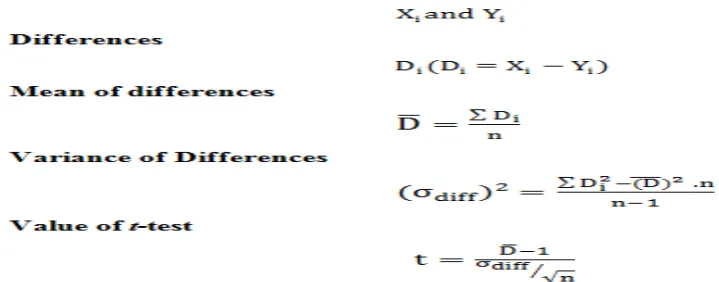
We compare Average Waiting Time, Completion Time and Power Consumption of our proposed algorithm, called PFMCT, with a PFM algorithm of [8]. We use GrisSim to perform our simulations in this paper. A small scale data center with 100 Grid lets and 10 Grid resources has been used to take the samples. Interactive software is developed in java and also implemented in GridSim to execute both algorithms. And we have also tested the simulation results by Hypotheses testing for comparing two related samples using paired t-test.
To evaluate the PFMCT scheduling algorithm, we use the following parameters: (1)Makespan: the total running time of all jobs;
(2)Average waiting time: the average waiting time spent by a job in the grid. (3)Success rate: the percentage of jobs successfully completed in the system; (4)Power consumption: the power consumed by the jobs.
All the data in the tables is about 21 Simulation results. Tables are based on the best randomly generated schedule of the suggested PFMCT for 100 Gridlets and 10 Grid resources.
Table 1.1: Parameters used in simulations and t-test
VI. Summary
The task scheduling problem in the distributed systems is known to be NP-hard. The heuristic algorithms which obtain near-optimal solution in an acceptable interval time are preferred This paper we formulated and solved an optimization problem to minimize the total completion tome or Makespan and average waiting time while reducing the power consumption.
We discussed traditional techniques of power management to reduce the power consumption and Several algorithms of job scheduling. At the end we have enhanced a new power aware job scheduling with minimum Makespan this algorithm tends to minimize the completion time and improves QOS. The performance study is based on the best randomly generated schedule of the suggested PFMCT for 100 Gridlets and 10 Grid resources.
VIII. References
[1] Ananth Narayan S , “Power and Energy Management in Data Centers”, ACM Surveys, Vol. -1, No.1, 2011, pp.1-8
[2] Congfeng Jiang, Jian Wan, Xindong You, “Power Aware Job Scheduling in Multi-Processor System with Service Level Agreements
Constraints”, JOURNAL OF COMPUTERS, VOL. 5, NO. 8, AUGUST 2010,pp 1193-1203.
[3] Congfeng Jiang1, Xianghua Xu1, Jian Wan1, Jilin Zhang1, and Yinghui Zhao2,” Power Aware Job Scheduling with Quality of Service
Guarantees: A Preliminary Study”, Proceedings of the Second International Symposium on Networking and Network Security (ISNNS ’10), April. 2010, pp.197-200.
[4] Congfeng Jiang1, Xianghua Xu1, Jian Wan1, Jilin Zhang1, and Yinghui Zhao2,”Power Aware Job Scheduling with QoS Guarantees
Based on Feedback Control”, Journal Of Software, Vol. 6, No. 8, August 2011,pp. 1562-1569.
[5] Cynthia Phillips, Clifford Stein, Joel Wein, “Minimizing Average Completion Time in the Presence of Release Dates”, Journal of
Mathematical Programming, June 1998, Volume 82, Issue 1,2, pp 199-223.
[6] Dr. D.I. George Amalarethinam,T. Kokilavani, ,“Load Balanced Min-Min Algorithm for Static Meta-Task Scheduling in Grid” ,
International Journal of Computer Applications (0975 – 8887) Volume 20– No.2, April 2011
[7] D.Maruthanayagam, Dr.R.UmaRani, “Enhanced Ant Colony Algorithm For Grid Scheduling”, International Journal of Computer
Technology and Applications, Vol 1 (1),pp 43-53
[8] Fahd Alharbi, “Multi Objectives heuristic Algorithm for Grid Computing”, IJCA(0975 – 8887) Volume 46– No.18, May 2012,pp.
39-45.
[9] Jochen Krallmann, Uwe Schwiegelshohn, and RaminYahyapour, “On the Design and Evaluation of Job Scheduling
Algorithms”,Proceedings of the Job Scheduling strategies for Parallel Processing,Springer-Verlag London, UK ©1999,pp 17-42
[10] Josep Ll. Berral, Ricard Gavald`a, Jordi Torres, “Adaptive Scheduling on Power-Aware Managed Data-Centers using Machine
[11] Kamaljit Kaur, Amit Chhabra & Gurvinder Singh, “Heuristics Based Genetic Algorithm for Scheduling Static Tasks in Homogeneous Parallel System”, International Journal of Computer Science and Security , Volume 4(2),2010, pp 183-198
[12] Ng WaiKeat, Ang Tan Fong, Ling Teck Chaw, LiewChee Sun. “ Scheduling framework for bandwidth-aware job grouping-based
scheduling in grid computing”,Malaysian Journal of Computer Science, Vol. 19(2), 2006, pp. 117 – 126
[13] Olli Mämmelä · Mikko Majanen · Robert Basmadjian, Hermann De Meer · André Giesler ·Willi Homberg, “Energy-aware job
scheduler for high-performance computing”, Computer Science - Research and Development, November 2012 , Volume 27, Issue 4, pp. 265-275
[14] Raksha Sharma, Vishnu Kant Soni, Manoj Kumar Mishra, Prachet Bhuyan, “A Survey of Job Scheduling and Resource Management
in Grid Computing”, World Academy of Science, Engineering and Technology, Issue 40,April 2010, pp-461-466
[15] Saeed Parsa and Reza Entezari-Maleki, “RASA: A New Task Scheduling Algorithm in Grid Environment”, World Applied Sciences
Journal 7 (Special Issue of Computer & IT), 2009, pp. 152-160
[16] Sanjay Patel1 and Madhuri Bhavsar2,“ Qos Based User Driven Scheduler For Grid Environment” , Advanced Computing: An
International Journal , Vol.2, No.1, January 2011.
[17] Tracy D. Braun, Howard Jay Siegel2, Noah Beck, Ladislau L. Bo_lo_ni, MuthucumaruMaheswaran “A Comparison of Eleven Static
Heuristics for Mapping a Class of Independent Tasks onto Heterogeneous Distributed Computing Systems”, Journal of Parallel and Distributed Computing 61,pp. 810_837 (2001)
[18] Wissam Chedi,, Chansu Yu and Ben Lee, “Power Analysis and Optimization Techniques for Energy Efficient Computer System”,
Journal: Advances in Computers - AC , vol. 63, pp. 130-165, 2005
[19] Yongpeng Liu* and Hong Zhu, “A Survey of the Research on Power Management Techniques for High Performance Systems” ,
Journal software –Practice & Experience, Volume 40(11), Oct 2010,pp.943-964
[20] Report to Congress on Server and Data Center Energy Efficiency. U.S. Environmental Protection Agency, ENERGY STAR
Program, August 2, 2007.
[21] Pinheiro E, Bianchini R. Energy conservation techniques for disk array-based servers. Proceedings of the 18th ACM/IEEE Conference
on Supercomputing (SC’04). Malo, France. Jun. 2004; 68-78.
[22] Venkatachalam V, Franz M. Power reduction techniques for microprocessor systems. ACM Computing Surveys 2005; 37(3): 195-237.
[23] Wissam Chedid and Chansu Yu, “Survey on Power Management Techniques for Energy Efficient Computer Systems” Department of