OncoTargets and Therapy
Evaluation of host quality of life and immune
function in breast cancer patients treated
with combination of adjuvant chemotherapy
and oral administration of
Lentinula edodes
mycelia extract
Yukiko Nagashima1
Noriko Maeda2
Shigeru Yamamoto2
Shigefumi Yoshino2
Masaaki Oka2
1Department of Breast and Thyroid
Surgery, Shakaihoken Shimonoseki Kosei Hospital, Shimonoseki City, Yamaguchi, Japan; 2Department
of Digestive Surgery and Surgical Oncology, Yamaguchi University Graduate School of Medicine, Ube City, Yamaguchi, Japan
Correspondence: Yukiko Nagashima Department of Breast and Thyroid Surgery, Shakaihoken Shimonoseki Kosei Hospital, 3-3-8 Kami-shinchi-cho, Shimonoseki City, Yamaguchi 750-0061, Japan
Tel +81 83 231 5811 Fax +81 83 223 3077 Email [email protected]
Purpose: Anthracycline-based chemotherapies for breast cancer are well known to have adverse effects and can also negatively affect host immune function. There is therefore a necessity for an adjuvant that maintains the quality of life (QOL) and immune function of cancer patients receiving anthracycline-based chemotherapies.
Patients and methods: The present study investigated the effectiveness of the concomi-tant use of Lentinula edodes mycelia extract (LEM), an oral immunomodulator, with FEC75
(5-fluorouracil + epirubicin + cyclophosphamide) therapy on host QOL and immune function
in breast cancer patients with nodal metastases. Ten breast cancer patients with nodal
metasta-ses receiving surgery were enrolled in this study. Treatment with 5-fluorouracil (500 mg/m2),
epirubicin (75 mg/m2), and cyclophosphamide (500 mg/m2) was performed every 21 days for
two courses, and LEM (1800 mg/day by mouth) was administered during the second course. Results: In the first course, hematological toxicity was observed and host QOL and immune function were exacerbated. In the second course, however, the number of white blood cells and lymphocytes did not decrease and host QOL was maintained. Furthermore, the cytotoxic activi-ties of natural killer (NK) and lymphokine-activated killer cells and the proportion of activated NK and NK T-cells in lymphocytes were maintained in the second course.
Conclusion: It has been suggested that the concomitant use of LEM with FEC75 therapy can maintain host QOL and immune function, and offer important implications for an application of LEM as a useful oral adjuvant to anthracycline-based chemotherapies.
Keywords: clinical study, breast cancer, anthracycline, Lentinula edodes, immunity, quality of life
Introduction
In breast cancer patients with nodal metastases following radical surgery, anthracycline-based chemotherapies are efficacious,1,2 and widely used, but are well known to have
adverse effects, including hematotoxicity, nausea and vomiting, and hair loss,3,4 which
are potentially associated with an impaired quality of life (QOL).5,6 Furthermore, host
immune function of breast cancer patients receiving anticancer chemotherapy has been
reported to influence the relapse rate,7 and anthracycline-based chemotherapies can
negatively affect immune function.8 A widely applicable treatment that maintains the
host QOL and immune system of patients treated with anthracycline-based chemo-therapies would therefore be of great benefit.
Dove
press
O r i G i N A L r E S E A r C H
open access to scientific and medical research
Open Access Full Text Article
OncoTargets and Therapy downloaded from https://www.dovepress.com/ by 118.70.13.36 on 26-Aug-2020
For personal use only.
Number of times this article has been viewed
This article was published in the following Dove Press journal: OncoTargets and Therapy
Lentinula edodes mycelia extract (LEM) is a dried pow-der of a hot water extract of the mycelia of L. edodes.9 Oral
administration of LEM has been shown to result in antitumor
and immunomodulatory actions both in vitro and in vivo.9–14
LEM administered orally to patients with gastrointestinal cancers who were receiving chemotherapy was reported to reduce the adverse effects of chemotherapy, improve QOL, and enhance immunity.15,16 Moreover, a study of patients
receiving postoperative chemotherapy for breast cancer indicated improvement in QOL after the use of LEM.15
Thus, LEM has the potential to be a useful oral adjuvant for anthracycline-based chemotherapies. In the above men-tioned studies, however, the baseline characteristics of the patients were not uniform,15,16 so further investigation under
appropriately controlled conditions is essential to verify the effectiveness of LEM in patients receiving anthracycline-based chemotherapies. For this reason, we performed this study to verify the effectiveness of oral LEM intake for the QOL and immunity of patients receiving postoperative breast cancer chemotherapy with the 5-fluorouracil + epirubicin + cyclophosphamide (FEC75) regimen.
Patients and methods
Subjects comprised ten breast cancer patients positive for lymph node metastasis who underwent surgical resection in the Department of Surgery II at Yamaguchi University, Ube City, Yamaguchi, Japan between 2003 and 2004. All were women, aged between 37 years and 63 years (mean, 53.0 years), and all had a performance status of 0. Performance status was determined in conformity with the Eastern Cooperative Oncology Group performance status given in the Common Toxicity Criteria,17 Version 2.0. Tumor
stage was IIA in four patients, IIB in four patients, and IIIA in two patients. The trial protocol was approved by the insti-tutional review board of Yamaguchi University Graduate School of Medicine, and the trial was conducted based on the ethical principles established in the Helsinki Agreement. All subjects received full information on the aims and methods of the trial before participation. Written consent for participation in the trial was obtained from all subjects.
Drug
The LEM used was manufactured as previously reported,9
and supplied by Kobayashi Pharmaceutical Co, Ltd (Osaka, Japan). In brief, L. edodes mycelia were first inoculated onto solid medium consisting mainly of bagasse of sugar-cane and defatted rice polishings, and cultured until the mycelia spread. The culture was then extracted by hot water. The dissolved
component was dehydrated to obtain a dry powder. This dry powder was used as the LEM in this trial.
Study design
This trial was an open-label trial with a single group. Subjects were treated with two courses of FEC75 chemotherapy
(5-fluorouracil [5-FU], 500 mg/m2; cyclophosphamide,
500 mg/m2; epirubicin, 75 mg/m2) for 3 weeks as one course.
The first course comprised FEC75 chemotherapy alone, whereas the second course used LEM in combination with FEC. In the second course, subjects took 1800 mg/day of LEM every day for the 3 weeks.
Measurement
In all tests, measurements were made five times: at week 0 (before administration of FEC in the first course); week 1 (after administration of FEC for 1 week in the first course); week 3 (after administration of FEC for 3 weeks in the first course and before administration of FEC in the second course); week 4 (after administration of FEC for 1 week in the second course); and week 6 (after administration of FEC for 3 weeks in the second course). A survey of quality of life (QOL) was measured by the QOL Questionnaire for Cancer
Patients Treated with Anticancer Drugs (QOL-ACD),18 and
was evaluated from scores on the questionnaire. Among immune indices, immunosuppressive acidic protein in serum was measured by using enzyme-linked immunosorbent assay. The proportion of interleukin (IL)-4-positive and interferon-γ-positive cells among cluster of differentiation (CD)4-positive lymphocytes and the proportion of perforin-secreting cells among CD161- and CD8-positive lymphocytes were measured with flow cytometry as peripheral blood lymphocyte subsets. Anti-CD4 PC-5-labeled antibody, CD161 fluorescein isothiocyanate-labeled antibody, and anti-CD8 allophycocyanin-labeled antibody (BD Japan, Tokyo, Japan) were used as cell surface antigen markers. In addition,
anti-IL-4 phycoerythrin-labeled antibody, anti-interferon-γ
fluorescein isothiocyanate-labeled antibody, and antiperforin phycoerythrin Cy5-labeled antibody (BD Japan) were used as intracellular protein markers. The activity of natural killer (NK) cells was measured using a 51Cr-release assay.
Periph-eral blood mononuclear cells (PBMCs) were isolated by using Ficoll solution® (GE Healthcare, Tokyo, Japan). The isolated
PBMCs were rinsed in RPMI1640 medium(Sigma-Aldrich, Tokyo, Japan) containing 10% fetal bovine serum, adjusted to 1 × 10⁶ cells/mL, and used as effector cells. K562 cells
(DS Pharma Biomedical Co, Ltd, Osaka, Japan), a human immortalized myelogenous leukemia cell line, were used in
Dovepress
Nagashima et al
OncoTargets and Therapy downloaded from https://www.dovepress.com/ by 118.70.13.36 on 26-Aug-2020
adjusting the target cells. One hundred microcuries of 51Cr
was added to the K562 cells and cultured for 1 hour at 37°C. After rinsing twice with phosphate-buffered saline,
adjust-ment was made to 1 × 10⁶ cells/mL in RPMI1640 medium
containing 10% fetal bovine serum, and these cells were taken as the target cells. Mixed culture of effector cells and target cells was done for 3.5 hours at an effector/target ratio of 20,
and then 51Cr released from dead target cells was measured
with a γ-scintillation counter. In the control, 1 N HCl was added in place of effector cells, and 51Cr released from dead
target cells was measured with the γ-scintillation counter. The activity of NK-cells was calculated as the proportion of the volume of released 51Cr at the time of effector cell addition
to the volume of released 51Cr in the control. In calculation
of lymphokine-activated killer (LAK) cell activity, IL-2 was added to RPMI1640 medium to a final concentration of 25 U/mL and peripheral blood PBCMs were cultured for 72 hours, after which cells from washed cultures were taken as effector cells. The 51Cr-labeled Daudi cells were used as
target cells. Mixed culture of effector cells and target cells was performed for 3.5 hours at an effector/target ratio of 20,
51Cr released from dead target cells was measured, and then
LAK cell activity was calculated. For phytohemagglutinin (PHA) blastogenesis, PHA was added to peripheral blood PBMCs as a mitogen and cultured for 64 hours, after which
3H-thymidine was added and culture was continued for
another 8 hours. After culturing, the amount of 3H-thymidine
taken up by PBMCs was measured, and PHA blastogenesis was calculated. Both hematology and blood biochemistry were performed at each measurement point.
Statistical analysis
Measurements are shown as mean ± standard deviation.
Changes between before and after administration of FEC75 in the first and second courses were analyzed with Student’s paired t-test (two-sided test) using SPSS version 13 software (IBM Corporation, Armonk, NY, USA).
Results
QOL
Table 1 shows the QOL of patients. One week following the first course of FEC75 therapy (5-FU [500 mg/m2], epirubicin
[75 mg/m2], and cyclophosphamide [500 mg/m2]) without
LEM, the QOL total score and the physical subscale score decreased significantly (Figure 1). However, 1 week follow-ing the second course of FEC75 therapy with the concomi-tant use of LEM, QOL was maintained compared with that
observed after the first course without LEM. Tab
le 1
QOL score
Week 0
Week 1
Week 3
Week 4
Week 6
P
-value
The first course
day
1
The first course day 7
The first course da
y 21
The
second
course
da
y
1
The second course day 7 The second course day 21
w0 vs w1
w3 vs w4
(w0–w1) vs (w3–w4)
w0 vs w3
w3 vs w6
(w0–w3)
vs
(w3–w6)
Functional
25.9
±
7.8
25.6
±
5.2
24.3
±
8.6
26.5
±
4.1
24.0
±
8.5
NS
NS
NS
NS
NS
NS
Physical
21.0
±
5.0
15.0
±
6.0
21.4
±
5.3
19.3
±
5.0
20.5
±
4.8
,
0.01
NS
NS
NS
NS
NS
Emotional
18.4
±
6.0
17.1
±
3.6
18.4
±
5.3
15.8
±
4.3
18.6
±
5.9
NS
NS
NS
NS
NS
NS
Social
16.3
±
5.4
15.6
±
5.5
16.6
±
4.4
15.0
±
6.2
17.0
±
3.4
NS
NS
NS
NS
NS
NS
Face
3.2
±
1.4
3.4
±
1.1
3.3
±
1.4
3.3
±
0.6
3.4
±
1.7
NS
NS
NS
NS
NS
NS
Total
84.7
±
22.0
76.1
±
21.3
83.2
±
20.3
80.9
±
18.1
80.4
±
19.5
,
0.05
NS
,
0.05
NS
NS
NS
Notes:
Subjects
respo
nded
to
the
QOL
Questionnaire
for
Cancer
Patients
Treated
with
Anticancer
Drugs
(QOL-ACD)
at
each
measurement
point.
Scores
for
each
of
5
subscales
, Functional,
Physical,
Emotional,
Social,
and
Face,
are
given,
as
well
as
the
total
score
for
all
5
subscales,
in
conformity
with
the
standard
procedure
for
QOL-ACD.
The
measurement
values
were
presented
as
mean
±
SE.
Variation
within
each
course
was
assayed
by
a
Student’s
paired
t
-test. Abbreviations:
QOL, quality of life; w, week; SE, standard error; NS, not significant; QOL-ACD, questionnaire for cancer patients treated with anticancer drugs.
Dovepress Efficacy of LEM for breast cancer chemotherapy
OncoTargets and Therapy downloaded from https://www.dovepress.com/ by 118.70.13.36 on 26-Aug-2020
Tab
le 2
Hematotoxicity
Week 0
Week 1
Week 3
Week 4
Week 6
P
-value
The first course
day
1
The first course day 7 The first course day 21 The second course day 1 The second course day 7 The second course day 21 w0 vs w1 w3 vs w4 (w0–w1) vs (w3–w4) w0 vs w3 w3 vs w6
(w0–w3)
vs
(w3–w6)
White blood cell (cells/mL)
5999
±
1123
3784
±
1385
5340
±
1522
4456
±
1846
4639
±
1849
,
0.01
NS
NS
NS
NS
NS
Neutrophil (cells/mL)
3480
±
1090
2361
±
893
3322
±
1655
3391
±
1888
2987
±
1530
,
0.01
NS
NS
NS
NS
NS
Lymphocyte (cells/mL)
2065
±
479
1259
±
534
1471
±
407
940
±
390
1228
±
474
,
0.01
,
0.01
NS
,
0.05
NS
NS
Monocyte (cells/mL)
307
±
97
38
±
41
484
±
120
35
±
21
638
±
269
,
0.01
,
0.01
NS
,
0.01
NS
NS
r
ed blood cell (cells/mL)
418
±
34
390
±
32
391
±
40
376
±
31
377
±
46
,
0.01
,
0.01
NS
NS
NS
NS
Hemoglobin (g/L)
127
±
12
118
±
10
118
±
11
112
±
9
113
±
14
,
0.01
NS
NS
,
0.05
NS
NS
Hematocrit (/L)
0.39
±
0.03
0.36
±
0.03
0.36
±
0.03
0.34
±
0.03
0.35
±
0.04
,
0.01
,
0.01
NS
,
0.05
NS
NS
Platelet (10
4/µ
L)
25.7
±
7.3
18.9
±
5.4
30.0
±
8.0
22.6
±
5.5
31.0
±
10.9
,
0.01
,
0.01
NS
,
0.05
NS
NS
Notes:
The measurement values were presented as mean
±
SE. Variation within each cou
rse was assayed by a Student’s paired
t
-test.
Abbreviations:
w, week; SE, standard error; NS, not significant.
6 5 4 3
Weeks
QOL score
2 1 0 Total score Physical score
*
**
0 20 40 60 80 100 120
*
Figure 1 QOL score.
Notes: A survey of quality of life was measured by the QOL Questionnaire for Cancer Patients Treated with Anticancer Drugs (QOL-ACD),17 and was evaluated from scores on the questionnaire. The measurement values were presented as mean ± SE. The variation within each course was assayed by a Student’s paired t-test. *P , 0.05; **P , 0.01. The variation between the change in the first course (week 0–week 1) and the change in the second course (week 3–week 4) was assayed by a Student’s t-test. *P , 0.05.
Abbreviations: QOL, quality of life; SE, standard error.
Hematotoxicity
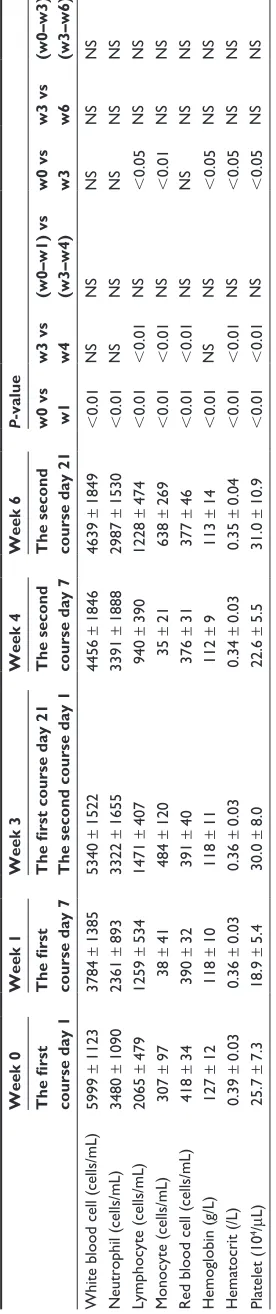
Table 2 shows the parameters of hematotoxicity. All hema-tological parameters exhibited a decrease 1 week following the first course of FEC75 therapy without LEM. However, decreases in white blood cells, neutrophils, and hemoglobin were suppressed 1 week following the second course of FEC75 therapy with concomitant use of LEM. In addition, 3 weeks following the first course of FEC75 therapy, the lymphocytes, hemoglobin, and hematocrit were insufficiently recovered, whereas both parameters were recovered 3 weeks following the second course.
immune parameters
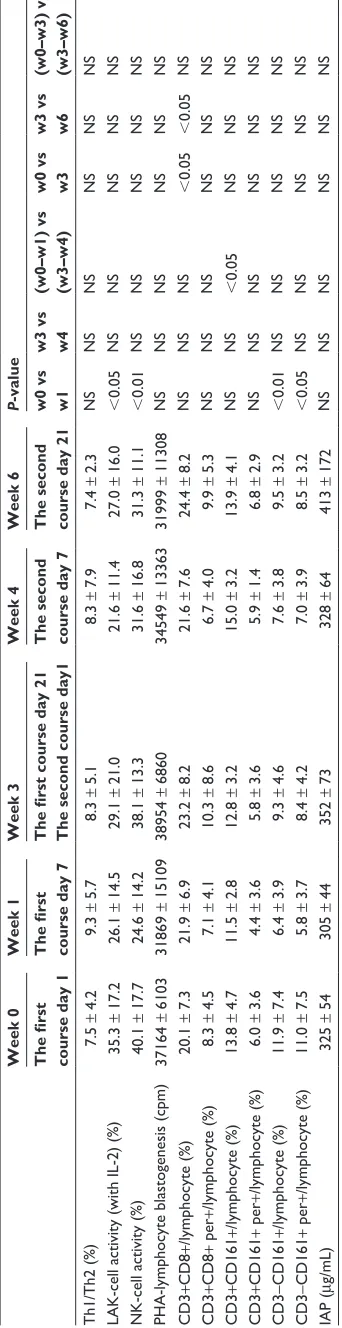
Table 3 shows the immune parameters. One week following the first course of FEC75 therapy without LEM, LAK-cell and NK-cell activity as well as the percentages of NK (CD3negativeCD161positive) and activated NK
(CD3negativeCD161positive perforinpositive) cells were decreased
among lymphocyte subsets (Figure 2). On the other hand, all of these immune parameters were maintained after the second course with concomitant use of LEM. The percentage of CD8+ T-cells was increased 3 weeks following both the first and second courses of FEC75 therapy.
Other parameters
There were no differences in changes in blood biochemistry parameters between the first and second courses (data not shown).
Dovepress
Nagashima et al
OncoTargets and Therapy downloaded from https://www.dovepress.com/ by 118.70.13.36 on 26-Aug-2020
Tab le 3 immunological parameters Week 0 Week 1 Week 3 Week 4 Week 6 P -value
The first course day 1 The first course day 7 The first course day 21 The second course day1 The second course day 7 The second course day 21 w0 vs w1 w3 vs w4 (w0–w1) vs (w3–w4) w0 vs w3 w3 vs w6
(w0–w3) vs (w3–w6) Th1/Th2 (%) 7.5 ± 4.2 9.3 ± 5.7 8.3 ± 5.1 8.3 ± 7.9 7.4 ± 2.3 NS NS NS NS NS NS
LAK-cell activity (with
iL-2) (%) 35.3 ± 17.2 26.1 ± 14.5 29.1 ± 21.0 21.6 ± 11.4 27.0 ± 16.0 , 0.05 NS NS NS NS NS
NK-cell activity (%)
40.1 ± 17.7 24.6 ± 14.2 38.1 ± 13.3 31.6 ± 16.8 31.3 ± 11.1 , 0.01 NS NS NS NS NS
PHA-lymphocyte blastogenesis (cpm)
37164 ± 6103 31869 ± 15109 38954 ± 6860 34549 ± 13363 31999 ± 11308 NS NS NS NS NS NS CD3 + CD8 + /lymphocyte (%) 20.1 ± 7.3 21.9 ± 6.9 23.2 ± 8.2 21.6 ± 7.6 24.4 ± 8.2 NS NS NS , 0.05 , 0.05 NS CD3 + CD8 + per + /lymphocyte (%) 8.3 ± 4.5 7.1 ± 4.1 10.3 ± 8.6 6.7 ± 4.0 9.9 ± 5.3 NS NS NS NS NS NS CD3 + CD161 + /lymphocyte (%) 13.8 ± 4.7 11.5 ± 2.8 12.8 ± 3.2 15.0 ± 3.2 13.9 ± 4.1 NS NS , 0.05 NS NS NS CD3 + CD161 + per + /lymphocyte (%) 6.0 ± 3.6 4.4 ± 3.6 5.8 ± 3.6 5.9 ± 1.4 6.8 ± 2.9 NS NS NS NS NS NS CD3 -CD161 + /lymphocyte (%) 11.9 ± 7.4 6.4 ± 3.9 9.3 ± 4.6 7.6 ± 3.8 9.5 ± 3.2 , 0.01 NS NS NS NS NS CD3 -CD161 + per + /lymphocyte (%) 11.0 ± 7.5 5.8 ± 3.7 8.4 ± 4.2 7.0 ± 3.9 8.5 ± 3.2 , 0.05 NS NS NS NS NS iAP ( µ g/mL) 325 ± 54 305 ± 44 352 ± 73 328 ± 64 413 ± 172 NS NS NS NS NS NS Notes:
The measurement values were presented as mean
±
SE. Variation within each cou
rse was assayed by a Student’s paired
t -test. Abbreviations: L A K , l ym ph ok in e-ac ti va te d ki lle r; iL -2 , i nt er le uk in 2 ; N K , n at ur al k ill er ; P H A , p hy to he m ag gl ut in in ; p er , p er fo ri n; iA P, im m un os up pr es si ve a ci di c pr ot ei n; w , w ee k; S E, s ta nd ar d er ro r; N S, n ot s ig ni fic an t;
cpm, counts per minute.
6 5 4 3 Weeks (% ) 2 1 0 LAK-cell activity NK cell activity
** ** * * 0 10 20 30 40 50 60
The percentages of CD3negativeCD161positive (NK) cells in lymph cells
The percentages of CD3negativeCD161positive perforinpositive (activated NK)
cells in lymph cells
Figure 2 immunological parameters.
Notes: The activity of NK-cells and LAK-cells was measured by using a 51Cr-release assay. The proportion of CD3negativeCD161positive (NK) cells and CD3negativeCD161positive perforinpositive (activated NK) cells in lymph cells was measured with flow cytometry. The measurement values were presented as mean ± SE. The variation within each course was assayed by a Student’s paired t-test. *P , 0.05; **P , 0.01.
Abbreviations: LAK, lymphokine-activated killer; NK, natural killer; SE, standard error.
Follow-up at 5 years
Table 4 shows the status of patients at a 5-year follow-up. All patients were treated with four more courses of FEC75 therapy regimen following the completion of the present study. Of the ten patients, nine patients could be followed up at 5 years. Of these, six patients were confirmed alive with no relapses, and two patients were alive with relapses. One patient was confirmed to have died of liver metastases.
Discussion
In breast cancer patients with positive nodes following radical surgery, anthracycline-based chemotherapies such as FEC
therapy are widely performed.1,2 Such chemotherapies are
often given as outpatient treatment in 21-day cycles, but clini-cally involve adverse effects such as hematotoxicity, nausea, and vomiting, which can impose substantial burden on the patients.3,4 Similarly, in the present study, hematotoxicity was
observed 1 week following the first course of chemotherapy without LEM. Furthermore, 3 weeks after treatment, there
Table 4 Five-year follow-up
recurrence-free 6
recurrence 2
Death 1
Lost to follow-up 1
Five-year survival rate 88.9%
recurrence-free survival rate 66.7%
Notes: The status of patients at a 5-year follow-up was shown. All patients were treated with four courses of FEC (5-fluorouracil + epirubicin + cyclophosphamide) therapy regimen following the completion of the present study.
Dovepress Efficacy of LEM for breast cancer chemotherapy
OncoTargets and Therapy downloaded from https://www.dovepress.com/ by 118.70.13.36 on 26-Aug-2020
was insufficient recovery of lymphocytes and hemoglobin values. On the other hand, 1 week following the second course of chemotherapy with concomitant use of LEM, no decreases were observed in white blood cells, neutrophils, or hemoglo-bin; and subsequently all hematological parameters showed recovery at 3 weeks following treatment. QOL, assessed by the QOL-ACD questionnaire, showed decreases in the total score and the subscale score for physical condition including nausea and vomiting after the first course of chemotherapy without LEM, but showed no decreases in these scores fol-lowing the second course of chemotherapy with concomitant use of LEM. These findings indicate that LEM can reduce the averse effects of FEC75 therapy, including hematotoxicity as well as nausea and vomiting, and help maintain the QOL of the patients.
Host immune function of breast cancer patients taken with anticancer chemotherapy can influence the relapse rate.7 In
the present study, NK- and LAK-cell activity as well as the percentages of NK-cells (CD3negativeCD161positive) and activated
NK-cells (CD3negativeCD161positive perforinpositive) decreased 1
week after the first course of FEC therapy without LEM, indi-cating that FEC therapy leads to decreased cytotoxic activity of lymphocytes. Conversely, no decreases were observed in these parameters after the second course of FEC therapy with concomitant use of LEM, and, in comparison with the first course, NK T cells (CD3positiveCD161positive) were increased 1
week after the second course, thereby indicating that the oral ingestion of LEM can reduce immune depression associated with FEC75 therapy. Although the mechanism by which LEM reduces immune depression by chemotherapy is not known, LEM has been reported to mitigate regulatory T-cell (Treg)-mediated immunosuppression in the tumor host.13,14 In cancer
patients, Treg was shown to release soluble IL-2 receptors
(sIL-2R),19 which are involved in immunosuppression,
par-ticularly in decreasing NK cytotoxicity.20 In addition, Archili
et al21 reported that FEC therapy increased the ratio of
sIL-2R/lymphocytes, suggesting that, in the present study, FEC therapy might cause a decrease in the activity of NK-cells by increasing the ratio of sIL-2R/lymphocytes. Subsequently, LEM might decrease the ratio of sIL-2R/ lymphocytes and contribute to the conservation of NK-cell activity or other immune functions during the second course of treatment. The present study also demonstrated an increased
percent-age of CD8+ T-cells among other lymphocyte subsets at 3
weeks following the treatment of chemotherapy. It has been reported that B-cells decrease to a greater extent than T-cells in anthracycline-based chemotherapies,22 suggesting that, in
the present study, B-cells may have been largely decreased
whereas the percentage of CD8+ T-cells was relatively increased.
Among nine subjects who could be followed in the pres-ent study, the 5-year postoperative survival rate was 88.9%, and the 5-year relapse-free survival rate was 66.7%. These survival rates are comparable to the treatment effect for posi-tive nodes after surgery for breast cancer of FEC100 therapy (a regimen in which the dose of epirubicin is increased from
75 mg/m2 to 100 mg/m2 compared with FEC75; the regimen
consists of 5-FU [500 mg/m2], epirubicin [100 mg/m2], and
cyclophosphamide [500 mg/m2]), and a higher effect may be
expected than with FEC75.2 However, because the period of
LEM intake was limited to 3 weeks in this study, the effect of LEM on the 5-year relapse-free survival rate is unknown. To verify the effect of LEM in FEC therapy on the 5-year relapse-free survival rate, it will be necessary to conduct a large-scale, controlled trial with longer-term LEM intake.
Although advances in chemotherapy are being made today for many types of malignant disease other than breast cancer, a therapeutic approach that also emphasizes maintenance of patient QOL during the course of chemotherapy is generally sought. In postoperative adjuvant chemotherapy especially, the maintenance of QOL is a matter that should be given priority. Attempts are being made to maintain QOL in various types of cancer, including pancreatic cancer,23 colon cancer,24 and
lung cancer,25 but as yet there is no reliable method. Further
investigation of the possibility that LEM is an adjuvant that will improve QOL and immune function in postoperative adjuvant chemotherapy for these cancers is therefore warranted.
In conclusion, FEC therapy in breast cancer patients with lymph node metastases after surgery can exacerbate QOL and immunity of the patients. Concomitant use of oral LEM is expected to reduce FEC therapy-related impairment of QOL and immune depression. LEM may therefore be a useful oral adjuvant to anthracycline-based chemotherapies. In addition, a larger-scale controlled study is required.
Acknowledgment
This study received a research grant from the Osaka Cancer Research Foundation.
Disclosure
The authors report no conflicts of interest in this work.
References
1. Early Breast Cancer Trialists’ Collaborative Group (EBCTCG). Effects of chemotherapy and hormonal therapy for early breast cancer on recur-rence and 15-year survival: an overview of the randomised trials. Lancet. 2005;365(9472):1687–1717.
Dovepress
Nagashima et al
OncoTargets and Therapy downloaded from https://www.dovepress.com/ by 118.70.13.36 on 26-Aug-2020
OncoTargets and Therapy
Publish your work in this journal
Submit your manuscript here: http://www.dovepress.com/oncotargets-and-therapy-journal OncoTargets and Therapy is an international, peer-reviewed, open access journal focusing on the pathological basis of all cancers, potential targets for therapy and treatment protocols employed to improve the management of cancer patients. The journal also focuses on the impact of management programs and new therapeutic agents and protocols on
patient perspectives such as quality of life, adherence and satisfaction. The manuscript management system is completely online and includes a very quick and fair peer-review system, which is all easy to use. Visit http://www.dovepress.com/testimonials.php to read real quotes from published authors.
2. French Adjuvant Study Group. Benefit of a high-dose epirubicin regi-men in adjuvant chemotherapy for node-positive breast cancer patients with poor prognostic factors: 5-year follow-up results of French Adjuvant Study Group 05 randomized trial. J Clin Oncol. 2001;19(3): 602–611.
3. Riccardi A, Brugnatelli S, Giordano M, et al. Myeloprotective effect of early primary granulocyte-colony stimulating factor during six courses of intensified 5-fluorouracil, epirubicin and cyclophosphamide (120FEC) chemotherapy for advanced breast cancer. Cooperative Group of Study and Treatment of Breast Cancer. Tumori. 1998;84(5):540–546. 4. Baltali E, Gunel N, Onat DA, et al. Neoadjuvant chemotherapy in locally
advanced breast cancer: a preliminary report. Turkish Oncology Study Group. Tumori. 1999;85(6):483–487.
5. Kornblith AB, Lan L, Archer L, et al. Quality of life of older patients with early-stage breast cancer receiving adjuvant chemotherapy: a companion study to cancer and leukemia group B 49907. J Clin Oncol. 2011;29(8):1022–1028.
6. Martin M, Lluch A, Segui MA, et al. Toxicity and health-related quality of life in breast cancer patients receiving adjuvant docetaxel, doxorubicin, cyclophosphamide (TAC) or 5-fluorouracil, doxorubicin and cyclophosphamide (FAC): impact of adding primary prophylactic granulocyte-colony stimulating factor to the TAC regimen. Ann Oncol. 2006;17(8):1205–1212.
7. Apetoh L, Ghiringhelli F, Tesniere A, et al. Toll-like receptor 4-dependent contribution of the immune system to anticancer chemo-therapy and radiochemo-therapy. Nat Med. 2007;13(9):1050–1059.
8. Mozaffari F, Lindemalm C, Choudhury A, et al. NK-cell and T-cell functions in patients with breast cancer: effects of surgery and adjuvant chemo- and radiotherapy. Br J Cancer. 2007;97(1):105–111. 9. Kawanishi T, Ikeda-Dantsuji Y, Nagayama A. Effects of two
basidi-omycete species on interleukin 1 and interleukin 2 production by macrophage and T cell lines. Immunobiology. 2010;215(7):516–520. 10. Sugano N, Choji Y, Hibino Y, et al. Anticarcinogenic action of an
alcohol-insoluble fraction (LAP1) from culture medium of Lentinus edodes mycelia. Cancer Lett. 1985;27(1):1–6.
11. Sugano N, Hibino Y, Choji, Y, Maeda H. Anticarcinogenic actions of water-soluble and alcohol-insoluble fractions from culture medium of Lentinus edodes mycelia. Cancer Lett. 1982;17(2):109–114. 12. Liu M, Li J, Kong F, Lin J, Gao Y. Induction of immunomodulating
cytokines by a new polysaccharide-peptide complex from culture mycelia of Lentinus edodes. Immunopharmacology. 1998;40(3): 187–198.
13. Tanaka K, Matsui Y, Ishikawa S, Kawanishi T, Harada M. Oral ingestion of Lentinula edodes mycelia extract can restore the antitumor T cell response of mice inoculated with colon-26 cells into the subserosal space of the cecum. Oncol Rep. 2012;27(2):325–332.
14. Tanaka K, Ishikawa S, Matsui Y, Tamesada M, Harashima N, Harada M. Oral ingestion of Lentinula edodes mycelia extract inhibits B16 melanoma growth via mitigation of regulatory T cell-mediated immunosuppression. Cancer Sci. 2011;102(3):516–521.
15. Yamaguchi Y, Miyahara E, Hihara J. Efficacy and safety of orally admin-istered Lentinula edodes mycelia extract for patients undergoing cancer chemotherapy: a pilot study. Am J Chin Med. 2011;39(3):451–459. 16. Okuno K, Uno K. Efficacy of orally administered Lentinula edodes
mycelia extract for advanced gastrointestinal cancer patients undergoing cancer chemotherapy: a pilot study. Asian Pac J Cancer Prev. 2011; 12(7):1671–1674.
17. National Cancer Institute,U.S.:Common Terminology Criteria for Adverse Events V2.0. [Publish Date April 30,1999]. Available from:http://ctep.cancer.gov/protocolDevelopment/electronic_applica-tions/docs/ctcv20_4-30-992.pdf.
18. Kurihara M, Shimizu H, Tsuboi K, et al. Development of quality of life questionnaire in Japan: quality of life assessment of cancer patients receiving chemotherapy. Psychooncology. 1999;8(4):355–363. 19. Lindqvist CA, Christiansson LH, Simonsson B, Enblad G,
Olsson-Strömberg U, Loskog AS. T regulatory cells control T-cell prolif-eration partly by the release of soluble CD25 in patients with B-cell malignancies. Immunology. 2010;131(3):371–376.
20. Mocchegiani E, Ciavattini A, Santarelli L, et al. Role of zinc and alpha2 macroglobulin on thymic endocrine activity and on peripheral immune efficiency (natural killer activity and interleukin 2) in cervical carcinoma. Br J Cancer. 1999;79(2):244–250.
21. Archili C, Lissoni P, Cattaneo G, et al. Lack of changes in soluble interleukin-2 receptor serum levels during chemotherapy-induced lymphocyte damage. Int J Biol Markers. 1990;5(1):43–45.
22. Murta EF, de Andrade JM, Falcão RP, Bighetti S. Lymphocyte subpopu-lations in patients with advanced breast cancer submitted to neoadjuvant chemotherapy. Tumori. 2000;86(5):403–407.
23. Toyama Y, Yoshida S, Saito R, et al. Successful adjuvant bi-weekly gemcitabine chemotherapy for pancreatic cancer without impairing patients’ quality of life. World J Surg Oncol. 2013;11:3.
24. Lin KY, Shun SC, Lai YH, Liang JT, Tsauo JY. Comparison of the effects of a supervised exercise program and usual care in patients with colorectal cancer undergoing chemotherapy. Cancer Nurs. [Epub January 25, 2013.]
25. Stigt JA, Uil SM, van Riesen SJ, et al. A randomized controlled trial of postthoracotomy pulmonary rehabilitation in patients with resectable lung cancer. J Thorac Oncol. 2013;8(2):214–221.
Dovepress
Dove
press
Efficacy of LEM for breast cancer chemotherapy
OncoTargets and Therapy downloaded from https://www.dovepress.com/ by 118.70.13.36 on 26-Aug-2020