Geschke Center
Doctoral Dissertations Theses, Dissertations, Capstones and Projects
2017
Perceptions and Practices of Administrators and
Teachers in Jesuit Secondary Schools in the
Hazaribag Province of India Regarding Ideal
Ignatian Educators
Vincent Hansdak
Follow this and additional works at:https://repository.usfca.edu/diss
Part of theEducational Leadership Commons
This Dissertation is brought to you for free and open access by the Theses, Dissertations, Capstones and Projects at USF Scholarship: a digital repository @ Gleeson Library | Geschke Center. It has been accepted for inclusion in Doctoral Dissertations by an authorized administrator of USF Scholarship: a digital repository @ Gleeson Library | Geschke Center. For more information, please [email protected].
Recommended Citation
Hansdak, Vincent, "Perceptions and Practices of Administrators and Teachers in Jesuit Secondary Schools in the Hazaribag Province of India Regarding Ideal Ignatian Educators" (2017).Doctoral Dissertations. 330.
PERCEPTIONS AND PRACTICES OF ADMINISTRATORS AND TEACHERS IN JESUIT SECONDARY SCHOOLS IN THE HAZARIBAG PROVINCE OF INDIA
REGARDING IDEAL IGNATIAN EDUCATORS
A Dissertation Presented to
The Faculty of the School of Education Department of Leadership Studies Catholic Educational Leadership Program
In Partial Fulfillment
of the Requirements for the Degree Doctor of Education
by
Vincent Hansdak San Francisco
ii
Dissertation Abstract
Perceptions and Practices of Administrators and Teachers in Jesuit Secondary Schools in the Hazaribag Province of India
Regarding Ideal Ignatian Educators
The growing number of complex learning contexts and needs of students has
challenged the quality of education at all levels. The need to offer the most satisfactory
and meaningful education to all students consistently attracts researchers, policymakers,
and educators to comprehensively understand what comprises successful learning, and in
particular, what qualities do effective teachers have around the world. Though some
developed countries have made significant progress toward quality education, many
developing countries experience numerous obstructions to guaranteeing quality education
to students. Most importantly, India, due to its economic, cultural, and social divides, still
grapples with equity and the quality of education. In particular, Jharkhand State, which
has predominantly an indigenous population, due to its social and educational
backwardness, greatly requires teachers with skills and qualities that ensure effective
learning of all students in every school.
In this endeavor, Jesuit schools network, a private Catholic school network in the
State of Jharkhand, India, too still battles with the challenges of low-quality teachers in
their schools. Jesuit schools experience the challenging task of upholding success for all
students. Thus, to respond to the need of Jesuit schools, this study attempted to
investigate the perceptions and practices of administrators and teachers in Jesuit
secondary schools in the Province of Hazaribag, India, to discern the ideal for Ignatian
iii
2015a) as the two conceptual lenses to examine the topic.
A mixed-methods approach was adopted to thoroughly investigate the topic. The
researcher-constructed survey data comprised the major component of the study, and to
arrive at a comprehensive understanding of the topic, it was further examined from
semistructured interviews and classroom observational data. Results showed that the
majority of participants upheld teaching qualities enumerated in Stronge, the Jesuit
Secondary Education Association, and the Jesuit Schools Network as important for
quality teaching and learning in Jesuit schools. Additionally, results indicated that
qualities such as “teacher as a caring person,”“teacher as a competent person,”
iv
and approved by the members of the committee, has been presented to and accepted by
the Faculty of the School of Education in partial fulfillment of the requirements for the
degree of Doctor of Education. The content and research methodologies presented in this
work represent the work of the candidate alone.
Vincent Hansdak May 18, 2017
Candidate
Dissertation Committee:
Dr. Patricia Mitchell, Ph.D. May 18, 2017
Chairperson
Dr. Monisha Bajaj, Ed. D. May 18, 2017
Committee Member
Dr. Michael Duffy, Ed. D. May 18, 2017
v
The debt of gratitude owed for the completion of this thesis is immense.
For its intellectual origins and sustenance, I am grateful to Dr. Doreen Jones,
whose stimulating conversations at the beginning of the doctoral program at USF
challenged me to identify the educational needs of my context and put that into a study.
Also, I am grateful to her for her guidance in academic planning, and particularly, in
providing reading materials to gain depth in knowledge and to streamline the topic.
For excellent academic guidance, I am grateful to Dr. Patricia A. Mitchell for
serving as the chair of my dissertation committee. Particularly, I am indebted to her for
her insightful supervisory support, overwhelming encouragement, and patient
understanding that enabled me to stay on the work despite various ups and downs during
this journey. During this journey, Dr. Mitchell always offered me all academic supports
with her gentle and caring personality. Thank you Dr. Mitchell.
In deep gratitude, I am indebted to Dr. Monisha Bajaj for serving as one of the
members of the dissertation committee and for her assistance in viewing the topic from
the Indian perspective. Also, I thank Dr. Bajaj for providing and guiding me with reading
materials that were relevant to this topic. I am also grateful to Dr. Michael Duffy for
serving on my dissertation committee, and specifically, for his academic suggestions on
church and Jesuit documents. Exclusively, I am thankful to Dr. Duffy for his
conversations around the importance of Catholic education and for his advice on how to
grow institutionally to reach out to the people most in need.
Along the dissertation journey, I greatly benefited from numerous conversations
vi
scholars in United States and in India. Their conversations consistently guided me in this
research and encouraged me to progress. In particular, I am grateful to all professors of
USF who accompanied and guided me through different coursework during the past 3
years. Most notably, I thank the ICEL community of staff and students for being part of
this important journey and for supporting me to grow in life academically, spiritually,
socially, and personally.
I am immensely grateful to Fr. Stephen Nduati, S.J., for his tireless support in
proofreading my work. He most brilliantly accompanied and supported me in my writing
this thesis, from it’s beginning to finish. Steve, I salute your companionship and generous
heart to help others. Also, I am grateful to Fr. Daniel Kendell, S.J. for proofreading the
first three chapters of the thesis and for providing valuable suggestions to improve it. I
greatly acknowledge the professional editing work done by Mrs. Sue Morris. She most
willing accepted to edit my entire thesis in a very short notice. Sue, thank you very much.
On a grateful note, I also acknowledge the help and supports of Dr. Benjamin Baab on
the statistical work of the thesis.
Lastly, on a practical note, I could not have put in all the work that this thesis
demanded if not for the kind contributions of Jesuit brothers at the Jesuit community of
USF and in the Province of Hazaribag, India. Specifically, I thank Fr. Timothy Godfrey,
S.J. (USF Jesuit Community Rector) and Fr. Paul Fitzgerald, S.J. (USF President) for
vii
ABSTRACT ... II
SIGNATURE PAGE ... IV
ACKNOWLEDGEMENTS ... V
LIST OF TABLES ... XI
LIST OF FIGURES ... XIV
CHAPTER I THE RESEARCH PROBLEM ...1
Statement of the Problem ...1
Background and Need for the Study ...4
An Overview of Jesuit Education in India ...4
Overview of Secondary Education in the State of Jharkhand, India ...5
Purpose of the Study ...8
Research Questions ...8
Overarching Research Question ...9
Research Subquestions ...9
Conceptual Framework ...9
The Qualities of Effective Teachers (Stronge, 2002, 2007) ...11
The Profile of an Ignatian Educator (JSEA, 2011/JSN, 2015a) ...11
Educational Significance of the Study ...13
Limitations/ Delimitations of the Study ...15
Definitions of Key Terms ...16
Summary ...18
CHAPTER II REVIEW OF LITERATURE ...20
Introduction ...20
An Overview of the Chapter ...21
Teacher Effectiveness (TE) and Effective Teaching (ET) ...22
The Concepts of Teacher Effectiveness (TE) and Effective Teaching (ET) ...22
An Overview of Public/Government Education in India ...32
Teacher Effectiveness Studies in the Indian Context ...38
Summary of Research on Teacher Effectiveness and Effective Teaching ...41
James H. Stronge and Qualities of Effective Teachers ...42
Quality 1: Teacher as a Person ...48
Subsequent Research on Teacher as a Person ...50
Quality 2: Classroom Management and Organization ...52
Subsequent Research on Classroom Management and Organization ...53
Quality 3: Planning and Organizing for Instruction ...54
Subsequent Research on Planning and Organizing for Instruction ...55
Quality 4: Implementing Instruction ...56
viii
Summary of Research on Qualities of Effective Teachers ...60
Jesuit Schools Network (JSN) and the Profile of an Ignatian Educator ...61
Quality 1: Caring for the Individuals ...65
Subsequent Research on Caring for the Individual ...66
Quality 2: Discerning Ways of Teaching and Learning ...68
Subsequent Research on Discerning Ways of Teaching and Learning ...70
Quality 3: Modeling Ignatian Pedagogy ...71
Subsequent Research on Modeling Ignatian Pedagogy ...73
Quality 4: Building Community and Fostering Collaboration ...74
Subsequent Research on Building Community and Fostering Collaboration ...76
Quality 5: Animating the Ignatian Vision ...77
Subsequent Research on Animating the Ignatian Vision ...79
Summary of the Research on the Profile of an Ignatian Educator ...80
The Summary ...81
CHAPTER III METHODOLOGY ...83
Restatement of the Purpose ...83
Research Design ...83
Research Setting and Population ...85
Research Sample ...86
Instrumentation ...89
Jesuit Secondary Teacher Effectiveness Survey (JSTES) ...89
Validity ...92
Reliability ...93
Data Collection ...94
Data Analysis ...95
Research Subquestion 1 ...96
Research Subquestion 2 ...96
Research Subquestion 3 ...97
Research Subquestion 4 ...98
Ethical Considerations ...99
Background of the Researcher ...100
CHAPTER IV DATA ANALYSIS AND RESULTS ...101
Overview of the Chapter ...101
Response Rate ...103
Demographic Information ...103
Gender and Roles of the Participants ...103
Number of Participants From the Selected Four Jesuit High Schools ...104
Years of Teaching Experiences and the Highest Level of Educational Degree(s) Earned by Participants ...105
Religious Beliefs and Practices of the Participants ...106
Research Questions ...108
ix
Findings for Research Subquestion 1 ...109
Summary of Findings: Research Subquestion 1 ...118
Findings for Research Subquestion 2 ...119
Summary of Findings: Research Subquestion 2 ...133
Findings for Research Subquestion 3 ...134
Summary of Findings: Research Subquestion 3 ...139
Findings for Research Subquestion 4 ...139
Summary of the Findings for Research Subquestion 4 ...145
Some Additional Findings ...146
Summary ...147
CHAPTER V SUMMARY, DISCUSSIONS, CONCLUSIONS, IMPLICATIONS, & RECOMMENDATIONS ...149
Summary of the Study ...149
Discussions ...151
Discussion of Research Subquestion 1 ...151
Discussion of Research Subquestion 2 ...153
Discussion of Research Subquestion 3 ...155
Discussion of Research Subquestion 4 ...156
Discussion of the Overarching Research Question ...158
Conclusions ...160
Conclusions for Research Subquestion 1 ...160
Conclusions for Research Subquestion 2 ...161
Conclusions for Research Subquestion 3 ...162
Conclusions for Research Subquestion 4 ...163
Implications ...164
Implications to Jesuit Education in India ...164
Implications to Teacher Effectiveness and Effective Teaching in India .165 Recommendations ...167
Recommendations for Future Research ...167
Recommendations for Future Practice ...168
Closing Remarks ...170
REFERENCES ...172
APPENDIX A SURVEY INSTRUMENT ...196
APPENDIX B SEMISTRUCTURED INTERVIEW QUESTIONS (FOR ADMINISTRATORS) ...206
APPENDIX C PERMISSION LETTER TO USE STRONGE’S (2002, 2007) FRAMEWORK ...208
x
THIS STUDY IN THE PROVINCE ...210
APPENDIX F A LIST OF VALIDATION PANELISTS AND THEIR FIELDS OF EDUCATIONAL EXPERTISE ...211
APPENDIX G A LETTER SENT TO FOUR JESUIT SECONDARY SCHOOLS PRINCIPALS OF HAZARIBAG JESUIT PROVINCE, INDIA, REGARDING THIS STUDY IN THEIR SCHOOLS ...212
xi
Table 1The Percentage Population Distributions of STs and SCs to the Total
Population of India ...2 Table 2Qualities and Characteristics of Effective Teachers ...12 Table 3The Profile of an Ignatian Educator ...14
Table 4 Characteristics and Indicators of the “Teachers as a Person” Quality of
Effective Teachers ...43
Table 5 Characteristics and Indicators of the “Classroom Management and
Organization” Quality of Effective Teachers ...45
Table 6 Characteristics and Indicators of the “Planning and Organizing for
Instruction” Quality of Effective Teachers (Stronge, 2002, 2007) ...46
Table 7 Characteristics and Indicators of the “Implementing Instruction” Quality of
Effective Teachers ...47
Table 8 Characteristics and Indicators of the “Monitoring Student Progress and
Potentials” Quality of Effective Teachers ...48
Table 9 List of Jesuit High Schools In Hazaribag Province, India (In the Hazaribag
District) ...87
Table 10 List of Jesuit High Schools in Hazaribag Province, India (In the Bokaro
District) ...88
Table 11 List of Jesuit High Schools in Hazaribag Province, India (In the Ramgarh
District) ...88
Table 12 List of Jesuit High Schools in Hazaribag Province, India (In the Latehar
and Daltonganj Districts) ...89
Table 13 Demographic Information of all Administrators and Teachers From the
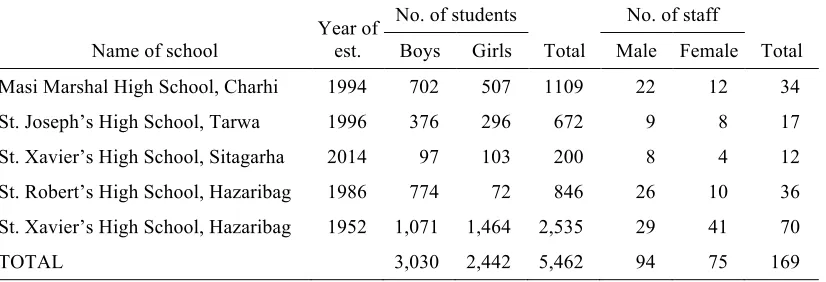
Selected Four Jesuit High Schools in Hazaribag Province, India ...89
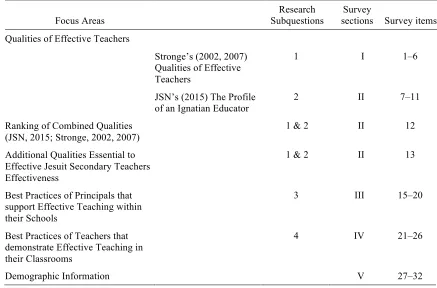
Table 14 Survey Focus Areas and Corresponding Research Questions, Survey
Sections, and Survey Items ...92
Table 15 Dates of Survey, Semistructured Interviews, and Classroom Observations at
xii
Hazaribag Province, Jharkhand, India (N = 103) ...110
Table 17 Frequencies of Respondents’ Ratings of the Qualities of Stronge’s (2002,
2007) for All Administrators From Four Selected Jesuit High Schools in
Hazaribag Province, Jharkhand, India (n = 11) ...111
Table 18 Frequencies of Respondents’ Ratings of the Qualities of Stronge’s (2002,
2007) for All Teachers From Four Selected Jesuit High Schools in Hazaribag
Province, Jharkhand, India (n = 92) ...112
Table 19 Percentage of Respondents’ Ratings of Quality 1: Prerequisites for Effective
Teaching for All Participants (N = 103) From the Selected Four Jesuit High
Schools in the Province of Hazaribag, India ...113
Table 20 Percentage of Respondents’ Ratings of Quality 2: Teacher as a Person for
All Participants (N = 103) From the Selected Four Jesuit High Schools in the
Province of Hazaribag, India ...114
Table 21 Percentage of Respondents’ Ratings of Quality 3: Classroom Management
and Organization for All Participants (N = 103) From the Selected Four Jesuit
High Schools in the Province of Hazaribag, India ...115
Table 22 Percentage of Respondents’ Ratings of Quality 4: Planning and Organizing
for Instruction for All Participants (N = 103) From the Selected Four Jesuit
High Schools in the Province of Hazaribag, India ...116
Table 23 Percentage of Respondents’ Ratings of Quality 5: Implementing Instruction
for All Participants (N = 103) From the Selected Four Jesuit High Schools in the Province of Hazaribag, India ...117
Table 24 Percentage of Respondents’ Ratings of Quality 6: Monitoring Student
Progress and Potentials for All Participants (N = 103) From the Selected Four
Jesuit High Schools in the Province of Hazaribag, India ...118
Table 25 Frequency of Respondents’ Ratings of the Qualities of JSEA (2011)/JSN’s
(2015) for All Survey Respondents From Four Selected Jesuit High Schools in
Hazaribag Province, Jharkhand, India (N = 103) ...120
Table 26 Frequency of Respondents’ Ratings of the Qualities of JSEA (2011)/JSN’s
(2015) for All Administrators From Four Selected Jesuit High Schools in
Hazaribag, Province, Jharkhand, India (n = 11) ...121
Table 27 Frequency of Respondents’’ Ratings of the Qualities of JSEA (2011)/JSN’s
(2015) for All Teachers From Four Selected Jesuit High Schools in Hazaribag
xiii
Province, Jharkhand, India (N = 103) ...123
Table 29 Percentage of Respondents’ Ratings of Quality 8: Discerning Ways of
Teaching and Learning for All Participants From the Selected Four Jesuit High Schools in Hazaribag Province, Jharkhand, India (N = 103) ...124
Table 30 Percentage of Respondents’ Ratings of Quality 9: Modeling Ignatian
Pedagogy for All Participants From the Selected Four Jesuit High Schools in
Hazaribag Province, Jharkhand, India (N = 103) ...125
Table 31 Percentage of Respondents’ Ratings of Quality 10: Building Community and
Fostering Collaboration for All Participants From the Selected Four Jesuit High Schools in Hazaribag Province, Jharkhand, India (N = 103) ...126
Table 32 Percentage of Respondents’ Ratings of Quality 11: Animating the Ignatian
Vision for All Participants From the Selected Four Jesuit High Schools in
Hazaribag Province, Jharkhand, India (N = 103) ...127
Table 33 All Respondents’ Rankings of the Qualities Comprising Stronge’s (2002,
2007) and JSEA (2011)/JSN’s (2015) in Ascending Order of Importance By
Mean Score (N = 103) ...128
Table 34 Teachers’ Rankings of the Qualities Comprising Stronge’s (2002, 2007) and
JSEA (2011)/JSN’s (2015) in Ascending Order of Importance By Mean Score (n = 92) ...129
Table 35 Administrators’ Rankings of the Qualities Comprising Stronge’s (2002,
2007) and JSEA (2011)/JSN’s (2015) in Ascending Order of Importance By
Mean Score (n = 11) ...130
Table 36 Respondents’ Rankings of the Qualities Comprising Stronge’s (2002, 2007)
and JSEA (2011)/JSN’s (2015) By Four Jesuit High Schools, Hazaribag and By
Mean Score (N = 103) ...132
Table 37 Respondents’ Rankings of the Composite Qualities Comprising Stronge’s
(2002, 2007) and JSEA (2011)/JSN’s (2015) By Four Jesuit High Schools,
Hazaribag Province, By Mean Score (N = 103) ...134
Table 38 List of Recommended Qualities and Their Corresponding Characteristics
xiv
Figure 1. The combined schema for Jesuit secondary educator’s best practices. ...10
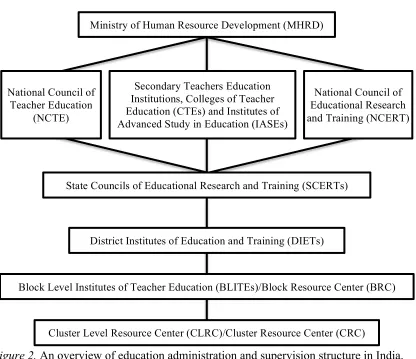
Figure 2. An overview of education administration and supervision structure in India. ...37
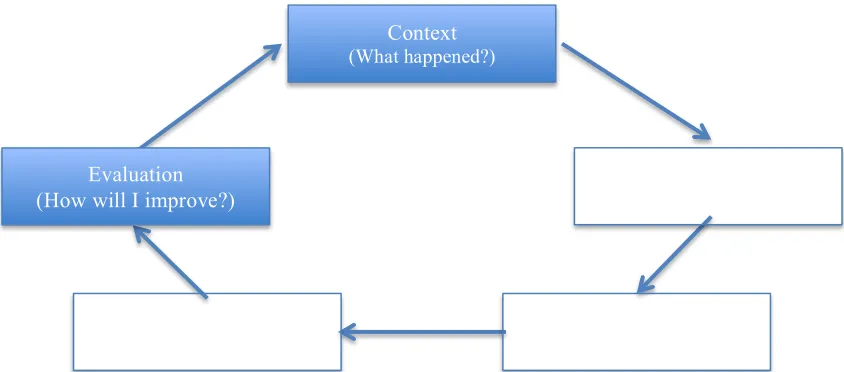
Figure 3. The five-steps cyclic process of the ignatian pedagogy. ...72
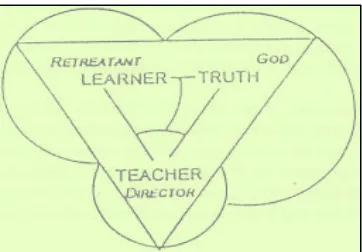
Figure 4. The interconnectivity between a teacher and a learner in the Ignatian
pedagogy. ...73
Figure 5. Distribution of participants from the selected four Jesuit high schools of
Hazaribag Province, India, by gender. ...104
Figure 6. Distribution of participants from four Jesuit high schools of Hazaribag
Province, India, by number. ...105
Figure 7. Information about participants from four Jesuit high schools in Hazaribag
Province, India, by years of teaching experiences. ...106
Figure8. Highest level of education degree(s) earned by all participants
(administrators & teachers) in four Jesuit high schools in Hazaribag Province,
India. ...107
Figure 9. Distribution of participants from four Jesuit high schools in Hazaribag
Province, India, by their religious beliefs and practices. ...107
Figure 10.Frequency of manners of professional supports offered by administrators to teachers in four jesuit high scholls in Hazaribag Province, India. ...136
Figure 11. Frequency of teachers’ ratings of combined teaching qualities of Stronge’
(2002, 2007) and JSEA (2011)/JSN’s (2015) by classroom practices. ...141
Figure 12. Frequency of teachers’ suggestions on improving professional qualities in
CHAPTER I
THE RESEARCH PROBLEM
Statement of the Problem
Concerns about the quality of teaching and learning at schools have been central
to educational research for the past several decades around the world. For different
purposes, various scholars have investigated questions such as, “What identified teachers
as good and effective?” and “What helped students learn the most from an instruction?”
Because research studies revealed diverse opinions on what constituted effective teaching
(ET), no consensus has yet been achieved among educational researchers (Lewis et al.,
1999; Stronge, 2007). Studies have substantiated that a wide range of personal and
professional qualities of teachers aligned with higher levels of student achievement
(Stronge, 2002, 2007).
In addition, researchers suggested that teacher quality did matter when it came to
how much students learned, and teacher effectiveness (TE) stayed with students for years
afterward (Day, Sammons, Stobart, Kington, & Gu, 2007; Darling-Hammond, 2000;
Hargreaves & Fullan, 2012; Hanushek, Kain, & Rivkin, 1998; Marzano, Pickering, &
Pollock, 2001; Sahlberg, 2010; Stronge, 2002, 2007). Not surprisingly, moreover, a
number of studies proposed a need for competent, caring, and qualified teachers for
at-high-risk students to succeed in schools (Hamre & Pianta, 2005; Noddings, 1992, 2005,
2006; Parker, 1998, 2007; Stronge, 2002, 2007).
But, in India, despite a 62% increase in the gross-enrollment ratio in levels IX–
XII, 49% students, belonging to Scheduled Tribes (ST) and Scheduled Castes (SC)
are the two groups that are socially, economically, and politically suppressed in the
Indian caste hierarchical society. Additionally, ST or Adivasi, translated as “original
inhabitants,” represent about 8% and SC, or Dalits, literally translated as “broken people,”
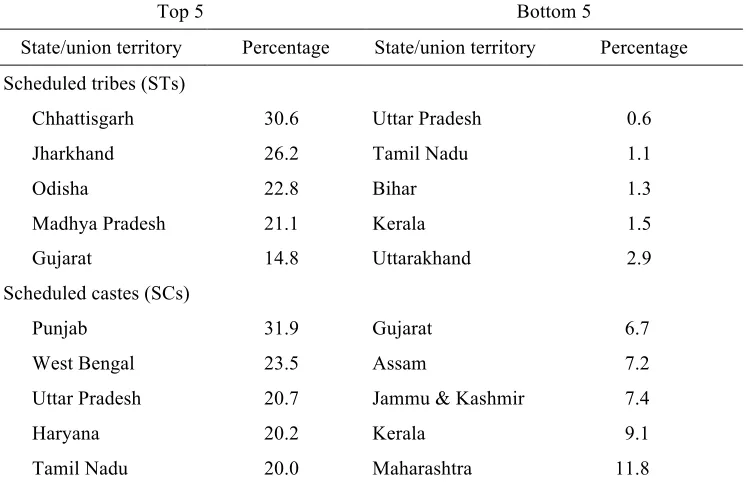
comprise 16% of India’s total population (Bajaj, 2012, pp. 33–34).Table 1 presents the
percentage population distributions of STs and SCs among the top and bottom five states
and union territories of India.
Table 1
The Percentage Population Distributions of STs and SCs to the Total Population of India
Top 5 Bottom 5
State/union territory Percentage State/union territory Percentage
Scheduled tribes (STs)
Chhattisgarh 30.6 Uttar Pradesh 0.6
Jharkhand 26.2 Tamil Nadu 1.1
Odisha 22.8 Bihar 1.3
Madhya Pradesh 21.1 Kerala 1.5
Gujarat 14.8 Uttarakhand 2.9
Scheduled castes (SCs)
Punjab 31.9 Gujarat 6.7
West Bengal 23.5 Assam 7.2
Uttar Pradesh 20.7 Jammu & Kashmir 7.4
Haryana 20.2 Kerala 9.1
Tamil Nadu 20.0 Maharashtra 11.8
Note. From Primary Census Abstract, by C. Chandramouli, 2011, retrieved from https://www.google.com/url?sa=t&rct=j&q=&esrc=s&source=web&cd=1&ved
=0ahUKEwjHz6Sky8DSAhVP4mMKHUrdDYgQFggcMAA&url=http%3A%2F%2Fcensusindia.gov.in %2F2011-Documents%2FPRIMARY%2520CENSUS%2520ABSTRACT_Final.ppt&usg
=AFQjCNF7QGOAyApuo84JSmN16eKxw_ccWA
Furthermore, the Ministry of Human Resource Development, India, 2014,
reported that a majority (77%) of children out of school live in rural areas. In particular,
in 2014 in the eastern primarily tribal state of Jharkhand, 62.4% and 50.1% ST and SC
Human Resource Development, India, 2014). Subsequently, though the exact number of
ST and SC students dropping out of Jesuit schools was unrecorded, students who belong
to these two groups consistently did not complete their schooling in many schools in the
Jesuit Province of Hazaribag, India. However, the state government of Jharkhand is still
grappling with the universal accessibility and quality of education for these two groups
(ST & SC) of students.
Members of the Society of Jesus (popularly known as Jesuits) have been trying to
support government educational projects through the establishment of Jesuit schools in
the remotest parts of Jharkhand State. Predominantly, four Jesuit provinces, perhaps the
highest number in any single state among 19 provinces in India, engage in the work of
education, social uplifting, legal support, and pastoral care in the State of Jharkhand. The
majority of Jesuits from the four Jesuit provinces of Jharkhand State are primarily
involved in the work of educating huge masses of underprivileged Adivasi and Dalits
(Tete, 2007). But, Jesuits’ efforts to provide quality education have been limited, due to a
scarcity of competent and qualified teachers. Studies suggested that developing qualified
and competent teachers in schools could fulfill this need (Hargreaves & Fullan, 2012;
Hargreaves & Shirley, 2012; Sahlberg, 2010; Stronge, 2002, 2007, 2010). Although
research on TE in public schools is flourishing around the world, a review of the
literature revealed a gap in the empirical research measuring TE among Jesuit secondary
school teachers. Moreover, in the Indian context, research on TE was virtually
nonexistent. Therefore, the present study aimed to address that void by investigating the
Jesuit Province of Hazaribag, Jharkhand, India, on the qualities of ideal Ignatian
educators and the ways they foster the qualities of effective teachers in their schools.
Background and Need for the Study
An Overview of Jesuit Education in India
In India, the renowned tradition of Jesuit education was as old as the arrival of the
first Portuguese Jesuit missionaries in 1542 to Goa, a western coastal state of India. In the
beginning, the primary purpose of Portuguese Jesuit missionaries was to evangelize
Indians. However, when faced with the dark realities of the place and people, the Jesuits
realized that the best way of evangelizing people was to educate the youth. Thus, in 1548,
they started St. Paul’s College in Goa as the first Jesuit school. Thereafter, Jesuit
missionaries from Spain, France, Belgium, Australia, New Zealand, Malta, and the
Americas arrived in different parts of the country at different times to continue and
promote the Jesuit mission and the great legacy of the Jesuit tradition of education in
India.
At present, approximately 4,000 Jesuits in India largely work as educators
(secondary and tertiary) and social reformers in 28 of 36 states and union territories of the
country. The extent and magnitude of the Jesuit education network is evident in the
existence of 21 Jesuit colleges and by more than 200 Jesuit high schools across the
country. To smooth administrative purposes, the Jesuit education network in India is
divided into four major zones: East Zone, Central Zone, West Zone, and South Zone.
Each administrative zone comprises several Jesuit provinces, and each province directly
A recent survey conducted by the Catholic Bishops Congregation of India pointed
out that Catholic service of education extends to over 10 million students of all religions,
without discrimination, including 23% Catholics, 5.3% Christians of other denominations,
52% Hindus, 8.4% Muslims, and 10.4% belonging to other religious categories. In
socioeconomic terms, 42.5% of students come from the poor income group, 32.5% from
the low-income group, 18.3% from the middle-income group, and 6.7% from the
high-income group (Catholic Bishops’ Conference of India, 2006). Catholic education in India
is an important agent in inclusive (religious and cultural) education and an effort to form
global citizens.
The International Commission on the Apostolate of Jesuit Education (1993a),
when outlining the characteristics of Jesuit education, emphasized that Jesuit education
must aim at producing men and women for others and education must motivate all to
bring about a social transformation to empower and move the society towards
development. The universal Jesuit mission is to form educated men and women capable
of building a just and equitable society for all. But in India, Jesuit education was critically
challenged to accomplish its mission by the fast-growing culture of individualism,
materialistic consumerism, capitalism, cut-throat competition, politics of communalism,
corruption, gender discrimination, religious discrimination, caste injustices, and different
types of religious violence present in the society.
Overview of Secondary Education in the State of Jharkhand, India
The State of Jharkhand is in eastern India. The inhabitants are various groups of
ethnic tribes and Dalit; hence, it is also called a Tribal State. In 2012, The Ministry of
of Jharkhand was 53.02% and the dropout rate of high-school Adivasi (ST) students was 70%. These facts were alarming for the Government of Jharkhand, India, and in
particular for all Jesuit educational institutions that were trying to uplift Adivasi (ST) and
Dalit (SC) students in this area through basic education.
A study on student graduation and dropout rates among low-income students in a
rural Appalachian School District in the United States (Burns, 1995) indicated two major
sources of influence exterior and interior to the school. Interior influences included poor
teaching, early and consistent failing grades, repressive authoritarian culture, and a
disconnection between the school and the local community (Caraway, Tucker, Reinke, &
Hall, 2003; Chitty, 2006). Exterior influences included poverty, family chaos, and family
reliance on young people working (Myers, Kim, & Mandala, 2004; Suh & Suh, 2007; E.
Steward, 2008). Moreover, evidence from a large number of studies on TE and ET
suggested that the role of the teacher was the most influential school-related force in
student achievement (Aaronson, Barrow, & Sander, 2007; Allington & Johnston, 2000;
Hanushek, Kain, & Rivkin, 1998; Nye, Konstantopoulos, & Hedges, 2004; Rivkin,
Hanushek, & Kain, 2005; Stronge, Ward, Tucker, & Hindman, 2008).
In the Jesuit tradition, the expression, Cura Personalis (care of the whole person)
is one of the hallmarks of Ignatian spirituality. The concept of Cura Personalis calls for
individualized attention to the needs of the other; a distinctive respect for their unique
gifts, challenges, and possibilities; and appropriate appreciation for the particular insights
of a person. Originally, this expression was used to describe the roles and responsibilities
of the Jesuit Superior to care for each member in the community. Now, however, the
students in all Jesuit educational institutes. Cura Personalis has become the hallmark of a Jesuit institute, and the development of the whole person a primary goal. In realizing this
important goal, the Jesuit Secondary Education Association (JSEA, 2011), emphasized
that an Ignatian educator must be a person who cares for the individuals in Jesuit
institutes. In a similar regard, Stronge (2007), when describing the effectiveness of
teachers, stated, “Effective teachers care about their students and demonstrate their care
in such a way that their students are aware of it” (p. 23). Identifying the important need of
caring in schools, Noddings (1992), too, stated, “Caring is the very bedrock of all
successful education and that contemporary schools need to revitalize this aspect in
teaching and learning” (p. 27).
Although accepting the importance of professional competence of teachers,
researchers have emphasized the development of personal qualities of teachers, too. In
this regard, Palmer (1998) asserted, “Good teaching cannot be reduced to technique; good
teaching comes from the identity and integrity of the teacher” (p. 10). Hargreaves and
Fullan (2012) also supported the aforesaid personal qualities of teachers and suggested,
“Teachers need to be directive, influential, caring, and actively engaged in the passion of
teaching and learning” (p. 52). Acknowledging this personal disposition to teaching and
to the mission of school, Vatican II (Pope Paul VI, 1965) also stressed in its document,
Gravissimum Educationis, the critical importance of the Catholic schoolteacher in determining whether the purposes and undertakings of the Catholic school come to
fruition.
Supporting this general claim, Stronge (2007) stated, “The growing body of
teaching, in terms of students’ achievement as well as other desirable outcomes” (p. x).
Stronge (2007) further pointed out, “Teachers have a powerful, long-lasting influence on
their students. They directly affected how students learnt, what they learnt, how much
they learnt, and the ways they interacted with one another and the world around them” (p.
ix). Thus, researchers suggested that students need teachers in schools who can relate to
them and establish a relationship of caring and understanding. The teacher’s attitude of
personal interest in all students enhances teaching and learning in schools. However, the
important question that needs to be addressed is how to develop this vital character of
caring and commitment of teachers. Research on TE and ET around the world has
described various essential qualities for effective teaching, but research on TE in Jesuit
secondary schools in India was nonexistent.
Purpose of the Study
The purpose of this study was to explore the degree of importance that Jesuit
secondary school administrators and teachers attributed to the qualities of teachers
defined by Stronge (2002, 2007) and the Jesuit Schools Network (JSN, 2015a; JSEA,
2011). This study explored which qualities are necessary for ET in Jesuit secondary
schools in India. In addition, the study examined the practices administrators employed in
schools to foster the qualities of effective Jesuit secondary school teachers. This study
also identified the manner in which teachers demonstrated the qualities of ET in their
classrooms through self-reports.
Research Questions
In this study, the researcher asked one overarching research question and four
Overarching Research Question
What are the essential qualities of ideal Ignatian educators working in Jesuit
secondary schools in India to improve high school students’ learning?
Research Subquestions
1. To what extent do administrators and teachers perceive the qualities of
teachers, as defined by Stronge (2002, 2007), to be important for ET in Jesuit
secondary schools?
2. To what extent do administrators and teachers perceive the qualities of an
Ignatian educator, as defined by JSEA (2011) and JSN (2015a), to be
important for ET in Jesuit secondary schools?
3. In what manner(s) do administrators support the qualities of teaching,
identified by Stronge (2002, 2007), JSEA (2011), and JSN (2015a), in their
faculty?
4. In what manner(s) do teachers demonstrate the qualities of teaching, identified
by Stronge (2002, 2007), JSEA (2011), and JSN (2015a), in their classrooms?
Conceptual Framework
This study incorporated two sets of standards for its conceptual framework:
Stronge’s (2002, 2007) book, The Essential Qualities of Effective Teachers, and the JSN
(2015a) document, The Profile of an Ignatian Educator. The six qualities of effective
teachers, described by Stronge (2002, 2007), provided a broad perspective on TE,
whereas the five standards mentioned by the JSN (2015a) offered a comprehensive view
of an ideal Ignatian educator for Jesuit secondary schools. Moreover, the researcher
conceptual framework of this study, because they appeared more comprehensive and
extensive than other teacher-effectiveness scales (Danielson, 2006, 2007, 2011; Davis &
Thomas, 1989; Kulsum, 2000; P. Kumar & Mutha, 1999; Lui & Meng, 2009; Marzano,
2007; Ornstein & Lasley; 2000; Puri & Ghakhar, 2010; Zemelman, Daniels, & Hyde,
2012) for the purpose of the present research.
The six qualities of effective teachers described by Stronge (2002, 2007) and the
five qualities of an Ignatian educator highlighted by JSN (2015a) together formed the
conceptual framework for an ideal Ignatian educator in Jesuit secondary schools. The
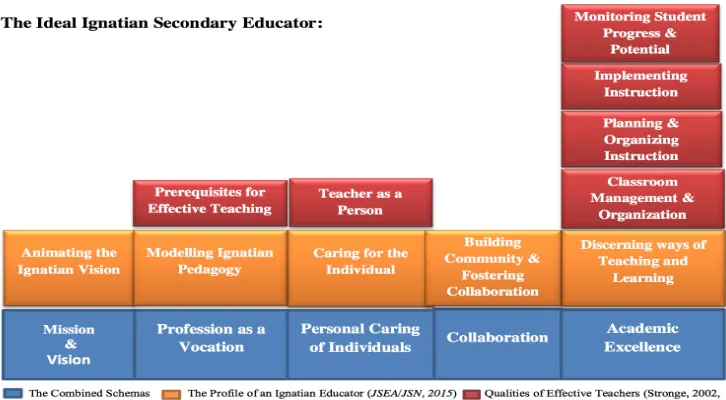
combined 11 qualities formed the schema for Jesuit secondary school educators’ ET
practices. The schema consisted of the following five qualities of the ideal Jesuit
secondary school educator: (a) mission and vision, (b) profession as a vocation,
(c) personal caring of individuals, (d) collaboration, and (e) academic excellence. Figure
1 presents the combined schema for Jesuit secondary school educator’s best practices.
Figure 1. The combined schema for Jesuit secondary educator’s best practices.
Adapted from Qualities of Effective Teachers, by J. H. Stronge, 2002, Alexandria, VA:
Association for Supervision and Curriculum Development; Qualities of Effective
The Qualities of Effective Teachers (Stronge, 2002, 2007)
Stronge (2002, 2007) conducted an extensive metareview and analysis of more
than 300 studies on effective classroom teaching and developed a framework of the
qualities of effective teachers for at-risk and high-ability students. Stronge’s (2002, 2007)
framework provides educators with a basis for understanding and measuring the qualities
of ET and for improving learning in schools. Stronge’s framework includes six qualities:
(a) prerequisites for effective teaching, (b) teacher as a person, (c) classroom
management and organization, (d) planning and organizing for instruction, (e)
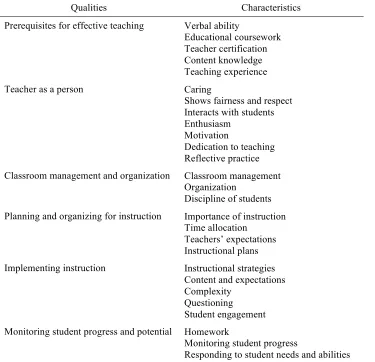
implementing instruction, and (f) monitoring student progress and potential. Table 2
presents the six qualities and corresponding characteristics of effective teachers.
The Profile of an Ignatian Educator (JSEA, 2011/JSN, 2015a)
In 1970, The Society of Jesus (Jesuits) established the JSEA to serve the needs of
Jesuit high schools around the world. Due to a decline in number of Jesuits, most recently
JSEA has shifted its focus to the formation of lay administrators and faculty to advance
the mission of Jesuit education. To accomplish this task of great importance, in the early
1990s, following schoolwide discussions, Michael McGonagle, Vice-Principal for
Ignatian Mission and Identity at Boston College High School, articulated what made a
teacher in a Jesuit high school unique from a teacher at another college preparatory high
school. From several discussions, McGonagle proposed a document, the profile of an
Table 2
Qualities and Characteristics of Effective Teachers
Qualities Characteristics
Prerequisites for effective teaching Verbal ability
Educational coursework Teacher certification Content knowledge Teaching experience
Teacher as a person Caring
Shows fairness and respect Interacts with students Enthusiasm
Motivation
Dedication to teaching Reflective practice Classroom management and organization Classroom management
Organization
Discipline of students Planning and organizing for instruction Importance of instruction
Time allocation Teachers’ expectations Instructional plans Implementing instruction Instructional strategies
Content and expectations Complexity
Questioning Student engagement Monitoring student progress and potential Homework
Monitoring student progress
Responding to student needs and abilities
Note. Adapted from Qualities of Effective Teachers, by J. H. Stronge, 2002, Alexandria, VA: Association for Supervision and Curriculum Development; Qualities of Effective Teachers, by J. H. Stronge, 2007, 2nd ed., Alexandria, VA: Association for Supervision and Curriculum Development.
In the late 1990s, the JSEA discussed the characteristics of an Ignatian educator
with member Jesuit high schools and published an amended version of The Profile of an
Ignatian Educator to support Jesuit charism in Jesuit schools in the United States. The JSEA further revised this Jesuit document of great significance in 2011, and most
recently, by the JSN (2015a). Acknowledging the growing needs of greater networking
and Canada, in 2015, the JSEA was rechristened the JSN. The primary purpose of
renaming the JSEA the JSN was to create a strong network of Jesuit schools for mutual
support and collaboration to ensure quality Jesuit education for all students. The revised
profile of an Ignatian educator by JSN (2015a) consisted of the following five qualities:
(a) caring for the individual, (b) discerning ways of teaching and learning, (c) modeling
Ignatian pedagogy, (d) building community and fostering collaboration, and
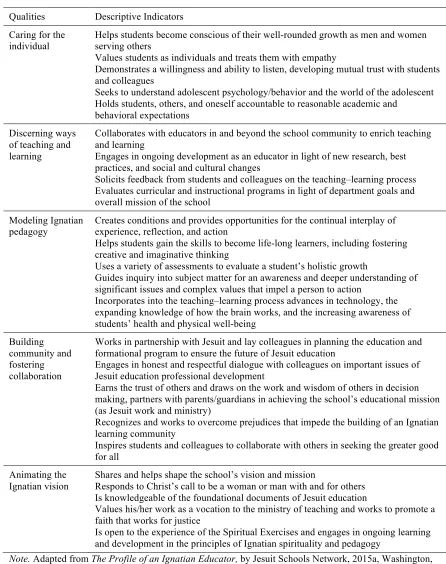
(e) animating the Ignatian vision. Table 3 presents the five qualities of Ignatian educators
and their corresponding descriptive characteristics, as defined by JSEA (2011) and JSN
(2015a).
Educational Significance of the Study
This study aimed to contribute to the field of research on TE and ET in India.
Numerous research studies focused on TE around the world, but a void exists in the area
of Jesuit secondary schools in India. This study attempted to fill that gap.
This study intended to offer Jesuit secondary school administrators in India a
research-based portrait of the effective Ignatian educator, based on Jesuit documents and
extensive research on TE. In addition, the data gleaned from administrators’ and teachers’
perceptions of the qualities of the effective Ignatian educator may aid principals in hiring
and developing effective teachers in Jesuit secondary schools. Moreover, this study
provided current data for Jesuit secondary school educators concerning which qualities
contribute to ET in an Indian context. Also, it illuminated areas of strength as well as
Table 3
The Profile of an Ignatian Educator
Qualities Descriptive Indicators
Caring for the individual
Helps students become conscious of their well-rounded growth as men and women serving others
Values students as individuals and treats them with empathy
Demonstrates a willingness and ability to listen, developing mutual trust with students and colleagues
Seeks to understand adolescent psychology/behavior and the world of the adolescent Holds students, others, and oneself accountable to reasonable academic and
behavioral expectations
Discerning ways of teaching and learning
Collaborates with educators in and beyond the school community to enrich teaching and learning
Engages in ongoing development as an educator in light of new research, best practices, and social and cultural changes
Solicits feedback from students and colleagues on the teaching–learning process Evaluates curricular and instructional programs in light of department goals and overall mission of the school
Modeling Ignatian pedagogy
Creates conditions and provides opportunities for the continual interplay of experience, reflection, and action
Helps students gain the skills to become life-long learners, including fostering creative and imaginative thinking
Uses a variety of assessments to evaluate a student’s holistic growth
Guides inquiry into subject matter for an awareness and deeper understanding of significant issues and complex values that impel a person to action
Incorporates into the teaching–learning process advances in technology, the expanding knowledge of how the brain works, and the increasing awareness of students’ health and physical well-being
Building community and fostering collaboration
Works in partnership with Jesuit and lay colleagues in planning the education and formational program to ensure the future of Jesuit education
Engages in honest and respectful dialogue with colleagues on important issues of Jesuit education professional development
Earns the trust of others and draws on the work and wisdom of others in decision making, partners with parents/guardians in achieving the school’s educational mission (as Jesuit work and ministry)
Recognizes and works to overcome prejudices that impede the building of an Ignatian learning community
Inspires students and colleagues to collaborate with others in seeking the greater good for all
Animating the Ignatian vision
Shares and helps shape the school’s vision and mission
Responds to Christ’s call to be a woman or man with and for others Is knowledgeable of the foundational documents of Jesuit education
Values his/her work as a vocation to the ministry of teaching and works to promote a faith that works for justice
Is open to the experience of the Spiritual Exercises and engages in ongoing learning and development in the principles of Ignatian spirituality and pedagogy
Additionally, most decisively, this study identified teaching qualities aligned with
the vision of St. Ignatius of Loyola, aiming to form Jesuit high school students who are
always open to growth; have attained a fundamental orientation toward God and their
faith; have acquired the capability to move beyond self-interest or self-centeredness and
the ability to accept others as they are; and are committed to working for justice, locally
and universally (JSN, 2015a; JSEA, 2010).
Last, this study was also important for those preparing preservice teacher
candidates at the college and university levels in India. This study may provide university
professors and students with a framework of effective Ignatian secondary educators
grounded in research and Jesuit documents and focused on the spiritual, professional,
personal, communal, and pedagogical dimensions of the Ignatian school educator.
Limitations/ Delimitations of the Study
This study was delimited to Jesuit secondary school administrators and teachers
(N = 107) of four Jesuit secondary schools in Hazaribag Province in India: St. Xavier’s
High School, Bokaro (n = 35), St. Xavier’s High School, Hazaribag (n = 32), Catholic
Ashram High School, Bhurkunda, (n = 12), and St. Joseph’s High School, Latehar
(n = 28). Another delimitation was in its framework, using Stronge’s (2002, 2007)
framework of the qualities of effective teachers and the JSEA (2011) and JSN (2015a)
framework of the profile of an Ignatian educator. Stronge’s framework offered a more
extensive and comprehensive construct of TE than others (e.g., Danielson, 2006, 2007,
2011; Marzano, 2007; Zemelman et al., 2012). The profile of an Ignition educator,
provided by the JSN (2015a) was the second framework for the topic, because the
1548/1992), Ignatian Pedagogical Paradigm (IPP; JSEA, 2005) and other Jesuit
documents, and reflected Jesuit secondary education’s vision and mission vividly.
The study was limited by individual administrators’ and teachers’ perceptions of
what constituted effective teaching or effective teachers, as each principal or teacher
brought a personal interpretation to the framework, thereby potentially providing biased
responses. The research design of survey methodology also could result in additional
limitations to this study, as survey research is constrained by time and respondents’
momentary perceptions at any given day and time.
Definitions of Key Terms
For this research, various terms and concepts used in this paper carried the
following meanings:
Constitution of the Society of Jesus: Constitution of the Society of Jesus is an
analogous term for rules in a Jesuit religious life; specifically, the rules on virtues such as
obedience, chastity, and poverty that support and guide effective living of a religious life
(Martin, 2010).
General congregation (GC): The GC is an international meeting of Jesuits to discuss issues and concerns related to Jesuit life and governance. (Collaborative Ministry
Office, Creighton University, 2017)
Ignatian educator: An Ignatian educator is a formator (teacher or administrator) who worked in a Jesuit school (institute) toward the objectives of the Jesuit mission
(JSEA, 2005).
Society of Jesus (Jesuits). This pedagogy provides the ways teachers and administrators
in Jesuit schools accompany students in their all-round growth and development,
according to the values indicated by St. Ignatius of Loyola (JSEA, 2005).
International Commission on the Apostolate of Jesuit Education: The
International Commission of the Society of Jesus assists the Superior General of Jesuits
in the field of education. This commission was established in 1980 and wrote the
document, The Characteristics of Jesuit Education, in 1986 (JSEA, 2005).
Jesuit education apostolate: A work of the Society of Jesus involved Jesuits in different formal and informal educational activities (JSEA, 2005).
Jesuit province: Jesuit province is an administrative geographic region of the International Order of the Society of Jesus, demarcated to perform various effective
Jesuit works (IHS Jesuits, 2017)
Jesuit Secondary Education Association (JSEA): An international commission of Jesuits on the secondary education apostolate established in 1970. The primary purpose
of the commission is to address the unique needs of Jesuit secondary education in the
United States. In 2015, JSEA became the JSN in order to emphasize greater networking
and collaborations among all Jesuit schools plus Jesuit Sponsored schools, nativity,
Christo Rey, etc. in Canada and the United States (JSEA, 2005).
Scheduled Tribe and Scheduled Caste (ST & SC): The Constitution of India officially designates various groups of historically disadvantaged indigenous people in
the country as STs and SCs. Presently, STs were officially dubbed as Tribals or Adivasis
Society of Jesus vs. Jesuit:Society of Jesus is a Roman Catholic order of religious men founded by St. Ignatius of Loyola in 1540. The order is well known for its
educational, spiritual, and social works around the world. A member of the Society of
Jesus (S.J.) is called a Jesuit (O’Malley, 1993).
Spiritual exercises: Spiritual exercises were a compilation of meditations, prayers, and contemplative practices developed by St. Ignatius Loyola to help people deepen their
relationship with God (IgnatianSpirituality.com, 2017).
Summary
Several studies (Bis, 2014; Good & Brophy, 1987, 2010; Hargreaves & Fullan,
2012; Hargreaves & Shirley, 2012; Parker, 1998; Stronge, 2002, 2007; Zemelman et al.,
2012) indicated that teachers were the most essential factor in improving quality of
teaching and learning in every classroom. In addition, several studies (Danielson, 2007,
2011; Darling-Hammond, 2000; Darling-Hammond & Baratz-Snowden, 2007; Guskey,
2000; Hargreaves & Shirley, 2012; Marzano, 2007, 2010; Sahlberg, 2010; Stronge &
Hindman, 2006) suggested that teachers required continuous training and development to
be effective in classrooms. Most importantly, a country such as India, where public
education is still in a developmental stage in many states, should have greater emphasis
on preparing, assisting, and developing quality teachers for ET in every classroom.
Professional development needs of teachers are not merely limited to public education,
but extend to all private education institutions as well.
In the State of Jharkhand, Jesuit education is one of the most prominent private
educational endeavors that extends its services to the underserved and underprivileged
sections (ST and SC) need teachers who are not only qualified professionally to teach,
but teachers who understood their sociocultural background and who are committed to
giving personal care along with subject knowledge. However, to accomplish a task of
such magnitude and importance requires research-based teacher-effectiveness standards
to train and develop teachers for quality teaching and learning in Jesuit schools in India.
Literature reviewed indicated that various scholars have researched the topic of
TE expansively, but for the purpose of this study, the detailed literature review in Chapter
2 relates to the two conceptual frameworks (JSN, 2015a; Stronge, 2002, 2007). Chapter 2
principally discusses the following: (a) a comprehensive understanding of TE, (b)
Stronge’s (2002, 2007) research on the qualities of effective teachers, and (c) JSEA
(2011) and JSN’s (2015a) studies on the profile of an Ignatian educator.
Chapter 3 presents a detailed outline of the research procedure followed in this
study. Chapter 3 mainly includes the following: (a) research population and sample,
(b) instrumentation, (c) data collection and analysis, and (d) ethical considerations.
Chapter 4 presents the study finding from a survey, classroom observations, and
interviews. Chapter 5, the final chapter, includes a discussion of the findings and
CHAPTER II
REVIEW OF LITERATURE
Introduction
Educational stakeholders have consistently sought a satisfactory solution to cope
with the quality of education around the world. In their assessments,the quality of
teaching consistently related to the quality of learning and the quality of learning
contributed to students’ success, measured by students’ best grades or successful
graduation. In contrast, Jesuit education always seeks more than merely students’ best
grades; Jesuits envision teaching qualities that formed Jesuit high school students into
adults who were always open to growth; had attained a fundamental orientation toward
God and their faith; had acquired the capability to move beyond self-interest; had grown
in ability to accept others as they were; and were committed to working for justice,
locally and universally (JSN, 2015a; JSEA, 2010).
Concern for the quality of education at all levels has frequently inspired
educational researchers to investigate the factors that constitute effective teaching.
However, researchers described teaching as highly complex work with a multitude of
teaching styles related to many variables affecting student success (Hargreaves & Fullan,
2012;Hargreaves & Shirley, 2012; Sahlberg, 2010;Stronge, 2002, 2007, 2010). The
complexity of the teaching activity has insistently inspired educational researchers to
seek the most appropriate understanding of the components of effective teaching, and
also of students’ successful graduation. Underlining this complexity, Stronge (2010) in
Despite the solid evidence on teacher qualities that so many researchers have
assembled over the past several decades, there is no single set of teacher attributes
that we can definitively point to and say; If a teacher has quality X, she will be an
effective teacher. (p. 72)
Educational researchers around the world continue to inquire about which factors
constitute good teaching or how to define an effective teacher for a particular population
of students in their school context.
Questions related to quality teaching and successful student graduation have been
matters of great concern for Jesuit secondary schools in the Hazaribag Province, India.
Thus, this study aimed to respond to this concern from the perspectives of Jesuit
secondary school administrators and teachers in the Hazaribag Province, India. The study
adopted Stronge’s work (2002, 2007), Qualities of Effective Teaching, and JSEA (2011)
and JSN’s (2015a) document, The Profile of an Ignatian Educator, as the two lenses to
examine the teaching qualities that enhance student learning in the Jesuit secondary
schools of Hazaribag Province, Jharkhand, India.
An Overview of the Chapter
The review of literature on the qualities of an effective Ignatian educator is
divided into three sections. Section 1 focuses on secular research about the concept of TE,
the components of effective teaching, and an overview of public/government education in
India. Section 2 details six qualities of effective teachers, developed through Stronge’s
(2007, 2007) research. Section 3 described the five qualities of an Ignatian educator
proposed by the JSN (2015a) and JSEA (1986, 2011). In addition, each section ends with
Teacher Effectiveness (TE) and Effective Teaching (ET)
Over the past several decades, TER has evolved as one of the most significant
research topics around the world. The rapidly growing diverse educational needs and
challenges of students and teachers have led this topic to be researched so often. The
literature reviewed revealed that most of the researchers of TE agreed on the premise that
“effective teaching” did impact students learning leading to a successful graduation (Bis,
2014; Darling-Hammond & Baratz-Snowden, 2007; Day, Sammons, Stobart, Kington, &
Gu, 2007;Good & Brophy, 2010;Guskey, 2000; Hargreaves & Fullan, 2012;Marzano,
2007;Sanders, 1998, 2000; Sahlberg, 2010; Stronge, 2002, 2007). However, despite this
common belief, educational researchers continued to grapple with the task of defining the
factors that constituted ET for students in a particular school context. Additionally, it was
observed that when defining “effective teaching” there were differences of opinions
among educational researchers. Thus, the assorted factors of teachers (educational, social,
personal, and ethical) that constituted TE regularly attracted researchers to investigate the
topic more in-depth.
The Concepts of Teacher Effectiveness (TE) and Effective Teaching (ET)
The literature on teacher-effectiveness research (TER) revealed several studies
that attempted to define TE and identify the characteristics of ET to enhance quality
learning for all students. However, from extant literature reviews on TER, the most
pertinently defined review was by Campbell, Kyriakides, Muijs, and Robinson (2010).
1. Operative TE definition—This definition explained effectiveness of
observable teachers’ behaviors perceived during classroom observation of a
typical lesson(s) (Kiess, 2010).
2. Value-added TE definition—This definition emphasized the ability(s) of
teachers to produce gains on student achievement scores (O. Little, Goe, &
Bell, 2009; Sanders, 1998, 2000).
3. Narrow TE definition—This definition underlined the impact on students’
performance of various classroom-process factors such as teaching methods,
teacher expectations, classroom organization, and use of classroom resources.
4. Broad TE definition—This definition included preexisting teacher
characteristics, teacher competence, teacher-performance/behavior, student
learning experience, student behavior or learning outcomes, teacher training,
external teaching context, internal teaching context, and individual student
characteristics
5. Differentiated TE definition—This definition included the consistency of
teacher effects in time stability, subject consistency, differentiation in the
requirements of stakeholders (e.g., students, colleagues, and parents) and
working environments (e.g., school and community) for instructional and
noninstructional roles (Campbell et al., 2004).
6. Total TE definition—This definition included all the nine components
described in Definition 4 and added two other components: teacher evaluation
and professional development. In this study, TE focused on the development
Emphasizing the development of total TE, Hargreaves and Fullan (2012) offered a
new perspective on the teaching profession and an alternative means for developing the
quality of teaching in schools, termed professional capital (PC). Hargreaves and Fullan
described PC as a function of three kinds of capital: human, social, and decision. In
summary, they represented PC in a simple mathematical formula: PC = f (HC, SC, DC).
Where, PC = professional capital, HC = human capital, SC = social capital, and DC =
decision capital.
Hargreaves and Fullan (2012) argued that professional capital did not mean
merely having a good system, but meant having and building a system that was truly
effective for teachers to practice their skills and for students to enhance their knowledge.
Hargreaves and Fullan emphasized the importance of individual as well as collective
efforts, responsibilities to build, and support systems that improved the teaching
profession and students’ achievement.
Sahlberg (2010) underlined the significance of the quality of teacher-preparation
program to transform teaching and effect student learning in schools in Finland. Sahlberg
(2010) highlighted the facets that made Finnish educational reform distinctively
successful and why that has proved to be as an exemplar of educational change for other
nations. Sahlberg pointed out five significant facts of distinctiveness in Finnish
educational reform: (a) self-developed vision of educational and social change, (b)
high-quality, well-trained teachers, with strong academic and professional qualifications,
(c) an embedded inclusive special-educational strategy at the high school level,
educational reforms to the creative development of economic competitiveness, social
cohesiveness, inclusiveness, and shared community commitments in the wider society.
While addressing the issue of effective school reforms, Marzano (2003), too,
suggested a general framework to understand the characteristics of effective schools and
effective teachers in schools. Marzano (2003) articulated the characteristics of that
framework and categorized characteristics into three types: (a) use of effective
instructional strategies, (b) use of effective classroom-management strategies, and
(c) effective classroom curriculum design. Moreover, Marzano (2007) asserted that the
one factor that emerged as the single most influential component of an effective school
was the individual teachers. To improve quality teaching in schools, Marzano (2007)
suggested a comprehensive framework for effective classroom instruction. Based on 10
instructional questions related to effective teaching, Marzano (2007) provided the
following strategies for effective instruction: (a) setting learning goals, (b) identifying
critical-input experiences, (c) supporting declarative and procedural knowledge,
(d) generating hypotheses and testing, (e) engaging and stimulating students’ on-task
behaviors, (f) establishing respectful classroom rules and procedures, (g) acknowledging
and balancing positive and negative classroom behaviors, (h) establishing and
maintaining effective relationships with students, (i) communicating high expectations
for all, and (j) developing and organizing effective lessons.
When examining the educational needs of the growing heterogeneous classrooms
and differences in learning abilities of students, Good and Brophy (2010) identified two
major issues of quality teaching: lack of satisfaction by teachers and lack of teaching
(2010) attempted to provide some strategic solutions and ways to grow as an effective
teacher. They recommended the following steps to improve teachers in schools: (a)
self-evaluation, (b) making explicit plans, (c) individual self-study, (d) developing self-study
groups, and (e) developing a positive perspective.
Mayer (2003) attempted to answer, comprehensively and succinctly, two
fundamental educational psychological questions; how do people learn, and how can
instruction promote learning. Based on research, Mayer identified two aspects that
fostered meaningful education: learning in subject areas and instructional methods. The
researcher recommended that for an effective education, educators attend to these two
factors and develop practical norms in every school for successful teaching and learning.
While analyzing the crises of educational changes around the world, Hargreaves
and Shirley (2012), closely assessed the prominent theories of change in action (Finland,
Singapore, Alberta, Ontario, England, and California), and suggested “the fourth way,”
dubbed Innovation With Improvement, as an alternative for sustainable systemwide
educational change to improve teaching and learning in schools. Underscoring the
importance of shared ownership and the development of collective responsibilities and
purposes, the authors summed theories of change:
Psychotherapists believe that people will find insight and experience personal
growth when they explore their feelings and release their repressions. Alcoholics
Anonymous puts its faith in peer support and the organization’s famous twelve
steps of recovery. Weight Watcher grounds its principles in peer pressure, self-set
targets, transparency of outcomes, and a bit of televised celebrity role modeling as
external rewards drive people. Opposing theories are premised on the idea that
people can be drawn into change through inspirational leadership, professionally
engaging interactions, success at their work, and support to perform it well.
(Hargreaves & Shirley, 2012, p. 5)
Despite supporting the predominant concerns and premises regarding the quality
of teaching and learning, Marshall (2013), argued that (a) teaching really mattered,
(b) not all teaching was equally effective, (c) teaching quality was unevenly distributed
by class and race, and therefore, (d) achievement gaps across the nation inexorably
widened, day by day. Underlining the premise that “good teaching really matters,”
Marshall (2013) suggested a four-part strategy as a powerful way for school principals to
improve teaching and learning and close the achievement gap: (a) making short,
unannounced classroom visits followed by one-on-one feedback conversations,
(b) participating quite actively in the curriculum-unit planning process, (c) working with
teacher teams to analyze and follow up on interim-assessment results, and (d) using
rubrics for end-of-year teacher evaluation.
In astudy about effective learning in every classroom, B. McCarthy (1997)
emphasized the importance of competent teachers, averring effective learning results
from the interplay between two dimensions: perceiving and processing. According to B.
McCarthy, perceiving includes what one feels and thinks about their experiences, where
processing involves reflections on experiences and how one acts on those reflections. Later, B. McCarthy proposed 4MAT’s learning styles, defined as follows: “In my
definition of learning, the learner makes meaning moving through a natural cycle—a