Geschke Center
Doctoral Dissertations Theses, Dissertations, Capstones and Projects
2012
An Investigation of the Influence of Fixed-do and
Movable-do Solfège Systems on Sight-Singing
Pitch Accuracy for Various Levels of Diatonic and
Chromatic Complexity
Jou-Lu Hung
Follow this and additional works at:https://repository.usfca.edu/diss Part of theArt Education Commons
This Dissertation is brought to you for free and open access by the Theses, Dissertations, Capstones and Projects at USF Scholarship: a digital repository @ Gleeson Library | Geschke Center. It has been accepted for inclusion in Doctoral Dissertations by an authorized administrator of USF Scholarship: a digital repository @ Gleeson Library | Geschke Center. For more information, please [email protected].
Recommended Citation
Hung, Jou-Lu, "An Investigation of the Influence of Fixed-do and Movable-do Solfège Systems on Sight-Singing Pitch Accuracy for Various Levels of Diatonic and Chromatic Complexity" (2012).Doctoral Dissertations. 38.
The University of San Francisco
AN INVESTIGATION OF THE INFLUENCE OF FIXED-DO AND MOVABLE-DO SOLFÈGE SYSTEMS ON SIGHT-SINGING PITCH ACCURACY FOR VARIOUS
LEVELS OF DIATONIC AND CHROMATIC COMPLEXITY
A Dissertation Presented to
The Faculty of the School of Education Learning and Instruction Department
In Partial Fulfillment
of the Requirements for the Degree Doctor of Education
by Jou-Lu Hung San Francisco
ii
Copyright 2012
Jou-Lu Hung
iii
THE UNIVERSITY OF SAN FRANCISCO
Dissertation Abstract
An Investigation of the Influence of Fixed-do and Movable-do Solfège Systems on Sight-Singing Pitch Accuracy for Various Levels of
Diatonic and Chromatic Complexity
Sight-singing, recognized as an essential music skill, remains one of the weakest
components in music education. Past studies investigating the most effective of the two
most common sight-singing systems—the fixed-do and movable-do solfège systems—
provide inconclusive results for music with medium to high levels of diatonic and
chromatic complexity.
The purpose of this quantitative, ex post facto study was to investigate the
influence of diatonic and chromatic complexity on sight-singing pitch accuracy for
college music major students in a Northern California urban area who have trained in
either the fixed-do or movable-do solfège systems, and who had piano experience before
or beginning at age 12. There were three independent variables (solfège system, diatonic
complexity, and chromatic complexity), one dependent variable (pitch accuracy), and one
control variable (piano learning experience).
Participants included 85 volunteer qualified music major students, 45 trained in
fixed-do and 40 trained in movable-do. Participants were recorded sight-singing nine test
passages, each containing one of three levels of diatonic complexity and one of three
levels of chromatic complexity. The recordings were analyzed by a computerized scoring
system to determine pitch accuracy for each sung note. Results were analyzed using a
iv
Participants trained under the fixed-do solfège system had statistically higher
sight-singing pitch accuracy overall and at all three levels of diatonic and chromatic
complexity with very large effect sizes. There were no statistically significant two-way or
three-way interactions among the three factors: solfège system, diatonic complexity, and
chromatic complexity. These findings suggest that the fixed-do solfège system is more
v
This dissertation, written under the direction of the candidate’s dissertation committee
and approved by the members of the committee, has been presented to and accepted by
the Faculty of the School of Education in partial fulfillment of the requirements for the
degree of Doctor of Education. The content and research methodologies presented in this
work represent the work of the candidate alone.
Jou-Lu Hung May 10, 2012 1
Candidate Date
Dissertation Committee
Xornam Apedoe May 10, 2012 1
Chairperson
Mathew Mitchell May 10, 2012 1
Sarah Capitelli May 10, 2012 1
vi Dedication
This dissertation is dedicated to my wonderful family.
First to my beloved husband, David, who has played extremely important role for
my dissertation and unending support in my life. David has allowed me to share every
idea in my dissertation since its early stages, checked my grammar since English is my
second language, and written a computer software to score the participants’ pitch
accuracy for this study. Above all, he has provided all the emotional support and endless
love that I could ever need in my life. David, I cannot express enough in words of how
fortune I am to have you.
Dedication also goes to: My mother, Yung-Lien, who has cared for me deeply,
provided me the best early music education, and had faith in every decision I made to
follow my dreams; My sister, Gigi, and my brother in law, Chris, who always are there to
believe in every step I take.
I would also like to dedicate my dissertation to Uncle Norman and Auntie
Joannie, who have given me wholehearted support since I moved from Taiwan to the
United States. In my heart, Uncle Norman and Auntie Joannie have been my parents
away from home.
Lastly, I would like to dedicate my dissertation to my father, who passed away
twenty years ago. I know that he would have been proud of me if he could have been
vii
Acknowledgements
It has not been an easy journey working on my doctorate while being a full-time
teacher for the past few years. I could have not achieved this goal without the support and
guidance of many wonderful people around me. First, I would like to express my deepest
gratitude to Dr. Xornam Apedoe, my dissertation committee chair and adviser. Dr.
Apedoe has always been supportive, positive, patient, and attentive in rendering her
advice and guidance. It was such a pleasant experience to work with Dr. Apedoe.
I would also like to thank the other committee members: Dr. Mathew Mitchell for
his enthusiasms, meaningful feedback, and invaluable statistical knowledge and advice;
Dr. Sarah Capitelli for being a patient reader and sharing her precious thoughts to
improve my dissertation; And a special thank you to Professor David Garner from the
San Francisco Conservatory of Music. I am extremely grateful to have Prof. Garner join
my dissertation committee and offer his tremendous support throughout the process. Prof
Garner has been a truly devoted supporter, offering countless help while conducting the
study. He also provided masterful insight into the music profession, and input into
advising the design of sight-singing test passages of this study.
Furthermore, I must acknowledge all the department chairs who gave me
permission to conduct the study at their institutions, music instructors who supported me
to collect the data, and all the participants who volunteered for the sight-singing test.
Although I could not name you all due to the confidentiality, I would like to give my
sincerest appreciation to all of you.
Last, and most importantly, I would like to thank Dr. David Caditz who wrote the
viii
loving husband, has not only supported my dissertation technically, but also shared my
laughter and tears, had faith in me, supported me in every way, and given me endless
ix
TABLE OF CONTENTS
Page
ABSTRACT ... iii
DEDICATION ... vi
ACKNOWLEDGEMENTS ... vii
LIST OF TABLES ... xiv
LIST OF FIGURES ... xv
CHAPTER I. STATEMENT OF THE PROBLEM………1
Background and Need ... 5
Sight-singing and the National Standards for Music Education ... 6
Challenges of sight-singing in both learning and teaching ... 7
Search for the most effective sight-singing method ... 10
Two solfège systems: fixed-do and movable-do ... 11
Diatonic and chromatic complexity ... 12
Diatonic complexity ... 12
Chromatic complexity ... 14
Development of diatonic and chromatic complexity ... 15
Use of diatonic complexity ... 15
Use of chromatic complexity ... 16
Chromaticism—diatonic and chromatic complexity ... 16
The impact of diatonic and chromatic complexity on the fixed-do and the movable-do system ... 17
Movable-do system with diatonic and chromatic complexity ... 18
Fixed-do system with diatonic and chromatic complexity ... 18
Debate between fixed-do and movable-do systems ... 19
Criticism and defense based on chromatic complexity ... 20
Criticism and defense based on diatonic complexity ... 20
Empirical studies of the fixed-do and movable-do systems ... 23
Empirical comparison studies lack diatonic and chromatic complexity ... 24
Empirical comparison studies evaluated pitch accuracy by ear……...………25
Piano experience and sight-singing ... 26
Summary ... 26
Theoretical Framework ... 27
Cognitive load theory ... 27
CLT and sight-singing ... 29
CLT and the two solfège systems ... 30
x
CLT schemas and chromatic complexity ... 33
Movable-do suits diatonic, and fixed-do suits chromatic? ... 35
Purpose of the Study ... 36
Research Questions ... 38
Significance of the Study ... 39
Definitions of Terms ... 41
II. REVIEW OF THE LITERATURE ... 49
Debate Regarding Fixed-do and Movable-do Systems ... 50
Proponents of the fixed-do system ... 51
Siler’s critique of the movable-do system in chromatic music ... 51
Siler’s critique of the movable-do system in diatonic music ... 51
Siler’s summary ... 52
Phillip’s critique of the movable-do system ... 53
Phillip’s argument of the fixed-do system ... 53
Proponents of the movable-do system ... 54
Bentley’s promotion of the movable-do system in diatonic music ... 55
Bentley’s critique of the fixed-do system in diatonic music ... 55
Bentley’s defense of the movable-do system in chromatic music ... 56
Smith’s defense of the movable-do system in chromatic music ... 57
Smith’s critique of the fixed-do system ... 57
Larson’s neutral statement ... 55
Summary ... 59
Studies of Fixed-do and Movable-do Solfège Systems ... 59
Prior research with high school students ... 60
Prior research with college music students ... 65
Summary ... 68
Other Possible Confounding Factors ... 70
Piano learning experience ... 70
Choir experience ... 71
Experience with private music lessons ... 71
Other factors ... 71
Assessment Procedures, Music Passages, and Scoring Systems ... 72
Passages, procedure, and scoring system in each study ... 73
xi
III. METHODOLOGY ... 80
Research Questions ... 80
Research Design ... 81
Independent variables ... 81
Dependent variable ... 83
Control variable ... 83
Participants ... 85
Protection of human subjects ... 86
Procedure ... 88
Recruitment of participants ... 89
Sight-singing test ... 90
Instrumentation ... 92
Design of music passages ... 92
Music passages and research questions ... 94
Reduction of confounding factors ... 95
Pitch accuracy scoring system ... 98
Two-step system ... 102
Scoring rules of multiple attempts ... 107
Other scoring rules ... 109
Validity and reliability ... 110
PASS validation and inter-rater reliability ... 111
Choice of tuning system ... 115
Data Analysis ... 116
Statistical test for the first research question ... 116
Statistical test for the second research question ... 118
IV. RESULTS ... 121
Research Question 1 ... 122
Assumptions for the first research question ... 122
Results for the first research question ... 123
Research Question 2 ... 124
Assumptions for the second research question ... 125
Results for the second research question ... 126
Sub-question one ... 126
Sub-question two ... 128
Sub-question three ... 131
Ancillary Analyses ... 132
xii
V. SUMMARY, DISCUSSION, LIMITATIONS, AND RECOMMENDATIONS ... 136
Summary of the Study ... 136
Summary of Findings ... 141
Limitations ... 143
Limitations of the sample ... 143
Limitations of the passages ... 145
Limitations of the scoring system ... 146
Discussions of Findings ... 148
The two solfège systems and diatonic and chromatic complexity ... 150
Passage design and the findings for diatonic complexity ... 152
Musician’s awareness toward the end of the performance ... 154
Starting over, backtracking, and repeating notes ... 154
Multiple attempts used in the two systems ... 155
Penalty for multiple attempts in past studies ... 156
Same results without penalty ... 157
The two systems and cognitive load theory ... 158
Shifting of the tonal center ... 159
Movable-do system and modulation ... 160
Scoring software of the study: PASS ... 161
Conclusion ... 162
Implications ... 163
Implications for research/recommendations ... 164
Implications for educational practice ... 168
Implications for assessment of pitch accuracy ... 170
xiii
APPENDIX A Institutional Review Board for the Protection of Human Subjects
Approval Letter ... 180
APPENDIX B Institutional Review Board for the Protection of Human Subjects Approval Letter for Modification ... 182
APPENDIX C Permission Letter from School One ... 184
APPENDIX D Permission Letter from School Two ... 186
APPENDIX E Permission Letter from School Three ... 188
APPENDIX F Informed Consent Form ... 190
APPENDIX G Demographic Survey ... 193
APPENDIX H Recruitment Flyer for School One ... 195
APPENDIX I Recruitment Flyer for School Two ... 197
APPENDIX J Recruitment Flyer for School Three ... 199
APPENDIX K Nine Music Test Passages ... 201
APPENDIX L Source Code for Pitch Accuracy Scoring Software (PASS) Computer Program ... 203
xiv
LIST OF TABLES
Table 1: Definitions and Characteristics of Diatonic and Chromatic………....……..…..15
Table 2: Diatonic and Chromatic Complexity on the Fixed and Movable Systems……..22
Table 3: Complexity Levels of Nine Test Passages………..…….94
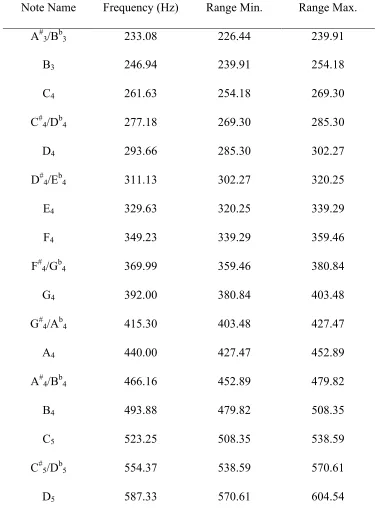
Table 4: Frequency Chart in Hz from B3 flat D5 ... 101
Table 5: Pitch Accuracy Score Means and Standard Deviations for Two-Way Interaction Between Solfège System and Diatonic Complexity ... 127
Table 6: Pitch Accuracy Score Means and Standard Deviations for Two-Way Interaction Between Solfège System and Chromatic Complexity ... 129
Table 7: Pitch Accuracy Score Means and Standard Deviations for Three Factors:
Solfège System, Diatonic Complexity, and Chromatic Complexity ... 132
Table 8: Pitch Accuracy Score Means and Standard Deviations for Three Levels of Diatonic Complexity ... 133
xv
LIST OF FIGURES
Figure 1: Models of CLT and the Two Solfège Systems for Sight-Singing………...….31
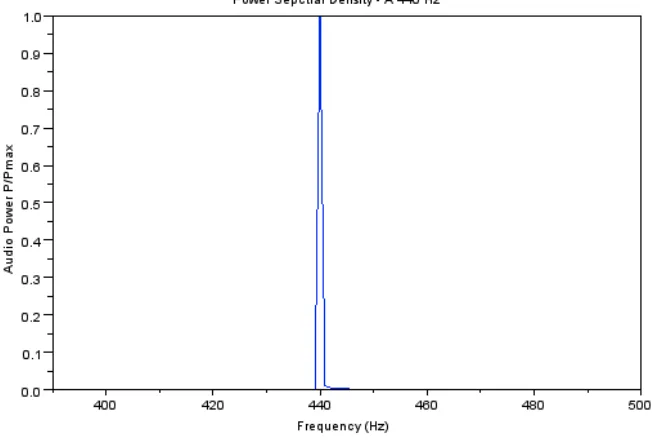
Figure 2: Waveforms From a Pure Computer Generated Tone and a Sung Note ... 99
Figure 3: PSDs of a Pure Computer Generated Tone and a Sung Note ... 105
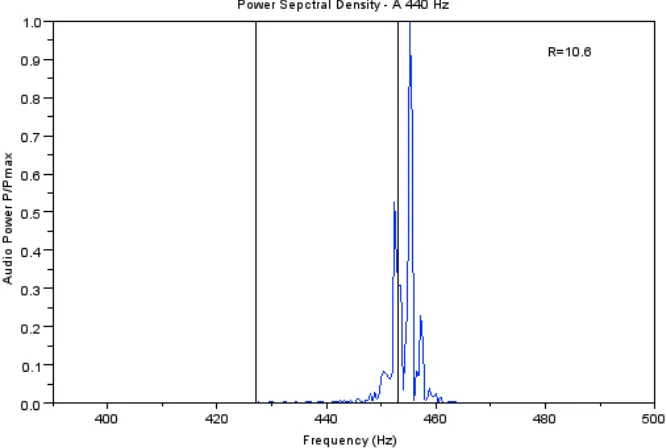
Figure 4: The Note A4 Sung Sharp ... 107
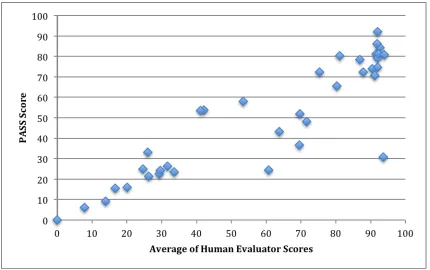
Figure 5: Correlation Between Human Evaluators and PASS ... 113
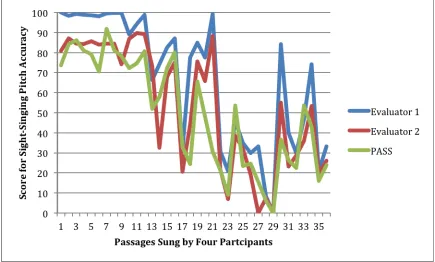
Figure 6: Score of 36 Passages Sight-Sung by Four Participants Randomly Selected Graded by Two Human Evaluators and Pass ... 114
Figure 7: The Mean Scores for Sight-Singing Pitch Accuracy for the Fixed-do System ... 124
Figure 8: Sight-Singing Pitch Accuracy Score Means for the Two Solfège System (fixed-do, and movable-do) and Three Levels (zero, medium, high) of Diatonic Complexity ... 128
CHAPTER I
STATEMENT OF THE PROBLEM
Sight-singing is the ability of an individual to accurately sing music notes while
sight-reading a printed music score (White, 2009). Sight-singing enables musicians to
convert the printed music into sound without any instrumental aids. Typically, a musician
is given a music score and, with only a few quick glances, he or she is expected to
accurately sing the score. Sight-singing is widely considered a basic and essential music
skill and, as such, is a fundamental goal in music education (Darrow & Marsh, 2006;
Henry & Demorest, 1994; Holmes, 2009; McClung, 2001; Norris, 2004). Mastering this
skill enables students to become independent learners (Butler & Lochstampfor, 1993;
Larson, 1993; McClung, 2001).
Several systems have been developed and are commonly used by musicians to
assist and improve sight-singing. The most common systems use solfège, sometimes
called solfeggio, a technique where notes are associated with specific syllables (e.g.,
do-re-mi) and as the notes are sung the corresponding syllables are pronounced. It is felt that
singing the syllables according the solfège system helps singers produce accurate pitch
from music notation. Even many non-musicians have had exposure to solfège and, in
fact, such systems have become a part of common culture in many countries, for
example, the well-known score, “Do-Re-Mi”, from Rodger and Hammerstein’s musical
film, The Sound of Music, in 1959.
Two solfège systems are currently preferred by most music educators: the
fixed-do system and the movable-fixed-do system (Killian & Henry, 2005; Holmes, 2009; May,
Continental Europe and Russia, while movable-do is the most common system used in
the United States and the United Kingdom (Bentley, 1959; Demorest, 2004; Kuehne,
2007; Norris, 2004; Phillps, 1984; Siler, 1956; Smith, 1991). Both fixed-do and
movable-do systems apply solfège syllables (do, re, mi, fa, sol, la, si - sometimes ti is used instead
of si in the movable-do system) onto the musical notes while sight-singing.
In the fixed-do system, the music notes “C, D, E… etc.” are always sung as “do,
re, mi… etc.”, independent of the key signature1 of the music score (a detailed description
of key signature is given in the Definition of Terms section at the end of the chapter). In
the movable-do system, the “do, re, mi… etc.” are moved (applied to different notes)
according to the key signature of the music score (Brown, 2001; Phillips, 1984; Smith,
1991). Briefly, the fixed-do system is based on the absolute frequency of the notes
independent of key signature while the movable-do system is based on relative tonal
relationships and requires adjustment according to the key signature. Each system is
recognized as having its own advantages and well as its own complications. For example,
in the fixed-do system the syllables do not change with the key signature but the intervals
(the distance in pitch between two notes, Sadie, 2001, Vol. 12, p. 500) between syllables
may change according to key signature. On the other hand, in the movable-do system, the
syllables change with key signature, but the intervals between syllables remain the same.
In spite of its importance, studies indicate that sight-singing remains one of the
weakest components in music education. Teachers find sight-singing difficult to teach.
(Henry, 1999; McClung, 2001; Norris, 2004; Smith, 1998). Perhaps as a result, students
1 Key signature is an arrangement of sharps or flats at the beginning of each staff to
often have difficulty sight-singing music. Numerous studies (Bolton, 2009; Henry, 1999;
Scott, 1996; Vom Kampen, 2003) indicate that students do not develop sight-singing
skills relevant to the music they have to perform. Several studies (Henry, 1999; Scott,
1996) show that the test results of student’s sight-singing ability fall below the levels
required by The National Standards of Music Education (MENC, 1994).
In an effort to improve sight-singing education, educators and researchers began
studying the advantages and disadvantages of the various sight-singing solfège systems in
the 1950’s. Since this time, there have been theoretical debates about the effectiveness of
the movable-do and fixed-do sight-singing systems (Bentley, 1959; Houlahan & Tacka,
1992; Larson, 1993; Phillips, 1984; Siler, 1956; Smith, 1991). One of the major
arguments revolves around the “absolute” vs. “relative” nature of the two systems. It has
been argued (Bentley, 1959; Phillips, 1984; Siler, 1956; Smith, 1991), for example, that
the movable-do system is not able to handle more complex music including notes not
contained in the key signature (known as chromatic complexity). For instance, if the key
changes, the movable-do system requires re-shifting the do as well as the requirement to
modify the syllable of certain notes before the key change is complete (Siler, 1956;
Phillips, 1984). On the other hand, the fixed-do system has been characterized as
“cumbersome and hazardous” (Bentley, 1959, p. 165) when key signatures contain many
sharps and flats (known as diatonic complexity). These arguments are important because
it is just such complex music that has been used extensively and has become mainstream
since the 19th century (Bribitzer-Stull, 2006; Brown, 1986; Burgmer, 1995; Burnett &
O’Donnell’s, 1996; Kopp, 2002; McCreless, 1983; Mitchell, 1962; Perttu, 2007;
Decades of theoretical debates have not reached a consensus and it is clear that
more research must to be done to determine the most effective sight-singing solfège
system (Kuehne, 2010; Riggs, 2011). Empirical studies now seem to afford a more
convincing route to compare solfège systems. Since the mid 1990’s, some such studies
have been conducted to examine or compare these two systems and the effects they have
on sight-singing ability (Antinone, 2000; Brown, 2001; Demorest & May, 1995; Henry &
Demorest, 1994; Holmes, 2009; Killian & Henry, 2005). Unfortunately, no clear
conclusion has emerged among these studies. The results from Antinone (2000), Henry
and Demorest (1994), Killian and Henry (2005) found no significant difference between
the two solfège systems. Demorest and May (1995), and Holmes (2009) found students
who use the movable-do system have slightly higher sight-singing achievement. Brown
(2001) also found the two systems have small influence on students’ sight-singing pitch
accuracy under some conditions.
Unfortunately, most of these empirical studies comparing student’s sight-singing
achievement (Antinone, 2000; Demorest & May, 1995; Henry & Demorest, 1994;
Holmes, 2009) consider fairly simple music with little complexity (Antinone, 2000;
Demorest & May, 1995; Henry & Demorest, 1994; Holmes, 2009; Killian & Henry,
2005). Only one study (Brown 2001) includes passages with any meaningful musical
complexity and difficulty. The results of these studies (Antinone, 2000; Demorest &
May, 1995; Henry & Demorest, 1994; Holmes, 2009; Killian & Henry, 2005) are
important, but they are not complete because (a) they do not test music of the level of
complexity comparable to what students are required to learn, (b) they do not address
In summary, both teaching and learning sight-singing presents difficulties in
music education. Although there have been debates for more than sixty years, it is not
clear which is the more effective system between the two popular solfège systems
(fixed-do and movable-(fixed-do) currently in use for sight-singing. Past studies comparing these
systems have concentrated on the simplest musical scores and have not adequately
explored their strengths and weaknesses under conditions of differing complexity.
Background and Need
Sight-singing requires a person to accurately sing music from musical notation
without first hearing it (Killian & Henry, 2005). While sight-singing, students need to
have the ability to understand musical notation and produce accurate pitch and rhythm
without first hearing the music. White (2009) states that sight-singing is the ability of an
individual to sight-read a piece of music score and accurately produce the pitches,
rhythms, and expressive markings on first sight without an instrumental aid. In other
words, the basic task of sight-singing is to sight-read written music notation and convert
it into sound (Larson, 1993). Butler and Lochstampfor (1993) also state that sight-singing
is the skill that students should have to create an aural image of music in their minds
while only looking at a music score, and this should be a goal to achieve in music
learning.
The survey results from Johnson’s study (1987) indicate that most of the directors
in the North Central region of the American Choral Directors Association (ACDA) agree
that sight-singing is essential for music learning. Many researchers (Henry & Demorest,
1994; Holmes, 2009; McClung, 2001) state that sight-singing is considered a
independent music learner, one who is able to actively and independently enjoy music.
Darrow and Marsh (2006) state that sight-singing is the most important skill to develop
musicianship. Furthermore, the results of Smith’s (1998) survey study of professional
choral directors in Florida show that 97.3% of the respondents believe that a regular
schedule of sight-singing practice makes students learn music faster.
Without sight-singing skill, students can only learn through a rote approach
(memorize the sound through help from someone else or instrumental aids but without
knowing how to read and sing from music scores directly). Researchers (Atterbury &
Richardson, 1995; Brown, 2003; Von Kampen, 2003) stress that students should not learn
music through a rote approach, and present the rote approach as a problem in current
music education. Brown (2003) also stated that without basic reading and notating music
skills, students could only be taught by memorization and listening. In other words,
lacking the ability to read notation, students would only be able to produce the pitches
after hearing the music. Researchers (Brown, 2003; Holmes, 2009) describe this
phenomenon as analogous to the language classroom where students are taught to speak
by repeating what they hear, but are not taught to write or read.
Sight-Singing and the National Standards for Music Education
Sight-singing has been widely accepted as one means for assessing students’
music reading abilities (Scott, 1996). The National Standards for Arts Education in music
emphasize the importance of sight-singing development for both elementary and
secondary students. Since 1994, sight-singing is included as one of the nine content
standards from The National Standards for Music Education of Music Educators National
(MENC, 1994). These standards are widely used in K-12 music classrooms. Many states
also have developed their own standards adapted from MENC that clearly state that
sight-singing is required and should be tested. For example, in 1993, Washington State passed
the Education Reform Act in which sight-singing was one of the requirements from the
5th grade (Smith, 2008). The Washington Assessment of Student Learning (WASL) is a
state-mandated performance-based assessment developed to measure Essential Academic
Learning Requirements in the state of Washington (Stage & Jacobsen, 2001).
As the statements above show, sight-singing ability is universally considered as a
fundamental goal of music education and is considered essential to the development of
music learners. It is included in The National Standards of Music Education (MENC,
1994). It allows students to convert printed musical notes into sound, and is an essential
skill that allows students to become independent music learners.
Challenges of Sight-Singing in Both Learning and Teaching
In spite of the importance of sight-singing in music education, numerous studies
indicate that many music students have difficulty sight-singing the music pieces they
perform (Bolton, 2009; Henry, 1999; Scott, 1996 Vom Kampen, 2003). Scott (1996)
studied 120 high school choir members in Illinois to determine their sight-singing level
and ability in holistic and criterion-referenced tests. In this study, Scott (1996) compares
the sight-singing test results from her participants to The National Standards for Music
Education (MENC, 1994). The perhaps surprising results show that all of the 120 high
school choir member participants fall below the high school levels in The National
Standards of Music Education. Von Kampen (2003) found similar results in Nebraska
lack of music skill. Henry (1999) studied the sight-singing ability of 322 students from
grades 7-12 on a Vocal Sight-Reading Inventory (VSRI). VSRI was designed by the
researcher to represent the discrete skills that are components of the holistic skill of
sight-singing (Henry, 1999). In this study, the 322 participants averaged only 25% accuracy on
VSRI-based sight-singing assessments. Adding to the Henry’s findings that students have
difficulty sight-singing, Bolton (2009) surveyed music teachers randomly selected from
four middle schools in eastern Nebraska. Based on the survey results of these teachers’
experiences, music students did not develop the skill of sight-singing even the simplest
melodies.
Given the documented underperformance in sight-singing ability among high
school music students, and the emphasis placed on sight-singing as a fundamental skill,
one might question whether there is a flaw or failure in the current system of music
education. It is a natural next step to investigate, for example, how music teachers
approach teaching sight-singing, whether teachers themselves are comfortable with and
value sight-singing and whether some methods may be more or less effective in teaching
sight-singing. Researchers note that many music teachers experience difficulty
developing sight-singing teaching strategies and feel that sight-singing is hard to teach
(Henry, 1999; McClung, 2001; Norris, 2004).
McClung (2001) surveyed 2115 choral chairpersons and conductors in six
southeastern states to investigate the methods currently used to teach sight-singing. The
results indicate that there are at least four methods in use, which are: fixed-do solfège
system, movable-do solfège system, neutral syllables, and scale-degree numbers.
components in the teaching of music. Moreover, even though there are various
sight-singing methods existing, McClung (2001) stresses that music teachers fail to develop
formal sight-singing teaching strategies and some teacher preparation programs fail to
provide music teachers with appropriate tools to teach sight-singing.
Smith (1998) conducted a survey study of sight-singing pedagogical practices,
teacher attitudes, and university preparation of professional choir directors in Florida.
The results from Smith’s study show evidence of weaknesses in teaching sight-singing:
first, almost half of the respondents rated their college preparation for teaching
sight-singing as “Fair” or “Poor”; second, more than half of the respondents admitted that the
training of teaching sight-singing they had was not enough; and third, 80% of the
respondents stated that “they would have liked to have had more training in the pedagogy
of sight-singing” (p. 10).
Von Kampen (2003) states that even though sight-singing is the fundamental
approach to music learning, it is abandoned by many high school music directors due to
time limitations and is substituted with rote teaching. The results from Von Kampen’s
survey study (2003) indicate that more than half of the 201 high school directors in
Nebraska do not utilize any methods for sight-singing in rehearsal time. Henry and
Demorest (1994) also state that some music educators choose rote teaching instead of
music reading to have instant and polished results for the particular pieces that they are
working on. However, learning by rote singing will limit future performance and students
might not even know when and where they make mistakes. Von Kampen (2003) further
stresses the problem of using the rote approach by citing Jones (1957), stating that “… a
in Von Kampen, 2003, p. 8). If music students have high levels of sight-singing ability,
rote teaching will become pointless because students are able to sing the pieces from the
first sight of the score.
The studies described above highlight student’s sight-singing underperformance,
teachers’ deficiency of knowledge and instruction of teaching strategies in sight-singing,
and the abandonment of sight-singing practice because of the time constraints. The
circumstance in both learning and teaching presents a problem in music education despite
the fact that sight-singing is widely considered as one of the music skills that students
most need to have. Seeking effective pedagogical methods for sight-singing is therefore
an essential task in current music education.
Search for the Most Effective Sight-Singing Method
Adding to (or perhaps causing) the problems surrounding sight-singing education,
researchers have strongly differing opinions on the effectiveness of various sight-singing
teaching methods. Many researchers stress that the most effective sight-singing system is
still uncertain due to lack of conclusive and persuasive evidence (Holmes, 2009; Killian
& Henry, 2005; McClung, 2001; Riggs 2011). Kuehne’s (2010) review of 10 years of
published research on sight-singing concludes that “though several researchers studied
sight-singing, more research must be done [to examine the effectiveness of sight-singing
ability from various sight-singing methods]” (p. 13). In a recent study, Riggs (2011)
states that research does not conclude yet which sight-singing system is more beneficial
Two Solfège Systems: Fixed-do and Movable-do
Although the most effective sight-singing method is still uncertain, two solfège
systems: fixed-do and movable-do are the sight-singing methods currently preferred by
most professional music educators (Killian & Henry, 2005; Holmes, 2009; May, 1993;
McClung, 2001; Smith, 1998). The two solfège systems are preferred differently in
different parts of the world: the fixed-do system has replaced the movable-do system in
Continental Europe and in Russia since the 18th century while the movable-do system is
the most common sight-singing method in the United States and the United Kingdom
(Bentley, 1959; Demorest, 2004; Kuehne, 2007; Norris, 2004; Phillps, 1984; Siler, 1956;
Slonimsky, 1997; Smith, 1991).
In both solfège systems, the syllables: do, re, mi, fa, sol, la, si (sometimes ti is
used instead of si in movable-do system) are the singing symbols used to demonstrate the
sound from music notation while singing a score. However, the two systems apply the
syllables according to different rules. In the fixed-do system, “do, re, mi, fa, sol, la, si”
syllables are located according to the absolute frequency of the notes, in other words, the
musical notes “C, D, E, etc.” are always sung as “do, re, mi, etc.” regardless of the key
signature of the score. In contrast, in the movable-do system, “do, re, mi, fa, sol, la, ti”
syllables are located according to the key signatures. This requires the shift of the “do”
syllable to the key (Antinone, 2000; Demorest & May, 1995; Henry & Demorest, 1994;
Holmes, 2009; Killian & Henry, 2005). For example, when the piece is in the key of D
Major, the note “D” is sung as “do”. In the key of G Major, the note “G” is sung as “do”.
Diatonic and Chromatic Complexity
Previous studies demonstrate the intuitive results that sight-singing accuracy
decreases with increasing musical complexity (Brown, 2001). In particular, sight-singers
face challenges when more complex key signatures are specified and when notes are
contained in the score that are not included in the key signature. These notes excluded
from the key signature are called chromatic tones, and are indicated by musical signs
called accidentals.
In this study, I define complexity related to the key signature as “diatonic”
complexity. Thus, diatonic complexity is measured by the number of sharps or flats
contained in the key signature. A more detailed description of diatonic complexity is
provided below. In contrast, “chromatic” complexity describes the complexity introduced
by accidentals. In this study, chromatic complexity is defined and measured by the
number of chromatic tones in the music passage. A more detailed description of
chromatic complexity is also provided below. Music with diatonic complexity and
chromatic complexity is the type of music that students are commonly required to learn
and practice. While sight-singing pitch accuracy is known to be affected by diatonic and
chromatic complexity, it is not known what impact the solfège system one was trained in
has on an individual’s sight-singing pitch accuracy.
Diatonic Complexity
In a musical score, the key signature is “an arrangement of sharps or flats at the
beginning of each staff” (Randel, 2003, p. 445) which determines the key of the music,
chosen by its composer. Taking the piano keyboard as an example, the sharps or flats in
(excluding some seldom used enharmonic notes that are played on the white keys). When
there are no sharps or flats in the key signature, only white keys need to be played. The
key defines a scale of notes, spaced at a well-defined set of intervals, on which the music
is based. Such notes, specified by the key signature, are called “diatonic notes” (or
diatonic tones) and the set of notes is called the “diatonic scale” (Latham, 2002; Randel,
2003; Slonimsky, 1997). Diatonic tones used in melody or harmony generally produce
sounds of consonance to the human ear. Keys are further classified as major or minor
depending on the set of intervals (the distance in pitch between two notes) used to create
the diatonic scale. Diatonic scales in Major keys, for example, use a series of intervals of
“w-w-h-w-w-w-h” where “w” represents a whole step (whole tone––two semitones2) and
“h” represents a half step (one semitone) difference in pitch.
In general, there are 12 possible major keys each also having one relative minor
key3 (Latham, 2002; Piston & Devoto, 1987; Randel, 2003; Slonimsky, 1997). While
changing the key signature may shift the diatonic scale in pitch, in any major (or minor)
key, the relationships (intervals) between the notes in the diatonic scale remain the same.
For example, comparing two different major keys, the diatonic scale may be composed of
different notes, but the relative intervals between the notes will be unchanged.
2 Semitone is the smallest interval in use in the Western music tradition. There are 12
such intervals to the octave.
3 Although there could possibly be 14 key signatures of major and minor, discounting the
enharmonically equal keys (e.g., F♯ Major is the enharmonic equivalent key of G♭
Major), there are only 12 different major and minor keys (Latham, 2002; Randel, 2003;
The number of sharps or flats in the key signature can be from zero to seven for
all the 12 major keys and their 12 relative minor keys (discounting the enharmonically
equal keys). In this study, we consider greater numbers of sharps or flats in the key
signature represent higher levels of diatonic complexity. Various levels of diatonic
complexity have been commonly used in music notation since 18th century (Randel,
2003; Sadie, 2001).
Chromatic Complexity
In general, musical notes not specified in the key signature are called chromatic
tones4, sometimes called chromatic elements. A chromatic tone is produced by altering
(raising or lowering) the pitch of a diatonic tone by one or two semitones. To alter a
diatonic tone to a chromatic tone, a musical sign––accidental––is added to the note
(Sadie, 2001, Vol.1, p. 51). In other words, chromatic tones are “exceptions” in the
diatonic system. While diatonic tones produce “pure harmony”, chromatic tones present
“dissonance” to the human ear. (McCreless, 1991; Mitchell, 1962; Politis &
Margounakis, 2003). Adding chromatic tones can add a “color” effect to create tension
and a more dramatic sound, or can be used for modulation—the process for changing the
key (McCreless, 1991; Mitchell, 1962; Perttu, 2007). Various numbers of added
chromatic tones create various levels of chromatic complexity. In general, adding more
chromatic tones increases the level of chromatic complexity. Chromatic complexity can
be combined with diatonic complexity compounding the overall complexity of the music.
4 The leading tone from minor key is not included in key signature, however, it is
Table 1 below indicates the definitions and characteristics of the terms—diatonic and
chromatic, and how diatonic and chromatic complexity is measured in this study.
Table 1
Definitions and Characteristics of Diatonic and Chromatic
Diatonic Chromatic
Definition Musical notes specified in the key signature.
Musical notes not specified in the key signature. Chromatic notes are signified by accidentals in the score.
General Characteristics
Diatonic tones present “pure harmony”
Chromatic tones present
“dissonance”, or can be used for modulation.
Complexity measured in this study by:
The number (from zero to six) of sharps or flats in the key signature of the music passage. Higher numbers indicate higher complexity.
The number (from zero to six) of chromatic notes in the melody of the music passage. Higher numbers indicate higher complexity.
Development of Diatonic and Chromatic Complexity
This section provides a description of the historical development and use of
diatonic complexity and chromatic complexity in Western music.
Use of Diatonic Complexity
As mentioned above, key signature is a group of arranged sharps and flats (or the
absence of both) placed at the beginning of each staff in musical notation to specify a key
(Latham, 2002; Randel, 2003). According to The New Grove Dictionary of Music and
with one flat presented as “prefacing signature” in musical staff between 11th to 12th
century (Vol. 13, p. 551). By the end of 17th century, the use of a key signature to define
the keys and the diatonic scales had become a Western musical tradition (Randel, 2003,
p. 898). Various levels of diatonic complexity have been commonly used in music
notation since 18th century through the present (Randel, 2003; Sadie, 2001).
Use of Chromatic Complexity
As mentioned above, chromatic tones are the musical notes excluded from the
diatonic system. Chromatic music is based on the diatonic system but includes additional
chromatic tones. It creates contrast between consonance and dissonance (Sadie, 2001),
and adds interest to the music. In general, chromatic tones are commonly added to
diatonic music for specific compositional purposes, such as for added embellishment, or
for the process of changing the key of the music, called modulation (Burnett &
O’Donnell, 1996; Kopp, 2002; McCreless, 1991; Mitchell, 1962, Ottman & Rogers,
2007; Perttu, 2007).
Chromaticism–Diatonic and Chromatic Complexity
Chromaticism is a compositional style that combines both diatonic and chromatic
complexity. Chromaticism, which adds chromatic tones to music based on a diatonic
system, has been used commonly since 1600, and became more popular throughout the
subsequent centuries (McCreless, 1991; Mitchell, 1962; Sadie, 2001; Perttu, 2007).
Virtually all classical music composed since the 17th century makes use of chromatic
tones throughout the score (Randel, 2003). In the 19th century, chromaticism was widely
used and has since dominated Western music (Gauldin, 2004; Kopp, 2002; McCreless,
(Randel, 2003) uses Beethoven’s third symphony as example to demonstrate the massive
use of modulation––one of the compositional styles in chromaticism––by stating “The
first movement of Beethoven’s Eroica Symphony, for instance, modulates perhaps 17
times between the beginning of the exposition and the beginning of the recapitulation,
some 400 measures, without change of key signature” (p. 523). Randel further states
“modulation is to be found in almost every work of tonal music” (p. 523).
Overall, chromaticism has dominated Western music since the 17th century until
the 20th century––the time period known as the “Common Practice Period5” (Sadie, 2001,
Vol. 25 p. 583). Such a style of music evinces the contrast between consonance and
dissonance, and has become the music that all serious music students need to learn.
The Impact of Diatonic and Chromatic Complexity
on the Fixed-do and Movable-do Systems
With simple musical scores containing little or no diatonic and chromatic
complexity, the fixed-do and movable-do systems can be virtually identical in their
application. For example, in the key of C Major (with no sharps or flats in the key
signature), the relative tones of the movable-do system are identical to the absolute tones
of the fixed-do system. Consequently, we might expect little difference in the
performance levels of singers using the two systems, all else being equal. This, in fact, is
what previous studies (Antinone, 2000; Holmes, 2009) have shown.
5 Common Practice Period is a historical period spanning the Baroque, Classical, and
Romantic periods, in which the use of diatonic and chromatic musical elements is
Movable-do System with Diatonic and Chromatic Complexity
When diatonic complexity and/or chromatic complexity are introduced, it is not
immediately clear which system would result in better sight-singing accuracy. The two
solfège systems are designed in different ways to handle music with diatonic and
chromatic music. For example, the movable-do system is designed specifically for pure
diatonic music (zero level of chromatic complexity––no chromatic tones). After
determining which note should be sung as “do”, the rest of the syllables, re, mi, fa, sol, la,
ti, fall exactly on the remaining diatonic tones in any key signature (Bentley, 1959).
Therefore, movable-do learners only need to learn one set of the relationship between
syllables, and this relationship can be applied to all diatonic keys (but not including
chromatic tones). However, when chromatic tones appear in the score, it is possible that
this theoretical advantage of the movable-do system is diminished (Phillips, 1984; Siler,
1956; Smith, 1991).
Fixed-do System with Diatonic and Chromatic Complexity
The fixed-do system is designed around the absolute frequency of notes,
independent of key signature. Consequently, it makes little difference to fixed-do singers
whether a tone is diatonic or chromatic. For this reason, it is possible that the fixed-do
system is impacted less by the addition of chromatic tones. However, owing to the
independence of the fixed-do system from the key signature, fixed-do singers are also
required to modify sung pitches up or down by a semitone each time a “diatonic sharp or
flat” (specified by the key signature, not through accidental) is encountered (Phillips,
1984; Siler, 1956). Theoretically, I would expect that a higher level of diatonic
between syllables need to be altered according to the sharps or flats in the key signature.
Therefore, some researchers state (e.g., Bentley, 1959) that when there are more sharps
and flats in the key signature (a higher level of diatonic complexity), fixed-do
sight-singers may encounter a higher level of difficulty than movable-do sight-singers.
Due to the pros and cons of both solfège systems, music educators have struggled
to choose between the fixed-doand movable-dosystem (Brown, 2001; Holmes, 2009;
Phillips, 1984, Larson, 1993). The most effective teaching system is still an open
question (Killian & Henry, 2005; Henry, 2011; Kuehn, 2010; Riggs, 2011). Comparisons
of the two systems on the basis of effective learning have been discussed, debated, and
conducted for decades (Antinone, 2000; Bentley, 1959; Brown, 2001; Demorest & May,
1995; Henry & Demorest, 1994; Holmes, 2009; Houlahan & Tacka, 1992; Larson, 1993;
Phillips, 1984; Siler, 1956; Smith, 1991). However, the results from the comparison
studies are varied and no consensus has yet been reached. Of particular importance is the
fact that most past studies have used simplified music passages in both diatonic and
chromatic aspects that do not correspond with the types of music that students are likely
to encounter in the real world.As a result, questions regarding the effectiveness of the
solfège systems under a full range of diatonic and chromatic complexities have not been
fully addressed.
Debate Between Fixed-do and Movable Systems
Debates about sight-singing have often become “partisan”, the proponents from
both sight-singing systems claim that their own system is the better system and criticize
the other system as creating various problems for students’ learning (Bentley, 1959;
Criticism and Defense Based on Chromatic Complexity
One major argument from these debates is whether the movable-do system is able
to handle chromatic music. Fixed-do proponents (Brown, 2003; Phillips, 1984; Siler,
1956) criticize the movable-do system, stating that using the movable-do system is
difficult and results in slow performance with chromatic music. Movable-do proponents
(Houlahan & Tacka, 1992; Smith, 1991) admit their system cannot handle highly
chromatic music as well as the fixed-do system, but insist that the movable-do system is
still a better system in certain styles of chromatic music, such as with modulation (the
change of the key from one to another in the music). Some movable-do proponents (e.g.,
Smith, 1991) admit that the movable-do system makes students become slow
sight-singers in music with modulation, but claim that this is a good thing because students are
constantly analyzing music and thinking about theory, and, they claim that this makes
students better musicians over the long term. One movable-do proponent (Bentley, 1959)
strongly denies that the movable-do system has any problem with music with modulation,
and insists that the movable-do system is still better for modulation. Theories and
analyses from both sides may seem convincing, however, there is a clear lack of
supporting evidence either way and each side criticizes the other for their lack of
supporting evidence.
Criticism and Defense Based on Diatonic Complexity
Another argument over these debates of the two systems is whether the fixed-do
system is able to handle music with higher levels of diatonic complexity, that is, music
with a high number of sharps and flats in the key signature. Movable-do proponent,
and causing complex mental processes for music with high levels of diatonic complexity.
Bentley further critiques the fixed-do system as being based only on one single major
key––C Major––because the note C is always sung as do. Fixed-do proponents, however,
do not consider the system as having any problem with music with high levels of diatonic
complexity. Furthermore, fixed-do proponents (e.g., Siler, 1956; Phillips, 1984) state that
by constantly dealing with all the sharps and flats in the key signature, the fixed-do
system makes students more aware of the key signature. Phillips (1984) further stresses
that in the fixed-do system, the musical notes C, D, E from the staff notation are always
sung as do, re, mi. Therefore, the fixed-do system makes students develop the ability to
directly connect the singing syllables to musical staff notation. Thus, fixed-do proponents
(Brown, 2003; Phillip, 1984; Siler, 1956) state that the fixed-do system helps student in
recognition of music notation because the system requires students to label music in a
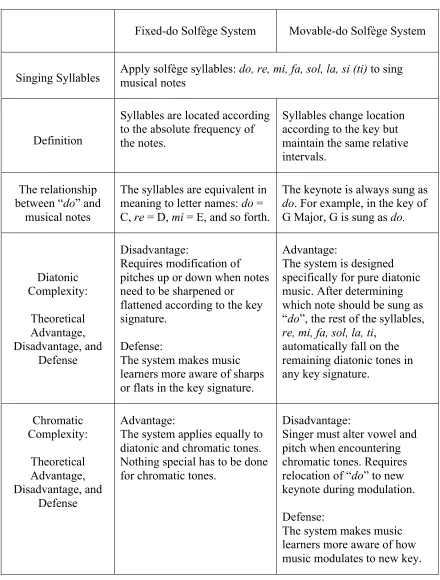
notation format. Table 2 below describes the general definition of the two solfège
systems—fixed-do system and movable-do system, and the theoretical advantage,
disadvantage, and defense of diatonic and chromatic complexity on the two solfège
Table 2
Diatonic and Chromatic Complexity on the Fixed-do and Movable-do Systems
Fixed-do Solfège System Movable-do Solfège System
Singing Syllables Apply solfège syllables: musical notes do, re, mi, fa, sol, la, si (ti) to sing
Definition
Syllables are located according to the absolute frequency of the notes.
Syllables change location according to the key but maintain the same relative intervals.
The relationship between “do” and
musical notes
The syllables are equivalent in meaning to letter names: do = C, re = D, mi = E, and so forth.
The keynote is always sung as
do. For example, in the key of G Major, G is sung as do.
Diatonic Complexity: Theoretical Advantage, Disadvantage, and Defense Disadvantage:
Requires modification of pitches up or down when notes need to be sharpened or
flattened according to the key signature.
Defense:
The system makes music learners more aware of sharps or flats in the key signature.
Advantage:
The system is designed specifically for pure diatonic music. After determining which note should be sung as “do”, the rest of the syllables,
re, mi, fa, sol, la, ti, automatically fall on the remaining diatonic tones in any key signature.
Chromatic Complexity: Theoretical Advantage, Disadvantage, and Defense Advantage:
The system applies equally to diatonic and chromatic tones. Nothing special has to be done for chromatic tones.
Disadvantage:
Singer must alter vowel and pitch when encountering chromatic tones. Requires relocation of “do” to new keynote during modulation.
Defense:
Empirical Studies of the Fixed-do and Movable-do Systems
After nearly forty years of theoretical argument and debate from Siler (1956) to
Larson (1993), researchers began to perform empirical studies to compare and assess the
performance of students using these two different sight-singing systems (Antinone, 2000;
Brown, 2001; Demorest & May, 1995; Killian & Henry, 2005; Henry & Demorest, 1994;
Holmes, 2009). These studies attempt to compare the two systems using pitch (and in
some cases rhythm) accuracy assessments with a range of students from eighth grade to
college level music majors. Studies from Brown (2001), Demorest and May (1995),
Henry and Demorest (1994), Killian and Henry (2005) are ex post facto comparison
studies while Antinone (2000) and Holmes (2009) are experimental studies. Most of the
studies found no significant difference between the two solfège systems (Antinone, 2000;
Henry & Demorest, 1994; Killian & Henry, 2005). The results from Demorest and May
(1995) found that students who use the movable-do system score significantly higher in
pitch accuracy. However, it is important to note that other than Brown (2001), none of the
studies (e.g., Antinone, 2000; Brown, 2001; Demorest & May, 1995; Killian & Henry,
2005; Henry & Demorest, 1994; Holmes, 2009) address any meaningful levels of
diatonic or chromatic complexity. Unfortunately, these studies have several limitations
and no clear conclusion has emerged.
Among these previous studies, only Brown (2001) tested students’ sight-singing
accuracy using music with varying levels of diatonic and chromatic complexity. He
found that students using the movable-do system have better sight-singing pitch accuracy
on chromatic music at a simple level of complexity. Brown recommends additional study
levels (simple, moderate, and difficult)” (p. 193) when testing the effectiveness between
the two solfège systems. Brown (2001) further recommends students’ sight-singing
performance on chromatic music should be further examined closely. He recommends
additional studies should be conducted to address “various historical developments and
complexities in chromaticism” (p. 195). Until now, no other study has been conducted
that includes any meaningful chromatic complexity or diatonic complexity6 in the test
assessment.
Empirical Comparison Studies Lack Diatonic and Chromatic Complexity
Even though music with diatonic and chromatic complexity has been widely used
and has been in the mainstream for centuries, most empirical studies on sight-singing
focus on oversimplified music passages with fairly low levels of diatonic and chromatic
complexity (Antinone, 2000; Brown, 2001; Demorest & May, 1995; Henry & Demorest,
1994; Holmes, 2009). Even though both diatonic and chromatic complexity factored in to
the debates discussed above, with the exception of Brown’s (2001), few studies include
different levels of diatonic and chromatic complexity when testing student’s sight-singing
accuracy, and few, if any, compare different methods by adding any chromatic tones to
their passages. Most of the empirical studies (e.g., Antinone, 2000; Henry & Demorest,
1994; Holmes, 2009) include only diatonic tones, without any chromatic tones when
comparing the two systems. Moreover, most of the studies (e.g., Antinone, 2000; Henry
6 It should be pointed out that Brown’s (2001) definition of musical complexity differs in
meaningful ways from that used in this study. In particular, Brown includes changes from
major to minor key and variation in interval levels in his complexity factor, and he does
& Demorest, 1994; Holmes, 2009) which include only diatonic tones, the selected key
has a fairly low level of diatonic complexity with none or only one sharp or flat in the key
signature. Other than Demorest and May (1995) who included only one single chromatic
tone, Brown’s (2001) is the only study comparing the two systems using various levels of
diatonic, modulatory, chromatic and atonal7 passages. Brown found evidence that
students’ sight-singing pitch accuracy on different passage types was possibly correlated
with the solfège system used.
Empirical Comparison Studies Evaluated Pitch Accuracy by Ear
In addition to the issues mentioned above, empirical studies necessarily require
some form of measurement to assess the accuracy of the performance. Each of the
comparison sight-singing studies described above (Antinone, 2000; Brown, 2001;
Demorest & May, 1995; Henry & Demorest, 1994; Holmes, 2009; Killian & Henry,
2005) use music students, teachers, or independent evaluators to score participants’
sight-singing pitch accuracy “by ear”. However, with the human ear, it is hard to detect the
exact accuracy by frequency, and it is also difficult to consistently determine what counts
as on-pitch or off-pitch. In other words, the student assessment results can be only as
accurate as the skill of the evaluators, which can be subjective, vary widely, and in the
case of pitch analysis, may be inadequate to draw meaningful comparisons.
Moreover, the human ear can be affected by “vowel color” when evaluating the
pitch accuracy (Fowler & Brown, 1997; Pape, 2005). For instance, the vowels /i:/ might
be perceived as higher in pitch than the vowel /a:/ when the two notes are, in fact, sung at
7 Atonal music is a compositional style, developed in the 20th century, characterized by
identical pitch. Owing to the ways the two solfège systems are designed, each system will
likely apply different vowels as singing syllables for the same note, and a particular test
passage will contain different distributions of vowels when sung using different solfège
systems. Therefore, test assessment procedures that rely on the human ear may be biased
by this vowel color effect.
Piano Experience and Sight-Singing
Empirical studies have shown that piano experience has a strong impact on
sight-singing pitch accuracy (Brown, 2001; Daniel, 1986; Demorest, 1998; Demorest & May,
1995; Harrison, 1996; Henry, 2011; Henry & Demorest, 1994; Killian & Henry, 2005;
McClung, 2001; Scott, 1996; Tucker, 1969; White, 2009). Although piano experience is
the most common confounding variable from current empirical sight-singing studies,
none of the sight-singing studies control student’s piano learning experience when
comparing the two solfège systems (e.g., Antinone, 2000; Brown, 2001; Demorest &
May, 1995; Henry & Demorest, 1994; Killian & Henry, 2005; Holmes, 2009). More
details on the relationship of piano experience and sight-singing ability are provided in
the next Chapter—Review of the Literature.
Summary
As mentioned above, chromaticism is a compositional style with the combination
of diatonic and chromatic systems. In this style, any level of chromatic complexity can be
added to any level of diatonic complexity. Music can, and does, become complicated
when compounding diatonic and chromatic complexity. Such music presents challenges
to singers using any solfège system. However, this is precisely the type of music that
Burgmer, 1995; Burnett & O’Donnell’s, 1996; Kopp, 2002; McCreless, 1983; Mitchell,
1962; Perttu, 2007; Swinden, 2005). This is especially so for college music major
students. Previous studies used over-simplified assessments that were representative of
the kinds of music that musicians actually perform. Consequently, test results comparing
solfège systems are difficult to interpret with regard to differences between the systems,
and their results are difficult to transfer to real-world practice. In addition, more issues
from the past sight-singing studies should be investigated, such as piano experience as a
confounding variable, and the reliance on subjective assessment performed by the human
ear.
Theoretical Framework
In this study, I used Cognitive Load Theory to analyze sight-singing under the
two solfège systems and to further support my anticipation that: (a) subjects using the
fixed-do and movable-do system would score generally the same at lower levels of
diatonic and chromatic complexity, (b) at lower levels of chromatic complexity, I
expected relatively higher sight-singing pitch accuracy for subjects using the movable-do
system as diatonic complexity increases, (c) for a given level of diatonic complexity, I
expected relatively higher sight-singing pitch accuracy for subjects using the fixed-do
system as chromatic complexity increases, and (d) at high levels of both diatonic and
chromatic complexity, the expectation was unknown, and I expected to discover such
results in this study.
Cognitive Load Theory
Cognitive load theory (CLT) originated in the 1980s and was developed and
theoretical framework for cognitive processes during learning and problem solving
(Chandler & Sweller, 1991; Paas, et al., 2004). CLT is based on several assumptions,
which include: “…virtually unlimited capacity of long-term memory, schema theory of
mental representations of knowledge, and limited-processing capacity assumption for
working memory” (Brünken, Plass & Leutner, 2003, p. 54).
CLT assumes the presence of long-term memory and working memory.
According to CLT, learning or problem solving, utilizes both long-term memory and
working memory for various different purposes. Long-term memory stores organized or
structured knowledge and has nearly unlimited capacity and can retain vast numbers of
knowledge structures. Knowledge in long-term memory is stored in forms of organized
schemas that allow us to categorize the problems and achieve the appropriate solutions
(Kalyuga, Ayres, Candler & Sweller, 2003; Paas et al., 2004). Working memory is where
all conscious cognitive processing occurs. Working memory has a limited capacity and
can handle only a few elements of information at a time (Paas et al., 2004). Working
memory is where new information is processed, for example, in a classroom situation
where new learning material is presented to learners or during problem solving activities
such as during sight-singing. Given its limited capacity, working memory can become
overloaded when more than a few elements are processed, or where there are more
complex interactions between elements (Kalyuga et al., 2003). In cases of such higher
cognitive load, the effectiveness of learning or problem solving is decreased.
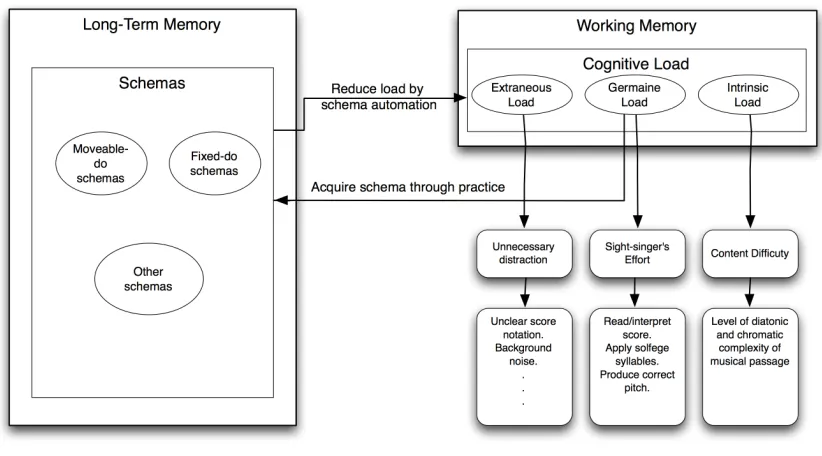
CLT postulates three types of cognitive load which are processed in working
memory: intrinsic load which is caused by the “complexity and inter-relatedness of the
directly related to or necessary for learning and can be created by inappropriate
instructional design or any unnecessary distractions, and germane load which results
from learners’ necessary efforts while processing learning materials to obtain schema
acquisition and automation (Brünken et al., 2003; Seufert & Brünken, 2006).
According to CLT, schemas are stored in the long-term memory as organized
knowledge developed through experiences of learning (Sweller, van Merrienboer & Paas,
1998). Information in schemas can be processed automatically without conscious
thought, a process called schema automation (Kalyuga et al., 2003; Sweller et al., 1998).
Schema automation can be obtained through sufficient repetition, practice and
meaningful learning (Sweller et al., 1998). Schema can be retrieved from long-term
memory into working memory. When schema automation is brought to working memory,
because of its unconscious information processing, it reduces the load and frees the
capacity of the limited working memory to make further information processing more
efficient (Kalyuga et al., 2003; Paas et al., 2004). A learner presented with new
information may recall a previously developed schema that enables him or her to rapidly
organize and assimilate the information. A learner lacking such a schema may be slower
to assimilate the new information.
CLT and Sight-Singing
Here we consider, from the viewpoint of CLT, the problem of a singer
sight-singing a piece of music. By definition, the score to be sight-sung is new information and
is therefore processed in the limited working memory. In contrast, singing a well-known
and previously sung passage, is not sight-singing by definition, and requires little