INTERNATIONAL RESEARCH JOURNAL OF PHARMACY
www.irjponline.com
ISSN 2230
–
8407
Research Article
STANDARDIZATION OF DIFFERENT METHODS OF MICROBIAL IMMOBILIZATION FOR DYE DECOLOURIZATION
Sivapriya Veeraiyan 1, Bindhu Jayaprakash 1*, Suresh Kumar 2
1Research Associate cum Assistant Professor, Department of Biotechnology, Bannari Amman Institute of Technology,
Sathy, India
2Research Scholar, Department of Biotechnology, Karunya University, Coimbatore, India *Corresponding Author Email: [email protected]
Article Received on: 23/08/17 Approved for publication: 10/10/17
DOI: 10.7897/2230-8407.0810183
ABSTRACT
The Textile industry in India is the only industry that has generated huge employment for both skilled and unskilled labour. Among the 10,000 dyes used in the textile industries, about 10% are discharged into the wastes. Two-third of the dye industry is dominated by textile industry and discharge
large volume of chemical dyes into the environment. The immobilization of microorganisms on preferred adsorbents instigates protects cells from unfavourable agents, microbial metabolism, and preserves their physiological activity. It provides a direct contact between nutrients and the immobilized cells. Cell immobilization technique encompasses the transportation of the cells from the bulk phase to the surface of support, followed by the adhesion of cells and successive colonization of the support surface. The cell-support adhesion is governed by both electrostatic and hydrophobic interactions, which is the key step in controlling the cell immobilization on the support. A Bacillus bacterial strain isolated from the sludge collected from the textile dye effluent at Tirupur, Tamil Nadu. It is characterized and found to decolourize the textile dye colour from water body. The bacterial cells were mass cultivated and harvested by centrifugation. These cells were immobilized by different methods such as sodium alginate, polyacrylamide, carrageenan, agar. The immobilized bacterial cells were characterized using optical microscopy. They are uniformly embedded in the gel matrix and were compared for their decolourization potential of synthetic dye.
Keywords: Cell immobilization, Decolourization, Sodium alginate, Polyacrylamide, Carrageenan, Agar.
INTRODUCTION
The Textile industry in India is the only industry that has generated huge employment for both skilled and unskilled labour. It continues to be the second largest employment generating sector in India. Textile Engineering has direct connection with environmental aspects to be explicitly and abundantly considered. It accounts for around one third of total export of effluent. Out of various activities in textile industry, chemical processing contributes about 70% of pollution. Cotton mills consume large volume of water for various processes such as sizing, desizing, and scouring, bleaching, mercerization, dyeing, printing, finishing, and washing is well known1.Due to the nature of
various chemical processing of textiles, large volumes of wastewater with numerous pollutants are discharged. Since the stream of water affect the aquatic eco-system in number of ways such as depleting the dissolved oxygen content of suspended substances in anaerobic condition, a special attention needs to be demanded2.The various dyes employed for these purposes are
chemically classified as azo, polymeric, anthraquinone, triphenylmethane and hetrocyclic dyes. Among the 10,000 dyes used in the textile industries, about 10% are discharged into the wastes3.Two-third of the dye industry is dominated by textile
industry and discharge large volume of chemical dyes into the environment. Dyes contain chromophores, delocalized electron system with conjugated double bonds, and auxochromes, electron-withdrawing or electron-receiving substituent that cause or intensify the color of the chromophore by altering the overall energy of the electron system. Usual chromophores are C=C, -C=N-, -N=N- and the auxochromes are –NH3, -COOH, -SO3H,
and -OH. Many of these dyes find their way into the environment via wastewater facilities. Because these compounds retain their color and structural integrity under exposure to sunlight, soil, bacteria and sweat, they also exhibit a high resistance to microbial degradation in wastewater treatment system4.The anaerobic
reduction of azo dyes to simpler compounds has been well researched5,6. The problem of aesthetic pollution is solved, by
reducing the dye compounds to their intermediates, but a larger and more deleterious problem may be created. Most azo dyes are non-toxic, but a higher percentage of their intermediates have been identified as carcinogens7.Because of the toxic potential of
many aromatic amines, further degradation of the dye compound is necessary if toxicity is to be eliminated or reduced8,9. It
interferes with the transmission of sunlight into the streams and thereby reducing the photosynthetic activity. The color of effluent is more harmful for agricultural use and rearing of fish2.Further,
the disposal of sludge produced from these processes is again a problem. As the increase of contaminated sites poses a major environmental and human health problem, it appears mandatory to decontaminate the environment and to implement efficient decontamination strategies.
Bioremediation is a waste management technique that involves the use of microorganisms or their enzymes to remove or neutralize pollutants from a contaminated site. Bioremediation is short for two words - bio for biological and remediation for to make a remedy. Microorganisms used for bioremediation are called as biomediators10.The bacterial species employed are
Pseudomonas, Bacillus, Aeromonas, Staphylococcus etc8.The
site and the extent of decolorization they can offer. The most representative enzymatic classes in the remediation of polluted environments are: hydrolases, dehalogenases, transferases and oxidoreductases9.Their main producers are bacteria, fungi
(mainly white-rot fungi), plants and microbe-plant associations. The NADPH dependent azoreductase prefer NADPH as electron donor, on the other hand NADH dependent azoreductase require FMN as a prosthetic group11.Obviously, when legal limits exist
(not in all the countries) these should be taken as justification. Studies concerning the feasibility of treating dyeing wastewater are very important10.In the past several decades, many techniques
have been developed to find an economic and efficient way to treat the textile dyeing wastewater, Immobilization in general describes a wide diversity of the cell or the particle attachment or entrapment 11. It can be functional to all types of biocatalysts
including enzymes, cellular organelles, animal and plant cells. Currently, different types of immobilization have found wide applications not only in the field of biotechnology, but also in
pharmaceutical, environmental, food and biosensor
industries12.Thus cell immobilization arose as a substitute for
enzyme immobilization.
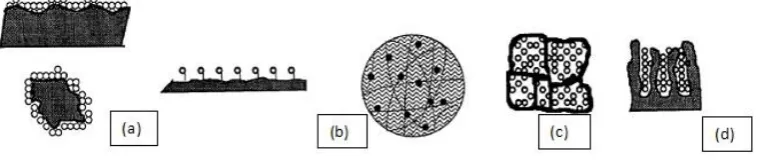
Figure 1: Methods for immobilization of viable microbial cells – (i) Adsorption to surfaces, (ii) Covalent bonding to carrier, (iii) Encapsulation in polymer gel, (iv) Entrapment in matrix
Figure 2: Classification of immobilization methods
The recent reports on enhanced plasmid stability of genetically engineered microorganisms11under immobilized conditions, and
the viability of microbial cells over a period of 18 months12,13under entrapped conditions, are few of the many
potential new applications of immobilized cells 14.
MATERIALS AND METHODS Textile Dyes
Two azo dyes namely Orange M2R and Red RR were collected from a textile industry at Tirupur. Synthetic dye solutions were prepared and used for analysis.
Preparation of Dye Solution
Two different concentrations (20ppm and 100ppm) were prepared for both the dyes and used for analysis.
Determination of Absorption Maxima
The absorption maxima were determined by scanning in the UV-visible spectrophotometer. 2ml of the sample solution was taken in a cuvette and measured the absorbance at different wavelengths in the UV visible region (300-700nm). The respective absorption maxima were used for further degradation studies.
Culture Used
The bacterial strain used was isolated from a textile dye effluent at Tirupur enriching azo and reactive dyes.
Revival of the Cells
Frozen culture was taken from deep freezer and thawed. Small amount of Nutrient broth was added to the cryovial, mixed well and transferred to 100ml of nutrient broth. The flask was incubated at 37°C overnight.
Sub-Cultivation and Mass Cultivation of Dye Degrading Microbes
Sub cultivation is done by transferring cells from mother culture to fresh growth medium. 15ml of cell suspension was inoculated in 1200 liter of nutrient broth for mass culturing.
Standardization of Different Immobilization Methods Immobilization of Microbes By Sodium Alginate Method
beads of sodium alginate were left in calcium chloride solution upto 20 minutes for hardening15.
Immobilization of Microbes In Polyacrylamide Gel
The polyacrylamide gel entrapment procedure was performed [Jonathan W, 1988]. Wet cells were suspended in distilled water and chilled in ice. 0.2M potassium phosphate buffer, pH 7.0 was also chilled in ice. To this buffer add Acrylamide, bisacrylamide and ammonium persulphate were added and mixed. Immediately, the chilled buffer solution was mixed with the chilled cell suspension followed by the addition of TEMED and poured into 2 or 3 glass petri dishes. There after allowed for polymerization to proceed for 1hr. Then the sieved gels were suspended in 0.2M potassium phosphate buffer pH 7.0 and allowed to settle. Then were decanted and the gel was used for degradation studies.
Immobilization of Microbes in Agar
Agar was dissolved in 0.9% (w/v) sodium chloride by heating at 100°C and then cooled to 40°C. Cell slurry was suspended in 0.9% (w/v) sodium chloride solution. Cell slurry was added to agar solution and mixed. Immediately, the mixture was poured onto petridish and cooled to 5°C. The gel was stored in 0.1M phosphate buffer, pH 7.0 until required15.
Immobilization of Microbes in Carrageenan
Carrageenan was completely dissolved in distilled water at desired concentration at 50°C, and then the solution was sterilized at 110°C -121°c for 1hr. The solution was cooled to 38°C - 40°C with stirring. The cell suspension was added to molten Carrageenan maintained at 40°C, mixed well and poured into sterile flat bottomed petriplate. After solidification it was cut into cubes and added to sterile 2% potassium chloride solution and kept in the refrigerator for 1hr for curing. The cubes were washed 3 – 4 times with sterile distilled water15.
Comparison of Decolourization Efficiency of Synthetic Dye Solution Using Different Immobilization Methods
Two different concentrations such as 20ppm and 100ppm of 10ml dye solutions were taken. Equal weight of immobilized microbial cells with matrices were suspended in 10ml of solution and kept overnight to determine the percentage decolourization. The experiments were done in duplicates at 24 hours and 48 hours. Percentage decolourization = 1-(AT/Ao)*100
Where AT is absorbance at time T, Ao is absorbance at time Zero
Results were compared with control which had only the beads or gel blocks without microbe.
Characterization Using Optical Microscope
The immobilized microbes in different matrices were sliced with scalpel and fine section was observed under optical microscope without staining. The images were stored.
RESULTS AND DISCUSSION
Characterization of Dyes for Absorption Maxima
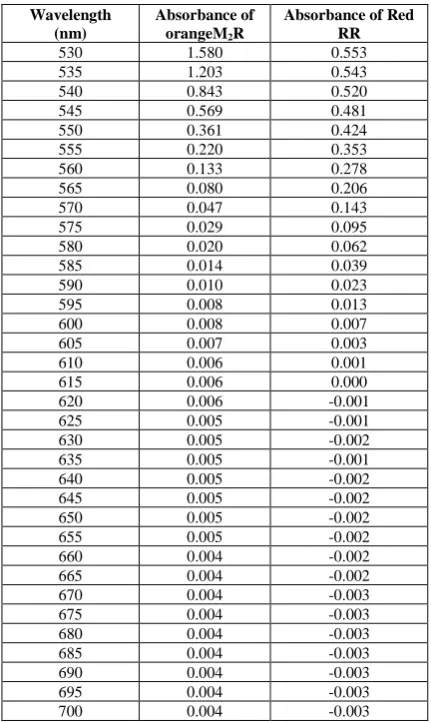
Table 1: Spectrophotometric analysis of absorbance maxima
Wavelength (nm)
Absorbance of orangeM2R
Absorbance of Red RR
530 1.580 0.553
535 1.203 0.543
540 0.843 0.520
545 0.569 0.481
550 0.361 0.424
555 0.220 0.353
560 0.133 0.278
565 0.080 0.206
570 0.047 0.143
575 0.029 0.095
580 0.020 0.062
585 0.014 0.039
590 0.010 0.023
595 0.008 0.013
600 0.008 0.007
605 0.007 0.003
610 0.006 0.001
615 0.006 0.000
620 0.006 -0.001
625 0.005 -0.001
630 0.005 -0.002
635 0.005 -0.001
640 0.005 -0.002
645 0.005 -0.002
650 0.005 -0.002
655 0.005 -0.002
660 0.004 -0.002
665 0.004 -0.002
670 0.004 -0.003
675 0.004 -0.003
680 0.004 -0.003
685 0.004 -0.003
690 0.004 -0.003
695 0.004 -0.003
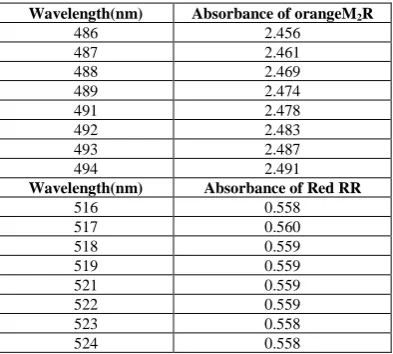
TABLE 1.1 and TABLE 1.2 Spectrophotometric readings in the maximum absorbed range forOrange M2R and Red RR
Wavelength(nm) Absorbance of orangeM2R
486 2.456
487 2.461
488 2.469
489 2.474
491 2.478
492 2.483
493 2.487
494 2.491
Wavelength(nm) Absorbance of Red RR
516 0.558
517 0.560
518 0.559
519 0.559
521 0.559
522 0.559
523 0.558
524 0.558
The optical density of dyes at wavelengths 340-700nm were tabulated in Table: 1. From Table:1.1 the absorbance maxima was found to be 494nm for Orange M2 as tabulated in Table 1.2, the absorbance maxima was found to be 517nm for Red RR.
Figure 3: Absorption maximum of Orange M2R Figure 4: Absorption maximum of Red RR
Immobilization by different methods
Immobilization of microbes by Sodium alginate method
Beads were formed when sodium alginate is dropped into calcium chloride. The beads left in calcium chloride solution were hardened after about 20 minutes.
Immobilization of microbes by Polyacrylamide
The gel in the petriplate was cut into smaller pieces of uniform length using a sterile blade. These were suspended in 0.2M potassium phosphate buffer until use.
Immobilization of microbes by Agar
Cell slurry was added to agar which is dissolved in sodium chloride solution and this mixture was poured onto petridish and cooled. The resulting gel was stored in 0.1M phosphate buffer until required.
Immobilization of microbes by Carrageenan
Cell suspension was added to molten Carrageenan and was poured onto petriplate. It was cut into cubes after solidification. The cubes were stored in 2% potassium chloride solution and kept in refrigerator for curing.
(a) (b)
(c) (d)
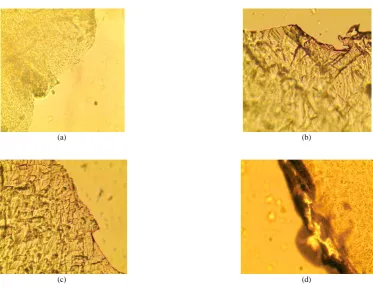
Figure 5: Different methods of immobilization (a) sodium alginate (b) polyacrylamide (c) agar (d) carrageenan
Characterization of immobilized microbes
Optical microscopic image showed microbes entrapped within the matrix.
(a) (b)
(c) (d)
Decolourization studies
Degradation efficiency of each of the methods was analyzed for 24 hrs and 48 hrs culture. Sodium alginate and polyacrylamide methods showed higher degradation potential when compared with the other methods. The decolorization percentage for
individual immobilization methods are tabulated in Table 3 and Table 4. The readings are represented in a graphical format in Figure 15 and Graph 16. The decolorization of dyes using different immobilization methods are shown in Figure 7 to Figure 14.
Figure 7(a) Figure 8(b)
Figure 9(a) Figure 10(b)
Figure 11(a) Figure 12(b)
Figure 13(a) Figure 14(b)
Figure 15: Comparison of the dye decolorization percentage for Orange M2R at 24 and 48 hours
Figure 16: Comparison of the dye decolorization percentage for Red RR at 24 and 48 hours
Immobilization of cells have more advantages such as elimination of long and expensive procedures for enzymes separation and purification14,15. In comparison with immobilized enzymes,
immobilized cells provide new promises as they can be used as natural, water-insoluble carriers of required enzyme activities 16.
CONCLUSION
A Bacillus bacterial strain isolated from the sludge collected from the textile dye effluent at Tirupur, Tamil Nadu. It is characterized and found to decolourize the textile dye colour from water body. The bacterial cells were mass cultivated and harvested by centrifugation. These cells were immobilized by different methods such as sodium alginate, polyacrylamide, carrageenan, agar. The immobilized bacterial cells were characterized using optical microscopy. They are uniformly embedded in the gel matrix and were compared for their decolourization potential of synthetic dye.
REFERENCES
1. Meagher, RB. Phytoremediation of toxic elemental and organic pollutants". CurrentOpinion in Plant Biology. 2003. 3 (2), 153–162
2. Levin, L., Papinutti, L. and Forchiassin, F. Evaluation of Argentinean White Rot Fungi for their ability to produce lignin-modifying enzymes and decolourize industrial dyes. Bioresour. Technol. 2004. 94, 169-176.
3. Siddiqui MF, Andleeb S, Ali N, Ghumro PB. Up-flow immobilized fungal Column Reactor for the Treatment of Anthraquinone dye Drimarene blue K 2 RL. Journal of Biotechnology. 2009. 8(20),5570-5577.
4. Wang.X, Cheng.X, Sun.D ,Qi.H Biodecolorization and partial mineralization of Reactive Black 5 by a strain of
Rhodopseudomonas palustris Journal of Environmental Sciences. 2008.20 (10), 1218-1225
5. Couto, S.R., Sanroman, M.A. and Gubitz, G.M. Influence of redox mediators and metal ions on synthetic acid dye decolorization by crude laccase from Trametes hirsuta.
6. Rao MA, Scelza R, Scotti R, Gianfreda L. Role of enzymes in the remediation of polluted environments. In Situ. 2010. 10(3),333- 353.
7. Wang L, Luo QF, Zhao JH, Zhang XH, Huang LJ.
Preparation of seeding type immobilized microorganisms and their degradation characteristics on Di-n butyl phthalate. Biomed. Environ. Sci. 2006. 19,147-152.
8. Wang L, Ridgway D, Gu T, Moo-Young M. Bioprocessing strategies to improve heterologous protein production in filamentous fungal fermentations. Biotechnol. Adv. 2005. 23,115-129.
9. Chung, K.T. and Stevens, S.J. Decolourization of azo dyes by environmental microorganism and helminthes. Environ. Toxicol. Chemistry. 1993. 12,2121-2132.
10.Vidali M. Bioremediation. An overview. Pure and Applied Chemistry. 2001. 73(7),1163-1172
11.Nachiyar CV, Rajakumar GS. Purification and
characterization of an oxygen insensitive azoreductase from Pseudomonas aeruginosa. Enzyme. 2005. 36,503-509.
12.Peinado RA, Moreno JJ, Maestre O, Mauricio JC. Use of a novel immobilization yeast system for winemaking. Biotechnol. Lett. 2005. 27,1421-1424.
13.Parascandola GLP, Scardi V. A new method of whole microbiol cell immobilization. Appl. Microbiol. Biotechnol. 1980. 11,6-7.
14.Woodward J. Methods of immobilization of microbial cells. J. Microbiol. Methods. 1988. 8,91-102.
15.Stolarzewicz I, Bialecka-Florjañczyk E, Majewska E, Krzyczkowska J. Immobilization of yeast on polymeric supports. Chem. Biochem. Eng. 2011. 25,135-144.
16.Vojtisek V, Jirků V. Immobilized cells. Folia Microbiol. 1983. 28,309-340.
Cite this article as:
Sivapriya Veeraiyan et al. Standardization of different methods of microbial immobilization for dye decolourization. Int. Res. J.
Pharm. 2017;8(10):64-71
http://dx.doi.org/10.7897/2230-8407.0810183
Source of support: Nil, Conflict of interest: None Declared
Disclaimer: IRJP is solely owned by Moksha Publishing House - A non-profit publishing house, dedicated to publish quality research, while every effort has been taken to verify the accuracy of the content published in our Journal. IRJP cannot accept any responsibility or liability for the site content and articles published. The views expressed in articles by our contributing authors are not necessarily those of IRJP editor or editorial board members.