CONTROLLING THE EFFECT OF CROWD NOISY
ANNOTATIONS IN NLP TASKS
Azad Abad
Supervisor
Prof. Alessandro Moschitti
Università degli Studi di Trento
In the beginning, I practiced the same old story of doing my PhD with the blind eyes and without thinking of why I do need PhD and how this journey is going to change my life.
For the first year of my PhD, the research activities did not go very smoothly and I thought about quitting it every weekend. I was completely frustrated and almost abandoned my PhD till I got an opportunity to work with Prof. Alessandro Moschitti. I thank him very much not only because he is a great supervisor but also a good friend. Definitely, I could not find my path without his support and mentoring during the last 4 years. (I started to like doing research because of you. Thank you very much Alessandro for those simple life lessons you used to share with me.)
University of Trento, provided me with all the possible help and support under the management of Prof. Nicu Sebe. I would like to thank him as well as two great PhD office secretaries, Andrea and Francesca for their wonderful accountability.
I would like to thank my friends and colleagues specially Moin, Arindam, Evgeny and Orkan for fulfilling my life and giving me professional advises and critical comments. I would like to thank my family and my wife Saameh who always encourage me to stay and fight also giving me both support and freedom.
Natural Language Processing (NLP) is a sub-field of Artificial Intelligence and Linguistics, with the aim of studying problems in the automatic generation and understanding of natural language. It involves identifying and exploiting linguistic rules and variation with code to translate unstructured language data into information with a schema. Empirical methods in NLP employ machine learning techniques to automatically extract linguistic knowledge from big textual data instead of hard-coding the necessary knowledge. Such intelligent machines require input data to be prepared in such a way that the computer can more easily find patterns and inferences. This is feasible by adding relevant metadata to a dataset. Any metadata tag used to mark up elements of the dataset is called an annotation over the input.
In order for the algorithms to learn efficiently and effectively, the annotation done on the data must be accurate, and relevant to the task the machine is being asked to perform.
In other words, the supervised machine learning methods intrinsically can not handle the inaccurate and noisy annotations and the performance of the learners have a high correlation with the quality of the input data labels. Hence, the annotations have to be prepared by experts.
However, collecting labels for large dataset is impractical to perform by a small group of qualified experts or when the experts are unavailable. This is special crucial for the recent deep learning methods which the algorithms are starving for big supervised data.
Crowdsourcing has emerged as a new paradigm for obtaining labels for training machine learning models inexpensively and for high level of data volume. The rationale behind this concept is to harness the “wisdom of the crowd” where groups of people pool their abilities to show collective intelligence.
use for training the machine learning models in variety of natural language processing tasks namely: relation extraction, question answering and recognizing textual entailment.
The first part of the thesis deals with design a benchmark for evaluation Distant Supervision (DS) for relation extraction task. We propose a baseline which involves training a simple yet accurate one-vs-all strategy using SVM classifier. Moreover, we exploit automatic feature extraction technique using convolutional tree kernels and study several example filtering techniques for improving the quality of the DS output.
In the second part, we focused on the problem of the crowd noisy annotations in training two important NLP tasks, i.e., question answering and recognizing textual entailment. We propose two learning methods to handle the noisy labels by (i) taking into account the disagreement between crowd annotators as well as their skills for weighting instances in learning algorithms; and (ii) learning an automatic label selection model based on combining annotators characteristic and the task syntactic structure representation as features in a joint manner.
Finally, we observe that in fine-grained tasks like relation extraction where the annotators need to have some deeper expertise, training the crowd workers has more impact on the results than simply filter-out the low quality crowd workers. Training crowd workers often requires high-quality labeled data (namely, gold standard) to provide the instruction and feedback to the crowd workers.
Themistoklis Palpanas
Professor
Paris Descartes University
Fabio Massimo Zanzotto
Associate Research Professor
Università degli Studi di Roma Tor Vergata
Paolo Rosso
Associate Research Professor
Universitat Politècnica de València
Keywords
1 Introduction 1
1.1 Motivations . . . 1
1.2 Thesis Contributions . . . 6
1.3 Structure of the Thesis . . . 7
1.4 List of Publications . . . 9
2 Background Work and Concepts 11 2.1 Supervised Methods . . . 12
2.1.1 Supervised Learning in NLP Tasks . . . 13
Classification . . . 13
Re-Ranking . . . 14
2.1.2 Support Vector Machines . . . 15
2.2 Relation Extraction . . . 19
Supervised Methods . . . 21
Semi Supervised Methods . . . 22
Self Supervised Methods . . . 22
2.2.3 Distant Supervision . . . 23
Related Work on DS . . . 24
Datasets . . . 26
2.3 Question Answering . . . 27
2.3.1 Definition . . . 27
2.3.2 Related Works on QA . . . 28
2.3.3 Dataset . . . 29
2.4 Recognizing Textual Entailment . . . 29
2.4.1 Definition . . . 29
2.4.2 Related works on RTE . . . 30
2.4.3 Dataset . . . 31
2.5 Evaluation Metrics . . . 31
2.5.1 Precision . . . 32
2.5.2 Recall . . . 32
2.5.5 Mean Average Precision (MAP) . . . 33
2.5.6 Mean Reciprocal Rank (MRR) . . . 33
3 Annotation Collection for Supervised Methods 35
3.1 Annotation Collection for Big Data . . . 36
3.1.1 Crowdsourcing . . . 36
3.2 Quality Control in Crowdsourcing . . . 38
3.2.1 Related Works on Quality Control in Crowdsourcing 40
3.3 Our methods for Exploiting Labeled Data . . . 41
3.3.1 Create Benchmark for Distant Supervision for RE 42
Contributions . . . 42
3.3.2 Instance Weighting . . . 43
Contributions . . . 45
3.3.3 Optimized Automatic Label Selector (ALS) . . . . 46
3.3.4 Autonomous Crowd Learning . . . 47
Contributions . . . 49
4 Distant Supervision for Relation Extraction 51
4.1 Overview. . . 51
4.2.2 Tree Kernels . . . 53
4.3 Experiments . . . 54
4.3.1 Corpus . . . 54
4.3.2 Pre-processing . . . 55
4.3.3 Sentence Filtering . . . 55
4.3.4 Knowledge Base Augmentation . . . 56
4.3.5 Pipeline Configuration . . . 57
4.3.6 Parameter Optimization . . . 57
4.3.7 Evaluation . . . 58
4.4 Conclusion . . . 58
5 Instance Weighting for Crowdsourcing QA Task 59 5.1 Overview. . . 59
5.2 Crowdsourced Dataset . . . 60
5.3 Instance Weighting Strategy . . . 60
5.4 Experimental Setup . . . 62
5.4.1 Classifier Feature . . . 62
5.4.2 Reranking Model . . . 63
5.6 Conclusion . . . 66
6 Automatic Label Selector (ALS) 69 6.1 Overview. . . 69
6.2 Pilot Experiments . . . 70
6.3 Crowdsourced Datasets . . . 70
6.3.1 QA Task . . . 71
6.3.2 RTE Task . . . 71
6.4 The Automatic Label Selector Framework(ALS) . . . 72
6.4.1 Annotator Parameters . . . 73
6.4.2 Aggregated Features for ALS . . . 73
6.4.3 Task Parameters . . . 75
6.5 Experimental Setup . . . 75
6.5.1 ALS Experiments . . . 75
6.5.2 Trade-off Parameter . . . 76
6.5.3 Learning Curves . . . 76
6.5.4 Quality of Annotations . . . 78
6.6 The Impact of ASL on Target Tasks . . . 79
6.6.3 Baselines . . . 80
6.6.4 Evaluation Metrics . . . 81
6.6.5 Experimental Results . . . 82
6.7 Conclusion . . . 83
7 Autonomous Crowd Training for RE 85 7.1 Overview. . . 85
7.2 Self-Crowdsourcing Training . . . 86
7.2.1 Silver Standard Mining . . . 86
7.2.2 Training Schema . . . 87
7.3 Experimental Setup . . . 89
7.3.1 Corpora . . . 89
7.3.2 Relation Extraction Pipeline . . . 90
7.3.3 Experimental Results . . . 90
7.4 Conclusion . . . 93
8 Conclusion 95 8.1 Limitations and Future Work . . . 96
4.1 Precision and recall of different relation types. . . 57
4.2 Comparison of the results for different DS methods . . . . 58
5.1 Results over 5 fold cross validations. Our weighting scheme
results are better than the baselines with p < 0.05 . . . 64
6.1 Ablation test for Q/A and RTE tasks.The results are
estimated over 5 fold cross validation . . . 77
6.2 The results over 5 fold cross validation . . . 82
6.3 The results of RTE Task evaluated per class (entailment and non-entailment). The last column is the macro average
accuracy of the both classes. . . 82
7.1 Evaluation of the impact of theCSA label quality in the RE
1.1 The performance of ML methods vs the amount of data . . 3
1.2 Demographic information of Turkers in AMT: right) Gender
and left) Education level . . . 5
2.1 An example of Part of Speech (POS) tags and its syntactic
tree . . . 18
2.2 Error in automatic labeling generated through DS . . . . 24
2.3 Example of a Text and Hypothesis in entailment relation . 30
3.1 Amazon Mechanical Turk (AMT) user interface . . . 38
3.2 Quality control factors in crowdsourcing . . . 39
4.1 a) The constituent parse tree of the example sentence where “E1-Loc” denotes the source entity mentions and “E2-Loc” denotes the target entity. b) PT relation instance space of
the sentence.. . . 54
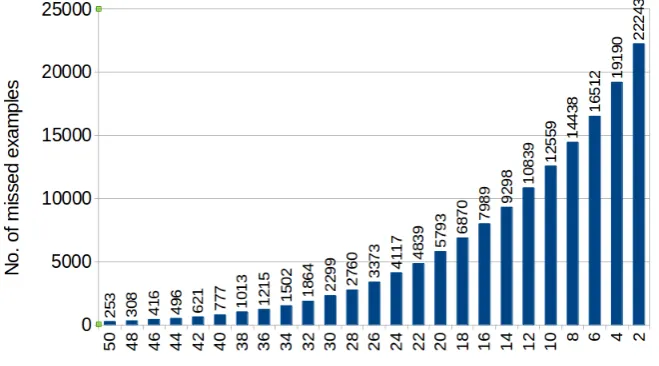
4.2 Recall of positive examples with respect to word distance
between entity mentions. . . 55
5.3 The impact of the C values on different models with (LPTC,
L) and without (CA, RE) . . . 66
6.1 Crowdsourcing user interface for RTE task. . . 71
6.2 Workers accuracy vs. number of annotations: a) QA and b) RTE tasks. Each colored circle is a representative of an
annotator. . . 72
6.3 ALS classifier accuracy in QA and RTE tasks setting several
C values. . . 78
6.4 Learning curves under different number of training examples. 78
6.5 Improvement in tasks accuracy by increasing the number of
annotators. . . 79
7.1 Human-machine co-training framework . . . 86
7.2 User Interface of crowd worker training: interactive QA phase 89
7.3 User Interface of crowd worker training: instruction phase 89
7.4 Accuracy of different CS partitions . . . 91
Introduction
1.1
Motivations
Modern society push for processing large volume of information everyday in order to stay up-to-date. There is a change continuously not only in the amount of information, but also in its type over time. As a consequence of the sheer volume and heterogeneous nature of the information it is becoming impossible to analyze this data manually. So, the automatic techniques are being used to facilitate this process.
Recently, the big revolution is how artificial intelligence and cognitive systems are advancing and changing our world. Machine Learning (ML) plays a key role in a wide range of critical applications, such as data mining, natural language processing, visual recognition, and expert systems. ML provides potential solutions to all these domains and more, and is set to be a pillar of our future civilization.
However, the rule-based systems suffer from several drawbacks such as difficulty to find experts in order to define the rules, challenge in developing, testing and modifying the rules and finally the generalization problem [76].
The most successful ML algorithms used in NLP are supervised methods, which learn to extract knowledge from labeled training data. These methods are heavily used in NLP applications for voice recognition, categorization, sentiment analysis and machine translation [38].
The supervised methods require metadata known as tag, labels or class. Each instance in the training set is a pair consisting of an input object, e.g., a document, a sentence, or a word, and a desired output label, e.g., document category, sentence class or word type. In the training process, machine learning algorithm is telling the computer what patterns are important, and providing examples and counter-examples for each distinction the model should make. The goal is to infer a decision function by analysing the training data, which can be used for mapping unseen test examples to their output labels.
One of the biggest challenges in NLP community is to provide the tagged data for training the supervised methods. Labels for data are often obtained by asking experts to make judgments about a given piece of unlabeled data and creating these labels manually is often too slow, static and expensive. In small datasets with few thousand of examples, a group of experts can handle the annotation task. However, it is impractical for big dataset with millions of the examples. So, manually labeling large training sets is not a feasible option.
In the other side, with the growth of the Internet, Mobile in IOT era, the amount of available data has greatly increased. The new machine learning approaches (a.k.a. Deep Learning) showing promising results in various NLP tasks are big data hungry as well [21, 62, 22, 33, 136, 135].
In addition, It has been shown that there is direct relation between the performance of ML models and the amount of the data [99]. Figure
Figure 1.1: The performance of ML methods vs the amount of data
and performance). Thus, achieving the state of the art in NLP tasks without considering the new ML methods and the big data phenomena is not possible.
Following the trend, there are many active areas of research in machine learning that are aimed to assign the label to large unlabeled data to build better and more accurate models for NLP tasks. For instance, Weak-supervised learning attempts to leverage various heuristics and existing knowledgebases (KB)/databases as weak supervision to label the unlabeled data [50, 111, 140]. This gave rise to the terms “weak” or “distant” to indicate that the labels on the training data are imprecise or noisy. The method is attractive because it does not require human supervision; it is efficient for even tera-scale extraction; and it is domain and language independent. However, heuristically labeled training data in DS approach suffers from two major drawbacks:
• The matched entities from KB can not represent the sentence semantic truly. It causes false positive errors and the semantic drift.
Although, some techniques have been used to decrease the effect of noisy labels in classifier output, this does not necessarily impact the learning aspect of the classifier. The classifier assumes that the labels are precise and often fails to optimize solving two problems jointly (i.e., data trustability and learning the model).
As an alternative solution, crowdsourcing has emerged as a new paradigm to gather text annotations quickly at scale by considering the “widsom of crowd” as the source of supervision. According to Wikipedians, crowdsourcing is “the act of taking a task traditionally performed by an employee or contractor, and outsourcing it to an undefined, generally large group of people, in the form of an open call.” 1
Crowdsourcing is valuable to computational linguists as a source of labeled training data to use in machine learning. Tagging and organizing all different types of big data, be it unstructured, structured or semi structured, require big effort and it can be achieved efficiently by leveraging the power of crowd [134]. Specially, it is an effective approach in collection annotations for NLP tasks because the annotation task requires some degree of common linguistic knowledge which is beyond the power of DS methods. While crowdsourcing offers solicitors of information or services nearly unlimited cheap (or free), the challenge lies in aggregating the multiple, noisy contributor inputs to create a consistent corpus. The output of crowdsourcing, especially in the case of micro-tasks and when monetary incentives are involved, often suffers from low quality. Moreover, the crowd workers are usually not experts and they are of different age, education and ethnics.
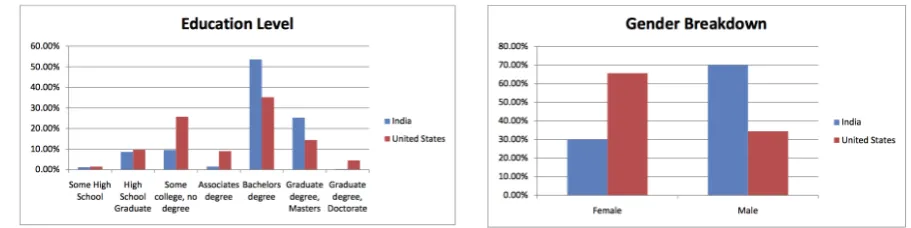
For exmaple, in a survey conducted by Ipeirotis [64], information about the demographics of participants on a well-known online crowdsourcing platform (a.k.a, Amazon Mechanical Turk), together with information
Figure 1.2: Demographic information of Turkers in AMT: right) Gender and left) Education level
about their level of activity and motivation for working on Amazon Mechanical Turk has collected. He focused on the countries with the most number of crowd workers participating in the posted tasks namely: US and India. It shows a high level of diversity among the crowd workers in terms of age, gender and education level which makes the annotations less accurate. Figure 1.2illustrates the gender and education level of the crowd workers for the both countries .
Broadly speaking, there are two main approaches to improve the quality of the annotations in crowdsourcing tasks. First, pre-processing methods consist of crowd demographic filtering [71], inserting gold questions [166, 14] and preparing a skill modeling to determine workers’ proficiency [133]. Second, post-processing methods such as statistical processing to identify outliers and exclude them, both at the level of contributors and contributions. Majority vote is the simplest of such statistical measures or weighting the votes of annotators based on their overall performance [134, 165, 61]. However, the research has shown that it is not the best solution to create high quality annotations [110]. Thus, the more advanced techniques are required to filter out the human noise from crowdsourcing NLP tasks by considering the latent additional information of crowd workers (a.k.a metadata) that can reveal the performance of the workers in desired task.
workers. For example, how ML techniques handle differences between workers in terms of the quality of annotations they provide. How we can re-weight the noisy annotations for the end task of creating a model. How it is possible to identify genuinely ambiguous examples via annotator disagreements. How we estimate the trustability of crowd workers by considering background and expertise as an additional data. And, what is the contribution of the user data to reveal the pattern of annotation noise in learning NLP tasks is.
The work presented in this thesis is a step towards finding the answers of the above questions.
1.2
Thesis Contributions
The contributions of this thesis are at the intersection of the fields of human-computer interactions, machine learning, and NLP. One overarching goal of this work is to get the advantage of computational approaches in order to control the effect of noisy annotation in NLP tasks when the source of noise is human. The contributions are listed as follow:
1. We propose an approach based on convolution Tree Kernels (TK) and Support Vector Machines (SVMs) to be used as a baseline for applying Distant Supervision in Relation Extraction Task (Chapter 4).
2. We design several instance weighting strategies to help the learning algorithm dealing with the noisy labels of training examples, thus learning a better model in Question Answering (QA) task (Chapter
5).
4. We propose a new framework to improve the accuracy of relation extractor by involving human in the loop. So, we introduce an iterative human-machine collaborative learning method for crowdsourcing. As a first contribution, we introduce a self-training strategy for crowdsourcing. Then, we introduce our iterative human-machine co-training framework for the task of RE (Chapter
7).
1.3
Structure of the Thesis
The thesis outline is as follow:
Chapter 1 - Introduction - This chapter describes the research plan of the thesis. It presents the research approach, theoretical and practical motivations. It also highlights contributions of the thesis, and provides an outline for the rest of the content to follow.
Chapter 2 - Background Work and Concepts - This chapter provides a general overview on supervised learning approaches and Support Vector Machines (SVMs) in particular. Specifically, we focused on classification and re-ranking problems and provide a brief description on how kernels method can solve the nonlinear problems at a reasonable computational cost. In addition, we present the relevant background and the tasks definition in the field of NLP (namely: Relation Extraction, Question Answering and Recognizing Textual Entailment), targeted in this thesis. In addition, a description of the used corpora for each task is elaborated in details. Finally, we explain the standard evaluation metrics that are widely used to evaluate our proposed methods.
Chapter 3 - Annotation Collection for Supervised Methods
crowdsourcing tasks. Then, a whole section is dedicated to present our problem statements, our proposed methods and the contributions briefly.
Chapter 4 - Distant Supervision for Relation Extraction -In this chapter we describe our methodology for creating a baseline for relation extraction task applying distant supervision. The experimental setup and the results are presented and discussed extensively.
Chapter 5 - Instance Weighting for Crowdsourcing QA Task -This chapter provides the description of our solution for decreasing the effect of the noisy labels in question answering task. We also present the detail of our experiments and the result comparison with majority voting-based as baseline.
Chapter 6 - Automatic Label Selector (ALS) - We detailed our proposed classifier to predict the best label from a set of annotations done by a group of annotators considering their profile as a feature set. Moreover, our comprehensive analysis on the experiment results for applying the prediction of ALS classifier to train QA and RTE tasks are visualized and presented.
Chapter 7- Autonomous Crowd Training for Relation Extraction
- In this chapter we characterize our iterative human-machine co-training framework used to train crowd workers for relation extraction task. Then, our experimental results is presented and compared with the both methods, using distant supervision or just crowdsourcing without worker training.
1.4
List of Publications
• Creating a Standard for Evaluating Distant Supervision for Relation
Extraction. Azad Abad, Alessandro Moschitti. CLIC 2014 - The
First Italian Conference on Computational Linguistics, Pisa, Italy, 9-10 December 2014
• A Multi-task Learning Framework for Time-continuous Emotion
Estimation from Crowd Annotations. Mojtaba Khomam Abadi, Azad
Abad, Ramanathan Subramanian, Negar Rostamzadeh, Elisa Ricci, Jagannadan Varadarajan, Nice Sebe. CrowdMM 2014 - International ACM Workshop on Crowdsourcing for Multimedia, Florida, USA, 07 November 2014
• Distant Supervision for Relation Extraction Using Tree Kernels. Azad
Abad, Alessandro Moschitti. IIR 2014 - 6th Italian Information Retrieval Workshop, Cagliari, Italy, 25-26 May 2015
• Taking the Best from the Crowd: Learning Question Passage
Classification from Noisy Data. Azad Abad, Alessandro Moschitti.
*SEM 2016 - 5th Joint Conference on Lexical and Computational Semantics, Berlin, Germany, 11-12 August 2016
• Appetitoso: A Search Engine for Restaurant Retrieval based on
Dishes. Gianni Barlacchi, Azad Abad, Emanuele Rossinelli,
Alessandro Moschitti. CLiC-IT 2016 - Third Italian Conference on Computational Linguistics, Napoli, Italy, 5-6 December 2016
• Learning to Automatically Select the Best Labels from Crowd
Annotators. Azad Abad, Alessandro Moschitti. TACL 2017 - to
be submitted to Transactions of the Association for Computational Linguistics
• Self-Crowdsourcing Training for Relation Extraction. Azad Abad,
Background Work and Concepts
In this chapter we introduce some important concepts and definitions which the reader of the thesis should be familiar with before proceeding to the rest of the thesis.
First, we briefly introduce the concept of supervised learning and formally define the classification problem with some examples of its application in Natural Language Processing (NLP) tasks related to this thesis.
Then, we formalize the Support Vector Machine (SVM) classifier and the optimization problem, which are central to the work described in this thesis. We show how Tree Kernels (TK) can be used to kernelize the SVM classifier to allow the learning of non-linear decisions in our tasks.
Finally, we introduce the targeted NLP tasks (i.e., Relation Extraction, Question Answering and Recognizing Textual Entailment) which are crowdsourced.
2.1
Supervised Methods
In this section we provide an overview of some of the concepts and definitions used in supervised learning methods. They consist of a) the decision function and b) the inference problem to assign labels to output variables.
The goal of supervised learning is to learn a decision function h ∈ H
from some hypothesis space H. This means that given a label training set D = {(xi, yi)}
n
i=1, the decision function h assigns an input x ∈ X to an
output label y ∈ Y : h : X → Y.
Inference: The label assignment to the output variable can be formalized
as follows:
h(x) = argmax
y∈Y
fw(x, y), (2.1)
where f : X × Y → R is a discriminant function parametrized by a vector of weights w that assigns a numerical score to the input-output variables. It can also introduce as a compatibility function which measures the degree of agreement between the input and the output variables. In common practice, function f is a linear function in the vector of model parameters w:
fw(x) =hx,Ψ(x, y)i (2.2)
2.1.1 Supervised Learning in NLP Tasks
In this section we provide a brief overview of the most common strategies used to solve NLP problems - namely a) classification and b) re-ranking. Then, we provide a definition of the specific tasks which are targeted directly in this thesis in separate sections. Here, the main goal is not to provide a final solution for the considered problems but to describe the nature of the problems and trying to categorize them into corresponding classes of machine learning problems. Our solutions to tackle the noisy labels in the targeted tasks are elaborated in details in Chapters 4, 5, 6
and 7.
Classification
Treating NLP tasks as a classification problem is a very well known practice performed by the community whether it is the case of a simple document classification problem or a more complex task like learning entailed texts in Recognizing Textual Entailment.
Problem Formulation The output domain of binary classification is Y =
{−1,+1} whereas in multi-class classification Y = {1, .., K}, the number of classes are extended to k. The inference problem can be solved by using an extensive list of output variables y and choosing the one that results in the maximum score. The joint feature map for binary classification can be defined as Ψ(x) = yΨ(x) where Ψ : X → Rd denotes an optional feature set, representing the input variables to the classifier.
In Multi-class Ψ(x) = Λk ⊗ Φ(x), Λk refers to the binary encoding of the k-th label y and ⊗ represents the matrix product which forms all the products between the two argument vectors. However, it is possible to simplify the formulae for the binary and multi-class classifications into max(0,1−yf(w, x)) and max(0,1 +max
Hence, in order to learn accurate models that produce decision functions with high discriminative powers, the main effort should be dedicated to how well to represent the structure of the input data (a.k.a., feature engineering).
Re-Ranking
Here we describe the problem of reranking text pairs which is heavily used in various NLP tasks like Questions Answering and micro blog retrieval, among others. Several effective solutions exists to the reranking problem, however, we focus on a very successful approach that represents query-document pairs to the ranking algorithm to learn an accurate model.
Problem Formulation We are provided with a set of retrieved enumerations
of query-documents, where each query qi ∈ Qconsists of a list of candidate answers Di = {di1, di2, ..., din}. The candidates set is labeled with their relevancy judgments {yi1, yi2, .., yin} in a way that the relevant answers are labeled with yij = 1 while 0 otherwise. The aim is to build a model that for each query qi and its associated candidate passages Di, generates an optimal ranking R = (ri1, ri2, .., rin) for which the relevant answers/documents appears on top of the list.
Formally, the task is to learn a ranking function in the general form:
h(w,Ψ(qi, Di)) → R, (2.3)
where Ψ(.) maps the input query-document pairs into appropriate feature representations. Ultimately, the weight vector w is a model parameter vector which is updated during the learning process.
Learning to Rank Approaches Basically, there are three major approaches to learn the function h namely: pointwise, pairwise and listwise methods.
the reranking problem. In this method the ranking problem can be reformulated into a binary classification task where each triple (qi, dij, yij) represents a training instance and the decision function can be presented as: h(w,Ψ(qi, dij)) → yij.
The decision function h(.) simply computes a dot product between the model weight w and the feature generated by Ψ(.) as described in section
2.1.1.
Pairwise approach. In this approach the model is trained to score the
correct pairs higher than the incorrect pairs within a certain margin:
hw,Ψ(qi, dij)i ≥ hw,Ψ(qi, dik)i+ , (2.4)
where the document dij is a relevant answer for query qi while dik is not. This method requires more training data compared to the pointwise approach which leads to lower training times.
Listwise approach. The third method treats a query as a list with its
associated document candidates to be represented to the ranking function as a single training instance. This method is able to capture considerably more information about the ground truth ordering of the input candidates. However, the inference process is expensive in terms of time complexity.
2.1.2 Support Vector Machines
In this section we introduce the binary Support Vector Machine (SVM) classifier that can handle the classification and the ranking problems. This classifier is heavily employed in this thesis. We also describe syntactic parsers that are used to construct syntactic structures for automatically generating rich features. The generated feature sets can be used in the SVM tree kernel framework for the both classification and ranking problems.
algorithms among supervised learning methods. It belongs to the family of generalized linear classifiers that enable the use of high-dimension feature spaces via the kernel trick. In the following, we formalize the SVM optimization problem and describe how it can be kernelized to allow for learning non-linear decision boundaries.
Theoretically, the binary SVM deals with the output space that is yi ∈ {+1,−1}. Consider a binary classification task with the training data
{xi, yi}Ni=1, ~x ∈ Rd. SVMs find a hyperplane that correctly separate the training data of two classes while maximizing the distance of the both classes from the hyperplane (marginal distance). Formally, SVMs estimate the following linear discriminant function:
fw(x) = hw, xi, (2.5)
wherew ∈ Ris a vector of model parameters. SVM estimates the weight vector w by solving the following optimization problem:
minimizew 1 2kwk
2
+CX
max(0,1−yihw, xii) (2.6)
where the first part of the the objective function is a regularizer encoding the maximum margin principle and the second part represents the empirical loss obtained on the training set. The margin trade-off parameter C determines the trade-off between maximizing the margin and the number of training data points within that margin. The Eq. (2.6) can reformulated as the following constrained optimization problem:
minimize w,ξ
1 2kwk
2
+ CX
i ξi
subject to yi =
ξi≥0
hw, xii ≥ 1−ξi
(2.7)
The Kernel Trick One of the most important properties of SVMs is that it can create a non-linear decision boundary by projecting the data through a non-linear functionφ to a spaced0 with a higher dimensionφ(x) : Rd → Rd0:
fα(x) =
X
i
αiyihφ(xi), φ(x)i (2.8)
Since the outcome of the decision function only relies on the dot-product of the vectors in the feature space d, it is not essential to explicitly project to that space. So, the symmetry function K(xi, xj) can be expressed as an inner product:
K(xi, xj) = hφ(xi), φ(xj)i (2.9)
This means that all we need to know is how to compute the inner product, since we do not need to know an explicit form of φ(). This method is known as the “kernel trick”. The most popular kernel functions are linear, polynomial and sigmoid. Mostly kernel functions are applied to a fixed dimension of features with the real values. However, due to the simple requirements (e.g. an inner product between objects), it is easy to apply the kernel to other types of input objects such as strings, trees and graphs which can be categorized as structural input.
Recently the structural kernels have been used widely in the design of machine learning systems in several domains from data-mining [15,35,128,
142, 151, 34, 159] to natural language processing [30, 164, 44, 70, 79].
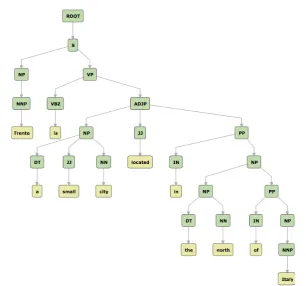
Figure 2.1: An example of Part of Speech (POS) tags and its syntactic tree Convolutional Tree Kernels (TKs) Basically, Convolutional TKs count the
common number of substructures between two trees T1 and T2. For a given set of substructure τ = nt1, t2, ..., t|τ|
o
, χi(n) denotes an indicator function, which is equal to 1 if the target ti is rooted at a node n or 0 otherwise. A tree kernel function over T1 and T2 can be define as:
KT K(T1, T2) =
X
n1∈NT1
X
n2∈NT2
∆(n1, n2) (2.10)
where NT1 and NT2 are the sets of the T1’s and T2’s nodes, respectively
and
∆(n1, n2) =
|τ|
X
i=1
χi(n1)χi(n2) (2.11)
n2 nodes. The most practiced technique to convert the textual data as
input for structural kernels like TKs is to hierarchically organize words in a sentence into nested constituents. The constituency parse tree presents several layers of information such as Part-of-Speech (POS), phrases and the syntactic/semantic relations between constituents. Figure 2.1 shows an example of a sentence and its parsed syntactic tree.
In the next sections of this chapter, we introduce the definition of our targeted NLP tasks to valuate our hypothesis using various ML approaches. Each section is dedicated to describe one task and its related dataset that we use in our experimental setup.
2.2
Relation Extraction
2.2.1 Definition
Relation Extraction (RE) is a well-known task in the Natural Language Processing subarea. It aims to extract relation types between two named entities from text. In other words, as defined in ACE 20041, the task of RE is, given a set of documents where entities have been previously detected (manually or automatically), to identify the occurrences of relations between such entities (i.e. locating pairs of related entities in text).
For instance, in the sentence:
“The University of Trento is an international university located in Italy. It was founded in 1962 as a Higher University Institute for Social Sciences.”
the identified relation types between two entity mentions can be denoted by the triples:
F ounding−year (University of Trento, 1962)
F ounding −location (University of Trento, Italy)
Recently, the Relation Extraction (RE) task has attracted the attention of many researchers due to its wide range of applications such as: (i) Creating new structured knowledge bases, useful for any application; (ii) Enriching available knowledge bases; (iii) Adding new facts to Wikidata2 or DBPedia3 and (iv) Improving Question Answering task. For example in the latter, the question “ The granddaughter of which actor starred in the movie E.T.?” can be reformulated as a relation extraction problem like: (acted-in ?x “E.T.”)(is-a ?y actor)(granddaughter-of ?x ?y).
2.2.2 Related Work on Relation Extraction
Extracting relations from text has become a popular task in the IE community. Nowadays there are plenty of relation extraction systems available for the both industry and the academic use. Also several approches have been proposed for dealing with this problem. Banko et al. [16] classifies all the methods used for relation extraction into three classes:
• supervised methods;
• semi supervised methods;
• self-supervised methods.
In this section, we start with supervised methods which represent the extraction of the relations in the form of a binary classification problem. In addition, we elaborate feature-based [69, 171] and kernel-based approaches [27, 26, 164] more in details in the current Section.
Supervised Methods
Basically supervised methods are built by using a small set of examples that have been tagged manually [164, 42, 69]. Such systems learn to extract the relations by using machine learning techniques. However, these approaches suffer from some drawbacks :
• Tagging a suitable corpus can take a lot of time and human effort.
• The tagged corpora are usually small and cover few relations. Therefore, the generated models are often domain-dependent.
Mainly two common approaches have been used extensively to train the extractor in a supervised manner. They are:
Feature-based Approaches: In this approach, a set of semantic and
syntactic features are extracted and presented to the classifier in the form of a feature vector. For instance, Kambhatla et al. [69] extracted a set of features consisting of (i) the entities themselves, (ii) the types of the two entities, (iii) word sequence between the entities, (iv) number of words between the entities and (v) path in the parse tree containing the two entities using a log-linear model to classify the entities. Zhao et al. [171] trained SVMs by using polynomial kernel with the same feature set for classifying different types of entity relations.
Kernel-based Approaches: The main advantage of kernel-based method
is to provide a opportunity for us to explore a large feature space in polynomial computation time. It is feasible even without introducing manually engineered features to the classifier. We will focus on several well known kernels such as the tree kernel [164], the subsequence kernel [25], and the dependency tree kernel [26].
proposed three subkernels defined as: one each for matching the before, middle and after portions of the entities context and the combined kernel is simply the sum of all the sub-kernels. Using subsequence kernels in conjunction with SVMs improves both the precision and recall. Compared to the previous approach, Zelenko et al. [164] replace the strings in the kernel with structured shallow parse trees built on the sentence. They use tree kernels and plug them into the SVM. Among others, tree kernels (TKs) have been widely used in supervised settings and have shown promising results.[27, 102, 100, 164]
Semi Supervised Methods
In semi-supervised approach, initially a small number of seed instances are manually annotated and used to extract the patterns from a big corpus [8, 19]. In this method, the annotated instances help the system to extract more instances and new patterns iteratively. However, this method suffers from availability of a limited number of relation types.
Self Supervised Methods
relations and is targeted at all relations that can be extracted.
2.2.3 Distant Supervision
Distance Supervision (DS) is an alternative approach to overcome the problem of data annotation [40] as it can automatically generate training data by combining a structured Knowledge Base (KB), e.g., Freebase4 with a large-scale unlabeled corpus, C.
The basic idea is: given a tuple r<e1,e2 > contained in a referring KB,
if both e1 and e2 appear in a sentence of C, that sentence is assumed to
express the relation type r, i.e., it is considered a training sentence for r.
For example, given the KB relation, president(Obama,USA), the following sentence:
Obama has been elected in the USA presidential campaign,
can be used as a positive training example for president(e1,e2).
However, DS method suffers from two major drawbacks: first, in early studies, [90] assumed that two entity mentions cannot be in a relation with different relation types r1 and r2. In contrast, Hoffmann et al. [57] showed
that 18.3% of the entities in Freebase that also occur in the New York Times 2007 corpus (NYT) overlap with more than one relation type.
Second, although the DS method has shown some promising results, its accuracy suffers from noisy training data caused by two types of problems [57, 119]:
• Simple string matching of entity pairs does not take into account the meaning and the context of the sentence.
• KBs are incomplete, e.g., a sentence can express relations that are not
Figure 2.2: Error in automatic labeling generated through DS
in the KB. Thus DS leads to annotate relations as “No Relation” in case of unseen entities (this generates false negatives).
For example, let us consider the Place-of-Birth relation between <Renzi, F lorence>: the upper sentence of Figure2.2supports the relation label whereas the lower sentence does not.
This generates a training instance misleading the classifier.
Several approaches for selecting higher quality training sentences with DS have been studied, but comparing such methods is difficult due to the lack of well-defined benchmarks and models using DS.
Related Work on DS
Distant Supervision (DS) has emerged as a popular method for training semantic relation extractors. It was used for the first time in the biomedical domain [40] and the basic idea was to extract binary relations between protein and cell/tissues by using the Yeast Protein Database (YPD) corpus. This method is getting more and more popular and different types of RE problems are being addressed [24, 90, 119, 101, 58, 120, 139, 57].
The preliminary models of relation extractors (include distant supervision) assumed that a pair of entities can have only one relation. However, as we mentioned before, the assumption was restrictive and often violated by the real scenarios. For example in the following sentences :
Steve Jobs founded Apple
Steve Jobs is the CEO of Apple
the entity pair (Steve Jobs, Apple) can be bounded by two relations.
This problem has been identified any addressed in MultiR model by Hoffmann et al. [57] using Multi-Instance Multi-label (MIML) approach. They employ distant learning with Multi-Instance learning with overlapping relations (where two of the same instances may be in two different relations). In another research, Surdeanu et al. [139] addressed the same issue. They discovered 31% of training examples obtained by DS strategy are not valid. Therefore they try to improve distant learning by taking into account Multi-instance Multi-label settings (a.k.a MIML-RE) and using the Bayesian framework which can capture dependencies between labels and learn in the presence of incorrect and incomplete labels.
In addition, Yao et al. [160] proposed a method to combine raw text and a pre-existing structured databases to learn the relations. In the same direction, Riedel et al. [120] tried to reformulate the problem using matrix factorization and collaborative filtering where all the relations between entities are presented as a matrix. They used three approaches namely: (i) latent feature model; (ii) neighborhood model and (iii) entity model, which learns a latent entity representation from data. Moreover a combination of three models also presented in the method using various weights.
Datasets
TAC-KBP TAC Knowledge Base Population (KBP) consists of more than 1.3 million of newswire and web documents to expand and populate Knowledge Base (KB) with this information. Attributes (a.k.a. “slots”) derived from Wikipedia infoboxes are used to create the reference knowledge base (KB). The reference knowledge base includes hundreds of thousands of entities based on articles from an October 2008 dump of English Wikipedia which includes 818,741 nodes.
A named entity tagger has been used on the entire source collection to map the documents with KB [66]. The TAC-KBP dataset is used for performing some experiments extensively presented in Chapter 7.
New York Times-Freebase The original New York Times corpus includes
1.8 million articles written and published by the NYT between January 1987 and June 2007 [124]. The data set consists of two parts for training and the testing, where the first part refers to the years 2005-2006 of the NYT whereas the second refer to the year 2007. In this dataset, Freebase5 has been used as an external KB.
We used the same corpus provided by Riedel et al. [119], however, in his corpus instead of the entity mentions, their corresponding IDs in Freebase have been tagged (because of previous copyright issues). The old version of Freebase 2007 is not available anymore and in many cases the IDs or entities have changed in Freebase 2014. So, it was not possible to combine NYT with the newer Freebase to apply DS. To deal with this problem, we mapped the old Freebase IDs with the IDs from the Freebase 2014 and, if the entities were not the same, we asked an annotator to manually tag the entity mentions in the sentence. As the result, we created a new dataset that is mapped with Freebase 2014 and it is usable as a stand-alone DS corpus.
Overall, 4,700 relations in the training set and 1,950 in the test set are extracted. The NYT-Freebase corpus is used to perform some experiments
which is described in details in Chapter 4.
2.3
Question Answering
2.3.1 Definition
Given a question and a set of candidate passages, the Question Answering (QA) task is to find the best answer among the candidates which can support the answer choice.
Typically QA systems consist of three major modules in the following order: (i) search and retrieve a set of candidate passages based on query (question); (ii) re-rank the retrieved candidate passages; and (iii) extract the best answer/s.
Automated Question Answering (QA) is a complex task requiring rules and syntactic patterns which are manually designed. The goal of the rules is to find the relations between the question and its set of candidate passages. The rules are triggered when the pattern exists in both the question and the passage. However, manually designing these rules is not an easy task since natural language is too complex to be characterized by a finite set of rules. Machine learning has been proposed as an alternative solution to shift the problem of manual rule definition to feature engineering.
2.3.2 Related Works on QA
TREC had a major impact on interest in question answering task and on the development of evaluation measures that compare the performance of different QA systems [150].
The contemporary question answering from unstructured data sources was instantiated by the TREC Evaluation campaign which is taking place regularly every year since 1999 [148, 149, 29] . The challenge is to provide a concise answer to a natural language question, given a large collection of textual documents. The first TREC evaluation campaign provides a list of 200 questions and a document collection. In the next campaign, TREC-9 held in 2000, the number of questions and size of document collections were increased. In TREC from 2002 to 2007, the list of questions, definition questions, and factoid questions were included in the evaluation campaigns. In TREC 2005, there was a set of 75 topics which contains various types of questions (list, factoid or others).
In recent evaluations two well-known collections of documents were used: AQUAINT with more than 1 million documents and AQUAINT2 with about 907K documents. In TREC-10 in 2001, a new complexity with respect to answers, i.e., answer validation task was included as there was no assurance of all answers to be present in the document collections. The lengths of answers were reduced to 50 words.
Regarding QA and in particular answer sentence/passage reranking there has been a large body of work in the recent years, e.g., see [115, 65, 130, 97, 138, 153, 55, 152, 161] which the further exploration is beyond the scope of this thesis.
2.3.3 Dataset
We use the questions from TREC 2002 and 2003 from the large newswire corpus, AQUAINT. We created the Q/AP pairs training BM25 on AQUAINT and retrieving candidate passages for each question.
2.4
Recognizing Textual Entailment
2.4.1 Definition
The Recognizing Textual Entailment task was introduced by Dagan et al. [43] for the first time where textual entailment is defined as a directional relationship between pairs of text.
Basically, the entailing “text” denoted by T, and the entailed “Hypothesis” denoted by H . We say that T entails H if the meaning of H can be inferred from the meaning of T. Usually Hypothesis (H) is a short statement whereas Text (T) is a longer span of text.
Figure 2.3 shows a sample of Text and Hypotheses being in entailment relation.
2.4.2 Related works on RTE
Text:
The Republic of Yemen is an Arab, Islamic and independent sovereign state whose integrity is inviolable, and no part of which may be ceded.
Hypothesis:
The national language of Yemen is Arabic.
Figure 2.3: Example of a Text and Hypothesis in entailment relation
survey of paraphrasing and textual Entailment methods.
RTE challenges provide a great platform for Textual Entailment systems and because of it, a wide variety of approaches emerge every year. Some approaches are proposed based on machine learnign methods [6]. Ren et al. [118] proposed a system of classification based on lexical, semantic and syntactic features. In another approach, Harmeling [54] used a probabilistic model which works based on calculus on dependency parse trees. Kouylekov et al. [78] used tree edit distance algorithms which were also used by other researchers [18, 28].
Heilman et al. (2010) proposed tree edit models for representing sequences of transformation and employs tree kernel heuristic in a greedy search routine [55]. Mehdad et al. [89] proposed an approach for cross-lingual textual entailment where bilingual parallel corpora have been used. In the same direction they obtained good results on monolingual corpus as well [87, 88]. Zanzotto et al. [162] employed machine learning models by using distance features models. The distance defined between the text and the hypothesis such as number of words in common, length of longest common subsequence and longest common syntactic sub-tree.
based on logical inferences [20] and the application of natural logic [83] yielded good accuracy.
2.4.3 Dataset
The RTE-2 dataset consists of 1,600 text-hypothesis pairs, divided into a development set and a test set, each containing 800 pairs [18]. The pairs were generated by considering different NLP applications, e.g., Information Extraction, Information Retrieval, QA, etc. and the pairs are extracted from different resources such as MUC-4, ACE 2004 and TREC QA. In order to create gold labels, each pair was judged by at least two experts. The RTE-2 dataset is used in running some experiments elaborated in Chapter 6
In the last section of this chapter we introduce the metrics for evaluation the proposed classification and re-reranking models in this thesis.
2.5
Evaluation Metrics
The goal of measuring the performance of an Information Retrieval (IR) system is to evaluate how good the search results satisfied the received query intent. Several metrics have been used widely to measure the performance of IR approaches such as MRR, MAP and P@k.
Besides that Precision and Recall are two fundamental scores for quantifying the quality of predicted labels in classification approaches:
2.5.1 Precision
were actual positive observations:
P recison = T P
T P +F P (2.12)
where TP and FP indicate true positive and false positive predictions respectively.
2.5.2 Recall
The recall score reveals the proportion of all real positive observations that are correct:
Recall = T P
T P + F N (2.13)
which FN refers to false negative predictions.
2.5.3 F1 Measure
The weighted harmonic mean of precision and recall, the balanced F-score is:
F1 =
2×P recison×Recall
P recison+ Recall (2.14)
2.5.4 Precision at Rank k (P@k)
However, in all evaluations related to reranking performance, we keep the k value equal to 1.
2.5.5 Mean Average Precision (MAP)
Average Precision (AP), is a widely used evaluation metric in information retrieval tasks which combines recall and precision for ranked retrieval results. Mean Average Precision (MAP), measures AP across multiple queries/answer passage rankings.
The mean average precision for K queries at position n is the average of the average precision of each query, i.e.,
M AP@n= K
X
i=1
AP@ni
K (2.15)
Note that, while generally in AP order matters - but not always. Order matters only if there is at least one incorrect prediction. In other words, if all predictions are correct, it doesn’t matter in which order they are given.
2.5.6 Mean Reciprocal Rank (MRR)
The Mean Reciprocal Rank is the average of the reciprocal ranks of results for a sample of queries Q:
M RR = 1
|Q|
|Q|
X
q=1
1
rank(q) (2.16)
Annotation Collection for
Supervised Methods
Supervised methods in NLP require high quality annotated data to train accurate models. Traditional data annotation methods are expert-intensive. Manually providing large-scale expert-labeled training data is costly in terms of resources and time. So, the corpora created by experts are often small. The expert-driven method has disadvantages such as, (i) a small-size corpus can only contains few classes/label types and (ii) the resulting trained model is usually domain-dependent.
3.1
Annotation Collection for Big Data
It’s a known fact that the recent powerful ML methods are strongly data and supervision demanding like deep learning. Big data enables ML algorithms to uncover more fine-grained patterns and make more accurate predictions than ever before. However, it is expensive and impractical to use only experts to provide such supervised data on a large scale.
Several alternative methods have been suggested to address the challenge of annotating big data. For instance, automatically labeling the big data using Distant Supervison (DS) approach (See Section 2.2.3) or online crowd-generated repositories that serve as a source for big annotated training data, which can capture a large variety in terms of both class number and intra-class diversity [103].
3.1.1 Crowdsourcing
These platforms include general purpose marketplaces (e.g., Mechanical Turk, oDesk, Freelancer, Crowdflower, MobileWorks, ManPower) as well as markets for specific expertise (e.g., TopCoder, uTest, 99Designs).
Micro-task Crowdsourcing Micro-tasking is a branch of crowdsourcing,
where task designers break up a large task into small components in the form of identical microtasks, each requiring online contributors. To crowdsource a task, the task designer, also called the requester, submits the task to a crowdsourcing platform. People who can accomplish the task, called workers, can choose to work on it and devise solutions.
Workers then submit these contributions to the requester via the crowdsourcing platform [45]. Common Microtasking platforms have led to the development of online marketplaces such as Mechanical Turk and Crowdflower.
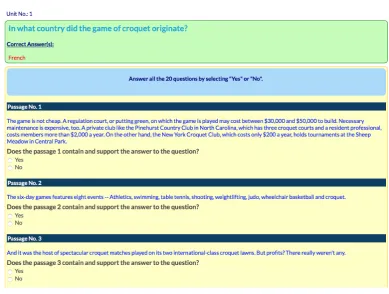
Amazon Mechanical Turk (MTurk) is the world’s leading crowdsourcing venue, however, it is not accessible in Europe. The main motivator of MTurk is profit. Providers create and list batches of small jobs termed Human Intelligence Tasks (HITs) on Amazon’s Mechanical Turk website, which may be done by the general public. Workers who fulfill these tasks get credited in micro-payments. While certainly not the only paid labor sourcing environment, Mechanical Turk’s current ubiquity make “MTurk” a useful label to refer to this and other forms of computer mediated labor. Figure 3.1 shows the user interface of MTurk platform.
Figure 3.1: Amazon Mechanical Turk (AMT) user interface
3.2
Quality Control in Crowdsourcing
In a microtasking crowdsourcing environment, quality control is one of the biggest issues addressed by people both from academia and industry. Ipeirotis et al. [64] raised the problem of quality control within crowdsourcing platforms like the Amazon Mechanical Turk. Specifically, it is difficult to ensure the quality output when the small tasks are performing by many anonymous crowd workers.
Quality is a subjective issue in general. Some efforts have proposed models and metrics to quantitatively and objectively assess quality along different dimensions of a task, such as reliability, accuracy, relevancy, completeness, and consistency [7].
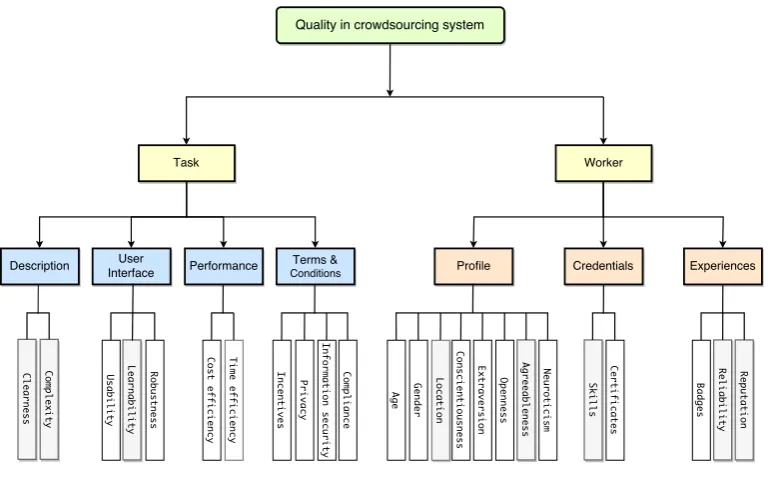
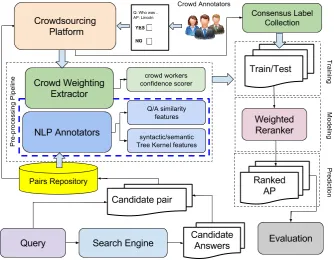
Figure 3.2: Quality control factors in crowdsourcing
We considered several factors in our proposed quality control methods which are highlighted in gray color. These metadata are collected from crowdsourcing platforms or estimated via monitoring the crowdsourced tasks’ output.
3.2.1 Related Works on Quality Control in Crowdsourcing
There is already an established literature on this topic, the review of which is beyond the scope of the thesis. Therefore, we briefly review the most important statistical approaches related to quality control mechanisms in crowdsourcing tasks.
Kilgarriff [73] proposed a model for generating gold standard datasets for word-sense disambiguation. There are several works [147,145,12] which consider relevance judgments for building IR systems. Unlike outsourcing a task (when the targeted crowd is a community of experts), the quality of the collected annotations from ordinary crowd workers is difficult to control and several approaches have been proposed to decrease the level of the noise in the collected annotations.
One of the pioneer in crowdsourcing for NLP tasks is Snow et al. [134] who applied a simple Naive Bayes approach to weigh the labels by considering the accuracy of annotators. In the proposed method, the number of the judgments was fixed. In other work done by Ipeirotis et al. [64], the unrecoverable error rate from bias was separated and the authors used confusion matrix for each annotator to measure the uncertainty and cost associated with each label. Jung [68] applied unsupervised and supervised features to filter out noisy annotators via z-score. He also improved the quality of noisy labels via probabilistic matrix factorization [67].
Nowak et al. [106] filtered out noisy annotations by considering the degree of agreement between crowd workers. In another work done by Sheng et al. [131], they targeted the number of required annotations and asked for a new label when it was beneficial for some of the training examples.
Some other approaches have also been proposed to model the annotators’ behavior and increase the accuracy when the labels are noisy [80,141,156]. Donmez et al. [47] proposed the use of active learning to deal with noisy annotations and elaborated how to jointly learn the accuracy of labeling sources and obtain the most informative labels for the active learning tasks.
performance and control the trade-off between speed, cost and quality. Plank et al. [109] proposed a method for taking noise into account when training a classifier. While their approach can help a classifier deal with noisy annotations, it cannot improve the quality of the original data-set.
Raykar et al. [117, 116], proposed a probabilistic approach (EM) which can be used to carry out supervised learning when multiple annotators provide noisy labels, but there is no absolute gold standard. The authors showed that the proposed classifier is superior to the commonly used majority voting baseline. However, their method suffers from major drawbacks as the authors made two unrealistic assumptions: (i) they assumed the crowd workers are equally good and their performance is fixed across different expert sub-groups, and (ii) the annotators’ performance have no correlation with the difficulty of the instances which have been annotated.
The most comprehensive survey is the one provided by Sheshadri et al. [132] that compared different approaches to identify relative labels in a collection of labels with a lot of noise. They presented SQUARE, an open source shared task framework for statistical consensus methods including benchmark datasets, defined tasks, standard metrics, and reference implementations with empirical results for several popular frameworks such as ZenCrowd [46], GLAD [157] and CUBAM [155] .
3.3
Our methods for Exploiting Labeled Data
3.3.1 Create Benchmark for Distant Supervision for RE
In this section we introduce our works published in two conferences [2, 3]. In this research, we aim to build a baseline to compare with the other models using Distant Supervision (DS) for relation extraction task. So, we considered the most used corpus in DS, i.e., the combination of NYT and Freebase (NYT-FB). The description of the dataset is provided in Chapter 2.2.3.
Previously, all the RE models which experimented with NYT-FB are based on complex graphical models. This is necessary to encode the dependencies between the overlapping relations.
Additionally, such models use very particular and sparse features, which makes the replicability of the models and results complex, thus limiting the progress of research in DS. For comparing a new DS approach with the previous work using NYT-FB, a researcher is forced to re-implement a very complicated model and its sparse features.
Therefore, we believe that simpler models can be very useful as (i) a much simpler re-implementation would enable model comparisons and (ii) it would be easier to verify whether a DS method is better than another.
Contributions
The contributions of this work can be summarized as below:
• Our proposed approach is based on convolution tree kernels, which can easily exploit syntactic/semantic structures. This is an important aspect in favor of the replicability of our results.
approach competitive, we studied several parameters for optimizing SVMs and filtering out noisy negative training examples.
• We mapped the Freebase entity IDs used in NYT-FB from the old version of 2007 to the newer Freebase 2014. Since the entities had changed over time, we asked an annotator to manually tag the entity mentions in the sentence. As the result, we created a new dataset usable as a stand-alone DS corpus to be made available for research purposes.
We described our method, the experimental setup and the results related to this work in Chapter 4.
3.3.2 Instance Weighting
In this section we targeted the problem of noisy human annotation tags in training Question Answering (QA) system. As discussed in Chapter2.3, one of the most important steps for building accurate QA systems is the selection/reranking of answer passage (AP) candidates typically provided by a search engine. This task requires the automatic learning of a ranking function, which pushes the correct answer passages (i.e., containing the answer to the question) higher in the list. The accuracy of such a function, among others, also depends on the quality of the supervision provided in the training data.
Traditionally, the latter is annotated by experts through a rather costly procedure. Thus, sometimes, only noisy annotations obtained via automatic labeling mechanisms are available.
For example, the Text REtrieval Conference (TREC 1) provides open-domain QA datasets, e.g., for factoid QA. This data contains a set of questions, the answer keywords and a set of unannotated candidate APs. The labeling of the latter can be automatically carried out by checking
if a given passage contains the correct answer keyword or not. However, this method is prone to generate passage labels, i.e., containing the answer keyword but not supporting it. For instance, given the following question, Q, from TREC 2002-03 QA, associated with the answer key Denmark:
Q: Where was Hans Christian Anderson born?
the candidate passage:
AP: Fairy Tales written by Hans Christian Andersen was published in
1835-1873 in Denmark.
would be wrongly labeled as a correct passage since it containsDenmark. Such passages can be both misleading for training and unreliable for evaluating the reranking model, thus requiring manual annotation.
Since the expert work is costly, we can rely on crowdsourcing platforms such as CrowdFlower 2 for labeling data, faster and at lower costs [134].
This method has shown promising results but still produces noisy labels. Thus, a solution consists of (i) using redundant annotations from multiple annotators and (ii) resolving their disagreements with a majority voting approach [131, 168].
However, the consensus mechanism can still produce annotation noise, which (i) depends on the skill of the crowd workers and the difficulty of the given task; and (ii) can degrade the classifier accuracy.
In this work, we study methods to take into account the disagreement among the crowd annotators as well as their skills in the learning algorithms. For this purpose, we design several instance weighting strategies, which help the learning algorithm to deal with the noise of the training examples, thus producing higher accuracy.
Contributions
• We define some weight factors that characterize crowd annotators’ skill, namely:
Prior Confidence, which indicates the previous performance of the
crowd worker reported by the crowdsourcing platform;
Task Confidence, which is determined by the total number of
annotations performed by the crowd worker in the target task;
Consistency Confidence, which quantify the agreements between the
annotator and the majority voting labels.
We used these parameters for building our weighting functions, which aim at reducing the impact of the noisy annotations in learning algorithms.
• We build a passage reranking dataset based on TREC 2002/2003 QA. We used Crowdflower for carrying out an initial noisy annotation and then had an expert manually verify and correct the incorrect labels. This is an important QA resource that we will release to the research community.
Additionally, the accuracy of our models, e.g., classifiers and search engines, tested on such gold standard data can establish new baselines, useful for future research in the field.
3.3.3 Optimized Automatic Label Selector (ALS)
This work can be considered as an extension of the previous research we have performed. As we mentioned before, a major problem is that consensus mechanism in crowdsourcing tasks is inaccurate and still produces many incorrect annotations depending on the skill levels of the crowd workers and the difficulty of the given task. These factors are totally ignored in the majority voting mechanism.
Unlike the instance weighting method where the weights are constant for each instance, here we aim at learning a statistical model to predict the best label from a set of annotations done by a group of annotators and by quantifying their skills. More i