IBBJ
Winter 2018, Vol 4, No 1
The Relationship between Glutamate and Multiple
Sclerosis
Majid Malekzadeh Shafaroudi
1, Hooman Zarei
2, Ali Malekzadeh Shafaroudi
3, Narges
Karimi
1, Mahmoud Abedini
4*1. Immunogenetic Research Center, Department of Anatomy & Cell Biology, Faculty of Medicine, Mazandaran University of Medical Sciences, Sari, Iran.
2. Department of Anatomy & Cell Biology, Faculty of Medicine, Student Rese arch Committee, Mazandaran University of Medical Sciences, Sari, Iran.
3. Faculty of Dentistry, Student Research Committee, Mazandaran University of Medical Sciences, Sari, Iran.
4. Department of Neurology, Faculty of Medicine, Mazandaran University of Medical Sciences, Sari, Iran.
Submitted 25 Aug 2017; Accepted 28 Sep 2017; Published 29 Oct 2017
Glutamate is the most important excitatory neurotransmitter in the central nervous system which is involved in synaptic transmission, brain development, synaptic plasticity, learning, and memory. Normally, the enzymatic destruction of glutamate does not occur in the synaptic and extracellular space, but glutamate is removed through specific transporter proteins, leading to stabilization of glutamate concentration at non-toxic levels. When extracellular glutamate concentration increases, it could cause excitotoxicity and lead to many diseases of the central nervous system such as neurodegenerative disorders and multiple sclerosis (MS). Trans -glutaminase enzymes produce large quantities of glutamate by deaminating glutamine and consequently activating immune cells, especially lymphocytes. These activated lymphocytes release glutamate abundantly in the lesion location. Also, the expression level of glutamate specific carriers is decreased in the lesion area. This review discusses on the synthesis and release of glutamate, the natural cycle of glutamine/glutamate and glutamate receptors and transporters, and their role in excitotoxicity and finally their relationship with MS.
Keywords: Glutamate, multiple sclerosis, excitotoxicity, central nervous system
lutamate is a non-essential amino acid that is known as the most important excitatory neurotransmitter, and is uniformly distributed in large amounts in the central nervous system (CNS) structures (1, 2). Appropriate passage of nerve impulses from glutamatergic synapsis is required for organizing the basis of many processes such as memory, and learning in the CNS (3). The amount of glutamate in nerve terminals is about 110 mM, of which 100 mM is stored in the synaptic vesicles, and 10 mM is present in the cytoplasm of the nerve axon
(4). Extracellular glutamate concentration is very
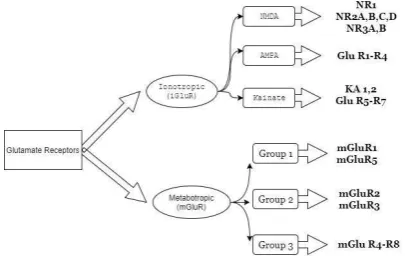
low (about 0.5-4 μM). The aggregation of glutamate in the cerebrospinal fluid is 1-10 μM, but depending on the activity of neurons in the synaptic space, it may vary between 2-1000 mM (4). Since glutamate does not cross the blood-brain barrier (BBB), it is produced from glucose (by the Krebs cycle) or glutamine inside the neurons, and is released into the synaptic space through the process of exocytosis, using synaptic vesicles, and exerts its effects on postsynaptic neurons through its receptors (2). Glutamate receptors consist of two general categories: ionotropic receptors that are ion
G
Review Article
channels, and metabotropic receptors that operate via G-protein and intracellular signaling processes (3). Ionotropic receptors include three subunits of N-methyl-D-aspartate (NMDA), α-amino-3-hydroxy-5-methylisoxazole-4-propionic acid (AMPA), and kainate. Also, 8 subunits have been identified for the metabotropic receptors so far, that are divided into three individual groups (1). Excitotoxicity is caused by increased concentrations of extracellular glutamate, and is considered as one of the major processes of nerve cells death, and also plays a major role in various diseases such as neurodegenerative disorders, ischemia, trauma and multiple sclerosis (MS) (5). This toxicity is due to postsynaptic glutamate receptors stimulation by a large amount of extracellular glutamate. Each of these receptors can somehow get involved in the process of excitotoxicity, and cause neuron damage or death. For example, activation of NMDA receptors causes neuronal death by letting-in large amounts of Ca2+ ions into the cell. Other aforementioned receptors that cause nerve cells death via excitotoxicity are also important (1, 6). Extracellular glutamate concentration adjustment takes place by glutamate transporter proteins. So far, five human excitatory amino acid transporters (EAAT1-5) have been described (7). These proteins are present in the CNS and other soft tissues, and are also able to increase the concentration of intracellular glutamate up to 10,000 times more than the extracellular fluid. Therefore, these transporter proteins are required to maintain the concentration of glutamate at a non-toxic level. Recent studies showed that impairment in the function of transporter proteins can be effective in neurological diseases development (7-10). MS is an inflammatory and demyelination disease of CNS (11). Axonal loss and neuro- degeneration are caused in the progressive phase of the disease (12, 13). In MS, the release of glutamate and glutamate transporters, as well as receptors release or signaling, are disproportionate (14, 15). In this article, the structure, synthesis, and release of glutamate in the CNS, and also the mechanism of
action of glutamate receptors and transporters, as well as their relationship with excitotoxicity and MS disease are examined. Finally, several new therapeutic methods, together with the efficient method of glutamate concentration measurement using carbon nanotube technology, are presented.
Synthesis and release of glutamate
Glutamate cannot pass the BBB. It is therefore produced from glucose or glutamine in the CNS (16, 17). The natural cycle of glutamate/glutamine was suggested to be the major metabolic pathway in the brain (18, 19). This cycle starts with a calcium-dependent release of glutamate, which results in a 20-fold acceleration in the amount of synaptic glutamate release (20). After transferring the depolarization messages to postsynaptic neurons, glutamate is led out of the synaptic space by dedicated transport proteins, so the next impulse can be created (21). Glutamate is transmitted to CNS supporting cells which are mainly astrocytes, and also a small amount of glutamate is released into the blood capillaries (16). After entering the astrocytes, and by using an enzyme known as glutamine synthetase, glutamate is converted into its inactive form, glutamine. Glutamine passes through the membrane of astrocytes and enters the cytoplasm of neurons as well as the mitochondrial intermembrane space (21, 22). Finally, in the presence of transglutaminase, glutamine is transformed into glutamate, and packed in synaptic vesicles (21, 22). In a study performed in 2005 the concentration of glutamate and other metabolites (including glutamine, N-acetyl-aspartate, myoinositol, choline, and creatine) was measured in various parts of brain of MS patients and control group using the magnetic resonance spectroscopy (MRS). The results showed an important increase of glutamate concentration in acute MS lesions. This increase is likely related to the production of glutamate by activated immune cells adjacent to the lesion area (21). Another study in 2012 emphasized on glutamate release increase in the axonal injury site, demyelination, and also the active role of microglia and leukocytes in creating
glutamate. It suggested that balancing glutamate release and blocking its receptors, could be used as a new possible treatment for MS (12). Also, it was shown that glutamate and glutamine were important biomarkers in progressive MS disease (23).
Glutamate receptors and excitotoxicity
Ionotropic glutamate receptors
Ionotropic glutamate receptors comprise NMDA, AMPA, and kainate that are ion channels, and are named after their specific agonist (2, 19). Ionotropic glutamate receptors generally have three transmembrane hydrophobic domains (M1, M3, and M4) and a concave circle inwards (M2) that form the channel. All subtypes of this receptor have four similar domains: extracellular amino-terminal domain (ATD), extracellular ligand-binding domain (LBD), transmembrane domain (TMD) and an intracellular carboxyl-terminal domain (CTD). The CTD is the most variable portion among the ionotropic glutamate receptors, as AMPA receptors and the NR1 subgroup of NMDA receptors have a relatively short CTD domain, while NR2 subgroups of NMDA receptors have larger CTD domains (24). The glutamate metabolism increase in the synaptic space may create neuronal damage, causing acute and chronic diseases of the CNS. Due to the activation of cell receptors, especially NMDA receptors, a large number of ions accumulate within the cell which could lead the neurons towards dendritic apoptosis, and deadly degenerative processes (25, 26). An increase in glutamate metabolizing enzymes and glutamate transport proteins (EAAT1) is observed in the process of excitotoxicity in astrocytes and macrophages, revealing the protective role of these cells in terms of excitotoxicity states, but probably they are not able to adjust the concentration of glutamate in sufficient quantities due to a huge increase in extracellular glutamate concentration and severe stimulation in glutamate receptors (27). The role of other receptors such as kainate is also important in causing excitotoxicity. The molecular basis of glutamate excitotoxicity associated with kainate
receptors is not well specified, but there is agreement that the main reason is due to the influx of calcium ions. Simultaneously, the entry of ions like sodium and manganese, and exit of potassium is also linked with this process (28, 29). In a study on animal models of MS, it has been shown that antagonists of kainate and AMPA receptors improved disease symptomatic, and also increased oligodendrocytes survival, and reduced axonal injury (24) (Fig. 1).
One of the atypical neurotransmitters that adjusts brain and neuron activity, and is also necessary for the proper organization of the vertebrate nervous system is nitric oxide (NO) (30). NO can be produced from several sources in the CNS such as cerebral vessel endothelium, microglia and astrocytes, non-adrenergic non-cholinergic nerves, and glutamatergic neurons (31). NMDA glutamate receptors activation results in a high amount of NO release. Researches have claimed that NO modulates the neurotoxicity of glutamate. NO is a reactive free radical that neutralizes free radical formations related to neurotoxicity, and by detaining glutamate-induced apoptosis, NO pathways could prevent the oxidative damage to neurons (32).
The NMDA receptor can be activated by successive messages coming from two different cells. Thus, it differs from other receptors (33). The message of the first cell sensitizes the membrane of the cell containing NMDA receptors, and through the second message, glutamate activates the
Figure 1. Glutamate/Gluta mine cycle in the CNS.
receptors. When the two messages converge in this manner, the NMDA receptor imports a large number of calcium ions into the neuron (34). This influx of ions causes long-term changes in the neuronal membrane which is called long-term potentiation (LTP). Such mechanisms in which synapses are strengthened by two convergent messages, provide an explanation for linking separate incidents in memory (35, 36). It has been proved that the uptake of glutamate increases in the hippocampus during early term potentiation (E-LTP) and late long-term potentiation (L-LTP). Recent studies have also indicated that both astrocytes and glutamate 1 (GLT-1) (EAAT2) transporters play an important role in glutamate uptake during L-LTP (37).
In fact, in LTP, NMDA receptors are activated sequentially and the concentration of intracellular calcium increases in the postsynaptic cell which eventually leads to the activation of calmodulin kinase II. This will increase the expression of AMPA receptors on the cell membrane, and strengthen synaptic connections between neurons (38).
Synaptic plasticity has an important role in recovering demyelinated lesions, and also in the healing process of MS. It has been proved that modulating LTP could increase automatic neuron recovery, and therefore lead to a clinical treatment for MS. Physical rehabilitation and a number of drugs promote LTP. Therefore, they could speed up the synthesis of myelin, and enhance clinical recovery (39) (Fig. 2).
Metabotropic receptors
Metabotropic receptors consist of 8 subunits which are classified into three groups, and are associated with secondary messengers in the cell (2). For example, when metabotropic receptors, which are located in the postsynaptic membrane of neurons, are stimulated, phospholipase C is activated leading to the formation of inositol 1, 4, 5 triphosphate (IP3), and calcium release from intracellular reservoirs (40-42). These receptors are generally associated with G proteins, and launch different mechanisms in neurons. For instance, an intra-cerebroventricular (ICV) injection of metabotropic receptor agonist (S)-3,5-Dihydroxy-phenylglycine (DHPG) on broiler chicks, resulted in a significant increase in food intake, while injecting axin interactor dorsalization-associated protein (AIDA), a group I metabotropic receptor antagonist, considerably reduced the food intake. These studies specify the direct or indirect role of receptors, on food intake and appetite (43).
Studies have proved the influence of group I and II metabotropic glutamate receptors in central nervous system diseases such as MS (44). An excess of axonic metabotropic glutamate receptor 1 (mGluR1) expression was observed in chronic and acute MS lesions. Also, increased expression of mGluR5 and mGluR2/3 within the MS lesions was observed in astrocyte cells (44). In another study on active lesions, the immune reactivity (IR) of the mGluR8 receptor which is a group III metabotropic glutamate receptor was observed in microglia/macrophage cell lineages (45). In chronic and passive lesions, a lesser amount of IR positive GluR8 was observed in macrophage-like cells. Also, no IR positive GluR4 receptors was observed in MS lesions in microglia/macrophage cell lines (46). However, a number of reactive astrocytes expressed both mGluR4 and mGluR8 receptors in the margins of lesions, revealing the importance of metabotropic receptors in CNS diseases (46).
Various roles were demonstrated for mGluR4 in glial cells (47). It was shown that this receptor
Figure 2. Different groups of glutamate receptors.
can have a protective role, and increase the durability of oligodendrocyte cells, as cinnabarine acid - a mGluR4 agonist - balances the activity of the immune system and protects against MS. Perhydrocyclopentanophenanthrene is a positive modulator of mGluR4, and reduces the severity and recurrence of the disease (47).
Glutamate transporters
The concentration of extracellular glutamate is kept in levels lower than toxicity values, using dedicated transport proteins which are located inside the membrane of glial cells surrounding the synapses, and presynaptic and postsynaptic terminals (48). These proteins are EAATs which co-transmit glutamate with at least two Na+ ions and a
proton in the same direction, and a single K+ ion in
the opposite direction (49). Therefore, they are called Na+ dependent transporters which have a high
tendency to glutamate. These transporters are located throughout the CNS, and so far 5 sodium-dependent transporters with a high tendency to glutamate have been cloned from human tissues which consist of EAAT1-5. EAAT1 and EAAT2 are generally located in astrocytes, while EAAT3 and EAAT4 are mainly deployed in postsynaptic membranes, and EAAT5 is located in retinal ganglion cells, photoreceptors, and bipolar cells (50-52). EAATs placed on the plasma membrane of neurons and glial cells contribute to ending quickly the glutamate’s accomplishment, and preserve its extracellular concentration below excitotoxic values (50).
In 1996, by knocking out and assessing the effects of the three glutamate transporters that have been identified in mice, it was concluded that these transporter proteins are involved in regulating the concentration of glutamate, and the failure of either of them can lead to excitotoxicity and neuronal degeneration (53).
When examining the brain of MS patients, it was observed that in areas with a reduction in these transporters, there were also activated microglia, and even in the demyelinated cortex in
the absence of active microglia, there was no EAATs reduction (54).
One study showed that beta-lactam antibiotics such as ceftriaxone, increase the activity of glutamate transporters (similar to EAAT2) by stimulating the GLT-1 gene in an animal model, thus reducing the extracellular glutamate concentration (55). The effect of the drug deferred the loss of muscle power and body weight in mice with amyotrophic lateral sclerosis (ALS). So it seems that these antibiotics, bring satisfactory results for the treatment of neurological disorders (55).
Another point in this regard is that an excessive increase in glutamate transporters will also cause neurological disorders. For example, in schizophrenia excessive activation of astrocytes glutamate transporters will become extremely out of reach in the prefrontal cortex (56). However, compensatory increase in dopaminergic fibers activity inside the ventral tegmental area which is due to reduced prefrontal cortex inhibition, and losing control of the limbic system, cause worsening of the patient's condition and appearance of the positive symptoms of the disease such as hallucination and delirium (56).
In MS, increased expression of glutamate transporters including EAAT2 and EAAT1 occurs. This is considered as a regulatory response of glial cells to high concentrations of extracellular glutamate (7).
Therapeutic approaches
MS is an inflammatory disease of the CNS which comes along with demyelination and destruction of oligodendrocytes and axonal damage and destruction. The main cause of the disease remains unknown. However, evidences suggest that it progresses genetically among people who are faced with environmental factors (57-59). The autoimmune T cells are involved in the development of early staged lesions of MS (60). While the central target of the T cells is uncertain, several studies have pointed to myelin antigens. Documents indicate the involvement of T helper cells with Th17 phenotype,
while previous studies expressed that T helper type 1 cells played the main role in this disease (60). Th17 cells probably produce and release high levels of glutamate in pathological conditions (61). In addition, the role of other immune cells such as B lymphocytes and a whole range of immune responses against a limited number of antigens within the brain are considered to be important (62).
Unfortunately, to date, no decisive cure has been found for MS, but anti-inflammatory, immunosuppressive, and immunomodulatory drugs slow the process of the disease and improve the symptoms (63). New studies which focus on glutamate excitotoxicity that occurs in MS, and many other disorders of the CNS are capable of introducing new therapeutic approaches by inhibiting the process of excitotoxicity (63).
Interferon-beta (IFN-β) in two different forms is used to treat MS patients at present (64, 65). When IFN-β is attached to its own surface receptor, it activates the cascade signaling pathways inside the cell by inhibiting the activity and proliferation of T-cells (Th2), and altering the cytokine profile in the nervous system, and also affect the migration of leukocytes from the BBB as well as the expression of neurotropic factors, which leads to immune-modulatory effects (66, 67). Beyond these known effects, this drug reduces excitatory postsynaptic currents by affecting glutamate through a new postsynaptic mechanism that requires calcium in nucleus striatum that is susceptible to degenerate in the progression of MS (68, 69). In fact, this mechanism is based on intracellular calcium concentration and the activation of Ca2+/
calmodulin-dependent protein kinase II (CAMK II). This protein kinase is associated with GluN2A which is one of the subunits of NMDA glutamate receptors that has a major role in the influx of calcium ions into the cell, and causing excitotoxicity (69). Therefore, a decrease in the concentration of intercellular calcium or inhibition of CAMK II, prevents reducing excitatory synaptic tolerance by IFN-β (70-73). Relatively, the impact of the drug on
reducing excitotoxicity induced by glutamate is one of the therapeutic effects that recently have been taken into consideration (69).
Some studies have demonstrated that AMPA receptor antagonists reduce the symptoms and pathological changes, especially neuronal degeneration in an animal model of MS (71, 72). Also, AMPA receptor antagonists help to reduce both acute and chronic lesions of MS (63). Drugs such as alampanel and perampanel are non-competitive AMPA receptor antagonists, and NBQX, PNQX, YM-90K and recently ZK200775 are listed among competitive AMPA receptor antagonists (74-77).
NMDA receptor antagonists such as memantine was approved as a treatment for Alzheimer disease (78). This drug competitively inhibits glutamate's activity by binding to its surface receptor (79). NMDA receptor light antagonists such as amitriptyline are helpful in treating conditions such as excitotoxicity (80).
Kainate receptor antagonists such as ethanol, 6-cyano-7-nitroquinoxaline-2,3-dione (CNQX), 6,7-dinitroquinoxaline-2,3-dione (DNQX) and tezampanel, have anti-glutamate excitotoxicity effects (81).
Researchers have also shown that group II and III metabotropic glutamate receptor agonists have a protective neuronal effect by reducing the presynaptic release of glutamate, while group I agonists singly may cause excitotoxicity (82). Group I metabotropic glutamate receptors are mainly located in the postsynaptic membrane, and due to their activity, G proteins are activated, causing phospholipase C activation, which consequently catalyzes the production of IP3 and diacylglycerol (DAG) (83). IP3 stimulates the release of calcium ions within the cell and DAG activates protein kinase C, which also increases the amount of intercellular calcium (40, 83). Group II receptors which have been sighted on presynaptic and postsynaptic membranes bind to G proteins that negatively adjust the action of adenylyl cyclase (40).
Group III metabotropic glutamate receptors are principally positioned in the presynaptic membrane, where they operate as auto-receptors and bind to G proteins to reduce the activity of adenylyl cyclase (41).
It was proven that loss of interaction between GluR2 which is a subunit of AMPA receptors, and glyceraldehyde-3-phosphate dehydrogenase (GAPDH) can reduce excitotoxicity (84). In 2015, metabotropic glutamate receptor subunits were introduced as pharmacological targets for the treatment of MS (44). A moderate increase in the expression of glutamate transporters has been reported to stabilize the concentration of extracellular glutamate, showing therefore the therapeutic value of the glutamate transporters (7).
Recently, oral medications based on small molecules that can directly cross through the BBB, and have a protective effect on neurons have attracted enormous interest (85). One of these drugs is dimethyl fumarate (DMF) that is processed to monomethyl fumarate (MMF) and fumarate within the cells, and increases the activity of Nrf2 transcription factor. This factor manages the expression of antioxidant proteins, and anti-toxicity enzymes. MMF also inhibits the release of glutamate from pathogenic Th17 lymphocytes. Due to the anti-neuronal excitotoxicity effects of DMF, it was suggested as an oral medication for treating MS (85).
In vivo measurement of glutamate in biological
fluids
It has been reported that a number of drugs, environmental pollutants, and some foodstuffs highly stimulate glutamate receptors, and increase the release of glutamate (86). Also, in some diseases of the CNS like strokes or Parkinson's disease, an increase occurs in the concentration of glutamate in the cerebrospinal fluid (87-90). Therefore, its measurement would be of great significance in both biological and pharmaceutical sciences, and also in food industries. So far, many ways have been provided for measuring the concentration of
glutamate based on chromatography or capillary electrophoresis, but these methods are very time-consuming and require expensive equipments (91, 92). Recently, stabilizing glutamate oxidase or glutamate dehydrogenase on electrodes for designing amperometric biosensors has attracted many researchers to itself. Since glutamate dehydrogenase sensors require NAD+ as a cofactor,
therefore most of the glutamate biosensors are based on glutamate oxidase (93, 94). The accuracy of these sensors is related to the production of hydrogen peroxide by the reaction (95). Polypyrrole (PPy) is used as a selective permeability membrane for rejecting interferences in these biosensors. The films are formed from aqueous buffers under electrochemical control at physiological pH (94). The second stage involves the sedimentation of multi-walled carbon nanotubes from an aqueous suspension by electrophoresis. This layer acts as a backup for the removal of enzymes. The next step is the sedimentation of glutamate oxidase on carbon nanotubes, and the final stage consists of fixing a thin layer of polyurethane (PU) to increase the resistance of the sensor as well as increasing its linear range. The accuracy of this sensor is 3.84 nA/μMmm²,the reaction time is less than 8 seconds and the linear range is up to 500 μM (94).
In another study in 2009, using the mechanism of fixing glutamate oxidase enzymes on the electrodes, and assessing the amount of hydrogen peroxide, the galvanic technique of sol-gel was used for seating glutamate oxidase enzymes on the silica gel surrounding the electrodes to achieve more accurate assessment, and controlling real-time glutamate (96). Diagnosis depends on the amperometric detection of hydrogen peroxide by glutamate oxidase in the presence of glutamate in the test environment. The accuracy of this method is 279.4 ± 2.0 μA (mmol L−1)−1 cm−2 and its linear range is from 0.5 to 100 µmol L-1 (96).
Nanofibers carbon which directly grow on a non-crystalline tetrahedron carbon (tetrahedral amorphous carbon, ta-C), can quickly detect H2O2
(<0.05 s) with a detection border of 26 μM and a sensitivity of 0.221 A. M-1. cm-2. These nanofibers
can be used as an enzyme-electrochemical biosensor for detecting compounds such as glucose, cholesterol, and glutamate (97). Another method for measuring the relative concentration of neurotransmitters inside the brain or metabolic changes in MS, brain tumors, strokes, Alzheimer's disease, depression, and other disorders that affect the brain is MRS (98). Researchers have assessed the reliability of this method by measuring relative concentrations of glutamate and GABA in different parts of the brain in healthy subjects, in a study in 2017 (99). GABA and glutamate concentrations were measured using the single-voxel H-MRS protocol which measures the concentrations at 3 different time points (baseline, 2 weeks, and 2 months later), and in different brain areas (prefrontal cortex, primary motor cortex M1 and dorsolateral prefrontal cortex (100). According to the obtained data, the non-invasive MRS method is reliable for assessing the relative concentrations of glutamate and GABA both in healthy subjects and patients (21, 99, 100).
Conclusion
As a whole, glutamate is the most important excitatory neurotransmitter in the CNS which is involved in physiological practices such as memory and synaptic plasticity, and applies its effects via its membrane receptors (2). The unique feature of glutamate ionotropic receptors (NMDA) is that when messages come from two different cells, they are strengthened, and can cause long-term changes in neuronal membrane, and respond more to the recurrence of the first message as a result of LTP. This explains how different events are linked together in the brain (23, 35). But, an increase in the synaptic or extracellular concentrations of glutamate due to any reason (excessive synthesis or improper functioning of transporter proteins) causes glutamate receptors hyperactivation. These receptors can aggregate an immense amount of calcium ions within the cell and cause excitotoxicity
and eventually death of the neurons and glial cells. This phenomenon has been seen in various diseases of the CNS such as MS and schizophrenia (12, 26). In these circumstances, the expression of glutamate transporters and glutamate metabolizing enzymes increases in astrocytes and macrophages. This is accomplished in order to control the toxicity encouraged by glutamate concentration increase. Although this strategy may not be able to equilibrate the concentration of glutamate, and inhibit severe irritation of glutamate receptors (101), the activation of some glutamate metabotropic receptors can have a protective effect on glial cells and neurons, so that cinnabarine acid and perhydrocyclopentanophenan-threne modulate the immune activity and recover the symptoms of disease (47). In pathological conditions such as MS, enlarged creation and release of glutamate occurs in the extracellular space (due to activated immune cells). On the other hand, glutamate receptors may be expressed more, or the performance of glutamate transporters may be disrupted owing to the presence of active microglia which ultimately will result in excitotoxicity (54). Therefore, due to the impact of this process on the disease by equilibrating the concentration of extracellular glutamate, by blocking its receptors or increasing the synthesis of glutamate transporters, the exit of glutamate from the synaptic space can be accomplished much more effectively, preventing therefore the degeneration and death of axons and glial cells (1). It is important to mention that since glutamate is essential for many normal brain processes as a neurotransmitter, a large decrement in its concentration can also be harmful. Therefore, an increase in the activity of glutamate transporter proteins can cause serious problems (2). Relatively, one of the therapeutic strategies that should be considered is to maintain glutamate in normal levels. The drug IFN-β which is used to treat MS, has immune-modulatory effects, and reduces the irritation caused by excess extracellular glutamate with a new intracellular signaling process, exerting therefore a positive effect on the healing process
(69). In general glutamate receptors and transporters can be pharmacological targets for the treatment of MS (69). Also, DMF which is a small molecule based oral drug, and is competent for crossing the BBB, induces the production of antioxidant and anti-toxicity proteins in cells, and accordingly can be used in MS treatment strategies (85).
There are various methods for measuring the concentrations of glutamate in biological fluids including chromatography and capillary electro-phoresis that are very time-consuming and expensive. Amperometric biosensors which are based on glutamate oxidase enzymes and have a high accuracy and a fair response time, and also biological sensors which are based on single-walled carbon nanotube bundles, are able to accurately measure the amount of glutamate (94, 96, 102). Nano-fiber carbon hybrids which are grown on ta-C (ta-C / CNF hybrid), can be used to measure the concentration of glutamate without the usage of cross-layer limiting materials, and act as an enzyme-electrochemical biosensor (97). In addition, the non-invasive method of MRS has clinical applicability for the measurement of relative concentrations of neurotransmitters in the brain, both in normal conditions and various diseases of the brain (99).
Conflict of interest
The authors declare that they have no competing interest.
References
1. Shahraki A, Ghahghaei A, Zakeri Z. Glutamate transporters
and excitotoxicity in nervous system. J Gorgan Univ Med Sci.
2011;13:1-15.
2. Shahraki A. Ionotropic glutamate receptors and their role in
neurological diseases. Journal of Kerman University of Medical
Sciences. 2010;17:361-78.
3. Baranzini S E, Srinivasan R, Khankhanian P, et al. Genetic
variation influences glutamate concentrations in brains of patients
with multiple sclerosis. Brain. 2010;133:2603-11.
4. Bolshakov a P. Glutamate neurotoxicity: Perturbations of ionic
homeostasis, mitochondrial dysfunction, and changes in cell
functioning. J Neurochem. 2008;2:135-45.
5. Lucas D R and Newhouse J P. The toxic effect of sodium
L-glutamate on the inner layers of the retina. AMA Arch
Ophthalmol. 1957;58:193-201.
6. Kohr G. NMDA receptor function: subunit composition versus
spatial distribution. Cell Tissue Res. 2006;326:439-46.
7. Vallejo-Illarra mendi A, Domercq M, Perez-Cerda F, et al.
Increased expression and function of glutamate transporters in
multiple sclerosis. Neurobiol Dis. 2006;21:154-64.
8. Beart P M and O'shea R D. Transporters for L-glutamate: an
update on their molecular pharmacology and pathological
involvement. Br J Pharmacol. 2007;150:5-17.
9. Maragakis N J and Rothstein J D. Glutamate transporters in
neurologic disease. Arch Neurol. 2001;58:365-70.
10. Bridges R J and Patel S A, Pharmacology of Glutama t e
Transport in the CNS: Substrates and Inhibitors of
ExcitatoryAmino Acid Transporters (EAATs) and the
Glutamate/Cystine Exchanger System x c −, in Transporters as
Targets for Drugs, S. Napier and M. Bingham, Editors. Springer
Berlin Heidelberg: Berlin, Heidelberg. 2009:187-222.
11. Polman C H, Reingold S C, Banwell B, et al. Diagnostic
criteria for multiple sclerosis: 2010 revisions to the McDonald
criteria. Ann Neurol. 2011;69:292-302.
12. Frigo M, Cogo M G, Fusco M L, et al. Glutamate and multiple
sclerosis. Curr Med Chem. 2012;19:1295-9.
13. Karimi N, Tabrizi N, Abedini M. Relationship between
Mitochondrial Dysfunction and Multiple Sclerosis: A Revie w
Study. Res Mol Med. 2015;3:1-5.
14. Levite M. Glutamate, T cells and multiple sclerosis. J Neural
Transm (Vienna). 2017;124:775-98.
15. Stojanovic I R, Kostic M, Ljubisavljevic S. The role of
glutamate and its receptors in multiple sclerosis. J Neural Transm
(Vienna). 2014;121:945-55.
16. Hawkins R A. The blood-brain barrier and glutamate. Am J
Clin Nutr. 2009;90:867S-74S.
17. Hawkins R A and Vina J R. How Glutamate Is Managed by
the Blood-Brain Barrier. Biology (Basel). 2016;5:E37.
18. O'neal R M and Koeppe R E. Precursors in vivo of glutamate,
aspartate and their derivatives of rat brain. J Neurochem.
1966;13:835-47.
19. Smith Q R. Transport of glutamate and other amino acids at
the blood-brain barrier. J Nutr. 2000;130:1016S-22S.
20. Ferrarese C, Pecora N, Frigo M, et al. Assessment of
reliability and biological significance of glutamate levels in
cerebrospinal fluid. Ann Neurol. 1993;33:316-9.
21. Srinivasan R, Sailasuta N, Hurd R, et al. Evidence of elevated
glutamate in multiple sclerosis using magnetic resonance
spectroscopy at 3 T. Brain. 2005;128:1016-25.
22. Zhai D, Lee F H, D'souza C, et al. Blocking GluR2-GA PD H
ameliorates experimental autoimmune encephalomyelitis. Ann
Clin Transl Neurol. 2015;2:388-400.
23. Macmillan E L, Tam R, Zhao Y, et al. Progressive multiple
sclerosis exhibits decreasing glutamate and glutamine over two
years. Mult Scler. 2016;22:112-6.
24. Barria A. Electrophysiological Tagging of Ionotropic
Glutamate Receptors. Ionotropic Glutamate Receptor
Technologies. 2016;106:45-60.
25. Werner P, Pitt D, Raine C, Glutamate excitotoxicit y —a
mechanism for axonal damage and oligodendrocyte death in
multiple sclerosis. J Neural Transm Suppl. 2000:375-85.
26. Centonze D, Muzio L, Rossi S, et al. The link between
inflammation, synaptic transmission and neurodegeneration in
multiple sclerosis. Cell Death Differ. 2010;17:1083-91.
27. Gill A, Birdsey-Benson A, Jones B L, et al. Correlatin g
AMPA receptor activation and cleft closure across subunits:
crystal structures of the GluR4 ligand-binding domain in comple x
with full and partial agonists. Biochemistry. 2008;47:13831-41.
28. Huettner J E. Kainate receptors and synaptic transmission.
Prog Neurobiol. 2003;70:387-407.
29. Lerma J. Kainate receptor physiology. Curr Opin Pharmacol.
2006;6:89-97.
30. Hu Y and Zhu D Y. Hippocampus and nitric oxide. Vit a m
Horm. 2014;96:127-60.
31. Bruhwyler J, Chleide E, Liegeois J F, et al. Nitric oxide: a
new messenger in the brain. Neurosci Biobehav Rev.
1993;17:373-84.
32. Manucha W. Mitochondrial dysfunction associated with nitric
oxide pathways in glutamate neurotoxicity. Clin Investig
Arterioscler. 2017;29:92-7.
33. Li F and Tsien J Z. Memory and the NMDA receptors. N Engl
J Med. 2009;361:302-3.
34. Zhu S and Paoletti P. Allosteric modulators of NMDA
receptors: multiple sites and mechanisms. Curr Opin Pharmacol.
2015;20:14-23.
35. Zalutsky R A and Nicoll R A. Comparison of two forms of
long-term potentiation in single hippocampal neurons. Science.
1990;248:1619-24.
36. Malinow R. LTP: desperately seeking resolution. Science.
1994;266:1195-6.
37. Pita-Almenar J D, Zou S, Colbert C M, et al. Relationship
between increase in astrocytic GLT-1 glutamate transport and
late-LTP. Learn Mem. 2012;19:615-26.
38. Lynch M A. Long-term potentiation and memory. Physiol
Rev. 2004;84:87-136.
39. Stampanoni Bassi M, Leocani L, Comi G, et al. Can
pharmacological manipulation of LTP favor the effects of motor
rehabilitation in multiple sclerosis? Mult Scler. 2017.
40. Conn P J and Pin J P. Pharmacology and functions of
metabotropic glutamate receptors. Annu Rev Pharmacol Toxico l.
1997;37:205-37.
41. Niswender C M and Conn P J. Metabotropic glutamate
receptors: physiology, pharmacology, and disease. Annu Rev
Pharmacol Toxicol. 2010;50:295-322.
42. Salt T E, Jones H E, Copeland C S, et al. Function of mGlu 1
receptors in the modulation of nociceptive processing in the
thalamus. Neuropharmacology. 2014;79:405-11.
43. Baghbanzadeh A, Cheraghi J, Emam G, et al. A study on
microinjection effects of metabotropic glutamate receptors on
appetite. Journal of Ilam University of Medical Sciences.
2007;14:13-9.
44. Geurts J J, Wolswijk G, Bo L, et al. Expression patterns of
Group III metabotropic glutamate receptors mGluR4 and
mGluR8 in multiple sclerosis lesions. J Neuroimmun o l.
2005;158:182-90.
45. Giordana M T, Richiardi P, Trevisan E, et al. Abnormal
ubiquitination of axons in normally myelinated white matter in
multiple sclerosis brain. Neuropathol Appl Neurobiol.
2002;28:35-41.
46. Geurts J J, Wolswijk G, Bo L, et al. Altered expression
patterns of group I and II metabotropic glutamate receptors in
multiple sclerosis. Brain. 2003;126:1755-66.
47. Spampinato S F, Merlo S, Chisari M, et al. Glial metabotropic
glutamate receptor-4 increases maturation and survival of
oligodendrocytes. Front Cell Neurosci. 2014;8:462.
48. Torres F V, Hansen F, Locks -Coelho L D. Increase of
extracellular glutamate concentration increases its oxidation and
diminishes glucose oxidation in isolated mouse hippocampus:
reversible by TFB-TBOA. J Neurosci Res. 2013;91:1059-65.
49. Meldrum B S. Glutamate as a neurotransmitter in the brain:
review of physiology and pathology. J Nutr. 2000;130:100 7 S-
15S.
50. Shigeri Y, Seal R P, Shimamoto K. Molecular pharmacology
of glutamate transporters, EAATs and VGLUTs. Brain Res Brain
Res Rev. 2004;45:250-65.
51. Miralles V J, Martinez-Lopez I, Zaragoza R, et al. Na+
dependent glutamate transporters (EAAT1, EAAT2, and
EAAT3) in primary astrocyte cultures: effect of oxidative stress.
Brain Res. 2001;922:21-9.
52. Fahlke C, Kortzak D, Machtens J P. Molecular physiology of
EAAT anion channels. Pflugers Arch. 2016;468:491-502.
53. Rothstein J D, Dykes-Hoberg M, Pardo C A, et al. Knockout
of glutamate transporters reveals a major role for astroglial
transport in excitotoxicity and clearance of glutamate. Neuron.
1996;16:675-86.
54. Vercellino M, Merola A, Piacentino C, et al. Altered
glutamate reuptake in relapsing-remitting and secondary
progressive multiple sclerosis cortex: correlation with microglia
infiltration, demyelination, and neuronal and synaptic damage. J
Neuropathol Exp Neurol. 2007;66:732-9.
55. Rasmussen B A, Baron D A, Kim J K, et al. Beta-Lact a m
antibiotic produces a sustained reduction in extracellu la r
glutamate in the nucleus accumbens of rats. Amino Acids.
2011;40:761-4.
56. Nanitsos E K, Nguyen K T, St'astny F, et al. Glutamaterg ic
hypothesis of schizophrenia: involvement of Na+/K+-dependent
glutamate transport. J Biomed Sci. 2005;12:975-84.
57. Werner P, Pitt D, Raine C S. Multiple sclerosis: altered
glutamate homeostasis in lesions correlates with oligodendrocyte
and axonal damage. Ann Neurol. 2001;50:169-80.
58. Harirchian M H, Karimi N, Nafisi S, et al. Vestibular evoked
myogenic potential for diagnoses of multiple sclerosis: is it
beneficial? Med Glas (Zenica). 2013;10:321-6.
59. Harirchian M, Karimi N, Abdollahi Y. Evoked potential
abnormalities in multiple sclerosis: a cross sectional study on 25
patients. Tehran Univ Med J. 2009;67:55-9.
60. Mcfarland H F and Martin R. Multiple sclerosis: a
complicated picture of autoimmunity. Nat Immunol. 2007;8:91 3
-9.
61. Siffrin V, Vogt J, Radbruch H, et al. Multiple sclerosis-
candidate mechanisms underlying CNS atrophy. Trends
Neurosci. 2010;33:202-10.
62. Hemmer B, Archelos J J, Hartung H P. New concepts in the
immunopathogenesis of multiple sclerosis. Nat Rev Neurosci.
2002;3:291-301.
63. Groom A J, Smith T, Turski L. Multiple sclerosis and
glutamate. Ann N Y Acad Sci. 2003;993:229-75.
64. Paty D W and Li D K. Interferon beta-1b is effective in
relapsing-remitting multiple sclerosis. II. MRI analysis results of
a multicenter, randomized, double-blind, placebo-controlled trial.
UBC MS/MRI Study Group and the IFNB Multiple Sclerosis
Study Group. Neurology. 1993;43:662-7.
65. Compston A and Coles A. Multiple sclerosis. Lancet.
2008;372:1502-17.
66. Yong V W, Chabot S, Stuve O, et al. Interferon beta in the
treatment of multiple sclerosis: mechanisms of action.
Neurology. 1998;51:682-9.
67. Dhib-Jalbut S and Marks S. Interferon-beta mechanisms of
action in multiple sclerosis. Neurology. 2010;74:S17-24.
68. Hasan K M, Halphen C, Kamali A, et al. Caudate nuclei
volume, diffusion tensor metrics, and T(2) relaxation in healthy
adults and relapsing-remitting multiple sclerosis patients:
implications for understanding gray matter degeneration. J Magn
Reson Imaging. 2009;29:70-7.
69. Di Filippo M, Tozzi A, Arcangeli S, et al. Interferon-beta1a
modulates glutamate neurotransmission in the CNS through
CaMKII and GluN2A-containing NMDA receptors.
Neuropharmacology. 2016;100:98-105.
70. Picconi B, Gardoni F, Centonze D, et al. Abnormal Ca2+
-calmodulin-dependent protein kinase II function mediates
synaptic and motor deficits in experimental parkinsonism. J
Neurosci. 2004;24:5283-91.
71. Coultrap S J and Bayer K U. CaMKII regulation in
information processing and storage. Trends Neurosci.
2012;35:607-18.
72. Móricz K, Gigler G, Albert M, et al. Effects of EGIS-83 3 2,
an AMPA antagonist, in transient focal cerebral ischemia and
multiple sclerosis in rats. J Neuroimmunol. 2004;154:86.
73. Szabó H, Berzsenyi P, Nemét L, et al. Investigations with
AMPA antagonist 2, 3-benzodiazepines in the experimen t a l
autoimmune encephalomyelitis model in rats. J Neuroimmun o l.
2004;154:86.
74. Perucca E, French J, Bialer M. Development of new
antiepileptic drugs: challenges, incentives, and recent advances.
Lancet Neurol. 2007;6:793-804.
75. French J A, Krauss G L, Biton V, et al. Adjunctive
perampanel for refractory partial-onset seizures: randomize d
phase III study 304. Neurology. 2012;79:589-96.
76. Catarzi D, Colotta V, Varano F. Competitive AMPA receptor
antagonists. Med Res Rev. 2007;27:239-78.
77. Russo E, Gitto R, Citraro R, et al. New AMPA antagonists in
epilepsy. Expert Opin Investig Drugs. 2012;21:1371-89.
78. Erdo S L and Schafer M. Memantine is highly potent in
protecting cortical cultures against excitotoxic cell death evoked
by glutamate and N-methyl-D-aspartate. Eur J Pharmacol.
1991;198:215-7.
79. Danysz W and Parsons C G. The NMDA receptor antagonist
memantine as a symptomatological and neuroprotective
treatment for Alzheimer's disease: preclinical evidence. Int J
Geriatr Psychiatry. 2003;18:S23-32.
80. Chen H S and Lipton S A. The chemical biology of clinically
tolerated NMDA receptor antagonists. J Neurochem.
2006;97:1611-26.
81. Moykkynen T and Korpi E R. Acute effects of ethanol on
glutamate receptors. Basic Clin Pharmacol Toxicol. 2012;111: 4
-13.
82. Baskys A and Blaabjerg M. Understanding regulation of
nerve cell death by mGluRs as a method for development of
successful neuroprotective strategies. J Neurol Sci. 2005;
229-230:201-9.
83. Shahraki A and Stone T W. Long-term potentiation and
adenosine sensitivity are unchanged in the AS/AGU protein
kinase Cγ-deficient rat. Neurosci. Lett. 2002;327:165-8.
84. Zhai D, Li S, Wang M, et al. Disruption of the GluR2/GA PD H
complex protects against ischemia-induced neuronal damage.
Neurobiol Dis. 2013;54:392-403.
85. Luchtman D, Gollan R, Ellwardt E, et al. In vivo and in vitro
effects of multiple sclerosis immunomodulatory therapeutics on
glutamatergic excitotoxicity. J Neurochem. 2016;136:971-80.
86. Sitges M, Chiu L M, Guarneros A, et al. Effects of
carbamazepine, phenytoin, lamotrigine, oxcarbazepine ,
topiramate and vinpocetine on Na+ channel-mediated release of
[3H]glutamate in hippocampal nerve endings.
Neuropharmacology. 2007;52:598-605.
87. Burmeister J J, Pomerleau F, Palmer M, et al. Improved
ceramic-based multisite microelectrode for rapid measurements
of L-glutamate in the CNS. J Neurosci Methods. 2002;119:1 6
3-71.
88. Hynd M R, Scott H L, Dodd P R. Glutamate-media t e d
excitotoxicity and neurodegeneration in Alzheimer's disease.
Neurochem Int. 2004;45:583-95.
89. Nedergaard M, Takano T, Hansen A J. Beyond the role of
glutamate as a neurotransmitter. Nat Rev Neurosci. 2002;3:74 8
-55.
90. Belsham B. Glutamate and its role in psychiatric illness. Hu m
Psychopharmacol. 2001;16:139-46.
91. Piepponen T P and Skujins A. Rapid and sensitive step
gradient assays of glutamate, glycine, taurine and γ-aminobutyric
acid by high-performance liquid chromatography–fluorescence
detection with o-phthalaldehyde–mercaptoethanol derivatization
with an emphasis on microdialysis samples. J Chromatogr B
Biomed Sci Appl. 2001;757:277-83.
92. Zhou S Y, Zuo H, Stobaugh J F, et al. Continuous in vivo
monitoring of amino acid neurotransmitters by microdialysis
sampling with on-line derivatization and capillary electrophoresis
separation. Anal Chem. 1995;67:594-9.
93. Schuvailo O M, Soldatkin O O, Lefebvre A, et al. Highly
selective microbiosensors for in vivo measurement of glucose,
lactate and glutamate. Anal Chim Acta. 2006;573-574:110-6.
94. Ammam M and Fransaer J. Highly sensitive and selective
glutamate microbiosensor based on cast
polyurethane/AC-electrophoresis deposited multiwalled carbon nanotubes and then
glutamate oxidase/electrosynthesized polypyrrole/Pt electrode.
Biosens Bioelectron. 2010;25:1597-602.
95. Cooper J M, Foreman P L, Glidle A, et al. Glutamate oxidase
enzyme electrodes: microsensors for neurotransmitter
determination using electrochemically polymerize d
permselective films. J Electroanal Chem. 1995;388:143-9.
96. Tian F, Gourine a V, Huckstepp R T, et al. A microelectrod e
biosensor for real time monitoring of L-glutamate release. Anal
Chim Acta. 2009;645:86-91.
97. Isoaho N, Peltola E, Sainio S, et al. Carbon Nanostructure
Based Platform for Enzymatic Glutamate Biosensors. J Phys
Chem C. 2017;121:4618-26.
98. Lin A, Ross B D, Harris K, et al. Efficacy of proton magnetic
resonance spectroscopy in neurological diagnosis and
neurotherapeutic decision making. NeuroRx. 2005;2:197-214.
99. Yasen a L, Smith J, Christie a D. Reliability of glutamate and
GABA quantification using proton magnetic resonance
spectroscopy. Neurosci Lett. 2017;643:121-4.
100. Jansen J F, Backes W H, Nicolay K, et al. 1H MR
spectroscopy of the brain: absolute quantification of metabolites.
Radiology. 2006;240:318-32.
101. Newcombe J, Uddin A, Dove R, et al. Glutamate receptor
expression in multiple sclerosis lesions. Brain Pathol.
2008;18:52-61.
102. Huang X-J, Im H-S, Lee D-H, et al. Ferrocene Function-
alized Single-Walled Carbon Nanotube Bundles. Hybrid
Interdigitated Construction Film for l-Glutamate Detection. J
Phys Chem C. 2007;111:1200-6.