RESEARCHING DECLARATIVE, PROCEDURAL, AND META‑COGNITIVE
KNOWLEDGE THROUGH ACTIVE LEARNING IN DISASTER‑THEMED 3D
VIRTUAL WORLDS
Michael Vallance
Department of Media Architecture, Future University Hakodate, 116‑2 Kamedanakano, Hakodate, Japan T041‑ 8655; Tel.: +81(0)138 346526; [email protected]
Abstract
This paper summarizes an educational researcher′s approach to determining the impact of active
learning in disaster‑themed 3D virtual worlds. The goal of the project is to advance students′ declarative, procedural, and meta‑cognitive knowledge by implementing measurable robot‑mediated interaction activities in 3D virtual worlds. Through the design and iterative development of unique active learning activities for authentic international collaboration, the participants are able to synergize engineering and science academic content with the learning processes. In addition, by actively participating in
international 3D virtual tele‑collaboration challenges, which include controlling basic robots within a simulated disaster zone, quantitative metrics of students′ programming skills and psychometric
assessment of declarative, procedural, and meta‑cognitive knowledge can be measured. This will enable educators to quantify the impact of active learning.
KEY WORDS: virtual worlds, knowledge, education
1. INTRODUCTION
International Journal on Innovations in Online Education 1(1) 2017
Michael Vallance, EdD, MSc, BSc (Hons), PGCE is a professor in the Department of Media Architecture, Future University Hakodate, Japan. He has been involved in educational technology design,
implementation, research, and consultancy for over 20 years. He has worked closely with higher
education institutes, schools, and media companies in UK, Singapore, Malaysia, and Japan. Vallance was awarded second place in the Distributed Learning category of the USA′s Department of Defense (DoD) Federal Virtual Worlds Challenge for his research in virtual collaboration. His website is
h p://www.mvallance.net.
between concepts so that constituent parts can function as a whole), procedural knowledge (techniques and procedures and when to use), and meta‑cognitive knowledge (knowledge of demands, strategies and one′s limitations). Learning science researchers have suggested though that an assessment‑focused culture still prevalent in twenty‑first century education negatively impacts on learners′ capabilities to progress from static declarative knowledge to active procedural knowledge and, subsequently, to meta‑ cognitive knowledge (Bachnik, 2003; Towndrow and Vallance, 2013). Moreover, Hase (2011, p. 2) states, “The acquisition of knowledge and skills does not necessarily constitute learning. The la er occurs when the learner connects the knowledge or skill to previous experience, integrates it fully in terms of value, and is able to actively use it in meaningful and even novel ways.”
A possible solution to this current circumstance worth researching is to engage high school and undergraduate students by their actively participating in international collaborative tasks that integrate the design, construction, and programming of robots in both the real world and a novel, unique virtual world simulation. The theoretical foundations of collaboration lie in social constructivism where personal meaning‑making is constructed with others in a social space. Collaboration can promote creativity, critical thinking, and dialogue, and assist with deeper levels of knowledge generation, promote initiative, and when conducted internationally, address issues of culture (Vallance and
Naamani, 2013). One outcome is the development of an essential twenty‑first century skill that Jukes et al. (2010, p. 66) term collaboration fluency: “Collaboration fluency is teamworking proficiency that has reached the unconscious ability to work cooperatively with virtual and real partners in an online environment to create original digital products.”
Through collaborative efforts, it is speculated that students will be incentivized to use knowledge gained in theoretical technology courses to pragmatically solve challenges of increasing task complexity (Barker and Ansorge, 2002; Vallance and Martin, 2012; Vallance et al., 2013). To confirm this requires researchers to specifically measure students′ development of declarative (recall), procedural (apply and analyze), and meta‑cognitive (understand) knowledge (Anderson et al., 2001; Schank, 2013). This can be undertaken by triangulating data of task complexity, pre‑ and post‑task surveys, and analysis of digitally captured communication (Vallance et al., 2015).
2. JUSTIFICATION OF 3D VIRTUAL WORLD SIMULATIONS AND ROBOT‑
MEDIATED INTERACTIONS
Learning is considered to be a process whereby knowledge is created through the transformation of experience (Kolb, 1984). In earlier iterations of this research, reported in Vallance and Martin (2012), deFreitas and Neumann (2009) suggest that the appeal, immersivity, and immediacy of virtual worlds can support this experiential learning, but education requires a reconsideration of how, what, when, and where we learn. deFreitas and Neumann use Dewey′s concept of inquiry to posit that learners′ virtual experiences, their use of multiple media, the transactions and activities between peers, and the
An approach then is required that encourages exploration; development of procedural knowledge; iterative, recursive, and logical thinking; structured task breakdown; and dealing with abstraction—in other words, computational thinking (Wing, 2006). An instructivist pedagogy does not support such an approach, so an alternative has to be sought. Prior successful projects have involved simulation and robotics. For instance, beginner programming concepts can be introduced and experienced using the graphical LEGO Mindstorms software, which has been shown to support programming through its semiotic drag‑and‑drop graphical user interface (Lui et al., 2010).
Previous research has also determined that closed and highly defined tasks provide the necessary comparability and empirical data to determine the success of task completion (Vallance and Martin, 2012). To satisfy these criteria, the programming of a robot to navigate mazes of measurable complexity can be adopted (Olsen and Goodrich, 2009). Research can be designed to observe students
communicating in a 3D virtual world when they are programming a robot to follow distinct challenges that, in turn, results in tangible and quantifiably measured outcomes.
Consequently, LEGO Mindstorms robots hardware and software are used in this research as tools to mediate the communication of the students. The research has been designed to collate data of students collaborating in 3D virtual worlds to program LEGO robots to successfully navigate mazes from start to completion in both the physical world and simultaneously within the 3D virtual spaces. This is
implemented online by students remotely located in Japan and UK who: (i) design circuits that necessitate the use of robot maneuvers and sensors and (ii) collaborate in a virtual world to solve predetermined tasks. The task solutions necessitate the use of programming skills, collaboration,
communication, and higher‑level cognitive processes. It is posited that these experiences lead to personal strategies for teamwork, planning, organizing, applying, analyzing, creating, and reflection.
As LEGO EV3 robot programming components can be used to quantify task complexity and thus iteratively increase the challenges given to high school and undergraduate university students, a 3D virtual simulation provides interesting, engaging, and realistic yet safe contexts where robots are
ordinarily utilized, e.g., disaster recovery situations. Virtual simulations allow remotely located students to enter as avatars to communicate and collaborate with other students. Data within world can also be captured for analysis. Through active participation in online, international, collaborative challenges it is anticipated that students will develop programming, design, and communication skills.
This section concludes with our research hypothesis: International collaboration in robot‑mediated active learning interactions will significantly increase participants′ declarative, procedural, and meta‑ cognitive knowledge.
3. METHODOLOGY
A quasi mixed‑method design experiment is being implemented. For instance, a triangulated data set (problem and solution measures, cognitive process, specific knowledge) can be captured during
Instrument Metric On finding any interaction effects, additional post hoc pairwise comparisons conducted using t‑tests; SPSS software used Task fidelity equals robot task complexity/circuit task complexity i.e., TF = RTC/CTC Circuit task complexity, CTC = ∑ N(d + m + o + s) where Nd = number of directions; Nm = number of maneuvers; No = number of obstacles; Ns = number of sensors Adapted from Olsen and
Goodrich (2003) Robot task complexity, RTC = ∑ (Mv1 + Sv2 + SW + Lv3) where M = number of moves (direction and turn), S = number of that v1 = 6, v2 = 5, v3 = 2 Adapted from Vallance et al. (2013) 2. Analyze discourse of screen capture of all simulated tasks in the 3D virtual space and video capture of all real‑world tasks. Discourse analysis of communication to identify evidence of cognition associated with remember, understand, apply, analyze, evaluate, create Cognitive descriptors of remember, understand, apply, analyze, evaluate, create—as detailed in Anderson et al., 2002; Knipe and Lee, 2002; Martin and Vallance, 2008; and Vallance and Martin, 2012. TABLE 1: Methodology summary
3. Analyze participants′ experiences using pre‑and
post‑task surveys.
Knowledge descriptors of declarative (recall), procedural (apply), and meta‑cognitive (understand) knowledge, as detailed in Anderson et
al., 2002.
The research to date has developed a metric termed task fidelity (Vallance et al., 2015). Task fidelity is defined as an indicator of the complexity of the circuit compared with the complexity of the program to complete the circuit. Although the development of task fidelity is beyond the scope of this paper (cf. Vallance et al., 2015), it has been determined that task fidelity is a useful indicator of the complexity of a task, and a cognitive determiner of task fidelity is immersion (or flow). To calculate immersion/flow, the Pearce et al. (2005) flow criteria of task challenge and skill have been used: “Amongst the various studies researching flow, an on‑going issue has been to find a method for measuring flow independently from the positive states of consciousness (such as enjoyment, concentration, control, lack of self‑consciousness, lack of distraction). One solution has been to use a measure of the balance between the challenge of an activity and the participant′s perception of their skill to carry out that activity” (Pearce et al. (2005, p. 250). This has been further developed in this research using the eight‑channel model of flow by Carli et al. (1998). A summary of flow data captured to date in this research is illustrated in Section V.
4. IMPLEMENTATION
4.1 FUKUSHIMA DISASTER‑THEMED 3D VIRTUAL SPACE
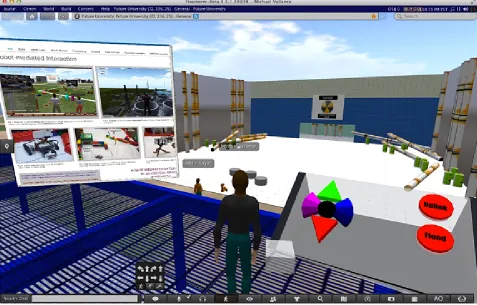
FIG. 1: Virtual Fukushima nuclear power plant
4.2 TRAINING AREA IN OPENSIM
Before entering the virtual Fukushima, students undertake tasks in the training area developed using OpenSim (see Fig. 2). The learner‑centered design approach (cf. Vallance, 2012) enabled a number of innovative tools to be created and customized by the students in OpenSim, for instance, the ability to move a graphical representation of the LEGO robot object and leave a trace of the circuit in‑world. Also, media objects in‑world can display live streamed video from the lab in Japan (using the online Bambuser service) and also from an iPhone a ached to the front of the LEGO robot using the Bambuser iPhone app. Virtual notice boards can be updated with text and images to aid communication. Additional interactivity has been added in the form of debris, which when touched by the virtual robot will explode. Although programming is mostly undertaken using the Mindstorms EV3 software, a LabView VI
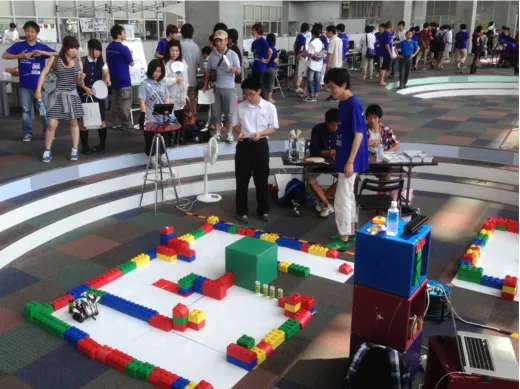
FIG. 3: Students remote control a LEGO EV3 robot to navigate a circuit
Some tasks to date have involved Japanese students collaborating with other remotely located Japanese students and some with Japanese students collaborating with UK students. Tasks have included maneuvering around obstacles using distance and turn commands, using touch sensors to navigate around obstacles, constructing a bridge and using touch sensors to move over obstacles, using light sensors to avoid obstacles, using sensors to locate items, and manipulating the tele‑robotic controls to virtually maneuver our LEGO robot within the virtual space as part of “search and rescue”
simulations. Communication between students has required the use of virtual world tools such as text panes, voice, live video streaming of respective real‑world labs, and 3D presentation boards where Mindstorms program images were deposited. Avatars in‑world enabled students to remotely maneuver a real‑world robot in addition to a LEAP Motion controller set up for hands‑free remote maneuvering of the EV3 robot. As previously reported by Vallance and Naamani (2013), “The developments have enabled students to actively engage in international collaboration, problem solving, construction of solutions, develop increasingly sophisticated communication and effective team working” (p. 63).
4.3 ROBOT‑MEDIATED INTERACTIONS USING THE OCULUS RIFT.
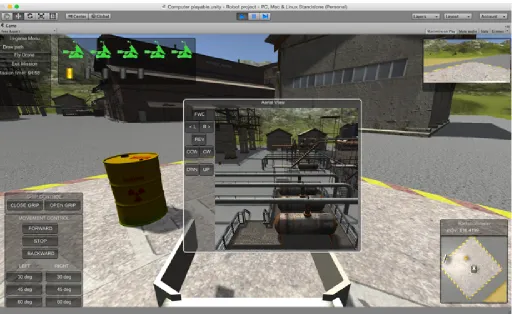
initiate the design of an abandoned factory as the virtual space (see Fig. 4). The rationale is to combine a 3D simulation space for real‑world collaboration; in this case, teaching the programming of robots contextualized by simulating a robot navigating within a restricted area. Student participants are presented with the following scenario:
Four children have been admi ed to hospital with apparent radiation sickness. They were playing in the old abandoned factory complex belonging to NEPCo (Nuclear Energy Production
Company). Upon inspection, the factory area recorded a radiation value of 4.00 Sv/h. This measurement is the same value as the Fukushima Reactor 1. Note that a dose of 0.75 Sv/h can be enough to induce radiation sickness. Therefore, it seems it is too dangerous to enter the factory complex. It is estimated there are 5 radioactive bins within the complex. We are not sure where the radioactive bins are located and do not yet know why they have been dumped in the old factory complex. Your mission is to maneuver the robot and drone, locate the 5 radioactive bins, and return them to the designated safe area. Be careful! One wrong move can cause an explosion … and disaster!
FIG. 4: Abandoned factory scenario
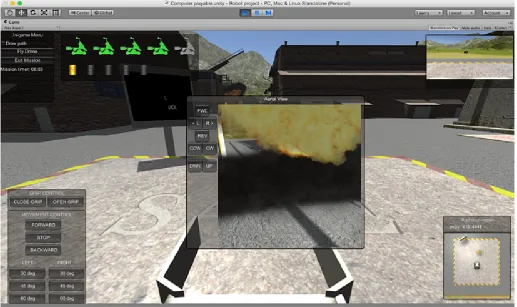
FIG. 5: Fukushima scenario
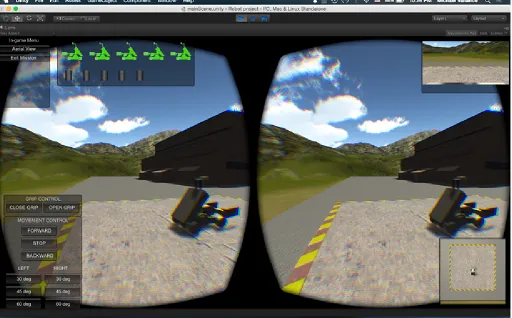
The project has also been developed to be viewable via the Oculus Rift 3D head‑mounted display (see Fig. 7) and utilizes the hands‑free Leap Motion controller. This research is in anticipation of commercial developments in virtual reality technologies that will enable users to log in to online 3D virtual spaces to engage and collaborate with other participants remotely located. Technologies not only include head‑ mounted displays exemplified in this research by the Oculus Rift, but also immersive virtual reality environments known as CAVE (cave automatic virtual environment). The maturation of immersive technologies has profound implications for the design and implementation of online education environments and subsequent pedagogies and active learning.
FIG. 7: The scenario is also viewed via the Oculus Rift 3D head‑mounted display
Data is currently being collected as students in Japan and UK participate in tasks requiring collaboration and communication. Also, a comparison between the Fukushima scenario and the abandoned factory scenario will be investigated.
5. DISCUSSION
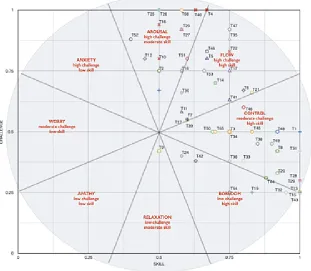
illustrated using the Carli et al. (1998) eight‑channel model of flow: arousal, flow, control, boredom, relaxation, apathy, worry, and anxiety.
Vallance et al. (2015) reported earlier iterations of the research. The participants were undergraduate students studying media architecture in a systems information science focused Japanese university (n = 6) and A‑level students in UK studying science‑based subjects (n = 10). Of the 16 participant students, two were female, 14 were male, all were between 17 and 19 years of age, and none had prior experience working with the project′s technologies. A total of 56 robot tasks undertaken were analyzed.
The immersion of students within each task were calculated and graphically represented on the Carli et al. (1998) eight‑channel model of flow (see Fig. 8). Tasks where participants were considered to be immersed (in a state of flow) were T5, T6, T7, T11, T14, T17, T18, T21, T22, T30, T35, T39, and la erly T47, T46, T41, and T53. These selected tasks of optimal flow are summarized in Table 2. Detailed task designs and learning analysis are beyond the scope of this paper but are explained in Vallance et al. (2015).
FIG. 8: Data of flow in tasks 1–56
TABLE 2: Selected tasks of optimal flow
Task summary
T17: Suika robot. Rotate robot + follow line + use sensors to
slice an object. Japan preparation.
T37: Program the LEGO robot to robot to move fwd + turn left + move fwd + turn left + move fwd + turn left + move fwd + turn right + move fwd + turn right + move fwd + stop (Pathfinder
circuit). Use of color sensor.
T21: Suika robot. Rotate robo t+ follow line + use sensors to T6: Program the
LEGO robot to navigate a T5: Program the
LEGO robot to navigate a specified circuit around obstacles. JPN teaching JPN
specified circuit around obstacles. JPN teaching JPN.
slice an object. Japan teach
of in‑world communication, and post‑task reflections are collated as data for this research, at present the data only superficially demonstrates a development of procedural knowledge and collaborative fluency” (Vallance and Naamani, 2013, p. 72).
6. CONCLUSION
To conclude this paper, an a empt is being made to quantify the impact of active learning. By actively participating in online, international, 3D virtual tele‑collaboration challenges, which include controlling basic robots within a simulated disaster zone, quantitative metrics of students′ programming skills, and psychometric assessment of declarative, procedural and meta‑cognitive knowledge are a empted to be measured. This is being undertaken through the design and iterative development of unique, 3D virtual world active learning activities for authentic, online, international collaboration, where participants are able to synergize engineering and science academic content with their learning processes. Much more work needs to be done and the research hypothesis remains inconclusive. However, for 3D virtual worlds to impact education, quantifiable metrics of learning are required. This research project is an a empt to deliver those metrics.
ACKNOWLEDGMENTS
This material is based on the work supported by JAIST “kakenhi” Grant No. 15K01080 and Future University Hakodate “tokubetsu kenkyuhi” Grant No. 2014B02. Many thanks to students at Future University Hakodate, Japan, and physics teacher Malcolm Thomas and pupils at Mountain Ash Comprehensive School, South Wales, UK. Credit is given to the metaverse designers at Reaction Grid. Gratitude to Glenn Mallon and Gabriel Campitelli for their programming expertise.
REFERENCES
Anderson, L.W., Krathwohl, D.R., Airasian, P.W., Cruicshank, K.A., Mayer, R.E., Pintrich, P.R., Raths, J., and Wi rock, M.C., A Taxonomy for Learning, Teaching and Assessing: A Revision of Bloom′s Taxonomy of
Educational Objectives, Longman, New York, 2001.
Arnold, L., Controlling Robots 6,000 Miles Away? No Problem! National Instruments Developer Zone, 2012, Accessed March 24, 2015; h ps://decibel.ni.com/content/groups/sweet‑
apps/blog/2012/03/15/controlling‑robots‑6000‑miles‑away‑no‑problem.
Barker, S.B. and Ansorge, J., Robotics as Means to Increase Achievement Scores in an Informal Learning Environment, J. Res. Technol. Educ., vol. 39, no. 3, pp. 229–243, 2007.
Ba ro, A.M., Fischer, K.W., and Lena, P.J., The Educated Brain: Essays in Neuroscience, Cambridge University Press, London, 2011.
Bloom, B.S. (ed.), Taxonomy of Educational Objectives, the Classification of Educational Goals, Handbook 1:
Cognitive Domain, McKay, New York, 1956.
Carli, M., Delle Fave, A., and Massimini, F., The Quality of Experience in the Flow Channels,
Csikszentmihalyi, M. and Csikszentmihalyi, I.S. (eds.), Optimal Experience: Psychological Studies of Flow in
deFreitas, S. and Neumann, T., The Use of ‘Exploratory Learning’ for Supporting Immersive Learning in Virtual Environments, Comput. Educ., vol. 52, pp. 343–352, 2009.
Guizzo, E., Fukushima Robot Operator Writes Tell‑All Blog, IEEE Spectrum, August 23, 2011, Accessed August 20, 2012; h p://spectrum.ieee.org/automaton/robotics/industrial‑robots/fukushima‑robot‑ operator‑diaries.
Hase, S., Learner Defined Curriculum: Heutagogy and Action Learning in Vocational Training, SIT J.
Appl. Res.(Special Edition), pp. 1–10, 2011; Accessed May 16, 2016; h p://sitjar.sit.ac.nz/SITJAR/Special/. Jukes, I., McCain, T., and Crocke , L., Understanding the Digital Generation, Sage, Thousand Oaks, CA, 2010.
Knipe, D. and Lee, M., The Quality of Teaching and Learning via Videoconferencing, Br. J. Educ. Technol., vol. 33, no. 3, pp. 301–311, 2002.
Kolb, D.A., Experiential Learning: Experience as the Source of Learning and Development, Prentice‑Hall, Englewood Cliffs, NJ, 1984.
Lui, A.K., Ng, S.C., Cheung, H.Y., and Gurung, P., Facilitating Independent Leaning with LEGO Mindstorms Robots, ACM Inroads, vol. 1, no. 4, pp. 49–53, 2010.
Martin, S. and Vallance, M., The Impact of Synchronous Inter‑Networked Teacher Training in Information and Communication Technology Integration, Comput. Educ., vol. 51, pp. 34–53, 2008. Olsen, D.R. and Goodrich, M.A., Metrics for Evaluating Human‑Robot Interactions, 2003, Accessed March 14, 2009; h p://icie.cs.byu.edu/Papers/RAD.pdf.
Pearce, M. Ainley, M., and Howard, S., The Ebb and Flow of Online Learning, Comput. Hum. Behav., vol. 21, pp. 745–771, 2005.
Schank, R., Teaching Minds: How Cognitive Science Can Save Our Schools, Teachers College Press, New York, 2013.
Towndrow, P.A. and Vallance, M., Making the Right Decisions: Leadership in 1‑to‑1 Computing in Education, Int. J. Educ. Man., vol. 27, no. 3, pp. 260–272, 2013.
Vallance, M., Design and Robots for Learning in Virtual Worlds, Khan, B. (ed.), User Interface Design for
Virtual Environments: Challenges and Advances, McWeadon Education, Hershey, PA, pp. 268–284, 2012.
Vallance, M. and Martin, S., Assessment and Learning in the Virtual World: Tasks, Taxonomies and Teaching for Real, J. Virtual Worlds Res., vol. 5, no. 2, pp. 1–13, 2012.
Vallance, M. and Naamani, C., Experiential Learning, Virtual Collaboration and Robots, Jerry, P., Tavares‑Jones, N., and Gregory, S. (eds.), Riding the Hype Cycle: The Resurgence of Virtual Worlds, Inter‑ Disciplinary Press, Oxford, UK, 2013.
Vallance, M., Naamani, C., Thomas, M., and Thomas, J., Applied Information Science Research in a Virtual World Simulation to Support Robot Mediated Interaction Following the Fukushima Nuclear Disaster, Commun. Info. Sci. Man. Eng., vol. 3, no. 5, pp. 222–232, 2013.
Vallance, M., Martin, S., and Naamani, C., A Situation that We Had Never Imagined: Post‑Fukushima Virtual Collaborations for Determining Robot Task Metrics, Int. J. Learning Technol., vol. 10, no. 1, pp. 30– 49, 2015.