R E V I E W
Open Access
Hypertriglyceridemia and atherosclerosis
Jia Peng, Fei Luo, Guiyun Ruan, Ran Peng and Xiangping Li
*Abstract
Atherosclerotic cardiovascular disease (ASCVD) is the leading cause of death and it has been confirmed that increased low density lipoprotein cholesterol (LDL-C) is an independent risk factor for atherosclerosis. Recently, the increasing evidence has showed that hypertriglyceridemia is associated with incremental ASCVD risk. But the proatherogenic mechanism of triglyceride (TG) remains unclear. Therefore, this article focuses on the clinical studies and proatherogenic mechanism related to hypertriglyceridemia, in order to provide reference for the prevention and treatment of ASCVD.
Keywords: Triglyceride, Lipoprotein, Atherosclerosis, Atherosclerotic cardiovascular disease
Background
Morbidity and mortality rates from ASCVD continue to be extremely high in the world. Hypercholesterolemia is known to be a major ASCVD risk factor and the LDL-C lowering therapy has attracted extensive attention which has become a cornerstone of primary and secondary pre-vention in ASCVD. However, the substantial residual risk of ASCVD often remains after adjustment for the certain risk factors such as LDL-C [1] or intensive LDL-C lower-ing with statins and other optimal therapies [2]. The Re-sidual Risk Reduction Initiative (R3i) has previously highlighted atherogenic dyslipidaemia, defined as the im-balance between proatherogenic triglyceride-rich apolipo-protein B-containing-lipoapolipo-proteins and anti-atherogenic apolipoprotein A1-lipoproteins (as in high density lipopro-tein, HDL), as an important modifiable contributor to lipid-related residual cardiovascular risk [3]. Recently, evidences are accumulating to suggest that hypertri-glyceridemia is causally associated with increased athe-rosclerosis risk [4–7]. This article will review relevant literature regarding the association between hypertri-glyceridemia and atherosclerosis including clinical studies and the researches of proatherogenic mechanism.
TG/TRLs and its atherogenic effects
TG and TRLs
On account of the hydrophobic nature of TG, it must combine with associated proteins into lipoprotein particles that allow it to transport in the plasma [5]. TG is major component of triglyceride-rich lipoproteins (TRLs) which include chylomicrons (CM), very low density lipoprotein (VLDL) and their remnants created during metabolism of TG [5, 8].
Chylomicrons which are large apolipoprotein B48 (apoB48)-containing lipoproteins with a large TG core (80%–95%) [9], which are synthesized via enterocytes ab-sorbing TGs from dietary fat and promoting the apoB48 [9] and enter the systemic circulation through the lymph-atic system where they acquire apoC2, apoC3 and apoE.
VLDL particles incorporate the apolipoprtein B100 (apoB100) and the core of TG that are synthesized in hepatocytes from fatty acids and glycerol [10], and se-crete into systemic circulation where they provide a source for energy for peripheral tissues. During the process of secretion, VLDL particles combine with apoC1, apoC2, apoC3 and apoE. Once in circulation, CM and VLDL can be hydrolyzed by lipoprotein lipase (LPL) along the luminal surface of capillaries, generating the production of free fatty acids and chylomicron rem-nants, and in succession progressively smaller VLDLs and intermediate density lipoproteins (IDLs), respectively [10].
LPL is the key enzyme for the metabolism of TRLs, bound to glycosylphatidylinositol high density lipopro-tein binding prolipopro-tein 1 (GPIHBP1) which provides the platform to allow lipolysis to occur at the endothelial cell * Correspondence:[email protected]
Department of Cardiovascular Medicine, The Second Xiangya Hospital, Central South University, 139 Middle Renmin Road, Changsha, Hunan 410011, China
surface [11] and is synthesized by the capillary endothe-lial cells [12]. Remnants are generated when CM and VLDL particles are catabolized during TG hydrolysis by LPL and are concomitantly enriched in cholesterol esters by the action of the cholesterol ester transfer protein (CETP) [13].
And, microsomal triglyceride transfer protein (MTP) transfers TG from the cytosol to endoplasmic reticulum containing nascent apoB during the assembly of CM and VLDL in enterocytes and hepatocytes, respectively [14]. The reduction of MTP expression or after taking the MTP inhibitor can eliminate and inhibit its function, therefore reducing the biosynthesis and plasma level of both chylomicrons and VLDL, and consequently de-creasing plasma levels of LDL and TG [15].
Atherogenic effects of TRLs
A recent study has indicated that lipoproteins in the cir-culation normally flux into and out of the arterial wall by transcytosis by which lipoproteins can be transported across the endothelium [16]. Furthermore, the transcyto-tic transport system is restricted to lipoproteins smaller than approximately 70 nm in diameter, thereby exclud-ing CM and larger VLDL particles [17]. However, their remnants can infiltrate into sub-endothelial space. In contrast to LDL, TRL remnants carry more cholesterol per particles than LDL, due to their larger size [18]. And each remnant particle contains approximately 40 times more cholesterol compared with LDL [19]. And, they do not need to be modified/oxidized to become atherogenic [20] and be taken up directly by macrophages. As dis-cussed above, compared with LDL, TRL remnants may have a stronger atherogenic effect.
It was found that, in human and Watanabe heritable hyperlipidemic rabbits, apoB48- and apoB100-containing lipoproteins were detected in aortic intimal lesion impli-cated to promote atherosclerosis [21, 22]. And, it has been showed the presence of triglyceride-containing remnant lipoproteins in human atherosclerotic plaque [23] strongly indicated that TRLs take part in the devel-opment and progression of atherosclerotic lesion. Fur-thermore, it has been evidenced that elevated circulating levels of triglycerides in the non-fasting state, a marker for triglyceride (TG)-rich remnant particles, are associ-ated with increased risk of premature cardiovasculardi-seases [8, 24].
The evidences of clinical studies
Clinical observational studies and intervention trials
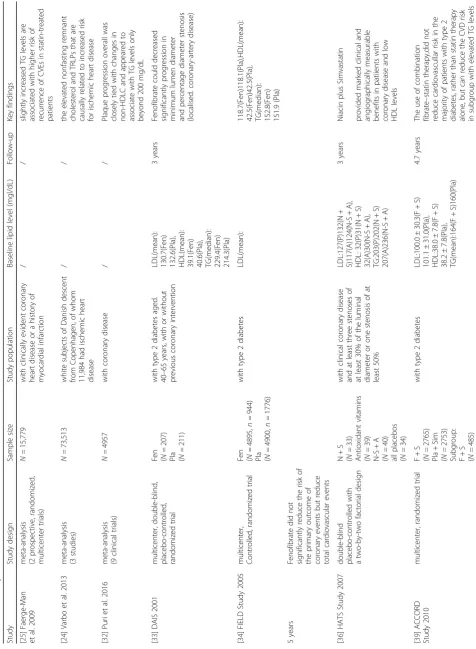
It has been believed that the residual risk of atherosclerosis after LDL-C lowering therapy is significantly associated with TRLs. A number of epidemiological or observational studies showed that fasting or non-fasting hypertriglyc-eridemia is a causal risk factor of cardiovascular diseases
and the risk of CVD. In 2014, studies combining the Copenhagen City Heart Study and the Copenhagen Gen-eral Population Study with about 100,000 individuals showed that high concentrations ≥495.6 mg/dL of non-fasting triglycerides were associated with high risk of ASCVD and all-cause mortality [20]. In addition, remnant cholesterol is the cholesterol content of triglyceride-rich li-poproteins, composed of VLDL and IDL in the fasting state and of these two lipoproteins together with chylo-micron remnants in the non-fasting state. Elevated non-fasting plasma triglyceride is a marker of elevated non-fasting remnant cholesterol. A well-designed pro-spective study [24] of a total of 73,513 genotyped sub-jects from Copenhagen, of whom 11,984 had ischemic heart disease diagnosed between 1976 and 2010 to test the hypothesis that elevated non-fasting remnant choles-terol is a causal risk. In this study, non-fasting remnant cholesterol was calculated as non-fasting total cholesterol minus HDL-C minus LDL-C, and remnant cholesterol can be calculated directly from a standard lipid profile. Then, they illustrated that a non-fasting remnant choles-terol increase of 39 mg/dL is associated with a 2.8-fold causal risk for ischemic heart disease, independent of re-duced HDL cholesterol. This implied elevated TRLs can cause CVD because the remnant cholesterol levels directly correlated with TRLs. Recently, Puri R et al. [32] analyzed the data from 9 clinical trials involving 4957 patients with coronary disease undergoing serial intravascular ultrason-ography to measure coronary atheroma volume and inves-tigated the relationship between achieved non-HDLC and TG levels with coronary atheroma progression regression rates in a large cohort of patients with established coron-ary disease. It was demonstrated that coroncoron-ary atheroma progression overall was more closely tied with changes in non-HDLC than that in LDL-C and appeared to associate with TG levels only beyond 200 mg/dL, which supported a more prominent role for non-HDLC and TG lowering in combating residual cardiovascular risk.
However, the above observation studies remain some limitations, one of which is that risk factors typically are only measured once, therefore the observed association will only represent a single point estimate and will entail the problem of regression dilution bias. Another two major limitations are in the form of potential confound-ing and reverse causation. The randomized, double-blind trials by design can overcome the problem of con-founding simply by the randomization method and avoid reverse causation to investigating that whether TG-lowering therapies can decrease the risk of ASCVD. The classical TG-lowering drugs containing niacin acid, fibrates and omega-3 fatty acids can effectively decrease the plasma levels of TG. Early clinical studies showed that fibrate therapy can decrease the risk of cardiovascular events, compared with placebo group [33]. Besides, during
with triglycerides >396 mg/dL and duration of treat-ment respectively. Therefore, it still needs more ran-domized controlled trials to confirm who can benefit from TG-lowering therapy or which treatment strategy is safe and effective (Table 1).
According to the above studies or trials, we can get that the individuals assigned in control or experimental group, the baseline of TG did not exceed 1000 mg/dL. And, what is the link between severe hypertriglyc-eridemia and CVD? It has been found that moderately elevated plasma triglycerides signalize increased risk for cardiovascular diseases, and extremely elevated triglycer-ides (> 1000 mg/dL) signalize increased risk for pancrea-titis [42]. Additionally, the severe hypertriglyceridemia mainly contains CM that leads to pancreatitis [43], and the hydrolysis of CM via LPL results in the production of free fatty acids and chylomicron remnants which can contribute to pancreatitis [44]. Whether the severe hypertriglyceridemia has none of association with ath-erosclerosis or CVD, it still further investigates the com-ponents of hypertriglyceridemia and mechanism which contributes to atherosclerosis.
Another attractive viewpoint is the nutraceuticals, such as red yeast rice, soybean proteins, plant sterols, soluble fibres and others, which contains significant lipid-lowering properties (decreasing level of LDL-C and TG or increasing level of HDL-C). A relatively large amount of epidemiological, clinical data and trials sup-port the tolerability and safety of many nutraceuticals with demonstrated lipid-lowering action, including in patients intolerant to statins [45]. Moreover, a number of nutraceuticals have shown promising effects in terms of improving the lipid profile and modifying cardiovas-cular risk [46]. Furthermore, the recent 2016 European guidelines for dyslipidemia management consider the possibility to use some lipid-lowering nutraceuticals [47]. In general, a large number of nutraceuticals have been tested in available trials, demonstrating their lipid-lowering effects, and some clinical trials have reported that many nutraceuticals have an additive effect to lipid-lowering drugs, allowing the statin doses to be reduced without diminishing the results in terms of LDL-C and TG reduction. It is, however, important to emphasize that nutraceuticals cannot replace lipid-lowering therapy but may essentially help to optimize it (reducing cardio-vascular residual risk) [48]. But, it has to be clearly stressed that there are still no outcome studies proving that nutraceuticals can prevent CVD morbidity or mor-tality [48, 49].
Genetic studies and Mendelian randomization studies
In the genetic evidence [50], the fact that monogenic disorders of TG metabolism, such hyperlipoproteinemia type 3,edispose individuals to CVD suggested that raised
TG and remnant cholesterol levels contribute to the process of atherosclerosis [51]. Then, a recent Mendelian randomization study based on data from 10,208 individ-uals included in the Copenhagen City Heart Study found that subjects with genetically confirmed reduction in non-fasting plasma TG levels had reduced all-cause mor-tality [4]. Furthermore, Do R et al. [5] approved that the strength of a variant effect on TG levels strongly corre-lated with the magnitude of its effects on coronary artery disease, even after adjustment for effects on LDL-C and HDL-C through meta-analysis involving 188,578 geno-typed individuals with 185 different single nucleotide polymorphisms. Furthermore, Genome-wide association studies (GWAS) have implicated numerous novel genes in TG metabolism and coronary atherosclerotic diseases (CAD) pathogenesis in humans, and the discovery of rare variants in TG genes and the subsequent associ-ation of these variants with CAD has strengthened both mechanistic research and drug discovery relevant to lipi-demic diseases [52]. Additionally, sequence variants in several key genes involved in the metabolism of TRLs, such as those encoding LPL and the proteins regulat-ing it, appear to be strongly associated with CVD risk [4, 24]. These results supported that the genes involved in encoding key components of the TRLs and metabolism of TRLs are strongly associated with CVD risk.
More recently, several Mendelian randomization studies has been conducted to evaluate whether factors involved in TRL metabolism are causally associated with atherosclerosis and coronary heart disease (CHD), and provide robust evidence for TG contributing to ASCVD. Mendelian randomization studies are based on the seg-regation and independent assortment of specific geno-types according to the laws of Mendelian genetics. And, Mendelian randomization studies of human genetics have many similarities with randomized, double-blind trials, which are not affected by confounding factors seen in observational epidemiologic studies and thus ad-vantages over observational studies in conventional epi-demiology. Several Mendelian randomization studies conducted using data from Copenhagen City Heart Study found that genetic variants in LPL resulted in re-duced triglyceride levels, and that a higher number of triglyceride-decreasing LPL alleles was associated with in-creased survival [4]. Moreover, a Mendelian randomization meta-analysis was conducted using data from 17 studies involving 62,199 participants and 12,099 CHD events which suggested that triglycerides, both the unrestricted al-lele score based on 67 single-nucleotide polymorphisms (SNPs) and the restricted allele score based on 27 SNPs were significantly associated with CHD [53].
Table 1 Summary of clinical studies links TG/TRLPs with CVD Study Stud y desig n Sampl e size Study popu lation Basel ine lipid level (mgl /dL) Follow-u p Key finding s [ 25 ] Faerge-M an et al. 2009 me ta-analysis (2 prospective, random ized, mu lticenter trials) N = 15,779 with clinical ly evi dent coronary heart disease or a history of myocardial inf arction / / slight ly increased TG le vels are ass ociated with higher risk of recurrence of CVEs in statin -treated patie nts [ 24 ] Varbo et al. 2013 me ta-analysis (3 studies) N = 73,513 white subje cts of D anish de scent from Copenh agen, of whom 11,984 had ischemi c heart disease / / the el evated nonfas ting remnant chol estero l and TRLPs that are causally related to increased risk for isch emic heart disea se [ 32 ] Puri et al. 2016 me ta-analysis (9 clinical tri als) N = 4957 with coronary disea se / / Pla que progr ession overa ll was clo sely tied with chang es in non-HDLC and app eared to ass ociate with TG levels only be yond 200 mg/dL [ 33 ] DAIS 2001 mu lticenter , doub le-blind, pla cebo-co ntrolle d, rando mized tri al
Fen (N
=
207)
Pla (N
= 211) with type 2 diabetes age d. 40 – 65 years , with or with out previou s coronary interve ntion LDL(me an): 130.7(F en) 132.6(P la), HDL(me an): 39.1( Fen) 40.6( Pla), TG(me dian): 229.4(F en) 214.3(P la) 3 years Fen ofibrate cou ld de creased sign ificantly pro gression in mi nimum lum en dia meter and percen tage dia meter stenos is (lo calised. coronary-artery disease) [ 34 ] FIELD Stud y 2005 mu lticenter , Con trolled, ran domized trial
Fen (N
=
4895,
n
=
944)
Pla (N
= 4900, n = 1776) with type 2 diabetes LDL(me an): 118. 7(Fen)118 .1(Pla),HDL(mean): 42.5 (Fen)42.5 (Pla), TG( median ): 152. 8(Fen) 151. 9 (Pla) 5 years Fen ofibrate did not sign ificantly reduce the ris k of the primary outcom e of coronary event s but reduce tot al cardiovascul ar even ts [ 36 ] HATS Stud y 2007 doub le-blind pla cebo-co ntrolle d with a two -by-two facto rial design
N+S (N
= 33) Anti oxidan t vitamins ( N = 39) N-S + A ( N = 40) all pla cebos ( N = 34) with clinical coronary disease and at le ast three steno ses of at least 30% of the luminal diameter or one stenos is of at least 50% LDL:127(P)13 2(N + S)117 (A)124(N-S + A) , HDL: 32 (P)31(N + S) 32(A) 30(N-S + A) , TG:20 3(P)202 (N + S) 207(A)2 36(N-S + A) 3 years Niacin plus Simvastati n provi ded marked clinical and angiograp hicall y measurable be nefits in patii ents wit h coronary disease an d low HDL level s [ 39 ] ACCORD Study 2010 mu lticenter , rando mized trial F + S ( N = 2765) Pla + Si m ( N = 2753)
Subgroup: F+S (N
Table 1 Summary of clinical studies links TG/TRLPs with CVD (Continued) Study Stud y desig n Sampl e size Study popu lation Basel ine lipid level (mgl /dL) Follow-u p Key finding s Pla + Si m ( N = 456) ( ≥ 204 mg/dL) and de creas ed HDL-C ( ≤ 34 mg/dL) [ 37 ] AIM-HIGH Study 2011 rando mized tri al N + S(or plu s Eze ) ( N = 1718) Pla + Si m(or plus Eze ) ( N = 1696) with 45 ye ars of age or olde r and es tablished car diovascular disease LDL(me an): 74.0 ± 22.7( Nia) 74.2 ± 23.4( Pla), HDL(me an): 34.9 ± 5.6(N ia) 34.5 ± 5.6(P la), TG(me dian): 163(N ia)167 .5 (Pla) 36 month s No increme ntal be nefit of niacin in reducing cardiovascul ar even ts, de spite significan t increases in HDL-C level s and decreases in trigl yceride level s [ 38 ] HPS2-TH RIVE Study 2013 mu lticenter random ized trial ERN/ LRPT (N = 12,838 )
Pla (N
Nevertheless, we still need evidences from randomized intervention trials showing that lowering of TG and remnant cholesterol can reduce the major adverse cardio-vascular events. Fortunately, such studies have already started: in individuals already receiving a statin, add-on placebo-controlled, triglyceride-lowering omega-3 fatty acids therapy to reduce residual risk is currently being tested in 2 ongoing trials. (REDUCE-IT: NCT01492361, STRENGTH: NCT02104817). These studies will provide valuable information on the utility of omega-3 fatty acids in combination with statin therapy in high-risk patients with TG levels to guide the prevention and treatment of ASCVD.
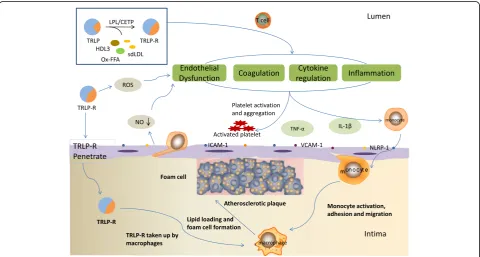
The possible mechanism of TRLs atherogenicity The mechanism of TRLs atherogenicity has attracted much attention, but it is still not very clear. The recent researches supported that TRLs are easy to get deposited on the wall of artery, which may damage the endothe-lium and enter into the arterial intima via defect of endothelium, the location of the atherosclerotic plaque,
and enhance recruitment and attachment of monocytes to induce generation of foam cell. At the same time, TRLs take part in the development and progression of atherosclerosis by stimulating inflammation and regulating various cytokines (Fig. 1).
TRLs and endothelial dysfunction
The dysfunction of endothelium has been demonstrated to precede the formation of atherosclerotic lesion and is one of the first steps involved in the pathophysiology of atherosclerosis. TRL remnants have been suggested to pro-mote endothelial dysfunction, which potentiates athero-genesis [54]. It has been shown that the flow-mediated or acetylcholine-induced vasodilatation is associated with ni-tric oxide (NO) released by endothelium, which is one of sensitive index of endothelium-dependent vasodilation. Clinical studies found that the postprandial rapid rise in serum TG levels after a high-fat meal was significantly re-lated to endothelial dysfunction via evaluating the impair-ment in flow-mediated vasodilatation [55]. It has also been shown that the remnant lipoprotein contributes to the
Fig. 1The possible mechanisms of TRLs in the process of the onset and progression of atherosclerosis. TRLs and its lypolitic products hydrolysed
impairment of endothelium-dependent vasomotor func-tion in human coronary arteries [56]. In 2016, Lucero D et al. [57] analyzed the effect of circulating isolated TRLs from subjects on endothelial function in 40 patients with metabolic syndrome by means of the in vitro assay from which dose-response curves, and highlighted that the strong tendency to a positive correlation between triglyceride content in TRLs and the grade of inhib-ition of acetylcholine-mediated vasorelaxation exerted by TRLs. Almost at the same time, another study [58] involving in 4887 subjects who were enrolled in the flow-mediated vasodilation (FMD)-Japan registry was designed to investigate cross-sectional associations be-tween serum triglyceride levels and endothelial func-tion assessed by measurement of FMD of brachial artery. Then they found that, serum triglyceride levels of more than 98.4 mg/dL were independently associ-ated with the low quartile of FMD (less than 3.9%) after adjustment for age, sex, and cardiovascular risk factors, including HDL-C which suggested that triglyc-erides are an independent predictor of endothelial function.
The similar results were also observed in animal ex-periments. Matsumoto S et al. [59] used the postpran-dial hypertriglyceridemic rabbits (PHT rabbits) as a new dyslipidemic model showing remarkably high levels of serum TG after feeding standard rabbit chow with little increase in serum cholesterol and healthy Japanese white rabbits (JW rabbits) as control group, investigating the link between postprandial elevated TG levels and endothelial dysfunction in the develop-ment of atherosclerosis [59]. They found that JW rab-bits (12-month-old, 35-month-old) did not show atherosclerotic lesion, while hypertriglyceridemic rab-bits (12-month-old PHT rabrab-bits) showed significant intimal thickening in aorta. In this study, it was showed that the endothelial function in PHT rabbits was diminished by the acetylcholine-induced vascular relaxation, which is probably due to the decreased production of NO. The results demonstrated that hypertriglyceridemia can damage endothelial function and take part in the process of the onset and progres-sion of atherosclerosis.
In addition, it has been established that TRL remnants can increase the production of reactive oxygen species (ROS), which may increase vascular endothelial perme-ability, and that high concentration ROS can cause cellu-lar injury and death, in particucellu-lar the endothelial cells [60]. Remnant-like lipoprotein particles may impair endothelial function by direct and indirect effects on ni-tric oxide synthase [61]. The imbalance of reactive ROS and nitric oxide may promote endothelial dysfunction, and lead to cardiovascular complication [62], particu-larly, in hypertriglyceridemia [63].
Finally, TRLs may suppress the atheroprotective and anti-inflammatory effects of HDL [64], which have been shown to significantly correlate with impairment of endothelium-dependent coronary vasodilation.
TRLs and foam cells
It has been proved that activated macrophages, which incorporate oxidized/ modified lipoproteins and trans-form into lipid-rich foam cells, are abundant in the ath-erosclerotic lesions [65]. Triglyceride accumulation in macrophages, which is related to macrophage oxidative stress, was shown to further increase the mitochondrial generation of reactive oxygen species, promoting foam cell formation [66]. Moreover, VLDL particles from pa-tients with hypertriglyceridemia are rich in apoE, which can lead to a conformational change in the VLDL parti-cles that facilitate binding to the macrophage scavenger receptor. CM remnants and IDL are also small enough to enter the subendothelial space where they are taken up in an unregulated fashion by scavenger receptors on macrophages, leading to foam cell formation [15]. The lipoprotein particles such as oxygenized LDL (oxLDL) and TRLs bind to the scavenger receptor on macro-phages and unregulated uptake of the modified lipopro-tein particle causes macrophage accumulation of lipids, which is the formation process of a foamy cytoplasm and term foam cells [15]. Furthermore, it has been found that CM remnants contribute to atherosclerosis by mi-grating to the subendothelial space, where they induce leukocyte activation and promote foam cell formation similar to oxLDL [67], and induce monocyte activation and enhance monocyte and postprandial neutrophils mi-gration [68].
TRLs and inflammation
cell adhesion molecule-1 (VCAM-1), facilitating the trans-endothelial migration of leukocytes to sites of inflamma-tion and enhancing inflammatory response [71]. Recently, Bleda S et al. [72] attempted to observe the nucleotide-binding like receptor family pyrin domain-containing protein 1 (NLRP1) inflammasome gene ex-pression in human arterial endothelial cells (HAECs) exposed to plasma with the elevated levels of TG and VLDL-C. They found that TG and VLDL contribute to plaque rupture and arterial inflammation through various mechanisms, one of which is NLRP1 inflam-masome pathway, and the NLRP1 inflaminflam-masome acti-vation triggered by TG and VLDL-C may represent a significant source of inflammation in endothelial cells.
TRLs can also impact HDL levels and its particle size. At the setting of the higher TG levels, the greater ex-change between TG of apoB-containing lipoproteins and cholesterol ester (CE) of HDL via CETP results in the TG-rich and CE-poor HDL particles which can be catab-olized faster and more rapidly than large and CE-rich HDL, and the process brings the consequence with lower levels of HDL-C. And, a recent study also revealed that high postprandial triglyceridemia induced a shift of HDL size towards large particles, and cholesterol deple-tion with TG enrichment of HDL3 subclasses [73]. The change of HDL structure is related with their antioxi-dant capacity that may be affected by HDL remodeling [74]. In addition, the current view maintains that distinct HDL particle subpopulations composed of unique clus-ters of specific HDL associated proteins perform specific biological functions, especially paraoxonase 1(PON1), an athero-protective protein, which show improved anti-oxidative, anti-inflammatory and lipid cargo carrying functions [75]. Whether the TG-rich and CE-poor HDL particles contain different content of PON1 or the change of PON1 activity, by which contribute to athero-sclerosis. However, a study found that PON-1 activity did not decrease and significantly increase along the postprandial stage [73]. And, the further studies will un-doubtedly need to be conducted to investigate the roll of such structural modifications (other components or pro-teins, i.e. apo AI or myeloperoxidase and platelet-activating factor acetylhydrolase,) on other HDL anti-atherogenic functions as a result of sustained postprandial lipemia and the mechanism TG enrichment of HDL3 subclasses contribute to atherosclerosis. It has been discovered that HDL carries apoB-bound sphingosine-1-phosphate (S1P), a lipid mediator with anti-inflammatory proper-ties, which promotes the development of inflammatory T helper 1 cells while suppressing differentiation of Treg cells [76]. Thus, the higher TG levels can alter HDL concentration and size into the lower level of large TG-rich HDL which cannot participate in the process of anti-inflammation via T regulatory cells; on
the contrary, these can contribute to inflammation via proinflammatory T cells [77].
In another side, mild-moderate hypertriglyceridemia (TG levels between 200 and 800 mg/dL) are associated with low levels of HDL-C, small and dense LDL (sd-LDL) particles, atherogenic TG-rich remnants [78]. And, sd-LDL is generated during the delipidation process by hepatic lipase (HL) from VLDL1 (TG-rich lipoprotein) to IDL and LDL particles and a number of clinical stud-ies strongly suggest that a predominance of sd-LDL is associated with CVD risk, in hypertriglyceridemia [79] [80]. The possible mechanisms have been proposed for the atherogenic potency of sd-LDL [80]. Because of the small size and a lower affinity for LDL receptors than LDL, sd-LDL particles penetrate easily into the arterial wall and cannot be easily cleared from plasma, respect-ively. Together with, sd-LDL has a high affinity for pro-teoglycans in the arterial wall, which results in a prolonged residence time in the subendothelial space where it can contribute to the lipid storage and athero-sclerosis plaque development. Moreover, sd-LDL particles contain less anti-oxidative vitamins (vitamin E) and are therefore more susceptible to oxidation than larger forms of lipoproteins. Lastly, the other possible mechanisms should be further study, for example, sd-LDL may induce the stimulation of plasminogen-activator-inhibitor 1 and accelerate thromboxane A2 synthesis [80].
Additionally, it has also been shown TRLs or TRL remnants can induce early monocyte and neutrophil ac-tivation resulting in inflammation [81, 82].
TRLs and regulation of cytokines
A number of cytokines are involved in the onset and progression of atherosclerosis. TRL remnants have been shown to induce endothelial cell apoptosis via increased secretion of the proapoptotic cytokines, tumor necrosis factor-α(TNF-α), and interleukin-1 β(IL-1β), a process which can contribute to vascular injury and atheroscler-osis [83]. It has been demonstrated that TNF-α has a substantial effect on endothelial cell dysfunction and is one of the most important molecules in cellular inflam-mation, regulating the expression of nitric oxide syn-thase (NOS) and thereby influencing the production of NO which is involved in endothelial dysfunction [84]. Studies have also suggested that TNF-α concentrations are positively associated with VLDL-C concentrations [84], which also can be found in the PTH rabbits [59]. A recent study has showed TNF-αoverexpression increased expression of JAM-1, which promoted the chemotaxis and exudation of cells to cause atherosclerosis [85].
study has reported that there was a low adiponectin levels and the adiponectin mRNA was downregulated in PTH rabbits [59].
It has also been found that TRLs and their remnants can induce a procoagulant state, enhance platelet aggre-gation and clot formation, and amplify the coagulation cascade by following two ways: First, increasing the levels of fibrinogen, factors VII and XII; Second, upregu-lating the expression of plasminogen activator inhibitor-1 and plasminogen activator inhibitor-inhibitor-1 antigen [87].
In brief, a large number of studies have shown that hypertriglyceridemia contributes to the development and progression of atherosclerosis. The proathero-genic mechanism of TRLs seems rather complicated and needs to be further explored. Based on current knowledge and the evidence of clinical studies, con-trolling and lowering plasm TG levels is one of the important measures to further reduce the residual risk of CVD events in ASCVD patients or at high risk for ASCVD after achieving guideline-recommended LDL-C target levels. We also expect more clinical trials de-signed to support above view.
Abbreviations
apoB100:Apolipoprtein B100; apoB48: Apolipoprotein B48;
ASCVD: Atherosclerotic cardiovascular disease; CAD: Coronary atherosclerotic diseases; CE: Cholesterol ester; CETP: Cholesterol ester transfer protein; CHD: Coronary heart disease; CM: Chylomicron; CVD: Cardiovascular heart disease; FMD: Flow-mediated vasodilation; GPIHBP1: Glycosylphatidylinositol high density lipoprotein binding protein 1; GWAS: Genome-wide association studies; HAECs: Human arterial endothelial cells; HDL: High density lipoprotein; HL: Hepatic lipase; ICAM-1: Intercelluar adhesion molecule-1; IDL: Intermediate density lipoprotein; IL-1β: Interleukin-1β; JW
rabbits: Japanese white rabbits; LDL-C: Low density lipoprotein cholesterol; LPL: Lipoprotein lipase; MTP: Microsomal triglyceride transfer protein; NLRP1: Nucleotide-binding like receptor family pyrin domain-containing protein 1; NO: Nitric oxide; NOS: Nitric oxide synthase; OFTT: Oral fat tolerance test; oxLDL: Oxygenized LDL; PHT Rabbits: postprandial hypertriglyceridemic rabbits; PON1: Paraoxonase 1; ROS: Reactive oxygen species; sd-LDL: Small and dense LDL; SNPs: Single-nucleotide polymorphisms; TG: Triglyceride; TNF-α: Tumor necrosis factor-α; TRLs: Triglyceride-rich lipoproteins; VCAM-1: Vascular cell adhesion molecule-1; VLDL: Very low density lipoprotein
Acknowledgments None
Availability of data and materials
The datasets used and/or analysed during the current study are available from the corresponding author on reasonable request.
Funding
This work was supported by grants from the National Natural Science Foundation of China (No.31670816).
Authors’contributions
XL conceived the idea; JP wrote the manuscript; FL, GR and RP collected and read the literature; XL read through and corrected the manuscript. All authors read and approved the final manuscript.
Ethics approval and consent to participate Not applicable
Consent for publication Not applicable
Competing interests
The authors reported no relationships that could be construed as a conflict of interest.
Publisher’s Note
Springer Nature remains neutral with regard to jurisdictional claims in published maps and institutional affiliations.
Received: 23 May 2017 Accepted: 27 November 2017
References
1. Chapman MJ, Ginsberg HN, Amarenco P, Andreotti F, Boren J, Catapano AL, Descamps OS, Fisher E, Kovanen PT, Kuivenhoven JA, et al. Triglyceride-rich lipoproteins and high-density lipoprotein cholesterol in patients at high risk of cardiovascular disease: evidence and guidance for management. Eur Heart J. 2011;32:1345–61.
2. Sampson UK, Fazio S, Linton MF. Residual cardiovascular risk despite optimal LDL cholesterol reduction with statins: the evidence, etiology, and therapeutic challenges. Curr Atheroscler Rep. 2012;14:1–10.
3. Fruchart JC, Davignon J, Hermans MP, Al-Rubeaan K, Amarenco P, Assmann G, Barter P, Betteridge J, Bruckert E, Cuevas A, et al. Residual macrovascular risk in 2013: what have we learned? Cardiovasc Diabetol. 2014;13:26. 4. Thomsen M, Varbo A, Tybjaerg-Hansen A, Nordestgaard BG. Low nonfasting
triglycerides and reduced all-cause mortality: a mendelian randomization study. Clin Chem. 2014;60:737–46.
5. Do R, Willer CJ, Schmidt EM, Sengupta S, Gao C, Peloso GM, Gustafsson S, Kanoni S, Ganna A, Chen J, et al. Common variants associated with plasma triglycerides and risk for coronary artery disease. Nat Genet. 2013;45:1345–52. 6. Johansen CT, Hegele RA. Using Mendelian randomization to determine
causative factors in cardiovascular disease. J Intern Med. 2013;273:44–7. 7. Jorgensen AB, Frikke-Schmidt R, West AS, Grande P, Nordestgaard BG,
Tybjaerg-Hansen A. Genetically elevated non-fasting triglycerides and calculated remnant cholesterol as causal risk factors for myocardial infarction. Eur Heart J. 2013;34:1826–33.
8. Kotwal S, Jun M, Sullivan D, Perkovic V, Neal B. Omega 3 fatty acids and cardiovascular outcomes: systematic review and meta-analysis. Circ Cardiovasc Qual Outcomes. 2012;5:808–18.
9. Julve J, Martin-Campos JM, Escola-Gil JC, Blanco-Vaca F. Chylomicrons: advances in biology, pathology, laboratory testing, and therapeutics. Clin Chim Acta. 2016;455:134–48.
10. Miller M, Stone NJ, Ballantyne C, Bittner V, Criqui MH, Ginsberg HN, Goldberg AC, Howard WJ, Jacobson MS, Kris-Etherton PM, et al. Triglycerides and cardiovascular disease: a scientific statement from the American Heart Association. Circulation. 2011;123:2292–333.
11. Goulbourne CN, Gin P, Tatar A, Nobumori C, Hoenger A, Jiang H, Grovenor CR, Adeyo O, Esko JD, Goldberg IJ, et al. The GPIHBP1-LPL complex is responsible for the margination of triglyceride-rich lipoproteins in capillaries. Cell Metab. 2014;19:849–60.
12. Do R, Stitziel NO, Won HH, Jorgensen AB, Duga S, Angelica Merlini P, Kiezun A, Farrall M, Goel A, Zuk O, et al. Exome sequencing identifies rare LDLR and APOA5 alleles conferring risk for myocardial infarction. Nature. 2015;518:102–6. 13. Chapman MJ, Le Goff W, Guerin M, Kontush A. Cholesteryl ester transfer
protein: at the heart of the action of lipid-modulating therapy with statins, fibrates, niacin, and cholesteryl ester transfer protein inhibitors. Eur Heart J. 2010;31:149–64.
14. Berriot-Varoqueaux N, Aggerbeck LP, Samson-Bouma M, Wetterau JR. The role of the microsomal triglygeride transfer protein in abetalipoproteinemia. Annu Rev Nutr. 2000;20:663–97.
15. Takahashi S. Triglyceride rich lipoprotein -LPL-VLDL receptor and Lp(a)-VLDL receptor pathways for macrophage foam cell formation. J Atheroscler Thromb. 2017;24:552–9.
16. Fogelstrand P, Boren J. Retention of atherogenic lipoproteins in the artery wall and its role in atherogenesis. Nutr Metab Cardiovasc Dis. 2012;22:1–7. 17. Boren J, Matikainen N, Adiels M, Taskinen MR. Postprandial
hypertriglyceridemia as a coronary risk factor. Clin Chim Acta. 2014;431:131–42. 18. Rosenson RS, Davidson MH, Hirsh BJ, Kathiresan S, Gaudet D. Genetics and
causality of triglyceride-rich lipoproteins in atherosclerotic cardiovascular disease. J Am Coll Cardiol. 2014;64:2525–40.
20. Nordestgaard BG, Varbo A. Triglycerides and cardiovascular disease. Lancet. 2014;384:626–35.
21. Proctor SD, Mamo JC. Intimal retention of cholesterol derived from apolipoprotein B100- and apolipoprotein B48-containing lipoproteins in carotid arteries of Watanabe heritable hyperlipidemic rabbits. Arterioscler Thromb Vasc Biol. 2003;23:1595–600.
22. Nakano T, Nakajima K, Niimi M, Fujita MQ, Nakajima Y, Takeichi S, Kinoshita M, Matsushima T, Teramoto T, Tanaka A. Detection of apolipoproteins B-48 and B-100 carrying particles in lipoprotein fractions extracted from human aortic atherosclerotic plaques in sudden cardiac death cases. Clin Chim Acta. 2008;390:38–43.
23. Pal S, Semorine K, Watts GF, Mamo J. Identification of lipoproteins of intestinal origin in human atherosclerotic plaque. Clin Chem Lab Med. 2003; 41:792–5.
24. Varbo A, Benn M, Tybjaerg-Hansen A, Jorgensen AB, Frikke-Schmidt R, Nordestgaard BG. Remnant cholesterol as a causal risk factor for ischemic heart disease. J Am Coll Cardiol. 2013;61:427–36.
25. Faergeman O, Holme I, Fayyad R, Bhatia S, Grundy SM, Kastelein JJ, LaRosa JC, Larsen ML, Lindahl C, Olsson AG, et al. Plasma triglycerides and cardiovascular events in the treating to new targets and incremental decrease in end-points through aggressive lipid lowering trials of statins in patients with coronary artery disease. Am J Cardiol. 2009;104:459–63. 26. Higgins V, Adeli K. Postprandial Dyslipidemia: Pathophysiology and
cardiovascular disease risk assessment. Ejifcc. 2017;28:168–84. 27. Langsted A, Freiberg JJ, Nordestgaard BG. Fasting and nonfasting lipid
levels: influence of normal food intake on lipids, lipoproteins, apolipoproteins, and cardiovascular risk prediction. Circulation. 2008;118: 2047–56.
28. Nordestgaard BG, Benn M, Schnohr P, Tybjaerg-Hansen A. Nonfasting triglycerides and risk of myocardial infarction, ischemic heart disease, and death in men and women. JAMA. 2007;298:299–308.
29. Nordestgaard BG, Hilsted L, Stender S. Plasma lipids in non-fasting patients and signal values of laboratory results. Ugeskr Laeger. 2009;171:1093. 30. Nordestgaard BG, Langsted A, Mora S, Kolovou G, Baum H, Bruckert E, Watts
GF, Sypniewska G, Wiklund O, Boren J, et al. Fasting is not routinely required for determination of a lipid profile: clinical and laboratory implications including flagging at desirable concentration cut-points-a joint consensus statement from the European atherosclerosis society and European Federation of Clinical Chemistry and Laboratory Medicine. Eur Heart J. 2016; 37:1944–58.
31. Lairon D, Lopez-Miranda J, Williams C. Methodology for studying postprandial lipid metabolism. Eur J Clin Nutr. 2007;61:1145–61. 32. Puri R, Nissen SE, Shao M, Elshazly MB, Kataoka Y, Kapadia SR, Tuzcu EM,
Nicholls SJ: Non-HDL Cholesterol and triglycerides: implications for coronary Atheroma progression and clinical events. Arterioscler Thromb Vasc Biol 2016, 36:2220-2228.
33. Effect of fenofibrate on progression of coronary-artery disease in type 2 diabetes: the diabetes atherosclerosis intervention study, a randomised study. Lancet. 2001;357:905–10.
34. Keech A, Simes RJ, Barter P, Best J, Scott R, Taskinen MR, Forder P, Pillai A, Davis T, Glasziou P, et al. Effects of long-term fenofibrate therapy on cardiovascular events in 9795 people with type 2 diabetes mellitus (the FIELD study): randomised controlled trial. Lancet. 2005;366:1849–61. 35. Collins R, Armitage J, Parish S, Sleigh P, Peto R. MRC/BHF heart protection
study of cholesterol-lowering with simvastatin in 5963 people with diabetes: a randomised placebo-controlled trial. Lancet. 2003;361:2005–16. 36. Vittone F, Chait A, Morse JS, Fish B, Brown BG, Zhao XQ. Niacin plus Simvastatin reduces coronary Stenosis progression among patients with metabolic syndrome despite a modest increase in insulin resistance: a subgroup analysis of the HDL-atherosclerosis treatment study (HATS). J Clin Lipidol. 2007;1:203–10. 37. Boden WE, Probstfield JL, Anderson T, Chaitman BR, Desvignes-Nickens P,
Koprowicz K, McBride R, Teo K, Weintraub W. Niacin in patients with low HDL cholesterol levels receiving intensive statin therapy. N Engl J Med. 2011;365:2255–67.
38. HPS2-THRIVE Collaborative Group. HPS2-THRIVE randomized placebo-controlled trial in 25 673 high-risk patients of ER niacin/laropiprant: trial design, pre-specified muscle and liver outcomes, and reasons for stopping study treatment. Eur Heart J. 2013;34:1279–91.
39. Ginsberg HN, Elam MB, Lovato LC, Crouse JR, 3rd, Leiter LA, Linz P, Friedewald WT, Buse JB, Gerstein HC, Probstfield J, et al: Effects of combination lipid therapy in type 2 diabetes mellitus.N Engl J Med 2010, 362:1563-1574.
40. Parhofer KG. Increasing HDL-cholesterol and prevention of atherosclerosis: a critical perspective. Atheroscler Suppl. 2015;18:109–11.
41. Davidson MH, Rosenson RS, Maki KC, Nicholls SJ, Ballantyne CM, Mazzone T, Carlson DM, Williams LA, Kelly MT, Camp HS, et al. Effects of fenofibric acid on carotid intima-media thickness in patients with mixed dyslipidemia on atorvastatin therapy: randomized, placebo-controlled study (FIRST). Arterioscler Thromb Vasc Biol. 2014;34:1298–306.
42. Pitha J, Kovar J, Blahova T. Fasting and nonfasting triglycerides in cardiovascular and other diseases. Physiol Res. 2015;64(Suppl 3):S323–30. 43. Brunzell JD, Schrott HG. The interaction of familial and secondary causes of
hypertriglyceridemia: role in pancreatitis. J Clin Lipidol. 2012;6:409–12. 44. Toth PP. Triglyceride-rich lipoproteins as a causal factor for cardiovascular
disease. Vasc Health Risk Manag. 2016;12:171–83.
45. Cicero AFG, Fogacci F, Colletti A. Food and plant bioactives for reducing cardiometabolic disease risk: an evidence based approach. Food Funct. 2017;8:2076–88.
46. Garcia-Rios A, Delgado-Lista J, Alcala-Diaz JF, Lopez-Miranda J, Perez-Martinez P. Nutraceuticals and coronary heart disease. Curr Opin Cardiol. 2013;28:475–82. 47. Catapano AL, Graham I, De Backer G, Wiklund O, Chapman MJ, Drexel H,
Hoes AW, Jennings CS, Landmesser U, Pedersen TR, et al. ESC/EAS guidelines for the Management of Dyslipidaemias: the task force for the Management of Dyslipidaemias of the European Society of Cardiology (ESC) and European atherosclerosis society (EAS) developed with the special contribution of the European Assocciation for Cardiovascular Prevention & Rehabilitation (EACPR). Atherosclerosis. 2016;2016(253):281–344.
48. Cicero AFG, Colletti A, Bajraktari G, Descamps O, Djuric DM, Ezhov M, Fras Z, Katsiki N, Langlois M, Latkovskis G, et al. Lipid lowering nutraceuticals in clinical practice: position paper from an international lipid expert panel. Arch Med Sci. 2017;13:965–1005.
49. Patti AM, Toth PP, Giglio RV, Banach M, Noto M, Nikolic D, Montalto G, Rizzo M. Nutraceuticals as an important part of combination therapy in Dyslipidaemia. Curr Pharm Des. 2017;23:2496–503.
50. Dron JS, Hegele RA. Genetics of triglycerides and the risk of atherosclerosis. Curr Atheroscler Rep. 2017;19:31.
51. Brahm A, Hegele RA. Hypertriglyceridemia. Nutrients. 2013;5:981–1001. 52. Bauer RC, Khetarpal SA, Hand NJ, Rader DJ. Therapeutic targets of
triglyceride metabolism as informed by human genetics. Trends Mol Med. 2016;22:328–40.
53. Holmes MV, Asselbergs FW, Palmer TM, Drenos F, Lanktree MB, Nelson CP, Dale CE, Padmanabhan S, Finan C, Swerdlow DI, et al. Mendelian randomization of blood lipids for coronary heart disease. Eur Heart J. 2015;36:539–50. 54. Aung HH, Lame MW, Gohil K, An CI, Wilson DW, Rutledge JC. Induction of
ATF3 gene network by triglyceride-rich lipoprotein lipolysis products increases vascular apoptosis and inflammation. Arterioscler Thromb Vasc Biol. 2013;33:2088–96.
55. Thom NJ, Early AR, Hunt BE, Harris RA, Herring MP. Eating and arterial endothelial function: a meta-analysis of the acute effects of meal consumption on flow-mediated dilation. Obes Rev. 2016;17:1080–90. 56. Nakamura T, Takano H, Umetani K, Kawabata K, Obata JE, Kitta Y, Kodama Y,
Mende A, Ichigi Y, Fujioka D, et al. Remnant lipoproteinemia is a risk factor for endothelial vasomotor dysfunction and coronary artery disease in metabolic syndrome. Atherosclerosis. 2005;181:321–7.
57. Lucero D, Lopez GI, Gorzalczany S, Duarte M, Gonzalez Ballerga E, Sorda J, Schreier L, Zago V. Alterations in triglyceride rich lipoproteins are related to endothelial dysfunction in metabolic syndrome. Clin Biochem. 2016;49:932–5. 58. Kajikawa M, Maruhashi T, Matsumoto T, Iwamoto Y, Iwamoto A, Oda N,
Kishimoto S, Matsui S, Aibara Y, Hidaka T, et al. Relationship between serum triglyceride levels and endothelial function in a large community-based study. Atherosclerosis. 2016;249:70–5.
59. Matsumoto S, Gotoh N, Hishinuma S, Abe Y, Shimizu Y, Katano Y, Ishihata A. The role of hypertriglyceridemia in the development of atherosclerosis and endothelial dysfunction. Nutrients. 2014;6:1236–50.
60. Wang L, Gill R, Pedersen TL, Higgins LJ, Newman JW, Rutledge JC. Triglyceride-rich lipoprotein lipolysis releases neutral and oxidized FFAs that induce endothelial cell inflammation. J Lipid Res. 2009;50:204–13. 61. Zheng XY, Liu L. Remnant-like lipoprotein particles impair endothelial
function: direct and indirect effects on nitric oxide synthase. J Lipid Res. 2007;48:1673–80.
63. Klafke JZ, Porto FG, Batista R, Bochi GV, Moresco RN, da Luz PL, Viecili PR. Association between hypertriglyceridemia and protein oxidation and proinflammatory markers in normocholesterolemic and
hypercholesterolemic individuals. Clin Chim Acta. 2015;448:50–7. 64. Patel S, Puranik R, Nakhla S, Lundman P, Stocker R, Wang XS, Lambert G,
Rye KA, Barter PJ, Nicholls SJ, Celermajer DS. Acute hypertriglyceridaemia in humans increases the triglyceride content and decreases the anti-inflammatory capacity of high density lipoproteins. Atherosclerosis. 2009; 204:424–8.
65. Dickhout JG, Basseri S, Austin RC. Macrophage function and its impact on atherosclerotic lesion composition, progression, and stability: the good, the bad, and the ugly. Arterioscler Thromb Vasc Biol. 2008;28:1413–5. 66. Rosenblat M, Volkova N, Paland N, Aviram M. Triglyceride accumulation in
macrophages upregulates paraoxonase 2 (PON2) expression via ROS-mediated JNK/c-Jun signaling pathway activation. Biofactors. 2012;38:458–69.
67. Botham KM, Moore EH, De Pascale C, Bejta F. The induction of macrophage foam cell formation by chylomicron remnants. Biochem Soc Trans. 2007;35:454–8.
68. Akpinar E, Bashan I, Bozdemir N, Saatci E. Which is the best anthropometric technique to identify obesity: body mass index, waist circumference or waist-hip ratio? Coll Antropol. 2007;31:387–93.
69. Gower RM, Wu H, Foster GA, Devaraj S, Jialal I, Ballantyne CM, Knowlton AA, Simon SI. CD11c/CD18 expression is upregulated on blood monocytes during hypertriglyceridemia and enhances adhesion to vascular cell adhesion molecule-1. Arterioscler Thromb Vasc Biol. 2011;31:160–6. 70. Sun C, Alkhoury K, Wang YI, Foster GA, Radecke CE, Tam K, Edwards CM,
Facciotti MT, Armstrong EJ, Knowlton AA, et al. IRF-1 and miRNA126 modulate VCAM-1 expression in response to a high-fat meal. Circ Res. 2012; 111:1054–64.
71. Wang YI, Bettaieb A, Sun C, DeVerse JS, Radecke CE, Mathew S, Edwards CM, Haj FG, Passerini AG, Simon SI. Triglyceride-rich lipoprotein modulates endothelial vascular cell adhesion molecule (VCAM)-1 expression via differential regulation of endoplasmic reticulum stress. PLoS One. 2013;8:e78322. 72. Bleda S, de Haro J, Varela C, Ferruelo A, Acin F. Elevated levels of
triglycerides and vldl-cholesterol provoke activation of nlrp1 inflammasome in endothelial cells. Int J Cardiol. 2016;220:52–5.
73. Quintanilla-Cantu A, Pena-de-la-Sancha P, Flores-Castillo C, Mejia-Dominguez AM, Posadas-Sanchez R, Perez-Hernandez N, Bautista-Perez R, Enriquez-Calderon RE, Juarez-Oropeza MA, Fragoso JM, et al. Small HDL subclasses become cholesterol-poor during postprandial period after a fat diet intake in subjects with high triglyceridemia increases. Clin Chim Acta. 2017;464:98–105.
74. Moren X, Lhomme M, Bulla A, Sanchez JC, Kontush A, James RW. Proteomic and lipidomic analyses of paraoxonase defined high density lipoprotein particles: association of paraoxonase with the anti-coagulant, protein S. Proteomics Clin Appl. 2016;10:230–8.
75. Gugliucci A, Menini T. Paraoxonase 1 and HDL maturation. Clin Chim Acta. 2015;439:5–13.
76. Sorci-Thomas MG, Thomas MJ. High density lipoprotein biogenesis, cholesterol efflux, and immune cell function. Arterioscler Thromb Vasc Biol. 2012;32:2561–5.
77. Foks AC, Frodermann V, ter Borg M, Habets KL, Bot I, Zhao Y, van Eck M, van Berkel TJ, Kuiper J, van Puijvelde GH. Differential effects of regulatory T cells on the initiation and regression of atherosclerosis. Atherosclerosis. 2011;218:53–60. 78. Mark L, Dani G. Diabetic dyslipidaemia and the atherosclerosis. Orv Hetil.
2016;157:746–52.
79. Sumino H, Nakajima K, Murakami M. Possibility of new circulating atherosclerosis-related lipid markers measurement in medical and complete medical checkups: small dense low-density lipoprotein cholesterol and lipoprotein lipase. Rinsho Byori. 2016;64:298–307.
80. Ivanova EA, Myasoedova VA, Melnichenko AA, Grechko AV, Orekhov AN. Small dense low-density lipoprotein as biomarker for atherosclerotic diseases. Oxidative Med Cell Longev. 2017;2017:1273042.
81. Alipour A, van Oostrom AJ, Izraeljan A, Verseyden C, Collins JM, Frayn KN, Plokker TW, Elte JW, Castro Cabezas M. Leukocyte activation by triglyceride-rich lipoproteins. Arterioscler Thromb Vasc Biol. 2008;28:792–7.
82. de Vries MA, Klop B, Alipour A, van de Geijn GJ, Prinzen L, Liem AH, Valdivielso P, Rioja Villodres J, Ramirez-Bollero J, Castro Cabezas M. Vivo evidence for chylomicrons as mediators of postprandial inflammation. Atherosclerosis. 2015;243:540–5.
83. Shin HK, Kim YK, Kim KY, Lee JH, Hong KW. Remnant lipoprotein particles induce apoptosis in endothelial cells by NAD(P)H oxidase-mediated production of superoxide and cytokines via lectin-like oxidized low-density lipoprotein receptor-1 activation: prevention by cilostazol. Circulation. 2004; 109:1022–8.
84. Zhang H, Park Y, Wu J, Chen X, Lee S, Yang J, Dellsperger KC, Zhang C. Role of TNF-alpha in vascular dysfunction. Clin Sci (Lond). 2009;116:219–30. 85. Tao Y, Xiong Y, Wang H, Chu S, Zhong R, Wang J, Wang G, Ren X, Yu J.
APOC3 induces endothelial dysfunction through TNF-alpha and JAM-1. Lipids Health Dis. 2016;15:153.
86. Ouchi N, Walsh K. Adiponectin as an anti-inflammatory factor. Clin Chim Acta. 2007;380:24–30.
87. Olufadi R, Byrne CD. Effects of VLDL and remnant particles on platelets. Pathophysiol Haemost Thromb. 2006;35:281–91.
• We accept pre-submission inquiries
• Our selector tool helps you to find the most relevant journal
• We provide round the clock customer support
• Convenient online submission
• Thorough peer review
• Inclusion in PubMed and all major indexing services • Maximum visibility for your research
Submit your manuscript at www.biomedcentral.com/submit