THROUGH MINECRAFTEDU: A CASE STUDY OF ELEMENTARY LANGUAGE LEARNERS
by Sarah Rich
A dissertation
submitted in partial fulfillment of the requirements for the degree of Doctor of Education in Educational Technology
Boise State University
© 2016 Sarah Rich
DEFENSE COMMITTEE AND FINAL READING APPROVALS
of the dissertation submitted by
Sarah Rich
Dissertation Title: Exploring Critical Thinking and Negotiation of Meaning through MinecraftEDU: A Case Study of Elementary Language Learners Date of Final Oral Examination: 5 May 2016
The following individuals read and discussed the dissertation submitted by student Sarah Rich, and they evaluated her presentation and response to questions during the final oral examination. They found that the student passed the final oral examination.
Ross Perkins, Ph.D. Co-Chair, Supervisory Committee Chareen Snelson, Ed.D. Co-Chair, Supervisory Committee Youngkyun Baek, Ph.D. Member, Supervisory Committee
iv
Critical thinking and problem solving are identified as 21st century skills crucial to the process of foreign language acquisition, and include negotiating and co-constructing meaning in order to effectively communicate with others (Committee for Economic Development, 2006). The purpose of this study was to replicate earlier research in which university-aged French language learners participated in task-based activities within the social game environment of SecondLife to produce discourse representing critical thinking and negotiation of meaning. Through purposeful modifications, this replication study investigated the collective discourse produced by a group of elementary-aged English Language Learners (ELLs) engaged in task-based activities within the social gaming environment of MinecraftEDU in order to determine if patterns of critical
v
and Deviant Behavior. Implications from this study include social game design and use within foreign language instruction, identity exploration within an online environment, and reduced fear of failure when participating in a social game. Recommendations for future research are suggested.
vi
ABSTRACT ... iv
LIST OF TABLES ... xii
LIST OF FIGURES ... xiii
LIST OF ABBREVIATIONS ... xiv
CHAPTER ONE: INTRODUCTION ... 1
Statement of the Problem ... 1
Purpose of the Study ... 3
Replication Studies ... 4
Key Terms and Definitions ... 7
21st Century Language Learning Skills and ‘Communicative Competence’... 10
Computer Assisted Language Learning (CALL) ... 11
Structural CALL ... 12
Communicative CALL... 12
Integrative CALL ... 13
Digital Game Environments and Integrative CALL ... 13
Conclusion ... 14
Overview of Chapters ... 15
CHAPTER TWO: LITERATURE REVIEW ... 16
vii
The Importance of Scaffolding ... 19
The Role of Teacher as Facilitator ... 20
Learner-Constructed Meaning ... 21
Technology as a Social Constructivist Tool ... 22
Critical Thinking ... 25
Critical Thinking: Bloom’s Taxonomy ... 26
Bloom’s Digital Taxonomy in the Foreign Language Classroom ... 27
Significance of Critical Thinking in the Foreign Language Classroom ... 29
Conclusion ... 32
Instructional Games ... 33
Instructional Games Defined ... 33
Essential Elements and Their Effects ... 34
Conclusion ... 41
Social Gaming as an Instructional Medium ... 42
Social Games and Situated Meaning ... 43
Collaborative Game Play ... 44
Competition... 45
Quests ... 46
Current Studies on Digital Games and Language Learning ... 48
Reduced Fear of Failure ... 50
Collaboration and Competition ... 51
viii
Conclusion ... 57
CHAPTER THREE: METHODOLOGY ... 59
Introduction ... 59
Description of the Original Study ... 60
Replication Studies ... 62
Overview of Qualitative Research ... 63
Overview of Case Study Design ... 65
The Proposed Study Using a Case Study Approach ... 67
Data Validation ... 68
Reliability/Consistency ... 68
Description of the Study ... 72
Description of Research Context ... 72
Description of the Social Game Environment ... 80
Description of MinecraftEDU Games ... 84
Potential for Language Learning ... 89
Data Collection ... 89
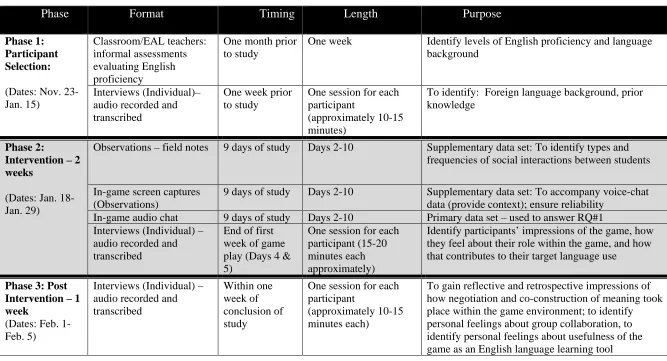
Phase 1: Participant Selection ... 90
Phase 2: Intervention ... 94
Data Analysis ... 96
Qualitative Content Analysis ... 97
Data Management ... 101
ix
CHAPTER FOUR: RESULTS ... 105
Introduction ... 105
Review of Analysis ... 106
Coding Procedures ... 107
Triangulation of Data ... 108
Phase 1: Initial Interview ... 108
Alice ... 109
Sharon ... 110
Michael ... 112
Justin ... 113
Phase 2: Intervention and Second Interview ... 115
Overview of Game Play ... 115
Findings... 117
Second Interview ... 128
Phase 3: Final Interview... 130
MinecraftEDU as a Tool for Using English ... 130
Interactions with Other English Language Learners ... 131
Beliefs about Learning English ... 132
Themes ... 133
Independent Game Play ... 134
Importance of Objectives ... 139
x
CHAPTER FIVE: DISCUSSION ... 152
Comparison of Results ... 153
Discourse at Levels 1-3 (Lower Level Thinking) ... 154
Discourse at Levels 4-7 (Higher Level Thinking) ... 156
Occurrences of Higher Level Thinking ... 158
Discussion ... 159
Teacher Interaction ... 160
Game Design ... 161
Student Perceptions ... 162
Deviance and Identity Exploration ... 163
Reduced Fear of Failure ... 164
Recommendations ... 165
Lack of Competition ... 166
Previous Experience with Minecraft ... 167
Context of Study (Location and Time of Day) ... 168
Role of Researcher and Age of Participant ... 169
Heterogeneous Groups ... 169
Cultural Background ... 170
Implications... 171
Social Gaming in a Foreign Language Instruction ... 171
Reduced Fear of Failure ... 172
xi
Conclusion ... 174
REFERENCES ... 177
APPENDIX A ... 188
Interview Protocol for Semi-Structured Interview #1 ... 188
APPENDIX B ... 190
Interview Protocol for Semi-Structured Interview #2 ... 190
APPENDIX C ... 192
Interview Protocol for Semi-Structured Interview #3 ... 192
APPENDIX D ... 195
Interview Protocol for Mroz’s Semi-Structured Interview #1 ... 195
APPENDIX E ... 197
Interview Protocol for Mroz’s Semi-Structured Interview #2 ... 197
APPENDIX F... 199
xii
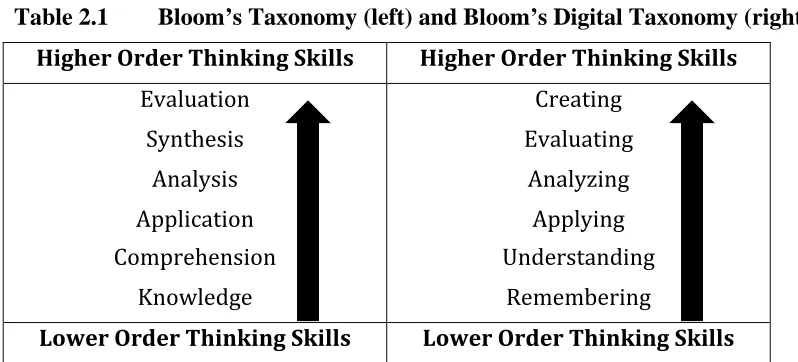
Table 2.1 Bloom’s Taxonomy (left) and Bloom’s Digital Taxonomy (right) ... 27
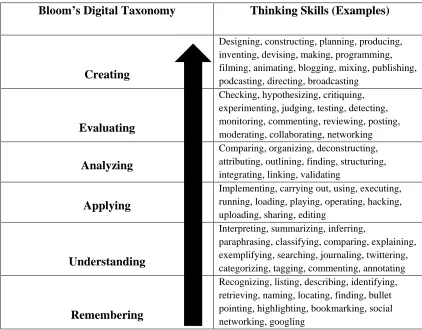
Table 2.2 Communication Spectrum: Examples of Thinking Skills in Relation to Bloom’s Digital Taxonomy ... 28
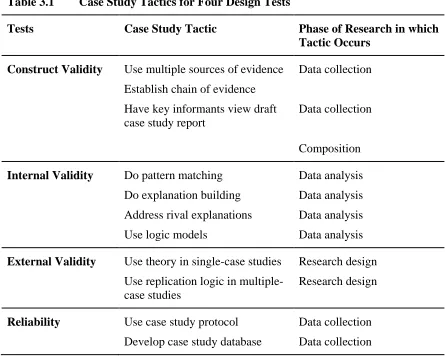
Table 3.1 Case Study Tactics for Four Design Tests ... 69
Table 3.2 Data Collection Schedule ... 92
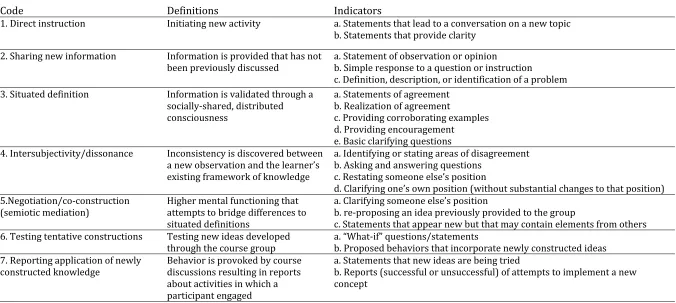
Table 3.3 Coding Table for Social Constructivist Interactions ... 100
Table 3.4 Notable Distinctions Between the Two Studies ... 104
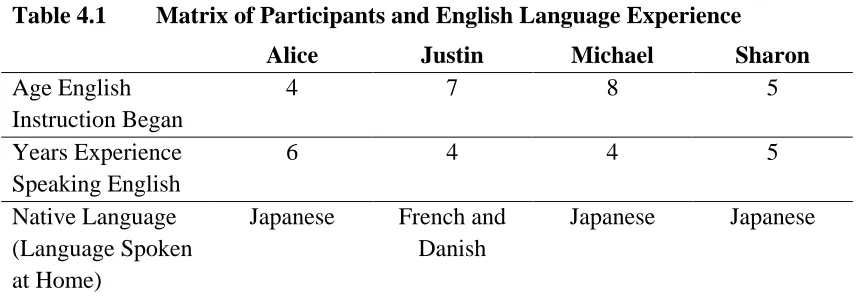
Table 4.1 Matrix of Participants and English Language Experience ... 109
Table 4.2 Level 1: Examples from Discourse ... 120
Table 4.3 Level 2: Examples from Discourse ... 121
Table 4.4 Level 3: Examples from Discourse ... 122
Table 4.5 Level 4: Examples from Discourse ... 125
Table 4.6 Level 5: Examples from Discourse ... 126
Table 4.7 Level 6: Examples from Discourse ... 127
Table 4.8 Level 7: Examples from Discourse ... 128
Table A.1 Coding Table for Social Constructivist Interactions ... 202
xiii
Figure 3.1 Pattimura Campus (Jakarta International School, 2015) ... 74
Figure 3.2 Photograph of researcher’s classroom ... 79
Figure 3.3 Screenshot of MinecraftEDU’s Escape from Everest game ... 86
Figure 3.4 Screenshot of MinecraftEDU’s Extinction Challenge game ... 88
Figure 4.1 Spaceship station at Escape from Everest ... 116
Figure 4.2 Screenshot of Extinction Challenge ... 117
Figure 4.3 Occurrence of categorized discourse for all days of intervention ... 119
Figure 4.4. Occurrence of discourse at Level 1 ... 120
Figure 4.5. Daily occurrence of responses categorized as 2a ... 121
Figure 4.6. Daily occurrence of level 3 discourse ... 123
Figure 4.7. Rate of occurrence for Level 4 discourse ... 125
xiv
CALL Computer Assisted Language Learning EAL English as an Additional Language
ELL English Language Learner
ILP Independent Learning Plan
JIS Jakarta Intercultural School
L2 Second language
CHAPTER ONE: INTRODUCTION Statement of the Problem
Over the past twenty years the ideological culture surrounding second language learning and second language instruction has shifted dramatically. The emphasis on standards-based teaching, testing, and accountability that began in the 1990’s has come to dominate instructional practices and overshadow the importance of language learning, despite the changing demographics of the American classroom and an increasing
emphasis on globalization (Committee for Economic Development [CED], 2006). Along with a steady increase in the number of English Language Learners (ELLs) in today’s classroom, there is also a growing urgency for native English speakers to learn foreign languages. The American Council on the Teaching of Foreign Languages [ACTFL] (2011) emphasizes the importance that foreign language learning holds for students today, stating “…language education is critical to our students’ success in the world of the future: a world that will insist upon their need to interact effectively with others…” (p. 2).
Unlike the classroom of yesteryear that required students to know a great deal of information about the language but did not have an expectation of language use, today’s classroom is about teaching languages so that students use them to communicate with native speakers of the language (p. 4, emphasis in original).
Although there have been dramatic changes in second language instruction over the past several decades, there is still much work to be done in the area of implementing critical thinking and problem solving skills. Instructors now rely less on textbooks and drill-and-practice exercises, and instead use instructional models that employ strategies to facilitate conversation and communication competence between language learners (Chen, 2005). It is precisely this communication and these conversations that warrant further investigation. Students who are asked to converse about subjects or topics that hold little personal meaning show less engagement and overall motivation, whereas those students who are engaged in critical thinking activities and are thereby challenged to discuss ideas, argue and defend theories, synthesize data, and explain themselves to others show
marked improvement in specific language learning skills (Berns, Gonzalez-Pardo, & Camacho, 2013; Dourda, Bratitsis, Griva, & Papadopoulou, 2014). Klimovienė,
Urbonienė, and Barzdžiukienė (2006) note that while it is common for other disciplines to incorporate critical thinking activities into their curriculum, foreign language
classrooms are noticeably lacking in this type of instruction.
A growing trend in the area of L2 acquisition is the implementation of technology in an effort to provide activities that go beyond the traditional drill and practice exercises of the past. This includes a range of computer-assisted language learning (CALL)
games provide ways for language learners to negotiate and persuade their way to reach the objective(s) or goal(s) of the game. Games that provide meaningful, purposeful objectives tend to hold the interest of learners and create higher levels of engagement as well (Berns et al., 2013; Dourda et al., 2014).
Despite the success that gaming has had within second language learning, there remains a noticeable lack of research that examines the specific factors of gaming environments, and how these factors might impact second language learning. Lieberman (2006) states that more research is necessary in order to identify the kind of learning that interactive games support, as well as the types of learning that are not supported in these environments. Thorne, Fischer, and Lu (2012) also argue that while there is substantial research on the potential that games hold for L2 learning, there is a distinct need for empirical research that evaluates gaming environments.
Purpose of the Study
The purpose of this study, therefore, was to continue upon Mroz’s (2012) research and further investigate the conversations that L2 learners have with one another while immersed in a digital gaming environment. Specifically, the discourse under analysis was collected from collaborative, task-based activities in an effort to identify how learners use critical thinking and problem solving skills to negotiate and co-construct meaning with one another in order to reach their collective goals. This study used a case study approach and focused on the discourse between 4th and 5th grade students engaged in a variety of task-based activities within MinecraftEdu. The research question that guided this study was as follows:
RQ#1: Do patterns of L2 negotiation and co-construction of meaning exist in the discourse produced collectively by a group of elementary English language learners working collaboratively to solve a complex problem as they are immersed in a social gaming environment? If so, what is the nature of these patterns and what does it reveal in terms of these learners’ L2 critical thinking and problem solving skills?
As this research was a replication study that aimed to add depth and
transferability to Mroz’s (2012) earlier work, certain aspects of the study remained the same, while other parts were purposely modified. These are discussed in detail within the Methods chapter, while a brief explanation of the importance of replication studies is reviewed here.
Replication Studies
Makel and Plucker (2014) define replication studies as, “…the purposeful
Unfortunately, there are a lack of replication studies currently underway within the field of education (Makel & Plucker). In a recent analysis of the top 100 education journals, the authors examined articles from a five-year period in order to identify the number of replication studies. Only six of the 100 journals had replication rates above 1%; a rate that is dramatically lower than that of other disciplines. It should be noted that 67% of these replication studies were successful, although replications conducted by researchers outside the original studies were found to be substantially less successful. The authors note, “We cannot know with sufficient confidence that an intervention works or that an effect exists until it has been directly replicated, preferably by independent researchers” (p. 311).
Spector, Johnson, and Young (2015) argue that there is currently a disconnect between what researchers want to explore and what studies are needed in order to
improve instructional practices and student learning. The authors posit that there is a lack of willingness to replicate another’s study, and instead, researchers aspire to create unique studies that cater to their specific interests. Due to this lack of replication studies, large-scale changes and improvements in education are not occurring. Spector et al. urge researchers “…to conduct such studies so as to make educational technology research more scientific and provide a firm and convincing foundation for large-scale
implementations and impact studies” (p. 2).
backgrounds, individual levels of proficiency, and/or cultural differences. Chun argues that conceptual studies are a more realistic approach to replicating second language research in that they purposely alter certain aspects of the study in order to make the findings more generalizable, or transferable, and to increase external validity. Similarly, conceptual replication studies aim to determine whether or not the initial findings will hold true for different populations or in different settings.
Mackey (2012) similarly notes that, while conceptual replication studies contain certain challenges, they can be useful in identifying whether the original findings of a study can be carried over to speakers of other languages, in different settings, or to learners of different ages. Mackey argues that there is a growing pool of second language studies that necessitate replication and suggests that researchers look for gaps in current findings that need to be investigated further.
transferability, about the nature of second language discourse within digital gaming environments in regards to critical thinking and problem solving.
Key Terms and Definitions
With the proliferation of digital games, social games, virtual environments, and virtual worlds there remains an inconsistency regarding terms and their intended
meanings (Girvan, 2013), thereby necessitating working definitions for use in this study. The following list of key terms and definitions intends to provide guidance and clarity for both what is meant by this researcher, as well as by other research cited within this paper.
• Digital Games – a broad term that includes any game played on a electronic device, be it online or offline, including desktop computers, laptops, game consoles, mobile phones, handheld devices, etc. (Whitton, 2009)
• Instructional Games – games designed and used primarily for instructional purposes, allowing students to practice, imitate, and eventually learn specific skills and behaviors (Rieber, 1996); games that include the essential elements of challenge, fantasy, feedback, and control (Dickey, 2007; Gee, 2005; Gee, 2008; Kapp, 2013; Malone, 1980; Malone & Lepper, 1987; Rieber, 1996; Wilson et al., 2009)
• Virtual Environments – any online environment in which the user has the perception of being somewhere other than where he/she is; these environments allow users to interact with the environment, as well as with other players (Schroeder, 2008)
• Virtual Worlds – similar to virtual environments, virtual worlds incorporate the elements of gaming, including the attainment of a clear goal, collaboration, competition, and feedback (Bell, 2008; Girvan & Savage, 2010; Schroeder, 2008) It is important to note that the terms virtual environment and virtual world are often used interchangeably, but contain distinct elements that require explanation (Schroeder, 2008). Essentially, virtual environments are online spaces in which an individual has the perception of being somewhere other than where he or she actually is and include the ability to interact both with the environment, as well as with others who are present in that environment (Schroeder, 2008). Schroeder argues that virtual
environments are distinct from virtual worlds in that they are first and foremost social spaces, in which individuals engage with one another for a variety of reasons. Virtual environments comprise such online spaces as Facebook and SecondLife and have been used extensively in a variety of learning contexts.
virtual worlds as, “a synchronous, persistent network of people, represented as avatars, facilitated by networked computers” (p. 2). Bell has identified several additional elements that distinguish virtual worlds from other online realities:
• Synchronous – all interactions take place in real time
• Distance/Space – individuals have an awareness of how near or far things are in relation to one another
• Persistence – the world (or game) does not pause or stop when an individual leaves the environment; this persistence affords players the feeling of a dynamic and evolving community
• Networks of individuals – people are an integral aspect to the environments, but interactions between them are not necessarily required. Individuals can form short or long term relationships, or they may choose to interact only with the environment
• Avatars – individuals are represented by a digital form within the space
• Facilitated by networked computers – all data and communication are facilitated through networked computers, adding extreme levels of complexity to the environment that would not be possible with paper-and-pencil games
games. As MinecraftEDU is a teacher-created game intended for instructional use in which users collaborate and compete to reach clear objectives, MinecraftEDU will be referred to as a social game throughout this study. All other gaming environments cited throughout this paper are referred to in the manner in which they were originally reported.
A more complete discussion of effective games, along with the essential elements involved in instructional gaming and social gaming, is included within the literature review. Similarly, the Methods section includes a thorough description of the specific games that were used in the MinecraftEDU environment.
21st Century Language Learning Skills and ‘Communicative Competence’ The ACTFL (2011) states that today’s language learning should focus on five main components: communication, culture, connections, comparison, and communities. The first component of ‘communication’ encompasses three modes: interpersonal communication, or the discourse that takes places back and forth between two
individuals; interpretive, which includes the ability to interpret and understand written and/or aural communication; and presentational, in which a person is able to effectively present ideas and communicate through oral or written forms. The ACTFL refers to these three components as “communicative competence” and recommends a long sequence of foreign language learning that begins in elementary school.
students to extend their language skills beyond the classroom in meaningful, purposeful ways. Examples of this include learners debating and collaborating to make decisions and actions within a digital environment that lead to the completion of a (common) goal. Warschauer argues, “The purpose of studying English thus becomes not just to acquire it as an internal system, but to be able to use English to have a real impact on the world” (p. 12).
In order to attain these goals, foreign language instruction must be learner-centered and heavily emphasize the three modes of ‘communication’ as previously described (ACTFL, 2011). Similarly, technology must be integrated into instruction in such a way that the target language is used to teach academic content through
collaborative tasks that are authentic and relevant to the learner. The ACTFL argues, “With today’s communication technologies, language classrooms can bring the world to the students, as teachers provide opportunities for students to use the language beyond the confines of their classroom walls” (p. 3).
Computer Assisted Language Learning (CALL)
Formal language instruction has continued to change over the past 40 years and now focuses on communicative abilities, rather than the teaching of discrete grammatical structures (Sørensen & Meyer, 2007). This evolution includes the increasing integration of CALL programs, activities, and lessons and has enabled communication and
Structural CALL
Warschauer (2004) describes Structural CALL as the first iteration in a series of computer-assisted technologies in which language learning was traditionally taught and learned through the use of drill and practice exercises. Structural CALL was largely based upon structural linguistics and was employed throughout the 1960’s and 1970’s. Thorne, Black, and Sykes (2009) point out that these traditional language-learning classrooms may have supported learning about language, but not necessarily supported learning how to socialize and speak the language effectively. Yang (2010) notes that CALL programs at this time were based upon the theory that language learning should include highly structured activities in which accuracy was the main objective.
Communicative CALL
This iteration of CALL focused more on “the meaning of language in use rather than on its form” (Warschauer, 2004, p. 10). This included activities that promoted interaction between students and supported the development of language as an internal mental system. Through this method, the content of what was communicated was not necessarily important, but rather the idea of interaction between students was thought to further the development of these internal systems. This was based on the cognitive view of language learning and was most popular immediately after the Structural CALL era of the 1960’s and 70’s.
discourse with one another without stopping to correct errors. This is accomplished through one-on-one conversations students have with one another that are casual and informal in nature.
Integrative CALL
Currently, a socio-cognitive approach is used in L2 instruction and is referred to as Integrative CALL. Warshauer (2004) describes how interactions continue to play a key role with an increased emphasis on the content of the interactions under this theory. Language is thought to develop not just as a mental system (as in Communicative CALL), but also through meaningful social interactions with others. The interactions language learners have allow them to enter new ‘discourse communities’ (Warshauer, p. 10). Not only are the interactions extremely important, but the community itself is as well. These discourse communities can include academic content areas, for example. Yang (2010) reiterates the importance of meaningful discourse that takes place between learners through Integrative CALL programs and activities. Similarly, the use of computers and technology in language learning is no longer limited to sporadic integration, but rather as an integral role in the facilitation of meaningful communication.
Digital Game Environments and Integrative CALL
often able to customize their experience to fit their specific level (Berns et al., 2013; Gee, 2009). In collaborative gaming environments students must work together using
communicative tools that can include critical thinking and problem solving. When used in a language-learning classroom, this provides opportunities to analyze and synthesize information in an effort to reach a common goal. It is this specific discourse that is thought to enable deeper thinking and learning, both of the content and of the target language. Dourda et al. (2014) note that digital games provide a fun, alternative means to language learning that contextualizes and provides immersive experiences for learners.
Conclusion
While there has been an abundance of research involving gaming in general, and a recent surge in language learning and gaming in particular, studies have predominantly centered upon older students (i.e., high school and university level). Blumberg and Fisch (2013) note that while digital game play has become an integral part of children’s lives, there is limited research on how it may impact learning. Thorne et al. (2009) state:
Indeed, there is a great need to more substantively explore the educational potential of social virtualities in ways that move beyond text-based CALL paradigms to examine other possible effects, dynamics, and uses associated with visually rendered and avatar-based virtual worlds. (p. 809)
activity” (p. 12). Continued research into the application of games within specific domains of learning is essential in order to identify the ways in which they will best benefit learners.
Overview of Chapters
CHAPTER TWO: LITERATURE REVIEW
The processes of critical thinking, negotiation, and co-construction of meaning, which are part of a social constructivist framework, play an integral part in the
development of second language learning. This literature review defines and examines several key concepts related to these processes. Specifically discussed is social
constructivism as a learning theory and a framework, both in general terms, as well as within the context of the language-learning environment. Additionally, a synthesis of recent research on critical thinking, negotiation, and co-construction of meaning is examined within the scope of second language acquisition. This chapter also provides an overview of instructional games, followed by a more thorough investigation of social games, including digital games and virtual environments. Included in this section are descriptions of the essential elements of gaming and the potential these components hold within a social constructivist learning environment. Finally, the chapter concludes with a brief summary of the major criticisms currently surrounding digital games.
Social Constructivism as a Framework and Learning Theory
Social constructivism has been described as a pedagogical theory, a theory of learning, and even as a theory of knowledge (Mvududu & Thiel-Burgess, 2012). For this study, social constructivism is defined and discussed as a learning theory and a
Simina & Hamel, 2005; Wood & Bennett, 1998; Yang & Wilson, 2006), and argued that learning is a social process that involves the cultural, historical, and personal interactions that take place between and among individuals (Mvududu & Thiel-Burgess, 2012). Vygotsky’s theory emphasizes the role that language and culture play in the cognitive development of learners by providing frameworks in which students can experience, communicate, and make sense of their reality. Ultimately, the formation of new
knowledge and new learning is a shared, collaborative experience that cannot happen for an individual in isolation (Adams, 2006; Hirtle, 1996; Mondahl & Razmerita, 2014; Simina & Hamel, 2005; Yang & Wilson, 2006).
Simina and Hamel (2005) also define social constructivism as the process of learning through one’s interactions with the physical and cultural environment; however, the authors extend the definition to also include both the act of reflecting on those
experiences, as well as integrating new information with previous knowledge (p. 223). The context in which these interactions occur cannot be underestimated. Vygotsky (1978) stressed the importance of both historical and cultural conditions within a given context, elements that are innate in a language-learning environment, as being vital to the process of learning. Yang and Wilson (2006) agree, noting, “What we learn and how we make sense of knowledge depends on where and when, such as in what social context, we are learning” (p. 365). Mondahl and Razmerita (2014) similarly note that social
Social Constructivism in the Language-Learning Classroom
Social constructivist teaching methodologies are a relatively new addition to the foreign language classroom (Villacañas de Castro, 2013). Traditional instruction in these environments largely consists of rote memorization in which learners are passive
receivers of information (Thomas, 2012; Yang & Wilson, 2006) and which focuses on the linguistics of language rather than the ways in which students best learn the language (Villacañas de Castro, 2013). Social constructivism, on the other hand, supports the active participation and involvement of learners engaged in target-language tasks. Learners become actively involved in their learning environment, constructing meaning based on the context and the interactions they have with others.
Hirtle (1996) asserts that, regardless of subject or classroom type, the primary role of language between individuals is communication. Learners take this language, in the form of written and spoken words, and attempt to mediate understanding through the lens of the social context in which the words are communicated. This process leads to the mobilization of new understandings and, ultimately, learning. Hirtle argues that this process of inquiring and exploring new ideas through collaboration with others may be more important than the content of what is actually learned.
Vygotsky (1978) also argued that learning takes place through dialogue, specifically, verbal or written communication between the learner and other sources of knowledge or ideas in his or her learning environment. Vygotsky termed this
process in which knowledge formation begins between individuals on an
inter-psychological level, based upon verbal language and other forms of communication (i.e., cultural cues), before finally being internalized as part of the intra-psychological level. The Importance of Scaffolding
Building upon prior knowledge and scaffolding are major aspects of social constructivism and involve Vygotsky’s (1978) Zone of Proximal Development (ZPD) (Bednar, Cunningham, Duffy, & Perry, 1992; Hirtle, 1996; Mondahl & Razmerita, 2014; Mvududu & Thiel-Burgess, 2012; Olivares, 2002; Simina & Hamel, 2005; Shen & Suwanthep, 2013; Yang & Wilson, 2006). Vygotsky (1978) described his ZPD theory as, “…the distance between the actual development level as determined by independent problem solving and the level of potential development as determined through problem solving under adult guidance or in collaboration with more capable peers” (p. 83). Mondahl and Razmerita (2014) describe learning as a constructive process during which learners attempt to assimilate incoming information with what was previously known. Olivares (2002) argues that when English Language Learners (ELLs) are able to use prior knowledge about a particular content area, they communicate about the subject, and not simply of the subject. The author argues that because the student actively communicates about the subject, he or she engages in higher levels of thinking and more authentic learning occurs.
Mvududu and Thiel-Burgess (2012) also describe learning as an active process in which students bring prior knowledge to a new context and negotiate incoming
different abilities can provide deeper insight into the comprehension levels for the instructor. This informal dialogue, especially between students of different cultural and linguistic backgrounds and those who are at different levels of target language
proficiency, can provide substantial support for individual learners as well. The authors speculate that this may contribute to more advanced exposure and development of complex vocabulary and grammar.
The Role of Teacher as Facilitator
Simina and Hamel (2005) note that a social constructivist learning environment is student-centered, in which the instructor’s role is that of facilitator and guide. The
classroom teacher should support and encourage collaboration, negotiation, and socialization, as well as provide opportunities for learners to draw on prior knowledge and make connections with these experiences. Teachers facilitate these acts of
negotiation, collaboration, and socialization by providing scaffolding opportunities that stretch and challenge students, while providing just the right amount of support along the way. This scaffolded, guided instruction correlates to Vygotsky’s (1978) ZPD, in which students are pushed past their independent level of learning, but can be successful through the assistance of a teacher or more experienced peers.
Adams (2006) explains how teachers facilitate learning by guiding students to construct new knowledge and understanding. Scaffolding becomes the principal task for the teacher in that he or she must be aware of each learner’s individual level, and
in a multitude of ways. Vygotsky (1978) asserts that instructors and teachers are not solely responsible for ensuring that scaffolding occurs. Parents and/or other students at higher levels of learning are able to partake in this process as well (Adams, 2006; Shen & Suwanthep, 2013; Yang & Wilson; 2006). It is precisely these different cultural and educational backgrounds that can provide a natural support system within the learning environment. According to Vygotsky (as cited in Hirtle, 1996), “…with assistance, every child can do more than he can by himself – though only within the limits set by his development” (p. 91).
Learner-Constructed Meaning
Yang and Wilson (2006) note that students must be exposed to materials that are relevant, meaningful, and purposeful. In other words, learners must connect to the learning activity in some manner that holds meaning for them personally. If instructors fail to provide these types of activities and lesson, students become removed onlookers, rather than engaged learners aiming to make meaning from what they are studying. Olivares (2002) argues that social constructivist learning environments must be student-centered to contain activities that promote spontaneous, authentic interactions between participants. Instructors must integrate topics and conversations about everyday, relevant issues, concerns, and problems, rather than discussions generated by a textbook or
program (Doghonadze & Gorgiladze, 2008; Shen & Suwanthep, 2013).
Increased test scores, retention, and overall class participation are associated with
this student-centered approach to instruction and learning (Karaduman & Gültekin, 2007;
Khalid & Azeem, 2012; Mvududu & Thiel-Burgess, 2012). Mvududu and Thiel-Burgess
to stay on task, make connections to previous work, and ultimately retain pertinent
information for longer periods of time. Students in their study expressed an improved
ability to focus on the curricular material, attributing their increase in attention to a lack
of prescribed class goals and a freedom to pursue personally meaningful topics.
In Khalid and Azeem’s (2012) study of university English language learners, pre-
and post-test scores were compared between students in a constructivist-based classroom
to those in a traditional foreign language classroom. Although pre-test scores were nearly
identical for the two groups, the experimental group showed significant gains in English
language acquisition by the end of the study, including notable increases in reading,
grammar, and writing. Bednar et al. (1992) repeatedly emphasize the importance of
relevant, real-world contexts for effective learning. This does not necessarily mean that the task or problem is meaningful on its own, but that it is logical within the learning context and that there is a legitimate reason to impel the learner to solve it.
Technology as a Social Constructivist Tool
Ideal Computer Assisted Language Learning (CALL) activities provide
predetermined. While a central task or objective must be specified, the boundaries in which that task is ultimately completed should not be stipulated.
Digital games hold the potential to provide this exact context, complete with multiple perspectives that allow learners to continually negotiate meaning within their environment. Thorne et al. (2009) describe how these collaborative spaces contain goal-oriented tasks that increase in difficulty as players move through the game. This
scaffolding is an inherent design component of many digital games and can, therefore, provide complex environments that are optimal for learning. Students often spend
hundreds of hours working through similar, repetitive, yet increasingly difficult problems in order to advance through a game. Gee (2008) also argues that these game features form to provide learning environments that fuse pleasure and learning through the lens of scaffolded, engaging, goal-directed activities that naturally align with a social constructivist framework.
Squire and Jenkins (2003) argue that social games are a natural fit in the
Although each digital game is unique and must be considered individually, it is important to note that the aspects of collaboration, communication, and scaffolding are intentionally woven into the structures of many of these spaces (Berns et al., 2013; Gee, 2003; Kapp, 2013; Lieberman, 2006; Malone & Lepper, 1987; Thorne et al., 2009; Thorne et al., 2012). Players often form groups of players, or guilds, in order to accomplish certain objectives that might otherwise be impossible if attempted independently. These guilds can provide peer-scaffolding opportunities for veteran players to engage and share information with less experienced players (Godwin-Jones, 2014; Thorne et al., 2009). This includes explanations and information that are
meaningful and pertinent to the immediate environment and objective. Because of the shared goals that many digital games provide, players tend to use language freely and make appropriate linguistic choices when interacting with others (Godwin-Jones, 2014; Thorne et al., 2009). Often, the main objective is not the acquisition of the target language, but the completion of the goal or the winning of the game in general. As Godwin-Jones remarks:
The hope is that players will go beyond seeing gameplay as a course assignment and will gain enough interest to explore and experiment. Self-generated and self-directed discovery can further the kind of intrinsic motivation that commits users to learning more. (p. 13)
have the ability to provide real-world based opportunities for interaction, sociality, and collaboration.
Godwin-Jones (2014) emphasizes, however, that games are not a cure-all for language learning. The author points out that with such a wide variety of games available, one must be careful about choosing which ones to implement in a language learning environment. Blake (2013) also argues that technology use in general should be carefully guided by theory and the experience and recommendations of others who have used it.
Critical Thinking
Scriven and Paul (2015) describe critical thinking as an intellectual process that includes analyzing, questioning, defining, synthesizing, and evaluating input into reasonable, logical structures that correspond to the particular context in which the information is encountered. The authors argue that while critical thinking is a highly individualized process, certain core elements exist that include guided, self-disciplined thinking that aim to reason at the very highest levels.
Critical Thinking: Bloom’s Taxonomy
Bloom’s taxonomic model of the processes that occur within the cognitive domain provides a way to formally classify and measure learning behaviors (Klimovienė et al., 2006). This seminal work supplies a method for educational researchers to structure and define the processes in which individuals think and learn by classifying levels of thinking, ranging from lower order skills to higher order skills.
Within this model of higher order skills, we find the concept of critical thinking. Brookfield (1987) explains the numerous ways in which critical thinking, as both a concept and a process, is described, emphasizing both its complex nature and the variety of manifestations it can take. For example, critical thinking in the elementary classroom may look substantially different from critical thinking within an adult counseling session. Despite this, Brookfield maintains there are four fundamental elements that represent the processes, activities, and attributes that critical thinkers employ and display: identifying and challenging assumptions, challenging the importance of context, imagining and exploring alternatives, and engaging in reflective skepticism.
Similarly, Klimovienė et al. (2006) define critical thinking as the process through which an individual considers multiple perspectives, analyzes positions based on
deductive or inductive validity, defends arguments with evidence, and formulates reasonable conclusions that are likewise defendable. The authors state, “…the development of critical thinking becomes a promising strategy helping to increase
Bloom’s Digital Taxonomy in the Foreign Language Classroom
After several decades of revision and debate, Bloom’s Taxonomy now includes the digital processes, activities, and actions in which individuals participate and which are often implemented within today’s classrooms. This revised taxonomy is known as
Bloom’s Digital Taxonomy (Churches, 2011) and depicts the change from using nouns to verbs in order to describe the thinking process (Table 2.1). Additionally, the process of creating was determined to be of a higher level of thinking than evaluating.
Table 2.1 Bloom’s Taxonomy (left) and Bloom’s Digital Taxonomy (right) Higher Order Thinking Skills Higher Order Thinking Skills
Evaluation Creating
Synthesis Evaluating
Analysis Analyzing
Application Applying
Comprehension Understanding
Knowledge Remembering
Lower Order Thinking Skills Lower Order Thinking Skills
Note. Adapted from Educational Origami: Bloom’s Digital Taxonomy by A. Churches (2011).
Table 2.2 Communication Spectrum: Examples of Thinking Skills in Relation to Bloom’s Digital Taxonomy
Bloom’s Digital Taxonomy Thinking Skills (Examples)
Creating
Designing, constructing, planning, producing, inventing, devising, making, programming, filming, animating, blogging, mixing, publishing, podcasting, directing, broadcasting
Evaluating
Checking, hypothesizing, critiquing, experimenting, judging, testing, detecting, monitoring, commenting, reviewing, posting, moderating, collaborating, networking
Analyzing
Comparing, organizing, deconstructing, attributing, outlining, finding, structuring, integrating, linking, validating
Applying
Implementing, carrying out, using, executing, running, loading, playing, operating, hacking, uploading, sharing, editing
Understanding
Interpreting, summarizing, inferring,
paraphrasing, classifying, comparing, explaining, exemplifying, searching, journaling, twittering, categorizing, tagging, commenting, annotating
Remembering
Recognizing, listing, describing, identifying, retrieving, naming, locating, finding, bullet pointing, highlighting, bookmarking, social networking, googling
Note. Adapted from Educational Origami: Bloom’s Digital Taxonomy by A. Churches (2011).
The revised taxonomy has serious implications regarding the teaching and
learning of foreign languages. The traditional methods of rote memorization and drill and practice exercises fall into the lower order category of thinking skills, whereas the
and moderating are not only found to correlate to the higher levels of the digital taxonomy, but are also integral aspects of the social constructivist framework. Significance of Critical Thinking in the Foreign Language Classroom
Shirkhani and Fahim (2011) discuss the significance of critical thinking in the foreign language classroom, arguing that a strong correlation exists between critical thinking skills and learner achievements. They assert that students who exhibit well-developed critical thinking skills show an increased ability to complete complex tasks over their peers with less developed critical thinking skills. Dourda et al.’s (2014) study involving ELL’s using critical thinking skills in a game-based geography project showed, without exception, significant gains in students’ knowledge of geography content, while also exhibiting a 45% increase in use of new vocabulary.
Liaw (2007) asserts that critical thinking skills are vital for language learners to gain proficiency in the target language. This involves students demonstrating their understanding through a variety of ways, including the use of inferences, problem
solving, and asking pertinent questions. Adams (2006) emphasizes the use of open-ended tasks that promote critical thinking and complex problem solving in a context that is
applicable and meaningful to the language learner. The author states, “The mutually
reinforcing nature of open-ended, exploratory talk provides mechanisms and
opportunities for individual reflexivity within a context that actively desires and operates to mediate knowledge construction into the social space” (p. 249).
defend their ideas (ACTFL, 2011; Kabilan, 2000; Rezaei, Derakhshan, & Bagherkazemi, 2011). Doghonadze and Gorgiladze (2008) note:
…the main - practical - goal and the communicative approach towards teaching foreign languages mean that learners need not only to acquire a certain amount of linguistic material but also to be able to use this material in permanently arising new situations. (p. 102)
In order to foster the development of critical thinking skills in the foreign language classroom, students must identify and formulate rules about grammar and vocabulary as they interact with one another, rather than having information ready-made
and presented from the teacher (Gaskaree, Mashhady, & Dousti, 2010). Shirkhani and
Fahim (2011) suggest specific materials that can enhance and promote critical thinking, including activities that require learners to synthesize, argue, debate, discuss, and classify. Kabilan (2000) notes that these activities should be embedded within the
curriculum in order to provide an authentic context that is both meaningful and engaging for students. Lessons might include using the target language in creative ways to express oneself, adapting and revising the manner in which the target language is used,
identifying patterns in the target language, incorporating these patterns into future language use, and using an existing understanding and knowledge of the target language to infer new vocabulary and grammatical structures (Gaskaree et al., 2010; Shirkhani & Fahim, 2011).
promote students learning about the language, rather than learning how to use it effectively in meaningful discourse. Changes in pedagogy are paramount in affording students opportunities to practice critical thinking skills through the use of their target language (Kabilan, 2000; Rezaei et al., 2011). Traditional language teachers often spoon feed information to their students by providing immediate answers to students’ questions (Gaskaree et al., 2010). Instead, teachers must ask questions in various ways in order to enhance cognitive development, thereby stimulating critical and creative thinking within the language-learning environment. Shirkhani and Fahim (2011) argue that language learners who use critical thinking skills can examine existing theories, devise questions about these theories, and ultimately identify new and novel approaches to solving problems. Similarly, language learners should utilize the target language to defend their ideas and explain the rationale behind their own theories (Doghonadze & Gorgiladze, 2008). Throughout this process, students should be able to identify and correct errors, reflect on their interactions with others and, ultimately, integrate new information into pre-existing knowledge (Gaskaree et al., 2010; Rezaei et al., 2011).
Brookfield (1987) argues that critical thinking skills cannot be supported or fostered in an individual without at least some level of consent. Trying to coerce or force a learner to analyze information and reflect on experiences will likely only result in intimidation and disinterest. Instead, instructors should try to nurture, awaken, and support the processes of critical thinking in ways that are non-threatening and
Conclusion
There is an abundance of research indicating that student-centered learning that is both meaningful and engaging, and which integrates activities that promote critical thinking skills, is most beneficial for second language learners (Doghonadze &
Gorgiladze, 2008; Gaskaree et al., 2010; Kabilan, 2000; Liaw, 2007; Rezaei et al., 2011; Shirkhani & Fahim, 2011). The aforementioned instructional strategies naturally align with a social constructivist framework that supports the interactions between learners, including scaffolding and peer-to-peer teaching, discussions, and debates that encourage higher order thinking skills. Technology, and specifically digital gaming, holds a great deal of potential in providing environments where meaningful exchanges can occur through collaborative task-based activities involving critical thinking and problem
solving. This includes the social interactions that take place in which students form ideas, argue theories, and ultimately acquire new understanding.
Assessing the effectiveness of these instructional strategies can be troublesome, however. Liaw (2007) argues that an in depth analysis of language learners is necessary in order to accurately assess critical thinking skills in the language classroom. In the researcher’s study, quantitative data reflecting changes in critical thinking skills showed no significant changes, even though qualitative data analysis revealed a significant increase in the same skills. Similarly, Shen and Suwanthep’s (2013) study of a social constructivist-based reading program for English Language Learners (ELLs) revealed no significant gains in reading skills, despite the fact that many students reported an
Instructional Games
Although games have long been associated with leisure, fun, and pleasure,, their role in education and learning has yet to be fully explored. Rieber (1996) states,
“…games and play are prone to unfortunate misconceptions that reduce their potential use within learning environments with both children and adults” (p. 53). Squire and Jenkins (2003) agree that the potential games hold for experiential, immersive learning tends to run counter to popular trends within the field of education. With the recent proliferation of video games, “edutainment,” and digital gaming, instructional games are currently garnering increased attention. Blumberg and Fisch (2013) argue that while digital game play is an integral part of children’s lives outside of school, it has a growing role inside school as well, and can provide opportunities to study cognitive development.
This section examines the roles that instructional and digital games play in supporting social constructivist teaching strategies, both in general terms, as well as in the context of second language learning. To begin, the notion of ‘instructional game’ is defined in order to further understand the essential elements they contain that can contribute to learning. Following this is a discussion of social games, as previously described, with the purpose of exploring the potential they hold within a social constructivist, second language learning environment.
Instructional Games Defined
behaviors they will later need. Kapp (2013) more specifically defines games as “…a system in which players engage in an abstract challenge, defined by rules, interactivity and feedback, that results in a quantifiable outcome often eliciting an emotional
response” (p. 101). The terms edutainment, educational gaming, role playing games, and virtual games, are often used interchangeably with the term instructional game. While there are certainly differences that distinguish these games from one another, for the purposes of this study, instructional game is an all-encompassing term that includes games designed and used primarily for instructional purposes. Social games are further defined and discussed in the following section; specifically in regard to the features they contain that support critical thinking, negotiation, and co-construction of meaning within second language learning.
Essential Elements and Their Effects
Challenge. The element of challenge appears in all quality games, whether there is a primarily educational or entertainment purpose. There are specific characteristics of this element that contribute to a game’s instructional effectiveness, including goals and objectives, motivation, and engagement (Dickey, 2007; Gee, 2005; Gee, 2008; Kapp, 2013; Malone, 1980; Malone & Lepper, 1987; Phillips, Horstman, Vye, & Bransford, 2014; Rieber, 1996; Wilson et al., 2009). Maintaining an appropriate level of challenge is crucial to designing quality instructional gaming; there is a fine line between
appropriately engaging students and overwhelming players with objectives that are too difficult. In order to accomplish this, game design generally includes the use of graduated levels. Gee (2005) explains that good instructional games will present problems of
increasing difficulty, allowing players ample opportunities to practice their growing skills before being presented with a new task or objective. This new challenge often provides contradictory or conflicting information and requires the learner to reevaluate and make modifications to his or her current understanding. Each step of increasing difficulty, coupled with new information, incorporates elements of a social constructivist learning space that includes scaffolded learning and uses prior knowledge as a foundation for new knowledge construction.
independently note that intermittent surprises tend to pique cognitive curiosity,
contributing to a student’s overall level of engagement. This aspect of instructional game design closely aligns to scaffolding strategies employed through social constructivist teaching practices, in which instructors chunk information into parts that are easier for learners to process. This includes the use of graduated exercises similar to levels in a game, as well as questioning techniques that introduce unexpected or random
information.
Motivation and engagement. The notion of challenge on its own is not
necessarily indicative of learning, but rather strongly associated with higher levels of engagement and intrinsic motivation, which are thought to hold the most potential for increased learning gains (Dickey, 2007; Gee, 2008; Phillips et al., 2014). Wilson et al. (2009) describe effective instructional games as, “When informational content combines with the appropriate gaming characteristics, the combination of the two elicits a
motivated learner” (p. 234). Players are more likely to develop intrinsic, endogenous motivation and will continue playing games that pique their interest, contain unexpected surprises, and maintain levels of optimal complexity (Malone & Lepper, 1987; Phillips et al., 2014). Intrinsic, endogenous motivation is most often associated with deeper learning of the content, whereas games lacking in complexity fail to keep learners engaged and provide limited learning opportunities (Egenfeldt-Nielsen, 2007; Malone & Lepper, 1987).
references Csikszentmihalyi’s theory when describing motivated, engaged learners who are so absorbed in a task that they are often unaware of their surroundings, they are free from personal stress, and they do not notice the passing of time. As Rieber notes, “Flow is only possible as long as a person avoids boredom and anxiety simultaneously” (p. 48).
Other researchers note the balance of emotions that appear critical in keeping players engaged in gaming. Phillips et al.’s (2014) study revealed that many participants reported simultaneous feelings of enjoyment alongside frustration and aggravation, noting that this combination was precisely what encouraged them to continue playing. Gee (2008) also emphasizes the idea that good instructional games contain elements that engage the emotional side of the player, stating, “Emotion appears to be a key source of motivation for driving thinking, learning, and problem solving” (p. 35).
Girard, Ecalle, and Magnan (2013) argue against claims that these increases in motivation consistently lead to gains in learning. In their meta-analysis of nine studies involving the educational effectiveness of instructional games, the authors point out that studies showing increases in motivation and engagement do not always have correlating increases in test scores. The authors similarly argue against the theory of
Csikszentmihalyi’s (1978) Flow theory, stating that there is a lack of empirical evidence showing that students engaged in this particular state show any significant increases in skill levels.
involves the use of a story or narrative within an imaginary world that supplies the context for the game. Rieber refers to this element as a microworld, or “…a small, but complete version of some domain of interest” (p. 45). Squire and Jenkins (2003) argue that instructional games can provide microworlds in which students practice social processes and learn how to collaborate with one another to solve an immediate task or goal. An important facet of a microworld is its ability to match the learner’s cognitive and affective abilities so that the player needs little to no training or preparation in order to engage. Baek and Choi (2014) point out that many social games are designed in this manner, with such an ease of use that virtually anyone can learn to play and immediately become engaged. Rieber explains that because players become emotionally attached to these microworlds, they are not only more absorbed within the game environment, but are also better able to self-regulate their learning.
task or objective for the learner, but also a way in which the student can realize its real-world application outside the game.
Malone (1980) discusses intrinsic and extrinsic fantasies, noting that intrinsic fantasies often supply players with avenues for using their game skills in the real world. He states, “More importantly, when the fantasy in a game is intimately related to the material being learned, the players are able to exploit analogies between their existing knowledge about the fantasy world and the unfamiliar things they are learning” (p. 164). Malone further asserts that instructional games that employ endogenous fantasy elements are able to weave curricular content into the game in such a way that instructional content and gaming content are seamlessly integrated.
Identity. The element of fantasy also includes the sub-element of identity, in
which the player either creates or adopts a new identity that will enable him or her to reach the desired goal (Dickey, 2005; Dickey, 2007; Gee, 2005; Gee, 2008; Lee et al., 2012; Suh, Kim, & Kim, 2010; Susaeta et al., 2010). Gee (2005) argues that this new identity formation is similar to a student adopting a math identity or science identity when entering a classroom. Learners identify with the subject or task they are assigned to and adjust their thinking and perspectives accordingly. Susaeta et al.’s study revealed that students strongly identified with their new identity and spent a great deal of time
Feedback. As in any type of instruction, feedback is an essential aspect of student learning and, therefore, a critical element of effective instructional games (Gee, 2005; Gee, 2008; Kapp, 2013; Malone, 1980; Rieber, 1996; Wilson et al., 2009). Wilson et al. describe three ways in which feedback typically occurs within an instructional game: players may receive immediate feedback at the end of a task, intermittently throughout the game, or from a source outside the game (i.e., their teacher and/or peers). Gee (2005) explains how players learn from feedback, adjusting their actions in order to be more successful in the future. Feedback is processed and integrated with players’ prior knowledge, including information learned through playing the game, in order to help them achieve objectives.
Gee (2005) further describes how good games provide scaffolding by teaching increasingly difficult lessons that build upon one another, as well as providing ongoing, continuous feedback. The information gained from one event is embedded into future problems, so that leaners are able to apply new knowledge in increasingly difficult problem scenarios. Malone (1980) notes that while feedback should be consistent, it should also contain surprising information that forces learners to question what they already know and make sense of the new information. This aspect of feedback is strongly linked to a social constructivist framework that employs continuous scaffolding, ongoing opportunities for reflection, and construction of new knowledge.
applies to the decisions made by a player’s game-identity, but also the choices about the identity itself. Customization can include the rate at which a player progresses through a game, the number of levels played, and the physical appearance of the game-identity or avatar.
The element of control is tightly linked to the other main components of good instructional games in several ways. For example, players often exhibit different behaviors within gameplay than they would in a traditional classroom (Baek & Choi, 2014; Dickey, 2005; Dickey, 2007). When the game-design includes appropriate, progressive levels of challenge and incorporates interesting and intriguing contexts that provide strategically placed feedback, learners often take more risks, explore more, and communicate in ways beyond what is usually observed within a traditional classroom. One reason for this is that feedback is often presented positively, and the negative consequences for failing are kept to a minimum (Gee, 2005); again, stressing that the game should not be too simple or too confusing. Maintaining an engaging level of challenge keeps learner curiosity high, which contributes to further motivation to continue playing the game.
Conclusion
scaffolded and slowly increase in complexity. Learning is student-centered and students participate in meaningful discourse as they explore and experiment with new ideas and understandings. Similarly, instructional games can provide learning experiences that employ critical thinking skills that incorporate the gathering of information and the subsequent questioning and evaluating of this information to solve a problem.
Research in this area is far from complete, however, and contains inconsistencies that warrant further investigation. Phillips et al. (2014) report that in-game assessments from their study did not adequately show student learning, and semi-structured individual interviews revealed conflicting information. The authors argue that multiple qualitative aspects of analysis must be employed, and researchers must have an understanding about students’ prior feelings, beliefs, and attitudes not only towards games in general, but also toward the specific subject-context in which the game is situated. Donmus (2010) agrees, noting that research specifically targeting gaming through the use of social media is especially needed. The author argues that while adding instructional games to platforms such as Facebook holds a great deal of potential, instructors must also be prepared to adopt new pedagogies and teaching strategies.
Social Gaming as an Instructional Medium
Social games are set apart from more independently played games in that they occur in an online environment and generally require contact between players in some manner. These games take the previously discussed components of control, fantasy, challenge, and feedback and incorporate the additional elements of collaboration and competition as well. Because of these added components, there is an argument that social games are better suited as instructional tools than independently played games. As Gee (2008) notes:
Good learning requires participation—however vicarious—in some social group that helps learners understand and make sense of their experience in certain ways. It helps them understand the nature and purpose of the goals, interpretations, practices, explanations, debriefing, and feedback that are integral to learning. (p. 23)
Social Games and Situated Meaning
Gee (2003) argues that meaning (i.e., sense or significance) is embodied within the nature of playing a game. Players must continually use information gained from interactions, artifacts, images, and materials and “…fit them into the emerging plot and virtual world you are discovering and helping to build” (p. 85). Gee refers to this as situated meaning in that the objects encountered throughout a game are assigned meaning that is specific to the particular situation the player is in, or that fit into the larger,
overarching narrative of the game in some way. The meanings of these artifacts can and often do change during the course of the game, requiring learners to continuously analyze, reassess, and reevaluate their decisions and behaviors.
vocabulary that surpasses the verbal meaning, or the general understanding of a word or concept, without the ability to apply it to new scenarios. Gee argues that good video games actively encourage situated meaning in ways that traditional classroom instruction generally fails. This includes “thinking inside of and with simulations in a situated and embodied way” (p. 323) that customizes concepts for specific situations.
Lieberman (2006) states, “Players actively participate in a game – applying knowledge, devising strategies, making decisions, using skills, and reviewing the outcomes” (p. 382). The author argues that situated learning within social games can motivate deep cognitive engagement. Learners quickly identify what they need to know and apply a variety of problem-solving strategies to progress in the game as quickly as possible. Lieberman argues that this deep and close attention to the necessary skills and knowledge required for success leads to a deeper, more meaningful learning of the content of the game.
Collaborative Game Play
The collaborative nature of social games makes them unique in that interactions between players are intentionally integrated into gameplay. Susaeta et al. (2010) describe social games as constructivist learning tools that provide students with authentic learning opportunities. These games often require players to interact with one another in order to examine, discuss, collaborate, and negotiate new information, reinforcing both the social constructivist framework of learning, as well as employing activities that encourage critical thinking skills. Baek and Choi (2014) echo these sentiments, arguing that social games provide real-world based opportunities for interaction, socialization, and