Azza et al. World Journal of Pharmaceutical and Life Sciences
ROLE OF LONG NON-CODING RNA CDKN2B-AS1 AND HOMOCYSTEINE IN
PATIENTS WITH ISCHEMIC CARDIOMYOPATHY
Azza Elamir*1, Khalid El-Khashab2, Hassan Ebeid2 and Hosam Saif El Nasr3
1
Department of Medical Biochemistry, Faculty of Medicine, Fayoum University, Fayoum, Egypt.
2
Department of Cardiology, Faculty of Medicine, Fayoum University, Fayoum, Egypt.
3
Department of Cardiology, Beni Suef General Hospital, Ministry of Health, Beni Suef, Egypt.
Article Received on 29/06/2017 Article Revised on 20/07/2017 Article Accepted on 10/08/2017
INTRODUCTION
Ischemic cardiomyopathy refers to significantly impaired function of left ventricle (left ventricular ejection fraction less than or equal 35 to 40 %) that is caused by coronary artery disease. It is believed to be found in patients with heart failure who have had a myocardial infarction (MI) or have evidence of viable hibernating myocardium, or with regard to angiography, serious coronary disease. Because the clinical appearance often being not distinguishable from those of primary dilated cardiomyopathy, these patients had a worse consequence than those with non ischemic cardiomyopathy.[1] Usually, patients with ischemic cardiomyopathy have a history of acute myocardial infarction. However, it may occur in patients with coronary artery disease, but without a past history of acute myocardial infarction. This cardiomyopathy is one of the major cardiac causes of sudden death. It is the cause of more than 60% of all systolic cardiac failures all over the world.[2]
Amongst diverse non-coding RNAs, long non-coding RNA (lncRNA) appeared as a new therapeutic in cardiovascular diseases.[3] LncRNAs are types of RNAs
which consisted of more than 200 nucleotides and play role in regulation of gene expression. Recently, several studies proposed crucial roles of long non-coding RNAs in pathogenesis of cardiovascular diseases. For instance, aberrant expression of lncRNA is correlated with the pathogenesis of ischemic cardiomyopathy.[4]
The long non-coding RNA CDKN2B-AS1 is commonly known as the Antisense Non-coding RNA in the INK4 Locus (ANRIL), is a 3.8-kb-long RNA transcribed from the short arm of human chromosome 9 on p21.3.[5]
CDKN2B-AS1 is a potent genetic marker of atherosclerosis and primarily it is believed to be the ‘leading standard’ for any genome wide association study (GWAS) of atherosclerosis concerning conditions.[6]
Homocysteine (Hcy) is a four-carbon amino acid with a free thiol group, which is formed by demethylation of methionine, an essential amino acid taken in diet.[7]
Several studies showed an association between level of homocysteine and HDL and LDL. Recent studies
World Journal of Pharmaceutical and Life Sciences
WJPLS
www.wjpls.org SJIF Impact Factor: 4.223
*Corresponding Author: Azza Elamir
Department of Medical Biochemistry, Faculty of Medicine, Fayoum University, Fayoum, Egypt.
ABSTRACT
Background: Ischemic cardiomyopathy (ICM) refers to significantly impaired function of left ventricle that is caused by coronary artery disease. The aim of this study is to assess the levels of lnc-RNA-CDKN2B-AS1 and homocysteine in patients with ischemic cardiomyopathy and compare with patients with non ischemic cardiomyopathy. Methods: The present study was conducted on 86 patients with cardiomyopathy divided into 2 groups: Group I; 56 patients with post-ischemic cardiomyopathy (47 males and 9 Females) and Group II; 30 patients with non ischemic dilated cardiomyopathy (23 males and 7 females). Serum was separated for detection of homocysteine by ELISA and lnc-RNA-CDKN2B-AS1 by qRT-PCR. Results: There was significant increase of serum lnc-RNA-CDKN2B-AS1 in the ischemic group compared with non- ischemic group. Serum Homocysteine level was high in the ischemic group than non- ischemic group but P-value was not significant. Conclusion: Lnc-RNA-CDKN2B-AS1 has a strong potential to act as a biomarker for diagnosis of ischemic cardiomyopathy providing potential new strategies for early screening and treatment of ischemic cardiomyopathy. As regard homocysteine, we need more research to establish it as a risk factor for ischemic cardiomyopathy and this is definitely important for the purpose of strong evidence.
demonstrate that homocysteine is an independent prognostic indicator for emergence of atherosclerosis in patients with dyslipidemic profile. Recently, it has been detected that high plasma homocysteine is correlated with an increased incidence of ischemic cardiomyopathy in the general people.[8]
The aim of the present study is to assess the level of lnc-RNA-CDKN2B-AS1 and homocysteine in patients with ischemic cardiomyopathy and compare with patients with non ischemic cardiomyopathy.
SUBJECTS AND METHODS
The subjects of this study were selected from out patient clinic of Cardiology and inpatient Cardiology department, Fayoum University Hospital, Faculty of Medicine, Fayoum University, Fayoum, Egypt. The design, objectives and methods of the study were compatible with the world medical association (WMA) declaration of Helsinki 2013. The protocol of study had been approved by the research ethical committee at Fayoum University. The protocol was discussed to all the study participants, and a written informed consent was obtained from each participant. All participants were volunteers.
This study was conducted on 86 subjects were classified into 2 groups:
Group (1): 56 patients diagnosed with ischemic
cardiomyopathy aged 60.2 ± 6.6, 47 males (83.9%) and 9 females (16.1%). The diagnosis of ischemic cardiomyoapthy is based on history, symptoms, ECG finding of old MI, Echocardiographic finding of SWMA, with impairment of systolic function, EF less than 40%, and Coronary angiography finding of significant lesions or Multi vessels coronary artery disease.
Group (2): 30 patients diagnosed with non ischemic cardiomyopathy (dilated cardiomyopathy DCM) aged 63.1 ± 7.3, 23 males (76.7%) and 7 females (23.3%) as a control group. The diagnosis of DCM is based on symptoms, Echocardiographic finding of dilated left ventricular internal dimensions with impairment of systolic function, (HFrEF), EF less than 40%, LVEDD more than 5.5 cm, and LVESD more than 4.5 cm).
Excluion criteria included any patient with valvular or congenital heart diseases, patients with thyroid, pituitary, or adrenal disorders, patients with end stage renal disease or hepatic failure, patients on hormonal treatments.
All subjects of study had undergone
Full medical history of DM, HTN, IHD, smoking and family history.
General and Cardiovascular clinical examination.
Clinical assessment
The severity of heart failure was assessed according to the New York Heart Asssociation classification, which classified patients into 4 groups:
NYHA class I Dyspnea at more than ordinary physical activity.
NYHA class II Dyspnea at ordinary physical activity.
NYHA class III Dyspnea at less than ordinary physical activity.
NYHA class IV Dyspnea at rest.
ECG, all patient had standared 12 lead electrocardiogram
Echocardiographic assessment of systolic and diastolic function and SWMA (Segmental Wall Motion Abnormality).
Coronary angiogram for study group to confirm ischemic cardiomyopathy.
Biochemical analysis for determination of Lipid profile, Serum Creatinine and Serum Homocysteine
Determination of serum lncRNA-CDKN2B-AS1
Specimens Collection
After overnight fasting, 5 ml of blood were collected from antecubital vein by venipuncture. Blood samples were collected in plain vacutainer tubes for serum separation. They were incubated at 37°c for ten to fifteen minutes then were centrifuged at 3000 rpm to separate serum.
Serum samples were divided into several aliquots for measurements of total cholesterol, triacylglycerols, HDL cholesterol, LDL cholesterol, creatinine, homocysteine and lncRNA-CDKN2B-AS1.
Determination of Total Cholesterol
Spectrophotometer kit produced by (Human Gesellschaft fur Biochemica und Diagnostica mbh, Wiesbaden – Germany) were used.[9]
Determination of Triacylglycerols
Spectrophotometer kit produced by (Human Gesellschaft fur Biochemica und Diagnostica mbh, Wiesbaden – Germany) were used.[10]
Determination of HDL Cholesterol
Spectrophotometer kit produced by (Human Gesellschaft fur Biochemica und Diagnostica mbh, Wiesbaden – Germany) were used.[11]
Determination of LDL Cholesterol
Spectrophotometer kit produced by (Human Gesellschaft fur Biochemica und Diagnostica mbh, Wiesbaden – Germany) was used.[12]
Determination of Serum Creatinine
Spectrophotometer kit produced by (BioSystem S.A Costa Brava 30 Barcelona, Spain) was used.[13]
Determination of Homocysteine
Determination of lncRNA-CDKN2B-AS1
Total RNA was extracted from serum samples using miRNeasy RNA isolation kit (Qiagen, Hilden, Germany) according to manufacturer’s instructions.
Real-time qRT-PCR was used to detect lncRNA-CDKN2B-AS1 level by the SensiFAST™ SYBR® Hi-ROX One-Step Kit, UK. Ten microliters RNA was prepared as templates for the reverse transcription reaction and the PCR reaction in one step RT-PCR reaction. Samples were analyzed in duplicate, and nontemplate controls were included. The thermal cycling conditions were as follows: 50°C for 15 min one cycle (for reverse transcriptase), 95 °C at 10 min for RT enzyme inactivation, then 45 cycles at 93 °C for 15 s, 54 °C for 30 s, and 72 °C for 30 s. β-actin was used as control. The sequence of lncRNA-CDKN2B-AS1,
primers was forward
5`-CACCGGGGCGAGGTGTAATC-3` and reverse 5`-
GTGGTTCATAGCCTTTTACA-3` (Genebank
accession no. NG009466.1) and β-actin was forward 5`-GGAAACACCGCCATGTAGGGT-3` and reverse 5`-
AGG GGCTTTTCTCGTCACCCT-3`(Genebank
accession no. NM001101.3). The amplification specific was confirmed by melting curve analysis. The relative level of lncRNAs was normalized to β-actin and calculated by using the −ΔCt method.
Statistical analysis of data
The collected data was organized, tabulated and statistically analyzed using SPSS software statistical computer package version 18 (SPSS Inc, USA). For quantitative data, the mean and standard deviation (SD) or median and interquartile range (IQR) were calculated. Independent t-test or Mann-Whiteny test was used as a test of significance, when appropriate. Spearman correlation was performed to test the correlation of HSC with age, EF and S.creatinine. For qualitative data the number and percent distribution was calculated, chi square (χ2) was used as a test of significance. For interpretation of results of tests of significance, significance was adopted at P ≤ 0.05.
RESULTS
Table 1: Socio-demographic characteristics of study groups (N=86).
Variable Case(N=56) Control(N=30) P-value
Mean ± SD
Age (years) 60.2 ± 6.6 63.1 ± 7.3 0.056
Sex N (%)
Female 9 (16.1) 7 (23.3)
0.409
Male 47 (83.9) 23 (76.7)
There is no statistically significance difference with p-value >0.05 between cases and controls as regards to age and sex which indicates proper matching between two study groups.
Table 2: Cardiovascular risk factors between cases and conrtols.
Variable
Case (N=56)
Control
(N=30) p-value
N (%) Diabetes Mellitus
Yes 35 (62.5) 16 (53.3)
0.410
No 21 (37.5) 14 (46.7)
Hypertension
Yes 30 (53.6) 15 (50.0)
0.752
No 26 (46.4) 15 (50.0)
Smoking
Yes 21 (37.5) 12 (40.0)
0.366
No 35 (62.5) 18 (60.0)
Dyslipidemia
Yes 36 (64.3) 10 (33.3)
0.006*
No 20 (35.7) 20 (66.7)
There is no statistically significance difference with p-value >0.05 between cases and controls as regards to Diabetes Mellitus, Hypertension and Smoking. For dyslipidemia, there is statistically significant elevation among patients of case group with P-value 0.006.
Table 3: ECG characteristics and Echocardiographic findings of study groups.
Variable Case (N=56) Control (N=30) p-value
N (%)
ECG changes
Presence 37 (66.1) 9 (30.0)
0.001*
Absence 19 (33.9) 21 (70.0)
Echocardiographic Findings
Mean ± SD
EF 35.52 ± 3.19 35.15 ± 3.82 0.636
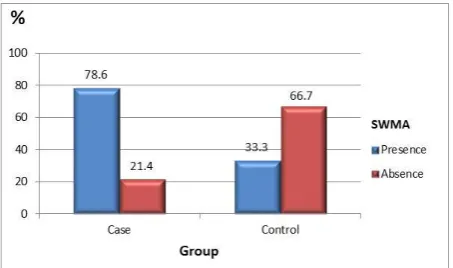
N (%) SWMA
Presence 44 (78.6) 10 (33.3)
<0.0001*
Absence 12 (21.4) 20 (66.7)
There is statistically significance difference between cases and controls as regards to ECG changes. There is statistically significant presence of SWMA among patients of case group.
Table 4: Difference between study groups as regards creatinine, S.Hcy and lncRNA-CDKN2B-AS1.
Variable Case (N=56) Control (N=30) P-value
Mean ± SD
S. creatinine (mg/dl) 1.06 ± 0.28 1.09 ± 0.25 0.574
S.Hcy (nmol/mL) 15.32 ± 13.68 10.92 ± 6.12 0.761
lncRNA-CDKN2B-AS1. 5.10 ± 0.64 2.27 ± 0.93 < 0.0001*
There is statistically significance difference in serum lncRNA-CDKN2B-AS1 between study groups with P-value < 0.0001. There is no statistically significance
difference in serum creatinine between study groups. Although S.Hcy level was high among case group than control group, P-value was not significant.
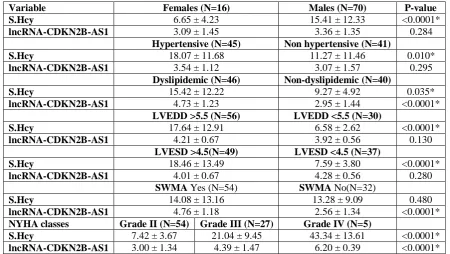
Table 5: S.Hcy and lncRNA-CDKN2B-AS1 in patients of both study groups.
Variable Females (N=16) Males (N=70) P-value
S.Hcy 6.65 ± 4.23 15.41 ± 12.33 <0.0001*
lncRNA-CDKN2B-AS1 3.09 ± 1.45 3.36 ± 1.35 0.284
Hypertensive (N=45) Non hypertensive (N=41)
S.Hcy 18.07 ± 11.68 11.27 ± 11.46 0.010*
lncRNA-CDKN2B-AS1 3.54 ± 1.12 3.07 ± 1.57 0.295
Dyslipidemic (N=46) Non-dyslipidemic (N=40)
S.Hcy 15.42 ± 12.22 9.27 ± 4.92 0.035*
lncRNA-CDKN2B-AS1 4.73 ± 1.23 2.95 ± 1.44 <0.0001*
LVEDD >5.5 (N=56) LVEDD <5.5 (N=30)
S.Hcy 17.64 ± 12.91 6.58 ± 2.62 <0.0001*
lncRNA-CDKN2B-AS1 4.21 ± 0.67 3.92 ± 0.56 0.130
LVESD >4.5(N=49) LVESD <4.5 (N=37)
S.Hcy 18.46 ± 13.49 7.59 ± 3.80 <0.0001*
lncRNA-CDKN2B-AS1 4.01 ± 0.67 4.28 ± 0.56 0.280
SWMA Yes (N=54) SWMA No(N=32)
S.Hcy 14.08 ± 13.16 13.28 ± 9.09 0.480
lncRNA-CDKN2B-AS1 4.76 ± 1.18 2.56 ± 1.34 <0.0001*
NYHA classes Grade II (N=54) Grade III (N=27) Grade IV (N=5)
S.Hcy 7.42 ± 3.67 21.04 ± 9.45 43.34 ± 13.61 <0.0001*
lncRNA-CDKN2B-AS1 3.00 ± 1.34 4.39 ± 1.47 6.20 ± 0.39 <0.0001*
*Significant; LVEDD, Left ventricular end diastolic diameter; LVESD, left ventricular end systolic diameter;SWMA,
Segmental Wall Motion Abnormality; NYHA, New York Heart Asssociation classification
There was statistically significant elevation of homocysteine level in the study groups in male, hypertensive, dyslipidemic patients, in patients with LVEDD >5.5cm and in patients with LVESD >4.5cm. Also there was statistically significant elevation of
lncRNA-CDKN2B-AS1 in the study groups in dyslipidemic patients and in patients with SWMA. There was statistically significant elevation in both
homocysteine and lncRNA-CDKN2B-AS1 with
increasing grade of NYHA classes.
Table 6: Correlations between S.Hcy, lncRNA-CDKN2B-AS1 and different study variables.
S. Hcy lncRNA-CDKN2B-AS1
r P-value r P-value
Age -0.097 0.374 -0.053 0.701
EF 0.107 0.329 -0.051 0.711
S. creatinine 0.093 0.396 -0.063 0.646
LVEDD 0.707 <0.0001* 0.055 0.741
LVESD 0.709 <0.0001* -0.047 0.823
NYHAgrade 0.809 <0.0001* 0.532 <0.0001*
lncRNA-CDKN2B-AS1 0.050 0.714 - -
There were statistically significant positive correlations between homocysteine and LVEDD, LVESD and NYHA grade. Also there was statistically significant positive
Table 7: Sensitivity and specificity of lncRNA-CDKN2B-AS1in diagnosis of ICM.
AUC Cut off point Sensitivity % Specificity % Accuracy %
lncRNA-CDKN2B-AS1 0.942 3.13 98.2 80.0 91.8
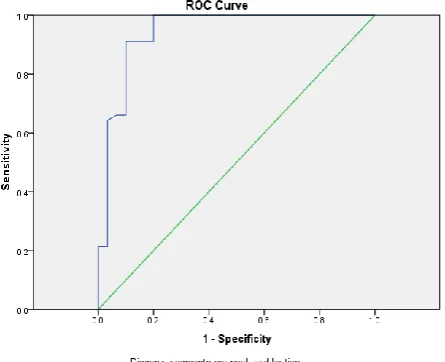
As regards the ROC curve: The best cut off value for diagnosis of ICM using lncRNA-CDKN2B-AS1 is 3.13
with sensitivity 98.2% and specificity 80%, producing area under the curve (AUC) = 0.942, So lncRNA-CDKN2B-AS1 can be used as a biomarker for diagnosis of ICM.
Figure 2: Roc curve for lncRNA-CDKN2B-AS1 as a
predictor for ICM.
DISCUSSION
Cardiomyopathies are a diverse group of myocardium diseases accompanied by electrical and/or mechanical dysfunction that usually show unsuitable ventricular dilatation or hypertrophy and are due to a diversity of causes that considerably are genetic. Cardiomyopathies are either restricted to the heart or are a portion of generalized systemic disorders, often driving to cardiovascular mortality or progressive heart failure-related disability.[15]
Ischemic cardiomyopathy is a condition characterized by the existence of myocardial ischemia, either accompanied or not by fibrosis resulting from myocardial infarction. The clinical manifestation of the coronary disease varies from stable chronic angina to sudden death.[16]
LncRNAs have appeared as main regulators of cardiac disease in humans and lots of animal models.[17] Recently, many studies have detected that lncRNAs are dysregulated throughout different pathological conditions, driving them to be the idealistic candidates for therapeutic targets and biomarkers.[18] LncRNAs such as ANRIL, Fendrr, MIAT, Bvrt, and MyHeart (Mhrt) play essential roles in cardiovascular development and cardiac diseases, such as cardiomyopathy, heart failure, myocardial infarction, and atherosclerosis.[18,19,20] For
example, lncRNA Mhrt regulates BRG1 to prohibit heart failure.[21]
Lately, several studies have related lncRNAs to different types of cardiovascular diseases. With the growing mortality rate from heart diseases in the United States, efforts have been exerted to find out new relation between lncRNAs and cardiovascular diseases in a hope for new therapies. LncRNAs have been also investigated in the pathology of cardiac ischemia/reperfusion (I/R). The levels of expression of lncRNAs in the early stage of reperfusion in the mouse infarct area are studied by Liu et al. Following ischemia, 64 lncRNAs have been up-regulated while 87 lncRNAs have been down-up-regulated amongest total 31,423 lncRNAs. The down-regulated lncRNA UAC1 had a pro-apoptotic role in primary cardiomyocytes by activating levels of p27 protein, proposing its role in I/R injury. This data referred that aberrant expression of lncRNA in the infarct area may lead to imbalance in cell recovery and tissue necrosis.[22]
In spite of the decided importance of the classic risk factors, there are a considerable number of patients with ischemic cardiomyopathy that have no connection with any of them. Lately, it was revealed that high levels of homocysteine in plasma are accompanied by high risk of ischemic cardiomyopathy in the general population.[23]
Homocysteine appears to cause endothelial dysfunction, stimulates oxidation of LDL and so resulting in production of vascular foam cells, whereas being associated with disorders of blood coagulability.[24]
The mechanism that homocysteine influences the endothelium is obscure, though mechanisms of formation of free radicals have a main role. In vitro cultures of endothelial cells with homocysteine exhibit that homocysteine reduces bioavailability of nitric oxide. Furthermore, homocysteine causes an elevation in the formation of free radicals and stimulates lipid peroxidation. Elevated level of homocysteine is so associated with acute endothelial dysfunction, and oxidative stress is involved in this process.[25]
Our aim in this study is to evaluate the level of lnc-RNA-CDKN2B-AS1 and homocysteine in serum of patients with ischemic cardiomyopathy and compare with patients with non ischemic cardiomyopathy.
According to our study we found significant increase in the mean values of serum lnc-RNA-CDKN2B-AS1 in the ischemic group compared with non- ischemic group. We also found statistically significant elevation of lncRNA-CDKN2B-AS1 level in dyslipidemic patients of case group.
Circulating lncRNAs have been stated as hopeful biomarkers for cardiac disease. In a microarray-based study, Li et al., studied the lncRNAs expression levels in whole blood, plasma, and tissue in mouse models. They revealed that in mouse model with acute heart failure, 518 lncRNAs have been upregulated whereas 908 have been downregulated in the heart. Furthermore, a considerable change in gene expression had been observed in heart tissue when compared to plasma or whole blood. The authors concluded that lncRNAs own potent prospects as biomarkers in cardiovascular diseases.[26] Other lncRNAs have been stated to possess potentials as biomarkers in heart disease. These include lnc-RNA-CDKN2B-AS1 (ANRIL) and CDKN2A/B,[27] which are related to atherosclerosis, and MIAT[28] and LIPCAR,[29] which play important roles in myocardial infarction and heart failure. As miRNAs have been reported as cardiac biomarkers, it is anticipated that the usage of lncRNAs as diagnostic markers of cardiac diseases will be raised.
In our study serum Homocysteine level was high in ischemic group than non- ischemic group but P-value was not significant.
These results were in agreement with the results obtained from Fatemeh et al., 2009 who detected that there was no significant difference in mean serum Hcy, vit B12 and folic acid between the ischemic and non-ischemic groups. Even after adjusting for confusing factors as age, sex, BMI, cholesterol and smoking by Multiple Logistic Regression model, the relation stayed not significant. According to these results, elevated level of plasma Hcy by itself is not a risk factor for CHD in a healthy people, but it should be deemed to be reduced in patients with CHD.[30]
In our study, homocysteine was significantly high in dyslipidemic patients (P –value 0.006), this agrees with several studies that demonstrated increased level of homocysteine amongst patients with dyslipidemia and homocysteine is an independent prognostic index for emergence of atherosclerosis in dyslipidaemic patients.[24]
Multiple studies have revealed relation between plasma homocysteine and systolic and diastolic blood pressure, and hypertension, also treatment which decreases homocysteine was accompanied by a decrease in systolic and diastolic blood pressure in intervention studies,[31,32,33]
In our study a correlation between serum Homocysteine level and hypertension has been found as there was statistically significant elevation of S.homocysteine level in hypertensive patients of case group with P-value 0.004
This finding is confirmed by Korzeniowska et al., 2015 who demonstrated that patients with hypertension had significantly higher homocysteine concentration compared to non hypertensive subjects.[34]
This finding was in contrast with the study done by Johan and Ramachandran, 2005 who detected that plasma homocysteine levels were not related to hypertension incidence after adjustment for age, sex and other important factors.[35]
Other evidence against relation between hypertension incidence and homocysteine is revealed by experimental studies in which high level of homocysteine induced by diet was reported to decrease blood pressure.[36]
CONCLUSION
The huge field of long noncoding RNAs work possibly opens new pathways for diagnosis and prevention of heart diseases. We have shown that serum lnc-RNA-CDKN2B-AS1 is significantly increased in patients with ischemic cardiomyopathy. Accordingly, this lnc-RNA has a strong potential to act as biomarker to diagnose ischemic cardiomyopathy. We eventually assess the potentials of long noncoding RNAs as biomarkers, and therapeutic targets for the treatment of cardiovascular diseases. Current guidelines do not considered homocysteine as cardiovascular disease risk factor. We have shown that serum homocysteine is increased but not significantly in patients with ischemic cardiomyopathy, however there is always extent for more research to establish homocysteine as a risk factor for ischemic cardiomyopathy and this is definitely important for the purpose of strong evidence.
REFERENCES
1. Felker GM, Shaw LK, O'Connor CM. A standardized definition of ischemic cardiomyopathy for use in clinical research. J Am Coll Cardiol, 2002; 39: 210
2. Elliott P, Andersson B, Arbustini E, et al. Classification of the cardiomyopathies: a position statement from the European Society Of Cardiology Working Group on Myocardial and Pericardial Diseases. Eur Heart J, 2008; 29: 270–2.
3. Ma, Y.; Ma, W.; Huang, L.; Feng, D.; Cai, B. Long non-coding RNAs, a new important regulator of cardiovascular physiology and pathology. Int. J. Cardiol, 2015; 188: 105–110.
5. Pasmant E, et al. Characterization of a germ-line deletion, including the entire INK4/ARF locus, in a
melanoma-neural system tumor family:
identification of ANRIL, an antisense noncoding RNA whose expression coclusters with ARF. Cancer Res, 2007; 67(8): 3963–3969.
6. Holdt LM, Teupser D. From genotype to phenotype in human atherosclerosis recent findings. Curr Opin Lipidol, 2013; 24: 410–8.
7. Christopher R, Nagaraja D, Shankar SK. Homocysteine and cerebral stroke in developing countries. Curr Med Chem, 2007; 14: 2393–401. 8. Madonna P, de Stefano V, Coppola A, Cirillo F,
Cerbone AM, Orefice G, et al.
Hyperhomocysteinemia and other inherited prothrombotic conditions in young adults with a history of ischemic stroke. Stroke, 2002; 33: 51–6. 9. Richmond W. : Clin. Chem, 1973; 19: 1350.
10. Mc Gowan.: Arb. Med. Soz. Med. Prav. Med, 1983; 10: 25.
11. International Federation of Clinical Chemistry (IFCC) Clin Chem Acta, 1980; 105: 147-172. 12. Toro G. Practical Clinical Chem, 1975; 154. 13. Searcy RL, Foreman JA.Technol, 1967; 33: 15-20. 14. Thambyrajah J, Townend JN. :European Heart J,
2000; 21: 967-974.
15. Lakdawala, NK; Stevenson, LW; Loscalzo, J, "Chapter 287". In Kasper, DL; Fauci, AS; Hauser, SL; Longo, DL; Jameson, JL; Loscalzo, J. Harrison's Principles of Internal Medicine (19th ed.). McGraw-Hill, 2015; 1553.
16. Behar S, Reicher-Reiss H, Abinader E, et al. The prognostic significance of angina pectoris preceding the occurrence of a first acute myocardial infarction in 4166 consecutive hospitalized patients. Am Heart J, 1992; 123: 1481–6.
17. Thum, T.; Condorelli, G. Long noncoding RNAs and microRNAs in cardiovascular pathophysiology. Circ. Res, 2015; 116: 751–762.
18. Kumarswamy, R.; Bauters, C.; Volkmann, I.; Maury, F.; Fetisch, J.; Holzmann, A.; Lemesle, G.; de Groote, P.; Pinet, F.; Thum, T. Circulating long noncoding RNA, LIPCAR, predicts survival in patients with heart failure. Circ. Res, 2014; 114: 1569–1575.
19. Han, P.; Li, W.; Lin, C.H.; Yang, J.; Shang, C.; Nurnberg, S.T.; Jin, K.K.; Xu, W.; Lin, C.Y.; Lin, C.J.; et al. A long noncoding RNA protects the heart from pathological hypertrophy. Nature, 2014; 514: 102–106.
20. Grote, P.; Wittler, L.; Hendrix, D.; Koch, F.; Währisch, S.; Beisaw, A.; Macura, K.; Bläss, G.; Kellis, M.; Werber, M. The tissue-specific lncRNA Fendrr is an essential regulator of heart and body wall development in the mouse. Dev. Cell, 2013; 24: 206–214.
21. Wu, C.; Arora, P. Long noncoding Mhrt RNA molecular crowbar unravel insights into heart failure treatment. Circ. Cardiovasc. Genet, 2015; 8: 213–215.
22. Liu, H.; Song, G.; Zhou, L.; Hu, X.; Liu, M.; Nie, J.; Lu, S.; Wu, X.; Cao, Y.; Tao, L. Compared analysis of LncRNA expression profiling in pdk1 gene knockout mice at two time points. Cell. Physiol.
Biochem, 2013; 32: 1497–1508.
23. Refsum A, Ueland PM: Homocysteine and cardiovascular disease: Annu Rev Medicine, 1998; 49: 31-62.
24. Chao CL, Kuo TL, Lee YT: Effects of methionine-induced hyperhomocysteinemia on endothelium-dependent vasodilation and oxidative status in healthy adults: Circulation, 2000; 101: 485-490. 25. Chambers JC, Ueland PM, Obeid OA, et al: Imroved
vascular endothelial function after oral B vitamins. Circulation, 2000; 102: 2479-2483. 58.
26. Li, D.; Chen, G.; Yang, J.; Fan, X.; Gong, Y.; Xu, G.; Cui, Q.; Geng, B. Transcriptome analysis reveals distinct patterns of long noncoding RNAs in heart and plasma of mice with heart failure. PLoS ONE,
2013; 8: e77938.
27. Congrains, A.; Kamide, K.; Oguro, R.; Yasuda, O.; Miyata, K.; Yamamoto, E.; Kawai, T.; Kusunoki, H.; Yamamoto, H.; Takeya, Y. Genetic variants at the 9p21 locus contribute to atherosclerosis through
modulation of ANRIL and CDKN2A/B.
Atherosclerosis, 2012; 220: 449–455.
28. Ishii, N.; Ozaki, K.; Sato, H.; Mizuno, H.; Saito, S.; Takahashi, A.; Miyamoto, Y.; Ikegawa, S.; Kamatani, N.; Hori, M. Identification of a novel non-coding RNA, MIAT, that confers risk of myocardial infarction. J. Hum. Genet, 2006; 51: 1087–1099.
29. Kumarswamy, R.; Bauters, C.; Volkmann, I.; Maury, F.; Fetisch, J.; Holzmann, A.; Lemesle, G.; de Groote, P.; Pinet, F.; Thum, T. Circulating long noncoding RNA, LIPCAR, predicts survival in patients with heart failure. Circ. Res, 2014; 114: 1569–1575.
30. Fatemeh Bandarian, Hossein Fakhrzadeh, Ramin Heshmat, Masoumeh Nouri and Bagher Larijani: Association of Serum Homocysteine and Coronary Heart Disease in an Iranian Urban Population. Coronary Heart Disease Acta Cardiol Sin, 2009; 25: 142-6.
31. Jacques PF, Bostom AG, Wilson PW, Rich S, Rosenberg IH, Selhub J. Determinants of plasma total homocysteine concentration in the Framingham Offspring cohort. Am J Clin Nutr, 2001; 73: 613–21. 32. Kahleova R, Palyzova D, Zvara K, Zvarova J, Hrach K, Novakova I, et al. Essential hypertension in adolescents: association with insulin resistance and with metabolism of homocysteine and vitamins. Am J Hypertens, 2002; 15: 857–64.
33. Lim U, Cassano PA. Homocysteine and blood pressure in the Third National Health and Nutrition Examination Survey, 1988–1994. Am J Epidemiol, 2002; 156: 1105–13.
with newly diagnosed essential hypertension. Journal of Medical Science, 2015; 84(2): 90.
35. Johan Sundstro and Ramachandran Vasan: Homocysteine and heart failure: a review of investigations from the Framingham Heart Study Clin Chem Lab Med, 2005; 43(10): 987–992. 36. Yen CH, Lau YT. Vascular responses in male and
female hypertensive rats with