Dr. Shahnooshi Javad F
Department of Pharmacy Practice, Krupandhi College of Pharmacy,
Chikkabellandur Village, Varthur Hobli, Bangalore 560035, India
Email: [email protected] Address for correspondence
Access this article online www.japer.in
Management of Charcot Arthropathy
INTRODUCTION
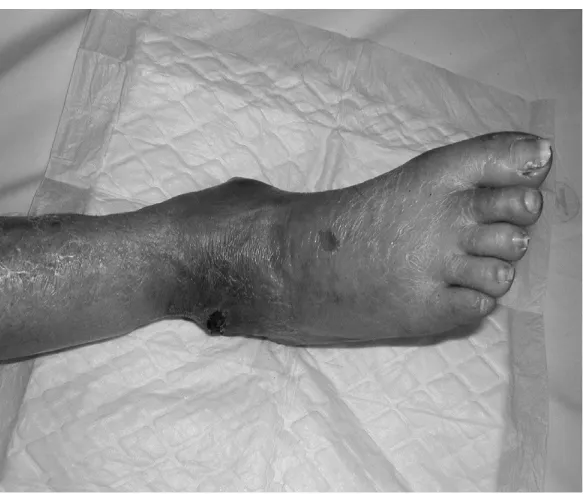
Neuropathic arthropathy (or neuropathic osteoarthropathy), also known as Charcot joint (often "Charcot foot"), refers to progressive degeneration of a weight bearing joint, a process marked by bony destruction, bone resorption, and eventual deformity. (Figure1, 2) Onset is usually insidious and it can occur in different parts of body. (Table1)Onset occurs after the patient has been diabetic for 15 to 20 years, usually at the age of 50 or older. The disorder occurs at the same rate in men and women. If this pathological process continues unchecked, it could result in joint deformity, ulceration and/or superinfection, loss of function, and in the worst case scenario, amputation or death. Early identification of joint changes is the best way to limit morbidity. Charcot arthropathy has been associated with leprosy, toxic exposure, syringomyelia, poliomyelitis, rheumatoid arthritis, multiple sclerosis, congenital neuropathy, and traumatic injury 1, 2 . The obesity
epidemic is increasing the incidence of Charcot foot (Figure 3).However, diabetes mellitus has become the most common etiology in the modern era.3Charcot
foot can occur in a diabetic who has neuropathy (nerve damage) in the foot that impairs the ability to feel pain. Charot foot typically occurs following a minor injury, such as a sprain or stress fracture. The prevalence of Charcot arthropathy ranges from 0.1% to as high as 13%. In patients with diabetes, the incidence of acute Charcot arthropathy of the foot and ankle ranges from 0.15-2.5% 4. Epidemiologic studies
do not distinguish between acute and postacute disease. Bilateral disease occurs in less than 10% of patients. Recurrence of disease occurs in less than 5% of patients. Some studies indicate that men and women are equally affected, while others report a 3:1 predilection for males.5 Charcot fractures that are not
identified and treated properly may progress to marked joint deformity and to skin ulceration over a bony prominence. The ulceration can result in a severe infection, which may lead to amputation of the extremity6. Another complication of Charcot
arthropathy is foot collapse leading to the formation of a clubfoot. Another commonly seen deformity is the rocker-bottom foot, in which collapse and inversion of the plantar arch occurs. Other complications include the ossification of ligamentous structures, the formation of intra-articular and extra-articular
ReviewReview
Review ArticleArticleArticle Article
Charcot arthropathy (Charcot neuroarthropathy, diabetic neuropathic osteoarthropathy, or neuropathic arthropathy) remains a poorly understood disease. The etiology of Charcot remains unknown, although it has been suggested that it is triggered by the occurrence of inflammation in the foot of a susceptible individual, and that the inflammation results in increased osteoclastic activity, although recent research has improved our level of knowledge regarding its management. It has been well established that this complication of diabetes mellitus severely reduces the overall quality of life and dramatically increases the morbidity and mortality of patients. The goal of this study is to evaluate the modern concepts of Charcot arthropathy and to integrate a perspective of management.
Keywords: Diabetes mellitus, Charcot arthropathy, Diagnosis, Current treatments
ABSTRACT ABSTRACT ABSTRACT ABSTRACT Shahnooshi Javad F*
Department of Pharmacy Practice, Krupandhi College of Pharmacy, Chikkabellandur Village, Varthur Hobli, Bangalore 560035, India.
exostoses, the collapse of the plantar arch, and the development of osteomyelitis.6, 7
Diagnosis
The natural history of the joint destruction process has a classification scheme of its own, offered by Eichenholtz decades ago.(Table 2) The initial manifestations of the Charcot foot are frequently mild in nature, but can become much more pronounced with unperceived repetitive trauma. Diagnostic clinical findings include components of neurological, vascular, musculoskeletal, and radiographic abnormalities. There have been no reported cases of Charcot neuropathic osteoarthropathy (CN) developing in the absence of neuropathy.8, 9
Imaging of the Charcot foot: Radiographs are the primary initial imaging method for evaluation of the foot in diabetic patients. Easily available and inexpensive, they provide information on bone structure, alignment, and mineralization. X-rays may be normal or show subtle fractures and dislocations or later show more overt fractures.10As with
ultrasonography, Computed Tomography (CT) scanning has no significant role in the diagnosis of neuropathic arthropathy. However, CT scans may be helpful in evaluating cortical destruction, sequestra, and intraosseous gas. On T1-weighted (Magnetic Resonance Imaging) MRIs, joints involved in neuropathic arthropathy (Charcot joint) appear diffusely swollen and demonstrate low signal intensity. The fat plane adjacent to the skin ulceration appears hypointense; when the joints are infected with a gas-producing organism, areas showing a loss of signal intensity are seen. After the intravenous administration of a gadolinium-based contrast agent, the inflammatory mass enhances and demonstrates central non enhancing necrotic debris. The role of radioisotopic studies is to detect osteomyelitis in a neuropathic joint.11 Three-phase phosphate
scintigraphy has a high sensitivity (85%) but a low specificity (55%) because of bone remodeling of other causes. Studies using uptake of the gallium-67 (67 Ga) citrate have a high false-positive rate. Scanning using
indium-111 (111 In)–labeled leukocytes has the highest sensitivity (87%) and specificity (81%) for detecting osteomyelitis in a neuropathic foot. The role of positron emission tomography (PET) scanning with fluorodeoxyglucose (FDG) is promising.12One study
has shown a valuable role of FDG-PET scanning in the setting of neuroarthropathic arthropathy (Charcot joint) by reliably differentiating it from osteomyelitis.13
Differential diagnosis
While cellulitis may seem to be the likely diagnosis, if a patient with long-standing diabetes, a history of poor glycemic control, and peripheral neuropathy presents with a red, hot, swollen foot with no history of open ulceration, then Charcot neuroarthropathy should be at the top of the list in the differential diagnosis. Other possibilities include osteomyelitis, acute gout, cellulitis, abscess, neuropathic fracture, and deep venous thrombosis.5
Differential diagnosis of Charcot arthropathy and
osteomyelitis: A significant proportion of patients with acute CN have a concomitant ulcer, further complicating the diagnosis, and raising the possibility of osteomyelitis. Moreover, the disease process may become reactivated by further trauma, making the differentiation from osteomyelitis more difficult.14
Radiographs, largely useful for their anatomical information, may be normal or show only subtle changes at an early stage. Once established, bone and joint destruction, fragmentation and remodelling are evident. 15Any associated osteomyelitis cannot be
distinguished in the presence of severe bone and joint damage.16 Early magnetic resonance imaging (MRI)
appearances are non-specific, and can also be seen in bone-stressing phenomenon, acute osteomyelitis, reflex sympathetic dystrophy or sepsis. There is significant overlap of signal intensity from the marrow for infection and oedema. Established CN is characterised by a low T1 signal from the joint and a low T2 signal from the marrow.16 Rapid onset CN with
associated with a high T2 signal, mimicking osteomyelitis.17 (Figure 4)
Treatment
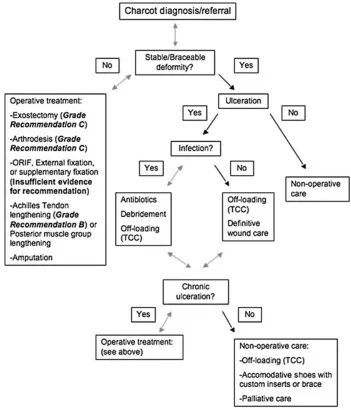
Goals of treatment are generally to avoid osseous prominences (which can lead to ulnceration) and to restore foot stability. Treatment of Charcot arthropathy is primarily non operative. Treatment consists of 2 phases: an acute phase and a post acute phase. Management of the acute phase includes immobilization and reduction of stress. Use of custom footwear in the post acute phase for foot protection and support is essential.18, 19(Figure 5)
Immobilization: A total-contact cast is worn until the redness, swelling, and heat subside, generally 8 to 12 weeks, after which the patient should use removable braces or a Charcot restraint orthotic walker for a total of 4 to 6 months of treatment. The study conducted in Minneapolis showed that immobilization in a weight-bearing total contact cast appears to be a safe method of treatment of acute Eichenholtz Stage-I Charcot arthropathy of the foot and ankle. Twenty-seven patients with Charcot arthropathy of the foot and ankle were studied prospectively over a period of eighteen years, from 1988 to 2006. The average duration of follow-up was 5.5 years. Of the twenty-seven patients, twenty-six had diabetes mellitus. Total contact casts were used to treat thirty-four feet with Eichenholtz Stage-I or early Stage-II Charcot arthropathy. These patients were allowed to bear weight as tolerated. Casts were changed at weekly intervals and were worn until resolution of the acute stage of the disease.20
In on other study a custom, patellar-tendon bearing (PTB), patten-bottom, caliper suspension orthosis was constructed for six patients with severe, active (Eichenholtz stage I) Charcot arthropathy of the ankle and hindfoot. With the orthosis, the suspended foot and ankle remained completely non-weight-bearing, and the lower extremity supported full weight bearing along the posterior and anterior leg shells and PTB crest. Four of the six patients used the orthosis to ambulate without crutches, leaving the upper
extremities free for functional use. Patient compliance was poor in four of the six patients. However, in the other two patients, the absence of mechanical forces on the foot and ankle in the orthosis allowed the swelling and erythema of the active phase of Charcot arthropathy to resolve within several weeks, with maintenance of functional ambulation during the months required for healing of the Charcot process.21 Bisphosphonates: There is as yet no pharmacological agent licensed for use in acute Charcot foot. A number of clinical trials assessing bisphosphonates in CN suggest clinical benefit. However, they are limited by the small number of participating patients. Bisphosphonates are synthetic analogues of inorganic pyrophosphate that decrease bone resorption by inhibiting the recruitment and activity of osteoclasts, while stimulating osteoblastic activity.22
Bisphosphonates may shorten the lifespan of osteoclasts and provide pain relief through effects on prostaglandin E2 and other nociceptive substances. They have also been implicated to interfere with the release of neuropeptides and neuromodulators from afferent nerve endings.23
Pitocco et al. evaluated the oral efficacy of bisphosphonate compounds for the treatment of ACA patients during a 6-month randomized controlled trial. Their results showed a significant reduction in serum collagen COOH-terminal telopeptide of type 1 collagen and hydroxyprolin (known bone resorption markers) and noted clinical improvements in the Charcot foot at 6 months. Although some consider these studies as strong evidence supporting the use of bisphosphonates in the treatment of early-stage Charcot arthropathy , these drugs have not been approved by the US Food and Drug Administration for use in Charcot arthropathy patients.24,25 In 1994, Selby
phosphatase levels fell by about 25% by the end of the study.26
Calcitonin27: Secreted by the C-cells of the thyroid,
calcitonin directly affects osteoclasts.
In a recent study, 32 patients were randomised to receive a combination of intranasal calcitonin (200IU/day) and calcium supplementation (100mg/day) or calcium supplementation alone. Disease activity improved in both groups but there was a significant reduction in bone turnover markers in the calcitonin treated group. In a follow-up study involving 36 acute CN subjects, 28 calcitonin treated
patients had significantly faster healing compared to controls.27, 29
Surgery: is reserved for severe ankle and midfoot deformities that are susceptible to skin ulcerations and that make braces and orthotic devices difficult to use. Pinzur M. Compare Surgical treatment and accommodative treatment for Charcot arthropathy of the midfoot.30 In this study during a 6-year period,
198 patients (201 feet) were treated for diabetes-associated Charcot foot arthropathy. At a minimum 1-year follow-up, 87 of the 147 feet with midfoot disease (59.2%) achieved the desired endpoint without surgical intervention. Sixty (40.8%) required surgery. Corrective osteotomy with or without arthrodesis was attempted in 42, while debridement or simple exostectomy was attempted in 18 feet. Three patients had initial amputation (one partial foot amputation, one Syme ankle disarticulation, and one transtibial amputation), and five had amputation (two Syme ankle disarticulations and three transtibial amputations) after attempted salvage failed. Therefore he conclude that with using a simple treatment protocol with the desired endpoint being long-term management with commercially available, therapeutic footwear and custom foot orthoses, more than half of patients with Charcot arthropathy at the midfoot level can be successfully managed without surgery.
Effect of pro-inflammatory cytokines in acute
Charcot: one study showed that increased bone
turnover in acute Charcot is associated with increased concentrations of pro-inflammatory cytokines, related signalling peptides and bone turnover markers.31 17
patients newly presenting with acute Charcot in diabetes and 16 non-diabetic patients without neuropathy undergoing elective forefoot surgery provided informed consented to participate. Samples of bone were taken by needle biopsy, and were stained with H&E to determine bone architecture and bone remodelling. They found that classic histopathology features of fracture and bone remodelling were evident in Charcot bone biopsies. Systemic circulating concentrations in the Charcot group antecubital vein for both I6 and OPG were significantly greater than in controls (p<0.05). There were no significant differences between the dorsal vein concentrations of any analyte when the affected and unaffected feet were compared. Therefore the elevation in CTX observed in the affected foot in patients with an acute Charcot foot reflects the bone breakdown and remodelling which is present. The higher circulating concentration of IL-6 in the Charcot patient group, reflects the inflammation which is present and which is thought to be central to the development of the condition.31
Osteoclastic activity and bone resorption in
Charcot arthropathy32: An immunehistochemical
(average age 55) with type 2 diabetes and Eichenholz staging grade 2. Most were from men. Five specimens had noninfected ulcers. They observed increased number of osteoclasts, increased cell mediators for
bone resorption — IL-1, IL-6, and TNF — which led to increased osteoclast differentiation, proliferation and recruitment
Table 1: Charcot arthropathy anatomical classification
Pattern Location Description
I Forefoot
Involving the interphalangeal joints, phalanges, metatarsophalangeal joints, and/or distal metatarsal bones; commonly occurring pattern, also seen with plantar ulceration; seen as osteopenia, osteolysis, juxtaarticular cortical bone defects, subluxation, and destruction on
radiographs
II Tarsometatarsal joints
Involving the tarsometatarsal joints and metatarsal bases, cuneiforms, and cuboid; commonly occurring pattern, with greater frequency in diabetic patients than in patients with leprosy; may be associated with plantar ulceration at the apex of deformity; seen as subluxation or fracture–dislocation, collapse of midfoot, and resultant rocker-bottom foot
deformity (consistent with initial features of osteoarthritis) on radiographs; may have dorsal prominence at metatarsal bases; late changes include fragmentation
III
Naviculocuneiform, talonavicular, and calcaneocuboid joints
Involving usually the naviculocuneiform joint and navicular bone but also the other midtarsal joints and bones; ulceration may occur at the apex of deformity and may be in combination with Pattern II; on radiographs, seen as osteolysis of naviculocuneiform joints
with fragmentation; with osseous debris both dorsally and plantarly
IV Ankle and subtalar joints
Involving the ankle joint with or without the subtalar joint and medial or lateral malleolar fracture; considered a severe structural deformity with instability—may even be associated with minor ankle sprain; on radiographs, seen as malleolar fractures, erosion of
bone and cartilage with collapse of joint, free bodies in ankle, extensive destruction, and lateral dislocation of ankle
V Calcaneus
Rarely involving only the calcaneus bone and usually involving an avulsion fracture of the posterior tubercle; although no joint is involved, the pattern develops in patients with Charcot arthropathy; on radiographs, seen as osteolytic changes in the posterior calcaneus
attachment of the Achilles tendon; avulsion fracture of the posterior tubercle may ensue; osteolytic changes may also occur at the naviculocuneiform joint due to additional stress during liftoff in the gait cycle (this may be due to lack of an Achilles tendon attachment to
the calcaneus)
Table 2: Modified Eichenholtz stages
Stage Phase Description
0 Inflammatory Localized warmth, swelling, and redness; minimal to no radiographic abnormalities; MRI may show nondisplaced pathologic fracture(s) and increased marrow edema to the foot and/or ankle
1 Development Localized warmth, marked swelling, and redness; radiographic presence of bony debris, fragmentation of subchondral bone, periarticular fracture, subluxation, and/or dislocation
2 Coalescence
Continued but decreased warmth, swelling, and redness; radiographic presence of absorption of fine debris, new bone formation, coalescence of fragments, fusion of joints (ankylosis), and/or sclerosis of bone ends
3 Remodeling
Figure 1: Foot deformity characteristic of established Charcot foot
Figure 3: Ethiology of charcot
Figure 5: Charcot arthropathy treatment algorithm
REFERENCES
1. R. Gupta, A short history of neuropathic arthropathy
,Clinical Orthopaedics and Related Research (1993),
pp. 43–49
2. L. Sanders, R. Frykberg , The Charcot foot (Pied de
Charcot), J.H. Bowker, M.A. Pfeifer (Eds.), Levin and
O'Neal's the diabetic foot (7th ed.), Mosby Elsevier,
Philadelphia (2007), pp. 257–283
3. D.S. Miller, W.F. Lichtman,Diabetic neuropathic
arthropathy of feet; summary report of seventeen
cases, AMA Archives of Surgery, 70 (1955), pp. 513–
518
4. Robert G. Frykberg, Ronald Belczyk . Epidemiology of
the Charcot Foot, Volume 25, Issue 1, January 2008,
Pages 17–28
5. Georgeanne botek, Martha a. Anderson. Charcot
neuroarthropathy: An often overlooked complication
of diabetes. doi: 10.3949/ccjm.77a.09163, Cleveland
Clinic Journal of Medicine September 2010 vol. 77 9
593-599
6. Sinacore DR. Acute Charcot arthropathy in patients
with diabetes mellitus: healing times by foot
location. J Diabetes Complications. Sep-Oct
1998;12(5):287-93.
7. Sinacore DR, Withrington NC. Recognition and
management of acute neuropathic (Charcot)
arthropathies of the foot and ankle. J Orthop Sports
Phys Ther. Dec 1999;29(12):736-46
8. Charcot J-M, Fere C. Affections osseuses et
articulaires du pied chez les tabétiques (Pied
9. Cofield RH, Morrison MJ, Beabout JW. Diabetic
neuroarthropathy in the foot: patient characteristics
and patterns of radiographic change. Foot
Ankle 1983;4:15–22
10. Sinha S, Munichoodappa CS, Kozak GP.
Neuro-arthropathy (Charcot joints) in diabetes mellitus
(clinical study of 101 cases). Medicine (Baltimore)
1972; 51:191–210.
11. Palestro CJ, Mehta HH, Patel M, et al. Marrow versus
infection in the Charcot joint: indium-111 leukocyte
and technetium-99m sulfur colloid scintigraphy. J
Nucl Med. Feb 1998;39(2):346-50.
12. Alnafisi N, Yun M, Alavi A. F-18 FDG positron
emission tomography to differentiate diabetic
osteoarthropathy from septic arthritis. Clin Nucl
Med. Jul 2001;26(7):638-9.
13. Basu S, Chryssikos T, Houseni M, Scot Malay D, Shah
J, Zhuang H, et al. Potential role of FDG PET in the
setting of diabetic neuro-osteoarthropathy: can it
differentiate uncomplicated Charcot's
neuroarthropathy from osteomyelitis and soft-tissue
infection?. Nucl Med Commun. Jun
2007;28(6):465-72.
14. Fabrin J, Larsen K, Holstein PE. Long-term follow-up
in diabetic Charcot feet with spontaneous onset.
Diabetes Care. 2000; 23:796-800.
15. Weishaupt D, Schweitzer ME, Alam F, Karasick D,
Wapner K. MR imaging of inflammatory joint
diseases of the foot and ankle. Skeletal Radiol. 1999;
28:663-9.
16. 55. Beltran J, Campanini DS, Knight C, McCalla M. The
diabetic foot: magnetic resonance imaging
evaluation. Skeletal Radiol. 1990; 19:37-41.
17. Tomas MB, Patel M, Marvin SE, Palestro CJ. The
diabetic foot. Br J Radiol. 2000; 73:443-50.
18. Frykberg RG, Zgonis T, Armstrong DG, et al. Diabetic
foot disorders. A clinical practice guideline (2006
revision). J Foot Ankle Surg. Sep-Oct 2006; 45(5
Suppl):S1-66.
19. Gierbolini R. Charcot's foot: often overlooked
complication of diabetes. JAAPA. Jun 1999;
12(6):62-8.
20. De Souza LJ. Charcot arthropathy and immobilization
in a weight-bearing total contact cast, J Bone Joint
Surg Am. 2008 Apr; 90(4):754-9. doi:
10.2106/JBJS.F.01523.
21. Trepman E, Donnelly P, Patellar tendon-bearing,
patten-bottom caliper suspension orthosis in active
Charcot arthropathy: crutch-free ambulation with no
weight bearing in the foot, Foot Ankle Int. 2002
Apr;23(4):335-9.
22. Fleisch H, Reszka A, Rodan G, Rogers M.
Bisphosphonates:mechanism of action. In: Bilezikan
JP, Raisz LG, Rodan GA, editors. Principles of Bone
Biology, 2nd edn. San Deigo, CA: Academic Press;
2002. P.1361-85.
23. 80. Strang P. Analgesic effect of bisphophonates on
bone pain in breast cancer patients. Acta Oncol
Suppl. 1996; 35:50-54.
24. D. Pitocco, V. Ruotolo, S. Caputo, L. Mancini, C.M.
Collina, A. Manto, P. Caradonna, G. Ghirlanda
Six-month treatment with alendronate in acute Charcot
neuroarthropathy: A randomized controlled trial ,
Diabetes Care, 28 (2005), pp. 1214–1215
25. M.S. Pinzur, Current concepts review: Charcot
arthropathy of the foot and ankle, Foot & Ankle
International, 28 (2007), pp. 952–959
26. Selby PL, Young MJ, Adams JE, Boulton AJ.
Bisphosphonate: a new treatment for diabetic
Charcot neuroarthropathy. Diabet Med. 1994;
11:14-20.
27. Sandro Vella, Mario J. Cachia, Charcot
neuroarthropathy: pathogenesis, diagnosis and
medical management, Malta Medical Journal Volume
20 Issue 03 September 2008
28. Bem R, Jirkovská A, Fejfarová V, Skibová J, Jude EB.
Intranasal calcitonin in the treatment of acute
Charcot neuroosteoarthropathy: a randomized
controlled trial. Diabetes Care. 2006; 29:1392-4.
29. 88. Bem R, Jirkovská A, Fejfarová V, Skibová J.
Long-term effects of intranasal calcitonin on healing times
in patients with acute Charcot foot: a randomised
controlled trial. Diabetologia 2006; 49:S99.
Presented at: 42nd annual meeting of the European
Association for the Study of Diabetes.
30. Pinzur M., Surgical versus accommodative treatment
for Charcot arthropathy of the midfoot, Foot Ankle
Int. 2004 Aug; 25(8):545-9.
31. RG Pearson, KSS Shu, H Divyateja, M Seagrave, FL
Game,WJ Jeffcoate and BE Scammell, Charcot
Neuropathic Osteoarthropathy, pro-inflammatory
Cytokines and bone turnover markers, J Bone Joint
32. Osteoclastic activity and bone resorption seen in
Charcot arthropathy, Orthopedics Today, September
2004, http://www.healio.com/orthopedics/foot-
ankle/news/print/orthopedics-
today/%7B557edcc0-03db-438d-bec4-
d46cdc2d4797%7D/osteoclastic-activity-and-bone-resorption-seen-in-charcot-arthropathy
How to cite this article: Shahnooshi Javad F; Management of Charcot Arthropathy; J. Adv. Pharm. Edu. & Res. 2013: 3(4): 377-386.
Source of Support: Nil, Conflict of Interest: Nil