pISSN: 2663-7170, eISSN: 2663-7189
Physical, Chemical and Microbiological Changes in
Refrigerated Minced Cow Meat Patties Treated with
Different Concentrations of Ginger Extract
1
O.P. Olatidoye,
2S.S. Sobowale,
3R.A. Oluwafemi and
4A.O. Alabi
1Department of Food Technology, Yaba College of Technology, Lagos State, Nigeria
2Department of Food Science and Technology, Moshood Abiola Polytechnic, Abeokuta, Nigeria
3Department of Animal Science, Igbinedion University Okada, Edo State, Nigeria
4Department of Food Technology, The Polytechnic Ibadan, Saki Campus, Nigeria
ARTICLE INFORMATION
Received: December 01, 2018
Accepted: January 14, 2019
Published: February 15, 2019
Corresponding Author: O.P. Olatidoye,
Department of Food Technology, Yaba College of Technology, Lagos State, Nigeria
ABSTRACT
The addition of antioxidant to food products has become an important method of increasing the shelf life of food because it helps to retard fat oxidation and improve the stability of lipid and lipid containing food which helps to prevent sensory and nutritional quality loss. Hence, the aim of this study was to evaluate the effect of ginger extracts addition on minced meat at concentration of 0.2, 0.4, 0.6 and 0.8% with regard to dry matter in order to provide a new source of natural antioxidants and/or antimicrobial agents. Some chemical, sensory and microbial characteristics of the prepared minced meat during storage for 8 days at 4EC were evaluated. The addition of these extracts and storage time had a significant effect on the minced meat throughout the storage period. Minced meat samples with 0.8% realized significant reduction towards lowering Biogenic Amines (BAs) formation, thiobarbituric acid reactive substances (TBARS) levels, volatile basic nitrogen (VBN) and total acidity % relative to control sample. The addition of ginger extracts was significantly effective in reducing histamine, tyramine and putrescine formation, thiobarbituric acid reactive substances (TBARS) levels, volatile basic nitrogen (VBN) and total acidity % relative to control sample during the storage period. Compared to control mince meat, the addition of ginger extracts was effective as antioxidant and antimicrobial agents for improving the quality and safety of mince meat. In general, these effects increase with the concentration of the extract. This study indicated that the addition of natural antioxidant extracts during minced meat processing could enhance quality and provide a safer product. The results also indicated that 0.6 and 0.8% ginger extract improved the microbiological quality and prolonged the shelf-life of the minced beef to six days of retail displayed at 4EC.
Key words: Minced cow meat, ginger extracts, chemical and sensory attributes, antioxidants, antimicrobial agents
INTRODUCTION
Shelf-life of refrigerated fresh muscle foods is determined mainly by microbiological and physical qualities during storage and handling. Reduced product quality results in
reduced consumer acceptance1. Decontamination of fresh meat using chemical agents
Int. Res. J. Food Nutr., 1 (1): 18-26, 2019
to the food industry in which manufacturers strived to produce high quality food with superior texture, color, flavor and nutritional values and also to improve the shelf life of the food. However, many foods are subject to many factors that lead to quality deterioration. Among these undesirable factors, lipid auto oxidation is one of the most concerned. The need of protecting food against oxidative degradation has prompted the wide usage of food additives. Lipid oxidation and the growth of undesirable microorganisms in food products results in the development of spoilage, off flavor, rancidity and deterioration, rendering such products unacceptable for
human consumption4 and yielding many compounds that
contribute to the pathogenesis of cancer, atherosclerosis,
heart and allergic diseases5,6.
Lipids play an important role in technological, nutritional and sensory function of food. However they were liable to undergo autooxidation that leads to the formation of a number of undesirable compounds. In an effort to retard this process, various antioxidants were employed. The application of synthetic antioxidants has recently been restricted because there was suspicion that they were carcinogenic. For this reason a growing interest has been paid to the research of natural antioxidants, among which spices occupy an
important position7,8,9. The natural antioxidants found in plants
have gained considerable interest for their role in preventing the auto-oxidation of fats, oils and fat containing food
products10. The antioxidant properties of herbs, spices, plant
and other food extracts were apparently related to their phenolic content, suggesting that antioxidant action was
similar to that of synthetic phenolic antioxidants11. Due to
concerns about toxicological safety of synthetic antioxidants such as butylated hydroxyanisole (BHA) and butylated hydroxytoluene (BHT), naturally derived antioxidants are perceived to be better and safer than synthetics. Moreover, natural plants were considered an important target to investigate in order to provide a new source of natural antioxidants and/or antimicrobial agents from a safety view point. Consequently, there was a practical need for the screening and selection of natural antioxidants as effective
alternatives in the prevention of food deterioration12. Several
plants with very high nutritive values exist and yet remain
unexploited for human and animal benefits13. Therefore, the
search for and development of other antioxidants and antimicrobials of natural origin were highly desirable. Lipid oxidation and microbial growth in meat products may be controlled or at least minimized by using either synthetic or natural food additives commonly used in the meat industry14-18.
Ginger (Zinger officinale) is a popular spice, grown everywhere
in Nigeria. It is widely used as a spice and food seasoning due to its sweet aroma and pungent taste. It is well known to have antioxidant activity and effective antimicrobial agents. Many papers have reported ginger antioxidant activity against the oxidation of lipid in various model systems such as lard,
vegetable oils, oil/water emulsion etc19-21. This antioxidant
effect was shown to be linked to the presence of gingerol
related compounds and diaryl heptanoid12. The main
objectives of the present study were to evaluate effect of ginger addition on the physical, chemical and microbiological
properties of cow meat patties during storage at 4EC for 8
days.
MATERIALS AND METHODS
Materials: Ginger rhizomes (Zingiber officinal) were purchased from a local market in Benin, Edo State and other chemicals used were of analytical grade and obtained from Sigma Chemical Co (St. Louis, MO).
Preparation of ginger extracts: Ginger rhizomes were ground and passed through a 60 mesh screen. Ginger extract was
produced by a modified method of Byun et al.22. One hundred
grams of ground ginger were defatted by shaking three times with four volumes of petroleum ether in a rotary shaker for 1 h. The residue obtained after filtration was dried overnight under a hood until all traces of petroleum ether were removed. The dried residue was extracted three times with four volumes of 90% ethanol by shaking for 1 h and filtered. The combined filtrate was concentrated in a rotavapour and placed under a hood to remove the residual ethanol. The obtained aqueous extract was frozen overnight and
freeze-dried at !60EC (Dura-Dry, USA). The freeze-dried extract was
stored in airtight containers at 5EC until use23.
Preparation of mince meat: Minced meat was prepared to provide five treatment samples. Minced meat was subdivided into five equal parts and control treatment was formulated without plant extracts. The other treatments were prepared by adding the various concentrations of ginger extracts to minced meat at 0.2 to 0.8% based on dry matter and then mixed thoroughly using a meat former. The minced meat were placed on plastic foam meat trays, wrapped with polyethylene
film and kept in a refrigerator at 4EC for 8 days. The effects of
the addition of natural antioxidant extracts and storage time were analyzed and determined in minced meat for 0, 2, 4 and
Chemical analyses
pH determination: The pH of the mince meat sample was determined using a Kent pH meter (Kent Industry Measurement Limited Survey model 7020 equipment with glass electrode). A 10 g of mince meat sample was aseptically removed and homogenized with 10m of sterile distilled water. The water was decanted and its pH determined in duplicates. The pH meter was calibrated using buffer of pH 4.0 and pH 7.0
Thiobarbituric acid reactive substances (TBARS): The TBARS values were determined spectrophotometrically according to
the method described by Maijala and Eerola24. Homogenized
luncheon samples (2 g) were taken and TBARS were extracted twice with 10 mL of 0.4 M Hydrogen chloride acid. Extracts were collected and made up to 25 mL with 0.4 M Hydrogen chloride acid and then centrifuged for 5 min. After centrifugation, 1 mL of the extract was poured into a glass test-tube with a stopper. TBARS reagent (5 mL) was added and the extract was heated in a boiling water bath for 35 min. After cooling in tap-water, the absorbance of the sample was read against the appropriate blank at 538 nm. A standard curve was prepared using 1, 1, 3, 3-tetraethoxypropane (TEP).
Total acidity determination: The total acidity was obtained by direct titration with (0.1 M) NaOH and phenolphthalein as
indicator25. Ten grams of each sample were magnetically
stirred in a total volume of 100 mL distilled water for 30 min and filtered. Ten milliliter filtrate was titrated with (0.1 M) NaOH using three drops of phenolphthalein as indicator. The total acidity was calculated as 1.0 mL of (0.1 M) NaOH = 0.0090 g lactic acid.
Determination of total volatile basic nitrogen (VBN): A sample (10 g) was minced with 100 mL distilled water and washed into a distillation flask with 100 mL distilled water; then 2 g of magnesium oxide and an antifoaming agent were added. The mixture was distilled using the micro Kjeldahl distillation apparatus. Distillate was collected for 25 min into 25 mL 4% boric acid and five drops of Tashero indicator. The solution was titrated using (0.1 M) HCl to calculate the total volatile basic nitrogen in the sample in terms of mg VBN/100
g luncheon meat as described by Pearson26.
Biogenic amines determination: Histamine, tyramine and putrescine were extracted as follows: five grams of the sample were blended with 25 mL 5% trichloroacetic acid. Filtration was achieved using whatman filter paper No. 1. Five milliliter of the extract were transferred into a suitable culture tube
with 4 g NaCl and 1 mL of 50% NaOH and then shaken for 2 min. Centrifugation was carried out for 5 min at 5000 x g and the upper layer was transferred to a 50 mL separating funnel.
A 15 mL of n-heptane was added to the upper layer extract
and extracted 3 times with 1 mL portions of 0.2 N HCl. The extracts were collected in a glass stoppered tube and
evaporated to dryness using a water bath at 95EC with the
aid of a gentle current of air. This was followed by the formation of Dansylamines described by the method of
Latorre-Moratalla et al.27. Biogenic amine concentrations
were determined according to method of Sahoo28 using the
HPLC. The HPLC system was equipped with a (Waters 600) delivery system. The HPLC column was a reverse phase
column 250×4 mm, 10 :m packing, (Macherey-Naggl). The
detection was performed using a U.V detector at 254 nm wavelength, using a linear program of 25 min periods and
1 mL minG1 constant solvent flow rate. Data were integrated
and recorded using Chromatography; Manger software 2010, (Waters, Milford MA 01757).
Microbiological evaluation of minced meat: Appropriate diluents of each tube were placed on the following media in duplicate; plate count agar (Difco Co., Ltd.) for total aerobic count; reinforced clostridial medium (Oxoid, CM 0149) for total anaerobic count; malt extract agar (Oxoid, CM 0059) for total yeast and mould count.
Statistical analysis: The conventional statistical methods were used to calculate means and standard deviations. All the measurements were replicated three times and the data are presented as Mean±SD. The effects of natural antioxidant extracts addition and storage period were analyzed and the obtained data were subjected to analysis of variance (one way ANOVA) according to PC-STAT, Version IA Copyright 1985, the University of Georgia (PC-STAT, 1985).
RESULTS AND DISCUSSION
pH changes: The effect of ginger extracts on the pH values of
mince meat stored at 4EC for 8 days is shown in Table 1. At
Int. Res. J. Food Nutr., 1 (1): 18-26, 2019
Table 1: Effect of ginger extract on pH changes and TBARS value of mince meat samples during storage at 4EC for 8 days
Meat samples Day 0 Day 2 Day 4 Day 6 Day 8
pH values
Control 5.55±0.012t 5.96±0.012as 6.10±0.015ar 6.20±0.010aq 6.32±0.002ap
0.2% 5.55±0.012t 5.94±0.010bs 5.99±0.006ar 6.12±0.006bq 6.18±0.006bp
0.4% 5.55±0.012t 5.92±0.002cs 5.97±0.006br 6.10±0.006cq 6.15±0.001cp
0.6% 5.55±0.012t 5.90±0.006ds 5.95±0.001cr 6.00±0.019dq 6.10±0.006dp
0.8% 5.55±0.012t 5.88±0.002es 5.90±0.006dr 5.98±0.006eq 6.08±0.001ep
TBARS values (malonaldehyde mg kgG1 meat)
Control 2.25±0.2t 3.88±0.012 5.25±0.015 6.40±0.010 7.25±0.020
0.2% 0.88±0.02t 0.29±0.010 0.40±0.006 0.51±0.006 0.58±0.006
0.4% 1.07±0.06t 0.25±0.006 0.35±0.006 0.45±0.006 0.51±0.006
0.6% 0.99±0.03t 0.22±0.006 0.32±0.006 0.40±0.019 0.48±0.006
0.8% 0.55±0.00t 0.19±0.006 0.28±0.006 0.36±0.006 0.41±0.006
All values determinations±standard deviation (SD) are mean of triplicate. Means within column and row with different letters are significantly different (p<0.05)
Table 2: Effect ginger extracts on total acidity (% lactic acid) in meat patties stored at 4EC for 8 days
Meat samples Day 0 Day 2 Day 4 Day 6 Day 8
Control 0.34±0.012e 0.40±0.012d 0.44±0.015c 0.55±0.010b 0.61±0.020a
0.2% 0.34±0.012e 0.38±0.010d 0.40±0.006c 0.51±0.006b 0.58±0.006a
0.4% 0.34±0.012e 0.32±0.006d 0.35±0.006c 0.45±0.006b 0.51±0.006a
0.6% 0.34±0.012e 0.28±0.006d 0.32±0.006c 0.40±0.019b 0.48±0.006a
0.8% 0.34±0.012e 0.24±0.006d 0.28±0.006c 0.36±0.006b 0.41±0.006a
All values determinations±standard deviation (SD) are mean of triplicate. Means within column and row with different letters are significantly different (p<0.05)
extract had the lowest (6.08) pH value. Similar findings in pork patties and in ground buffalo meat containing BHA/BHT antioxidants during refrigerated and frozen storage,
respectively have been reported by Sahoo28, Hayam et al.29
and Jay30. Also, similar reports were in lamb patties containing
natural plant extract during refrigerated storage30. The
increase in pH may be due to the accumulation of metabolites
by bacterial action in meat and deamination of proteins31.
Bacteria, upon exhaustion of stored glucose, utilize amino acids released during protein breakdown and, as a product of
amino acid degradation, ammonia accumulates and pH rises32.
Thiobarbituric acid reactive substances (TBARS): The data presented in Table 1 show the changes of TBARS values in the
mince meat containing ginger extracts stored at 4EC for 8
days. The ginger extracts were effective as antioxidants and lowered TBARS values than the control samples throughout the storage period. The effectiveness of the added ginger extracts as antioxidants inhibiting lipid oxidation throughout storage time could be shown in the following order of decreasing TBARS values: 8% > 6% > 4% > 2%. Results also show that the 8% extract was the most effective antioxidant and 2% ginger extract had the lowest effect. This can indicate that the ginger extract used as antioxidants was effective against TBARS formation when incorporated into mince meat. Similar finding in lamb meat containing some natural plant extracts during refrigerated storage have been
reported28,30,33,34. Chen et al.34 reported that dried herbs and
their essential oils were successfully used to reduce lipid oxidation in meat products. Polyphenolic extracts are excellent electron and proton donors and their intermediate radicals are quite stable due to electron delocalization phenomena and owing to the lack of positions attackable by
oxygen35. In the present study, since the ginger extracts used
in preparing mince meat contain bioactive substances such as
phenolic compounds36-39; these substances could cause an
inhibition of the chain reactions during lipid oxidation. Therefore, it was possible to conclude that in general, the higher concentration of applied ginger extract, the less malonaldehyde was formed. The oxidative stability effect of ginger presumably was related to their gingerol related compounds. The higher concentration of these compounds could better inhibit lipid oxidation.
Total acidity: Total acidity (% lactic acid) of all the tested
mince meat samples stored for 8 days at 4EC were of the same
acidity % at zero time of storage (Table 2). Total acidity percentage was observed to increase throughout the storage period. The initial amount of total acidity in mince meat
increased with increasing storage time was reported40. Higher
Table 3: Effect ginger extracts on volatile basic nitrogen in meat patties stored at 4EC for 8 days
Meat samples Day 0 Day 2 Day 4 Day 6 Day 8
Control 0.032±0.002e 0.037±0.006d 0.044±0.025c 0.050±0.006b 0.059±0.002a
0.2% 0.032±0.002e 0.042±0.015d 0.048±0.010c 0.055±0.006b 0.065±0.006a
0.4% 0.032±0.002e 0.045±0.002d 0.050±0.006c 0.058±0.001b 0.069±0.006a
0.6% 0.032±0.002e 0.051±0.003d 0.056±0.003c 0.062±0.006b 0.075±0.003a
0.8% 0.032±0.002e 0.062±0.001d 0.065±0.001c 0.071±0.002b 0.078±0.002a
All values determinations±standard deviation (SD) are mean of triplicate. Means within column and row with different letters are significantly different (p<0.05)
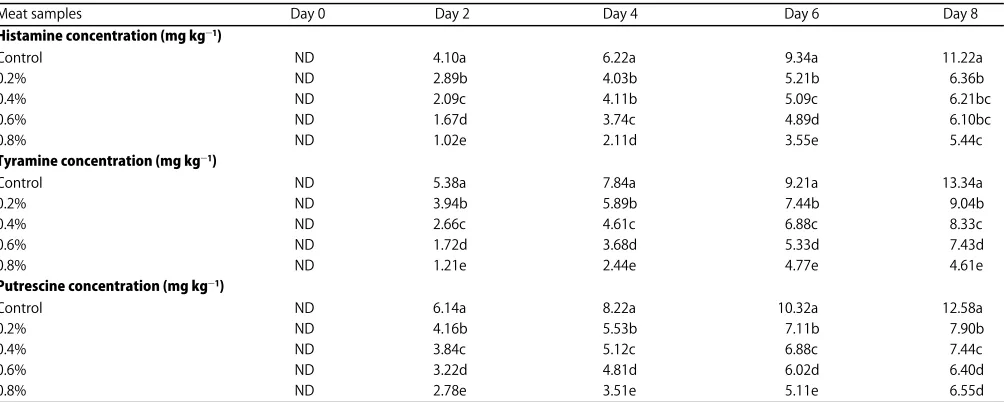
Table 4: Effect ginger extracts on the concentration of biogenic amines in mince meat stored at 4EC for 8 days
Meat samples Day 0 Day 2 Day 4 Day 6 Day 8
Histamine concentration (mg kgG1)
Control ND 4.10a 6.22a 9.34a 11.22a
0.2% ND 2.89b 4.03b 5.21b 6.36b
0.4% ND 2.09c 4.11b 5.09c 6.21bc
0.6% ND 1.67d 3.74c 4.89d 6.10bc
0.8% ND 1.02e 2.11d 3.55e 5.44c
Tyramine concentration (mg kgG1)
Control ND 5.38a 7.84a 9.21a 13.34a
0.2% ND 3.94b 5.89b 7.44b 9.04b
0.4% ND 2.66c 4.61c 6.88c 8.33c
0.6% ND 1.72d 3.68d 5.33d 7.43d
0.8% ND 1.21e 2.44e 4.77e 4.61e
Putrescine concentration (mg kgG1)
Control ND 6.14a 8.22a 10.32a 12.58a
0.2% ND 4.16b 5.53b 7.11b 7.90b
0.4% ND 3.84c 5.12c 6.88c 7.44c
0.6% ND 3.22d 4.81d 6.02d 6.40d
0.8% ND 2.78e 3.51e 5.11e 6.55d
Control: Patties without any extract, ND: Not Detected, M±SD: Mean±Standard Deviation, Letters a-e to show significant differences (p<0.05) between columns, Letters w-z to show significant differences (p<0.05) between rows
Volatile Basic Nitrogen (VBN): The volatile basic nitrogen (VBN) could be used as a quality indicator for fish and meat
products42 and is associated with the amino acid
decarboxylase activity of microorganism during storage. Changes in VBN value during storage are shown in Table 3. At zero time of the storage period, the VBN of mince meat samples showed no significant differences between the control sample and the studied samples. During storage at
4EC and storage for 8 days of the mince meat samples, the
VBN % tended to increase gradually. The control sample had higher VBN % than samples with 0.2, 0.3 and 0.4% ginger extract. Addition of ginger extract caused decrease in VBN% and thus improvement of mince meat characters can occur. In pork sausages, green tea powder could partly substitute nitrite and resulted in lower TBARS value and decreased volatile basic nitrogen contents compared to samples prepared with nitrite
alone43.
Biogenic amines (Bas): Table 4 shows the effect of adding
ginger extracts to mince meat stored at 4EC for 8 days on the
formation of biogenic amines. The production of biogenic amines during the storage or processing of food products is an extremely complex phenomenon depending on several
variables, such as the growth of microorganisms, several extrinsic and intrinsic factors during the manufacturing process such as formulation, some physico-chemical parameters and proteolytic and decarboxylase activities which
interact with each other44,45. It was observed that storage time
had a significant effect (p<0.05) on the formation of all the estimated biogenic amines. Histamine concentrations varied
from 4.26 to 11.04 mg kgG1 in the control sample during
storage at 4EC for 8 days. Data in Table 1 show that histamine
concentrations of all the mince meat samples increased significantly (p<0.05) with storage time. Ginger extracts were effective in producing lower histamine concentrations than control samples over the storage period. The permitted level
of tyramine in foods is 100-800 mg kgG1, while 1080 mg kgG1
is toxic. Results show that 0.8% ginger extract was the most effective while 0.2% ginger was the least effective. Tyramine concentrations in the present study, were found in the safe range and lower than the permitted level. The tyramine contents in the mince meat containing the tested extracts
were still less than the control level at day 8. Eerola et al.46
observed that tyramine concentration in sausages increased
during 7 days of storage at 4EC. The reduction in tyramine
Int. Res. J. Food Nutr., 1 (1): 18-26, 2019
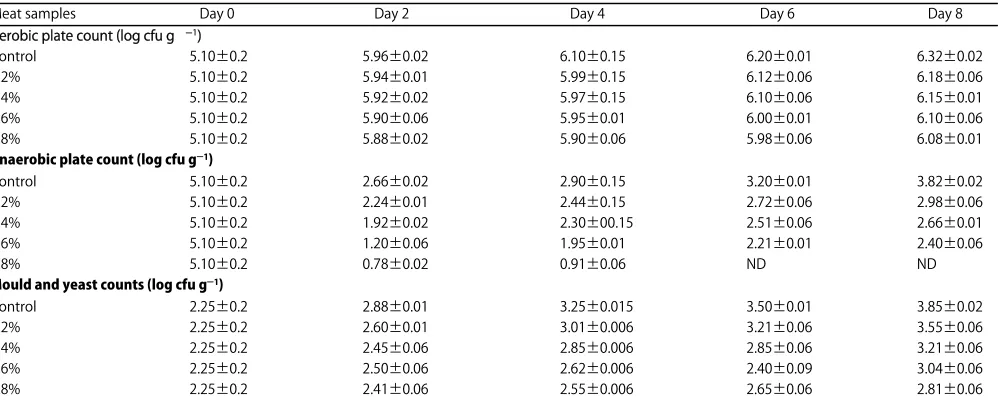
Table 5: Effect of ginger extract on Aerobic plate count, mould and yeast count of minced meat samples during storage at 4EC for 8 days
Meat samples Day 0 Day 2 Day 4 Day 6 Day 8
Aerobic plate count (log cfu g G1)
Control 5.10±0.2 5.96±0.02 6.10±0.15 6.20±0.01 6.32±0.02
0.2% 5.10±0.2 5.94±0.01 5.99±0.15 6.12±0.06 6.18±0.06
0.4% 5.10±0.2 5.92±0.02 5.97±0.15 6.10±0.06 6.15±0.01
0.6% 5.10±0.2 5.90±0.06 5.95±0.01 6.00±0.01 6.10±0.06
0.8% 5.10±0.2 5.88±0.02 5.90±0.06 5.98±0.06 6.08±0.01
Anaerobic plate count (log cfu gG1)
Control 5.10±0.2 2.66±0.02 2.90±0.15 3.20±0.01 3.82±0.02
0.2% 5.10±0.2 2.24±0.01 2.44±0.15 2.72±0.06 2.98±0.06
0.4% 5.10±0.2 1.92±0.02 2.30±00.15 2.51±0.06 2.66±0.01
0.6% 5.10±0.2 1.20±0.06 1.95±0.01 2.21±0.01 2.40±0.06
0.8% 5.10±0.2 0.78±0.02 0.91±0.06 ND ND
Mould and yeast counts (log cfu gG1)
Control 2.25±0.2 2.88±0.01 3.25±0.015 3.50±0.01 3.85±0.02
0.2% 2.25±0.2 2.60±0.01 3.01±0.006 3.21±0.06 3.55±0.06
0.4% 2.25±0.2 2.45±0.06 2.85±0.006 2.85±0.06 3.21±0.06
0.6% 2.25±0.2 2.50±0.06 2.62±0.006 2.40±0.09 3.04±0.06
0.8% 2.25±0.2 2.41±0.06 2.55±0.006 2.65±0.06 2.81±0.06
All values determinations±standard deviation (SD) are mean of triplicate. Means within column and row with different letters and numbers are significantly different (p<0.05)
with respect to human health because tyramine causes migraine, headaches, increased blood pressure and an increase in noradrenalin. The addition of the ginger extracts in
the preparation of the mince meat stored at 4EC for 8 days
significantly affected (p<0.05) the formation of putrescine. Thus, the addition of ginger extracts was found to be effective in reducing the formation of Putrescine. This reduction could also be due to the antimicrobial activities of the natural extracts. Putrescine formation depends on the total aerobic count where a high total aerobic count results in high
putrescine formation47. Therefore, it can be stated that the
addition of natural plant extracts to mince meat resulted in a marked significant reduction in histamine, tyramine and putrescine formation.
Microbial changes: Meat is prone to both microbial and oxidative spoilage and therefore it is important to use a preservative with both antioxidant and antimicrobial
properties48. The growing concern about the safety of foods
has led to the development of natural antimicrobials to
control food-borne pathogen49. Table 5 shows the effect of
adding natural plant extracts to the prepared meat patties
stored at 4EC for 8 days on Aerobic Plate Count (APC). Results
presented in Table 5. Showed that addition of different levels of ginger extract decreased the initial microbial count (0 day) partially and slowed down the growth during the storage period with increase in the concentrations ginger extract. A remarkable increased was observed in APC throughout the storage period especially in the control at 6 and 8th days from
6.32-7.57 Log CFU gG1, respectively. It has been reported by
Insausti et al.50 that meat spoilage cannot be said to occur until
Total Viable Count (TVC)counts reach 106-108 cfu gG1 which is
the limit of microbiological acceptability. In general, a significant decrease was noticed for all tested meat sample in their aerobic plate count during the storage period (2-8 days). It was worth noting that sample containing 0.8% ginger extract gave the lowest APC and the patties with 0.2% ginger extract had the highest compared the other samples. Thus, the results show that the Aerobic Plate Count (APC) decreased significantly with the increase in the concentration of the
natural plant extracts during storage at 4EC for 8 days.
Igbinosa et al.51 concluded that Jatropha curcas stem bark
could be a potential source of active antimicrobial agents.
Also, Hayam et al.52 opined that natural plant extract could
also be a potential antioxidant and antimicrobial agent in
lamb meat patties. Jitoe et al.42 and Zia-ur-Rehman et al.53
found that ginger has antioxidant activity and effective antimicrobial agents. Mould and yeast counts of the prepared meat patties containing natural plant extract during storage
for 8 days at 4EC are given in Table 5. It was observed that the
extracts reduced the mould and yeast counts in the prepared meat patties. Spices and herbs used in food stuffs for enhancing flavor or color attributes, generally have
antimicrobial as well as antioxidant activities53-57. The addition
of 0.8% natural plant extract was found to be more effective in reducing APC and mould and yeast counts in the tested meat patties. The microbiological quality of meat products purchased by the consumer depends on factors such as the quality of the raw materials, materials used or added during processing operations to the products as extraneous contaminants, sanitation during processing and packaging. At concentration of 0.6 and 0.8%, ginger extract significantly reduced aerobic counts in the samples. The bactericidal effects of 0.8% ginger extract in laboratory media was determined on various microorganisms which are commonly encountered in food industry as reported by various authors42,51-54,56.
CONCLUSION
Comparison of control and treated minced meat patty
samples during storage at 4EC for 8 days showed that the
addition of the ginger extracts contained high level of total phenolic compounds and was effective as antioxidant and anti microbial agents for improving quality and safety of mince meat. The results show that ginger extract was effective against the formation of biogenic amines (histamine, tyramine and putrescine), TBARS levels, VBN% and acidity %; hence improvement of the stored meat samples characters can occur. The addition of ginger extracts to meat resulted in a significant reduction in histamine, tyramine and putrescine formation. Thus, the use of natural antioxidants is important to preserve the quality of meat products and prevent their oxidative deterioration in order to produce mince meat of high quality and safety.
REFERENCES
1. Lee, J.I., E.H. Shin, C.R. Kim and K.H. Kim, 1996. Reducing microbial populations on refrigerated pork hams treated with acetic acid. Korean J. Food Nutr., 9: 484.
2. Marshall, D.L. and C.R. Kim, 1996. Microbiological and sensory analyses of refrigerated catfish fillets treated with acetic and lactic acids. J. Food Qual., 19: 317-329.
3. Kim, C.R., J.O. Hearnsberger, A.P. Vickery, C.H. White and D.L. Marshall, 1995. Extending shelf life of refrigerated cat fish fillets using sodium acetate and monopotassium phosphate. J. Food Protect., 58: 644-647.
4. Bozin, B., N. Mimica-Dukic, I. Samojlik and E.A. Jovin, 2007. Antimicrobial and antioxidant properties of rosemary and sage (Rosmarinus officinalis L. and Salvia officinalis L., Lamiaceae) essential oils. J. Agric. Food, 55: 7879-7885.
5. Mielnik, M.B., S. Signe, E. Bjorg and S. Grete 2008. By-products from herbs essential oil production as ingredient in marinade for turkey thigh. Food Sci. Technol., 41: 93-100.
6. Tang, S., J.P. Kerr, D. Sheehan, D.J. Buckley and P.A. Morrissey 2001. Antioxidative effect of added tea catechins on susceptibility of cooked red meat, poultry and fish patties to lipid oxidation. Food Res. Int., 34: 651-657.
7. Bozkurt, H., 2006. Utilization of natural antioxidants: Green tea extract and Thymbra breakfast sausage manufactured with mechanically debond chicken meat. Poult. Sci., 73: 442-450. 8. Mitsumoto, M., M.N. O Grady, J.P. Kerry and D.J. Buckley, 2005. Addition of tea catechins and vitamin C on sensory evaluation, color and lipid stability during chilled storage in cooked or raw beef and chicken patties. Meat Sci., 69: 773-779.
9. Valko, M., D. Leibfritz, J. Moncol, M.T. Cronin, M. Mazur and J. Telser, 2007. Free radicals and antioxidants in normal physiological functions and human disease. Int. J. Biochem. Cell Biol., 39: 44-84.
10. Reddy, V., A. Urooj and A. Kumar, 2005. Evaluation of antioxidant activity of some plant extracts and their application in biscuits. Food Chem., 90: 317-321.
11. Lai, S.M., J.I. Gray, D.M. Smith, A.M. Booren, R.L. Crackel and D.J. Buckley, 1991. Effects of oleoresin rosemary, Tertiary butyl-hydroquinone and sodium tripolyphosphate on the development of oxidative rancidity in restructured chicken nuggets. J. Food Sci., 56: 616-620.
12. Kikuzaki, H. and N. Nakatani, 1993. Antioxidant effects of some ginger constituents. J. Food Sci., 58: 1407-1410. 13. Oladele, P.E. and A.A. Oshodi, 2007. Nutritional potential of
berlandier nettle spurge (Jatropha catharetica) seed. Pak. J. Nutr., 6: 345-348.
14. Gray, J.J., E.A. Gomaa and D.J. Buckley, 1996. Oxidative quality and shelf life of meats. Meat Sci., 43: 111-123.
15. Mielnik, M.B., K. Abby and G. Skrede, 2003. Synthetic antioxidants control lipid oxidation in mechanically deboned turkey meat. Meat Sci., 65: 1147-1155.
16. Sallam, K.H.I., M. Ishioroshi and K. Samejim, 2004. Antioxidant and antimicrobial effects of garlic in chicken sausage. Lebensm. Wiss Technol., 37: 849-855.
17. Estevez, M. and R. Cava, 2006. Effectiveness of rosemary essential oil as an inhibitor of llipid and protein oxidation: Contradictory effects in different types of frankfurters. Meat Sci., 72: 348-355.
18. Takacsova, M., K. Kristianova, D.V. Nguyen and M.N. Dang, 2000. Antioxidant activity of ginger extract in ground pork patties. Czech J. Food Sci., 18: 155-156.
19. Yanishlleva, N.V., A.E. Marinov and J. Pokorny, 2006. Natural antioxidants from herbs and spices. Eur. J. Lipid Sci. Technol., 108: 776-793.
Int. Res. J. Food Nutr., 1 (1): 18-26, 2019
21. Mansour, E.H. and A.H. Khalil, 2000. Evaluation of antioxidant activity of some plant extracts and their application to ground beef patties. Food Chem., 69: 135-141.
22. Byun, M.W., J.W. Lee, C. Jo and H.S. Yook, 2001. Quality properties of sausage made with gamma-irradiated natural pork and lamb casing. Meat Sci., 59: 223-228.
23. Egan, H., R.S. KirK and R. Sawyer, 1987. Pearson s Chemical Analysis of Foods. 8th Edn., Longman Scientific and Technical, pp: 708.
24. Maijala, R.L. and S.H. Eerola, 1993. Contaminant Lactic acid bacteria of dry sausage produced histamine and tyramine. Meat Sci., 35: 387-395.
25. Deabes, M.M., 2000. Studies on Some Biogenic Amines in Some Meat and Fish Products with Respect to Other Quality Attributes. M.Sc. Thesis, Food Science and Technology Deptartment, Faculty of Agriculture, Al-Azhar University, Cairo, Egypt.
26. Pearson, D., 1976. The Chemical Analysis of Foods. 7th Edn., Living Stone: Churchill, pp: 19, 23-24.
27. Latorre-Moratalla, M.L., T. Veciana-Nogues, S. Bover-Cid, M. Garriga and T. Aymerich et al., 2008. Biogenic amine in traditional fermented sausage produced in selected European countries. Food Chem., 107: 912-921.
28. Sahoo, J., 1995. Effect of pre-blending and vacuum packaging on the quality of ground buffalo meat, Ph.D. Thesis submitted to Deemed University, IVRI, Izatnagar, India.
29. Hayam, M.I., A.A. Abou-Arab and F.M. Abu Salem, 2011. Antioxidant and antimicrobial effects of some natural plant extracts added to lamb patties during storage. Grasasy Aceites, 62:139-148.
30. Jay, J.M., 1996. Antioxidants. In: Modern Food Microbiology, 4th Edn., CBS Publishers and Distributors, New Delhi, India, pp: 265-266.
31. Gill, C.O., 1983. Meat spoilage and evaluation of the potential storage life of fresh meat. J. Food Protect., 46: 444-452. 32. Estevez, M., D. Morcuende, J. Ventanas and R. Cava, 2004.
Effect of the Addition of Sage and Rosemary Extracts on the Oxidative Stability of Different Types of Liver Pates. In: Proceedings of 50th ICOMST, Helsinki, Finland, pp: 194-195. 33. Formanek, Z., J.P. Kerry, F.M. Higgins, D.J. Buckley, P.A. Morrissey and J. Farkas, 2001. Addition of synthetic and natural antioxidants to "-tocopheryl acetate supplemented beef patties: Effects of antioxidants and packaging on lipid oxidation. Meat Sci., 58: 337-341.
34. Chen, X., C. Jo, J.I. Lee and D.U. Ahn, 1999. Lipid oxidation,volatiles and color changes of irradiated pork patties as affected by antioxidants. J. Food Sci., 64: 16-19. 35. Djenane, D., L. Montanes and P. Roncales, 2005. Nuevas
perspectivas para la conservacion natural de la carne. Eurocarne, 133: 153-180.
36. El Diwani, G., S. El Rafie and S. Hawash, 2009. Protection of biodiesel and oil from degradation by natural antioxidants of Egyptian Jatropha. Int. J. Environ. Sci. Technol., 6: 369-378.
37. Stoilova, I., A. Krastanov, A. Stoyanova, P. Denev and S. Gargova, 2007. Antioxidant activity of a ginger extract
(Zingiber officinale). Food Chem., 102: 764-770.
38. El-Halawany, A.M.A., 2002. Pharmacognostical Study of Simmondsia Chinenisis (Link) Schneider Family Buxaceae (Simmondsiaceae) Cultivated in Egypt. M.Sc. Thesis Pharmaceutical Science (pharmacognosy), Pharmacognosy Department, Faculty of Pharmacy, Cairo University. 39. Fuzzati, N., 2004. Analysis methods of ginsenosides.
J. Chromatogr. B, 812: 119-133.
40. AL-Bachir, M., 2005. The irradiation of spices, packaging materials and luncheon meat toimprove the storage life of the end products Int. J. Food Sci. Technol., 40: 197-204. 41. AL-Bachir, M. and A. Mehio, 2001. Irradiated luncheon meat:
Microbiological, chemical and sensory characteristics during storage. Food Chem., 75: 169-175.
42. Choi, S.H., H.C. Kwon, D.J. An, J.R. Park and D.H. Oh, 2003. Nitrite contents and storage properties of sausage added with green tea powder. Korean J. Food Sci. Anim. Resour., 23: 299-308.
43. Jitoe, A., T. Masuda, I.P. Tengah, D.N. Suprapta, I.W. Gara and N. Nakatan, 1992. Antioxidant activity of tropical ginger extract and analysis of the contained curcuminoids. J. Agric. Food Chem., 40: 1337-1340.
44. Suzzi, G. and F. Gardini, 2003. Biogenic amines in dry fermented sausages: A review. Int. J. Food Microbiol., 88: 41-54.
45. Geornaras, I., G.A. Dykes and A. von Holy, 1995. Biogenic amine formation by chicken-associated spoilage and pathogenic bacteria. Lett. Appl. Microbiol., 21: 164-166. 46. Eerola, S., A.X.R. Sagues, L. Lilleberg and H. Aalto, 1997.
Biogenic amines in dry sausages during shelf-life storage. Zeitung Lebensmittel for Unters Forsch A., 255: 351-355. 47. Ruiz-Capillas, C. and F. Jimenez-Colmenero, 2004. Biogenic
amines in meat and meat products. Crit. Rev. Food Sci. Nutr., 44: 489-499.
48. Kanatt, S.R., R. Chander and A. Sharma, 2008. Chitosan and meat mixture: A new preservative for meat products. Food Chem., 107: 845-852.
49. Nevas, M., A.R. Korhonem, M. Lindorom, P. Turkki and H. Korkeela, 2004. Antibacterial efficiency of fish spices essential oil against pathogenic and bacterial. J. Food Protect., 67: 199-202.
50. Insausti, K., M.J. Beriain, A. Parroy, P. Alberti, C. Gorraiz, C. Alzuek and M.J. Alzueta, 2001. Shelf life of beef from local Spanish cattle breed stored under modified atmosphere. Meat Sci., 57: 273-781.
52. Hayam, M.I., A.A. Abou-Arab and F.M. Abu Salem, 2010. Addition of some natural plant extracts and their effect on lamb patties quality. J. Food Technol., 8: 134-142.
53. Zia-ur-Rehman, S., A.M. Salariya and F. Habib, 2003. Antioxidant activity of ginger extract in sunflower oil. J. Sci. Food Agric., 83: 624-629.
54. Baydar, H., O. Sagdic, O. Gulcan and T. Karadogan, 2004. Antibacterial activity and composition of essential oils from
Origanum, Thymbra, an Satureja species with commercial
importance in Turkey. Food Control, 15: 169-172.
55. Sagdic, O. and M. Ozcan, 2002. Antibacterial activity of Turkish spice hydrolysis. Food Control, 14: 141-143.
56. Vinci, G. and M.L. Antonelli, 2002. Biogenic amines: quality index of freshness in red and white meat. Food Control, 13: 519-524.