The Effectiveness of Optimist Memory Telling on Death Anxiety and
the Sense of Aging in Elderly
Khodamorad Momeni
1, Zahra Rafie Delfan
21Associate Professor of Psychology, Razi University, Kermanshah, Iran 2Master of Psychology, Razi University, Kermanshah, Iran
Submitted: 24 June 2018 Accepted: 23 July 2018
Int J Behav Sci. 2018; 12(2): 69-75
Corresponding Author: Zahra Rafie Delfan, Master in Psychology, Razi University, Kermanshah, Iran
E-mail: [email protected]
Abstract
Introduction: The aging phenomenon is caused by the natural time course leading to physiological, psychological and social changes, and is usually associated with death anxiety and sense of aging. Therefore, this study aimed to investigate the effect of optimist memory telling on death anxiety and sense of aging in elderly people.
Methods: This study was a semi-experimental research through pre-post-test with a control group. The statistical population included all the elderly residents of nursing homes in Kermanshah during 2017, among which 40 people were randomly selected and were assigned to two groups of experimental and control (each group of 20). The experimental group participated in 8 sessions of optimist memory telling treatment, each lasting for 60 min. Data were analyzed using SPSS 21, covariance analysis method, and T-test.
Results: The results indicated that there was a significant difference between the mean death anxiety and the sense of aging in the experimental and control groups. In other words, training optimist memory telling reduced the anxiety caused by death and the sense of aging in the elderly (P< 0.05). Conclusion: Considering the effect of training optimist memory telling on decreasing death anxiety and the aging sensation of the elderly, it is recommended that therapists and psychologists use this method to reduce death anxiety and the sense of aging in the elderly.
Keywords: Sense of Aging, Death Anxiety, Optimist Memory Telling, Elderly
Introduction
Today, the increased population of elderly people is considered as a major problem in any society and it has involved all the economic, social and health dimensions [1]. Significant progress in medical science, rising community health and living facility levels, reduced mortality and increased births have all increased the average life span of humans. Currently, the average life span in some advanced countries has reached more than 90 years, indicating an increase in the aging population [2]. The number of the elderly people around the world has been estimated to be 605 million people, recently [3]. This trend is also seen in Iran. According to various studies and the Iranian Statistical Center census, the population of the elderly over 60 years old will increase from 8 % today to 22 % in 2045 [4]. The phenomenon of aging is the result of the natural time course resulting in physiological, psychological and social changes. This process extends from period to period. It occurs in some individuals gradually, and in others, quickly in combination with mental injuries. As the aging population has increased, scholars and specialists have focused on the importance of considering the health of the elderly and to provide the necessary facilities and special services in this area. Aging leads to a series of definite changes beyond time and space [5].
anxiety due to reduced self-esteem, reduced activity and movement, loss of friends and relatives, reduced financial and physical autonomy, chronic illnesses, and death anxiety which is the most common [6, 7]. Death anxiety is a prevalent problem in the elderly, which means fear of dying for oneself and others [8]. Practical studies showed that fear of death is more prominent in middle age and late life [9]. Critical diagnosis elements of death anxiety include attitudes, ability to imagine, predict and anticipate the future, and in some occasions awareness of the apparent nature of death. In recent research, death anxiety was considered as a multidimensional structure [10] . The study of Stancliffe et al. [8] showed that older people are more afraid of death than others. Sainiat al. [11]showed that people with chronic medical pains and also the elderly experience more death anxiety. Kim and Park [12] also found similar results in a study on death anxiety on Korean elderly people and showed that psychological interventions seemed necessary to reduce death anxiety for older people.
The sense of aging in the elderly is a major factor in predicting physical health, mortality and also the key to health outcomes such as quality of life [13]. In numerous studies, two distinct dimensions were considered for aging. The positive dimension of aging is referred to as the individual growth and development, and the negative one is indicated as the elderly's physical analysis [14]. These beliefs which are shaped throughout an individual’s life are influenced by the experiences and attitudes of the elderly [15]. These dimensions were investigated in various research and it was argued that the positive perspectives were associated with positive outcomes such as increasing life satisfaction [16], improving life quality [17], reducing loneliness [18] and depression [19]. Also, negative attitudes led to intensifying the individual deprivation and increased the dependence of the elderly [13]. Therefore, this attitude towards aging requires the change and interventions to facilitate and secure the physical and mental health of the elderly in life [20]. The results of Nilsson et al. study [21] indicated that the experience of a sense of aging is associated with features such as fear of inability to manage daily life and helplessness. Moreover, the onset of the sense of aging varies from person to person and depending on the exacerbation of physical changes in the body. Several treatments were implemented to improve the psychological state of the elderly, including memory telling. According to this theory, the way people view and interpret their personal life and communication history is significantly related to the well-being of late life. The key construct of this theory is cognitive reconstruction [22]. The memory telling scale mentions eight effective factors for memorizing: reduction of fatigue, the revival of bitterness, preparation for death, conversation, identity, intimacy, problem-solving, and informational training [23]. A kind of memory telling that focuses on positive memories and is the combination of positive points of instrumental memory telling treatment and integrated memory telling treatment is called optimist memory telling treatment. This kind of memory telling can help the
elderly to have better feelings more than the treatment in which the negative memory telling and conflicting with them are emphasized [24] . Special and higher attention to positive memories in the elderly leads to the activation of forgotten memories [25]. The optimist memory telling is associated with positive emotions such as pleasure, security, health, sense of belonging, positive ability to remember good memories and the ability to solve problems and decreases the negative assessment of oneself and the future and increases the positive evaluation of the past [26]. Shirmohammadi et al. [27] revealed that memory telling intervention is effective in reducing death anxiety in the elderly. According to Abdullah Zadeh and Khabbazi [28], integrative memory telling therapy is effective on depression, perceived stress, and anxiety in the elderly.
In Iran, along with other countries in the world, a rapid growth of the aging population has been observed. The elderly people are at risk of mental illness and problems due to their physical and mental decline and their decreased ability, hence, considering the physical and mental health of the elderly and trying to reduce their risks are extremely important. Therefore, the present study was designed and conducted to evaluate the effectiveness of optimist memory telling on reducing death anxiety and the sense of aging in the elderly in Kermanshah.
Method
The research method was semi-experimental using pre-post-test with the control group. The statistical population consisted of all 60-75 year old people living in elderly homes in Kermanshah during 2017, using a random sampling method. In this work, 51 elderly men responded to the Death Anxiety Questionnaire and the Sense of Aging Questionnaire (pre-test). Among them, 40 people with a standard deviation score of less than the mean in the pre-test were randomly assigned into two control and experimental groups with 20 people in each group. The inclusion criteria for participating in the research were: age of 60 to 75 years, living in a nursing home, staying in a nursing home for at least 6 months, satisfaction with participating in this research, not using other psychological therapies within the 6 month period of the research and the literacy of reading and writing to understand the concepts. The exclusion criteria included affliction with disorders such as dementia, especially Alzheimer's disease, schizophrenia, severe depression, personality disorders based on psychiatrist's diagnosis and specific physical diseases at the time of the research. After conducting the pretest, the intervention of the optimist memory telling training was performed on experimental subjects in 8 sessions each lasting for 1 hour in a group, for one week in a place assigned by the staff of the elderly nursing home, however, the control group received no intervention. After completing the training, the post-test was performed in both groups again.
Templar Death Anxiety Inventory
clauses, and the subjects respond to each question with either “yes” or “no” options. Thus, the scores in this scale vary from 0 to 15. Higher scores indicate a higher anxiety of people about death. The validity of this scale was obtained through correlating it with the apparent anxiety scale (0.27) and the depression scale (0.40), and the reliability coefficient of this scale was reported to be 0.83 through retest [29]. In the study of Jahangiri, the reliability of this tool was obtained as 0.87 through a retest [30]. In this study, the reliability was 0.82 through halving method.
The Sense of Aging Inventory
To measure the sense of aging, the questionnaire of Barker et al. [31] was used. This questionnaire has two parts. The first part consists of 32 phrases with seven subscales (fast or gradual time course, periodic time, emotional effects, positive control, negative control, positive outcomes and negative consequences). The second part includes 17 questions and an objective subscale evaluating the number of age-associated changes [31]. In Iran, the validity of this tool was firstly examined by Krasikian Mujambari et al. [32]. In the present study, face and content validities were used, so that the tool was provided for five faculty members. The results showed an appropriate validity of the tool. Moreover, by using internal consistency method and using Cronbach's alpha, the reliability of the tool was reported to be 0.63 (0.63) (negative outcome) and 0.87 (periodic time course). To respect the ethics, free psychological services were provided for the control group after the completion of the research. Ultimately, the data of pre-test and post-test were analyzed by covariance analysis and T-test in SPSS V.21. A summary of training the optimist memory telling protocol was presented in Table 1 based on the principles of Westerhoff, Bohlmayger and Webster, and through
integrating the positive points of integrated and instrumental memory telling treatment.
Results
The descriptive indexes of the mean and standard deviation of death anxiety and the sense of aging in the elderly men and women in both experimental and control groups are provided in Table 2. Based on the values in Table 2, the mean death anxiety and the sense of aging in the elderly women and men in the experimental group decreased in the post-test. Covariance analysis was used to investigate the effect of training the optimist memory telling on death anxiety and loneliness in the elderly. Before covariance analysis, the assumptions were investigated and the appropriate tests were used after confirmation. One assumption used in covariance analysis was the normal distribution using Shapiro-Wilk's test. This study was conducted on the variables of the research. The distribution of the scores of death anxiety and the sense of aging variables in the two experimental and control groups was normal through pre-test and post-test based on the Shapiro-Wilk test. Since the significance level was higher than 0.05, therefore, based on the first assumption of the ANCOVA test, this test is applicable. To evaluate the homogeneity of the variances, Levine test was used, the results of which are presented in Table 3. Considering that the F value for death anxiety was 0.046 and for the aging sensation was 0.302, these values are not significant at the level of 0.05. This assumption is also confirmed in the present study has. Finally, covariance analysis was used to test the death anxiety and loneliness in the two groups of experiment and control, the results of which are presented in Table 4.
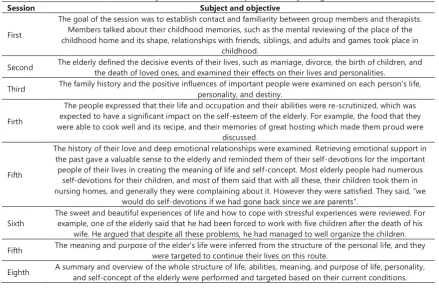
Table 1. The summary of the contents of the optimist memory telling sessions
Session Subject and objective
First
The goal of the session was to establish contact and familiarity between group members and therapists. Members talked about their childhood memories, such as the mental reviewing of the place of the childhood home and its shape, relationships with friends, siblings, and adults and games took place in
childhood.
Second The elderly defined the decisive events of their lives, such as marriage, divorce, the birth of children, and the death of loved ones, and examined their effects on their lives and personalities.
Third The family history and the positive influences of important people were examined on each person's life, personality, and destiny.
Firth
The people expressed that their life and occupation and their abilities were re-scrutinized, which was expected to have a significant impact on the self-esteem of the elderly. For example, the food that they were able to cook well and its recipe, and their memories of great hosting which made them proud were
discussed.
Fifth
The history of their love and deep emotional relationships were examined. Retrieving emotional support in the past gave a valuable sense to the elderly and reminded them of their self-devotions for the important people of their lives in creating the meaning of life and self-concept. Most elderly people had numerous
self-devotions for their children, and most of them said that with all these, their children took them in nursing homes, and generally they were complaining about it. However they were satisfied. They said, “we
would do self-devotions if we had gone back since we are parents”.
Sixth
The sweet and beautiful experiences of life and how to cope with stressful experiences were reviewed. For example, one of the elderly said that he had been forced to work with five children after the death of his
wife. He argued that despite all these problems, he had managed to well organize the children.
Fifth The meaning and purpose of the elder's life were inferred from the structure of the personal life, and they were targeted to continue their lives on this route.
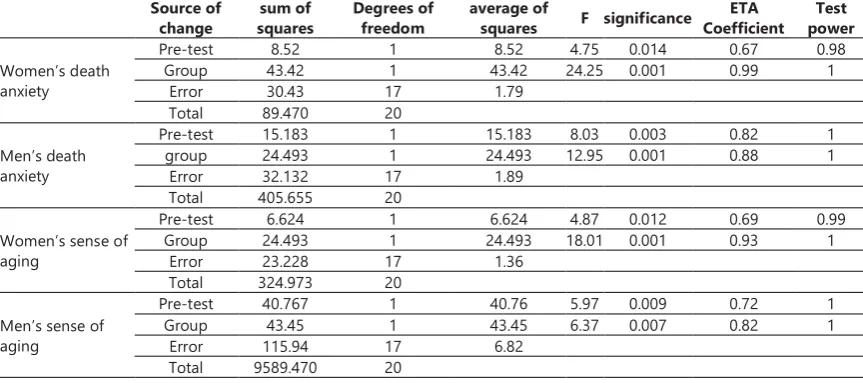
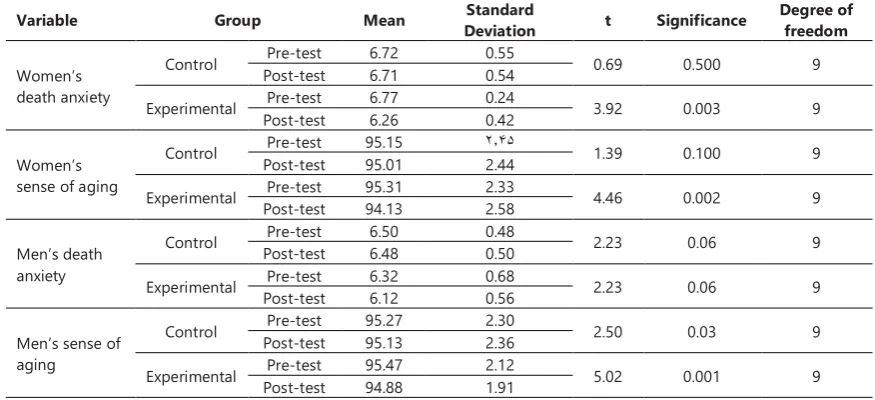
According to the results of Table 4 in the source of group changes, the obtained amount of F for death anxiety and aging sensation is significant for men and women at the level of P <0.05. Therefore, the null hypothesis is rejected and the assumption of the research indicating the significant difference between the mean post-test death anxiety and the sense of aging for women and men in both control and experimental groups is accepted. Hence, training the optimist memory telling was effective in decreasing death anxiety and the sense of aging in the elderly. According to Table 5, it is shown that the value of T for the difference in the amount of death anxiety and the sense of aging is significant for the elderly in the control and experimental groups at P< 0.05. Therefore, the null hypothesis is rejected and the assumption of the research based on the significant difference between the mean death anxiety and sense of aging in men and women is accepted in the experimental group. The death anxiety rates in both men and women in the experimental group were reduced by 0.2 and 0.55, respectively, and the sense of aging in both men and
women in the experimental group was reduced to 0.59 and 1.18, respectively. Consequently, training the optimist memory telling is effective in reducing death anxiety and the sense of aging. Moreover, comparing the mean score of the aging and death anxiety in women and men, it was indicated that optimist memory telling treatment is more effective in old women compared to old men. Table 6 shows the results of the follow-up of the test group. According to this Table, the value of T obtained for the difference between the sense of aging and death anxiety values of the pre-test and post-test is significant based on the follow-up in the experimental group at the level of P <0.05. Actually, the null hypothesisis rejected and the hypothesis of the research indicating the significant difference between the mean sense of aging and the death anxiety of the follow-up group with the pre-test of the experimental group is accepted. The rates of aging and death anxiety in follow-up were reduced to 1.85 and 0.31, respectively. Hence, training the optimist memory telling is effective in reducing the sense of aging and death anxiety in long term.
Table 2. The descriptive indicators and the normality of the research variables
Significance Shapiro-Wilk
Standard deviation Mean
N Group
Variable
0.96 0.49
0.55 6.72
10 Pre-test Control
Women’s death anxiety Post-test Pre-test 1010 6.71 6.77 0.54 0.24 0.40 0.34 0.99 0.90 Experimental Post-test 10 6.26 0.42 0.70 0.70 0.77 0.66
2.45 95.15
10 Pre-test Control
Women’s sense of aging Post-test Pre-test 1010 95.01 95.31 2.44 2.33 0.64 0.42 0.80 0.98 Experimental Post-test 10 94.13 2.58 0.66 0.76 0.96 0.49
0.48 6.50
10 Pre-test Control
Men’s death anxiety Post-test Pre-test 1010 6.48 6.32 0.50 0.68 0.53 0.43 0.93 0.99 Experimental Post-test 10 6.12 0.56 0.66 0.76 0.98 0.46
2.30 95.27
10 Pre-test Control
Men’s sense of aging Post-test Pre-test 1010 95.13 95.47 2.36 2.12 0.61 0.42 0.84 0.99 Experimental Post-test 10 94.88 1.91 0.43 0.99
Table 3. Levine's test of aging and death anxiety in both control and experimental groups
Variable F Degree of freedom 1 Degree of freedom 2 significance
Death anxiety 0.046 1 18 0.100
Sense of aging 0.030 1 18 0.239
Table 4. Covariance analysis. Comparison of a mean sense of aging and death anxiety in both control and experimental groups Source of
change squaressum of Degrees of freedom average of squares F significance CoefficientETA powerTest
Women’s death anxiety
Pre-test 8.52 1 8.52 4.75 0.014 0.67 0.98
Group 43.42 1 43.42 24.25 0.001 0.99 1
Error 30.43 17 1.79
Total 89.470 20
Men’s death anxiety
Pre-test 15.183 1 15.183 8.03 0.003 0.82 1
group 24.493 1 24.493 12.95 0.001 0.88 1
Error 32.132 17 1.89
Total 405.655 20
Women’s sense of aging
Pre-test 6.624 1 6.624 4.87 0.012 0.69 0.99
Group 24.493 1 24.493 18.01 0.001 0.93 1
Error 23.228 17 1.36
Total 324.973 20
Men’s sense of aging
Pre-test 40.767 1 40.76 5.97 0.009 0.72 1
Group 43.45 1 43.45 6.37 0.007 0.82 1
Error 115.94 17 6.82
Table 5. T-test, the comparison of the mean sense of aging and death anxiety in pre-test and post-test of the experimental group Degree of freedom Significance t Standard Deviation Mean Group Variable 9 0.500 0.69 0.55 6.72 Pre-test Control Women’s death anxiety 0.54 6.71 Post-test 9 0.003 3.92 0.24 6.77 Pre-test
Experimental Post-test 6.26 0.42
9 0.100 1.39 54.2 95.15 Pre-test Control Women’s
sense of aging
2.44 95.01 Post-test 9 0.002 4.46 2.33 95.31 Pre-test
Experimental Post-test 94.13 2.58
9 0.06 2.23 0.48 6.50 Pre-test Control Men’s death anxiety 0.50 6.48 Post-test 9 0.06 2.23 0.68 6.32 Pre-test
Experimental Post-test 6.12 0.56
9 0.03 2.50 2.30 95.27 Pre-test Control Men’s sense of
aging 2.36 95.13 Post-test 9 0.001 5.02 2.12 95.47 Pre-test
Experimental Post-test 94.88 1.91
Table 6. T-test, the comparison of the mean sense of aging and death anxiety of follow up in pre-test and post-test of the experimental group
Degree of freedom Significance t Standard Deviation Mean Group Variable 9 0.035 3.1 1.36 95.31 Pre-test follow up
Sense of aging
2.86 93.46
Post-test follow up
9 0.042
2.83 0.65
6.32 Pre-test follow up
Death anxiety
0.76 6.01
Post-test follow up
Discussion
This study aimed to investigate the effect of optimist memory telling on death anxiety and sense of aging in the elderly. The results of this study indicated that the optimist memory telling treatment reduced the death anxiety of the elderly people, which is consistent with the results of studies of Shirmohammadi et al. [27], Dehghan et al. [33], Esmaili [34], Watt and Cappeliez [35], Haight et al. [36] and Hirsch and Mouratoglou [37]. In explaining this finding, it can be stated that the elderly people had a better inner sense and felt themselves in the past by expressing their memories, which led to a better self-assessment of their health and also developed more energy for their routine work. Considering that the elderly’s anxiety is caused by several reasons such as loneliness, sense of frivolity and unhelpfulness, experience loss, retirement, economic problems, and the inability to fill leisure time, and given the relationship between anxiety and the emotional components, it seems that the elderly people express their positive and negative feelings about the past and reconcile with the present, by expressing their past memories, which eventually causes their attitudes to change. On the other hand, having an active role in memory telling leads to increased self-esteem and the sense of usefulness of the elderly, and as a result, reduces their anxiety. The memory telling creates opportunities to experience past memories in the individuals and creates a positive attitude towards oneself and others. These interpersonal interactions in groups lead the elderly to be free of social isolation and the formation of social behaviors, which this, in turn, reduces death anxiety in the elderly [38].
Another finding of this study was the effectiveness of the optimist memory telling on reducing the sense of
aging in the elderly, which was consistent with the results of Sadegh Moghadam et al. [39]and Bergman et al.[40]. Remembering memories is usually a conceptual way of examining life events and it is a psychological process in which discussions about previous events can lead to an increased life expectancy. The memory telling by helping the elderly adapt to the natural aging process through reminding and rebuilding the experiences, helps them obtain a more positive value of life by increasing self-esteem and determination, raising self-awareness and personal development, and earning a sense of integrity and satisfaction. The memory telling plays a key role in supporting mental health and the progression of aging trends and has long-term effects on improving the life expectancy of the elderly [39]. Memory telling can certainly be effected through two ways: first, through human interaction and communication, especially with peers, and secondly through the role of outsourcing and the reminiscent of previous bitter and sweet memories, and the reorganization of past memories and blind spots. In fact, memory telling encourages older people to communicate with current audiences. Receiving positive feedback from others can excite emotions such as life expectancy leading to a reduced sense of aging in the elderly [41, 42].
their expectations of social support are less compared to the men. In other words, behaviors which are considered supportive by women may not be considered by men. Moreover, many women spend a significant part of their lives on the care and expansion of their friendships and receive more support from social networks. In contrast, men are reluctant to express their demand for support. This causes the elderly women to have more social protection than men and thus experience less sense of aging. Furthermore, considering the importance of social communication and talking in women compared to men, women tend to be more active in memory telling and talking sessions. As a result, the effectiveness of this therapeutic approach in reducing death anxiety and sense of aging is higher in women compared to men [45].
Conclusion
According to the results of this study, it was indicated that the optimist memory telling is effective in decreasing death anxiety and sense of aging in the elderly people. Therefore, by revealing the effects of memory telling on reducing death anxiety and the sense of aging, this technique can be simply, inexpensively, and applicably implemented in all treatment centers, elderly nursing centers or individually at home. There were some restrictions in this study, including the limitation in the ability to control all variables affecting the research such as the intelligence and talent of the elderly, as well as the impact of external cultural, social and family factors. Therefore, according to the results, it is recommended to design and implement comprehensive and preventive programs based on training and promoting the optimist memory telling by authorities for the elderly people.
Acknowledgments
The researchers express their sincere thanks for the assistance of the Deputy of Welfare of Kermanshah and the authorities of the elderly nursing centers and all those who participated in this study.
References
1. Jin K, Simpkins JW, Ji X, Leis M, Stambler I. The critical need to promote research of aging and aging-related diseases to improve health and longevity of the elderly population. Aging and disease. 2015;6(1):1.
2. Julsing JE, Kromhout D, Geleijnse JM, Giltay EJ. Loneliness and all-cause, cardiovascular, and noncardiovascular mortality in older men: the Zutphen Elderly Study. The American Journal of Geriatric Psychiatry. 2016;24(6):475-84.
3. Dawane J, Pandit V, Rajopadhye B. Functional Assessment of Elderly in Pune, India-Preliminary Study. J Gerontol Geriatr Res. 2014;3:155.
4. FARHADI A, OBEIDAVI Z, MOVAHEDI Y, RAHIMI M, MOBASHER A. The comparison and relationship of social support and stress with life satisfaction among the elderly of Khorramabad city in 2013. 2015.
5. Cappeliez P, O'Rourke N. Profiles of reminiscence among older adults: Perceived stress, life attitudes, and personality variables. The International Journal of Aging and Human Development. 2002;54(4):255-66.
6. Brody CM, Semel VG. Strategies for therapy with the elderly: Living with hope and meaning: Springer Publishing Company; 2005.
7. Lang A, Stein M. Anxiety disorders. How to recognize and treat the medical symptoms of emotional illness. Geriatrics (Basel, Switzerland). 2001;56(5):24-7, 31-4.
8. Stancliffe RJ, Wiese MY, Read S, Jeltes G, Clayton JM. Knowing, planning for and fearing death: Do adults with intellectual disability and disability staff differ? Research in developmental disabilities. 2016;49:47-59.
9. Fountoulakis KN, Siamouli M, Magiria S, Kaprinis G. Late-life depression, religiosity, cerebrovascular disease, cognitive impairment and attitudes towards death in the elderly: Interpreting the data. Medical hypotheses. 2008;70(3):493-6.
10. Cicirelli VG. Fear of death in mid-old age. The Journals of Gerontology Series B: Psychological Sciences and Social Sciences. 2006;61(2):P75-P81.
11. Saini P, Patidar AB, Kaur R, Kaur M, Kaur J. Death Anxiety and Its Associated Factors among Elderly Population of Ludhiana City, Punjab. Indian Journal of. 2016;30(1):101-10.
12. Kim S, Park KS. A meta analysis on variables related to death anxiety of elderly in Korea. Korean Journal of Adult Nursing. 2016;28(2):156-68.
13. Wurm S, Tesch-Römer C, Tomasik MJ. Longitudinal findings on aging-related cognitions, control beliefs, and health in later life. The Journals of Gerontology Series B: Psychological Sciences and Social Sciences. 2007;62(3):P156-P64.
14. Steverink N, Westerhof GJ, Bode C, Dittmann-Kohli F. The personal experience of aging, individual resources, and subjective well-being. The Journals of Gerontology Series B: Psychological Sciences and Social Sciences. 2001;56(6):P364-P73.
15. Levy BR, Myers LM. Preventive health behaviors influenced by self-perceptions of aging. Preventive medicine. 2004;39(3):625-9. 16. Efklides A, Kalaitzidou M, Chankin G. Subjective quality of life in
old age in Greece: The effect of demographic factors, emotional state and adaptation to aging. European Psychologist. 2003;8(3):178.
17. Hickey A, O’Hanlon A, McGee H. Quality of life in community-dwelling older people in Ireland: Association with ageing perceptions, physical health and psychological well-being. The Irish Journal of Psychology. 2010;31(3-4):135-50.
18. Beyene Y, Becker G, Mayen N. Percetion of aging and sense of well-being among Latino elderly. Journal of cross-cultural Gerontology. 2002;17(2):155-72.
19. Gattuso S. Healthy and wise: Promoting mental health in Australian rural elders. Journal of Mental Health and Aging. 2001;7(4):425-34. 20. Ory M, Hoffman MK, Hawkins M, Sanner B, Mockenhaupt R. Challenging aging stereotypes: Strategies for creating a more active society. American journal of preventive medicine. 2003;25(3):164-71.
21. Nilsson M, Sarvimäki A, Ekman SL. Feeling old: being in a phase of transition in later life. Nursing Inquiry. 2000;7(1):41-9. 22. Shellman J, Ennis E, Bailey-Addison K. A contextual examination
of reminiscence functions in older African-Americans. Journal of Aging Studies. 2011;25(4):348-54.
23. Hill A, Brettle A. The effectiveness of counselling with older people: Results of a systematic review. Counselling and Psychotherapy Research. 2005;5(4):265-72.
24. Korte J. The stories we live by: the adaptive role of reminiscence in later life. 2012.
25. Serrano JP, Latorre JM, Gatz M, Montanes J. Life review therapy using autobiographical retrieval practice for older adults with depressive symptomatology. Psychology and aging. 2004;19(2):272.
26. Bohlmeijer ET, Westerhof GJ, Emmerik-de Jong M. The effects of integrative reminiscence on meaning in life: Results of a quasi-experimental study. Aging and Mental Health. 2008;12(5):639-46. 27. Shirmohammadi S, Amiri Z, Amiri H, Yazdanbakhsh K. The
Effectiveness of Cohesive Memory Remedies on Reducing Death Anxiety in the Elderly Living in the Kermanshah Nursing Home. Third National Conference on Psychology and Behavioral Sciences2015 (In Persian).
28. Abdollahzadeh H, Khabbazi M. Effectiveness Of Integrative Reminiscence On Health anxiety, Death Depression And Perceived Stress In Elderly. Quarterly Journal of Health Psychology. 2017;6(22):101-14. (In Persian).
29. Templer DI. The construction and validation of a death anxiety scale. The Journal of general psychology. 1970;82(2):165-77. 30. Jahangiri MM. Prediction of death anxiety, according to religious
orientation and loneliness in elderly in Arak city. Journal of Gerontology. 2017;1(4):58-66.(In Persian).
32. Krasikian Mujambari A, Hagh Asgarbadi F, jomehri F. Determination of psychometric properties of aging perception questionnaire. Behavioral Sciences Research. 2012;15(2):142-50.(In Persian).
33. Dehghan K, shariatmadar A, Kalantar hormozi A. Effectiveness of life review therapy on death anxiety and life satisfaction of old women of Tehran. Cultural Consultation and Psychotherapy. 2015;6(22):15-39.(In Persian).
34. Esmaili M. Study the effectiveness of life review therapy with emphasis on Islamic ontology on decreasing the symptoms PTSD. Cultural Consultation and Psychotherapy. 2010;1(2):1-20.(In Persian).
35. Watt LM, Cappeliez P. Integrative and instrumental reminiscence therapies for depression in older adults: Intervention strategies and treatment effectiveness. Aging & mental health. 2000;4(2):166-77. 36. Haight BK, Michel Y, Hendrix S. Life review: preventing despair in
newly relocated nursing home residents short-and long-term effects. The International Journal of Aging and Human Development. 1998;47(2):119-42.
37. Hirsch CR, Mouratoglou VM. Life review of an older adult with memory difficulties. International Journal of Geriatric Psychiatry. 1999;14(4):261-5.
38. Zauszniewski JA, Eggenschwiler K, Preechawong S, Chung C, Airey TF, Wilke PA, et al. Focused reflection reminiscence group for elders: Implementation and evaluation. Journal of Applied Gerontology. 2004;23(4):429-42.
39. Sadegh Moghadam L, Foroughan M, Mohammadi F, Ahmadi F, Farhadi A, Nazari S, et al. Aging Perception in Older Adults. Salmand: Iranian Journal of Ageing. 2016;10(4):202-9.(In Persian). 40. Bergman YS, Bodner E, Cohen-Fridel S. Cross-cultural ageism: Ageism and attitudes toward aging among Jews and Arabs in Israel. International Psychogeriatrics. 2013;25(1):6-15.
41. Kruse A, Schmitt E. A multidimensional scale for the measurement of agreement with age stereotypes and the salience of age in social interaction. Ageing & Society. 2006;26(3):393-411.
42. Rubin DC, Berntsen D. People over forty feel 20% younger than their age: Subjective age across the lifespan. Psychonomic bulletin & review. 2006;13(5):776-80.
43. Wolf N. The beauty myth: How images of beauty are used against women: Random House; 2013.
44. Yun RJ, Lachman ME. Perceptions of aging in two cultures: Korean and American views on old age. Journal of cross-cultural gerontology. 2006;21(1-2):55-70.