Original Research Article
A study of maternal outcome in first trimester bleeding
Neerupham Bala
1, Navneet Kaur
1, Anand Shifali
1, Ajay Wakhloo
1, Nazia Tabassum
2*
INTRODUCTION
First trimester bleeding per vaginum is a matter of great concern to a large group of obstetric population. About half of these will end in miscarriage within 20 weeks of gestation and those women who remain pregnant have an increased risk of developing other complications later in pregnancy.1-3 Bleeding can be in the form of spotting,
light or heavy bleeding. Spotting is bleeding reported by the patient as scant or traces of blood or visualized by clinician as scant or no blood in vagina and at the cervix. Light bleeding is reported by the patient as like a ‘menses’. It is visualized by the clinician as a small amount of blood in vagina or at the cervix. Heavy
bleeding is reported by the patient as more than a ‘menses’. It is visualized as a moderate to heavy amount of blood in vagina or at the cervix. Various causes of first trimester vaginal bleeding includes obstetric and non-obstetric causes. Obstetrics causes include abortion, ectopic, gestational trophoblastic disease and non-obstetric causes include cervical erosion, polyp, malignancy, ruptured varicose vein. Ultrasound is the primary imaging modality in evaluation of patients resenting with bleeding in first trimester of pregnancy. It is a safe and non-invasive diagnostic technique, which helps in timely diagnosis of bleeding per vaginum in first trimester. With the advent of endo-vaginal ultrasonography, a developing fetus can be detected
ABSTRACT
Background: The outcome of first trimester vaginal bleeding is a matter of debate. Vaginal bleeding is common and potentially alarming symptom in early pregnancy. First trimester bleeding is a common occurrence. It has been estimated to occur in 15-25% of all pregnant women. Objective of this study was to evaluate the various maternal outcomes in women with first trimester bleeding.
Methods: This prospective observational study was conducted in the postgraduate department of obstetrics and gynecology, SMGS Hospital, Government Medical College, Jammu, Jammu and Kashmir, India. The study included 200 pregnant women presented with first trimester bleeding. All the women were followed prospectively till delivery and early postpartum period for various outcomes such as preterm delivery, PROM, PPROM, anemia, oligohydramnios, placental abruption, placenta previa and postpartum hemorrhage.
Results: Out of 200 patients studied, 19% patients aborted. Ectopic and molar pregnancy was seen in 5% and 1.5% patients respectively. Out of 74.5% patients who continued pregnancy, maternal complications included anemia (52%), PROM (14.09%), oligohydramnios (6.71%), placenta previa (5.37%), PPH (4.03%), PPROM (2.68%), preeclampsia (2.01%), gestational hypertension (1.34%), abruption and post-datism (0.67% each).
Conclusions: From the results of this study, it can be concluded that first trimester bleeding can be a predicting factor in terms of mother and infant consequences of pregnancy and it is necessary to increase the knowledge of pregnant women in this regard for closer care.
Keywords: First trimester, Placenta previa, Preterm delivery, Pre-labor rupture of membrane, Vaginal bleeding
1Department of Obstetrics and Gynecology, SMGS Hospital Jammu, Jammu and Kashmir, India 2Department of Pathology, GMC Doda, Jammu and Kashmir, India
Received: 04 March 2020 Accepted: 30 March 2020
*Correspondence: Dr.NaziaTabassum,
E-mail: [email protected]
Copyright: © the author(s), publisher and licensee Medip Academy. This is an open-access article distributed under the terms of the Creative Commons Attribution Non-Commercial License, which permits unrestricted non-commercial use, distribution, and reproduction in any medium, provided the original work is properly cited.
within five weeks of conception. Moreover, the obstetric literature indicates that visualizing an intrauterine pregnancy (IUP) with fetal heart beat has a significant predictive value. Patients with first-trimester complications whose ultrasonographic findings reveal an IUP with detectable cardiac motion, or a LIUP (live IUP) have a 90% or higher chance of delivering a live infant.4
With the advent of improved technology and higher-resolution endo-vaginal probes, fetal heart movement can now be detected two to three weeks earlier than previously possible with a transabdominal approach.5
Bleeding during pregnancy can cause maternal anxiety and emerging evidence suggests that it may be associated with poor fetal and maternal outcomes.6-8 Early weeks
(4-12 weeks) pregnancy is the period of organogenesis. Various factors may disturb the pregnancy during this period, which has subsequent effect on obstetric outcome. Patients with vaginal bleeding, light or heavy are more likely to experience spontaneous loss before 24 weeks of gestation (odds ratio 2.5 and 4.2 respectively) and 2.6), preterm delivery (OR 3), preterm premature rupture of membranes (OR 3.2) and placental abruption (OR 3.6).6 First trimester vaginal bleeding is an independent
risk factor for adverse obstetric outcome that is directly proportional to the amount of bleeding.6 Local hemostatic
factors in the uterus during implantation, decidualization and early pregnancy, for example, tissue factor expressed in cytotrophoblasts 9 and systemic factors in the women during the ongoing pregnancy seem to play distinct roles in a successful pregnancy.10 Dysfunction of any of these
factors could lead to an adverse outcome.11 Both of these
seem to be involved in development of placental abruption and preeclampsia.9 It is hypothesized that first
trimester bleeding may indicate an underlying placental dysfunction which manifest later in pregnancy causing adverse pregnancy outcome such as increased risk of preeclampsia, preterm delivery, preterm prelabour rupture of membranes, placental abruption, intrauterine growth restriction.6 Impaired invasion of cytotrophoblasts and
re-modeling of spiral arteries in early placentation have been demonstrated in pregnancies ending in miscarriage and also those pregnancies complicated by preterm delivery, PROM, placental abruption.12,13 An other model centers
on the actual bleeding in placental bed. An iron deposit may provoke a production of excessive oxidative stress, which has been linked to preterm delivery, PROM and preeclampsia. Subchorionic hematoma can result in a nidus which may become infected and cause preterm rupture of membranes and preterm delivery.14 Also,
decidual bleeding will generate excess amount of thrombin which is a uterotonic agent and may cause preterm labour during late pregnancies and spontaneous abortion during early weeks of gestation.15 As bleeding
may be an early marker of placental dysfunction, few
studies have evaluated the association between bleeding and development of preeclampsia in later pregnancy. It was found that 40% increased risk of preeclampsia in women with light bleeding during first trimester in comparison to women without bleeding, whereas women with heavy bleeding did not have elevated risk.6
The present observational, one-year study was conducted in the department of obstetrics and gynaecology, SMGS Hospital, Government Medical College, Jammu, Jammu and Kashmir, India to find out various maternal outcomes in women with first trimester bleeding.
METHODS
This prospective observational study was conducted on pregnant women attending SMGS Hospital, Government Medical College, Jammu, Jammu and Kashmir, India both on OPD basis as well as admitted in wards on two days in a week i.e. Wednesday and Saturday from November 2016 to October 2017 after approval from Hospital Ethical Committee. 200 pregnant women fulfilling inclusion criteria were enrolled into the study.
Inclusion criteria
• Amenorrhea of ≤ 3 months
• Positive pregnancy test
• Bleeding per vaginum. tear, cervical lesions like erosion, ectropion, polyp, myoma, infection and malignancy
• Diabetes, hypertension, cardiovascular diseases, hepatic diseases and hematological disorders.
visited every monthly in first 7 months of pregnancy, twice monthly in 8th month and weekly in the last month
of pregnancy. All women were evaluated for outcomes including abortion, termination, ectopic pregnancy, molar pregnancy at the end of first trimester. Those who continue their pregnancy were followed till delivery and early postpartum period. Maternal outcomes included mode of delivery, PROM, PPROM, preterm delivery, APH, hypertensive disorders of pregnancy, anemia, PPH, eclampsia and maternal death.
Statistical analysis
The data was analysed using computer software Microsoft Excel and SPSS version 21.0 for Windows. Data reported as mean±SD deviation and proportions as deemed appropriate for quantitative and qualitative variables respectively. The qualitative data was compared using Fisher’s exact test. A p-value of <0.05 was considered as statistically significance. All p-values reported were two-tailed.
RESULTS
A total of 200 pregnant women in the age group of 20 to 40 years with bleeding per vaginum in first trimester attending OPD or inpatients in the department of obstetrics and gynaecology, SMGS Hospital, Government Medical College, Jammu, Jammu and Kashmir, India were enrolled in this one-year observational study. Out of these, 51 (25.50%) patients were excluded from maternal outcome analysis as all of them had either missed, incomplete, complete abortions, molar or ectopic pregnancy.
The observations made at the culmination of the study are as follows;
Most patients were in the age group of 26-30 years (58.50%), followed by 31-35 years (22.50) and 21-25 years (16.50%). Least number of patients were in the age group of 36-40 years (1.50%) and <20 years (1%). Mean age of the patients was 28.66 with a range of 20 to 40 years (Table 1).
Table 1: Distribution of patients according to age (n=200).
Age group (in years) Number of
patients Percentage
<20 2 1.00%
21-25 33 16.50%
26-30 117 58.50%
31-35 45 22.50%
36-40 3 1.50%
Total 200 100.00%
Mean age in years ± Standard
deviation (Range) 28.66±3.48 (20-40)
Table 2: Distribution of patients according to place of residence (n=200).
Place of residence Number of patients Percentage
Urban 88 44.00%
Rural 112 56.00% Total 200 100.00%
Most of the patients enrolled were from rural areas (56%) as compared to urban areas (44%) (Table 2).
Table 3: Distribution of patients according to occupation (n=200).
Occupation Number of patients Percentage
Housewives 170 85.00% Employees 28 14.00% Students 2 1.00% Total 200 100.00%
Majority of patients were housewives (85%), followed by employees (14%) and students (1%) (Table 3).
Table 4: Distribution of patients according to literacy (n=200).
Literacy Number of patients Percentage
Literate 182 91.00% Illiterate 18 9.00%
Total 200 100.00%
Majority of patients were literate (91%), rest (9%) were illiterate (Table 4).
Table 5: Distribution of patients according to parity (n=200).
Parity Number of patients Percentage
Primigravida 84 42.00% Gravida 2 60 30.00% Gravida 3 37 18.50% Gravida 4 and 5 19 9.50%
Total 200 100.00%
A total 42% were primigravida, 30% gravida 2, 18.50% gravida 3 and 9.50 gravida 4 and 5. Thus, 58% patients were multigravida (Table 5).
A total of 52 (26%) out of 200 patients with first trimester bleeding had previous history of abortion. Majority of gravida 4 and 5 patients (78.95%) had previous history of abortion, followed by gravida 3 patients (56.76%) and gravida 2 patients (26.67%) (Table 6).
Table 6: Multigravida patients with previous history
Table 7: Distribution of patients according to type of bleeding (n=200).
Type of bleeding Number of
patients Percentage
Spotting 122 61.00%
Light 58 29.00%
Heavy 20 10.00%
Total 200 100.00%
Table 8: Distribution of patients according to gestational age at bleeding (n=200).
Gestational age at 17% patients. Mean gestational age at bleeding was 7.62 with a range of 3 to 10 weeks (Table 8).
Table 9: Distribution of patients according to associated pain (n=200).
Associated pain Number of patients Percentage
Yes 32 16.00%
No 168 84.00%
Total 200 100.00%
Associated pain with first trimester bleeding was present in 16% patients, while remaining 84% experienced no pain with bleeding (Table 9).
Table 10: Distribution of patients according to duration of bleeding (n=200).
Duration of
bleeding (days) Number of patients Percentage
<5 169 84.50%
>5 31 15.50%
Total 200 100.00%
Majority of patients (84.50%) had duration of bleeding <5 days, while duration of bleeding >5 days was present in 15.50% patients. Two patients had duration of bleeding of 14 and 15 days respectively (Table 10).
Table 11: Distribution of patients according to number of episodes of bleeding (n=200).
Number of episodes
Majority of patients (74.50%) presented with one episode of bleeding, followed by two episodes (23.50%) and three episodes (2%) of bleeding (Table 11).
Table 12: Distribution of patients according to history of threatened abortion in previous pregnancy (n=200).
H/o threatened
History of threatened abortion in previous pregnancy was present in 9% patients, remaining 91% had no history of threatened abortion in previous pregnancy (Table 12).
Table 13: Distribution of patients according to haemoglobin (n=200).
Mean Hb±SD (Range) 9.66±0.91 (6-11.2) gm/dL
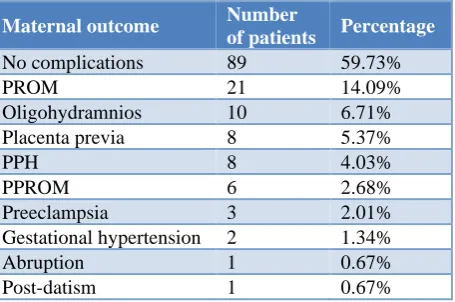
Table 14: Distribution of maternal outcome in the cases who continued pregnancy (n=149).
Maternal outcome Number
of patients Percentage
No complications 89 59.73%
PROM 21 14.09%
Oligohydramnios 10 6.71% Placenta previa 8 5.37%
PPH 8 4.03%
PPROM 6 2.68%
Anaemia was present in 52% patients, while 48% patients had normal haemoglobin. Mean haemoglobin level was 9.66 with a range of 6 to 11.2 gm/dL (Table 13).
Maternal outcome included PROM (14.09%), oligohydramnios (6.71%), placenta previa (5.37%), PPH (4.03%), PPROM (2.68%), preeclampsia (2.01%), gestational hypertension (1.34%), abruption and post-datism (0.67% each) (Table 14).
Gestational age at delivery was 28-31 weeks in 2.01% patients, 32-36 weeks in 19.46% and 37-40 weeks in 78.53% patients. Mean gestational age at delivery was 37.35 with a range of 28 to 40 weeks (Table 15).
Table 15: Distribution of patients according to gestational age at delivery (n=149).
Gestational age at
±SD (Range) 37.35±1.92 (28-40) weeks
Table 16: Distribution of patients according to mode of delivery (n=149).
Mode of delivery Number of patients Percentage
Vaginal delivery 95 63.76%
LSCS 54 36.24%
Total 149 100.00%
Normal vaginal delivery, including one induced, was carried out in 63.76% patients, while lower segment caesarean section was carried out in 36.24% patients due to different indications (Table 16).
Table 17: Distribution of LSCS cases according to indications (n=54).
Breech presentation 3 5.55% Failed induction 3 5.55% Severe oligohydramnios 3 5.55% Severe preeclampsia 1 1.85% Non-progression of labour 1 1.85%
CPD 1 1.85%
Total 54 100.00%
LSCS was carried out due to fetal distress in 31.48% patients, previous LSCS in 20.37% patients, due to APH in 18.52% patients and due to MSAF in 7.41% patients. LSCS due to breech presentation, failed induction and severe oligohydramnios was carried out in 5.55% patients each, while due to severe preeclampsia, non-progression of labour and CPD in 1.85% patients each (Table 17).
Table 18: Relationship of type of bleeding with maternal outcome (n=149). Gestational hypertension 0 (0.00%) 2 (3.92%) Abruption 1 (1.02%) 0 (0.00%) Postdatism 1 (1.02%) 0 (0.00%)
Maternal outcome like PROM was significantly more in spotting (18.37%) as compared to light/heavy bleeding patients (5.88%), while placenta previa (13.72%), PPROM (11.76%), hypertensive disorders of pregnancy (9.80%) were significantly more in light/heavy patients as compared to those of spotting patients. Other maternal outcomes were comparable in patients with spotting and in patients with light/heavy bleeding (Table 18).
Table 19: Relationship of type of bleeding with gestational age at delivery (n=149).
Gestational age at delivery (weeks)
Type of bleeding Statistical
inference
Table 20: Relationship of type of bleeding with mode of delivery (n=149).
Mode of delivery
Type of bleeding Statistical
gestational age of 37 to 40 weeks at delivery, more patients (89.80%) presented with spotting as compared to light/heavy bleeding (56.86%). The difference between gestational age at delivery groups was significant (p<0.0001) (Table 19).
Mode of delivery in patients with spotting and in patients with light/heavy bleeding was similar. There was statistically no significant difference (p=1.00) (Table 20).
DISCUSSION
First trimester bleeding is a common occurrence. It has been estimated to occur in 15-25% of all pregnant women. Uterine bleed in early pregnancy represents a definite threat to developing embryo and constitutes a source of anxiety to both the patient and clinician. First trimester bleeding is not only associated with miscarriage but also with various adverse pregnancy outcomes like PROM, PPROM, APH, preterm delivery. Most of studies conducted in India agree that adverse pregnancy outcome is associated with first trimester bleeding.
Maternal characteristics
In this study, majority of patients (75 %) were in age group of 21-30 years, 24% were above 30 years are and 1% were below 20 years. In study conducted by Dwivedi S, 67.6% were in age group of 21-30years and 12.7% were above 30 years.16
The mean age in our study was 28.6±3.48 years. This is in accordance with the study of Perera BH et al, mean maternal age was 28.8±9.2 years.17
In this study, 42% of patients were primigravida and 58% were multigravida. The results were in accordance with the study conducted by Patel NG et al, who found that majority of patients (66%) were multigravida.18
Similarly, study conducted by Patel S et al, and Hasan R et al, reported that multigravida was 66% and 66.1% respectively.19
In this study 52% of patients had history of abortion. In study conducted by Patel NG et al, and Williams et al, 40% and 43.5% had history of abortion respectively.18,20
In this study, history of threatened abortion was present in 9% of patients. In study conducted by Amirkhani Z et al, found that history of threatened abortion was present in 33.3% of cases.21 However, study conducted by Kouk
LJ et al, found that 16.5% of cases had history of threatened abortion.22
Bleeding characteristics
In this study, majority (65.5%) of patients presented at 8 to 10 weeks and 34.5% of patients presented at ≤6 weeks. This is in accordance with study conducted by Jasoliya J and Bhatia S, majority (93%) presented at 6 to 12 weeks and < 6 weeks were only 7%.23
In this study, majority of patients had spotting (61%), light bleeding (29%) followed by heavy bleeding (10 %). In study conducted by Rai P et al, 70% had spotting, 20% had moderate bleeding followed by heavy bleeding (10%).24 This is in accordance with the study of Patel NG
et al, majority (68%) had spotting, 22% had moderate bleeding followed by heavy bleeding (10%).18
Maternal outcomes
Premature rupture of membranes
In this study, incidence of PROM is 14.09% and PPROM is 2.68%. In study conducted by Sarmalkar MS et al, incidence of PROM is 11% and PPROM is 3%.25 In study conducted by Dwivedi S et al, incidence of both is 9.5 %.16
Antepartum hemorrhage
In this study, incidence of placenta previa is 5.37% and abruption is seen in only 1 patient. In study conducted by Sarmalkar MS et al, incidence of placenta previa was 2% and abruption was seen in only 1 patient out of 100 patients.25 Similarly, Yakistiran B et al, reported only 1
abruption in study of 493 patients with first trimester bleeding.26
In study conducted by Mulik V et al, APH was seen in 6.8% of cases.27 In study conducted by Wijesiriwardana
A et al, he found increased prevalence of placenta previa in study population but difference is not statistically significant. He also found no correlation between abruption and first trimester bleeding.7 Similarly Johns J
et al, had found no association between abruption and first trimester bleeding.14
Postpartum hemorrhage
In this study, PPH was found in 4.03% of patients. In study conducted by Dwivedi S et al, PPH was found in 5.6% of cases.16 In study conducted by Sarmalkar MS et
al, and Patel NG et al, PPH was found in 7% and 6.2% of cases respectively.18,25
Hypertensive disorders of pregnancy
In this study, incidence of preeclampsia was 2.01% and that of gestational hypertension was 1.34%. In this study, no case of eclampsia was found. Dwivedi S et al, conducted a study on 284 patients with first trimester bleeding in which he found hypertensive disorders of pregnancy in 6.69% of patients.16 In study conducted by
Davari-Tanha F et al, hypertensive disorders of pregnancy was found in 4.6% of patients.28 In study
conducted by Lykke JA et al, gestational hypertension was found in 0.9% and preeclampsia was found in 5.2% of cases.29 However, Weiss JL et al, and Bahad M et al, in
Other outcomes
In this study, oligohydraminos was found in 6.71% of patients and postdated in only 0.67%. In study conducted by Dwivedi S et al, postdated pregnancy was 1.76%.16 In
study conducted by Sarmalkar MS et al, oligohydraminos was found in 1% of patients.25 In study conducted by
Guruvare S et al, found that oligohydraminos was present in 19.4% of cases.31
In this study, anemia was present in 52% of patients. In study conducted by Davari - Tanha F et al, anemia was present in 30.8%.28 In study conducted by Patel NG et al,
incidence of anemia was 29%.18
Delivery characteristics
In this study, 74.5% continued pregnancy in which preterm delivery occurred in 21.5% and full-term delivery occurred in 78.5% of patients. In study conducted by Barik S et al, 65.95% of cases continued pregnancy in which 77.7% delivered full term and 22.3% delivered preterm.32 In study conducted by Patel S et al,
64% continued pregnancy of which 77.2% delivered full term and 22.8% delivered preterm.19
The mean gestational age at delivery in this study is 37.35±1.92 weeks. This is in concordance with the study of Perera BH et al, where mean gestational age was 38.43±2.01 weeks.17 In study conducted by Dwivedi S et
al, mean gestational age was 36.12 weeks.16
Mode of delivery
In this study, vaginal delivery was carried out in 63.76% and LSCS was carried out in 36.24% of patients. The most common indication of LSCS was fetal distress (13%). This is in concordance with the study of Kamble PD et al, in which vaginal delivery was 68.7% and LSCS was 31.3%.33 Similarly, in study conducted by Patel NG
et al, vaginal delivery was 59.5% and LSCS was 40.5% and most common indication of LSCS was fetal distress (60%).18 In study conducted by Sarmalkar MS et al, rate
of LSCS was 38% and most common indication was fetal distress (17%).25
In study conducted by Weiss JL et al, and Wijesiriwardana A et al, showed increased prevalence of caesarean section among women with first trimester bleeding.6,7 In meta-analysis done by Sarastwat L et al,
demonstrated that first trimester bleeding has no effect on rout of delivery.3
Relationship between adverse pregnancy outcomes and amount of bleeding
In this study, it was found that preterm delivery, PPROM, placenta previa were present more significantly in women with light or heavy vaginal bleeding as compared to spotting. However, hypertensive disorders of pregnancy
were seen in patients with light bleeding only. PROM was seen more significantly in patients with spotting. In study conducted by Bahad M et al, found that increased risks of preeclampsia and preterm delivery were observed in patients with light bleeding. He also reported that increased risk of preterm delivery and PPROM were observed in patients with heavy bleeding.30
Khanam M et al, reported that first trimester bleeding is an independent risk factor for adverse obstetric outcome that is directly proportional to amount of bleeding.34
Similarly, in accordance with our study, Weiss JL et al, had reported that there was no association between gestational hypertension and first trimester bleeding but patients with light bleeding were statistically more likely to have preeclampsia.6
Weiss JL et al, have reported that light bleeding subjects were more likely to have preeclampsia, preterm delivery and abruption. He also reported that heavy bleeding subjects were more likely to have preterm delivery, PPROM and placental abruption.6
CONCLUSION
Conclusion drawn was that pregnant women with first trimester bleeding are at increased risk for spontaneous loss and adverse pregnancy outcomes. Knowledge of these risks may help the obstetricians to manage these cases vigorously in the antepartum period and do timely interventions as needed. One should make a choice of management which can provide sensitive and complete care to women and this important time keeping in mind our goal of “Healthy Mother and Healthy Baby”.
Funding: No funding sources Conflict of interest: None declared
Ethical approval: The study was approved by the Institutional Ethics Committee
REFERENCES
1. Hasan R, Baird DD, Herring AH, Olshan AF, Jonsson Funk ML, Hartmann KE. Association between first trimester vaginal bleeding and miscarriage. Obstet Gynecol. 2009;114(4):860-67. 2. van Oppenraaij RH, Jauniaux E, Christiansen OB,
Horcajadas JA, Farquharson RG, Exalto N, et al. Predicting adverse obstetric outcome after early pregnancy events and complications: A review. Hum Reprod Update. 2009;15:409-21.
3. Saraswat L, Bhattacharya S, Maheshwari A, Bhattacharya S. Maternal and perinatal outcome in women with threatened miscarriage in the first trimester: a systematic review. BJOG. 2010;117:245-57.
5. Choi H, Blaivas M, Lambert MJ. Gestational outcome in patients with first-trimester pregnancy complications and ultrasound-confirmed live intrauterine pregnancy. Acad Emerg Med. 2000;7(2):200-3.
6. Weiss JL, Malone FD, Vidaver J, Ball RH, Nyberg DA, Comstock CH, et al. Threatened abortion: A risk factor for poor pregnancy outcome, a population-based screening study. Am J Obstet Gynecol. 2004;190(3):745-50.
7. Wijesiriwardana A, Bhattacharya S, Shetty A, Smith N, Bhattacharya S. Obstetric outcome in women with threatened miscarriage in the first trimester. Obstet Gynecol. 2006;107:557-62.
8. Dadkhah F, Kashanian M, Eliasi G. A comparison between the pregnancy outcome in women both with or without threatened miscarriage. Early Hum Develop. 2010;86:193-6.
9. Lockwood CJ, Krikun G, Rahman M, Caze R, Buchwalder L, Schatz F. The role of decidualization in regulating endometrial hemostasis during the menstrual cycle, gestation and in pathological states. Semin Thromb Hemost. 2007;33:111-7.
10. Redman CW, Sargent IL. Preeclampsia, the placenta and the maternal systemic inflammatory response: A review. Placenta. 2003;24:S21-27.
11. Norwitz ER. Defective implantation and placentation: Laying the blueprint for pregnancy complications. Reprod Biomed Online. 2006;13:591-9.
12. Hustin J, Jauniaux E, Schaaps JP. Histological study of the materno-embryonic interface in spontaneous abortion. Placenta. 1990;11:477-86.
13. Kim YM, Chaiworapongsa T, Gomez R, Bujold E, Yoon BH, Rotmensch S, et al. Failure of physiological transformation of the spiral arteries in the placental bed in preterm premature rupture of membranes. Am J Obstet Gynecol. 2002;187:1137-42.
14. John J, Jauniaux E. Threatened miscarriage as a predictor of obstetric outcome. Obstet Gynecol. 2006;107:845-50.
15. Yang J, Hartmann KE, Savitz DA, Herring AH, Dole N, Olshan AF, et al. Vaginal bleeding during pregnancy and preterm birth. Am J Epidemiol. 2004;160:118-25.
16. Dwivedi S, Verma K, Malhotra V, Jahan U, Gupta N, Verma S, et al. Pregnancy outcome in threatened miscarriage and correlation with USG parameters. Inter J Recent Sci Res. 2017;8(2):15539-43.
17. Perera BH, De Silva AP, Perera H. A case-control study on the effect of threatened miscarriage on selected pregnancy outcomes. Sri Lanka J Obstet Gynaecol. 2009;31:34-8.
18. Patel NG, Patel MS, Shah SR, Jani SK, Patel JA, Shah JU. Study of outcome of pregnancy in patients with first-trimester bleeding per vaginum. Int J Adv Med. 2014;1(3):230-3.
19. Patel S. Pregnancy outcome of patients complicated by threatened abortion. IOSR-JDMS. 2016;15(12):18-22.
20. Williams M, Goldman M, Mittendorf R, Lieberman E, Monson R. Adverse infant outcomes associated with first-trimester bleeding. Obstet Gynecol. 1991;78(1):141-8.
21. Amirkhani Z, Akhlaghdoust M, Abedian M, Salehi GR, Zarbati N, Mogharehabed M, et al. Maternal and perinatal outcomes in pregnant women with first trimester vaginal bleeding. J Fam Reprod Health. 2013;7(2):57-61.
22. Kouk LJ, Neo GH, Malhotra R, Allen JC, Beh ST, Tan TC, et al. A prospective study of risk factors for first trimester miscarriage in Asian women with threatened miscarriage. Singapore Med J. 2013;54(8):425-31.
23. Jasoliya J, Bhatia S. Study of fetal outcome in cases of bleeding per vaginum in first trimester of pregnancy. IJSR. 2017;6(2):1543-5.
24. Rai P, Kumari G, Kumari K, Jaiswal D. Evaluation of perinatal outcome in women presented with first trimester vaginal bleeding: our experience. Inter J Reprod Contracept Obstet Gynecol. 2017;6(3):829-32.
25. Sarmalkar MS, Singh S, Nayak AH. Maternal and perinatal outcome in women with threatened abortion in first trimester. Int J Reprod Contracept Obstet Gynecol. 2016;5(5):1438-45.
26. Yakistiran B, Yuce T, Soylemez F. First trimester bleeding and pregnancy outcomes: Case-control study. Inter J Women’s Health Reprod Sci. 2016;4(1):4-7.
27. Mulik V, Bethel J, Bhai K. A retrospective population-based study of primigravida women on the potential effect of threatened miscarriage on obstetric outcome. J Obstet Gynecol. 2004;24(3):249-53.
28. Davari-Tanha F, Shariat M, Kaveh M, Ebrahimi M, Jalalvand S. Threatened abortion: a risk factor for poor pregnancy outcome. Acta Medica Iranica. 2008;46(4):314-20.
29. Lykke JA, Dideriksen KL, Lidegaard O, Langhoff-Roos J. First trimester vaginal bleeding and complications later in pregnancy. Obstet Gynecol. 2010;115:935-44.
30. Bahad M, Singh MB, Chikitsalaya M. A prospective study of outcome of pregnancy complicated by threatened abortion. IOSR-JDMS. 2016;15(6):20-3. 31. Guruvare S, Medipalli P, Urala SM, Rai L, Hebbar
S, Adiga P. Factors influencing pregnancy outcome in women with vaginal bleeding before midpregnancy: a prospective case control study. Int J Reprod Contracept Obstet Gynecol. 2015;4(3):601-5. 32. Barik S, Javed S, Datta S, Chowdhury B, Datta P. Outcome of pregnancies having bleeding per vagina in the first trimester. J Evol Med Dent Sci. 2016;5(55):3750-5.
Reprod Contracept Obstet Gynecol. 2017;6(4):1484-7.
34. Khanam M, Yusuf N, Ashraf F. Outcome of threatened abortion in a series of 100 cases in RMCH. J Teacher Association. 2005;18(2):76-9.