CLASSIFICATION OF COPY MOVE FOREGERY
AND NORMAL IMAGES BY ORB FEATURES AND
SVM CLASSIFIER
Neha Dhiman
1, Dr. Rakesh Kumar
21,2
Deptt of CSE,NITTTR Chd)
ABSTRACT
In our society digital images are a powerful and widely used communication medium. They have an important
impact on communication and IT industry. In past few years, research goes to detecting and classified for copy
move forgery images for forensic requirement. So detection is very important challenges for testing in forensic
science. In this paper detection and classification by point base and block base features SIFT and ORB use with
classification with support vector machine with Gaussian and polynomial kernel .
Keywords: SVM,ORB,SIFT,IMAGE
I. INTRODUCTION
Image forgerydetection is one kind of passive technique using blind algorithms to perceive hints of tampering in
a given image without prior information or security codes. The images can be fashioned by splicing details from
itself, which is called Copy-Move images, or from alternate images called spliced images. For Copy-Move
images, copied regions in image can be post handled, turned/flipped and scaled before pasting to different spots
to hide or expel any information.
Types of Image forgery
a) Image Retouching: This is considered to be less harmful kind of digital image forgery. Image retouching
is not significantly change an image but instead enhances or reduces certain features of images. This
technique is popular among magazines photo editors.
b) Image Splicing: This system is more forceful than modifying. Picture Spicing is a method that includes a
composite of at least two pictures which are joined to make a phony picture.
c) Copy-Move Attack: Copy-Move attack is more like picture grafting in perspective of the way that the two
systems change certain picture district with another picture. At the end of the day the wellspring of the
altered picture began from a similar picture.
FORGERY DETECTION
Forgery detection procedures end up being generously more confounded to deal with the latest forgery
strategies. This back to the availability of electronic modifying gadgets, change, and control end up being basic
and therefore forgery detection transforms into a baffling and undermining issue. Picture forgery detection can
be controlled in various courses with various clear operations like relative changes, for instance, translation,
scaling, etc, pay operations, for instance, brightness, tones, separate adjustments, etc, camouflage operation, for
instance, compositing, blending, matting, cropping, photomontage provoking apparently untraceable antiquated
rarities in a photo. The modified and legitimate methodology for recognizing the designed pictures has
transformed into a noteworthy testing issue for experts and a comparative issue is substantial for every
multimedia contents.
Techniques used for copy-move forgery detection
The copy move forgery detection (CMFD) can classify into either Key-point-based methods or block based
methods as shown in Figure 2.
II.LITERATYRE REVIEW
Jian Li et al [1], proposed an arrangement to recognize the copy move forgery in a photo, basically by
expelling the key concentrations for evaluation. The genuine division to the standard procedures is that the
anticipated plot at first segments the test picture into semantically self-governing patches going before key point
removal. As a yield, the copy move areas can be perceived by organizing among these patches. The organizing
methodology subsists of two stages. In the key sort out, they find the agitated arrangements of patches that may
fuse copy move forgery regions, and they by and large acknowledge a relative change lattice. In the second
stage, an Expectation-Maximization-based count is planned to refine the acknowledged grid and to exhibit the
subsistence of copy move forgery. Trial yields show the colossal presentation of the organized arrangement by
methods for differentiating it and the best in class schemes on individuals by and large databases.
Cheng-Shian Lin et al [2],have used a skilled arrangement for perceiving copy move forgery modifying
ambushes. The copy move forgery ambush is described as a region of a photo is supplanted by a copy of other
region in a comparable picture. This detection is significant for threatening changing a photo. The predicted plot
develops before cluster reinforcing piece intend to gathering by mean and change for diminishing the calculation
time. Trial yields exhibit that the normal arrangement needs less estimation times. In spite of the way that the
arrangement, however the total computation time is so far made no under 10% differentiating and earlier
examination. Also, the using of square contrast diminishes the false positive rate.
Harpreetkaur et al [3], have used two copy-move image forgery detection techniques namely „SURF‟ and
„PCA combined with SIFT‟ have been implemented using MATLAB platform. It has also been practical that the recognition correctness of „PCA combined with SIFT‟ techniques is superior to „SURF‟ and „DWT combined with SIFT‟ techniques. On the other hand, this technique is unable to detect image forgery in flat region
significantly.
Hashmi et al [4],have utilized a vector with seven parts to clarify the character of every little obstructs, a
9-dimensional vector is likewise acquainted in with resolve the issue with a settled point turn on the duplicated
locales. Parts of this vector are figured in view of the powers from four equivalent measured sub-obstructs on
each piece. The principal constituent is the normal force, the following four components are proportions of
normal powers and the last four components are contrasts of normal powers. A radix sort calculation is
connected to perform lexicographical arranging on this vector sand a forgery control is moreover detected. The
alternation with fixed angle can be detected but not with arbitrary angles by this method.
HieuCuong et al [5]arranged Radon transformation to advance the characters and utilize stage connection to
recognize the sets of coordinating vectors. The foreseen method is first rate for the manufactured pictures which
the turn point of the replicated area is under 4o, has Gaussian commotion encourage with a SNR more
prominent than 35dB and littler square size 8x8 pixels.
PreetiYadav et al [6]presented a created calculation by applying DWT into a picture to diminished the
estimation showing. The character vectors will be extricated from the little covering pieces of the consolidated
picture and arranged lexicographically to discover the copied squares. The acknowledgment was done on the
most reduced level picture portrayal and furthermore demonstrated best appearance on little size duplicate move
forgery, distinguished the various Copy-Move forgery with bring down computational many-sided quality
Fredrich, et al [7], proposed a technique to identify copy move forgery. Discrete Cosine Transform (DCT) of
the picture pieces was utilized and their lexicographical arranging was considered to stay away from the
computational weight. Once arranged, the nearby indistinguishable match of pieces is thought to be duplicate
moved squares. A downside of this technique is that it can't distinguish small duplicate regions.
Cao et al [8], display region duplication detection algorithm which depends upon upgraded DCT and shows
low computational unconventionality. The critical differentiation between this system and the other DCT-based
methodologies is that here the quantized piece is requested by a circle square. The circle square is then isolated
into a settled number of parts, for which the character vectors are enrolled. Euclidean detachment among
neighboring sets is processed after lexicographic orchestrating of vectors. The genuine division between the
equivalent vectors is moreover considered before the last approach duplication is made. This procedure is fit for
recognizing various region duplications and is moreover fiery against darkening and included substance fuss
anyway it has poor execution with poor picture quality. It is not overwhelming to geometrical operation either.
Bayram, et al [9],guided an examination to perceive copy move forgery by using Fourier-Mellin Transform
(FMT). They pick FMT in light of the fact that it is solid to lossy JPEG weight, darkening, uproar, scaling and
little assessed squares and the Fourier Transform of each piece is processed. In this manner, they ensured that
change is translation invariant. By then the resulting degree regards are re-tried, expected and quantized into
logpolar headings to get feature vectors. These segment vectors made swing invariant to little upheaval edges.
By then they are facilitated to find similar part vectors by using either lexicographic orchestrating or counting
bloom channels. In reality, even a trademark picture may have a couple of practically identical pieces. Along
these lines, fabricating is affirmed exactly when there are a certain number of related obstructs inside a
comparable partition. This methodology lessens false positives making the strategy more capable. This strategy
could distinguish frauds including impedes upheavals of to 10 degrees and a scaling of 10%. Their computation
is furthermore intense to JPEG compression.
Shao et al [10],directed an investigation to recognize copy move forgery by utilizing Fourier-Mellin Transform
(FMT). They pick FMT in light of the fact that it is vigorous to lossy JPEG pressure, obscuring, clamor, scaling
and interpretation impacts connected as post-preparing. Toward the starting, the picture is separated into a few
little measured squares and the Fourier Transform of each piece is computed. Thusly, they guaranteed that
change is interpretation proposed a calculation which is computationally an unpredictable copy - move forgery
detection calculation. These calculation wards on roundabout window extension and stage relationship. The
picture is filtered by a round window which is then stretched out into a standardized rectangular piece utilizing
bi-straight introduction. Discrete Fourier Transform (DFT) is figured for these extended squares to acquire the
stage connection lattice. Improved pinnacle esteems mirror the likeness in locales. A band restriction method is
connected to the DFT keeping in mind the end goal to expel the high recurrence segments as they don't make
any helpful contribution towards the calculation of pinnacle esteems. This strategy likewise distinguishes
replicated turned - moved districts in the picture. This strategy ends up being precise in forgery detection even
after the manufactured area has experienced shift, obscuring, JPEG compression, and variety in luminance. The
disadvantages of this strategy are spoken to in the way that it is not computationally quick and is additionally
not scale invariant.
III PROPOSED METHODOLOGY
Support vector machines in the machine learning, essentially are managed learning models in light of related
learning calculations which investigates data used for relapse and order examination. A training set illustrations
is given, denoted each as has a place with either classifications, a model is worked by a SVM training
calculation in which new cases are alloted either for one of the classifications making it paired non-probabilistic
linear classifier. An illustration portrayal of a SVM demonstrate as focuses (in space), mapped in a way that
different classes cases are separated with a reasonable hole which can be wide as could be expected under the
circumstances. What's more, in that comparative space, mapping another case and a forecast is made to which
classification it has a place in view of the hole side they fall in. The calculation of the SVM classifier:Sufficient
little esteem is deciding for yields the classifier for linear data that is linearly classifiable.
In this forgery detection strategy in which the info picture was partitioned into over-lapping rectangular squares,
from which the quantized Discrete Cosine Transform (DCT) coefficients of the pieces were coordinated to
measurements. In Used the RGB shading segments and bearing data as piece highlights. In Used Discrete
Wavelet Transform (DWT) and Singular Value Decomposition (SVD) to extricate the picture highlights. In
existing frameworks they have a few constraints, despite the fact that these plans are successful in phony
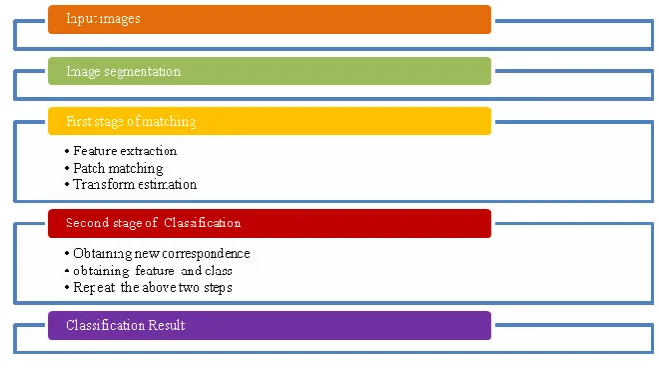
identification.Step1: Input the different types of images.
Step2: Extract different type of features.
Step3: normalize the features by scaling method.
Step4: Matching using ORB features (Oriented FAST & Rotated BRIEF).
Step5: Classification by reducing the false positive error.
Step6: Post processing by analysis precision, recall, accuracy.
Fig. 2 Flow chart of Methodology
Step1 : Pre-processing: If the input image “C” is a colored image, convert it into a gray scale image using the
standard formula. Where R, G, and B are red channel, green channel and blue channel of
Step2: Overlapping block pixel into a matrix: A “b × b” block is glided over the resulting image “LLL”and the
image is scanned from the upper left corner to the lower right corner. The PCA coefficients are stored as one row in the matrix “A”. The matrix will have (M-b+1) × (N–b+1) rows and b × b columns, Where “M” and “N”
represent the number of rows and columns of input image respectively. The matrix “B” is formed in the same way as “A” with two additional columns for storing top-left co-ordinates. The block size, b, was set dynamically
based on image size. The value of block size is doubled in the next level of PCA and this process of block value
continues until final image (highest resolution) is reached for final detection.
Step3: Low Contrast Elimination: Calculate the contrast for each block in “A”, then ignore blocks where
contrast is the least, i.e. the contrast is less than the specified threshold.
Step4: Phase correlation: Calculate the phase correlation for the block corresponding to the current row “i” with
the blocks corresponding to “p” rows above and below the current row. If the calculated maximum phase correlation value exceeds a preset threshold value “t”, then store the top left coordinates of the corresponding reference block and the matching block from “B” matrix in a new row of a new matrix. The resulting candidate
Step5: Extract ORB and SURF features: Extract the key point feature based on orientation and capacity of
neighbor points , these feature find out pattern in images.
Step6:Classifier : Use the SVM classifier with EM and RBF kernel model and test the model with analysis of
recision, recall, accuracy.
IV RESULTS
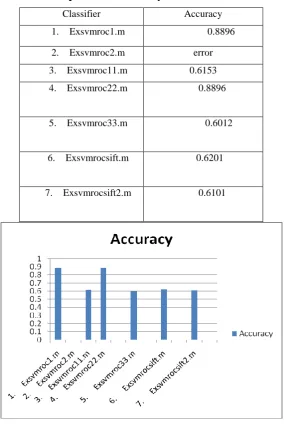
Table 1 Comparison of Accuracy with different classifier
Classifier Accuracy
1. Exsvmroc1.m 0.8896
2. Exsvmroc2.m error
3. Exsvmroc11.m 0.6153
4. Exsvmroc22.m 0.8896
5. Exsvmroc33.m 0.6012
6. Exsvmrocsift.m 0.6201
7. Exsvmrocsift2.m 0.6101
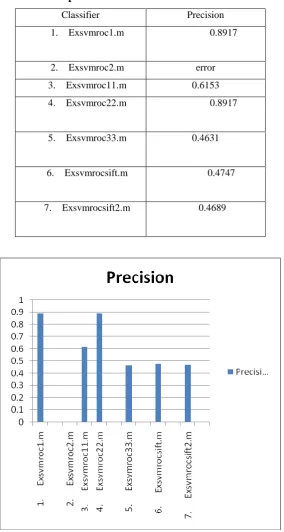
Table 2 Comparison of Precision with different classifier
Classifier Precision1. Exsvmroc1.m 0.8917
2. Exsvmroc2.m error
3. Exsvmroc11.m 0.6153
4. Exsvmroc22.m 0.8917
5. Exsvmroc33.m 0.4631
6. Exsvmrocsift.m 0.4747
7. Exsvmrocsift2.m 0.4689
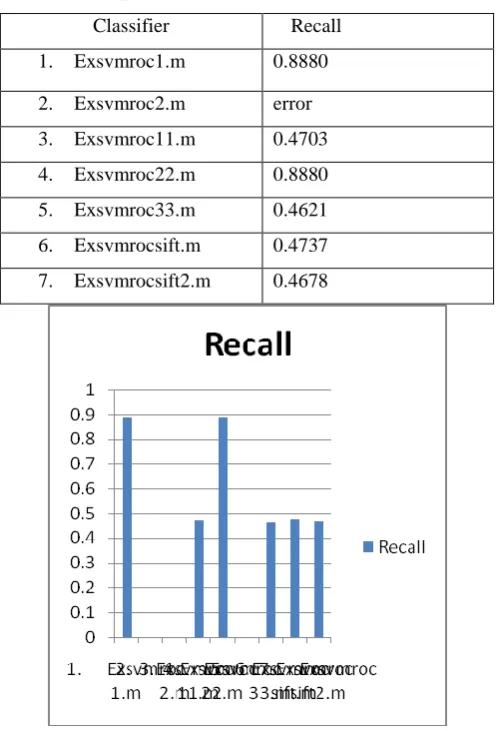
Table 3 Comparison of recall with different classifier
Classifier Recall1. Exsvmroc1.m 0.8880
2. Exsvmroc2.m error
3. Exsvmroc11.m 0.4703
4. Exsvmroc22.m 0.8880
5. Exsvmroc33.m 0.4621
6. Exsvmrocsift.m 0.4737
7. Exsvmrocsift2.m 0.4678
Fig 5 Graph of Recall Comparison
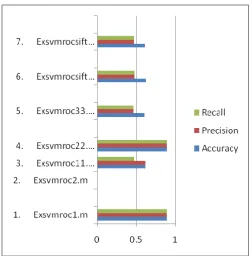
Table 4 Comparison of Accuracy, Precision, Recall
Classifier Accuracy Precision Recall
1. Exsvmroc1.m 0.8896 0.8917 0.8880
2. Exsvmroc2.m error error error
3. Exsvmroc11.m 0.6153 0.6153 0.4703
4. Exsvmroc22.m 0.8896 0.8917 0.8880
5. Exsvmroc33.m 0.6012 0.4631 0.4621
6. Exsvmrocsift.m 0.6201 0.4747 0.4737
Fig 6 Comparison graph of Accuracy, Precision, Recall
V. CONCLUSION AND FUTURE SCOPE
Copy-move forgery is a very common way to tamper an image. Many researchers have proposed various
schemes to detect the tampered images. Sometimes the copied regions are rotated or flipped before being pasted.
In this paper. In this paper propose Detection and classification method by machine learning and optimization
method. In our experiment detection and classification with sift aco and SVM Gaussian and polynomial
kernel.SIFT and ORB with polynomial kernel show significance high accuracy, precision and recall.
REFERENCES
[1.]
Jian Li., Xiaolong Li., Bin Yang, and Xingming Sun, (2015), “Segmentation-Based Image Copy- Move forgery Detection Scheme”, IEEE Transactions on Information Forensics And Security ,10(3), pp.507-518.
[2.]
Cheng-Shian Lin, Chien-Chang Chen, Yi-Cheng Chang, (2015), “An Efficient Enhanced ClusterExpanding Block Algorithm For Copy-Move Forgery Detection”, International Conference on Intelligent
Networking and Collaborative System, pp. 228-231.
[3.]
HarpreetKaur, JoytiSaxena and Sukhjinder Singh, (2015), “Key-point based Copy-Move Forgery Detection and their Hybrid” Journal of the International Association of Advanced Technology andScience, 16(2), pp. 1-7.
[4.]
Hashmi M. F., Hambrade A. R. and Keskar A.G., (2013), “Copy Move Forgery Detection using DWT and SIFT Features”, IEEE 13thInternational Conference on Intelligent Systems Design and Applications
[5.]
HieuCuong Nguyen and Stefan Katzenbeisser, (2012), “Detection of Copy-Move forgery in digital images using Radon transformation and phase correlation”, IEEE 18th International Conference on IntelligentInformation Hiding and Multimedia Signal Processing, Piraeu, pp. 418-449.
[6.]
PreetiYadav, YogeshRathore, AartiYadav,” DWT Based CopyMove Image Forgery Detection”,International Journal of Advanced Research in Computer Science an Electronics Engineering Volume 1,
Issue 5, July 2012
[7.]
Fridrich, et al., Detection of Copy-move Forgery in Digital Images, 2003.[8.]
Cao, Y. Gao, T. Fan, L. Yang, Q. (2012), A Robust Detection Algorithm For Copy-Move Forgery inDigital Images, Forensic Science International, vol. 214, No. 1–3,pp. 33–43.