ABSTRACT
LIU, CHENGYANG. Characterization of the Effects of a Pretreatment on Dark Colored Polyester Fabrics. (Under the direction of Dr. Harold S. Freeman and Dr. Lisa Parrillo-Chapman).
Inkjet printing of polyester (PET) fabric requires a pretreatment step that enhances the receptivity of the fabric surface to water-based inks. During the
course of printing on dyed fabrics, it was found that application (spraying or padding) of a commercial pretreatment agent often caused a significant color shift when applied to dark colored surfaces. Since the printed area is typically smaller than the pretreated area, this development poses a problem for the printers. Therefore, the goal of this project was to determine the cause of the unwanted color shifts. A solution to this problem was also of interest. As a focal point for this research, the nature of the interactions between the pretreatment and the dyed fabric and the adsorbed dyes was characterized. PET fabrics, before and after the pretreatment, were analyzed spectrophotometrically and compared in terms of color difference against each other. The dyes were then extracted from the printed fabrics to determine which were sensitive to the pretreatment.
Color strength measurement was conducted on 44 pairs of fabrics, to analyze the differences in L*a*b* values between treated and untreated pairs. The results showed that 12 of the 44 untreated fabrics underwent unacceptable color changes
following pretreatment, giving ΔECMC values in the 1.65 – 7.89 range with the shifts
more pronounced on a back surface.
Thin Layer Chromatography (TLC) and Ultraviolet-Visible spectroscopy (UV-Vis). The results showed that none of the dyes were impacted molecularly by the pretreatment agent, and Rf λmax values were unchanged.
The focus of this work was then turned to scanning electron microscopy (SEM) to determine whether the shade differences were physical rather than chemical in nature. SEM analysis showed a heavy white coating of pretreatment agent on the PET surface, which seems to be the source of the color shifts. While it is not
© Copyright 2016 by Chengyang Liu
Characterization of the Effects of a Pretreatment on Dark Colored Polyester Fabrics
by
Chengyang Liu
A thesis submitted to the Graduate Faculty of North Carolina State University
in partial fulfillment of the requirements for the degree of
Master of Science
Textile Engineering
Raleigh, North Carolina 2016
APPROVED BY:
_______________________________ _______________________________
Dr. Harold S. Freeman Dr. Lisa Parrillo-Chapman Committee Co-Chair Committee Co-Chair
_______________________________ _______________________________
BIOGRAPHY
ACKNOWLEDGMENTS
I would like to thank my advisors Drs. Harold S. Freeman and Lisa Parrillo-Chapman sincerely. I am so appreciative for their support during my Master’s study and research, including the guidance about experiments, courses and life and the patience toward me. When facing some difficulties, they gave me encouragement and advices. In my heart, they are a good example in academic research with good character and kindness. Thanks to my committee member Dr. Renzo Shamey and Dr. Warren J. Jasper, for the support in my research. Thanks to Dr. Nelson R. Vinueza, for his help in the experiments of mass spectroscopy and HPLC
spectroscopy. Thanks to Dr. Trevor J. Little, Dr. Nancy Powell and Dr. Andre West for their help in the research.
I also thank all of members in Dr. Freeman’s research group, including Dr. Malgorzata Szymczyk, Dr. Luciano DaSilva, Yi Ding, Syed Zaidy, Nahid Mehraban, Tuane Santos, Tova Williams, Rui Su, Yixin Liu and Jasmine Park, for their
friendship and support. Thanks to Alexis Owens and Sarah Bishop for their help in the research. Thanks to Ms. Judy Elson and Ms. Birgit Anderson for their help in experiments, including the guidance about instruments.
TABLE OF CONTENTS
LIST OF TABLES………..…ix
LIST OF FIGURES………x
1. Introduction...1
2. Literature Review………...………2
2.1 Disperse Dyes ...………..2
2.1.1 Azo dyes………4
2.1.1.1 Monoazo dyes………...4
2.1.1.2 Disazo dyes………...………5
2.1.1.3 Heterocyclic diazo dyes………...……6
2.1.2 Anthraquinone dyes……….………7
2.1.3 Disperse dyes with other chromophores………..…8
2.1.4 The relationship between structure and color of azo dyes………9
2.1.5 Mechanism of dyeing polyester fabric with disperse dyes.…...10
2.1.6 Applications to polyester………...……12
2.2 Polyester and woven polyester fabric………...….…16
2.2.1 Overview of polyester………16
2.2.2 Synthesis of polyester………...……19
2.2.3 Physical properties of polyester fibers………22
2.2.4 Chemical properties of polyester fibers………..……23
2.2.5 Properties of woven polyester fabric………...…24
2.2.6 Applications of woven polyester fabrics in textiles..…………..…26
2.3 Pretreatment methods of polyester for use in textiles…..………...………27
2.3.1 Coating……….………...………27
2.3.2 Chemical pretreatments……….………...…29
2.3.2.1 Solvent pretreatment……….……….30
2.3.2.2 Caustic soda pretreatment………...……….30
2.3.3 Plasma treatment………...………30
2.4.1 Overview of inkjet printing………....32
2.4.2 Mechanism and process of inkjet printing ………..…...…33
2.4.3 Dyes and colorants in inkjet printing………..…….…35
2.4.4 Surface modification of polyester fabrics for inkjet printing...…..37
2.4.5 Applications of inkjet printing………..…..39
2.4.5.1 Applications in textiles………...…….……...…39
2.4.5.2 Applications in other fields………..…...…40
2.5 Research plan………..……..42
3. Experimental………..…...…45
3.1 Materials………..……45
3.2 Instruments………...…..……46
3.3 Thin Layer Chromatography (TLC) of dyes………..…….47
3.4 Dye extraction and isolation………...……..47
3.5 Surface morphology………..………49
3.6 UV-Visible absorption spectroscopy………..….…50
3.7 Mass spectroscopy………..……..50
3.8 High-performance liquid chromatography (HPLC) spectroscopy……..…51
4. Results and Discussion………..52
4.1 Color measurements……….…....52
4.2 Dye extraction and isolation……….…64
4.3 Thin Layer Chromatography (TLC) of dyes………..….67
4.4 Characterization of extracts from Samples 5, 5+, 6, 6+, 8, 8+, and 13, 13+ ………..……….69
4.4.1 UV-Vis spectra………69
4.4.2 Mass spectra………...70
4.5 Characterization of Sample 16 extract..……….…73
4.5.1 Dye separations………...…..…73
4.5.2 The UV-Vis spectra………....74
4.5.4 High-performance liquid chromatography (HPLC) spectra...…..83
4.5.4.1 HPLC purification and mass spectra of dye mixture.…84 4.5.4.2 HPLC purification and mass spectra of isolated dyes..88
4.6 Analysis of commercial disperse dyes with pretreatment agent………....96
4.7 SEM analysis……….…..105
5. Conclusions………107
REFERENCES………..……….…109
APPENDIX.……….………...118
Appendix A: L*a*b* values of 44 pairs of PET samples………...118
Appendix B: Mass spectrum of Sample 5, 5+, 6 and 6+..………..….122
LIST OF TABLES
Table 2.1 Physical properties of PET fibers………...……….…….22
Table 2.2 Chemical resistance of PET fibers ……….…….23
Table 2.3 The list of polyester fabric samples……….43
Table 3.1 Chemicals used in the research………...…45
Table 4.1 The color attributes of samples ...……….………...58
Table 4.2 The weights of dye extracts of Samples 2-22 and Samples 2+ to 22+...66
LIST OF FIGURES
Figure 2.1 The general structure of aminozobenzene disperse dyes ……….………..5
Figure 2.2 Some disperse dye structures based on aminoazobenzene disperse dyes.……….…………5
Figure 2.3 Examples of disazo disperse dyes………6
Figure 2.4 Examples of heterocyclic diazo disperse dyes………...7
Figure 2.5 Examples of anthraquinone disperse dyes……….7
Figure 2.6 Examples of disperse dyes with other chromophores………...…8
Figure 2.7 Examples of disperse dyes………9
Figure 2.8 Some examples of carriers………..12
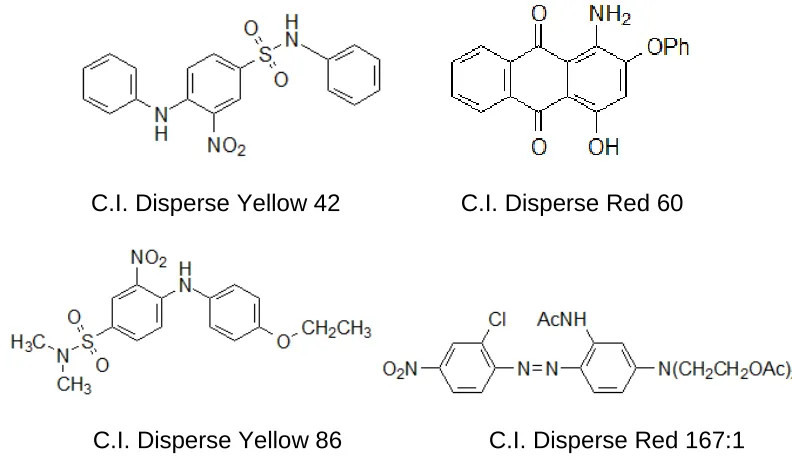
Figure 2.9 Some examples of disperse dyes applied to automotive fabrics………...13
Figure 2.10 Chemical structure of polyethylene terephthalate (PET)………..17
Figure 2.11 Chemical structure of poly(butylenes terephthalate) (PBT)……….18
Figure 2.12 Chemical structure of poly(dihydroxymethylcyclohexyl tereplthalate) (PDT)………..19
Figure 2.13 The structure of plain weave……….25
Figure 4.1 The Munsell circle……….52
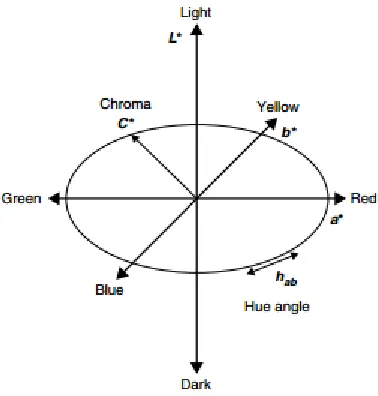
Figure 4.2 Cylindrical representation of the CIELAB color space……….53
Figure 4.3 The colors for Munsell planes with different hues………54
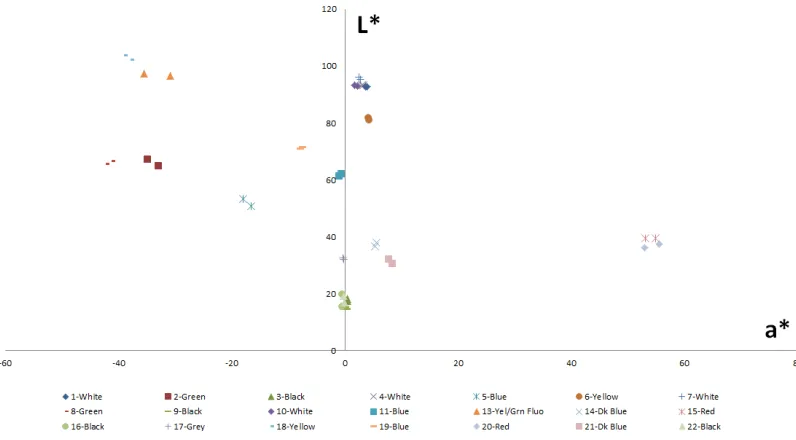
Figure 4.4 2-D graph of a*-L* values of Samples 1-22 and Samples 1+ to 22+…....60
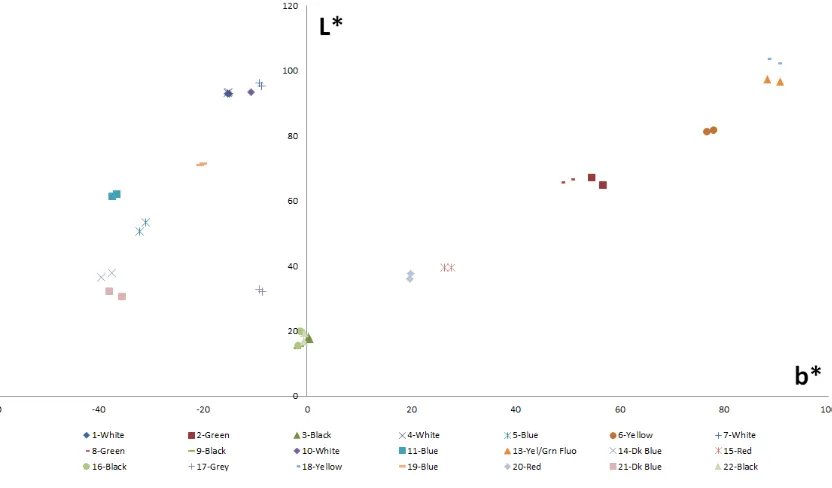
Figure 4.5 2-D graph of b*-L* values of Samples 1-22 and Samples 1+ to 22+.…...61
Figure 4.6 2-D graph of a*-b* values of Samples 1-22 and Samples 1+ to 22+……61
Figure 4.7 2-D graph of a*-L* values of Samples 22-44 and Samples 22+ to 44+...62
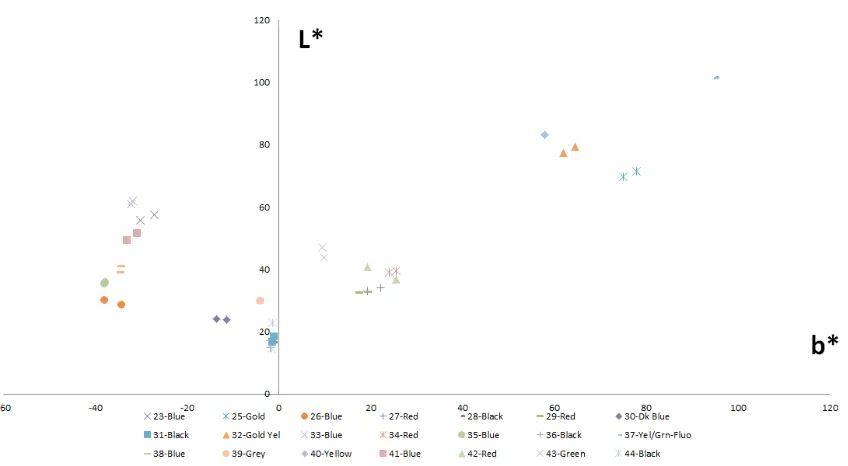
Figure 4.8 2-D graph of b*-L* values of Samples 22-44 and Samples 22+ to 44+...62
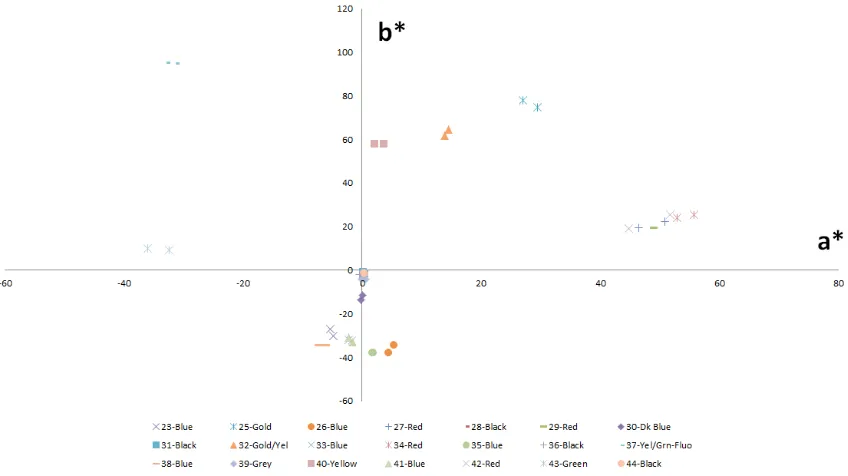
Figure 4.9 2-D graph of a*-b* values of Samples 22-44 and Samples 22+ to 44+…63 Figure 4.10 The mini-mill used to powder fabric samples………...…………..64
Figure 4.11 A powdered fabric sample for dye extraction………..…...……65
Figure 4.12 The soxhlet extractor system for dye extraction………....……65
Figure 4.14 TLC plate of Samples 2-14 and Samples 2+ to 14+.……..………..……68
Figure 4.15 TLC plate of Samples 15-22 and Samples 15+ to 22+...…………..……68
Figure 4.16 UV-Vis spectrum of Sample 5………...69
Figure 4.17 UV-Vis spectrum of Sample 5+………69
Figure 4.18 UV-Vis spectrum of Sample 13……..……..………70
Figure 4.19 UV-Vis spectrum of Sample 13+……..………..………..70
Figure 4.20 Mass spectrum of Sample 5 in negative ESI………..…...71
Figure 4.21 Mass spectrum of Sample 5+ in negative ESI………..…….71
Figure 4.22 Mass spectrum of Sample 5 in positive ESI………..…….72
Figure 4.23 Mass spectrum of Sample 5+ in positive ESI………..……...72
Figure 4.24 TLC plate from Sample 16 extract…..……….73
Figure 4.25 UV-Vis spectrum of light blue dye from Sample 16………..75
Figure 4.26 UV-Vis spectrum of light blue dye and pre-treatment agent from Sample 16………75
Figure 4.27 UV-Vis spectrum of yellow dye from Sample 16…..………..……...76
Figure 4.28 UV-Vis spectrum of yellow dye and pre-treatment agent from Sample 16………....76
Figure 4.29 UV-Vis spectrum of purple dye from Sample 16……….………...77
Figure 4.30 UV-Vis spectrum of purple dye and pre-treatment agent from Sample 16………77
Figure 4.31 UV-Vis spectrum of red dye from Sample 16……..……..……….78
Figure 4.32 UV-Vis spectrum of red dye and pre-treatment agent from Sample 16..………..……78
Figure 4.33 UV-Vis spectrum of dark blue from Sample 16…..………....79
Figure 4.34 UV-Vis spectrum of dark blue dye and pre-treatment agent from Sample 16………..………..…79
Figure 4.35 Mass spectrum of light blue dye extracted from Sample 16……..…..…80
Figure 4.36 Mass spectrum of yellow dye extracted from Sample 16………..……...81
Figure 4.38 Mass spectrum of red dye extracted from Sample 16…………..………82
Figure 4.39 Mass spectrum of purple dye extracted from Sample 16……..………...83
Figure 4.40 DAD chromatograph of Sample 16 at 254 nm..……….84
Figure 4.41 DAD chromatograph of Sample 16 at 410 nm ……….………….84
Figure 4.42 DAD chromatograph of Sample 16 at 540 nm ……….……….85
Figure 4.43 DAD chromatograph of Sample 16 at 660 nm ……….……….85
Figure 4.44 Mass spectrum of peak with retention time at 2.558 minutes………….85
Figure 4.45 Mass spectrum of peak with retention time at 3.248 minutes….……....86
Figure 4.46 Mass spectrum of peak with retention time at 3.58 minutes…….……..87
Figure 4.47 Mass spectrum of peak with retention time at 4.061 minutes………….87
Figure 4.48 Mass spectrum of peak with retention time at 5.601 minutes………….88
Figure 4.49 DAD chromatographs of yellow dye at 254, 410, 540 and 660 nm…....89
Figure 4.50 DAD chromatographs of dark blue dye at 254, 410, 540 and 660 nm...90
Figure 4.51 DAD chromatographs of purple dye at 254, 410, 540 and 660 nm…….91
Figure 4.52 DAD chromatographs of light blue dye at 254, 410, 540 and 660 nm…91 Figure 4.53 DAD chromatographs of red dye at 254, 410, 540 and 660 nm………..92
Figure 4.54 Mass spectrum of yellow dye at 2.294 minutes….………93
Figure 4.55 Mass spectrum of dark blue dye at 5.735 minutes….………...94
Figure 4.56 Mass spectrum of purple dye at 3.741 minutes……….94
Figure 4.57 Mass spectrum of light blue dye at 3.648 minutes……….……95
Figure 4.58 Mass spectrum of red dye at 0.322 minutes……….……..96
Figure 4.59 UV-Vis spectrum of acetone and pre-treatment agent……….…….98
Figure 4.60 UV-Vis spectrum of Disperse Blue 56 in acetone….……….98
Figure 4.61 UV-Vis spectrum of Disperse Blue 56 in acetone and pre-treatment agent………...99
Figure 4.62 UV-Vis spectrum of ethyl acetate and pre-treatment agent…………100
Figure 4.63 UV-Vis spectrum of Disperse Blue 56 in ethyl acetate……….100
1. Introduction
With the development of inkjet printing and the increasing demand of outdoor polyester fabrics, the requirements for PET fabrics are increased. To improve the color saturation, color yield and color fastness, pretreatment methods are applied. Because disperse dyes are easy to be printed on PET fabrics, and penetrate into hydrophobic fibers, they are widely applied in the printing of PET.
An advanced pretreatment process has been developed by Company A. However, following the pretreatment process, a detectable color shift occurs between the non-pretreated and pretreated PET fabrics.
The following literature review covers the basic concepts and categories of disperse dyes, the properties of polyester fibers and fabrics and the classification of pretreatment methods. The overview of the printing process together with the mechanism, type of dyes and modification methods are also discussed.
The physical factors, such as the coating of the fibers, and chemical factors, including the reaction between disperse dyes and pretreatment agent, are possible reasons of the color shift. Scanning electron microscope (SEM) was used to
2. Literature review
2.1 Disperse Dyes
Disperse dyes are one of the most popular classes of dyes in the world market, and are used for the coloration of synthetic fibers, such as polyester, acetate, triacetate and nylon1. In 2006, there were more than 1 million tons of disperse dyes produced worldwide 2.
Disperse dyes were first developed in the 1920’s, to meet the new requirements of dyeing cellulose acetate, which was the first hydrophobic fiber developed on a commercial scale 2, 3. In 1923, Ellis developed sulpho ricinoleic acid (SRA), as an agent to improve the solubility of water-insoluble azo dyes in aqueous alkali to improve the dyeing process 3. Disperse dyes are classified according to their special colorant class and given a definition by the Society of Dyers and Colorists 1,
3
.
azo, hydroxyethylamino and other functional groups in disperse dyes have nitrogen, oxygen or sulfur atoms, which are electronegative. The atoms interact with water molecules, and disperse dyes dissolve in aqueous solution. However, only a small percentage of disperse dyes dissolve in water and the dissolved dyes diffuse into hydrophobic fibers 2.
To improve dye-uptake of hydrophobic fibers, the solubility of disperse dyes in aqueous medium is increased. There are four parameters which can influence the dye solubility, including temperature, the existence of dispersing agents (hold dyes in dispersion), the particle size of dye and the presence of surface active agents (lower the surface tension of dyes in dispersion), which are usually anionic surfactants 2, 9.
Because of their small size, disperse dye molecules can disperse fairly easily into fibers. They interact with fibers in many ways, such as hydrogen bonds, van der Waals forces, and via forming strong π–π interactions2, 10. The polar functional groups in disperse dyes, including –NO2, -OH and –CN, contribute to the forming of
hydrogen bonds 1, 2, 10. In the process of dyeing, dye molecules diffuse into
hydrophobic fibers and form molecular bonds with them 2. However, dyeing process of disperse dyes is reversible 8. The wash fastness has a positive correlation with the dyeability of disperse dyes to fibers 8. Polyester fibers dyed with disperse dyes
More than 50% of disperse dyes are monoazo dyes, with small molecular weights, and 25% of disperse dyes are anthraquinonoid (AQ) dyes. A quarter of disperse dyes are composed of other classes, such as naphthalimide, benzodifuran, coumarin, methyne and nitrodiphenylamine dyes 11.
2.1.1 Azo dyes
Azo dyes can be made of an amine or phenol which is coupled with a diazotized amine, to produce one or more azo bonds (-N=N-) 12. Benzenic or naphthalenic rings, with –OH groups, can be a part of the structure of azo dyes 13. Disperse azo dyes are applied in many fields, including textiles, leather, food, ink, paper, plastic and biological-medical applications 13-16. Azo dyes cover the whole gamut of colors, from yellow to greenish blue, with the help of a wide range of donor-acceptor systems 4, 12, 17, 18.
2.1.1.1 Monoazo dyes
The general structure of disperse monoazo is shown in Fig. 2.1 4, 11. Most of monoazo dyes are based on aminoazobenzene dyes, which have typical donor-acceptor chromogens. The characteristics of monoazo dyes in commerce, including cost, ease of manufacture, color and fastness are influenced by the groups in
positions R1-R711. Some monoazo dyes are hydroxyazobenzene, which have better
C.I. Disperse Blue 79 and C.I. Disperse Red 1 are disperse monoazo dyes, as shown in Fig. 2.2 11.
Figure 2.1 The general structure of aminozobenzene disperse dyes.
C.I. Disperse Orange 30 C.I. Disperse Blue 79
C.I. Disperse Red 1
Figure 2.2 Some commercial disperse dye structures based on aminoazobenzene disperse dyes.
2.1.1.2 Disazo dyes
Orange 29 and C.I. Disperse Yellow 23 are disazo dyes, which are shown in Fig. 2.3
19
.
C.I. Disperse Orange 29 C.I. Disperse Yellow 23 Figure 2.3 Examples of disazo disperse dyes.
2.1.1.3 Heterocyclic azo dyes
Heterocyclic azo dyes are derived from heterocyclic diazo components and coupling components, such as aminobenzene couplers, with the formation of azo (– N=N–) bonds. At first, heterocyclic amines were developed and used to produce red and blue azo disperse dyes 20. Heterocyclic azo dyes have good tinctorial strength and excellent brightness, especially bright blue-green colors, compared with the disperse dyes synthetized by aniline-based components 4, 20, 21. Most heterocyclic azo dyes have five-membered rings, with one to two nitrogen atoms and one sulphur atom in the ring structure 20. C.I. Disperse Blue 15, C.I. Disperse Red 58 and C.I. Disperse Red 177 are heterocyclic diazo dyes, which are shown in Fig. 2.4 22, 23.
compared with the dyes derived from amino-substituted benzoid and nitroaniline compounds 22, 24.
C.I. Disperse Blue 15 C.I. Disperse Red 58
C.I. Disperse Red 177
Figure 2.4 Examples of heterocyclic azo disperse dyes.
2.1.2 Anthraquinone dyes
Anthraquinone disperse dyes have the general structure with 8 carbon atoms and their attached hydrogen atoms, which could be replaced bysubstituents at α -position (1th and 4th position), such as nitro, amino, hydroxyl group 11. Most of anthraquinone dyes have the color range from bright red to blue. C.I. Disperse Red 15 and C.I. Disperse Red 60 are anthraquinone dyes 4. The chemical structure of C.I. Disperse Red 15 and C.I. Disperse Red 60 are shown in Fig. 2.5.
C.I. Disperse Red 15 C.I. Disperse Red 60
2.1.3 Disperse dyes with other chromophores
The disperse dyes derived from other chromophores, including
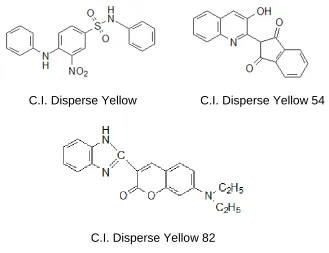
benzodifuranones, coumarins, methines, naphthalimides, nitrodiphenylamines and quinophthalones have been developed and applied to obtain higher brightness with lower cost 4, 11. C.I. Disperse Yellow 42, which has the structure of
nitrodiphenylamine, has high lightfastness on polyester 11. C.I. Disperse Yellow 54 has the structure of quinophthalone, which is widely used in many applications. Some brilliant yellow dyes, such as C.I. Disperse Yellow 82, are disperse dyes with the coumarin structure 11. There are some disperse dyes with other chromophores as shown in Fig. 2.6.
C.I. Disperse Yellow C.I. Disperse Yellow 54
C.I. Disperse Yellow 82
2.1.4 The relationship between structure and color of azo dyes
Azo dyes cover the visible color spectrum, and the color relates to the
molecular structure of dyes. The functional groups of dyes play an important role in electron-donating and electron-attracting and influence the properties of the
conjugated system. In azo dyes, the monoazo dyes with two benzene rings, or one benzene ring and one pyrazolone ring, have yellow or orange colors. The dyes with one benzene ring and one naphthalene ring have orange or red colors. The dyes with two naphthalene rings have red, violet or blue colors. The dyes with multiple naphthalene and benzene rings, have black color. Besides, the electronegativity of functional groups affects the conjugated system, and influences the color of dyes 25.
The azo dyes including the azo disperse dyes have these features. For example, C.I. Disperse Orange 3 has nitro and amino groups, which are stronger electron-donating or electron-attracting groups than those on C.I. Disperse Yellow 3. Thus, C.I. Disperse Orange 3 absorbs light at a longer wavelength than C.I.
Disperse Yellow 3 25. The chemical structures of these two disperse dyes are shown below (Fig. 2.7).
C.I. Disperse Orange 3 C.I. Disperse Yellow 3
2.1.5 Mechanism of dyeing polyester fabric with disperse dyes
Because polyester fibers are hydrophobic, with high molecular weight and low moisture absorbance, it is hard for natural dyes to dissolve into them 6. Disperse dyes could be used to dye polyester fibers in a process, as the form of solid solution, by diffusing into the amorphous regions of polyester fibers 9. However, because of the low solubility of disperse dyes, the rate of dyeing and dye up-take are limited, at room temperature 9.
The rate of dyeing is affected by several factors, including fiber morphology, degree of hydrophobicity of the fiber and dyeing assistants 9. The large size of amorphous regions, and high degree of hydrophobicity of the fiber, creates more open spaces in fibers, which helps more disperse dyes diffuse into fibers 9. Dye carriers and swelling agents are useful to decrease the temperature of the dyeing system 9.
pressure also helps disperse dye diffuse more readily into polyester by increasing the movements of molecules 6.
Dye carriers, which were found in the 1950’s, were commonly used in the dyeing of polyester with disperse dyes, to decrease the temperature of dyeing process to less than 100°C while making similar if not better products 1, 6. Carriers are mostly hydrophobic aromatic organic compounds, such as diphenyl,
1,2,4-trichlorobenzene biphenyl 2-Phenylphenol Figure 2.8 Some examples of dye carriers.
2.1.6 Applications to polyester
Because disperse dyes are capable to dissolve in hydrophobic fibers, such as polyester and acetate, they are widely used in the coloration of textiles, such as garments, sportswear and automotive fabrics 2.
Garments and sportswear are washed frequently and must have good wash fastness. Phthalimide-based azo disperse dyes and benzodifuranone dyes have high wash fastness and produce bright shades on the fabrics. Phthalimide-based azo disperse dyes are easy to be removed in an alkaline medium, which is less harmful to the environment compared with reductive clearing 2.
can be mixed with ultraviolet (UV) absorbers, such as benzophenone and benzotriazole derivatives, to improve the lightfastness of polyester fabrics 26.
C.I. Disperse Yellow 42 C.I. Disperse Red 60
C.I. Disperse Yellow 86 C.I. Disperse Red 167:1
Figure 2.9 Some examples of disperse dyes applied to automotive fabrics.
There are several dyeing methods applied in dyeing polyester, including carrier dyeing, high temperature dyeing and dyeing by the Thermosol™ process 9, 27. These are briefly described in the following sections.
a. Carrier dyeing
b. High temperature dyeing
High temperature dyeing is the most widely used dyeing method for polyester and involves the use of pressurized equipment. In this method inter-chain
connections are decreased while the movements of dye molecules and the rate of dyeing are promoted. High temperature dyeing process can be divided into three phases, which are adsorption phase, diffusion phase and clearing phase 27.
The adsorption phase is a key step to the levelness of dyeing. The adsorption rate of dye, which is influenced by heating rate, needs to be carefully controlled in the adsorption phase. The dye adsorption is influenced from dye concentration, temperature gradient, also the type of fiber and auxiliary 27. In the heating process, dyeing rate reaches the maximum at a specific temperature, which is known as the critical dyeing temperature (CDT). The temperature in the rapid-dyeing method should be set just below the CDT, when the disperse dyes are added into the dyebath. After that, the temperature is raised gradually to around CDT. In the two steps, the exhaustion rate is controlled to process proper level dyeing 27. Then, the temperature is raised to the top dyeing temperature at the highest rate 27.
The clearing phase is a process after the completion of dyeing to remove the dyes, carriers and surfactants remaining on the surface of polyester, which may reduce the brightness of products. The contamination could be removed with some treatment methods, such as reductive treatment, oxidative treatment and using detergents. The reduction clearing, which is a strong clearing, employs sodium dithionite and caustic soda for 20 min at 70-80°C 27. Oxidative treatment is suitable to remove anthraquinone dyes 28.
c. Thermosol process
Thermosol processTM is a useful method for dyeing polyester or
polyester/cellulose fibers with disperse dyes. The process is usually applied to woven and knitted materials 27.
2.2 Polyester and woven polyester fabric
2.2.1 Overview of polyester
Polyester is one of the most popular commercial synthetic fibers in the world, which was first synthetized by Carothers in 1930s 6, 29. The yield of polyester in 2002 was 21 million tons, which is 58% of total yield of synthetic fibers worldwide 30. Polyester consists of polyethylene terephthalate (PET), poly(ethylene naphthalate) (PEN), poly(butylene terephthalate) (PBT), poly(propylene terephthalate) (PPT), poly (lactic acid) (PLA) and thermotropic polyester (LCP) 30.
As a synthetic fiber, polyesters have high strength and stiffness, good dimensional stability and heat resistance, high chemical resistance and good wash-wear properties 31, 32. Polyesters have many applications, including textiles, films, tires, composite materials, biomedical components, packaging, bottles and sporting equipment 31. Polycondensation reactions are good ways to synthetize polyester. There are several typical ways to produce polyester fibers or composites, such as monofilament extrusion, spinning, blow molding and injection molding 31, 33.
To produce polyester fibers, the cost and processability are the main
requirements of industry 30. For example, the melting point is under the limitation of commercial heating fluids. And the glass transition temperature of polyester is not high that the fiber orientation, stabilization and fiber morphology in process is easy to be controlled 30. The processing temperature of polyester is 260-300°C 31.
of polyester fibers with good thermal stability, dimensional stability, mechanical and chemical properties, which satisfy the requirements of various material 30. Polyesters are hydrophobic materials, with high molecular weight and crystallinity, and these features lead to low dyeability 6, 10. Unlike traditional dyeing processes, polyesters usually require high temperature and pressure to promote the penetration and swelling of fiber and improve shades 6.
Polyethylene terephthalate (PET) was developed by a polycondensation process, with dimethyl terephthalate (DMT) or terephthalic acid (PTA), and ethylene glycol (EG) 29, 32, 33. PET is hydrophobic with a high molecular weight, high
crystallinity and compact structure, when made by heating under vacuum 6, 10. PET can be synthetized with transesterification, direct esterification and polycondensation
29
. PET with high molecular weight can be used to make films, which are applied in food packaging and decoration 29. PET can also be used in injection molding, to make rigid materials under high temperature and pressure 29. The chemical structure of PET is shown in Fig 2.10.
Poly(butylene terephthalate) (PBT) is synthetized using dimethyl
terephthalate (DMT) or terephthalic acid, and butanediol 29. Compared with PET, PBT has a higher number of methylene groups in its repeating unit, leading to higher flexibility and lower melting point and glass transition temperature 29. PBT has good dimensional stability and insulating properties. Thus, PBT is applied in the
automotive industry and for making electrical components, such as plug connectors. PBT can also be used to make sportswear, especially swimwear 29. The chemical structure of PBT is shown in Fig 2.11.
Figure 2.11 Chemical structure of poly(butylene terephthalate) (PBT).
Figure 2.12 Chemical structure of poly(dihydroxymethylcyclohexyl terephthalate) (PDT).
Besides PET, PBT and PDT, there are some unsaturated polyesters, which are usually applied in construction and automotive industries. Unsaturated
polyesters have low molecular weight, and are synthesized using unsaturated
dicarboxylic acid and saturated carboxylic acid 29. With the help of peroxide initiators, unsaturated polyesters can be used to synthesize polymers with a high degree of cross-linking. They can be reinforced by glass fibers 34. Unsaturated polyesters have some applications, including molding compositions 29.
2.2.2 Synthesis of polyester
To synthesize polyester fiber, dimethyl terephthalate (DMT) and pure
terephthalic acid (TA) are good starting materials with low cost. Ethylene glycol can also be used to react with TA or DMT in the manufacturing of polyester 30, 35. In the production of polyester fibers, ester interchange occurs between the two monomers
30
.
CH3OCO-C6H4-COOCH3 + 2HOCH2CH2OH
→ HOCH2CH2OCO-C6H4-COOCH2CH2OH + 2CH3OH↑ (1.1)
BHET is isolated from the mixture after the reaction. After that, two molecules of BHET react with each other and produce one glycol molecule, which is an ester interchange reaction. In the reaction, antimony trioxide (Sb2O3) can be selected as a
catalyst 30, 32. The melt polymerization operates under high temperature (higher than 285°C) and high pressure, with the viscosity on the order of around 3000 poise. During the polymerization, the system needs uniform stirring and a constant shear history. Then, the polymers are forced through spinnerets and made into strands and chips 30, 32, 35.
0.65-0.67 30, 32. The fluid is converted into fibers with high semicrystalline morphology and high orientation 30.
In the spinning process, some troublesome byproducts are produced in the structure, such as diethyleneglycol (DEG) units. DEG units can decrease the
crystallinity, thermal stability and other properties of polyester 30. The removal of the byproducts in the spinning process is an important issue.
The drawing process is necessary after the spinning process, which is able to improve the crystallinity, orientation, tenacity and elongation of the fiber 30, 35. After the drawing process, the fibers have higher modulus. In the process, the fibers are drawn by rolls, with nearly maximum draw ratio under relatively low temperature. The filament is wound onto a bobbin at the end of the process 30.
Besides, heat-setting process is conducted to prevent heat shrinkage. Fibers can be heated by hot air, hot rollers and steam 30. After heat-setting, the fibers obtain good dimensional stability and crease resistance, even good resistance to being out of shape after fabrication 30.
Yarn bulking process is carried out to meet the requirements of fabric
heat-setting process and bulking process, the fabrics fabricated by bulking yarns exhibit good dimensional stability and appearance 30, 35.
2.2.3 Physical properties of polyester fibers
Polyester is a semicrystalline polymer with a high degree of orientation and is widely used in textiles and for other applications. The tensile strength and modulus of the polymer depends on the type of polyester. Polyester fibers have good
recovery with low elongation 37, good resilience and good abrasion resistance 35. The physical properties of polyester fibers are listed in Table 2.130, 31, 35.
Table 2.1 Physical properties of PET fibers 30, 31
Physical Properties Unit Value
Density at 20°C g∙cm-3 1.3-1.4
Color - White to gray
Refractive index, 20°C -
Calc.=1.5392-1.5557; exp =1.5750 Contact angle of water, 20°C degree 72.0-75.0
Melting temperature, DSC °C 245-265
Physical Properties Unit Value
Tensile modulus GPa 70-130 (p-Aramid); 240 (PBO)
Shear modulus GPa
1.8 (p-Aramid);
1.3 (Thermotropic copolymer)
Elongation % 100-250
Tensile yield strain % 4
Tenacity (yarn) (standard atmosphere)
cN tex-1 25-95
Moisture regain % 0.4
2.2.4 Chemical properties of polyester fibers
Polyester fibers have low moisture regain and high chemical resistance to acids and bleaching, but they are harmed by strong alkalis 35. The characteristics of chemical resistance 31, 35 of polyester fibers are listed in Table 2.2.
Table 2.2 Chemical resistance of polyester fibers 31 Chemical Agent Chemical Resistance Acid dilute/concentrated Good/Fair
Alkalis Poor
Chemical Agent Chemical Resistance
Esters Fair-Poor
Aromatic hydrocarbons Good
Aliphatic hydrocarbons Good
Halogenated hydrocarbons Poor
Greases and oils Good
Good solvent Phenol, DMSO (hot), nitrobenzene
2.2.5 Properties of woven polyester fabric
Fibers can be woven into fabrics by interlacing filling yarns and warp yarns. Many different fabric constructions can be created by different ways of interlacing, such as plain weave, twill weave and satin weave 35.
Figure 2.13 The structure of plain weave.
Twill weave is one of traditional fabric constructions with less intersection points between filling yarns and warp yarns. With less intersection and smaller gap between yarns in the same direction, twill weave structure helps the yarns hold tight and improve the tensile strength and durability of fabrics. Twill-weave fabrics have higher resistance to abrasion 35.
Satin weave is a structure which is widely used in decoration, with less intersections and longer floats, but the tensile strength of satin-weave fabrics is lower. The surface of satin-weave fabrics is smooth 35.
There are some important factors contributing to the properties of woven fabrics, including the type of yarns, yarn count, fabric count (the number of yarns in a unit length) and fabric construction. Tensile strength of yarns has a positive
high breaking strength. Because the tensile stress can be transferred and shared by yarns through intersections, the breaking strength and shear strength of plain woven fabrics are higher than those in twill woven and satin woven fabrics. Fabrics with higher fabric count have higher breaking strength, because there are more yarns which could share the stress 35.
In woven fabrics, shear deformation or shrink after swelling occurs easily in loose constructions or those with a low dimensional stability 35.
2.2.6 Applications of woven polyester fabrics in textiles
Woven polyester fabrics are widely used in apparel and home furnishing in textiles. Polyester fabrics and polyester/cotton blend fabrics are popular in the worldwide market as the materials of fashion apparel. Because polyester yarns made from trilobal polyester fibers have similar appearance with silk, they can be used to fabricate suits and jackets with high quality 35. Polyester fabrics woven from microfibers are utilized in sportswear 32.
a result, polyester is suitable for home furnishing applications. Polyester yarns used in carpet are partially oriented yarns (POY), which are made from staple fibers and textured 39.
It has also been shown that, woven polyester fabrics are treated with plasma to produce conductive fabrics, its surface energy and surface roughness are
increased. Negative charges exist on the surface of polyester fabric, and it promotes the adhesion of reduced graphene oxide (RGO), which has good electrical
conductivity, to produce conductive fabrics 40.
Woven polyester fabrics are used in biomedical textiles, especially for use in the cardiovascular system, such as vascular prostheses and artificial heart valves. Polyester has good biocompatibility and dimensional stability and low biodegradation property with low cost 32, 41.
2.3 Pretreatment methods of polyester for use in textiles
2.3.1 Coating
To enhance the properties of polyester fabrics, they are treated with several coating agents for different purposes. The improved or created properties of
polyester fabrics include optical properties, UV stability, bacterial, thermal, and fire resistance as well as electrical properties 42, 43.
Polyester fabrics can be treated with titanium dioxide (TiO2) nanoparticles in
self-cleaning, hydrophilicity and UV protection 44. The self-cleaning of polyester fabrics is improved by the coating of TiO2 nanoparticles, with the pad-dry-cure process,
anodization, chemical vapor deposition or thermal oxidation 45. After the modification, the photocatalytic discoloration of organic pollutants, such as red wine and red beet, is accelerated with the help of TiO2 photo-catalysis 46.
Polyester fabrics may also be treated with SiO2 nanoparticles together with a
binder (acrylate-based copolymer). Before SiO2 pretreatment, alkaline pretreatment
is carried out to increase the adhesion of SiO2. With the help of SiO2 nanoparticles,
color strength and color yield of polyester after dyeing or printing are improved. The temperature of dyeing and steaming after printing are decreased with the presence of a binder. The fixation rate is accelerated by the binder, which promotes disperse dye attachment onto polyester fabrics 47.
To improve the bactericide properties of fabrics, sol-gel method and
nanotechnologies are applied in textiles field 47. N-halamines, silver and quaternary ammonium salts are effective biocides, which can deactivate microorganisms, and are applied for coating onto polyester fabrics 48. TiO2 nanoparticles are also good
antibacterial agents for textiles, and may be applied with the help of a crosslinking agent on fabrics such as wool/polyester 49.
Because ZnO is bio-safe, it is harmless to the skin 52. It has also been shown that coating with ZnO microparticle powder improves the UV-protection property and hydrophobicity of the fiber by reducing the charge on the surface 43. This
modification helps the development of outdoor PET fabrics 50. TiO2 nanoparticles are
also used as a coating on polyester fabric to improve its UV-protective property 46, 53,
54
.
Polyester fabrics can be coated by electrically conductive materials, including polyaniline (Pani), polypyrrole (PPy), metal nanoparticles, graphene and its
derivatives 42, 43, 55. Chemical metallization andvapor deposition processes are applied to coat polyester fabrics with conductive materials 42. Because of its good electrical properties, reduced graphene oxide (RGO) is suitable for forming sheets, which are attached on the surface of polyester fabrics 42.
2.3.2 Chemical pretreatments
2.3.2.1 Solvent pretreatment
The properties of PET fabrics, including crystallinity, shrinkage, weight loss and absorption of water, can be changed by solvent pretreatment 56. The solvents include phenol, dimethyl formamide (DMF) and nitrobenzene, which need to be mixed with water before pretreatment. After the solvent pretreatment, the dyeability of disperse dyes onto microdenier polyester fabrics and the color strength after dyeing are both improved. The breaking strength of microdenier polyester fabrics is improved by treatment with phenol, however, fabric shrinkage and weight loss occurs 57.
2.3.2.2 Caustic soda pretreatment
Caustic soda (NaOH) can be mixed with catalysts, such as hexamethylene diamine (HMDA) and cetyl-trimethyl ammonium bromide (CTAB), and made into aqueous pretreatment solution for polyester substrates. This treatment results in improving the surface color depth of microdenier polyester fabrics 57.
2.3.3 Plasma treatment
consuming 59. The parameters in plasma treatment, including discharge power, system pressure, system temperature, treatment duration, plasma dosage and type of gas (or vacuum), influence the results of treatment 59, 60.
The plasma treatment can enhance the coating adhesion, surface cleaning, antibacterial, electrical and physical properties, and improve color fastness, dyeing and printing properties of textiles 61, 62. In atmospheric plasma treatment, hydroxyl and carboxylic groups are generated. The surface of polyester fabrics is oxidized, etched and ablated by these groups 58.
The adhesion of polypyrrole (PPy) to woven polyester fabrics can be improved by low-pressure oxygen plasma treatments. The additional C-O and O-C=O groups are formed in the decomposition of molecular chains and the oxidation of polyester. The surface energy and roughness are improved by the treatment 62.
It has also been shown that while plasma treatment of polyester improves the surface energy and surface roughness, it generates negative charges, which prevent the adhesion of reduced graphene oxide (RGO). With the help of protein bovine serum albumin (BSA), which is an intermediate coating agent, the adhesion of RGO was however, improved 40.
Plasma treatment can induce chemical interactions at C-H radical groups of the benzene ring of polyester. The coating adhesion of a nonionic lubricating agent is increased, to improve the smoothness of the surface after coating 63.
2.4 Inkjet printing
2.4.1 Overview of inkjet printing
Inkjet printing is an advanced and popular printing technology for textiles, which belongs to digital printing. The technology is convenient and eco-friendly 64, 65. Compared with conventional textile printing, inkjet printing helps shorten the whole process of printing, especially the design sampling and proofing 66. The inkjet
printing process requires less water and energy 67. Furthermore, the good control of printing helps the printing performance with so many creative designs, which is better than screen printing in this aspect 68. Because inkjet printing is a non-contact process, it can prevent mechanical damages 69. In inkjet printing the colorants, including dyes and pigments, are ejected from printheads to the surface of fabrics, and the path is controlled by the computer software 70. There are three most important factors in inkjet printing system, which are printhead, ink and medium (substrate). Medium is the material which receives ink, such as fabrics and paper 71. The viscosity, surface tension and density of inks are also important factors
influencing the outcome of the printing process 72.
The inkjet machines are classified into two types, continuous ink jet (CIJ), and drop-on-demand (DOD) 66. In continuous ink jet, the dyes or pigments are
printheads 73. The resolution of inkjet printing can reach up to 720 dpi (dots per inch)
66
.
Inkjet printing is widely applied in several fields. It is used in bio-printing, such as drug screening, printing cells, and printing precursors as colloidal suspensions 74,
75
. Inkjet printing is also applied in electronic devices, including sensors, solar cells, transistors, light-emitting diodes (LEDs) and memory devices 72, 75.
2.4.2 Mechanism and process of inkjet printing
The inkjet printing system has some essential components, including
printhead, machine, ink, substrate and software. Sometimes a pretreatment is also needed. In inkjet printing process, the ink is ejected from the printhead onto the substrate, and forms images on the surface with the help of specialized software 71.
In CIJ inkjet printing, a continuous flow of droplets with small diameter is ejected and controlled by electrical fields and high frequency vibrations by the change of piezoelectric action 73. Binary and multi-deflection are two major types of CIJ mode 66, 76. The diameter of charged droplets can reach 10-15 microns, to print images with high quality and high resolution 73.
In the process of ejection, small drops fall down with the combined influence of gravity and air friction, which can also change the direction of ink drops. When the drops attach onto the surface of the fabric, the ink spreads and penetrates into yarns. Then, the liquid evaporates and the colorants stay on the surface and form patterns or designs with different shades and color strength 75.
The viscosity of inks influences the flow properties in ejection and the
spreading on the fabrics. The viscosity of inks relates to the compression and shear stress in nozzles and the difficulty of spreading 75. Among these parameters, the three essential components are the printhead, substrate and ink.
The printhead needs to be reliable, which means it should not interact with the ink, have small diameter and does not clog. Besides, if the viscosity of ink is relatively high, or some solid materials exist, the evaporation of liquid needs to be considered. The nozzle geometry designs influence the concentration gradients of ink, and the quality of images on media.
The physical and mechanical properties of ink, such as hydrophobicity, viscosity, surface tension, and the drop size, velocity and frequency, play an
colors and the other is spot colors. Process colors imply mixing different ejected droplets at the same point on fabric, to get a desired color. Spot colors denote every point on fabric is printed by a single droplet ejected from the nozzle 66.
Because of the low viscosity of inks, substrates especially textiles, are usually pretreated before inkjet printing to improve the absorption of colorants, while
preventing wicking and bleeding 73.
Furthermore, to decrease the evaporation and the possibility of clogging during printing, humectants are used as additives to the ink formulation. Some auxiliary chemicals are also used to enhance light fastness and color intensity 73, 75.
2.4.3 Dyes and colorants in inkjet printing
Inks applied to inkjet printing have several components, such as colorants, carriers and auxiliary additives. The colorants can be categorized by their molecular structure and functional groups. The carriers of inks include water, organic solvent and some fluids. In inkjet printing, most inks are water-based 73. Inks can be divided into dye-based inks and pigment-based inks, according to the properties of colorants. Disperse dyes, reactive dyes, acid dyes and pigments are widely used as colorants in inkjet printing.
yield and good fastness properties 76, 77. Compared with dye-based inks, the printing process with pigment-based inks is more convenient, because steaming and
washing are not needed after printing 73, 78. However, pigment-based inks must have higher UV-resistance and show good resistance to washing, because pigments remain on the surface of the fabric 66.
Polyester is a good substrate for textile inkjet printing, and disperse dyes and pigments can be applied for printing polyester. Disperse dyes contain functional groups including -NO2 and –CN and are hard to dissolve in water. In inkjet printing,
with disperse dyes the dye-based ink is spread onto fabrics, which then penetrates into fibers, and forms solid-solid solutions with the substrate 73.
Reactive dyes are water soluble dyes which are primarily used for the
coloration of cellulosic substrates. In printing, reactive dyes with functional groups as chlorotriazine and dichlorotriazine, react with hydroxyl groups of cellulose fibers and form covalent bonds between them. Because the reaction with the leaving group will happen under alkaline conditions, reactive dyes need to be printed onto
alkali-padded substrates 73.
Acid dyes are water-soluble dyes and are used for the coloration of nylon and protein substrates. Acid dyes with sulfonate groups react with amino groups in protein or nylon fibers, and form ionic bonds between them. Van der Waals bonds and hydrogen bonds help the fixation of acid dyes on these fibers73.
groups separate in the ink, and have a size of less than 0.1 micron. After inkjet printing, bonds are formed between the resin and fiber, and thus pigments are ‘fixed’ onto the fibers. Although resin is important in fixation of pigments, it increases the viscosity of pigments, which can potentially result in the blockage of print heads 73.
2.4.4 Surface modification of polyester fabrics for inkjet printing
Polyester is a potential material for inkjet printing, because it has high strength and resilience with low cost 79. However, because polyester fabrics are hydrophobic, inks are hard to spread onto and penetrate into them. Polyester fabrics have low dyeability and limited color saturation, color yield and outline sharpness.
To improve the surface properties of polyester fabrics, and the quality of printing, a pretreatment process is needed before inkjet printing. After the
pretreatment, ink can be only printed onto the pretreatment agent coating, which covers the surface of the substrate. Because the ink does not fully penetrate into the fibers, it leads to stronger or brilliant colors and higher color saturation 73, 76. The pretreatment helps improve the add-on value of textile products 66, 81. The
Polyester fabrics can be treated by scouring and bio-treatment. Sodium alginate, water and Brewer’s yeastfiltrate or enzyme are mixed together to get an uncolored printing paste. After the coating of polyester fabrics, they are printed by pigment-based inks and fixed by heat-setting. With the bio-treatment, the color fastness and color strength are improved 64.
To modify polyester fabrics, three types of lipases, including penicillium roqueforti, porcine pancreas and porcine pancreas/candida cylindracea are applied to enzymatically catalyze the hydrolysis of ester bonds in polyester molecules. After the enzymatic treatment, the surface wettability and absorbency of polyester fabrics are improved 80.
Chitosan (CH), the mixture of glycine (Gly), and N-[(2-hydroxy-3-trimethylammonium)propyl] chitosan chloride (HTACC) and the mixture of β -cyclodextrin and citric acid, can be used as pre-treatment reagents to modify polyester fabrics before inkjet printing. The color gamut, color saturation, outline sharpness and appearance, are all improved after the pre-treatments. The washing fastness of HTACC pretreated fabrics is improved 81, 82.
2.4.5 Applications of inkjet printing
2.4.5.1 Applications in textiles
Inkjet printing is widely used for the coloration of textiles, such as apparel, home textiles, carpets, flags and banners 83. In 1970s, inkjet printing was applied to produce carpets. With the development of digital printers, the production rate and the quality of products keep improving. However, because the cost of high speed production units is relatively high, inkjet printing has been more widely used for sampling and proofing 66, although this trend is recently changing.
Inkjet printing is applied in the coloration of apparel, because it is able to print images at a high resolution, up to 720 dpi, and the process is controlled precisely by computer signals 73. With the precise control, the technology can print fine and creative designs or effects for designers and consumers. With the development of three-dimensional designs, inkjet printing is more widely used in custom designs. Inkjet printing can be applied to produce fitted, precise and creative garments 84, 85.
A portion of sheets, pillows, curtains and other home textiles are produced by inkjet printing. Inkjet printing is a relatively ideal technology for designers, to achieve their complicated and creative designs. The products must have good wash fastness and color resolution, however. Curtains should also have good flame resistance which can be obtained with the help of suitable pretreatments.
pile types of carpets, to achieve different ink penetration and color appearance 86. In the printing of carpets high speed printing is required. Millitron technologyTM enables printing carpets at a speed of about 20 meters per minute. However, both high printing speed and high resolution are needed to satisfy production and consumer requirements 76.
Inkjet printing is applied in the production of flags and banners, which are known as soft signage. Because of the end use of flags and banners, ink must penetrate through the fabric to obtain double-sided colorful products. Besides, flags and banners need good light fastness and wash fastness. Thus, the inks must have good flow and fastness properties 73.
2.4.5.2 Applications in other fields
Inkjet printing is not only a technology applied for the coloration of textiles, but also used in several other fields, such as electronics, bio-medicals and coating of films 71. There are several materials used in inkjet printing, including metals, polymers, ceramics and even biological materials and cells. The viscosity of
materials and the temperature in machine depends on the design of printheads, the mechanism of printing and the properties of materials, to get better products 87.
process, including the control of area and thickness, and the reduced wastage of materials 73. Inkjet printing is used to fabricate different scale of electronics, including micro-electronics and nano-electronics 88. For example, the semiconducting polymer nanospheres or aqueous dispersions are ejected by inkjet printing and conjugated on several substrates, such as poly(styrenesulfonate)/polystyrene (PSS/PS)
substrate, to fabricate polymer light-emitting diodes (PLEDs), which are down to 20 µm 89. Besides, organic semiconductors, such as poly(ethylenedioxythiophene) (PEDOT) aqueous dispersion, are printed onto the surface of substrates to form conjugated systems. After inkjet patterning deposition, such as photolithography and etching, polymer thin film transistors (TFTs) are deposited 69.
Inkjet printing is also employed in bioengineering. Biomolecules, cells or bacteria can be deposited by modified thermal inkjet printers, onto substrates, such as organs and tissue. DNA chips, proteins and cell arrangements can also be
2.5 Research plan
With the improvement of inkjet printing and interest in its use for polyester fabrics, development of new pretreatment methods is more and more important in the coloration of textiles, to improve the color saturation, color gamut and color fastness. To print polyester fabrics, disperse dyes and pigments are mostly used. Coating, solvent pretreatment, caustic soda pretreatment and plasma pretreatment are usually applied in the pretreatment process for polyester fabrics 42, 43, 57.
Interestingly, it has been found that the application of the pretreatment to dyed PET fabrics can lead to a shift in color in the treated areas. The pretreated fabrics exhibit different L*a*b* values compared with the untreated fabrics. The possible factors for the observed color shift include physical factors and chemical factors.
To determine the factors which lead to shifting color, the following experiments were conducted:
(1) Measurement of the L*a*b* values of untreated and pretreated polyester fabric samples using a spectrophotometer, and analysis of the differences in color; (2) Scanning electron microscopy (SEM) studies, to observe the superficial difference of samples to assess possible physical factors;
(3) Extraction and isolation of the disperse dyes from polyester fabric samples; (4) Ultraviolet-visible spectroscopy (UV-vis), high-performance liquid
A description of the fabrics used in this study is given in Table 2.3.
Table 2.3 The list of polyester fabric samples. Sample
Number Sample ID
1,1+ All We Do White
2,2+ All We Do Green
3,3+ All We Do Black
4,4+ All We Do White
5,5+ All We Do Blue
6,6+ All We Do Yellow
7,7+ Fruit of the Loom White 8,8+ Fruit of the Loom Green 9,9+ Fruit of the Loom Black 10,10+ Gildan Performance White 11,11+ Gildan Performance Blue 13,13+ Gildan Performance Yellow/Green 14,14+ Gildan Performance Dark Blue 15,15+ Gildan Performance Red 16,16+ Gildan Performance Black 17,17+ Gildan Soft Style 65% Grey 18,18+ Hanes Cool Dry Yellow 19,19+ Hanes Cool Dry Light Blue
20,20+ Hanes Cool Dry Red
Sample
Number Sample ID
27,27+ Augusta Sportswear Red 28,28+ Augusta Sportswear Black
29,29+ Alo Red
30,30+ Alo Dark Blue
31,31+ Alo Black
32,32+ Gildan Dry Blend Gold Yellow 33,33+ Gildan Dry Blend Lt Blue 34,34+ Gildan Dry Blend Red 35,35+ Gildan Dry Blend Dark Blue 36,36+ Gildan Dry Blend Black
37,37+ Anvil Yellow/Green
38,38+ Anvil Dark Blue
39,39+ Anvil Gray
40,40+ American Apparel Yellow 41,41+ American Apparel Med Blue
42,42+ American Apparel Red
3. Experimental 3.1 Materials
The un-pretreated and pretreated fabrics used in the research are polyester fabrics, which were provided by Company A. The pretreatment method applied in the research was developed by Company A. The pretreatment reagent is aqueous and is provided as an emulsion including water and inorganic salts.
Ethyl acetate and hexane were used for dye extraction, dye isolation and thin layer chromatography (TLC). Acetone, ethyl acetate, acetonitrile (ACN) and
chlorobenzene were used in UV-Visible absorption spectroscopy (UV-Vis)
HPLC grade acetonitrile was applied in the dye identification with the help of HPLC method and mass spectrometry. And the ACS grade acetonitrile was
prepared for UV-Vis, to discover the influence of pretreatment agent. The chemicals used in the research are listed in Table 3.1.
Table 3.1 Chemicals used in the research.
Chemicals Purity Supplier
Acetone Certified ACS Grade Solvent VWR International, LLC Hexane Certified ACS Grade Solvent VWR International, LLC Ethyl Acetate Certified ACS Grade Solvent VWR International, LLC Chlorobenzene Laboratory Grade Fisher Scientific
Acetonitrile HPLC Grade EMD Millipore Corporation
In order to measure color strength, an X-Rite Color i7 bench-top
spectrophotometer coupled with Color iMatch Professional software was used. The average L*a*b* values and color difference (Delta-E2000) at λmax between
non-pretreated and non-pretreated polyester fabrics were determined.
The Thomas Wiley Mini-mill was used to grind the sample fabrics, for better dye extraction of samples. Rotavapor® R-300, a type of rotary evaporation
equipment, was used for solvent evaporation after dye extraction.
The scanning electron microscope (SEM) was produced by FEI Company, Hillsboro, Oregon. The SEM was used to observe the surface morphology of PET fabrics and compare the difference between two sets of samples. Quorum
Technologies SC7620 Mini Sputter Coater made by Quorum Technologies, Kent, UK, was applied to coat an ultrathin layer of electrically conducting material onto the samples in an order to facilitate the scanning process.
Ultraviolet-Visible absorption spectroscopy (UV-Vis) was done using an Agilent Technologies Cary 300 UV-VIS Spectrophotometer, with the help of Cary Win UV software.
The Agilent Technologies 6520 Accurate-Mass Quadrupole-Time-of-Flight (Q-TOF) mass spectrometry and Agilent Technologies 1200 series HPLC liquid
3.3 Thin Layer Chromatography (TLC) of dyes
Thin layer chromatography (TLC) is a visual detection method to determine the number of components in the dye mixture, based on differences in their Rf
values. Rf value is defined as the distance the components travel from the starting
point divided by the distance of the solvent travels on the plate. TLC plates,
produced by EMD Millipore, were aluminum plates coated with silica gel. In the TLC process, the dye was first extracted from PET fabrics, and then dissolved in ethyl acetate. The microcapillar was dipped into the dye solution and the solution applied to the TLC plate. After drying, The TLC plate was placed into a chamber containing a small quantity of hexane/ethyl acetate 2:1solution. Upon developing of TLC plate, spots for the different components, because of having different Rf values, were
revealed.
3.4 Dye extraction and isolation
The Thomas Wiley Mini-mill was used to mill the sample fabrics. The steel cutting knifes and the high rotation speed of the cutting knifes helped the grinding of polyester fabrics.
the fabric powder was placed in acellulose extraction thimble, and the extraction thimble was placed in a soxhlet extractor.
The 250 mL round bottom flask containing 125 mL ethyl acetate was heated at 80 °C for 4 hours. Ethyl acetate was evaporated and condensed by the bulb condenser, then dripped into the cellulose extraction thimble. Dyes were dissolved in ethyl acetate, and flowed into the 250 mL round bottom flask.
After the dye extraction, dye solution was evaporated using a Rotavapor R-300 at 45°C. Before complete evaporation the solution was transferred to small glass bottle. The mixture of dyes in a powder form, after solvent evaporation, was stored at room temperature.
Flash column chromatography was selected as an effective way to purify the mixture of disperse dyes, because disperse dyes in the admixture had different Rf
values when running downward in the column in the organic solvent.
Before the flash column chromatography, thin layer chromatography (TLC) was employed to find out the best solvents and ratio of solvents. According to TLC results, hexane/ethyl acetate 2:1 was selected as the eluent for dye isolation in flash column chromatography. After dye isolation, the purity of disperse dye was
examined by TLC.
To further purify the isolated dyes, glass silica gel, preparative layer plates provided by Analtech were used to isolate the dyes. In the preparative layer process, the eluent was hexane/ethyl acetate 2:1. After the process, the silica gel for each dye component was collected, extracted by ethyl acetate, evaporated and stored in a small glass vial. Different dyes were collected separately.
3.5 Surface morphology
A scanning electron microscope (SEM), manufactured by FEI Company, Hillsboro, Oregon was used to study surface morphology of the treated and
untreated fibers and to compare the difference between two sets of samples. Before performing SEM experiments, the PET fabric samples were prepared by cutting into small pieces, to fit the size of specimen stub. The samples were attached onto the specimen stubs separately, and placed into an SC7620 Mini Sputter Coater
3.6 UV-Visible absorption spectroscopy
Ultraviolet-Visible absorption spectroscopy (UV-Vis) manufactured by Agilent Technologies Cary 300 UV-VIS Spectrophotometer, with Cary Win UV software was employed to aid with the analysis of samples. In the preparation of UV-Vis, dye powders or commercial dye powders were dissolved in different organic solvents, such as acetone, ethyl acetate, acetonitrile and chlorobenzene. Dye solution was filled into a cuvette, which was placed in the sample slot of the spectrophotometer. At the same time, another cuvette was filled with the pure organic solvent and placed in the reference slot. The UV-Vis spectra were obtained over the range of 250 nm to 800 nm.
3.7 Mass spectroscopy
Mass spectroscopy, manufactured by Agilent Technologies 6520 Accurate-Mass Quadrupole-Time-of-Flight (Q-TOF) mass spectrometry was used for the analysis of components. In the sample preparation, the dye samples were dissolved in methanol at a concentration ratio of 1:1. A 1:10000 dilution was then prepared to obtain 1 ppm of the dye solution in a glass vial.
4. Results and Discussion 4.1 Color measurements
Color is seen and distinguished, and color differences are observed by human. However, color visions of persons are different. To characterize the color, standards of color specification were developed. Based on Munsell circle (in Figure 4.1), in 1976, the International Commission on Illumination (CIE) created a three coordinate system, which is CIELAB, to locate a color in an opposite-color space
91-93
. One of these color spaces is CIE L*a*b* 91. The L* represents lightness (black or white), ranging from 0-100. The a* represents redness (represented by a*) or
greeness (represented by -a*), ranging from 70 to -40. The b* represents yellowness (represented by b*) or blueness (represented by -b*), ranging from 100 to -60 91. The L*a*b* color space is shown in Fig. 4.2 93.
Figure 4.2 Cylindrical representation of the CIELAB color space 94.
The CIELAB coordinates are calculated by equations which relate to CIE XYZ tristimulus values. The X, Y, Z values in CIE XYZ system represent the amount of a red primary, a green primary and a blue primary individually 91. The equations for L*a*b*, hue (h) and chroma (C*) are listed in Equations 4.1 to 4.6 93, 95.
L∗ = 116𝑓 �𝑌
𝑌𝑛� −16 (4.1) a∗ = 500[𝑓 �𝑋
𝑋𝑛� − 𝑓(
𝑌
𝑌𝑛)] (4.2) b∗ = 200[𝑓 �𝑌
𝑌𝑛� − 𝑓(
𝑍
𝑍𝑛)] (4.3)
∆𝐶𝑎𝑎∗ = [(𝑎∗)2 + (𝑏∗)2]1/2 (4.4)
∆ℎ𝑎𝑎∗ = tan−1(𝑎
∗
𝑎∗) (4.5)
𝑓(𝜔) =�(𝜔)
1/3 𝜔> 0.008856
In the Munsell color system, the colors are specified using three attributes, including hue, value (lightness), and chroma (saturation) 96. Color difference is also described by the three attributes. In Figure 4.3, different value and chroma are shown at different hues 94.
Figure 4.3 The colors for Munsell planes with different hues.
To evaluate the color difference between standard (S) and batch (B), the CIELAB color difference formula is used. The total color difference is calculated by Equation 4.5 to 4.10 95.
∆𝐸𝑎𝑎∗ = [(∆𝐿∗)2+ (∆𝑎∗)2+ (∆𝑏∗)2]1/2 (4.7)
∆L∗ =𝐿 𝐵 ∗ − 𝐿
𝑆
∗ (4.8)
∆a∗ =𝑎
𝐵∗ − 𝑎𝑆∗ (4.9)
∆b∗ = 𝑏