Drug Design, Development and Therapy 2018:12 3825–3845
Drug Design, Development and Therapy
Dove
press
submit your manuscript | www.dovepress.com 3825
O r i g i n a l r e s e a r c h
open access to scientific and medical research
Open access Full Text article
The effects of macrolides in children with reactive
airway disease: a systematic review and
meta-analysis of randomized controlled trials
Wei-Te lei1
hsin hui lin2
Mu-chieh Tsai1
hua-his hung1
Yu-Jyun cheng1
shu-Jung liu3
chien Yu lin1
Tzu-lin Yeh4
1Department of Pediatrics, hsinchu
MacKay Memorial hospital, hsinchu, Taiwan; 2Department of Family
Medicine, Taipei Mackay Memorial hospital, Taipei, Taiwan; 3Department
of Medical library, MacKay Memorial hospital, Tamsui Branch, new Taipei city, Taiwan; 4Department of Family
Medicine, hsinchu MacKay Memorial hospital, hsinchu, Taiwan
Purpose: Childhood reactive airway diseases (RADs) are concerning problems in children’s airways and may be preceded by bronchiolitis and may progress to childhood asthma. The severity of the disease is indicated by deterioration in pulmonary functions, increased usage of rescue medications, and recurrent wheezing episodes. Macrolides have both antimicrobial and anti-inflammatory functions and have been used as adjunctive therapy in childhood RADs. Patients and methods: We conducted a meta-analysis to evaluate the effect of macrolides in children with RAD. Literature searches were systematically conducted using an electronic database from inception to August 2018. The Cochrane review risk of bias assessment tool was used to assess the quality of each randomized controlled trial.
Results: Sixteen randomized controlled trials comprising 1,415 participants were investigated in this meta-analysis. Children treated with macrolide therapy showed significantly better pul-monary functions in both forced expiratory volume in one second (% predicted) (difference in means=-9.77, 95% CI=-14.18 to -5.35, P,0.001; I2=0%) and forced expiratory flow 25–75 (% predicted) (difference in means=-14.14, 95% CI=-26.11 to -2.18, P=0.02; I2=29.56%). In addition, the short-acting β-agonist usage days and recurrent wheezing risk were significantly lowered in children with macrolide treatment (standardized difference in means=-0.34, 95% CI=-0.59 to -0.09, P=0.007, I2=27.05% and standardized difference in means=-0.53, 95% CI=-0.81 to -0.26, P,0.001, I2=0%, respectively). Furthermore, the growth of Moraxella
catarrhalis from nasal swabs was less in children treated with macrolides (odds ratio=0.19, 95% CI=0.11–0.35, P,0.001). Children who took macrolides had a lower risk of adverse events (risk ratio=0.83, 95% CI=0.70–0.98, P=0.024, I2=0%).
Conclusion: This current meta-analysis suggested that adjunctive therapy with macrolides is safe and effective for achieving better outcomes in childhood RAD.
Keywords: macrolides, childhood, asthma, recurrent wheezing, bronchiolitis, pulmonary func-tion, efficacy, reactive airway disease
Introduction
Asthma remains a significant burden in both developing and developed countries and causes morbidity and mortality.1 Acute exacerbation in both partially and poorly controlled asthma is the major factor contributing to morbidity and the cost of insur-ance, particularly in children.2 Childhood asthma is often preceded by acute, severe, and recurrent episodes of severe lower respiratory tract infections in the initial years of life.3 Nearly one-third of preschool children present with recurrent wheezing during the first 5–6 years of life.4 Among children diagnosed with recurrent wheezing or asthma, ~20% of them visit emergency departments (EDs), and 7% of them are correspondence: Tzu-lin Yeh
Department of Family Medicine, hsinchu MacKay Memorial hospital, number 690, section 2, guangfu road, hsinchu 300, Taiwan
Tel +886 3 611 9595 Fax +886 3 611 0900 email [email protected]
Journal name: Drug Design, Development and Therapy Article Designation: Original Research
Year: 2018 Volume: 12
Running head verso: Lei et al
Running head recto: The effects of macrolides in children with wheezing DOI: 183527
Drug Design, Development and Therapy downloaded from https://www.dovepress.com/ by 118.70.13.36 on 21-Aug-2020
For personal use only.
Dovepress
lei et al
hospitalized each year, which are major stresses for both families and health care resources.5–7 Infants hospitalized with bronchiolitis are at significantly increased risk for both recurrent wheezing and childhood asthma.8 There are overlapping characteristics and similarities among childhood asthma, recurrent wheezing and bronchiolitis, and they may be considered to be one disease in different periods of time in some children. Therefore, the differentiation of specific reactive airway disease (RAD) entities in clinical practice is often not possible.
There has been little progress in the treatment of asthma exacerbations and long-term care over the past 20 years, as well as limited evidence for the management and preven-tion of preschool wheezing. High doses of inhaled steroids administered early have been proved to prevent severe asthma exacerbations in adolescents and adults while posing a risk of diminished linear growth in children with asthma.9,10 Furthermore, only hydration, oxygen, and the use of inhaled short-acting β2 agonists (SABAs) have shown evidence of being successful for the treatment of preschool childhood wheezing.11,12 Finally, there has been no effective treatment to change the long-term disease course in childhood asthma, recurrent wheezing, and bronchiolitis. Thus, identifica-tion of a better treatment to alleviate the severity of both asthma exacerbation and recurrent wheezing is of clinical importance.
There is emerging evidence that both viral and bacte-rial agents play important roles in the pathogenesis of both asthma exacerbations in children and recurrent wheezing in young infants.13–15 Viral agents such as rhinovirus are significant factors in disease progression from bronchiolitis to asthma and in triggering asthma exacerbations.16 Atypi-cal infections are common in pediatric severe asthma and severe chronic bronchitis and likely are pathogenic across the broad spectrum of RAD syndromes.17–20 Of the causative pathogens, both Mycoplasma pneumoniae and Chlamydia pneumoniae are strongly associated with new-onset asthma, recurrent wheezing, refractory bronchitis, acute bronchi-olitis, and asthma exacerbations in children.18,21–24 It has been reported that C. pneumoniae infection is common in school-age children and the immune response to chronic C. pneumoniae infection may intercommunicate with allergic inflammation to exacerbate asthma symptoms.15 In patients with asthma with M. pneumoniae infection, the use of mac-rolides may alleviate the symptoms of asthma. In addition, treatment with clarithromycin in patients with asthma who are colonized with mycoplasma and chlamydia species led to a reduction in pro-inflammatory and T-helper 2 cytokines,
such as tumor necrosis factor-alpha, IL-5, and IL-12 mRNA, in bronchoalveolar lavage (BAL) and airway tissue.25,26 Recently, a toxin produced by M. pneumoniae, the commu-nity acquired respiratory distress syndrome (CARDS) toxin was identified.27 Although without statistical significance, Wood et al declared a strong correlation between poor asthma control and testing positive for CARDS toxin and concluded that CARDS toxin could deteriorate asthma symptoms.28 In addition, the upper airway colonization with capsular polysaccharide bacteria can predict subsequent recurrent wheezing and asthma diagnosis at the age of 5 years.29 These studies provide a foundation for the use of macrolides in children with asthma and recurrent wheezing.
In addition to the well-established antimicrobial activity of macrolides, they have also been characterized to have an anti-inflammatory effect.30,31 The immunomodulatory activity of macrolides has been hypothesized to have a role in the therapy of chronic inflammatory airway diseases, such as asthma and COPD.32,33 Previous serial studies34,35 in adult asthma patients have shown the benefits of 6–12 weeks of azithromycin treatment in the improvement of overall asthma symptoms. They discussed both the anti-inflammatory and antimicrobial mechanism of azithromycin, and finally proved that the anti-inflammatory effects wane after the treatment is completed, whereas the antimicrobial effects persist at 1 year of follow-up.35 Johnston et al reported that the early use of telithromycin in an acute asthma episode significantly improved symptom scores and lung function compared with a control group irrespective of the bacteriological status, implicating a non-antimicrobial mechanism.36 A recent report also showed that azithromycin treatment during respiratory syncytial virus (RSV) bronchiolitis not only reduced airway IL-8 levels and overall respiratory morbidity but also pro-longed the time to a third wheezing episode.37
A previous meta-analysis published by the Cochrane library tried to elucidate the role of macrolides for chronic asthma and reported positive effects for both forced expira-tory volume in one second (FEV1) and asthma symptoms;38 however, each results included almost adult studies with only one child study in each result and may be insufficient to represent the true condition in children. Another meta-analysis only included children under 2 years of age, and the limited number of studies provided insufficient data for final analysis due to the heterogeneous outcomes between the included studies.39 In addition, the analysis39 included antibiotics other than macrolides and also showed no ben-efits. Such results may be related to the variability of adult asthma and childhood asthma. Therefore, it may be the
Drug Design, Development and Therapy downloaded from https://www.dovepress.com/ by 118.70.13.36 on 21-Aug-2020
Dovepress The effects of macrolides in children with wheezing
reason why there is currently no clear evidence that the use of macrolides in the treatment of childhood wheezing is of significant clinical benefit.
Since the two meta-analyses conducted in 2014, several new reports have been published within the past 4 years.37,40–43 To update the published data and focus this issue precisely on the specific age group and the extended effects of macrolides, we conducted this detailed meta-analysis of the effects of macrolides in children with RAD, such as bronchiolitis, recurrent wheezing, and asthma.
Methods
This systematic review and meta-analysis were conducted in accordance with the Preferred Reporting Items for Systematic Review and Meta-Analysis Protocols (PRISMA-P) guidelines (Table S1).44 We searched the following databases from incep-tion to the end of August 2018: Embase, PubMed, and the Cochrane Library and the Cumulative Index to Nursing and Allied Health Literature (CINAHL). We used the keywords “Asthma” or “Chronic cough” or “infantile asthma” or “wheez-ing” or “wheez*” and “Erythromycin” or “Azithromycin” or “Zithromax” or “Clarithromycin” or “macrolide(s)” in our search. Our strategy is shown in Table S2. To ensure a comprehensive search, we did not limit the language, year or type of publication. Two authors (W-TL and S-JL) conducted the search independently, and disagreements were resolved through discussion with the third author (T-LY).
study selection and methodological
quality assessment
After the initial search, two independent reviewers (W-TL and T-LY) scanned each abstract from the search publications to identify trials that met the inclusion criteria for systematic review and meta-analysis. Two review authors (W-TL and T-LY) independently reviewed the full-text articles of the retrieved trials that met the inclusion criteria. The random-ized controlled trials (RCTs) included met all of the follow-ing eligibility criteria: 1) focused on human children aged ,18 years; 2) included a control group, including concurrent use of inhaled corticosteroid (ICS), Montelukast, long-acting and short-long-acting bronchodilators, in the study design; 3) included the use of a macrolide such as troleandomycin, erythromycin, azithromycin, or clarithromycin by the inter-vention group; 4) investigated the efficacy of macrolide treatment in children with asthma/recurrent wheezing/chronic bronchitis/acute bronchiolitis; and 5) provided data for clini-cal disease control and serologiclini-cal biomarkers change. We excluded the following: 1) articles irrelevant to the topic,
2) duplicate publications and populations, 3) trials of a cross-over study design, and 4) studies without sufficient data for extracting or calculating the pooled analysis. Quality assess-ment of all included studies was conducted independently by four researchers (M-CT, H-HC, Y-JC, and HHL) using the Cochrane review risk of bias assessment tool.45 The adequacy of randomization, allocation concealment, blinding methods, implementation of the intention-to-treat analysis, dropout rate, complete outcome data, selective data reporting, and other biases was assessed. Each domain was categorized as low, high, or unclear.
Data extraction and analysis
Five authors (M-CT, H-HC, Y-JC, HHL, and CYL) indepen-dently extracted the data from all included studies, and the following data were collected: first author’s name, year of publication, country of publication, number of patients, age of patients, sex ratio of patients, number of patients in the inter-vention and control groups, type of interinter-vention (including the length of treatment), concomitant treatment and baseline medications, clinical outcome measures (including the timing of the outcome in relation to the treatment and the outcome persistent after treatment), and severe adverse effects.
Meta-analysis
Because of the significant heterogeneity expected among the participants of all the included studies, a random-effect model was used rather than the fixed-effect model.46 Comprehensive Meta-Analysis software version 3 (Biostat, Englewood, NJ, USA) was used for all the analyses. Dichotomous data were calculated using an OR or risk ratio with 95% CI. Difference in means (MD) or standardized difference in means (SMD) with 95% CI was used for analysis of continuous outcomes. Heterogeneity was quantified with the Q test and I2 statistics to evaluate the dispersion of the true effect of the included trials.47 Publication bias was evaluated by visual inspection of the funnel plots and Egger’s tests.48 Subgroup analysis was performed to further analyze the effects of clinical variables as possible origins of heterogeneity, such as duration of macrolides, type of macrolides, and the different age group. Finally, meta-regression analyses were conducted only when data could be assessed throughout more than five trials.
Results
Description of studies and quality
assessment
Initial database searching disclosed the following results: 568 studies in PubMed, 1,363 studies in Embase, 440 studies
Drug Design, Development and Therapy downloaded from https://www.dovepress.com/ by 118.70.13.36 on 21-Aug-2020
Dovepress
lei et al
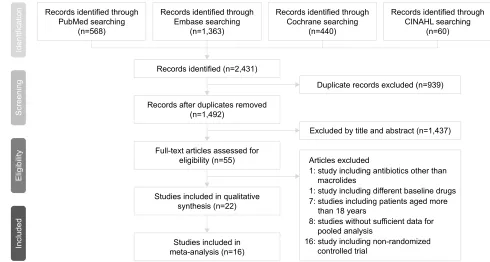
in Cochrane, and 60 studies in CINAHL. Of these 2,431 articles, we excluded 939 articles because of the duplications of studies. Of the remaining 1,492 articles, we excluded another 1,437 studies on the basis of title and abstract alone and retained 55 studies. Among the 55 studies, 16 studies were non-RCTs, 8 studies were without sufficient data for pooled analysis, 7 studies included participants over 18 years of age, 1 study used antibiotics other than macrolides as inter-vention medications, and the baseline controller medications between the intervention and control group in one study were different. Therefore, a total of 22 RCTs were included in our systemic review. Figure 1 shows the searching process. Most of the included studies showed low bias using the Cochrane assessment tool.
Demographics
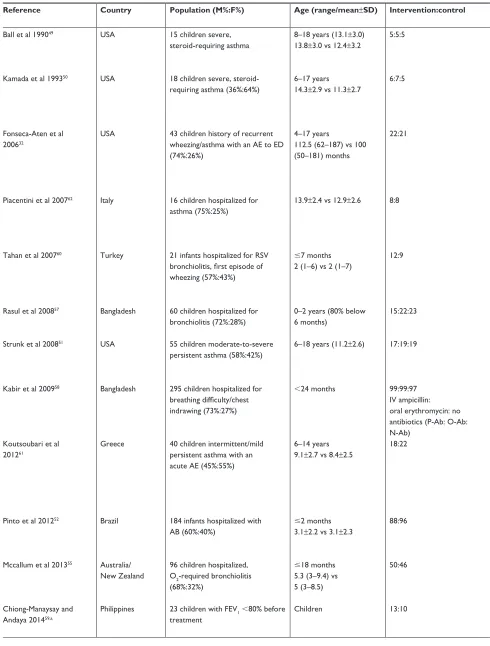
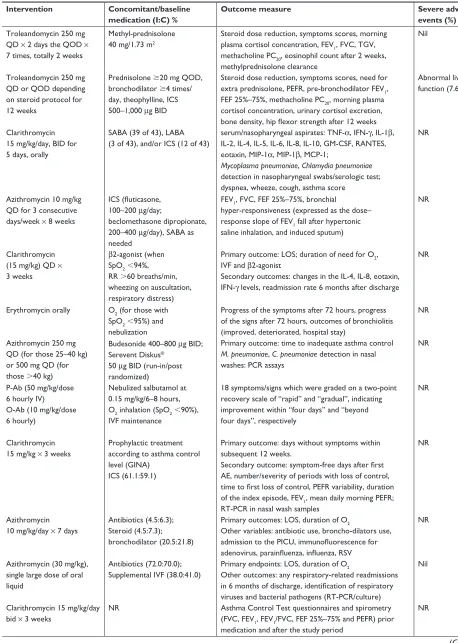
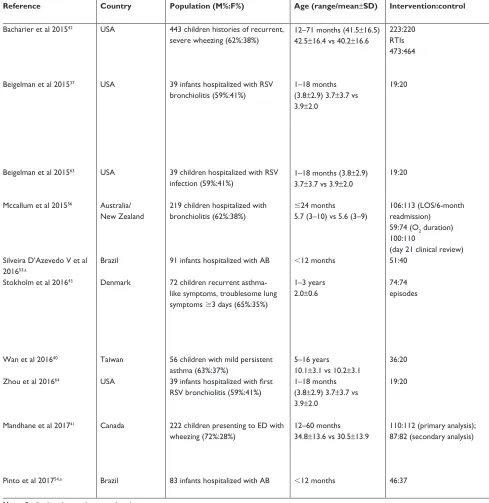
Among the 22 RCTs, a total of 2,091 participants with ages ranging from 0 to 18 years were enrolled. These studies were held worldwide, with eight studies in the USA;32,37,42,49–51 three trials in Brazil;52–54 two trials each in Australia/ New Zealand55,56 and Bangladesh;57,58 and one trial each in the Philippines,59 Taiwan,40 Turkey,60 Greece,61 Italy,62 Denmark,43 and Canada.41 Eight RCTs enrolled children with an underly-ing asthma diagnosis with or without hospitalization or an ED visit, mostly aged more than 5 years;32,40,49–51,59,61,62 11 studies enrolled toddlers hospitalized because of bronchiolitis aged
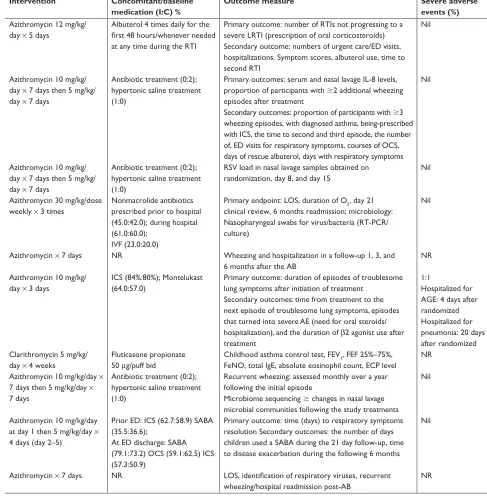
less than 3 years37,41,43,52–58,60,63,64 and 2 trials recruited children aged 12–71 months with recurrent wheezing with an ED visit.41,42 Three studies shared identical patient groups with different outcome assessments.37,56,63 Other characteristics of the included trials are listed in Table 1.
intervention
Among the 22 eligible studies using macrolides as adjunctive therapy, azithromycin was the most commonly used macrolide in the included studies, comprising 13 trials.37,41–43,51–56,62–64 Five studies used clarithromycin.32,40,59–61 Two studies used troleandomycin.49,50 Two studies used erythromycin.57,58 The dose and duration of supplemented macrolides were in the following ranges: 5–12 mg/kg/day for 3–14 days and 30 mg/kg/week for 8 weeks, 5–15 mg/kg/day for 5 days to 4 weeks and 250 mg/day or 250 mg on alternate days for 2 weeks or 12 weeks with azithromycin, clarithromy-cin, and troleandomyclarithromy-cin, respectively. Systemic steroids were prescribed concomitantly in school-aged children with underlying asthma in two trials49,50 and in preschool children with hospitalizations/ED visits in two trials,41,52 respectively. ICSs were used in most studies (6/7) in school-aged children with an asthma diagnosis and all trials (3/3) in preschool children with recurrent wheezing. For studies that enrolled toddlers (all ,2 years of age) hospitalized for acute bronchiolitis, an ICS was not used in any of the studies
Figure 1 The Preferred Reporting Items for Systematic Review and Meta-Analysis (PRISMA) flow diagram. 5HFRUGVLGHQWLILHGWKURXJK
3XE0HGVHDUFKLQJ Q
5HFRUGVLGHQWLILHGWKURXJK (PEDVHVHDUFKLQJ
Q
5HFRUGVLGHQWLILHGWKURXJK &RFKUDQHVHDUFKLQJ
Q
5HFRUGVLGHQWLILHGWKURXJK &,1$+/VHDUFKLQJ
Q
,GHQWLILFDWLRQ
6FUHHQLQJ
(OLJLELOLW\
,QFOXGHG
'XSOLFDWHUHFRUGVH[FOXGHGQ
([FOXGHGE\WLWOHDQGDEVWUDFWQ
6WXGLHVLQFOXGHGLQ PHWDDQDO\VLVQ 6WXGLHVLQFOXGHGLQTXDOLWDWLYH
V\QWKHVLVQ 5HFRUGVDIWHUGXSOLFDWHVUHPRYHG
Q
)XOOWH[WDUWLFOHVDVVHVVHGIRU HOLJLELOLW\Q 5HFRUGVLGHQWLILHGQ
$UWLFOHVH[FOXGHG
VWXG\LQFOXGLQJDQWLELRWLFVRWKHUWKDQ PDFUROLGHV
VWXG\LQFOXGLQJQRQUDQGRPL]HG FRQWUROOHGWULDO
VWXGLHVZLWKRXWVXIILFLHQWGDWDIRU SRROHGDQDO\VLV
VWXGLHVLQFOXGLQJSDWLHQWVDJHGPRUH WKDQ\HDUV
VWXG\LQFOXGLQJGLIIHUHQWEDVHOLQHGUXJV
Drug Design, Development and Therapy downloaded from https://www.dovepress.com/ by 118.70.13.36 on 21-Aug-2020
Dovepress The effects of macrolides in children with wheezing
(0/9), and concomitant non-macrolide antibiotics were used in the minority (3/9).
Outcome measurement
Meta-analysis investigating the long-term effects of macrolides and placebo among children with asthma, recurrent wheezing and bronchiolitis
Is macrolide treatment beneficial to the pulmonary function of children with asthma and recurrent wheezing?
A total of four studies49,50,59,62 including 59 children and 3 studies50,59,62 including 49 children were enrolled for meta-analysis to determine the FEV1% and forced expiratory flow (FEF) 25%–75% after treatment. All the participants in the corresponding trials were children with asthma, and children in almost all (three of four) studies were aged more than 6 years. Two49,50 of the four studies enrolled children with severe, steroid-dependent asthma. The post-treatment FEV1% of children with asthma was significantly higher in the macrolide group than those in the placebo group (MD=-9.77, 95% CI=-14.18 to -5.35, P,0.001; I2=0%,
τ=0.000) (Figure 2A). Although there was publication bias (t value=12.31, df=2, P=0.007), the results of the meta-analysis did not change (MD=-10.33, 95% CI=-14.60 to -6.06) after the trim and fill test (with two potentially missing studies to the left of the mean). The significance of the results became nonsignificant after deleting the study by Chiong et al59 who enrolled children with FEV
1% ,80% before treatment and used clarithromycin 15 mg/kg/day for 3 weeks (MD=-5.03, 95% CI=-15.67–5.61, P=0.354). In general, macrolides were seldom used for more than 2 weeks for the purpose of antimicrobial effects. In addition, we found that participants in the included studies (listed in Table 1) could be approximately grouped into two categories according to the duration of treatment: less than 3 weeks (12 articles) and more than 3 weeks (8 articles). Therefore, we tried to do subgroup analysis according to the duration of macrolides, although the heterogeneity was not significant. The results of subgroup meta-analysis of trials showed a significantly better treatment effect on FEV1% in children who took macrolides for more than 3 weeks (MD=-10.09, 95% CI=-14.75 to -5.43, P,0.001; I2=0%) (Figure 2B). Meanwhile, the post-treatment FEF 25%–75% of children with asthma in the macrolide group was also better than those in the placebo group (MD=-14.14, 95% CI=-26.11 to -2.18, P=0.02; I2=29.563%, τ=6.532) (Figure 2C). There was no significant publication bias (t value=0.086, df=1, P=0.945). The result became nonsignificant by removing the studies by Piacentini et al (MD=-14.01, 95% CI=-29.36 to 1.34,
P=0.074)62 or Chiong et al (MD=-2.29, 95% CI=-21.12 to 16.55, P=0.812).59
Does macrolide therapy decrease the need for rescue saBa usage?
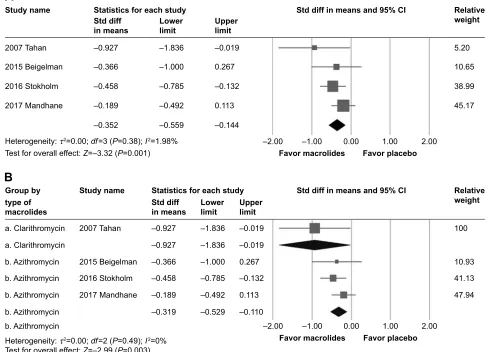
In the four RCTs37,41,43,60 including 430 participants, mac-rolides were associated with significantly fewer SABA usage days throughout the follow-up periods (SMD=-0.34, 95% CI=-0.59 to -0.09, P=0.007) (Figure 3A). There was neither significant heterogeneity (Q value=4.112, df=3, P=0.250, I2=27.047%, τ=0.133) nor publication bias (t value=1.526, df=2, P=0.266). However, after removing data from the study by Stokholm et al,43 which used azithromycin 10 mg/kg/day for 3 days in children aged 1–3 years, the results showed no significant difference between the macrolides and placebo group (SMD=-0.30, 95% CI=-0.66 to 0.06, P=0.098). The included studies were composed of preschool children hos-pitalized for bronchiolitis or who presented to the ED with wheezing.
It was possible to perform subgroup analysis by divid-ing the four trials into two groups accorddivid-ing to the type of macrolides. Azithromycin (n=356) was used in three RCTs. The results showed significantly less SABA usage days in children with bronchiolitis using macrolides (SMD=-0.32, 95% CI=-0.53 to -0.11, P=0.003, I2=0.000%) (Figure 3B). However, there were insufficient data for studies using non-azithromycin macrolides since only one study used clarithromycin.
Does macrolide treatment lower the risk of recurrent wheezing?
For the risk of recurrent wheezing, 115 participants in the macrolides group showed significantly less recurrent wheezing (SMD=-0.53, 95% CI=-0.81 to -0.26, P,0.001, I2=0%, τ=0.000) (Figure 4) than the 99 patients in the pla-cebo group among the selected three studies.53,54,61 There was no significant publication bias (t value=6.522, df=1, P=0.097). The enrolled children in the three studies were composed of school-aged children with intermittent mild to persistent asthma61 and toddlers less than 1-year-old hospitalized for acute bronchiolitis and the follow-up time were 3 months in two studies and 6 months in one study.53,54
Does macrolide therapy alter the upper airway bacteria?
In three studies55,56,64 including 325 children less than 2 years of age hospitalized for bronchiolitis, patients in the macrolides group showed significantly less Moraxella catarrhalis
Drug Design, Development and Therapy downloaded from https://www.dovepress.com/ by 118.70.13.36 on 21-Aug-2020
Dovepress
lei et al
Table 1 characteristics of randomized controlled trials using macrolides on children with asthma, recurrent wheezing and bronchiolitis
Reference Country Population (M%:F%) Age (range/mean±SD) Intervention:control Intervention Concomitant/baseline
medication (I:C) %
Outcome measure Severe adverse
events (%)
Ball et al 199049 Usa 15 children severe,
steroid-requiring asthma
8–18 years (13.1±3.0) 13.8±3.0 vs 12.4±3.2
5:5:5 Troleandomycin 250 mg
QD × 2 days the QOD × 7 times, totally 2 weeks
Methyl-prednisolone 40 mg/1.73 m2
steroid dose reduction, symptoms scores, morning plasma cortisol concentration, FeV1, FVc, TgV,
methacholine Pc20, eosinophil count after 2 weeks, methylprednisolone clearance
nil
Kamada et al 199350 Usa 18 children severe,
steroid-requiring asthma (36%:64%)
6–17 years 14.3±2.9 vs 11.3±2.7
6:7:5 Troleandomycin 250 mg
QD or QOD depending on steroid protocol for 12 weeks
Prednisolone $20 mg QOD, bronchodilator $4 times/ day, theophylline, ics 500–1,000 µg BiD
steroid dose reduction, symptoms scores, need for extra prednisolone, PeFr, pre-bronchodilator FeV1,
FeF 25%–75%, methacholine Pc20, morning plasma cortisol concentration, urinary cortisol excretion, bone density, hip flexor strength after 12 weeks
abnormal liver function (7.6%)
Fonseca-aten et al 200632
Usa 43 children history of recurrent wheezing/asthma with an ae to eD (74%:26%)
4–17 years
112.5 (62–187) vs 100 (50–181) months
22:21 clarithromycin
15 mg/kg/day, BiD for 5 days, orally
saBa (39 of 43), laBa (3 of 43), and/or ics (12 of 43)
serum/nasopharyngeal aspirates: TnF-α, iFn-γ, il-1β, il-2, il-4, il-5, il-6, il-8, il-10, gM-csF, ranTes, eotaxin, MiP-1α, MiP-1β, McP-1;
Mycoplasma pneumoniae, Chlamydia pneumoniae detection in nasopharyngeal swabs/serologic test; dyspnea, wheeze, cough, asthma score
nr
Piacentini et al 200762 italy 16 children hospitalized for
asthma (75%:25%)
13.9±2.4 vs 12.9±2.6 8:8 azithromycin 10 mg/kg
QD for 3 consecutive days/week × 8 weeks
ICS (fluticasone, 100–200 µg/day;
beclomethasone dipropionate, 200–400 µg/day), saBa as needed
FeV1, FVc, FeF 25%–75%, bronchial
hyper-responsiveness (expressed as the dose– response slope of FeV1 fall after hypertonic
saline inhalation, and induced sputum)
nr
Tahan et al 200760 Turkey 21 infants hospitalized for rsV
bronchiolitis, first episode of wheezing (57%:43%)
#7 months 2 (1–6) vs 2 (1–7)
12:9 clarithromycin
(15 mg/kg) QD × 3 weeks
β2-agonist (when spO2,94%,
rr .60 breaths/min, wheezing on auscultation, respiratory distress)
Primary outcome: lOs; duration of need for O2, iVF and β2-agonist
secondary outcomes: changes in the il-4, il-8, eotaxin, iFn-γ levels, readmission rate 6 months after discharge
nr
rasul et al 200857 Bangladesh 60 children hospitalized for
bronchiolitis (72%:28%)
0–2 years (80% below 6 months)
15:22:23 erythromycin orally O2 (for those with
spO2,95%) and nebulization
Progress of the symptoms after 72 hours, progress of the signs after 72 hours, outcomes of bronchiolitis (improved, deteriorated, hospital stay)
nr
strunk et al 200851 Usa 55 children moderate-to-severe
persistent asthma (58%:42%)
6–18 years (11.2±2.6) 17:19:19 azithromycin 250 mg
QD (for those 25–40 kg) or 500 mg QD (for those .40 kg)
Budesonide 400–800 µg BiD; serevent Diskus®
50 µg BiD (run-in/post randomized)
Primary outcome: time to inadequate asthma control
M. pneumoniae, C. pneumoniae detection in nasal washes: Pcr assays
nr
Kabir et al 200958 Bangladesh 295 children hospitalized for
breathing difficulty/chest indrawing (73%:27%)
,24 months 99:99:97
iV ampicillin: oral erythromycin: no antibiotics (P-ab: O-ab: n-ab)
P-ab (50 mg/kg/dose 6 hourly iV)
O-ab (10 mg/kg/dose 6 hourly)
nebulized salbutamol at 0.15 mg/kg/6–8 hours, O2 inhalation (spO2,90%), iVF maintenance
18 symptoms/signs which were graded on a two-point recovery scale of “rapid” and “gradual”, indicating improvement within “four days” and “beyond four days”, respectively
nr
Koutsoubari et al 201261
greece 40 children intermittent/mild persistent asthma with an acute ae (45%:55%)
6–14 years 9.1±2.7 vs 8.4±2.5
18:22 clarithromycin
15 mg/kg × 3 weeks
Prophylactic treatment according to asthma control level (gina)
ics (61.1:59.1)
Primary outcome: days without symptoms within subsequent 12 weeks.
Secondary outcome: symptom-free days after first ae, number/severity of periods with loss of control, time to first loss of control, PEFR variability, duration of the index episode, FeV1, mean daily morning PeFr;
rT-Pcr in nasal wash samples
nr
Pinto et al 201252 Brazil 184 infants hospitalized with
aB (60%:40%)
#2 months 3.1±2.2 vs 3.1±2.3
88:96 azithromycin
10 mg/kg/day × 7 days
antibiotics (4.5:6.3); steroid (4.5:7.3); bronchodilator (20.5:21.8)
Primary outcomes: lOs, duration of O2
Other variables: antibiotic use, broncho-dilators use, admission to the PICU, immunofluorescence for adenovirus, parainfluenza, influenza, RSV
nr
Mccallum et al 201355 australia/
new Zealand
96 children hospitalized, O2-required bronchiolitis (68%:32%)
#18 months 5.3 (3–9.4) vs 5 (3–8.5)
50:46 azithromycin (30 mg/kg),
single large dose of oral liquid
antibiotics (72.0:70.0); supplemental iVF (38.0:41.0)
Primary endpoints: lOs, duration of O2
Other outcomes: any respiratory-related readmissions in 6 months of discharge, identification of respiratory viruses and bacterial pathogens (rT-Pcr/culture)
nil
chiong-Manaysay and andaya 201459,a
Philippines 23 children with FeV1,80% before
treatment
children 13:10 clarithromycin 15 mg/kg/day
bid × 3 weeks
nr asthma control Test questionnaires and spirometry
(FVc, FeV1, FeV1/FVc, FeF 25%–75% and PeFr) prior medication and after the study period
nr
(Continued)
Drug Design, Development and Therapy downloaded from https://www.dovepress.com/ by 118.70.13.36 on 21-Aug-2020
Dovepress The effects of macrolides in children with wheezing
Table 1 characteristics of randomized controlled trials using macrolides on children with asthma, recurrent wheezing and bronchiolitis
Reference Country Population (M%:F%) Age (range/mean±SD) Intervention:control Intervention Concomitant/baseline
medication (I:C) %
Outcome measure Severe adverse
events (%)
Ball et al 199049 Usa 15 children severe,
steroid-requiring asthma
8–18 years (13.1±3.0) 13.8±3.0 vs 12.4±3.2
5:5:5 Troleandomycin 250 mg
QD × 2 days the QOD × 7 times, totally 2 weeks
Methyl-prednisolone 40 mg/1.73 m2
steroid dose reduction, symptoms scores, morning plasma cortisol concentration, FeV1, FVc, TgV,
methacholine Pc20, eosinophil count after 2 weeks, methylprednisolone clearance
nil
Kamada et al 199350 Usa 18 children severe,
steroid-requiring asthma (36%:64%)
6–17 years 14.3±2.9 vs 11.3±2.7
6:7:5 Troleandomycin 250 mg
QD or QOD depending on steroid protocol for 12 weeks
Prednisolone $20 mg QOD, bronchodilator $4 times/ day, theophylline, ics 500–1,000 µg BiD
steroid dose reduction, symptoms scores, need for extra prednisolone, PeFr, pre-bronchodilator FeV1,
FeF 25%–75%, methacholine Pc20, morning plasma cortisol concentration, urinary cortisol excretion, bone density, hip flexor strength after 12 weeks
abnormal liver function (7.6%)
Fonseca-aten et al 200632
Usa 43 children history of recurrent wheezing/asthma with an ae to eD (74%:26%)
4–17 years
112.5 (62–187) vs 100 (50–181) months
22:21 clarithromycin
15 mg/kg/day, BiD for 5 days, orally
saBa (39 of 43), laBa (3 of 43), and/or ics (12 of 43)
serum/nasopharyngeal aspirates: TnF-α, iFn-γ, il-1β, il-2, il-4, il-5, il-6, il-8, il-10, gM-csF, ranTes, eotaxin, MiP-1α, MiP-1β, McP-1;
Mycoplasma pneumoniae, Chlamydia pneumoniae detection in nasopharyngeal swabs/serologic test; dyspnea, wheeze, cough, asthma score
nr
Piacentini et al 200762 italy 16 children hospitalized for
asthma (75%:25%)
13.9±2.4 vs 12.9±2.6 8:8 azithromycin 10 mg/kg
QD for 3 consecutive days/week × 8 weeks
ICS (fluticasone, 100–200 µg/day;
beclomethasone dipropionate, 200–400 µg/day), saBa as needed
FeV1, FVc, FeF 25%–75%, bronchial
hyper-responsiveness (expressed as the dose– response slope of FeV1 fall after hypertonic
saline inhalation, and induced sputum)
nr
Tahan et al 200760 Turkey 21 infants hospitalized for rsV
bronchiolitis, first episode of wheezing (57%:43%)
#7 months 2 (1–6) vs 2 (1–7)
12:9 clarithromycin
(15 mg/kg) QD × 3 weeks
β2-agonist (when spO2,94%,
rr .60 breaths/min, wheezing on auscultation, respiratory distress)
Primary outcome: lOs; duration of need for O2, iVF and β2-agonist
secondary outcomes: changes in the il-4, il-8, eotaxin, iFn-γ levels, readmission rate 6 months after discharge
nr
rasul et al 200857 Bangladesh 60 children hospitalized for
bronchiolitis (72%:28%)
0–2 years (80% below 6 months)
15:22:23 erythromycin orally O2 (for those with
spO2,95%) and nebulization
Progress of the symptoms after 72 hours, progress of the signs after 72 hours, outcomes of bronchiolitis (improved, deteriorated, hospital stay)
nr
strunk et al 200851 Usa 55 children moderate-to-severe
persistent asthma (58%:42%)
6–18 years (11.2±2.6) 17:19:19 azithromycin 250 mg
QD (for those 25–40 kg) or 500 mg QD (for those .40 kg)
Budesonide 400–800 µg BiD; serevent Diskus®
50 µg BiD (run-in/post randomized)
Primary outcome: time to inadequate asthma control
M. pneumoniae, C. pneumoniae detection in nasal washes: Pcr assays
nr
Kabir et al 200958 Bangladesh 295 children hospitalized for
breathing difficulty/chest indrawing (73%:27%)
,24 months 99:99:97
iV ampicillin: oral erythromycin: no antibiotics (P-ab: O-ab: n-ab)
P-ab (50 mg/kg/dose 6 hourly iV)
O-ab (10 mg/kg/dose 6 hourly)
nebulized salbutamol at 0.15 mg/kg/6–8 hours, O2 inhalation (spO2,90%), iVF maintenance
18 symptoms/signs which were graded on a two-point recovery scale of “rapid” and “gradual”, indicating improvement within “four days” and “beyond four days”, respectively
nr
Koutsoubari et al 201261
greece 40 children intermittent/mild persistent asthma with an acute ae (45%:55%)
6–14 years 9.1±2.7 vs 8.4±2.5
18:22 clarithromycin
15 mg/kg × 3 weeks
Prophylactic treatment according to asthma control level (gina)
ics (61.1:59.1)
Primary outcome: days without symptoms within subsequent 12 weeks.
Secondary outcome: symptom-free days after first ae, number/severity of periods with loss of control, time to first loss of control, PEFR variability, duration of the index episode, FeV1, mean daily morning PeFr;
rT-Pcr in nasal wash samples
nr
Pinto et al 201252 Brazil 184 infants hospitalized with
aB (60%:40%)
#2 months 3.1±2.2 vs 3.1±2.3
88:96 azithromycin
10 mg/kg/day × 7 days
antibiotics (4.5:6.3); steroid (4.5:7.3); bronchodilator (20.5:21.8)
Primary outcomes: lOs, duration of O2
Other variables: antibiotic use, broncho-dilators use, admission to the PICU, immunofluorescence for adenovirus, parainfluenza, influenza, RSV
nr
Mccallum et al 201355 australia/
new Zealand
96 children hospitalized, O2-required bronchiolitis (68%:32%)
#18 months 5.3 (3–9.4) vs 5 (3–8.5)
50:46 azithromycin (30 mg/kg),
single large dose of oral liquid
antibiotics (72.0:70.0); supplemental iVF (38.0:41.0)
Primary endpoints: lOs, duration of O2
Other outcomes: any respiratory-related readmissions in 6 months of discharge, identification of respiratory viruses and bacterial pathogens (rT-Pcr/culture)
nil
chiong-Manaysay and andaya 201459,a
Philippines 23 children with FeV1,80% before
treatment
children 13:10 clarithromycin 15 mg/kg/day
bid × 3 weeks
nr asthma control Test questionnaires and spirometry
(FVc, FeV1, FeV1/FVc, FeF 25%–75% and PeFr) prior medication and after the study period
nr
(Continued)
Drug Design, Development and Therapy downloaded from https://www.dovepress.com/ by 118.70.13.36 on 21-Aug-2020
Dovepress
lei et al
Table 1 (Continued)
Reference Country Population (M%:F%) Age (range/mean±SD) Intervention:control Intervention Concomitant/baseline
medication (I:C) %
Outcome measure Severe adverse
events (%) Bacharier et al 201542 Usa 443 children histories of recurrent,
severe wheezing (62%:38%)
12–71 months (41.5±16.5) 42.5±16.4 vs 40.2±16.6
223:220 rTis 473:464
azithromycin 12 mg/kg/ day × 5 days
albuterol 4 times daily for the first 48 hours/whenever needed at any time during the rTi
Primary outcome: number of rTis not progressing to a severe lrTi (prescription of oral corticosteroids) secondary outcome: numbers of urgent care/eD visits, hospitalizations. symptom scores, albuterol use, time to second rTi
nil
Beigelman et al 201537 Usa 39 infants hospitalized with rsV
bronchiolitis (59%:41%)
1–18 months (3.8±2.9) 3.7±3.7 vs 3.9±2.0
19:20 azithromycin 10 mg/kg/
day × 7 days then 5 mg/kg/ day × 7 days
antibiotic treatment (0:2); hypertonic saline treatment (1:0)
Primary outcomes: serum and nasal lavage il-8 levels, proportion of participants with $2 additional wheezing episodes after treatment
secondary outcomes: proportion of participants with $3 wheezing episodes, with diagnosed asthma, being-prescribed with ics, the time to second and third episode, the number of, eD visits for respiratory symptoms, courses of Ocs, days of rescue albuterol, days with respiratory symptoms
nil
Beigelman et al 201563 Usa 39 children hospitalized with rsV
infection (59%:41%)
1–18 months (3.8±2.9) 3.7±3.7 vs 3.9±2.0
19:20 azithromycin 10 mg/kg/
day × 7 days then 5 mg/kg/ day × 7 days
antibiotic treatment (0:2); hypertonic saline treatment (1:0)
rsV load in nasal lavage samples obtained on randomization, day 8, and day 15
nil
Mccallum et al 201556 australia/
new Zealand
219 children hospitalized with bronchiolitis (62%:38%)
#24 months 5.7 (3–10) vs 5.6 (3–9)
106:113 (lOs/6-month readmission)
59:74 (O2 duration) 100:110
(day 21 clinical review)
azithromycin 30 mg/kg/dose weekly × 3 times
nonmacrolide antibiotics prescribed prior to hospital (45.0:42.0); during hospital (61.0:60.0);
iVF (23.0:20.0)
Primary endpoint: lOs, duration of O2, day 21 clinical review, 6 months readmission; microbiology: nasopharyngeal swabs for virus/bacteria (rT-Pcr/ culture)
nil
silveira D’azevedo V et al 201653,a
Brazil 91 infants hospitalized with aB ,12 months 51:40 azithromycin × 7 days nr Wheezing and hospitalization in a follow-up 1, 3, and
6 months after the aB
nr stokholm et al 201643 Denmark 72 children recurrent
asthma-like symptoms, troublesome lung symptoms $3 days (65%:35%)
1–3 years 2.0±0.6
74:74 episodes
azithromycin 10 mg/kg/ day × 3 days
ics (84%:80%); Montelukast (64.0:57.0)
Primary outcome: duration of episodes of troublesome lung symptoms after initiation of treatment
secondary outcomes: time from treatment to the next episode of troublesome lung symptoms, episodes that turned into severe ae (need for oral steroids/ hospitalization), and the duration of β2 agonist use after treatment
1:1
hospitalized for age: 4 days after randomized hospitalized for pneumonia: 20 days after randomized Wan et al 201640 Taiwan 56 children with mild persistent
asthma (63%:37%)
5–16 years 10.1±3.1 vs 10.2±3.1
36:20 clarithromycin 5 mg/kg/
day × 4 weeks
Fluticasone propionate 50 µg/puff bid
childhood asthma control test, FeV1, FeF 25%–75%,
FenO, total ige, absolute eosinophil count, ecP level
nr Zhou et al 201664 Usa 39 infants hospitalized with first
rsV bronchiolitis (59%:41%)
1–18 months (3.8±2.9) 3.7±3.7 vs 3.9±2.0
19:20 azithromycin 10 mg/kg/day ×
7 days then 5 mg/kg/day ×
7 days
antibiotic treatment (0:2); hypertonic saline treatment (1:0)
recurrent wheezing: assessed monthly over a year following the initial episode
Microbiome sequencing $ changes in nasal lavage microbial communities following the study treatments
nil
Mandhane et al 201741 canada 222 children presenting to eD with
wheezing (72%:28%)
12–60 months 34.8±13.6 vs 30.5±13.9
110:112 (primary analysis); 87:82 (secondary analysis)
azithromycin 10 mg/kg/day at day 1 then 5 mg/kg/day ×
4 days (day 2–5)
Prior eD: ics (62.7:58.9) saBa (35.5:36.6);
at eD discharge: saBa (79.1:73.2) Ocs (59.1:62.5) ics (57.3:50.9)
Primary outcome: time (days) to respiratory symptoms resolution secondary outcomes: the number of days children used a saBa during the 21 day follow-up, time to disease exacerbation during the following 6 months
nil
Pinto et al 201754,a Brazil 83 infants hospitalized with aB ,12 months 46:37 azithromycin × 7 days nr LOS, identification of respiratory viruses, recurrent
wheezing/hospital readmission post-aB
nr
Note:astudies have been only reported as abstracts.
Abbreviations: aB, acute bronchiolitis; ae, acute exacerbation; age, acute gastroenteritis; Bhr, bronchial hyper-responsiveness; BiD, twice per day; c, control; Drs, dose response slope; ecP, eosinophil cation protein; eD, emergency department; F, female; FeV1, forced expiratory volume in one second; FVc, forced vital capacity; FenO,
fractional exhaled nitric oxide; FEF 25%–75%, forced expiratory flow between 25% and 75% of vital capacity; GINA, Global Initiative For Asthma; GM-CSF, granulocyte-macrophage colony stimulating factor; I, intervention; ICS, inhaled corticosteroid; IL, interleukin; ICU, intensive care unit; IFN, interferon; IV, intravenous; IVF, intravenous fluid; LABA, long-acting inhaled β-agonist; lOs, length of stay; lrTi, lower respiratory tract infection; lTra, leukotriene receptor antagonist; M, male; McP, monocyte chemoattractant protein; MiP, macrophage inflammatory protein; methacholine PC20, concentration of methacholine required to induce a 20% decrease in FEV1; NR, not reported; PEFR, peak expiratory flow rate;
QD, every day; QOD, every other day; rr, respiratory rate; rsV, respiratory syncytial virus; rTi, respiratory tract infection; rT-Pcr, real-time polymerase chain reaction; spO2, saturation of peripheral oxygen; saBa, short-acting β-agonist; TgV, thoracic gas volume.
by nasal swab (OR=0.19, 95% CI=0.11–0.35, P,0.001) (Figure 5). There was neither significant heterogeneity (Q value=0.731, I2=0%, P=0.694, τ=0.000) nor publication bias (t value=4.660, df=1, P=0.134). The significance was not changed after removing any single study.
adverse events
Compared with the placebo, participants in the macrolides group were associated with a lower risk to develop any adverse events (risk ratio=0.83, 95% CI=0.70–0.98, P=0.024, I2=0%, τ=0.000, RCTs=7) (Figure 6A).
Drug Design, Development and Therapy downloaded from https://www.dovepress.com/ by 118.70.13.36 on 21-Aug-2020
Dovepress The effects of macrolides in children with wheezing
Table 1 (Continued)
Reference Country Population (M%:F%) Age (range/mean±SD) Intervention:control Intervention Concomitant/baseline
medication (I:C) %
Outcome measure Severe adverse
events (%) Bacharier et al 201542 Usa 443 children histories of recurrent,
severe wheezing (62%:38%)
12–71 months (41.5±16.5) 42.5±16.4 vs 40.2±16.6
223:220 rTis 473:464
azithromycin 12 mg/kg/ day × 5 days
albuterol 4 times daily for the first 48 hours/whenever needed at any time during the rTi
Primary outcome: number of rTis not progressing to a severe lrTi (prescription of oral corticosteroids) secondary outcome: numbers of urgent care/eD visits, hospitalizations. symptom scores, albuterol use, time to second rTi
nil
Beigelman et al 201537 Usa 39 infants hospitalized with rsV
bronchiolitis (59%:41%)
1–18 months (3.8±2.9) 3.7±3.7 vs 3.9±2.0
19:20 azithromycin 10 mg/kg/
day × 7 days then 5 mg/kg/ day × 7 days
antibiotic treatment (0:2); hypertonic saline treatment (1:0)
Primary outcomes: serum and nasal lavage il-8 levels, proportion of participants with $2 additional wheezing episodes after treatment
secondary outcomes: proportion of participants with $3 wheezing episodes, with diagnosed asthma, being-prescribed with ics, the time to second and third episode, the number of, eD visits for respiratory symptoms, courses of Ocs, days of rescue albuterol, days with respiratory symptoms
nil
Beigelman et al 201563 Usa 39 children hospitalized with rsV
infection (59%:41%)
1–18 months (3.8±2.9) 3.7±3.7 vs 3.9±2.0
19:20 azithromycin 10 mg/kg/
day × 7 days then 5 mg/kg/ day × 7 days
antibiotic treatment (0:2); hypertonic saline treatment (1:0)
rsV load in nasal lavage samples obtained on randomization, day 8, and day 15
nil
Mccallum et al 201556 australia/
new Zealand
219 children hospitalized with bronchiolitis (62%:38%)
#24 months 5.7 (3–10) vs 5.6 (3–9)
106:113 (lOs/6-month readmission)
59:74 (O2 duration) 100:110
(day 21 clinical review)
azithromycin 30 mg/kg/dose weekly × 3 times
nonmacrolide antibiotics prescribed prior to hospital (45.0:42.0); during hospital (61.0:60.0);
iVF (23.0:20.0)
Primary endpoint: lOs, duration of O2, day 21 clinical review, 6 months readmission; microbiology: nasopharyngeal swabs for virus/bacteria (rT-Pcr/ culture)
nil
silveira D’azevedo V et al 201653,a
Brazil 91 infants hospitalized with aB ,12 months 51:40 azithromycin × 7 days nr Wheezing and hospitalization in a follow-up 1, 3, and
6 months after the aB
nr stokholm et al 201643 Denmark 72 children recurrent
asthma-like symptoms, troublesome lung symptoms $3 days (65%:35%)
1–3 years 2.0±0.6
74:74 episodes
azithromycin 10 mg/kg/ day × 3 days
ics (84%:80%); Montelukast (64.0:57.0)
Primary outcome: duration of episodes of troublesome lung symptoms after initiation of treatment
secondary outcomes: time from treatment to the next episode of troublesome lung symptoms, episodes that turned into severe ae (need for oral steroids/ hospitalization), and the duration of β2 agonist use after treatment
1:1
hospitalized for age: 4 days after randomized hospitalized for pneumonia: 20 days after randomized Wan et al 201640 Taiwan 56 children with mild persistent
asthma (63%:37%)
5–16 years 10.1±3.1 vs 10.2±3.1
36:20 clarithromycin 5 mg/kg/
day × 4 weeks
Fluticasone propionate 50 µg/puff bid
childhood asthma control test, FeV1, FeF 25%–75%,
FenO, total ige, absolute eosinophil count, ecP level
nr Zhou et al 201664 Usa 39 infants hospitalized with first
rsV bronchiolitis (59%:41%)
1–18 months (3.8±2.9) 3.7±3.7 vs 3.9±2.0
19:20 azithromycin 10 mg/kg/day ×
7 days then 5 mg/kg/day ×
7 days
antibiotic treatment (0:2); hypertonic saline treatment (1:0)
recurrent wheezing: assessed monthly over a year following the initial episode
Microbiome sequencing $ changes in nasal lavage microbial communities following the study treatments
nil
Mandhane et al 201741 canada 222 children presenting to eD with
wheezing (72%:28%)
12–60 months 34.8±13.6 vs 30.5±13.9
110:112 (primary analysis); 87:82 (secondary analysis)
azithromycin 10 mg/kg/day at day 1 then 5 mg/kg/day ×
4 days (day 2–5)
Prior eD: ics (62.7:58.9) saBa (35.5:36.6);
at eD discharge: saBa (79.1:73.2) Ocs (59.1:62.5) ics (57.3:50.9)
Primary outcome: time (days) to respiratory symptoms resolution secondary outcomes: the number of days children used a saBa during the 21 day follow-up, time to disease exacerbation during the following 6 months
nil
Pinto et al 201754,a Brazil 83 infants hospitalized with aB ,12 months 46:37 azithromycin × 7 days nr LOS, identification of respiratory viruses, recurrent
wheezing/hospital readmission post-aB
nr
Note:astudies have been only reported as abstracts.
Abbreviations: aB, acute bronchiolitis; ae, acute exacerbation; age, acute gastroenteritis; Bhr, bronchial hyper-responsiveness; BiD, twice per day; c, control; Drs, dose response slope; ecP, eosinophil cation protein; eD, emergency department; F, female; FeV1, forced expiratory volume in one second; FVc, forced vital capacity; FenO,
fractional exhaled nitric oxide; FEF 25%–75%, forced expiratory flow between 25% and 75% of vital capacity; GINA, Global Initiative For Asthma; GM-CSF, granulocyte-macrophage colony stimulating factor; I, intervention; ICS, inhaled corticosteroid; IL, interleukin; ICU, intensive care unit; IFN, interferon; IV, intravenous; IVF, intravenous fluid; LABA, long-acting inhaled β-agonist; lOs, length of stay; lrTi, lower respiratory tract infection; lTra, leukotriene receptor antagonist; M, male; McP, monocyte chemoattractant protein; MiP, macrophage inflammatory protein; methacholine PC20, concentration of methacholine required to induce a 20% decrease in FEV1; NR, not reported; PEFR, peak expiratory flow rate;
QD, every day; QOD, every other day; rr, respiratory rate; rsV, respiratory syncytial virus; rTi, respiratory tract infection; rT-Pcr, real-time polymerase chain reaction; spO2, saturation of peripheral oxygen; saBa, short-acting β-agonist; TgV, thoracic gas volume.
There was no significant publication bias (t value=1.525, df=5, P=0.188). After removing the study by Mandhane et al,41 the results showed no significant difference between the macrolides and placebo groups (risk ratio=0.87, 95% CI=0.57–1.32, P=0.517). Most of the reported adverse
events were related to gastrointestinal upset, such as nau-sea, vomiting, and abdominal pain. However, there were no enough data to do subgroup analysis according to the category of adverse events. It was possible to perform subgroup analysis according to the type of macrolides and
Drug Design, Development and Therapy downloaded from https://www.dovepress.com/ by 118.70.13.36 on 21-Aug-2020
Dovepress
lei et al
the age of participants. The results showed that participants taking azithromycin (risk ratio=0.83, 95% CI=0.70–0.98, P=0.024, RCTs=5) but not troleandomycin (risk ratio=1.00, 95% CI=0.12–8.61, P=1.000) had lower risk of adverse effects (Figure 6B). Preschool children also had a lower risk of developing any adverse events (risk ratio=0.82, 95% CI=0.70–0.97, P=0.021, RCTs=4) but school-aged children did not (risk ratio=1.458, 95% CI=0.252–8.428, P=0.674) (Figure 6C).
Meta-regression
To examine the heterogeneity of the present analysis, we performed a meta-regression analysis using the male sex ratio and the duration of macrolides as moderators in the single meta-regression. We found that the effect of macrolides on the adverse events was not significantly confounded by the male sex ratio (slope=-0.549, P=0.183) (Figure S1) and the duration of macrolides (slope=0.021, P=0.326) (Figure S2).
Figure 2 (A) Forest plot of the decreased forced expiratory volume percentage (FeV1%) between the macrolides group and the placebo group. (B) Forest plot of subgroup
analysis of FeV1% by the duration of macrolides. (C) Forest plot of the decreased forced expiratory flow (FEF) 25%–75% between the macrolides group and the placebo
group.
6WDWLVWLFVIRUHDFKVWXG\ 'LIIHUHQFHLQPHDQVDQG&, 6WXG\QDPH
%DOO
.DPDGD
3LDFHQWLQL
&KLRQJ0DQD\VD\
5HODWLYH ZHLJKW
+HWHURJHQHLW\τ GI 3 ,
7HVWIRURYHUDOOHIIHFW= ±3 ± 'LIIHUHQFH LQPHDQV
±
±
±
±
± /RZHU OLPLW
±
±
±
±
8SSHU OLPLW
±
±
)DYRUPDFUROLGHV )DYRUSODFHER
± ±
$
*URXSE\ 6WXG\QDPH 6WDWLVWLFVIRUHDFKVWXG\ 'LIIHUHQFHLQPHDQVDQG&,
%DOO
.DPDGD 3LDFHQWLQL &KLRQJ0DQD\VD\ GXUDWLRQRI
WUHDWPHQWGD\V DZHHNV DZHHNV
EZHHNV EZHHNV
EZHHNV EZHHNV EZHHNV
5HODWLYH ZHLJKW
+HWHURJHQHLW\τ GI 3 ,
7HVWIRURYHUDOOHIIHFW= ±3
'LIIHUHQFH LQPHDQV
± ± ± ± ± ±
/RZHU OLPLW
± ± ± ± ± ±
8SSHU OLPLW
± ±
± ±
)DYRUPDFUROLGHV )DYRUSODFHER
%
6WDWLVWLFVIRUHDFKVWXG\ 'LIIHUHQFHLQPHDQVDQG&,
6WXG\QDPH
.DPDGD
3LDFHQWLQL
&KLRQJ0DQD\VD\
+HWHURJHQHLW\τ GI 3 ,
7HVWIRURYHUDOOHIIHFW= ±3
5HODWLYH ZHLJKW
'LIIHUHQFH LQPHDQV
±
±
±
±
/RZHU OLPLW
±
±
±
±
8SSHU OLPLW
±
±
± ±
)DYRUPDFUROLGHV )DYRUSODFHER
&
Drug Design, Development and Therapy downloaded from https://www.dovepress.com/ by 118.70.13.36 on 21-Aug-2020
Dovepress The effects of macrolides in children with wheezing
Figure 4 Forest plot of the recurrent wheezing risks between the macrolides group and the placebo group.
Abbreviation: std diff, standardized difference.
6WDWLVWLFVIRUHDFKVWXG\
.RXWVRXEDUL
6WXG\QDPH
'¶$]HYHGR
3LQWR
+HWHURJHQHLW\τ GI 3 ,
7HVWIRURYHUDOOHIIHFW= ±3
6WGGLII LQPHDQV
±
±
± ±
/RZHU OLPLW
±
±
± ±
8SSHU OLPLW
±
±
± ±
5HODWLYH ZHLJKW
6WGGLIILQPHDQVDQG&,
± ±
)DYRUPDFUROLGHV )DYRUSODFHER
Figure 3 (A) Forest plot of the saBa usage days between the macrolides group and the placebo group. (B) Forest plot of subgroup analysis of saBa usage days by the type of macrolides.
Abbreviations: saBa, short-acting β2-agonist; std diff, standardized difference.
Statistics for each study Std diff in means and 95% CI
Favor macrolides Favor placebo
Relative weight
5.20
10.65
38.99
45.17
–2.00 –1.00 0.00 1.00 2.00 Upper
limit –0.019
0.267
–0.132
–0.144 0.113 Lower
limit –1.836
–1.000
–0.785
–0.492
–0.559 Std diff
in means –0.927
–0.366
–0.458
–0.189
–0.352 Study name
2007 Tahan
2015 Beigelman
2016 Stokholm
2017 Mandhane
Heterogeneity: τ2=0.00; df=3 (P=0.38); I2=1.98%
Test for overall effect: Z=–3.32 (P=0.001)
A
Std diff in means and 95% CI
Favor macrolides Favor placebo
Relative weight
100
10.93 41.13 47.94 Study name
2007 Tahan
2015 Beigelman 2016 Stokholm 2017 Mandhane
Std diff in means –0.927 –0.927 –0.366 –0.458 –0.189 –0.319
Lower limit –1.836 –1.836 –1.000 –0.785 –0.492 –0.529
Upper limit –0.019 –0.019 0.267 –0.132 0.113 –0.110
–2.00 –1.00 0.00 1.00 2.00 type of
macrolides a. Clarithromycin a. Clarithromycin b. Azithromycin b. Azithromycin b. Azithromycin b. Azithromycin b. Azithromycin
Heterogeneity: τ2=0.00; df=2 (P=0.49); I2=0%
Test for overall effect: Z=–2.99 (P=0.003)
Statistics for each study Group by
B
Discussion
The current meta-analysis summarizes the effects of mac-rolides in children; six RCTs suggested that the supplemen-tation with macrolides improves both the FEV1% and the FEF 25% with a mean difference of 10.43% and 19.41%,
respectively. Moreover, pooled results from four trials showed that participants taking macrolides had fewer days of rescue SABA usage and three studies found that macrolides lowered the risks of recurrent wheezing. Furthermore, mac-rolides decreased the growth of M. catarrhalis in the upper
Drug Design, Development and Therapy downloaded from https://www.dovepress.com/ by 118.70.13.36 on 21-Aug-2020
Dovepress
lei et al
airway. Finally, compared with participants who were taking placebos, those who were taking macrolide therapy had fewer adverse events.
To the best of our knowledge, this is the first meta-analysis to comprehensively investigate the efficacy of macrolides on childhood RAD including asthmatic and asthma-like dis-eases, such as recurrent wheezing and acute bronchiolitis. Our analysis included both school-aged children with more definitive asthma diagnoses and preschool children with concerning respiratory problems mimicking or preceding asthma. Compared with the two recent meta-analyses38,65 that enrolled studies on both adult and childhood asthma and focused on the effectiveness of macrolides on chronic asthma control and acute exacerbations, our study supplied more information on the analysis of treatment efficacy not only on the usefulness of pulmonary function tests, subsequent SABA usage, recurrent wheezing, but also the pathogenic bacteria status and the adverse drug reactions. The stricter inclusion criteria (only RCTs in the meta-analysis), the more recent search, and the concentrated age group (only children less than 18 years of age) ensured that the current meta-analysis is more up-to-date than the previous studies.
Our results are consistent with previous reports with regard to the effects of macrolides in the improvement of FEV1% in patients with asthma.38 Nevertheless, the analysis of FEV1% in Kew et al only enrolled one study recruiting ado-lescents in the pooled nine trials. In the current analysis, we pooled four trials and further found that macrolides improve pulmonary functions in both the large and small airways in school-aged children. However, the optimal dose and duration of macrolide treatment needed to offer a potential positive effect have not yet been established.37 Among the included studies in Kew et al, subgroup analysis according to the duration of macrolides was not done. In the current study, we found that those who use macrolides for more than 3 weeks had an increase in FEV1% from such treatment (Figure 2B).
Although the evidence is limited considering the scanty num-bers of included studies in current analysis, it is worth noted that the positive effects of macrolides in lung function in Kew et al may related to the prolonged duration (ranged from 4 to 52 weeks), which were far more than the general treat-ment. The effectiveness of prolonged macrolides treatment may be contributed to the antimicrobial effects rather than anti-inflammatory effects, which was shown in adult asthma studies.34,35 In addition, either incident M. pneumoniae or recurrent/chronic C. pneumoniae infection was thought to be related to newly-onset asthma and asthma exacerbation, even in non-atopic patients.15,66 Moreover, azithromycin taken daily for 1 year also benefit adult with COPD67 but had no benefits for adult with asthma who had only 3 days of treatment.68 Therefore, it seems that an extended treatment of macrolides could indeed lower the carrier status of C. pneumoniae/M. pneumoniae and help to improve the pulmonary functions. Even though macrolides are characterized by their broad spectrum of activity against common community-acquired respiratory pathogens and are widely used as first-line therapy, drug resistance has emerged with some common respiratory pathogens, such as Streptococcus pneumoniae.69 Moreover, previous studies70 determined that preschool wheezing is associated with pulmonary bacterial infection such as Haemophilus influenzae, S. pneumoniae, and M. catarrhalis, and patients received significant benefits from various classes of antibiotic therapy, including amoxicillin, amoxicillin/clavulanic acid, cefuroxime, and trimethoprim– sulfamethoxazole. The duration of these antibiotics varied, ranging from 2 to 16 weeks. Therefore, macrolides alone may not be enough to eradicate other respiratory pathogenic bacteria, which may also interfere the respiratory disease outcome. For those who take azithromycin, further studies are needed to make precise recommendations regarding the optimal duration, most appropriate, and safe macrolides to improve pulmonary functions in children with asthma.
Figure 5 Forest plot of the nasal swab Moraxella catarrhalis between the macrolides group and the placebo group.
6WDWLVWLFVIRUHDFKVWXG\ 2GGVUDWLRDQG&O
6WXG\QDPH
0F&DOOXP
0F&DOOXP
=KRX
+HWHURJHQHLW\τ GI 3 ,
7HVWIRURYHUDOOHIIHFW= ±3
)DYRUSODFHER )DYRUPDFUROLGHV
2GGV UDWLR
/RZHU OLPLW
8SSHU OLPLW
5HODWLYH ZHLJKW
Drug Design, Development and Therapy downloaded from https://www.dovepress.com/ by 118.70.13.36 on 21-Aug-2020
Dovepress The effects of macrolides in children with wheezing
Figure 6 (A) Forest plot of the adverse events risks between the macrolides group and the placebo group. (B) subgroup analysis of the adverse events risks by the type of macrolides. (C) subgroup analysis of the adverse events risks by the age group.
%DOO .DPDGD 6WUXQN %DFKHULHU %HLJHOPDQ 6WRNKROP 0DQGKDQH
+HWHURJHQHLW\τ GI 3 ,
7HVWIRURYHUDOOHIIHFW= ±3
6WDWLVWLFVIRUHDFKVWXG\ 5LVNUDWLRDQG&O 6WXG\QDPH )DYRUSODFHER )DYRUPDFUROLGHV 5LVN UDWLR /RZHU OLPLW 8SSHU OLPLW 5HODWLYH ZHLJKW
$
E$]LWKURP\FLQ D7UROHDQGRP\FLQ D7UROHDQGRP\FLQ D7UROHDQGRP\FLQ E$]LWKURP\FLQ E$]LWKURP\FLQ E$]LWKURP\FLQ E$]LWKURP\FLQ E$]LWKURP\FLQ E$]LWKURP\FLQ+HWHURJHQHLW\τ GI 3 ,
7HVWIRURYHUDOOHIIHFW= ±3
)DYRUSODFHER )DYRUPDFUROLGHV 6WDWLVWLFVIRUHDFKVWXG\ %DOO .DPDGD 6WUXQN %DFKHULHU %HLJHOPDQ 6WRNKROP 0DQGKDQH 6WXG\QDPH 5LVNUDWLRDQG&O *URXSE\ W\SHRI PDFUROLGHV 5HODWLYH ZHLJKW 5LVN UDWLR /RZHU OLPLW 8SSHU OLPLW
%
D6FKRRODJH D6FKRRODJH D6FKRRODJH D6FKRRODJH E3UHVFKRRO E3UHVFKRRO E3UHVFKRRO E3UHVFKRRO E3UHVFKRRO D6FKRRODJH E$]LWKURP\FLQ+HWHURJHQHLW\τ GI 3 ,
7HVWIRURYHUDOOHIIHFW= ±3
+HWHURJHQHLW\τ GI 3 ,
7HVWIRURYHUDOOHIIHFW= 3 )DYRUSODFHER )DYRUPDFUROLGHV %DOO .DPDGD 6WUXQN %DFKHULHU %HLJHOPDQ 6WRNKROP 0DQGKDQH
6WXG\QDPH 6WDWLVWLFVIRUHDFKVWXG\ 5LVNUDWLRDQG&O
*URXSE\ DJHJURXS 5LVN UDWLR /RZHU OLPLW 8SSHU OLPLW 5HODWLYH ZHLJKW
&
Drug Design, Development and Therapy downloaded from https://www.dovepress.com/ by 118.70.13.36 on 21-Aug-2020