Semantic Tagging for the Penn Treebank
Martha Palmer, Hoa Trang Dang, Joseph Rosenzweig
University of Pennsylvania
200 South 33rd Street, Philadelphia, PA, USA
fmpalmer, htd, [email protected] Abstract
This paper describes the methodology that is being used to augment the Penn Treebank annotation with sense tags and other types of semantic information. Inspired by the results of SENSEVAL, and the high inter-annotator agreement that was achieved there, similar methods were used for a pilot study of 5000 words of running text from the Penn Treebank. Using the same techniques of allowing the annotators to discuss difficult tagging cases and to revise WordNet entries if necessary, comparable inter-annotator rates have been achieved. The criteria for determining appropriate revisions and ensuring clear sense distinctions are described. We are also using hand correction of automatic predicate argument structure information to provide additional thematic role labeling.
1.
Introduction
The success of recent applications of machine learn-ing techniques to tasks such as part-of-speech tagglearn-ing and parsing has kindled the hope that these same techniques might have equal or greater success in other areas such as lexical semantics. Advances in automated and semi-automated methods of acquiring lexical semantics in par-ticular would release the field from its dependence on well-defined subdomains with small vocabularies and enable broad-coverage natural language processing. However, su-pervised machine learning requires large amounts of pub-licly available training data, and a prerequisite for this train-ing data is general agreement on which elements should be tagged and with what tags. With respect to lexical se-mantics, this type of general agreement has been strikingly elusive. The field has yet to develop a clear consensus on guidelines for a computational lexicon that could pro-vide a springboard for training data. This is in spite of much effort being devoted to individual approaches to lex-icon development such as Meaning Text Theory (Mel’cuk, 1988), the Generative Lexicon (Pustejovsky, 1991), Sensus (Hovy, 1993), MikroKosmos (Nirenburg et al., 1992), Ac-quilex (Copestake and Sanfilippo, 1993), Framenet (Lowe et al., 1997), Lexical Conceptual Structures (Dorr, 1997), and WordNet (Miller et al., 1990). Each takes a very differ-ent approach and makes reference to differdiffer-ent underlying theories of semantics.
One of the most controversial areas in semantic repre-sentation has to do with polysemy. What constitutes a clear separation into senses for any one word, and how can these senses be computationally characterized and distinguished (Palmer, 1999)? The answer to this question is the key to breaking the bottleneck of semantic representation that is currently the single greatest limitation on the general appli-cation of natural language processing techniques.
SIGLEX98-SENSEVAL1shed light on the task of sense tagging, and whether or not sufficient training data could be consistently tagged with a set of pre-existing sense distinctions.2 Assuming appropriate training data could
1
http://www.itri.brighton.ac.uk/events/senseval 2
There were concerns about inter-annotator agreement for
be provided, an exercise was set up to evaluate different systems on the word sense disambiguation task.3 This data was prepared using a set of senses from the Hector project (Atkins, 1993), and the results of the exercise were very encouraging. By allowing for revision of senses that caused disagreements among annotators during a training period, inter-annotator agreement for the words that were tagged was well over 90%, and the best supervised systems achieved precision and recall scores in the 80’s.
All of the participants in SIGLEX98-SENSEVAL agreed that they would prefer evaluations based on run-ning text rather than corpus instances, but this is only fea-sible if the Gold Standard sense inventory being used for tagging can be appropriately mapped onto several different lexical resources. Inspired by the SENSEVAL results, we used similar methods for a pilot study of sense tagging 5000 words of running text from the Penn Treebank. Using the same techniques of allowing the annotators to discuss dif-ficult tagging cases and to revise WordNet entries if neces-sary, comparable inter-annotator rates have been achieved.
2.
Semantically Tagged Running Text
As a spin-off from SENSEVAL98, for SIGLEX99 we tagged running text with WordNet senses, as well as other senses. This tagged text was made available on the web prior to the workshop, and participants seemed satisfied with the quality of the sense-tagged running text. It was agreed that the next SENSEVAL should include text of this type, with two qualifications. It must be possible to re-vise WordNet senses along the lines of the Hector revisions when clear sense distinctions could not be made, and the running text should be augmented with sufficient corpus in-stances of the words chosen for training and testing.2.1. Sense Tagged Text
We sense-tagged a 5000-word corpus of running text using WordNet1.6 senses. The most obvious example of
SemCor.
<wf lemma=Donald_Trump wnsn=person>Donald Trump</wf> , <wf lemma=who wnsn=person:DT>who</wf>
<wf cmd=arb lemma=face wnsn=?>faced</wf> rising <wf cmd=done lemma=doubt wnsn=1>doubt</wf> about his
<wf cmd=done lemma=bid wnsn=2>bid</wf> for American Airlines parent
<wf lemma=AMR_Corp. wnsn=company>AMR Corp.</wf> even before a United Airlines <wf cmd=done lemma=buy-out wnsn=1>buy-out</wf>
<wf cmd=done lemma=come_apart wnsn=1?>came apart</wf> <wf cmd=done lemma=Friday wnsn=1>Friday</wf> ,
<wf cmd=arb lemma=withdraw wnsn=5?>withdrew</wf> his $ 7.54 billion <wf cmd=done lemma=offer wnsn=2>offer</wf> .
Donald Trump <person>, who faced <face7?> rising doubt <doubt1> about his bid <bid2> for American Airlines parent AMR Corp. <company>, even before a United Airlines buy-out <buy-out1> came apart <come_apart1> Friday, withdrew <withdraw5?> his $7.54 billion offer <offer2>.
Figure 1: Sample sense-tagged text
an existing corpus of semantically tagged running text is SemCor, in which WordNet1.5 senses were used to tag ap-proximately 200,000 words from the Brown corpus. Un-like SemCor, which assigns WordNet senses to all the verbs, nouns, adjectives, and adverbs, we chose to sense-tag only the verbs and headwords of their noun arguments and adjuncts.4In addition, proper nouns which were not in WordNet were tagged as either person, company, date, or name (indicating none-of-the-above), and, wherever pos-sible, pronouns were tagged with the sense of their an-tecedents.
Corpus Selection Our corpus sample comprised five texts from the Penn Treebank II Wall Street Journal (WSJ) corpus. We chose to work on the WSJ corpus because it was already manually annotated for part of speech and bracketed for syntactic structure, and because we have de-veloped tools to automatically extract predicate-arguments from bracketed text. The particular WSJ articles that we chose contained interesting verbs that had been discussed in previous SIGLEX meetings, and covered a range of topics, including an account of an earthquake that occurred during court proceedings, a report about insurance and claims ad-justing following an earthquake, a letter to the editor about the need to fight the Columbian drug mafia, a report about a bid by Donald Trump to buy an airline, and a descrip-tion of a case in which government could seize the assets of criminal defendants, including lawyers fees.
Annotation Process Our test corpus was annotated once by a linguistics graduate student, and then checked by a computer science graduate student trained in lexical seman-tics. The first annotator made one pass through the cor-pus and assigned initial sense tags for each of the relevant words, making note of problematic cases. Then the sec-ond annotator independently chose a sense for each word, checked it against the initial tag, and then assigned the “final” tag. Instances with differing initial and final tags
4
WordNet1.6 SemCor includes a large number of additional files in which only the verbs are tagged.
were flagged with “arb”, indicating that the second annota-tor could not agree with the decision of the first annotaannota-tor even after reconsideration.5 Tagging in the first pass was done serially and required approximately 40 hours to tag the 5000-word sample. The second pass required the same amount of time but included manual lemmatization of the tagged words (this will be done automatically in the future) so that all inflected forms of a word could be tagged at one time, allowing for more reliable results than serial annota-tion. We are currently developing a graphical interface that will allow more rapid and efficient annotation in the future.
Annotation Results Approximately 2100 words were sense-tagged, with an overall inter-annotator agreement rate of 89%, as measured by tokens not flagged with “arb”. Of the tagged words, 700 were verbs, with an inter-annotator agreement rate of 81%. There were 350 different verb lemmas, 90 of which had at least one occurrence in the corpus in which the annotators disagreed on the correct sense. In many cases, this was because WordNet either did not have the correct sense or else did not adequately define how the different senses should be distinguished.
Figure 1 shows a sample of the tagged text, followed by a simplified form that is easier to read. Some words, such as face, are tagged with question marks because they did not have appropriate senses in WordNet, while others, such as withdraw, are tagged with question marks because the annotators were uncertain about which sense was cor-rect based on the sense definitions. With our high inter-annotator agreement level we are confident that when we can allow for senses to be revised as was done for SENSE-VAL we will also get agreement in the 94% range.6
5Consultation of the initial tag was done primarily to filter out some inter-annotator disagreement due to carelessness, fatigue, etc.
6
Fist Up
Move
Hand Tremble
Head Down
Out Off
Hector: Shake
Vibrate
Off Move
Up
Sway Tremor
WordNet: Shake
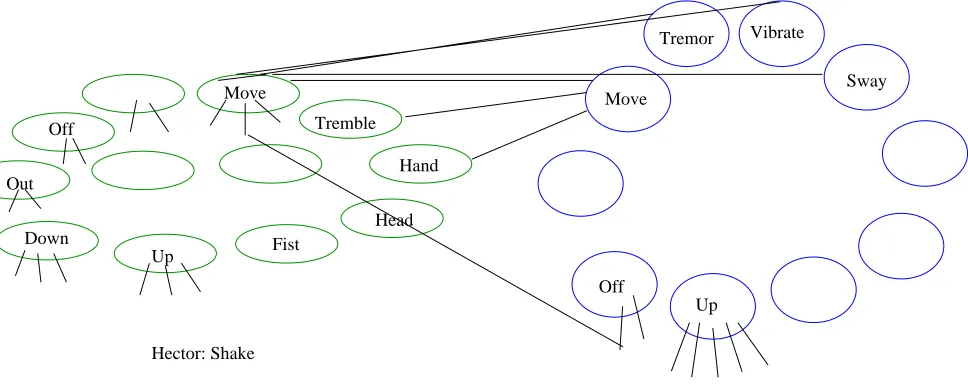
Figure 2: Mismatches between Hector and WordNet: Shake
3.
Defining Criteria for Sense Distinctions
We have demonstrated that, allowing for revisions, WordNet senses can be just as consistently tagged as Hec-tor senses. However, this does not solve the problem of using training data tagged with one set in order to evaluate a system that uses a different set. To illustrate how perva-sive mismatches between lexical resources can be, here are some of the discrepancies between the Hector shake and WordNet 1.6 shake definitions.
3.1. Shake Mismatches
WordNet 1.6 had 8 senses for shake, with an additional 5 senses for shake up and 2 for shake off, 15 all together. Hector also has 8 main senses for shake, with the first one having 3 additional subsenses and the second one having 2. It has 3 senses for shake up instead of 5, and 2 for shake
off. In addition, it has 3 for shake down and 2 for shake out.
On the surface this seems fairly compatible, with Word-Net just missing a few verb particle constructions. How-ever, looking in detail at the content of the senses reveals a more fundamental mismatch. Hector distinguishes between
shaking hands with someone, and shaking one’s fist and shaking one’s head. This is quite legitimate, since although
these are all similar in that they are communicative acts, they communicate quite different things. Hector also dis-tinguishes between the intransitive TREMBLE sense, My
hands were shaking from the cold, and the more proactive
MOVE sense, He shook the bag violently, where someone intentionally moves something back and forth. WordNet collects these together, along with She shook her cousin’s
hands, as WN1, and instead makes distinctions with respect
to the type of action: WN2, gentle tremors; WN3, rapid vi-brations; or WN4, swaying. So 3 Hector senses map onto WN1, and Hector 1 maps equally onto WN1,WN2, WN3 and WN4 (see Fig 2) . Hector also includes shake out and
shake off as examples of 1.1, the CLEAN subsense of 1, Richard removed her socks and shoes and shook all the
gravel out of them, The sand gets shaken off them at the knockout, then goes on to have separate entries for both of
these for their more abstract variations, such as, A jittery
stock market has shaken out more shareholders in United Scientific Holdings, ... unable to shake off the memories of the trenches. One could argue that shaking out
sharehold-ers is not exactly the same thing as shaking apples out of a tree, but that does not mean they are completely uncon-nected, either.
3.2. Concrete Criteria for Sense Distinctions
In parallel with our sense tagging work we have been developing a lexical resource for verbs that uses Levin classes (Levin, 1993), as the basis of an hierarchical or-ganization allowing for inheritance, and as a source of cross-linguistic semantic features (Dang et al., 1998). To make our resource more usable, we are mapping our verb entries to the relevant WordNet senses. In addition to class membership information, we are also augmenting the WordNet entries with explicit syntactic information such as that found in COMLEX or the XTAG Syntactic Database. Where applicable we include semantic class constraints on verb arguments and information about resulting states, and will be using corpus-based techniques and machine learn-ing to enrich these categorizations. We expect to derive syn-ergies from the parallel tasks of lexicon construction and corpus analysis, using the corpus to enrich the lexicon and the enhanced lexicon to analyze and annotate the corpus more effectively, in an iterative cycle of positive feedback.
+CH-LOC + BACK AND FORTH
OUT (PATH PREP)
+COMM
ABSTRACT
BODY-PART TREMBLE
shake
etc.,
Idioms
shake the dust off
Causative Causative Causative Causative
Causative/Cognate object
Crane
Causative/Inchoative
Body-Internal state
Externally controlled motion
Causative/no middle Causative/Inchoative/Resultative
shake a leg shake down
Psych/Amuse
Funnel
off
head hands a fist down
upaway
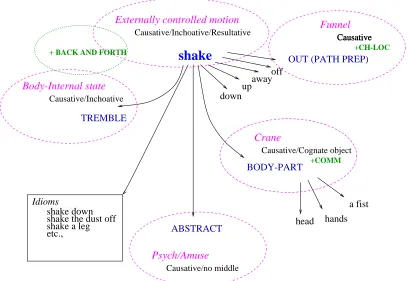
Figure 3: High level organization for Shake
the senses. The simplest and most obvious distinguishers are prepositions. Shake down is clearly marked as being different in meaning from shake up. Having access to even rudimentary syntactic structure makes it quite straightfor-ward to tease apart all of the verb particle structures and idiomatic expressions by virtue of the presence of specific lexical items. Transitive and intransitive usages are also fairly easy to distinguish, but unfortunately they only too often cross sense boundaries.
Semantic class constraints are more subtle and more dif-ficult to capture. However, even semantic preferences can help to distinguish senses. Verb class membership itself, if it can be determined, can play a central role, and can indicate either homonyms or polysemes that are produced through regular extensions of meaning that can apply uni-formly to entire sets of verbs. Since these regular exten-sions, such as resultatives, are often produced by adjunc-tions that can be seen as extending the subcategorization frame, this highlights the fundamental role argument struc-ture plays in distinguishing senses. For instance, the 27 Hector shake senses and the 15 WordNet shake senses can all be partitioned into the same five major divisions that are illustrated in Figure 3, each one of which corresponds to a different Levin class. Idioms are handled separately.
The basic sense is the externally controlled shaking mo-tion which results when a person or an earthquake or some other major force shakes an object. This same motion can be further amplified with directional information specify-ing a result such as off, down, up, out or away. If a path prepositional phrase is actually specified, such as shook the
apples out of the tree or shook water from the umbrella,
then a change of location (CH-LOC) occurs, and these us-ages are now classed as Funnel verbs. The same back and forth motion can occur during Body-Internal states such as
shaking from cold or fear, i.e., TREMBLING. If a
particu-lar BODY-PART is shaken in a stereotypical way, such as
shaking hands or fists or fingers then a communicative act
takes place and these are Crane verbs (as in craning one’s
neck or blinking ones eyes.) Then there are the abstract
us-ages, which are all classified as Psych verbs, such as shaken
by the news, or the attack, or his father’s death, etc.. The
Crane verbs and the Psych verbs are distinguished syntac-tically from the others in that they cannot occur in the in-transitive, or even the passive.8 Finally we are left with the idioms, which of course have to be listed individually. All of the Hector and WordNet senses can be categorized under one of these major divisions, providing more fine-grained distinctions if needed.
4.
Discussion
We have presented the approach used to provide seman-tic tags for 5000 words of running text from the Penn Tree-bank. We used WordNet senses, but where we found diffi-culty in getting inter-annotator agreement, allowed for the revision of the WordNet senses. In determining these revi-sions we make recourse to additional corpus examples as well as concrete criteria for sense distinctions such as those discussed in Section 3.2.. We also tagged the same data with predicate-argument structures marked with Agent and
8
Patient thematic roles. This was done semi-automatically, by first running an algorithm for performing the annotation and then hand correcting the twenty percent with errors.
The Penn Treebank seems the ideal corpus for a major semantic tagging effort. It already has syntactic bracketing which can be extremely helpful, as demonstrated by the the-matic role labeling, and it is widely available, and widely used.
We will continue to tag running text, but will do it more slowly, so that we can tag the additional corpus in-stances of each word as we come to it. This is more ef-ficient, and more importantly, gives us sufficient data to determine if the WordNet senses need to be revised. If the Treebank itself has only a few instances of a particular word, these can always be augmented. We can automati-cally separate out all of the verb particle constructions and idiomatic usages which are clearly lexically marked as dis-tinct senses. We can also automatically recognize simple predicate-argument structure, another useful indicator.
We will also be using an improved interface that simpli-fies the tagging itself, and displays both the sentence to be tagged and its predicate-argument structure. The interface can also be used to retrieve surrounding text, sometimes necessary in making a subtle sense distinction.
5.
Acknowledgments
This paper reports on work supported by NSF grant IIS-9800658.
6.
References
Atkins, Sue, 1993. Tools for computer-aided corpus lexi-cography: The hector project. Acta Linguistica
Hungar-ica, 41:5–72.
Collins, M., 1997. Three generative, lexicalised models for statistical parsing. In Proceedings of the 35th Annual
Meeting of the Association for Computational Linguis-tics. Madrid, Spain.
Copestake, Ann and Antonio Sanfilippo, 1993. Multi-lingual lexical representation. In Proceedings of the
AAAI Spring Symposium: Building Lexicons for Ma-chine Translation. Stanford, California.
Dang, Hoa Trang, Karin Kipper, Martha Palmer, and Joseph Rosenzweig, 1998. Investigating regular sense extensions based on intersective levin classes. In
Pro-ceedings of Coling-ACL98. Montreal, CA.
Dorr, Bonnie J., 1997. Large-scale dictionary construction for foreign language tutoring and interlingual machine translation. Machine Translation, 12:1–55.
Hovy, E., 1993. Ontologies for mt. Presented at the Japan
- US MT Workshop, Washington, D.C.
Kilgarriff, Adam and Martha Palmer, 2000. Senseval: Evaluating word sense disambiguation systems.
Com-puters and the Humanities, 34(1-2).
Levin, Beth, 1993. English Verb Classes and Alternations
A Preliminary Investigation.
Lowe, J.B., C.F. Baker, and C.J. Fillmore, 1997. A frame-semantic approach to frame-semantic annotation. In
Proceed-ings 1997 Siglex Workshop/ANLP97. Washington, D.C.
Marcus, Mitch, 1994. The penn treebank: A revised cor-pus design for extracting predicate argument structure. In Proceedings of the ARPA Human Language
Technol-ogy Workshop. Princeton, NJ.
Mel’cuk, I. A, 1988. Semantic description of lexical units in an explanatory combinatorial dictionary: Basic princi-ples and heuristic criteria. International Journal of
Lexi-cography, I:3:165–188.
Miller, G., R. Beckwith, C. Fellbaum, D. Gross, and K. Miller, 1990. Five papers on wordnet. Technical Re-port 43, Cognitive Science Laboratory, Princeton Univer-sity.
Nirenburg, S., J. Carbonell, M. Tomita, and K. Good-man, 1992. Machine translation: a knowledge-based
approach. San Mateo, California, USA: Morgan
Kauf-mann.
Palmer, Martha, 1999. Consistent criteria for sense distinc-tions. Computers and the Humanities. Special Issue on SENSEVAL.
Pustejovsky, James, 1991. The generative lexicon.
Com-putational Linguistics, 17(4).