Electronic Thesis and Dissertation Repository
4-19-2012 12:00 AM
Hearts and Minds: Examining the Evolution of the Egyptian
Hearts and Minds: Examining the Evolution of the Egyptian
Excerebration and Evisceration Traditions through the IMPACT
Excerebration and Evisceration Traditions through the IMPACT
Mummy Database
Mummy Database
Andrew D. Wade
The University of Western Ontario Supervisor
Dr. Andrew Nelson
The University of Western Ontario
Graduate Program in Anthropology
A thesis submitted in partial fulfillment of the requirements for the degree in Doctor of Philosophy
© Andrew D. Wade 2012
Follow this and additional works at: https://ir.lib.uwo.ca/etd
Part of the Archaeological Anthropology Commons, Biological and Physical Anthropology Commons, Body Regions Commons, Cardiovascular System Commons, Databases and Information Systems Commons, Digestive System Commons, Medical Biophysics Commons, Musculoskeletal System
Commons, Radiology Commons, Respiratory System Commons, and the Translational Medical Research Commons
Recommended Citation Recommended Citation
Wade, Andrew D., "Hearts and Minds: Examining the Evolution of the Egyptian Excerebration and
Evisceration Traditions through the IMPACT Mummy Database" (2012). Electronic Thesis and Dissertation Repository. 453.
https://ir.lib.uwo.ca/etd/453
IMPACT MUMMY DATABASE
(Spine title: Hearts & Minds)
(Thesis format: Integrated-Article)
by
Andrew D. Wade
Graduate Program in Anthropology
A thesis submitted in partial fulfillment
of the requirements for the degree of
Doctor of Philosophy
The School of Graduate and Postdoctoral Studies
The University of Western Ontario
London, Ontario, Canada
CERTIFICATE OF EXAMINATION
Supervisor
______________________________ Dr. Andrew Nelson
Supervisory Committee
______________________________ Dr. Christine White
______________________________ Dr. Ian Colquhoun
Examiners
______________________________ Dr. Ian Colquhoun
______________________________ Dr. Christine White
______________________________ Dr. Khadry Galil
______________________________ Dr. Bruno Frohlich
The thesis by
Andrew David Wade
entitled:
HEARTS AND MINDS: EXAMINING THE EVOLUTION OF THE
EGYPTIAN EXCEREBRATION AND EVISCERATION TRADITIONS
THROUGH THE IMPACT MUMMY DATABASE
is accepted in partial fulfillment of the
requirements for the degree of
Doctor of Philosophy
Date__________________________ _______________________________
Egyptian mummification and funerary rituals were a transformative
process, making the deceased a pure being; free of disease, injury, and
disfigurements, as well as ethical and moral impurities. Consequently, the
features of mummification available to specific categories of individuals hold
social and ideological significance. This study refutes long-held classical
stereotypes, particularly dogmatic class associations; demonstrates the
apocryphal nature of universal heart retention; and expands on the purposes of
excerebration and evisceration implied by synthetic and radiological analyses.
Features of the embalming traditions, specifically the variable
excerebration and evisceration traditions, represented the Egyptian view of
death. Fine-grain analyses, through primary imaging data for these traditions,
have recently been made possible on a large scale through the development of a
radiological mummy database. The IMPACT Radiological Mummy Database is a
multi-institutional, collaborative research project devoted to the scientific study of
mummified remains through primary data from medical imaging modalities. This
first application of IMPACT addresses the evolution of Egyptian excerebration
and evisceration, and how suites of features in mummies of differing age, sex,
status, and location differ and how they relate to the fate of the recipient’s afterlife
and to sociopolitical and ideological changes and interactions.
I am the principal author on all sections of this manuscript, and have co-authored three sections, as follows:
Chapter 3 – Synthetic Excerebration Study Co-authors: Andrew Nelson, Greg Garvin
The synthetic study of excerebration, published in HOMO – Journal of Comparative Human Biology, was conducted during my four-month reading course and radiology rotation at St. Joseph’s Healthcare. Dr. Nelson was the instructor of record for the reading course on mummy radiology and Dr. Garvin oversaw and directed my radiological instruction. I conducted the research and prepared the manuscript, and both Dr. Nelson and Dr. Garvin reviewed the findings, discussed the results, and commented on the manuscript.
Chapter 4 – Synthetic Evisceration Study Co-author: Andrew Nelson
Developing an international collaborative database means relying on a great number of people to make it all happen, not the least of which are the
contributors themselves. I would like to thank, first and foremost, the mummy researchers and museum curators, directors, and volunteers that have worked with us to add their data to IMPACT in the spirit of academic co-operation.
My supervisor, Andrew Nelson, also deserves my many, many thanks for offering me the opportunity to work on this groundbreaking project and for his excellent advice along the way, from CFI grant writing on day one to the Redpath scanning session on day one-thousand, and everything in between.
I owe my thanks to Greg Garvin and the rest of the folks in the St. Joseph’s radiology department for allowing another curious anthropology student into their midst, and hopefully not under their feet, to learn how to describe, differentiate, and occasionally diagnose the ills of the ancient world.
Ron Beckett and Jerry Conlogue must also be warmly thanked for inviting me to the Bioanthropology Research Institute at Quinnipiac University (BRIQ), to absorb some of their collective mummy radiography expertise and to work with their own considerable collection of data.
with the IMPACT and BRIQ application to the Digging into Data Challenge. Their work has demonstrated the great potential for IMPACT to contribute to important modern medical studies as much as ancient social studies.
I’d be remiss if I didn’t mention the thanks I owe my cohort and all of the
Anthropology faculty, staff, and students for their support, advice, and company along the way.
Title Page i
Certificate of Examination ii
Abstract & Keywords iii
Co-Authorship Statement iv
Acknowledgements vi
Table of Contents viii
List of Tables xii
List of Figures xiii
List of Appendices xvii
1. Introduction 1
2. Literature Review 8
2.1 The Anthropology of Death 9
2.2 The Social Archaeology of Death 11
2.3 Human Mummfication 17
2.4 Egyptian Chronology 18
2.5 Historical and Political Context 19
2.5.1 Predynastic and Early Dynastic Periods 22
2.5.2 Old Kingdom 27
2.5.3 First Intermediate Period 32
2.5.4 Middle Kingdom 35
2.5.5 Second Intermediate Period 40
2.5.6 New Kingdom 42
2.5.7 Third Intermediate Period 49
2.5.8 Late Period 53
2.6 Summary 63
2.7 References 66
3. Excerebration 85
3.1 Synthetic Excerebration Study - Wade et al., 2011 86
3.1.1 Introduction 86
3.1.2 Ancient Sources 87
3.1.3 Transnasal Craniotomy 88
3.1.4 Transforaminal Craniotomy 91
3.1.5 Intact Brain 92
3.1.6 Methods and Materials 92
3.1.7 Literature Review Sample Findings 94
3.1.8 Radiological Survey Sample Findings 102
3.1.9 Discussion 112
3.1.10 Radiological Markers 122
3.1.11 Conclusions 127
3.1.12 References 131
3.2 Addendum to the Synthetic Excerebration Study Findings 143
3.2.1 Preface 143
3.2.2 IMPACT Sample 144
3.2.3 Herodotean Hypothesis Testing 147
3.2.4 Additional Hypotheses Raised 148
3.2.5 New Findings 150
3.2.6 Discussion 153
4.1.1 Introduction 165
4.1.2 Classical Descriptions 167
4.1.3 Evisceration Types and Features 169
4.1.4 Methods and Materials 173
4.1.5 Literature Findings 175
4.1.6 Radiological Findings 185
4.1.7 Discussion 197
4.1.8 Radiological Markers 207
4.1.9 Conclusions 211
4.1.10 References 214
4.2 Addendum to the Synthetic Evisceration Study Findings 227
4.2.1 Preface 227
4.2.2 IMPACT Sample 228
4.2.3 Herodotean Hypothesis Testing 230
4.2.4 Additional Hypotheses Raised 231
4.2.5 New Findings 239
4.2.6 Discussion 240
4.2.7 Conclusions 246
4.2.8 References 248
5. IMPACT Radiological Mummy Database Development 251
5.1 Introduction 252
5.2 Current Challenges 253
5.3 Overview 261
5.4 Purpose and Benefits 269
5.8 References 276
6. Summary 283
6.1 Contributions 284
6.2 Embodied Identity 288
6.3 Drivers of Change 289
6.4 Pharaoh’s Privilege 293
6.5 Evisceration and Excerebration 294
6.6 Conclusion 296
6.7 References 297
7. Appendices 302
A Egyptian Chronology 303
B Maps of Egypt and its Neighbours 317
C Excerpts from Classical Authors 321
D Data Tables for IMPACT Sample 330
E IMPACT Contributor License Agreement 337
F Copyright Permissions 341
8. Curriculum Vitae 344
Page
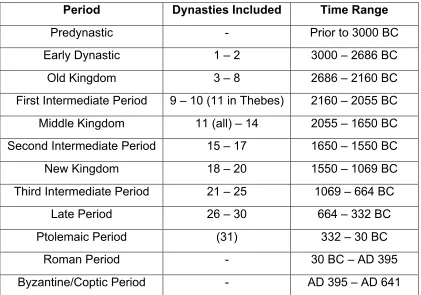
19 1. Egyptian chronology, by period, used in this study.
96 2. Excerebration Study Table 1: Examples of brain treatment in Egyptian
mummies drawn from literature review and examined directly.
146 3. IMPACT sample distribution of excerebration techniques.
153 4. Sample ranges of material radiodensities in mummy CT scans.
177 5. Examples of evisceration in Egyptian mummies drawn from literature review and examined directly.
229 6. IMPACT sample distribution of evisceration techniques.
237 7. IMPACT sample abdominal incision lengths by status and time period.
239 8. IMPACT sample body cavity resin volumes by status and time period.
310 A. Full Egyptan chronology used in this study (Shaw, 2000)
331 D1. Full IMPACT Sample
332 D2. IMPACT Excerebration Sample
334 D3. IMPACT Evisceration Sample
336 D4. IMPACT Artefacts
Page
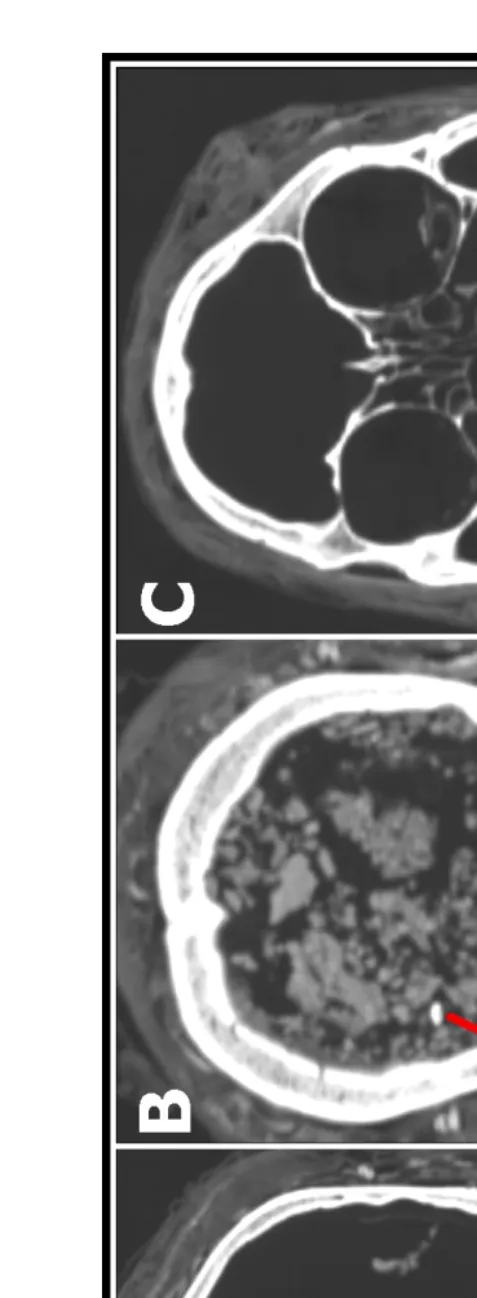
103 1. CT scan of Djedmaatesankh, showing (A) the dural partitions, (B) the damaged ethmoid air cells, (C) a nasal tampon (thick line), and the falx cerebri (thin lines) crossed by linen.
104 2. CT scan of Lady Hudson, showing (A) the damaged orbit and ethmoid air cells, (B) the resin pooled in the posterior cranium and maxillary sinus (thin lines), a potential sphenoid fragment (thick line), (C) resin-
impregnated linen rolls (indicated), and (D) the nasal tampon.
106 3. CT scan of Pa-Ib, showing (A) the absence of brain and dura, (B) the damaged orbit and ethmoid air cells, (C) the damaged sphenoid, and (D) resin and bone fragments in posterior cranium.
108 4. CT scan of Hetep-Bastet, showing (A) brain absence with a possible remaining fragment, (B) the intact conchae, nasal septum, and ethmoid air cells, (C) resin-impregnated linen in the cranium, and (D) the margin of the wrappings in relation to the foramen magnum.
110 5. CT scan of ROM 910.5.3, showing (A) the intact brain, (B) the dural partitions, and (C) the intact conchae, nasal septum, and ethmoid air cells.
more time period were divided equally between both periods.
115 8. Graph of the incidence of brain treatments by period, including ratios of TNC to non-TNC treatment. Examples with dates across one or more time period were divided equally between both periods.
117 9. Graph of the ratios of craniotomy (TNC and TFC) to non-craniotomy (intact) treatment by period.
156 10. Egyptian hieroglyphic for brain, with determinative AA3 indicated.
181 11. Graph showing the incidence (grey, scale left) and prevalence (black, scale right) of evisceration by time period. Examples with dates across one or more time period were divided equally between both periods.
183 12. Graph showing the incidence of evisceration heart retention (red) and absence (blue), with heart retention noted as a percentage of total heart descriptions. Examples with dates across one or more time period were divided equally between both periods.
plate, (B) the possible organ packages throughout the body cavity, and (C) the incision plate, scarab, and pectoral.
190 15. CT scan and reconstruction of Lady Hudson, showing (A) the pelvic packing and damaged thorax (note the coffin boards visible beneath the thoracic cavity), and (B) the linen packing in the pelvis with the small pool of resin on it hinting at a transabdominal evisceration.
191 16. CT scan and reconstructions of Pa-Ib, showing (A) the transabdominal evsiceration incision without sutures or incision plate, (B) the linear
diaphragm remnants and possible organ packages (esp. #3 and #5), and a cross-sectional view of the solidified straight level of resin with package #5 sticking out.
193 17. CT scan of Hetep-Bastet, showing (A) the large quantity of external abdominal packing entering through the transabdominal evisceration incision which lacks sutures and incision plate, (B) the jumbled contents of the thoracic cavity, and (C) the resin-impregnated anal tampon (indicated).
from their anatomical positions, the loose metacarpal in the outer wrappings, and the 3 curled fingers of the right hand still on the left shoulder despite the extended position of the arms), (B) the remnant bowel loops, and (C) and the layer of resin adherent to the pleura.
209 20. Plain film radiograph of RM-2717 (a Theban female at the Redpath Museum), showing a dense heterogeneous mass at the pelvic outlet indicative of anal, vaginal, and/or perineal packing.
234 21. A 3D reconstruction, sectionned coronally, of IMP00012 (Ptolemaic Period female RM-2720 at the Redpath Museum), showing the intact lungs in the thoracic cavity.
318 B1. Cities and features of Egypt.
319 B2. Egypt’s neighbours in the Near East.
320 B3. Egypt’s foreign rulers.
Appendix A – Egyptian Chronology
Appendix B – Maps of Egypt and its Neighbours
B1 – Cities and Features of Egypt
B2 – Egypt’s Neighbours in the Near East
B3 – Egypt’s Foreign Rulers
Appendix C – Excerpts from Classical Authors
C1 – Herodotus’ History, Book II, para 18
C2 – Herodotus’ History, Book II, para 86-90
C3 – Diodorus’ Library of History, Book I, para 91
C4 – Porphyry’s De Abstinentia
Appendix D – Data Tables for IMPACT Sample
D1 – Full IMPACT Sample
D2 – IMPACT Excerebration Sample
D3 – IMPACT Evisceration Sample
D4 – IMPACT Artefacts
Appendix E – IMPACT Contributor License Agreement
Appendix F – Copyright Permissions
We all know what a great impression these practices made upon Herodotus, the first tourist to put on record an account of his Egyptian travels. His narrative has been widely quoted by modern archaeologists, many of whom are so imbued with respect for antiquity as to put more trust in the strange jumble of a
dragoman’s tales reported by him than in the evidence of their own eyes – from
direct examination of the actual mummies. – Smith, 1914:189.
Death is experienced by the members of every society, inviting the idea that it is experienced in a similar fashion by every society. For some, however, death is a final dissolution into an eternity of nothingness, for others the transition to a permanent and enduring form able to watch over one’s kin, and for others a trying passage to an afterlife separate from the world of the living (cf. Metcalf & Huntington, 1991; Reynolds & Tanner, 1995). The vast range of conceptions of what happens to our friends, neighbours, rulers, enemies, and ourselves when the flesh cools (if that is indeed where life ends for a particular society), and the forms that those conceptions take, seem to belie the fact that death comes to everyone regardless of age, sex, status, creed, or colour.
Just as the range of conceived endings to the human life-course is vast, so, too, is the range of social responses to the death of an individual:
Corpses are burned or buried, with or without animal or human sacrifices; they are preserved by smoking, embalming, or pickling; they are eaten – raw, cooked, or rotten; they are ritually exposed as carrion or simply abandoned; or they are dismembered and treated in a variety of these ways. Funerals are the occasion for avoiding people or holding parties, for fighting or having sexual orgies, for weeping or laughing, in a thousand different combinations. (Metcalf & Huntington, 1991:24).
embalming, represent the fundamental attitudes towards death in the society in which the deceased lived.
With the mortuary rituals of societies that intentionally and
anthropogenically mummify their dead we are afforded a special opportunity; the chance to examine, not only the preserved soft tissues of the deceased, and so better understand their health and demographic details, but also the body made artifact by the mummification process. The body bears the signs of the processes used to make permanent the remains of the deceased, and in doing so illustrates the purposeful, meaningful acts deemed essential in transforming a corpse into a mummy and in transitioning the deceased to their next social role. The beautifully preserved remains of three millennia of ancient Egyptian mummies, and the even larger corpus of indigenous and classical literature for this early civilisation, are unparalleled for early civilisations and permit a deep understanding of Egyptian social organisation and ideology.
Ancient Egypt presents an ideal laboratory to test models of mortuary theory. With its well-documented social and religious practices, and its excellently preserved mortuary remains, Egypt provides a particularly good case by which to examine the role social and ideological/religious factors can be said to be
proximate or secondary determinants of mortuary ritual, and to what extent they may themselves be affected by mortuary practice. Analysis of the components of mummification and their composition, as they vary with geographic,
with Egypt’s neighbours brought about change in these relationships. At the corporate group level, the interplay of identity, self-interest, and social
manipulation can be observed in relation to ideals of mortuary practice manifest in categories of mummified remains. Even the agency of individuals may be demonstrated in departures from and novel additions to those ideals of a particular time, region, or facet of identity. The ideals which mummification represented changed across time, space and identity, and the goal of this study is to identify changing ideals for Egyptian mummification – rather than relying on untested, monolithic, pan-Egyptian stereotypes – against which individuals can be examined for the small (or large) differences, from the ideal, that made them living people in the past.
Physicians and other scientists have examined mummies using a variety of techniques, ranging from thorough, but destructive, autopsies that include histological and chemical analyses to non-destructive techniques such as radiographic imaging. The application of radiological studies to Egyptian
mummies has even provided a test bed for modern medicine’s views of some of the important diseases of the 21st century. Cardiologists, for example, are now looking at atherosclerosis in ancient Egyptian mummies (Allam et al., 2009) and questioning the risk factors associate with heart disease that form the basis for public education programs. This alone is a powerful public case for large-scale radiological mummy studies through their substantial contribution to
mummified remains, this project has developed the IMPACT Radiological Mummy Database, a large-scale radiological and archaeological context
database for anthropological and palaeopathological investigations. IMPACT is intended to move mummy studies from a very limited, case-study approach to a comparative, populational approach, more in tune with epidemiological
paradigms in play in modern medicine and, increasingly, in palaeopathology. My research program, facilitated by the IMPACT database, contributes to two major questions regarding mummification in ancient Egypt. The first is: Why
mummify the dead of Egypt?; specifically, how do the suites of features in
mummies of differing age, sex, status, and location differ, and what relation might those bodily differences have to the fate of the recipient’s soul(s) and afterlife? The second question is: How and Why did Egyptian mummification evolve?; in this case, in what ways did excerebration and evisceration features evolve, and was their evolution driven by elite motivations down or from commoner
motivations up? Answers to these questions may be approached by examining the origins, temporo-spatial trends, and status associations in the mummification tradition, with respect to their precedence, coincidence, or antecedence to
documented intrasocietal and extrasocietal sociopolitical and ideological changes and interactions.
The second chapter of this dissertation reviews the literature of
the study of mummified human remains in ancient Egypt, and the two chapters following it examine the correlation of large-scale synthetic and radiological studies to both ancient and modern stereotypes. Chapter three focusses on excerebration and treatment of the brain, with particular attention to the
underappreciated variability in this practice and its purported associations with status in its sole ancient testimony by the Greek historian Herodotus. The Herodotean stereotype forms a hypothesis that is tested through a large-scale synthetic study, integrating both literature and computed tomography (CT) data, and using new primary radiological data from the IMPACT database. Chapter four turns the same attention to evisceration and treatment of the body cavity and organs by demonstrating variability and by testing the foundations for modern evisceration stereotypes, the classical accounts of Herodotus and Diodorus Siculus. As in the excerebration studies, the findings of the synthetic study are tested using new primary data from the IMPACT database. Testing using primary radiological data from the IMPACT database is, in both chapters three and four, presented in each chapter as an addendum to the main article, which must be published in extenso owing to its acceptance or pending acceptance for journal publication. The radiological markers of the varied mummification features are also demonstrated in primary data in these chapters. The fifth chapter discusses the IMPACT Radiological Mummy Database in detail, both in terms of its
on. The final chapter summarises the anthropological and social historical
significance of the findings of the excerebration and evisceration studies, relative to the social and political transitions discussed in the previous chapters.
The mortuary rituals that were practiced at any given time were reflections of the beliefs, influences, and cultural mores of the time. A greater appreciation of the variability and change in mortuary ritual across time, geography, and society, requires a critical look at our current understanding of Egyptian mummification. Large-scale, empirical testing of the stereotypes on which we have so heavily relied in the past is an important step in advancing the study of ancient Egyptian mummification, ideology, and society. The rituals transform the body, and a clearer understanding of that transformation tells us a great deal about this early complex civilisation and about its shared responses to the deaths of its members.
References
Allam AH, Thompson RC, Wann LS, Miyamoto MI, Thomas GS. 2009.
Computed tomographic assessment of atherosclerosis in ancient Egyptian mummies. Journal of the American Medical Association 302(19):2091-2094.
Metcalf P, Huntington R. 1991. Celebrations of death, 2nd edition. New York: Cambridge University Press.
Reynolds V, Tanner R. 1995. The social ecology of religion. Oxford: Oxford University Press.
2.1 The Anthropology of Death
While humanity has concerned itself with its own local ways of dying since
the earliest of times (Aries, 1981), the anthropological study of death and
mortuary ritual is a product of only recent centuries. The beginnings of the
anthropology of death are found in the intellectualism of the 19th century,
following ideas about the evolution of religion from dreaming and death
awareness. From this evolutionary perspective, religion was seen to have
evolved as a “bifurcation of the individual into a material and an immaterial
component, which then provided an explanation of death in terms of the
separation of body and soul” (Metcalf & Huntington, 1991:28), thereafter leading
to a cult of the dead and formalised religion. At the turn of the 20th century,
however, this evolutionary conception of religion and afterlife, as derived from
little more than fevered imaginings, gave way to structural notions of religion and
mortuary ritual as cohesive factors in society through the work of Emile Durkheim
(e.g., 1995[1912]). For Durkheim, the ritualisation of death was the collective,
unconscious result of the intense psychological response to the loss of a member
of the society and an opportunity to reinforce social unity in such a time of stress
(1995[1912]).
Robert Hertz, a member of Durkheim’s L’Année school, examined the
representation of death using Durkheim’s special case method (see Durkheim,
1964[1895], also e.g., Durkheim, 1997[1897]), by focussing on secondary burial
purposeful, representative connection between a society’s mortuary ritual
tradition and their conceptualisation of death (Metcalf & Huntington, 1991). Hertz
(1960[1907]) considered the “contradiction between continuity of extant societal
systems and the transitory nature of members in society” (Bartel, 1982:38) to be
key in the concept of an afterlife for the deceased and the development of
mortuary ritual that facilitates or ensures a successful transition to said afterlife.
Hertz’s stress on the ritualisation of transition in death played an important
role in the development of Arnold Van Gennep’s (1960[1909]) understanding of
rituals, including those surrounding death, as being primarily concerned with
transitions from one state to another. From Hertz’s work and his own study of
mortuary rituals, Van Gennep developed the well-known tripartite structure for
ritual, beginning with separation from one state (Alive) and progression to a
liminal state (Dying) before reintegration with society in a new state (Dead) (Van
Gennep, 1960 [1909]). Alfred Radcliffe-Brown (1922) further developed the
notion and importance of death transition, considering the gap left in a social
structure by the death of one of its members. The normal life of the community,
disturbed by death, requires collective ritual to reorganise and reintegrate the
society and to restore social equilibrium (Radcliffe-Brown, 1922).
Despite differing theoretical paradigms and rationales for the ritualisation
of death and the funerary treatment of the dead, Durkheim and Radcliffe-Brown
agree on the social cohesion that the death ritual confers (Radcliffe-Brown, 1922;
of the cohesive property of death ritual, as a means to return stability to the
society’s members, as well as reaffirm the society’s unity.
Hertz’s and Van Gennep’s structural approaches to death ritual continue
to be relevant to modern examinations of mortuary tradition (Robben, 2004).
However, universal generalisations of death ritual are no longer the goal. In the
place of a singular Death as “a transcendental and universal conception”,
anthropologists are primarily concerned with “only deaths and forms of
death-related behaviour” (Fabian, 2004:50; also Seremetakis, 1991). A society’s rituals
surrounding death must be examined in the specific ideological, social, and
political context of that society in order to be properly understood, rather than
searching for a universal human cultural response to death (Metcalf &
Huntington, 1991). One universal, however, does appear to exist in the study of
death ritual; that is, a society’s responses to death demonstrate fundamental
aspects of the society’s social and ideological values.
2.2 The Social Archaeology of Death
The universality of death, as an inevitable part of the life-course, must be
reconciled by each society according to its own ideology, cosmology, and social
organisation. The removal of a member of a society from participation in
quotidian experiences, or from earthly existence altogether, illuminates the roles
played by that individual in society and the relationships which must change or
expressions of culturally specific symbolism may be produced (Chapman &
Randsborg, 1981; Cannon, 1989), reflecting and influencing a society’s values
(Geertz, 1973). Following from Parker-Pearson’s recognition that the body is “not
simply a biological entity but is a carefully crafted artefact” (2005:71), and Hertz’s
assertion that, through ritual treatment, “the fate of the body is a model for the
fate of the soul” (Metcalf & Huntington, 1991:34), these social values are
reflected also in the human remains and mortuary accoutrements that are
recovered archaeologically. The perturbation in the web of relationships is
reflected in the mortuary ritual of the society, such that archaeologically
recognisable patterns in treatment of the deceased provide a window into the
social structure of the society (Saxe, 1970), and into the beliefs that necessitate,
reinforce, and resist that structure.
Although Hertz called for detailed intrasocial analyses (i.e., age, sex,
status) of mortuary rituals (Hertz, 1960) in ethnography, similar analyses were
lacking in early archaeological examinations of the evidence of mortuary ritual.
Rather, a normative, culture historical paradigm, such as that described by V.
Gordon Childe:
Community of tradition imposes on all members of the society in question a common pattern of behaviour. This must result in the production of standard types, which, if they be artifacts, burial rites or remains of repasts, archaeology can identify. (1956:9-10),
dominated archaeological inquiry until the 1960’s. Owing to mounting criticism
against normative, culture historical archaeology (e.g., Binford 1965; Renfrew
Arthur Saxe’s (1970) and Lewis Binford’s (1971) seminal works drove the
progress of mortuary archaeology towards an ideological and
historical-distributional approach in which intracultural variability in mortuary treatment is
the product of the social identities and social persona of the decedent. Drawing
from Ward Goodenough’s (1965) concepts of social identity (the variable, and
often mutually exclusive, social relationships an individual holds with others) and
social persona (the aggregate, negotiated social identities for a given interaction),
Binford and Saxe worked to explicate the intrasocial dimensions (age, sex,
status, affiliation, circumstances of death) of the social persona recongnisable in
funerary treatments and the structure of the society that performed them
(Chapman & Randsborg, 1981).
The social status of the individuals in cemetery populations, and the
complexity of the hierarchical structure formed by their relative positions, has
been an important line of inquiry in this paradigm. The relative expenditure of
energy and resources has been seen as an easily accessible pattern of mortuary
treatment, and has been attributed to status and the complexity of social
organisation (O’Shea, 1984), given that,
the passing of an influential person, on whom many people depend for leadership or livelihood, is a momentous event and perhaps a calamity. It leaves a large rent in the fabric of society. The same is not true of the socially insignificant. (Metcalf & Huntington, 1991:80).
Joseph Tainter (1977) expanded the notion of social differentiation in terms of
vertical and horizontal dimensions, which included those differentiations within
This approach to mortuary analysis, examining the full range of variability
in mortuary expression, has been the dominant paradigm in mortuary
archaeology for the past 40 years, coupled with a growing awareness of its
limitations. Componential analysis of mortuary treatments is limited by “multiple
unique solutions, equivalency, and indeterminancy” (O’Shea, 1984:10) and the
range of variability may itself be limited by biological and physical conditions,
such as geography and climate (Forde, 1962, in Bartel, 1982), as well as
temporal shifts in ideology and the flux of fashion (Kroeber, 1927; Cannon,
1989).
Recent analyses of mortuary pattern, as an integral part of the social
system, connect the mortuary treatment of the individual to a social persona
consistent with, although not necessarily identical to, that individual’s living social
condition and connect the complexity of the overall variability in mortuary
treatments to the complexity of the society in which the individual lived (O’Shea,
1984). This is particularly evident in societies in which there is a standardisation
of funerary treatment, such that the specific levels of expense may correspond to
the social standing of the deceased and the executors of their volition (Suzuki,
2000). Aubrey Cannon (1989) notes, however, that death may provide an
opportunity for social advancement of others (see Morley, 1971; Fleming, 1973),
and the continuing elaboration of high status treatments (to differentiate
themselves from an emulative lower class) may result in a restraint of expression
that alters the status associations of treatments over time (see also Kurtz &
furthermore, the issue of preservation, and the winnowing of some expressive
markers through their preferential preservation in the archaeological record (be
that through natural or social agents), that may complicate analyses.
The development of post-processual archaeology in the 1980s and 1990s,
brought with it a transition, from mortuary analyses based on the expression of
prescribed social roles, to those based on the manipulation of the burial context
by active social relationships among the living and the identities of the actors
(Meskell & Preucel, 2004). Early objection to the processual paradigm’s focus on
material culture in mortuary analyses was based on the idea that “[t]he
archaeologist cannot disregard meaning and symbolism in analysing ranking,
because behind the social system is a structure of meaning which determines the relationship between material culture and society.” (Hodder, 1981:153 - original emphasis). A decade later, Ian Morris (1992) attempted to reconcile the
processual and post-processual views by acknowledging mortuary treatment as
a formalised and constrained ritual, but not one immune to manipulation by the
ritual’s actors. The construction of the burial context is, according to Brown
(1995), heavily dependent on the ideological, political, and economic conditions
of the living, and more appropriately modelled in economic and political concepts
than in social personalities.
A reliance on the social personae of the deceased as the defining feature
of mortuary ritual continues to be a major post-processual objection to
processualist mortuary theory, ignoring as it does the use and manipulation of
Keswani, 2004). Processual counter-arguments have largely dismissed this
concern as insufficiently prominent in less complex societies to outweigh the
strong correlations seen between their burial treatment and social hierarchy
(Trigger, 1990). Ethnographic examples (e.g., Parker Pearson, 1982; Metcalf &
Huntington, 1991), however, demonstrate that this concern is not without merit,
and Hodder’s (1981) early criticisms require a greater “understanding of the way
in which past systems of mortuary ritual were articulated with other aspects of
social structure, ideology, and economic life” (Keswani, 2004:10).
In this way, post-processual mortuary archaeology has drawn theoretical
basis from “European social science, from neo-Marxism to structuralism and
structuration, looked at society from the bottom up rather than the top down (e.g.,
from the active individual to different genders and struggling classes) and put
attitude, meaning and symbolism at the centre of human experience.” (Chapman,
2003:309, see also Criado, 1995; Lull, 2000). From such a theoretical synthesis,
the archaeologically visible aspects of mortuary ritual may be examined at
differing scales and representations of identity framed in ideological, social, and
economic contexts to examine differences within and between groups
(Chapman, 2003; Chenoweth, 2009). There is significant value in examining the
mortuary ritual of the ancient Egyptians, with their temporally extensive and
well-documented material and textual culture, as it is the “study of the relationship
between culture and biology in large samples of individuals and over long time
scales that is one of the strengths of archaeological research” (Chapman,
2.3 Human Mummification
Mummified human remains are found on every inhabited continent of the
world and in every time period of the last nine to ten thousand years. The term
mummy, derived from the Arabic word mumia, for the bitumen thought to be used in the preservation of Egyptian remains, has been applied to preserved human
remains throughout the world. While some apply the term mummy to mean any
human remains, it is most accurately applied to “all well-preserved dead bodies”
(Cockburn, 1998:1). More generally, the criterion for identification of remains as a
mummy is the presence of some soft tissue preservation. Vreeland (1998)
defines, within this criterion, three principle types of mummification: natural,
intentional natural, and artificial. Natural mummies are the unintentional result of
natural preservative conditions, including dry, cold, or hot environments; salty,
acidic, or alkaline soil; anaerobia; and the presence of absorbent substances
(i.e., sand, cotton) in the burial unit. Intentional natural mummies are the result of
“intentional exploitation or deliberate enhancement of natural processes”
(Vreeland 1998:155); that is, the use of cold or warm climate desiccation,
absorbent wrappings, or cemetery location for the purpose of indefinitely
preserving human remains. The final category, best known from the
craftsmanship of Egyptian embalmers, is the artificial (anthropogenic) mummy
which makes use of any or all artificial preservative measures, such as
fillings, fire or smoke curing, and the use of reinforcing materials or other
embalming substances (i.e., resins, oils).
The mummification of human remains is a widely varied phenomenon and
its intentional practice is limited only by the need to diminish microbial action in
the remains. The motives for mummification are similarly varied, both between
and within cultures, although our understanding of them is often incomplete and,
in many cases, highly speculative. Among many peoples, the preserved remains
of the dead served religious and magical purposes, influenced by the political,
economic, and symbolic needs of the living (Hertz, 1960; Saxe, 1970). Our
understanding of the motivations for mummification in most cultures, however, is
largely incomplete. Even Egyptian mummification, for which we have arguably
the most information, is not fully understood, and it is unclear what benefits were
intended to derive from individual features of the mummification process.
2.4 Egyptian Chronology
The demonstration of trends in the variability of mummification
techniques requires the accurate attribution of individual mummies to accepted
chronological sequences and dates. This is particularly true of this study,
focussed as it is on socio-political interactions and transitions in ancient Egypt.
The chronology of Egypt used in the current endeavour is that found in
The Oxford History of Ancient Egypt (Shaw, 2000 – see Appendix A -
Period Dynasties Included Time Range
Predynastic - Prior to 3000 BC Early Dynastic 1 – 2 3000 – 2686 BC Old Kingdom 3 – 8 2686 – 2160 BC First Intermediate Period 9 – 10 (11 in Thebes) 2160 – 2055 BC Middle Kingdom 11 (all) – 14 2055 – 1650 BC Second Intermediate Period 15 – 17 1650 – 1550 BC New Kingdom 18 – 20 1550 – 1069 BC Third Intermediate Period 21 – 25 1069 – 664 BC
Late Period 26 – 30 664 – 332 BC Ptolemaic Period (31) 332 – 30 BC
Roman Period - 30 BC – AD 395 Byzantine/Coptic Period - AD 395 – AD 641 Table 1: Egyptian chronology, by period, used in this study.
studies such as Gardiner’s (1961) detailed examination of military and
monumental history and Trigger and colleagues’ (1983) social history of Egypt.
2.5 Historical and Political Context of Egyptian Mummification’s Evolution
For much of its history, Egypt’s political interactions were heavily
influenced by its geographic position (see Appendix B - Maps). The southern
reaches of the country were restricted by the narrow valley floors, high cliffs, and
rapids of the far upper Nile, control of which vascillated between Egypt and the
peoples of Nubia. The great Western Desert, the eastern extent of the Sahara,
northern fringes also held a people with whom the Egyptians would have
extended contact; the Libyans, although Libyan cultural continuity with the early
Tjehnyu and Tjemhu peoples and with the peoples of the Siwa, Bahariya,
Farafra, Dakhleh, and Kharga oases is unclear (Gardiner, 1961). To the north,
the Nile delta opens on to the Mediterranean, where contact was made with
Minoan Crete and the Levant, and later with the Greeks, Phoenicians, and
Romans. Although Egypt gained much in its periods of trade with, and control of,
the Levant, the northeast route through the Sinai Peninsula was also the source
of various foreign threats, including the Hittites, Assyrians, Persians,
Macedonians, and waves of unidentified Asiatic interlopers. Along the remainder
of Egypt’s eastern border, however, the eastern desert, the Gulf of Suez, and the
Red Sea protected Egypt from similar aggression. Only at the Red Sea harbour
of Kuser, which made trade with the east African coast possible, was Egypt’s
interior approachable from this direction (Gardiner, 1961). For much of its early
history, then, Egypt was effectively isolated from threat of invasion while retaining
its ability to trade with neighbouring cultures.
The Greek historian Herodotus conveys an Egyptian sense of clear
national boundaries, with Egypt’s people being those who lived within these
boundaries (see Appendix C1 – Classical Excerpts – Herodotus, 2009[c.440BC]).
Foreigners, such as Libyans, Nubians, and Asiatics, were a thing of general
contempt; to be demeaned in Execration Texts (Flammini, 2008) and casually
labelled as vile (Gardiner, 1961). Indeed, the quintessential royal symbol
foreign enemy or another by the hair to smite them with a mace (Cashman,
2006).
The sense of cultural continuity established early in Egyptian ideology and
perpetuated by such royal iconography, however, lends an overly simplified air to
the socio-political changes that occurred in Egypt and with her neighbours over
the course of three millennia (Kuhrt, 1997a). In order to examine the influence
that socio-political change may have had on the mummification tradition, it is
important to identify points of contact and upheaval as Egypt extended its
influence into the Levant, colonised and conquered Nubia, interacted with its
Hittite neighbours and their Assyrian conquerors, was conquered twice by the
Persian Empire, subsequently ‘liberated’ by Alexander the Great, and inherited
by the Roman and Byzantine Empires.
Ancient descriptions of the Egyptian mummification process are extremely
rare, limited to two papyri (Pap. Boulaq 3, Pap. Louvre 5158) describing the ritual
elements that accompany embalming (Sauneron, 1952; Goyon, 1972) and
scenes from the Late Period coffin of Djedbastiufankh housed in the Hildesheim
Museum (Colombini et al., 2000). Few modern studies of the mummification
process, however, fail to mention the purported eyewitness account of
mummification written by the Greek historian Herodotus in the period of Persian
occupation of Egypt (490-480 BC). While Herodotus’ Late Period account
certainly represents the most complete account of the mummification process in
the ancient literature, its utility is limited in consideration of the mummification
technique and materials (Lucas, 1931; Leek, 1969; Pirsig & Parsche, 1991;
Colombini et al., 2000). Bob Brier and Ronn Wade (2001) suggest that, given the
hereditary and territorial nature of the embalmer’s trade, as discussed in the
Hawara Embalmer’s Archive Papyri (Reymond, 1973), the details of the
mummification process were trade secrets. Ancient Egyptian literature does,
however, provide the intent of the deceased’s time in the w’btnt wty
(“workshop…of the embalmer priest”) and pr-nfr (“the place of making perfect”) (Shore, 1992:232); to ensure the persistence of “the sah, the mummified corpse;
shuwt, the shadow; yib, the heart; and most importantly, the akh, the ka, the ba
together with the ren, the individual’s name.” (Fleming et al., 1980:2). The generally accepted elements of Egyptian mummification are presented in the
following sections as part of an idealised sequence, much as they are presented
throughout much of the Egyptology literature, without the full appreciation of the
variability that is desired from closer examination and testing. This study will later
approach some of these idealised propositions as hypotheses for empirical
testing, particularly those in the classical accounts laid out in Appendix C. The
classical works describing patterns of mummification include Herodotus’ History, Diodorus’ Library of History, and Porphyry’s De Abstinentia.
2.5.1 Predynastic and Early Dynastic Periods (prior to 2686 BC)
The earliest of Egypt’s mummies, from the predynastic Badarian and
Aufderheide, 2003). Buried naked, or wrapped in linen or reed mats, the body
was often laid flexed on its left side and positioned facing West (Lombardi, 1999).
Bodies were buried in sand pits, where they were exposed to the hot, dry,
absorbent Egyptian desert (Aufderheide, 2003). The late predynastic burials of
the Naqada II (Gerzean) culture also included inhumation in air-dried pottery and
wooden coffins, sand pits sub-divided by mud-brick, and early use of linen for
wrapping the body (Midant-Reynes, 2000). Naqada II, Naqada III, and Early
Dynastic, burials in Upper Egypt underwent a process of elaboration, with
increasing distinction between burials of elite and non-elite individuals (Bard,
2000), but this predynastic form of burial, and its resulting natural mummification,
continued to be employed by the lower classes throughout Egyptian history
(David & Tapp, 1992).
Disarticulated skeletal remains, occasionally re-organised in the grave,
have also been recovered from predynastic burials at Naqada (Petrie & Quibell,
1974, in Dunand & Lichtenberg, 2006) and Adaima (Taylor, 2001). Taylor
suggests that dismemberment of the corpse and a subsequent rejoining of its
components may have been part of the funereal ritual for the elite up to the 6th
Dynasty. Such a treatment may have been a recapitulation of the myth in which
the god Osiris was dismembered by his brother Seth, and explains the Pyramid
Texts’ entreatment to the dead to “[r]eceive your head, collect your bones, gather
your limbs together” (2001:48). Alternatively, Taylor (2001) suggests,
dismemberment may have been considered necessary to prevent the dead from
disarticulated remains represent ritual secondary burial or a necessary
secondary burial following tomb robbing (Dunand & Lichtenberg, 2006). This last
possibility is very compelling, considering that tomb robbery has a long and
important history in ancient Egypt (Dunand & Lichtenberg, 2006), and was likely
the source of inspiration for the development of an artificial mummification
tradition among the Egyptians.
Early researchers questioned the autochthony of Egyptian state
development, owing in large part to its rapid development (cf. Kuhrt, 1997a) and
perceived racial affinities (e.g., Warren, 1897; Smith, 1910 in Batrawi, 1946;
Morant, 1925; Dart, 1939), to the degree that they could “think of a homeland for
the Ancient Egyptians and their civilization in every corner of the world except
Egypt” (Batrawi, 1946:136). Modern dental (e.g., Irish, 2006), body proportion
(e.g., Zakrzewski, 2003), and craniometric studies (e.g., Zakrzewski, 2007),
however, have reaffirmed both the autochthony and the biological continuity of
pre- and early dynastic peoples during the periods of agriculture development
and state formation.
The result of study of these early remains has been a renewed interest in
Egypt’s indigenous state formation, its transition to agriculture, and the biological
effects of its social and economic hierarchy, with consideration of the influence of
changes in subsistence (foraging to agriculture) and settlement (villages to towns
and cities); changes in sociopolitical and economic conditions (emergence of an
environmental change (periods of increasing aridity) (Butzer, 1976); and contact
with neighbouring populations (Raxter et al., 2008).
Much of state formation and control has been attributed to dynamics of
local resource control, an expanding rivalry between neighbouring chiefdoms,
and attempts to control the Egyptian end of long-distance trade with
Mesopotamia and a Near East trade network that linked them to Nubia, northeast
Africa, Palestine, Syria, and Anatolia (Thompson, 2006). Given the complexity of
the situation, however, the search for a single root cause or driver for the rise of
the Egyptian state is misguided (Hoffman, 1980), as may be the search for a fully
unified Upper and Lower Egypt in the earliest dynastic times (Kemp, 1989).
Subsequent Early Dynastic royal bodies were interred in deeper tombs
that, lined with mud-brick (Lombardi, 1999), diminished or prevented contact with
the desiccant sand and resulted in skeletonisation of the remains. Likely having
noted the preservation of earlier remains, and the poor condition of more recent
remains, in the course of secondary and restorative burials, the Egyptians began
to experiment with the processes of artificial preservation for the remains of their
kings and queens (David & Tapp, 1992). The wrapping of corpses in hides and
linen, and the use of resin and linen padding, are attested to as early as the late
fourth millennium BC, and the extensive use of both fine quality and recycled
linen sheets and strips was in place by the 1st Dynasty (Taylor, 2001;
Aufderheide, 2003). The wrappings of the 1st Dynasty pharaoh Djer were
described by Petrie as being impregnated with resin, although only the jewellery
Aufderheide (2003) suggests that the use of resin-impregnated wrappings can
only be explained as an effort to preserve the shape of the body, although finds
of solid resin in predynastic burials (e.g., Randall-MacIver et al., 1902) suggest
an additional ritual importance to the material that may have been continued as
an anointment of remains. Quibell (1913 in Dunand & Lichtenberg, 2006) also
noted the preservation of body shape that the hardened resin conferred,
particularly in the preservation of the shape of the face and genitals.
In spite of these early attempts to preserve the form, if not the substance,
of the body, the dead of the Early Dynastic Period typically continued to be
buried in the same contracted position on their left side as they were in the
Predynastic Period (David & Tapp, 1992; Dunand & Lichtenberg, 2006).
Contracted burials, and coffins isolating the body from the hot desert sand,
resulted in very poor preservation in this period (Aufderheide, 2003).
The problem of long-term preservation of the flesh was not an unfamiliar
one to the Egyptians, who were already preserving meat and fish through
evisceration followed by salting or drying (Dunand & Lichtenberg, 2006). That
this process was not immediately applied to human remains bespeaks a
reticence to do harm to the body (Dunand & Lichtenberg, 2006), even for the
ultimate purpose of preservation. Such an aversion may have been carried on in
the ritual chastisement of the paraschistes (the priest responsible for the initial abdominal incision), who was said to have been stoned for this damage done to
the body (Diodorus, 1933[c.50BC]: Bk.1, para. 91), and reduces the likelihood of
millennium, however, it became common practice to eviscerate the body in the
course of mummification (Fleming et al., 1980), removing the lungs, stomach,
liver, and intestines through a vertical incision in the left flank and storing them in
a stone niche or chest (Fleming et al., 1980; Iskander, 1980; Dunand &
Lichtenberg, 2006). According to the importance placed on it as the seat of
intelligence and emotion, the heart is often described in Egyptological literature
as always being left intact (cf. Diodorus, 1993[c.50BC]: Bk.1, para. 91), returned
if accidentally removed, or replaced by an inscribed heart scarab (Raven &
Taconis, 2005; Dunand & Lichtenberg, 2006). Near universal heart retention and
scarab heart replacement in eviscerated mummies are stereotyped features of
mummification and form important hypotheses for empirical testing. The kidneys
and other retroperitoneal structures were also often left intact by virtue of their
occult position in the body cavity (Brier & Wade, 2001; Raven & Taconis, 2005;
Dunand & Lichtenberg, 2006).
2.5.2 Old Kingdom (2686 BC – 2160 BC)
By the Old Kingdom, the Egyptian royalty was being routinely mummified
with evisceration via abdominal incision, external storage of the viscera, chemical
desiccation, and modelling of facial features (Fleming et al., 1980; Aufderheide,
2003). The examples represent the first successful artificial mummifications in
Egypt (David & Tapp; 1992). The evidence for artificial mummification beginning
(1980) cites the presence of canopic jars (even separate sarcophagi to house
canopic jars) and the switch to an extended burial position, as indications that
evisceration and, therefore, mummification had been performed. The
modification of burial position improved slightly the conditions for desiccation, by
reducing moisture concentration and contact compared to the contracted
position, and was deemed essential by Reisner (1932) to provide access to the
abdominal cavity. Were the contracted position preferred, however, it would be a
small matter to return the corpse to this position following evisceration, and the
extended position is likely as much a social choice (e.g., status differentiation) as
a purely pragmatic one. At this stage in the Egyptian evolution of mummification,
however, the degree of preservation remained poor, and the features of the face
and genitals continued to be moulded into linen soaked in resin or stucco
(Iskander, 1980; David & Tapp, 1992; Taylor, 2001). Indeed, resin use in this
period resulted in the only 3rd Dynasty royal mummy remains surviving to the
present; resin-impregnated bandages contain part of the foot possibly belonging
to King Djoser (Derry & Lauer, 1935; Dunand & Lichtenberg, 2006).
One substantial improvement during the Old Kingdom, however, was the
practice of chemical desiccation using natron (a mixture of sodium salts collected
from the shores of the Wadi el-Natrun lakes) in either solution or solid form.
While Herodotus’ Late Period reference to a liquid natron bath (Bk II, para. 86) is
now generally accepted as a mistranslation, Iskander (1980) and D’Auria and
colleagues (1992) have proposed that the very long period between death and
inscriptions of Queen Meresankh III, rather than the 70 days prescribed in the
New Kingdom (Iskander, 1980) - may have been necessitated by the use of a
natron solution in this earlier period. Supporters of the natron solution theory
note the presence of a solution of natron in two burials:
(1) three of the four canopic jars of the 4th Dynasty Queen Hetepheres (the
fourth jar had a defect allowing it to drain) were found to contain her
viscera immersed in a 3% solution of natron (Iskander, 1980;
Aufderheide, 2003)
(2) the sarcophagus of Ptahshepses was found filled with a natron solution
(Ikram & Dodson, 1998).
The former has been alternatively explained as the solution resulting from
dissolution of dry natron in the natural water content of the organs placed into
canopic jars without preliminary drying (Aufderheide, 2003). The latter is
alternatively explained as leaching of dry natron from the mummy by
groundwater flooding of the tomb (Ikram & Dodson, 1998). Early researchers
were also drawn to the absence of the epidermis in some mummies, and sought
to explain it as sloughing of the skin during natron bath immersion (Aufderheide,
2003). While this does occur in submerged corpses, it is also likely that the
epidermis remained attached to the piles and bags of dry natron when they were
removed at the end of the desiccation period (Aufderheide, 2003). Additionally, it
is possible that Queen Meresankh’s 270-day wait simply represents a longer
status of those being mummified in this period, or that the tomb may not have
been ready at the time of the queen’s demise.
While her canopic jars raise the question of natron solution use, they do
indicate that Queen Hetepheres was eviscerated, and they contain her wrapped
viscera in the absence of the rest of her body (Dunand & Lichtenberg, 2006).
Queen Meresankh III’s burial included the earliest canopic jars, which began to
replace the niches and pits seen in early 4th Dynasty tombs (D’Auria et al., 1992).
The use of evisceration in the 4th Dynasty corresponds well with the elite
abandonment of the flexed burial position, lending credence to the assertion that
extension was as much socially necessary as it was technically necessary for
transabdominal evisceration, particularly considering that poorer (uneviscerated)
burials continued in the contracted form (Dunand & Lichtenberg, 2006).
By the time of the First Dynasty, Egypt’s rulers were exploiting the copper
and turquoise mines of the Sinai, exploring Punt (Eritrea/Somaliland) for exotic
trade goods, exploiting mineral resources in the Eastern Desert, and establishing
maritime trading connections with Phoenicia for Lebanese cedar (Starr, 1991;
Trigger, 2006). Contact with Minoan Crete may have begun during the Old
Kingdom, and, early in the Old Kingdom, Egypt expanded its overland
connections with Syria, Palestine, and Nubia (Thompson, 2006). The burial
practices of these three important regions, Crete, Nubia, and Syrio-Palestine are
pit and container (e.g., Minoan larnax) burials in varied, but primarly contracted,
2008), rather than the extended burial practice that was increasingly common in
Egypt.
Another key factor that improved preservation of mummified remains was
the use of packing materials in the eviscerated body cavity, as in the case of the
5th Dynasty mummy of Setka, whose body cavity was packed with linen following
evisceration (Iskander, 1980). At this stage, however, preservation remained
poor, and considerable effort continued in recreating the form of the body,
whether by modelling with linen the realistic appearance of tendons, genitalia,
and breasts (Derry & Lauer, 1935); by painting on eyes and eyebrows (Derry &
Lauer, 1935); or by moulding facial and other body features in resin or plaster
(Dunand & Lichtenberg, 2006). By the end of the period, the moulding and
painting of facial features evolved into the use of funerary masks of straw and
clay (Dunand & Lichtenberg, 2006) and of linen and plaster cartonnage
(Lombardi, 1999; Aufderheide, 2003).
This early artificial mummification was restricted to royalty and nobles, and
represented a vital process in the assurance of a positive afterlife for these elite.
The 6th Dynasty governor, Sabni, recounts in his tomb the great lengths to which
he went to recover his father’s body in Nubia and to ensure that it was
mummified (Breasted, 1906) before decomposition reduced it to bones. Only two
embalming workshops (Northern and Southern) existed at this time (Taylor,
2001), and Sebni resorted to sending officers ahead to have the embalmers meet
Old Kingdom relations with Nubia were peaceful compared with later
military and colonial endeavours, and consisted of mutually beneficial trade
(primarily food for the exotics of Africa) and royal expeditions for mineral
resources (Gardiner, 1961). By the end of the Old Kingdom, however, Egyptian
expeditions and traders in Nubia became increasingly beholden to the rising
Nubian C Group princes; a power shift apparent in the autobiographies of the
officials Weni, Sabni, and Harkhuf (Kuhrt, 1997a; Lichtheim, 2006a).
To the north, First Dynasty goods and seal-impressions demonstrate
political and commercial connections with Palestine (Kuhrt, 1997a). The
Phoenician harbour town of Byblos was a vital Egyptian trade partner, supplying
the large foreign timbers required for shipbuilding, architectural use, and statuary
(Kuhrt, 1997a; Thompson, 2006; Trigger, 2006). Contact with Mesopotamia,
however, had ceased with the isolationist retrenchment in Uruk (Thompson,
2006; Trigger, 2006). Judging from the autobiography of Weni, however, Egypt
held a troubled control over the Sinai Peninsula, possibly contending with its first
wave of Asiatic incursions (Gardiner, 1961). By the late third millennium BC,
military force was necessary to protect Egypt’s Palestinian and Syrian interests
from Akkadian intervention (Thompson, 2006).
2.5.3 First Intermediate Period (2160 BC – 2055 BC)
The popular conception of the First Intermediate Period in Egyptian history
Aufderheide, 2003). The First Intermediate Period has been a widely debated
period of Egyptian history, with early scholars describing a complete collapse of
the Egyptian state, rife with revolutionary anarchy and near apocalyptic
destruction (Starr, 1991; also see Lichtheim, 2006a).
The Admonitions of Ipuwer, a Middle Kingdom text describing the tumult of the First Intermediate Period, mentions the lack of embalming, the lack of resin
and wood for coffins, and the loss of embalming secrets:
Lo, many dead are buried in the river. The stream is the grave, the tomb became stream. (2, 6-7)
None indeed sail north to Byblos today. What shall we do for pine trees for our mummies? (3, 6-7)
Lo, those who were entombed are cast on high ground,
Embalmers' secrets are thrown away. (4, 4) (Lichtheim 2006:151-153).
This and other Middle Kingdom texts (e.g., The Complaints of Khakheperre, The
Prophecies of Neferti) provide a terrifying, anarchic picture of the First
Intermediate Period, but are now widely accepted to represent little more than
political propaganda and hyperbole on the theme of order and chaos, in the
Middle Kingdom pessimistic style (Seidlmeyer, 2000; Lichtheim, 2006a).
In contrast, modern scholars describe a vibrant period of transition to a
less centralised political system, with control in the hands of the provincial
governors (Kemp, 2006; Lichtheim, 2006a). Climate changes leading to
protracted periods of drought have been considered as the cause of the
diminished power of the pharaoh (Kuhrt, 1997a), who was expected to provide a
good Nile for his people. Provincial governors were left to control, and later
compete for, an Egypt that was left largely unchanged on the ground. The
woods, such as juniper and cedar (Lichtheimm 2006a); concerted military action
against Libyan and east delta Bedouin groups; and intensification of trade with
Nubia, northeast Africa, the Sinai, and Minoan Crete (Starr, 1991; Kuhrt, 1997a;
Thompson, 2006). The decline in art and architecture quality observed in this
period is the result of local amateurs and mediocre artisans being required to fill
local needs previously filled for the pharaoh by only the most skilled craftsmen
(Lichtheim, 2006a).
Grajetsky (2003) and Dunand and Lichtenberg (2006) note, accordingly,
that burial and mummification in the First Intermediate Period varied very little
from that of the Old and Middle Kingdoms and, while still not as successful as
later techniques, mummies such as that of Pepiseneb continue to demonstrate
extensively padded linen wrappings and painted cartonnage masks. Raven and
Taconis (2005) further note that the bodies continued to be eviscerated, but that
painted masks and a stucco coating represented a decline in the intent to provide
a lifelike appearance to the mummy. Certainly, the resin or stucco moulded facial
features gave way to the use of painted and sculpted cartonnage masks in this
period. A 9th Dynasty mummy even sports linen ears attached to the outer
wrappings (Ikram & Dodson, 1998), belying any decline in attention to detail.
Indeed, the importance of proper burial and mummification becomes most
pronounced in the First Intermediate, as access to the afterlife is extended to
lower status members of society in this period of decentralised control. This
excerpts from the elite Pyramid Texts and the Coffin Texts in the coffins of a far
broader segment of society (Seidlmeyer, 2000). Such a popularisation may have
begun as early as the 2nd Dynasty among the nobles (Hays, 2011), and the concept of a sudden broad democratisation of the afterlife has been increasingly
shown to be flawed (see Hays, 2010).Ending the period, Theban and
Heracleopolitan nomarchs (provincial governors) contested control of Egypt as a
whole and reunited it under a Theban divine monarchy (Kuhrt, 1997; Kemp,
2006; Lichtheim, 2006a).
2.5.4 Middle Kingdom (2055 BC – 1650 BC)
Further evidence, against the revolutionary tone of early descriptions of
the First Intermediate Period, is the return to Old Kingdom divine monarchy,
administrative structure, and cultural patterns when (and possibly before) a
powerful, centralised government was re-established in the Middle Kingdom
(Kemp, 2006). The Middle Kingdom pharaohs expanded on Aegean trade
networks that had grown at the end of the First Intermediate Period (Thompson,
2006), and exploitation of Nubian mineral resources, gold in particular, became a
major source of Egyptian wealth (Gardiner, 1961; Thompson, 2006). Trade for
goods from the Sudan and farther south continued, but the pharaohs were
increasingly concerned with control of Lower Nubian resources, and a series of
fortresses were constructed between the First and Second Cataracts (Gardiner,